








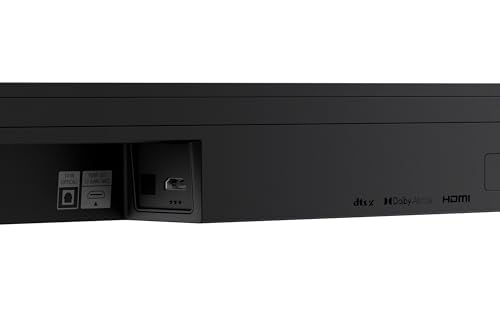
Shopping for a soundbar in 2024 means choosing between fundamentally different approaches to home theater audio. Do you go with a traditional 5.1 system that places actual speakers around your room, or do you embrace the newer Dolby Atmos technology that bounces sound off your ceiling? The Ultimea Poseidon D50 (released in 2025) and Sony BRAVIA Theater Bar 6 (launched in 2023) represent these two philosophies perfectly.
At the time of writing, these products sit in different price brackets—the Ultimea Poseidon D50 offers remarkable value in the budget-to-mid-range category, while the Sony BRAVIA Theater Bar 6 commands premium pricing typical of established audio brands. But raw cost doesn't tell the whole story when you're trying to create an immersive home theater experience.
Before diving into specifics, it's worth understanding what these systems are actually doing. Traditional surround sound, like what you'd experience in a movie theater, places speakers around the listening area. When an explosion happens on screen, you hear it from the front speakers. When debris flies past the camera, those sound effects come from speakers behind you. This creates what audio engineers call "discrete channels"—each speaker gets its own unique audio signal.
The newer approach uses psychoacoustics (how your brain interprets sound) to create the illusion of surround sound. Instead of placing speakers around the room, these systems use digital processing to trick your brain into thinking sounds are coming from different locations. Dolby Atmos takes this further by adding height information, bouncing sound off your ceiling to create the sensation of helicopters flying overhead or rain falling from above.
Both approaches have merit, but they excel in different situations and room types.
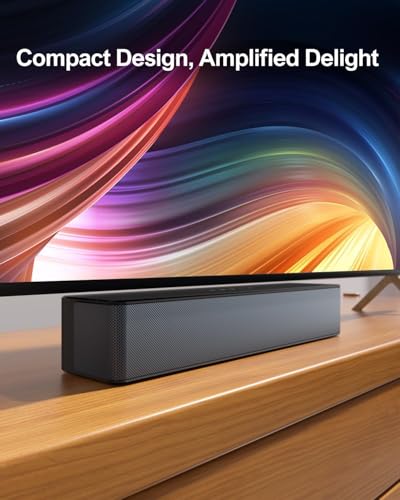
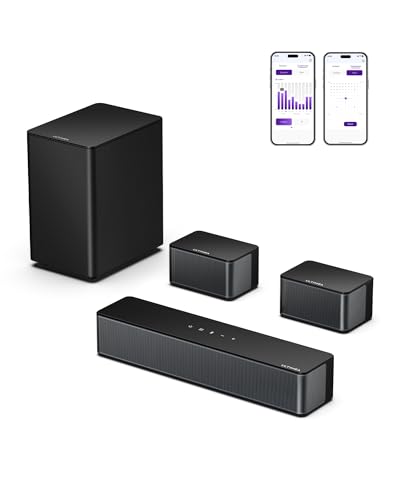
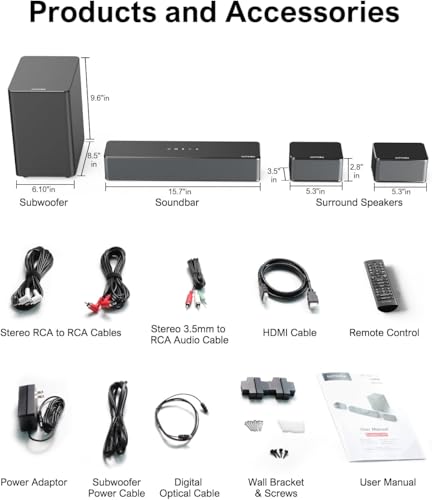
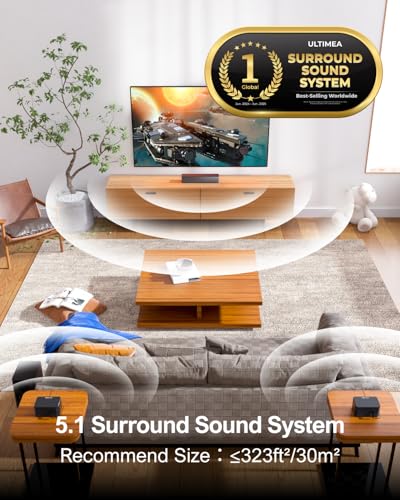
The Ultimea Poseidon D50 takes the traditional route with physical rear speakers connected by 19.6-foot cables. This might seem old-fashioned in our wireless world, but there's solid reasoning behind this design choice. When a movie's sound engineer wants debris to fly past your left ear, they can send that exact signal to the physical speaker positioned near your left ear. There's no guesswork or processing involved—just direct sound placement.
The system's SurroundX technology deserves special attention. This proprietary algorithm can take standard stereo content (which most streaming services still use) and convert it into genuine 5.1 surround signals through an integrated DSP chip. DSP stands for Digital Signal Processing, and it's essentially a specialized computer that analyzes incoming audio and redistributes it across all five speakers and the subwoofer. This means even older movies and shows that weren't mixed in surround sound can benefit from the full speaker array.
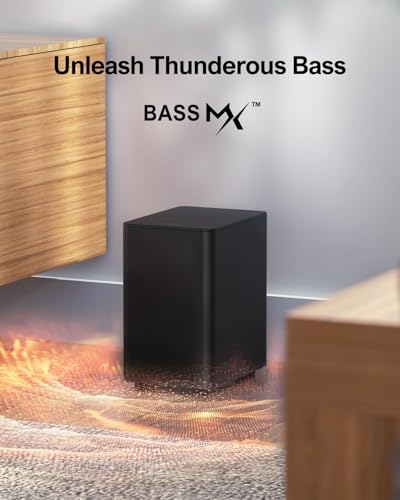
BassMX technology in the subwoofer uses a larger magnetic circuit and allows the 5.25-inch driver to move 15mm in each direction—that's quite a bit of cone movement for a reasonably sized subwoofer. More movement means more air displacement, which translates to deeper, more impactful bass. The aerospace-grade NdFeB magnets (neodymium-iron-boron, the strongest permanent magnets available) provide the magnetic field strength needed to control this large excursion precisely.
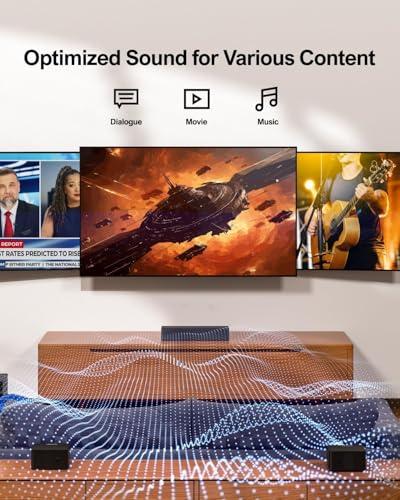
What sets the Ultimea Poseidon D50 apart is its app-based customization. The smart app provides access to 121 preset EQ matrices—think of these as different sound recipes optimized for various content types and room characteristics. The 10-band equalizer lets you adjust specific frequency ranges, so if your room has a bass resonance at 80Hz (common in many living rooms), you can specifically reduce that frequency without affecting the rest of the sound.
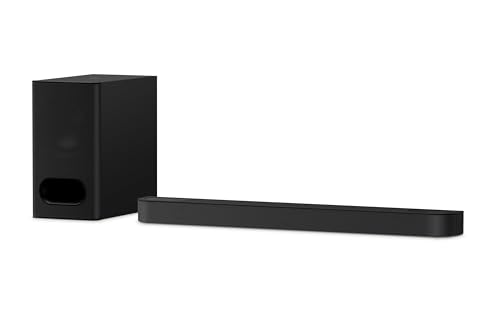
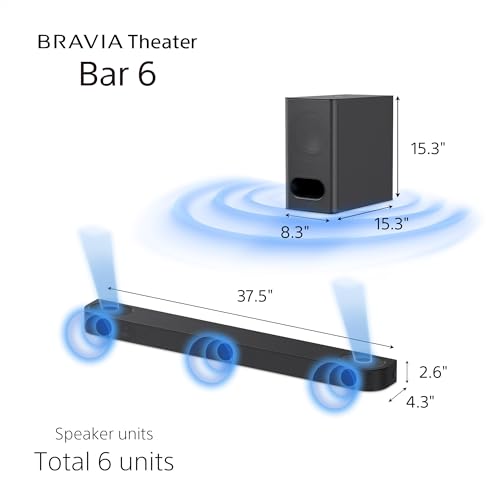
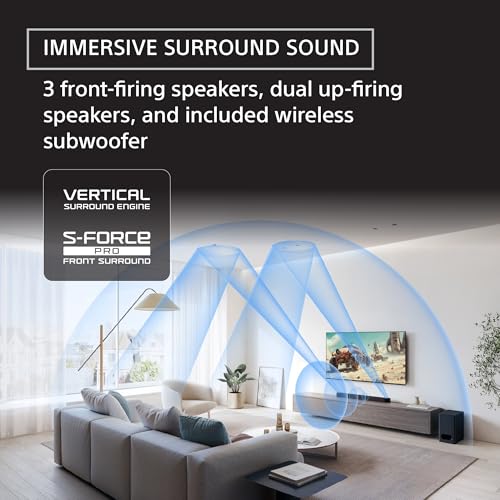
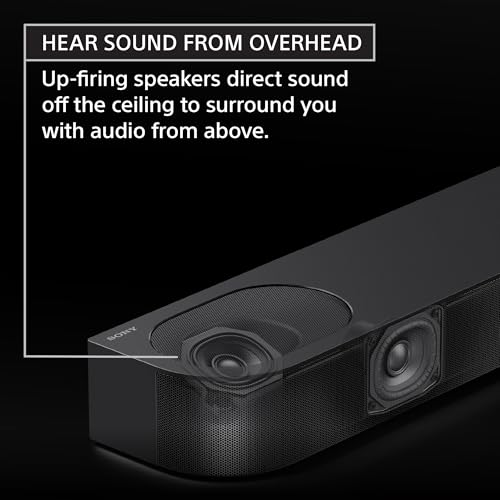
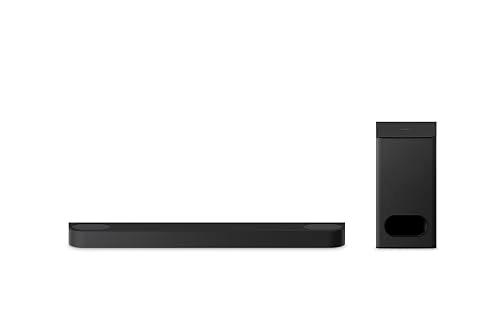
The Sony BRAVIA Theater Bar 6 represents a different philosophy entirely. Instead of physical rear speakers, it uses a 3.1.2 configuration—three front-facing speakers (left, center, right), one subwoofer, and two upward-firing speakers. Those upward-firing drivers are angled to bounce sound off your ceiling, creating height effects for Dolby Atmos and DTS:X content.
Sony's X-Balanced drivers deserve explanation because they're genuinely innovative. Traditional speakers are round, but Sony makes theirs rectangular. This increases the surface area of the driver without making the speaker cabinet larger. More surface area means the driver can move more air with less excursion, theoretically reducing distortion while maintaining volume. It's an elegant engineering solution to a real problem.
The dedicated center channel in the Sony BRAVIA Theater Bar 6 handles dialogue reproduction, which is crucial since roughly 60% of a movie's audio comes through the center channel. Sony's Clear Voice algorithm and Voice Zoom 3.0 (when paired with compatible BRAVIA TVs) can actually isolate dialogue frequencies and boost them selectively. This isn't just turning up the volume—it's sophisticated processing that identifies speech patterns and enhances them while leaving music and effects relatively unchanged.
S-Force PRO Front Surround uses phase manipulation and timing delays to create the illusion that sound is coming from locations where there are no speakers. While this can't match the precision of physical rear speakers, it does create a noticeably wider soundstage than a basic stereo setup.
This is where the fundamental difference between these systems becomes most apparent. The Ultimea Poseidon D50 wins decisively for traditional surround sound placement. When reviewing consensus opinions from both professional reviewers and users, the physical rear speakers consistently deliver more convincing directional effects than virtualized systems.
However, the Sony BRAVIA Theater Bar 6 offers something the Ultimea can't: height effects. Dolby Atmos content includes spatial information that tells speakers where objects should appear in three-dimensional space, including above the listener. The Sony's upward-firing drivers can create genuine overhead effects that add a dimension the 5.1 system lacks entirely.
The effectiveness of height effects depends heavily on your room. Rooms with 8-10 foot ceilings and hard, flat surfaces work best. Vaulted ceilings, textured surfaces, or rooms with lots of soft furnishings can diminish the height effect significantly.
Both systems approach bass differently, and your preference will depend on your content and room characteristics. The Ultimea Poseidon D50 prioritizes raw impact with its 320W peak power output and BassMX technology. User feedback consistently mentions the system's ability to deliver room-shaking bass that you can feel as much as hear.
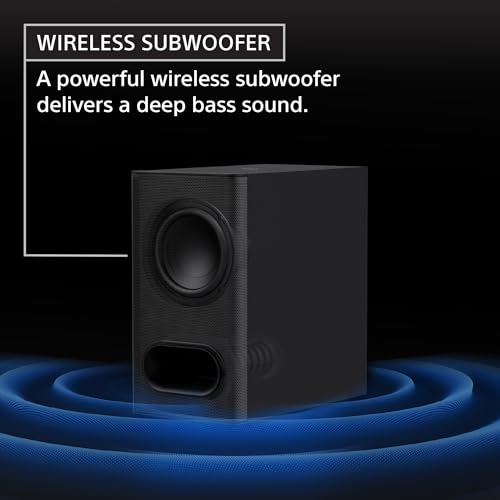
The Sony BRAVIA Theater Bar 6 takes a more balanced approach. Its 6-inch subwoofer produces controlled, articulate bass that integrates well with dialogue and mid-range frequencies. Professional reviewers note that while it may not match the Ultimea's raw power, it provides more refined bass that doesn't overwhelm other frequencies.
For action movies and gaming, the Ultimea's approach works brilliantly. Explosions have visceral impact, and the bass extension reaches down to frequencies you can feel in your chest. For mixed content viewing—news, dramas, documentaries—the Sony's more restrained bass response maintains dialogue clarity while still providing satisfying low-frequency support.
This is arguably the most important performance metric for any home theater system. Poor dialogue clarity ruins the viewing experience faster than any other audio flaw. Both systems address this challenge but through different methods.
The Ultimea Poseidon D50 uses a dedicated center channel and includes specific EQ presets optimized for dialogue. The 10-band equalizer allows precise adjustment of the frequency ranges where human speech occurs (roughly 85Hz to 8kHz, with most information in the 300Hz to 3kHz range).
The Sony BRAVIA Theater Bar 6 brings more sophisticated processing to the table. The Clear Voice algorithm and Voice Mode actively analyze incoming audio to identify and enhance speech patterns. When paired with compatible Sony TVs, Voice Zoom 3.0 can coordinate between the TV's built-in speakers and the soundbar to create even more focused dialogue reproduction.
Based on our research into user and professional reviews, both systems handle dialogue well, but the Sony has a slight edge in challenging scenarios—like when characters speak during action sequences or with heavy background music.
Your room characteristics will significantly influence which system performs better. The Ultimea Poseidon D50 works best in medium to large rooms (250-380 square feet according to specifications) where you can position the rear speakers appropriately. The included cables provide flexibility, but you'll need to route them around furniture and potentially under rugs or along baseboards.
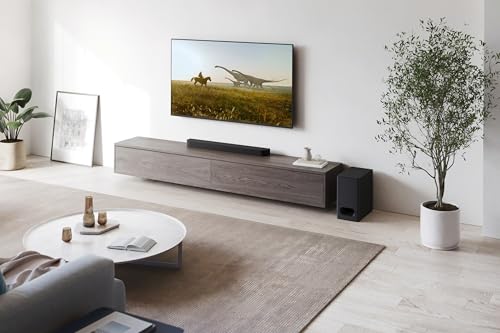
The Sony BRAVIA Theater Bar 6 shines in smaller spaces or apartments where running speaker cables isn't practical. The wireless subwoofer can be placed anywhere within reasonable distance, and the lack of rear speakers eliminates cable management entirely.
Ceiling height matters more for the Sony. Those upward-firing drivers need something to bounce off, and the angle of reflection affects the perceived height of effects. Standard 8-9 foot ceilings work well, but very high or sloped ceilings can diminish the Atmos effect.
The Ultimea Poseidon D50 offers more comprehensive connectivity with HDMI eARC, optical, AUX, and USB inputs, plus Bluetooth 5.3 for wireless streaming. This versatility matters if you have multiple source devices or want to connect older equipment.
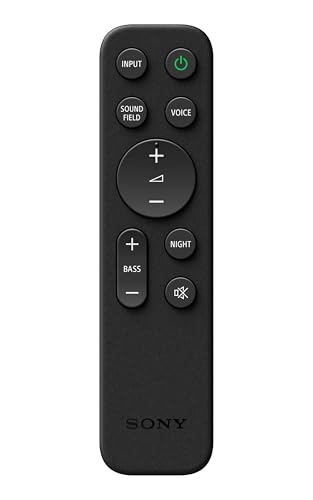
The Sony BRAVIA Theater Bar 6 focuses on essential connections—HDMI eARC and optical—but lacks the input variety of the Ultimea. However, if you own a Sony BRAVIA TV, the integration is outstanding. BRAVIA SYNC allows single-remote control, and the BRAVIA Connect app provides unified control of both devices.
At the time of writing, the Ultimea Poseidon D50 delivers exceptional value in its price category. You're getting a complete 5.1 system with physical rear speakers, extensive customization options, and solid build quality at a price point where most competitors offer only 2.1 or virtualized surround.
The Sony BRAVIA Theater Bar 6 commands premium pricing, but that cost reflects genuine technological advantages: Dolby Atmos/DTS:X support, sophisticated voice processing, seamless TV integration, and the reliability that comes with an established audio brand.
Consider long-term value too. The Ultimea's physical speakers and comprehensive connectivity should remain relevant for years. The Sony's format support and wireless design offer convenience benefits, but technological advancement in audio processing could eventually date its current capabilities.
Choose the Ultimea Poseidon D50 if you want the most authentic surround sound experience at an exceptional value. It's ideal for dedicated home theater rooms, larger spaces, and situations where you can accommodate rear speaker cables. Movie enthusiasts who prioritize immersive surround effects over height channels will find this system delivers cinema-like spatial audio at home.
The Sony BRAVIA Theater Bar 6 makes sense for Sony TV owners who want seamless integration, viewers who prioritize dialogue clarity, and anyone in smaller spaces where rear speakers aren't practical. If you watch a lot of newer streaming content with Dolby Atmos soundtracks, the height effects add genuine immersion that the Ultimea can't match.
Neither system is universally superior—they excel in different scenarios. The Ultimea offers more authentic traditional surround sound at remarkable value, while the Sony provides premium features and integration in a convenient package. Your room layout, content preferences, and existing equipment will determine which approach better serves your home theater goals.
The soundbar market continues evolving rapidly, with new formats and technologies emerging regularly. Both the Ultimea Poseidon D50 and Sony BRAVIA Theater Bar 6 represent mature, capable approaches to home theater audio that should provide years of satisfying performance regardless of future developments.
| Ultimea Poseidon D50 5.1 Soundbar Home Theater (2025) | Sony BRAVIA Theater Bar 6 Soundbar |
|---|---|
| Channel Configuration - Determines surround sound authenticity | |
| True 5.1 with physical rear speakers | 3.1.2 with virtualized surround and height channels |
| Dolby Atmos Support - Essential for modern streaming content | |
| No (uses SurroundX conversion technology) | Yes (native Dolby Atmos and DTS:X support) |
| Physical Rear Speakers - Creates genuine surround positioning | |
| Yes (2 wired satellite speakers with 19.6ft cables) | No (relies on virtualized surround processing) |
| Total Power Output - Affects volume and dynamic range | |
| 320W peak power | 350W total system power |
| Subwoofer Driver Size - Impacts bass depth and impact | |
| 5.25" with BassMX technology (15mm excursion) | 6" wireless subwoofer with front port |
| Audio Customization - Control over sound signature | |
| Smart app with 121 EQ presets, 10-band equalizer | BRAVIA Connect app with basic sound modes |
| Connectivity Options - Flexibility for multiple devices | |
| HDMI eARC, Optical, AUX, USB, Bluetooth 5.3 | HDMI eARC, Optical, Bluetooth (limited inputs) |
| TV Integration - Seamless control and setup | |
| Universal compatibility with all TV brands | Optimized for Sony BRAVIA TVs with SYNC features |
| Setup Requirements - Installation complexity | |
| Requires rear speaker cable routing | Completely wireless setup |
| Room Size Optimization - Best performance space | |
| 250-380 sq ft (medium to large rooms) | Compact to medium spaces with flat ceilings |
| Voice Enhancement Technology - Dialogue clarity features | |
| Dedicated center channel with EQ optimization | Clear Voice algorithm, Voice Zoom 3.0 (BRAVIA TVs) |
| Release Year - Technology generation and support | |
| 2025 (newest features, limited long-term reviews) | 2023 (established performance, proven reliability) |
The Ultimea Poseidon D50 delivers superior traditional surround sound with physical rear speakers that create authentic 360-degree audio placement. The Sony BRAVIA Theater Bar 6 uses virtualized surround technology, which works well but can't match the directional accuracy of real rear speakers. However, the Sony supports Dolby Atmos for height effects that the Ultimea Poseidon D50 cannot provide.
Physical rear speakers like those in the Ultimea Poseidon D50 create the most authentic surround sound experience, especially for movies and gaming. The Sony BRAVIA Theater Bar 6 can simulate surround effects without rear speakers, making it more convenient for smaller spaces or when cable management is a concern. True rear speakers generally provide better immersion for dedicated home theater setups.
The Sony BRAVIA Theater Bar 6 is better suited for smaller rooms due to its wireless design and compact form factor. The Ultimea Poseidon D50 requires space for rear speaker placement and cable routing, making it more challenging in tight spaces. The Sony's upfiring speakers also work more effectively in smaller rooms with standard ceiling heights.
The Ultimea Poseidon D50 uses a 5.1 configuration with five separate speakers plus a subwoofer, including dedicated rear channels. The Sony BRAVIA Theater Bar 6 features a 3.1.2 setup with three front speakers, one subwoofer, and two upfiring speakers for height effects. The 5.1 system provides better traditional surround sound, while 3.1.2 adds vertical dimension with Dolby Atmos support.
Both soundbars offer strong bass performance but with different approaches. The Ultimea Poseidon D50 delivers more powerful, room-filling bass with its BassMX technology and 320W peak output. The Sony BRAVIA Theater Bar 6 provides more balanced, refined bass that integrates better with dialogue and doesn't overwhelm other frequencies.
The Ultimea Poseidon D50 works with any TV through multiple connection options including HDMI eARC, optical, and AUX inputs. The Sony BRAVIA Theater Bar 6 also connects to any TV but offers enhanced integration features when paired with Sony BRAVIA TVs, including unified remote control and advanced voice enhancement.
The Sony BRAVIA Theater Bar 6 is significantly easier to set up with its completely wireless design and plug-and-play operation. The Ultimea Poseidon D50 requires running cables to the rear speakers, which can be challenging depending on your room layout. However, both systems offer app-based setup assistance once the physical connections are made.
Only the Sony BRAVIA Theater Bar 6 natively supports Dolby Atmos and DTS:X with its upfiring speakers. The Ultimea Poseidon D50 doesn't support Dolby Atmos but uses SurroundX technology to convert stereo content into 5.1 surround sound, which can enhance older content that wasn't originally mixed in surround.
Both systems handle dialogue well, but the Sony BRAVIA Theater Bar 6 has a slight advantage with its Clear Voice algorithm and Voice Mode features. When paired with Sony TVs, Voice Zoom 3.0 provides even better dialogue enhancement. The Ultimea Poseidon D50 offers good dialogue clarity through its dedicated center channel and customizable EQ settings.
The Ultimea Poseidon D50 offers more comprehensive connectivity with HDMI eARC, optical, AUX, USB inputs, and Bluetooth 5.3. The Sony BRAVIA Theater Bar 6 focuses on essential connections with HDMI eARC, optical input, and Bluetooth, but lacks the input variety of the Ultimea system. Choose the Ultimea if you need to connect multiple devices directly to the soundbar.
The Ultimea Poseidon D50 typically offers exceptional value with a complete 5.1 system including physical rear speakers at a competitive price point. The Sony BRAVIA Theater Bar 6 commands premium pricing but includes advanced features like Dolby Atmos support and sophisticated voice processing. Your choice depends on whether you prioritize authentic surround sound or premium features and brand reliability.
Choose the Ultimea Poseidon D50 if you want authentic surround sound with physical rear speakers, have a larger room, and can accommodate speaker cables. Select the Sony BRAVIA Theater Bar 6 if you prefer wireless convenience, own a Sony TV, want Dolby Atmos support, or have space constraints that make rear speakers impractical.
We've done our best to create useful and informative comparisons to help you decide what product to buy. Our research uses advanced automated methods to create this comparison and perfection is not possible - please contact us for corrections or questions. These are the sites we've researched in the creation of this article: youtube.com - eu.ultimea.com - newegg.com - tvsbook.com - youtube.com - provantage.com - ultimea.com - techradar.com - community.ultimea.com - homedepot.com - community.ultimea.com - ultimea.com - ultimea.de - youtube.com - medisamhealthcenter.com - ultimea.com - youtube.com - walmart.com - rtings.com - bestbuy.com - whathifi.com - youtube.com - youtube.com - sony.com - galaxus.at - helpguide.sony.net - audioadvice.com - electronics.sony.com - youtube.com - youtube.com - electronics.sony.com - helpguide.sony.net - whatgear.net - consumerreports.org

Privacy Policy
Terms and Conditions - Affiliate Policy
Home Security
© Copyright 2008-2026.
11816 Inwood Rd #1211, Dallas, TX 75244