

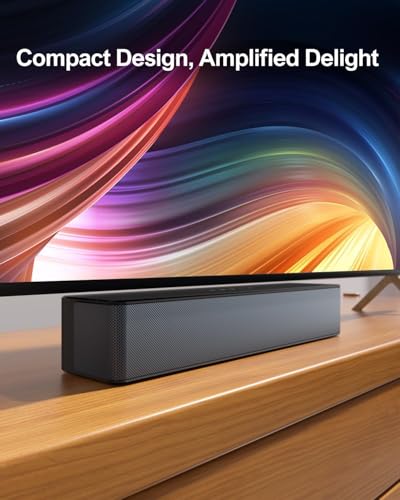
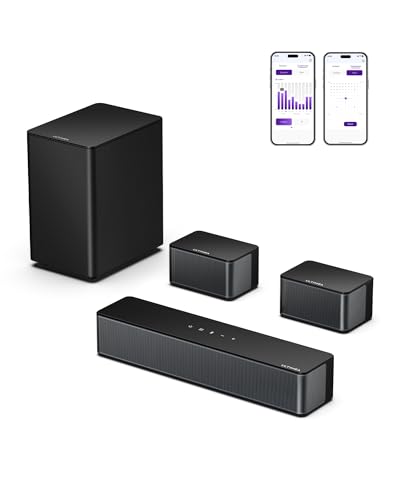














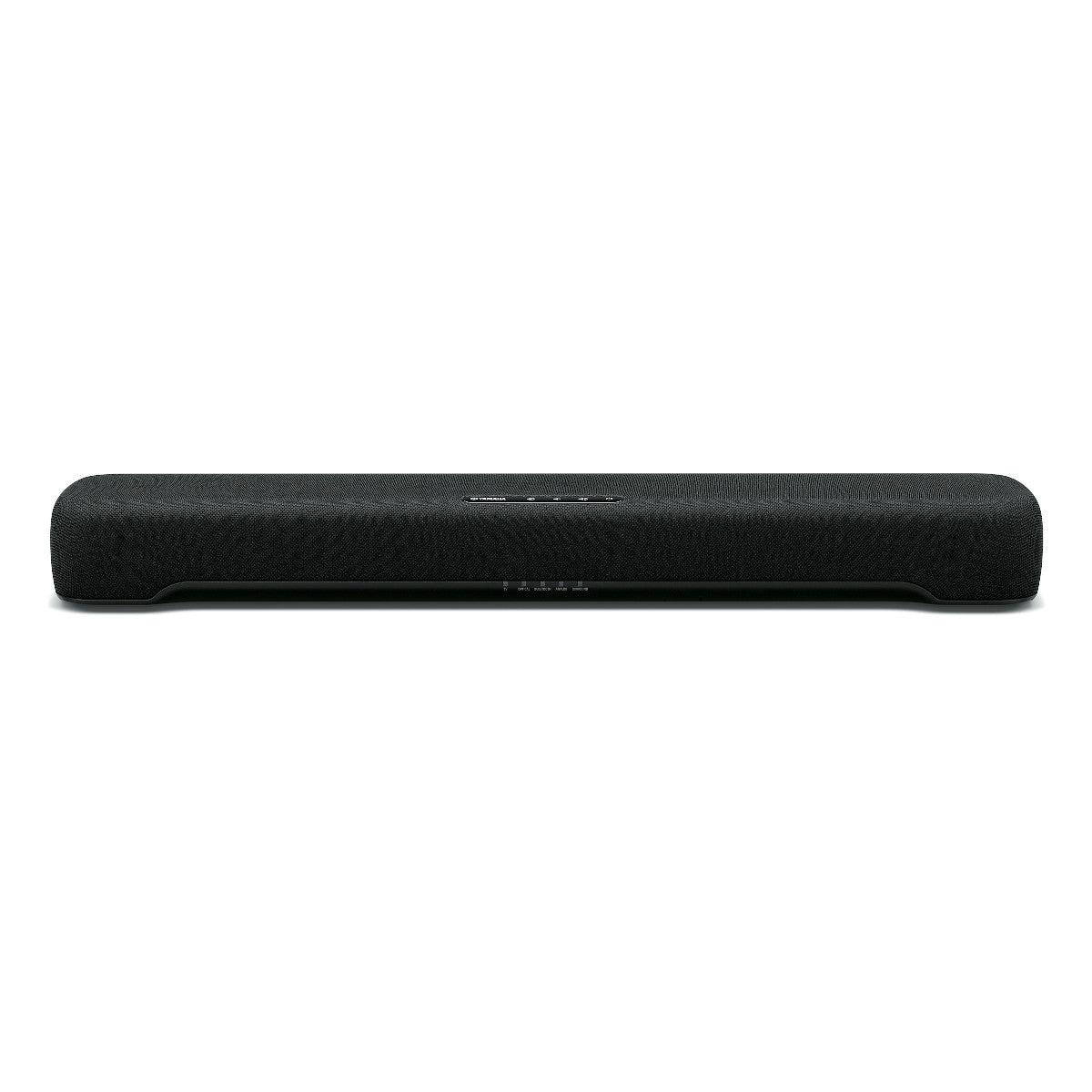
If you're tired of cranking up your TV volume just to understand what actors are saying, you're not alone. Modern flat-screen TVs prioritize sleek designs over audio quality, leaving most viewers with thin, weak sound that barely fills the room. That's where soundbars come in—they're designed to transform your TV audio experience without the complexity of a full surround sound system.
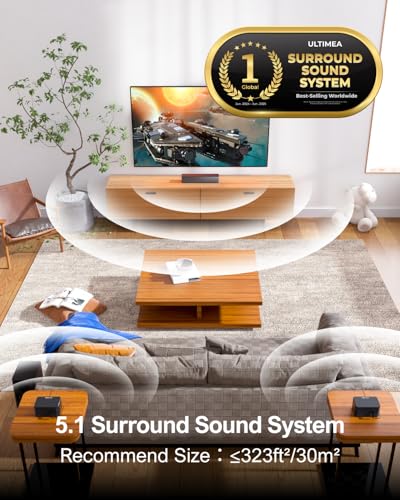
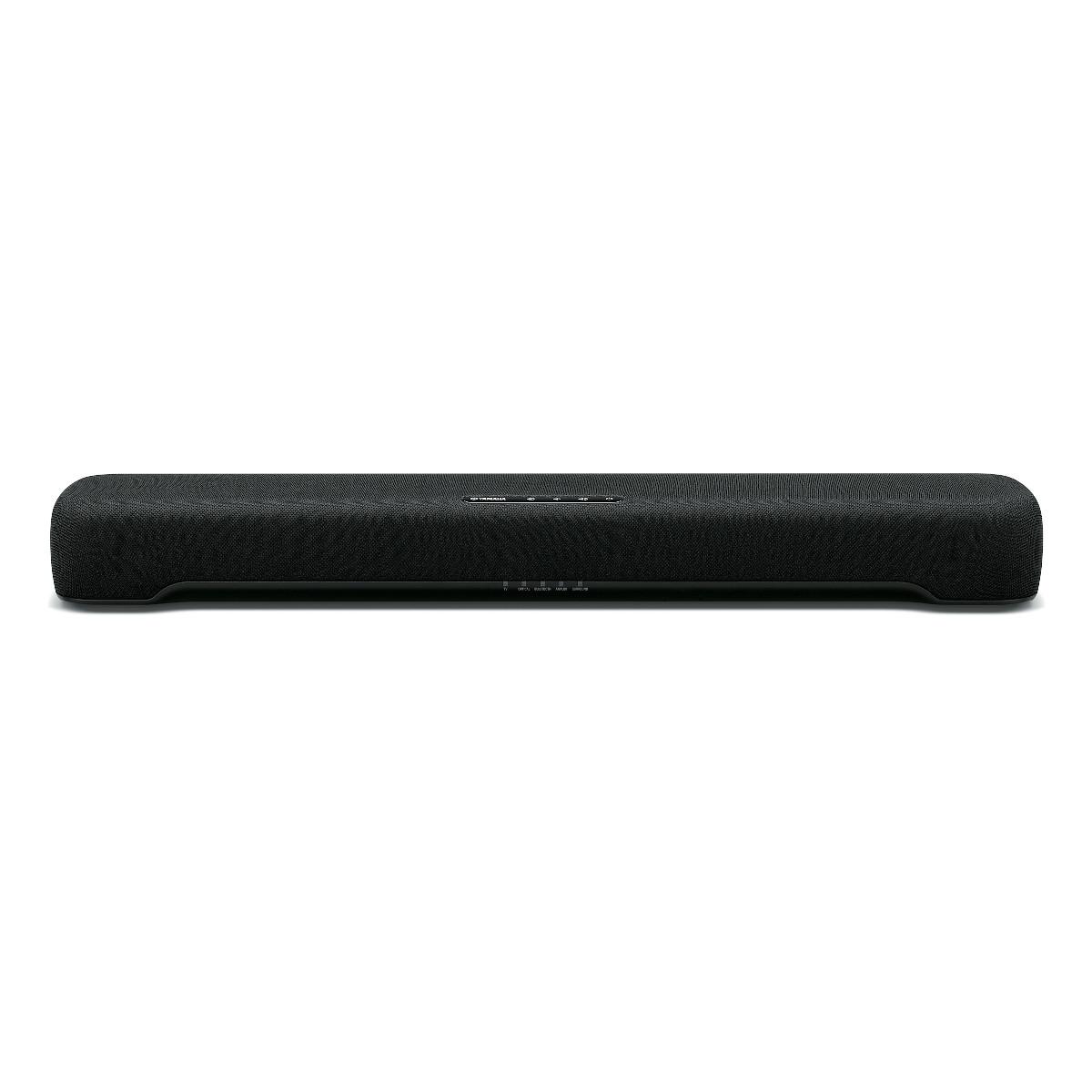
But here's where it gets interesting: not all soundbars take the same approach to better sound. Some, like the Ultimea Poseidon D50 5.1, give you actual surround sound with physical speakers positioned around your room. Others, like the Yamaha SR-C20A, focus on delivering exceptional audio quality from a single, compact unit. Understanding these different philosophies is crucial to making the right choice for your setup.
When shopping for soundbars, you'll encounter confusing numbers like "2.1," "5.1," and "7.1.2." These refer to channel configurations—essentially how many speakers and subwoofers are working together. The first number indicates main speakers (left, center, right), the second represents subwoofers for bass, and a third number (when present) shows height speakers for overhead effects.
Channel configuration determines your spatial audio capabilities. True 5.1 systems place sounds around you with precision—you'll hear helicopters fly overhead, footsteps approaching from behind, and explosions rumbling from specific directions. Virtual surround systems attempt to recreate these effects using audio processing tricks, but they can't match the accuracy of physically separated speakers.
Form factor affects both performance and practicality. Compact soundbars fit anywhere and require minimal setup, while multi-piece systems demand more space and planning but typically deliver superior audio separation and bass response.
Audio processing technologies have become increasingly sophisticated. Features like dialogue enhancement isolate and amplify speech frequencies, making conversations clearer even during action-packed scenes. Bass extension algorithms squeeze deeper low-frequency response from smaller drivers, while surround virtualization creates the illusion of multi-directional sound from fewer speakers.
The most critical performance metrics for soundbars include clarity at various volume levels, bass response and extension, dialogue intelligibility, and spatial audio accuracy. A soundbar that sounds great at low volumes but becomes harsh and distorted when pushed won't serve you well during movie nights or when trying to fill larger rooms.
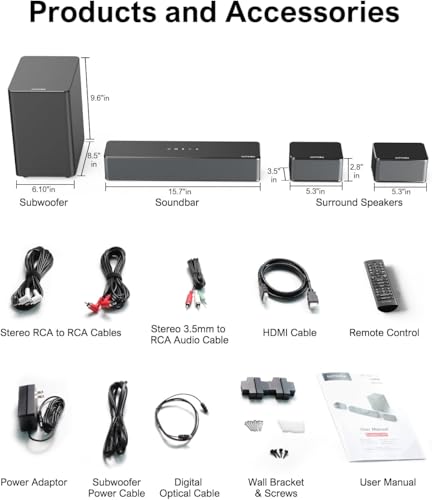
Released in its latest iteration in 2025, the Poseidon D50 represents Ultimea's ambitious attempt to bring authentic 5.1 surround sound to budget-conscious consumers. Unlike many affordable soundbars that fake surround effects, this system includes physical rear speakers that you position behind your seating area.
The system's SurroundX™ technology deserves explanation—it's essentially a smart audio processor that takes standard stereo audio (what most streaming services and TV broadcasts provide) and converts it into a full 5.1 surround signal. This means even older content gets the surround treatment, with the system deciding where different sounds should come from and routing them to the appropriate speakers.
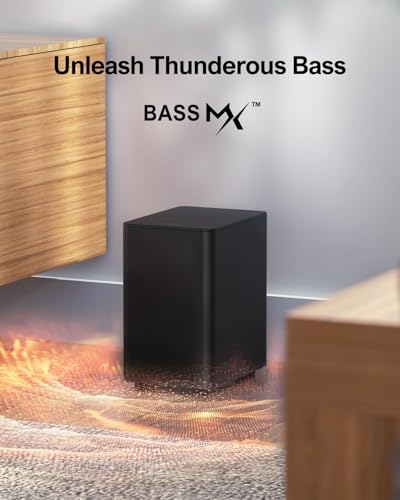
BassMX™ technology powers the wireless subwoofer, utilizing what Ultimea calls "optimized magnetic circuits" and a larger internal volume to produce deeper bass with less distortion. The 5.25-inch subwoofer driver can move up to 15mm in each direction—that's significant excursion for a budget system, allowing it to move more air and create more impactful low-frequency effects.
Perhaps most impressively for this price range, the Poseidon D50 offers independent volume control for the rear speakers through its smartphone app. This means you can dial in the perfect surround balance for your room—something typically reserved for much more expensive systems.
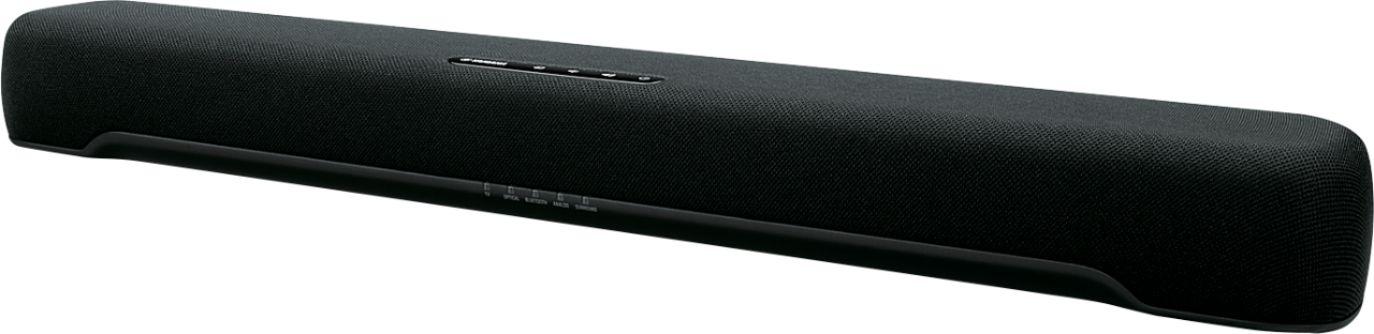
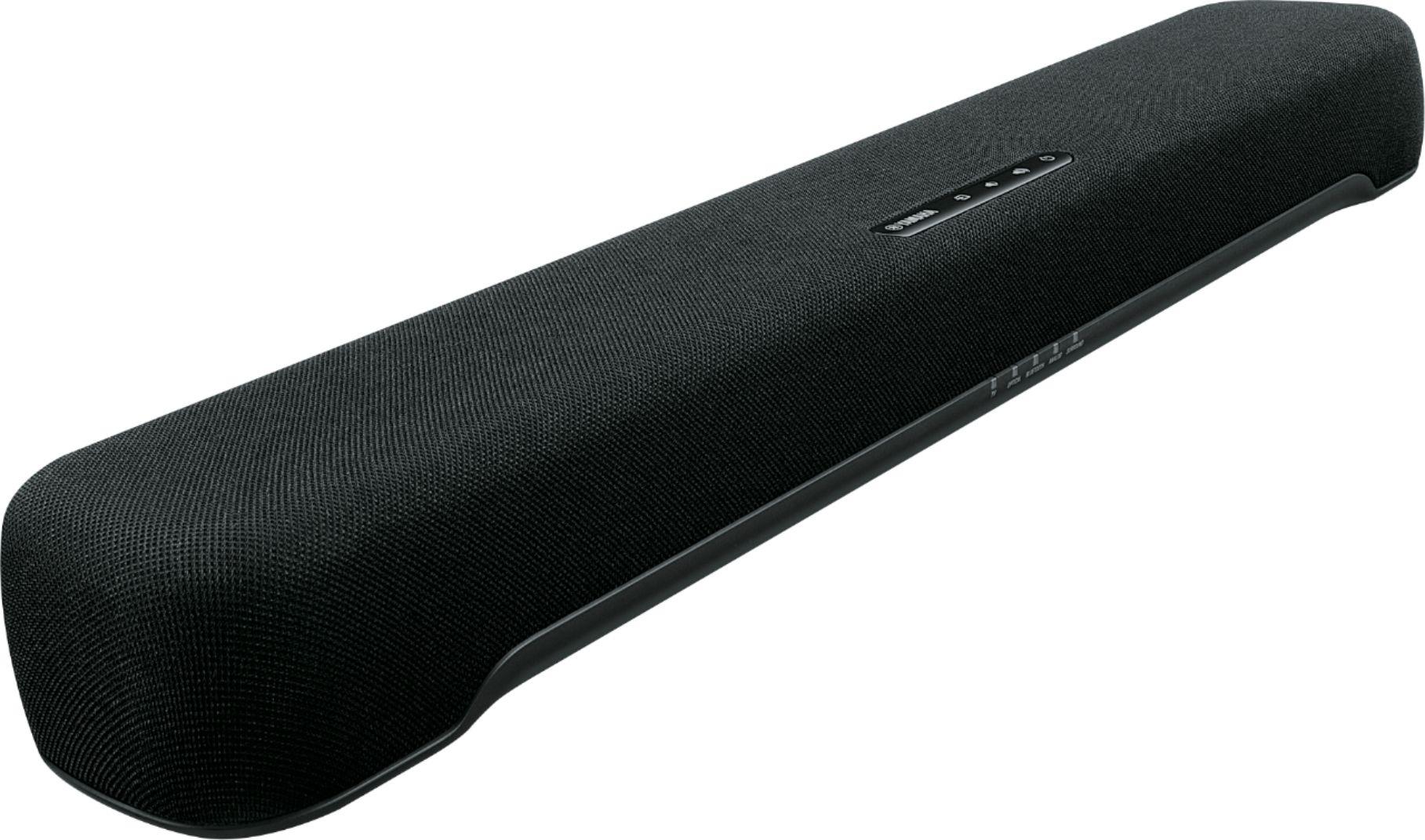
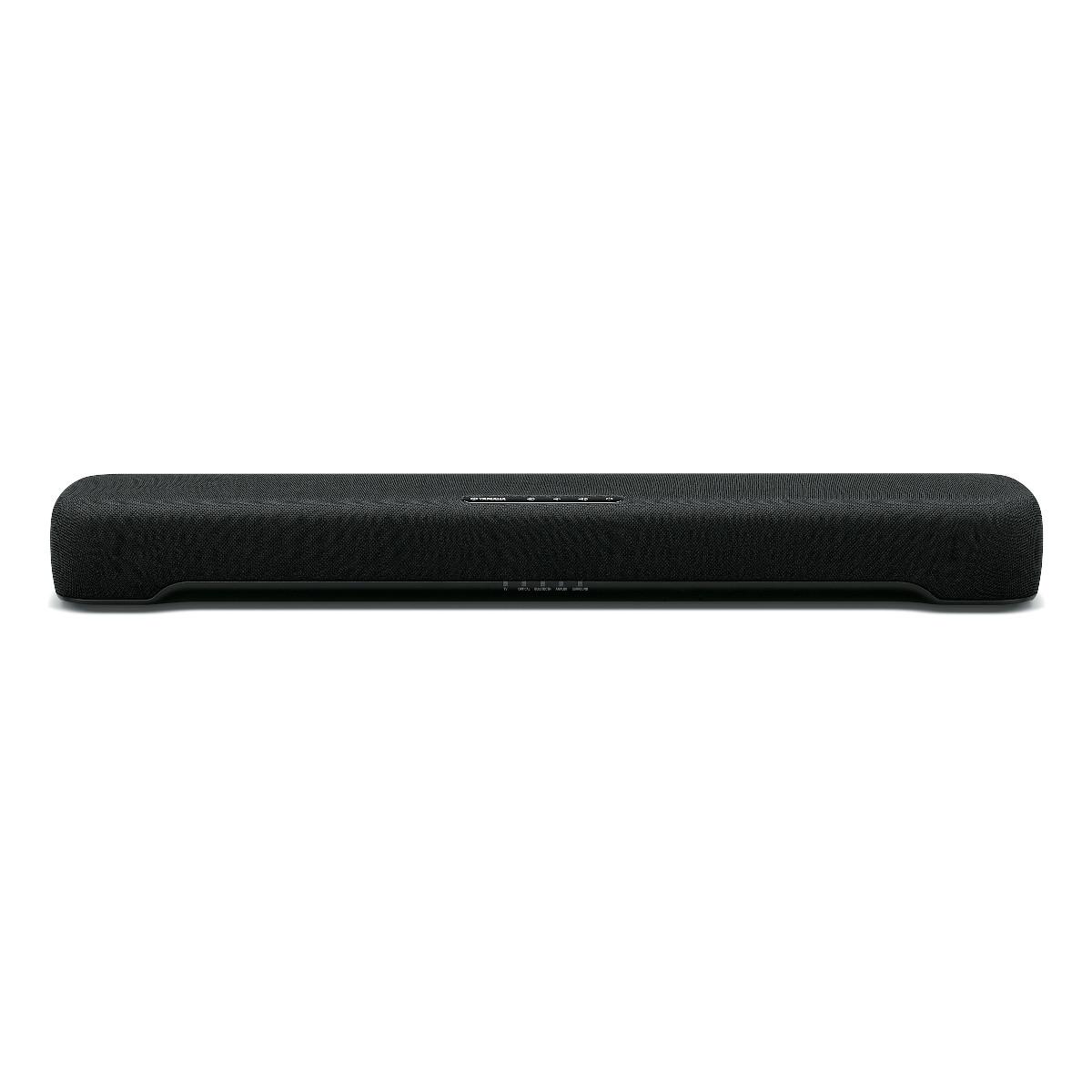
Yamaha released the SR-C20A in 2020, and while that might seem dated in tech years, audio engineering doesn't evolve as rapidly as smartphones or computers. The fundamentals of good sound reproduction remain consistent, and Yamaha's decades of audio expertise shine through in this compact package.
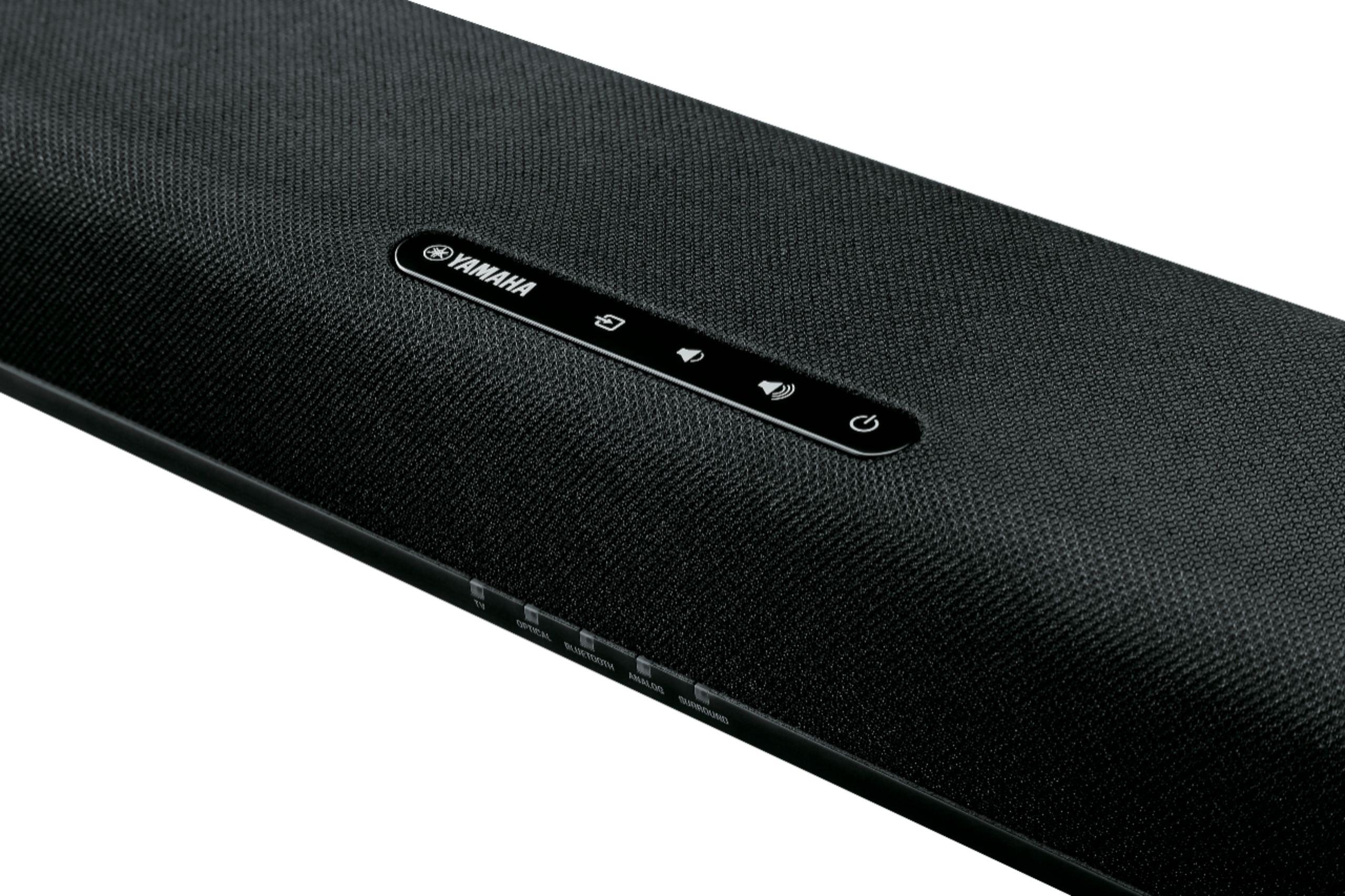
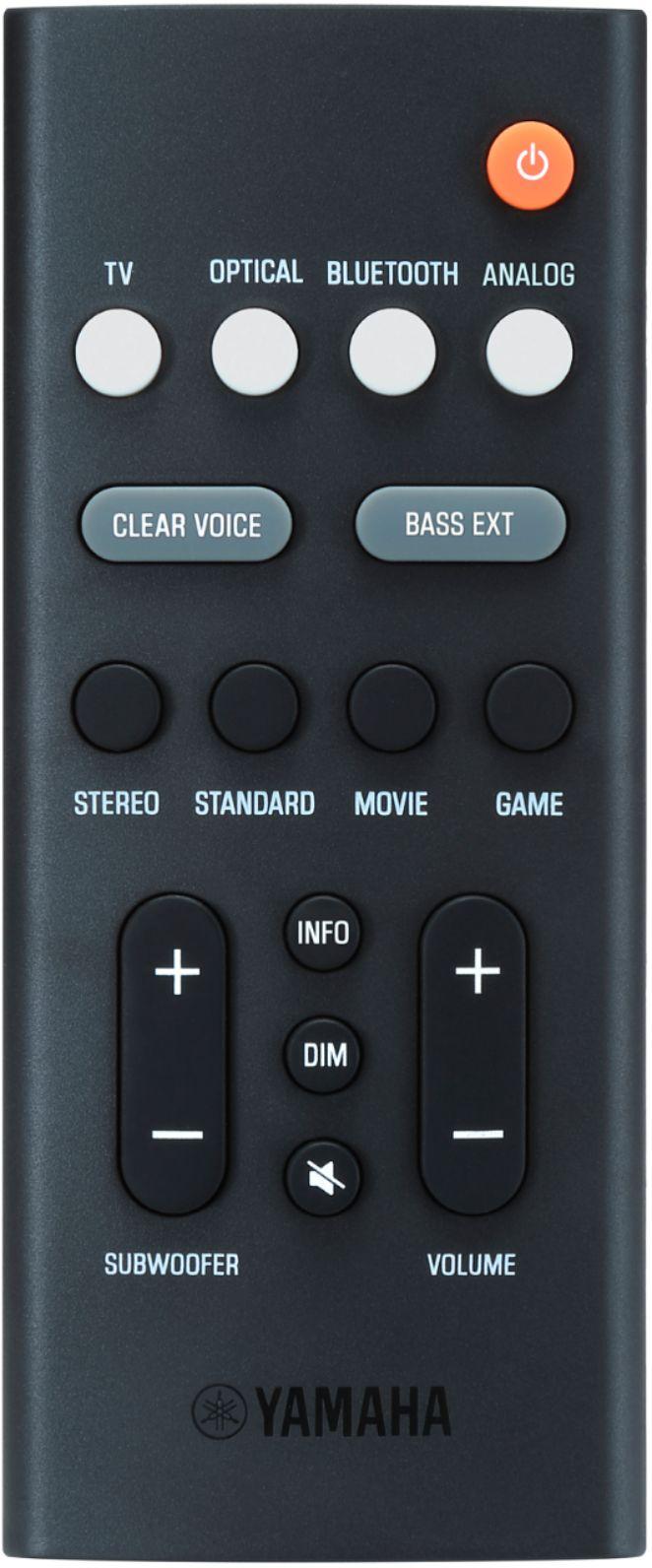
The standout feature is Clear Voice technology, which specifically targets the frequency ranges where human speech occurs. Instead of simply boosting all midrange frequencies (which can make everything sound muddy), Clear Voice uses sophisticated filtering to enhance dialogue clarity while maintaining the natural balance of music and sound effects. This isn't just marketing speak—it genuinely makes conversations easier to understand, particularly valuable for older listeners or anyone with mild hearing difficulties.
The SR-C20A's built-in subwoofer design is more clever than it first appears. Rather than trying to cram a large driver into a small space, Yamaha uses a 3-inch dedicated subwoofer paired with two passive radiators. Passive radiators are essentially speakers without magnets—they're moved by air pressure changes inside the soundbar, effectively turning the entire enclosure into a larger acoustic chamber. This approach produces more controlled, tighter bass than you'd expect from such a compact unit.
Our research into professional reviews and extensive user feedback reveals a clear winner in overall audio quality. The Yamaha SR-C20A consistently maintains clean, articulate sound even when pushed to higher volumes. Professional reviewers describe it as "punching way above its weight," with particular praise for its midrange clarity and balanced frequency response.
The Ultimea Poseidon D50, while impressive in concept, shows concerning quality issues under scrutiny. Professional testing scored it just 5.5 out of 10, primarily due to audio distortion that becomes apparent at moderate to high volume levels. Users frequently describe the sound becoming "tinny" or harsh when the system is pushed beyond about 60% of maximum volume. This is likely due to the use of smaller, less expensive drivers that simply can't handle the power being fed to them cleanly.
Why this matters: If you regularly watch movies at night and need to keep volumes moderate, both systems will serve you well. But if you enjoy filling larger rooms with sound or hosting movie nights where volume matters, the Yamaha's superior clarity becomes crucial. There's nothing more frustrating than a soundbar that forces you to choose between adequate volume and acceptable audio quality.
This is where the Ultimea Poseidon D50 theoretically shines—and it's important to emphasize "theoretically." True 5.1 surround sound, when working properly, creates an undeniably immersive experience. Having physical speakers positioned behind you means you'll hear approaching footsteps, passing vehicles, and ambient environmental sounds with genuine directionality. The system's ability to convert stereo content into surround sound through its SurroundX processing adds value, ensuring even older TV shows and basic streaming content gets the spatial treatment.
However, our research uncovered reliability issues with the wireless subwoofer pairing and occasional synchronization problems between the rear speakers and main soundbar. When the system works as intended, users report satisfying surround immersion, particularly for movies and gaming. When it doesn't, the experience becomes frustrating rather than enjoyable.
The Yamaha SR-C20A takes the virtual surround approach, using Dolby Audio processing to create the illusion of multi-directional sound from its forward-facing drivers. While this can't match the pinpoint accuracy of physically separated speakers, it's remarkably effective for enhancing the sense of space and atmosphere. Most importantly, it works consistently—there are no wireless connectivity issues or speaker synchronization problems to troubleshoot.
For home theater use: If you're building a dedicated media room where proper surround speaker placement is feasible, the Poseidon D50's true surround capability offers compelling value despite its quality concerns. For living rooms where speakers behind the sofa aren't practical, or for users who prioritize reliability over ultimate immersion, the Yamaha's virtual surround proves more satisfying in daily use.
Bass reproduction reveals another interesting contrast between these approaches. The Poseidon D50's separate wireless subwoofer should theoretically provide superior low-frequency response—and when properly positioned and calibrated, it often does. The 5.25-inch driver and BassMX technology can produce room-shaking effects during action movies, with users reporting satisfying rumble during explosion scenes and impactful kick drums in music.
But here's the catch: wireless subwoofers introduce another potential failure point. Several users report intermittent connection issues, where the subwoofer cuts out during playback or fails to pair after power cycles. When working correctly, the bass is impressive for the price point. When experiencing connectivity problems, you're left with a thin-sounding system that defeats the purpose of upgrading from TV speakers.
The SR-C20A's integrated approach sacrifices ultimate bass extension for consistency and reliability. The 3-inch subwoofer with passive radiators produces what reviewers consistently describe as "tight, controlled bass"—not earth-shaking, but musically accurate and well-integrated with the midrange and treble frequencies. You won't feel explosions in your chest, but you'll hear bass lines in music clearly and enjoy improved fullness in movie soundtracks.
Bass Extension features in both systems attempt to squeeze more low-frequency response from their respective designs, but physics ultimately limits what smaller drivers can accomplish. The Yamaha does more with less, while the Ultimea promises more but doesn't always deliver reliably.
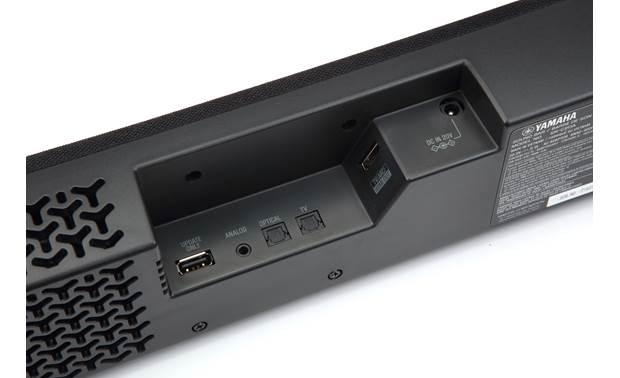
Both soundbars acknowledge modern connectivity needs with HDMI ARC (Audio Return Channel), which allows your TV remote to control soundbar volume and power. This seemingly simple feature significantly improves daily usability—no more juggling multiple remotes or forgetting to turn off the soundbar.
The Poseidon D50 goes further with its smartphone app control, offering access to 121 preset EQ matrices and a 10-band manual equalizer. This level of customization is genuinely impressive for any soundbar, let alone one in this price range. You can fine-tune the sound signature for different content types, adjust the rear speaker balance, and even save custom presets for different family members' preferences.
Bluetooth connectivity differs slightly between the systems—the Ultimea uses Bluetooth 5.3 versus the Yamaha's 5.0, but both provide stable wireless music streaming. The newer Bluetooth standard in the Ultimea theoretically offers better range and connection stability, though real-world differences are minimal for typical soundbar use.
The Yamaha counters with superior build quality and a 2-year warranty compared to the Ultimea's single year of coverage. This might seem minor, but it reflects the manufacturer's confidence in their product reliability—something our research suggests is well-founded.
Here's where the philosophical differences between these systems become most apparent in daily life. The SR-C20A embodies the "plug and play" approach—connect one cable to your TV, plug in power, and you're done. Wall mounting uses integrated keyholes, no separate brackets required. The entire process takes perhaps 15 minutes, including carefully reading the manual.
The Poseidon D50 demands significantly more commitment. You'll need to position the wireless subwoofer somewhere in your room where it sounds good (often requiring experimentation), run 19.6-foot cables to the rear speakers, find appropriate placement for those speakers, and potentially troubleshoot wireless connectivity issues. Factor in cable management to keep everything looking tidy, and you're looking at an afternoon project rather than a quick upgrade.
Room compatibility heavily influences which approach makes sense. The Ultimea system works best in medium to large rooms (roughly 250-380 square feet according to the manufacturer) where you can properly position all components. Small apartments or bedrooms often lack the space for optimal rear speaker placement, negating the primary advantage of true surround sound.
The Yamaha excels in space-constrained environments. Its compact dimensions (less than 24 inches wide) fit under most TVs without overwhelming smaller furniture. This makes it ideal for bedrooms, kitchens, home offices, or any situation where a single, unobtrusive unit serves better than multiple speakers scattered around the room.
At the time of writing, the Poseidon D50 typically sells for significantly less than the SR-C20A—often $30-40 cheaper. For budget-conscious buyers, this price difference is meaningful, especially when considering that you're getting true 5.1 surround sound capabilities that would cost several times more from premium brands.
However, value extends beyond initial purchase price. The Yamaha represents what audio engineers call "buying once, crying once"—paying slightly more upfront for superior build quality and reliability that eliminates future frustrations. Our research suggests users are significantly more satisfied with the Yamaha over time, while Ultimea owners report more frequent issues requiring troubleshooting or customer service contact.
For home theater enthusiasts building dedicated media rooms, the Poseidon D50's true surround capability offers compelling value despite its compromises. The ability to hear helicopters pass overhead in war movies or footsteps approaching from behind in horror films creates genuine immersion that virtual processing can't fully replicate.
For everyday TV watching, the SR-C20A's superior dialogue clarity and consistent performance prove more valuable than occasional surround effects. Clear Voice technology makes news broadcasts more intelligible, dialogue in British shows easier to follow, and late-night watching more feasible at lower volumes.
Choose the Ultimea Poseidon D50 if you're primarily upgrading for movie watching and gaming, have adequate space for rear speaker placement without aesthetic concerns, and your budget prioritizes getting surround sound capabilities over ultimate audio quality. This system makes most sense for users who understand they're accepting some quality compromises in exchange for true multi-channel audio at an exceptional price point.
The Poseidon D50 also suits renters or temporary living situations where the complex setup isn't a permanent commitment. Since all components are relatively lightweight and the rear speaker cables are generously long, you can experiment with placement and take everything with you when you move.
Choose the Yamaha SR-C20A if audio quality, reliability, and simplicity matter more than surround sound gimmicks. This is the better choice for most people upgrading from TV speakers—it provides immediate, noticeable improvement in dialogue clarity and overall audio quality without the complexity or potential reliability issues of multi-component systems.
The Yamaha particularly suits users in apartments, condos, or any situation where running speaker cables isn't practical. Its compact form factor and premium build quality make it an investment that will serve well for years without requiring troubleshooting or component replacement.
Both soundbars address the fundamental problem of poor TV audio, but they take dramatically different approaches. The Ultimea Poseidon D50 offers genuine surround sound immersion at a remarkable price, but with notable quality compromises that become apparent during extended use. The Yamaha SR-C20A prioritizes audio excellence and reliability over surround effects, making it the more satisfying choice for daily viewing despite its higher initial cost.
Your decision ultimately depends on whether authentic surround sound justifies the setup complexity and potential reliability concerns. For most users, the Yamaha's superior audio quality and hassle-free operation provide better long-term value than the Ultimea's surround capabilities. But for home theater enthusiasts on tight budgets who can work within the system's limitations, the Poseidon D50 offers surround sound experiences that would otherwise cost significantly more.
| Ultimea Poseidon D50 5.1 Soundbar | Yamaha SR-C20A Compact Sound Bar |
|---|---|
| Audio Configuration - Determines surround sound authenticity | |
| True 5.1 surround with physical rear speakers | 2.1 with virtual surround processing |
| Setup Complexity - How much effort required for installation | |
| Complex: main bar + wireless sub + 2 wired rear speakers (19.6ft cables) | Simple: single unit with built-in subwoofer |
| Audio Quality at High Volume - Critical for larger rooms and movie nights | |
| Becomes distorted and "tinny" when pushed (5.5/10 professional rating) | Maintains clarity even at high volumes |
| Bass Response - Impact for movies and music | |
| Separate 5.25" wireless subwoofer with BassMX™ technology | Built-in 3" subwoofer with dual passive radiators |
| Connectivity Issues - Reliability concerns | |
| Reported wireless subwoofer pairing and sync problems | No connectivity issues, rock-solid reliability |
| Customization Options - Fine-tuning capabilities | |
| Smart app with 121 EQ presets, 10-band equalizer, independent rear speaker control | Basic sound modes (Movie, Game, Standard, Stereo) with Clear Voice |
| Room Size Compatibility - Optimal performance space | |
| Medium to large rooms (250-380 sq ft), requires rear speaker placement | Small to medium spaces, apartment and bedroom friendly |
| Dialogue Clarity - Essential for TV watching | |
| Standard dialogue reproduction | Clear Voice technology specifically enhances speech intelligibility |
| Build Quality and Warranty - Long-term reliability indicator | |
| Budget construction, 1-year warranty | Premium Yamaha build quality, 2-year warranty |
| Bluetooth Version - Wireless streaming capability | |
| Bluetooth 5.3 (latest standard) | Bluetooth 5.0 (stable, proven performance) |
| Wall Mounting - Installation flexibility | |
| Soundbar wall-mountable, but rear speakers require separate placement | Built-in keyholes for easy wall mounting, no additional hardware needed |
| Peak Power Output - Maximum volume capability | |
| 320W peak power across all channels | 100W total output (prioritizes clean power over maximum volume) |
The Yamaha SR-C20A is significantly better for small spaces. Its compact single-unit design (under 24 inches wide) fits easily under most TVs without overwhelming smaller furniture. The Ultimea Poseidon D50 requires space for rear speakers and 19.6-foot cables, making it impractical for apartments or bedrooms where proper surround speaker placement isn't possible.
The Yamaha SR-C20A delivers superior audio quality with consistent clarity even at high volumes. Professional reviews rate the Ultimea Poseidon D50 only 5.5/10 due to distortion and "tinny" sound when pushed beyond moderate volumes. The Yamaha maintains clean, balanced sound reproduction that's typical of the brand's audio engineering expertise.
The Ultimea Poseidon D50 5.1 offers genuine 5.1 surround sound with physical rear speakers that you position behind your seating area. The Yamaha SR-C20A uses virtual surround processing to simulate multi-directional effects from a single soundbar unit. True surround sound provides more accurate spatial positioning but requires more complex setup.
The Yamaha SR-C20A offers plug-and-play simplicity with just one cable connection to your TV and built-in wall mounting keyholes. The Ultimea Poseidon D50 requires positioning a wireless subwoofer, running long cables to rear speakers, and potentially troubleshooting wireless connectivity issues. Setup time differs significantly between 15 minutes versus several hours.
The Yamaha SR-C20A excels for TV watching thanks to its Clear Voice technology that specifically enhances dialogue clarity. This makes conversations easier to understand even with background music or sound effects. The Ultimea Poseidon D50 focuses more on surround effects rather than dialogue enhancement, making it less ideal for regular TV viewing.
For dedicated home theater use, the Ultimea Poseidon D50 provides more immersive surround sound with helicopters flying overhead and footsteps approaching from behind. However, the Yamaha SR-C20A offers superior audio quality and reliability for movie watching, with excellent dialogue clarity and controlled bass response that works consistently every time.
The Ultimea Poseidon D50 features a separate 5.25-inch wireless subwoofer that can produce room-shaking bass effects during action movies. The Yamaha SR-C20A uses a built-in 3-inch subwoofer with passive radiators that delivers tighter, more controlled bass. The Ultimea offers more impact when working properly, but the Yamaha provides more reliable, consistent low-frequency response.
The Yamaha SR-C20A is known for excellent reliability with no reported connectivity issues and comes with a 2-year warranty. The Ultimea Poseidon D50 has documented problems with wireless subwoofer pairing and occasional synchronization issues between components, plus only offers a 1-year warranty. Build quality differs significantly between the two brands.
Value depends on your priorities. The Ultimea Poseidon D50 typically costs less and provides true 5.1 surround sound that would normally cost much more from premium brands. The Yamaha SR-C20A costs more initially but offers superior audio quality, reliability, and long-term satisfaction that many users find worth the extra investment.
Both soundbars support HDMI ARC, allowing your TV remote to control volume and power functions. The Ultimea Poseidon D50 also includes a comprehensive smartphone app for advanced customization with 121 EQ presets and rear speaker balance control. The Yamaha SR-C20A focuses on simple, intuitive control without complex app features.
The Yamaha SR-C20A provides better music reproduction with its balanced frequency response and consistent audio quality. Both soundbars offer Bluetooth streaming, with the Ultimea Poseidon D50 using the newer Bluetooth 5.3 standard versus the Yamaha's Bluetooth 5.0. However, the Yamaha delivers cleaner, more musical sound quality for streaming services and personal music libraries.
Choose the Ultimea Poseidon D50 if you want true surround sound for movies and gaming, have adequate space for rear speakers, and prioritize getting surround capabilities at a lower cost. Choose the Yamaha SR-C20A if you value audio quality, reliability, and simplicity over surround effects. The Yamaha is the better choice for most people upgrading from TV speakers who want consistent, high-quality audio without complexity.
We've done our best to create useful and informative comparisons to help you decide what product to buy. Our research uses advanced automated methods to create this comparison and perfection is not possible - please contact us for corrections or questions. These are the sites we've researched in the creation of this article: youtube.com - eu.ultimea.com - newegg.com - tvsbook.com - youtube.com - provantage.com - ultimea.com - techradar.com - community.ultimea.com - homedepot.com - community.ultimea.com - ultimea.com - ultimea.de - youtube.com - medisamhealthcenter.com - ultimea.com - youtube.com - walmart.com - t3.com - usa.yamaha.com - radiotimes.com - shop.usa.yamaha.com - whathifi.com - hifiheaven.net - usa.yamaha.com - sweetwater.com - hub.yamaha.com - bestbuy.com

Privacy Policy
Terms and Conditions - Affiliate Policy
Home Security
© Copyright 2008-2026.
11816 Inwood Rd #1211, Dallas, TX 75244