

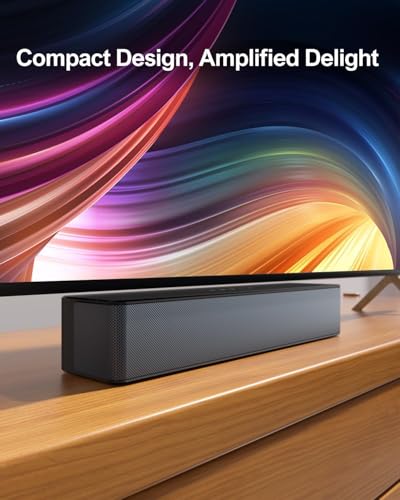





If you've ever found yourself cranking up the TV volume just to hear dialogue, only to get blasted by explosions moments later, you know why soundbars have become practically essential. But choosing the right one can be overwhelming, especially when you're comparing products that take completely different approaches to improving your TV's audio.
Today we're diving deep into two soundbars that represent opposite ends of the design philosophy spectrum: the Ultimea Poseidon D50 5.1 Soundbar Home Theater (2025) and the Bose TV Speaker Soundbar. One delivers a full home theater experience with actual surround speakers, while the other focuses on perfecting TV dialogue in the most elegant way possible.
Before we get into the nitty-gritty, let's talk about what makes these products fundamentally different. The soundbar market has evolved dramatically since the early 2010s, when most options were simple 2.1 systems (two speakers plus a subwoofer). Today's landscape includes everything from minimalist dialogue enhancers to full-blown home theater replacements.
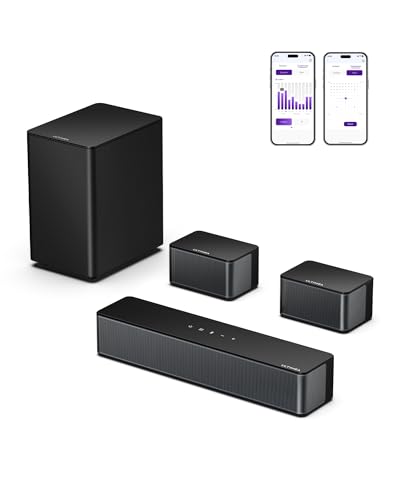
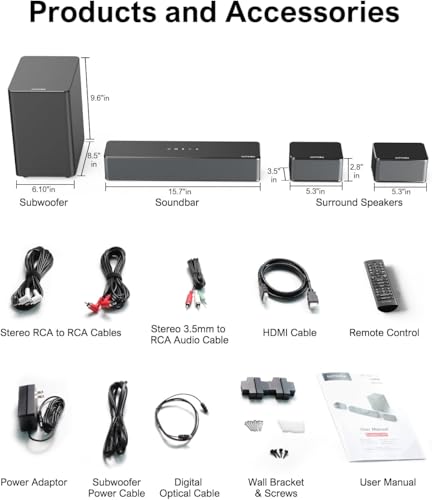
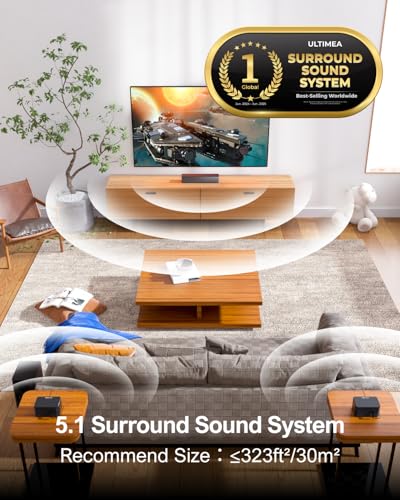
The Ultimea Poseidon D50, released in its latest 2025 iteration, represents the "more is more" philosophy. It's a true 5.1 system, meaning it has five main speakers plus a dedicated subwoofer. Those five speakers include a center channel for dialogue, left and right front channels, and—crucially—two physical rear speakers that you actually place behind your seating area. This isn't virtual surround sound created by digital processing; it's the real deal with actual speakers positioned around your room.
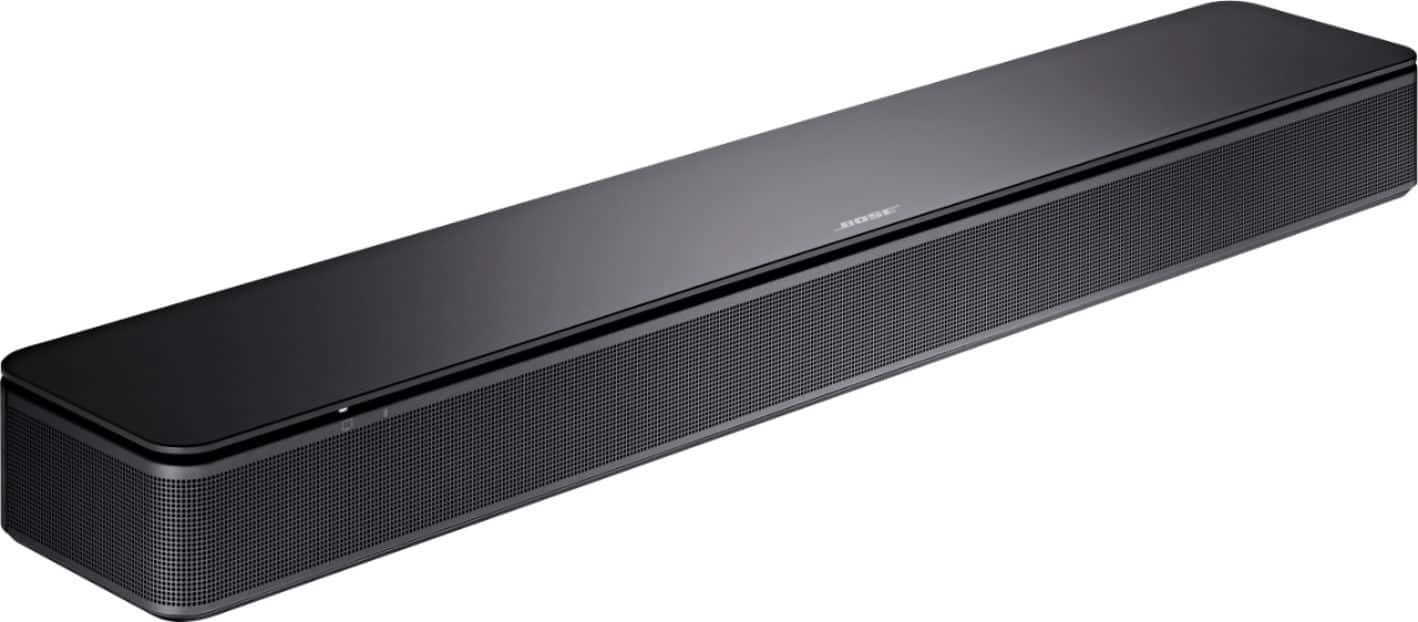
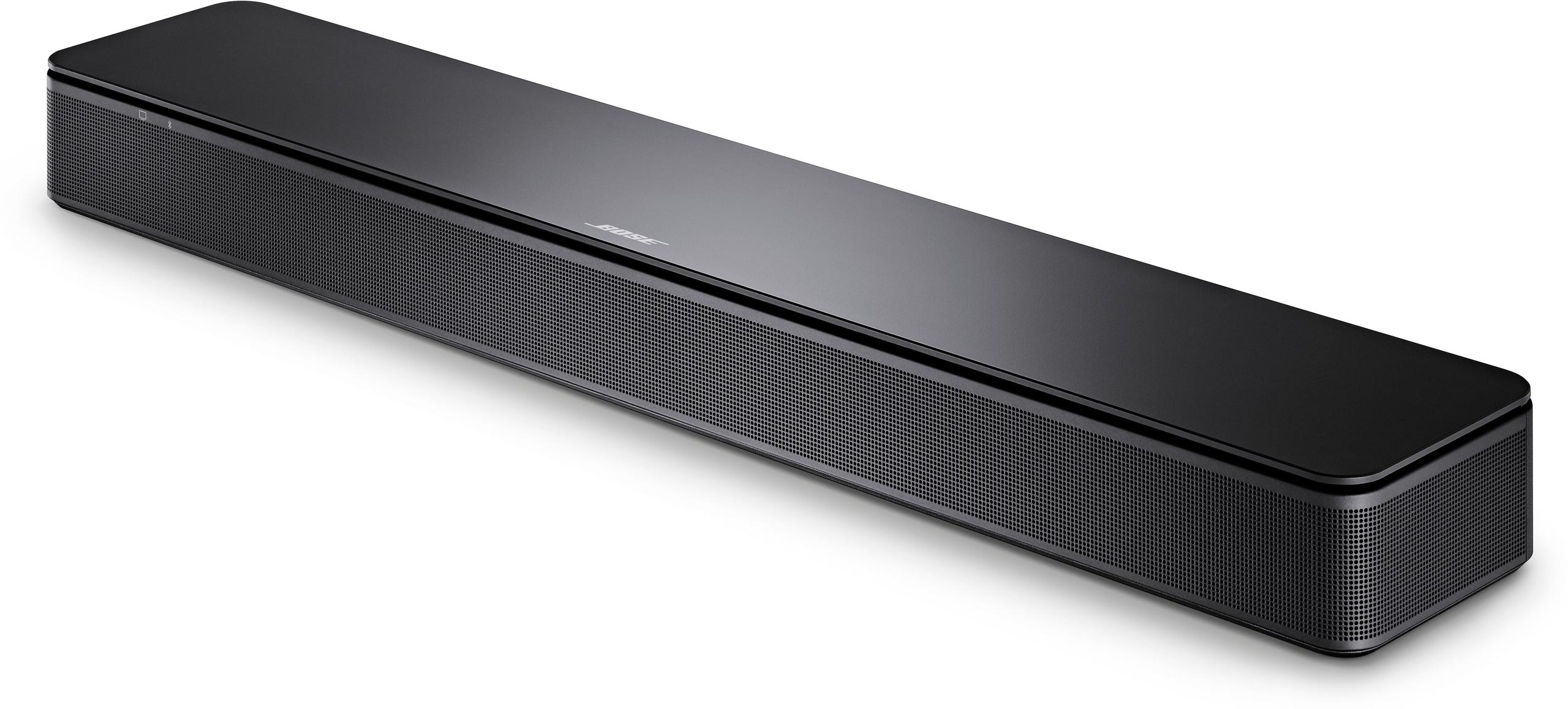
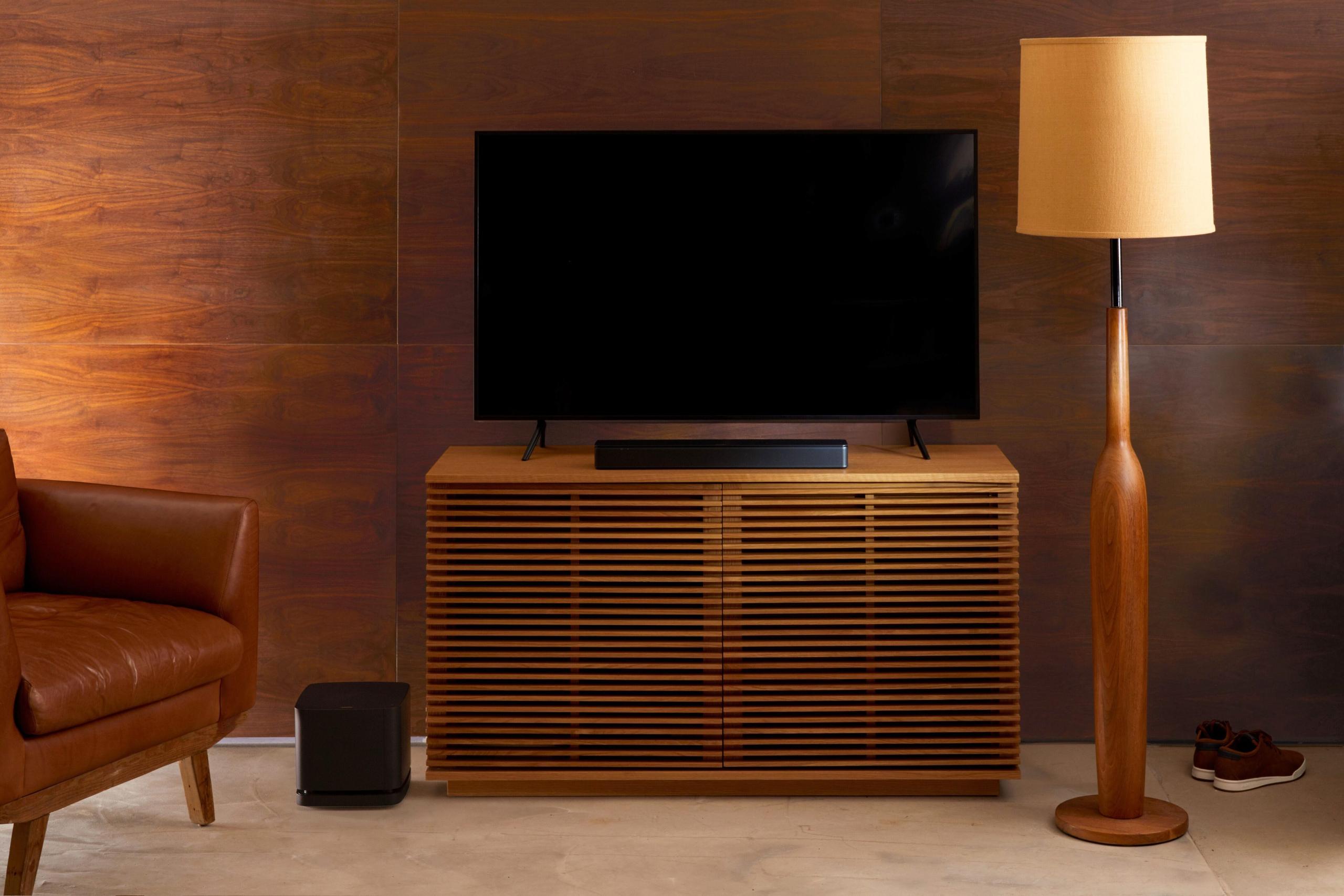
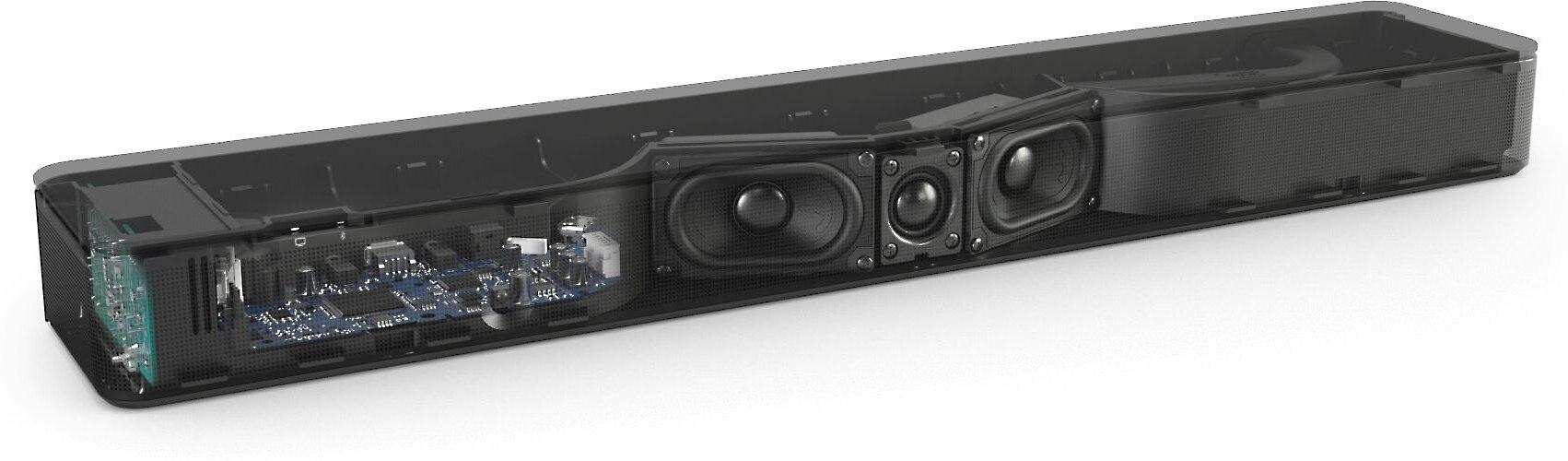
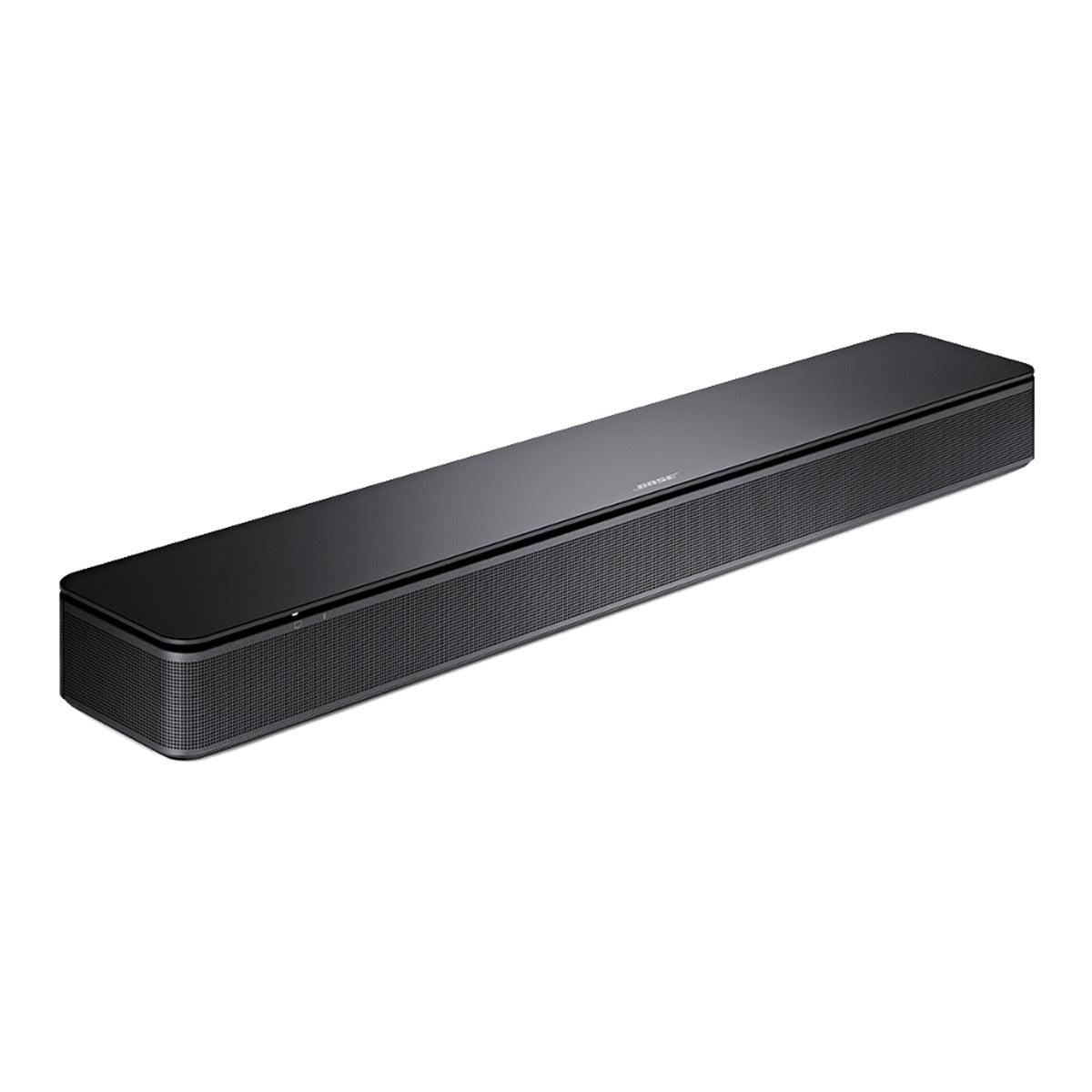
The Bose TV Speaker, introduced in 2020 and refined since then, takes the opposite approach. It's what we call a 3.1 system—three main speakers plus optional subwoofer support. But here's where Bose gets clever: instead of trying to fake surround sound, they focus obsessively on making dialogue crystal clear while keeping the entire system small enough to fit virtually anywhere.
When it comes to surround sound, the Ultimea Poseidon D50 has a massive advantage that no amount of digital processing can overcome: actual rear speakers. These satellite speakers, connected via 19.6-foot cables, create genuine spatial audio positioning. When a helicopter flies overhead in a movie, you'll hear it move from front to back because there are literally speakers behind you reproducing that sound.
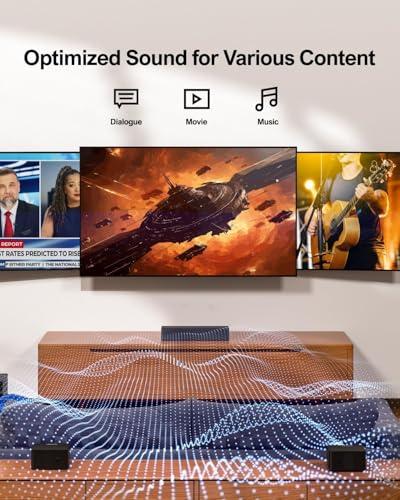
The system's SurroundX™ technology adds another layer of sophistication. This proprietary algorithm uses an integrated DSP chip (Digital Signal Processor) to convert standard stereo audio into 5.1 surround sound. Think of it as an intelligent translator that takes regular TV audio and spreads it across all five speakers in a way that makes sense spatially. When you're watching older content that wasn't originally mixed for surround sound, this feature becomes incredibly valuable.
In contrast, the Bose TV Speaker uses virtual surround processing with two angled full-range drivers. These drivers are positioned to bounce sound off your walls and create a wider stereo image. It's impressive for what it is, but it simply cannot match the immersion of having actual speakers positioned around your room. The laws of physics don't bend for even the most sophisticated audio processing.
Here's where things get interesting. While the Ultimea has more speakers, the Bose TV Speaker absolutely crushes it for dialogue clarity. Bose includes a dedicated center tweeter—a small speaker specifically designed to reproduce high frequencies—that focuses solely on speech. Their proprietary Dialogue Mode analyzes what you're watching in real-time and dynamically enhances vocal frequencies.
This matters more than you might think. Modern TV shows and movies often have dialogue mixed lower than background music and sound effects, a technique that works great in movie theaters but falls apart on TV speakers. The Bose's approach essentially acts like a smart equalizer that knows when someone is talking and makes sure you can hear them clearly.
The Ultimea handles dialogue through its center channel, which is standard for 5.1 systems. It's adequate, but it doesn't have the specialized processing that makes the Bose exceptional for TV watching.
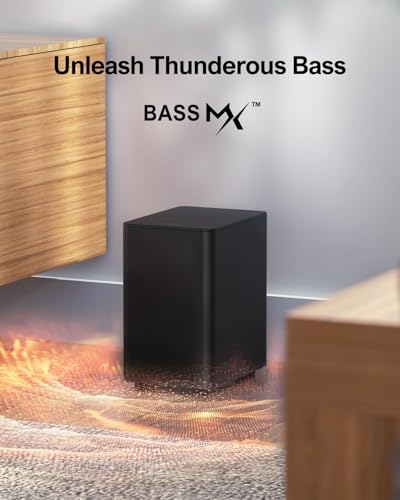
Bass response reveals another fundamental difference in philosophy. The Ultimea Poseidon D50 includes a 5.25-inch wireless subwoofer right in the box. This subwoofer uses BassMX™ technology, which optimizes the magnetic circuit and allows for 15mm of diaphragm excursion—that's how far the speaker cone can move to push air and create sound waves. More excursion generally means deeper, more impactful bass.
The wireless connection means you can place this subwoofer anywhere in your room without running cables, which is crucial for bass performance. Subwoofers work best when positioned away from walls and in corners where room acoustics can amplify their output.
The Bose TV Speaker takes a different approach: no built-in subwoofer, but compatibility with Bose's Bass Module 500 and 700. This modularity lets you start simple and add bass later, but it also means additional cost and complexity. At the time of writing, these bass modules typically cost several hundred dollars—sometimes approaching the price of the main soundbar itself.
The Ultimea specs out at 320W peak power, which sounds impressive but requires some context. Peak power ratings can be misleading because they represent maximum output for brief moments, not sustained performance. What matters more is how this power is distributed across six drivers and how efficiently those drivers convert electrical energy into sound.
With its true 5.1 configuration, the Ultimea is designed for rooms between 250-380 square feet. This makes sense—when you have rear speakers, you need enough space to create proper separation between front and back channels. Cramming a 5.1 system into a small room can actually make it sound worse than a good stereo setup.
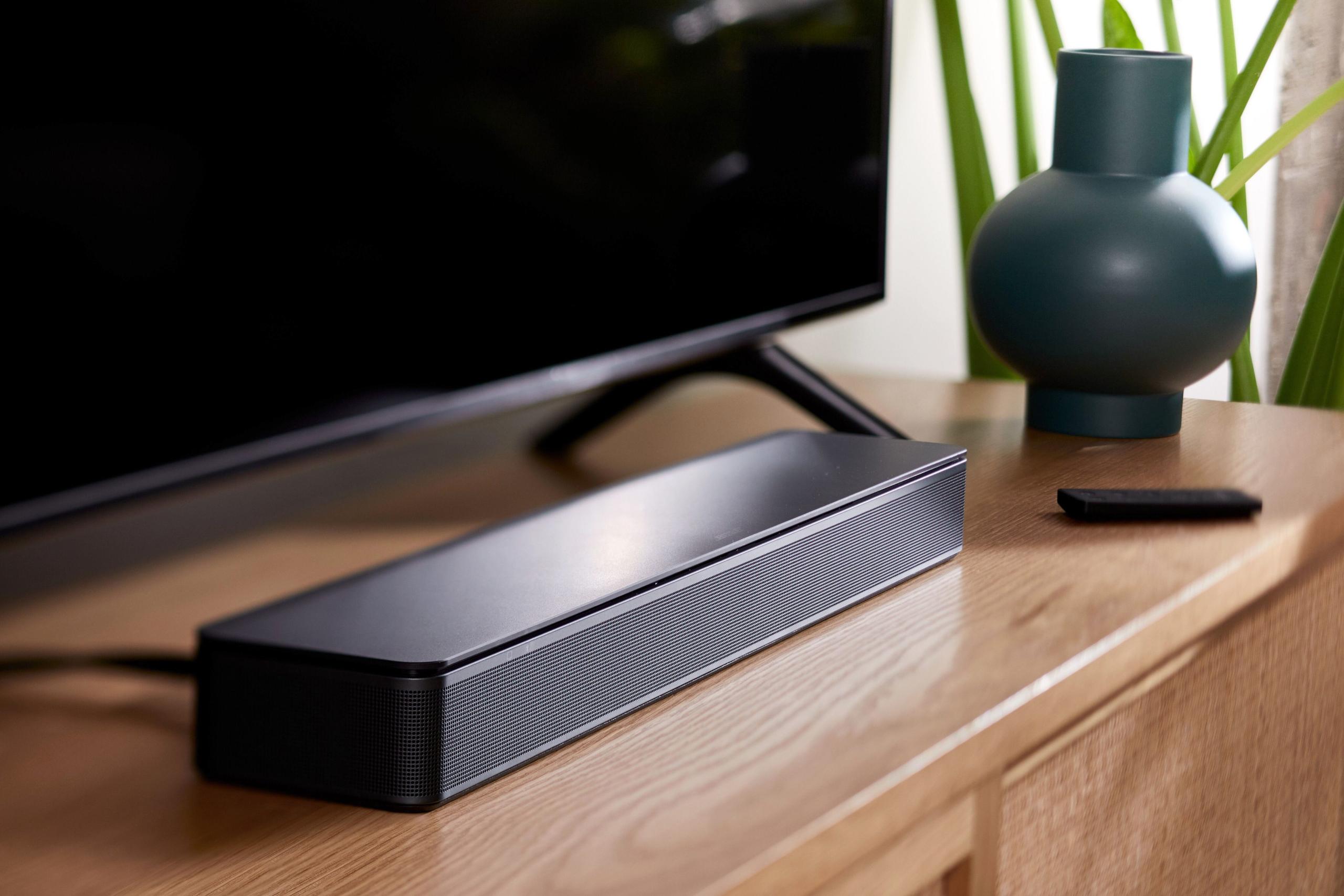
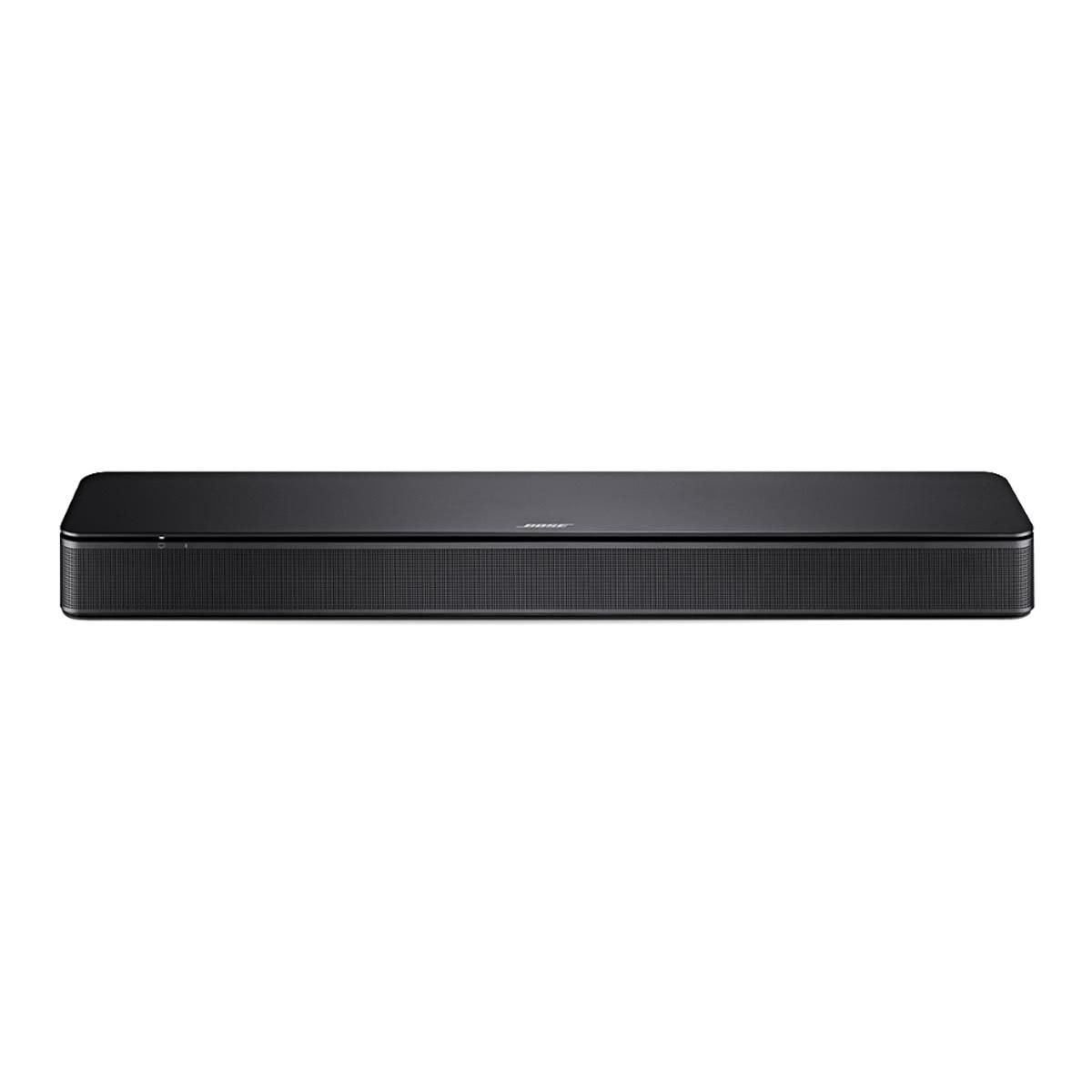
The Bose doesn't publish power specs, which is typical for the company. Bose focuses on efficiency rather than raw power, using carefully tuned drivers and enclosures to maximize perceived loudness and clarity. At just 2.2 inches tall, it's designed to work in any size room without overwhelming smaller spaces.
The Ultimea Poseidon D50 comes with comprehensive smartphone app control, something relatively rare in budget-friendly soundbars. This app gives you access to 121 preset EQ matrices—essentially 121 different sound profiles optimized for different types of content. The 10-band equalizer lets you fine-tune frequency response, adjusting everything from deep bass to bright treble.
This level of customization is genuinely useful. You might want booming bass for action movies but prefer a more balanced sound for music. The app also provides independent volume control for the rear speakers, which is crucial for balancing surround effects based on your room layout and seating position.
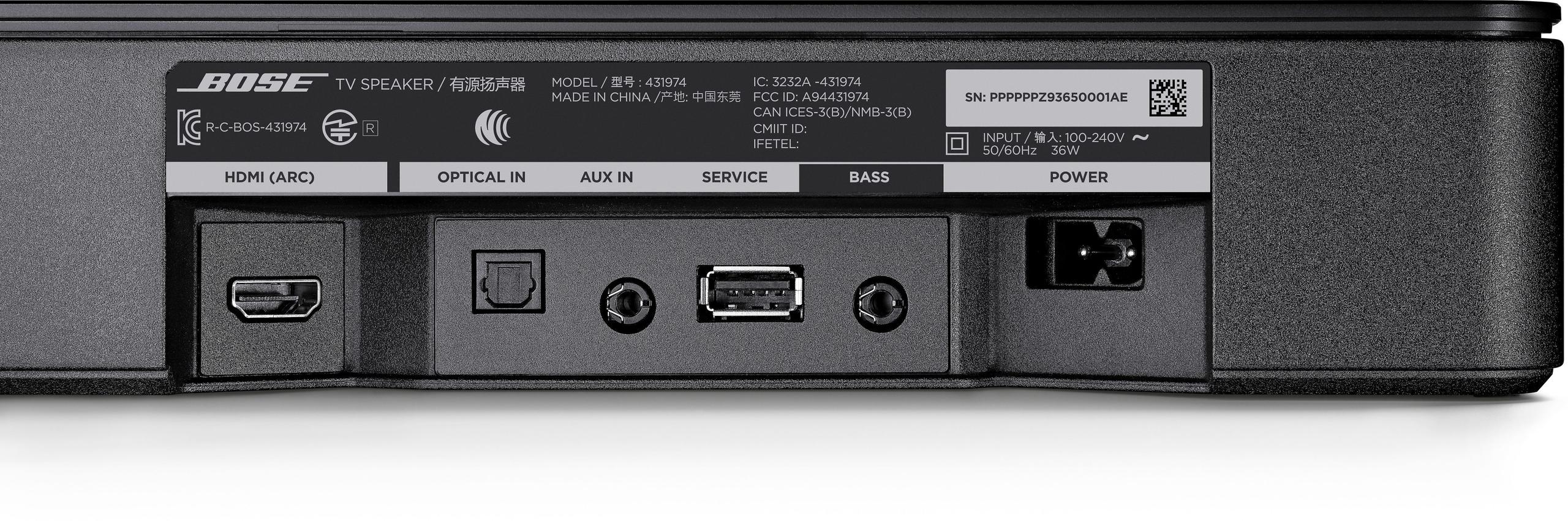
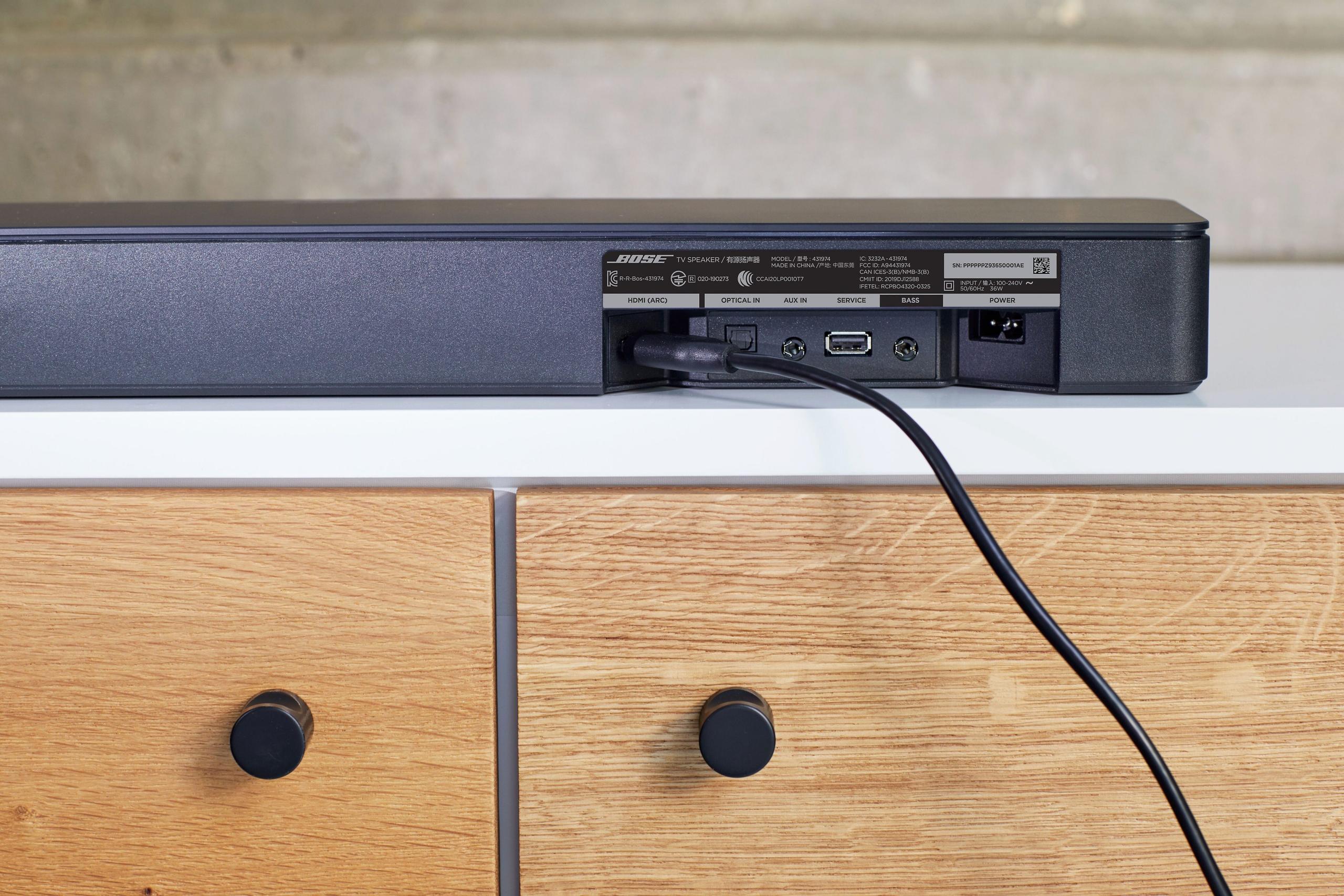
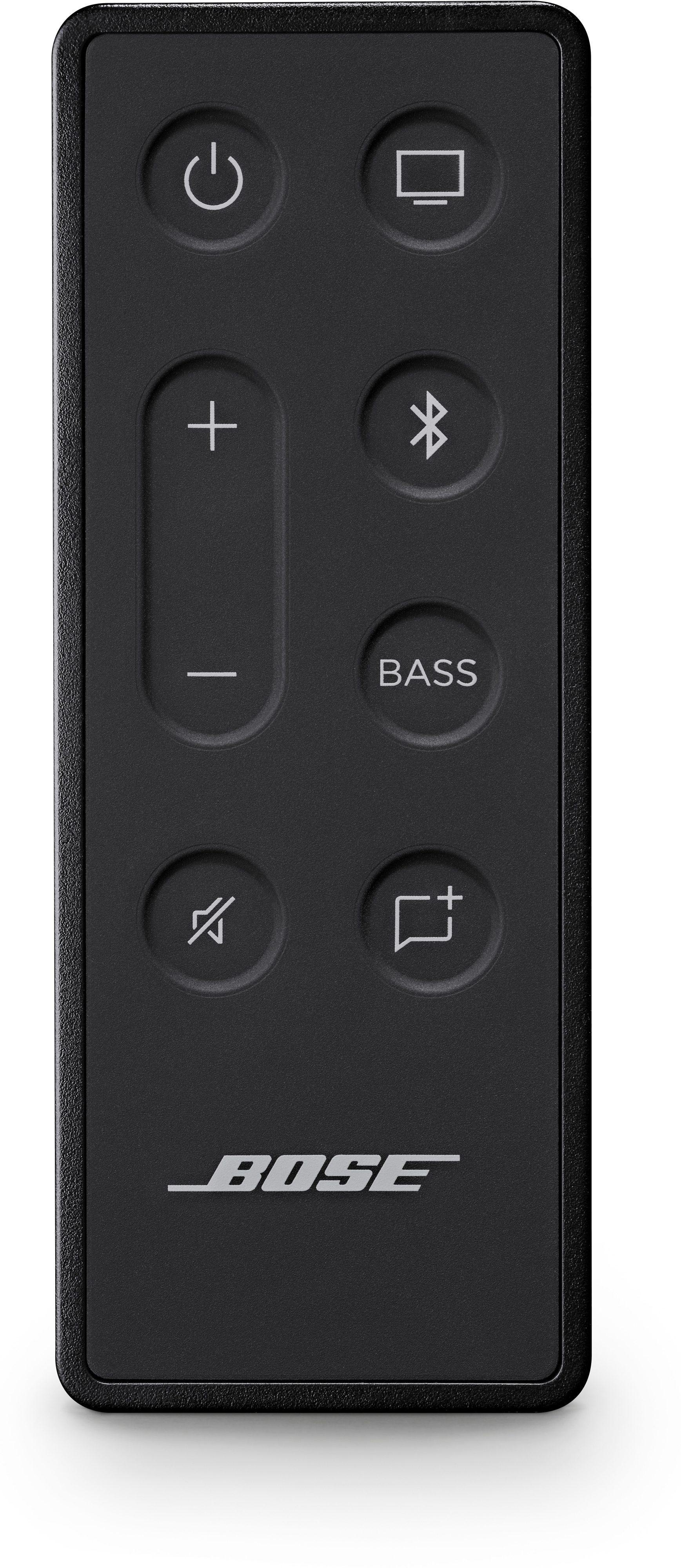
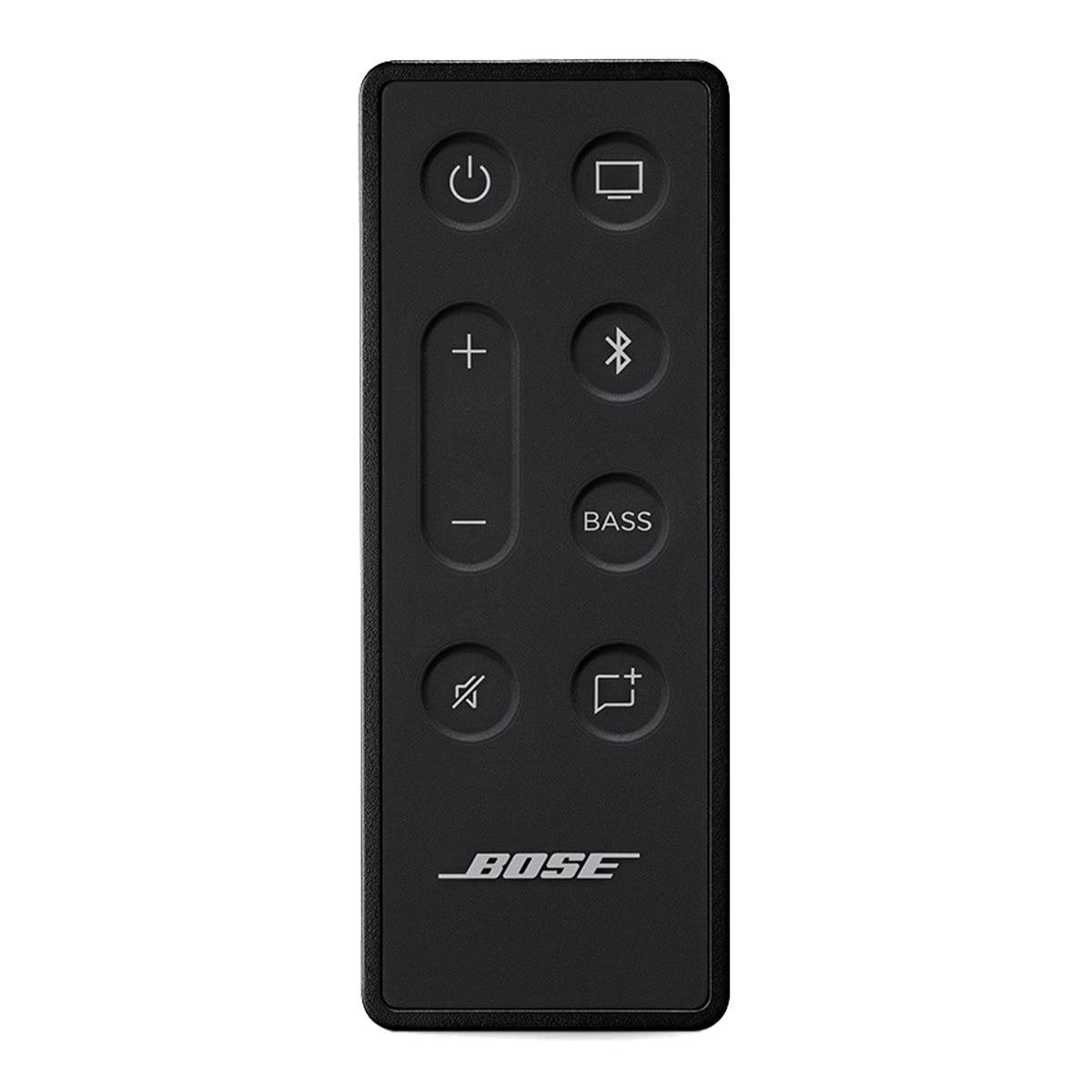
The Bose TV Speaker keeps things deliberately simple. There's no app control, but it does offer HDMI-CEC integration. CEC (Consumer Electronics Control) is a protocol that lets your TV and soundbar communicate with each other. When you turn on your TV, the soundbar automatically powers up. Adjust volume with your TV remote, and the soundbar responds accordingly. It's the kind of seamless integration that makes technology feel invisible.
Modern connectivity becomes increasingly important as streaming services and gaming consoles demand higher-quality audio transmission. The Ultimea includes HDMI eARC (enhanced Audio Return Channel), which supports higher bandwidth audio formats and provides better sync between video and audio.
The Bose includes HDMI ARC (the older standard) plus optical and analog inputs. While this covers most use cases, eARC provides better performance for gaming and certain streaming content. The Bose also earned Roku TV Ready certification, meaning it's specifically optimized to work with Roku TVs for automatic setup and enhanced compatibility.
Bluetooth connectivity differs significantly between the models. The Ultimea uses Bluetooth 5.3, offering improved range and connection stability for wireless music streaming. The Bose uses Bluetooth 4.2, which is older but perfectly adequate for most users.
This is where personal preferences and long-term value considerations come into play. The Ultimea prioritizes functionality over aesthetics, using plastic construction throughout to keep costs down. It's not ugly, but it won't win any design awards either.
The Bose TV Speaker represents everything Bose has learned about premium audio design. The build quality is immediately apparent—solid construction, refined materials, and that characteristic Bose aesthetic that blends seamlessly with high-end electronics. This matters if your soundbar will be visible in your living space and you care about how your entertainment setup looks.
At the time of writing, these products occupy very different price tiers, but comparing value requires looking beyond initial cost. The Ultimea delivers what would traditionally require separate purchases: soundbar, subwoofer, and rear speakers, all in one package. You're getting significantly more audio hardware per dollar spent.
However, the Bose TV Speaker's value proposition lies in its refinement and expandability. If you start with the main unit and later add a Bass Module, you'll have invested more total dollars but gained a modular system that can grow with your needs.
Consider also the "hidden costs" of each approach. The Ultimea requires proper placement of rear speakers, which might mean running cables along baseboards or through walls. The Bose sits elegantly under your TV with a single connection.
For dedicated home theater use, the Ultimea Poseidon D50 provides the more authentic experience. True surround positioning creates immersion that virtual processing simply cannot match. When watching movies with sophisticated sound design—think Marvel films, war movies, or anything with vehicles moving through the scene—the difference is night and day.
The system's ability to convert stereo content to 5.1 through SurroundX™ processing becomes particularly valuable for older movies and TV shows. Instead of having all sound come from the front, the algorithm intelligently distributes ambient sounds and music to create a more enveloping experience.
However, home theater performance isn't just about surround sound. The Bose TV Speaker excels at one of the most important aspects of movie watching: understanding dialogue. If you find yourself constantly adjusting volume or using subtitles because you can't hear what characters are saying, the Bose's dialogue processing might be more valuable than surround effects.
Have the space and patience for proper setup. True 5.1 requires thoughtful speaker placement and cable management. If you have a dedicated media room or don't mind the complexity, the payoff is substantial.
Prioritize movie and gaming immersion. When you want to feel like you're inside the action, physical surround speakers deliver in ways that virtual processing cannot match.
Want maximum value for audio hardware. You're getting six speakers, wireless subwoofer, and advanced processing at a price point where most competitors offer basic stereo sound.
Enjoy tweaking and customizing. The smartphone app control and extensive EQ options appeal to users who like to optimize their audio experience for different content types.
Value simplicity and elegant integration. If you want better TV sound without changing your room layout or dealing with multiple components, this is your answer.
Struggle with dialogue clarity. The dedicated speech processing makes this soundbar exceptional for TV shows, news, and dialogue-heavy movies.
Plan to expand gradually. Starting with excellent dialogue performance and adding bass later lets you spread the investment over time.
Prioritize build quality and aesthetics. If your soundbar will be visible and you want something that looks as good as it sounds, Bose delivers premium design.
Have space constraints. At just over 2 inches tall, it fits virtually anywhere without blocking TV sensors or overwhelming smaller rooms.
These soundbars solve different problems, and choosing between them comes down to understanding what you actually need versus what sounds impressive on paper.
The Ultimea Poseidon D50 5.1 delivers genuine home theater immersion at a remarkable price point. If you have the space, patience for setup, and primarily watch content where surround effects matter, it provides dramatically more audio experience per dollar than almost anything else on the market.
The Bose TV Speaker perfects the fundamentals of TV audio enhancement. It makes dialogue clearer, fits anywhere, and provides the kind of seamless user experience that makes technology feel effortless. If you primarily watch TV shows, news, and dialogue-heavy content, or if you need something that just works without complexity, it's the smarter choice.
Neither approach is wrong—they're just optimized for different priorities. The Ultimea gives you more speakers and surround immersion; the Bose gives you better dialogue and premium refinement. Your choice should align with how you actually use your TV and what compromises you're willing to make in pursuit of better sound.
In my experience researching and evaluating countless soundbar reviews, the most satisfied users are those who choose based on their actual viewing habits rather than impressive-sounding specs. If you're honest about what you watch and how you use your entertainment space, either of these soundbars can dramatically improve your audio experience—they'll just do it in very different ways.
| Ultimea Poseidon D50 5.1 Soundbar Home Theater (2025) | Bose TV Speaker Soundbar |
|---|---|
| Channel Configuration - Determines surround sound authenticity | |
| True 5.1 with physical rear speakers | 3.1 virtual surround |
| Subwoofer Inclusion - Major cost and performance factor | |
| 5.25" wireless subwoofer included | No subwoofer (optional Bass Module sold separately) |
| Peak Power Output - Affects room filling capability | |
| 320W across 6 drivers | Not specified (Bose focuses on efficiency over raw power) |
| Physical Rear Speakers - Creates genuine surround positioning | |
| 2 wired satellite speakers (19.6ft cables) | None (uses virtual processing) |
| Dialogue Enhancement - Critical for TV viewing clarity | |
| Standard center channel processing | Dedicated center tweeter with Dialogue Mode |
| Smart App Control - Convenience and customization | |
| Full smartphone app with 121 EQ presets | No app (uses remote and HDMI-CEC) |
| HDMI Support - Future-proofing for high-quality audio | |
| eARC (enhanced Audio Return Channel) | ARC (standard Audio Return Channel v1.4) |
| Bluetooth Version - Wireless streaming quality | |
| 5.3 (latest standard with better range/stability) | 4.2 (older but adequate) |
| Physical Dimensions - Space requirements | |
| Larger system requiring rear speaker placement | Ultra-compact 2.2" tall, fits anywhere |
| Room Coverage - Optimal performance area | |
| 250-380 sq ft (benefits from larger spaces) | Any room size (designed for versatility) |
| Build Quality - Long-term durability and aesthetics | |
| Functional plastic construction | Premium materials with refined design |
| Setup Complexity - Installation requirements | |
| Multi-component setup with cable management | Single unit with one connection |
| EQ Customization - Sound tuning options | |
| 10-band EQ with extensive app control | Basic bass boost and dialogue modes |
| Expandability - System growth options | |
| Complete system from start | Modular design for gradual expansion |
The Ultimea Poseidon D50 5.1 has significantly better surround sound because it includes physical rear speakers that you place behind your seating area. This creates true 5.1 surround sound with authentic spatial positioning. The Bose TV Speaker only offers virtual surround sound through digital processing, which can't match the immersion of actual rear speakers.
No, only the Ultimea Poseidon D50 5.1 includes a wireless subwoofer in the box. The Bose TV Speaker requires you to purchase a separate Bass Module (either the 500 or 700 model) if you want dedicated bass, which adds significant cost to the overall system.
The Bose TV Speaker excels at dialogue clarity with its dedicated center tweeter and proprietary Dialogue Mode that analyzes content to enhance speech. While the Ultimea Poseidon D50 5.1 has a center channel for dialogue, it doesn't match the specialized speech processing of the Bose system.
The Bose TV Speaker is ultra-compact at just 2.2 inches tall and fits virtually anywhere. The Ultimea Poseidon D50 5.1 requires significantly more space since you need to position rear speakers behind your seating area with 19.6-foot cables, making it better suited for larger rooms.
The Bose TV Speaker is much easier to set up with just a single connection to your TV and no additional speakers to position. The Ultimea Poseidon D50 5.1 requires placing multiple components including rear speakers and a wireless subwoofer, plus managing cable runs throughout your room.
Only the Ultimea Poseidon D50 5.1 offers smartphone app control with extensive customization options including 121 EQ presets and 10-band equalizer. The Bose TV Speaker uses traditional remote control and HDMI-CEC integration but doesn't have a dedicated app.
The Ultimea Poseidon D50 5.1 offers better hardware value since you get a complete 5.1 system with subwoofer and rear speakers included. The Bose TV Speaker costs more upfront and requires additional purchases for comparable bass performance, but offers premium build quality and brand reliability.
The Ultimea Poseidon D50 5.1 is better for gaming due to its true surround sound that enhances spatial audio in games, plus HDMI eARC support for higher quality audio transmission. The Bose TV Speaker works for gaming but lacks the immersive surround positioning that enhances gameplay experience.
The Bose TV Speaker has superior build quality with premium materials and refined construction typical of Bose products. The Ultimea Poseidon D50 5.1 uses functional plastic construction to keep costs down while delivering more audio hardware.
Both soundbars support Bluetooth music streaming, but the Ultimea Poseidon D50 5.1 uses the newer Bluetooth 5.3 standard for better range and connection stability compared to the Bose TV Speaker's Bluetooth 4.2. Both work well for casual music listening.
The Bose TV Speaker is ideal for small apartments due to its compact size and single-unit design that doesn't require rear speaker placement. The Ultimea Poseidon D50 5.1 is better suited for larger spaces where you have room to properly position all the speakers for optimal surround sound.
For dedicated home theater use, the Ultimea Poseidon D50 5.1 provides the more authentic cinematic experience with true surround sound positioning and included subwoofer for impactful bass. However, if dialogue clarity is your priority and you prefer simple setup, the Bose TV Speaker delivers exceptional speech enhancement in a premium package.
We've done our best to create useful and informative comparisons to help you decide what product to buy. Our research uses advanced automated methods to create this comparison and perfection is not possible - please contact us for corrections or questions. These are the sites we've researched in the creation of this article: youtube.com - eu.ultimea.com - newegg.com - tvsbook.com - youtube.com - provantage.com - ultimea.com - techradar.com - community.ultimea.com - homedepot.com - community.ultimea.com - ultimea.com - ultimea.de - youtube.com - medisamhealthcenter.com - ultimea.com - youtube.com - walmart.com - bestbuy.com - projectorscreen.com - forums.audioholics.com - digitaltrends.com - abt.com - crutchfield.com - staples.com - bestbuy.com - pcrichard.com - visions.ca - bose.com - assets.bose.com

Privacy Policy
Terms and Conditions - Affiliate Policy
Home Security
© Copyright 2008-2026.
11816 Inwood Rd #1211, Dallas, TX 75244