

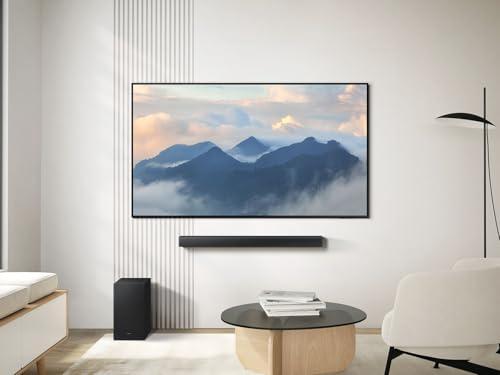
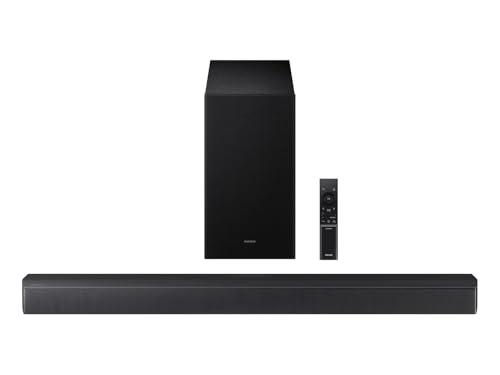
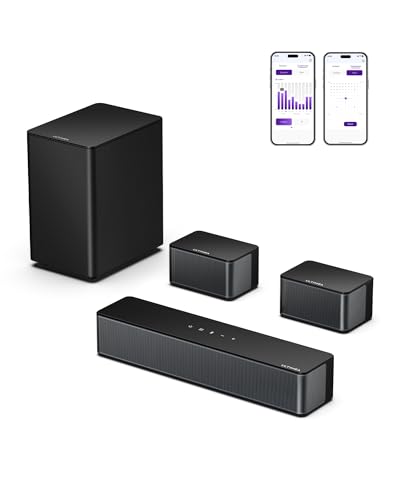


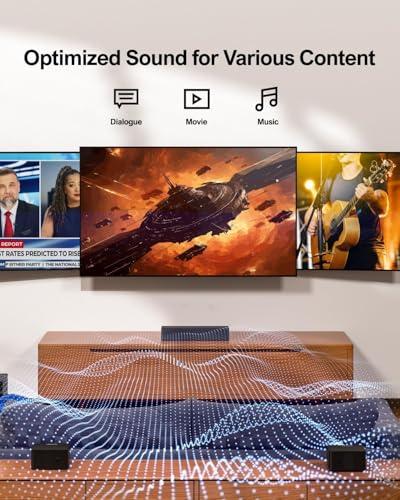

When you're watching your favorite movie and the dialogue gets drowned out by explosions, or when TV shows sound flat and lifeless, you know it's time to upgrade from your TV's built-in speakers. But choosing between soundbars can feel overwhelming, especially when you're comparing systems with different approaches to surround sound. Today we're diving deep into two very different solutions: the Samsung HW-B630F, a premium 3.1-channel system, and the Ultimea Poseidon D50, an authentic 5.1 surround setup that costs significantly less.
Both products launched in 2025, representing the current state of budget-to-mid-range home theater audio. The Samsung builds on years of refinement in virtual surround processing, while the Ultimea takes advantage of modern manufacturing to deliver true multi-channel audio at previously impossible price points. Understanding their fundamental differences will help you make the right choice for your living room.
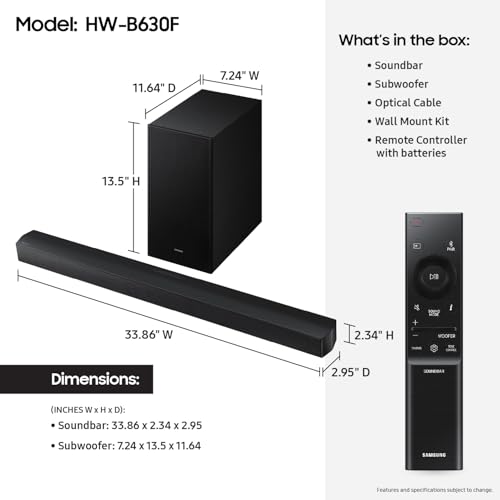
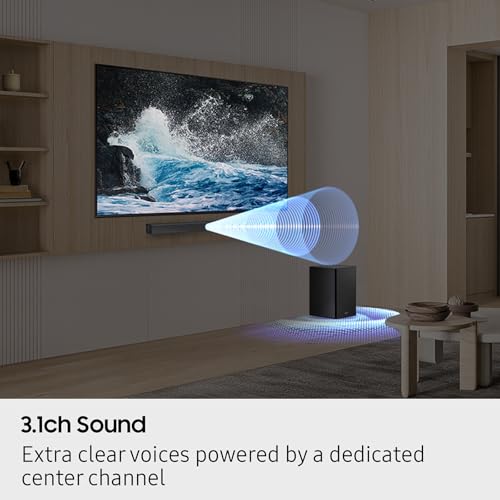
Before we dig into the specifics, let's clarify what these numbers actually represent. The first digit tells you how many main speakers handle most of the sound, while the second digit indicates whether there's a dedicated subwoofer for bass. So 3.1 means three main speakers (left, center, right) plus a subwoofer, while 5.1 adds two rear speakers for true surround sound.
The Samsung HW-B630F takes the 3.1 approach seriously. Inside its sleek soundbar are three separate speakers: dedicated left, center, and right channels. This isn't just marketing—having a physical center channel makes an enormous difference for dialogue clarity. When actors speak on screen, their voices come directly from the center speaker, anchored to the TV rather than floating somewhere between the left and right speakers like cheaper soundbars do.
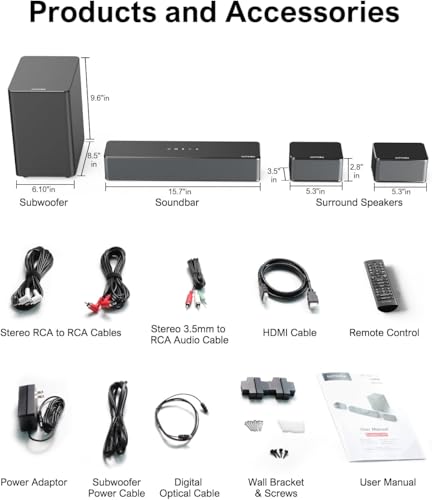
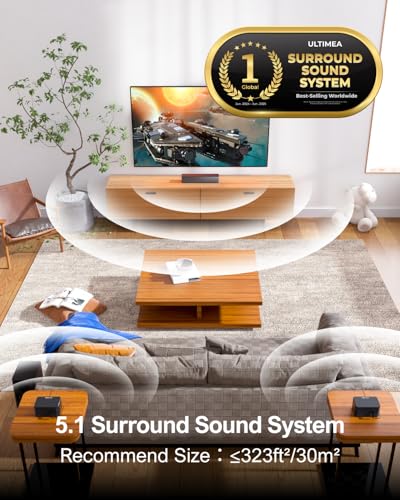
The Ultimea Poseidon D50, meanwhile, gives you the full 5.1 experience with actual rear speakers connected by 19.6-foot cables. This means when a helicopter flies overhead in a movie, or when you're gaming and need to locate enemy footsteps, the sound actually comes from behind you rather than being simulated by front speakers.
If you've ever found yourself constantly adjusting the volume during movies—turning it up to hear dialogue, then quickly turning it down when the action scenes blast your ears—you understand why dialogue clarity matters so much. This is where the Samsung HW-B630F really shows its strength.
The dedicated center channel in the Samsung isn't just another speaker; it's specifically tuned for human speech frequencies, typically between 250Hz and 4,000Hz where most vocal information lives. Samsung's Voice Enhance mode goes further, applying sophisticated digital signal processing (DSP) that analyzes incoming audio in real-time and boosts vocal clarity without making everything sound unnaturally bright.
The system's Adaptive Sound feature represents some seriously advanced audio engineering. It continuously monitors what you're watching and automatically adjusts the sound profile. Watching a quiet drama? It emphasizes dialogue and subtle details. Switch to an action movie? It opens up the dynamic range while keeping voices intelligible. This kind of smart processing was typically reserved for much more expensive systems just a few years ago.
The Ultimea Poseidon D50 handles dialogue differently. While it has a center channel integrated into its main soundbar, it's not a separate physical driver like the Samsung. Instead, it relies on its Dialogue EQ mode and the 10-band equalizer accessible through the smartphone app. You can definitely tune it for better speech clarity, but it requires more manual adjustment and doesn't have the Samsung's automatic content analysis.
Based on our research into user reviews and expert evaluations, the consensus is clear: if dialogue clarity is your primary concern—whether you're watching news, TV dramas, or just want to understand every word in movies—the Samsung HW-B630F delivers noticeably better results straight out of the box.
Both systems include wireless subwoofers, but they take different approaches to low-frequency reproduction. The Samsung HW-B630F uses a 6-inch driver in a bass-reflex cabinet. Bass-reflex means there's a carefully tuned port that allows air to move in and out, extending the low-frequency response and making the small cabinet sound bigger than its physical dimensions suggest.
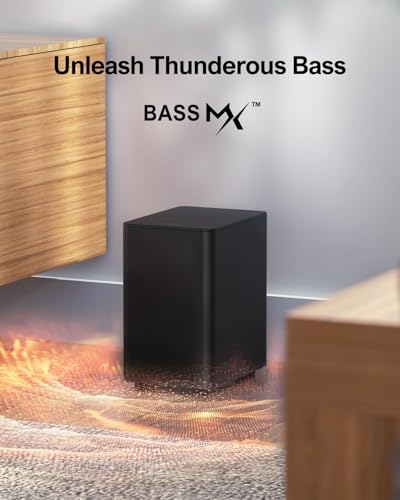
The Ultimea Poseidon D50 counters with a 5.25-inch driver that uses what they call BassMX technology. The key here is the 15mm diaphragm excursion—that's how far the speaker cone can physically move back and forth. More excursion generally means the ability to move more air and create deeper bass, even from a smaller driver. The trade-off is that longer excursion requires more precise engineering to avoid distortion.
In practical terms, both systems deliver satisfying bass for most living rooms. The Samsung's slightly larger driver gives it an edge in effortless mid-bass punch—the kind that makes explosions and musical beats feel impactful without being overwhelming. The Ultimea's longer excursion design means it can dig deeper when the content demands it, though it might work a bit harder to achieve the same output levels.
At typical listening volumes in medium-sized rooms, you'd be happy with either system's bass performance. The Samsung might have a slight edge in overall refinement and integration with the main speakers, while the Ultimea offers impressive low-end extension for its size and price point.
This is where the fundamental difference between these systems becomes most apparent. The Samsung HW-B630F uses sophisticated virtual surround processing to create the illusion of sounds coming from around you, while the Ultimea Poseidon D50 actually places speakers around you.
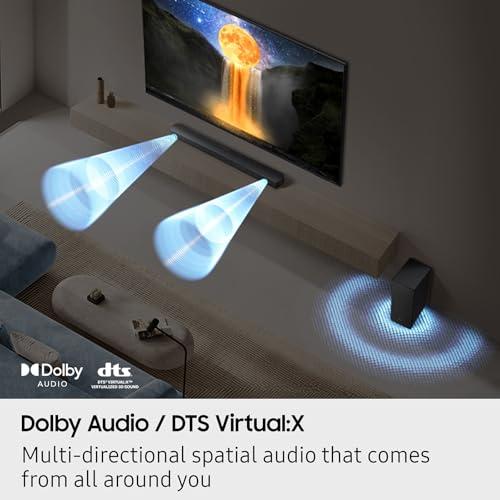
Samsung's DTS Virtual:X technology is genuinely impressive for what it accomplishes. Using psychoacoustic principles—basically, knowledge about how our brains interpret spatial audio cues—it processes the sound from the three front speakers to create the perception of height and surround effects. When implemented well, virtual surround can make sounds seem to come from beside or even above you, despite all the speakers being in front.
The system's Surround Sound Expansion mode takes this further, creating a wider soundstage that extends beyond the physical boundaries of the soundbar. In practice, this means movie soundtracks feel more enveloping, and you might notice ambient sounds like rain or crowd noise seeming to wrap around you rather than coming directly from the TV area.
But here's the reality: virtual surround, no matter how sophisticated, can't match the precision and immersion of actual rear speakers. The Ultimea Poseidon D50 gives you two dedicated 2.25-inch satellite speakers that you place behind or to the sides of your seating position. When a car drives past in a movie scene, the sound actually travels from front to back. When you're gaming and an enemy approaches from behind, you hear it from the correct direction.
The Ultimea's SurroundX algorithm also deserves credit for converting standard stereo content into multi-channel surround. This means even older movies or music can benefit from the full speaker array, though the effectiveness varies depending on how the original content was mixed.
For movie enthusiasts and serious gamers, there's simply no substitute for physical rear speakers. The Ultimea Poseidon D50 delivers this authentic surround experience at a fraction of what true 5.1 systems used to cost.
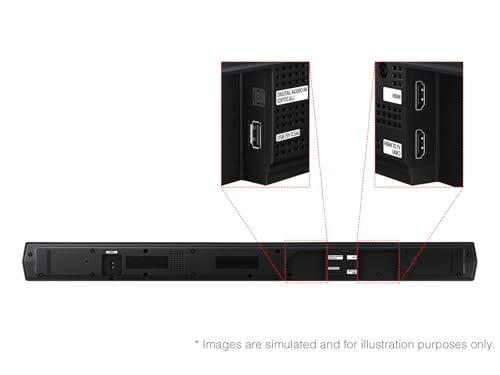
The connectivity differences between these systems reflect their different target markets and design philosophies. The Samsung HW-B630F includes HDMI 1.4 with Audio Return Channel (ARC), optical digital input, USB for media playback, and Bluetooth 4.2. For most current setups, this covers the basics adequately.
However, the HDMI 1.4 limitation means no 4K video pass-through and no enhanced Audio Return Channel (eARC) support. This isn't necessarily a dealbreaker since you can connect 4K sources directly to your TV and use ARC to send audio back to the soundbar, but it's less elegant and limits you to compressed audio formats like standard Dolby Digital rather than lossless formats.
The Ultimea Poseidon D50 includes HDMI eARC, which is a significant advantage for modern TVs. Enhanced ARC supports higher-bandwidth audio, including uncompressed multichannel audio and newer formats. It also provides more reliable communication between your TV and soundbar, reducing those annoying moments when the audio cuts out or the volume controls stop working properly.
The Ultimea also includes Bluetooth 5.3 versus Samsung's 4.2. While this might seem like a minor spec difference, Bluetooth 5.3 offers better range, more stable connections, and improved power efficiency. If you frequently stream music from your phone or tablet, you'll notice fewer dropouts and better connection reliability.
Perhaps most importantly, the Ultimea Poseidon D50 includes comprehensive smartphone app control. This isn't just about convenience—it opens up access to detailed EQ settings, including a 10-band equalizer and 121 preset EQ matrices. You can save different audio profiles for different types of content and fine-tune the sound to your room and preferences in ways that simply aren't possible with the Samsung's traditional remote control interface.
Modern gaming demands precise audio positioning to stay competitive, whether you're trying to locate enemy footsteps in a first-person shooter or catch subtle audio cues in a role-playing game. Both systems address gaming needs, but in different ways.
The Samsung HW-B630F includes a dedicated Game Mode that optimizes the audio processing for gaming scenarios. This mode reduces processing latency, applies cross-talk cancellation to improve directional clarity, and adjusts the frequency response to emphasize important gaming audio cues. Samsung's implementation is quite sophisticated, using their years of experience in audio processing to deliver genuinely useful gaming enhancements.
The Ultimea Poseidon D50 takes a more straightforward approach: actual surround speakers provide real directional audio. When combined with the system's gaming-optimized EQ settings, this creates excellent spatial awareness. The physical rear speakers give you accurate positioning information that virtual processing simply cannot match, though the wired connections do require cable management considerations.
For competitive gaming, the Ultimea Poseidon D50 has a clear advantage due to its physical surround speakers. For casual gaming or when you prioritize a clean setup without rear speaker cables, the Samsung HW-B630F provides excellent virtual positioning with lower setup complexity.
While both systems are primarily designed for TV and movie audio, they handle music differently due to their distinct tuning approaches. The Samsung HW-B630F is tuned with a forward vocal presentation that works beautifully for dialogue but can make music sound slightly mid-heavy. The system includes bass and treble controls (adjustable from -6 to +6), but the overall character remains focused on cinematic content.
The Ultimea Poseidon D50 offers much more flexibility for music listening through its extensive app-based EQ system. The dedicated Music mode provides a more balanced frequency response, and the 10-band equalizer lets you customize the sound signature to match your musical preferences or acoustic environment.
The Ultimea's approach reflects modern audio trends toward user customization, while Samsung's philosophy prioritizes optimized out-of-the-box performance for their primary use case. Neither approach is wrong, but they serve different user preferences.
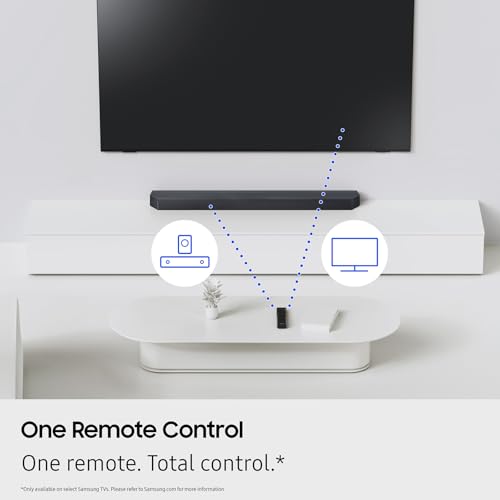
Installation complexity varies significantly between these systems. The Samsung HW-B630F offers the simpler setup: place the soundbar near your TV, position the wireless subwoofer anywhere within range (typically up to 30 feet), and connect a single cable to your TV. The wireless subwoofer pairs automatically, and Samsung's One Remote Control feature lets compatible Samsung TV remotes control the soundbar directly.
The Ultimea Poseidon D50 requires more planning. You need to run the 19.6-foot cables to your rear speakers and find appropriate placement for them—typically behind or to the sides of your main seating area. While the cables are long enough for most rooms, you'll need to consider cable routing to avoid tripping hazards and maintain a clean appearance.
Both systems support wall mounting, but the Samsung's cable-free design makes it more suitable for minimalist setups or rooms where running speaker cables isn't practical.
At the time of writing, the Ultimea Poseidon D50 costs roughly half as much as the Samsung HW-B630F while providing more speakers and more advanced connectivity features. This represents exceptional value in the current market, though it comes with some considerations about brand reputation and long-term support.
Samsung brings decades of audio engineering experience and established customer support infrastructure. The build quality feels premium, and you can expect reliable long-term operation and readily available support if issues arise. Samsung also offers an upgrade path with optional wireless rear speakers that can convert the 3.1 system into a true 5.1 configuration, though at additional cost.
Ultimea represents the new generation of audio companies leveraging modern manufacturing and direct-to-consumer sales to deliver impressive performance at disruptive price points. The feature set is genuinely impressive for the money, but the brand is less established, and long-term reliability remains somewhat unknown.
Choose the Samsung HW-B630F if dialogue clarity is your absolute priority, you value brand reputation and established support, you prefer a cleaner setup without rear speaker cables, or you're heavily invested in the Samsung ecosystem with compatible TVs and other devices. It's also the better choice if you plan to start with a 3.1 setup and potentially upgrade to 5.1 later with Samsung's wireless rear speaker kit.
Choose the Ultimea Poseidon D50 if you want genuine surround sound immersion for movies and gaming, you're comfortable with rear speaker cable management, you value extensive customization options through app control, or you want maximum performance per dollar spent. It's particularly appealing for larger rooms where the physical rear speakers can create truly enveloping surround effects.
The Ultimea Poseidon D50 represents remarkable value and delivers an authentic surround sound experience that was previously available only at much higher price points. However, the Samsung HW-B630F provides superior dialogue clarity and refined processing that justifies its premium for users whose primary focus is TV and movie dialogue.
For most users seeking their first soundbar upgrade, the Ultimea's combination of true surround sound, modern connectivity, and exceptional value makes it the more compelling choice. But if crystal-clear dialogue is non-negotiable—perhaps you have hearing difficulties or watch a lot of dialogue-heavy content—the Samsung's dedicated center channel and advanced voice processing make it worth the additional investment.
Both systems represent significant upgrades over TV speakers, and your choice ultimately depends on which aspects of audio performance matter most to your specific viewing habits and room setup.
| Samsung HW-B630F B-Series 3.1ch Soundbar System | Ultimea Poseidon D50 5.1 Soundbar Home Theater (2025) |
|---|---|
| Speaker Configuration - Determines surround sound authenticity and immersion | |
| True 3.1 channels: 3 drivers in soundbar + wireless subwoofer (virtual surround only) | True 5.1 channels: 3 drivers in soundbar + 2 physical rear speakers + wireless subwoofer |
| Dialogue Clarity - Critical for understanding speech in movies and TV | |
| Dedicated physical center channel with Voice Enhance mode and Adaptive Sound processing | Center channel integrated into soundbar array with app-controlled Dialogue EQ mode |
| HDMI Connectivity - Affects compatibility with modern 4K TVs and audio formats | |
| HDMI 1.4 ARC only (no eARC, limited to compressed audio formats) | HDMI eARC support (enables lossless audio and better TV integration) |
| Surround Sound Processing - How the system creates immersive audio | |
| DTS Virtual:X and Surround Sound Expansion (sophisticated virtual processing) | SurroundX™ algorithm plus actual physical rear speakers for true surround positioning |
| Audio Customization - Flexibility to tune sound to your preferences | |
| Basic bass/treble controls (-6 to +6), preset sound modes via remote | 10-band EQ with 121 preset matrices, multiple EQ modes via smartphone app |
| Wireless Technology - Affects streaming stability and device compatibility | |
| Bluetooth 4.2 with multipoint connection (connect 2 devices simultaneously) | Bluetooth 5.3 with improved range and stability, plus comprehensive app control |
| Physical Setup Requirements - Installation complexity and cable management | |
| Simple wireless setup (soundbar + wireless sub, no rear speaker cables) | Requires 19.6-foot cables for rear speakers (more immersive but complex setup) |
| Bass Performance - Low-frequency impact for movies and music | |
| 6" wireless subwoofer with bass-reflex design and Bass Boost mode | 5.25" wireless subwoofer with BassMX™ technology and 15mm excursion capability |
| Gaming Features - Audio enhancements for competitive and casual gaming | |
| Dedicated Game Mode with cross-talk cancellation and directional processing | Physical rear speakers provide authentic directional audio, gaming EQ modes via app |
| Brand Heritage and Support - Long-term reliability and customer service expectations | |
| Established Samsung brand with proven track record and comprehensive warranty support | Newer Ultimea brand offering exceptional value but less established support infrastructure |
The Samsung HW-B630F is significantly better for dialogue clarity thanks to its dedicated physical center channel and Voice Enhance mode. This system specifically tunes the center speaker for human speech frequencies and includes Adaptive Sound processing that automatically optimizes dialogue levels. While the Ultimea Poseidon D50 offers dialogue enhancement through its app-controlled EQ, it cannot match the Samsung's dedicated center driver for speech intelligibility.
Yes, the Ultimea Poseidon D50 provides true 5.1 surround sound with two physical rear speakers connected by 19.6-foot cables. This creates authentic directional audio where sounds actually come from behind you. In contrast, the Samsung HW-B630F uses virtual surround processing (DTS Virtual:X) to simulate surround effects from its front-facing speakers, which is impressive but cannot match the spatial accuracy of real rear speakers.
The Samsung HW-B630F is much easier to set up since it only requires placing the soundbar and wireless subwoofer—no rear speaker cables to run. The Ultimea Poseidon D50 requires routing 19.6-foot cables to position the rear speakers behind or beside your seating area, which takes more planning and cable management but delivers superior surround immersion.
The Samsung HW-B630F is a 3.1 system with three front speakers (left, center, right) plus a subwoofer, focusing on excellent front soundstage and dialogue clarity. The Ultimea Poseidon D50 is a true 5.1 system that adds two rear speakers for authentic surround sound positioning. The 5.1 configuration provides better immersion for movies and gaming, while 3.1 excels at dialogue-heavy content.
The Ultimea Poseidon D50 offers superior connectivity with HDMI eARC, Bluetooth 5.3, and comprehensive smartphone app control. The Samsung HW-B630F includes HDMI ARC (not eARC), Bluetooth 4.2, and traditional remote control. The Ultimea's eARC support provides better compatibility with modern TVs and access to higher-quality audio formats.
Only the Ultimea Poseidon D50 offers smartphone app control, providing access to a 10-band equalizer, 121 preset EQ matrices, and detailed audio customization. The Samsung HW-B630F uses traditional remote control and can integrate with Samsung TV remotes through One Remote Control, but lacks dedicated app functionality for advanced sound tuning.
For competitive gaming, the Ultimea Poseidon D50 has an advantage due to its physical rear speakers that provide accurate directional audio for locating enemies and environmental sounds. The Samsung HW-B630F includes a sophisticated Game Mode with cross-talk cancellation that enhances virtual positioning, making it excellent for gaming when you prefer a cable-free setup.
Yes, both the Samsung HW-B630F and Ultimea Poseidon D50 include wireless subwoofers. The Samsung features a 6-inch driver in a bass-reflex enclosure, while the Ultimea uses a 5.25-inch driver with BassMX technology and longer excursion capability. Both deliver satisfying bass performance for most living rooms.
The Ultimea Poseidon D50 provides exceptional value by offering true 5.1 surround sound, modern connectivity features, and extensive app control at a significantly lower cost than competing systems. The Samsung HW-B630F costs more but justifies the premium with superior dialogue processing, established brand reliability, and refined audio engineering.
The Samsung HW-B630F supports Samsung's optional wireless rear speaker kit to upgrade from 3.1 to 5.1 channels. The Ultimea Poseidon D50 already includes the complete 5.1 speaker array, so no expansion is needed. Both systems are compatible with wall mounting and speaker stands for flexible placement options.
The Ultimea Poseidon D50 offers better music customization through its dedicated Music EQ mode and extensive app-based equalizer controls. The Samsung HW-B630F is tuned primarily for cinematic content with forward dialogue presentation, though it includes basic bass and treble adjustments. The Ultimea provides more flexibility for different musical genres and listening preferences.
The Samsung HW-B630F lacks physical rear speakers for true surround immersion and has older HDMI 1.4 connectivity without eARC support. The Ultimea Poseidon D50 requires cable management for rear speakers and represents a newer brand with less established long-term reliability compared to Samsung's proven track record in audio equipment.
We've done our best to create useful and informative comparisons to help you decide what product to buy. Our research uses advanced automated methods to create this comparison and perfection is not possible - please contact us for corrections or questions. These are the sites we've researched in the creation of this article: samsung.com - bhphotovideo.com - crutchfield.com - youtube.com - bestproducts.com - videoandaudiocenter.com - pcrichard.com - bhphotovideo.com - samsung.com - youtube.com - requiremints.com - karlsonline.com - crutchfield.com - youtube.com - donstv.com - samsung.com - bhphotovideo.com - youtube.com - youtube.com - crutchfield.com - costco.ca - rtings.com - crutchfield.com - accio.com - bhphotovideo.com - manuals.plus - samsung.com - saraappliance.com - youtube.com - eu.ultimea.com - newegg.com - tvsbook.com - youtube.com - provantage.com - ultimea.com - techradar.com - community.ultimea.com - homedepot.com - community.ultimea.com - ultimea.com - ultimea.de - youtube.com - medisamhealthcenter.com - ultimea.com - youtube.com - walmart.com

Privacy Policy
Terms and Conditions - Affiliate Policy
Home Security
© Copyright 2008-2026.
11816 Inwood Rd #1211, Dallas, TX 75244