

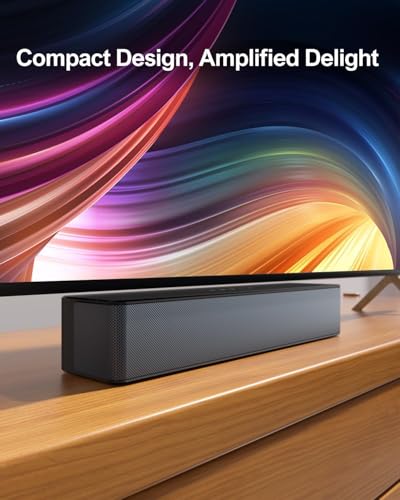
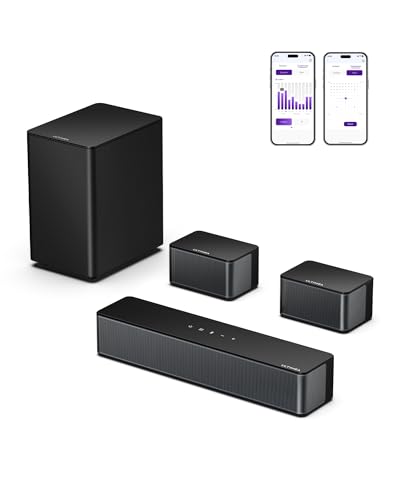
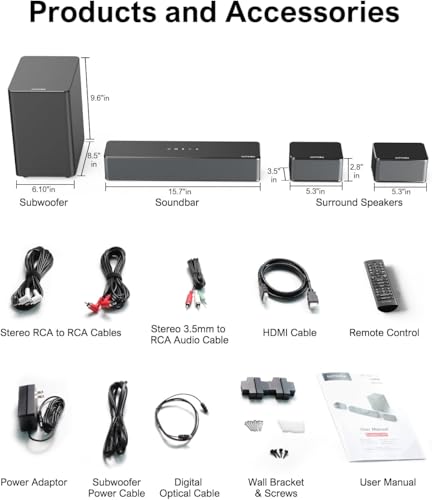


When you're tired of constantly asking "what did they just say?" during your favorite Netflix series, it's time to upgrade your TV's built-in speakers. But the soundbar market can feel overwhelming, especially when you're comparing products that seem completely different in scope and price. That's exactly the situation with the Ultimea Poseidon D50 5.1 Soundbar and the Amazon Fire TV Soundbar – two products that approach audio enhancement from entirely different angles.
Before diving into these specific models, it's helpful to understand what separates a basic soundbar from a full surround sound system. The soundbar market essentially splits into two camps: stereo upgrades and true surround systems.
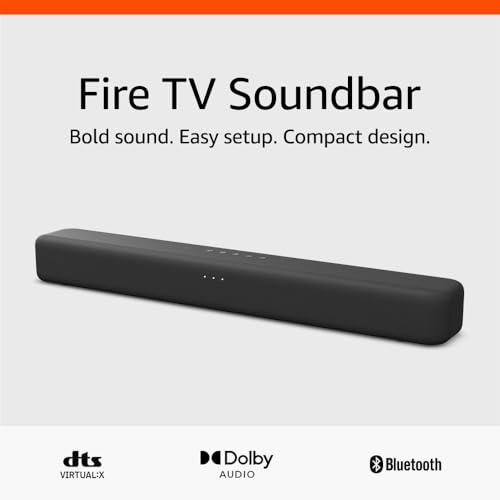
Stereo soundbars like the Amazon Fire TV Soundbar focus on improving dialogue clarity and creating a wider soundstage than your TV's tiny built-in speakers. They use digital processing tricks to simulate surround sound effects, but all the audio still comes from speakers pointing at you from the front.
True surround systems like the Ultimea Poseidon D50 include separate speakers that you place around your room, creating authentic directional audio where explosions whoosh past your ears and background music flows from behind you. The trade-off? More complexity and higher cost.
The key considerations that matter most are audio immersion level, setup complexity, room size compatibility, and how you actually use your entertainment system. Understanding these factors will help you pick the right approach for your specific situation.
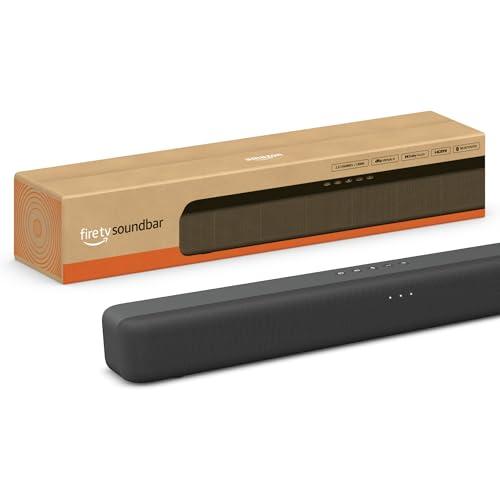
The Amazon Fire TV Soundbar, released in 2023, represents Amazon's streamlined approach to TV audio improvement. It's designed as a direct replacement for awful TV speakers, focusing on convenience and simplicity. Amazon learned from years of Fire TV device development that most people want better audio without dealing with complicated setups or multiple boxes cluttering their living space.
The Ultimea Poseidon D50, launching as a 2025 model, takes the opposite approach. It's a complete home theater system that happens to come in a soundbar package. Ultimea designed this system for people who want legitimate surround sound but don't want to buy separate receivers, amplifiers, and speakers from different brands.
These different philosophies create products that serve distinct user types, even though both technically "improve your TV's sound."
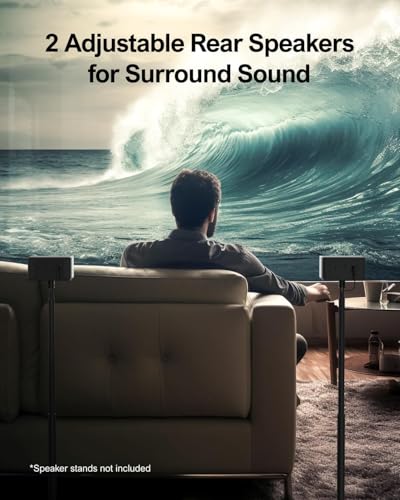
The most significant performance difference between these systems comes down to how they create surround sound effects. The Ultimea Poseidon D50 includes two physical rear speakers that you place behind your seating area, connected by long cables to the main soundbar. When a movie's soundtrack sends audio to the rear channels, those sounds actually come from behind you – exactly where they should.
This authentic positioning creates what audio engineers call "soundstage depth." When a helicopter flies overhead in a war movie, you'll hear it start from the front soundbar, move to the side, then continue behind you through the rear speakers. That's impossible to replicate with virtual processing.
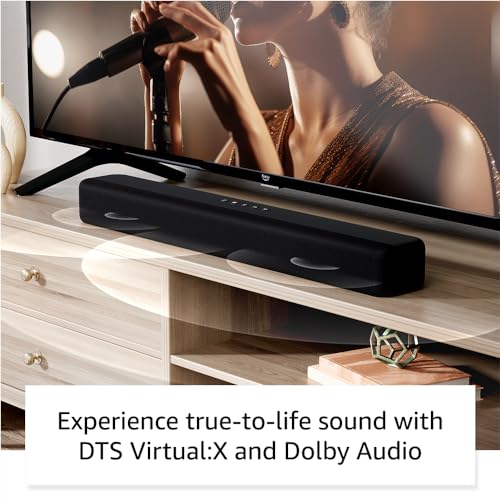
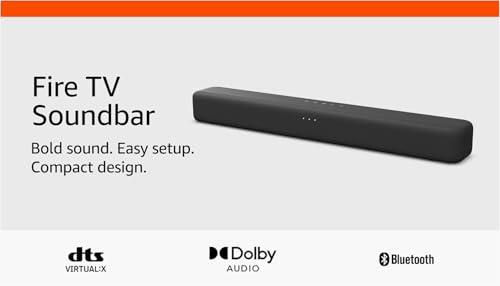
The Amazon Fire TV Soundbar uses DTS Virtual:X technology, which analyzes the audio signal and applies digital processing to make stereo speakers sound like surround sound. It's similar to how noise-canceling headphones can make music sound like it's coming from a concert hall even though the speakers are right next to your ears. Virtual:X does create some spatial effects and can make dialogue sound more centered, but it's fundamentally limited by physics – all the sound still comes from in front of you.
Based on expert reviews and user feedback, the difference is immediately noticeable when watching action movies or playing games. The Ultimea system creates genuine immersion where you can pinpoint exactly where sounds originate, while the Amazon model provides a wider, more engaging experience than TV speakers but can't match true directional audio.
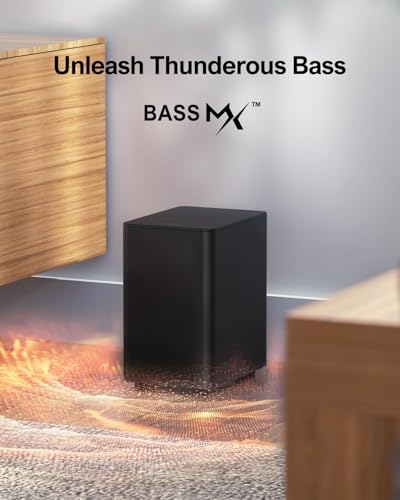
Bass performance represents another major dividing line. The Ultimea Poseidon D50 includes a dedicated wireless subwoofer with a 5.25-inch driver and 15mm diaphragm excursion – technical specs that translate to deep, punchy bass that you can feel in your chest during explosive action sequences.
The subwoofer uses Ultimea's BassMX technology, which optimizes the magnetic circuit and enclosure design to maximize low-frequency output while minimizing distortion. In practical terms, this means explosions have real impact, music has fuller body, and movie soundtracks have the weight and presence that filmmakers intended.
The Amazon Fire TV Soundbar has no subwoofer option and relies entirely on its two main drivers for all frequencies. While the bass reflex design with front-facing ports helps extend low-frequency response beyond what most TV speakers manage, it simply cannot produce the deep, room-shaking bass that a dedicated subwoofer delivers.
This limitation becomes most apparent during action movies, where gunshots and explosions can sound thin and underwhelming compared to what you'd experience in a movie theater. For dialogue-heavy content like news or sitcoms, the difference matters less, but for any content with significant low-frequency effects, the subwoofer advantage is substantial.
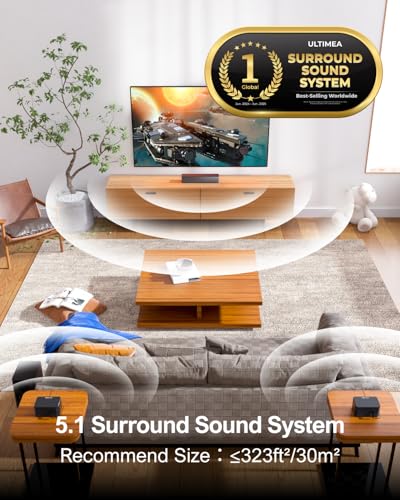
Power specifications tell an important story about real-world performance. The Ultimea Poseidon D50 delivers 320W of peak power distributed across six high-performance drivers, including the dedicated subwoofer and rear speakers. This power distribution allows the system to fill rooms up to 380 square feet with balanced, dynamic audio.
The Amazon Fire TV Soundbar provides 40W total power (2x20W) from its two main drivers. While this is sufficient for small to medium rooms and represents a significant upgrade over built-in TV speakers, it cannot match the overall impact and room-filling capability of the Ultimea system.
Power ratings can be misleading since manufacturers sometimes inflate peak power figures, but the driver configuration tells the real story. Six drivers with dedicated amplification will always outperform two drivers when it comes to overall output and dynamic range.
One of the most impressive aspects of the Ultimea Poseidon D50 is its smartphone app control system, which provides access to 121 preset EQ matrices and a 10-band manual equalizer. This level of customization was previously found only in high-end audio equipment costing significantly more.
The app allows independent volume control for the rear speakers, which is crucial for balancing surround effects based on your room layout and seating position. If your rear speakers are closer to your couch than ideal, you can reduce their volume. If they're farther away, you can boost them without affecting the front channels.
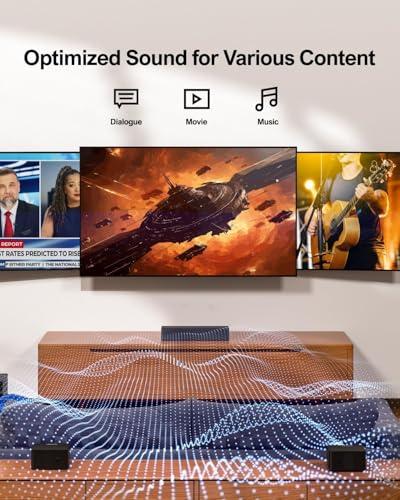
Six distinct sound modes (Movie, Music, Game, etc.) automatically adjust the system's frequency response for different content types. The Movie mode emphasizes dialogue clarity and dynamic range, while Music mode provides more balanced frequency response across all ranges.
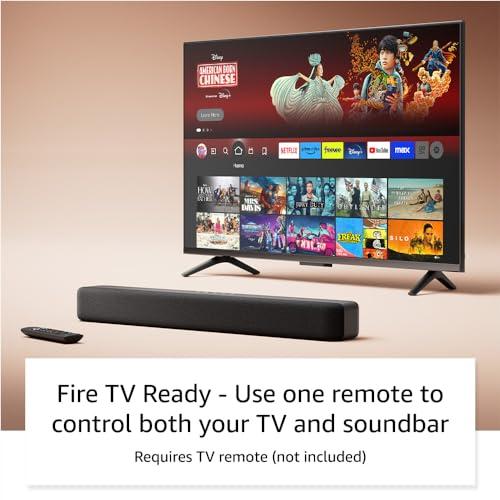
The Amazon Fire TV Soundbar takes the opposite approach, focusing on simplicity over customization. It provides three basic sound modes (Movie, Music, Dialog) and three bass EQ settings, but all adjustments are made using the included remote or your TV's remote via CEC (Consumer Electronics Control – a technology that lets one remote control multiple connected devices).
While the Amazon's simplicity appeals to users who want plug-and-play operation, it cannot accommodate different room acoustics or personal preferences the way the Ultimea system can.
Both systems provide modern connectivity options, but with different emphases. The Ultimea Poseidon D50 includes HDMI eARC (enhanced Audio Return Channel), optical, AUX, USB, and Bluetooth 5.3. The eARC connection is particularly important for high-quality audio formats and simplifies cable management.
Bluetooth 5.3 represents the latest wireless audio standard, providing improved connection stability and lower latency compared to older Bluetooth versions. This matters when streaming music from your phone or tablet, as newer Bluetooth reduces the delay between pressing play and hearing audio.
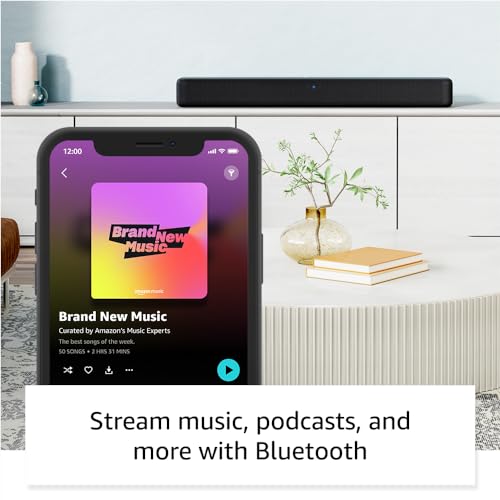
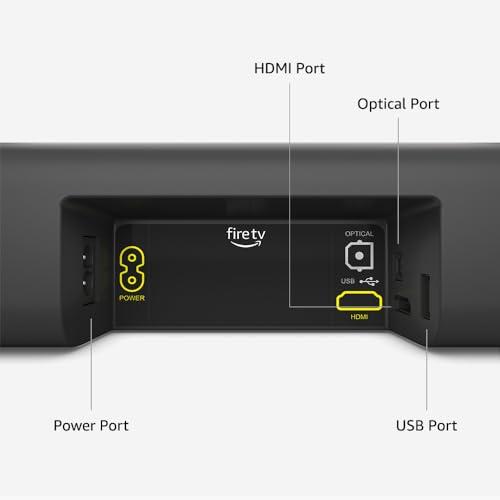
The Amazon Fire TV Soundbar provides HDMI ARC/eARC, optical, and Bluetooth connectivity. The key difference is the integration with Amazon's ecosystem – while it doesn't include Alexa voice control (surprisingly, given Amazon's focus on voice interfaces), it does integrate seamlessly with Fire TV devices and supports CEC for unified remote control.
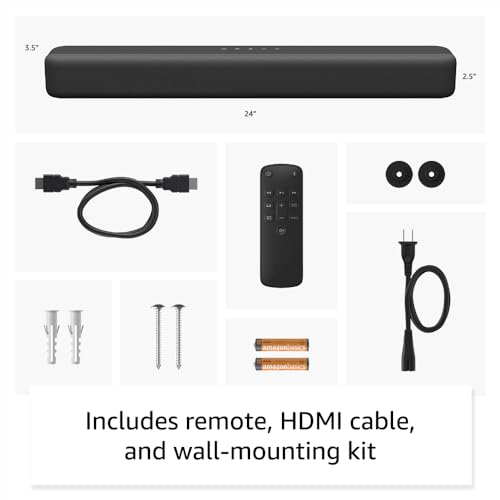
Setup complexity represents a crucial consideration that often gets overlooked in specifications. The Amazon Fire TV Soundbar truly delivers on plug-and-play simplicity. Connect one HDMI cable to your TV's ARC port, plug in the power cord, and you're done. The soundbar automatically syncs with your TV remote for volume control, and the compact 24-inch length fits under most TVs without overhang.
The Ultimea Poseidon D50 requires more planning and effort. You'll need to position the main soundbar, find appropriate locations for the rear speakers (with 19.6-foot cables), and place the wireless subwoofer somewhere that provides good bass response without overwhelming your room.
Rear speaker placement often proves challenging in real homes. The ideal position is slightly behind and to the sides of your main seating area, but furniture, room layout, and aesthetic considerations can complicate this. The long cables provide flexibility, but cable management becomes a concern unless you're willing to run wires under carpets or along baseboards.
The wireless subwoofer simplifies placement compared to wired subs, but positioning still matters. Corners typically provide more bass output, but can create boomy, uneven response. The optimal location often requires some experimentation.
At the time of writing, these products occupy different price tiers that reflect their capabilities and target markets. The Amazon Fire TV Soundbar typically costs significantly less than the Ultimea Poseidon D50, but comparing them purely on price misses the point.
The Amazon model represents excellent value for its intended purpose: providing a meaningful upgrade over TV speakers with minimal fuss and expense. It's comparable to other budget stereo soundbars but offers the convenience of Amazon's ecosystem integration and reliable build quality.
The Ultimea system provides value by delivering true surround sound and comprehensive customization at a fraction of what traditional separate components would cost. A comparable setup using individual speakers, subwoofer, and receiver from established audio brands could easily cost two or three times more.
However, value depends entirely on your priorities and use cases. If you primarily watch news, sitcoms, and casual content, the Amazon soundbar might provide 80% of the benefit at a fraction of the cost and complexity. If you're building a dedicated home theater or frequently watch action movies and play games, the Ultimea's authentic surround sound and powerful bass justify the additional investment.
For serious home theater use, the Ultimea Poseidon D50 offers several advantages that matter significantly. The SurroundX technology converts standard stereo content to 5.1 channels using DSP (Digital Signal Processing), which means even older movies and shows benefit from the surround speaker placement.
The system's 320W power output and dedicated subwoofer handle the dynamic range of modern movie soundtracks, from whispered dialogue to thunderous explosions, without compression or distortion. This dynamic range capability is crucial for the cinematic experience that most people associate with "real" home theaters.
The Amazon Fire TV Soundbar improves dialogue clarity and provides better overall sound than TV speakers, but it cannot replicate the immersive experience that makes home theater compelling. For casual movie watching, it's perfectly adequate. For creating a theater-like experience that draws you into the content, the limitations become apparent.
Room size also matters significantly. The Ultimea system is designed for rooms up to 380 square feet and provides the power and driver configuration to fill that space with balanced audio. The Amazon model works best in smaller rooms where its power limitations won't be exposed.
The Amazon Fire TV Soundbar makes sense for apartment dwellers who need better TV audio but face restrictions on speaker placement or noise levels. It's perfect for casual viewers who prioritize convenience over audio performance, and for anyone who tried a complex audio setup before and found it frustrating.
The simplicity extends beyond installation to daily use. There's no app to configure, no rear speakers to accidentally disconnect, and no subwoofer to carefully position. You get meaningfully better audio than TV speakers without any of the complexity that sometimes makes home audio feel like a hobby rather than an enhancement.
The Ultimea Poseidon D50 suits anyone who wants a legitimate home theater experience without the complexity and expense of separate components. It's ideal for movie enthusiasts, gamers who want immersive audio, and music listeners who appreciate the ability to customize their sound signature.
The comprehensive app control and multiple EQ options mean the system can adapt to different content types and room acoustics. This flexibility becomes valuable over time as you discover your preferences and potentially move to different living spaces.
Based on extensive research into user reviews and expert opinions, the decision ultimately comes down to your priorities and living situation. The Amazon Fire TV Soundbar excels at its intended purpose: providing a simple, affordable upgrade that makes TV dialogue clearer and music more engaging than built-in speakers allow.
The Ultimea Poseidon D50 transforms your entertainment experience by providing authentic surround sound, powerful bass, and extensive customization options that rival much more expensive systems.
Consider the Amazon model if you want better TV audio without complexity, live in a smaller space, or primarily consume dialogue-heavy content. Choose the Ultimea system if you want true home theater immersion, have space for proper speaker placement, and value the ability to customize your audio experience.
Both products deliver on their promises, but they're solving different problems. Understanding which problem you actually need solved will lead you to the right choice for your specific situation and entertainment preferences.
| Ultimea Poseidon D50 5.1 Soundbar Home Theater (2025) | Amazon Fire TV Soundbar |
|---|---|
| Audio Configuration - Determines immersion level and surround sound quality | |
| True 5.1 channel with physical rear speakers and wireless subwoofer | 2.0 channel stereo with virtual surround processing |
| Total Power Output - Affects volume capability and dynamic range | |
| 320W peak power across 6 drivers | 40W (2x20W) from 2 drivers |
| Subwoofer - Critical for bass response and movie impact | |
| 5.25" wireless subwoofer with BassMX technology | No subwoofer (bass from main drivers only) |
| Surround Sound Technology - How realistic the surround effects sound | |
| SurroundX algorithm with physical rear speaker placement | DTS Virtual:X processing from front-facing drivers |
| Room Size Capability - Maximum space the system can fill effectively | |
| 250-380 sq ft (medium to large rooms) | Small to medium rooms |
| Setup Complexity - Time and effort required for installation | |
| Multi-component setup with rear speaker placement | Single HDMI cable, plug-and-play |
| Audio Customization - Control over sound tuning and preferences | |
| Smart app with 121 EQ presets, 10-band equalizer, 6 sound modes | 3 basic sound modes, 3 bass settings via remote |
| Connectivity Options - Determines compatibility with devices | |
| HDMI eARC, Optical, AUX, USB, Bluetooth 5.3 | HDMI ARC/eARC, Optical, Bluetooth |
| Physical Dimensions - Space requirements and aesthetic impact | |
| Soundbar + 2 rear speakers + subwoofer placement needed | Single 24-inch soundbar |
| Smart Features - App control and advanced functionality | |
| Full smartphone app control with independent speaker adjustment | TV remote integration via CEC, no app |
| Best Use Cases - Where each system excels | |
| Home theater, gaming, action movies, customizable listening | TV dialogue improvement, casual viewing, simple setup |
The Ultimea Poseidon D50 provides true 5.1 surround sound with physical rear speakers that you place behind your seating area, creating authentic directional audio. The Amazon Fire TV Soundbar uses DTS Virtual:X technology to simulate surround effects from its front-facing stereo speakers. For genuine surround sound immersion, the Ultimea system delivers significantly better results.
The Ultimea Poseidon D50 includes a wireless 5.25-inch subwoofer with BassMX technology that delivers powerful, room-filling bass for movies and music. The Amazon Fire TV Soundbar has no subwoofer and relies on its main drivers for all frequencies, which limits bass depth and impact. If deep bass is important for your home theater experience, the Ultimea system is the clear winner.
The Amazon Fire TV Soundbar offers true plug-and-play setup with just one HDMI cable connection to your TV. The Ultimea Poseidon D50 requires positioning multiple components including rear speakers and a subwoofer, plus cable management for the 19.6-foot rear speaker wires. For maximum convenience, the Amazon model is much simpler to install.
The Ultimea Poseidon D50 includes a comprehensive smartphone app with 121 EQ presets, 10-band equalizer, and independent volume control for different speakers. The Amazon Fire TV Soundbar has no app control and relies on your TV remote or the included remote for basic adjustments. The Ultimea system offers far more customization options through its app.
The Amazon Fire TV Soundbar is ideal for small spaces with its compact 24-inch design and single-unit setup that won't overwhelm limited room layouts. The Ultimea Poseidon D50 requires space for rear speakers and subwoofer placement, making it better suited for larger rooms. For apartment living, the Amazon soundbar is more practical.
The Ultimea Poseidon D50 provides 320W peak power distributed across six drivers, allowing it to fill rooms up to 380 square feet with dynamic audio. The Amazon Fire TV Soundbar delivers 40W total power from two drivers, which is adequate for smaller rooms but cannot match the overall impact of the Ultimea system.
For home theater and movie watching, the Ultimea Poseidon D50 excels with true surround sound positioning, powerful bass from its dedicated subwoofer, and the ability to handle the dynamic range of movie soundtracks. The Amazon Fire TV Soundbar improves dialogue clarity over TV speakers but cannot deliver the immersive cinematic experience that the Ultimea system provides.
Both the Ultimea Poseidon D50 and Amazon Fire TV Soundbar work with any TV that has HDMI ARC or optical outputs, regardless of brand. However, the Amazon model integrates most seamlessly with Fire TV devices and provides convenient TV remote control via CEC technology.
Value depends on your needs: the Amazon Fire TV Soundbar provides excellent value as a simple TV speaker upgrade with minimal cost and complexity. The Ultimea Poseidon D50 offers superior value for home theater enthusiasts who want true surround sound at a fraction of what separate components would cost. Consider what level of audio performance you actually need.
The Amazon Fire TV Soundbar is a complete 2.0 system with no expansion options - what you buy is what you get. The Ultimea Poseidon D50 is already a complete 5.1 system including all necessary components, so no expansion is needed or possible. Neither system offers modular upgrades, so choose based on your current needs.
The Ultimea Poseidon D50 offers more connectivity with HDMI eARC, optical, AUX, USB, and Bluetooth 5.3 for versatile device compatibility. The Amazon Fire TV Soundbar provides HDMI ARC/eARC, optical, and Bluetooth connections, covering most common needs. Both systems support modern HDMI standards, but the Ultimea model offers more input flexibility.
Choose the Amazon Fire TV Soundbar if you want simple TV audio improvement, have space constraints, or primarily watch dialogue-heavy content. Select the Ultimea Poseidon D50 if you want immersive home theater experiences, have room for proper speaker placement, and frequently watch action movies or play games. The Ultimea system transforms your entertainment experience, while the Amazon model simply makes it better.
We've done our best to create useful and informative comparisons to help you decide what product to buy. Our research uses advanced automated methods to create this comparison and perfection is not possible - please contact us for corrections or questions. These are the sites we've researched in the creation of this article: youtube.com - eu.ultimea.com - newegg.com - tvsbook.com - youtube.com - provantage.com - ultimea.com - techradar.com - community.ultimea.com - homedepot.com - community.ultimea.com - ultimea.com - ultimea.de - youtube.com - medisamhealthcenter.com - ultimea.com - youtube.com - walmart.com - rtings.com - developer.amazon.com - stereoguide.com - developer.amazon.com - techradar.com - hometechnologyreview.com - whathifi.com - youtube.com - whathifi.com - wirelessplace.com - hometechnologyreview.com - dolby.com - aboutamazon.com - developer.amazon.com - community.anker.com - youtube.com - cordbusters.co.uk

Privacy Policy
Terms and Conditions - Affiliate Policy
Home Security
© Copyright 2008-2026.
11816 Inwood Rd #1211, Dallas, TX 75244