




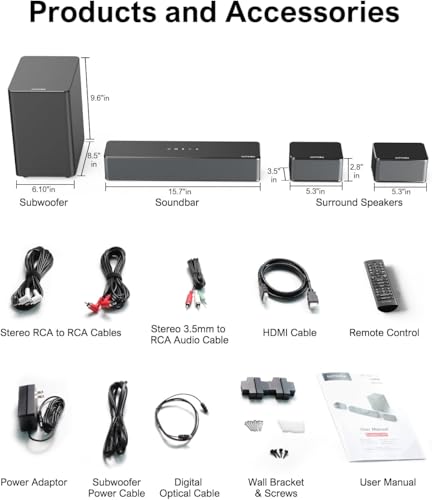





The home theater audio landscape has transformed dramatically since 2020, with soundbars becoming the go-to solution for anyone wanting better TV sound without the complexity of traditional surround systems. Gone are the days when you needed to run speaker wire through walls or dedicate an entire room to equipment racks. Modern soundbars pack impressive technology into sleek packages that complement today's flat-screen TVs.
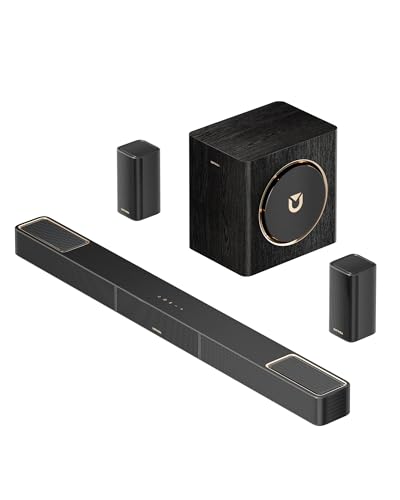
ULTIMEA entered this competitive market with a clear strategy: deliver premium audio features at accessible prices. Their 2025 lineup includes two distinct approaches to surround sound - the flagship Skywave X40 5.1.2 and the value-focused Poseidon D50 5.1. Both represent significant improvements over their 2023 predecessors, incorporating lessons learned from user feedback and advancing wireless technology.
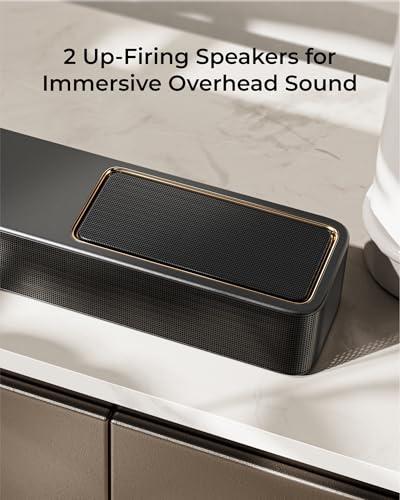
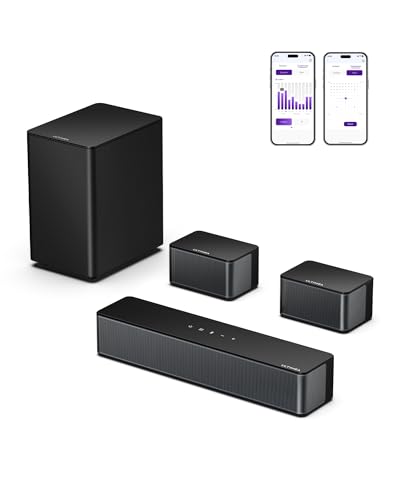
Understanding the differences between these systems requires grasping what those channel numbers actually mean. A 5.1 system includes five main speakers (left, center, right, and two rear surrounds) plus one subwoofer for bass. The Skywave X40 adds those crucial .2 height channels - two upward-firing speakers that bounce sound off your ceiling to create overhead effects. This isn't just marketing fluff; when you hear a helicopter in a movie, it actually sounds like it's flying above you rather than just louder.
The most significant difference between these soundbars lies in their approach to three-dimensional sound. Traditional surround sound creates a circle of audio around you, but modern formats like Dolby Atmos add a vertical dimension that transforms how we experience movies and games.
The Skywave X40 supports true Dolby Atmos through dedicated upward-firing drivers built into the main soundbar. These speakers fire sound toward your ceiling, which then reflects down to create the illusion of overhead audio. When done properly, this technology makes rain sound like it's actually falling from above, or places dialogue from a character on a building's upper floor exactly where it should be spatially.
The implementation matters tremendously here. The Skywave X40 uses what ULTIMEA calls NEURACORE™ processing - essentially a powerful computer chip that analyzes incoming audio in real-time and directs different sounds to the appropriate speakers with pinpoint accuracy. This triple-core DSP (Digital Signal Processor) handles up to 2,000 MIPS of calculations per second. To put that in perspective, that's enough processing power to make thousands of individual audio adjustments every second, ensuring each sound effect lands exactly where the movie's sound engineers intended.
The Poseidon D50, by contrast, takes a different approach with its SurroundX™ technology. This system can take standard stereo audio - like what you'd get from older TV shows or basic streaming content - and intelligently expand it into 5.1 surround sound. While it can't create true overhead effects, it does an impressive job of widening the soundstage and placing effects around you horizontally.
For home theater enthusiasts, this distinction becomes crucial when watching modern content. Netflix originals, Disney+ movies, and AAA video games increasingly include Dolby Atmos soundtracks. The Skywave X40 can reproduce these as intended, while the Poseidon D50 will downmix them to traditional 5.1 surround. Both sound good, but only one delivers the full artistic vision.
Raw power numbers tell only part of the story, but they matter more than many people realize. The Skywave X40 delivers 530W of peak power compared to the Poseidon D50's 320W. More importantly, the X40 employs GaN (Gallium Nitride) amplification technology - a significant upgrade from traditional silicon-based amplifiers.
GaN amplifiers operate at up to 98% efficiency compared to roughly 70-80% for conventional designs. This means less energy wasted as heat, more stable performance during loud action sequences, and eight times faster response to audio transients. In practical terms, when a movie's explosion demands sudden, massive power, the Skywave X40 responds instantly without distortion or thermal throttling.
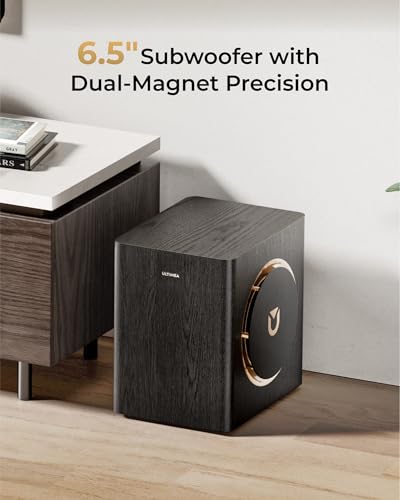
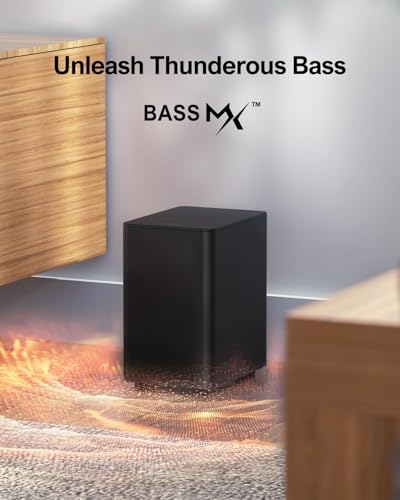
The bass performance differences are equally telling. The Skywave X40's 6.5-inch subwoofer extends down to 35Hz - deep enough to reproduce the lowest notes in most music and the rumbling foundation of movie soundtracks. The Poseidon D50's 5.25-inch subwoofer, while respectable, can't quite reach those deepest frequencies that make action movies feel visceral.
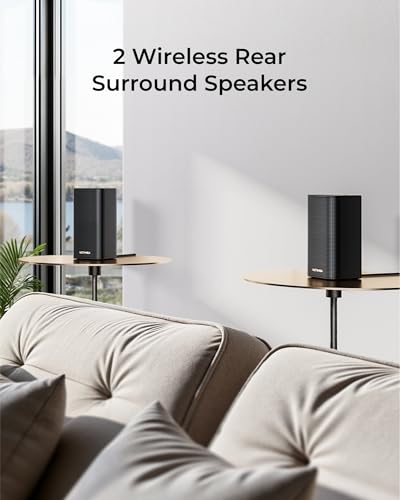
Both systems use wireless subwoofers, eliminating the need to run a cable from your TV area to wherever you place the bass unit. However, the Skywave X40 extends this wireless approach to the rear speakers as well, using dual 5GHz transmission with impressively low latency under 20 milliseconds. The Poseidon D50 includes 19.6-foot cables for its rear speakers, which provides zero-latency connection but requires planning your room layout around wire management.
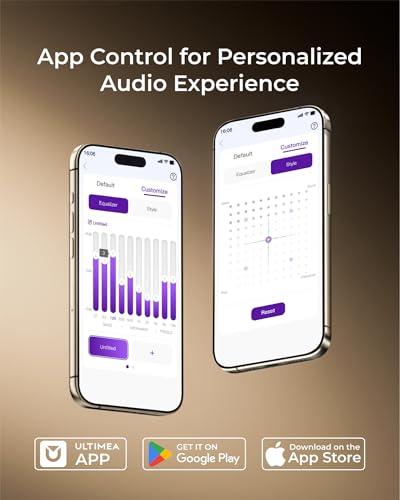
Both soundbars include sophisticated smartphone apps that were rare in budget and mid-tier systems just a few years ago. These apps unlock 10-band equalizers with 121 preset sound profiles, allowing precise tuning for different content types and room acoustics.
The equalizer functionality deserves explanation because it's genuinely useful rather than just a gimmick. A 10-band EQ divides the audio spectrum into ten frequency ranges, letting you boost or cut specific portions independently. For example, if dialogue sounds muddy in your room, you can boost the 1-2kHz range where human speech clarity lives while leaving the bass and treble alone.
The 121 preset profiles include options optimized for everything from action movies to classical music to late-night viewing when you need to keep things quiet. Both systems also allow independent volume control for their rear speakers, which proves invaluable for fine-tuning the surround effect in different room layouts.
Our research into professional reviews and user consensus reveals some interesting performance characteristics that matter in real-world use. The Skywave X40 consistently receives praise for its clarity at high volumes, with multiple reviewers noting it maintains clean, undistorted sound even during demanding action sequences. This likely stems from its advanced GaN amplification and sophisticated DSP processing.
The Poseidon D50 earns high marks for dialogue clarity - a crucial consideration since many people struggle to understand speech in modern movies and TV shows. Its dedicated center channel and voice-optimized EQ mode address this common complaint effectively.
For music listening, both systems perform competently, though neither targets audiophile-level reproduction. The Skywave X40 handles complex orchestral pieces better thanks to its higher power and more sophisticated processing, while the Poseidon D50 delivers satisfying results for casual music consumption.
Gaming performance favors the Skywave X40 significantly due to its ultra-low wireless latency. Many wireless audio systems introduce enough delay to create a noticeable disconnect between on-screen action and sound effects. The X40's sub-20ms latency keeps audio and video perfectly synchronized, crucial for competitive gaming or immersive single-player experiences.
Room size recommendations matter more than marketing materials often suggest. The Skywave X40 genuinely benefits from medium to large rooms where its 530W power output and height channels can work effectively. In smaller spaces, you might not notice much difference from the height effects, and the extra power becomes unnecessary.
ULTIMEA rates the Poseidon D50 for rooms between 250-380 square feet, which covers most typical living rooms and bedrooms. In these spaces, its 320W output provides plenty of volume with good surround staging from the rear speakers.
The wireless versus wired rear speaker decision affects placement flexibility significantly. The Skywave X40's completely wireless design means you only need power outlets near each component, allowing optimal acoustic placement without wire routing concerns. The Poseidon D50's wired approach ensures perfect synchronization but requires planning speaker placement around the included cables.
At the time of writing, these systems occupy different market positions that reflect their feature sets appropriately. The Skywave X40 commands a premium price that reflects its advanced technology - Dolby Atmos support, GaN amplification, and fully wireless operation typically appear in soundbars costing significantly more from major brands.
The Poseidon D50 delivers genuine 5.1 surround sound at a price point where many competitors offer only simulated surround or 2.1 configurations. Its smart app control and solid build quality make it exceptional value for buyers seeking real surround sound without premium pricing.
This value equation extends beyond initial purchase price. The Skywave X40 future-proofs your investment with support for current and emerging audio formats, while the Poseidon D50 provides immediate satisfaction at a budget that allows for future upgrades when needed.
The decision between these soundbars depends heavily on your specific situation and priorities. The Skywave X40 makes sense for dedicated home theater setups where you regularly watch modern movies and play games that support Dolby Atmos. If you've invested in a quality TV and streaming setup, matching that investment with advanced audio technology maintains system balance.
The Poseidon D50 excels as a first surround sound system or upgrade from basic TV speakers. Its combination of real surround sound, smart features, and accessible pricing provides tremendous improvement over built-in TV audio without requiring a major budget commitment.
Consider the Skywave X40 if you have a medium to large room, consume content with Dolby Atmos soundtracks regularly, or prioritize having the latest audio technology. Its wireless convenience and powerful performance justify the premium for serious entertainment enthusiasts.
Choose the Poseidon D50 for smaller rooms, budget-conscious upgrades, or situations where traditional 5.1 surround provides sufficient immersion. Its wired rear speakers actually offer advantages in some installations where wireless reliability concerns exist.
Both systems represent ULTIMEA's commitment to bringing advanced audio technology to broader audiences. The Skywave X40 pushes boundaries with cutting-edge features, while the Poseidon D50 democratizes genuine surround sound. Neither choice is wrong - they simply serve different needs and budgets in the evolving home entertainment landscape.
The soundbar market continues advancing rapidly, but both these 2025 models incorporate enough current technology to remain relevant for years. Whether you choose immersive Atmos or proven surround sound, either system will transform your TV audio experience far beyond what built-in speakers can deliver.
| ULTIMEA Skywave X40 5.1.2 Soundbar System | Ultimea Poseidon D50 5.1 Soundbar Home Theater (2025) |
|---|---|
| Channel Configuration - Determines immersive audio capability | |
| 5.1.2 with Dolby Atmos (includes height channels for 3D audio) | 5.1 traditional surround (horizontal surround only, no height effects) |
| Peak Power Output - Affects room-filling capability and dynamic range | |
| 530W (suitable for large rooms, powerful dynamics) | 320W (adequate for medium rooms up to 380 sq ft) |
| Subwoofer Size - Controls bass depth and impact | |
| 6.5-inch wireless subwoofer (extends to 35Hz for deep bass) | 5.25-inch wireless subwoofer (solid mid-bass performance) |
| Amplification Technology - Impacts efficiency and audio quality | |
| GaN (Gallium Nitride) amplifier (98% efficiency, 8x faster response) | Standard amplification (conventional silicon-based design) |
| Audio Processing - Determines sound clarity and spatial accuracy | |
| NEURACORE™ triple-core DSP with 2,000 MIPS processing power | Standard DSP with SurroundX™ upmixing algorithm |
| Rear Speaker Connection - Affects setup flexibility | |
| Fully wireless with dual 5GHz transmission ( | Wired connection with 19.6ft cables (zero latency) |
| Maximum Sound Pressure Level - Shows how loud the system can get cleanly | |
| >98dB (very loud without distortion) | ≥87dB (moderate to high volume capability) |
| Bluetooth Version - Impacts wireless streaming quality and range | |
| Bluetooth 5.4 (latest standard, improved stability) | Bluetooth 5.3 (current standard, reliable streaming) |
| Total Speaker Count - More drivers can mean better sound separation | |
| 8 speakers including 2 up-firing drivers | 6 speakers in traditional surround arrangement |
| Smart App Features - Both offer comprehensive control options | |
| 10-band EQ, 121 presets, wireless component control | 10-band EQ, 121 presets, independent rear speaker volume |
| Target Room Size - Manufacturer recommendations for optimal performance | |
| Medium to large rooms (power and height effects work best with space) | Small to medium rooms (250-380 sq ft recommended) |
| Setup Complexity - Installation and cable management requirements | |
| Plug-and-play wireless (only need power outlets for each component) | Simple setup but requires running rear speaker cables |
The biggest difference is that the ULTIMEA Skywave X40 features 5.1.2 channels with Dolby Atmos support, including height speakers that create overhead sound effects. The Poseidon D50 offers traditional 5.1 surround sound without height channels. The X40 also delivers more power (530W vs 320W) and uses fully wireless rear speakers, while the D50 uses wired connections for its rear speakers.
The Poseidon D50 is specifically designed for small to medium rooms (250-380 square feet) with its 320W power output being perfectly adequate for these spaces. The ULTIMEA Skywave X40 is better suited for larger rooms where its 530W power and height effects can be fully appreciated.
Only the ULTIMEA Skywave X40 supports true Dolby Atmos with dedicated up-firing speakers for 3D audio effects. The Poseidon D50 does not support Dolby Atmos but uses SurroundX™ technology to convert stereo audio into 5.1 surround sound.
The ULTIMEA Skywave X40 has superior bass with its larger 6.5-inch subwoofer that extends down to 35Hz, providing deeper and more impactful low-frequency effects. The Poseidon D50 uses a 5.25-inch subwoofer with BassMX™ technology that delivers solid bass performance but can't reach the deepest frequencies.
The ULTIMEA Skywave X40 features completely wireless rear speakers using dual 5GHz transmission with ultra-low latency. The Poseidon D50 comes with wired rear speakers that connect using included 19.6-foot cables, ensuring zero audio delay but requiring cable management.
The Poseidon D50 provides exceptional value by delivering true 5.1 surround sound with smart app control at a budget-friendly price point. The ULTIMEA Skywave X40 offers premium value with advanced features like Dolby Atmos and GaN amplification typically found in much more expensive systems.
Yes, both the ULTIMEA Skywave X40 and Poseidon D50 include comprehensive smartphone apps with 10-band equalizers, 121 preset sound profiles, and multiple listening modes. Both apps allow you to adjust settings, control volume, and customize the audio experience.
For modern movies with Dolby Atmos soundtracks, the ULTIMEA Skywave X40 provides the full immersive experience with overhead effects and superior power handling. For general TV watching and older content, the Poseidon D50 delivers excellent dialogue clarity and solid surround effects at a more accessible price.
The ULTIMEA Skywave X40 offers the easiest setup with plug-and-play wireless components that only need power outlets. The Poseidon D50 is also simple to set up but requires running the included speaker cables to your rear speaker positions, which may involve some planning for wire management.
The ULTIMEA Skywave X40 is superior for gaming due to its ultra-low wireless latency (<20ms) and Dolby Atmos support for games that feature 3D audio. The wired rear speakers on the Poseidon D50 have zero latency, but it lacks the advanced audio processing and power of the X40.
The ULTIMEA Skywave X40 delivers 530W peak power compared to the Poseidon D50's 320W. This 66% power advantage means the X40 can fill larger rooms, handle dynamic movie soundtracks without distortion, and deliver more impactful bass and effects during action scenes.
If you're upgrading from TV speakers for the first time, the Poseidon D50 provides an excellent introduction to true surround sound without a major investment. However, if you want to future-proof your setup and experience the latest audio technology, the ULTIMEA Skywave X40 offers more advanced features that will remain relevant longer.
We've done our best to create useful and informative comparisons to help you decide what product to buy. Our research uses advanced automated methods to create this comparison and perfection is not possible - please contact us for corrections or questions. These are the sites we've researched in the creation of this article: bestbuy.com - shopabunda.com - youtube.com - youtube.com - youtube.com - youtube.com - ultimea.com - walmart.com - youtube.com - hometechnologyreview.com - community.ultimea.com - avsforum.com - youtube.com - youtube.com - youtube.com - bestbuy.com - hometechnologyreview.com - youtube.com - eu.ultimea.com - newegg.com - tvsbook.com - youtube.com - provantage.com - ultimea.com - techradar.com - community.ultimea.com - homedepot.com - community.ultimea.com - ultimea.com - ultimea.de - youtube.com - medisamhealthcenter.com - ultimea.com - youtube.com - walmart.com

Privacy Policy
Terms and Conditions - Affiliate Policy
Home Security
© Copyright 2008-2026.
11816 Inwood Rd #1211, Dallas, TX 75244