












When you're ready to upgrade from your TV's built-in speakers, you'll quickly discover that home theater audio systems come in wildly different flavors. At one end, you have budget-friendly soundbars that promise surround sound for the price of a nice dinner. At the other, you'll find premium wireless speaker systems that cost more than some people's cars. Today, we're comparing two products that perfectly illustrate this divide: the Sony HT-A9M2 BRAVIA Theater Quad and the Ultimea Poseidon D50.
These systems represent completely different philosophies about how to bring cinematic audio to your living room. The Sony, released in 2024, is a premium wireless system that costs roughly eighteen times more than the Ultimea, which launched in 2025. But this isn't just a story about expensive versus cheap—it's about understanding what you're actually getting for your money and which approach makes sense for your specific situation.
Before diving into the specifics, let's talk about what makes home theater audio work. The goal is simple: recreate the experience of sitting in a movie theater, where sounds come at you from all directions. Explosions rumble from behind, dialogue stays anchored to the screen, and helicopters whoosh overhead.
The most important factor is channel separation—having distinct speakers handling different parts of the audio mix. A 5.1 system has five main speakers (front left, center, front right, rear left, rear right) plus a subwoofer (the ".1") for deep bass. Dolby Atmos adds height channels, creating a three-dimensional bubble of sound around you.
Audio formats matter too. Dolby Atmos and DTS:X are "object-based" formats that don't just send specific sounds to specific speakers—they actually place sound objects in 3D space and let your system figure out how to recreate them. It's like the difference between paint-by-numbers and having an artist create a custom painting for your room.
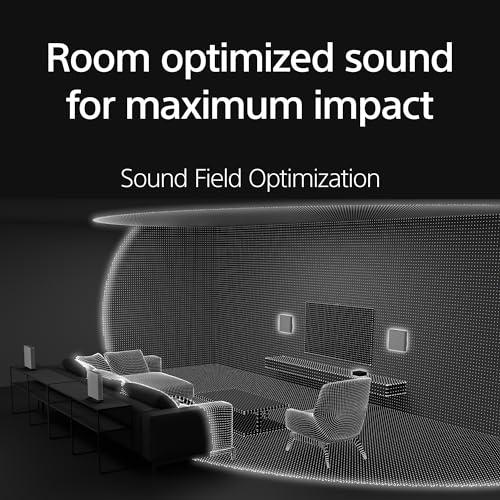
Room calibration is crucial because every room sounds different. Hard surfaces reflect sound, soft furnishings absorb it, and the shape of your space affects how everything blends together. The best systems measure your room and adjust their output accordingly.
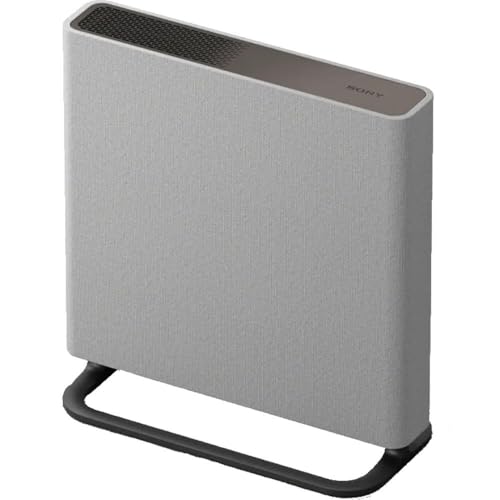
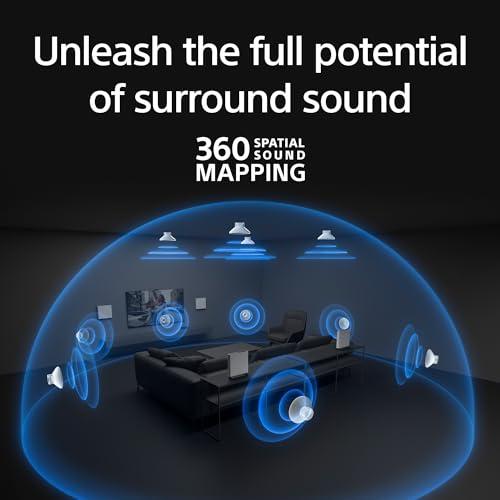
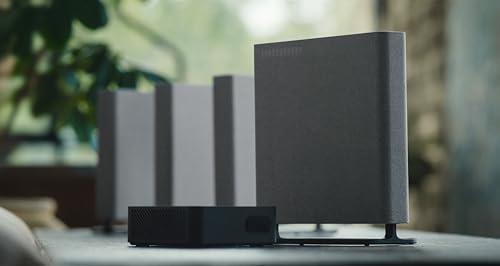
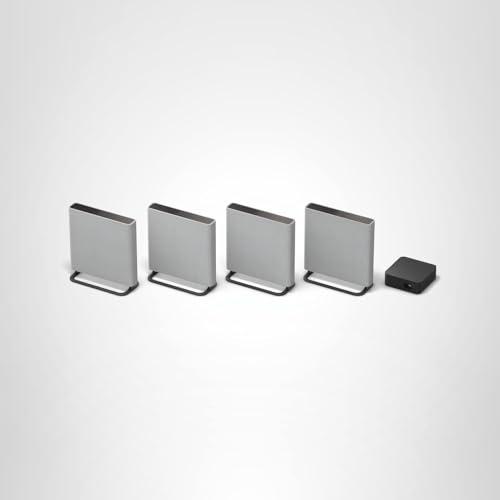
The Sony HT-A9M2 represents a fascinating evolution in home theater design. Instead of a traditional soundbar, you get four identical wireless speakers that work together to create what Sony calls "360 Spatial Sound Mapping." Each speaker contains four drivers—a woofer, midrange, tweeter, and upward-firing Atmos driver—for a total of 16 speakers working in concert.
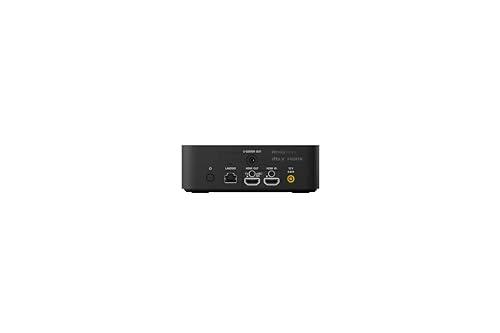
At the time of writing, the Sony sits firmly in premium territory, costing roughly the same as a decent used car. But here's what you're paying for: complete wireless freedom. These speakers connect to a small control box, then talk to each other wirelessly. You can place them anywhere in your room without worrying about speaker wire runs or perfect geometry.
The magic happens with Sony's proprietary processing. The system uses built-in microphones to measure your room, then creates up to 12 "phantom speakers"—virtual sound sources that seem to exist between and around your physical speakers. In our research of professional reviews, this technology consistently impressed testers who described sounds appearing to come from locations where no speakers actually existed.
The Sony's most impressive feature is its X-Balanced Speaker Unit technology. Traditional round speakers waste space in rectangular enclosures, but Sony uses oval drivers that maximize cone area while reducing unnecessary movement. This translates to cleaner sound with less distortion, especially at higher volumes.
The 504-watt digital amplification system gives each of the 16 drivers its own dedicated channel. This level of separation is remarkable—instead of splitting a signal between multiple drivers, each one gets precisely what it needs to reproduce its part of the soundscape. Professional reviewers consistently noted the system's ability to place sounds with pinpoint accuracy, creating that "theater-like" experience that many systems promise but few deliver.
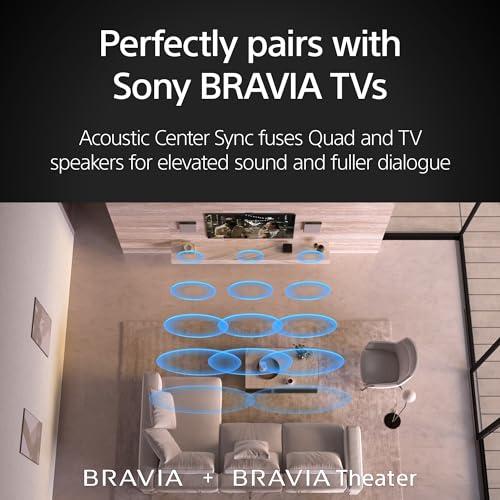
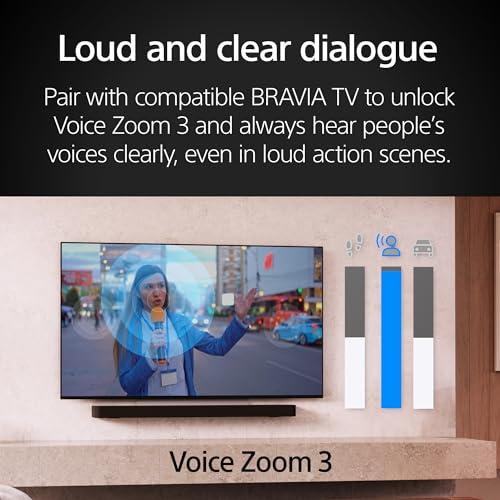
Voice Zoom 3 deserves special mention. This AI-powered feature uses machine learning to identify and enhance dialogue in real-time. If you've ever struggled to hear conversations during action scenes, this technology actively separates voices from background noise and boosts them intelligently. When paired with compatible Sony BRAVIA TVs through Acoustic Center Sync, the TV's speakers actually become part of the center channel, anchoring dialogue directly to the screen.
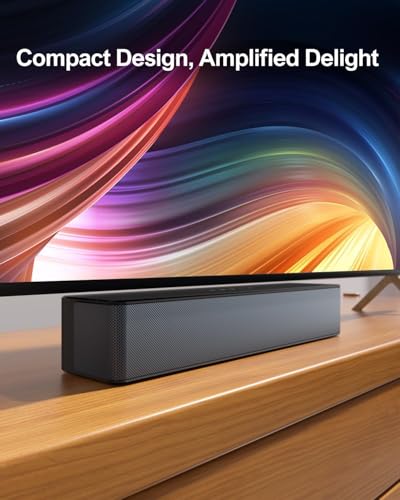
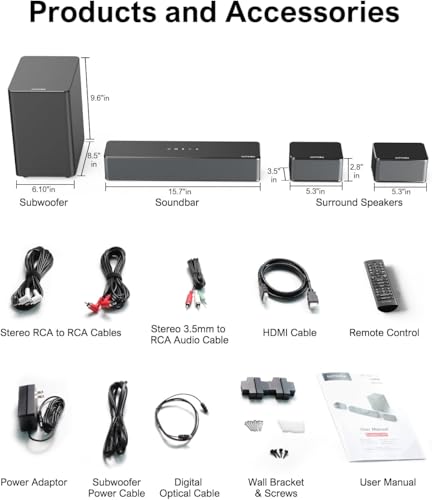
The Ultimea Poseidon D50, launching in 2025, takes the tried-and-true approach of discrete speakers at a fraction of the cost. At the time of writing, it costs less than many people spend on a weekend getaway, making it accessible to virtually anyone wanting to upgrade from TV speakers.
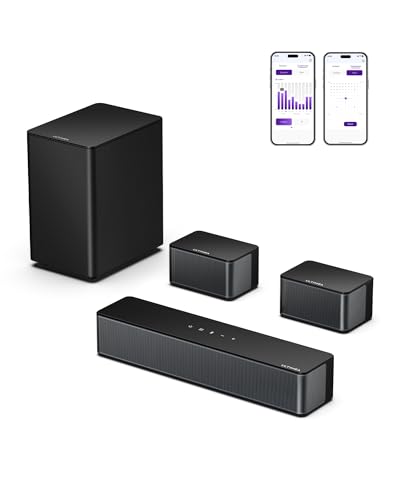
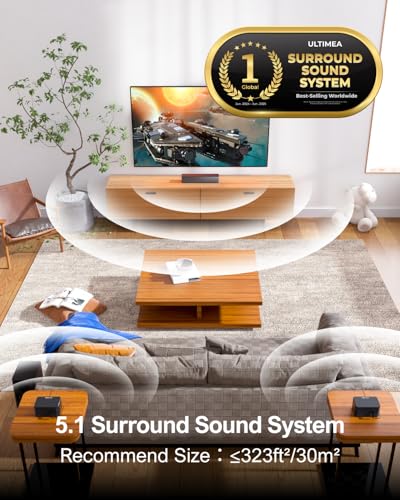
You get a complete 5.1 system: a soundbar for front channels, a wireless subwoofer, and two satellite speakers that connect via 19.6-foot cables. This traditional setup means you're getting true surround sound with actual speakers behind you—something many budget soundbars fake with audio processing.
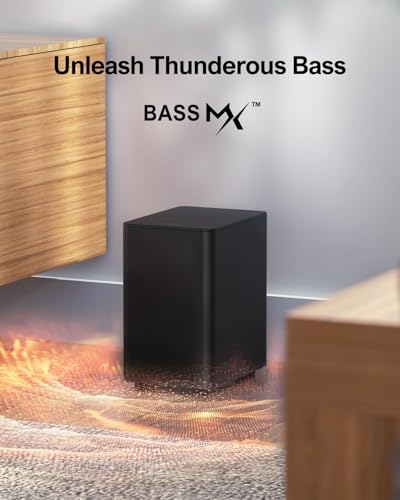
The Ultimea includes SurroundX™ technology, which uses a DSP chip to convert regular stereo audio into multi-channel surround. While not as sophisticated as object-based processing, it does create a more immersive experience than stereo playback. The BassMX™ subwoofer technology optimizes the magnetic circuit and increases diaphragm movement to 15mm, producing surprisingly deep bass for such an affordable system.
The Ultimea's greatest strength is delivering genuine surround sound at an entry-level price point. Those rear speakers make a real difference—instead of relying entirely on audio processing tricks, you actually have sound sources behind your listening position. For action movies and TV shows, this creates a much more convincing surround experience than virtual processing alone.
The smart app control is unexpectedly sophisticated for this price range. You get a 10-band equalizer with 121 preset EQ matrices, allowing fine-tuning that's typically reserved for much more expensive systems. The ability to independently adjust rear speaker volume is particularly useful, as room layouts often require different balance than the default settings provide.
This is where the price difference becomes most apparent. The Sony delivers true Dolby Atmos with physical upward-firing speakers in each unit. When a helicopter flies overhead in a movie, you don't just hear it move from left to right—you actually hear it above you. Professional reviews consistently highlighted this three-dimensional effect as genuinely convincing, creating what one reviewer described as a "bubble of sound" around the listener.
The Ultimea, by contrast, has no height channels. It supports only traditional Dolby Digital and DTS formats, not the newer object-based Atmos and DTS:X. While the rear speakers create good horizontal surround effects, you're missing that overhead dimension that modern movie soundtracks increasingly rely on.
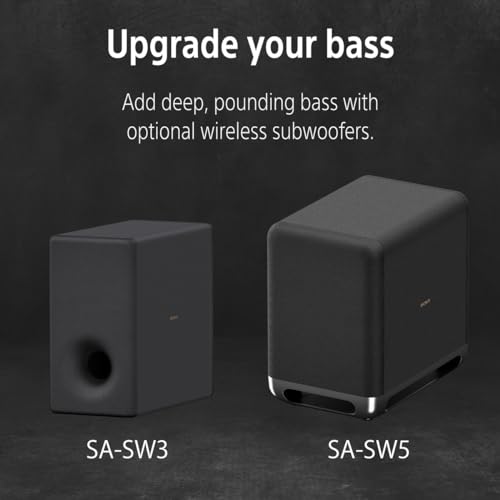
Here's where things get interesting. The Sony ships as a 4.0.4 system—no subwoofer included. This is actually its biggest weakness according to professional reviews. While the speakers produce clean midrange and treble, explosions and deep effects lack the physical impact that home theater enthusiasts expect. Sony clearly intends you to add their optional wireless subwoofer, but this significantly increases the total cost.
The Ultimea includes a 5.25-inch wireless subwoofer from the start. While not as deep or controlled as premium subs, it provides adequate low-frequency impact for most content. For many buyers, especially those in apartments or smaller homes, this level of bass response is perfectly satisfactory and avoids the need for additional purchases.
The Sony's 16-channel digital amplification and premium drivers deliver superior clarity across all frequencies. User reviews consistently mention the system's ability to reveal details in familiar content that weren't noticeable before. The dynamic range—the difference between the quietest and loudest sounds—is substantially better, allowing for more nuanced performance that doesn't compress everything into a narrow volume window.
The Ultimea performs well for its price but shows limitations at higher volumes. Several reviews noted that the sound becomes harsh when pushed, and the overall tonal balance favors impact over refinement. For moderate listening levels in smaller rooms, it's entirely adequate. Push it hard in a large space, and the quality degradation becomes noticeable.
Both systems handle dialogue well but through different approaches. The Sony uses phantom center channel processing enhanced by AI, which works remarkably well once properly calibrated. The Voice Zoom 3 technology actively enhances speech intelligibility, making it easier to follow dialogue even during complex mixes.
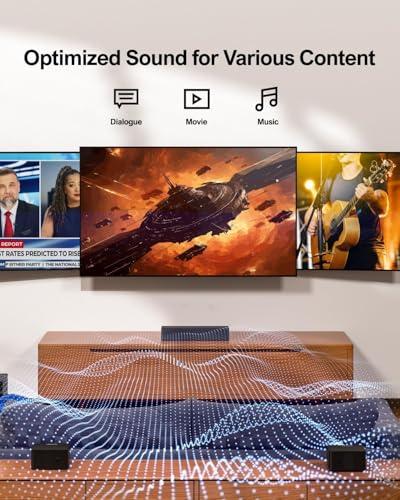
The Ultimea takes the traditional approach with a dedicated center channel in the soundbar. This is more predictable and reliable, though it lacks the AI enhancement. The dedicated Dialogue EQ mode helps boost voice frequencies, making it a solid choice for users who prioritize clear speech over other considerations.
The Sony needs space to breathe. Professional reviews suggest rooms of at least 15x15 feet for optimal performance, and the wireless speakers work best when they have some separation from walls and furniture. The room calibration system can work miracles, but it can't overcome fundamental space limitations.
The Ultimea is more forgiving of smaller spaces. The compact soundbar and satellite speakers work well in apartments, bedrooms, and smaller living rooms. The wired connection to the rear speakers does limit placement flexibility, but most users find the 19.6-foot cables adequate for typical room layouts.
For gamers, the Sony offers substantial advantages. Its HDMI 2.1 implementation supports 4K at 120Hz, Variable Refresh Rate (VRR), and Auto Low Latency Mode (ALLM). PlayStation 5 owners get special treatment with Auto HDR Tone Mapping and Auto Genre Picture Mode, which automatically optimize both audio and video settings based on the content type.
The Ultimea provides basic HDMI ARC connectivity but lacks the advanced gaming features. For casual gaming, this isn't a significant limitation, but competitive gamers or those with next-generation consoles will notice the difference in responsiveness and video quality.
The Sony HT-A9M2 makes sense if you're serious about home theater and have the budget for a premium experience. At the time of writing, you're looking at an investment that approaches luxury purchase territory, especially when adding the recommended subwoofer. This system is for enthusiasts who want cutting-edge wireless technology, true Dolby Atmos, and the flexibility to place speakers anywhere without cable runs.
You should also consider your long-term plans. The Sony supports advanced formats and features that will remain relevant as streaming services and gaming continue evolving. If you're planning to stay in your current space for several years and want a system that won't feel outdated, the premium investment makes more sense.
The Ultimea Poseidon D50 is ideal for first-time surround sound buyers or anyone wanting immediate improvement over TV speakers without breaking the bank. At the time of writing, it costs less than many people spend on a single night out, making it an accessible entry point into true surround sound.
This system particularly appeals to apartment dwellers, college students, or anyone who wants to test their interest in home theater before committing to a larger investment. The complete-system approach means you're not facing additional purchases to get satisfying performance.
After extensive research into user and professional reviews, it's clear these products serve entirely different markets. The Sony HT-A9M2 delivers genuinely premium spatial audio with wireless flexibility that justifies its high price for enthusiasts. The Ultimea Poseidon D50 provides remarkable value for anyone wanting to experience true surround sound without the premium price tag.
Your choice ultimately depends on your budget, room size, and audio priorities. If you're building a dedicated home theater and want the latest technology, the Sony represents a smart long-term investment. If you want immediate improvement over TV speakers with minimal financial commitment, the Ultimea delivers exactly what it promises.
Both systems succeed in their respective roles, proving that good home theater audio doesn't require compromise—you just need to understand what type of experience you're actually paying for.
| Sony HT-A9M2 BRAVIA Theater Quad | Ultimea Poseidon D50 |
|---|---|
| Speaker Configuration - Determines surround sound quality and placement flexibility | |
| 4.0.4 channels, 16 total drivers across 4 wireless speakers | 5.1 channels, 6 speakers (soundbar + wireless sub + 2 wired satellites) |
| Dolby Atmos Support - Essential for modern movie soundtracks with height effects | |
| True Dolby Atmos with physical upfiring drivers in each speaker | No Dolby Atmos support, traditional surround formats only |
| Total Power Output - Affects maximum volume and dynamic range | |
| 504W with 16-channel digital amplification | 320W total system output |
| Subwoofer Inclusion - Critical for bass impact in action movies | |
| No subwoofer included (must purchase separately) | 5.25" wireless subwoofer with BassMX™ technology included |
| Wireless Capability - Determines setup flexibility and cable management | |
| Completely wireless speakers, 30m range with dual antennas | Wireless subwoofer only, rear speakers require 19.6ft cables |
| Room Calibration - Optimizes sound for your specific space | |
| Advanced Sound Field Optimization with automatic room measurement | Manual surround level adjustment only, no automatic calibration |
| HDMI Features - Important for gaming and 4K content | |
| HDMI 2.1 eARC with 8K60/4K120 passthrough, VRR, ALLM support | Basic HDMI ARC only, no advanced gaming features |
| Audio Format Support - Determines compatibility with streaming and disc content | |
| Hi-Res Audio up to 192kHz/24-bit, 360 Reality Audio, DSEE Ultimate | Standard audio formats, no high-resolution support |
| Setup Complexity - Affects installation difficulty and time investment | |
| Complex setup with app-based calibration, requires larger rooms for optimal performance | Simple plug-and-play installation, works well in smaller spaces |
| Smart Features - Convenience and customization options | |
| Sony BRAVIA integration, Voice Zoom 3 AI, Acoustic Center Sync | Smart app with 10-band EQ, 121 preset matrices, independent rear volume control |
| Target Room Size - Determines which spaces each system works best in | |
| Medium to large rooms (15x15ft minimum recommended) | Small to medium rooms (up to 380 sq ft) |
| Value Proposition - What you get for the investment | |
| Premium wireless system for enthusiasts, requires significant budget | Complete entry-level surround system at accessible price point |
The Sony HT-A9M2 BRAVIA Theater Quad is significantly better for dedicated home theater use. It supports true Dolby Atmos with physical height channels, delivers superior audio fidelity, and creates a more immersive 3D soundstage. However, the Ultimea Poseidon D50 provides excellent value for casual home theater viewing and includes a subwoofer out of the box, while the Sony requires a separate subwoofer purchase for full bass impact.
Yes, the Sony HT-A9M2 features true Dolby Atmos support with dedicated upfiring speakers in each of its four wireless units. The Ultimea Poseidon D50 does not support Dolby Atmos or DTS:X, limiting it to traditional surround sound formats like Dolby Digital and DTS. This means the Sony can deliver overhead sound effects that the Ultimea cannot reproduce.
The Ultimea Poseidon D50 is much easier to set up with simple plug-and-play installation. You just connect the soundbar to your TV, plug in the wireless subwoofer, and run cables to the rear speakers. The Sony HT-A9M2 requires more complex setup including room calibration through the BRAVIA Connect app, strategic speaker placement, and configuration of wireless connections between all four speakers.
The Ultimea Poseidon D50 includes a 5.25-inch wireless subwoofer with BassMX™ technology. The Sony HT-A9M2 does not include a subwoofer and ships as a 4.0.4 system, requiring you to purchase Sony's optional wireless subwoofer separately for full bass impact. This is considered the Sony's main weakness according to professional reviews.
The Ultimea Poseidon D50 is better suited for smaller spaces, working well in rooms up to 380 square feet. Its compact design and moderate power output are ideal for apartments. The Sony HT-A9M2 requires larger rooms (minimum 15x15 feet recommended) to achieve optimal performance and may overpower smaller spaces or disturb neighbors with its advanced spatial processing.
The Sony HT-A9M2 features completely wireless speakers that connect to a control box without any speaker cables. The Ultimea Poseidon D50 has a wireless subwoofer but requires 19.6-foot cables to connect the rear satellite speakers to the main soundbar. This gives the Sony much more placement flexibility, while the Ultimea has some cable management requirements.
The Ultimea Poseidon D50 offers exceptional value as a complete 5.1 surround system at an entry-level price point. The Sony HT-A9M2 provides premium performance but costs significantly more and requires additional subwoofer purchase. For budget-conscious buyers, the Ultimea delivers genuine surround sound improvement over TV speakers, while the Sony targets enthusiasts willing to invest in cutting-edge audio technology.
The Sony HT-A9M2 offers superior gaming support with HDMI 2.1 features including 4K120 passthrough, VRR, ALLM, and special PlayStation 5 optimizations. The Ultimea Poseidon D50 provides basic HDMI ARC connectivity suitable for casual gaming but lacks advanced gaming features. Serious gamers will benefit more from the Sony's low-latency processing and next-gen console integration.
Both systems handle dialogue well through different approaches. The Sony HT-A9M2 uses AI-powered Voice Zoom 3 technology and phantom center channel processing for enhanced speech intelligibility. The Ultimea Poseidon D50 employs a traditional dedicated center channel in the soundbar with a specific Dialogue EQ mode. The Sony offers more sophisticated processing, while the Ultimea provides reliable, conventional dialogue reproduction.
Yes, both systems offer smartphone app control. The Sony HT-A9M2 uses the BRAVIA Connect app for setup, calibration, and sound adjustments. The Ultimea Poseidon D50 includes smart app control with a 10-band equalizer and 121 preset EQ matrices, which is unusually sophisticated for its price range. Both apps allow convenient adjustment of settings without using the included remote controls.
The Sony HT-A9M2 excels at music with Hi-Res Audio support up to 192kHz/24-bit, 360 Reality Audio compatibility, and DSEE Ultimate upscaling technology. The Ultimea Poseidon D50 handles music adequately but lacks high-resolution format support and may sound harsh at higher volumes. For serious music listening, the Sony provides superior fidelity and spatial processing, while the Ultimea works well for casual music enjoyment.
The Sony HT-A9M2 offers approximately 30-meter wireless range between the control box and speakers using dual antennas with frequency hopping for improved reliability. The Ultimea Poseidon D50 has wireless connectivity only for the subwoofer and Bluetooth music streaming, with rear speakers requiring physical cable connections. The Sony's advanced wireless technology provides much greater placement flexibility throughout larger homes.
We've done our best to create useful and informative comparisons to help you decide what product to buy. Our research uses advanced automated methods to create this comparison and perfection is not possible - please contact us for corrections or questions. These are the sites we've researched in the creation of this article: bestbuy.com - whathifi.com - whathifi.com - youtube.com - rtings.com - audiosciencereview.com - bhphotovideo.com - skybygramophone.com - sony.com - manuals.plus - audioadvice.com - dell.com - valueelectronics.com - youtube.com - merlinstv.com - videoandaudiocenter.com - electronics.sony.com - sony.com - bestbuy.com - beachcamera.com - sony.com - win.consulting - sony.com - youtube.com - eu.ultimea.com - newegg.com - tvsbook.com - youtube.com - provantage.com - ultimea.com - techradar.com - community.ultimea.com - homedepot.com - community.ultimea.com - ultimea.com - ultimea.de - youtube.com - medisamhealthcenter.com - ultimea.com - youtube.com - walmart.com

Privacy Policy
Terms and Conditions - Affiliate Policy
Home Security
© Copyright 2008-2026.
11816 Inwood Rd #1211, Dallas, TX 75244