





When you're ready to upgrade from your TV's tinny built-in speakers, the soundbar world can feel overwhelming. Two fundamentally different approaches dominate the market: systems that create real surround sound with physical speakers placed around your room, and compact units that use clever audio processing to simulate those effects. The Ultimea Poseidon D50 5.1 Soundbar and Sony HT-S2000 3.1ch Dolby Atmos represent these competing philosophies perfectly—and choosing between them depends on what matters most in your specific setup.
Before diving into specifics, it's crucial to understand what separates these approaches. Traditional surround sound uses multiple speakers positioned around a room to create discrete audio channels—think of a movie theater where explosions rumble from behind you while dialogue comes from the screen. This is called "discrete channel" audio, where each speaker handles specific parts of the soundtrack.
Virtual surround takes a different path. Advanced digital signal processors (DSPs)—specialized computer chips designed for audio processing—analyze incoming sound and use psychoacoustic tricks to fool your brain into perceiving surround effects from speakers that are all positioned in front of you. It's like audio sleight of hand, using timing delays, phase shifts, and frequency adjustments to create the illusion of sounds coming from directions where no speakers exist.
The key considerations when choosing between these approaches include room size, setup complexity, audio format compatibility, and whether you prioritize convenience or maximum immersion. Neither approach is inherently superior—they're optimized for different priorities and living situations.
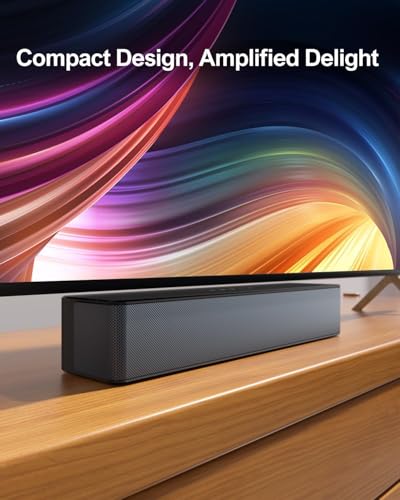
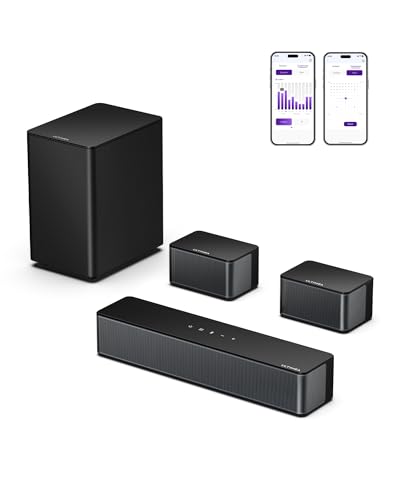
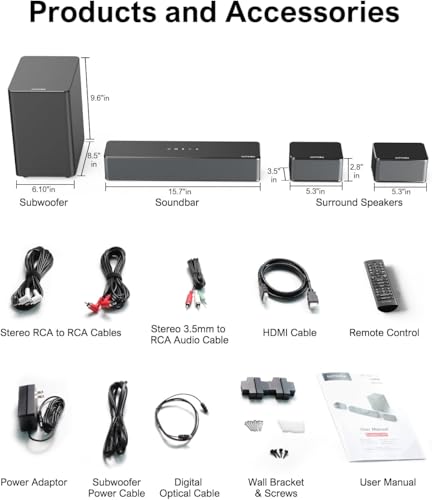
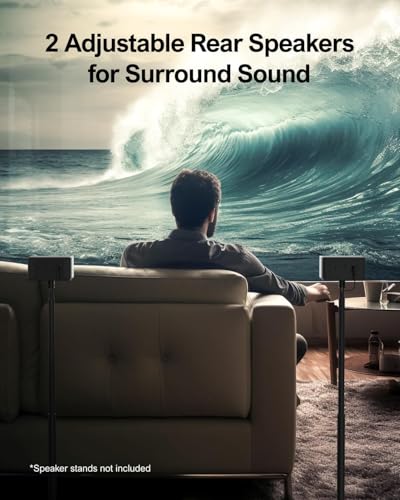
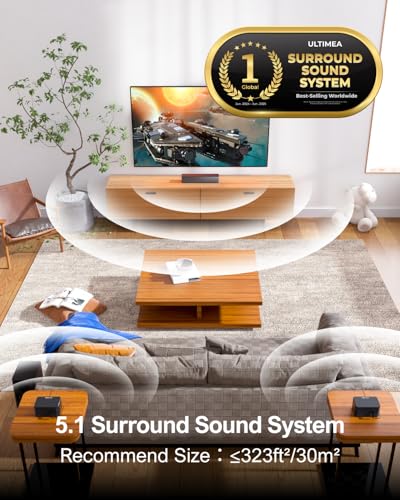
The Ultimea Poseidon D50 delivers what audio enthusiasts call "true 5.1 surround sound." This means five discrete speakers (left, center, right, and two rear channels) plus one dedicated subwoofer (the ".1" in 5.1). Released in 2025 as an updated version of Ultimea's previous model, it includes two wired satellite speakers that you place behind your seating area, connected by lengthy 19.6-foot cables. When a helicopter flies overhead in a movie, you'll actually hear it travel from the front speakers, over your head (through volume transitions), and behind you through the rear speakers.
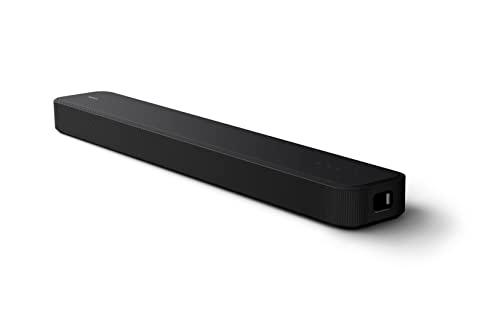
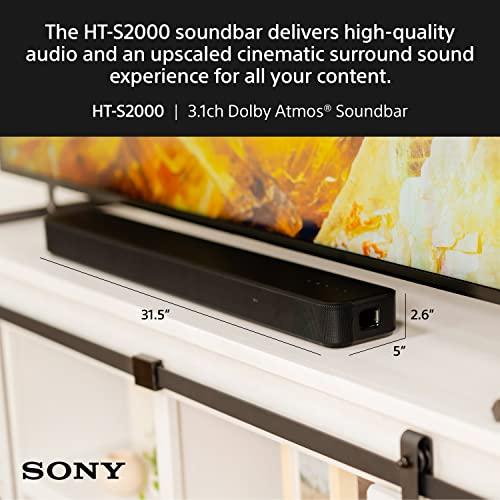
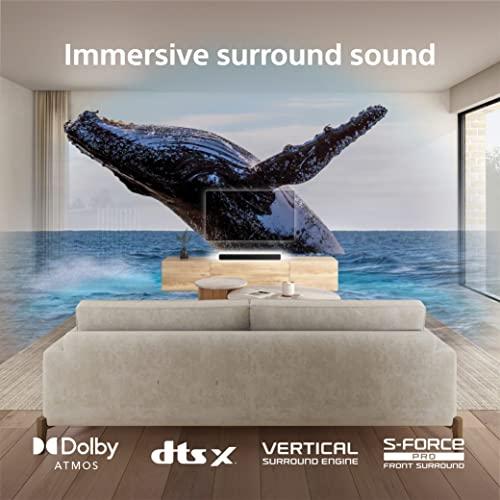
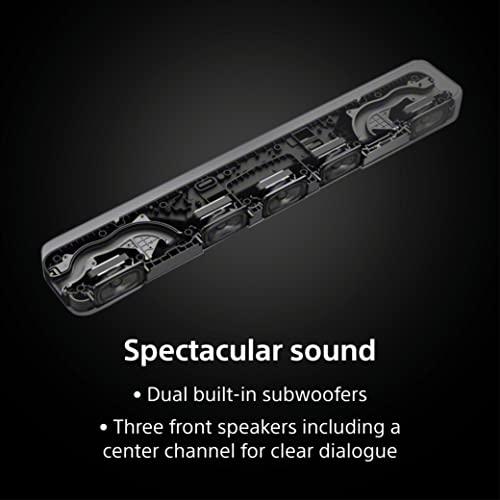
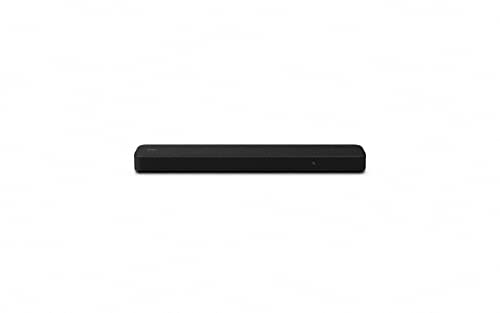
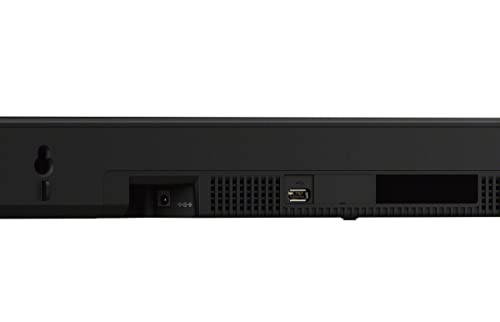
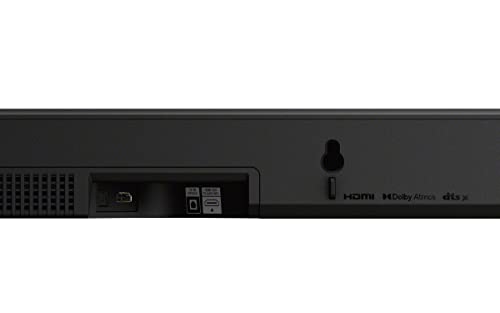
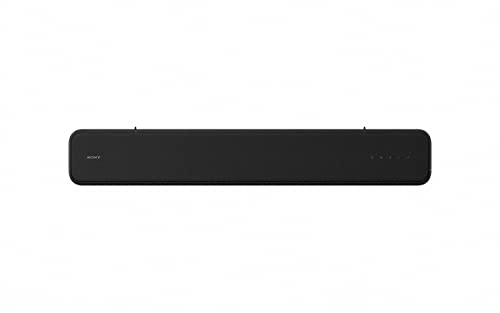
The Sony HT-S2000, launched in 2023, takes the virtual approach with a 3.1 configuration. It has three front-facing speakers (left, center, right) built into the main soundbar, plus dual subwoofers integrated into the same unit. Sony's Vertical Surround Engine and S-Force PRO Front Surround technologies process Dolby Atmos and DTS:X audio tracks to create perceived height and surround effects. When that same helicopter flies over, the Sony uses carefully timed audio cues and frequency manipulation to make your brain think it's coming from above and behind, even though all the sound originates from the front.
After evaluating extensive user feedback and professional reviews, the immersion difference becomes clear. The Ultimea D50 creates genuinely three-dimensional audio positioning that you can physically pinpoint. When watching action sequences, gunfire, explosions, and ambient effects like rainfall or crowd noise genuinely surround you. The system's SurroundX™ algorithm—Ultimea's proprietary processing technology—even converts regular stereo music and TV shows into 5.1 surround, spreading instruments and voices across the full soundstage.
The Sony HT-S2000 delivers impressive virtual surround for a single-unit system, particularly with object-based audio formats like Dolby Atmos. These formats include metadata that tells the soundbar exactly where sounds should appear in three-dimensional space. However, our research consistently shows that effects remain anchored to the front soundstage. You'll perceive additional width and some height information, but sounds don't truly emanate from behind your seating position.
This distinction matters most during intense movie scenes. With the Ultimea, when enemies sneak up behind the protagonist, you'll instinctively want to turn around. The Sony creates a more spacious front soundstage but doesn't trigger that same visceral response.
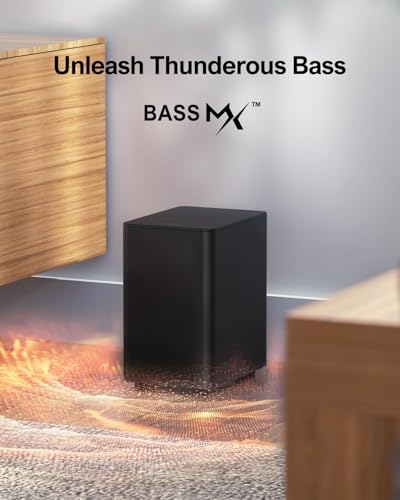
Low-frequency reproduction—bass—significantly impacts your emotional connection to content. Explosions, thunderstorms, musical bass lines, and even dialogue clarity all depend on proper low-end reproduction. The Ultimea D50 includes a separate 5.25-inch wireless subwoofer featuring BassMX™ technology. This proprietary design uses an optimized magnetic circuit and allows the driver's diaphragm to move up to 15mm in each direction (called "excursion"), creating deep, room-shaking bass with minimal distortion.
Wireless connectivity means you can position this subwoofer optimally in your room. Bass waves are long and omnidirectional, so subwoofer placement dramatically affects performance. Corner placement typically reinforces low frequencies, while mid-wall positioning might provide more balanced response.
The Sony HT-S2000 integrates dual subwoofers directly into the main unit using X-Balanced Speaker Units—rectangular drivers designed to maximize surface area within the soundbar's compact dimensions. This approach produces surprisingly robust bass for the size, but physics limits how much low-end you can generate from small, integrated drivers. Think of it like comparing a full-size pickup truck engine to a high-performance motorcycle engine—both can be impressive, but they operate under different physical constraints.
User consensus strongly favors the Ultimea for bass impact, particularly during movie explosions and music with prominent low-end content. The Sony provides adequate bass for most content but doesn't deliver the visceral impact of a dedicated subwoofer.
Here's where the Sony HT-S2000 takes a decisive lead. Sony has prioritized cutting-edge audio format support, handling Dolby Atmos, DTS:X, Dolby TrueHD, DTS HD Master Audio, and high-resolution PCM audio up to 192kHz/24-bit resolution. These formats represent the current pinnacle of home audio technology, found on Ultra HD Blu-ray discs and high-end streaming services.
Dolby Atmos, in particular, represents a paradigm shift from traditional surround sound. Instead of fixed channels, Atmos treats sounds as objects that can be positioned anywhere in three-dimensional space. A raindrop can be placed precisely above your left shoulder, then moved smoothly to behind your right ear. The Sony decodes this positional information and uses its virtual processing to approximate these object positions.
The Ultimea D50 focuses on traditional Dolby Digital and DTS formats—the standard surround formats used in most movies and TV shows since the 1990s. While its SurroundX™ processing can create impressive surround effects from any content, it doesn't decode object-based audio formats. For future-proofing and compatibility with the latest content, the Sony holds a clear advantage.
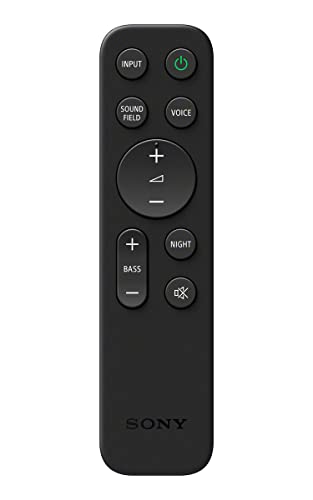
Clear dialogue reproduction often determines whether a soundbar succeeds or fails in daily use. Mumbled movie dialogue, heavy accents, or action scenes with loud background noise can make understanding speech frustrating. The Sony HT-S2000 includes a dedicated center channel—a speaker specifically designed for dialogue reproduction—along with Voice Mode processing that emphasizes vocal frequencies and reduces competing background sounds.
Professional reviews consistently praise the Sony for dialogue clarity, particularly when combined with its Night Mode feature that compresses dynamic range (the difference between quiet and loud sounds). This makes whispered conversations audible while preventing explosions from waking the neighbors.
The Ultimea D50 also includes center channel processing and offers extensive EQ customization through its smartphone app, including 121 preset audio profiles optimized for different content types. However, based on user feedback analysis, the Sony provides more consistent out-of-the-box dialogue performance.
The setup difference between these systems affects daily living significantly. The Ultimea D50 requires running 19.6-foot cables from the main soundbar to two rear speakers positioned behind your seating area. In open floor plans or rooms where furniture can hide cables, this works beautifully. However, many users struggle with cable management, especially in rental properties where running wires through walls isn't possible.
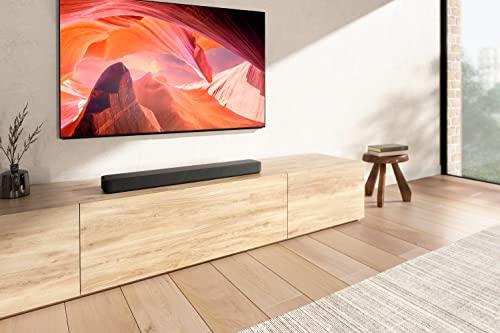
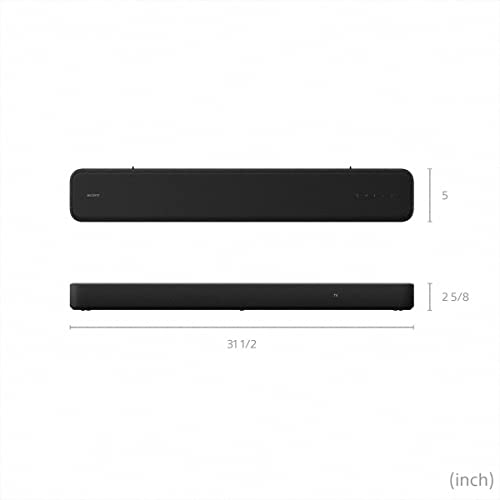
The Sony HT-S2000 epitomizes plug-and-play convenience. A single HDMI cable connects it to your TV, and its compact 31.5-inch width accommodates most TV stands. At 8.2 pounds, it's light enough for easy wall mounting using the included template.
From a practical standpoint, the Sony wins for apartments, minimal aesthetics, and situations where setup simplicity matters most. The Ultimea requires more planning but rewards that effort with superior surround performance.
Room dimensions dramatically affect soundbar performance. The Ultimea D50 is specifically designed for medium to large rooms (250-380 square feet) where its 320W peak power output and true surround configuration have space to breathe. In smaller rooms, the rear speakers might overwhelm the listening position, creating an unbalanced soundstage.
The Sony HT-S2000 works well in smaller spaces where its 250W output provides adequate volume without acoustic overload. Its compact design suits bedrooms, apartments, or secondary viewing areas where a full surround system would be impractical.
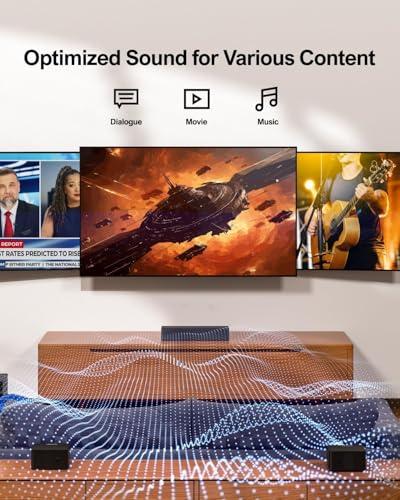
The Ultimea D50 offers unprecedented customization through its dedicated smartphone app. The 10-band equalizer allows precise frequency adjustment, while 121 preset EQ matrices provide optimized settings for different content types, room acoustics, and personal preferences. Independent rear speaker volume control lets you fine-tune the surround balance for your specific room layout and seating distance.
This level of control appeals to users who enjoy tweaking audio settings and want to optimize performance for their specific situation. However, it can overwhelm users who prefer simpler operation.
The Sony HT-S2000 takes a more streamlined approach with three primary modes: Movie (enhanced dynamics), Music (balanced response), and News (dialogue focus), plus Night Mode and Voice Mode. The Sony Home Entertainment Connect app replicates remote functions but doesn't provide extensive EQ customization.
The Sony HT-S2000 integrates seamlessly with Sony's broader ecosystem, particularly BRAVIA XR TVs. Features like BRAVIA Sync allow your TV remote to control both devices, while optimized audio processing specifically tailored to Sony TV characteristics can improve overall performance.
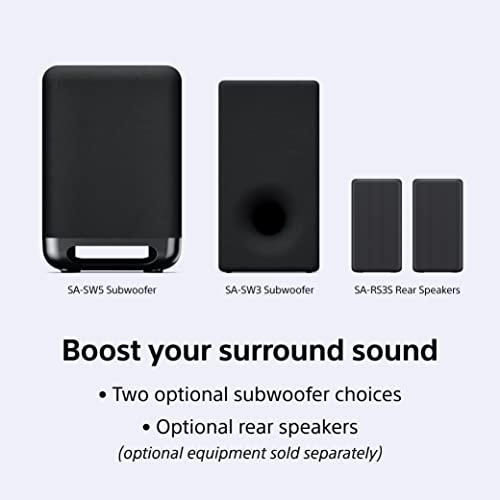
More importantly, the Sony supports gradual system expansion with official SA-SW3 and SA-SW5 wireless subwoofers and SA-RS3S rear speakers. This allows you to start with the basic soundbar and add components over time as budget and needs evolve.
The Ultimea D50 arrives as a complete system but doesn't offer official expansion options beyond the included components.
At the time of writing, both systems occupy the mid-range soundbar market but approach value differently. The Ultimea D50 delivers genuine 5.1 surround sound at a price point where most competitors offer only virtual processing or basic 2.1 configurations. For users prioritizing surround immersion and bass impact, it provides exceptional value.
The Sony HT-S2000 commands a premium for its advanced format support, brand reputation, and expansion capabilities. While more expensive initially, its upgrade path and future-proof audio decoding justify the investment for users planning long-term system evolution.
Since the Sony HT-S2000 launched in 2023, object-based audio formats like Dolby Atmos have become increasingly common across streaming platforms, gaming consoles, and Ultra HD Blu-ray releases. This trend suggests that format compatibility will become more important over time.
The Ultimea D50's 2025 release incorporates lessons learned from earlier soundbar generations, focusing on reliable surround processing and comprehensive connectivity. However, its emphasis on traditional surround formats may limit compatibility with future content developments.
You're building a dedicated home theater where immersion takes priority over convenience. The Ultimea excels when you have adequate room space, don't mind running speaker cables, and want that visceral feeling of sounds genuinely surrounding you. It's particularly compelling for movie enthusiasts, gamers who want positional audio advantages, and anyone who's been disappointed by virtual surround claims from other soundbars.
The extensive EQ customization appeals to audio tweakers who enjoy optimizing their system, while the powerful bass response satisfies users who want to feel explosions and musical low-end. If you're coming from basic TV speakers and want the biggest immediate improvement in surround immersion, the Ultimea D50 delivers.
You prioritize convenience, format compatibility, and future flexibility. The Sony suits users in smaller spaces, rental properties, or situations where aesthetic cleanliness matters most. Its excellent dialogue processing makes it ideal for TV-focused viewing, while advanced format support ensures compatibility with the latest streaming and disc content.
The expansion capability appeals to users who prefer gradual system building, starting with a capable all-in-one unit and adding components as needs and budgets allow. If you're in Sony's ecosystem with a BRAVIA TV, the integration benefits add significant convenience value.
Both soundbars succeed within their design parameters, but they optimize for different priorities. The Ultimea Poseidon D50 provides superior surround immersion and bass impact for users willing to accept setup complexity. The Sony HT-S2000 offers greater convenience, format support, and upgrade flexibility for users prioritizing simplicity and future-proofing.
Your choice ultimately depends on whether you value authentic surround positioning (Ultimea) or prefer versatile convenience with expansion potential (Sony). Neither approach is wrong—they're simply optimized for different living situations and entertainment priorities.
| Ultimea Poseidon D50 5.1 Soundbar | Sony HT-S2000 3.1ch Dolby Atmos |
|---|---|
| Channel Configuration - Determines whether you get true surround sound | |
| True 5.1 with physical rear speakers | 3.1 with virtual surround processing |
| Peak Power Output - Affects volume and dynamic range | |
| 320W (distributed across 6 drivers) | 250W (concentrated in 5 drivers) |
| Subwoofer Type - Critical for bass impact and room flexibility | |
| Separate 5.25" wireless subwoofer with BassMX™ technology | Dual built-in subwoofers with X-Balanced drivers |
| Audio Format Support - Future-proofing for new content | |
| Dolby Digital, DTS, SurroundX™ upmixing | Dolby Atmos, DTS:X, Dolby TrueHD, DTS HD Master Audio |
| Setup Complexity - Installation time and aesthetic impact | |
| Requires 19.6ft cables to rear speakers | Single HDMI cable, wall-mountable |
| EQ Customization - Audio tuning flexibility | |
| 10-band EQ, 121 preset matrices, smartphone app control | Basic sound modes (Movie/Music/Voice), limited EQ |
| Room Size Recommendation - Optimal performance space | |
| 250-380 sq ft (medium to large rooms) | Smaller to medium rooms, compact design |
| Expansion Options - Ability to upgrade over time | |
| Complete system, limited expansion | Compatible with Sony wireless subwoofers and rear speakers |
| Connectivity - Input options and wireless features | |
| HDMI eARC, Optical, AUX, USB, Bluetooth 5.3 | HDMI eARC, Optical, USB, Bluetooth 5.2, Wi-Fi |
| Dialogue Processing - Speech clarity features | |
| Center channel with EQ adjustment | Dedicated center channel with Voice Mode |
| Release Year - Technology generation and support | |
| 2025 (latest SurroundX™ processing) | 2023 (mature Dolby Atmos implementation) |
The Ultimea Poseidon D50 5.1 Soundbar delivers superior surround sound with true 5.1 channels using physical rear speakers that create genuine positional audio. The Sony HT-S2000 3.1ch Dolby Atmos uses virtual surround processing to simulate effects from front-facing speakers. For authentic surround immersion, the Ultimea D50 wins, while the Sony HT-S2000 offers convenience without rear speaker placement.
The Sony HT-S2000 3.1ch Dolby Atmos requires only a single HDMI cable to your TV for complete setup. The Ultimea Poseidon D50 5.1 Soundbar needs 19.6-foot cables running to two rear speakers positioned behind your seating area. Choose the Sony for clean, minimal installation or the Ultimea if you can manage speaker cables for better surround sound.
The Ultimea Poseidon D50 5.1 Soundbar includes a separate 5.25" wireless subwoofer with BassMX™ technology that delivers deeper, more impactful bass. The Sony HT-S2000 3.1ch Dolby Atmos has dual built-in subwoofers that provide good bass for its size but can't match a dedicated subwoofer's performance. For movie explosions and music bass, the Ultimea D50 is the clear winner.
The Sony HT-S2000 3.1ch Dolby Atmos supports advanced formats including Dolby Atmos, DTS:X, Dolby TrueHD, and high-resolution audio up to 192kHz. The Ultimea Poseidon D50 5.1 Soundbar handles standard Dolby Digital and DTS formats with its SurroundX™ upmixing technology. For future-proofing and streaming compatibility, the Sony HT-S2000 offers better format support.
The Sony HT-S2000 3.1ch Dolby Atmos offers plug-and-play setup with just one HDMI cable connection and fits easily under most TVs. The Ultimea Poseidon D50 5.1 Soundbar requires positioning and connecting rear speakers around your room, which takes more planning and cable management. The Sony is significantly easier for quick installation.
The Sony HT-S2000 3.1ch Dolby Atmos supports official expansion with Sony wireless subwoofers and rear speakers, allowing gradual system building. The Ultimea Poseidon D50 5.1 Soundbar comes as a complete 5.1 system but offers limited expansion options. Choose the Sony if you want to start simple and upgrade over time.
The Sony HT-S2000 3.1ch Dolby Atmos features a dedicated center channel with Voice Mode processing specifically designed for clear dialogue reproduction. The Ultimea Poseidon D50 5.1 Soundbar also has center channel processing but focuses more on surround effects. For TV shows and movies with difficult-to-hear dialogue, the Sony HT-S2000 typically performs better.
The Ultimea Poseidon D50 5.1 Soundbar is designed for medium to large rooms (250-380 square feet) where its 320W power and rear speakers have space to create proper surround staging. The Sony HT-S2000 3.1ch Dolby Atmos works well in smaller to medium rooms with its compact design and 250W output. Match your room size to the appropriate system for best performance.
The Ultimea Poseidon D50 5.1 Soundbar provides extensive customization with a 10-band equalizer, 121 preset audio profiles, and smartphone app control for fine-tuning. The Sony HT-S2000 3.1ch Dolby Atmos offers basic sound modes (Movie, Music, Voice) with limited manual adjustment options. Audio enthusiasts who enjoy tweaking settings will prefer the Ultimea D50.
Both the Sony HT-S2000 3.1ch Dolby Atmos and Ultimea Poseidon D50 5.1 Soundbar connect via standard HDMI eARC/ARC and optical inputs, making them compatible with all major TV brands. The Sony offers enhanced integration with Sony BRAVIA TVs but works perfectly with Samsung, LG, TCL, and other brands. Both provide universal TV compatibility.
For dedicated home theater rooms, the Ultimea Poseidon D50 5.1 Soundbar delivers superior cinematic immersion with true 5.1 surround sound, powerful bass, and positioning effects that enhance movie watching. The Sony HT-S2000 3.1ch Dolby Atmos works better for casual TV viewing and smaller spaces where convenience matters more than maximum surround impact. Choose the Ultimea for serious home theater setups.
Value depends on your priorities: the Ultimea Poseidon D50 5.1 Soundbar provides exceptional surround sound performance and bass impact for users wanting maximum immersion. The Sony HT-S2000 3.1ch Dolby Atmos offers premium format support, easier setup, and expansion flexibility at a higher initial cost. The Ultimea D50 delivers better immediate performance value, while the Sony HT-S2000 provides better long-term versatility value.
We've done our best to create useful and informative comparisons to help you decide what product to buy. Our research uses advanced automated methods to create this comparison and perfection is not possible - please contact us for corrections or questions. These are the sites we've researched in the creation of this article: youtube.com - eu.ultimea.com - newegg.com - tvsbook.com - youtube.com - provantage.com - ultimea.com - techradar.com - community.ultimea.com - homedepot.com - community.ultimea.com - ultimea.com - ultimea.de - youtube.com - medisamhealthcenter.com - ultimea.com - youtube.com - walmart.com - techradar.com - valueelectronics.com - youtube.com - videoandaudiocenter.com - whathifi.com - hometheaterhifi.com - youtube.com - sony.com - rtings.com - whathifi.com - rtings.com - helpguide.sony.net - electronics.sony.com - sony.com - dolby.com - sony.com - youtube.com - youtube.com

Privacy Policy
Terms and Conditions - Affiliate Policy
Home Security
© Copyright 2008-2026.
11816 Inwood Rd #1211, Dallas, TX 75244