

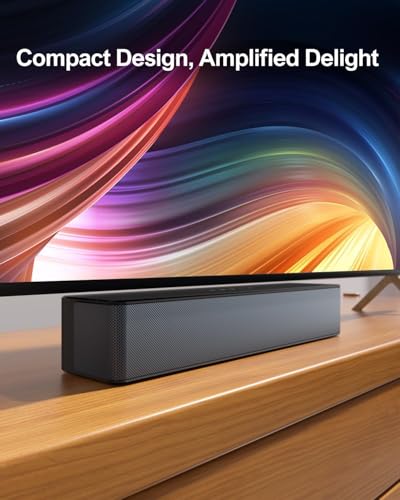









When shopping for a soundbar in 2024, you'll encounter two very different philosophies: complete budget systems that give you all the hardware pieces, and premium single-unit bars that rely on advanced processing. The Ultimea Poseidon D50 5.1 Soundbar and Sonos Beam Gen 2 perfectly represent this divide, offering vastly different approaches to improving your TV's audio.
At the time of writing, these products sit in completely different price brackets—the Ultimea system costs about what you'd spend on a nice dinner out, while the Sonos Beam Gen 2 commands premium pricing that reflects its position as a luxury audio product. This price difference isn't just about brand positioning; it represents fundamentally different engineering approaches and target audiences.
The soundbar market has evolved dramatically since basic TV speakers became universally terrible around 2010. As TVs got thinner, manufacturers had to sacrifice speaker quality, creating the massive market opportunity that soundbars filled. Today's options range from simple stereo bars to complex systems that rival traditional home theater setups.
The key decision point isn't just about sound quality—it's about the type of audio experience you want. Do you want discrete surround speakers physically placed around your room, or are you comfortable with psychoacoustic processing (fancy audio tricks that fool your brain into hearing sounds from different directions) from a single unit?
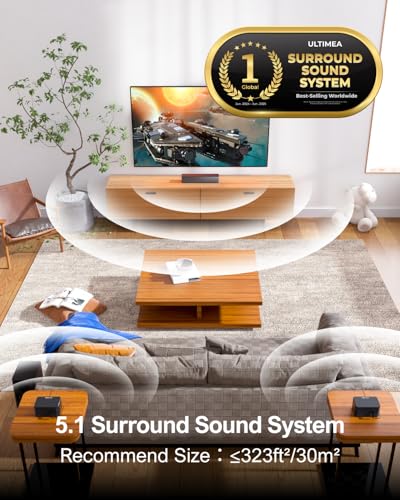
Channel configuration numbers like "5.1" tell you exactly what you're getting. The first number represents main channels (front left, center, front right, plus rear left and rear right for 5-channel systems), while the ".1" refers to a dedicated subwoofer channel for bass frequencies below about 120Hz. This matters because human hearing works differently at various frequencies—we can pinpoint higher frequencies directionally, but bass waves are so long they seem to come from everywhere.
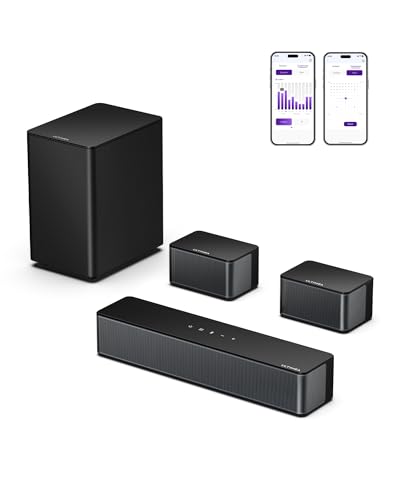
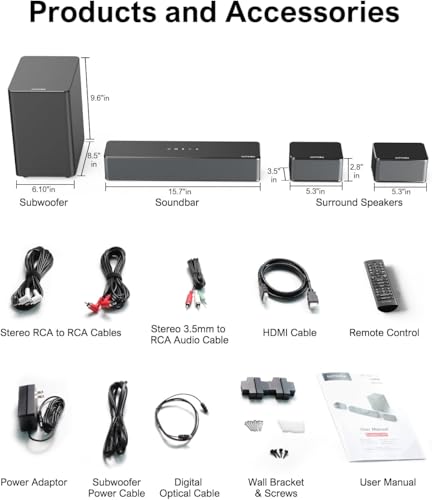
The Ultimea Poseidon D50 delivers what audio enthusiasts call "true surround sound." You get a main soundbar, two physical satellite speakers that you place behind your seating area, and a wireless subwoofer that can go anywhere in the room. When a helicopter flies overhead in a movie, you'll hear it move from the front speakers, across the room, to the rear speakers behind you. This creates what's called "discrete channel separation"—each speaker handles specific audio information independently.
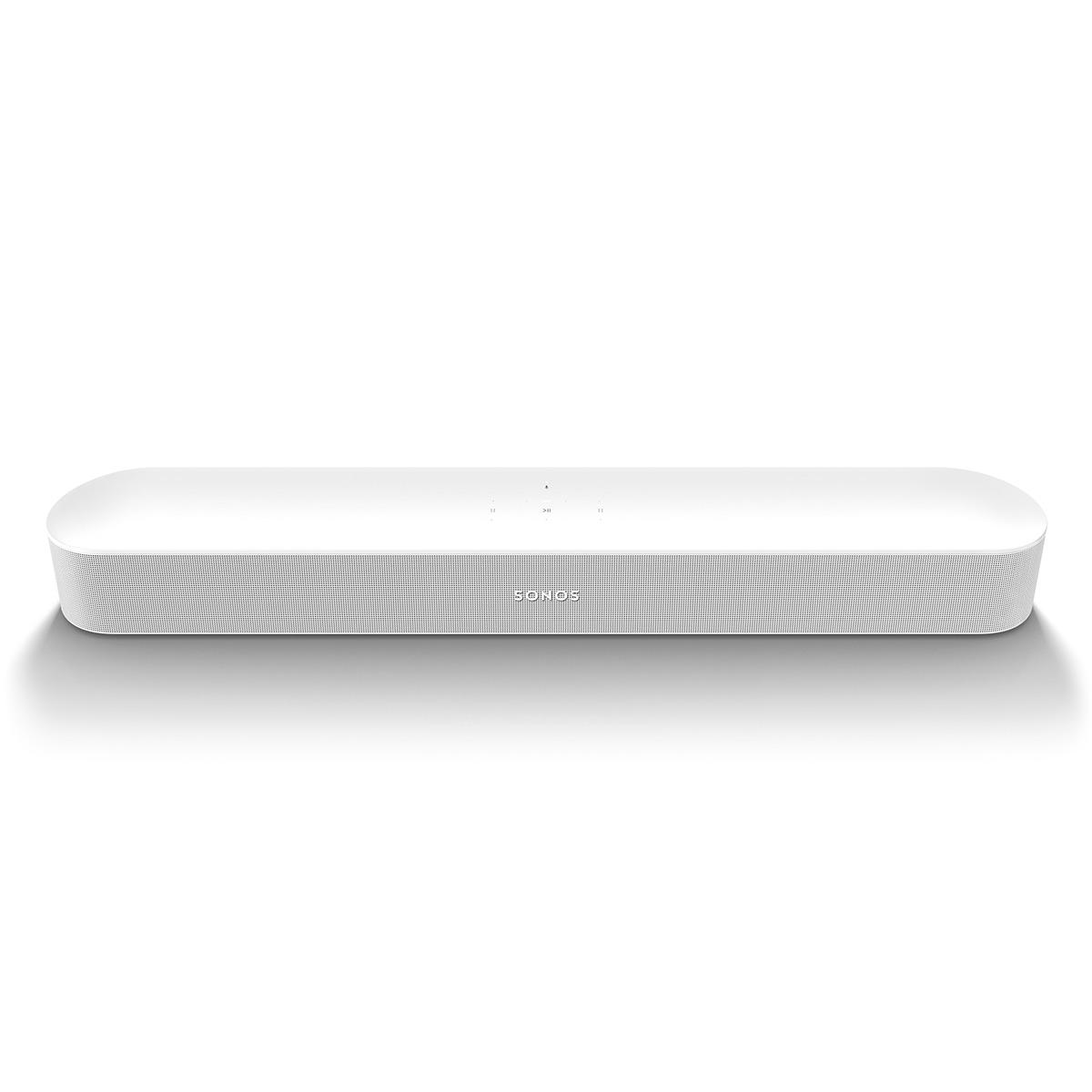
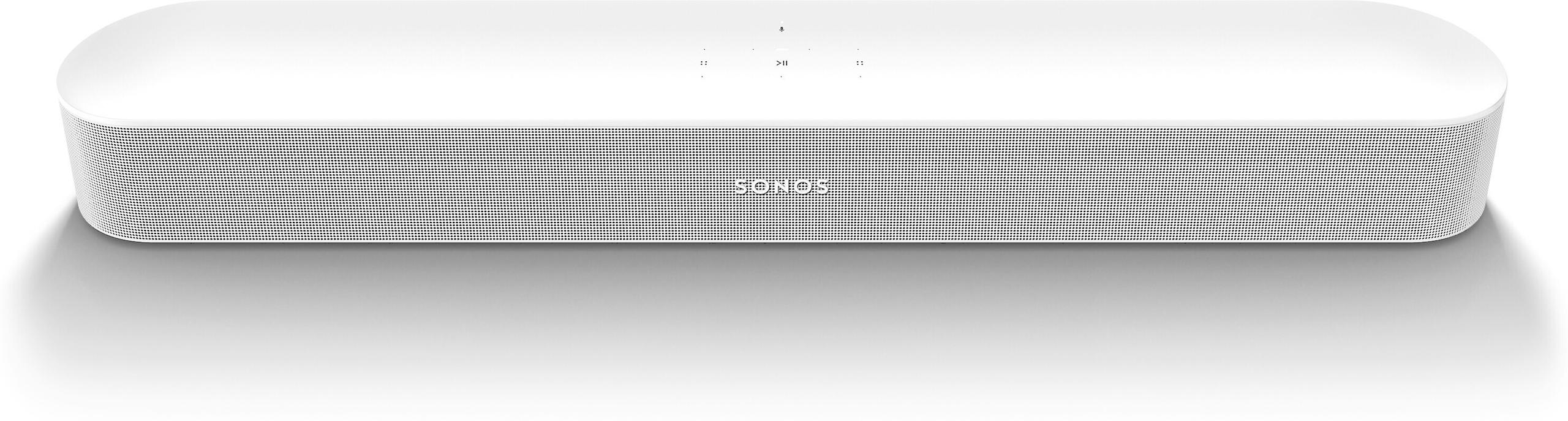
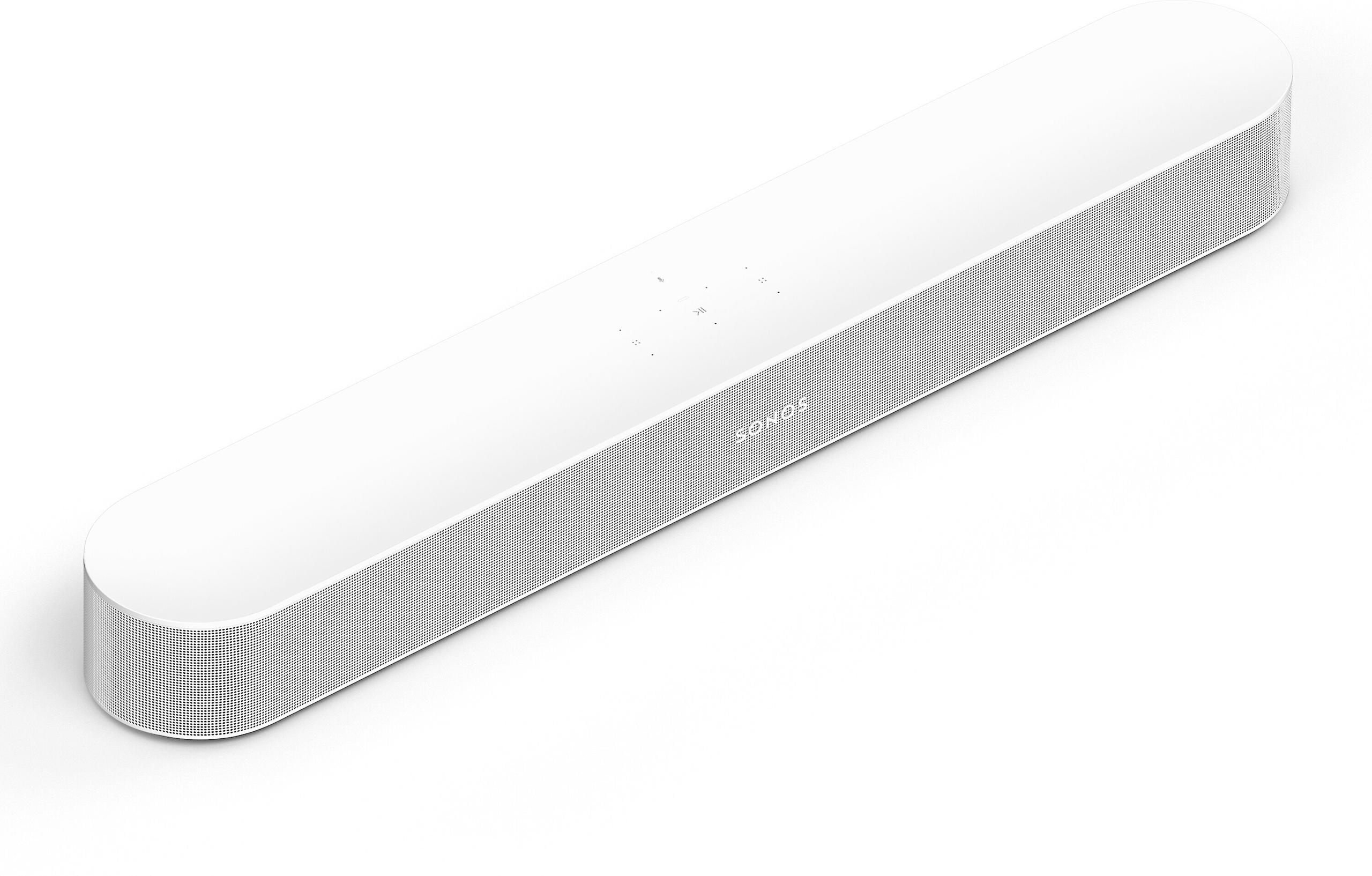
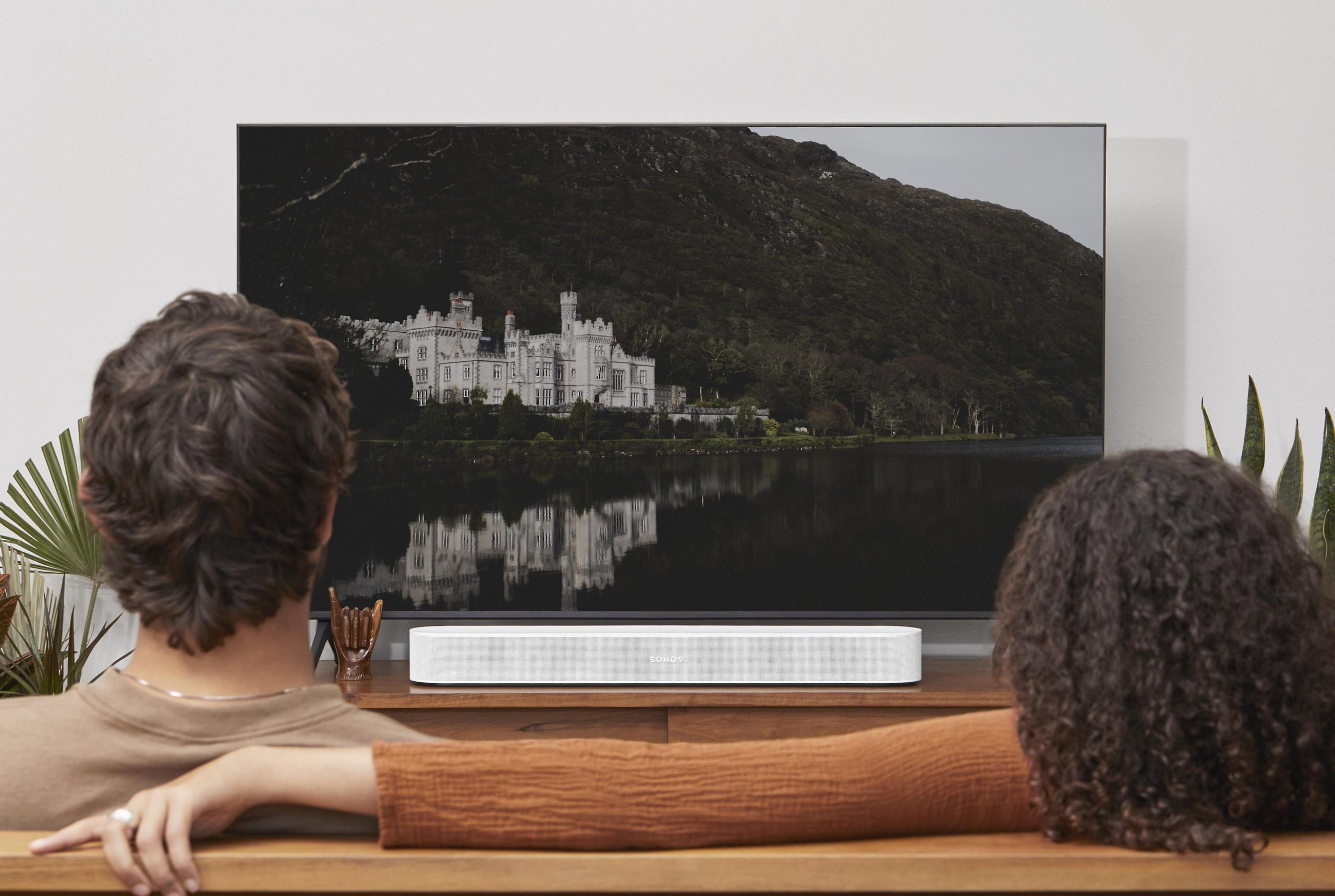
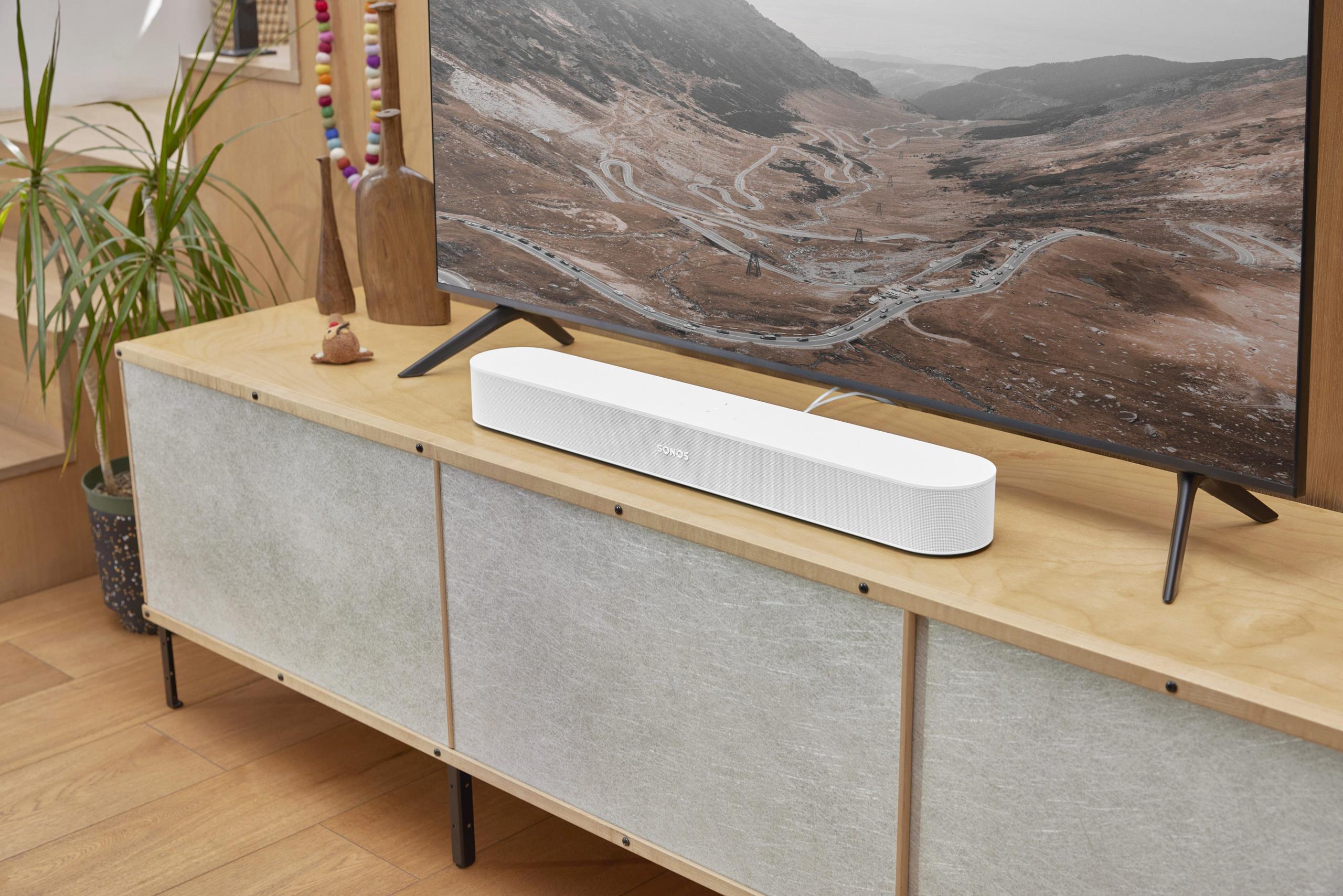
The Sonos Beam Gen 2, released in 2021 with significant processing improvements over its 2018 predecessor, takes the opposite approach. Everything happens within a single 25.6-inch bar containing multiple drivers pointed in different directions. Advanced digital signal processing (DSP) creates phantom surround effects by manipulating timing, phase relationships, and frequency response to trick your ears into perceiving sounds from locations where no speakers exist.
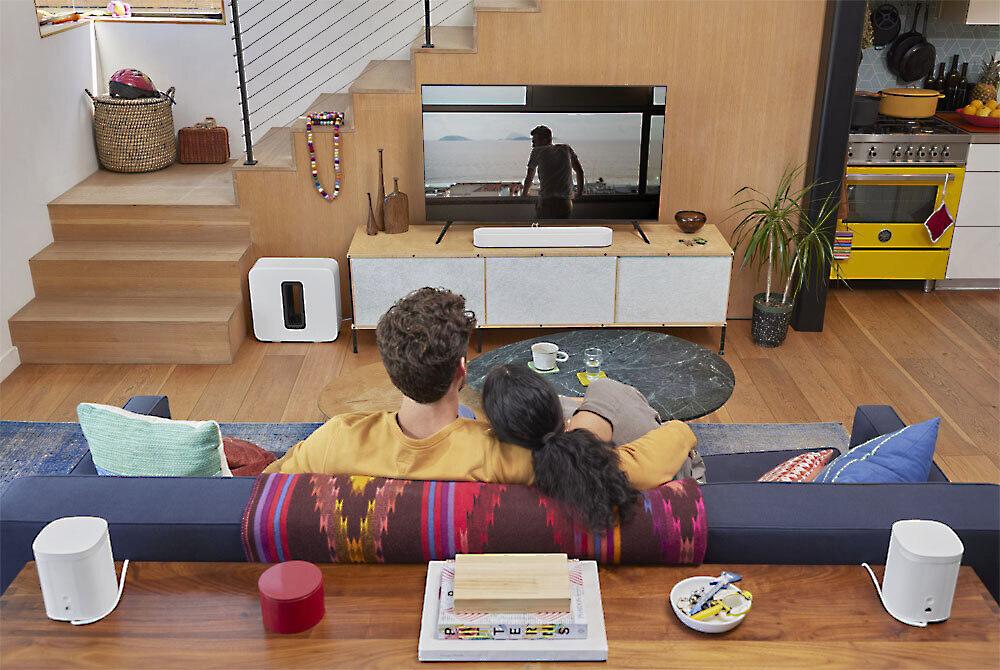
Both approaches have merit, but they excel in different scenarios. Physical surround speakers create more convincing directional effects, especially for content with pronounced rear-channel activity like action movies or video games. Virtual processing works better in small spaces where rear speakers would be impractical, and it eliminates the visual clutter of multiple components.
Based on our research across professional reviews and user feedback, the performance characteristics of these systems diverge significantly in ways that matter for home theater use.
The Ultimea D50's physical rear speakers create genuinely convincing surround effects that virtual processing struggles to match. When reviewing consensus opinions from home theater enthusiasts, the difference becomes clear during scenes with pronounced directional audio—think of the pod racing sequence in Star Wars or helicopter scenes in action movies. The physical speakers behind you create authentic spatial cues that your brain recognizes as real.
The Sonos Beam Gen 2's virtual Dolby Atmos processing is impressive for a single bar, but it faces fundamental physics limitations. Sound waves can only do so much when they're all originating from one location in front of you. The system works best when you're sitting in the optimal "sweet spot" directly in front of the bar, and the surround effects become less convincing as you move to the sides or at angles.
However, the Sonos excels in one crucial area: dialogue clarity. Its Speech Enhancement technology, developed with professional sound engineers, ensures conversations cut through background noise and music. This matters enormously for TV watching, where unclear dialogue ruins the experience. The Ultimea system handles dialogue well but doesn't match the Sonos's specialized processing.
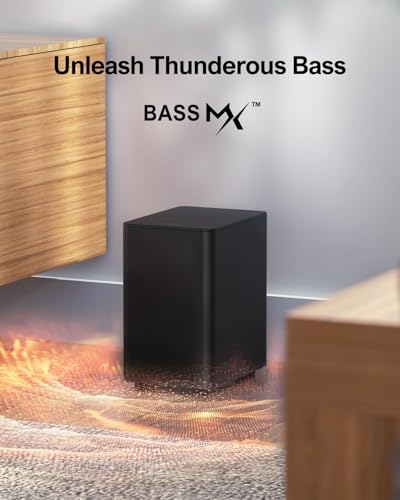
This comparison reveals perhaps the starkest performance difference. The Ultimea D50 includes a dedicated 5.25-inch wireless subwoofer with what the company calls BassMX technology—essentially optimized magnet structures and cabinet design for deeper bass extension. When you're watching explosions, earthquakes, or spaceship engines, you'll feel the impact in your chest.
The Sonos Beam Gen 2 relies entirely on small drivers within the soundbar for bass, which creates an obvious limitation. Physics dictates that small speakers in small enclosures cannot produce the deep, room-shaking bass that larger dedicated subwoofers deliver. Users consistently report that action scenes lack the visceral impact that makes movie watching exciting.
Sonos addresses this by offering separate subwoofers, but adding their Sub Mini roughly triples your total system cost at the time of writing. The Ultimea includes everything needed for full-range audio reproduction in its base price.
The Ultimea system delivers significantly more total power output—320W peak across all drivers compared to the Sonos's more modest amplification. More importantly, the distributed speaker arrangement means sound comes from multiple room locations rather than a single point source.
This architectural difference becomes crucial in larger rooms. The Ultimea works effectively in spaces up to about 380 square feet because its satellite speakers and subwoofer help distribute sound energy throughout the room. The Sonos Beam Gen 2 works best in smaller to medium-sized rooms where its single-point audio source can adequately fill the space.
Room acoustics play a huge role here. Hard surfaces like tile floors and bare walls reflect sound waves, creating complex interactions that can enhance or muddy the audio. The Ultimea's distributed approach tends to work better in acoustically challenging rooms, while the Sonos benefits from its Trueplay calibration feature that analyzes your room's acoustic signature and adjusts the sound accordingly (though this requires an iOS device).
The technology integration approaches reveal these products' different philosophies clearly. The Sonos Beam Gen 2 embraces full smart home integration with built-in Amazon Alexa and Google Assistant support. You can control not just the soundbar but your entire smart home ecosystem using voice commands. The Wi-Fi connectivity enables features like multi-room audio, where you can synchronize music throughout your house with other Sonos products.
Interestingly, the Sonos completely omits Bluetooth connectivity, focusing instead on Wi-Fi streaming and Apple AirPlay 2. This decision reflects Sonos's preference for higher-quality audio streaming, as Wi-Fi generally provides more bandwidth and stability than Bluetooth. However, it means you can't easily connect devices that only support Bluetooth.
The Ultimea D50 takes a more traditional approach with comprehensive connectivity including HDMI eARC, optical, AUX, USB, and Bluetooth 5.3. The dedicated smartphone app provides extensive customization with 121 preset EQ matrices and a 10-band equalizer—far more adjustment capability than the Sonos offers. This appeals to users who enjoy fine-tuning their audio experience.
Modern streaming services and Blu-ray discs often include advanced audio formats like Dolby Atmos, which adds height information to create three-dimensional soundscapes. The Sonos Beam Gen 2 fully supports Dolby Atmos processing, using sophisticated algorithms to create the impression of sound coming from above and around you.
The Ultimea D50 lacks Dolby Atmos and DTS:X support, which represents its most significant limitation for future-proofing. As more content includes these advanced formats, the Sonos system will provide better compatibility. However, the vast majority of current TV and streaming content still uses standard 5.1 surround formats that both systems handle well.
HDMI eARC (enhanced Audio Return Channel) support on both systems enables high-quality audio transmission from your TV back to the soundbar, including lossless audio formats. This connection method also allows your TV remote to control soundbar volume and power, creating a more integrated experience.
The construction quality difference reflects the price positioning accurately. The Sonos Beam Gen 2 features premium materials, precise manufacturing tolerances, and a design that complements high-end home décor. The perforated metal grille and solid construction suggest this product will age well both functionally and aesthetically.
The Ultimea system uses budget-appropriate materials and construction methods. The plastic housings feel less substantial, but they're entirely adequate for the audio performance delivered. The multiple components require more setup space and cable management, which some users find cluttered compared to a single-bar solution.
Reliability becomes important for long-term satisfaction. Sonos has built a reputation for products that receive regular software updates, improving functionality over time. Their customer support and warranty service generally receive positive ratings. The Ultimea represents a newer brand with less established long-term reliability data, though early user reports suggest adequate build quality for the price point.
The user experience philosophies differ markedly. The Ultimea D50 provides extensive manual control through its smartphone app, appealing to users who enjoy adjusting settings and experimenting with sound profiles. The 121 preset EQ matrices and detailed surround level adjustments let you tailor the audio precisely to your preferences and content types.
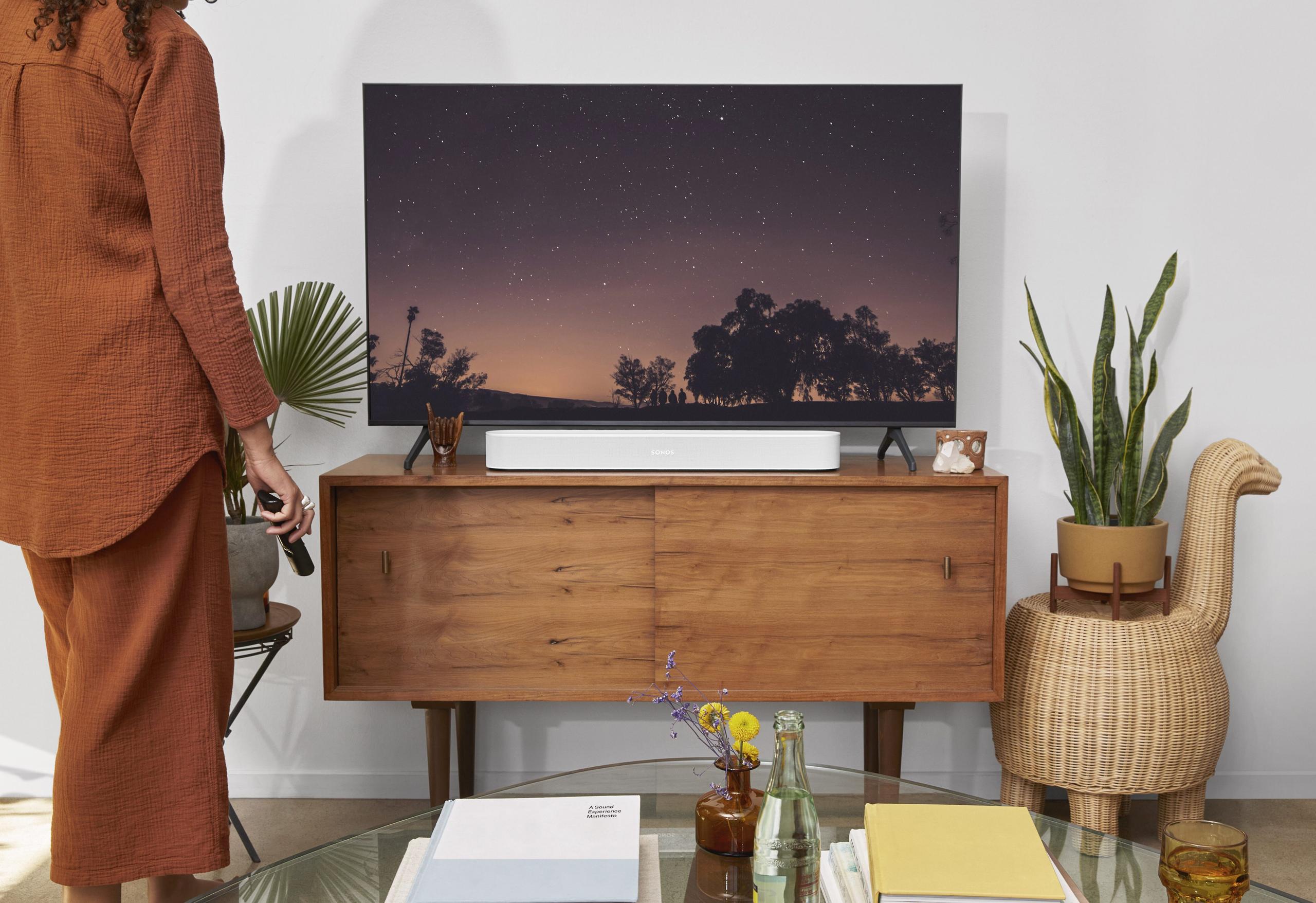
The Sonos Beam Gen 2 emphasizes simplicity and intelligent automation. Trueplay calibration analyzes your room acoustics and automatically adjusts the sound, while features like Night Sound reduce loud effects while enhancing dialogue for late-night viewing. The experience focuses more on "set it and forget it" convenience.
Both approaches have merit depending on your personality and technical comfort level. Audio enthusiasts often prefer the Ultimea's extensive manual controls, while users seeking simple, refined performance gravitate toward the Sonos's automated optimization.
The decision ultimately depends on your priorities, room characteristics, and how you use your entertainment system.
Choose the Ultimea Poseidon D50 if you're primarily focused on movie and gaming immersion in a medium to large room. The genuine surround sound and included subwoofer create more convincing spatial audio effects and visceral bass impact than virtual processing can match. At the time of writing, no other system at this price point includes discrete rear speakers and a subwoofer, making it exceptional value for home theater enthusiasts on a budget.
The Ultimea also makes sense if you enjoy customizing your audio experience or if your room layout accommodates rear speakers well. The extensive EQ options and adjustable surround levels let you optimize performance for different content types and personal preferences.
Select the Sonos Beam Gen 2 if you prioritize premium build quality, smart home integration, and refined audio processing in a smaller space. The superior dialogue clarity and sophisticated virtual surround work well for TV watching and casual movie viewing. The single-unit design eliminates cable management complexity and visual clutter.
The Sonos particularly excels for users who value long-term software support and ecosystem expansion possibilities. You can add rear speakers and subwoofers later if your needs change, and the multi-room capabilities integrate well with whole-home audio systems.
For apartment dwellers or users with layout constraints that make rear speakers impractical, the Sonos Beam Gen 2's virtual surround provides a reasonable compromise. Its compact footprint and premium aesthetics work better in modern, minimalist living spaces.
These products represent different philosophies rather than direct competitors. The Ultimea Poseidon D50 prioritizes authentic surround sound and complete system value, while the Sonos Beam Gen 2 emphasizes premium processing, build quality, and smart features.
At the time of writing, the Ultimea offers extraordinary value for users wanting genuine home theater immersion without premium pricing. However, the Sonos provides superior refinement and long-term satisfaction for users willing to invest in premium audio technology.
Your choice should reflect your room size, content preferences, technical comfort level, and budget priorities. Both products excel in their intended use cases—the key is matching the right product to your specific needs and expectations.
| Ultimea Poseidon D50 5.1 Soundbar | Sonos Beam Gen 2 Soundbar |
|---|---|
| Channel Configuration - Physical vs virtual surround makes huge difference in immersion | |
| True 5.1 with 2 satellite speakers + wireless subwoofer | 5.0 virtual surround from single soundbar |
| Audio Format Support - Future-proofing for streaming content | |
| Dolby Digital, DTS (no Atmos support) | Dolby Atmos, Dolby Digital, DTS |
| Total System Power - Room-filling capability and dynamic range | |
| 320W peak output across distributed speakers | Moderate power from single unit (exact specs not disclosed) |
| Bass Response - Critical for action movies and music | |
| Dedicated 5.25" wireless subwoofer with BassMX technology | No subwoofer (relies on small internal drivers) |
| Physical Setup - Installation complexity and room requirements | |
| 4 separate components: soundbar + sub + 2 satellites (19.6ft cables) | Single compact soundbar (25.6" x 2.7" x 3.9") |
| Smart Features - Voice control and home automation | |
| Smartphone app control, no voice assistants | Built-in Alexa & Google Assistant, Trueplay calibration |
| Connectivity Options - Device compatibility and streaming | |
| HDMI eARC, Optical, AUX, USB, Bluetooth 5.3 | HDMI eARC, Wi-Fi, AirPlay 2 (no Bluetooth) |
| EQ Customization - Sound tuning flexibility | |
| 10-band EQ, 121 preset matrices, 6 sound modes | Limited EQ, automatic Trueplay optimization |
| Build Quality - Long-term durability and aesthetics | |
| Budget plastic construction, functional design | Premium materials, precise manufacturing |
| Room Size Recommendation - Optimal performance space | |
| 250-380 sq ft (distributed speaker advantage) | Small to medium rooms (single-point limitation) |
| Expandability - Future upgrade options | |
| Complete system included, limited expansion | Can add Sonos Sub Mini and rear speakers separately |
| Multi-room Audio - Whole-home integration | |
| Standalone system only | Full Sonos ecosystem with multi-room sync |
The Ultimea Poseidon D50 5.1 Soundbar delivers superior surround sound with true 5.1 channels, including two physical satellite speakers that you place behind your seating area. The Sonos Beam Gen 2 uses virtual surround processing from a single bar, which sounds good but can't match the authentic directional audio of discrete rear speakers.
The Ultimea Poseidon D50 has significantly better bass thanks to its included 5.25-inch wireless subwoofer with BassMX technology. The Sonos Beam Gen 2 relies on small internal drivers for bass, which limits its low-frequency impact during action movies and music.
The Sonos Beam Gen 2 is much easier to set up as a single compact unit that connects directly to your TV. The Ultimea Poseidon D50 requires positioning four separate components (soundbar, subwoofer, and two satellite speakers) with cable management for the rear speakers.
Only the Sonos Beam Gen 2 supports Dolby Atmos for three-dimensional virtual sound effects. The Ultimea Poseidon D50 supports Dolby Digital and DTS but lacks Dolby Atmos capability, which may limit compatibility with newer streaming content.
The Ultimea Poseidon D50 performs better in larger rooms (up to 380 sq ft) because its distributed speakers and 320W power output fill space more effectively. The Sonos Beam Gen 2 works best in small to medium-sized rooms where its single-point audio source is adequate.
The Sonos Beam Gen 2 has built-in Amazon Alexa and Google Assistant for hands-free voice control. The Ultimea Poseidon D50 doesn't include voice assistants but offers comprehensive smartphone app control with extensive EQ customization options.
The Ultimea Poseidon D50 offers more connection types including HDMI eARC, Optical, AUX, USB, and Bluetooth 5.3. The Sonos Beam Gen 2 focuses on Wi-Fi streaming and AirPlay 2 but notably lacks Bluetooth connectivity.
Both improve dialogue over TV speakers, but the Sonos Beam Gen 2 excels with its specialized Speech Enhancement technology developed with professional sound engineers. The Ultimea Poseidon D50 handles dialogue well but doesn't match the Sonos's dedicated dialogue processing.
The Sonos Beam Gen 2 can be expanded with additional Sonos subwoofers and rear speakers, integrating into the broader Sonos ecosystem for multi-room audio. The Ultimea Poseidon D50 comes as a complete system with limited expansion options.
The Sonos Beam Gen 2 features premium construction with high-quality materials and precise manufacturing. The Ultimea Poseidon D50 uses budget-appropriate plastic construction that's functional but less refined in appearance and feel.
For movie watching, the Ultimea Poseidon D50 provides more immersive experiences with its true surround sound and powerful subwoofer, especially for action movies with explosions and directional effects. The Sonos Beam Gen 2 offers excellent dialogue clarity and virtual Dolby Atmos but lacks the visceral bass impact.
The Ultimea Poseidon D50 offers exceptional value by including a complete 5.1 system with subwoofer and satellite speakers at a budget-friendly price point. The Sonos Beam Gen 2 commands premium pricing but delivers superior build quality, smart features, and long-term software support for users prioritizing refinement over raw value.
We've done our best to create useful and informative comparisons to help you decide what product to buy. Our research uses advanced automated methods to create this comparison and perfection is not possible - please contact us for corrections or questions. These are the sites we've researched in the creation of this article: youtube.com - eu.ultimea.com - newegg.com - tvsbook.com - youtube.com - provantage.com - ultimea.com - techradar.com - community.ultimea.com - homedepot.com - community.ultimea.com - ultimea.com - ultimea.de - youtube.com - medisamhealthcenter.com - ultimea.com - youtube.com - walmart.com - whathifi.com - en.community.sonos.com - techradar.com - youtube.com - consumerreports.org - bestbuy.com - youtube.com - sonos.com - wave-electronics.com - en.community.sonos.com - epicsystems.tech - tomsguide.com - bestbuy.com

Privacy Policy
Terms and Conditions - Affiliate Policy
Home Security
© Copyright 2008-2026.
11816 Inwood Rd #1211, Dallas, TX 75244