











When you're tired of squinting at subtitles and cranking up the TV volume just to hear dialogue over explosions, it's time for a soundbar upgrade. But choosing between different approaches to surround sound can feel overwhelming—especially when you're comparing a traditional multi-speaker system like the Ultimea Poseidon D50 against a premium single-unit solution like Sony's BRAVIA Theater Bar 9.
These two soundbars represent fundamentally different philosophies in home audio, and understanding their approaches will help you make the right choice for your setup and budget. At the time of writing, they sit at opposite ends of the price spectrum while both promising immersive surround sound—just through very different methods.
Before diving into specifics, it's worth understanding what makes a good soundbar tick. The most important performance characteristics include surround sound effectiveness (how well it creates the illusion of sound coming from all around you), bass depth and impact, dialogue clarity, and overall tonal balance across different frequencies.
Traditional surround sound uses multiple speakers positioned around your room—think of it like having a conversation with friends sitting in different chairs. Each speaker handles specific audio channels, creating genuine directional sound. Modern soundbars try to recreate this experience either through physical speakers placed around the room or through acoustic tricks that bounce sound off your walls and ceiling.
The key technical specifications that matter most are total power output (measured in watts), the number and type of speakers, supported audio formats like Dolby Atmos (which adds height effects to surround sound), and room optimization features that adjust sound based on your space's acoustics.
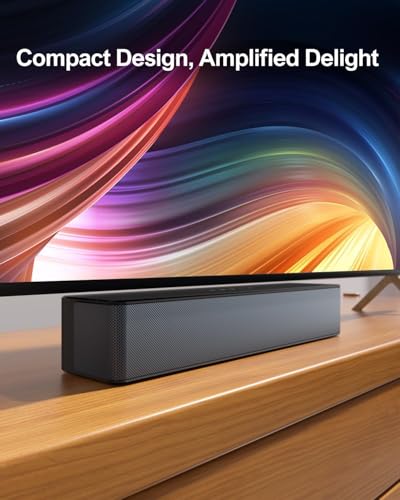
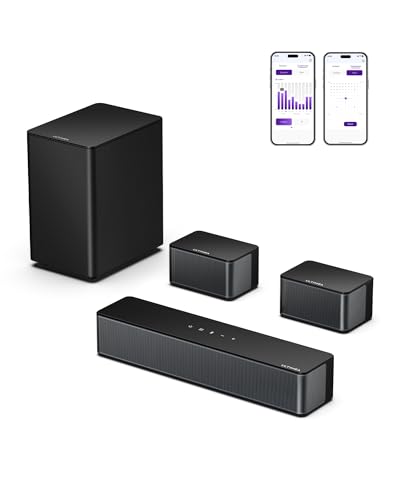
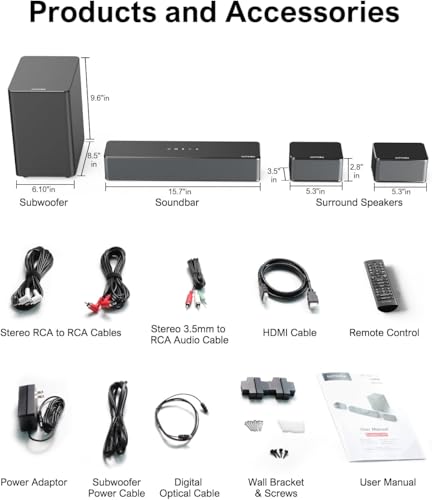
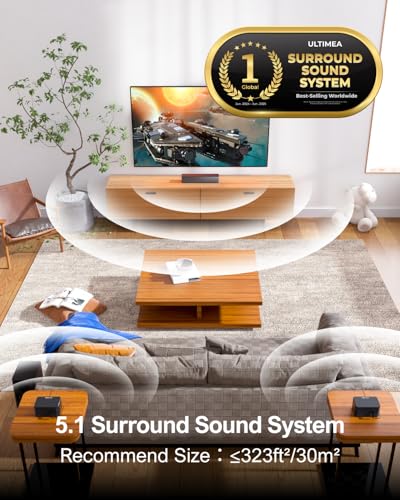
Released in 2025 as an updated version of Ultimea's popular D50 series, the Ultimea Poseidon D50 takes the straightforward approach to 5.1 surround sound. Instead of trying to simulate rear speakers, it actually gives you rear speakers—two satellite units that connect to the main soundbar with 19.6-foot cables.
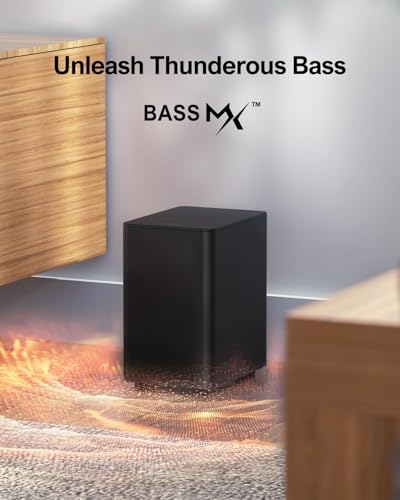
This system includes six high-performance drivers total: the main soundbar handles front channels, two satellite speakers provide genuine rear surround effects, and a wireless 5.25-inch subwoofer delivers the low-frequency impacts that make explosions feel real. The subwoofer uses Ultimea's BassMX technology, which combines an optimized magnetic circuit with a 15mm diaphragm excursion—technical terms that basically mean it can move more air to produce deeper, more powerful bass without distortion.
What makes the Poseidon D50 particularly interesting is its SurroundX algorithm with an integrated DSP (Digital Signal Processor) chip. This technology can take regular stereo audio and convert it into a genuine 5.1 multi-channel signal, meaning even older movies and TV shows get the surround sound treatment. You're not just hearing simulated surround—you're getting actual directional audio from speakers positioned behind you.
The system's smart app control is surprisingly sophisticated for its price range, offering 121 preset EQ matrices and a 10-band equalizer. EQ (equalization) lets you adjust different frequency ranges—like boosting dialogue frequencies or reducing harsh treble. Having 121 presets means the system can automatically optimize sound for different types of content, from action movies to late-night news watching.
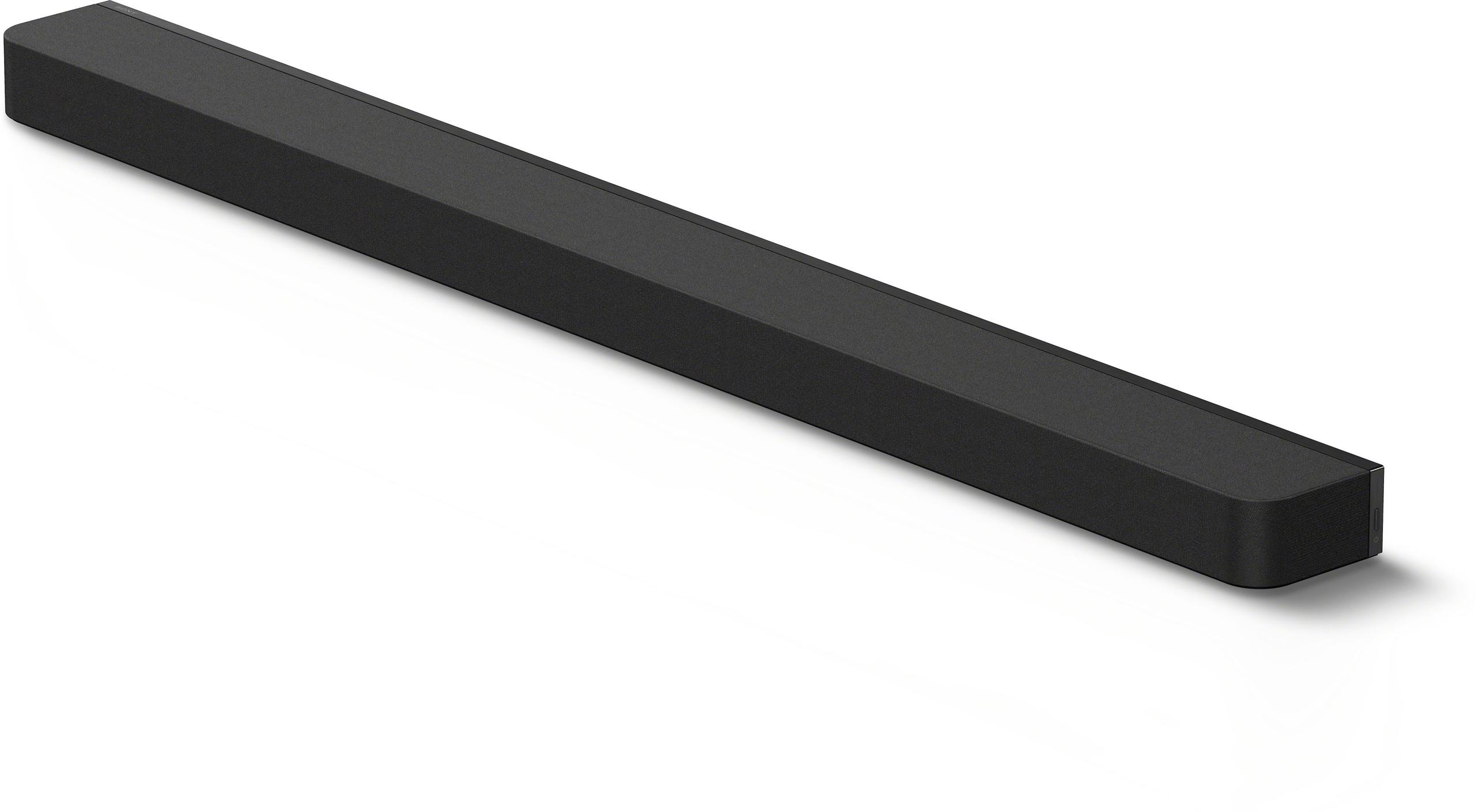
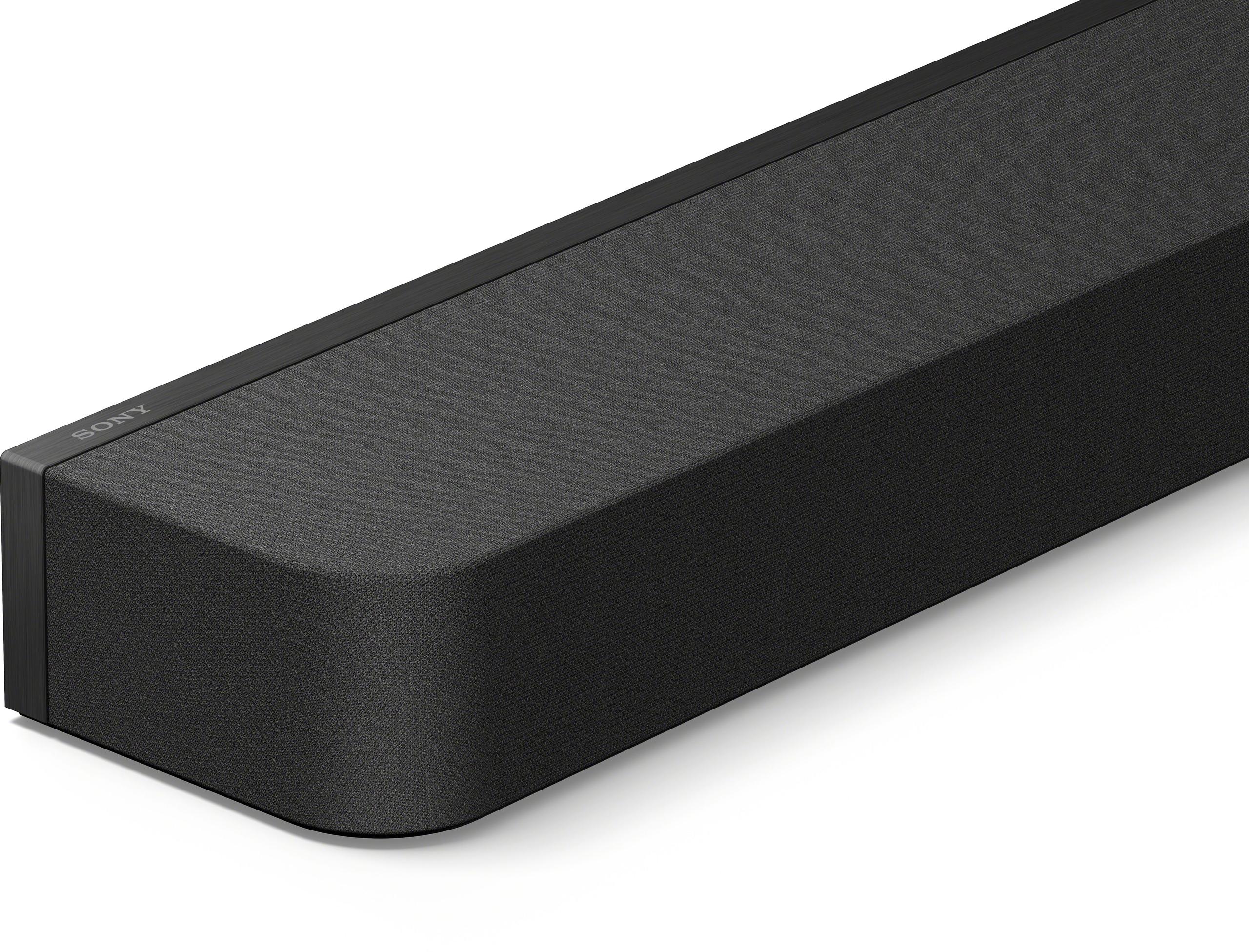
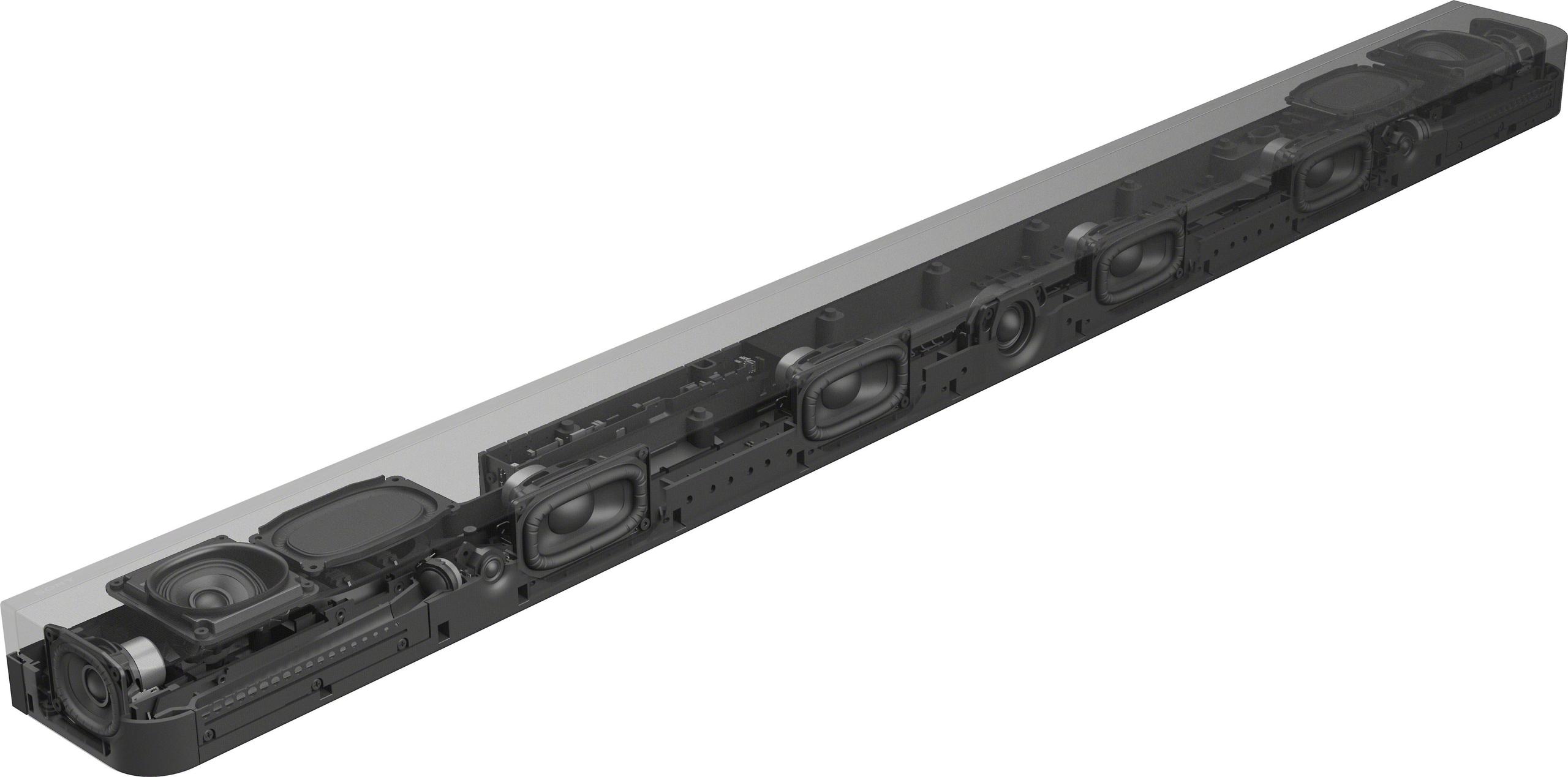
Sony released the BRAVIA Theater Bar 9 in 2024 as their flagship single-unit soundbar, and it represents a completely different approach to surround sound. Instead of physical rear speakers, it packs 13 specialized drivers into one sleek unit and uses advanced acoustic processing to create the illusion of surround sound.
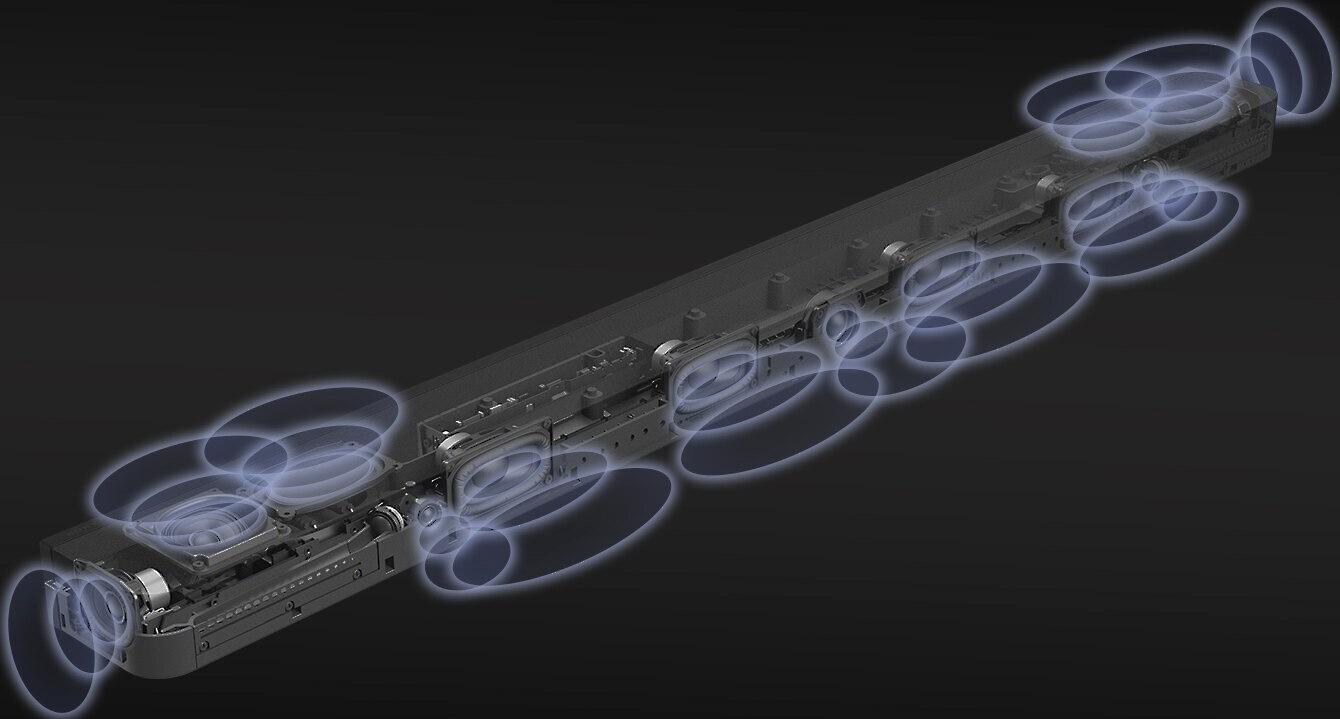
The Sony Bar 9's 360 Spatial Sound Mapping technology is genuinely impressive from an engineering standpoint. The soundbar contains three tweeters (for high frequencies), four woofers (for mid and low frequencies), two up-firing drivers that bounce sound off your ceiling, two side-firing drivers that reflect off walls, and two beam tweeters that create focused audio beams. Four additional passive radiators help boost bass response without requiring powered drivers.
This setup can create what Sony calls "phantom speakers"—the acoustic illusion that sound is coming from positions where no physical speakers exist. By carefully timing and directing sound reflections, the system can make it seem like audio is coming from beside and behind you, even though all the speakers are in front.
The Sony Bar 9 supports premium audio formats including Dolby Atmos and DTS:X, which add height and movement effects to soundtracks. Its S-Master HX digital amplification provides 585 watts of total power with minimal distortion, and the Sound Field Optimization feature automatically calibrates the audio based on your room's acoustics using built-in microphones.
Here's where the fundamental difference between these systems becomes most apparent. The Ultimea Poseidon D50 provides authentic surround sound because it actually has speakers behind you. When a helicopter flies overhead in a movie, you hear it move from the front soundbar to the rear satellites—genuine directional audio that your brain interprets as realistic movement.
Our research into user and expert reviews consistently shows that physical rear speakers provide more convincing surround effects than even the most sophisticated virtual systems. The Poseidon D50 excels at creating that "you're in the movie" feeling because the audio is literally coming from multiple directions.
The Sony Bar 9, despite its impressive technology, faces the inherent limitation of all single-unit soundbars: it can only approximate surround sound through acoustic tricks. While Sony's 360 Spatial Sound Mapping is among the best virtual surround technologies available, it depends heavily on your room's acoustics. Rooms with hard surfaces that reflect sound well will get better results than rooms with lots of soft furniture that absorbs sound.
That said, the Sony Bar 9 does create remarkably wide soundstage effects for a single unit. The side-firing and up-firing drivers can make the audio feel significantly larger than the physical soundbar, and the beam tweeters create convincing left-right separation. For most content, especially if you're sitting in the optimal listening position, the illusion is quite effective.
Bass performance reveals another clear winner. The Ultimea Poseidon D50's dedicated wireless subwoofer provides the kind of deep, room-shaking low-end that makes action movies truly immersive. Having a separate subwoofer means you can position it for optimal bass response in your room—usually in a corner or against a wall where the bass can reinforce and sound fuller.
The subwoofer's BassMX technology with 15mm diaphragm excursion allows it to move significant amounts of air, creating those chest-thumping explosions and deep musical notes that smaller drivers simply can't reproduce. User reviews consistently praise the Poseidon D50's bass impact, noting that it provides satisfying low-end for both movies and music.
The Sony Bar 9, despite its four built-in woofers and passive radiators, can't match the physics of a larger, dedicated subwoofer. While it produces decent bass for a single-unit soundbar, reviews note that it lacks the depth and impact needed for bass-heavy content. Sony clearly designed it to work with their optional wireless subwoofer, but that's an additional purchase that significantly increases the total system cost.
Where the Sony Bar 9 shows its premium positioning is in overall audio clarity and sophisticated processing. The S-Master HX amplification combined with high-quality drivers produces detailed, nuanced sound with excellent separation between different instruments and effects. The Voice Zoom 3 feature uses AI to identify and enhance dialogue, making conversations clearer even during loud action sequences.
The Sound Field Optimization is particularly impressive—the system actually listens to your room using built-in microphones, then adjusts its output to compensate for acoustic issues. If your room tends to make bass boomy or treble harsh, the system automatically corrects these problems.
The Ultimea Poseidon D50 offers good clarity for its price range, with aerospace-grade magnets and composite fiber diaphragms in its drivers providing clean, detailed sound. However, some reviews note that music reproduction isn't as refined as more expensive alternatives, with occasional harshness in the treble at higher volumes.
This is where the comparison gets interesting. The Ultimea Poseidon D50 offers comprehensive connectivity including HDMI eARC (enhanced Audio Return Channel for high-quality audio from your TV), optical input, AUX, USB, and Bluetooth 5.3 for wireless streaming. The smart app control works reliably and provides extensive customization options.
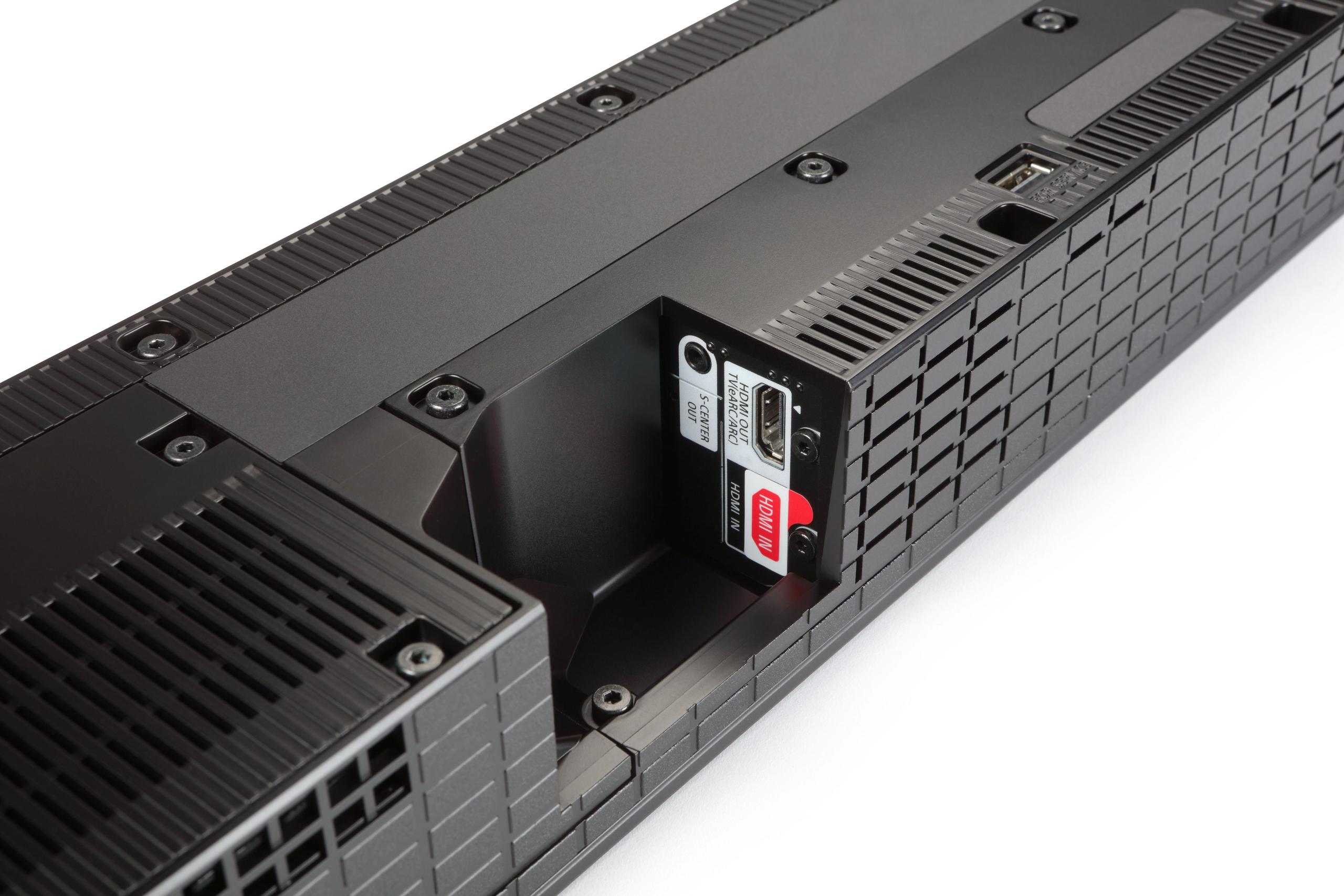
Surprisingly, the much more expensive Sony Bar 9 is quite limited in connectivity options. It only offers HDMI (one input, one output) and wireless connections—no optical, no analog inputs, no USB. This represents a significant step backward from Sony's previous flagship soundbars and could be problematic if you have multiple source devices or older equipment.
The Sony Bar 9 does integrate beautifully with Sony BRAVIA TVs through the Acoustic Centre Sync feature, which uses the TV itself as an additional center channel speaker. If you own a compatible Sony TV, this creates a more cohesive audio-visual experience.
Setting up the Ultimea Poseidon D50 requires more effort and planning. You'll need to run the 19.6-foot cables to position the satellite speakers behind your seating area, and you'll want to experiment with subwoofer placement for optimal bass response. This isn't difficult, but it does require some cable management and potentially drilling holes if you want to hide wires.
The Sony Bar 9 wins on simplicity—it's essentially plug-and-play. Mount it on the wall or place it on your TV stand, connect one HDMI cable, and you're done. The automatic room calibration handles the acoustic optimization without any manual adjustment needed.
However, the Sony Bar 9's performance is more dependent on your room's characteristics. Rooms with high ceilings, hard surfaces, and appropriate dimensions will get better results from the sound reflection technology. The Poseidon D50's physical speakers work well regardless of room acoustics.
At the time of writing, the price difference between these systems is substantial. The Ultimea Poseidon D50 offers exceptional value, providing genuine 5.1 surround sound with a dedicated subwoofer at a fraction of the cost of premium alternatives. It's hard to find a complete 5.1 system with this level of features and performance anywhere near this price point.
The Sony Bar 9, while technologically impressive, carries premium pricing that's difficult to justify based purely on performance. Professional reviews question whether it delivers sufficient value compared to other options in the premium soundbar category.
Choose the Ultimea Poseidon D50 if you want the most authentic surround sound experience possible in this price range. It's ideal for movie enthusiasts who prioritize immersive audio and don't mind a slightly more complex setup. The physical rear speakers and dedicated subwoofer create genuinely convincing surround effects that virtual systems can't match.
The extensive EQ customization makes it particularly appealing for users who like to fine-tune their audio, and the comprehensive connectivity ensures compatibility with virtually any source device. It's perfect for dedicated home theater rooms where you can properly position all the components.
The Sony Bar 9 makes sense for users who prioritize convenience and aesthetics over absolute performance. If you want a clean, single-unit solution that integrates seamlessly with a Sony TV, and you're willing to pay significantly more for the convenience, it's a solid choice. The advanced processing and automatic calibration appeal to users who want a "set it and forget it" experience.
However, given the substantial price difference and performance trade-offs, the Ultimea Poseidon D50 represents the better value for most users. Unless convenience is your absolute top priority and budget isn't a concern, the authentic surround sound and superior bass response make it the more compelling choice for creating an engaging home theater experience.
The Poseidon D50 proves that you don't need to spend premium dollars to get genuinely immersive surround sound—sometimes the traditional approach really is the best approach.
| Ultimea Poseidon D50 5.1 Soundbar Home Theater (2025) | Sony BRAVIA Theater Bar 9 Soundbar |
|---|---|
| Surround Sound Approach - How each creates immersive audio | |
| Physical 5.1 system with actual rear speakers and wireless subwoofer | Single-unit virtual surround using 13 speakers and sound reflection |
| Speaker Configuration - Core hardware that determines audio quality | |
| 6 total drivers: Main bar + 2 satellite speakers (2.25" drivers) + 5.25" subwoofer | 13 built-in drivers: 3 tweeters, 4 woofers, 2 up-firing, 2 side-firing, 2 beam tweeters |
| Total Power Output - Determines maximum volume and dynamic range | |
| 320W peak power across all components | 585W digital amplification (S-Master HX) |
| Bass Performance - Critical for movies and music impact | |
| Dedicated 5.25" wireless subwoofer with BassMX technology | Built-in quad woofers with passive radiators (no dedicated subwoofer) |
| Audio Format Support - Compatibility with modern content | |
| Dolby Digital, DTS decoding, standard surround formats | Dolby Atmos, DTS:X, IMAX Enhanced, 360 Reality Audio |
| Setup Complexity - Installation effort and cable management | |
| Moderate: Requires positioning satellite speakers with 19.6ft cables | Simple: Single unit, wall-mountable, automatic room calibration |
| Connectivity Options - How many devices you can connect | |
| HDMI eARC, Optical, AUX, USB, Bluetooth 5.3 | HDMI only (1 in/1 out), Wi-Fi, Bluetooth 5.2 (limited options) |
| Customization Features - How much you can adjust the sound | |
| Smart app with 121 EQ presets, 10-band equalizer, independent satellite control | Sound Field Optimization, Voice Zoom 3, limited manual EQ options |
| Room Size Recommendation - Optimal space for best performance | |
| 250-380 sq ft (20-35m²) with proper speaker placement | Flexible room sizes, depends on wall/ceiling acoustics for reflection |
| Release Date - Technology generation and feature currency | |
| 2025 (latest generation with updated SurroundX processing) | 2024 (premium flagship with 360 Spatial Sound Mapping) |
The Ultimea Poseidon D50 provides more authentic surround sound for movies because it includes physical rear speakers that create genuine directional audio. When watching action films, you'll hear helicopters and explosions move around you realistically. The Sony BRAVIA Theater Bar 9 uses virtual surround technology that simulates this effect but can't match the precision of actual rear speakers positioned behind your seating area.
The Ultimea Poseidon D50 includes a dedicated 5.25-inch wireless subwoofer that delivers deep, impactful bass for movies and music. The Sony BRAVIA Theater Bar 9 has built-in woofers but lacks a separate subwoofer, resulting in less powerful bass performance. For the best low-frequency impact, the Ultimea system has a clear advantage.
The Sony BRAVIA Theater Bar 9 is much simpler to install—just connect one HDMI cable and it's ready to go. The Ultimea Poseidon D50 requires positioning satellite speakers behind your seating area using the included 19.6-foot cables, plus finding the optimal location for the subwoofer. If convenience is your priority, the Sony soundbar wins.
Both offer good sound quality but in different ways. The Ultimea Poseidon D50 excels at creating immersive surround effects with its physical speakers and delivers superior bass impact. The Sony BRAVIA Theater Bar 9 provides more refined audio processing with clearer dialogue and better overall clarity, plus it supports advanced formats like Dolby Atmos that the Ultimea system doesn't.
The Ultimea Poseidon D50 offers comprehensive connectivity including HDMI eARC, optical, AUX, USB, and Bluetooth, making it compatible with virtually any device. The Sony BRAVIA Theater Bar 9 is surprisingly limited, offering only HDMI and wireless connections, which could be problematic if you have multiple source devices or older equipment.
Both soundbars can work in smaller spaces, but they have different requirements. The Sony BRAVIA Theater Bar 9 is more flexible for compact rooms since it's a single unit, but its virtual surround depends on having walls and ceilings to reflect sound off. The Ultimea Poseidon D50 needs adequate space to position the rear speakers properly but will deliver better surround effects regardless of room acoustics.
The Sony BRAVIA Theater Bar 9 supports premium formats including Dolby Atmos, DTS:X, and IMAX Enhanced, which provide height effects and more immersive audio with compatible content. The Ultimea Poseidon D50 handles standard formats like Dolby Digital and DTS but doesn't support the latest advanced audio formats that are becoming more common in streaming content.
The Ultimea Poseidon D50 provides exceptional value, offering a complete 5.1 surround system with genuine rear speakers and a dedicated subwoofer at a fraction of the cost of premium alternatives. The Sony BRAVIA Theater Bar 9 carries premium pricing that's harder to justify based purely on performance, though it does offer advanced features and build quality.
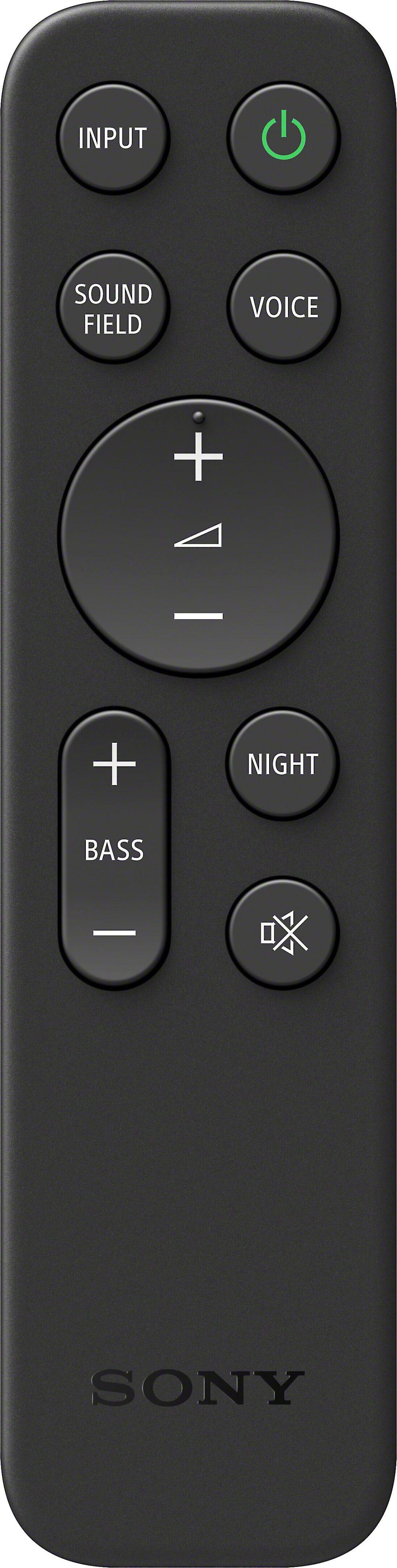
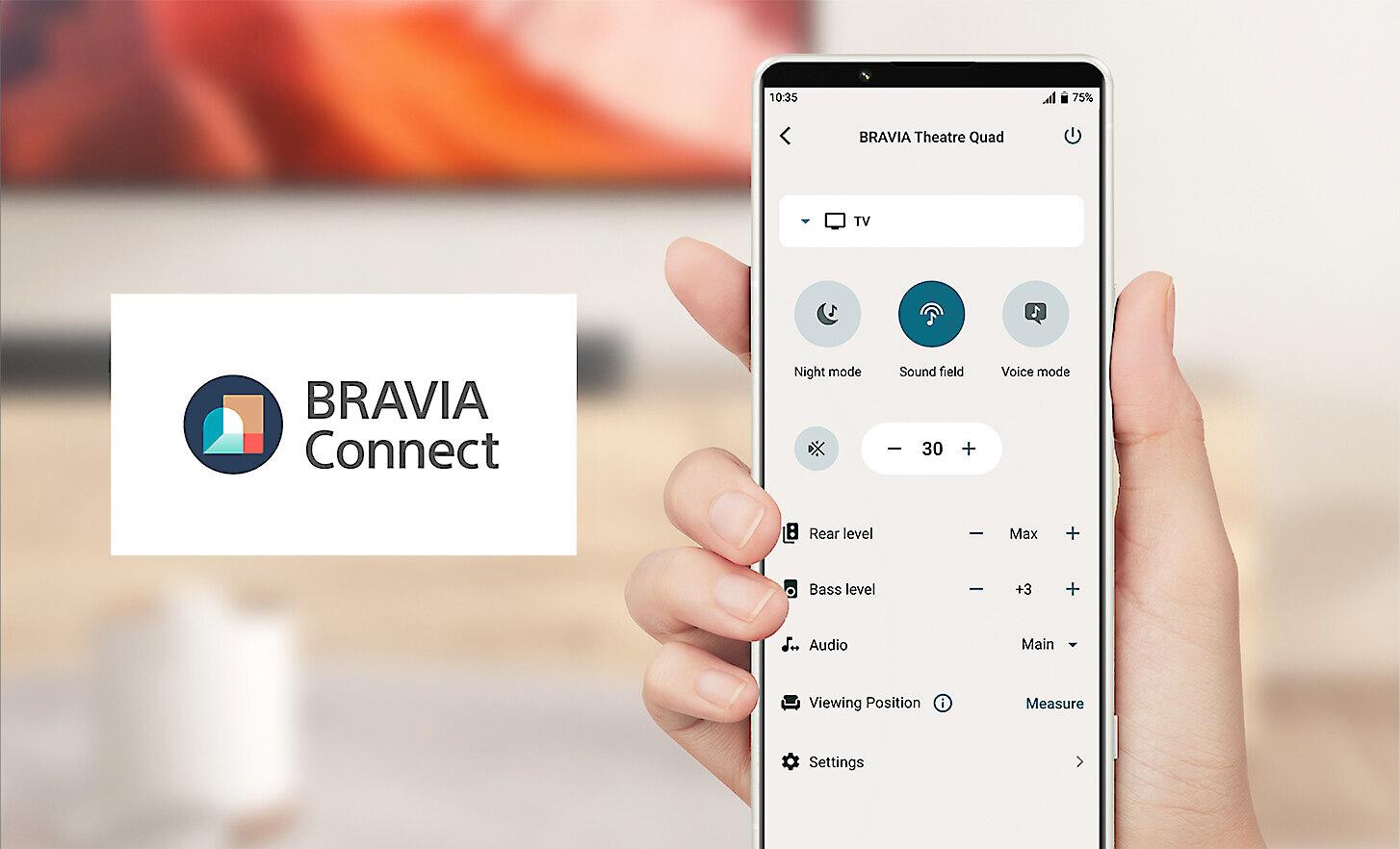
Both soundbars support TV remote control through HDMI CEC functionality. The Sony BRAVIA Theater Bar 9 integrates particularly well with Sony TVs, automatically adding soundbar settings to the TV's menu system. The Ultimea Poseidon D50 works with most TV remotes but also includes its own remote and smartphone app for full control of all features.
The Sony BRAVIA Theater Bar 9 requires minimal space—just room for the single soundbar unit on your TV stand or wall mount. The Ultimea Poseidon D50 needs more planning since you'll need to position satellite speakers behind your seating area and find placement for the wireless subwoofer. The recommended room size for the Ultimea system is 250-380 square feet.
For music, the Sony BRAVIA Theater Bar 9 offers more refined audio reproduction with better clarity and detail across all frequencies. However, the Ultimea Poseidon D50 provides more impactful bass response thanks to its dedicated subwoofer, which many music lovers prefer. The Sony system is better for acoustic and vocal music, while the Ultimea excels with bass-heavy genres.
With the Sony BRAVIA Theater Bar 9, if the single unit fails, your entire audio system is down. The Ultimea Poseidon D50 has multiple components, so if one satellite speaker or the subwoofer has issues, the rest of the system can continue working. However, this also means more components that could potentially need service over time.
We've done our best to create useful and informative comparisons to help you decide what product to buy. Our research uses advanced automated methods to create this comparison and perfection is not possible - please contact us for corrections or questions. These are the sites we've researched in the creation of this article: youtube.com - eu.ultimea.com - newegg.com - tvsbook.com - youtube.com - provantage.com - ultimea.com - techradar.com - community.ultimea.com - homedepot.com - community.ultimea.com - ultimea.com - ultimea.de - youtube.com - medisamhealthcenter.com - ultimea.com - youtube.com - walmart.com - rtings.com - residentialsystems.com - rtings.com - bestbuy.com - valueelectronics.com - sony.com - sony.co.uk - sony.co.uk - rtings.com - sony.co.in - sony.com - pocket-lint.com - sony.com - crutchfield.com

Privacy Policy
Terms and Conditions - Affiliate Policy
Home Security
© Copyright 2008-2026.
11816 Inwood Rd #1211, Dallas, TX 75244