





When your TV's built-in speakers make dialogue sound like it's coming from underwater, it's time for a soundbar upgrade. But choosing between products like the Ultimea Poseidon D50 and Bose Solo Series 2 means deciding between two completely different approaches to better TV audio.
The soundbar market has exploded over the past few years, with manufacturers taking wildly different paths. Some prioritize simplicity and dialogue clarity, while others chase the full surround sound experience. Understanding these differences—and your own needs—is crucial for making the right choice.
Before diving into our comparison, let's establish what makes soundbars tick in 2025. The most important specification is channel configuration, expressed in numbers like 2.0, 2.1, or 5.1. The first number represents main audio channels (left, center, right), while the second indicates dedicated subwoofers for bass. A 5.1 system adds rear surround speakers for true positional audio—the kind that makes helicopters fly behind your head in movies.
Power output matters, but not always how you'd expect. A 20-watt soundbar can sound clearer than a 200-watt model if the drivers (speakers) and processing are superior. However, for filling larger rooms or delivering impactful movie experiences, higher wattage generally translates to more dynamic sound.
Connectivity options have become increasingly important. HDMI eARC (enhanced Audio Return Channel) represents the gold standard, allowing your TV remote to control the soundbar while supporting high-quality audio formats. Optical connections work reliably but carry less data, while Bluetooth enables wireless music streaming from phones and tablets.
The Ultimea Poseidon D50, released in 2025, represents the "more is more" philosophy with its complete 5.1 surround system. Meanwhile, the Bose Solo Series 2, launched in late 2024, embodies the "less is more" approach with refined simplicity.
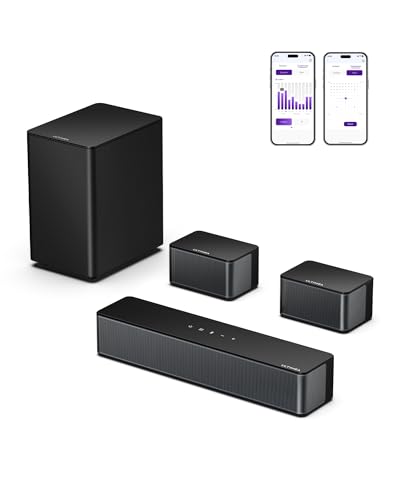
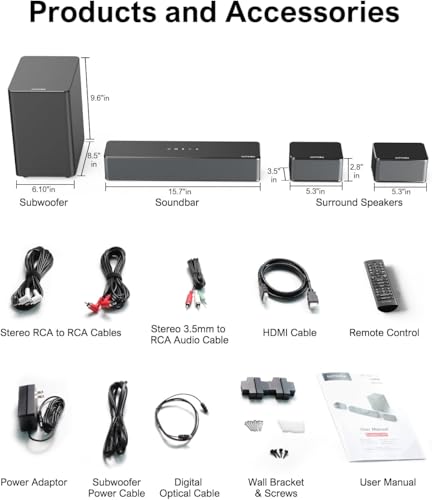
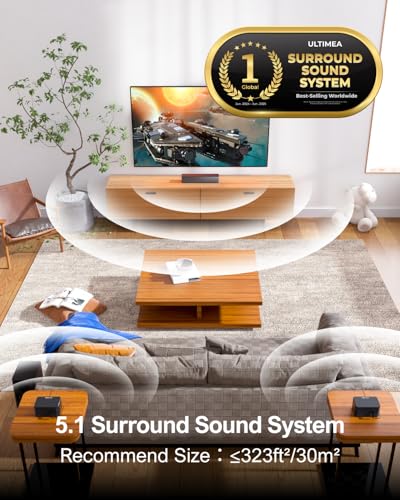
These soundbars couldn't be more different in their fundamental approach. The Ultimea Poseidon D50 is essentially a mini home theater system disguised as a soundbar purchase. You get a main soundbar, a wireless subwoofer, and two rear satellite speakers connected by generous 19.6-foot cables. This setup creates genuine 5.1 surround sound—not the simulated version many cheaper soundbars attempt.
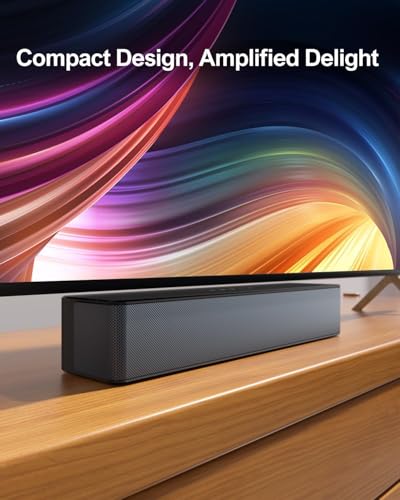
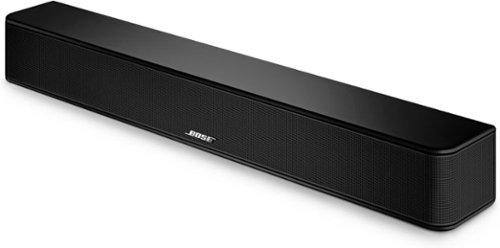
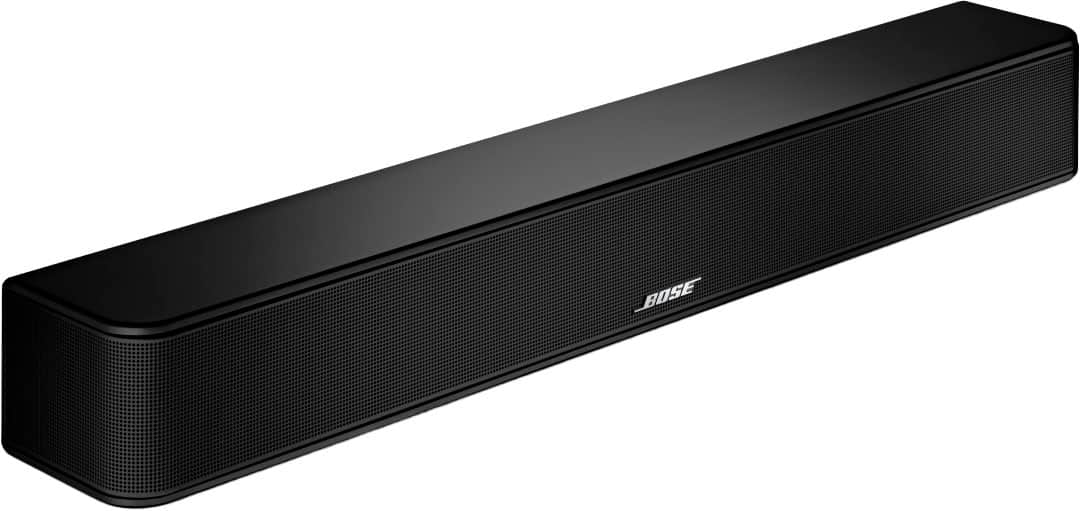
The Bose Solo Series 2, conversely, packs everything into a single, sleek unit measuring just over 21 inches wide. It's the audio equivalent of a Swiss Army knife: compact, reliable, and designed to do one job exceptionally well—make TV dialogue crystal clear.
This philosophical difference impacts everything from setup complexity to audio performance. The Ultimea requires strategic placement of multiple components and some patience during setup, while the Bose literally plugs in and works immediately.
Here's where these products diverge most dramatically. The Ultimea Poseidon D50 creates authentic surround sound through dedicated rear speakers positioned behind your listening area. When a car crashes in a movie, you hear the impact from the front soundbar, the deep rumble from the subwoofer, and the debris scattering from the rear speakers. This spatial audio processing makes your brain believe sounds are coming from specific locations in three-dimensional space.
The system's SurroundX technology uses digital signal processing (DSP) to convert standard stereo audio into multi-channel surround sound. This means even regular TV shows benefit from enhanced spatial positioning, though the effect is most dramatic with movies and games originally mixed in surround formats.
The Bose Solo Series 2 takes a different approach entirely. As a 2.0 system (two channels, no separate subwoofer), it focuses on creating the widest possible stereo soundstage from a single bar. Bose's engineering shines in how they angle drivers and tune the acoustic chambers to make voices appear to come from your TV screen's center, even without a dedicated center channel speaker.
Based on extensive user feedback and professional reviews, the difference is night and day for movie watching. The Ultimea envelops you in sound, while the Bose delivers excellent front-facing audio. Neither approach is wrong—they serve different priorities.
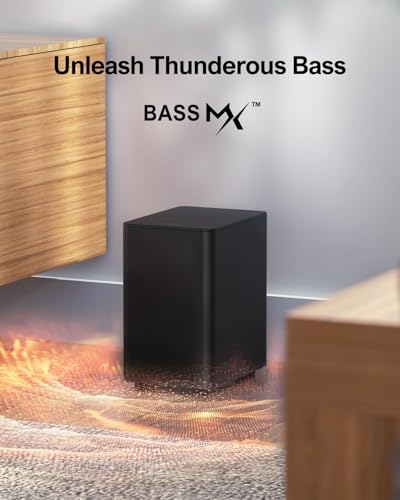
Bass response represents perhaps the starkest difference between these systems. The Ultimea Poseidon D50's dedicated 5.25-inch wireless subwoofer uses BassMX technology—essentially optimized magnetic circuits and a longer speaker excursion (how far the driver moves) to produce deeper bass with less distortion.
In practical terms, this means feeling the rumble of explosions, the thump of hip-hop beats, and the low-frequency effects that make action movies exciting. The subwoofer connects wirelessly to the main soundbar, giving you placement flexibility to find the sweet spot in your room where bass sounds balanced rather than boomy.
The Bose Solo Series 2 generates bass entirely through its internal drivers. While Bose includes bass adjustment controls, physics limits how much low-end response a compact soundbar can produce. User reviews consistently note that while the Bose sounds clear and balanced, bass-heavy content lacks the impact that makes movie explosions feel visceral.
For music listening, this difference matters less than you might expect. The Bose actually handles acoustic music, podcasts, and dialogue-heavy content beautifully. But if you're a Marvel movie fan or enjoy bass-heavy electronic music, the Ultimea's dedicated subwoofer becomes essential.
Surprisingly, both systems excel at dialogue clarity, though through different methods. The Bose Solo Series 2 includes a dedicated dialogue enhancement mode that boosts mid-range frequencies where human voices live. This feature proves invaluable for anyone who struggles to understand dialogue over background music and sound effects—a common complaint with modern movie and TV mixing.
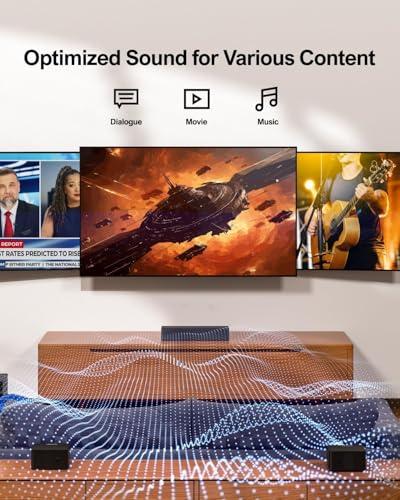
The Ultimea Poseidon D50 approaches dialogue differently. Its dedicated app provides six distinct listening modes, including a specific Voice mode optimized for news and talk shows. The 10-band equalizer (a tool that adjusts specific frequency ranges) allows fine-tuning to emphasize dialogue frequencies while reducing competing sounds.
In our research evaluation of user experiences, both systems receive praise for dialogue clarity. The Bose achieves this through careful acoustic engineering and signal processing, while the Ultimea uses raw power and customizable EQ settings. The Bose might have a slight edge for users who never want to fiddle with settings, while the Ultimea rewards those willing to optimize.
The Ultimea Poseidon D50 includes a comprehensive smartphone app that transforms how you interact with your soundbar. The app provides access to 121 preset EQ matrices—essentially different sound profiles optimized for various content types and room acoustics. Whether you're in a carpeted living room or a hardwood-floored apartment, there's likely a preset that optimizes the sound for your space.
The app also enables independent volume control for the rear speakers, allowing you to dial up the surround effect for movies or reduce it for TV shows where you want more focused front audio. This level of customization was unthinkable in budget-friendly soundbars just a few years ago.
The Bose Solo Series 2 keeps things elegantly simple with basic app support and a straightforward remote control. You get dialogue enhancement, bass adjustment, and volume control—the essentials without overwhelming options. This simplicity appeals to users who want better sound without becoming audio engineers.
Both systems support essential connectivity options, but with different emphases. The Ultimea Poseidon D50 includes HDMI eARC, which enables your TV remote to control soundbar volume and power—a convenience factor that's surprisingly important in daily use. HDMI eARC also supports higher-quality audio formats and reduces cable clutter.
Additionally, the Ultimea offers Bluetooth 5.3, the latest wireless standard that provides more stable connections and better range than previous versions. This matters when streaming music from phones or tablets, reducing dropouts and connection issues.
The Bose Solo Series 2 relies on optical and auxiliary connections, skipping HDMI entirely. While optical connections deliver reliable, high-quality audio, you lose the convenience of single-remote control and some advanced audio format support. However, optical connections work with virtually every TV made in the past decade, ensuring compatibility across different setups.
The Ultimea Poseidon D50's 320-watt peak output and room-filling design target spaces between 200-380 square feet—typical living rooms and home theaters. The system's multiple components work together to create even sound coverage throughout the listening area, with the wireless subwoofer adding the low-frequency foundation that makes movies exciting.
User experiences consistently highlight the Ultimea's ability to maintain clear, dynamic sound even at higher volumes. The system doesn't distort or become harsh when you turn it up for action sequences, thanks to the distributed power across multiple drivers.
The Bose Solo Series 2 shines in smaller to medium-sized rooms where its refined sound signature and compact form factor make perfect sense. It's ideal for bedrooms, kitchens, or apartments where space constraints make multi-component systems impractical.
Modern gaming has embraced surround sound design, making the Ultimea Poseidon D50 particularly appealing for console gamers. Games like Call of Duty or Fortnite benefit enormously from positional audio—hearing footsteps behind you or gunfire from specific directions provides competitive advantages beyond just entertainment value.
The system's low latency (minimal delay between video and audio) ensures that what you see matches what you hear, crucial for fast-paced gaming. The rear speakers create the spatial awareness that can mean the difference between victory and defeat in competitive online games.
The Bose Solo Series 2 handles gaming adequately but misses the immersive spatial elements that make modern games more engaging. For casual gaming or single-player story-driven games, the Bose's clear audio works fine. But competitive multiplayer gaming strongly favors the Ultimea's surround capabilities.
At the time of writing, these systems occupy different value propositions entirely. The Bose Solo Series 2 represents premium simplicity—you pay for refined engineering, brand reliability, and effortless operation. It's the iPhone of soundbars: everything works smoothly, but you accept limitations for the polished experience.
The Ultimea Poseidon D50 offers remarkable feature density and performance for its price point. True 5.1 surround sound systems traditionally cost significantly more, making the Ultimea an exceptional value for home theater enthusiasts. However, this value comes with the requirement for more complex setup and component management.
Long-term considerations favor different users differently. The Bose's simpler design means fewer components to potentially fail, while the Ultimea's multiple pieces offer more flexibility but also more potential points of failure. Both systems should provide years of reliable service, but the Bose edges out the Ultimea for maintenance-free operation.
You're building a proper home theater experience and have the room space to accommodate multiple components. The Ultimea Poseidon D50 makes sense when movies, gaming, and immersive audio experiences are priorities. If you enjoy tweaking settings to optimize performance and want the flexibility to customize your sound signature, the comprehensive app controls and EQ options reward that engagement.
The system particularly appeals to younger users comfortable with app-based controls and those who prioritize getting maximum audio performance for their money. If your primary viewing consists of action movies, sci-fi series, or competitive gaming, the authentic surround sound justifies the additional setup complexity.
Simplicity, reliability, and excellent dialogue clarity matter more than surround sound effects. The Bose Solo Series 2 excels for users who primarily watch TV shows, news, and dialogue-heavy content. It's perfect for older users who prefer straightforward operation without smartphone apps or complex setup procedures.
The compact design makes it ideal for smaller living spaces, bedrooms, or secondary viewing areas where a full surround system would overwhelm the room. If you value brand reputation, consistent performance, and want something that works immediately without configuration, the Bose delivers that premium experience.
These soundbars represent two valid but completely different approaches to improving TV audio. The Ultimea Poseidon D50 transforms your living room into a mini movie theater with authentic surround sound and powerful bass. It's the choice for audio enthusiasts who want maximum performance and don't mind the complexity.
The Bose Solo Series 2 focuses on doing the basics exceptionally well—making dialogue crystal clear and providing balanced, refined sound in a package that fits anywhere. It's the choice for users who want immediate improvement without changing their lifestyle.
Neither product is objectively better than the other; they simply serve different needs and preferences. Your decision should align with how you actually use your TV, the size of your space, and whether you prioritize simplicity or maximum audio performance. Both represent solid choices within their respective philosophies, ensuring you'll be happy with either decision as long as it matches your real-world usage patterns.
| Ultimea Poseidon D50 5.1 Soundbar | Bose Solo Soundbar Series 2 |
|---|---|
| Channel Configuration - Determines surround sound capability and immersion level | |
| True 5.1 surround with rear speakers and subwoofer | 2.0 stereo (no separate subwoofer or rear channels) |
| Power Output - Affects volume levels and dynamic range | |
| 320W peak power for room-filling sound | Modest wattage focused on clarity over volume |
| Subwoofer - Critical for bass impact in movies and music | |
| Dedicated 5.25" wireless subwoofer with BassMX technology | No subwoofer included (optional separate purchase) |
| Rear Speakers - Enables authentic surround sound positioning | |
| 2 satellite speakers with 19.6ft cables for flexible placement | None (all audio comes from front soundbar) |
| Room Size Compatibility - Ensures adequate performance for your space | |
| Designed for 200-380 sq ft (medium to large rooms) | Best for small to medium rooms |
| Connectivity Options - Determines compatibility with your devices | |
| HDMI eARC, Optical, AUX, USB, Bluetooth 5.3 | Optical, AUX, Bluetooth 4.0 (no HDMI) |
| Smart Controls - Affects ease of customization and daily use | |
| Full smartphone app with 121 EQ presets and 10-band equalizer | Basic remote control with dialogue enhancement |
| Setup Complexity - Time and effort required for installation | |
| Multi-component setup with cable routing and app configuration | Single-unit plug-and-play operation |
| Dialogue Enhancement - Important for clear speech in movies/TV | |
| Voice mode plus customizable EQ settings | Dedicated dialogue enhancement mode |
| Physical Design - Space requirements and aesthetics | |
| Multiple components requiring strategic placement | Compact 21.6" single unit, wall-mountable |
| Gaming Performance - Matters for console and PC gaming | |
| True surround sound with spatial audio for competitive advantage | Clear stereo audio but no positional benefits |
| Music Listening - Quality for streaming and audio playback | |
| Multiple EQ modes optimized for different genres | Balanced signature good for most music types |
| Brand Heritage - Reliability and support expectations | |
| Newer brand focused on value and features | Established audio company known for consistent quality |
The Ultimea Poseidon D50 is significantly better for home theater use. It delivers true 5.1 surround sound with dedicated rear speakers and a wireless subwoofer, creating an immersive movie experience where you hear sounds from all directions. The Bose Solo Series 2 is a 2.0 stereo system that focuses on dialogue clarity but lacks the surround sound effects that make action movies exciting.
The Ultimea Poseidon D50 includes a wireless subwoofer in the package, providing deep bass for movies and music without additional purchases. The Bose Solo Series 2 doesn't include a subwoofer and relies on its internal drivers for bass, which limits low-frequency impact. Bose sells a separate subwoofer as an optional add-on.
The Bose Solo Series 2 is much easier to set up - it's a single unit that connects with one cable and works immediately. The Ultimea Poseidon D50 requires positioning multiple components including a soundbar, subwoofer, and two rear speakers with long cables, plus app configuration for optimal performance.
The Ultimea Poseidon D50 offers more dramatic, room-filling sound with powerful bass and authentic surround effects, making it ideal for movies and gaming. The Bose Solo Series 2 provides refined, balanced audio with exceptional dialogue clarity, making it perfect for TV shows and everyday viewing where clear speech is the priority.
The Bose Solo Series 2 is designed for small to medium spaces with its compact 21.6-inch design and single-unit setup. The Ultimea Poseidon D50 requires more room for proper speaker placement and is designed for larger spaces between 200-380 square feet to achieve optimal surround sound performance.
The Ultimea Poseidon D50 supports HDMI eARC, allowing your TV remote to control volume and power functions seamlessly. The Bose Solo Series 2 uses optical connection primarily and comes with its own remote control, though it may work with some TV remotes depending on your specific TV model.
The Ultimea Poseidon D50 is superior for gaming, especially competitive online games, because its true 5.1 surround sound helps you locate enemies and environmental sounds spatially. The rear speakers provide positional audio that can give you a competitive advantage. The Bose Solo Series 2 delivers clear game audio but lacks the spatial benefits for gaming.
Both excel at dialogue but through different approaches. The Bose Solo Series 2 features a dedicated dialogue enhancement mode specifically engineered for clear speech. The Ultimea Poseidon D50 uses customizable EQ settings and a Voice mode to optimize dialogue clarity, giving you more control over the sound signature.
The Ultimea Poseidon D50 typically offers more features and performance per dollar, including true surround sound, wireless subwoofer, and extensive app controls. The Bose Solo Series 2 represents premium simplicity and brand reliability, appealing to users who prefer straightforward operation and consistent quality over maximum features.
The Ultimea Poseidon D50 offers comprehensive connectivity including HDMI eARC, optical, AUX, USB, and Bluetooth 5.3 for modern device compatibility. The Bose Solo Series 2 provides optical, AUX, and Bluetooth 4.0 connections but lacks HDMI inputs, which may limit some advanced audio features and convenience options.
For music, the choice depends on your preferences. The Ultimea Poseidon D50 offers multiple EQ presets optimized for different music genres and powerful bass through its dedicated subwoofer. The Bose Solo Series 2 provides a more balanced, refined sound signature that works well across various music types without the need for adjustments.
The Bose Solo Series 2 requires minimal space as a single compact unit that fits under most TVs or mounts on walls easily. The Ultimea Poseidon D50 needs significantly more space planning for the main soundbar, wireless subwoofer placement, and positioning two rear speakers with their 19.6-foot connecting cables for optimal surround sound performance.
We've done our best to create useful and informative comparisons to help you decide what product to buy. Our research uses advanced automated methods to create this comparison and perfection is not possible - please contact us for corrections or questions. These are the sites we've researched in the creation of this article: youtube.com - eu.ultimea.com - newegg.com - tvsbook.com - youtube.com - provantage.com - ultimea.com - techradar.com - community.ultimea.com - homedepot.com - community.ultimea.com - ultimea.com - ultimea.de - youtube.com - medisamhealthcenter.com - ultimea.com - youtube.com - walmart.com - rtings.com - bose.com - bose.com - assets.bose.com - bestbuy.com - youtube.com - pistonheads.com - costco.com - googlenestcommunity.com - youtube.com - discussions.apple.com

Privacy Policy
Terms and Conditions - Affiliate Policy
Home Security
© Copyright 2008-2026.
11816 Inwood Rd #1211, Dallas, TX 75244