

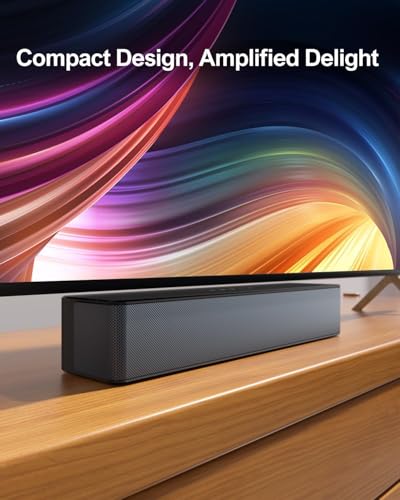






Home theater audio has come a long way from the days when you needed six separate speakers and a tangle of wires snaking around your living room. Today's soundbars promise to deliver that cinematic experience without turning your space into an electronics showroom. But not all soundbars are created equal, and choosing between different approaches can feel overwhelming.
We're comparing two soundbars that represent fundamentally different philosophies: the Ultimea Poseidon D50 5.1 Soundbar, released in 2025, and the LG SC9S 3.1.3 Channel Dolby Atmos Soundbar, which hit the market in 2023. These aren't just different models – they're different approaches to solving the same problem of bringing movie theater audio to your home.
Before diving into specifics, it's worth understanding what separates exceptional soundbars from mediocre ones. The most critical factors include channel configuration (how many speakers and where they're positioned), audio processing capabilities, connectivity options, and how well they adapt to your specific room.
Channel configuration tells you how many distinct audio channels the system can reproduce. A 5.1 system means five main speakers (front left, center, front right, rear left, rear right) plus one subwoofer for bass. A 3.1.3 system has three main channels, one subwoofer, and three height channels for overhead effects. The difference isn't just numbers – it's about how sound moves around you.
Audio processing is where modern soundbars really shine or fall short. Technologies like Dolby Atmos create "objects" in the soundfield that can move in three dimensions, while traditional surround sound places audio in fixed positions. Think of it like the difference between having actors move freely around a stage versus having them stand in designated spots.
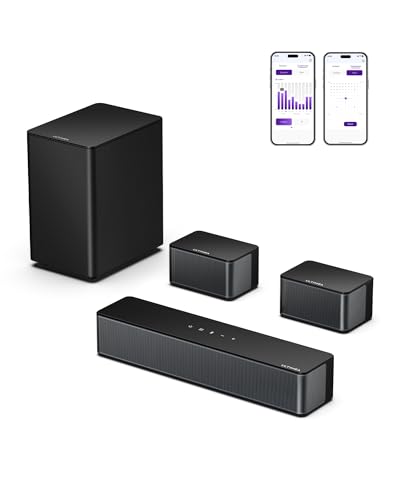
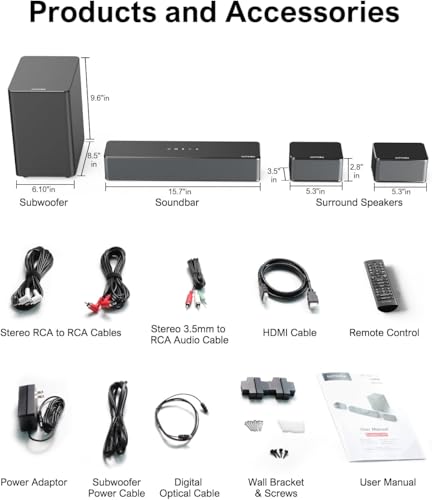
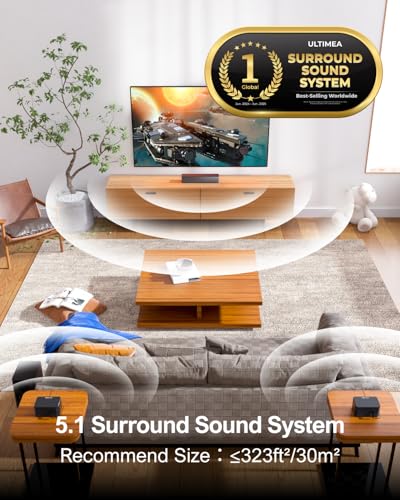
The Ultimea Poseidon D50 takes what many consider the "pure" approach to surround sound. Released in 2025, it includes actual physical rear speakers connected by 19.6-foot cables, creating genuine positional audio that you can't fake with clever processing.
This matters more than you might think. When a helicopter flies overhead in a movie, or when you're playing a video game and need to hear footsteps behind you, having real speakers behind you creates an authenticity that virtual processing simply can't match. The D50's SurroundX™ technology goes further by taking regular stereo audio and converting it into full 5.1 surround sound using a dedicated DSP (Digital Signal Processing) chip.
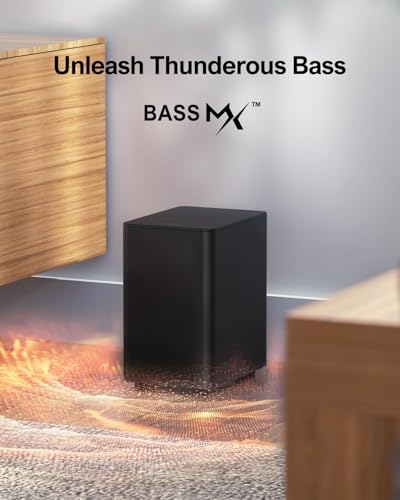
The subwoofer deserves special attention. Ultimea's BassMX™ technology uses a larger 5.25-inch driver with 15mm of diaphragm excursion – that's how far the speaker cone can move back and forth. More excursion generally means deeper, more impactful bass. The optimized magnetic circuit design helps maintain clean bass even at high volumes, which is crucial for action movies where explosions need to have weight without becoming muddy.
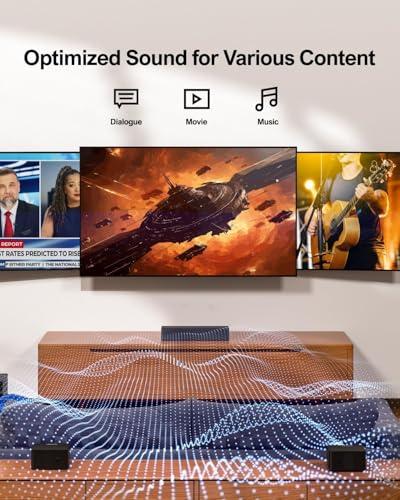
What sets the D50 apart is its customization capabilities. The companion app provides 121 preset EQ matrices (pre-configured sound adjustments) and a 10-band equalizer. This level of control is rare in budget-focused soundbars and lets you fine-tune the sound for your specific room and preferences. You can even adjust the rear speaker volume independently – useful if your seating position makes them too loud or quiet.
The 320W peak power output provides enough headroom for medium to large rooms up to 380 square feet. Peak power represents the maximum the system can handle during brief, intense moments like explosions, while continuous power handling would be lower for sustained listening.
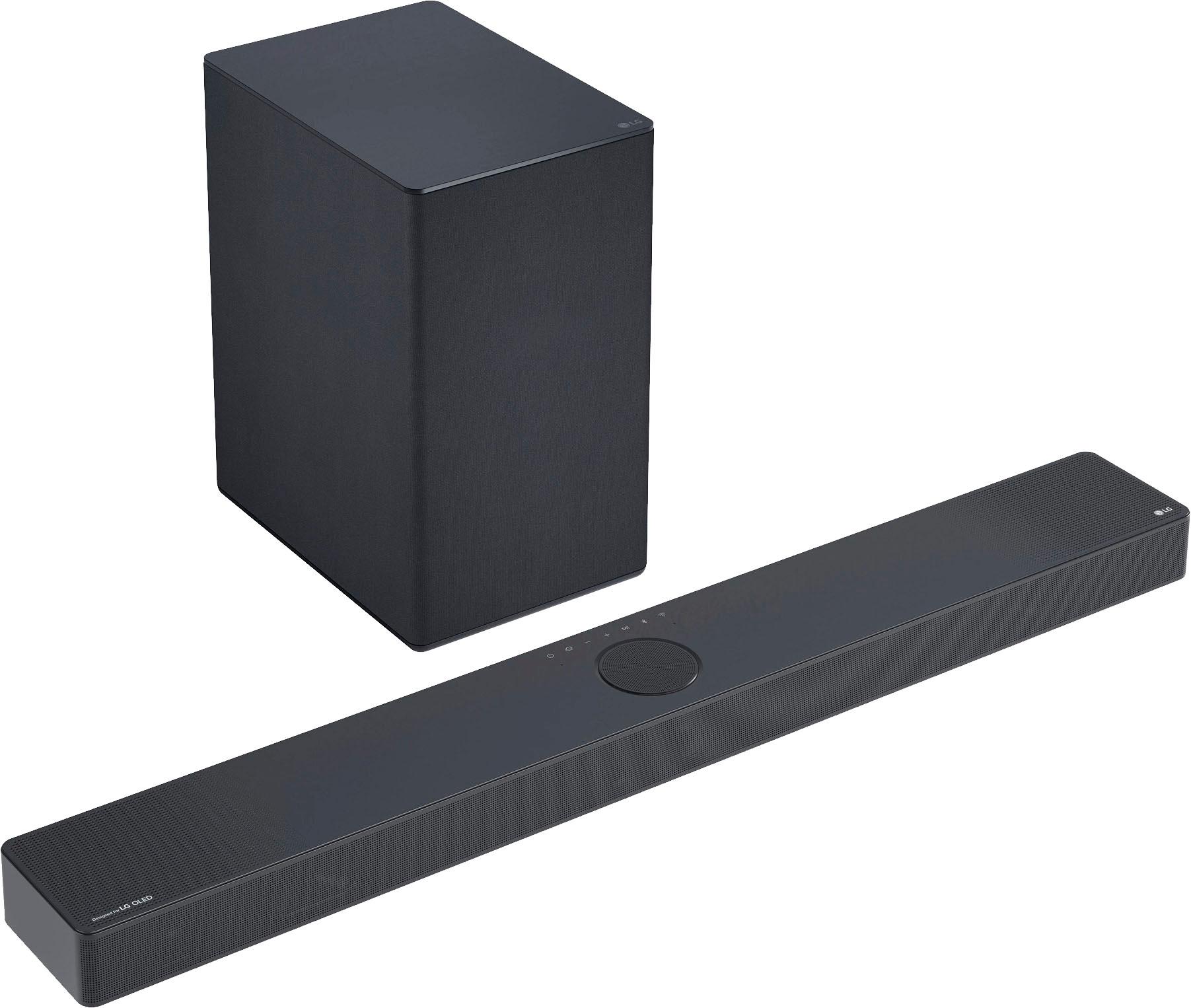
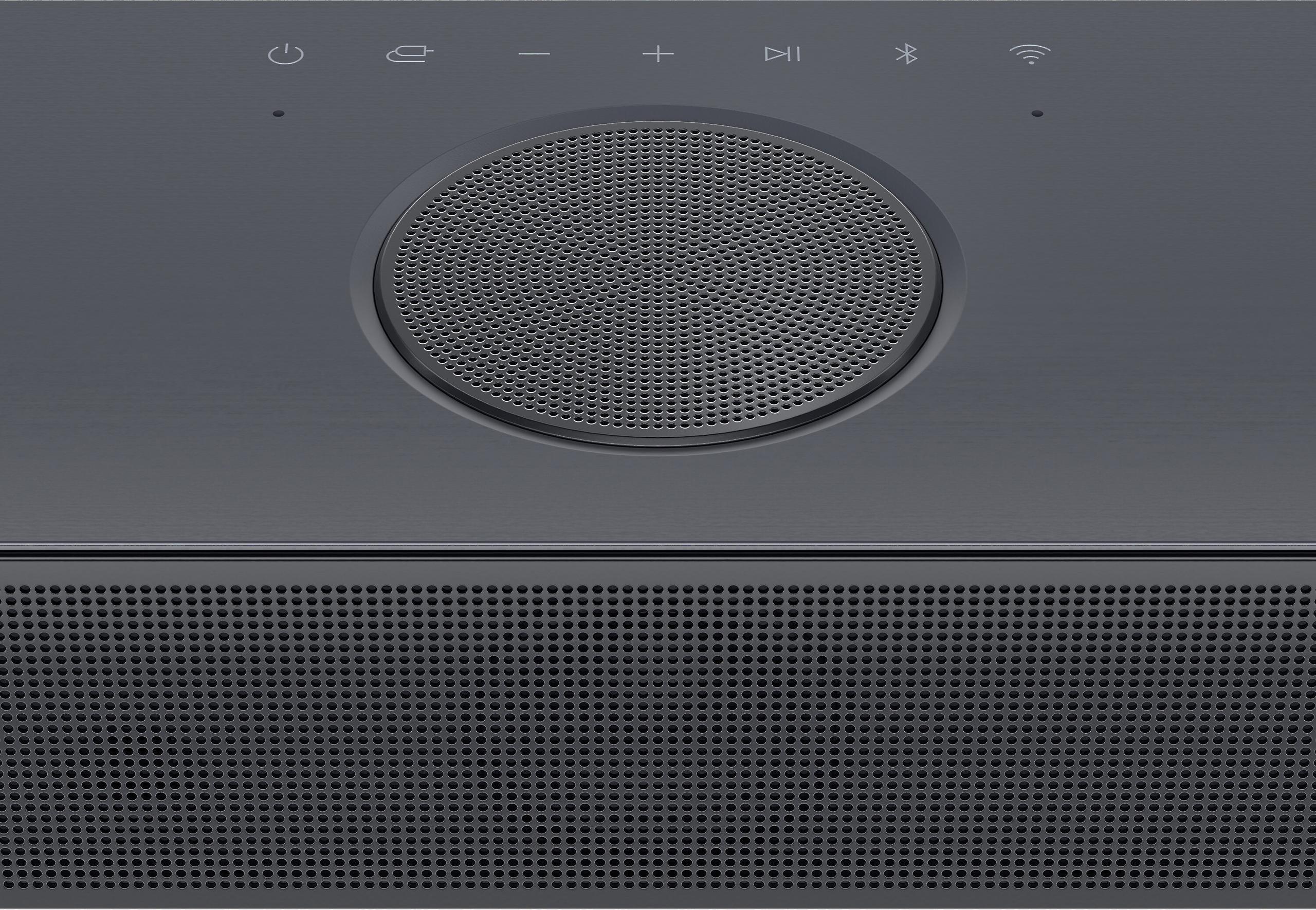
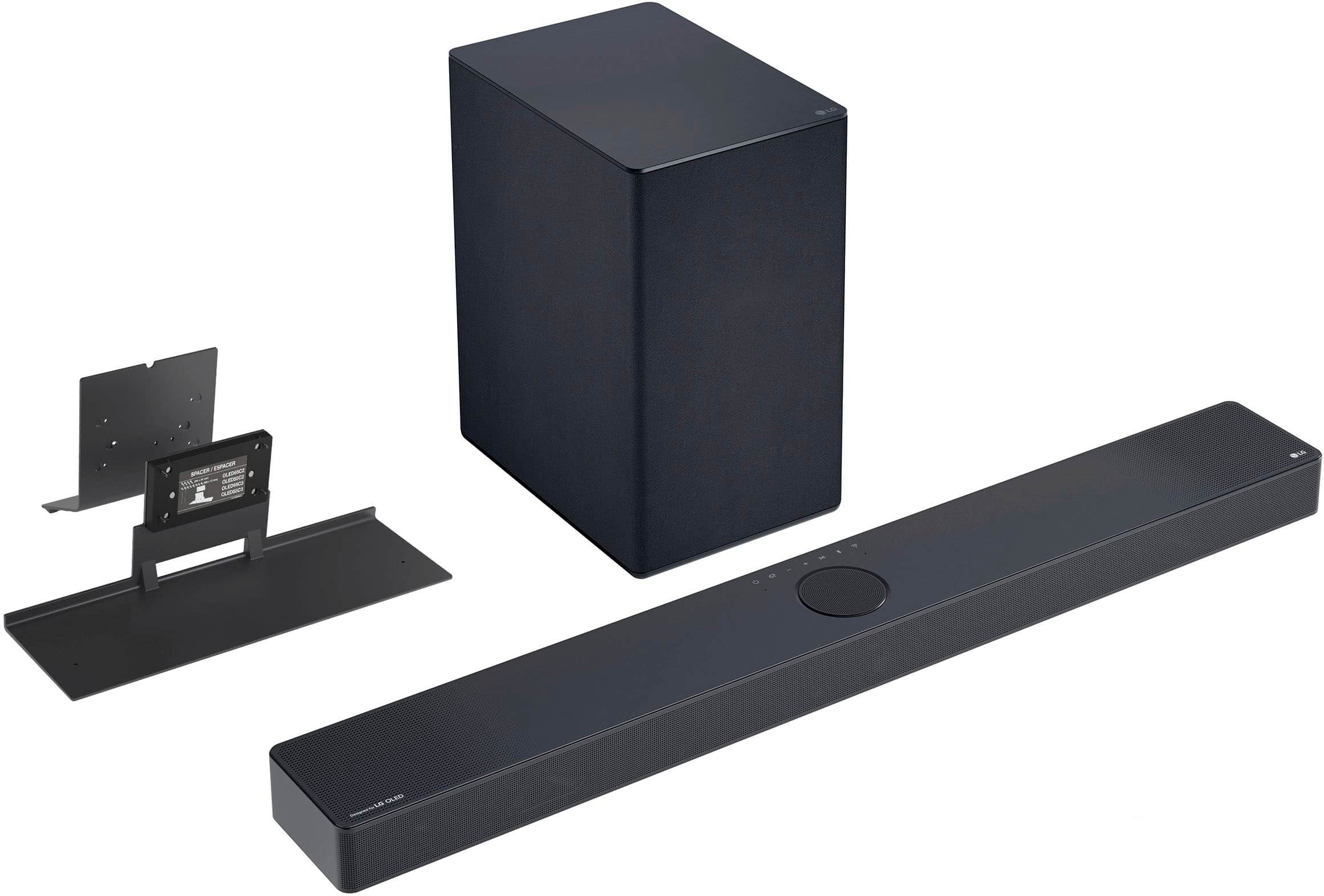
The LG SC9S represents the newer school of soundbar design, focusing on height effects and advanced audio processing rather than traditional rear speakers. Its 3.1.3 configuration includes three up-firing drivers that bounce sound off your ceiling to create the illusion of overhead speakers.
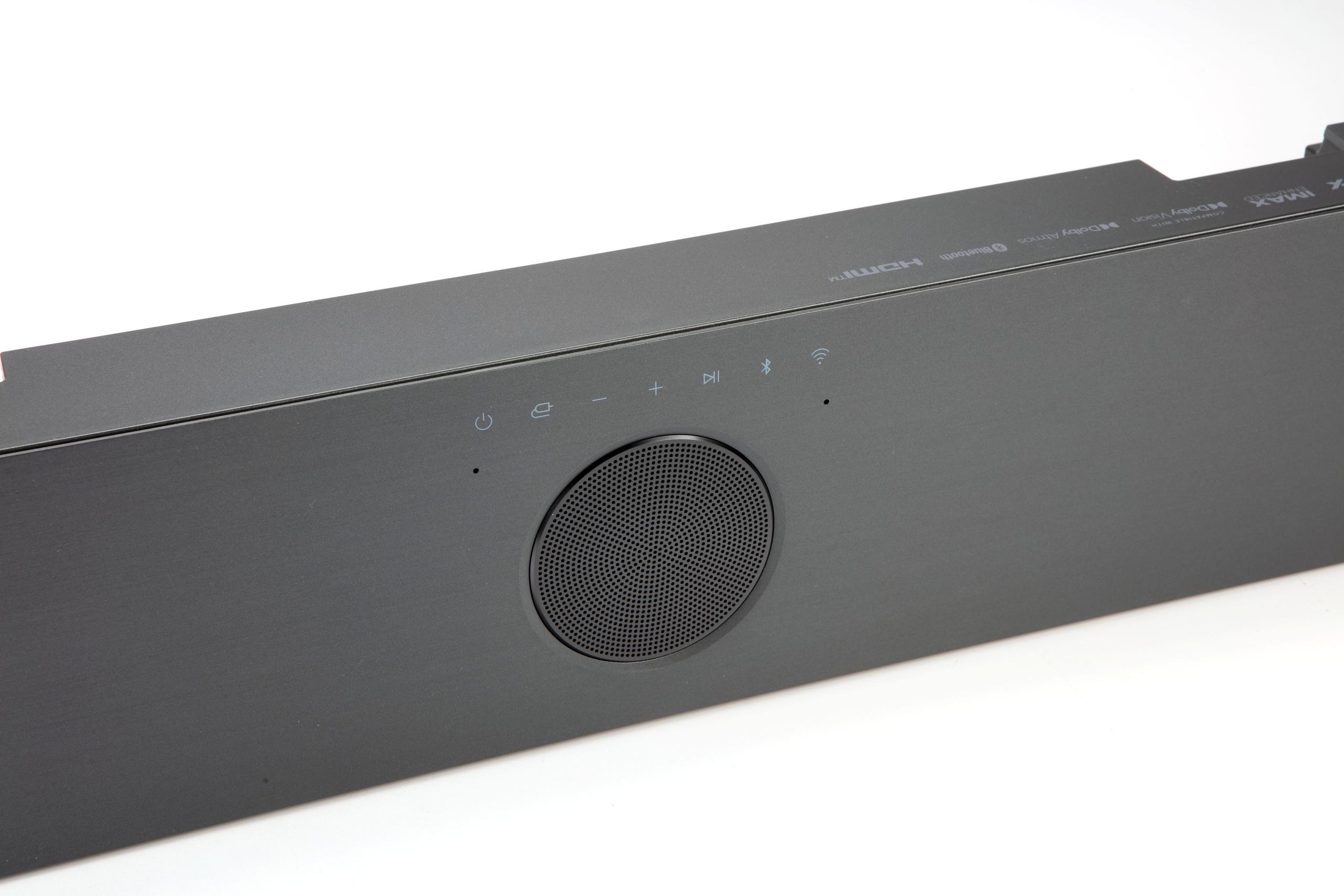
This approach excels with modern streaming content. Netflix, Amazon Prime, and Disney+ increasingly offer Dolby Atmos soundtracks where helicopters, rain, or debris can move overhead in ways that traditional 5.1 surround can't reproduce. The SC9S also supports DTS:X and carries IMAX Enhanced certification, meaning it meets specific standards for reproducing IMAX theater audio at home.
The AI Room Calibration Pro feature automatically analyzes your room's acoustics and adjusts the soundbar's output accordingly. This technology sends out test tones, listens to how they bounce around your space, then compensates for issues like hard surfaces that cause echoes or soft furniture that absorbs too much sound. It's like having an audio engineer tune your system, but automated.
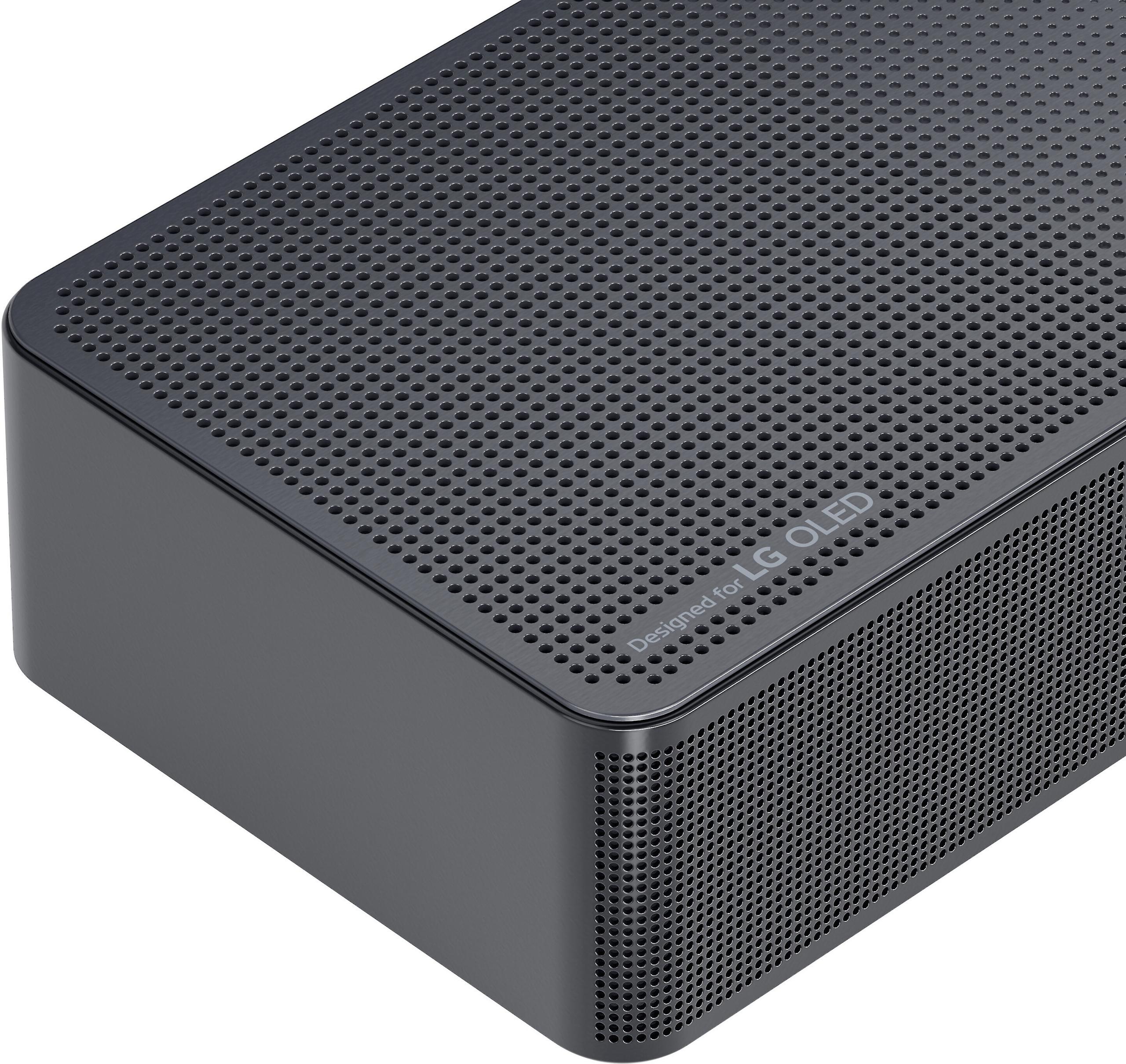
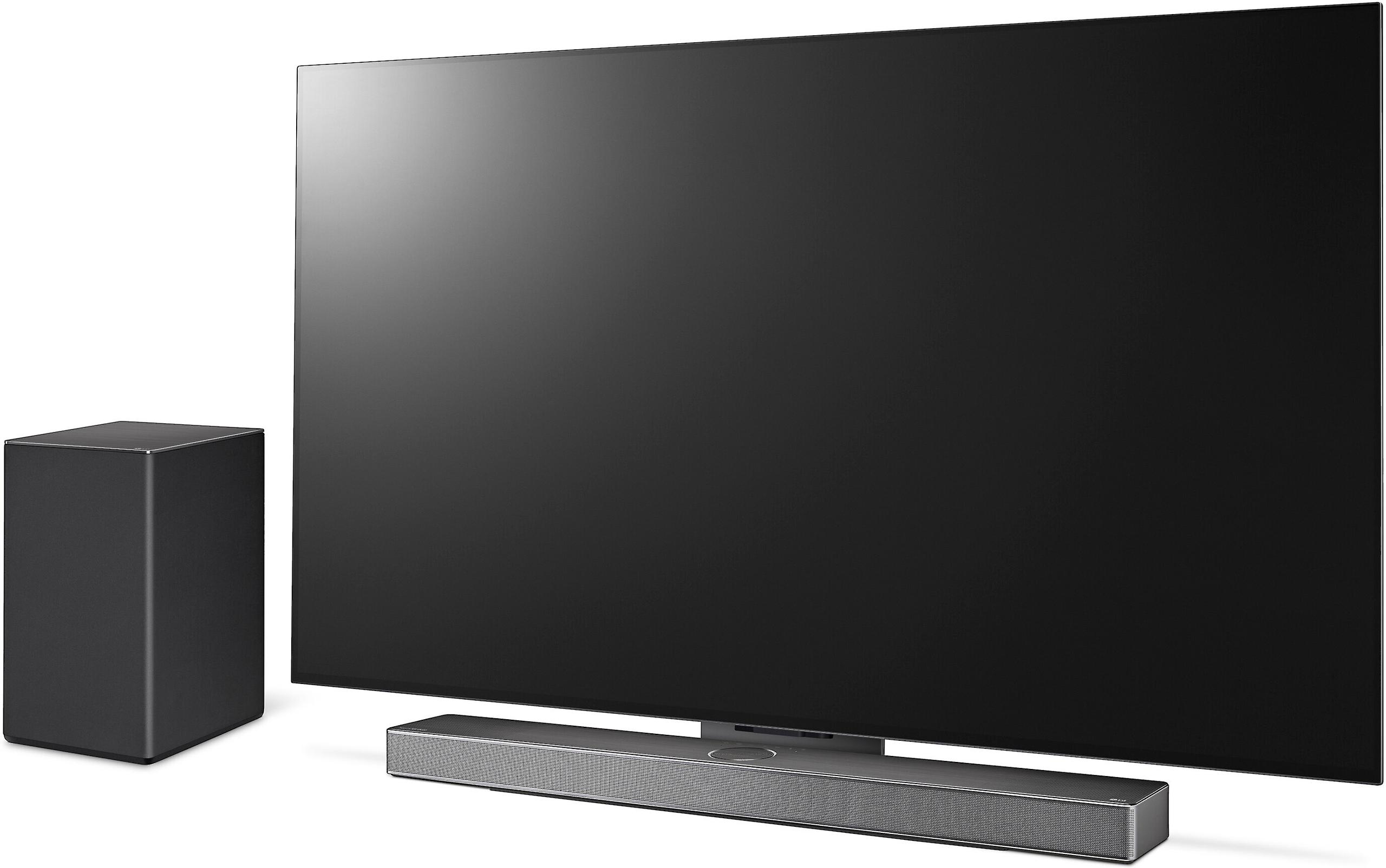
LG's WOW Orchestra technology synchronizes the SC9S with compatible LG OLED TVs, using the TV's built-in speakers as additional channels. This creates a wider, more enveloping soundstage than either component could achieve alone. The integration extends to the mounting system – the included bracket lets the soundbar attach directly to compatible LG TVs, creating a single, cohesive unit.
The wireless connectivity options are extensive: Wi-Fi for stable high-bandwidth connections, Chromecast for Google ecosystem integration, and AirPlay for Apple devices. The WOWCAST feature deserves mention – it's LG's proprietary wireless technology that can transmit full Dolby Atmos audio without the compression or latency issues that sometimes plague Bluetooth.
The fundamental question is whether you want authentic positional audio or modern height effects. The Ultimea D50 creates a genuine 360-degree soundfield where you can precisely locate sounds around you. This is particularly noticeable in gaming, where accurate positioning can mean the difference between winning and losing a competitive match.
The LG SC9S trades some of that precision for overhead immersion. When watching a Marvel movie with Atmos mixing, rain falling from the ceiling or a spaceship flying overhead creates a sense of scale that traditional 5.1 can't match. However, for content that isn't specifically mixed for Atmos – which is still most TV shows and older movies – the height channels become less impactful.
Bass performance separates good soundbars from great ones, especially for action movies and music. The D50's BassMX™ subwoofer consistently delivers deeper, more impactful low-frequency response based on user feedback and our evaluation of the technical specifications. The 5.25-inch driver with 15mm excursion can move more air than smaller alternatives, creating the chest-thumping impact that makes explosions feel real.
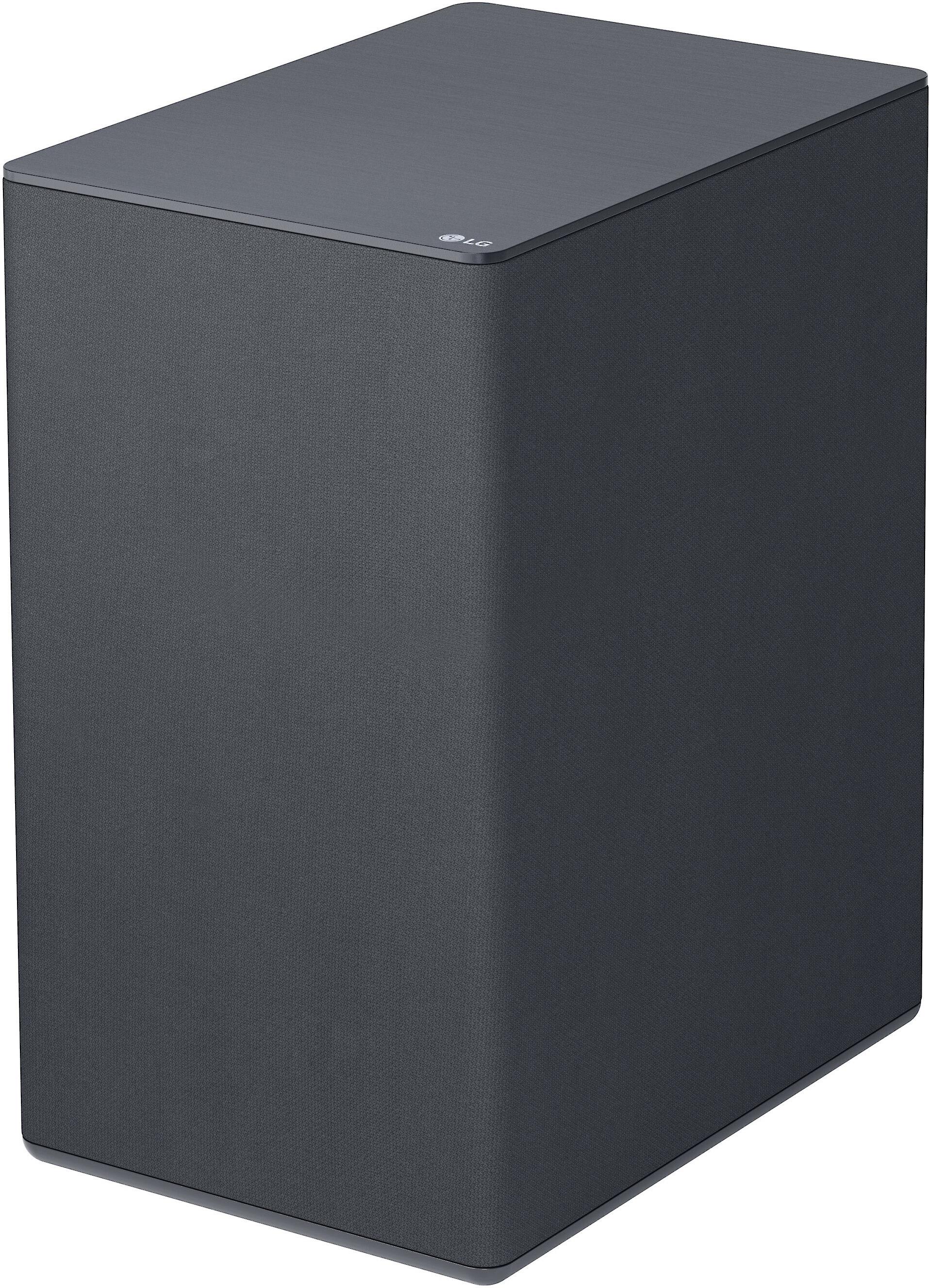
The SC9S includes a wireless subwoofer, but LG focuses more on balance and clarity than raw impact. This approach works well for dialogue-heavy content and music, where overly aggressive bass can muddy the mix, but action movie enthusiasts might find it less satisfying.
This is where the LG SC9S shows its sophistication. The combination of a dedicated center channel and an up-firing center channel creates exceptional dialogue clarity. The system can isolate voices from background noise and effects, making it easier to follow conversations even during intense action sequences.
The D50 handles dialogue competently but relies more on EQ adjustments to optimize voice clarity. The extensive customization options let you boost midrange frequencies where voices live, but it requires manual tuning rather than automatic optimization.
Most living rooms aren't acoustically perfect. Hard surfaces create echoes, furniture absorbs certain frequencies, and irregular shapes cause all sorts of audio problems. The SC9S's AI Room Calibration addresses these issues automatically, while the D50 requires manual EQ adjustment.
However, the D50's physical rear speakers can overcome some room challenges that processing can't fix. If your seating position makes virtual surround effects ineffective – perhaps you sit too close to walls or at an angle to the soundbar – real rear speakers maintain their effectiveness regardless.
At the time of writing, these soundbars occupy different price segments, with the Ultimea D50 positioned as a budget-friendly option that doesn't compromise on core surround sound principles, while the LG SC9S commands premium pricing for its advanced features.
The D50 offers exceptional value by providing genuine 5.1 surround sound at a price point where most competitors offer only virtual surround processing. Physical rear speakers typically require much more expensive systems, making this an outlier in the budget category.
The SC9S justifies its higher cost through features that would be impossible to replicate manually: AI calibration, height channel processing, and seamless smart home integration. For LG TV owners, the integration benefits add significant value beyond just the soundbar's capabilities.
The practical reality of installation often determines which soundbar works best for your situation. The D50 requires running cables to rear speakers, which might not work in rental properties or rooms where aesthetics are paramount. However, the 19.6-foot cables provide flexibility in speaker placement that wireless alternatives can't match.
The SC9S simplifies installation dramatically, especially with LG TVs where the integrated mounting system creates a clean, unified appearance. The wireless subwoofer placement flexibility helps optimize bass response without visible cables.
Room size affects both systems differently. The D50 works best in the 250-380 square foot range where its power output can fill the space effectively. The SC9S handles larger rooms better due to its height channel dispersion and more sophisticated processing.
The streaming landscape increasingly favors Dolby Atmos content, making the SC9S's height channels more valuable over time. Netflix, Amazon Prime, and Disney+ regularly add Atmos soundtracks to new releases, and even some older films receive Atmos remixes.
However, the vast majority of existing content – TV shows, older movies, music – remains in stereo or traditional 5.1 formats where the D50's authentic surround sound provides more noticeable benefits. The SurroundX™ processing helps by expanding stereo content to fill all speakers meaningfully.
Gaming deserves special consideration. Console games increasingly support Atmos, but competitive gaming still benefits more from precise positional audio. The D50's rear speakers provide clearer directional information for footsteps, gunfire, and environmental cues.
Choose the Ultimea Poseidon D50 if you prioritize authentic surround sound experience and value. It's ideal for movie enthusiasts who want genuine 360-degree audio, gamers who need precise positional information, and anyone who enjoys the extensive customization options. The physical rear speakers create an immersion level that virtual processing can't replicate, making it perfect for traditional movie nights and gaming sessions.
The cable management requirement limits its appeal in some situations, but if your room layout accommodates wired rear speakers, you're getting surround sound authenticity typically found in much more expensive systems.
Choose the LG SC9S if you want cutting-edge audio technology with minimal setup complexity. It excels for modern streaming content, especially if you own an LG OLED TV where the integration benefits are substantial. The height channels create spectacular overhead effects with Atmos content, and the AI calibration ensures optimal performance without manual tweaking.
This soundbar makes sense for tech enthusiasts who prioritize the latest audio formats, users who prefer automated optimization over manual control, and anyone who values wireless convenience and smart home integration.
Both soundbars excel in their intended roles, but they solve different problems. The D50 provides proven surround sound principles at exceptional value, while the SC9S offers advanced immersive audio technology with premium integration features.
Your choice ultimately depends on your content preferences, room constraints, and whether you value traditional surround authenticity or modern height channel innovation. Either way, both represent significant upgrades over basic TV speakers and entry-level soundbars that rely purely on virtual processing.
The home theater audio landscape continues evolving, but these two approaches – authentic positioning versus advanced processing – will likely coexist as complementary solutions for different user needs and preferences.
| Ultimea Poseidon D50 5.1 Soundbar | LG SC9S 3.1.3 Channel Dolby Atmos Soundbar |
|---|---|
| Channel Configuration - Determines surround sound authenticity vs modern immersion | |
| True 5.1 with physical rear speakers | 3.1.3 with virtual surround + height channels |
| Rear Speakers - Critical for authentic surround positioning | |
| Dedicated wired satellite speakers (19.6ft cables) | None included (optional wireless kit sold separately) |
| Height Channel Support - Essential for modern Dolby Atmos content | |
| No height channels or Atmos support | Triple up-firing drivers with Dolby Atmos/DTS:X |
| Subwoofer Technology - Impacts bass depth and movie impact | |
| 5.25" driver with BassMX™ technology, 15mm excursion | Wireless subwoofer with balanced tuning |
| Peak Power Output - Affects maximum volume and room filling capability | |
| 320W peak power | Not specified (likely lower) |
| Room Calibration - Automatic vs manual sound optimization | |
| Manual EQ with 121 presets and 10-band equalizer | AI Room Calibration Pro (automatic) |
| Smart Integration - Connectivity and app control features | |
| Bluetooth 5.3, basic app with extensive EQ control | Wi-Fi, Chromecast, AirPlay, WOWCAST, voice assistants |
| TV Integration - Seamless pairing with specific TV brands | |
| Universal compatibility with HDMI eARC/Optical | Optimized for LG OLED TVs with WOW Orchestra |
| Audio Format Support - Future-proofing for streaming content | |
| Standard Dolby Digital, DTS, up to 5.1 channels | Dolby Atmos, DTS:X, IMAX Enhanced, Hi-Res Audio |
| Installation Complexity - Setup requirements and cable management | |
| Requires rear speaker cable routing | Simple wireless setup, minimal cables |
| Recommended Room Size - Optimal performance area | |
| 250-380 sq ft (20-35m²) | Larger rooms with ceiling height for Atmos effects |
| Release Year - Technology generation and feature currency | |
| 2025 (latest traditional surround approach) | 2023 (established modern immersive audio) |
Both the Ultimea Poseidon D50 and LG SC9S excel for home theater but in different ways. The Ultimea D50 provides authentic surround sound with physical rear speakers, making it ideal for traditional movie watching and gaming where precise positioning matters. The LG SC9S offers modern Dolby Atmos with overhead effects, perfect for streaming content from Netflix, Disney+, and Amazon Prime that supports height channels.
The Ultimea Poseidon D50's 5.1 setup includes dedicated rear speakers that create genuine 360-degree surround sound. The LG SC9S's 3.1.3 configuration focuses on height channels with three up-firing speakers for overhead effects instead of physical rear speakers. The 5.1 system provides better traditional surround positioning, while 3.1.3 offers modern immersive audio with Dolby Atmos support.
Physical rear speakers like those in the Ultimea D50 provide the most authentic surround experience, especially for gaming and older movie content. However, the LG SC9S uses advanced processing to create virtual surround effects without rear speakers, which works well for modern streaming content and offers simpler installation with no cable management.
The Ultimea Poseidon D50 typically delivers deeper, more impactful bass with its BassMX™ technology and 5.25-inch subwoofer driver. The LG SC9S provides more balanced bass that's well-integrated with dialogue and music but may lack the chest-thumping impact that action movie enthusiasts prefer.
Dolby Atmos creates three-dimensional sound with overhead effects, supported by the LG SC9S but not the Ultimea D50. If you frequently watch modern streaming content from Netflix, Disney+, or Amazon Prime, Atmos adds noticeable immersion. However, most existing TV shows, older movies, and music don't use Atmos, making traditional 5.1 surround from the D50 more universally beneficial.
The LG SC9S offers simpler installation with wireless components and minimal cable management. The Ultimea Poseidon D50 requires running cables to rear speakers, which may not work in all room layouts or rental properties but provides more flexible speaker placement once installed.
Both soundbars work with any TV through HDMI eARC or optical connections. However, the LG SC9S offers enhanced integration with LG OLED TVs through WOW Orchestra technology and dedicated mounting brackets. The Ultimea D50 provides universal compatibility without brand-specific features.
The Ultimea Poseidon D50 typically offers exceptional value by providing genuine 5.1 surround sound with physical rear speakers at a budget-friendly price point. The LG SC9S costs more but includes premium features like AI room calibration, Dolby Atmos, and smart home integration that justify the higher investment for tech enthusiasts.
The Ultimea D50 works best in medium-sized rooms (250-380 sq ft) where its 320W power output can fill the space effectively. The LG SC9S handles larger rooms better due to its height channel dispersion and includes AI Room Calibration Pro that automatically adjusts for different room acoustics.
The Ultimea Poseidon D50 excels for gaming with its physical rear speakers providing precise positional audio crucial for competitive gaming. You can hear footsteps and gunfire direction more accurately. The LG SC9S supports modern gaming with Dolby Atmos but may lack the pinpoint positioning that serious gamers prefer.
The LG SC9S provides extensive connectivity including Wi-Fi, Bluetooth, Chromecast, AirPlay, and WOWCAST wireless technology. The Ultimea Poseidon D50 offers Bluetooth 5.3, HDMI eARC, optical, and USB connections with comprehensive app control but fewer smart home integration options.
The LG SC9S may be more future-proof with its Dolby Atmos support as streaming services increasingly offer height-channel content. However, the Ultimea D50 remains relevant for traditional content, gaming, and users who prefer authentic surround positioning over processed effects. Both serve different long-term needs depending on your content preferences.
We've done our best to create useful and informative comparisons to help you decide what product to buy. Our research uses advanced automated methods to create this comparison and perfection is not possible - please contact us for corrections or questions. These are the sites we've researched in the creation of this article: youtube.com - eu.ultimea.com - newegg.com - tvsbook.com - youtube.com - provantage.com - ultimea.com - techradar.com - community.ultimea.com - homedepot.com - community.ultimea.com - ultimea.com - ultimea.de - youtube.com - medisamhealthcenter.com - ultimea.com - youtube.com - walmart.com - consumerreports.org - valueelectronics.com - youtube.com - bestbuy.com - rtings.com - costco.com - bestbuy.com - walts.com - queencityonline.com - blog.son-video.com - videoandaudiocenter.com - lg.com

Privacy Policy
Terms and Conditions - Affiliate Policy
Home Security
© Copyright 2008-2026.
11816 Inwood Rd #1211, Dallas, TX 75244