









Shopping for a 5.1 soundbar in 2025 means navigating two fundamentally different philosophies about how surround sound should work in your living room. The Ultimea Poseidon D50 believes in giving you actual rear speakers that create genuine surround effects, while the Samsung B-Series HW-B750D thinks smart processing and convenience should come first. Both approaches have merit, but understanding which one fits your home and preferences makes all the difference.
Before diving into these specific models, it's worth understanding what "5.1" actually means for your entertainment experience. The "5" refers to five full-range audio channels: left and right front speakers, a center channel for dialogue, and left and right surround channels that create the immersive effect. The ".1" is your subwoofer, handling the low-frequency effects that make explosions rumble and music feel full.
The magic happens when these channels work together. In a good 5.1 system, you'll hear helicopters fly overhead from screen left to behind your right shoulder, or catch subtle environmental sounds that make movie scenes feel three-dimensional. For gaming, it means hearing enemy footsteps from their actual direction, giving you a competitive edge in first-person shooters.
However, not all 5.1 systems create this effect the same way. Some use physical speakers placed around your room, while others rely on digital processing to simulate the surround effect. This fundamental difference shapes everything about how these soundbars perform and which one might work better for you.
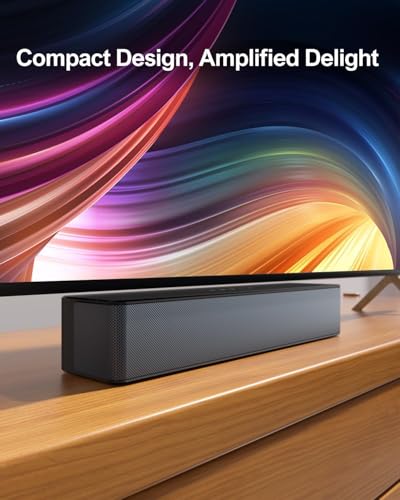
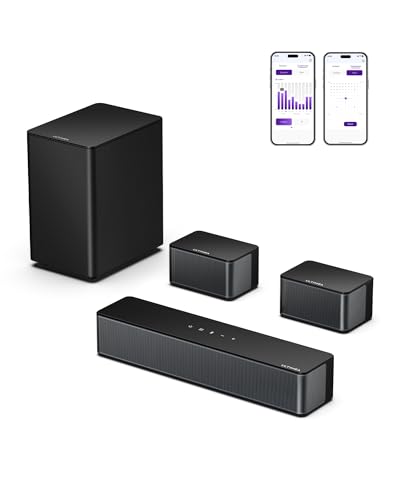
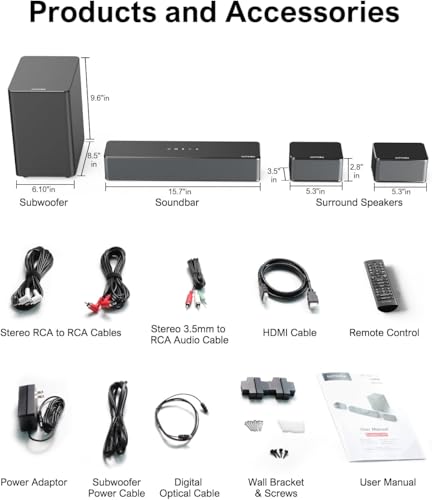
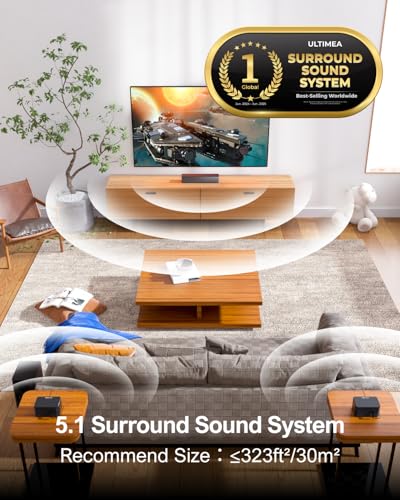
Released in 2025, the Ultimea Poseidon D50 takes what audiophiles call the "purist" approach. Instead of trying to trick your ears with clever processing, it includes two actual satellite speakers that connect to the main soundbar with 19.6-foot cables. These get positioned behind or beside your seating area, creating genuine rear channel audio that you can physically locate in space.
This matters more than you might think. When a movie has rain falling, the Poseidon D50 can make you hear individual droplets coming from specific directions around you. When playing games, enemy movements have precise positional accuracy that virtual processing simply cannot match. The difference is particularly noticeable in action movies where helicopters, explosions, and environmental effects move dynamically across the soundstage.
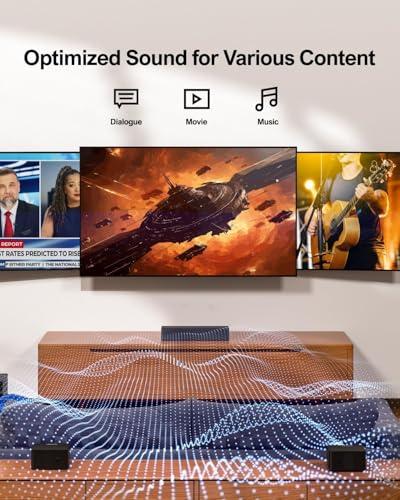
The system's SurroundX technology deserves explanation because it's genuinely clever. Most audio sources—streaming services, cable TV, even many Blu-rays—actually send stereo (2-channel) audio to your soundbar. The Poseidon D50's built-in DSP (digital signal processing) chip analyzes this stereo signal and intelligently separates it into five distinct channels, sending appropriate sounds to each speaker. It's like having a conductor who knows exactly which instrument should play from which direction.
What sets the Ultimea Poseidon D50 apart from most budget-friendly soundbars is its smartphone app control system. While many manufacturers add apps as an afterthought, Ultimea built theirs to be genuinely useful. You get access to 121 different EQ (equalization) presets—pre-configured sound profiles that adjust frequency response for different content types and room acoustics.
More importantly, you can fine-tune these settings yourself using a 10-band equalizer. This means adjusting specific frequency ranges (like boosting the mid-range for clearer dialogue or reducing harsh treble frequencies) without affecting others. For context, most soundbars in this price category offer maybe three or four preset modes with no customization options.
The app also lets you independently control the volume of those rear satellite speakers. This flexibility proves invaluable because every room is different. If your rear speakers are closer to your seating than ideal, you can turn them down slightly. If your room has high ceilings that absorb surround effects, you can boost them for better presence.
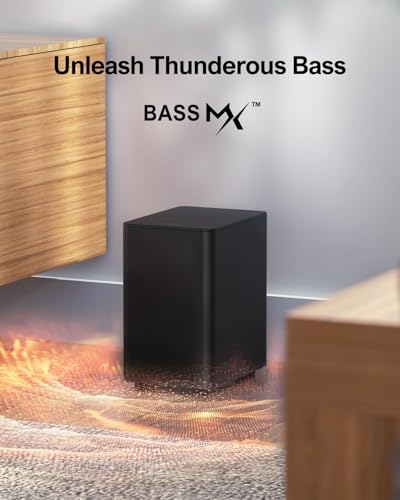
The Poseidon D50's subwoofer uses what Ultimea calls BassMX technology, which sounds like marketing speak but actually represents some thoughtful engineering. The 5.25-inch driver uses a larger magnetic structure and allows 15mm of diaphragm movement—that's the physical distance the speaker cone can travel back and forth. More movement means more air displacement, which translates to deeper, more impactful bass.
In practical terms, this means explosion effects that you feel in your chest rather than just hear, and music with full, rich low-end that doesn't sound thin or artificial. The subwoofer is wireless, so you can position it wherever it sounds best in your room without worrying about cable routing.
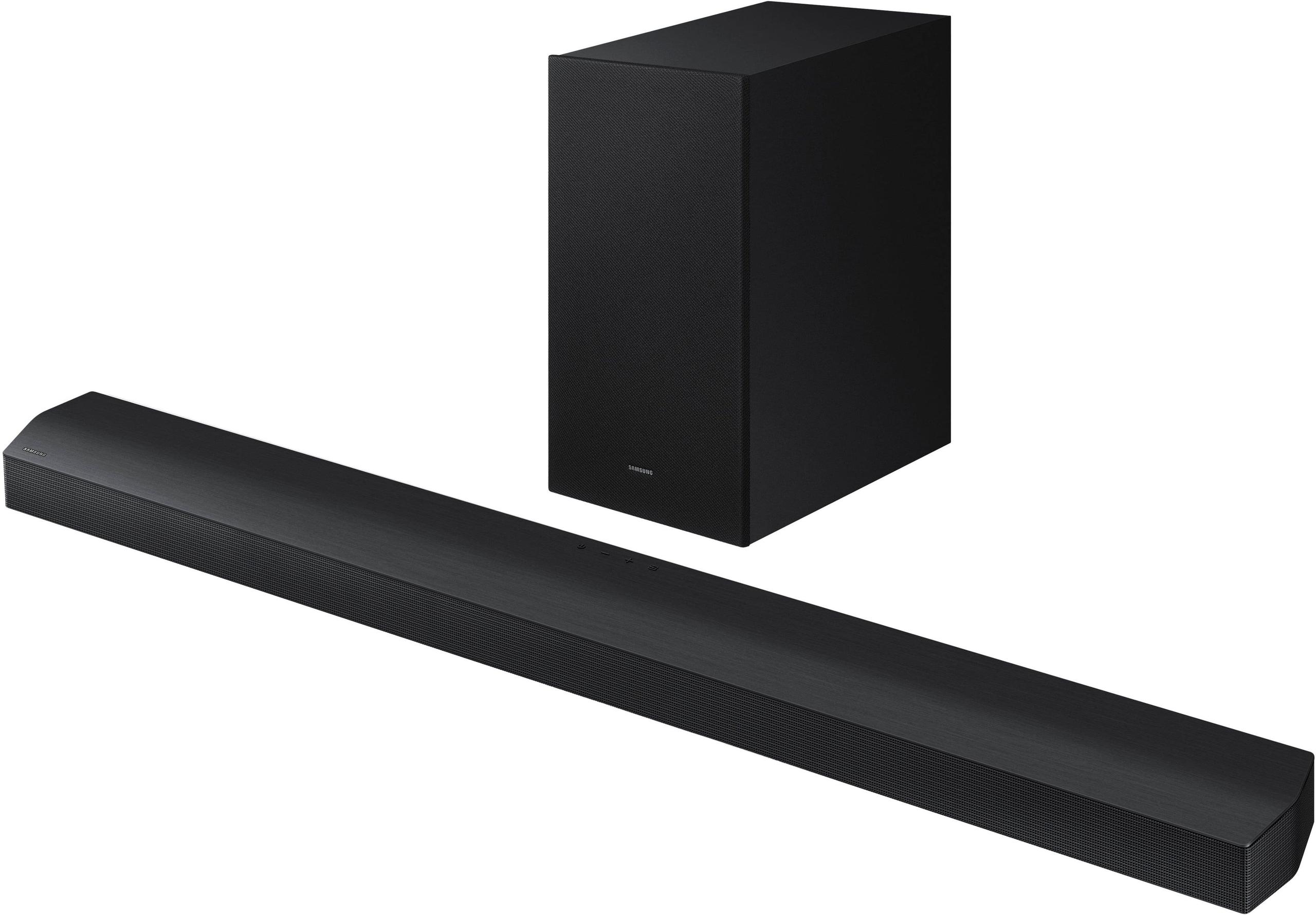
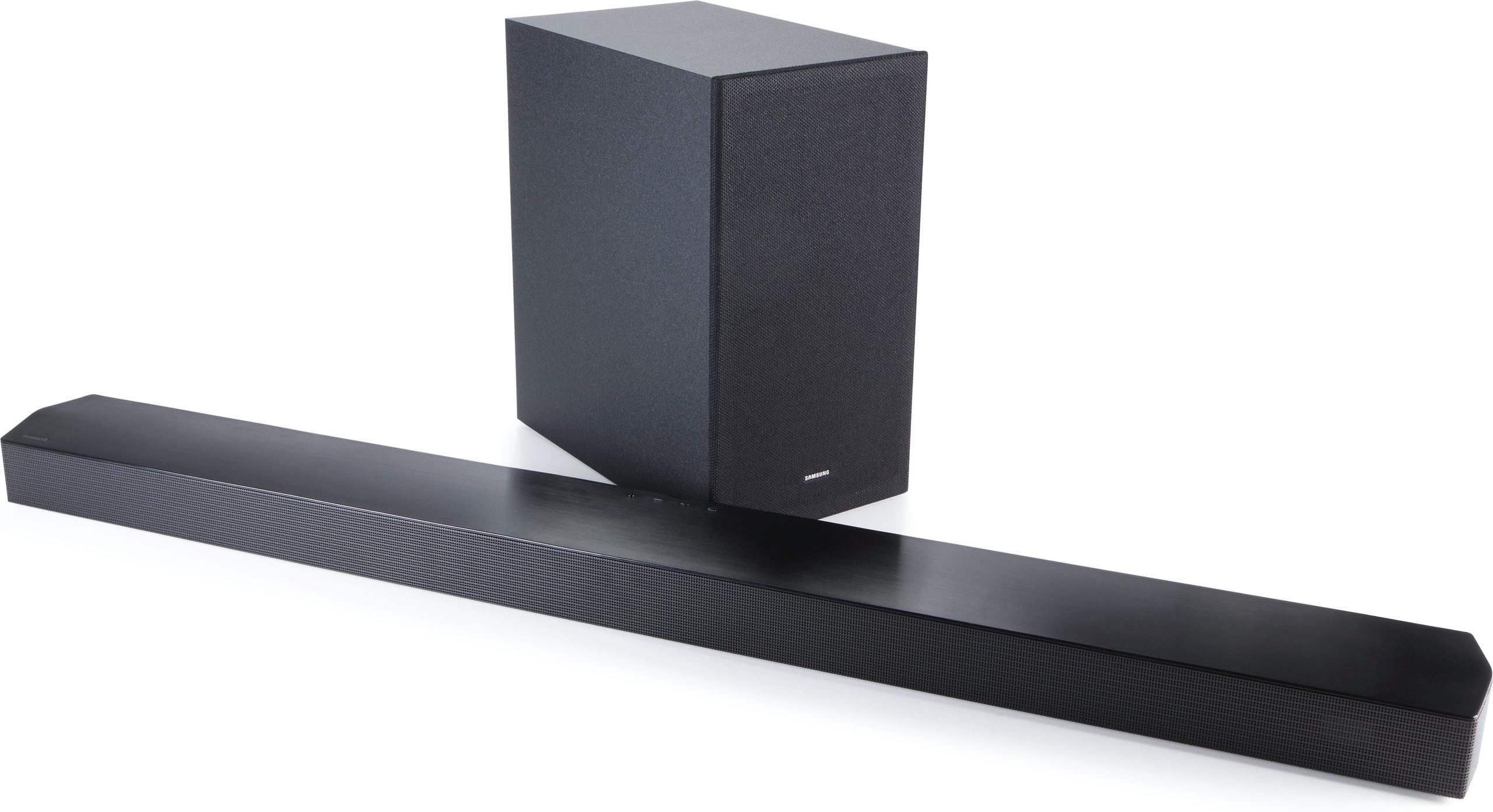
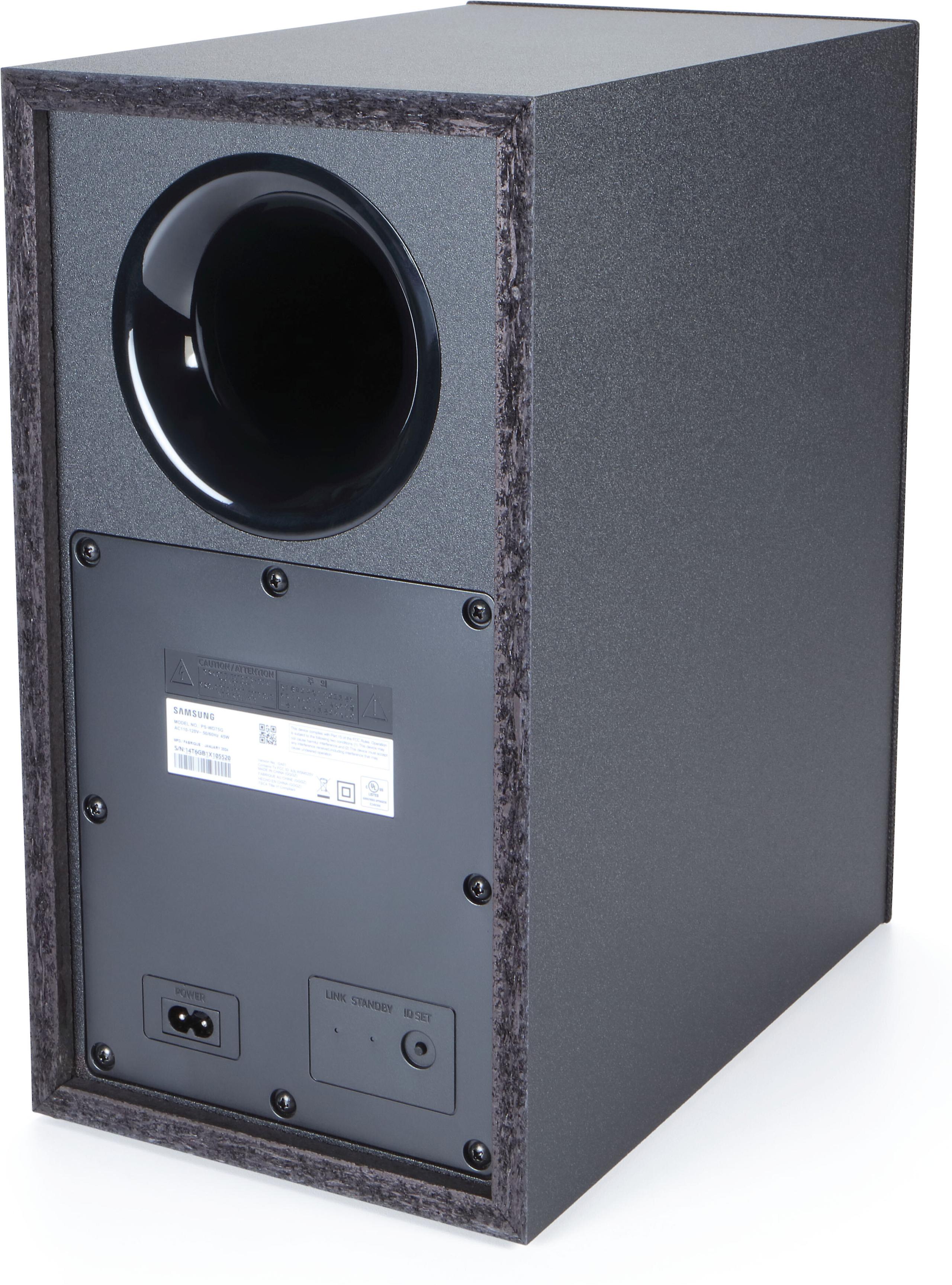
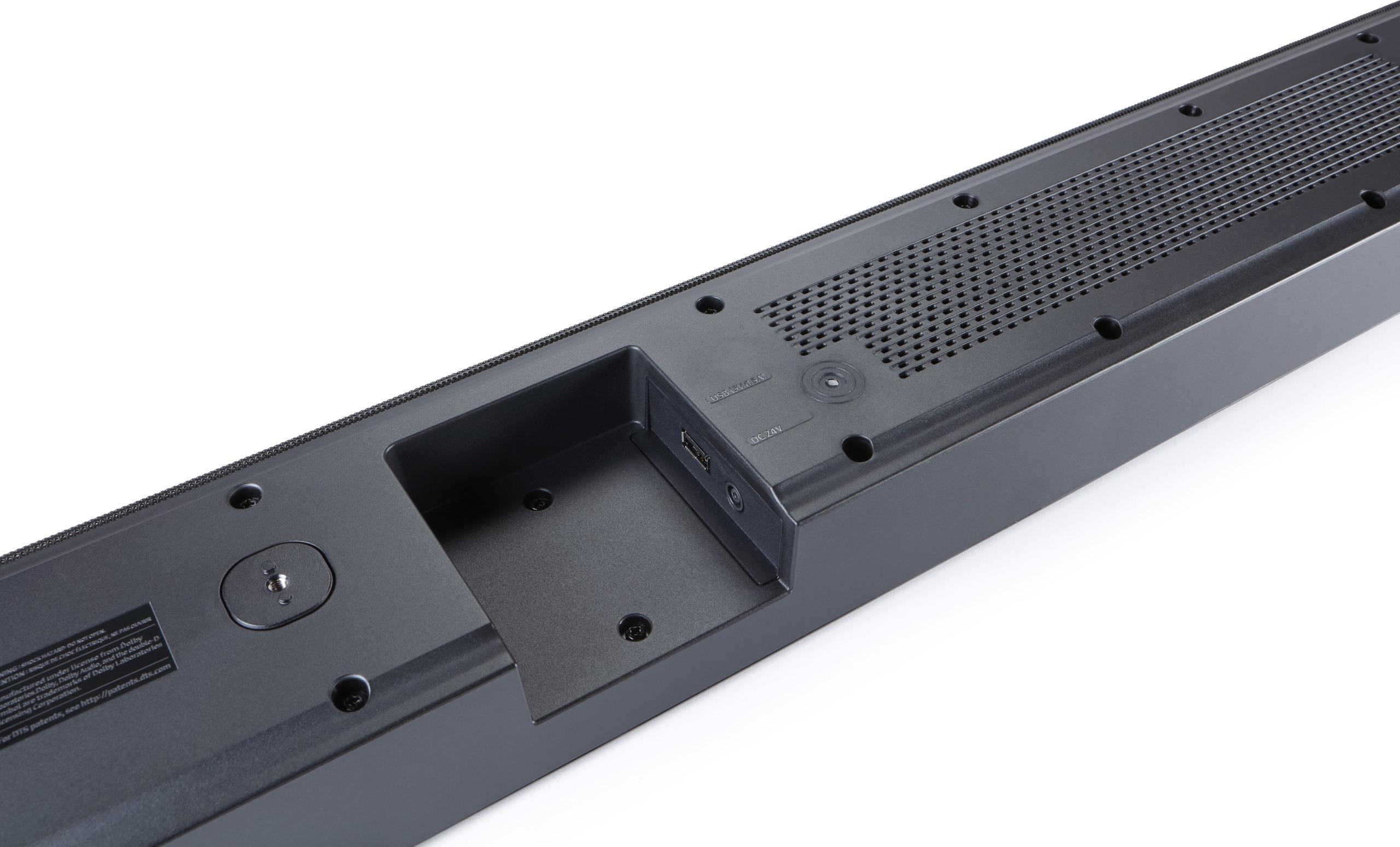
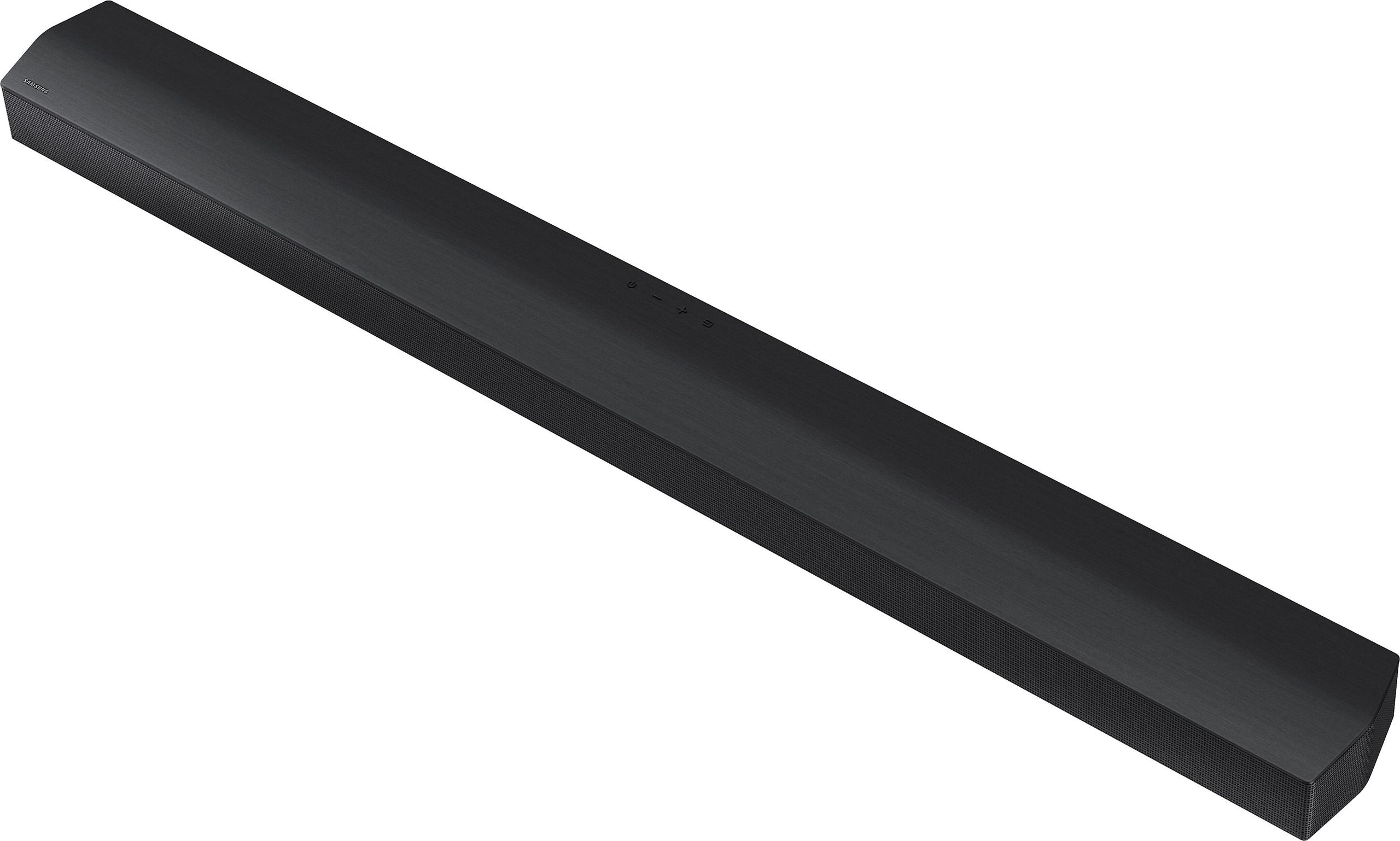
The Samsung B-Series HW-B750D, also released in 2025, represents a completely different approach to the same problem. Instead of physical rear speakers, Samsung built side-firing drivers into the main soundbar that bounce sound off your room's walls to create surround effects. It's like having invisible speakers that use your room's acoustics to place sounds around you.
This approach has genuine advantages. Installation takes maybe fifteen minutes—just connect the soundbar to your TV and place the wireless subwoofer somewhere convenient. No cable routing, no speaker positioning calculations, no wondering if you've got the rear channels aimed correctly. For many people, this simplicity is worth more than perfect audio positioning.
Samsung's DTS Virtual:X processing deserves recognition because it's genuinely sophisticated technology. Virtual:X analyzes the audio signal and uses psychoacoustic principles—basically, how your brain interprets spatial audio cues—to create the perception of sounds coming from directions where no speakers actually exist. It can even simulate height effects, making you perceive sounds coming from above your listening position.
If you own a Samsung TV, the B-Series soundbar offers Q-Symphony technology that's genuinely useful rather than just marketing. Instead of disabling your TV's speakers when you connect the soundbar, Q-Symphony lets both work together as a larger speaker array. Your TV's speakers handle some mid-range and high-frequency content while the soundbar focuses on dialogue and effects. The result is a wider, more enveloping soundstage than either component could create alone.
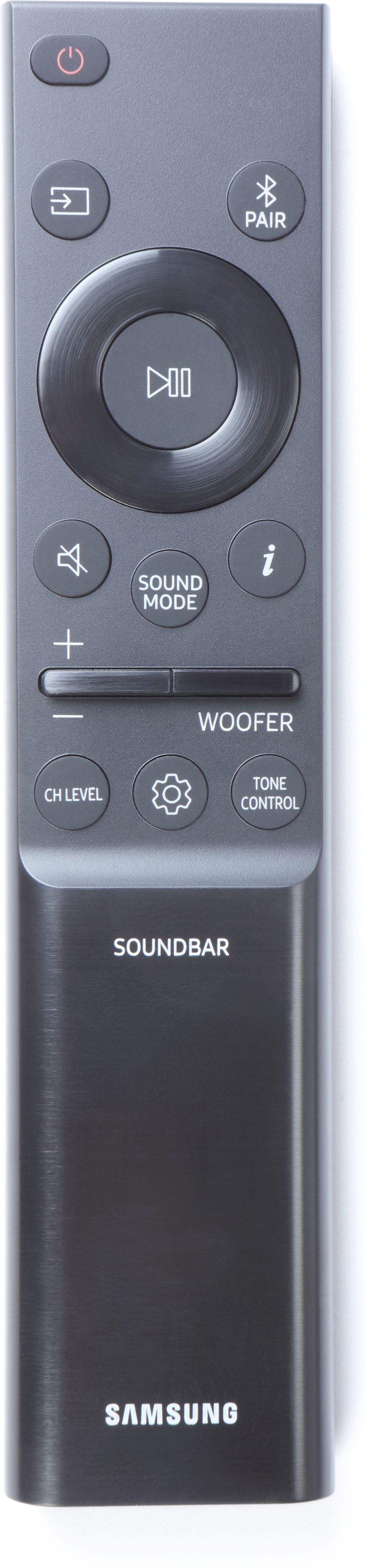
The system's Adaptive Sound feature uses AI processing to analyze what you're watching and automatically optimize the audio. Watching a dialogue-heavy drama? It emphasizes the center channel and reduces background noise. Action movie? It opens up the dynamic range and enhances surround effects. While you can't fine-tune this like the Ultimea's manual controls, it works well for users who prefer automatic optimization.
Gaming performance matters more than ever as console and PC gaming become primary entertainment sources. The Samsung B-Series includes Game Mode Pro, which reduces audio latency (the delay between when something happens on screen and when you hear it) and emphasizes directional audio cues. For competitive gaming, hearing enemy footsteps from the correct direction can provide crucial advantages.
The Night Mode feature compresses the dynamic range—essentially reducing the difference between the loudest and quietest sounds—so you can enjoy late-night viewing without disturbing others. This is particularly useful for action movies that tend to have whisper-quiet dialogue followed by explosive sound effects.
Our research into user and professional reviews consistently shows that the Poseidon D50 delivers superior surround sound immersion for content with dynamic audio effects. The physical rear speakers create what reviewers describe as a "genuine surround bubble" where sounds have precise directional placement. This advantage is most noticeable in action movies, war films, and games with complex audio environments.
The Samsung B-Series, while impressive for its approach, cannot fully replicate the spatial accuracy of dedicated rear speakers. However, it excels at creating a wide, enveloping soundstage that works well for most content types. The side-firing speakers create effective ambient surround effects, though they lack the precise positioning of physical rear channels.
Both systems handle dialogue well, but through different methods. The Samsung's dedicated center channel and Voice Enhance mode provide consistently clear speech, even during complex action sequences. The Adaptive Sound processing automatically adjusts dialogue levels based on content analysis.
The Ultimea Poseidon D50 achieves dialogue clarity through its extensive EQ options and dedicated center channel processing. While it requires more user adjustment to optimize, it can be fine-tuned more precisely for individual hearing preferences and room acoustics.
The Poseidon D50's BassMX subwoofer technology delivers what reviewers consistently describe as deeper, more impactful bass. The larger magnetic structure and increased driver excursion create physical bass presence that you feel as much as hear. This advantage is particularly noticeable in action movies and music with significant low-frequency content.
The Samsung's subwoofer provides adequate bass for most content but focuses more on integration with the main soundbar than pure low-frequency impact. It's designed to blend seamlessly with the overall sound signature rather than dominate with dramatic bass effects.
The Poseidon D50's rear speakers require thoughtful planning. Those 19.6-foot cables need to reach from your entertainment center to positions behind or beside your seating area. In some room layouts, this means running cables along baseboards, under rugs, or through cable management systems.
However, once properly positioned, the rear speakers largely disappear from awareness while dramatically improving the surround sound experience. The key is having a room layout that accommodates speaker placement without creating tripping hazards or aesthetic compromises.
The Samsung B-Series installation takes minutes rather than an afternoon. Place the soundbar, position the wireless subwoofer, connect one HDMI cable, and you're operational. For apartments, rental properties, or situations where cable routing isn't practical, this simplicity has genuine value.
The side-firing design works in various room configurations, though it performs best in rooms with reflective side walls. Open-concept spaces or rooms with heavy sound-absorbing materials may limit the effectiveness of the virtual surround processing.
At the time of writing, these soundbars target different value propositions. The Ultimea Poseidon D50 emphasizes maximum hardware for the price—you're getting physical rear speakers, a substantial subwoofer, and extensive customization options that typically appear in much more expensive systems.
The Samsung B-Series commands a premium for brand reliability, ecosystem integration, and convenience features. You're paying for Samsung's established support network, refined software integration, and the peace of mind that comes with a recognized brand.
Both systems benefit from technology improvements made since earlier soundbar generations. Bluetooth connectivity has evolved to version 5.3 on the Ultimea and 4.2 on the Samsung, providing more stable wireless streaming and better device management.
The smartphone app control on the Poseidon D50 represents a significant advancement over traditional IR remote controls, allowing real-time adjustments and preset switching that would be cumbersome with button-based interfaces.
Samsung's integration of AI-powered Adaptive Sound and improved Virtual:X processing reflects the broader industry trend toward intelligent audio processing that adapts to content and room conditions automatically.
Your room layout can accommodate rear speaker placement without major compromise. You enjoy audio customization and want the ability to fine-tune your sound experience. The authentic surround sound positioning matters more to you than installation convenience. You primarily watch action movies, play games, or consume content with dynamic surround effects.
The Poseidon D50 makes the most sense for dedicated home theater rooms or living spaces where proper speaker placement is feasible. It's ideal for users who understand that better audio performance often requires more setup complexity.
Clean, cable-free installation is a priority in your living space. You own Samsung TVs or plan to build a Samsung ecosystem. You prefer automatic optimization over manual adjustment. Your content consumption includes significant amounts of dialogue-heavy programming like dramas, news, or documentaries.
The Samsung B-Series works best for users who want good surround sound without the complexity of physical rear speakers. It's particularly compelling if you already own Samsung devices that can benefit from ecosystem integration.
Both the Ultimea Poseidon D50 and Samsung B-Series HW-B750D deliver legitimate 5.1 surround sound, but they achieve it through fundamentally different approaches. The Ultimea maximizes audio hardware and authentic positioning at the cost of installation complexity. Samsung prioritizes convenience and integration while delivering effective, if less precise, surround sound simulation.
Your choice should align with your room constraints, technical comfort level, and entertainment priorities. If authentic surround sound positioning is crucial for your enjoyment, the Poseidon D50's physical approach is superior. If convenience and ecosystem integration matter more, the Samsung's streamlined approach makes more sense.
Both represent solid 2025 offerings in their respective philosophies, proving that there's no single "correct" way to deliver great home theater audio. The best choice is the one that fits your space, preferences, and lifestyle without compromise.
| Ultimea Poseidon D50 5.1 Soundbar | Samsung B-Series 5.1 Channel Soundbar |
|---|---|
| Rear Speaker Configuration - Most important factor for true surround immersion | |
| 2 physical satellite speakers with 19.6ft cables included | Built-in side-firing speakers (wireless rear speakers sold separately) |
| Peak Power Output - Determines room-filling capability and dynamic range | |
| 320W (suitable for rooms up to 380ft²) | Not specified (designed for medium rooms) |
| Subwoofer Technology - Critical for bass impact and movie effects | |
| 5.25" wireless with BassMX™ technology, 15mm excursion | Wireless subwoofer with Bass Boost mode |
| Audio Processing - How stereo content becomes surround sound | |
| SurroundX™ algorithm with DSP chip converts 2.0 to 5.1 | DTS Virtual:X creates 3D soundstage from main unit |
| Customization Options - Ability to fine-tune sound for your preferences | |
| Smart app with 121 EQ presets, 10-band equalizer, independent rear control | 6 sound modes, Adaptive Sound AI, Night Mode |
| Bluetooth Connectivity - Affects streaming quality and device compatibility | |
| Bluetooth 5.3 (latest standard, more stable connections) | Bluetooth 4.2 with dual device pairing |
| Smart Features - Convenience and automation capabilities | |
| Smartphone app control, adjustable surround levels | Q-Symphony (Samsung TV integration), SpaceFit room analysis |
| Installation Complexity - Time and effort required for optimal setup | |
| 20-30 minutes with rear speaker cable routing required | 10-15 minutes, no cable management needed |
| Connectivity Options - Input flexibility for various devices | |
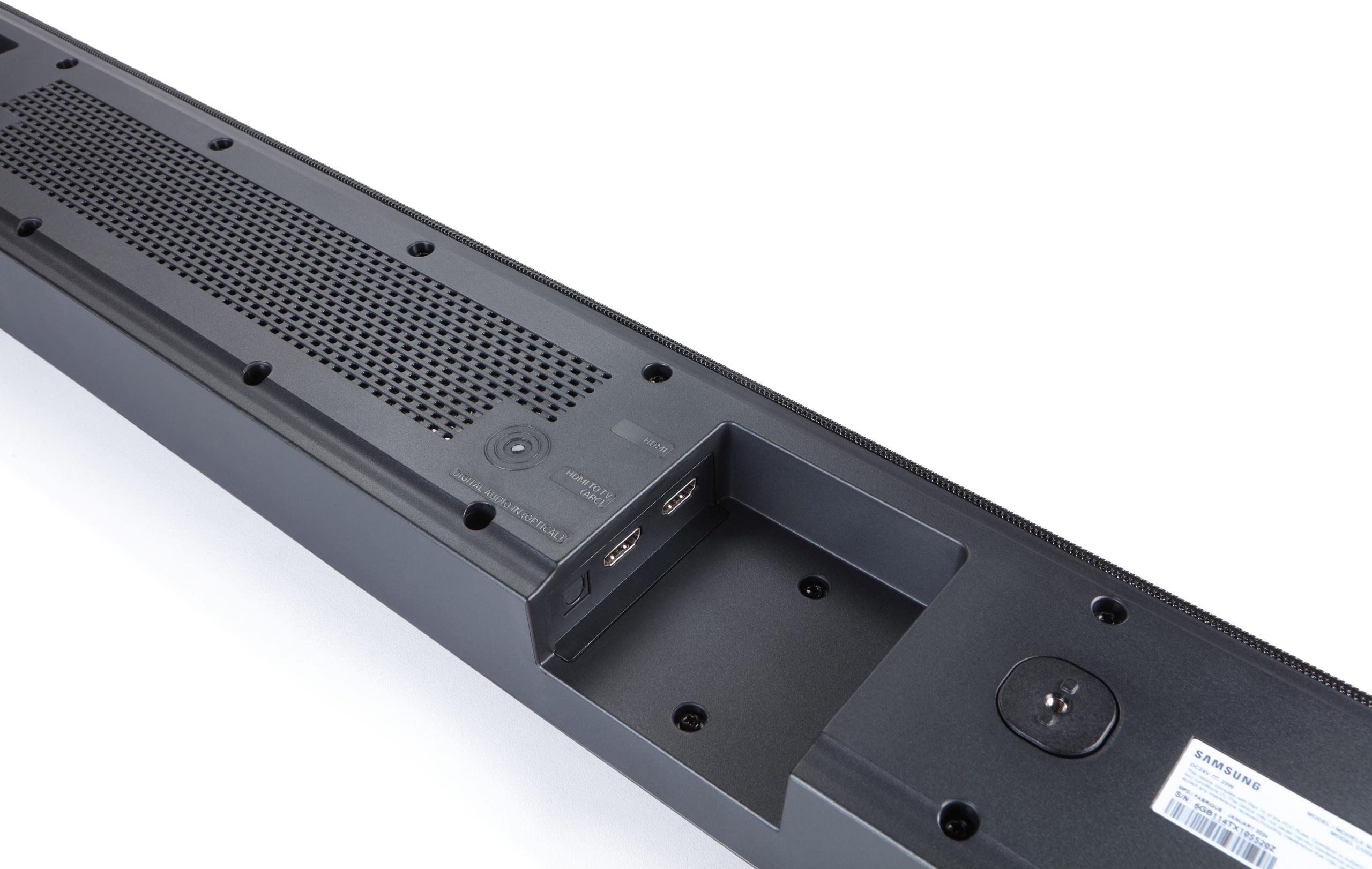
| HDMI eARC, Optical, AUX, USB | HDMI eARC/CEC, Optical, USB (no AUX) |
| Best Use Cases - Where each system excels most | |
| Action movies, gaming, dedicated home theaters | General TV viewing, Samsung ecosystems, easy installation |
The Ultimea Poseidon D50 delivers superior surround sound quality due to its physical rear satellite speakers that create genuine 5.1 channel separation. The Samsung B-Series uses virtual surround processing with side-firing speakers, which is effective but cannot match the spatial accuracy of dedicated rear speakers for movies and gaming.
The key difference is surround sound approach: the Ultimea Poseidon D50 includes two physical rear speakers connected by cables for authentic surround positioning, while the Samsung B-Series relies on built-in side-firing speakers and virtual processing to simulate surround effects without additional speakers.
The Samsung B-Series is significantly easier to install, requiring only 10-15 minutes with no cable routing. The Ultimea Poseidon D50 takes 20-30 minutes and requires running 19.6-foot cables to position the rear speakers properly around your seating area.
Both work well, but the Ultimea Poseidon D50 excels for action movies and gaming due to precise directional audio from its physical rear speakers. The Samsung B-Series performs better for dialogue-heavy content and general TV viewing, with Game Mode Pro optimizing performance for gaming scenarios.
The Ultimea Poseidon D50 typically delivers deeper, more impactful bass through its BassMX™ technology with 15mm driver excursion and larger magnetic structure. The Samsung B-Series provides adequate bass with good integration but focuses more on overall balance than pure low-frequency impact.
The Ultimea Poseidon D50 offers extensive customization with 121 EQ presets, 10-band equalizer, and smartphone app control. The Samsung B-Series provides simpler customization with 6 sound modes and Adaptive Sound AI that automatically optimizes settings based on content.
Value depends on priorities: the Ultimea Poseidon D50 maximizes hardware value by including physical rear speakers and extensive features at a competitive price. The Samsung B-Series offers premium convenience, brand reliability, and ecosystem integration that justifies its higher cost for many users.
Both the Ultimea Poseidon D50 and Samsung B-Series work with all TV brands through HDMI eARC, optical, and other standard connections. However, the Samsung B-Series offers additional benefits like Q-Symphony technology when paired with Samsung TVs.
The Samsung B-Series works better for small apartments where cable routing is difficult and space is limited. The Ultimea Poseidon D50 requires adequate room for rear speaker placement and is better suited for dedicated home theater spaces or larger living rooms.
Both include wireless subwoofers, but the Ultimea Poseidon D50 features BassMX™ technology for deeper bass impact, while the Samsung B-Series focuses on seamless integration with the main soundbar. The Ultimea subwoofer generally provides more dramatic low-frequency effects for movies.
The Ultimea Poseidon D50 offers more connectivity with HDMI eARC, optical, AUX, USB, and Bluetooth 5.3. The Samsung B-Series includes HDMI eARC/CEC, optical, USB, and Bluetooth 4.2 with dual device pairing, but lacks an AUX input for analog sources.
Choose the Ultimea Poseidon D50 with physical rear speakers if you want authentic surround positioning and can accommodate speaker placement. Select the Samsung B-Series with virtual surround if you prioritize clean installation and convenience over maximum audio immersion in your home theater setup.
We've done our best to create useful and informative comparisons to help you decide what product to buy. Our research uses advanced automated methods to create this comparison and perfection is not possible - please contact us for corrections or questions. These are the sites we've researched in the creation of this article: youtube.com - eu.ultimea.com - newegg.com - tvsbook.com - youtube.com - provantage.com - ultimea.com - techradar.com - community.ultimea.com - homedepot.com - community.ultimea.com - ultimea.com - ultimea.de - youtube.com - medisamhealthcenter.com - ultimea.com - youtube.com - walmart.com - bestbuy.com - abt.com - avsforum.com - crutchfield.com - camelcamelcamel.com - samsung.com - samsung.com - samsung.com - images.samsung.com - samsung.com - avblinq.avbportal.com - samsung.com - samsung.com

Privacy Policy
Terms and Conditions - Affiliate Policy
Home Security
© Copyright 2008-2026.
11816 Inwood Rd #1211, Dallas, TX 75244