

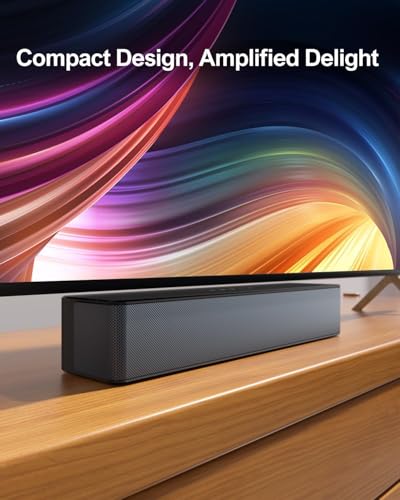





When your TV's built-in speakers just aren't cutting it anymore, the jump to a soundbar can transform your viewing experience. But with so many options available, the choice often comes down to two fundamentally different approaches: genuine multi-channel surround sound with physical speakers positioned around your room, or sophisticated virtual processing that creates the illusion of surround sound from fewer speakers.
The Ultimea Poseidon D50 5.1 Soundbar and Samsung HW-S700D 3.1 Channel Slim Soundbar represent these two philosophies perfectly. Released in 2025 and 2024 respectively, both systems reflect the latest thinking in their categories. The Ultimea takes the traditional home theater approach with actual rear speakers, while Samsung focuses on cutting-edge virtual processing and smart features.
Understanding these differences is crucial because they determine not just how your movies will sound, but how these systems will fit into your living space and daily routine.
Before diving into specifics, it's worth understanding what makes soundbars work. Traditional TV speakers face forward and downward, creating flat, lifeless audio that gets lost in your room. Soundbars solve this by using multiple drivers (individual speakers) arranged in a wider cabinet, creating a broader soundstage – the perceived width and depth of audio.
The magic happens when soundbars create "surround sound," the effect of hearing audio from multiple directions. True surround systems like the Ultimea Poseidon D50 achieve this by literally placing speakers behind and beside you. Virtual surround systems like the Samsung HW-S700D use digital signal processing (DSP) – essentially computer algorithms – to trick your brain into perceiving sounds as coming from different directions.
Both approaches have merit, but they excel in different scenarios. The key performance metrics that matter most are:
Soundstage width and depth: How expansive the audio feels Dialogue clarity: Whether you can understand speech without subtitles Bass response: The depth and impact of low-frequency sounds Surround effectiveness: How convincingly audio seems to come from around you Dynamic range: The difference between the quietest and loudest sounds the system can reproduce
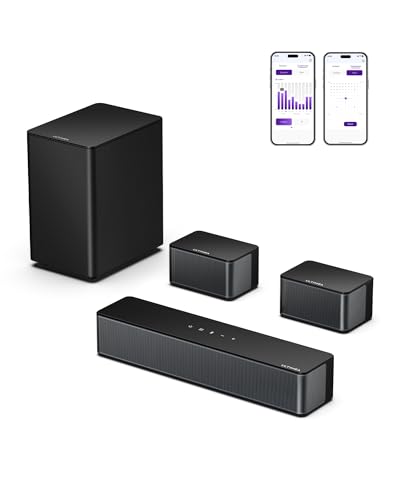
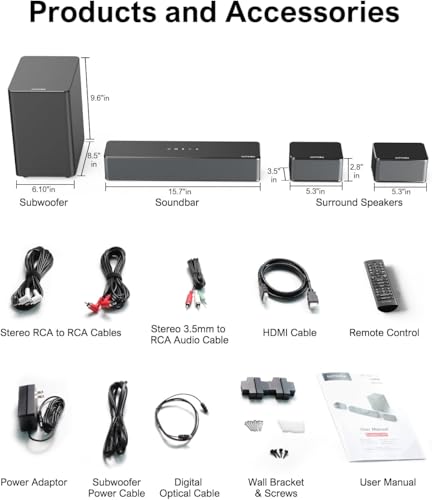
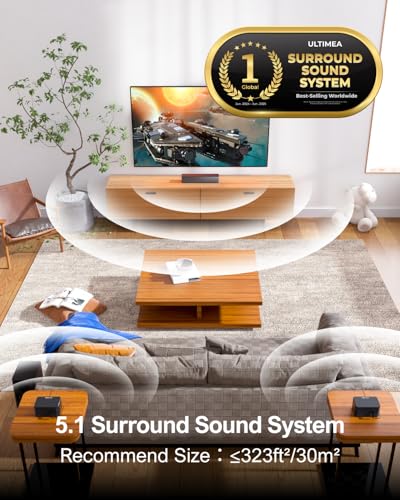
The Ultimea Poseidon D50 represents what audiophiles call "true surround sound." When you unbox this system, you get five distinct components: the main soundbar, a wireless subwoofer, and two satellite speakers that connect to the subwoofer with 19.6-foot cables. This 5.1 configuration means five main speakers plus one subwoofer dedicated to bass frequencies below about 80Hz.
The key advantage here is physics. When an explosion happens behind the main character in a movie, the Ultimea system actually plays that sound from speakers positioned behind your seating area. Your brain doesn't need to be tricked – it genuinely hears directional audio from the correct location. This creates what's called "discrete surround," where each speaker receives its own unique audio signal.
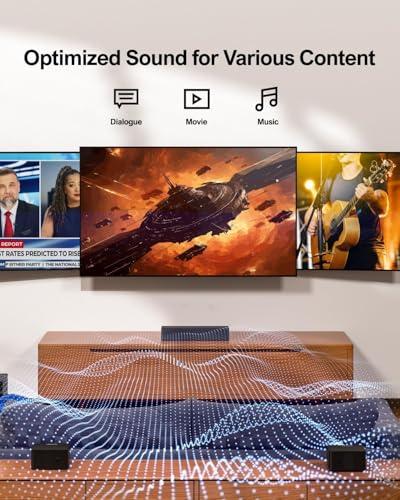
The system's SurroundX™ Technology adds another layer of sophistication. Most TV shows and streaming content comes in stereo (two-channel audio), but this integrated DSP chip can analyze stereo signals and intelligently distribute different elements to the appropriate speakers. Dialogue might stay centered, background music could spread to the rear speakers, and sound effects get positioned where they make the most sense.
What sets the Poseidon D50 apart from budget 5.1 systems is its customization depth. The smartphone app provides access to a 10-band equalizer – think of it as bass and treble controls but with much finer precision across different frequency ranges. More impressively, it includes 121 preset EQ matrices, which are pre-configured audio profiles optimized for different content types and room acoustics.
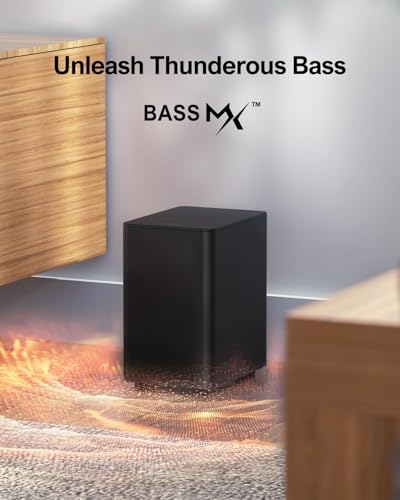
The BassMX™ Technology in the subwoofer deserves special attention. Most budget subwoofers use small drivers in cramped enclosures, limiting their low-frequency output. The Ultimea's 5.25-inch driver features optimized magnetic circuits and can move 15mm in each direction – that's substantial excursion that translates to deeper, more impactful bass without distortion.
Based on our research into user experiences, the Poseidon D50 excels with action movies, video games, and any content where spatial audio cues matter. Users consistently report that explosions feel more realistic, and the sense of being "in" the movie is significantly enhanced compared to traditional soundbars.
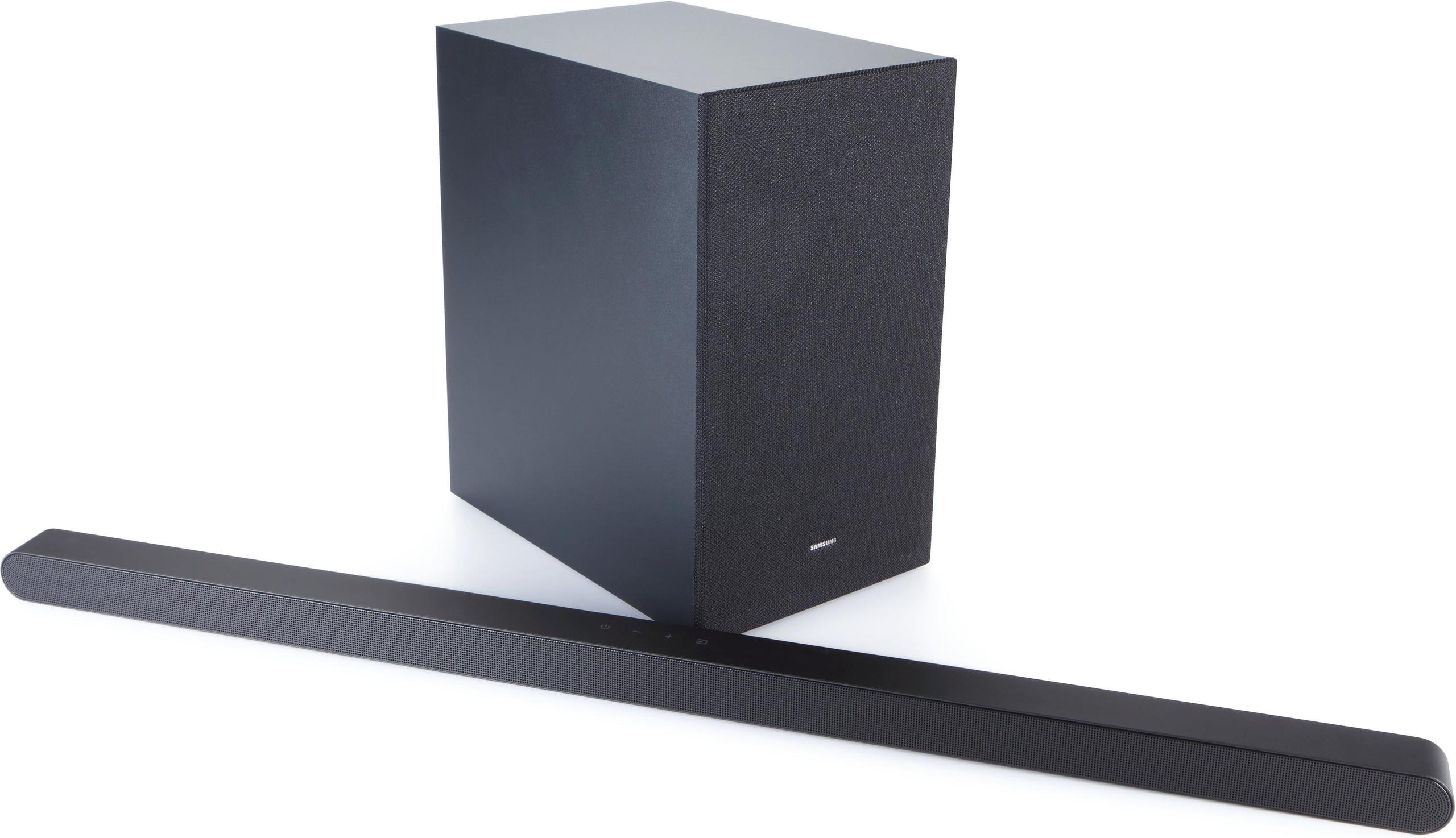
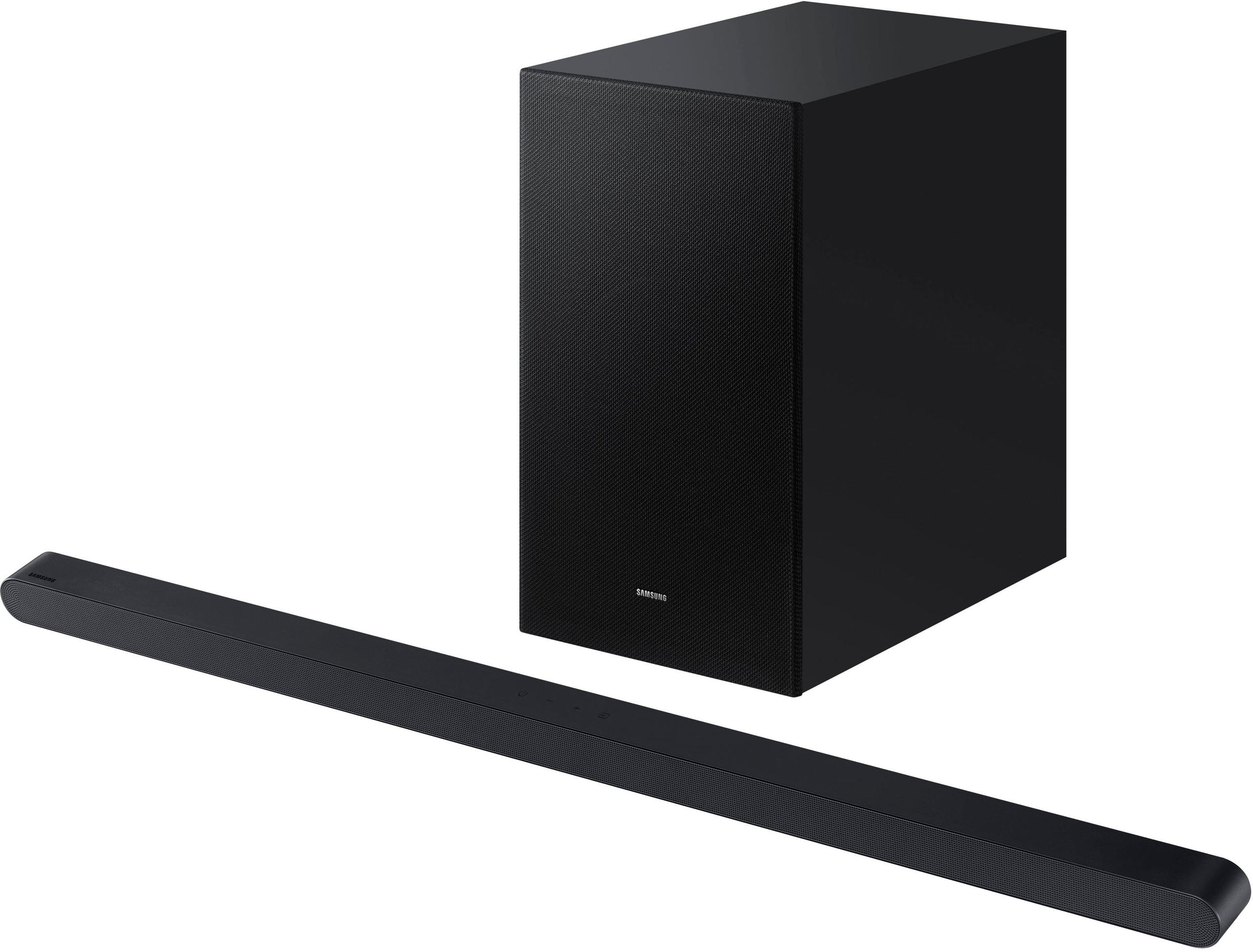
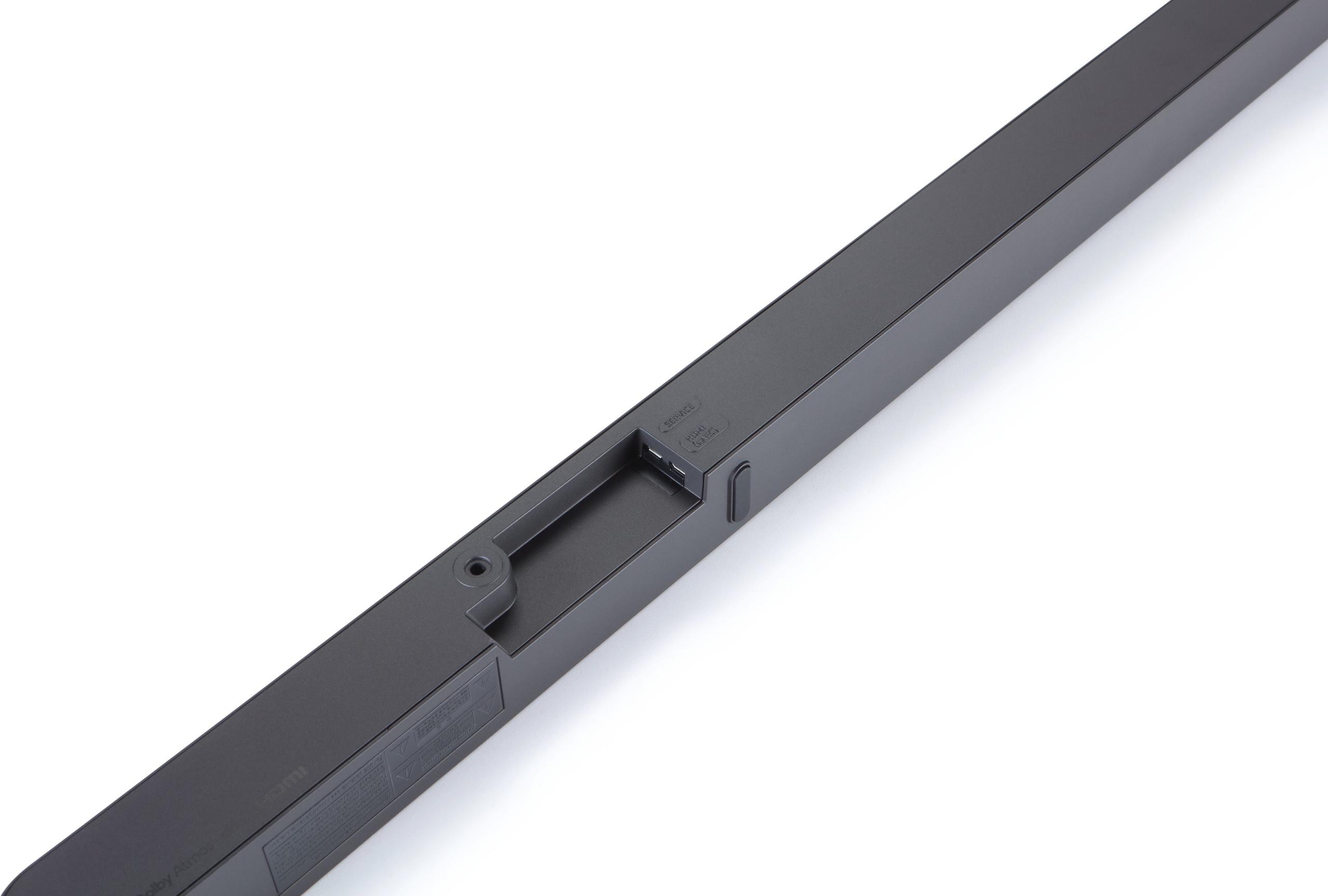
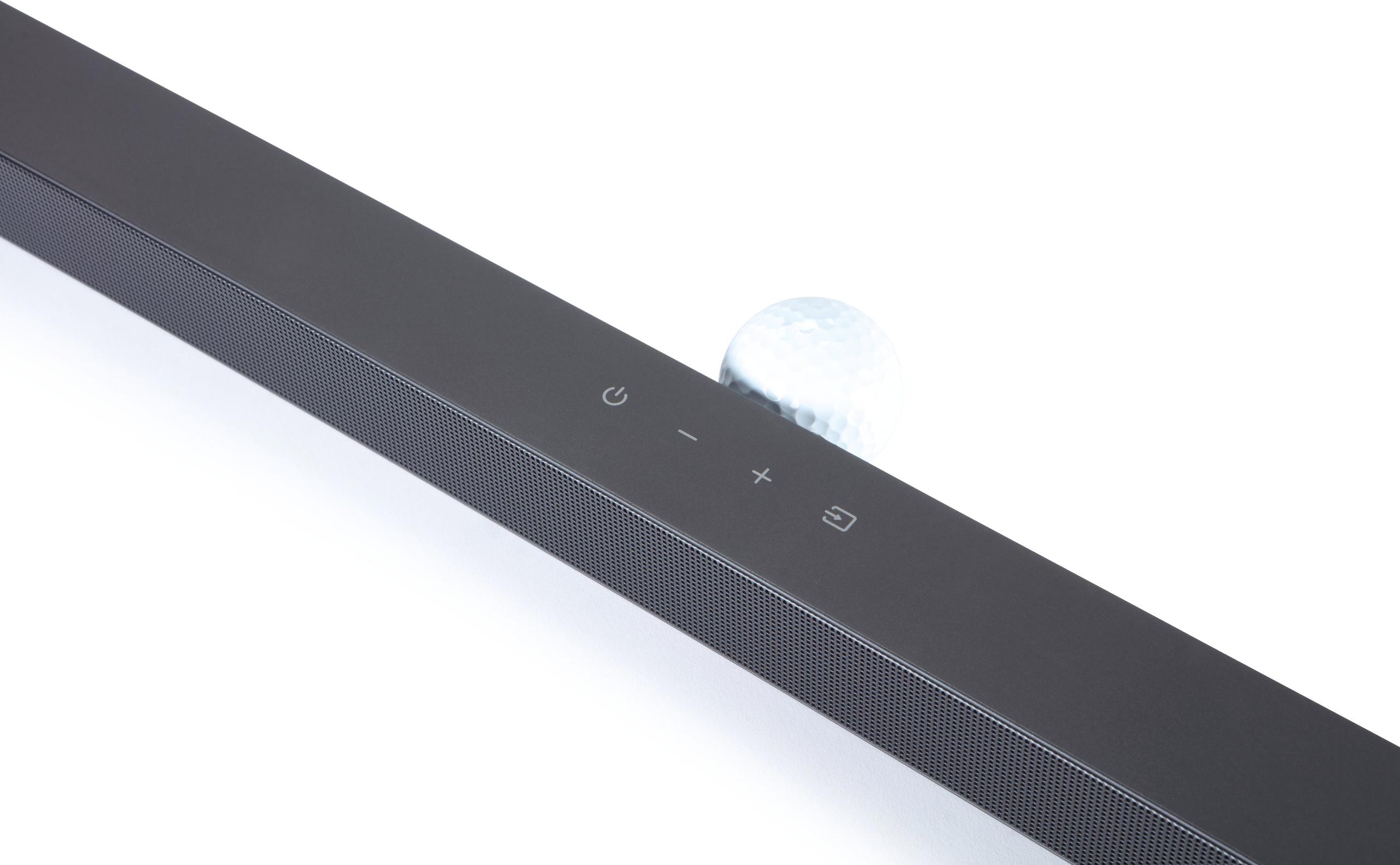
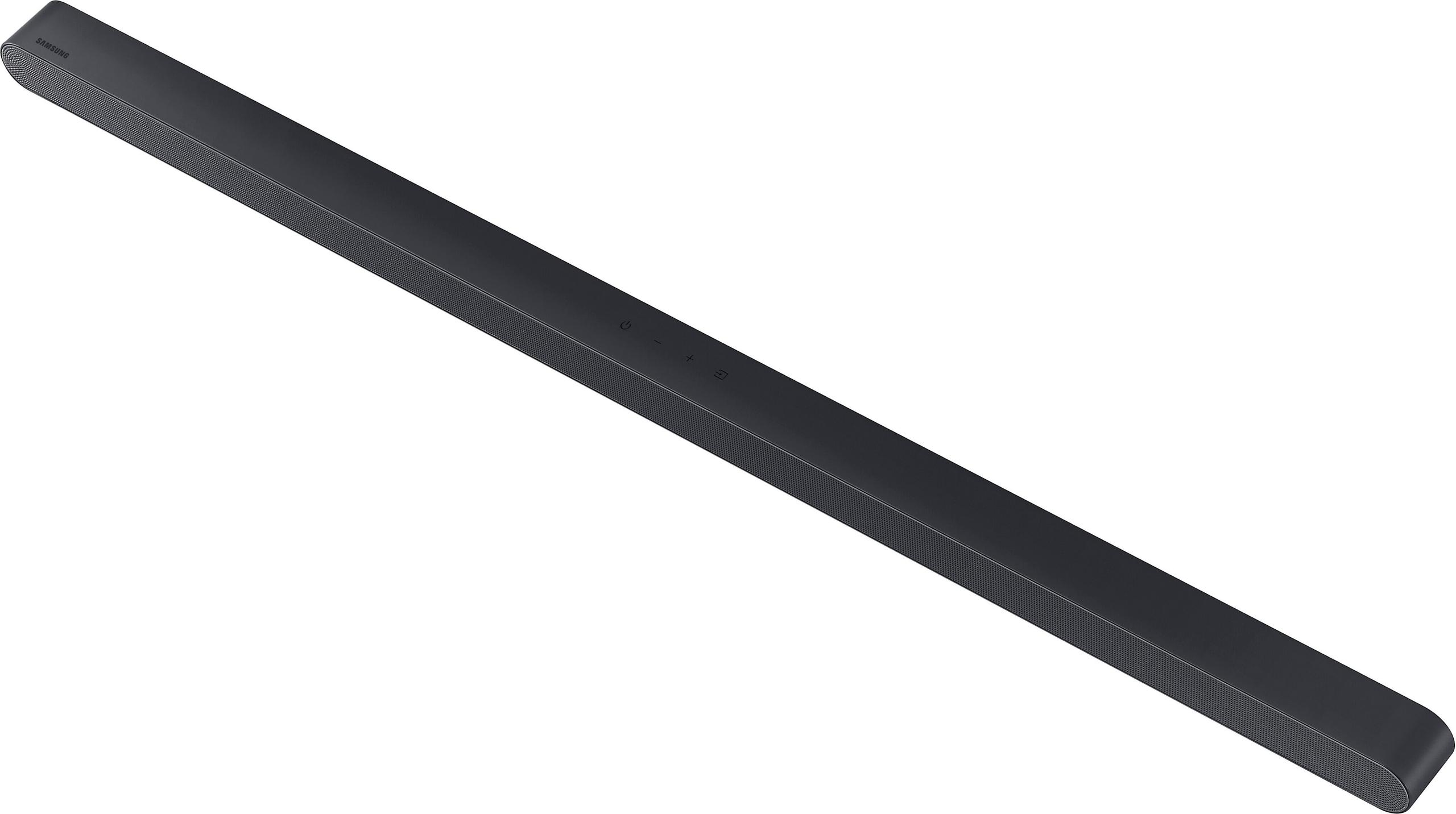
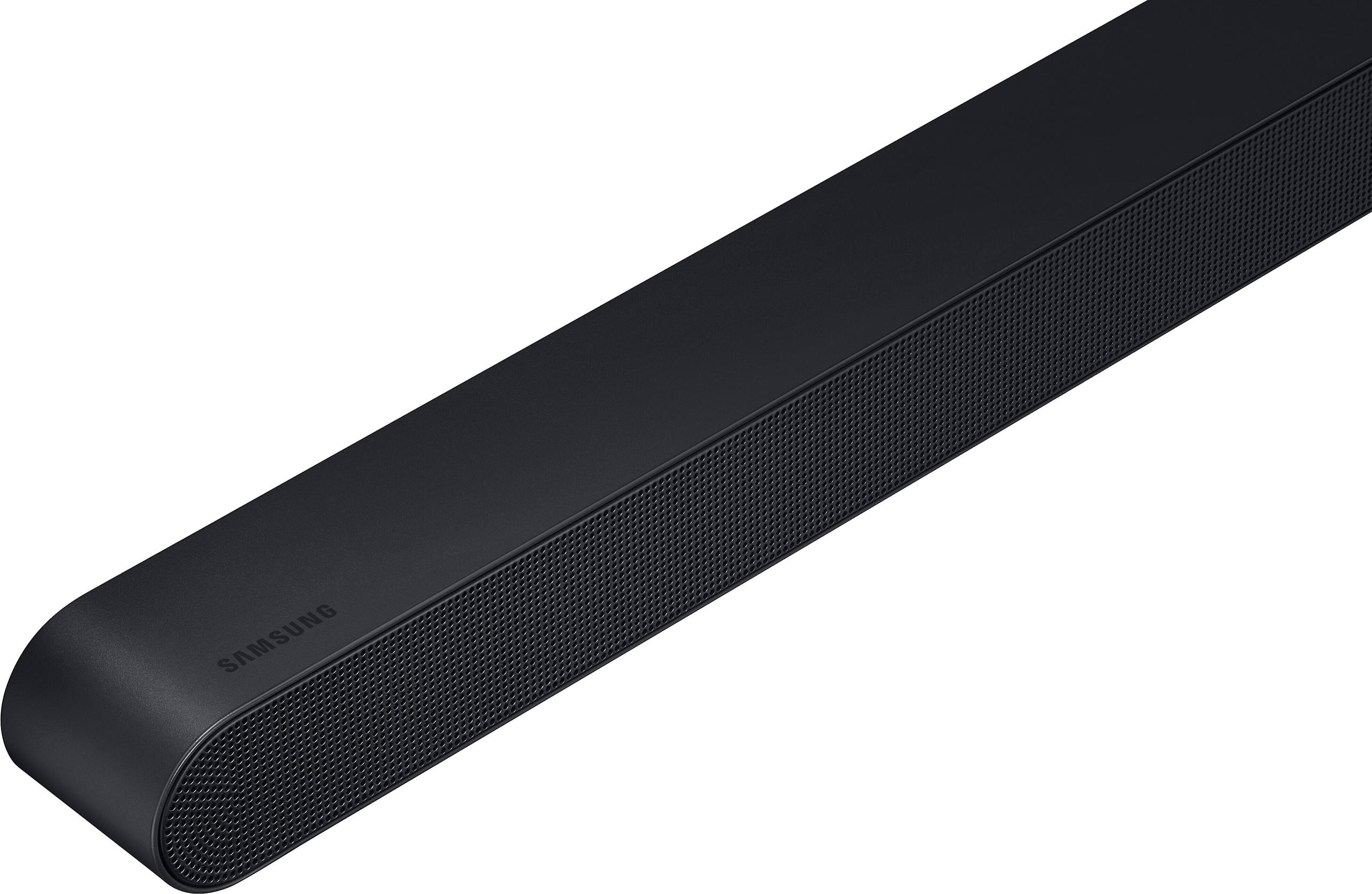
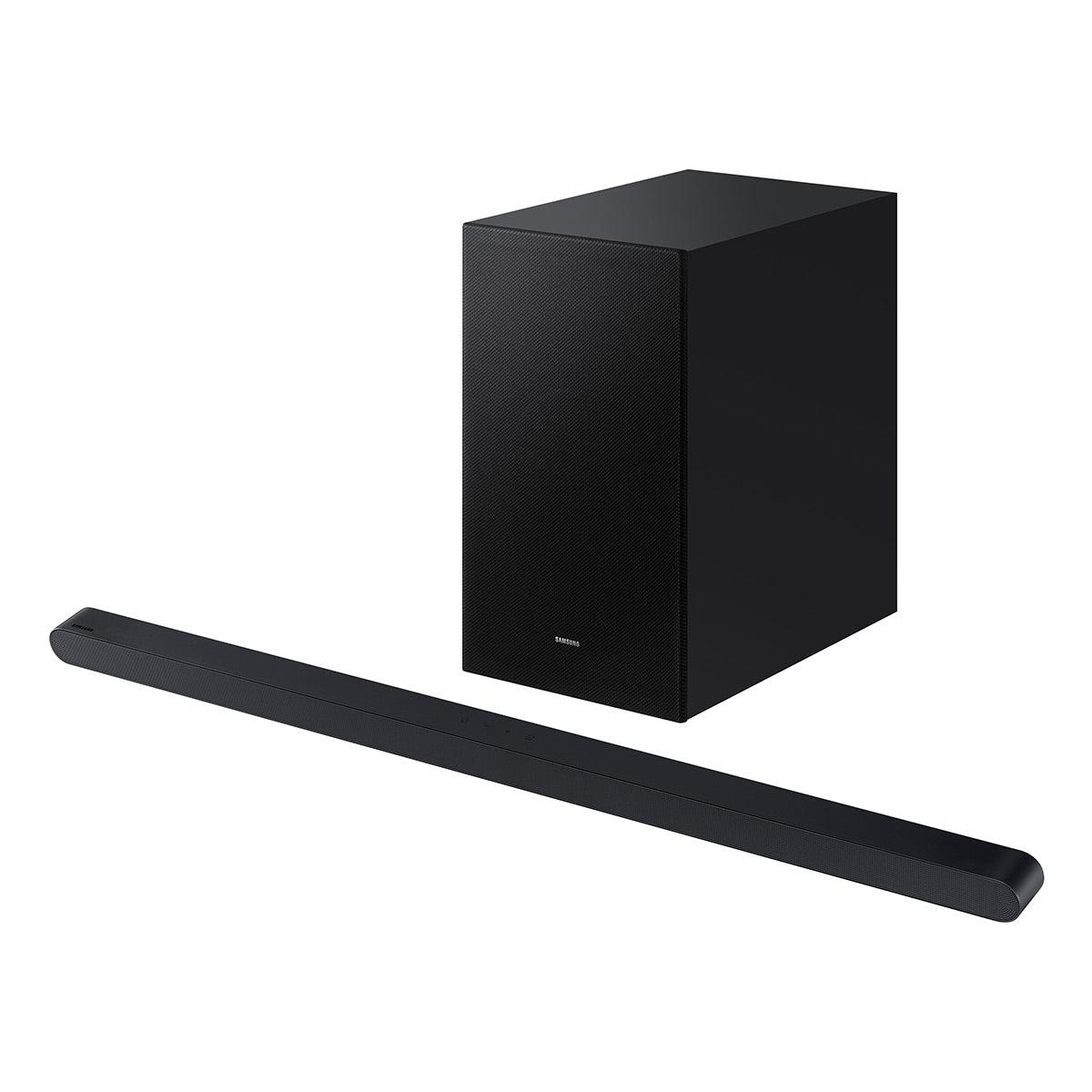
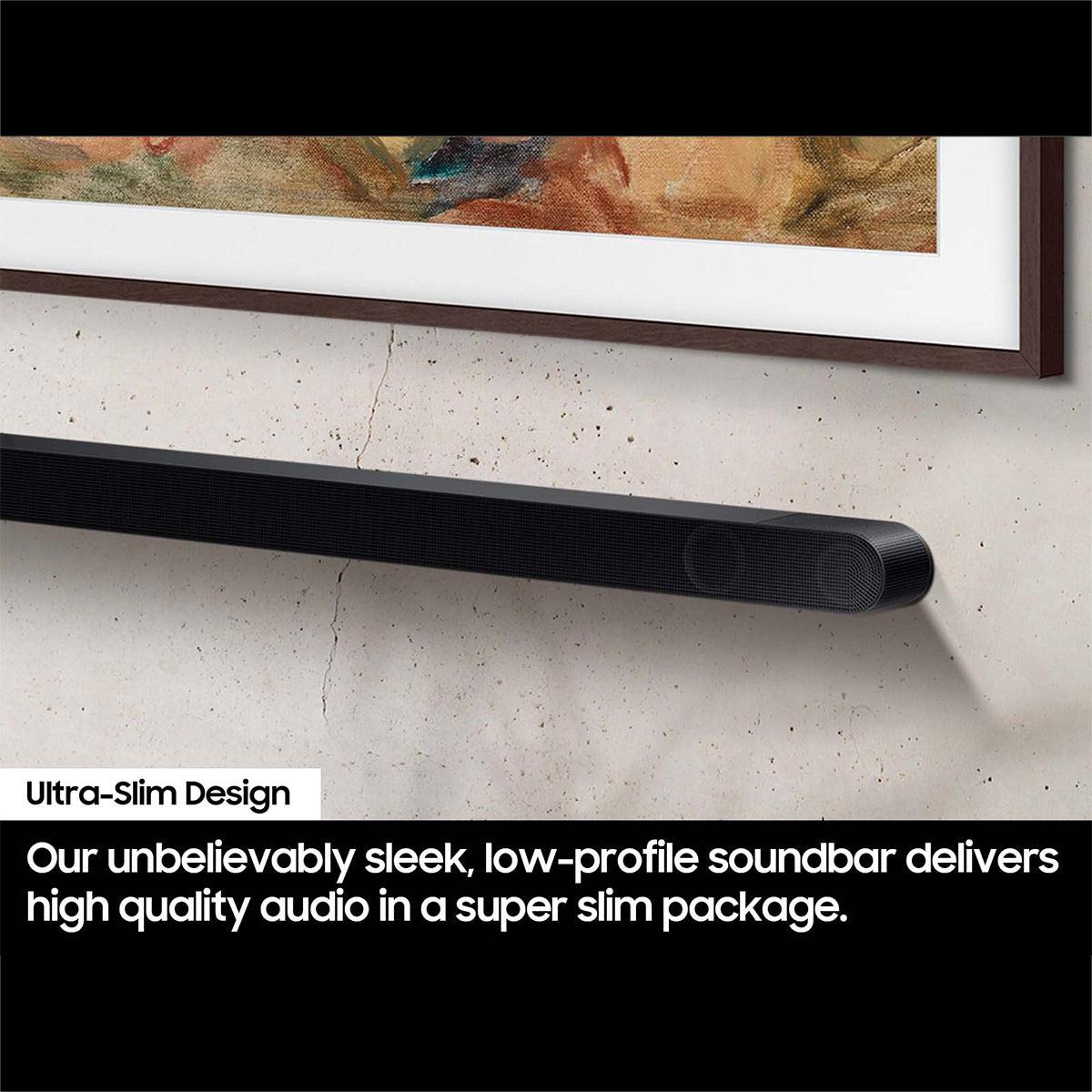
The Samsung HW-S700D, released in 2024, represents the opposite approach: maximum performance from minimal hardware. At just 1-7/16 inches tall, this ultra-slim soundbar practically disappears below wall-mounted TVs, yet it creates surprisingly convincing surround effects through advanced audio processing.
The heart of the Samsung system is Dolby Atmos processing. Unlike traditional surround sound that positions audio in a horizontal plane around you, Dolby Atmos adds height information, creating a three-dimensional audio bubble. The Samsung soundbar uses psychoacoustic processing – manipulating how sound waves interact with your ears and room surfaces – to create the illusion that audio is coming from above and around you.
What makes this particularly effective is the system's SpaceFit Sound Pro technology. Using built-in microphones, the Samsung HW-S700D actually listens to your room, measuring how sound reflects off walls, furniture, and surfaces. It then adjusts its audio output in real-time to optimize performance for your specific environment. This is far more sophisticated than the basic room correction found in most soundbars.
The Q-Symphony feature represents Samsung's ecosystem advantage. When connected to compatible Samsung TVs, the soundbar doesn't replace your TV's speakers – it works with them. The TV's built-in speakers handle certain frequencies and effects while the soundbar covers others, creating a larger effective soundstage. This coordination happens wirelessly and automatically, requiring no setup from you.
For dialogue clarity, Samsung employs Active Voice Amplifier (AVA) technology. This system continuously analyzes audio content and boosts speech frequencies when it detects background noise or music that might mask dialogue. Unlike simple "dialogue mode" buttons found on other soundbars, AVA adjusts dynamically throughout your content.
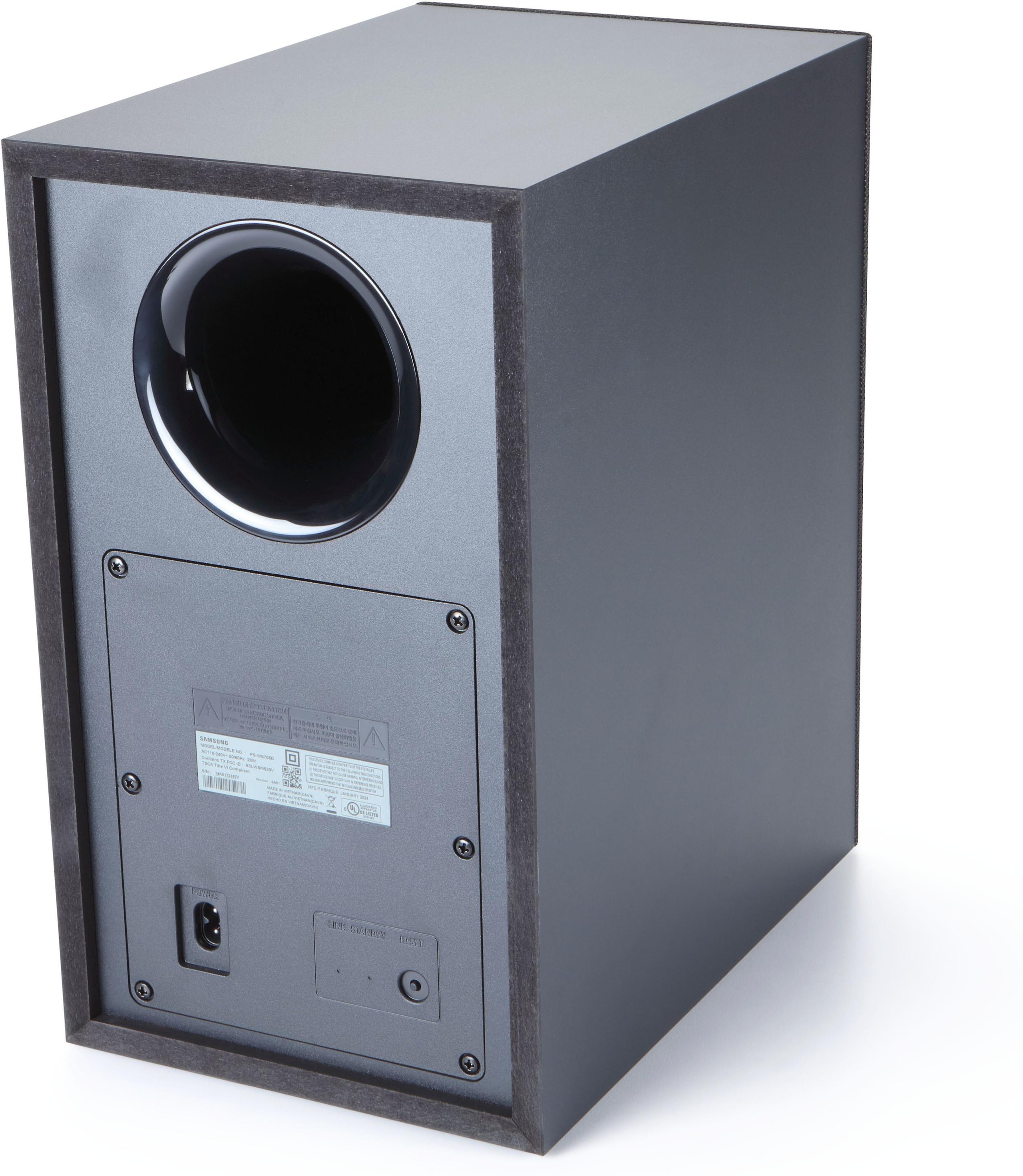
The Samsung's 6-inch subwoofer, while physically larger than the Ultimea's driver, focuses on integration rather than raw power. It's tuned to complement the main unit's output, creating a balanced response rather than overwhelming bass impact.
Surround Sound Realism
This is where the fundamental difference becomes apparent. The Ultimea Poseidon D50 creates genuine surround sound because it uses actual speakers positioned around your seating area. When a helicopter flies from left to right across the screen, you hear it move through physical space. The rear speakers handle ambient sounds like crowd noise in sports broadcasts or environmental audio in nature documentaries.
The Samsung HW-S700D creates what many users describe as "impressive virtual surround" that works well for most content. The Dolby Atmos processing is particularly effective with height effects – rain sounds like it's falling from above, and overhead aircraft create convincing flyovers. However, side-to-side and rear positioning effects remain less precise than physical speaker placement.
Bass Response and Impact
Both systems approach bass differently. The Ultimea prioritizes impact and depth, with BassMX™ Technology designed to create the kind of room-shaking effects that make action scenes visceral. Users report that explosions feel substantial, and music with deep electronic bass remains clear even at high volumes.
The Samsung focuses on bass integration and control. Its larger 6-inch driver produces solid low-frequency response, but it's tuned to avoid overwhelming the main soundbar's output. This creates a more balanced overall sound signature that works well for varied content types but may disappoint those seeking maximum bass impact.
Dialogue Clarity
Both systems excel here, but through different methods. The Ultimea's dedicated center channel speaker handles dialogue exclusively, and the extensive EQ options allow fine-tuning for different voices and accents. The independent volume control for the center channel is particularly valuable – you can boost dialogue without affecting other audio elements.
The Samsung's AVA technology provides dynamic dialogue enhancement that adapts to content in real-time. This is more convenient than manual adjustment, and users report excellent speech clarity even during complex action sequences.
Room Filling Capability
The Ultimea system is specifically designed for medium to large rooms (250-380 square feet) and uses its distributed speakers to fill space evenly. The 320W peak power output ensures adequate volume for larger areas.
The Samsung HW-S700D relies on advanced processing and room analysis to optimize performance for various spaces. SpaceFit Sound Pro can adapt to smaller bedrooms or larger living rooms, but the single-bar design inherently limits how effectively it can fill very large spaces.
These systems reflect completely different approaches to home aesthetics. The Samsung HW-S700D embodies the minimalist philosophy – nearly invisible below your TV, with only a wireless subwoofer requiring floor space. This design appeals to users who want enhanced audio without visual clutter or complex installation.
The Ultimea Poseidon D50 requires commitment to the home theater experience. You need to position and wire rear speakers, which means planning cable routes and accepting that speakers will be visible in your room. However, this setup creates a dedicated entertainment space that signals serious attention to audio quality.
Installation complexity differs significantly. The Samsung system offers true plug-and-play setup – connect the HDMI cable, and the system automatically calibrates itself. The Ultimea requires speaker placement decisions, cable management, and manual audio adjustment to optimize performance.
The connectivity story reveals another philosophical divide. The Ultimea Poseidon D50 provides comprehensive input options: HDMI eARC, optical, auxiliary, and USB connections. This ensures compatibility with older devices and provides flexibility for various source components. Bluetooth 5.3 offers the latest wireless standard for stable music streaming.
The Samsung HW-S700D takes a minimalist approach with HDMI eARC as the primary connection method. While this limits physical connectivity, it compensates with extensive wireless streaming support: Apple AirPlay 2, Chromecast built-in, and Spotify Connect. Built-in voice assistant compatibility (Alexa and Google Assistant) adds smart home integration that the Ultimea lacks.
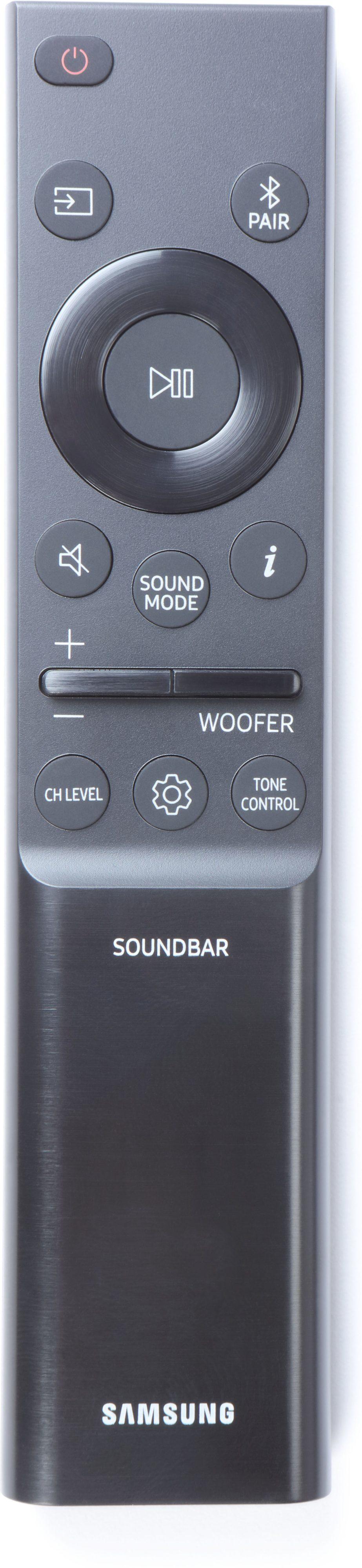
The smart features difference extends to control methods. The Ultimea uses a dedicated smartphone app for detailed audio customization – perfect for users who enjoy fine-tuning their audio experience. The Samsung integrates with SmartThings and can be controlled by Samsung TV remotes, prioritizing convenience over customization depth.
At the time of writing, these systems occupy different value territories that reflect their design philosophies. True 5.1 systems with physical rear speakers typically command premium pricing due to the additional hardware components and manufacturing complexity. The Ultimea Poseidon D50 offers this authentic surround experience at a competitive price point that would traditionally require significantly higher investment.
The Samsung HW-S700D represents premium virtual surround technology at a mid-range price. The advanced processing, automatic room calibration, and smart features provide value beyond basic audio improvement – you're investing in convenience and future-proof connectivity.
Consider the total cost of ownership: the Ultimea system may require additional cable management solutions or speaker stands, while the Samsung needs minimal additional accessories.
Choose the Ultimea Poseidon D50 if:
You prioritize authentic surround sound above convenience. This system rewards users who want to hear exactly what movie directors intended, with discrete audio channels creating genuine spatial awareness. It's ideal for dedicated home theater setups where audio quality justifies the additional complexity.
The extensive connectivity makes sense if you have multiple source devices – gaming consoles, Blu-ray players, streaming devices – that benefit from direct connections. The deep customization options appeal to users who enjoy optimizing their audio experience for different content types.
Your room layout can accommodate rear speakers without major furniture rearrangement or unsightly cable runs. The system works best in dedicated entertainment spaces rather than multi-purpose living rooms.
Choose the Samsung HW-S700D if:
Your priority is enhanced TV audio without system complexity or visual impact. The ultra-slim design suits modern living spaces where the entertainment system should integrate seamlessly rather than dominate the room.
You own a Samsung TV and want to leverage Q-Symphony and other ecosystem benefits. The automatic room calibration and smart features provide excellent performance without requiring audio expertise or manual adjustment.
Space constraints prevent rear speaker placement, but you still want convincing surround effects. The virtual processing creates impressive spatial audio for most content types without requiring dedicated room layout.
Both systems succeed in their intended roles, making the choice dependent on your priorities and constraints rather than objective superiority.
The Ultimea Poseidon D50 delivers authentic home theater experience that rivals much more expensive systems. If you have the space, patience for setup, and appreciation for genuine surround sound, it provides exceptional value and performance that will satisfy serious movie and gaming enthusiasts.
The Samsung HW-S700D represents the modern approach to home audio: sophisticated technology packaged for contemporary lifestyles. Its virtual surround processing is genuinely impressive, and the smart features ensure it remains relevant as streaming and control methods evolve.
For most users choosing between these approaches, consider your viewing habits and room constraints first. Action movie fans and gamers benefit most from the Ultimea's physical surround positioning. Casual viewers who want better dialogue clarity and overall audio improvement without installation complexity will prefer the Samsung's refined simplicity.
Either choice represents a substantial upgrade from TV speakers, but they deliver that improvement through fundamentally different philosophies that cater to distinct user priorities and living situations.
| Ultimea Poseidon D50 5.1 Soundbar | Samsung HW-S700D 3.1 Channel Slim Soundbar |
|---|---|
| Channel Configuration - Determines authentic vs virtual surround experience | |
| True 5.1 with physical rear speakers | 3.1 with virtual surround processing |
| Subwoofer Design - Affects bass depth and room impact | |
| 5.25" wireless with BassMX™ technology | 6" wireless with balanced tuning |
| Physical Design - Critical for room integration and setup | |
| Multi-component system requiring rear speaker placement | Ultra-slim single bar (1-7/16" height) + subwoofer |
| Connectivity Options - Important for device compatibility | |
| HDMI eARC, Optical, AUX, USB, Bluetooth 5.3 | HDMI eARC only, extensive wireless streaming |
| Audio Processing - Determines sound customization depth | |
| SurroundX™ with 10-band EQ and 121 preset matrices | Dolby Atmos with SpaceFit Sound Pro auto-calibration |
| Smart Features - Affects daily use convenience | |
| Smartphone app control with manual adjustments | Built-in voice assistants, SmartThings integration |
| Room Size Optimization - Determines ideal space requirements | |
| 250-380 sq ft with distributed speaker placement | Variable with automatic room analysis |
| Setup Complexity - Impacts installation time and effort | |
| Moderate (rear speaker positioning and cable management) | Simple plug-and-play with auto-calibration |
| Ecosystem Integration - Benefits specific TV brand owners | |
| Universal compatibility with all TV brands | Optimized for Samsung TVs with Q-Symphony |
| Peak Power Output - Affects maximum volume and dynamics | |
| 320W across all channels | Not specified (focused on processing efficiency) |
The Ultimea Poseidon D50 5.1 Soundbar is superior for dedicated home theater use because it provides true 5.1 surround sound with physical rear speakers. This creates authentic directional audio where explosions, dialogue, and ambient sounds come from their correct positions around your seating area. The Samsung HW-S700D offers impressive virtual surround through Dolby Atmos processing, but it cannot match the spatial accuracy of actual rear speakers for cinematic experiences.
The Ultimea Poseidon D50 features true 5.1 channels with five separate speakers (left, center, right, and two rear speakers) plus a subwoofer. This configuration provides genuine surround sound with discrete audio channels. The Samsung HW-S700D 3.1 system has three main channels (left, center, right) plus a subwoofer, relying on virtual processing to simulate surround effects without physical rear speakers.
The Samsung HW-S700D is significantly easier to install with simple plug-and-play setup and automatic room calibration through SpaceFit Sound Pro technology. The Ultimea Poseidon D50 requires more effort due to positioning rear speakers, running cables (19.6 feet included), and manual audio adjustments, though the improved surround experience may justify the additional setup time.
Physical rear speakers like those in the Ultimea Poseidon D50 provide the most authentic surround experience, especially for action movies and gaming where directional audio cues matter. However, the Samsung HW-S700D creates convincing virtual surround effects through advanced processing that satisfies most users without requiring rear speaker placement or cable management.
The Samsung HW-S700D adapts better to various room sizes through automatic SpaceFit Sound calibration and its ultra-slim design. The Ultimea Poseidon D50 is optimized for medium to large rooms (250-380 square feet) and may overwhelm smaller spaces, though its adjustable rear speaker volume helps with room tuning.
The Ultimea Poseidon D50 offers universal compatibility with comprehensive connectivity including HDMI eARC, optical, AUX, and USB inputs, working with any TV brand. The Samsung HW-S700D connects to any TV via HDMI eARC but provides additional features like Q-Symphony when paired with Samsung TVs for enhanced performance.
The Ultimea Poseidon D50 delivers more impactful bass through BassMX™ technology with a 5.25-inch subwoofer designed for deep, room-shaking low frequencies. The Samsung HW-S700D features a larger 6-inch subwoofer but focuses on balanced bass integration rather than maximum impact, providing solid but more controlled low-frequency response.
The Samsung HW-S700D includes built-in compatibility with Amazon Alexa and Google Assistant for hands-free control and smart home integration. The Ultimea Poseidon D50 uses smartphone app control for detailed audio customization but lacks built-in voice assistant features.
Both soundbars handle music well but with different strengths. The Ultimea Poseidon D50 offers extensive customization with a 10-band equalizer and 121 preset EQ matrices for fine-tuning musical genres. The Samsung HW-S700D provides automatic optimization and supports high-quality wireless streaming through AirPlay 2, Spotify Connect, and Chromecast built-in.
The Samsung HW-S700D requires minimal space with its ultra-slim 1-7/16 inch profile that fits under wall-mounted TVs plus floor space for the wireless subwoofer. The Ultimea Poseidon D50 needs additional room for rear speaker placement and cable routing, making it better suited for dedicated entertainment areas rather than multi-purpose rooms.
Value depends on your priorities: the Ultimea Poseidon D50 provides authentic 5.1 surround sound typically found in much more expensive systems, making it excellent value for serious home theater enthusiasts. The Samsung HW-S700D offers premium virtual processing, smart features, and automatic optimization at a competitive price for users prioritizing convenience and modern connectivity.
The Samsung HW-S700D supports optional wireless rear speakers (sold separately) to create a full surround system while maintaining its clean aesthetic. The Ultimea Poseidon D50 comes complete as a 5.1 system and doesn't require expansion, though its comprehensive connectivity allows adding external sources easily.
We've done our best to create useful and informative comparisons to help you decide what product to buy. Our research uses advanced automated methods to create this comparison and perfection is not possible - please contact us for corrections or questions. These are the sites we've researched in the creation of this article: youtube.com - eu.ultimea.com - newegg.com - tvsbook.com - youtube.com - provantage.com - ultimea.com - techradar.com - community.ultimea.com - homedepot.com - community.ultimea.com - ultimea.com - ultimea.de - youtube.com - medisamhealthcenter.com - ultimea.com - youtube.com - walmart.com - crutchfield.com - samsung.com - bestbuy.com - avsforum.com - walts.com - samsung.com - samsung.com - videoandaudiocenter.com - samsung.com - samsung.com - samsung.com - pcrichard.com

Privacy Policy
Terms and Conditions - Affiliate Policy
Home Security
© Copyright 2008-2026.
11816 Inwood Rd #1211, Dallas, TX 75244