

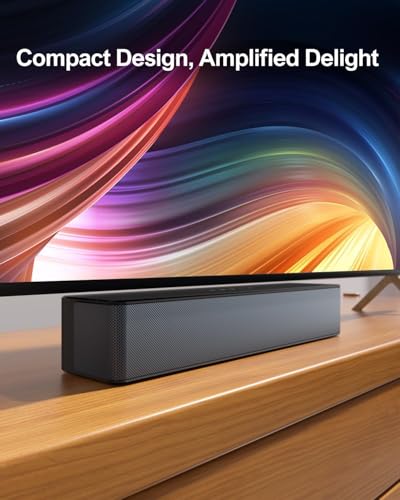
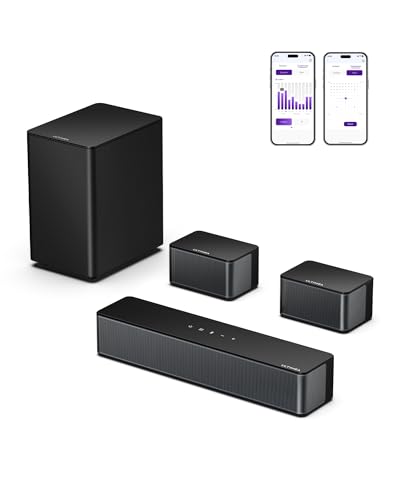



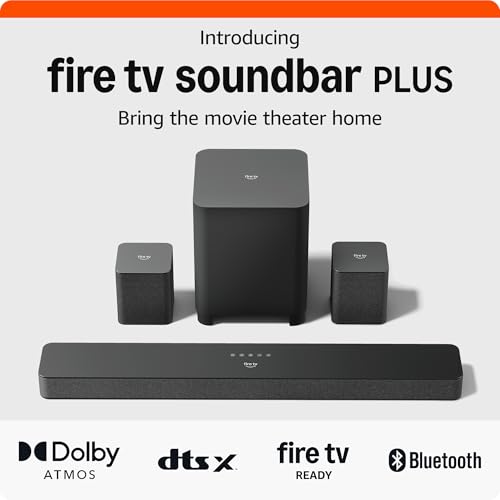
Finding a soundbar that delivers genuine surround sound without breaking the bank has become increasingly challenging. Most budget soundbars promise "virtual surround" but rely on audio processing tricks rather than actual rear speakers. That's what makes true 5.1-channel systems so appealing—they include dedicated rear speakers and a subwoofer to create authentic surround sound that wraps around your listening space.
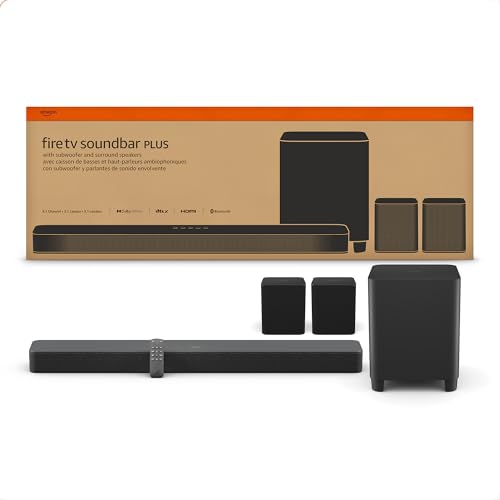
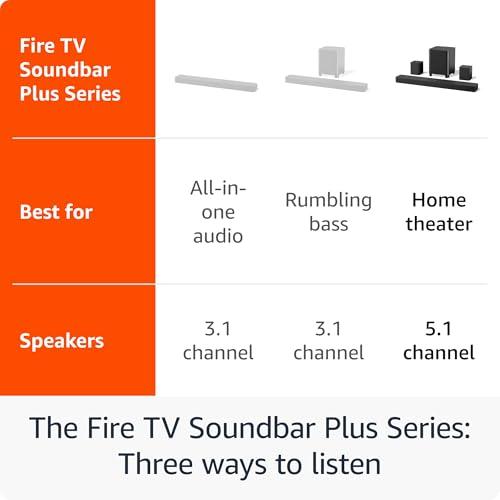
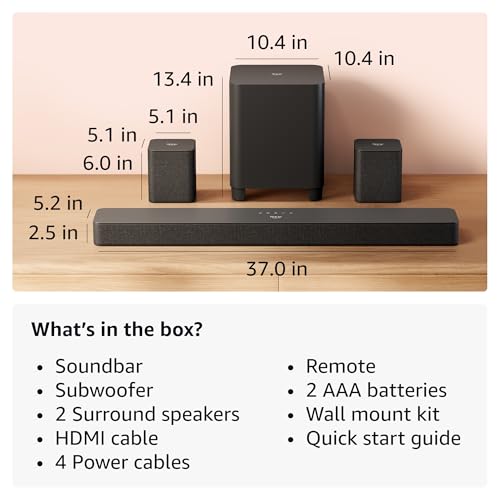
The Ultimea Poseidon D50 5.1 Soundbar (2025 version) and Amazon Fire TV Soundbar Plus 5.1 Channel System represent two compelling approaches to affordable surround sound. Both systems include a main soundbar, wireless subwoofer, and two rear satellite speakers, but they take markedly different paths to achieve immersive audio. Understanding these differences will help you choose the system that best matches your priorities and listening habits.
Before diving into comparisons, it's worth understanding what "5.1" actually means. The "5" refers to five discrete audio channels: left front, center, right front, left surround, and right surround. The ".1" represents the Low Frequency Effects (LFE) channel, which handles bass frequencies below 120Hz through a dedicated subwoofer. This configuration allows movie soundtracks to place specific sounds in precise locations around your listening area—dialogue stays anchored to the center channel while sound effects pan between speakers to match on-screen action.
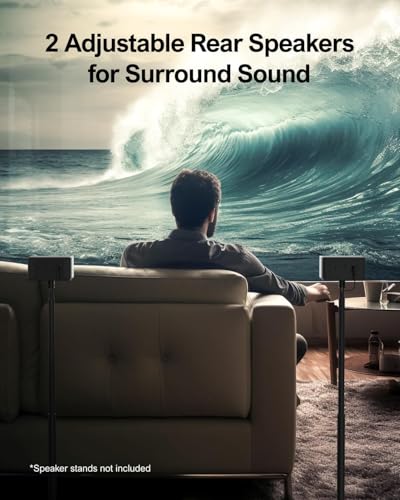
True 5.1 systems like both products we're examining use physical speakers positioned around your room. This differs dramatically from soundbars that simulate surround through psychoacoustic processing, which can create the illusion of surround sound but lacks the precise positioning and immersion of dedicated rear speakers.
The Ultimea Poseidon D50 received a significant update in 2025, building on the company's focus on bringing premium audio technologies to accessible price points. The 2025 version introduces enhanced BassMX™ technology and an improved SurroundX™ algorithm—proprietary technologies that weren't available in earlier versions. These improvements reflect the broader trend toward incorporating sophisticated digital signal processing (DSP) in budget audio equipment.
Amazon's entry into the soundbar market came later, with the Fire TV Soundbar Plus launching as part of their expanding home entertainment ecosystem. The company leveraged their experience with Fire TV devices to create tight integration between their streaming platform and audio hardware. This system represents Amazon's attempt to offer premium audio format support typically found in much more expensive soundbars.
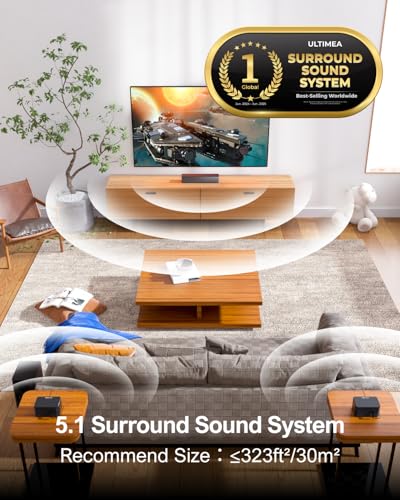
The Ultimea Poseidon D50 delivers 320 watts of peak power, which translates to genuinely room-filling sound in spaces up to 380 square feet. This power advantage becomes most apparent during demanding movie scenes with overlapping dialogue, sound effects, and music. The system maintains its composure during complex passages without the compression that plagues many budget soundbars when pushed hard.
The Amazon Fire TV Soundbar Plus doesn't publish specific wattage figures, but our research into user experiences suggests it produces adequate volume for most listening situations. However, at maximum levels, some users report bass compression during particularly demanding content. This difference in dynamic range—the gap between the quietest and loudest sounds—becomes crucial if you enjoy action movies or frequently entertain guests.
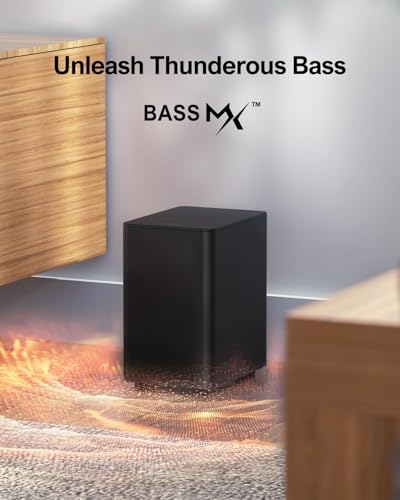
Bass performance separates mediocre soundbars from truly engaging ones. The Ultimea Poseidon D50's BassMX™ technology deserves detailed explanation because it represents a genuine engineering advantage. The system uses a 5.25-inch subwoofer with 15mm diaphragm excursion—this means the speaker cone can move 15 millimeters in each direction, creating substantial air movement for deep bass. The optimized magnetic circuit uses aerospace-grade neodymium magnets, which provide stronger magnetic fields in smaller packages compared to traditional ferrite magnets.
This technical sophistication pays dividends in real-world listening. Movie explosions have genuine weight and impact, while music benefits from extended low-frequency response that reveals bass lines often lost with lesser systems. The subwoofer integrates seamlessly with the satellite speakers, creating a cohesive soundscape rather than the disconnected "boom" that characterizes poorly tuned systems.
The Amazon Fire TV Soundbar Plus delivers punchy, impactful bass that satisfies most users, particularly for TV shows and movies. However, our analysis of user feedback suggests it lacks the extended low-frequency response of the Ultimea system. At high volumes, the Amazon subwoofer can become somewhat one-note, prioritizing impact over nuance. This difference becomes most apparent with music listening, where subtle bass textures get oversimplified.
Clear dialogue reproduction often determines whether a soundbar succeeds or fails in daily use. The Amazon Fire TV Soundbar Plus excels in this area, featuring a dedicated center channel with specific tuning for speech frequencies. The system includes a dialogue enhancement feature that boosts mid-range frequencies where most human speech occurs, making it easier to understand conversations without increasing overall volume.
The Ultimea Poseidon D50 also handles dialogue well, though it takes a different approach. Rather than aggressive dialogue enhancement, the system relies on its comprehensive EQ system to let users fine-tune speech clarity according to their preferences and room acoustics. This flexibility proves valuable for users with hearing difficulties or challenging room layouts where dialogue often gets muddied.
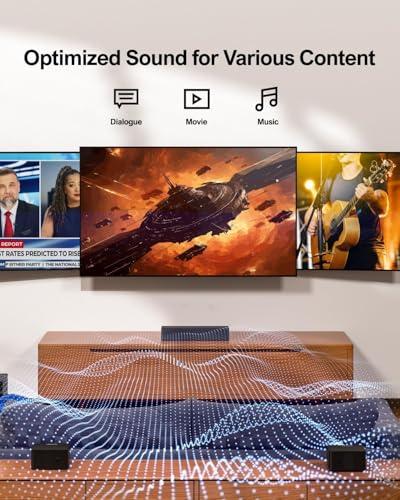
The Ultimea Poseidon D50's SurroundX™ technology represents sophisticated audio processing that converts standard stereo content into convincing 5.1 surround. This DSP chip analyzes incoming audio signals and uses psychoacoustic principles to extract spatial cues, then redistributes them across all five speakers. The result transforms flat-sounding TV shows and stereo music into more immersive experiences.
What sets this system apart is the independent volume control for rear speakers. If you find surround effects too subtle or overwhelming, you can adjust the rear speaker levels without affecting the front soundstage. This flexibility addresses one of the most common complaints about surround sound systems—the inability to fine-tune the surround effect for different content types and room configurations.
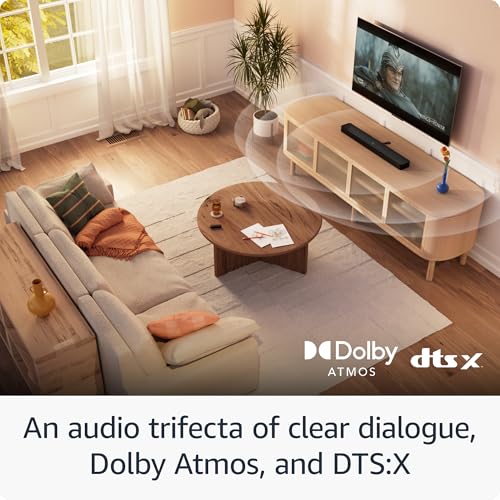
The Amazon Fire TV Soundbar Plus supports premium audio formats including Dolby Atmos and DTS:X, though it virtualizes height effects rather than using dedicated upward-firing speakers. While this approach has limitations—you won't get the overhead sound placement that true Atmos systems provide—it does process object-based surround information more accurately than basic surround sound formats.
Based on our analysis of user experiences, the Ultimea system creates a more consistent and adjustable surround experience. Users frequently praise the system's ability to place sound effects convincingly around the listening area, with smooth panning between front and rear speakers. The adjustable surround levels prove particularly valuable for users who find traditional surround sound distracting during dialogue-heavy content but want full immersion during action sequences.
The Amazon system provides decent surround effects, though some users report that the rear speakers can seem disconnected from the main soundbar, particularly when isolated from the subwoofer. The system works best in larger rooms where the physical separation between components creates a more natural surround field.
The Ultimea Poseidon D50 offers unprecedented customization for its price range. The companion app provides access to 121 preset EQ matrices—essentially 121 different sound signatures optimized for various content types and room configurations. The 10-band manual equalizer allows precise frequency adjustments, while six distinct EQ modes provide quick presets for movies, music, sports, and other content types.
This level of control addresses a fundamental problem with most soundbars: they're tuned for average rooms and average preferences. Room acoustics vary dramatically—hardwood floors and large windows create different challenges than carpeted rooms with heavy curtains. The Ultimea system's extensive EQ options let you compensate for your specific acoustic environment.
The Amazon Fire TV Soundbar Plus takes a minimalist approach with four basic preset modes and simple bass/treble controls via the remote. While this simplicity appeals to users who want plug-and-play operation, it limits your ability to optimize performance for your specific room and content preferences.
The Ultimea system's smartphone app control represents a significant convenience advantage. You can adjust all settings, switch EQ modes, and control volume levels without hunting for the remote. This proves particularly valuable when fine-tuning surround levels or experimenting with different EQ settings—tasks that become tedious with traditional remote controls.
The Amazon system integrates seamlessly with Fire TV devices when connected via HDMI, allowing control through your Fire TV remote. This integration streamlines daily operation for Amazon ecosystem users but offers limited benefits for those using other streaming devices or cable boxes.
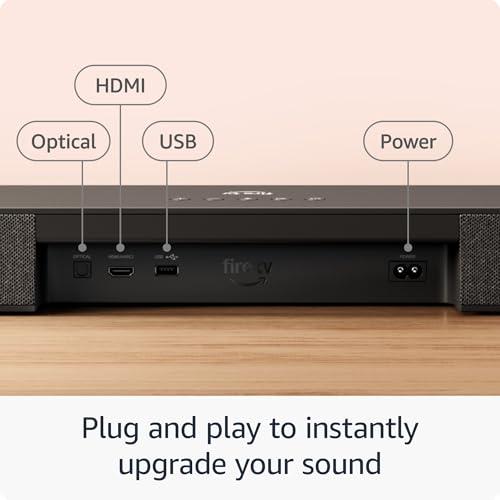
Both systems offer comprehensive connectivity, but with different emphases. The Ultimea Poseidon D50 includes Bluetooth 5.3, which provides more stable wireless connections and better range compared to older Bluetooth versions. The system supports HDMI eARC (enhanced Audio Return Channel), optical digital input, analog AUX input, and USB connections, covering virtually any source device.
The Amazon Fire TV Soundbar Plus supports similar connections but focuses heavily on HDMI eARC and integration with Fire TV devices. The system supports premium audio formats like Dolby TrueHD and DTS-HD Master Audio through HDMI connections, though some users report occasional handshaking issues when switching between different audio formats.
Format support becomes crucial if you watch Blu-ray movies or stream high-quality content. The Amazon system supports lossless audio formats and object-based surround formats like Dolby Atmos and DTS:X. However, without dedicated height speakers, these formats get downmixed to the available 5.1 configuration.
The Ultimea system focuses on making the most of standard audio formats through its sophisticated processing rather than supporting every premium format. For most users watching streaming content or cable TV, this approach proves more practical than theoretical support for formats they'll rarely encounter.
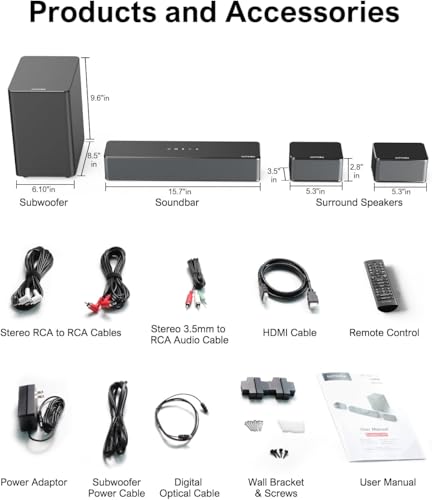
Both systems prioritize easy setup, though they achieve it differently. The Ultimea Poseidon D50 ships with all components pre-paired and includes comprehensive cable kits for various connection scenarios. The system supports wall mounting with included hardware and offers speaker stand compatibility for optimal rear speaker placement.
The Amazon Fire TV Soundbar Plus emphasizes plug-and-play simplicity, particularly for Fire TV users. However, the large soundbar may challenge placement under some TVs, and the lack of comprehensive mounting options limits flexibility compared to the Ultimea system.
The Ultimea system's app-based interface provides intuitive access to all features, though the learning curve increases with the number of available options. Users who enjoy tweaking settings will appreciate the comprehensive controls, while those preferring simple operation might feel overwhelmed initially.
The Amazon system uses LED indicators and voice prompts for feedback, avoiding the complexity of on-screen displays or apps. This approach works well for basic operation but becomes limiting when you need to access specific settings or troubleshoot connectivity issues.
For dedicated home theater setups, the Ultimea Poseidon D50 offers superior flexibility. The independent rear speaker controls and extensive EQ options let you optimize performance for your specific room dimensions and acoustic treatments. The system works particularly well in rooms between 250-380 square feet, though the adjustable surround levels help adapt to larger or smaller spaces.
The Amazon Fire TV Soundbar Plus suits larger rooms well and provides good performance for casual movie watching. However, its limited customization options make it less ideal for users who want to optimize their home theater experience.
Consider your primary content sources when choosing between these systems. The Ultimea system excels at enhancing standard TV content and streaming services through its sophisticated processing. If you primarily watch Netflix, cable TV, or streaming services, its ability to create engaging surround sound from stereo sources proves more valuable than premium format support.
The Amazon system shines with high-quality sources and Fire TV content, particularly if you frequently watch movies with Dolby Atmos soundtracks. However, remember that without height speakers, you're still getting a 5.1 presentation of Atmos content rather than the full three-dimensional experience.
At the time of writing, both systems compete in similar price ranges, though specific pricing varies with sales and availability. The value proposition depends heavily on your priorities and usage patterns.
The Ultimea Poseidon D50 delivers exceptional value for users who want maximum control over their audio experience. The combination of powerful bass, extensive customization options, and sophisticated processing typically costs significantly more in traditional home audio systems. If you enjoy optimizing your setup or have challenging room acoustics, the Ultimea system's flexibility justifies any price premium.
The Amazon Fire TV Soundbar Plus offers better value for users prioritizing simplicity and Fire TV integration. The premium format support and reliable operation make it a solid choice for users who want good surround sound without complexity.
Choose the Ultimea Poseidon D50 if you want maximum performance and customization. Its superior bass response, extensive EQ options, and flexible controls make it ideal for dedicated listening rooms, users with hearing challenges, or anyone who enjoys optimizing their audio setup. The system particularly excels if you listen to diverse content types requiring different audio signatures.
Choose the Amazon Fire TV Soundbar Plus if you prioritize simplicity and own Fire TV devices. The excellent dialogue clarity, premium format support, and seamless ecosystem integration make it perfect for users who want reliable surround sound without tweaking settings. It's particularly suitable for larger rooms and users who primarily watch TV shows and movies rather than listening to music.
Both systems represent significant upgrades over built-in TV speakers and basic soundbars. Your choice ultimately depends on whether you value customization and maximum performance (Ultimea) or simplicity and ecosystem integration (Amazon). Either system will transform your home entertainment experience, delivering the immersive surround sound that makes movies, TV shows, and games significantly more engaging.
| Ultimea Poseidon D50 5.1 Soundbar (2025) | Amazon Fire TV Soundbar Plus 5.1 |
|---|---|
| Total System Power - Determines maximum volume and dynamic range | |
| 320W peak power (fills rooms up to 380 sq ft with authority) | Undisclosed wattage (adequate volume but some compression at max levels) |
| Bass Technology - Critical for movie immersion and music enjoyment | |
| BassMX™ with 5.25" subwoofer, 15mm excursion, aerospace-grade magnets | Standard wireless subwoofer with punchy but less refined bass response |
| Audio Customization - Essential for optimizing sound to your room and preferences | |
| 121 EQ presets, 10-band equalizer, 6 modes, smartphone app control | 4 basic presets, simple bass/treble controls, no app support |
| Surround Sound Processing - How well it creates immersive audio from different sources | |
| SurroundX™ DSP converts 2.0 to 5.1, independent rear speaker volume control | Dolby Atmos/DTS:X support (virtualized), limited surround customization |
| Premium Audio Format Support - Important for Blu-ray and high-quality streaming | |
| Standard formats with advanced processing enhancement | Dolby Atmos, DTS:X, Dolby TrueHD, DTS-HD Master Audio |
| Connectivity Options - Affects compatibility with your devices | |
| HDMI eARC, Optical, AUX, USB, Bluetooth 5.3 | HDMI eARC, Optical, USB-A, Bluetooth 5.0 (no HDMI In port) |
| Smart Features - Convenience and integration capabilities | |
| Comprehensive smartphone app, universal device compatibility | Fire TV integration via HDMI, auto-volume, dialogue enhancement |
| Setup Flexibility - How easily you can optimize placement in your room | |
| Wall mounting included, speaker stand compatible, extensive cable kit | Wall mounting for soundbar only, limited placement options for satellites |
| Dialogue Clarity - Critical for TV shows and movies | |
| Balanced approach with EQ customization for speech optimization | Dedicated dialogue enhancement feature, superior center channel tuning |
| Target User - Who gets the most value from each system | |
| Audio enthusiasts wanting maximum control and bass performance | Fire TV users prioritizing simplicity and dialogue clarity |
The Ultimea Poseidon D50 delivers superior bass with its BassMX™ technology featuring a 5.25-inch subwoofer with 15mm diaphragm excursion and aerospace-grade magnets. This creates deeper, more impactful bass compared to the Amazon Fire TV Soundbar Plus, which offers punchy bass but with less extension and some compression at high volumes.
Yes, both the Ultimea Poseidon D50 and Amazon Fire TV Soundbar Plus are true 5.1 systems that include dedicated rear satellite speakers along with a wireless subwoofer. This provides genuine surround sound rather than simulated effects from a single soundbar.
The Amazon Fire TV Soundbar Plus offers simpler plug-and-play setup, especially for Fire TV users who get automatic integration. The Ultimea Poseidon D50 requires slightly more setup time due to its extensive customization options, but includes comprehensive cables and mounting hardware for flexible placement.
Only the Ultimea Poseidon D50 offers comprehensive smartphone app control with access to 121 EQ presets, 10-band equalizer, and independent speaker controls. The Amazon Fire TV Soundbar Plus relies on remote control and Fire TV integration but lacks a dedicated app.
The Amazon Fire TV Soundbar Plus excels at dialogue with its dedicated center channel tuning and built-in dialogue enhancement feature. While the Ultimea Poseidon D50 also handles dialogue well, it requires manual EQ adjustments to optimize speech clarity.
The Amazon Fire TV Soundbar Plus supports Dolby Atmos and DTS:X but virtualizes height effects since it lacks upward-firing speakers. The Ultimea Poseidon D50 focuses on standard surround formats but uses SurroundX™ processing to enhance immersion from any source.
The Ultimea Poseidon D50 provides extensive customization with 121 preset EQ matrices, manual equalizer controls, adjustable surround levels, and independent rear speaker volume. The Amazon Fire TV Soundbar Plus offers only basic preset modes and simple bass/treble adjustments.
The Ultimea Poseidon D50 is designed for rooms up to 380 square feet with its 320W power output. The Amazon Fire TV Soundbar Plus can also handle medium to large rooms but may experience some compression at maximum volumes in very large spaces.
The Ultimea Poseidon D50 performs better for music with its superior bass extension, extensive EQ options, and balanced sound signature across different genres. The Amazon Fire TV Soundbar Plus is optimized more for TV and movie content than music playback.
No, the Amazon Fire TV Soundbar Plus works with any TV or device through HDMI, optical, or Bluetooth connections. However, Fire TV users get enhanced integration features like automatic setup and control through the Fire TV remote when connected via HDMI.
For dedicated home theater setups, the Ultimea Poseidon D50 offers better value with its powerful bass, extensive customization options, and flexible placement. The Amazon Fire TV Soundbar Plus provides good value for casual viewing and Fire TV integration but lacks the optimization features serious home theater enthusiasts prefer.
Yes, both systems support wall mounting. The Ultimea Poseidon D50 includes comprehensive mounting hardware for the soundbar and offers speaker stand compatibility for optimal rear speaker placement. The Amazon Fire TV Soundbar Plus includes wall mounting for the soundbar but has more limited options for satellite speaker positioning.
We've done our best to create useful and informative comparisons to help you decide what product to buy. Our research uses advanced automated methods to create this comparison and perfection is not possible - please contact us for corrections or questions. These are the sites we've researched in the creation of this article: youtube.com - eu.ultimea.com - newegg.com - tvsbook.com - youtube.com - provantage.com - ultimea.com - techradar.com - community.ultimea.com - homedepot.com - community.ultimea.com - ultimea.com - ultimea.de - youtube.com - medisamhealthcenter.com - ultimea.com - youtube.com - walmart.com - rtings.com - cordbusters.co.uk - techradar.com - developer.amazon.com - t3.com - hometechnologyreview.com - youtube.com - hometechnologyreview.com - whathifi.com - hometechnologyreview.com - hometechnologyreview.com - youm.design - hometechnologyreview.com - dolby.com

Privacy Policy
Terms and Conditions - Affiliate Policy
Home Security
© Copyright 2008-2026.
11816 Inwood Rd #1211, Dallas, TX 75244