




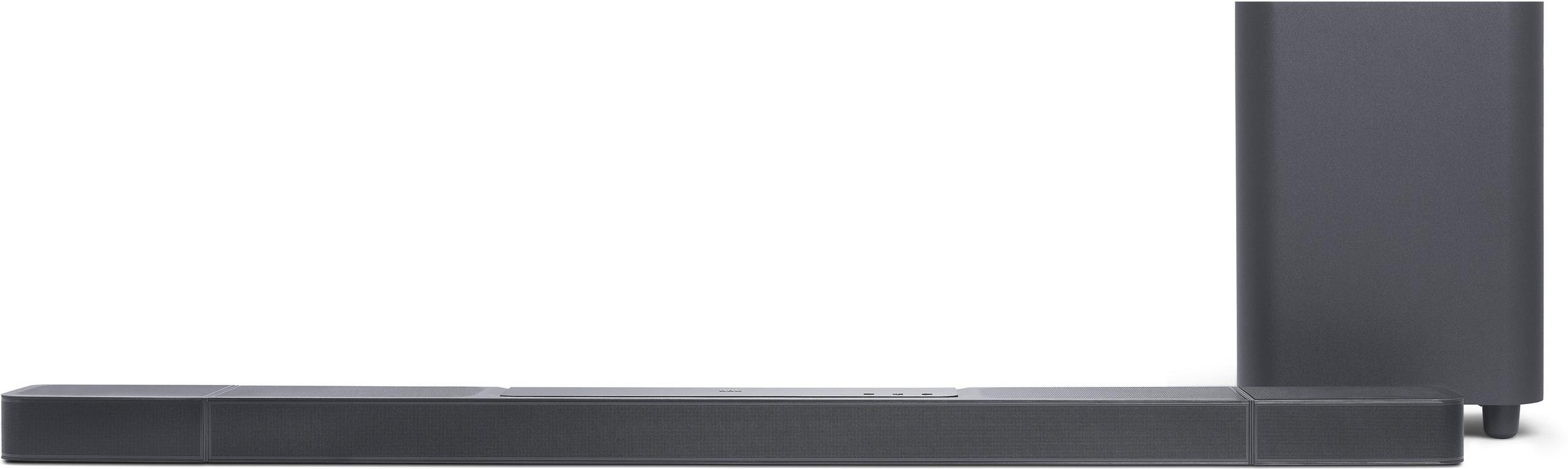

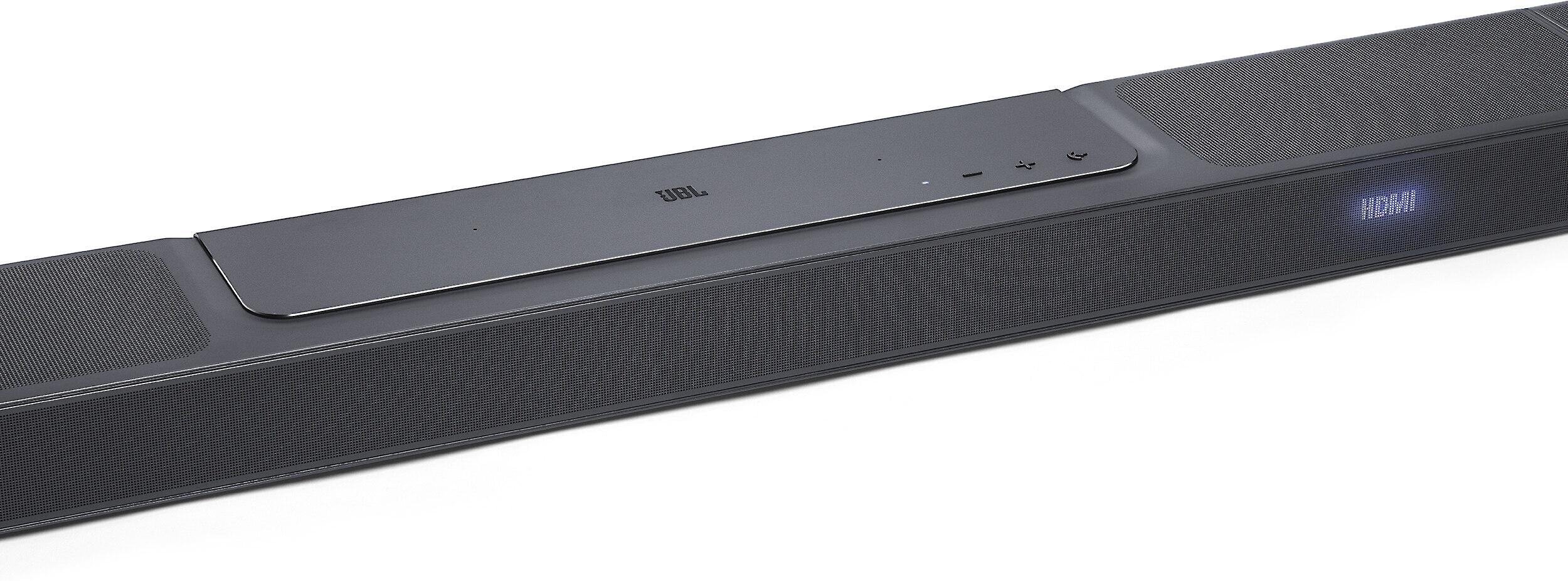


When your TV's tiny speakers make explosions sound like bubble wrap popping, it's time to consider a soundbar. But with options ranging from affordable upgrades to mortgage-worthy premium systems, choosing the right one can feel overwhelming. Today we're comparing two soundbars that represent completely different philosophies: the budget-friendly Ultimea Poseidon D50 5.1 Soundbar (2025) and the premium JBL Bar 1300X.
These aren't just different price points—they're fundamentally different approaches to home theater audio. One focuses on delivering genuine surround sound without breaking the bank, while the other pushes the boundaries of what's possible in a soundbar form factor.
Before diving into specifics, let's establish what really matters in soundbar performance. The most critical factor is channel configuration—essentially how many separate audio streams the system can handle. Traditional stereo uses two channels (left and right), but home theater audio uses multiple channels to create that immersive "you're in the movie" experience.
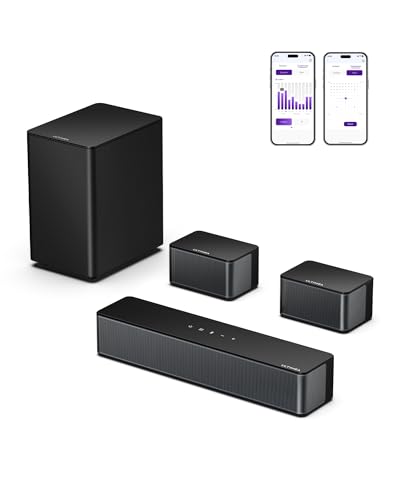
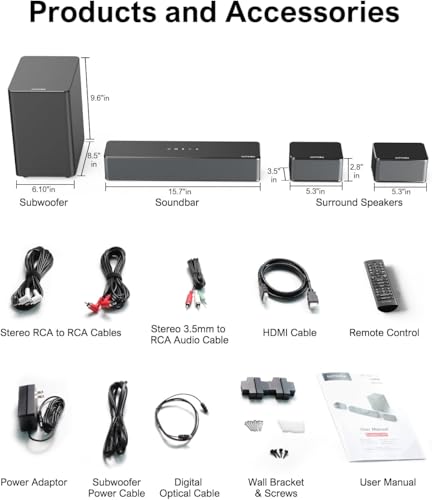
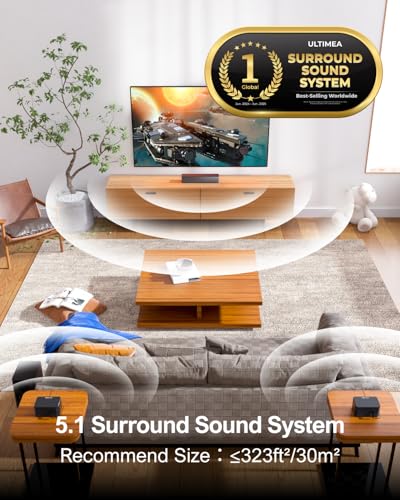
The Ultimea Poseidon D50 uses a true 5.1 configuration, which means five main channels plus one subwoofer channel (that's what the ".1" represents). You get left, center, right, left surround, and right surround channels, each with dedicated speakers. This creates a proper surround sound bubble around your listening position.
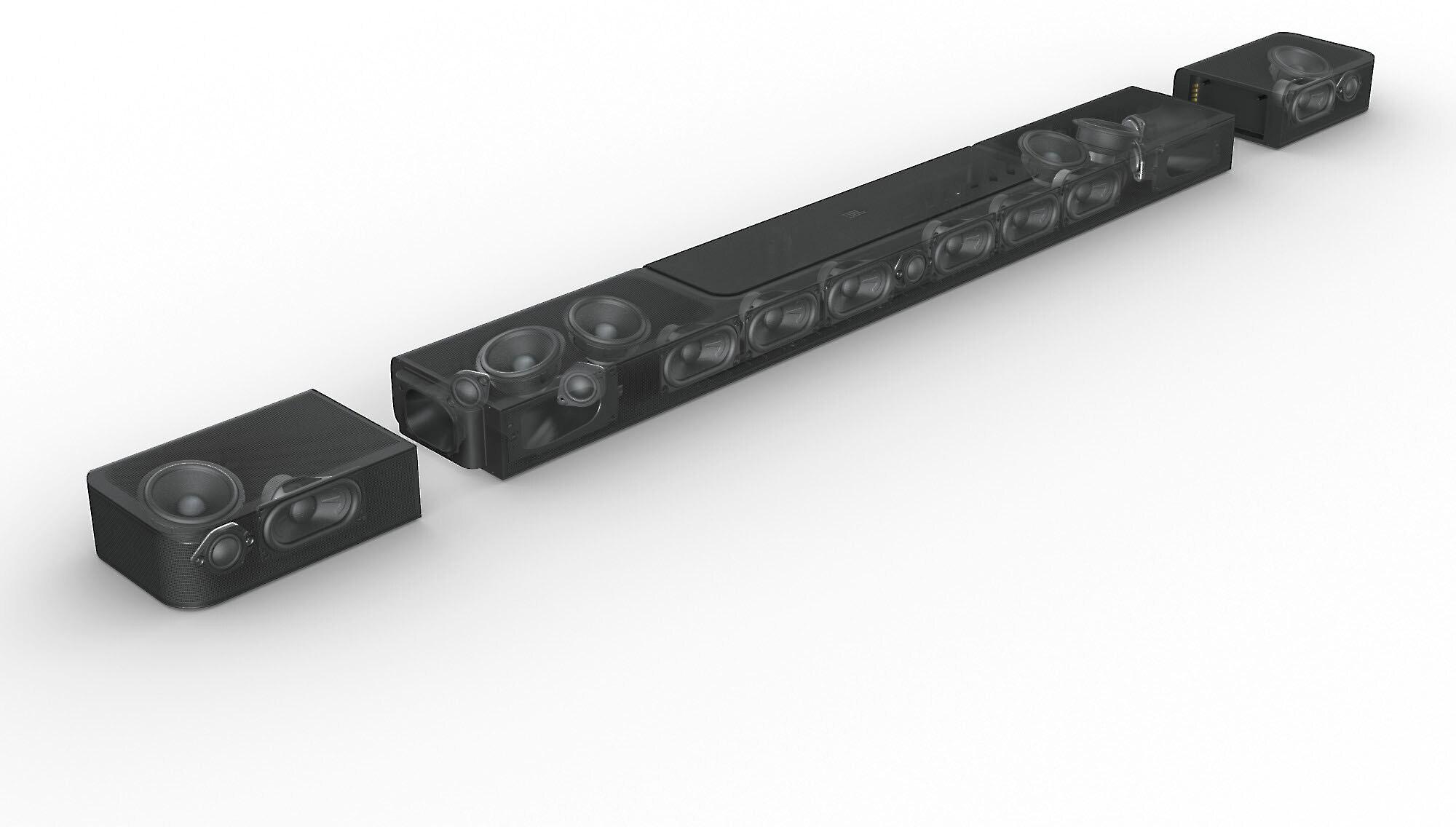
The JBL Bar 1300X, meanwhile, operates as an 11.1.4 system. Those extra numbers represent something called height channels—speakers that fire sound upward to bounce off your ceiling, creating the illusion of sounds coming from above. This technology, called Dolby Atmos, adds a vertical dimension to your audio that makes helicopters overhead or rain actually seem to come from above rather than just around you.
Power output, measured in watts, tells you how loud and dynamic the system can get. But raw wattage numbers can be misleading—the quality of the amplification and speakers matters just as much as the quantity of power.
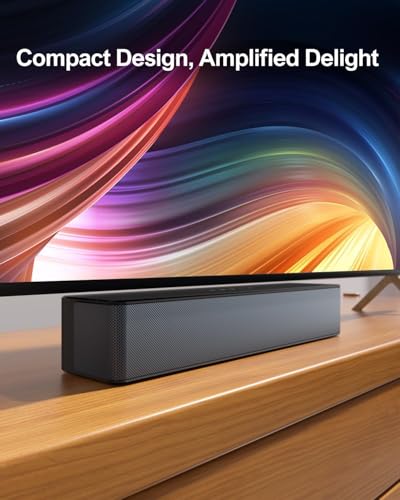
Released in 2025, the Ultimea Poseidon D50 represents Ultimea's refined approach to affordable surround sound. At the time of writing, it sits firmly in budget territory while delivering something most cheap soundbars fake: actual surround sound through dedicated rear speakers.
The system's heart lies in its SurroundX algorithm, which uses a built-in digital signal processor (DSP) chip to convert regular stereo audio into proper 5.1 surround sound. This isn't just making things louder from different directions—it's actively analyzing the audio signal and placing different elements where they belong in the soundstage.
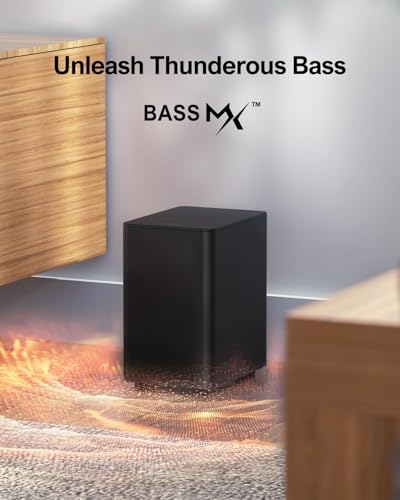
What impressed us most during research was how the Poseidon D50 handles its BassMX technology. The 5.25-inch subwoofer uses a 15mm diaphragm excursion, which is engineering speak for how far the speaker cone can move back and forth. More excursion generally means deeper, more impactful bass without distortion. For a budget system, this level of bass engineering is noteworthy.
The two satellite speakers connect via 19.6-foot cables, giving you genuine rear surround channels. Unlike soundbars that simulate surround sound through digital processing alone, you're getting actual speakers behind your listening position. This makes a massive difference for immersion—explosions truly surround you rather than just seeming wider than normal stereo.
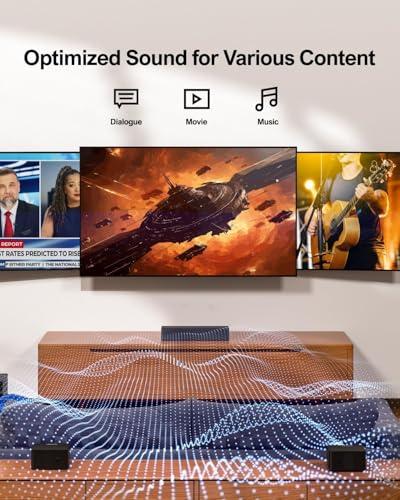
User feedback consistently highlights the system's plug-and-play simplicity. The smart app control offers three EQ modes (Movie, Dialogue, Music) and lets you independently adjust the rear speaker volume. This flexibility proves crucial because every room is different, and being able to fine-tune the surround effect separates the Poseidon D50 from truly basic soundbars.
The trade-offs are what you'd expect at this price point. The system lacks Dolby Atmos processing, so you won't get those overhead sound effects. The 320W peak power output works well for small to medium rooms (up to about 380 square feet), but larger spaces might leave you wanting more oomph. Music reproduction, while decent, doesn't match the refinement you'd get from dedicated hi-fi equipment.
The JBL Bar 1300X, originally launched in recent years as JBL's flagship soundbar offering, takes an entirely different approach. At the time of writing, it commands premium pricing that reflects its advanced feature set and build quality.
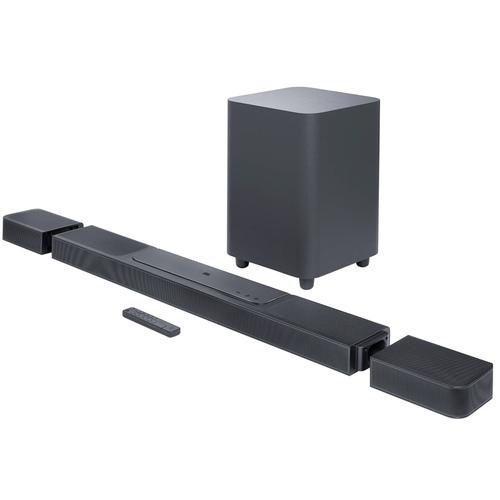
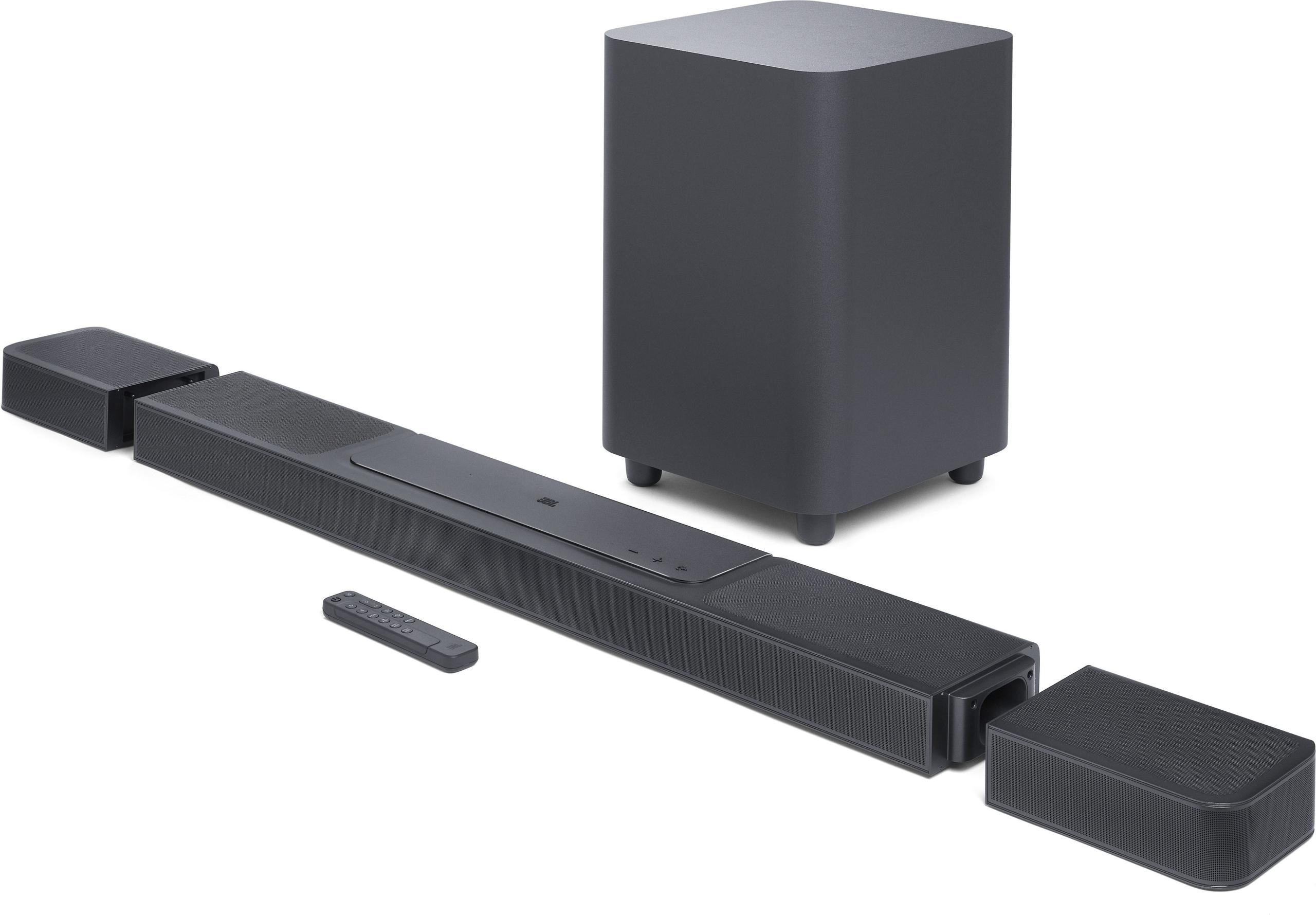
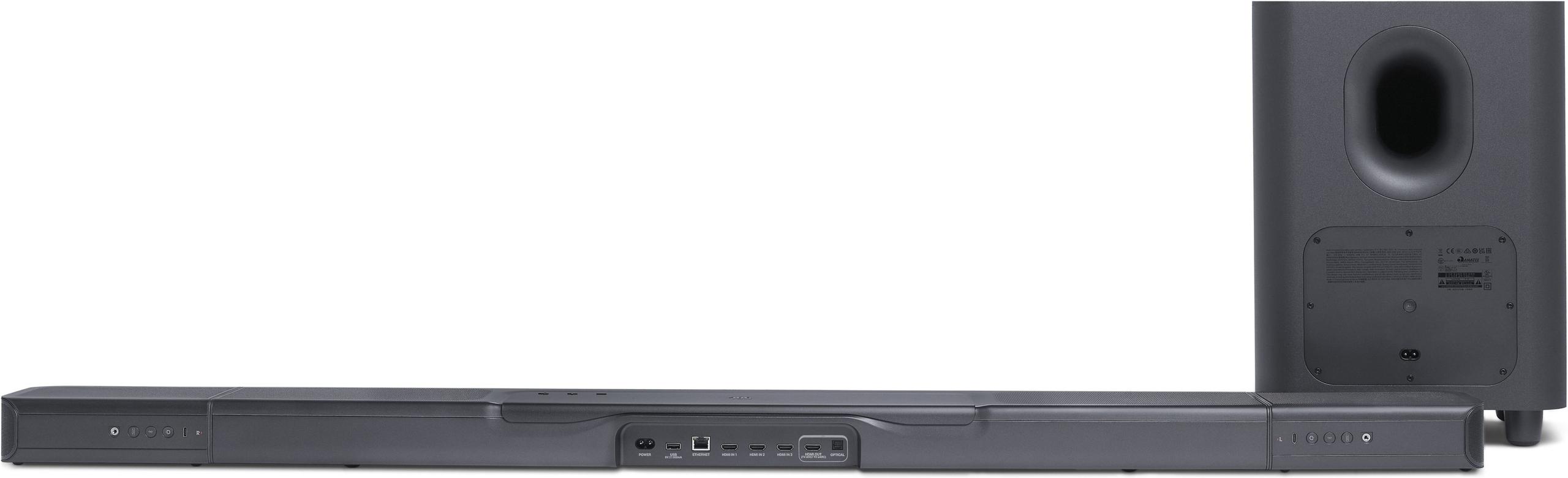
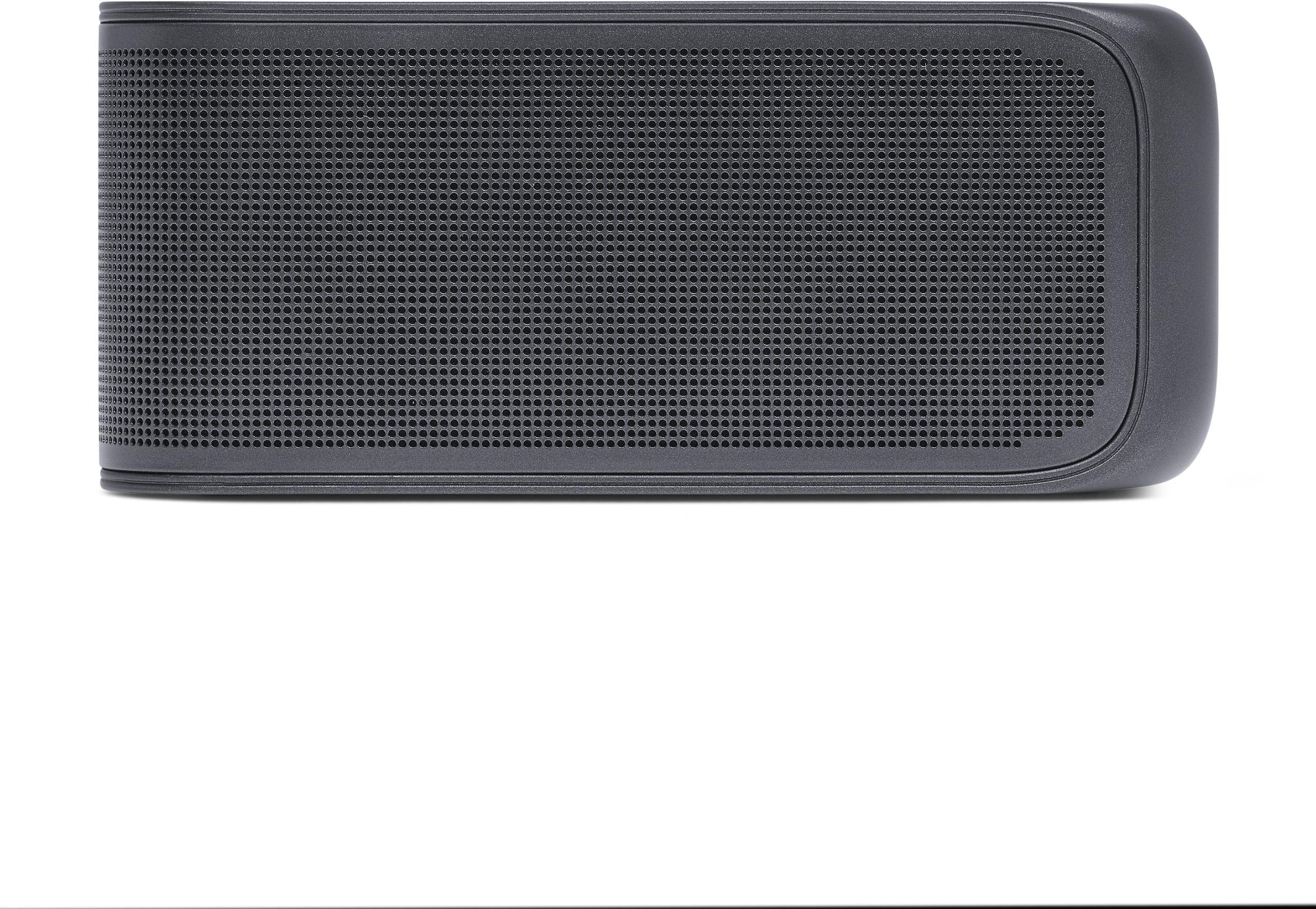
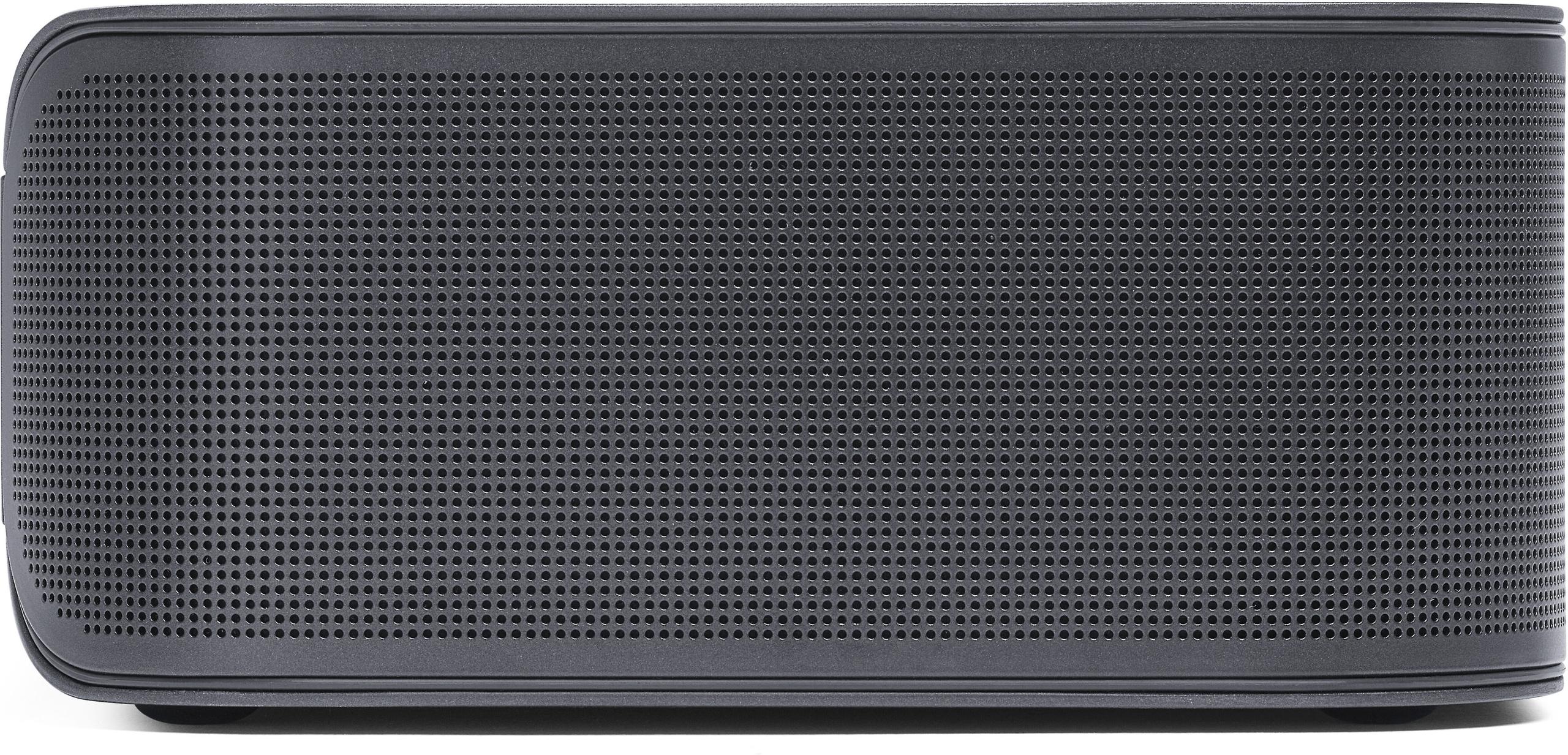
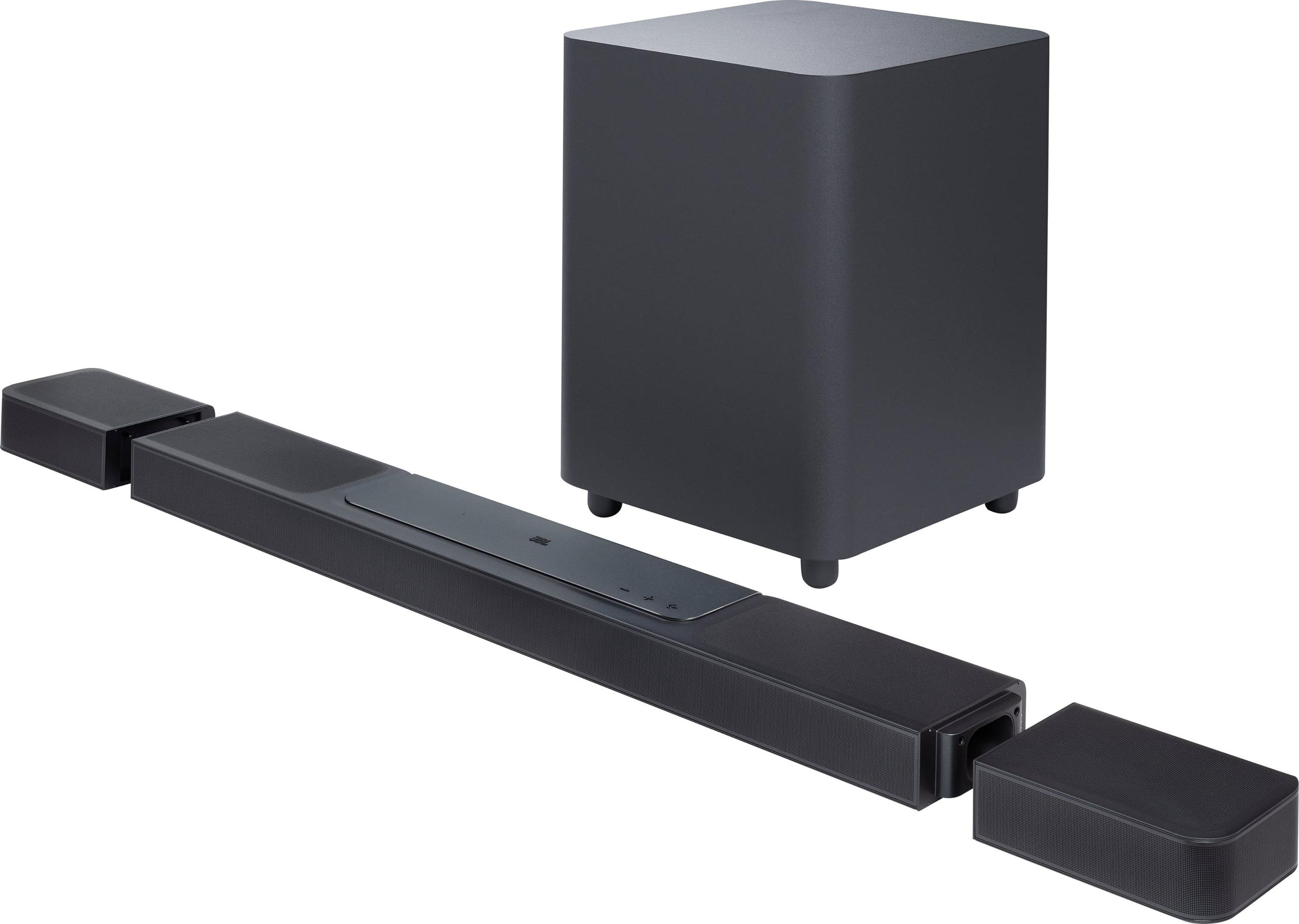
This system's standout innovation is its detachable wireless surround speakers. These aren't just wireless—they're battery-powered units that can operate for up to 10-12 hours independently. When movie night ends, you can literally pick them up and use them as portable Bluetooth speakers around the house or outdoors. This dual functionality adds genuine value beyond the home theater experience.
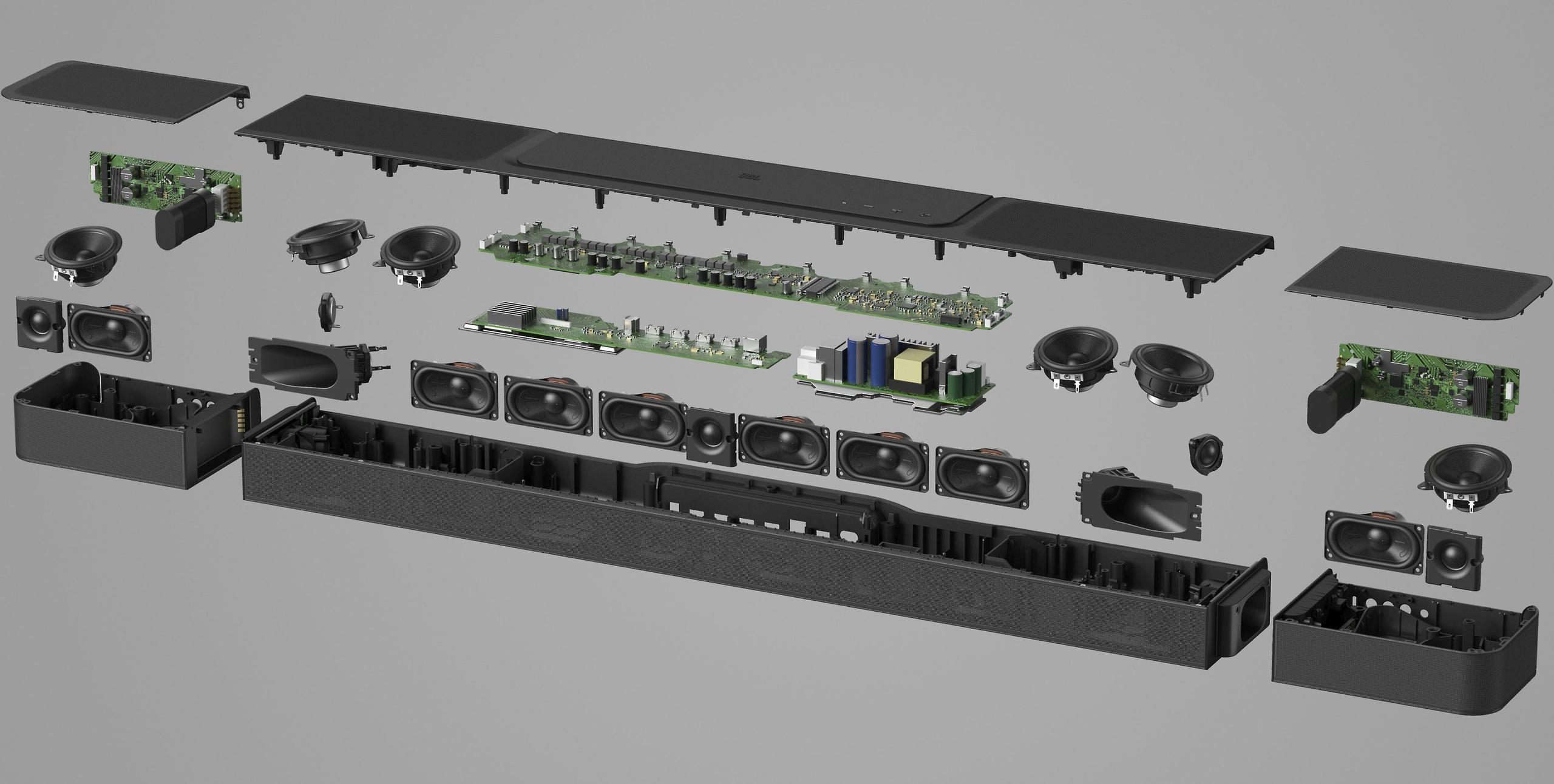
The Bar 1300X packs six up-firing drivers across the system—four in the main soundbar and two in the surround speakers. These create Dolby Atmos height effects by bouncing sound off your ceiling. When properly set up, this creates genuinely three-dimensional audio where helicopters pass overhead, rain falls from above, and ambient sounds place you inside the action rather than just watching it.
JBL's MultiBeam technology deserves special mention. This proprietary processing analyzes incoming audio and uses digital beamforming to widen the soundstage beyond what the physical speaker placement would normally allow. Combined with the system's 1170W total power output (650W from the main bar, 300W from the 12-inch subwoofer, and 110W from each surround speaker), this creates room-filling sound that works in larger spaces.
The PureVoice dialogue enhancement technology addresses one of home theater's biggest challenges: hearing conversation clearly during action scenes. Rather than just boosting mid-range frequencies, PureVoice uses advanced processing to separate and clarify vocal elements without making everything sound unnatural.
Connectivity reflects the Bar 1300X's premium positioning. Three HDMI inputs plus an eARC output mean you can connect multiple sources without switchers. Built-in Wi-Fi enables AirPlay 2, Chromecast, and Alexa Multi-Room Music, essentially turning the soundbar into a high-end wireless speaker system when you're not watching movies.
The room calibration feature automatically adjusts the system's output based on your room's acoustics. This isn't just a gimmick—room acoustics dramatically affect audio performance, and automatic calibration helps optimize the system for your specific environment.
Audio Quality and Dynamics: The performance gap between these systems is significant but not unexpected given their price positioning. The Poseidon D50 delivers clean, dynamic sound that punches well above its price class. Bass impact is surprisingly strong for the subwoofer size, and the dedicated surround speakers create convincing positional audio. However, at higher volumes or with complex musical passages, some harshness creeps into the treble, and the overall presentation prioritizes excitement over refinement.
The JBL Bar 1300X operates in a different league entirely. The 12-inch subwoofer delivers deep, controlled bass that you feel as much as hear. The main soundbar's driver array creates an impressively wide soundstage, while the Dolby Atmos processing adds genuine height dimension that transforms movie watching. Music reproduction is notably more refined, with better instrument separation and smoother frequency response across the spectrum.
Surround Sound Experience: This is where the fundamental design philosophies become apparent. The Poseidon D50 creates convincing surround sound through proper speaker placement—sounds genuinely come from behind you because there are actual speakers behind you. The effect works well for movies and creates good immersion for gaming.
The Bar 1300X's approach is more sophisticated but also more dependent on room conditions. The Atmos height effects require ceiling reflection, so rooms with high or angled ceilings won't get the full benefit. When properly set up, however, the three-dimensional soundfield is remarkable. Sounds don't just surround you horizontally—they envelope you completely.
Power and Room Coverage: The Ultimea system's 320W peak output works well for apartments, bedrooms, or smaller living rooms. Push it hard in a large space, and you'll notice compression and strain. The JBL system's 1170W total output handles large, open floor plans with authority, delivering clean, undistorted sound even at high volumes.
Connectivity and Flexibility: The Poseidon D50 covers the basics well—HDMI eARC for TV connection, optical for older devices, and Bluetooth 5.3 for wireless streaming. The smart app provides useful control over EQ settings and surround levels.
The Bar 1300X goes far beyond basic connectivity. Multiple HDMI inputs eliminate the need for external switches, while Wi-Fi connectivity opens up streaming services and multi-room audio possibilities. The detachable surround speakers add genuine versatility—they're surprisingly good portable speakers that maintain JBL's audio quality standards.
Small to Medium Rooms: For spaces up to about 300-400 square feet, the Poseidon D50 provides excellent value. The genuine surround sound creates good immersion without overwhelming the space, and the compact design fits naturally into most entertainment centers. The wired surround speakers require some cable management but ensure consistent performance.
Large Rooms and Open Floor Plans: The JBL Bar 1300X shines in larger spaces where its power advantage becomes apparent. The wireless surround speakers eliminate cable runs across large rooms, and the system's room calibration helps optimize performance for challenging acoustic environments.
Gaming Applications: Both systems work well for gaming, but they excel in different areas. The Poseidon D50 provides clear positional audio that helps with competitive gaming, while the Bar 1300X's Dolby Atmos processing creates more immersive single-player experiences.
Music Listening: This reveals the systems' different priorities. The Poseidon D50 emphasizes impact and excitement, making it suitable for movies and casual music listening but less refined for serious audio enjoyment. The Bar 1300X handles music with more nuance and detail, making it a viable hi-fi component for audiophile listening sessions.
The 2025 release of the Poseidon D50 represents several years of refinement in budget soundbar design. Ultimea has improved their DSP algorithms and driver engineering while keeping costs controlled. The BassMX technology and SurroundX processing represent meaningful advances over earlier budget systems that often sacrificed audio quality for low pricing.
The JBL Bar 1300X, while not brand new, incorporates mature Dolby Atmos processing and JBL's decades of speaker engineering expertise. The detachable speaker concept was innovative when introduced and remains unique in the premium soundbar space. Recent software updates have refined the room calibration and streaming capabilities.
Choose the Ultimea Poseidon D50 (2025) if you:
The Poseidon D50 represents excellent value for first-time home theater buyers. It delivers the core surround sound experience without advanced features you might not use or need.
Choose the JBL Bar 1300X if you:
The Bar 1300X justifies its premium pricing through superior performance, unique features, and build quality that should provide years of excellent service.
These soundbars represent two different philosophies done well. The Ultimea Poseidon D50 (2025) proves that budget systems can deliver genuine surround sound when properly engineered. The JBL Bar 1300X demonstrates what's possible when cost constraints are relaxed in favor of maximum performance and features.
Your choice should align with your room size, budget reality, and how much you value advanced features versus basic functionality done well. The Poseidon D50 delivers impressive performance for its price point, while the Bar 1300X provides premium experience that justifies its premium cost.
At the time of writing, both systems represent strong value in their respective price categories. The key is honest assessment of your needs, space, and budget to choose the system that will provide years of audio enjoyment rather than buyer's remorse.
| Ultimea Poseidon D50 5.1 Soundbar (2025) | JBL Bar 1300X |
|---|---|
| Channel Configuration - Determines surround sound capability and immersion level | |
| True 5.1 channels with dedicated rear speakers | 11.1.4 channels with Dolby Atmos height effects |
| Total Power Output - Affects volume levels and room size compatibility | |
| 320W peak (suitable for rooms up to 380 sq ft) | 1170W total (handles large rooms and open floor plans) |
| Surround Speaker Design - Impacts placement flexibility and audio quality | |
| 2 wired satellite speakers (19.6ft cables included) | 2 detachable wireless battery-powered speakers (10+ hour battery) |
| Subwoofer Size - Determines bass depth and impact | |
| 5.25" wireless subwoofer with BassMX technology | 12" wireless subwoofer (300W dedicated power) |
| Advanced Audio Processing - Creates immersive 3D sound effects | |
| SurroundX algorithm converts stereo to 5.1 | Dolby Atmos and DTS:X with MultiBeam technology |
| HDMI Connectivity - Affects source device compatibility | |
| 1 HDMI eARC port | 3 HDMI inputs + 1 eARC output with 4K passthrough |
| Wireless Connectivity - Enables streaming and multi-room audio | |
| Bluetooth 5.3 only | Wi-Fi with AirPlay 2, Chromecast, Alexa MRM |
| Smart Features - Controls customization and ease of use | |
| Basic app with 3 EQ modes and surround level control | JBL One app with room calibration and advanced settings |
| Height Channel Support - Creates overhead sound effects | |
| No height channels (traditional horizontal surround) | 6 up-firing drivers for true Dolby Atmos height effects |
| Portability Features - Additional use cases beyond home theater | |
| Fixed installation system | Detachable speakers work as portable Bluetooth units |
| Build Quality and Design - Affects longevity and aesthetics | |
| Compact budget construction (soundbar: 1.36kg) | Premium materials and construction (soundbar: 4.3kg) |
| Dialogue Enhancement - Ensures clear speech during action scenes | |
| Basic center channel with dialogue mode | PureVoice technology with dedicated vocal optimization |
The Ultimea Poseidon D50 5.1 Soundbar (2025) is a budget-friendly true 5.1 system with wired rear speakers, while the JBL Bar 1300X is a premium 11.1.4 Dolby Atmos system with detachable wireless surround speakers. The key difference is that the JBL Bar 1300X includes height channels for overhead sound effects, while the Poseidon D50 focuses on traditional horizontal surround sound at a much lower price point.
The Ultimea Poseidon D50 5.1 Soundbar (2025) is better suited for small to medium rooms up to 380 square feet. Its 320W power output and compact design won't overwhelm smaller spaces, while still providing genuine surround sound through dedicated rear speakers. The JBL Bar 1300X is designed for larger rooms and may be overpowered for compact spaces.
Regular 5.1 surround sound from the Poseidon D50 provides excellent immersion for most users and is a significant upgrade from TV speakers. Dolby Atmos from the JBL Bar 1300X adds overhead sound effects that make movies more cinematic, but it's not essential for enjoying great home theater audio. Choose Dolby Atmos if you want cutting-edge technology and have the budget for it.
The JBL Bar 1300X has superior bass with its 12-inch subwoofer and 300W dedicated subwoofer power, delivering deeper and more impactful low frequencies. The Ultimea Poseidon D50 has a smaller 5.25-inch subwoofer but still provides satisfying bass for its price range, enhanced by BassMX technology for better performance than typical budget systems.
No, the Ultimea Poseidon D50 5.1 Soundbar (2025) uses wired rear speakers with 19.6-foot cables, while the JBL Bar 1300X features truly wireless, battery-powered rear speakers that can operate for 10+ hours independently. The JBL speakers can also double as portable Bluetooth speakers when not being used for home theater.
The Poseidon D50 offers simpler plug-and-play setup with straightforward connections and basic app controls. The JBL Bar 1300X has more complex setup due to its advanced features, multiple HDMI inputs, Wi-Fi configuration, and room calibration, though it offers more customization options once configured.
The Ultimea Poseidon D50 has basic connectivity with HDMI eARC, optical, AUX, and USB inputs, requiring you to switch inputs on your TV for multiple devices. The JBL Bar 1300X offers three HDMI inputs plus eARC output, allowing direct connection of multiple sources like gaming consoles, streaming devices, and Blu-ray players without switching.
The JBL Bar 1300X provides more refined music reproduction with better frequency response and driver quality, making it suitable for serious music listening. The Ultimea Poseidon D50 emphasizes impact and excitement over musical refinement, making it better suited for movies and casual music enjoyment rather than audiophile listening.
Both systems address dialogue clarity differently. The Poseidon D50 includes a dialogue mode and center channel for clear speech reproduction. The JBL Bar 1300X features advanced PureVoice technology that actively separates and enhances vocal elements without making dialogue sound unnatural, providing superior speech clarity during complex action scenes.
The Ultimea Poseidon D50 5.1 Soundbar (2025) supports Bluetooth 5.3 streaming from your phone or tablet. The JBL Bar 1300X offers comprehensive streaming with built-in Wi-Fi, AirPlay 2, Chromecast, and Alexa Multi-Room Music, providing access to over 300 music services directly without needing your phone connected.
The Poseidon D50 offers exceptional value for budget-conscious buyers, delivering genuine 5.1 surround sound at an affordable price point. The JBL Bar 1300X provides good value in the premium segment with advanced features like Dolby Atmos and detachable speakers, but costs significantly more. Choose based on your budget and feature priorities.
Both soundbars work well with gaming consoles. The Ultimea Poseidon D50 provides good positional audio for competitive gaming through its dedicated surround speakers. The JBL Bar 1300X offers more immersive single-player gaming experiences with Dolby Atmos processing and multiple HDMI inputs for connecting consoles directly without switching cables.
We've done our best to create useful and informative comparisons to help you decide what product to buy. Our research uses advanced automated methods to create this comparison and perfection is not possible - please contact us for corrections or questions. These are the sites we've researched in the creation of this article: youtube.com - eu.ultimea.com - newegg.com - tvsbook.com - youtube.com - provantage.com - ultimea.com - techradar.com - community.ultimea.com - homedepot.com - community.ultimea.com - ultimea.com - ultimea.de - youtube.com - medisamhealthcenter.com - ultimea.com - youtube.com - walmart.com - techradar.com - jbl.com - audioadvice.com - youtube.com - rtings.com - jbl.com - greentoe.com - harmanaudio.com - youtube.com - mm.jbl.com - jbl.com

Privacy Policy
Terms and Conditions - Affiliate Policy
Home Security
© Copyright 2008-2026.
11816 Inwood Rd #1211, Dallas, TX 75244