

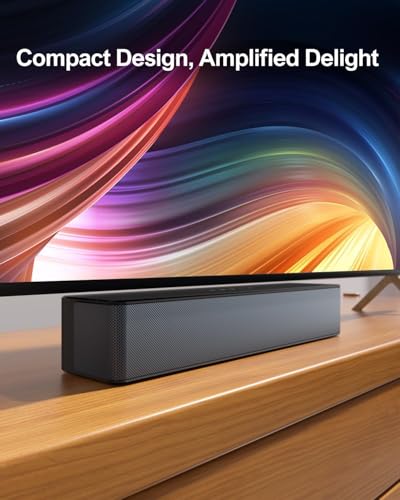



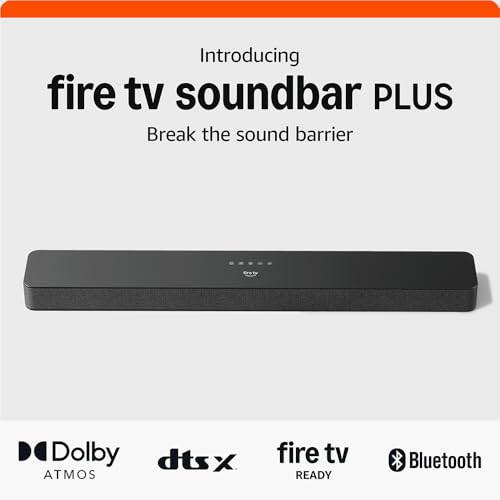
When your TV's built-in speakers sound like they're trapped inside a cereal box, upgrading to a soundbar becomes essential. But not all soundbars are created equal, and the choice between the Ultimea Poseidon D50 5.1 Soundbar and Amazon Fire TV Soundbar Plus represents two fundamentally different philosophies in home theater audio.
Released in 2025, the Ultimea Poseidon D50 represents the latest evolution in true surround sound systems, while Amazon's offering from 2023 focuses on ecosystem integration and simplicity. Understanding which approach serves your needs better requires diving into what makes each system tick—and more importantly, what they actually sound like in your living room.
Before comparing these specific models, it's worth understanding what separates a good soundbar from a mediocre one. The fundamental challenge with soundbars is physics: cramming multiple audio channels into a single horizontal enclosure while creating the illusion that sound comes from all around you.
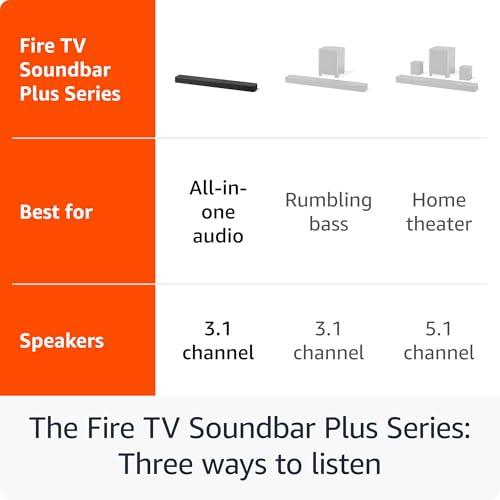
Channel configuration determines how many discrete audio signals the system can handle. A 3.1 system has left, center, and right channels plus a subwoofer (the ".1"), while 5.1 adds rear surround channels. The difference isn't just academic—having physical rear speakers creates genuine surround sound that no amount of digital processing can fully replicate.
Audio processing has evolved significantly since 2020, with manufacturers developing proprietary algorithms to enhance stereo sources and create virtual surround effects. However, there's still no substitute for actual speakers placed around your room. This is where the Ultimea Poseidon D50 and Fire TV Soundbar Plus take completely different approaches.
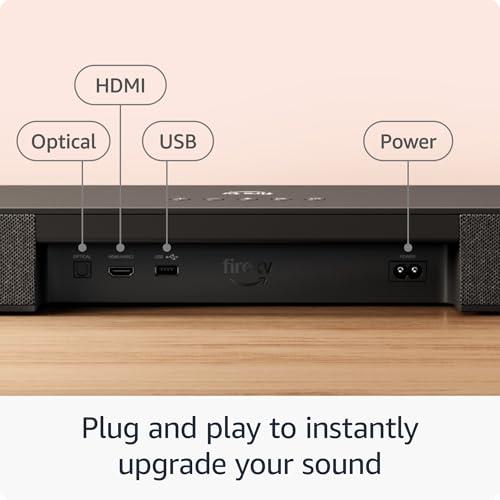
The connectivity landscape has also shifted, with HDMI eARC (enhanced Audio Return Channel) becoming standard. This allows your TV to send high-quality audio back to the soundbar, including advanced formats like Dolby Atmos—a technology that adds height information to create a three-dimensional soundstage.
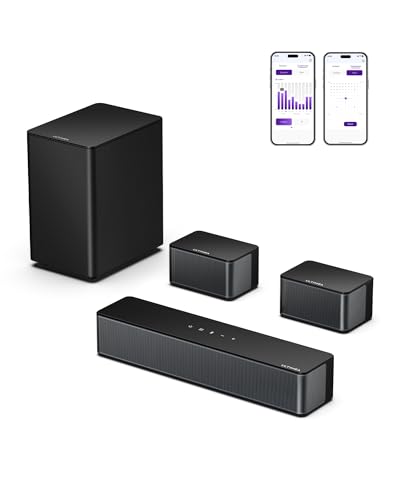
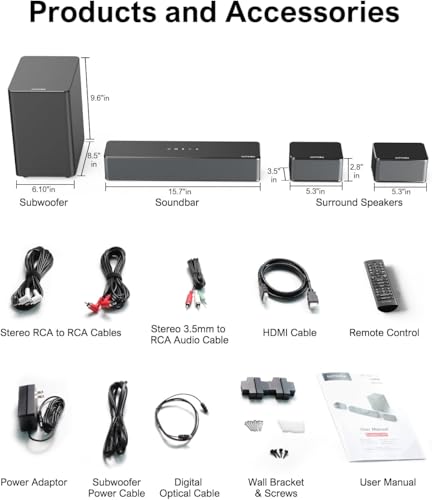
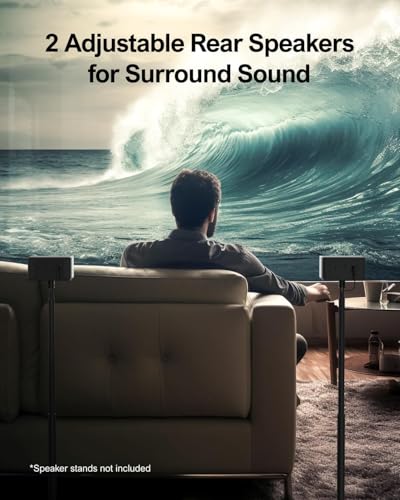
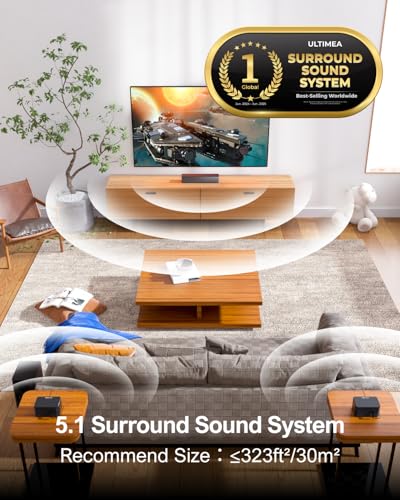
The Ultimea Poseidon D50 doesn't mess around with compromises. It's a complete 5.1 system from day one, including two physical satellite speakers that you place behind your seating area. This matters more than you might think. When a helicopter flies across the screen in a movie, you'll actually hear it move from front to back through real speakers positioned around your room, not just a clever audio trick.
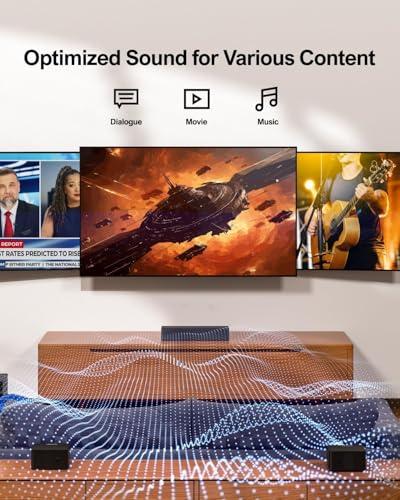
The system's SurroundX technology uses a dedicated DSP (Digital Signal Processor) chip to convert regular stereo audio into 5.1 surround sound. Think of it as an intelligent translator that takes a two-channel music track and spreads it across five speakers in a way that sounds natural. This is particularly useful since most streaming content, music, and older movies weren't originally mixed in surround sound.
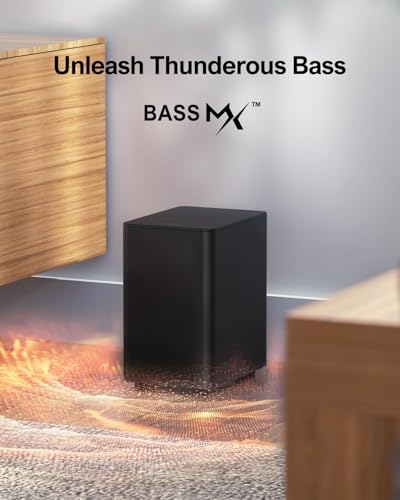
The wireless subwoofer incorporates BassMX technology, which is Ultimea's fancy term for an optimized magnetic system that allows the 5.25-inch driver to move up to 15mm—nearly two-thirds of an inch. That might not sound like much, but in subwoofer terms, that's serious excursion capability that translates to deeper, more impactful bass without distortion.
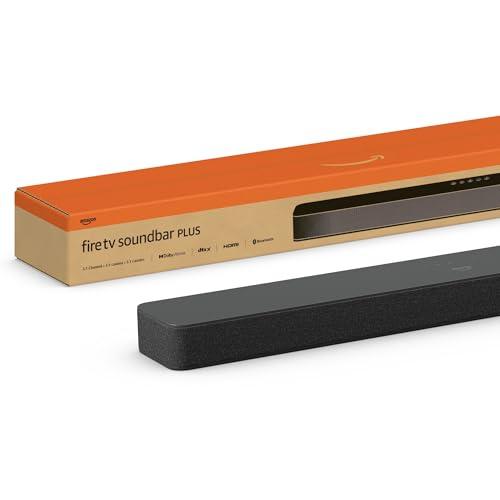
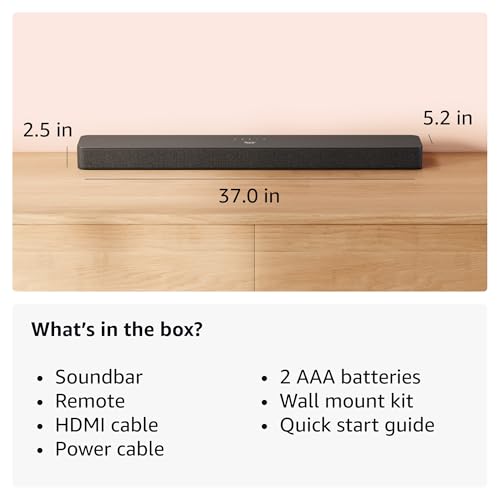
The Fire TV Soundbar Plus takes a different route entirely. In its base configuration, it's a 3.1-channel system with the subwoofer built into the main bar. Amazon's bet is that most people want better TV audio without the complexity of multiple speakers around the room.
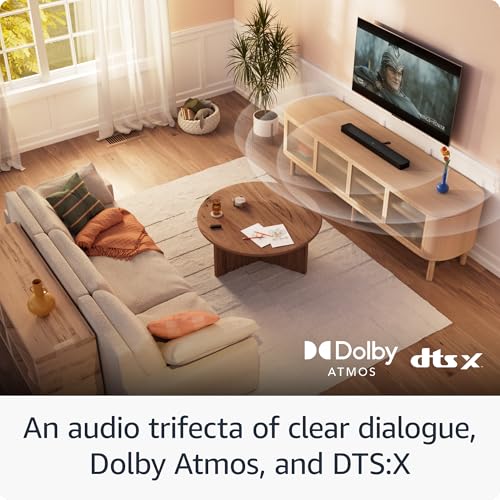
The system supports Dolby Atmos and DTS:X, but here's the crucial caveat: it processes these formats virtually. There are no upward-firing speakers to bounce sound off your ceiling, so the height effects you'd experience in a movie theater get simulated through the main left and right speakers. It works, but it's like watching a 3D movie without 3D glasses—you get the content, but miss the dimensional experience.
Where Amazon excels is ecosystem integration. If you're already using Fire TV devices, the soundbar integrates seamlessly with a single remote controlling both your streaming and audio. This might seem minor until you experience the frustration of juggling multiple remotes every evening.
Bass performance often determines whether a soundbar feels like a genuine upgrade or just a lateral move from TV speakers. The Ultimea D50's dedicated wireless subwoofer provides a significant advantage here. Having the bass driver in a separate, larger enclosure prevents the vibrations that can muddy dialogue in all-in-one designs.
Our research into user feedback consistently shows the D50 delivering satisfying low-end impact for rooms up to 380 square feet. The BassMX technology isn't just marketing speak—the 15mm excursion capability means this subwoofer can move enough air to create genuine room-shaking effects during action scenes without the distortion that smaller drivers exhibit when pushed hard.
The Fire TV Soundbar Plus, by contrast, relies on built-in woofers in its base configuration. Professional reviews noted what they called "one-note bass"—adequate volume but lacking the nuanced low-frequency response that separates good subwoofers from mediocre ones. This becomes particularly apparent with music, where bass guitars and kick drums can sound unnaturally boomy or undefined.
This is where the philosophical differences become most apparent. The Ultimea D50 creates genuine surround sound through physical speaker placement. When reviewers describe hearing effects move seamlessly from front to back, they're experiencing what discrete 5.1 audio should sound like.
The system's ability to independently control rear speaker volume addresses a common surround sound problem: rear speakers that are either too loud (drowning out dialogue) or too quiet (barely noticeable). This flexibility proves crucial for optimizing the experience in different room layouts.
Meanwhile, the Fire TV Soundbar Plus attempts to create surround effects through audio processing alone. While Dolby Atmos and DTS:X support sounds impressive on paper, multiple professional reviews noted gaps in the stereo soundstage and unnatural reproduction of panning audio. When a sound effect moves across the screen, the illusion breaks down because there's no actual speaker movement—just frequency manipulation.
Clear dialogue often matters more than flashy surround effects, especially for those with hearing difficulties. Both systems approach this challenge differently, with mixed results.
The Fire TV Soundbar Plus features a dedicated center channel specifically for dialogue, plus five levels of dialogue enhancement. In ideal conditions, this setup delivers clear speech reproduction that cuts through background music and effects. However, professional reviews revealed concerning inconsistencies. While some praised the dialogue clarity, What Hi-Fi's review specifically called out "robotic-sounding dialogue" and noted that deeper voices can sound thin due to frequency response dips.
The Ultimea D50 takes a more customizable approach through its smartphone app, offering specific dialogue-focused EQ presets and the ability to fine-tune frequency response. This flexibility allows users to compensate for room acoustics and personal hearing characteristics, though it requires more effort than the Fire TV's simple adjustment scale.
The Ultimea D50's smartphone app represents a significant evolution in soundbar control. Having 121 preset EQ matrices might sound like overkill until you realize different content types benefit from different audio signatures. A Netflix drama needs different processing than a YouTube music video or a PlayStation game.
The 10-band equalizer provides the kind of control typically reserved for professional audio equipment. You can boost specific frequencies to compensate for room acoustics, reduce harsh treble if you're sensitive to sibilance, or enhance mid-range clarity for better dialogue. This level of customization matters because every room sounds different, and what works in a showroom might not work in your living space.
The app also enables independent satellite speaker control, addressing a common complaint with surround systems. If your rear speakers overpower the front soundstage or vice versa, you can adjust them separately rather than settling for a compromised balance.
The Fire TV Soundbar Plus deliberately avoids complexity, offering only basic bass and treble adjustment through its physical remote. This simplicity appeals to users who want better sound without becoming amateur audio engineers, but it limits optimization potential.
The real value lies in Fire TV ecosystem integration. When properly connected, your Fire TV remote controls both streaming and audio functions, eliminating the multi-remote juggling act that plagues most home theater setups. The soundbar automatically switches inputs and adjusts volume based on your Fire TV device's output, creating a seamless user experience.
However, this integration comes with a significant limitation: despite the "Fire TV" branding, the soundbar itself has no built-in streaming capabilities. You still need a separate Fire TV device, making the naming somewhat misleading.
The Fire TV Soundbar Plus supports more advanced audio formats, including lossless Dolby TrueHD and DTS-HD MA. These formats preserve the original studio quality without compression, though the benefit depends on having source material that uses them—typically 4K Blu-ray discs or high-end streaming services.
The Ultimea D50 focuses on standard Dolby Digital and DTS formats, which cover the vast majority of streaming content and broadcast TV. While it lacks support for the newest lossless formats, its SurroundX upmixing technology arguably provides more practical benefits for everyday viewing by converting stereo sources to genuine 5.1 surround.
At the time of writing, these systems occupy different price tiers, but value extends beyond initial cost. The Ultimea D50 provides a complete 5.1 experience immediately, while the Fire TV Soundbar Plus starts as a 3.1 system that requires additional purchases for full surround sound.
Professional reviews consistently noted that the Amazon system's audio quality doesn't justify even its entry-level pricing, with multiple reviewers describing unpleasant listening experiences. This raises questions about long-term satisfaction—a soundbar that annoys you daily isn't a bargain at any price.
The Ultimea system represents better long-term value by providing genuine surround immersion from day one, plus extensive customization options that let you optimize performance as your room setup or preferences change. The comprehensive app control means firmware updates could potentially add new features over time.
The Ultimea D50 is designed for medium to large rooms (250-380 square feet), with enough power output to fill larger spaces without strain. The discrete speaker placement requires running cables to rear satellite positions, which some users might find inconvenient in certain room layouts.
The Fire TV Soundbar Plus works better in smaller to medium rooms where its virtual processing can create adequate soundstage width. The all-in-one design simplifies placement but limits acoustic optimization options.
Choose the Ultimea Poseidon D50 if you prioritize authentic surround sound immersion and don't mind some setup complexity. Its true 5.1 configuration delivers the kind of home theater experience that justifies the soundbar category's existence. The extensive app-based customization means you can optimize performance for your specific room and preferences, while the complete system approach eliminates future upgrade pressure.
The Fire TV Soundbar Plus makes sense primarily for users already invested in Amazon's ecosystem who want simple TV audio improvement. However, the professional review consensus suggests significant audio quality issues that make it difficult to recommend even in this narrow use case.
For most users seeking meaningful home theater improvement, the Ultimea system's genuine surround sound capability and extensive customization options provide better long-term satisfaction. The physical rear speakers create immersive experiences that no amount of virtual processing can match, while the comprehensive EQ options ensure optimal performance regardless of room acoustics.
The soundbar market has evolved significantly since 2020, with manufacturers offering increasingly sophisticated features at accessible price points. The Ultimea D50 represents this evolution well, providing professional-grade customization and true surround sound in a consumer-friendly package. Meanwhile, the Fire TV Soundbar Plus feels like a step backward, prioritizing ecosystem integration over fundamental audio quality.
Your choice ultimately depends on whether you want a genuine home theater upgrade or simply better TV speakers with Fire TV convenience. Based on our research into professional reviews and user feedback, the Ultimea Poseidon D50 delivers the more satisfying long-term experience for users serious about improving their home entertainment audio.
| Ultimea Poseidon D50 5.1 Soundbar | Amazon Fire TV Soundbar Plus |
|---|---|
| Channel Configuration - Determines surround sound authenticity | |
| True 5.1 with physical rear speakers and wireless subwoofer | 3.1 base (expandable to 5.1 with optional add-ons) |
| Surround Sound Method - Real vs simulated spatial audio | |
| Discrete physical speakers create genuine surround placement | Virtual processing through main bar only |
| Smart Control Features - Convenience and customization options | |
| Comprehensive smartphone app with 121 EQ presets and 10-band equalizer | Basic remote control only, no app support |
| Audio Processing Technology - Enhanced listening experience | |
| SurroundX™ DSP converts stereo to 5.1, BassMX™ subwoofer tech | Dolby Atmos/DTS:X virtual processing |
| Connectivity Options - Device compatibility and integration | |
| HDMI eARC, Optical, AUX, USB, Bluetooth 5.3 | HDMI eARC, Optical, USB-A, Bluetooth 5.0 |
| Ecosystem Integration - Platform-specific benefits | |
| Universal compatibility with all devices and platforms | Fire TV Ready with single-remote control |
| Subwoofer Design - Bass performance and room impact | |
| Dedicated 5.25" wireless subwoofer with 15mm excursion | Built-in woofers (external sub available separately) |
| Room Size Recommendation - Coverage and power output | |
| 250-380 sq ft with discrete speaker placement | Small to medium rooms, all-in-one design |
| Setup Complexity - Installation and ongoing management | |
| Moderate (rear speaker cable runs required) | Simple plug-and-play |
| Format Support - Audio quality and future-proofing | |
| Dolby Digital, DTS, proprietary upmixing | Dolby Atmos, DTS:X, TrueHD, DTS-HD MA |
| Customization Level - Fine-tuning capabilities | |
| Extensive EQ options, independent rear speaker control | Basic bass/treble adjustment (1-9 scale) |
| Complete System Value - What's included for the price | |
| Full 5.1 system with all components included | 3.1 base system, requires add-ons for true 5.1 |
The Ultimea Poseidon D50 delivers superior surround sound with true 5.1 channels using physical rear speakers placed around your room. The Amazon Fire TV Soundbar Plus only provides virtual surround sound through audio processing, which can't match the authentic spatial experience of discrete speakers positioned behind your seating area.
Yes, both the Ultimea Poseidon D50 and Fire TV Soundbar Plus work with any TV that has HDMI ARC or optical output connections. However, the Amazon Fire TV Soundbar Plus offers enhanced integration features specifically when paired with Fire TV devices, including single-remote control functionality.
The Amazon Fire TV Soundbar Plus is simpler to install since it's primarily a single soundbar unit. The Ultimea Poseidon D50 requires more setup time as you'll need to position the wireless subwoofer and run cables to the rear satellite speakers, though all components come pre-paired for easier installation.
Only the Ultimea Poseidon D50 offers comprehensive smartphone app control with 121 EQ presets, 10-band equalizer, and independent speaker adjustments. The Fire TV Soundbar Plus relies solely on physical remote control with basic bass and treble settings, offering no app functionality.
The Ultimea Poseidon D50 provides superior bass with its dedicated 5.25-inch wireless subwoofer featuring BassMX technology and 15mm driver excursion. The Amazon Fire TV Soundbar Plus uses built-in woofers that professional reviewers described as "one-note bass" with less depth and impact.
The Fire TV Soundbar Plus supports Dolby Atmos and DTS:X through virtual processing without upward-firing speakers. The Ultimea Poseidon D50 focuses on standard Dolby Digital and DTS formats but uses SurroundX technology to convert stereo sources into genuine 5.1 surround sound.
The Ultimea Poseidon D50 provides better value as a complete 5.1 system with all components included from day one. The Amazon Fire TV Soundbar Plus starts as a 3.1 system requiring additional purchases of a subwoofer and rear speakers to achieve true 5.1 surround sound.
Both systems offer dialogue enhancement, but with different approaches. The Fire TV Soundbar Plus has a dedicated center channel with five levels of dialogue adjustment. The Ultimea Poseidon D50 provides dialogue-focused EQ modes through its smartphone app with more comprehensive frequency customization options.
The Ultimea Poseidon D50 is specifically designed for larger spaces up to 380 square feet, with discrete speakers providing room-filling surround sound. The Amazon Fire TV Soundbar Plus works best in smaller to medium rooms where its virtual processing can create adequate soundstage width.
Both the Ultimea Poseidon D50 and Fire TV Soundbar Plus include Bluetooth connectivity for wireless music streaming from smartphones and tablets. The Ultimea system features Bluetooth 5.3 for improved connection stability, while the Amazon model uses Bluetooth 5.0.
The Ultimea Poseidon D50 provides extensive customization through its smartphone app, including 121 preset EQ matrices, 10-band equalizer, and independent rear speaker volume control. The Fire TV Soundbar Plus offers only basic bass and treble adjustment on a 1-9 scale through its remote control.
The Ultimea Poseidon D50 prioritizes authentic surround sound immersion with physical rear speakers and comprehensive customization options. The Amazon Fire TV Soundbar Plus emphasizes simplicity and Fire TV ecosystem integration, making it better suited for users wanting basic TV audio improvement rather than true home theater experience.
We've done our best to create useful and informative comparisons to help you decide what product to buy. Our research uses advanced automated methods to create this comparison and perfection is not possible - please contact us for corrections or questions. These are the sites we've researched in the creation of this article: youtube.com - eu.ultimea.com - newegg.com - tvsbook.com - youtube.com - provantage.com - ultimea.com - techradar.com - community.ultimea.com - homedepot.com - community.ultimea.com - ultimea.com - ultimea.de - youtube.com - medisamhealthcenter.com - ultimea.com - youtube.com - walmart.com - rtings.com - wirelessplace.com - techradar.com - cordbusters.co.uk - whathifi.com - developer.amazon.com - t3.com - dolby.com - youtube.com - youtube.com - youtube.com - dugoutnorthbrook.com - dolby.com - aboutamazon.com - youtube.com - developer.amazon.com

Privacy Policy
Terms and Conditions - Affiliate Policy
Home Security
© Copyright 2008-2026.
11816 Inwood Rd #1211, Dallas, TX 75244