




If you've ever suffered through watching an action movie with your TV's built-in speakers—those tinny, underpowered drivers that make explosions sound like bubble wrap popping—you know why soundbars have become essential. But choosing between a premium flagship and a budget option isn't straightforward, especially when the price difference stretches into four figures.
The Samsung HW-Q990F and Ultimea Poseidon D50 represent opposite ends of the soundbar spectrum, yet both promise to transform your living room into a home theater. After extensive research into professional reviews, user feedback, and technical specifications, the choice comes down to your priorities: flagship performance with cutting-edge technology, or genuine surround sound at an accessible price point.
Today's soundbars have evolved far beyond simple TV speaker replacements. The category now spans from basic stereo units to sophisticated multi-speaker arrays that rival traditional surround sound systems. The key breakthrough has been the integration of wireless subwoofers and rear speakers, allowing manufacturers to create true surround experiences without running cables around your room.
Channel configuration tells the story of a soundbar's capabilities. A "5.1" system means five main speakers (front left, center, front right, rear left, rear right) plus one subwoofer channel. The newer "object-based" formats like Dolby Atmos add height information, creating three-dimensional audio that places sounds not just around you, but above you as well.
The most important performance characteristics for any soundbar are dialogue clarity (can you understand what characters are saying without constantly adjusting volume?), bass impact (do explosions feel visceral rather than hollow?), and soundstage width (does audio seem to come from beyond the physical boundaries of your TV?). For true home theater enthusiasts, immersion becomes critical—the ability to lose yourself in the audio experience and forget you're listening to speakers rather than being in the scene.
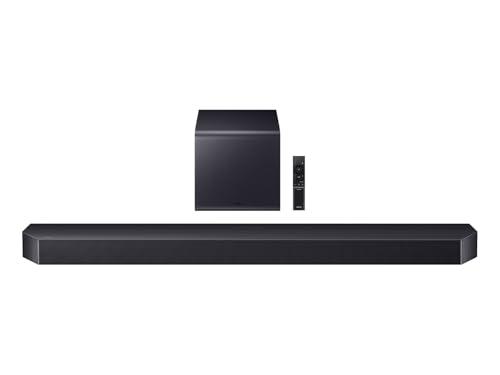
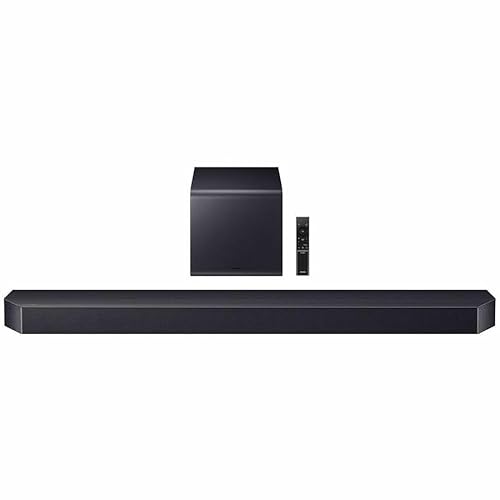
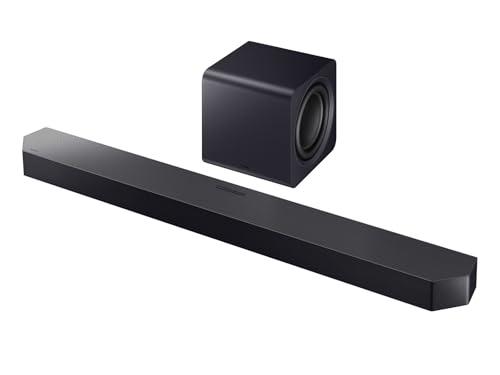
Released in 2025 as Samsung's latest flagship, the Samsung HW-Q990F represents the company's most ambitious soundbar engineering to date. At roughly thirteen hundred dollars at the time of writing, it's positioned squarely in premium territory, competing with high-end audio systems rather than typical soundbars.
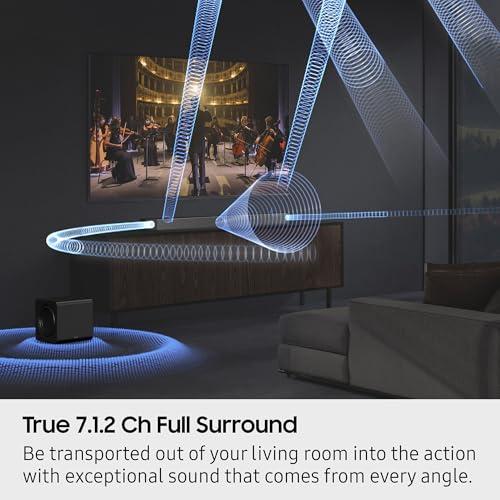
What sets the Q990F apart is its 11.1.4 channel configuration—a specification that sounds like marketing speak until you understand what it delivers. This means eleven main audio channels, one dedicated subwoofer channel, and four height channels specifically designed for overhead effects. The system accomplishes this through 23 individual speakers distributed across three components: the main soundbar houses 15 drivers, while the wireless subwoofer and rear speakers add eight more.
The real innovation lies in the up-firing drivers—speakers that point toward your ceiling to bounce sound downward, creating the illusion of audio coming from above. The Q990F includes six of these up-firing speakers, which is more than most competitors. When watching a helicopter scene in a movie, you genuinely hear the rotor noise moving overhead rather than just around you.
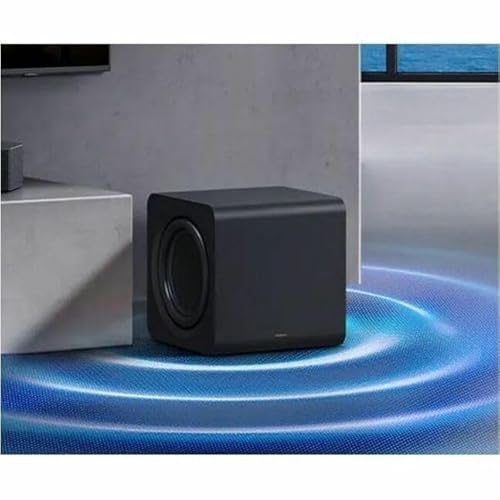
Samsung redesigned the subwoofer for 2025, switching from a ported design to a sealed enclosure with dual 8-inch drivers. This might seem like a step backward (ported subwoofers typically produce more bass), but the sealed design eliminates the rattling and port noise that plagued earlier models. The AI-powered Dynamic Bass Control learns your room's acoustics and adjusts output to minimize distortion, ensuring that bass remains clean and tight even at high volumes.
The wireless rear speakers deserve special attention. Each contains three separate drivers: one pointing forward, one firing to the side, and one angled upward toward the ceiling. This tri-driver design ensures seamless surround effects as sounds move around the room, with no dead zones or gaps in the audio field.
For gaming enthusiasts, the Q990F includes two HDMI 2.1 inputs that support 4K video at 120Hz—crucial for PlayStation 5 and Xbox Series X gaming. The Game Pro mode optimizes audio processing for competitive gaming, enhancing directional cues that can provide tactical advantages in first-person shooters or battle royale games.
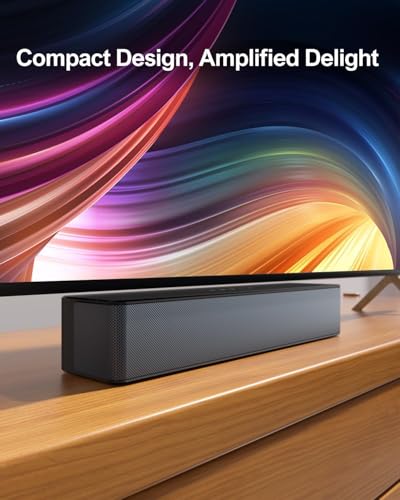
The Ultimea Poseidon D50, also released in 2025, takes a completely different approach. At roughly one hundred twenty dollars at the time of writing—about one-tenth the cost of the Samsung—it aims to deliver genuine 5.1 surround sound without premium pricing.
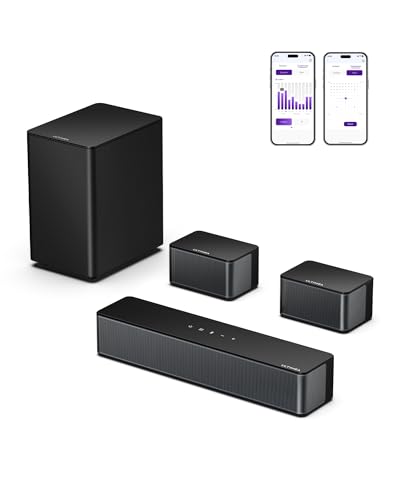
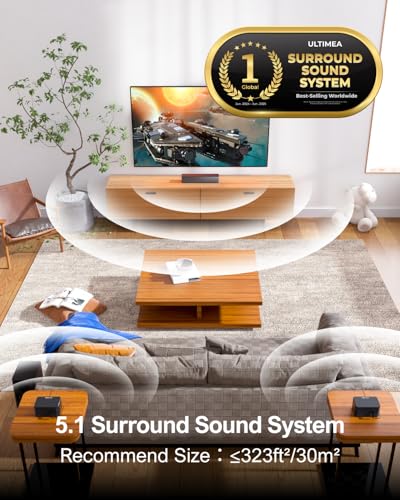
What makes the Poseidon D50 remarkable isn't what it includes, but what it accomplishes within severe budget constraints. Most soundbars at this price point fake surround sound through digital processing, using algorithms to make stereo audio seem wider. The Poseidon D50 actually includes physical rear speakers connected via 19.6-foot cables, creating real surround effects that many competitors at twice the price can't match.
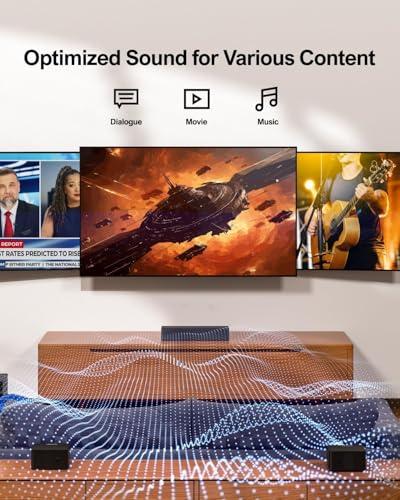
The system's SurroundX technology uses a dedicated DSP (Digital Signal Processor) chip to convert standard stereo audio into true 5.1 surround. While this isn't as sophisticated as Dolby Atmos processing, it creates a convincingly immersive soundstage that extends well beyond your TV screen.
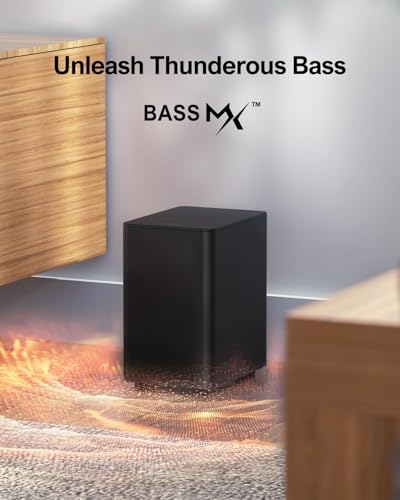
The 5.25-inch wireless subwoofer incorporates Ultimea's BassMX technology, which optimizes the magnetic circuit design and allows for 15mm of diaphragm movement—impressive specs for a budget component. While it can't match the dual 8-inch drivers in Samsung's subwoofer, it delivers surprisingly punchy bass that adds real impact to action scenes.
Perhaps the Poseidon D50's most impressive feature is its smartphone app control, which provides access to 121 preset EQ (equalizer) matrices and a 10-band manual equalizer. This level of customization is typically reserved for much more expensive systems, allowing users to fine-tune the sound signature for different content types or personal preferences.
Clear dialogue might seem like a basic requirement, but it's where many soundbars fail. The Samsung Q990F includes a dedicated center channel driver specifically optimized for speech reproduction, combined with Active Voice Amplifier Pro technology. This system analyzes background noise in your room and automatically boosts dialogue frequencies to maintain clarity even when your air conditioner is running or family members are moving around.
The Ultimea D50 takes a simpler approach with three preset EQ modes, including one specifically tuned for dialogue enhancement. While effective, it lacks the dynamic processing of the Samsung system. However, user reviews consistently mention improved speech clarity for those with hearing difficulties, suggesting the basic implementation works well for its intended audience.
Bass performance reveals the clearest difference between these systems. The Q990F's sealed dual-driver subwoofer produces deeper, more controlled low frequencies that remain clean even at reference volume levels. The AI-powered Dynamic Bass Control continuously adjusts output to prevent the boomy, one-note bass that plagues many subwoofers.
The D50's smaller subwoofer can't match the Samsung's physical output, but it punches above its weight class. The BassMX technology helps optimize the limited driver size, though it lacks the room-shaking impact that makes action movies truly visceral. For most TV content and smaller rooms, however, it provides adequate low-frequency support.
This is where the price difference becomes most apparent. The Q990F creates what reviewers describe as a "hemisphere of sound"—audio that seems to emanate from all directions, including above. When watching aerial dogfight scenes, jet engines realistically pan from front to back while maintaining their height position in the audio field.
The D50 delivers genuine surround effects through its physical rear speakers, but operates on a fundamentally two-dimensional plane. Sounds move convincingly from front to back and left to right, but without height information, the experience remains more traditional surround sound rather than the three-dimensional audio that modern formats enable.
For gaming, the Samsung system offers distinct advantages through its HDMI 2.1 inputs and Game Pro processing mode. The ability to connect consoles directly to the soundbar while maintaining 4K/120Hz video pass-through eliminates the audio delay issues that can occur when routing everything through your TV.
The D50 relies on HDMI eARC (enhanced Audio Return Channel) connection through your TV, which can introduce slight latency depending on your TV's processing. While not deal-breaking for casual gaming, competitive players might notice the difference in fast-paced games where audio cues matter.
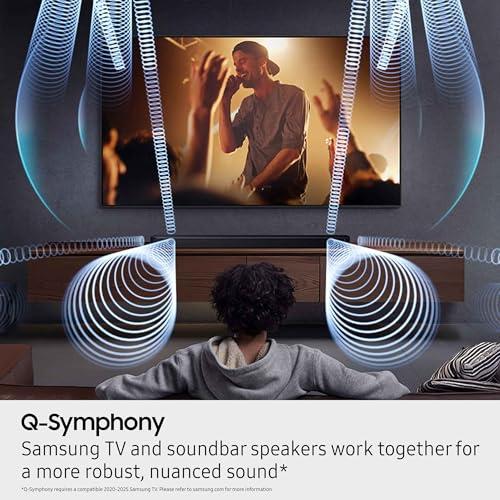
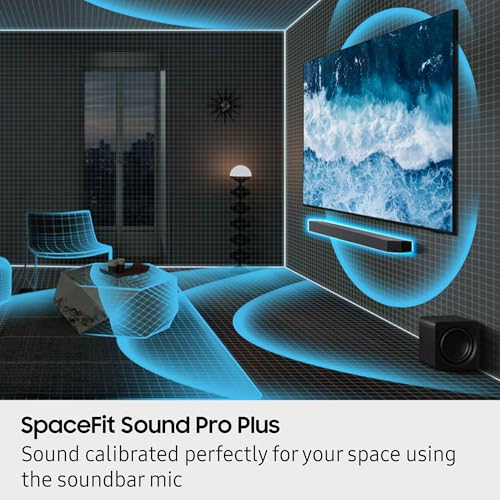
The Q990F showcases Samsung's ecosystem approach with Q-Symphony technology, which allows compatible Samsung TVs to work in tandem with the soundbar. Rather than replacing your TV's speakers, the system coordinates both sets of drivers for even fuller sound. SpaceFit Sound Pro Plus uses built-in microphones to analyze your room's acoustics and automatically adjust the audio profile for optimal performance.
The D50's smart features focus on manual control rather than automation. The smartphone app provides granular control over every aspect of the audio experience, from individual speaker levels to complex EQ adjustments. While this requires more user involvement, it offers flexibility that some audiophiles prefer over automatic systems.
At the time of writing, the price difference between these systems is substantial—roughly ten times more for the Samsung. This raises the obvious question: is the Q990F ten times better?
The answer depends entirely on your priorities and usage patterns. Professional reviews consistently praise the Samsung system as delivering reference-quality performance that rivals dedicated component systems costing significantly more. The three-dimensional audio processing, premium build quality, and comprehensive feature set justify the premium for serious home theater enthusiasts.
The Ultimea D50, however, achieves something perhaps more impressive: it makes genuine 5.1 surround sound accessible at a price point where most competitors offer only simulated effects. TechRadar's review noted that while watching Top Gun: Maverick, they were "impressed at the three-dimensional sound of soaring aircraft" despite the lack of Dolby Atmos processing.
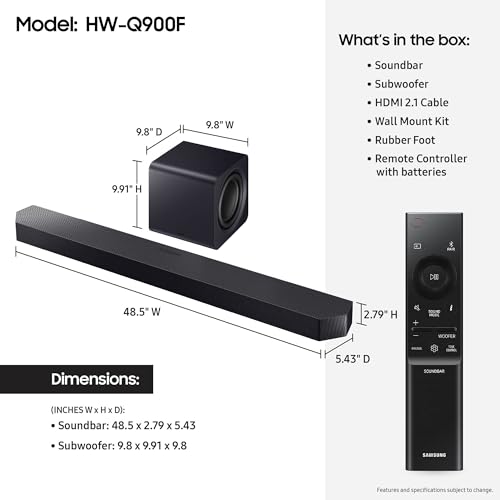
The Samsung Q990F can overwhelm smaller spaces or modest setups. If your primary viewing consists of news, sitcoms, and casual streaming content, the advanced processing capabilities remain largely unused. The system's 48.5-inch width and 52-pound total weight also present practical challenges for apartment dwellers or those with space constraints.
The D50's limitations become apparent with demanding content. Action movies with complex audio mixes can sound somewhat harsh at higher volumes, and the lack of Dolby Atmos support means you're missing the full experience of modern streaming content from Netflix, Disney+, and other services that increasingly offer object-based audio.
For dedicated home theater rooms with large displays and controlled lighting, the Samsung system makes complete sense. The ability to decode true Dolby Atmos from 4K Blu-rays, combined with the system's room-filling capability, creates an experience that approaches commercial cinema quality.
In typical living rooms with ambient light and family activities, the D50 often provides the more practical solution. Its clear dialogue enhancement helps with noisy environments, while the compact form factor doesn't dominate the room visually.
Choose the Samsung HW-Q990F if you're committed to flagship audio performance, have the budget for premium features, own or plan to purchase high-end Samsung TVs, prioritize gaming with current-generation consoles, and want future-proof support for emerging audio formats. The system delivers on its premium promises and provides room to grow as your content library and expectations evolve.
Choose the Ultimea Poseidon D50 if budget constraints are primary considerations, you want genuine surround sound without major investment, your room size is small to medium, you prefer extensive manual control over automatic optimization, and you're upgrading from basic TV speakers where any improvement will be dramatic.
The fundamental choice comes down to audio priorities versus financial constraints. The Samsung system offers exponentially more sophisticated processing and features, but the Ultimea provides perhaps 80% of the core surround sound benefits at roughly 8% of the cost. Both achieve their design goals admirably—the question is which set of goals matches your needs and budget.
For most users seeking their first soundbar upgrade, the D50 offers exceptional value and will transform the TV watching experience. For home theater enthusiasts ready to invest in reference-quality audio, the Q990F represents the current pinnacle of soundbar technology.
| Samsung Q-Series HW-Q990F Soundbar | Ultimea Poseidon D50 5.1 Soundbar Home Theater (2025) |
|---|---|
| Channel Configuration - Determines surround sound immersion and overhead effects | |
| 11.1.4 channels with 23 individual speakers across main bar, subwoofer, and wireless rear speakers | 5.1 channels with 6 high-performance drivers plus dedicated rear satellite speakers |
| Dolby Atmos Support - Essential for modern streaming content and 3D audio placement | |
| Full Dolby Atmos, DTS:X, and object-based audio with 6 up-firing drivers for true overhead effects | No Dolby Atmos; uses proprietary SurroundX technology to convert stereo to 5.1 surround |
| Subwoofer Design - Controls bass depth and room-filling low-frequency impact | |
| Wireless sealed dual 8" force-canceling woofers with AI Dynamic Bass Control | Wireless 5.25" driver with BassMX technology and 15mm diaphragm excursion |
| Rear Speaker Configuration - Affects surround sound realism and spatial audio | |
| Wireless battery-powered speakers with 3 drivers each (front, side, up-firing) for seamless 360° effects | Wired satellite speakers (19.6ft cables) with independent volume control for genuine rear surround |
| Gaming Connectivity - Critical for console gaming without video quality compromise | |
| 2x HDMI 2.1 inputs with 4K/120Hz pass-through, Game Pro mode, and direct console connection | HDMI eARC only; consoles must connect directly to TV which may introduce audio latency |
| Room Calibration - Automatically optimizes sound for your specific space | |
| SpaceFit Sound Pro Plus with built-in microphones for automatic acoustic analysis | Manual smartphone app control with 121 preset EQ matrices and 10-band equalizer |
| Smart TV Integration - Seamless control and enhanced audio when paired with compatible TVs | |
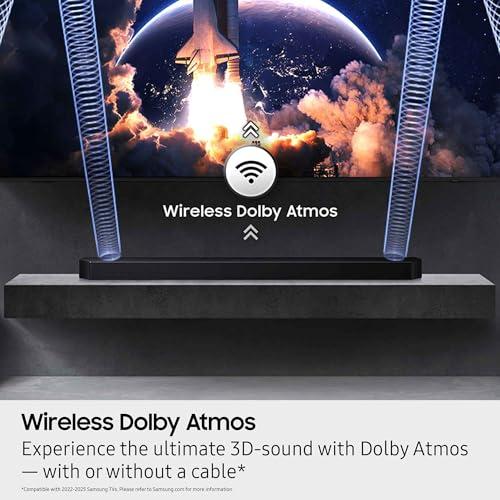
| Samsung Q-Symphony, wireless Dolby Atmos transmission, TV remote control compatibility | Basic HDMI eARC connection; no brand-specific TV integration features |
| Physical Size - Important for room fit and visual impact | |
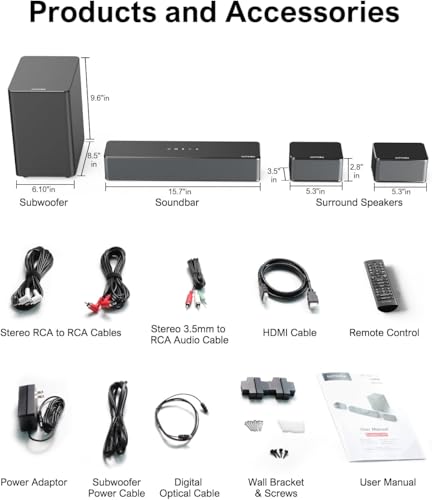
| 48.5"W x 2.8"H x 5.4"D main bar; 52.5 lbs total system weight | 15.7"W x 2.8"H x 3.5"D main bar; significantly more compact and lightweight |
| Streaming and Wireless - Affects music playback quality and connection flexibility | |
| Wi-Fi, Bluetooth 5.3, Apple AirPlay 2, Spotify Connect, TIDAL Connect, Google Cast, Roon Ready | Bluetooth 5.3, basic wireless streaming; lacks high-resolution audio streaming protocols |
| Voice Processing - Ensures dialogue clarity in complex audio mixes | |
| Active Voice Amplifier Pro with dynamic noise analysis and dedicated center channel | Three EQ modes including Dialogue mode; basic voice enhancement without adaptive processing |
The Samsung Q-Series HW-Q990F Soundbar is significantly better for dedicated home theater use. It delivers true 11.1.4-channel Dolby Atmos with overhead effects, premium build quality, and reference-level audio performance. The Ultimea Poseidon D50 provides good value 5.1 surround sound but lacks the immersive height channels and advanced processing needed for a premium home theater experience.
The primary difference is channel configuration and audio processing sophistication. The Samsung Q990F offers 11.1.4 channels with 23 speakers and full Dolby Atmos support, while the Ultimea D50 provides 5.1 channels with 6 drivers and no Atmos capability. This translates to much more immersive three-dimensional audio from the Samsung system.
Yes, both include rear speakers but with different approaches. The Samsung Q-Series HW-Q990F features wireless battery-powered rear speakers with three drivers each (front, side, and up-firing). The Ultimea Poseidon D50 includes wired satellite speakers connected via 19.6-foot cables with independent volume control.
The Samsung Q990F is superior for gaming due to its two HDMI 2.1 inputs supporting 4K/120Hz pass-through and dedicated Game Pro mode. This allows direct console connection without video quality loss. The Ultimea D50 relies on HDMI eARC through your TV, which may introduce slight audio latency during gaming.
The Samsung Q-Series HW-Q990F Soundbar supports wireless Dolby Atmos transmission from compatible Samsung TVs and offers comprehensive wireless streaming options. The Ultimea Poseidon D50 connects via HDMI eARC or optical cable to your TV, with Bluetooth 5.3 for wireless music streaming from phones and tablets.
The Samsung Q990F delivers superior bass through its wireless sealed subwoofer with dual 8-inch force-canceling woofers and AI Dynamic Bass Control. The Ultimea D50 uses a smaller 5.25-inch wireless subwoofer that provides decent bass for the price but cannot match the depth and impact of the Samsung system.
Only the Samsung Q-Series HW-Q990F supports true Dolby Atmos with six up-firing drivers for overhead effects. The Ultimea Poseidon D50 5.1 Soundbar does not support Dolby Atmos but uses proprietary SurroundX technology to convert stereo audio into 5.1 surround sound.
Both offer relatively easy setup, but with different approaches. The Ultimea D50 requires connecting the rear speakers via cables but offers simple plug-and-play operation. The Samsung Q990F has more components but features automatic room calibration through SpaceFit Sound Pro Plus for optimized performance.
The Samsung Q-Series HW-Q990F Soundbar integrates seamlessly with Samsung TV remotes and supports HDMI CEC control with other TV brands. The Ultimea Poseidon D50 offers basic HDMI CEC functionality plus comprehensive smartphone app control with extensive EQ customization options.
The Ultimea D50 is more suitable for small to medium rooms due to its compact 15.7-inch width and appropriate power output. The Samsung Q990F is designed for larger spaces with its 48.5-inch width and room-filling 11.1.4-channel output that may overwhelm smaller rooms.
Both offer dialogue enhancement but at different sophistication levels. The Samsung Q-Series HW-Q990F features Active Voice Amplifier Pro with dynamic noise analysis and a dedicated center channel. The Ultimea Poseidon D50 5.1 Soundbar includes a Dialogue EQ mode that helps with speech clarity but lacks advanced processing.
Value depends on your budget and needs. The Ultimea D50 offers exceptional value by providing genuine 5.1 surround sound with real rear speakers at a budget-friendly price point. The Samsung Q990F justifies its premium pricing with flagship features like Dolby Atmos, advanced processing, and reference-quality audio performance for serious home theater enthusiasts.
We've done our best to create useful and informative comparisons to help you decide what product to buy. Our research uses advanced automated methods to create this comparison and perfection is not possible - please contact us for corrections or questions. These are the sites we've researched in the creation of this article: rtings.com - crutchfield.com - sound-advice.online - samsung.com - soundandvision.com - samsung.com - whathifi.com - youtube.com - youtube.com - bestbuy.com - avsforum.com - content.syndigo.com - samsung.com - businessinsider.com - dolby.com - youtube.com - abcwarehouse.com - youtube.com - eu.ultimea.com - newegg.com - tvsbook.com - youtube.com - provantage.com - ultimea.com - techradar.com - community.ultimea.com - homedepot.com - community.ultimea.com - ultimea.com - ultimea.de - youtube.com - medisamhealthcenter.com - ultimea.com - youtube.com - walmart.com

Privacy Policy
Terms and Conditions - Affiliate Policy
Home Security
© Copyright 2008-2026.
11816 Inwood Rd #1211, Dallas, TX 75244