











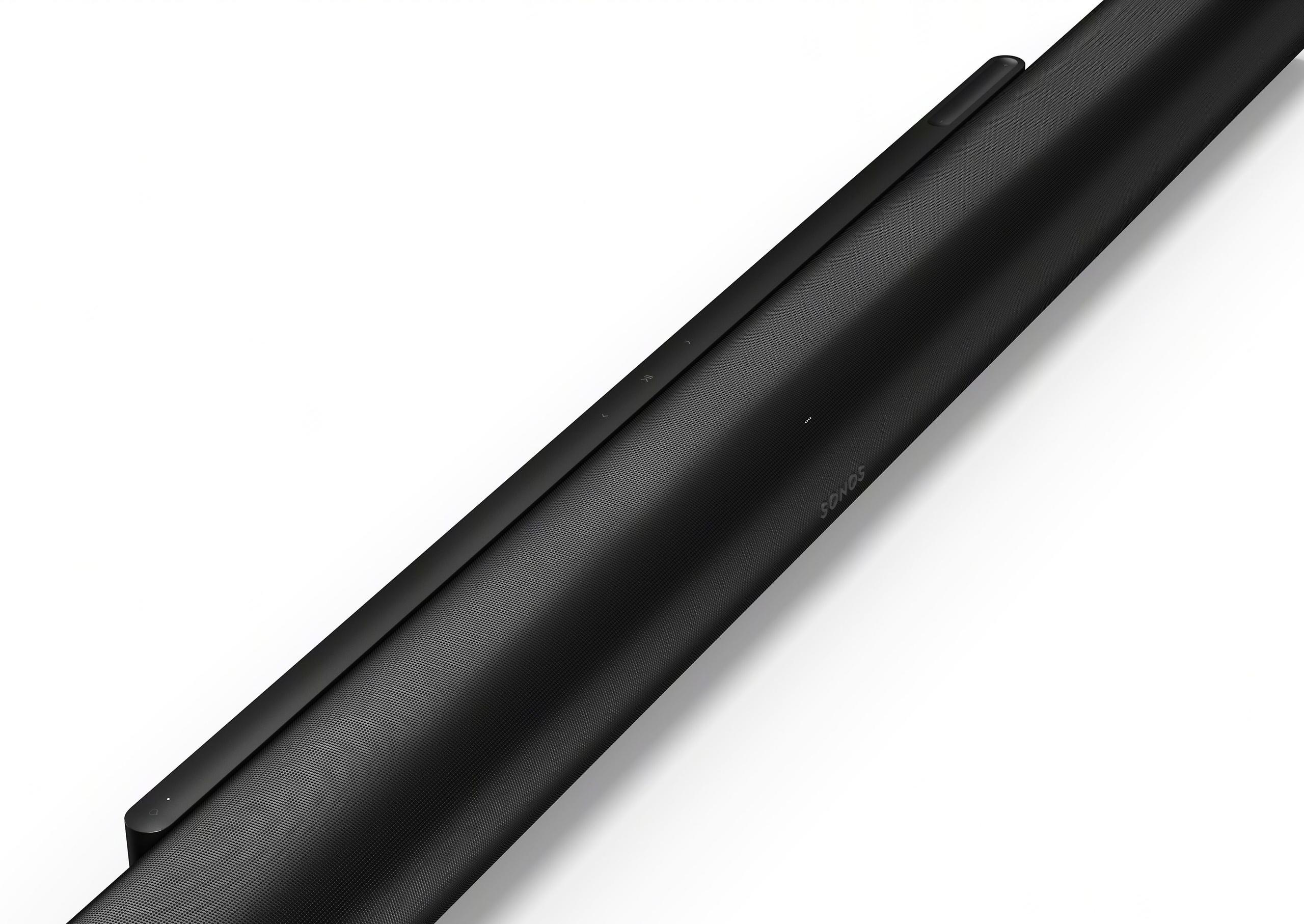
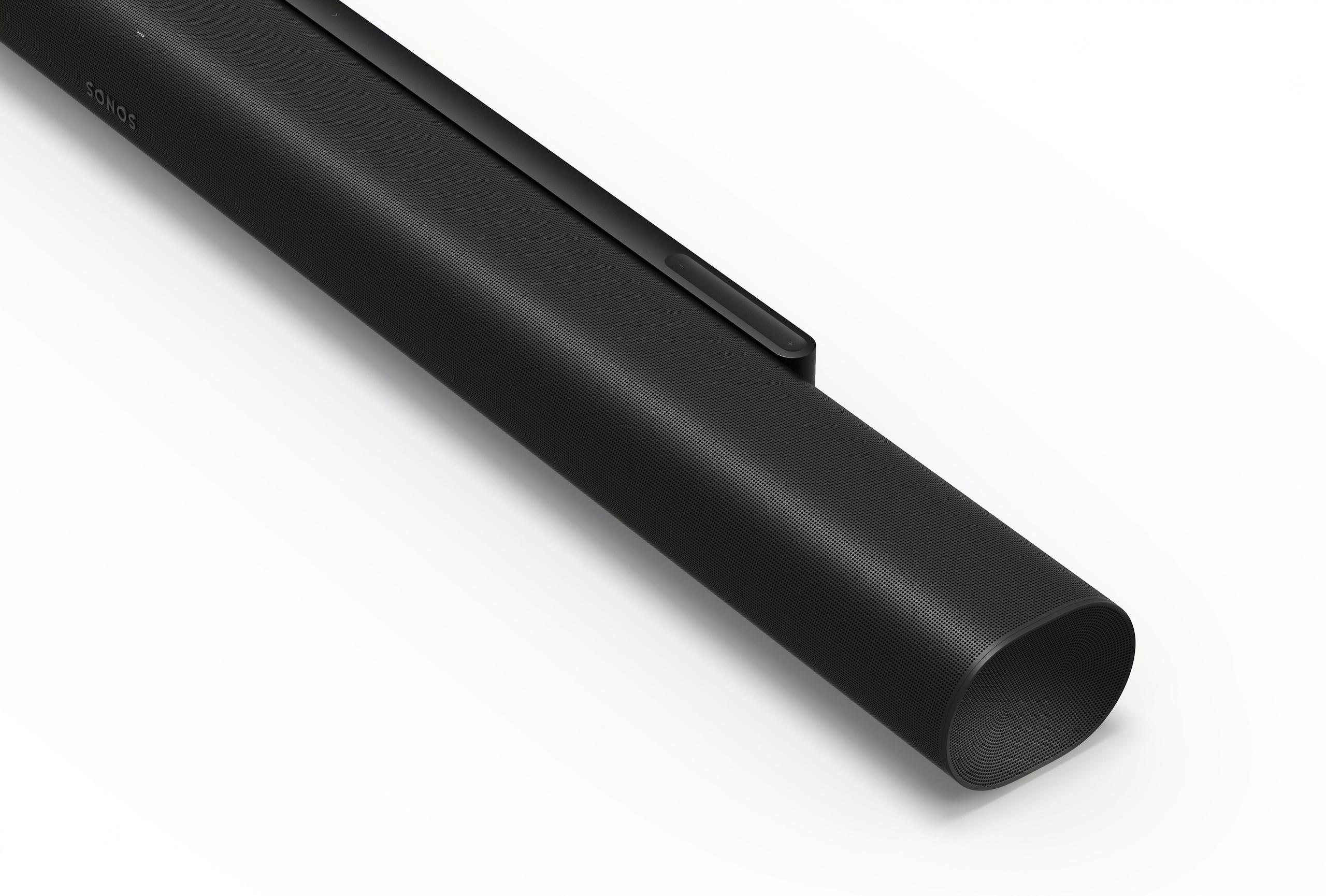
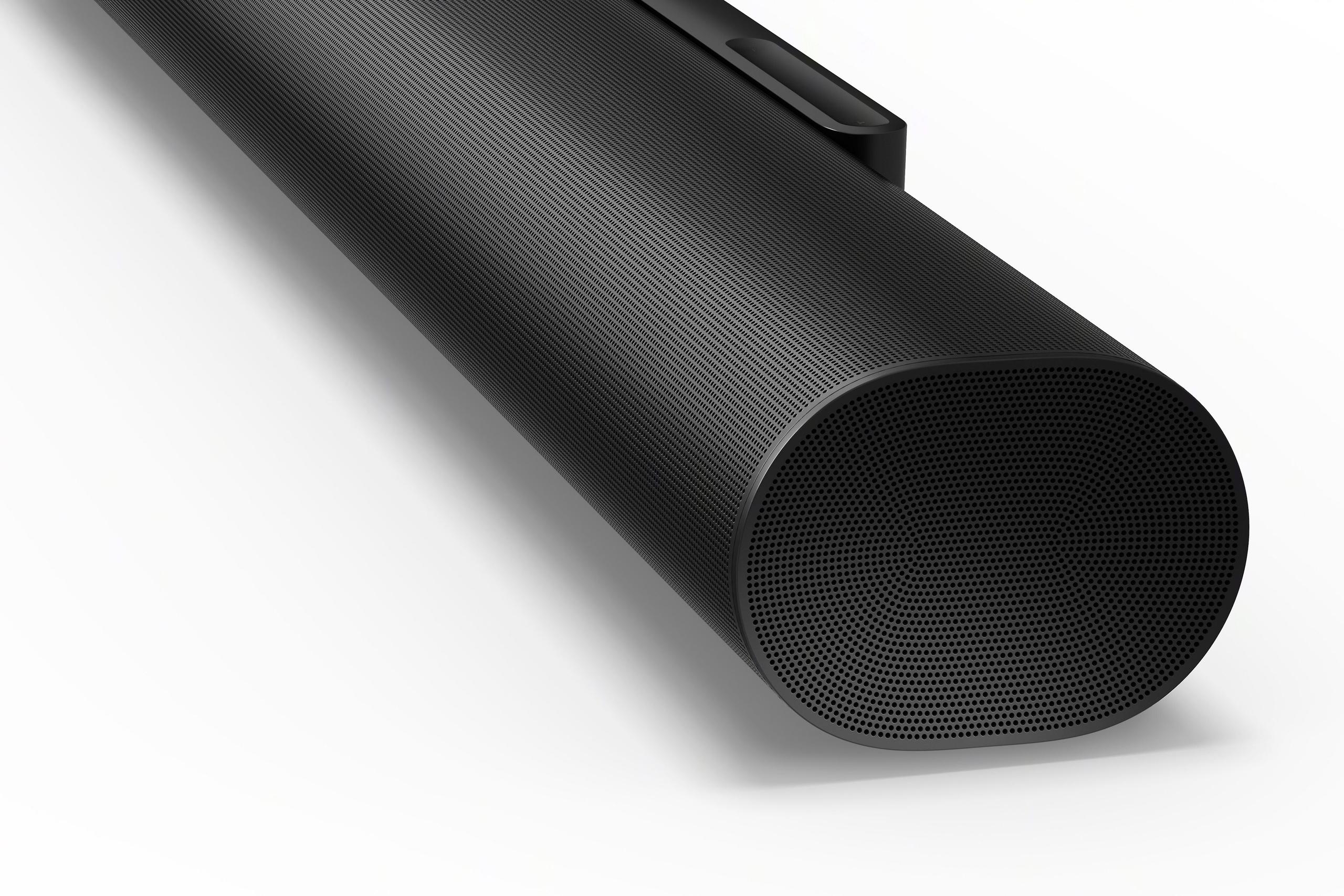
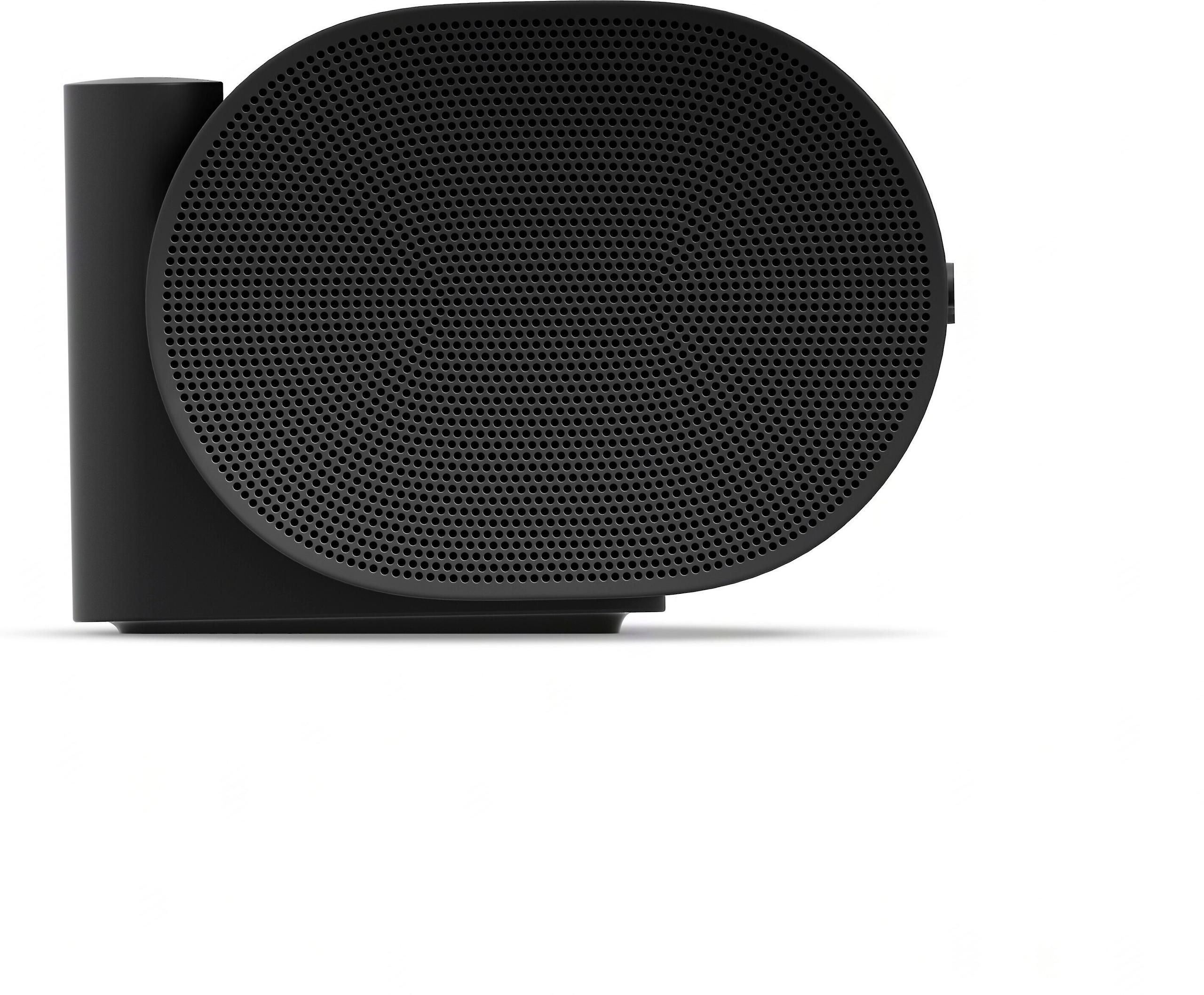
When your TV's built-in speakers make dialogue sound like it's coming from a tin can, it's time for a soundbar upgrade. But here's where things get interesting: you can either go with a traditional approach using multiple physical speakers placed around your room, or embrace cutting-edge technology that creates surround sound from a single sleek unit. The Ultimea Poseidon D50 and Sonos Arc Ultra represent these two very different philosophies, and understanding which approach suits your needs will save you from buyer's remorse.
Think of soundbars as the bridge between your TV's weak audio and a full home theater system. They're designed to solve the fundamental problem that modern TVs, despite their impressive picture quality, have terrible sound because manufacturers prioritize thin designs over audio performance.
The soundbar category has evolved into two distinct camps. True multi-channel systems like the Ultimea Poseidon D50 use separate physical speakers placed around your room – just like a traditional home theater, but simplified. Advanced single-unit soundbars like the Sonos Arc Ultra use sophisticated digital processing and precisely angled drivers to bounce sound off your walls and ceiling, creating the illusion of speakers you don't actually have.
Both approaches have their merits, but they solve the surround sound puzzle in fundamentally different ways. Physical speakers give you authentic directional audio because sound actually comes from behind you. Virtual surround relies on psychoacoustics – basically tricking your brain into perceiving sounds as coming from locations where no speakers exist.
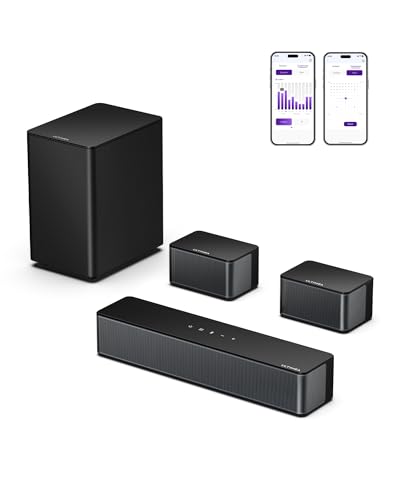
The Ultimea Poseidon D50, released in 2025, takes the straightforward route to surround sound. When we say "5.1," we're talking about five main speakers plus one subwoofer (that's where the ".1" comes from). The system includes a main soundbar, two satellite speakers that you place behind your seating area, and a wireless subwoofer that handles the deep bass.
There's something satisfying about hearing a helicopter actually fly from the front of your room to behind you, created by sound moving between real speakers rather than audio processing trickery. The Ultimea system delivers this experience through its SurroundX™ technology – a digital signal processor (DSP) that can take regular stereo audio and convert it into true 5.1 surround sound.
This matters more than you might think. Most content isn't originally mixed in surround sound, so the ability to intelligently upmix stereo sources means you get surround effects from Netflix shows, YouTube videos, and music – not just big-budget movies with fancy audio mixing.
The satellite speakers connect with 19.6-foot cables, giving you flexibility in placement while ensuring you never lose connection like you might with wireless rear speakers. Each satellite features a 2.25-inch driver, and you can independently control their volume through the system's smartphone app – a feature that's surprisingly useful when you want to dial back the surround effect for late-night viewing.
The wireless subwoofer deserves special attention because bass performance often separates good soundbars from great ones. The Poseidon D50's 5.25-inch subwoofer uses BassMX™ technology, which optimizes the magnetic circuit and increases the diaphragm excursion to 15mm. In plain terms, this means the speaker cone can move back and forth much further than typical budget subwoofers, moving more air and creating deeper, more impactful bass.
During action sequences, explosions feel genuinely powerful rather than just loud. The subwoofer placement flexibility lets you find the sweet spot in your room where bass response is most even – something that's impossible with soundbars that have built-in bass drivers.
The Ultimea's smartphone app control stands out in the budget-to-mid-range category. With 121 preset EQ matrices and a 10-band manual equalizer, you can fine-tune the sound signature to your exact preferences. Six distinct sound modes (Movie, Music, News, Game, and others) provide quick optimization for different content types.
What impressed us in our research was the adjustable surround levels feature. You can dial the rear speakers up or down, or even mute them entirely if you're watching content where surround effects are distracting. This level of control is rare at this price point and shows thoughtful engineering.
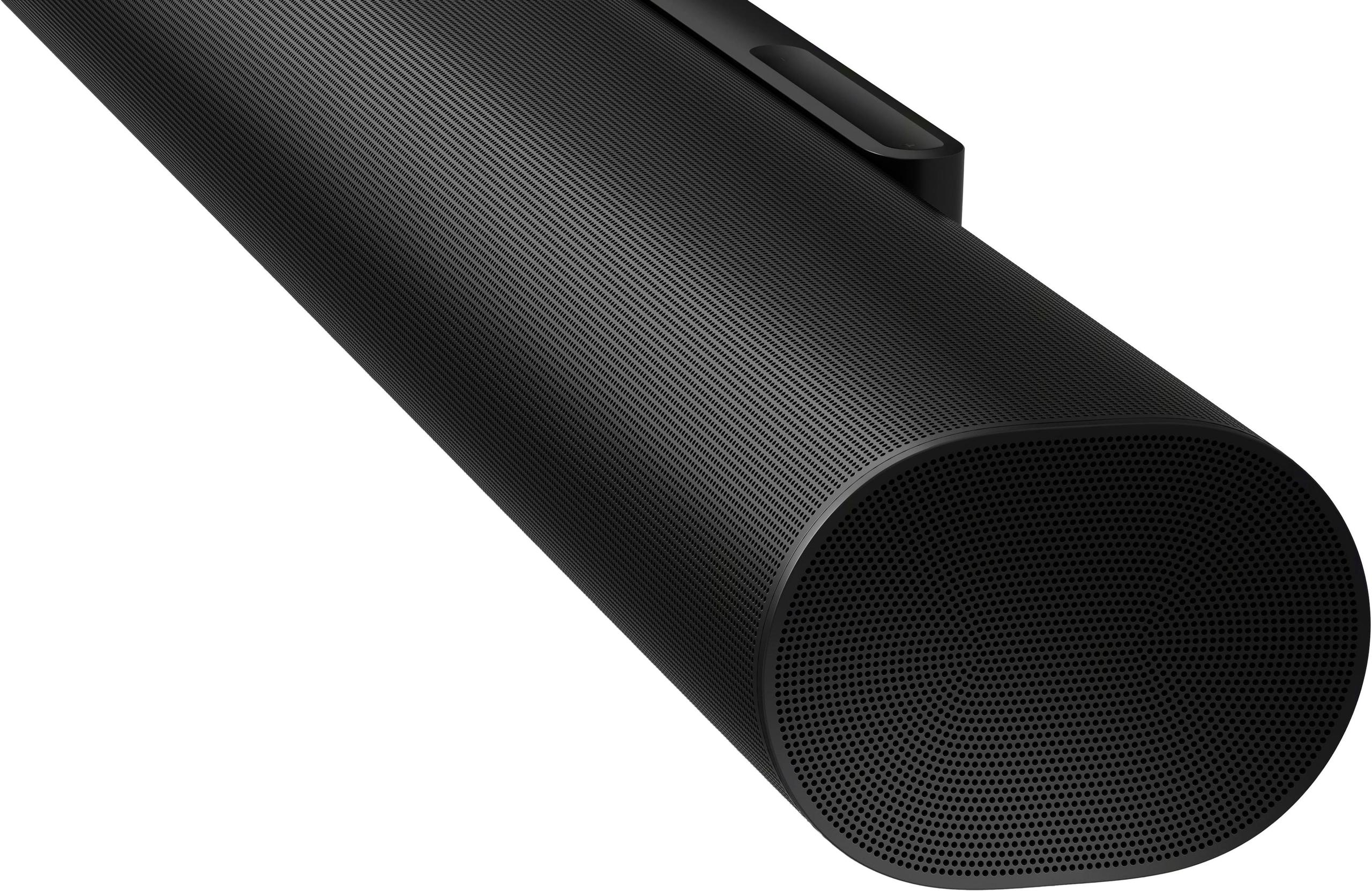
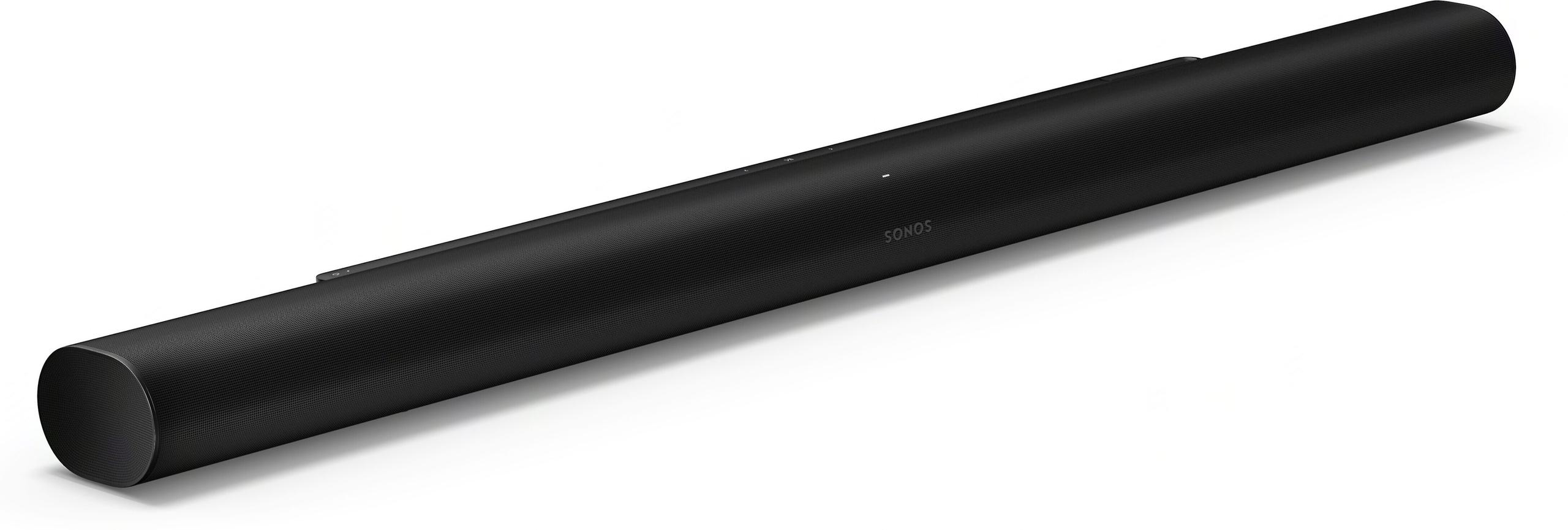
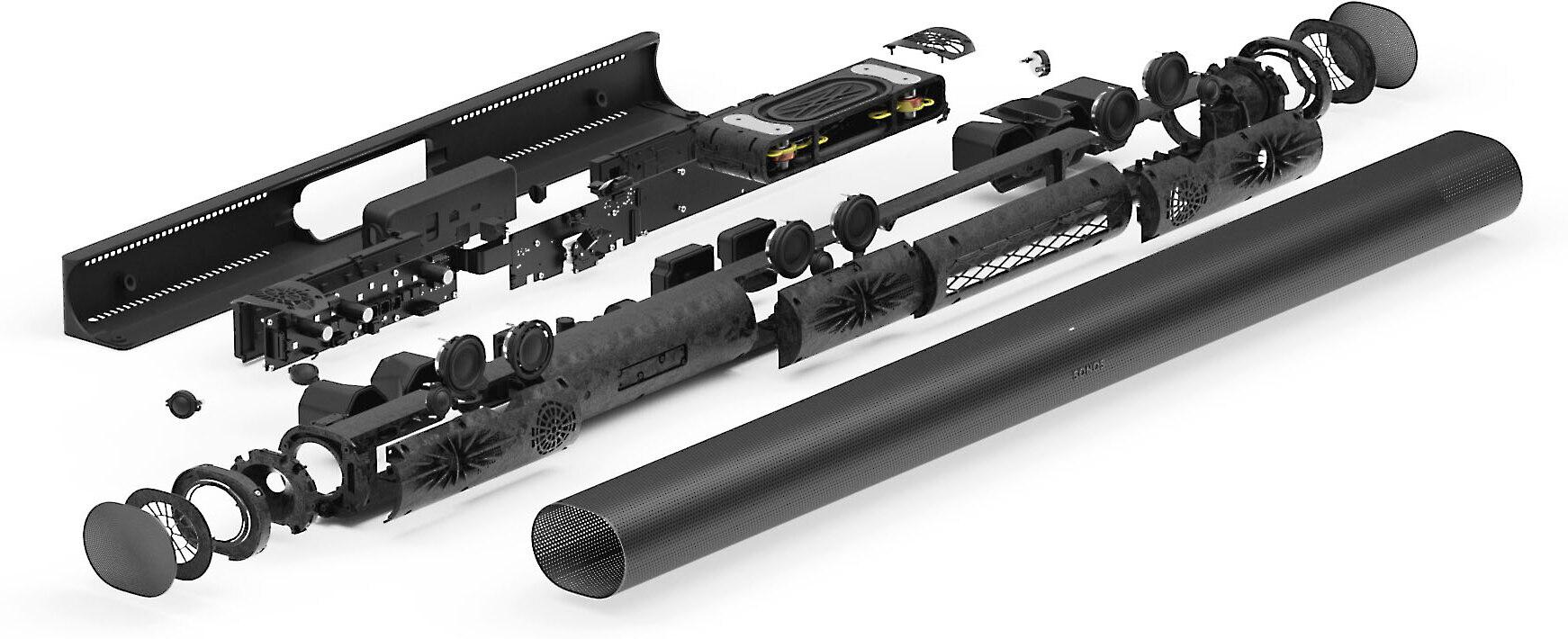
Released in late 2024, the Sonos Arc Ultra represents a completely different philosophy. Instead of multiple speakers, it uses 14 precisely-engineered drivers packed into a single elegant unit to create what Sonos calls a 9.1.4 Dolby Atmos experience. That means nine ear-level channels, one subwoofer channel, and four height channels – all from one soundbar.
The Arc Ultra's most significant innovation is Sound Motion™ technology, which Sonos developed to solve a fundamental physics problem: how to produce deep bass from a thin soundbar without it vibrating itself apart. Traditional woofers create vibrations that can rattle the entire soundbar cabinet, limiting how much bass you can produce.
Sound Motion uses force-cancelling motors positioned at the driver edges to minimize vibrations while maximizing bass output. Think of it like noise-cancelling headphones, but for mechanical vibrations instead of sound waves. This breakthrough allows the Arc Ultra to produce bass response that typically requires a separate subwoofer, all while maintaining its sleek profile.
Dolby Atmos represents a fundamental shift in how audio content is mixed and played back. Instead of traditional channel-based audio (left, right, center, etc.), Atmos uses object-based audio where sounds are positioned in three-dimensional space, including height information.
The Arc Ultra creates height effects by firing sound upward toward your ceiling, which then reflects back down to your ears. The effectiveness depends heavily on your room's ceiling height and material – high ceilings or heavily textured surfaces can diminish the effect. But in ideal conditions, the sense of overhead audio can be genuinely impressive, especially with content specifically mixed for Atmos like recent Netflix shows and movies.
Dialogue clarity has become increasingly important as content creators embrace more dynamic mixing styles that can bury conversation under music and effects. The Arc Ultra's AI-powered Speech Enhancement goes beyond simple frequency boosting, using machine learning to identify and isolate speech patterns from background audio.
With four selectable enhancement levels, you can fine-tune dialogue clarity without over-processing the sound. This feature proves invaluable for viewers who rely on clear speech, whether due to hearing difficulties or simply preference for crisp dialogue.
The Sonos Arc Ultra shines in its ecosystem integration. If you already own other Sonos speakers, the Arc Ultra becomes the centerpiece of a whole-home audio system. You can add Sonos rear speakers later for true surround sound, or incorporate the system into multi-room audio setups.
Trueplay tuning, now available for both iOS and Android devices, uses your phone's microphone to measure your room's acoustics and automatically adjust the soundbar's output. This adaptive technology can compensate for room characteristics that would otherwise require manual EQ adjustments.
The fundamental difference in surround sound approach creates distinct experiences. The Ultimea Poseidon D50 provides authentic directional audio because sound actually originates from behind your seating position. When a car drives past in a movie, you hear it travel from the front soundbar to the rear satellites – there's no ambiguity about direction.
The Sonos Arc Ultra creates impressive width and height effects, but rear channel audio relies on reflected sound. In ideal room conditions, the illusion can be convincing, particularly for height effects that the Ultimea system simply cannot produce. However, the effectiveness varies significantly based on your room's acoustics and seating position.
Both systems approach bass differently but effectively. The Ultimea's dedicated subwoofer can produce deeper, more room-shaking bass that's perfect for action movies and electronic music. The wireless design lets you optimize placement for even bass response throughout your seating area.
The Arc Ultra's Sound Motion technology produces surprisingly deep bass for a soundbar, with better integration into the overall frequency response. While it may not reach the absolute lowest frequencies of the Ultimea's subwoofer, it provides more controlled and precise bass that works better for music listening and doesn't overpower dialogue.
The Ultimea system excels with movie content, where its true surround sound and powerful bass create an immersive cinematic experience. For music listening, it performs adequately but may lack the refinement that audiophiles prefer, particularly at higher volumes where some harshness can creep into the high frequencies.
The Sonos Arc Ultra offers more balanced performance across content types. Its neutral tuning and sophisticated driver array provide smooth frequency transitions that work well for both music and movies. The lack of a separate subwoofer actually benefits music listening, as bass integration tends to be more seamless.
The Ultimea Poseidon D50 wins decisively in connectivity options. HDMI eARC, optical, AUX, USB, and Bluetooth 5.3 ensure compatibility with virtually any device, old or new. This flexibility proves valuable if you have multiple gaming consoles, older devices without HDMI, or simply prefer having backup connection options.
The Sonos Arc Ultra relies primarily on HDMI eARC, which provides the highest quality audio connection but limits flexibility. If your TV lacks eARC support or you need multiple HDMI inputs, you'll need additional equipment. The wireless capabilities are excellent, but the limited physical connectivity can be frustrating for users with complex setups.
Installing the Ultimea system requires running cables to rear speaker locations and finding appropriate placement for the subwoofer. While not difficult, it does require planning and potentially some cable management. The payoff is authentic surround sound that doesn't depend on room acoustics.
The Arc Ultra offers plug-and-play simplicity but demands more from your room's characteristics. Ceiling height, wall materials, and furniture placement all affect performance. The Trueplay tuning helps optimize the sound, but some rooms simply won't support effective height channel reproduction.
At the time of writing, these products occupy different price tiers that reflect their distinct approaches and target audiences. The Ultimea Poseidon D50 delivers genuine 5.1 surround sound at a price point where most competitors offer only virtual surround simulation. This represents exceptional value for users who prioritize authentic surround sound over premium build quality or advanced features.
The Sonos Arc Ultra commands a premium price that reflects its cutting-edge technology, premium materials, and ecosystem integration capabilities. While significantly more expensive, it offers refinements in build quality, sound processing, and long-term software support that justify the investment for users who value these aspects.
Prioritize authentic surround sound above all else. If you want to hear helicopters actually fly behind you rather than a clever simulation, the physical rear speakers deliver an experience that no virtual processing can match.
Have a dedicated home theater room. The system shines when you can properly position all speakers and don't mind the additional cables and components.
Want maximum performance per dollar. True 5.1 surround sound at this price point is genuinely impressive and significantly outperforms most virtual surround competitors.
Enjoy customizing your audio experience. The extensive EQ options and adjustable surround levels let you fine-tune the system to your exact preferences.
Value convenience and aesthetics equally with performance. The single-unit design eliminates cable runs and multiple components while maintaining sophisticated audio processing.
Plan to build a larger audio ecosystem. Integration with other Sonos products creates expansion possibilities that the Ultimea system cannot match.
Live in a space where rear speakers aren't practical. Apartments, rooms with challenging layouts, or households where partners object to multiple speakers benefit from the Arc Ultra's all-in-one approach.
Prioritize music listening alongside home theater use. The more balanced, refined sound signature works better across diverse content types.
Want long-term software support and features. Sonos's track record of updating older products with new features provides confidence in long-term value.
Both the Ultimea Poseidon D50 and Sonos Arc Ultra solve the surround sound puzzle effectively, but through fundamentally different approaches. The Ultimea system provides authentic, no-compromise surround sound that delivers exactly what it promises – real speakers creating real directional audio. The Sonos represents the cutting edge of single-unit soundbar technology, using sophisticated processing and innovative engineering to create compelling surround effects without additional speakers.
Your choice ultimately depends on your priorities: authentic surround sound with some complexity, or convenient sophistication with some compromises. Both products excel in their intended roles, making either a solid choice for the right user and situation.
| Ultimea Poseidon D50 5.1 Soundbar | Sonos Arc Ultra Dolby Atmos Soundbar |
|---|---|
| Audio Configuration - Determines authenticity of surround sound experience | |
| True 5.1 with physical rear speakers + wireless subwoofer | Virtual 9.1.4 Dolby Atmos from single unit |
| Driver Count - More drivers typically mean better sound separation | |
| 6 main drivers + subwoofer + 2 satellite speakers | 14 precisely-engineered drivers in soundbar |
| Surround Sound Technology - How immersive effects are created | |
| SurroundX™ DSP with authentic rear channel placement | Sound Motion™ + Dolby Atmos with reflected audio |
| Bass Solution - Critical for movie impact and music fullness | |
| Dedicated 5.25" wireless subwoofer with BassMX™ technology | Built-in Sound Motion™ woofer (no separate subwoofer needed) |
| Connectivity Options - Flexibility for different devices and setups | |
| HDMI eARC, Optical, AUX, USB, Bluetooth 5.3 | HDMI eARC only, Bluetooth, WiFi streaming |
| Smart Features - Convenience and customization capabilities | |
| Smart app control, 121 EQ presets, 10-band equalizer | Trueplay tuning, AI Speech Enhancement, Sonos ecosystem |
| Setup Complexity - Installation requirements and room flexibility | |
| Requires rear speaker cables and subwoofer placement | Single unit setup, but effectiveness depends on room acoustics |
| Room Size Recommendation - Optimal performance range | |
| 20-35m² (250-380ft²) with flexible speaker placement | Works in various sizes but ceiling height affects Atmos performance |
| Expandability - Future upgrade potential | |
| Limited to included components | Full Sonos ecosystem integration and wireless expansion |
| Height Effects - Overhead audio for modern content | |
| No height channels or Atmos support | Full Dolby Atmos with convincing overhead effects |
| Music vs Movie Performance - Versatility across content types | |
| Optimized for movies, adequate for music | Balanced performance excellent for both music and movies |
| Value Proposition - Performance per dollar at time of writing | |
| Exceptional value for true 5.1 surround at mid-range pricing | Premium pricing for cutting-edge technology and ecosystem benefits |
The Ultimea Poseidon D50 delivers better authentic home theater experience with true 5.1 surround sound using physical rear speakers, while the Sonos Arc Ultra offers more convenient single-unit setup with advanced Dolby Atmos processing. For dedicated home theaters where you can place rear speakers, the Ultimea provides more immersive directional audio. For living rooms or spaces where rear speakers aren't practical, the Sonos Arc Ultra delivers impressive virtual surround effects.
The Ultimea Poseidon D50 comes with physical rear speakers that you must connect and position behind your seating area for true 5.1 surround sound. The Sonos Arc Ultra doesn't require rear speakers as it creates virtual surround effects from the main soundbar unit, though you can add Sonos rear speakers later if desired.
The Ultimea Poseidon D50 includes a dedicated 5.25" wireless subwoofer with BassMX™ technology that produces deeper, more powerful bass ideal for action movies. The Sonos Arc Ultra uses innovative Sound Motion™ technology to create impressive bass from the soundbar itself, offering more controlled and music-friendly low frequencies without requiring a separate subwoofer.
The Ultimea Poseidon D50 provides traditional 5.1 surround sound with five speakers plus subwoofer arranged horizontally around your room. The Sonos Arc Ultra supports Dolby Atmos, which adds height channels to create 3D audio effects including sounds from above, using 9.1.4 processing to simulate a full sphere of sound.
The Sonos Arc Ultra offers simpler setup with just one unit to connect and automatic room tuning via the Trueplay feature. The Ultimea Poseidon D50 requires positioning rear speakers, running cables, and placing the wireless subwoofer, making setup more complex but providing authentic surround sound placement.
The Ultimea Poseidon D50 offers broader TV compatibility with HDMI eARC, optical, AUX, and USB connections, working with both old and new TVs. The Sonos Arc Ultra primarily relies on HDMI eARC for best performance, requiring newer TVs with this feature for full functionality.
The Sonos Arc Ultra provides more balanced, refined sound quality that works excellently for music with its neutral tuning and 14-driver array. The Ultimea Poseidon D50 focuses more on movie performance and while adequate for music, may lack the sophistication that serious music listeners prefer.
The Sonos Arc Ultra requires minimal space with its single 46-inch soundbar that can sit under your TV or mount on the wall. The Ultimea Poseidon D50 needs space for the main soundbar, wireless subwoofer placement, and rear speakers positioned behind your seating area with cable management.
The Ultimea Poseidon D50 offers extensive customization with 121 EQ presets, 10-band equalizer, and adjustable surround levels through its smartphone app. The Sonos Arc Ultra provides seamless ecosystem integration, voice control, automatic room tuning, and AI-powered speech enhancement with multi-room capabilities.
The Ultimea Poseidon D50 is a complete system with limited expansion options beyond the included components. The Sonos Arc Ultra integrates into the full Sonos ecosystem, allowing you to add wireless rear speakers, additional subwoofers, or create multi-room audio systems throughout your home.
The Ultimea Poseidon D50 provides exceptional value by delivering true 5.1 surround sound at a mid-range price point where most competitors offer only virtual surround. The Sonos Arc Ultra costs significantly more but justifies the premium with cutting-edge technology, superior build quality, and long-term ecosystem benefits.
The fundamental difference is approach: the Ultimea Poseidon D50 uses physical speakers placed around your room for authentic surround sound, while the Sonos Arc Ultra uses advanced digital processing and driver arrays to create virtual surround effects from a single elegant unit. Choose Ultimea for authentic surround sound at great value, or Sonos for premium convenience and cutting-edge technology.
We've done our best to create useful and informative comparisons to help you decide what product to buy. Our research uses advanced automated methods to create this comparison and perfection is not possible - please contact us for corrections or questions. These are the sites we've researched in the creation of this article: youtube.com - eu.ultimea.com - newegg.com - tvsbook.com - youtube.com - provantage.com - ultimea.com - techradar.com - community.ultimea.com - homedepot.com - community.ultimea.com - ultimea.com - ultimea.de - youtube.com - medisamhealthcenter.com - ultimea.com - youtube.com - walmart.com - bestbuy.com - shopjetson.com - youtube.com - ign.com - crutchfield.com - dowtechnologies.com - sonos.com - appleinsider.com - pcrichard.com - clefdesol.com - sonos.com - businessinsider.com - audioadvice.com - en.community.sonos.com

Privacy Policy
Terms and Conditions - Affiliate Policy
Home Security
© Copyright 2008-2026.
11816 Inwood Rd #1211, Dallas, TX 75244