





When you're tired of constantly adjusting your TV volume during movies—cranking it up to hear whispered dialogue, then scrambling for the remote when explosions threaten to wake the neighbors—it's time to consider a proper soundbar system. Both the Ultimea Poseidon D50 and JBL Bar 1000 MK2 promise to solve this problem, but they take dramatically different approaches to delivering cinematic audio in your living room.
Today's soundbar market has evolved far beyond the simple "TV speaker replacement" boxes of a decade ago. Modern systems like the Ultimea Poseidon D50 and JBL Bar 1000 MK2 are sophisticated audio processors that can create immersive surround sound experiences rivaling traditional home theater setups—without the complexity of running speaker wires throughout your room.
The key consideration isn't just "louder sound." It's about channel separation (how distinct different audio elements sound), soundstage width (how far the audio seems to extend beyond the physical speakers), and dynamic range (the difference between the quietest and loudest sounds the system can reproduce clearly). These factors determine whether you'll experience that "theater at home" feeling or just marginally better TV audio.
When evaluating soundbars, the most critical performance metrics include power output (measured in watts), channel configuration (like 5.1 or 7.1.4), frequency response (how low the bass goes and how crisp the highs are), and connectivity options. At the time of writing, these two systems represent vastly different price points and performance philosophies, making them perfect for understanding what you actually get when you spend more on audio equipment.
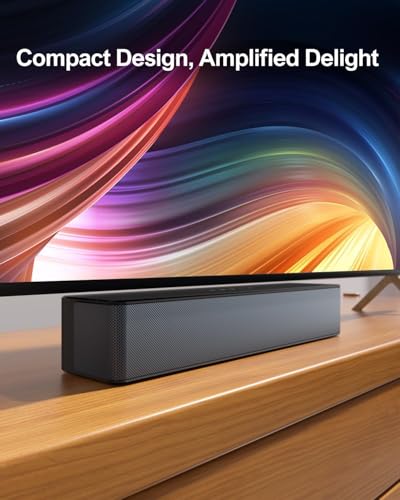
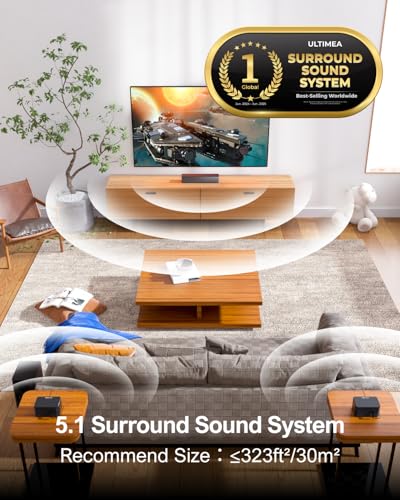
Released in 2025, the Ultimea Poseidon D50 represents the "maximum value" approach to surround sound. It's designed for users who want authentic multi-channel audio—meaning actual separate speakers creating distinct left, right, center, and surround channels—without premium pricing. Think of it as the "enthusiast's budget choice" that doesn't compromise on the fundamentals.
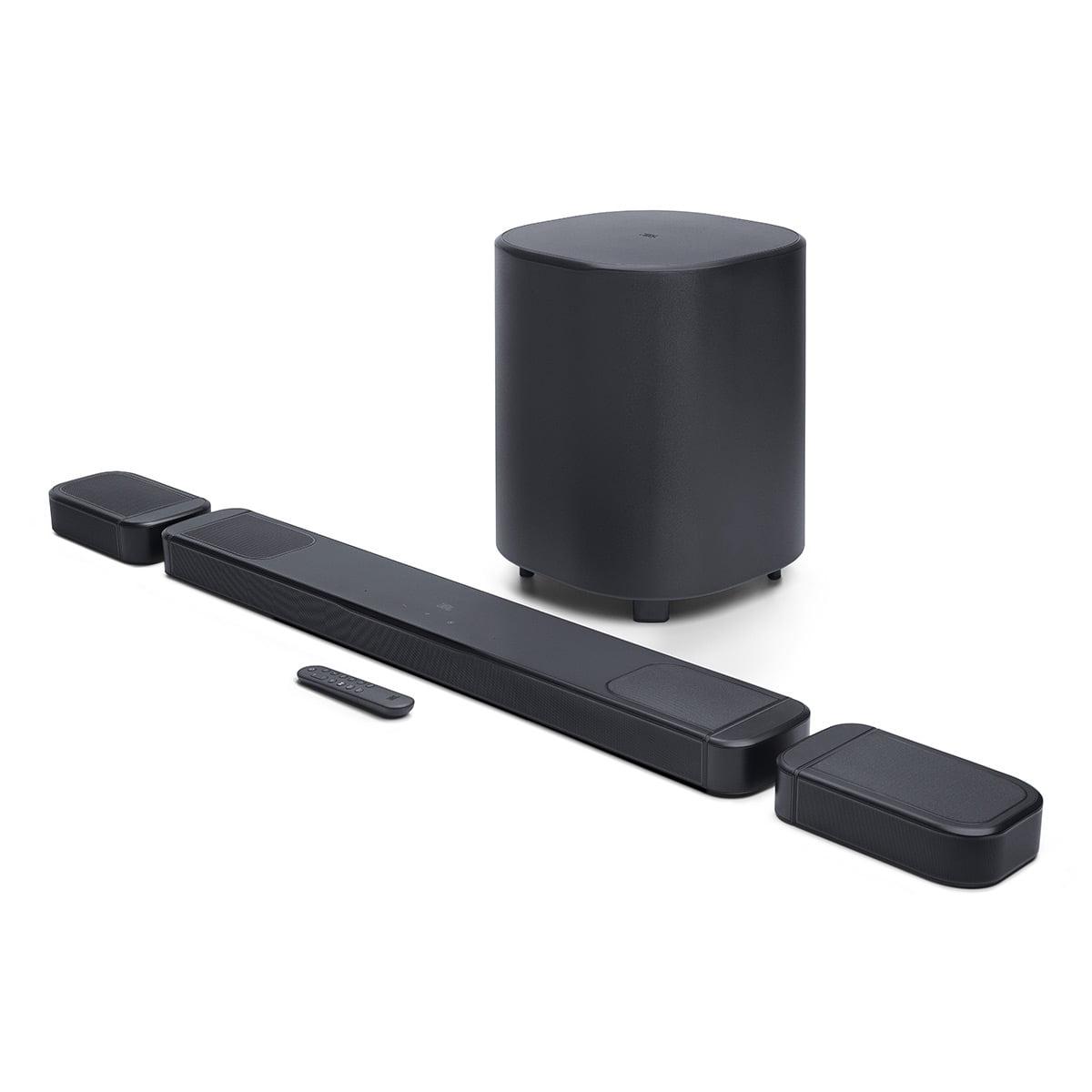
The JBL Bar 1000 MK2, also from 2025, takes the opposite approach. This is JBL's "no compromises" flagship, packed with every modern audio technology they could engineer into a consumer soundbar. The "MK2" designation indicates this is the second-generation version, benefiting from years of user feedback and technological advancement since the original Bar 1000 series launched.
What's particularly interesting about these 2025 releases is how they reflect the current state of audio technology. The Ultimea system leverages cost-effective but sophisticated digital signal processing (DSP) to create surround effects, while the JBL system employs cutting-edge spatial audio processing that was only available in professional audio equipment just a few years ago.
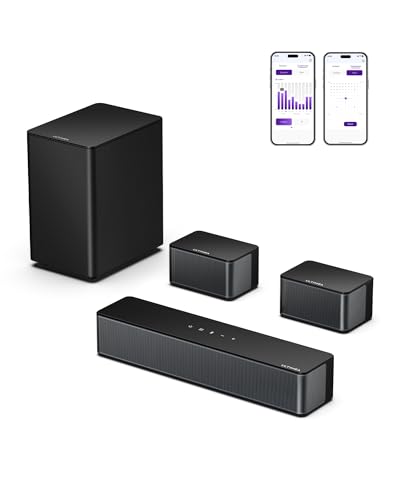
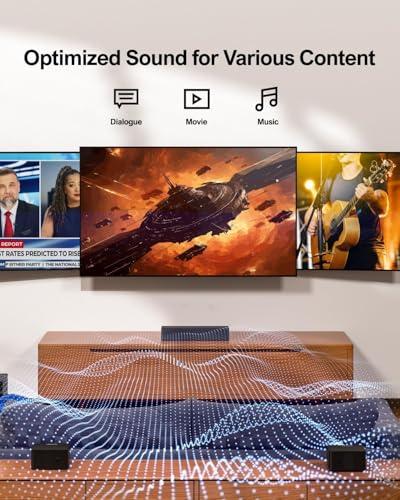
The Ultimea Poseidon D50 creates its 5.1 surround experience through a combination of physical rear speakers and intelligent audio processing. Its SurroundX™ algorithm takes standard stereo content (like most streaming shows) and analyzes the audio to separate different sound elements—dialogue, music, sound effects—then redistributes them across five discrete channels plus the subwoofer. This isn't just making things louder; it's creating spatial placement where explosions seem to come from behind you while keeping dialogue anchored to the screen.
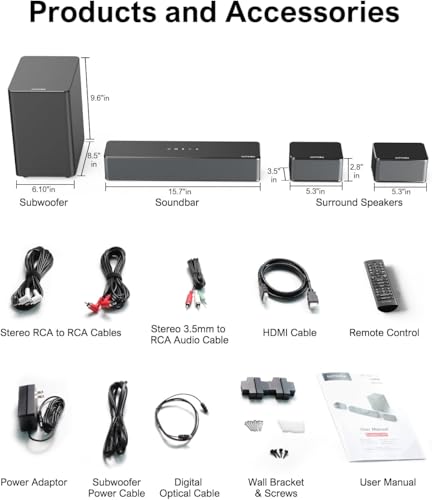
The system includes two wired satellite speakers that you place behind your seating area. While some might see wires as a drawback, they ensure consistent, uninterrupted audio connection—crucial during intense movie scenes where audio dropouts would be particularly jarring. The independent volume control for these rear speakers is brilliantly practical; you can fine-tune the surround effect based on your room layout and personal preference.
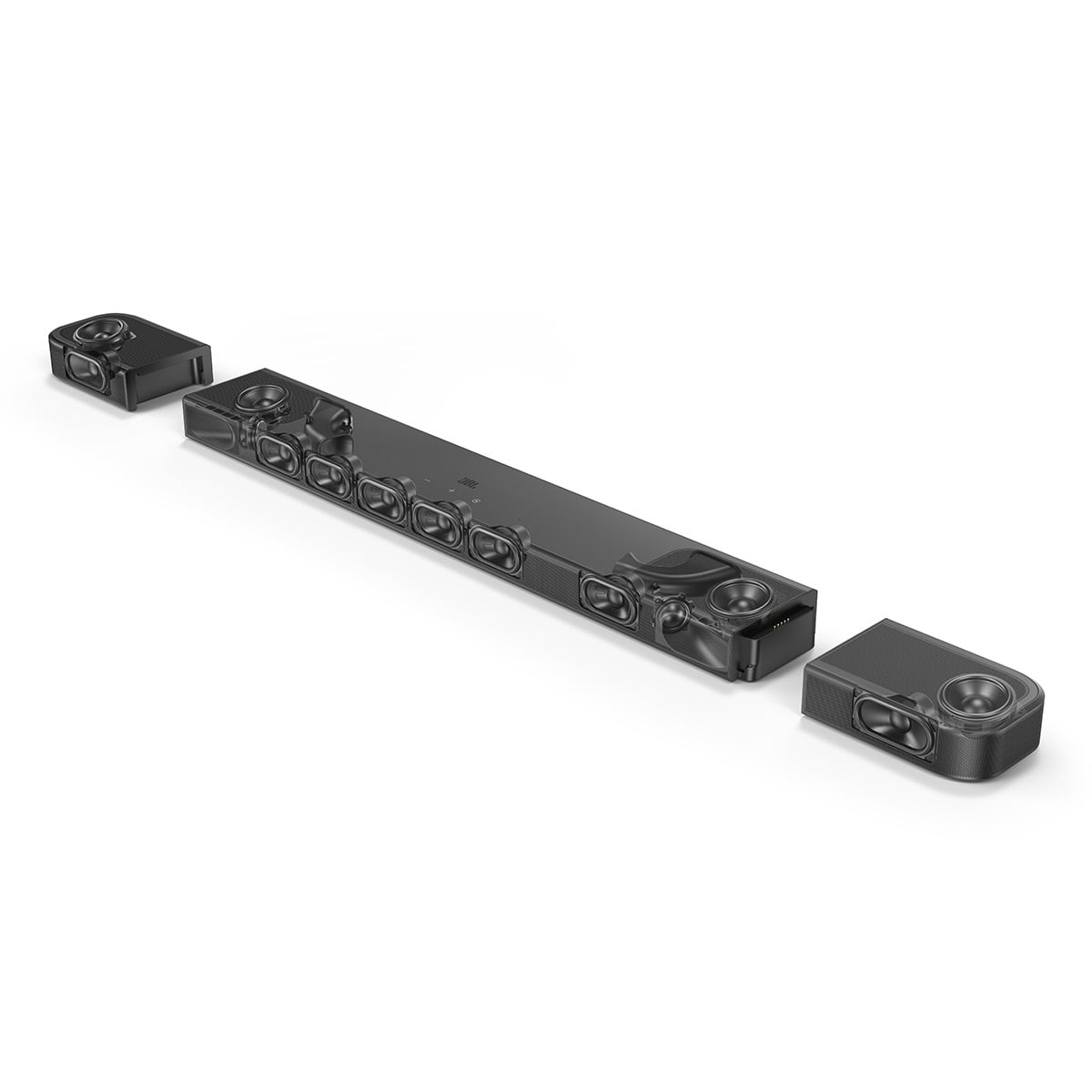
The JBL Bar 1000 MK2 operates on an entirely different level. Its 7.1.4 channel configuration includes dedicated height channels—those ".4" speakers that fire sound upward to bounce off your ceiling, creating the sensation that helicopters are actually flying overhead or rain is falling from above. This is true Dolby Atmos processing, where individual sound objects are placed in three-dimensional space rather than just left, right, front, and back.
The technical sophistication here is remarkable. MultiBeam™ 3.0 technology uses precisely angled drivers and advanced signal processing to create what audio engineers call "phantom imaging"—your brain perceives sounds coming from locations where there are no physical speakers. Combined with four up-firing drivers (two in the main bar, one in each detachable surround speaker), the JBL system can reproduce the full sphere of audio that movie sound designers intended.
From our research into user experiences and professional reviews, the difference is immediately apparent with properly mastered content. Dolby Atmos movies on the JBL system deliver that "demo room" experience where you'll find yourself looking up at the ceiling during helicopter scenes or feeling genuinely surrounded during thunderstorms.
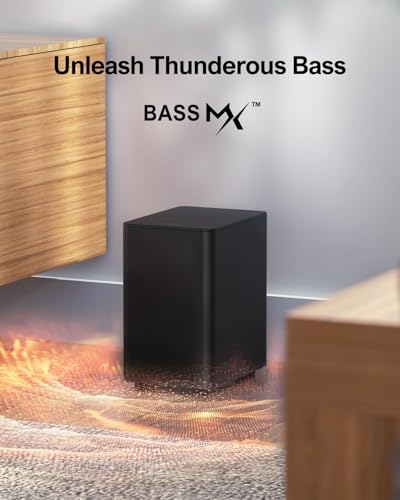
Bass isn't just about making explosions louder—it's the foundation that gives weight and presence to every sound. The Ultimea Poseidon D50 includes a 5.25-inch wireless subwoofer utilizing BassMX™ technology. This involves an optimized magnetic circuit and extended diaphragm excursion (how far the speaker cone moves back and forth) to generate more bass impact than typical budget subwoofers.
In practice, this means the Ultimea system delivers satisfying low-end for most content. Movie explosions have appropriate rumble, music maintains its rhythmic foundation, and you'll feel that subtle bass presence that makes dialogue sound more natural and full-bodied. However, it's designed for moderate listening levels in smaller to medium-sized rooms.
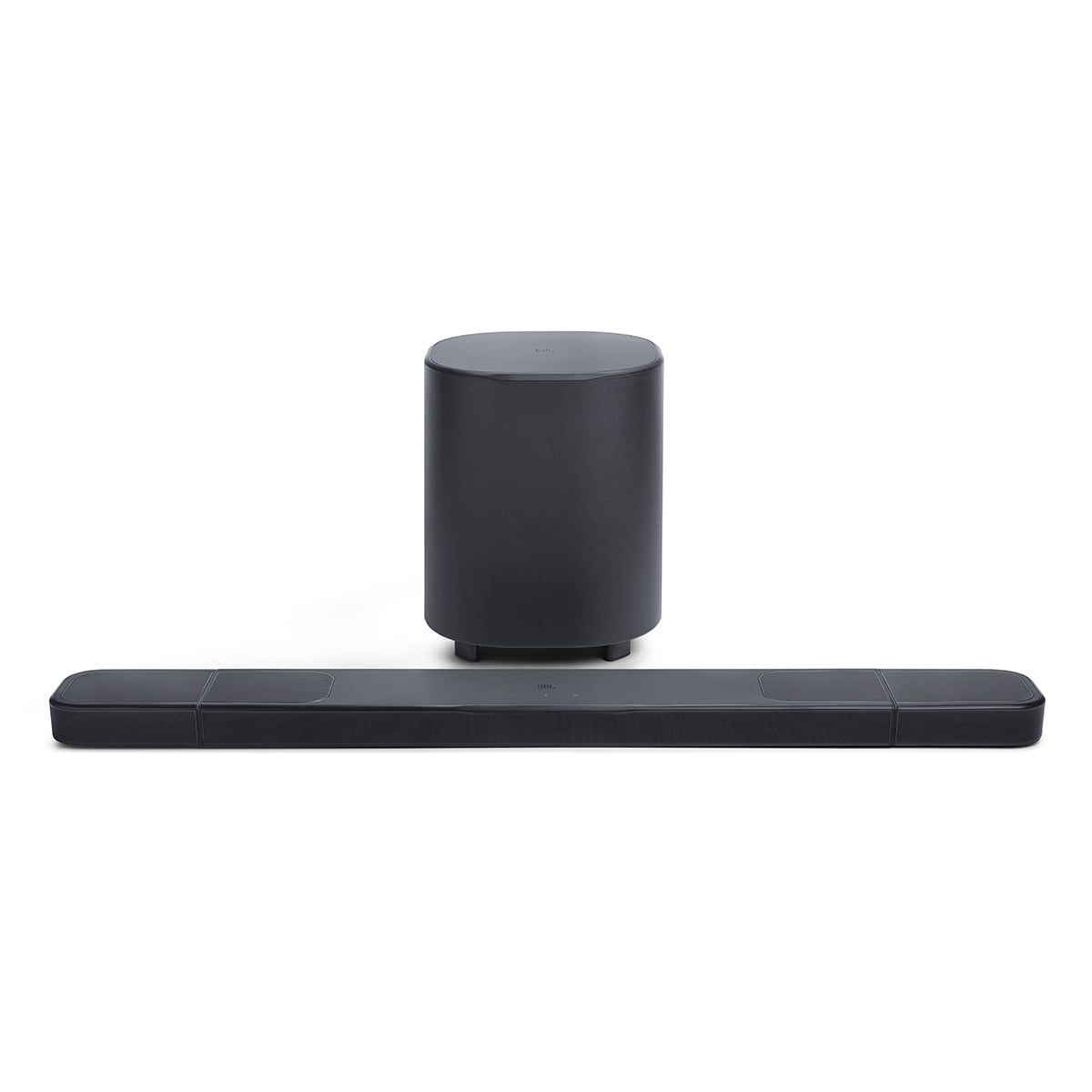
The JBL Bar 1000 MK2 features a substantial 10-inch wireless subwoofer with 300W of dedicated power. The size difference alone is significant—larger drivers move more air with less effort, producing deeper, cleaner bass with reduced distortion. This subwoofer can reproduce those ultra-low frequencies that you feel more than hear, like distant thunder or the rumble of spacecraft engines.
Based on user feedback we've analyzed, the JBL's subwoofer provides what many describe as "theater-quality" bass that can energize large rooms without losing clarity. It's the difference between knowing there's an explosion on screen and feeling the shock wave in your chest.
Poor dialogue reproduction is the primary reason people buy soundbars. The Ultimea Poseidon D50 addresses this with a dedicated Dialogue EQ mode and the flexibility of its 10-band equalizer. You can manually adjust frequency ranges to optimize voice clarity for your specific room acoustics and hearing preferences.
The JBL Bar 1000 MK2 takes a more sophisticated approach with PureVoice 2.0 technology. This system continuously analyzes the ambient sound level and automatically adjusts dialogue frequencies to ensure voices remain clear regardless of background noise or volume level. It's particularly effective during action scenes where dialogue often gets buried under sound effects in lesser systems.
From expert reviews we've studied, both systems excel at dialogue clarity, but the JBL's adaptive processing provides more consistent results across different types of content without requiring manual adjustment.
The Ultimea Poseidon D50 delivers 320W of peak power, which proves adequate for rooms up to about 380 square feet. This provides clean, undistorted sound at moderate to moderately-loud listening levels—perfect for typical family viewing scenarios.
The JBL Bar 1000 MK2 operates in a different league entirely with 960W maximum output (480W RMS continuous power). This isn't just about getting louder; it's about dynamic range—the ability to reproduce both whisper-quiet dialogue and explosive action sequences without compression or distortion.
Higher power output also means better control over the drivers, resulting in tighter, more accurate sound reproduction even at moderate volumes. In practical terms, the JBL system maintains composure during demanding passages where lesser systems would strain and distort.
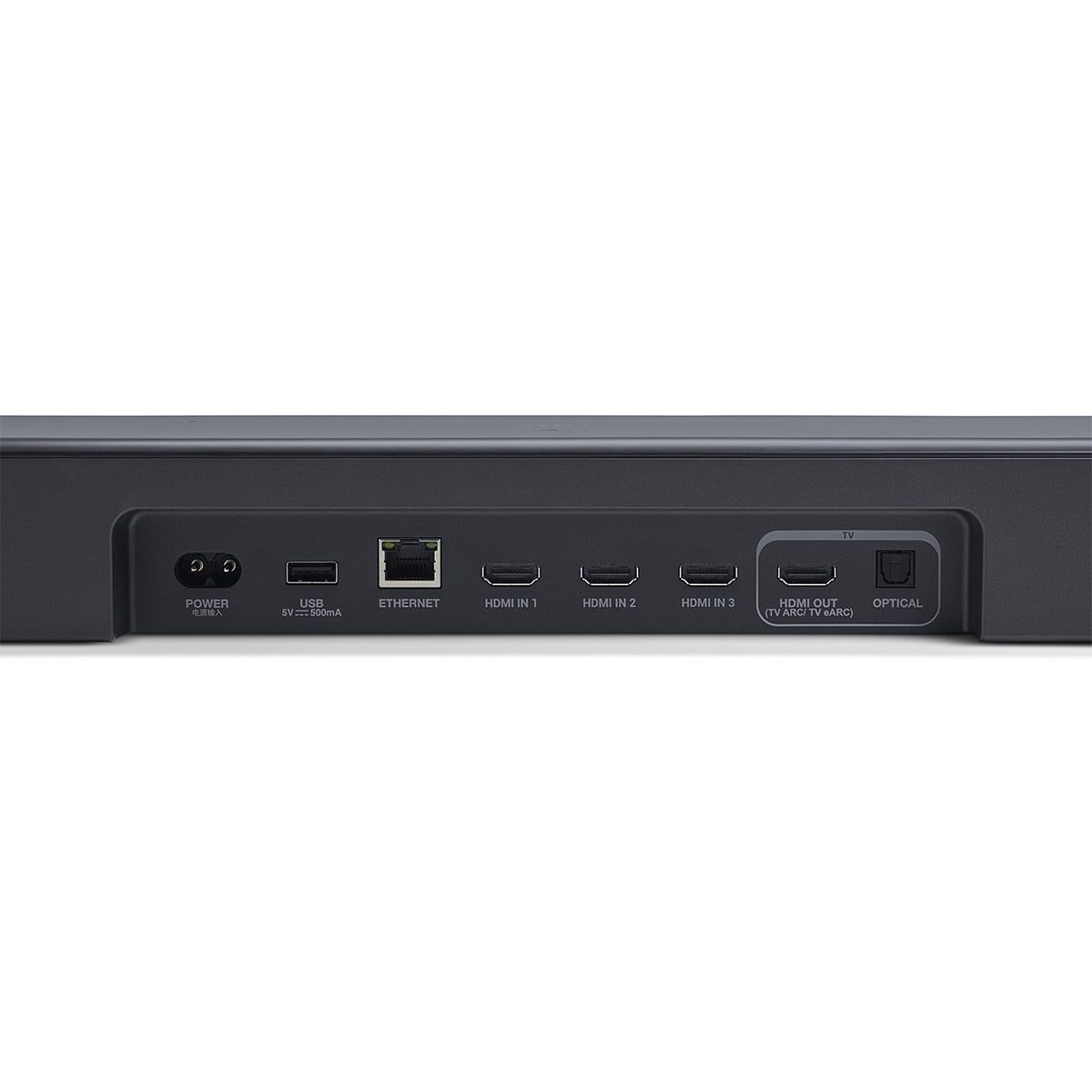
Both systems include essential connections, but the JBL Bar 1000 MK2 provides significantly more flexibility. While the Ultimea system covers the basics with HDMI eARC, optical, AUX, and USB inputs, the JBL system includes three HDMI inputs with 4K Dolby Vision passthrough.
This connectivity difference is more important than it might initially seem. The JBL system can serve as your entertainment hub, switching between gaming consoles, streaming devices, and Blu-ray players without requiring you to change TV inputs. The 4K passthrough ensures you maintain the highest video quality while gaining premium audio processing.
Wireless connectivity is where the JBL system truly shines. Built-in Wi-Fi enables direct streaming from services like Spotify, while AirPlay 2 and Chromecast support allow seamless casting from phones and tablets. The Ultimea system relies primarily on Bluetooth connectivity, which works well but lacks the stability and quality of direct Wi-Fi streaming.
The Ultimea Poseidon D50 distinguishes itself through exceptional customization options. Its 121 preset EQ matrices represent different acoustic scenarios and music genres, while the 10-band manual equalizer allows precise frequency adjustment. This level of control typically exists only in much more expensive systems.
The smartphone app control is particularly well-implemented, allowing real-time adjustments without hunting for a remote. Independent volume control for the rear speakers addresses a common complaint with surround systems—the ability to dial in the perfect balance between immersive effects and clear front-stage audio.
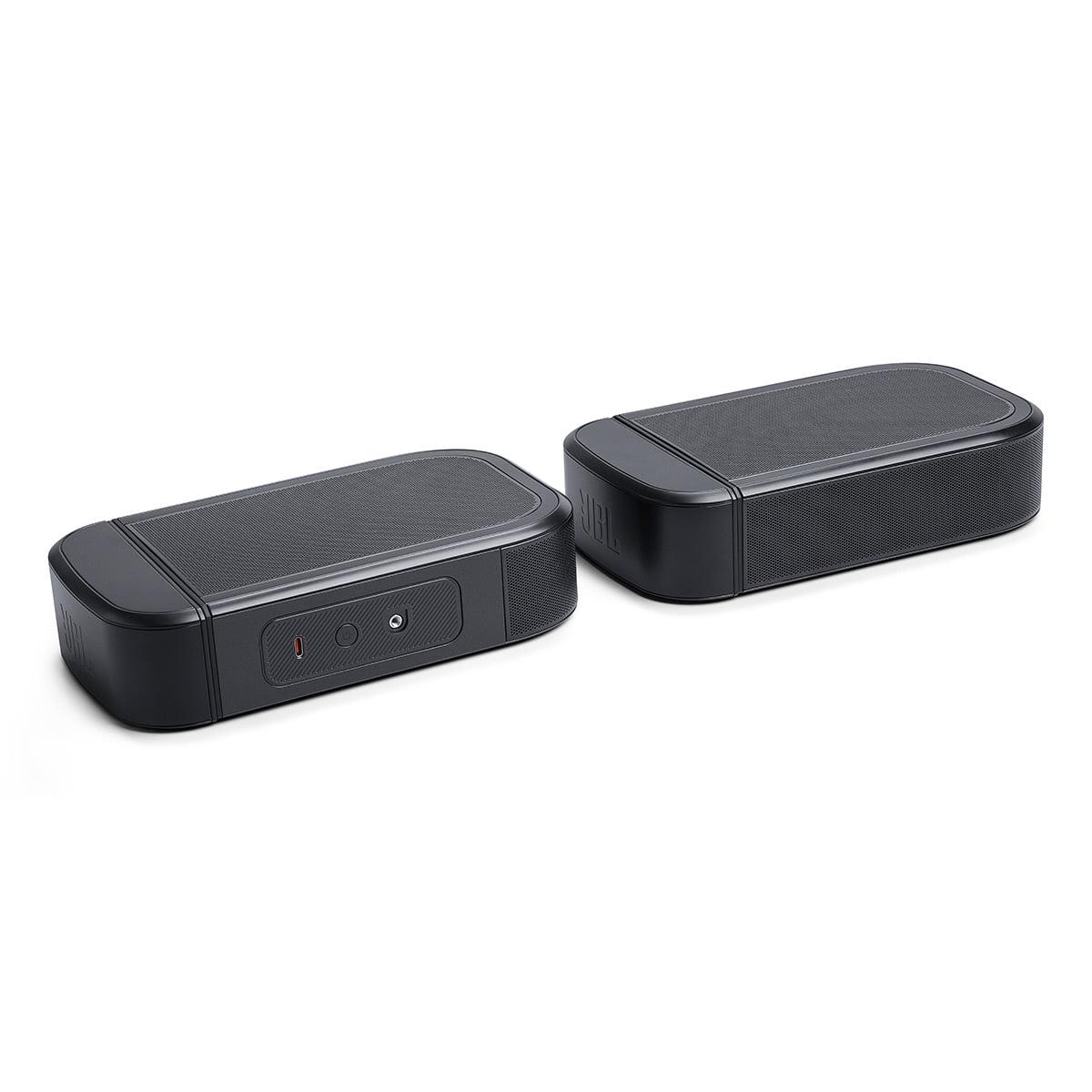
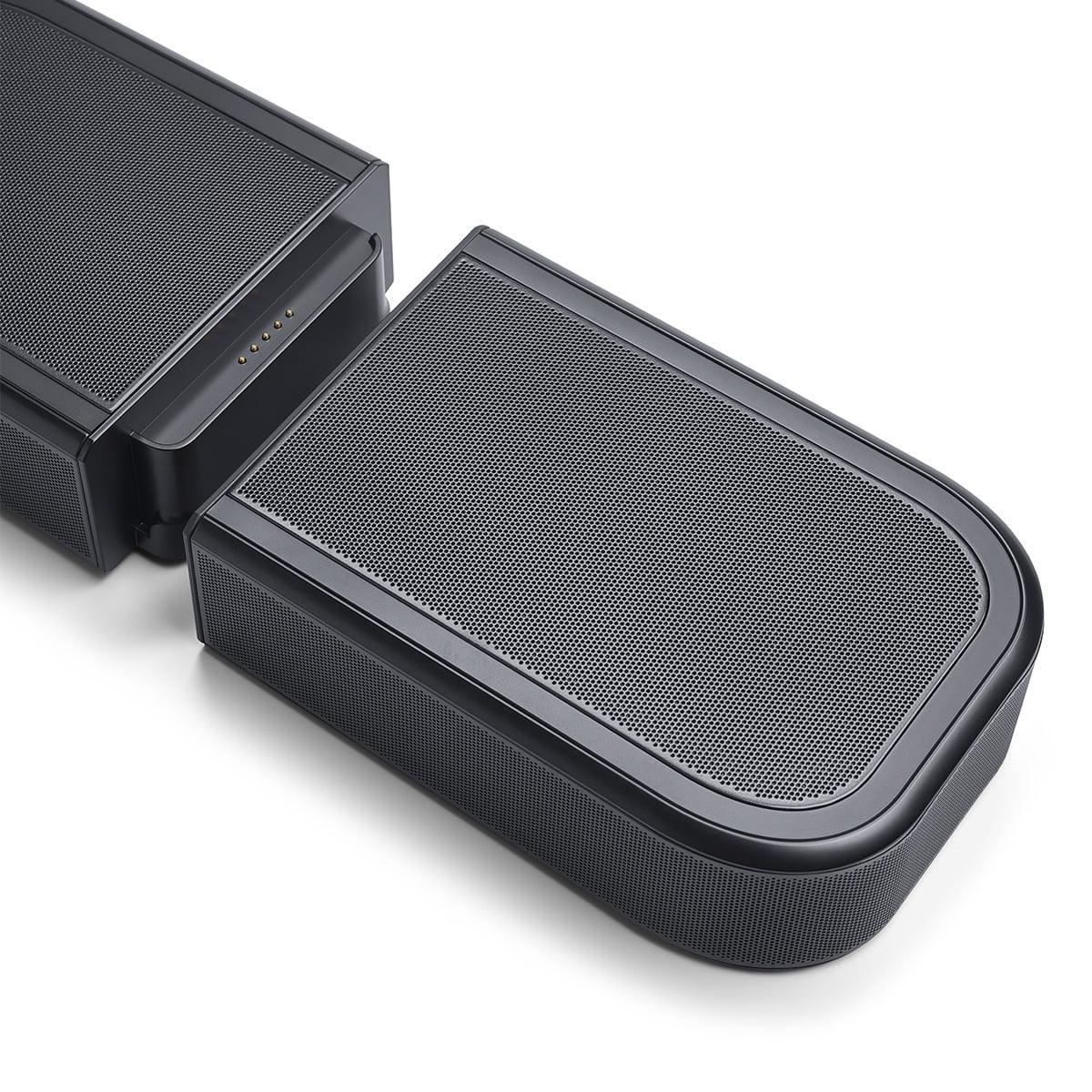
The JBL Bar 1000 MK2 includes what might be its most compelling feature: detachable wireless surround speakers with 10-hour battery life. These speakers magnetically attach to either end of the main soundbar for charging, but can be removed and placed anywhere in your room for true surround sound.
More ingeniously, these speakers can operate as independent Bluetooth devices. You can take one to the kitchen while cooking, use a pair for outdoor entertaining, or employ the "Night Listening" mode where only the detachable speakers operate for private listening without disturbing others.
This flexibility transforms the JBL system from a fixed home theater component into a versatile audio ecosystem. It's the kind of innovative thinking that justifies premium pricing by adding genuine utility beyond the primary use case.
The Ultimea Poseidon D50 works optimally in rooms between 250-380 square feet. Its wired satellite speakers require thoughtful placement and cable management, but provide reliable surround effects once properly positioned. The system's compact components and moderate power output make it ideal for apartments or smaller living spaces where neighbor-friendly volume levels are important.
Setup is refreshingly straightforward—connect the soundbar to your TV via HDMI ARC, place the satellite speakers behind your seating area, and position the wireless subwoofer in a corner for optimal bass coupling with room boundaries.
The JBL Bar 1000 MK2 demands more space to reach its potential. Its 960W output and sophisticated processing shine in larger rooms where the MultiBeam technology can effectively utilize wall and ceiling reflections. The up-firing drivers need adequate ceiling height and reflective surfaces to create convincing height effects.
However, the wireless nature of all components (except the main soundbar's power connection) provides exceptional placement flexibility. The detachable surround speakers eliminate the cable-running concerns that typically complicate surround sound installation.
In our analysis of professional reviews and user feedback, several key performance characteristics consistently emerge as most important for home theater applications:
Dynamic range capability proves crucial for movie viewing. Both systems handle this well within their power limitations, but the JBL system maintains composure during demanding passages where the Ultimea system might compress dynamics to prevent distortion.
Frequency response consistency across all volume levels separates good systems from great ones. The JBL Bar 1000 MK2 maintains tonal balance from whisper-quiet to reference volume levels, while the Ultimea system performs best in its sweet spot of moderate listening levels.
Spatial accuracy—how convincingly the system places sounds in specific locations—favors the JBL system thanks to its true Dolby Atmos processing and four up-firing drivers. The Ultimea system creates believable surround effects but can't match the three-dimensional precision of object-based audio.
At the time of writing, the Ultimea Poseidon D50 represents exceptional value for users wanting authentic surround sound without premium pricing. It's perfect for the movie enthusiast who understands the importance of proper channel separation but has budget constraints or space limitations.
The JBL Bar 1000 MK2 commands premium pricing but justifies it through advanced features, superior build quality, and genuine innovation like the detachable speakers. It's designed for users who want the absolute best soundbar experience and value the versatility of a multi-functional audio system.
Choose the Ultimea Poseidon D50 if you're primarily focused on getting true surround sound at an accessible price point. It excels in smaller to medium rooms where its 320W output provides adequate power, and the extensive EQ customization appeals to users who enjoy fine-tuning their audio experience. The wired satellite speakers ensure reliable surround effects, and the smart app control adds modern convenience.
The JBL Bar 1000 MK2 is the clear choice for users who want no-compromise performance and innovative features. Its true Dolby Atmos processing, massive power output, and detachable speaker system create a versatile audio ecosystem that adapts to various listening scenarios. The comprehensive connectivity and future-proof format support make it an investment in long-term audio satisfaction.
Both systems succeed in their respective missions, but they serve different users with different priorities. The Ultimea system democratizes quality surround sound, while the JBL system pushes the boundaries of what's possible in a consumer soundbar. Your choice ultimately depends on your room size, budget flexibility, and whether the JBL's unique features align with your lifestyle and entertainment habits.
In the end, either system will dramatically improve your TV audio experience—the question is whether you want "very good" surround sound at a great price, or "exceptional" surround sound with innovative features at a premium price point.
| Ultimea Poseidon D50 | JBL Bar 1000 MK2 |
|---|---|
| Channel Configuration - Determines surround sound immersion level | |
| 5.1 channels with wired rear speakers | 7.1.4 channels with height speakers for true Dolby Atmos |
| Total System Power - Affects volume capability and dynamic range | |
| 320W peak (adequate for medium rooms) | 960W max / 480W RMS (fills large rooms with authority) |
| Subwoofer Size - Directly impacts bass depth and impact | |
| 5.25" wireless subwoofer with BassMX™ technology | 10" wireless subwoofer with 300W dedicated power |
| Spatial Audio Support - Essential for modern movie soundtracks | |
| SurroundX™ algorithm converts stereo to 5.1 surround | True Dolby Atmos and DTS:X with object-based 3D audio |
| Rear Speaker Design - Affects placement flexibility and setup complexity | |
| Wired satellite speakers (reliable connection, cable management required) | Detachable wireless speakers with 10-hour battery (ultimate flexibility) |
| HDMI Connectivity - Important for gaming consoles and multiple devices | |
| HDMI eARC only | HDMI eARC + 3 HDMI inputs with 4K Dolby Vision passthrough |
| Wireless Streaming - Convenience for music playback | |
| Bluetooth 5.3 connectivity | Wi-Fi, Bluetooth 5.3, AirPlay 2, Chromecast, Spotify Connect |
| Audio Customization - Control over sound tuning | |
| 121 preset EQ matrices + 10-band manual equalizer via app | JBL One app with room calibration and multiple sound modes |
| Unique Features - Value-added functionality beyond basic soundbar use | |
| Independent rear speaker volume control, extensive EQ presets | Detachable speakers work as portable Bluetooth devices, Night Listening mode |
| Recommended Room Size - Optimal performance environment | |
| 20-35m² (250-380ft²) medium-sized rooms | Large rooms where 960W power and ceiling reflections can be utilized |
| Target User - Who gets the most value from each system | |
| Budget-conscious users wanting true surround sound with excellent customization | Premium buyers seeking no-compromise performance with innovative flexibility features |
The JBL Bar 1000 MK2 is significantly better for large rooms with its 960W maximum power output and 7.1.4 channel configuration. The Ultimea Poseidon D50 works best in medium-sized rooms up to 380 square feet, while the JBL Bar 1000 MK2 can fill much larger spaces with powerful, room-shaking audio.
Yes, the Ultimea Poseidon D50 provides true 5.1 surround sound with physical rear satellite speakers that you place behind your seating area. Unlike soundbars that only simulate surround effects, the Ultimea Poseidon D50 creates authentic multi-channel audio with discrete left, right, center, surround, and subwoofer channels.
Only the JBL Bar 1000 MK2 supports true Dolby Atmos and DTS:X with dedicated height channels and up-firing drivers. The Ultimea Poseidon D50 uses SurroundX™ technology to create surround effects but doesn't support object-based 3D audio formats like Dolby Atmos.
The JBL Bar 1000 MK2 features a much larger 10-inch wireless subwoofer with 300W of dedicated power, delivering deeper bass and more impact. The Ultimea Poseidon D50 includes a 5.25-inch subwoofer with BassMX™ technology that provides good bass for its size but can't match the power and depth of the JBL Bar 1000 MK2.
The Ultimea Poseidon D50 offers simpler plug-and-play setup, though you'll need to run wires to the rear speakers. The JBL Bar 1000 MK2 has more complex initial setup due to its advanced features, but the wireless components eliminate cable management issues once configured.
Yes, the JBL Bar 1000 MK2 features unique detachable wireless surround speakers with 10-hour battery life that can function as independent Bluetooth speakers. You can take them to other rooms or use them outdoors, making the JBL Bar 1000 MK2 more versatile than traditional soundbar systems like the Ultimea Poseidon D50.
The Ultimea Poseidon D50 provides exceptional value with true 5.1 surround sound, extensive EQ customization, and smart app control at a budget-friendly price point. The JBL Bar 1000 MK2 costs significantly more but justifies the premium with advanced features, superior power, and innovative detachable speakers.
The Ultimea Poseidon D50 includes HDMI eARC for TV connection plus optical, AUX, and USB inputs. The JBL Bar 1000 MK2 offers more connectivity with HDMI eARC plus three additional HDMI inputs with 4K passthrough, allowing you to connect multiple devices directly to the soundbar.
Both systems handle music well, but the JBL Bar 1000 MK2 excels with its Wi-Fi streaming capabilities, supporting AirPlay 2, Chromecast, and Spotify Connect for high-quality wireless music playback. The Ultimea Poseidon D50 offers extensive EQ customization with 121 preset matrices, making it appealing for users who like to fine-tune their music experience.
Yes, both the Ultimea Poseidon D50 and JBL Bar 1000 MK2 work with all TV brands through standard HDMI ARC connections. Both systems also support CEC functionality, allowing your TV remote to control basic soundbar functions like volume and power.
The JBL Bar 1000 MK2 features advanced PureVoice 2.0 technology that automatically optimizes dialogue based on ambient sound levels. The Ultimea Poseidon D50 includes a dedicated Dialogue mode and manual EQ controls for voice optimization. Both systems significantly improve dialogue clarity over TV speakers, but the JBL Bar 1000 MK2 provides more sophisticated automatic enhancement.
The key difference is performance level and features: the Ultimea Poseidon D50 delivers excellent true 5.1 surround sound at an accessible price point with extensive customization options, while the JBL Bar 1000 MK2 offers premium 7.1.4 Dolby Atmos performance, nearly three times more power, and innovative detachable speakers at a significantly higher cost.
We've done our best to create useful and informative comparisons to help you decide what product to buy. Our research uses advanced automated methods to create this comparison and perfection is not possible - please contact us for corrections or questions. These are the sites we've researched in the creation of this article: youtube.com - eu.ultimea.com - newegg.com - tvsbook.com - youtube.com - provantage.com - ultimea.com - techradar.com - community.ultimea.com - homedepot.com - community.ultimea.com - ultimea.com - ultimea.de - youtube.com - medisamhealthcenter.com - ultimea.com - youtube.com - walmart.com - ecoustics.com - engadget.com - bestbuy.com - techradar.com - rtings.com - hometechnologyreview.com - youtube.com - t3.com - whathifi.com - youtube.com - bhphotovideo.com - gzhls.at - device.report - support.jbl.com - support.jbl.com - jbl.com - av.com - audioadvice.com - jbl.com - target.com - worldwidestereo.com

Privacy Policy
Terms and Conditions - Affiliate Policy
Home Security
© Copyright 2008-2026.
11816 Inwood Rd #1211, Dallas, TX 75244