

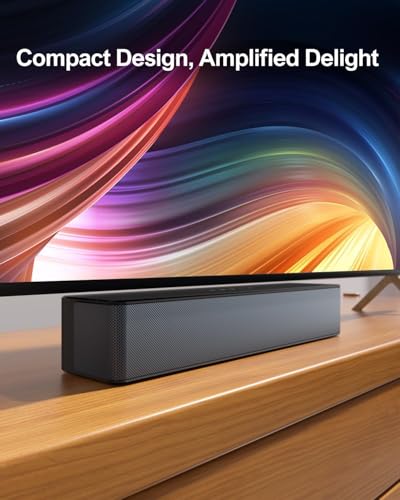


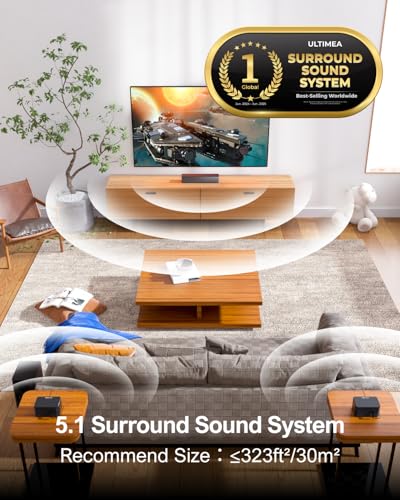
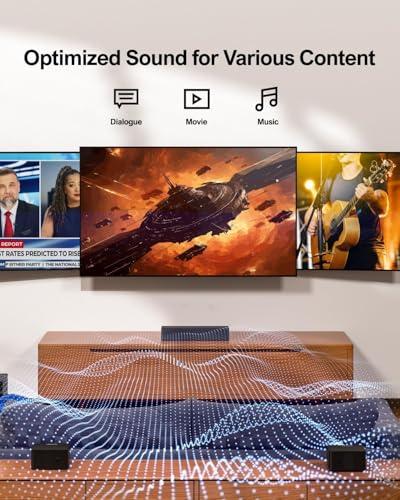

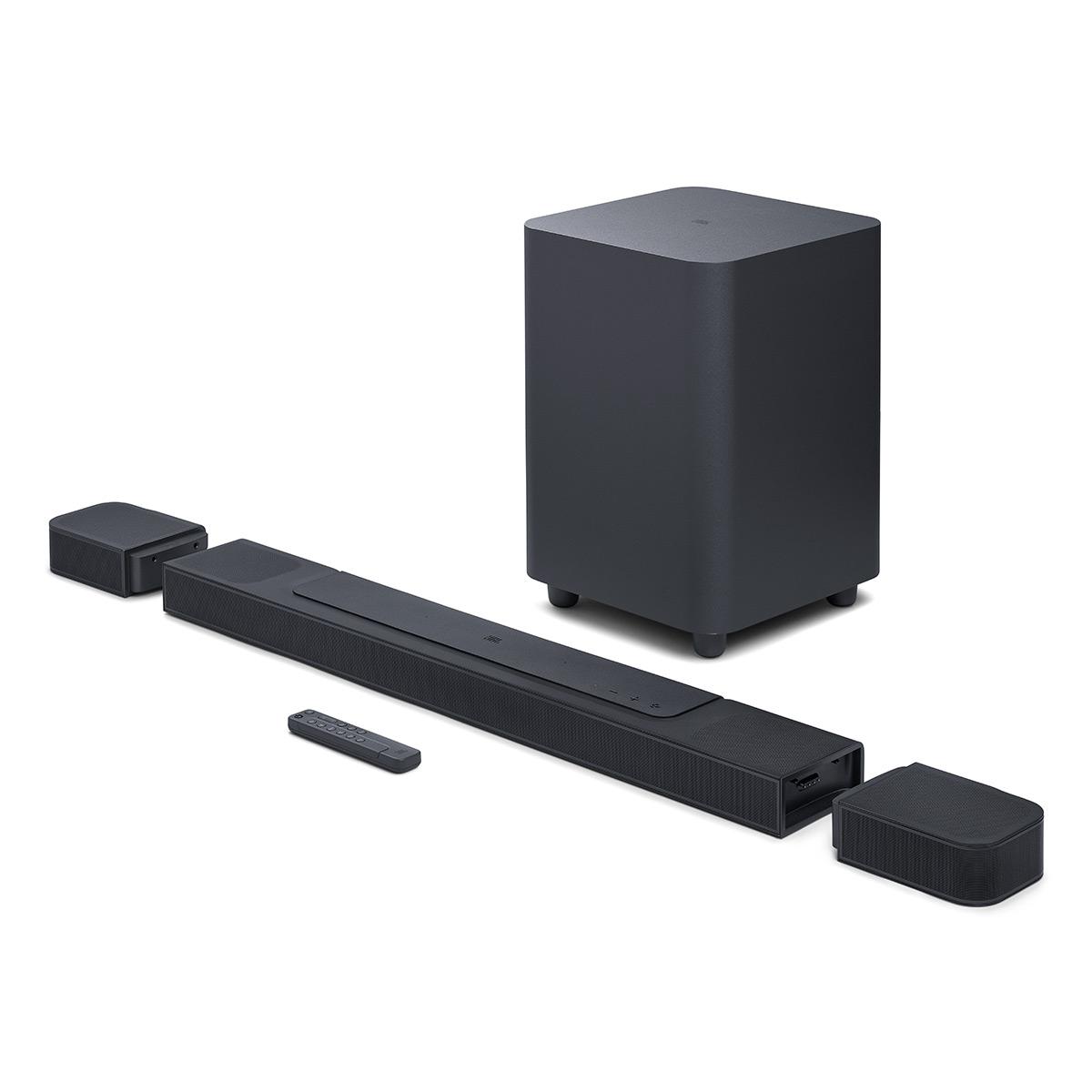
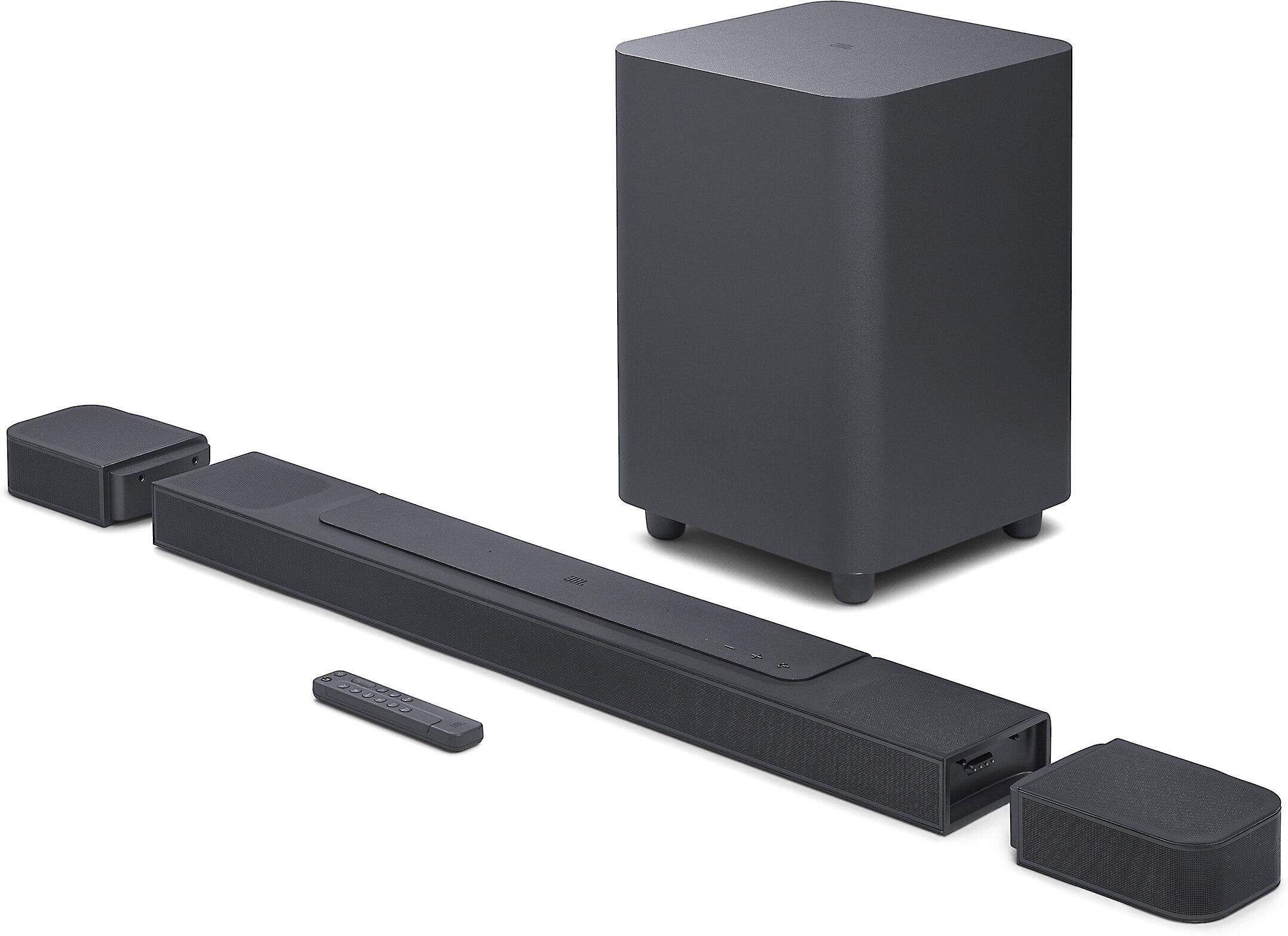





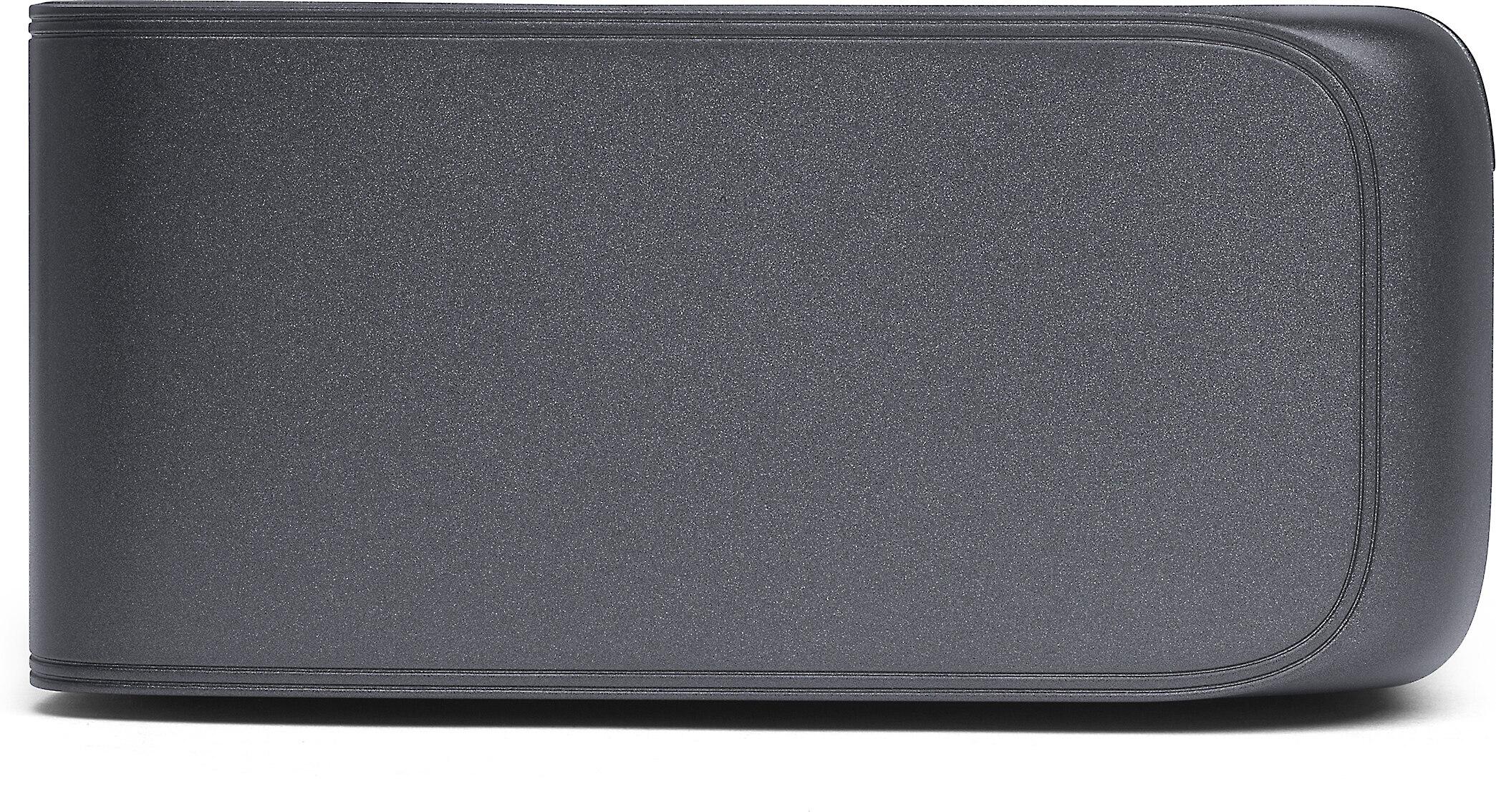
When your TV's built-in speakers make dialogue sound like it's coming from inside a tin can, it's time for an upgrade. The soundbar market has exploded over the past decade, offering everything from simple stereo units to complex surround sound systems that can shake your entire house. Today, we're diving deep into two very different approaches to home theater audio: the Ultimea Poseidon D50 5.1 Soundbar and the JBL Bar 1000 Surround Sound System.
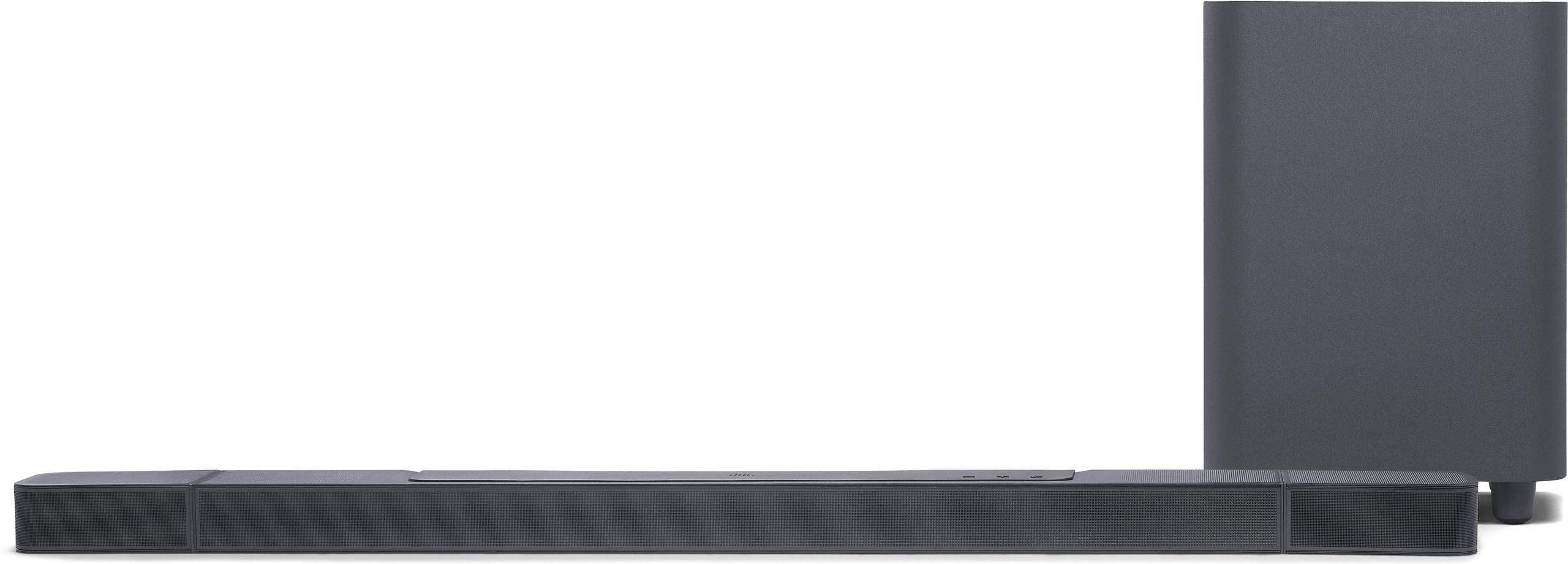
These systems couldn't be more different in their approach. The Ultimea Poseidon D50, released in 2023 with a 2025 refresh, represents the budget end of true surround sound—delivering real 5.1 audio at a fraction of what you'd typically pay. Meanwhile, the JBL Bar 1000, launched in 2022, targets serious home theater enthusiasts with premium Dolby Atmos technology and wireless convenience.
Before we dive into specifics, let's demystify those confusing numbers. When you see "5.1" or "7.1.4," these aren't random marketing terms—they describe exactly how many speakers are working to create your audio experience.
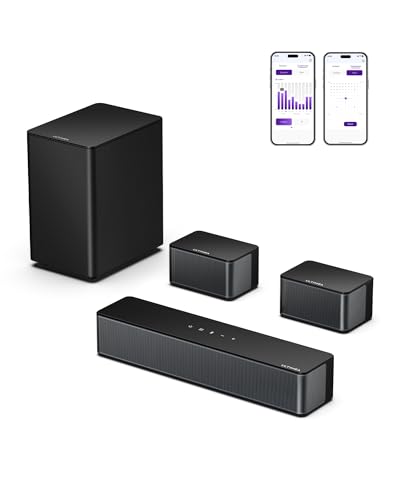
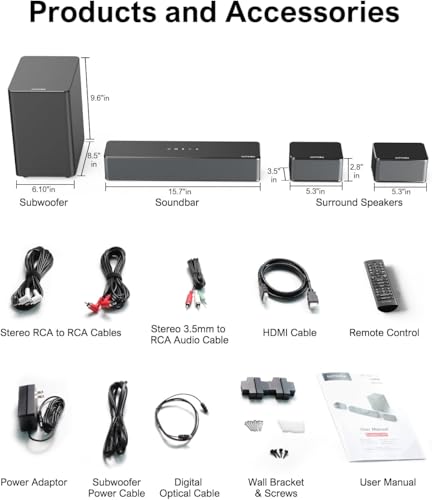
The first number tells you how many main speakers surround you at ear level. A 5.1 system has five: left, center, right, and two rear speakers. The "1" represents the subwoofer handling bass. The Ultimea Poseidon D50 fits this traditional surround sound model perfectly.
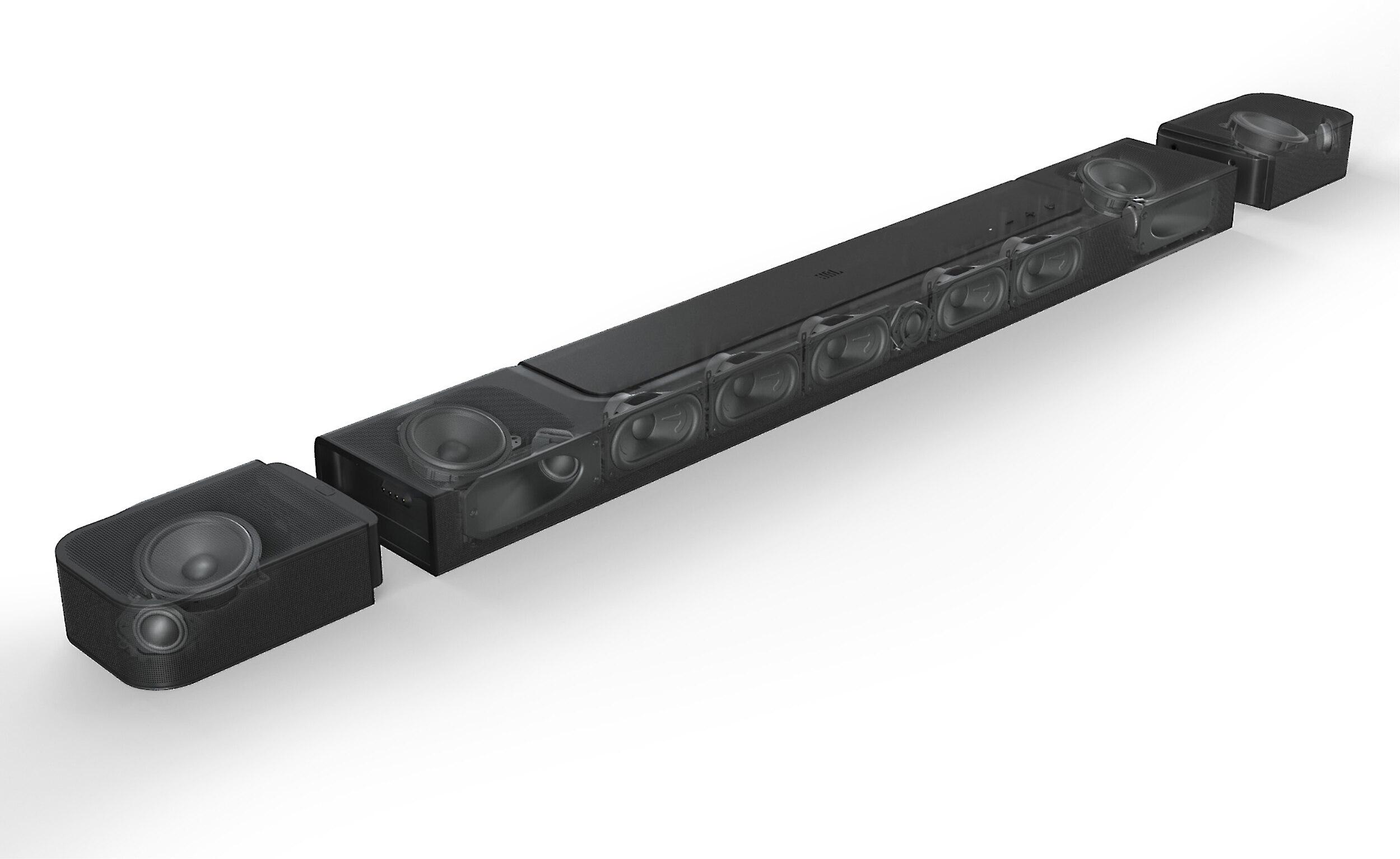
The JBL Bar 1000's 7.1.4 configuration is more complex. Seven ear-level speakers plus one subwoofer, but that final "4" is crucial—it represents four height speakers that bounce sound off your ceiling to create overhead effects. This is what enables true Dolby Atmos, where helicopters fly overhead and rain falls from above.
Power ratings in soundbars can be misleading, but they still matter for understanding capabilities. The JBL Bar 1000 pumps out 880 watts total system power compared to the Ultimea Poseidon D50's 320 watts. That's not just about getting louder—more power typically means cleaner sound at all volumes, better dynamic range (the difference between whispers and explosions), and the ability to fill larger rooms without strain.
In practice, this translates to real-world differences. The JBL system can comfortably fill rooms over 400 square feet while maintaining clarity, whereas the Ultimea works best in medium-sized spaces up to about 350 square feet. Push either system beyond its comfort zone, and you'll hear distortion creep in—something that's more noticeable with the budget option.
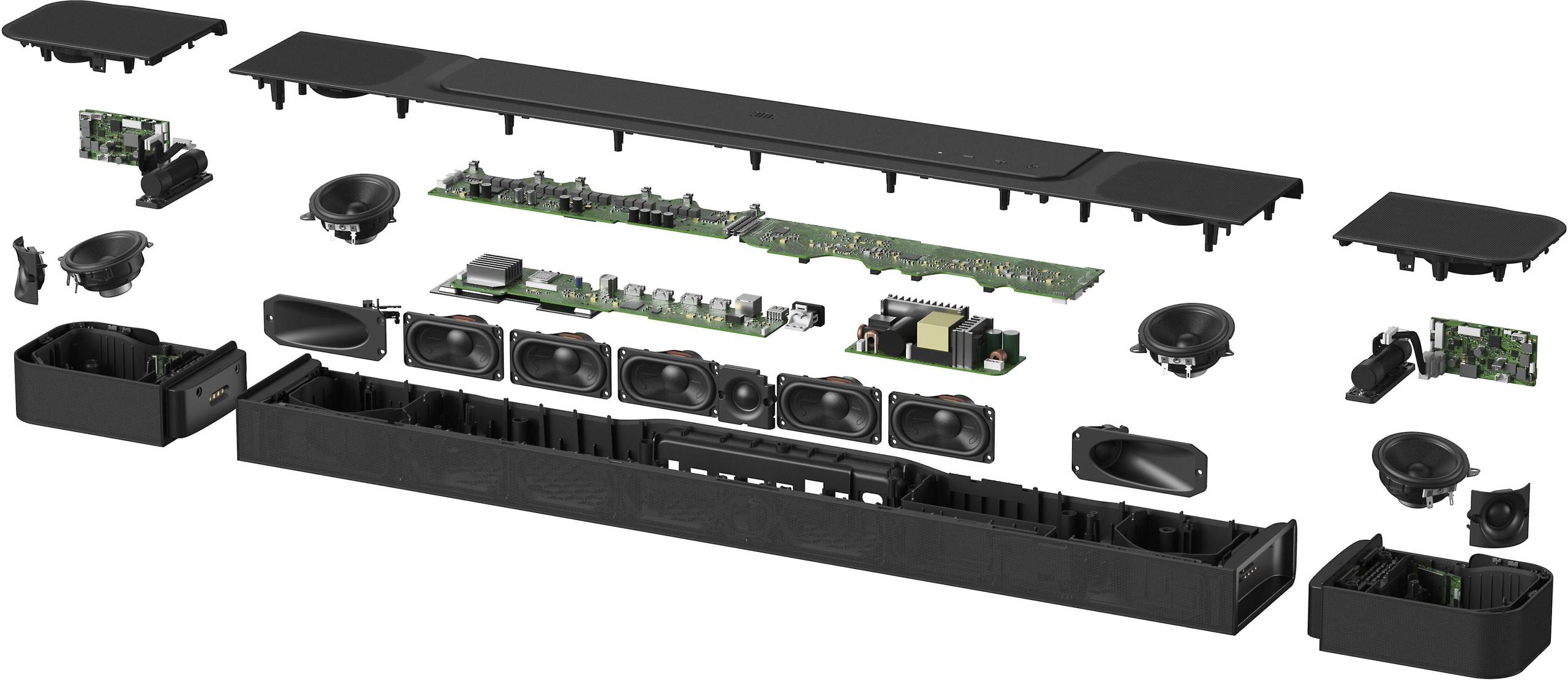
The JBL Bar 1000 uses what they call "racetrack drivers"—oval-shaped speakers that pack more surface area into tight spaces, producing fuller sound. Combined with dedicated tweeters (small speakers handling high frequencies) and larger woofers (for mid-range), the result is more detailed and accurate reproduction.
The Ultimea system uses more conventional round drivers with composite fiber diaphragms and aerospace-grade magnets. While these sound impressive on paper, the reality is simpler construction that gets the job done without the refinement of premium components. Users consistently report that the Ultimea can sound harsh at higher volumes, particularly in the treble range where cymbals and dialogue consonants live.
Bass makes or breaks the home theater experience. Explosions need weight, music needs rhythm, and even dialogue benefits from proper low-frequency support. The JBL's 10-inch wireless subwoofer digs down to 33Hz—deep enough to reproduce the lowest notes on a piano and the rumble of distant thunder. More importantly, it does this with control, meaning bass notes start and stop cleanly rather than booming endlessly.
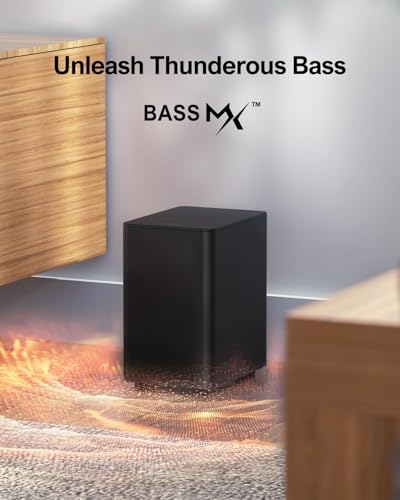
The Ultimea's 5.25-inch subwoofer, enhanced by their BassMX technology (which optimizes the magnetic circuit and allows for more driver movement), handles bass adequately for its size. However, physics is physics—smaller drivers simply can't move the air volume needed for truly deep, impactful bass. It's perfectly fine for most content, but action movies and bass-heavy music will reveal its limitations.
This is where these systems diverge most dramatically. Both claim surround sound, but they achieve it through completely different approaches.
The Ultimea Poseidon D50 delivers true 5.1 surround sound through physical rear speakers connected via 19.6-foot cables. When positioned correctly behind your seating area, these create genuine rear-channel effects. Their SurroundX technology—essentially a digital signal processor (DSP)—can also take regular stereo audio and intelligently spread it across all five speakers, creating a wider soundstage even from non-surround content.
The JBL Bar 1000 takes this concept much further. Not only does it include wireless rear speakers (no cables to run!), but those rear speakers also fire upward, bouncing sound off your ceiling. This creates the height dimension that makes Dolby Atmos possible. When watching compatible content, sound objects can move in three-dimensional space around you—birds flying overhead, rain falling from above, or debris falling during an explosion.
The wireless convenience of the JBL's rear speakers cannot be overstated. They charge by docking to the main soundbar when not in use, eliminating the need for separate power outlets. This makes placement flexible and keeps living spaces tidy—a significant advantage for most home setups.
Content creators increasingly mix their audio for advanced formats like Dolby Atmos and DTS:X. Netflix, Disney+, Amazon Prime, and Apple TV+ all offer Atmos content, and the format is becoming standard for new releases. The JBL Bar 1000 fully supports these formats, meaning you're getting the audio experience exactly as the creators intended.
The Ultimea Poseidon D50 lacks this support entirely. While its SurroundX processing can make stereo content sound wider and more engaging, it cannot recreate the height effects that modern content increasingly relies upon. This isn't necessarily a dealbreaker if you primarily watch older content or don't subscribe to premium streaming services, but it does limit the system's longevity.
Modern soundbars are increasingly connected devices, and this is another area where these systems differ significantly. The JBL Bar 1000 includes built-in Wi-Fi, enabling AirPlay streaming from Apple devices, Chromecast from Android devices, and integration with Alexa multi-room audio systems. This transforms the soundbar into a capable music streaming system when you're not watching TV.
The Ultimea system focuses its smart features differently. While it lacks Wi-Fi connectivity, it offers something unusual for its price range: comprehensive app-based control with extensive equalization options. The accompanying smartphone app provides access to 121 preset EQ curves and a full 10-band manual equalizer. This level of audio customization is rare at any price point and almost unheard of in budget systems.
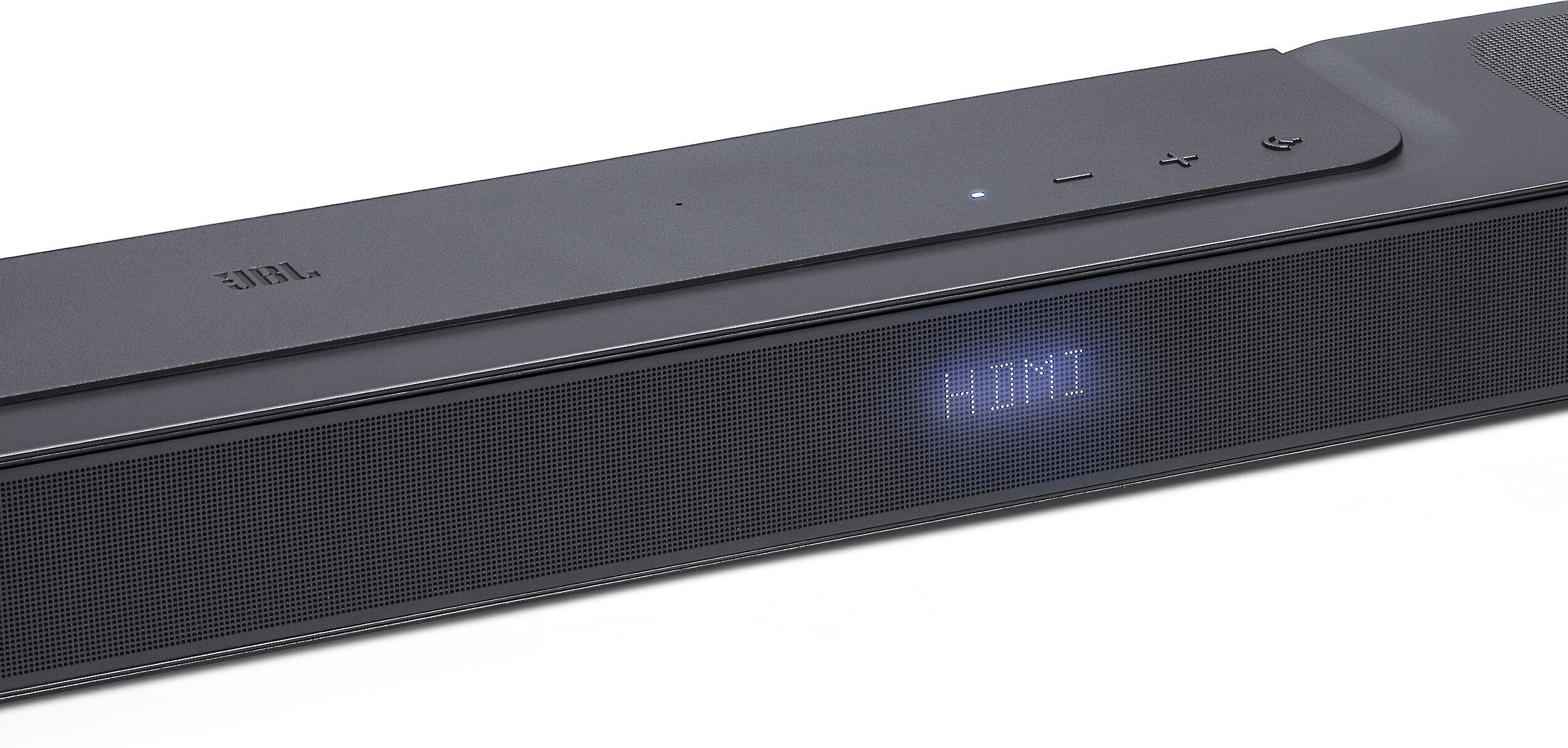
For connectivity, both systems cover the essentials. HDMI eARC (enhanced Audio Return Channel) allows for high-quality audio from your TV through a single cable, while optical and auxiliary inputs ensure compatibility with older devices. The JBL adds multiple HDMI inputs for connecting devices directly, plus 4K video pass-through with Dolby Vision support.
The construction differences between these systems reflect their target markets and price points. The JBL Bar 1000 feels substantial, with quality materials and precise assembly. The industrial design integrates well with premium home theater setups, and the attention to detail extends to features like magnetic speaker grilles and smooth volume controls.
The Ultimea Poseidon D50 makes no pretense about premium construction. The plastic housings and lightweight feel clearly indicate budget-focused engineering. However, this isn't necessarily negative—the cost savings enable the aggressive pricing that makes true surround sound accessible to budget-conscious buyers.
Setting up these systems reveals their different design philosophies. The JBL Bar 1000 emphasizes simplicity with automatic room calibration that analyzes your space and adjusts settings accordingly. The wireless rear speakers dock to the main bar for charging, and the whole system can be controlled via the JBL One app or your existing TV remote through HDMI CEC (Consumer Electronics Control).
The Ultimea system requires more hands-on setup. Running the rear speaker cables and finding appropriate placement takes planning, especially in rooms where permanent cable runs aren't practical. However, the extensive EQ options reward users willing to spend time fine-tuning their audio experience. The independent rear speaker volume control is particularly useful for balancing surround effects in different room layouts.
Room acoustics dramatically affect soundbar performance, and these systems respond differently to various environments. The JBL Bar 1000's MultiBeam technology and room calibration help it adapt to different spaces, making it more forgiving in acoustically challenging rooms with hard surfaces or unusual layouts.
The Ultimea Poseidon D50 performs best in dedicated media rooms or living spaces with traditional layouts. Its rear speakers need proper positioning to create convincing surround effects, which can be challenging in open-concept spaces or rooms with multiple seating areas.
For apartment dwellers, the Ultimea's smaller subwoofer might actually be preferable—it provides bass enhancement without the neighbor-disturbing deep frequencies that larger subwoofers produce. The JBL's more powerful bass output is ideal for houses where maximum impact is desired.
Your content consumption habits should heavily influence your choice. If you're primarily watching broadcast television, older movies, or basic streaming content, the Ultimea Poseidon D50 provides a significant upgrade over TV speakers without paying for features you won't use.
However, if you're invested in the latest streaming services, 4K Blu-ray discs, or modern gaming with spatial audio support, the JBL Bar 1000's advanced format support becomes essential. The difference is immediately apparent when watching Atmos-enabled content—sound effects that would be confined to traditional surround speakers suddenly fill the entire three-dimensional space around you.
At the time of writing, these systems occupy completely different value segments. The Ultimea Poseidon D50 costs roughly one-eighth the price of the JBL Bar 1000, making direct performance comparisons somewhat unfair. Instead, each should be evaluated within its intended market.
The Ultimea delivers remarkable value for budget-conscious buyers seeking genuine surround sound. Getting discrete rear speakers and a wireless subwoofer at this price point was virtually impossible from major brands until recently. The extensive EQ customization adds functionality typically reserved for much more expensive systems.
The JBL system justifies its premium pricing through superior build quality, advanced features, and future-proof format support. The wireless convenience, automatic calibration, and smart streaming capabilities create a more refined user experience that matches its higher price tier.
Choose the Ultimea Poseidon D50 if you want genuine surround sound on a tight budget and don't mind managing speaker cables. It's perfect for users upgrading from TV speakers or basic soundbars who want to experience what rear-channel surround effects can add to their viewing experience. The extensive EQ options appeal to audio enthusiasts who enjoy tweaking and customizing their sound signature.
The JBL Bar 1000 makes sense for serious home theater enthusiasts who want cutting-edge features and are willing to pay for wireless convenience and premium performance. If you consume lots of modern streaming content, own a large TV, or want a system that will remain relevant as audio formats continue evolving, the additional investment pays dividends in daily use satisfaction.
Ultimately, both systems succeed in their respective markets. The Ultimea democratizes surround sound by making it accessible at unprecedented price points, while the JBL pushes the boundaries of what's possible in a soundbar form factor. Your choice should align with your budget, room size, content preferences, and how much convenience you value in your daily entertainment experience.
The soundbar market continues evolving rapidly, but these systems represent solid choices that address very different user needs effectively. Whether you're taking your first step beyond TV speakers or upgrading to the latest audio technologies, understanding these fundamental differences helps ensure your investment enhances rather than disappoints your home entertainment experience.
| Ultimea Poseidon D50 5.1 Soundbar | JBL Bar 1000 7.1.4 Surround System |
|---|---|
| Channel Configuration - Determines surround sound capabilities | |
| 5.1 channels (no height effects) | 7.1.4 channels (includes overhead sound) |
| Total System Power - Affects volume and room coverage | |
| 320W (suitable for medium rooms up to 350 sq ft) | 880W (fills large rooms over 400 sq ft easily) |
| Subwoofer Size - Controls bass depth and impact | |
| 5.25" wireless subwoofer (adequate bass for most content) | 10" wireless subwoofer (deep, impactful bass down to 33Hz) |
| Rear Speaker Design - Impacts setup convenience | |
| Wired rear speakers (19.6ft cables, permanent placement) | Wireless detachable rear speakers (charge on main bar) |
| Premium Audio Format Support - Future-proofs your investment | |
| No Dolby Atmos or DTS:X support | Full Dolby Atmos and DTS:X with height effects |
| Smart Features - Streaming and control capabilities | |
| Smartphone app with 121 EQ presets, no Wi-Fi | Built-in Wi-Fi, AirPlay, Chromecast, Alexa integration |
| HDMI Connectivity - Affects device compatibility | |
| 1 HDMI eARC port | 3 HDMI inputs plus eARC, 4K Dolby Vision pass-through |
| Room Calibration - Optimizes sound for your space | |
| Manual EQ adjustment only | Automatic room calibration with one-button setup |
| Build Quality - Reflects long-term durability | |
| Budget plastic construction (functional but basic) | Premium materials with refined industrial design |
| Target Room Size - Where each system performs best | |
| 250-350 sq ft (medium living rooms) | 400+ sq ft (large rooms and dedicated theaters) |
| Best Use Case - Who should choose each system | |
| Budget-conscious buyers wanting true surround sound | Premium home theater enthusiasts seeking cutting-edge features |
The Ultimea Poseidon D50 is a budget-friendly 5.1 channel system with wired rear speakers, while the JBL Bar 1000 is a premium 7.1.4 system with wireless rear speakers and Dolby Atmos height effects. The JBL offers more advanced features and better sound quality, but the Ultimea provides genuine surround sound at a fraction of the cost.
The Ultimea Poseidon D50 is ideal for rooms up to 350 square feet with its 320W power output. The JBL Bar 1000 is designed for larger spaces over 400 square feet with its 880W system power. For smaller rooms, the Ultimea provides adequate performance without overpowering the space.
No, only the JBL Bar 1000 supports Dolby Atmos and DTS:X with its four height channels that create overhead sound effects. The Ultimea Poseidon D50 lacks height speakers and premium audio format support, limiting it to standard 5.1 surround sound formats.
The JBL Bar 1000 is much easier to set up with wireless rear speakers that charge on the main bar and automatic room calibration. The Ultimea Poseidon D50 requires running 19.6-foot cables to the rear speakers and manual audio adjustment, making setup more complex but offering greater customization control.
The JBL Bar 1000 features a larger 10-inch wireless subwoofer that produces deeper bass down to 33Hz, ideal for action movies and music. The Ultimea Poseidon D50 includes a smaller 5.25-inch subwoofer with BassMX technology that provides adequate bass for most content but can't match the depth and impact of the larger JBL subwoofer.
The Ultimea Poseidon D50 offers exceptional value by delivering true 5.1 surround sound with physical rear speakers at a budget price point. The JBL Bar 1000 provides premium value with advanced features, superior build quality, and future-proof technology, but at a significantly higher price point.
The JBL Bar 1000 offers comprehensive wireless streaming with built-in Wi-Fi, AirPlay, Chromecast, and Alexa integration. The Ultimea Poseidon D50 only supports basic Bluetooth 5.3 connectivity for wireless music streaming, lacking the advanced smart features of the JBL system.
The JBL Bar 1000 is superior for gaming with its Dolby Atmos support, multiple HDMI inputs, and 4K pass-through capabilities that enhance modern gaming experiences. The Ultimea Poseidon D50 provides basic surround sound for gaming but lacks the advanced spatial audio features that complement next-generation gaming consoles.
The Ultimea Poseidon D50 uses wired rear speakers connected via long cables, requiring permanent placement but ensuring reliable connection. The JBL Bar 1000 features wireless detachable rear speakers that charge on the main bar and include upward-firing drivers for Dolby Atmos height effects, offering much greater placement flexibility.
The Ultimea Poseidon D50 surprisingly offers more manual customization with 121 preset EQ curves and a 10-band equalizer through its smartphone app. The JBL Bar 1000 focuses on automatic optimization with room calibration and PureVoice dialogue enhancement, providing less manual control but more intelligent audio processing.
Both systems work for home theater, but serve different needs. The Ultimea Poseidon D50 provides a solid entry-level home theater experience with true surround sound for budget-conscious users. The JBL Bar 1000 delivers a premium home theater experience with Dolby Atmos, superior power, and advanced features that maximize modern streaming content and 4K movies.
The JBL Bar 1000 offers better long-term value with premium build quality, advanced audio format support, and regular software updates through Wi-Fi connectivity. The Ultimea Poseidon D50 provides solid immediate value but lacks future-proof features like Dolby Atmos support that are becoming standard in new content across streaming platforms.
We've done our best to create useful and informative comparisons to help you decide what product to buy. Our research uses advanced automated methods to create this comparison and perfection is not possible - please contact us for corrections or questions. These are the sites we've researched in the creation of this article: youtube.com - eu.ultimea.com - newegg.com - tvsbook.com - youtube.com - provantage.com - ultimea.com - techradar.com - community.ultimea.com - homedepot.com - community.ultimea.com - ultimea.com - ultimea.de - youtube.com - medisamhealthcenter.com - ultimea.com - youtube.com - walmart.com - zdnet.com - jbl.com - jbl.com - pcrichard.com - rtings.com - d21buns5ku92am.cloudfront.net - ro.harmanaudio.com - target.com - harmanaudio.com - dell.com - mm.jbl.com - dolby.com - jbl.com.my - videoandaudiocenter.com

Privacy Policy
Terms and Conditions - Affiliate Policy
Home Security
© Copyright 2008-2026.
11816 Inwood Rd #1211, Dallas, TX 75244