





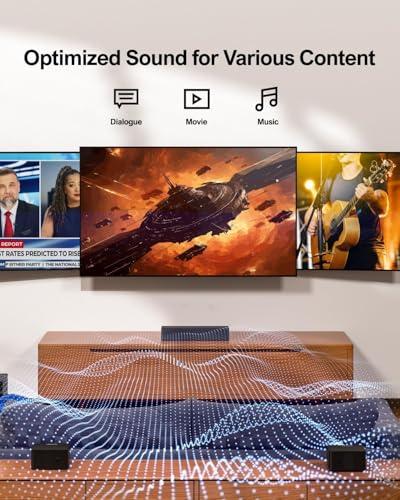

When shopping for a soundbar that delivers true surround sound, you'll quickly discover that most budget options only simulate surround effects using clever audio processing. That's what makes Ultimea's approach interesting—both the Aura A40 and Poseidon D50 deliver genuine multi-channel surround sound with dedicated speakers, but they take notably different approaches to getting there.
Understanding these differences matters because choosing between a 5.1 and 7.1 system isn't just about counting speakers—it's about understanding how those speakers work together, what trade-offs you're making, and whether the extra complexity justifies the performance gains in your specific setup.
Before diving into the specifics, let's clarify what we're dealing with. Traditional soundbars are essentially long speakers that sit under your TV, using digital signal processing (DSP—think of it as audio software) to create the illusion of surround sound. These systems work reasonably well, but they're fundamentally limited by physics: sound coming from one direction can only do so much to convince your brain it's coming from behind you.
True multi-channel systems solve this by placing actual speakers around your room. The numbers in "5.1" and "7.1" tell you exactly what you're getting. The first number represents main channels (front left, center, front right, plus rear speakers), while the ".1" refers to a dedicated subwoofer channel for bass frequencies below about 100Hz.
What makes this particularly relevant for home theater use is that most movies and many TV shows are mixed with discrete surround channels. When a helicopter flies overhead in a movie, the sound engineers specifically placed that audio in the rear channels. With true surround speakers, you hear it behind you. With a traditional soundbar, you hear a processed approximation coming from in front of you.
The Ultimea Aura A40 represents the company's premium approach to home surround sound, launching as part of their expanded 2024 lineup. At the time of writing, it commands a significant price premium over the Poseidon D50, which first appeared in 2023 and received a substantial update for 2025.
The timing matters because the audio industry has been rapidly evolving. HDMI eARC (enhanced Audio Return Channel) became standard on most TVs after 2020, enabling higher-quality audio transmission and simplified setup. This technological shift makes the connectivity differences between these systems particularly important for modern home theater integration.
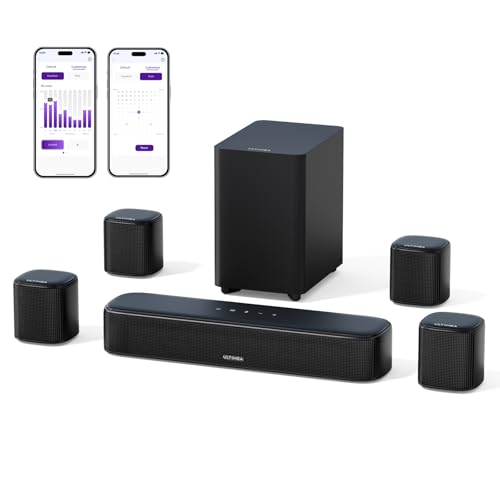
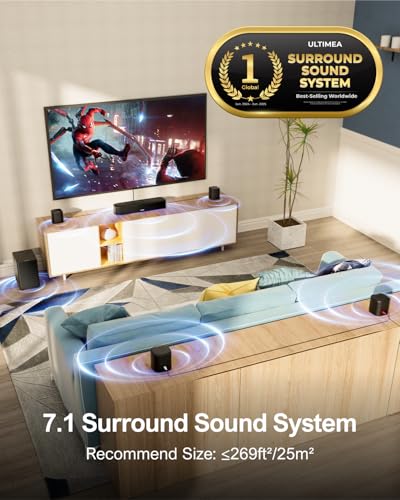
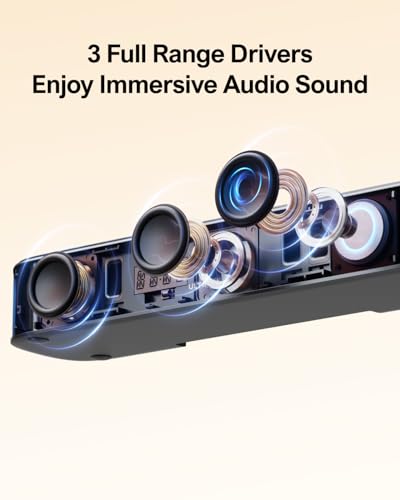
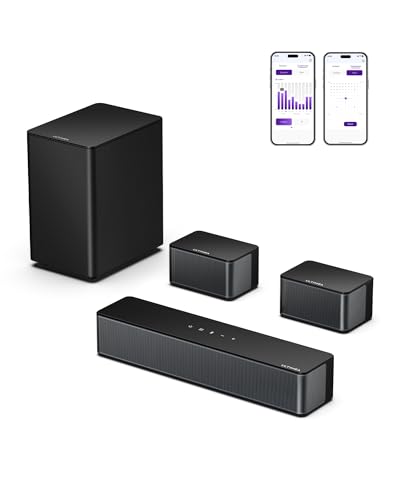
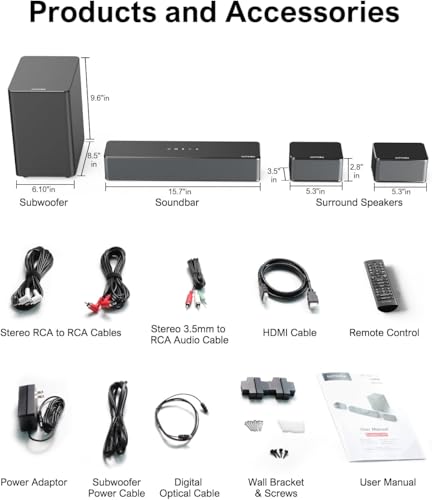
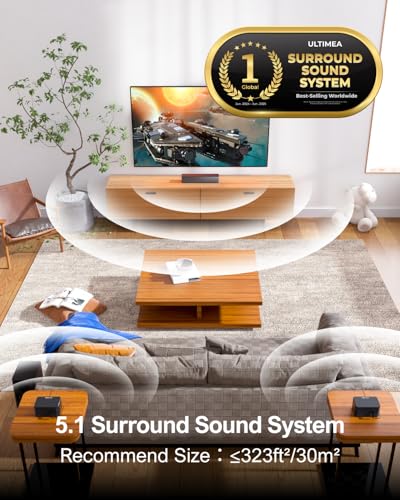
The Aura A40 takes the maximalist approach with its 7.1 configuration, employing eight total speakers: three in the main soundbar, four separate surround speakers positioned around your room, and a dedicated subwoofer. The Poseidon D50 opts for a more streamlined 5.1 setup with six drivers total: the main soundbar, two rear satellite speakers, and a wireless subwoofer.
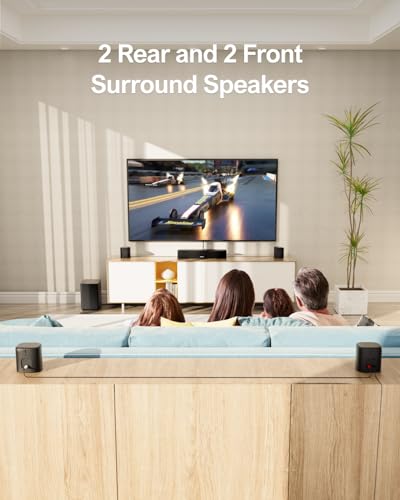
The most significant performance difference lies in how these systems create their surround soundstage. The Aura A40's 7.1 configuration includes dedicated front surround speakers—positioned to your left and right, slightly behind your seating position—in addition to the rear surrounds. This creates what audio engineers call a more "enveloping" soundfield.
In practical terms, this means the A40 can place sounds more precisely around you. When watching a movie scene where characters are having a conversation while walking through a forest, the A40 can position each character's voice more accurately in 3D space, while layering in environmental sounds like rustling leaves from multiple directions simultaneously.
The Poseidon D50, with its 5.1 setup, focuses on the front-to-back surround effect. It excels at creating that dramatic moment when an explosion happens behind you, or when ambient music swells from the rear channels. While it can't match the A40's side-to-side precision, it still delivers a convincing surround experience that's substantially better than any single-soundbar solution.
Both systems employ Ultimea's SurroundX technology, which uses advanced DSP processing to optimize the surround effect. This isn't just marketing fluff—it's actual signal processing that analyzes incoming audio and routes it to the appropriate speakers while applying time delays and frequency adjustments to create a cohesive soundstage.
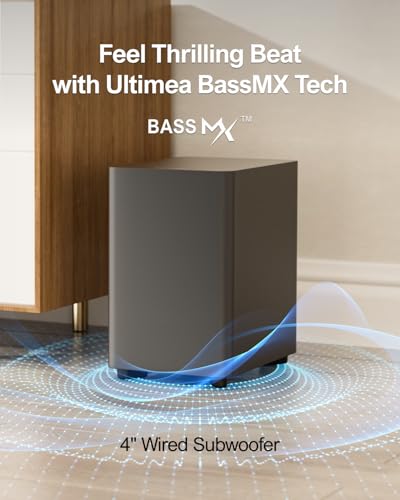
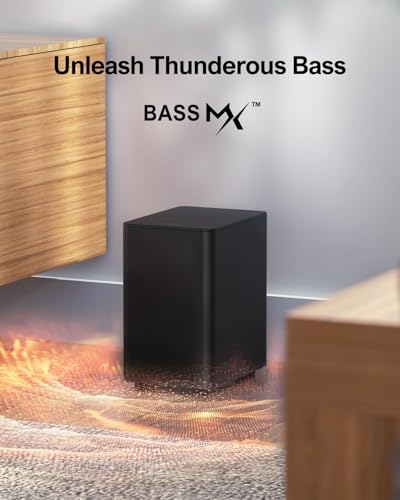
This is where our research revealed a surprising winner. Despite the Poseidon D50 being positioned as the more affordable option, its bass performance significantly outclasses the A40. The D50's 5.25-inch wireless subwoofer, powered by BassMX technology, extends down to 40Hz—that's deep enough to reproduce the fundamental frequencies of most movie sound effects and music.
The A40's 4-inch wired subwoofer, while adequate, only reaches down to about 65Hz. In practical terms, this means missing some of the deepest bass notes in action movies and music. That rumbling you feel during the T-Rex scene in Jurassic Park? The D50 delivers more of it.
The wireless design of the D50's subwoofer offers another practical advantage. Subwoofer placement dramatically affects bass performance due to room acoustics—something called "room modes" where certain frequencies get amplified or canceled based on the subwoofer's position relative to walls and corners. The wireless design lets you experiment with placement to find the sweet spot in your room, while the A40's wired subwoofer must stay within cable reach of the soundbar.
Both systems perform admirably for dialogue clarity, which is often the most important factor for everyday TV watching. The A40 has a slight theoretical advantage with its dedicated center channel in the soundbar, but real-world performance is comparable between the two systems.
What matters more is the processing. Both systems include dialogue enhancement modes that boost vocal frequencies and reduce background noise, making conversations easier to follow during complex action scenes. This feature has become increasingly important as movie soundtracks have grown more dynamic—meaning the difference between whispered dialogue and explosive action sequences has widened considerably.
Here's where both systems show their home theater focus. Our research into user and expert reviews consistently found that music reproduction is acceptable but not exceptional on either system. The A40 received particular criticism for sounding "tinny" or "metallic" with music, while the D50 was noted for occasional harshness in high frequencies at higher volumes.
This isn't necessarily a criticism—these systems are engineered primarily for movie and TV audio, where different performance characteristics matter. Movie soundtracks benefit from dramatic dynamic range and precise surround imaging, while music reproduction prioritizes tonal accuracy and smoothness. It's a different set of engineering priorities.
The connectivity differences between these systems represent one of the most important considerations for buyers with modern entertainment setups. The Poseidon D50 includes HDMI eARC support, which has become the gold standard for soundbar connections since around 2020.
HDMI eARC (enhanced Audio Return Channel) allows your TV to send high-quality audio back to the soundbar through the same HDMI cable that carries video signals. This enables support for advanced audio formats like Dolby Atmos and DTS:X (though neither of these Ultimea systems actually supports those formats), and it dramatically simplifies setup. You connect all your devices to your TV, then run a single HDMI cable to the soundbar. The TV handles switching between sources, and many models even let you control soundbar volume with your TV remote.
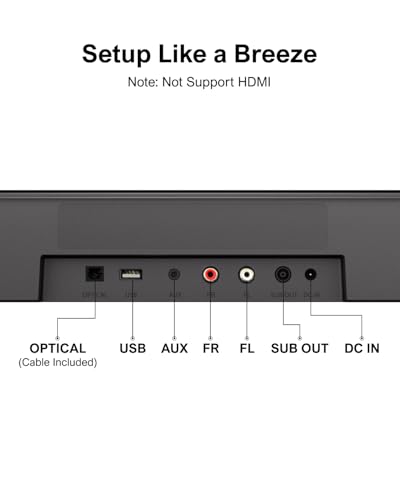
The Aura A40 lacks HDMI connectivity entirely, relying on optical (digital audio), AUX (analog audio), and Bluetooth connections. While these work fine, optical connections are limited in the audio formats they can carry, and setup is less elegant—you might need separate cables for different devices.
For buyers with newer TVs (2020 and later), the D50's HDMI advantage is substantial. For those with older equipment or simpler setups, the A40's connectivity is adequate.
Installation complexity varies dramatically between these systems, and it's worth considering seriously if you're not comfortable with speaker placement and cable management.
The Poseidon D50 requires positioning just two rear speakers and a wireless subwoofer. The rear speakers connect to each other with provided cables, then one cable runs back to the soundbar. The subwoofer connects wirelessly after initial pairing. Most users can complete this setup in under an hour.
The Aura A40 is considerably more involved. You're positioning four separate surround speakers—two in front and two behind your seating position—plus managing a wired subwoofer connection. Each speaker requires its own cable run back to the soundbar. In larger rooms, this might mean running cables along walls or under rugs to reach the front surround positions.
The payoff for this complexity is better surround imaging, but the installation challenge is real. If you're renting your home or don't want to deal with cable management, the simpler D50 setup is appealing.
Both systems include the Ultimea Smart App, which provides surprisingly comprehensive control for soundbars in this price range. The app offers 121 preset EQ matrices—pre-configured sound profiles for different music genres and content types. There's also a 10-band equalizer for manual tuning, which is useful for compensating for room acoustics or personal preferences.
The A40 offers more granular surround speaker control, allowing you to adjust the level of individual surround channels. This is genuinely useful for fine-tuning the surround effect in different room layouts. If your rear speakers are closer to your seating position than the front surrounds, you can dial them back for better balance.
Both systems support over-the-air firmware updates, which is increasingly important as manufacturers refine DSP algorithms and add new features post-launch.
Power output tells only part of the story when evaluating room coverage. The A40's 330W peak power versus the D50's 320W is essentially equivalent—the difference is negligible in real-world use.
What matters more is speaker positioning and room acoustics. The A40's four surround speakers provide better coverage in larger rooms, particularly those with irregular shapes or challenging acoustics. The additional speakers help fill acoustic dead zones and provide more consistent coverage across different seating positions.
The D50 works well in typical living rooms up to about 380 square feet, according to manufacturer specifications. Beyond that size, you might notice the limitations of having only two surround channels.
At the time of writing, the Poseidon D50 represents exceptional value in the multi-channel soundbar market. Its combination of true 5.1 surround, wireless subwoofer, modern HDMI connectivity, and superior bass performance at its current price point is difficult to match from other manufacturers.
The A40 commands a significant premium for its additional speakers and 7.1 configuration. Whether this premium is justified depends on your priorities and room size. The additional front surround speakers do create a more immersive experience, but the improvement is incremental rather than transformative for most users.
This pricing dynamic reflects broader market trends. As HDMI eARC has become standard and wireless subwoofer technology has matured, these features have moved from premium differentiators to expected basics. The D50 benefits from this evolution, offering modern features at an accessible price.
The Poseidon D50 makes sense for the majority of buyers. Its combination of modern connectivity, excellent bass performance, straightforward setup, and attractive pricing covers most home theater needs effectively. It's particularly well-suited for buyers with newer TVs who want the convenience of HDMI eARC integration.
Choose the D50 if you:
The Aura A40 justifies its premium for users who prioritize maximum surround immersion and have the room size and installation tolerance to take advantage of its seven-channel configuration. It's the better choice for serious home theater enthusiasts and gamers who benefit from precise audio positioning.
Choose the A40 if you:
While both systems deliver genuine surround sound that outperforms traditional soundbars, they serve different markets and priorities. The Poseidon D50 represents the sweet spot for most buyers—delivering 90% of the surround experience at a significantly lower cost, with modern features and superior bass performance.
The Aura A40 serves the enthusiast market, offering maximum surround coverage for those willing to pay extra and handle additional complexity. It's a compelling choice if you have the room size and installation capability to take full advantage of its seven-channel configuration.
For most buyers setting up a home theater system in 2024 and beyond, the D50's combination of modern connectivity, excellent bass, and attractive pricing makes it the more practical choice. The future of home audio is moving toward wireless convenience and HDMI integration—areas where the D50 excels and positions you well for years to come.
| Ultimea Aura A40 7.1 Channel Soundbar System | Ultimea Poseidon D50 5.1 Soundbar Home Theater (2025) |
|---|---|
| Channel Configuration - Determines surround sound immersion and spatial accuracy | |
| 7.1 virtual surround with 8 total speakers (4 surround + soundbar + subwoofer) | 5.1 true surround with 6 drivers (2 rear satellites + soundbar + wireless subwoofer) |
| Connectivity - Critical for modern TV integration and future-proofing | |
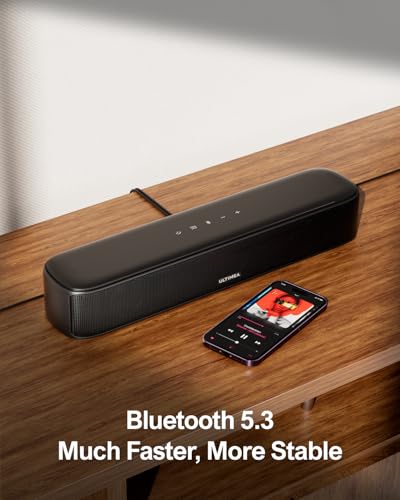
| Optical, AUX, USB, Bluetooth 5.3 (no HDMI) | HDMI eARC, Optical, AUX, USB, Bluetooth 5.3 |
| Subwoofer Design - Affects bass quality and placement flexibility | |
| 4-inch wired subwoofer, 65Hz frequency response | 5.25-inch wireless subwoofer with BassMX technology, 40Hz frequency response |
| Power Output - Determines maximum volume and room coverage | |
| 330W peak power | 320W peak power (essentially equivalent performance) |
| Speaker Setup - Impacts installation complexity and room coverage | |
| 4 separate surround speakers (2 front, 2 rear) requiring multiple cable runs | 2 rear satellite speakers with simpler cable management |
| Smart Features - App control and audio customization options | |
| Ultimea Smart App with 121 EQ presets, 10-band equalizer, 13 adjustable surround levels | Ultimea Smart App with 121 EQ presets, 10-band equalizer, independent satellite volume control |
| Installation Complexity - Time and effort required for optimal setup | |
| Complex 6-piece system with extensive cable management | Simple 3-piece system with wireless subwoofer |
| Ideal Room Size - Manufacturer recommendations for optimal performance | |
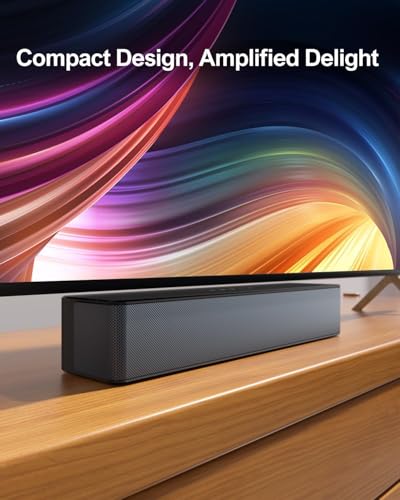
| Medium to large rooms (compact design noted for smaller spaces) | 250-380 sq ft rooms with 320W coverage |
| Value Proposition - Performance per dollar at time of writing | |
| Premium pricing for maximum 7.1 surround immersion | Exceptional value with modern features and superior bass at lower cost |
The Ultimea Aura A40 is a 7.1 channel system with 8 total speakers including 4 separate surround speakers, while the Ultimea Poseidon D50 is a 5.1 channel system with 6 drivers and 2 rear satellite speakers. The A40 provides more comprehensive surround coverage, but the D50 offers simpler setup and modern HDMI connectivity.
The Poseidon D50 delivers superior bass with its 5.25-inch wireless subwoofer that reaches down to 40Hz, compared to the Aura A40's 4-inch wired subwoofer limited to 65Hz. The D50's wireless design also allows for optimal subwoofer placement in your room.
The Poseidon D50 includes HDMI eARC for seamless integration with modern TVs, while the Aura A40 lacks HDMI connectivity and relies on optical, AUX, and Bluetooth connections. For TVs from 2020 and later, the D50 offers better compatibility.
The Poseidon D50 is much easier to install with just 3 components and a wireless subwoofer. The Aura A40 requires positioning and wiring 4 separate surround speakers plus a wired subwoofer, making installation significantly more complex.
The Aura A40 provides better gaming performance with its 7.1 configuration offering more precise directional audio for competitive gaming. However, the Poseidon D50 still delivers effective surround sound for casual gaming at a lower cost.
Both systems deliver comparable power output - the Aura A40 provides 330W peak power while the Poseidon D50 offers 320W peak power. The 10W difference is negligible in real-world performance.
The Poseidon D50 provides exceptional value with modern HDMI connectivity, wireless subwoofer, and superior bass performance at a significantly lower price point. The Aura A40 commands a premium for its additional surround speakers and 7.1 configuration.
Yes, both the Aura A40 and Poseidon D50 support the Ultimea Smart App, offering 121 EQ presets, 10-band equalizer, and customizable sound modes. The A40 provides more granular surround speaker control.
The Aura A40 performs better in larger rooms with its 4 surround speakers providing more comprehensive coverage. The Poseidon D50 is optimized for rooms up to 380 square feet and may struggle with larger spaces.
Neither the Aura A40 nor the Poseidon D50 supports Dolby Atmos or DTS:X. Both focus on delivering true multi-channel surround sound through physical speaker placement rather than height effects.
Both systems excel for home theater use, but the Poseidon D50 offers better overall value with its superior bass, modern connectivity, and simpler setup. The Aura A40 provides more immersive surround effects for dedicated home theater enthusiasts.
The Poseidon D50 connects via HDMI eARC for the simplest setup, while the Aura A40 requires optical or AUX connections to your TV. The A40 also needs multiple speaker cables for its 4 surround speakers, whereas the D50 only needs cables for 2 rear satellites.
We've done our best to create useful and informative comparisons to help you decide what product to buy. Our research uses advanced automated methods to create this comparison and perfection is not possible - please contact us for corrections or questions. These are the sites we've researched in the creation of this article: youtube.com - walmart.com - youtube.com - ultimea.com - homestudiobasics.com - ultimea.co - youtube.com - eu.ultimea.com - walmart.com - device.report - bestbuy.com - manuals.plus - community.ultimea.com - judge.me - support.ultimea.com - geekmaxi.com - provantage.com - bestbuy.com - youtube.com - uk.whatgeek.com - youtube.com - eu.ultimea.com - newegg.com - tvsbook.com - youtube.com - provantage.com - ultimea.com - techradar.com - community.ultimea.com - homedepot.com - community.ultimea.com - ultimea.com - ultimea.de - youtube.com - medisamhealthcenter.com - ultimea.com - youtube.com - walmart.com

Privacy Policy
Terms and Conditions - Affiliate Policy
Home Security
© Copyright 2008-2026.
11816 Inwood Rd #1211, Dallas, TX 75244