

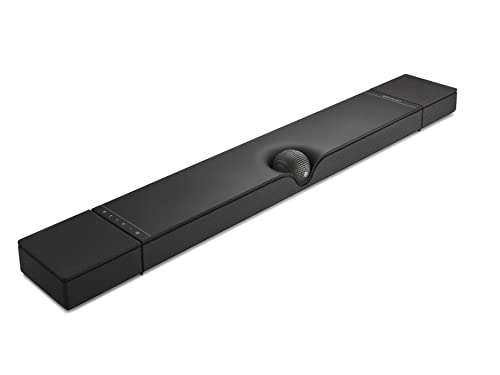

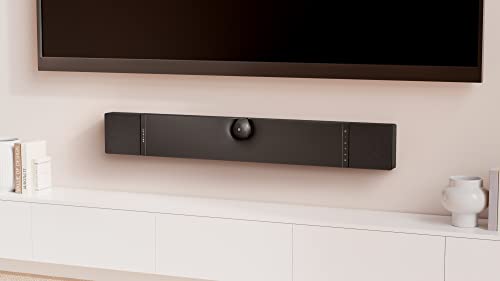
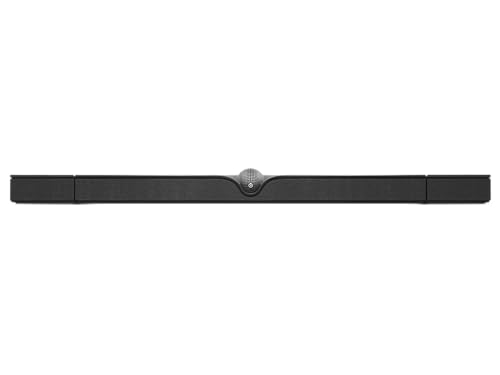
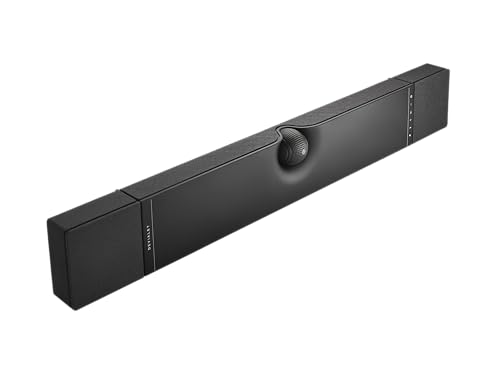

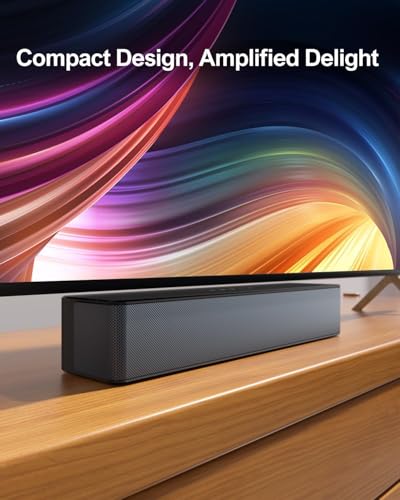




When your TV's built-in speakers just aren't cutting it anymore, you're faced with a decision that goes far beyond simply "making things louder." The soundbar market has evolved dramatically over the past few years, offering everything from basic audio upgrades to sophisticated home theater systems that can rival traditional multi-component setups. Today, we're comparing two fundamentally different approaches: the Devialet Dione, a premium all-in-one soundbar that launched in 2022, and the Ultimea Poseidon D50, a budget-friendly true 5.1 system from 2025.
The choice between these two products isn't just about money—it's about philosophy. Do you want the absolute best sound quality from a single, elegant component, or would you prefer genuine surround sound with physical rear speakers at a fraction of the cost? Let's dive deep into what makes each approach work and who should choose which.
Before we get into the specifics, it's worth understanding what really matters when shopping for a soundbar. The most critical factors are audio performance (how good does it actually sound), value proposition (what you get for your money), setup complexity (how much work is involved), and room integration (how well it fits your space and lifestyle).
The soundbar market has seen incredible innovation since 2020. We've moved beyond simple left-right stereo bars to sophisticated systems that can create convincing surround sound and even overhead effects. Technologies like Dolby Atmos—which adds height information to create a three-dimensional soundscape—have become more accessible, while processing power has increased dramatically to enable real-time audio enhancement.
At the time of writing, the Devialet Dione sits firmly in the premium category, commanding a price that's roughly eight to ten times higher than the Ultimea Poseidon D50. This isn't just luxury markup—it reflects fundamentally different engineering approaches and target markets.
The Dione represents what happens when a company known for high-end audio equipment (Devialet made their name with premium wireless speakers that cost as much as a car) decides to make a soundbar. Every component, from the aerospace-grade magnetic drivers to the custom amplification system, is engineered to audiophile standards. You're paying for research, development, and materials that would typically be found in professional studio equipment.
The Poseidon D50, on the other hand, demonstrates how competitive the budget market has become. At its price point, offering true 5.1 surround with physical rear speakers and a dedicated subwoofer would have been impossible just five years ago. This is where smart engineering and efficient manufacturing really shine.
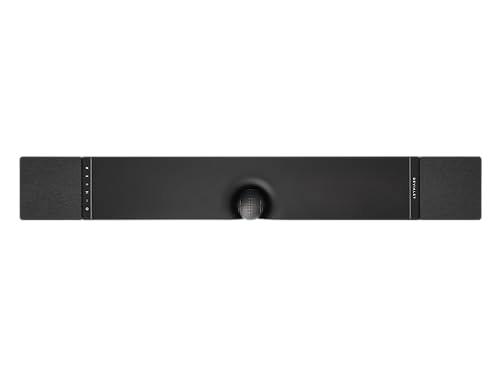
The Devialet Dione is built around what the company calls a 17-driver array—that's 17 individual speakers crammed into one sleek bar. But it's not just about the number; it's about the technology behind them. The nine full-range drivers use aluminum dome construction with neodymium magnets, materials typically found in high-end bookshelf speakers. The eight dedicated bass drivers are arranged in what Devialet calls a "push-push" configuration, where opposing drivers cancel out cabinet vibrations that would otherwise muddy the sound.
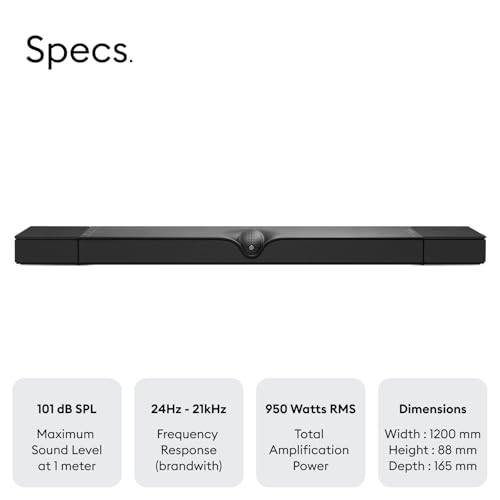
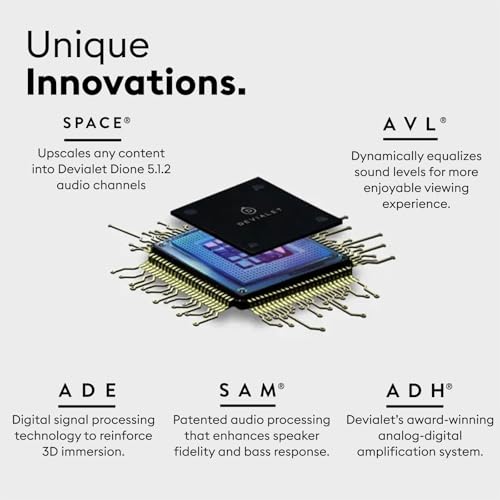
What makes this really special is the ADH (Analog Digital Hybrid) amplification system. Think of traditional amplifiers as being either precise but weak (Class A) or powerful but sometimes harsh (Class D). ADH combines both approaches in a single circuit, giving you the musical accuracy of Class A with the power and efficiency of Class D. The result is distortion so low (around 0.001%) that it's essentially unmeasurable in real-world listening.
The frequency response—that's the range of sounds from deep bass to high treble—extends from 24Hz to 21kHz. To put that in perspective, most people can't hear below 30Hz or above 18kHz, so the Dione covers more than the full range of human hearing with room to spare.
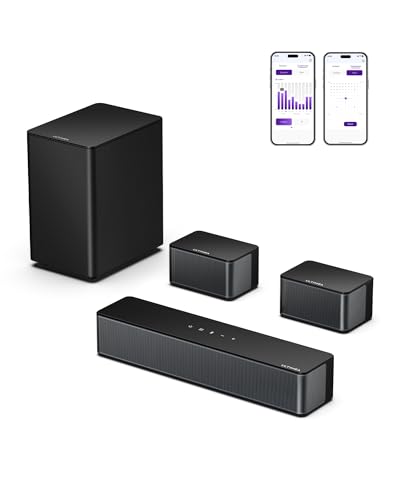
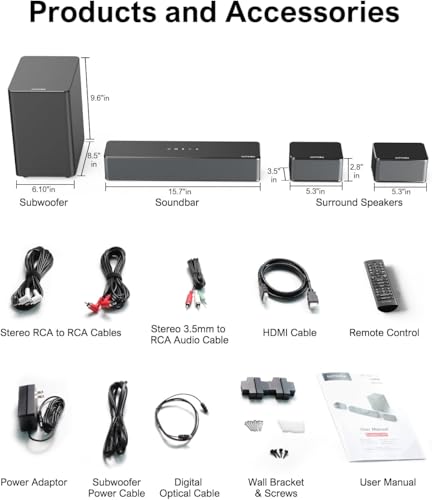
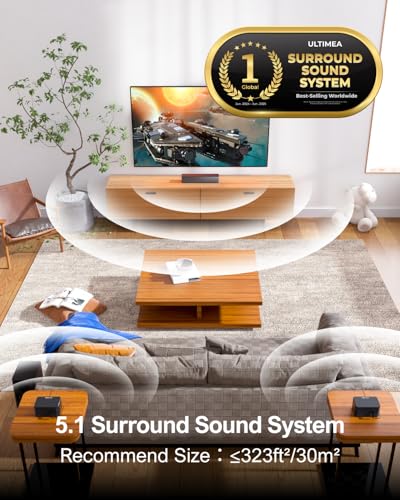
The Ultimea Poseidon D50 takes a more traditional but clever approach. Instead of cramming everything into one bar, it splits the work among dedicated components: a main soundbar for front channels, two physical rear speakers for true surround effects, and a wireless subwoofer for bass. This is how home theaters worked for decades, and there's a good reason why.
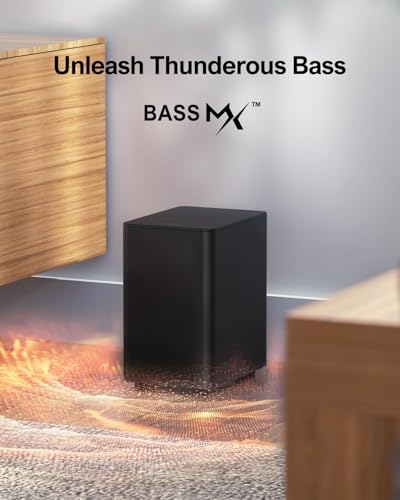
The six drivers across the system use what Ultimea calls "aerospace-grade NdFeB magnets"—basically powerful rare-earth magnets that allow smaller drivers to move more air efficiently. The 5.25-inch subwoofer incorporates BassMX technology, which uses an optimized magnetic circuit and larger diaphragm movement (15mm excursion) to produce deeper bass from a compact cabinet.
What's particularly smart is the SurroundX algorithm with its integrated DSP (Digital Signal Processing) chip. This takes regular stereo audio and intelligently redistributes it across all five channels plus the subwoofer, creating a surround experience even from content that wasn't originally mixed that way.
Bass reproduction is where these two approaches really diverge. The Devialet Dione's eight integrated woofers, powered by SAM (Speaker Active Matching) technology, can produce bass down to 24Hz—that's the realm of pipe organs and movie explosions. SAM continuously monitors how each driver is performing and adjusts the signal in real-time to ensure what you hear matches exactly what the sound engineers intended.
The push-push driver configuration is particularly clever. When one bass driver pushes forward, its opposite partner pushes backward, and the forces cancel each other out within the cabinet. This eliminates the cabinet vibrations that usually color bass response in single-driver systems.
The Poseidon D50 uses the more traditional approach of a dedicated subwoofer, which has its own advantages. A separate cabinet can be larger and positioned optimally in your room (bass tends to sound better when the subwoofer is placed away from the main speakers). The BassMX technology helps this smaller driver punch above its weight class, but physics still applies—a larger, dedicated box will generally produce deeper, more controlled bass than drivers integrated into a slim soundbar.
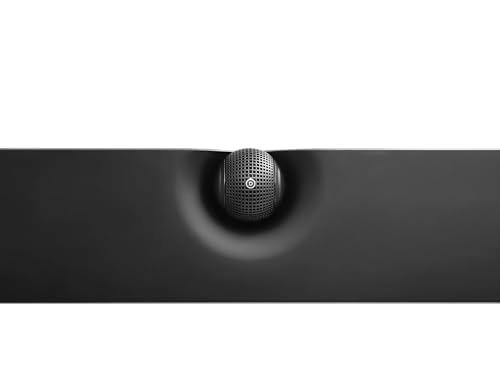
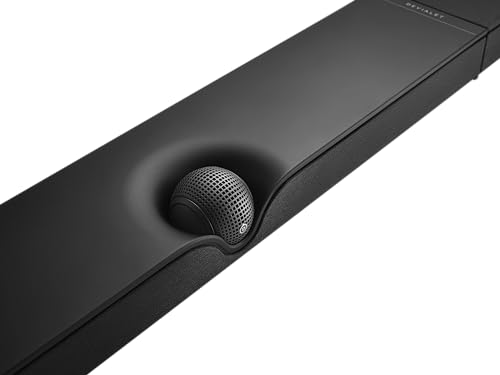
This is where the fundamental philosophy difference becomes most apparent. The Devialet Dione uses incredibly sophisticated processing to create phantom surround channels. Technologies like ADE (Advanced Dimensional Experience) and the rotating ORB center channel work together to beam sound around your room, using reflections and psychoacoustic tricks to fool your brain into hearing sounds from behind you.
It's genuinely impressive technology. The ORB—that spherical center speaker that mechanically rotates—ensures dialogue stays locked to your TV screen whether the soundbar is sitting on a stand or mounted on the wall. The ADE system analyzes your room and adjusts how it bounces sound off walls to create the most convincing surround field possible.
But here's the thing: the Ultimea Poseidon D50 has actual speakers behind you. No amount of processing wizardry can completely replicate the experience of sound sources physically positioned around your room. When a helicopter flies overhead in a movie, you'll hear it move from front to back in a way that virtual surround simply cannot match.
The Poseidon D50 also gives you independent control over the rear speakers—you can adjust their volume separately or even turn them off if needed. This flexibility is particularly useful if you're watching late at night and don't want surround effects disturbing others in the house.
Dolby Atmos adds overhead sound effects to create a true three-dimensional audio experience. Instead of just left, right, and surround channels, Atmos treats sound as objects that can be placed anywhere in a three-dimensional space around you.
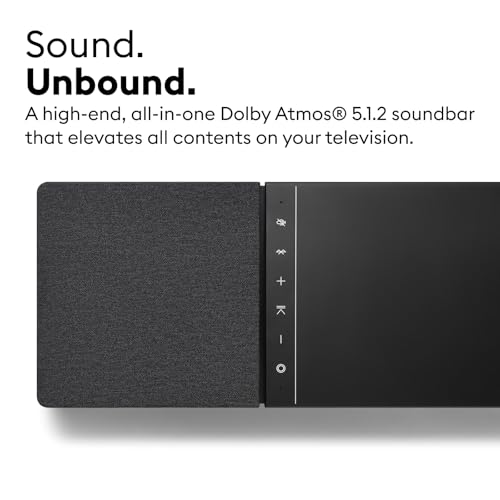
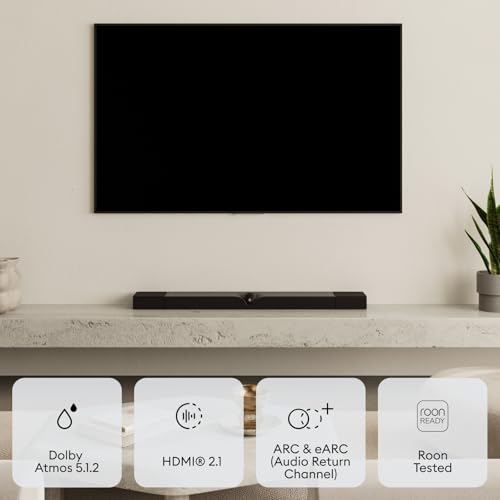
The Devialet Dione is a true 5.1.2 Dolby Atmos system, meaning it has five main channels, one subwoofer channel, and two dedicated height channels. Its up-firing drivers bounce sound off your ceiling to create the illusion of overhead effects, and the SPACE technology can even take regular stereo content and upmix it into a full 5.1.2 presentation.
The Ultimea Poseidon D50, at the time of writing, doesn't support Dolby Atmos or DTS:X (the competing height audio format). This isn't necessarily a dealbreaker—many people are perfectly happy with traditional 5.1 surround—but it does mean you won't experience the overhead effects that make modern movie soundtracks so immersive.
Setting up the Devialet Dione is about as simple as it gets. Unbox it, connect one HDMI cable to your TV, plug it in, and you're done. The built-in room calibration system automatically optimizes the sound for your space, and the gyroscopic sensors ensure it adapts correctly whether it's sitting flat or wall-mounted.
The Ultimea Poseidon D50 requires more thought. You'll need to position the rear speakers (which come with 19.6 feet of cable), find the optimal spot for the wireless subwoofer, and manage the cable routing. It's not complicated, but it does require some planning and potentially some cable management.
Where the Poseidon D50 really shines is in customization. The smartphone app gives you access to 121 preset EQ settings, a 10-band manual equalizer, and independent volume controls for different speaker groups. If you enjoy tweaking and optimizing your audio setup, this level of control is fantastic.
The Dione takes a more "trust the engineers" approach. It offers four carefully crafted listening modes (Movie, Spatial, Music, and Voice) but doesn't let you dig deep into manual adjustments. For some people, this is perfect—they want great sound without having to become audio engineers. For others, the lack of granular control might feel limiting.
For movie watching, both systems excel in different ways. The Dione's Dolby Atmos capabilities really shine with modern blockbusters that use height effects extensively. The precision and clarity are exceptional—you'll hear details in soundtracks that you might have missed before. Dialogue clarity is particularly impressive, thanks to the dedicated ORB center channel and advanced processing.
The Poseidon D50 creates a more traditional but often more convincing surround experience. Action sequences feel more immersive when sound effects are actually coming from behind you rather than reflected off walls. The dedicated subwoofer also provides satisfying rumble for explosions and dramatic moments.
Music reproduction is where the Dione's audiophile heritage really shows. The precision timing, low distortion, and sophisticated SPACE processing can make stereo recordings feel expansive without destroying the original stereo image. The Music mode disables surround processing for purist listening, while Spatial mode creates an enveloping experience from any source.
The Poseidon D50 is competent with music but clearly optimized for movie and TV content. It can sound a bit harsh at higher volumes, and the emphasis on surround effects doesn't always serve music well. However, for the price, it's still quite capable, especially for casual listening.
The Devialet Dione makes sense if you have the budget and prioritize sound quality above all else. It's ideal for people who want a clean, sophisticated setup without components scattered around the room. If you care deeply about audio quality, listen to high-resolution music, and want the convenience of a single premium component, this is the choice.
It's also perfect for smaller spaces where rear speakers aren't practical, or for people who move frequently and don't want to deal with complex setups. The automatic room calibration means it will sound great whether you're in a studio apartment or a larger living room.
The Ultimea Poseidon D50 is the clear choice for budget-conscious buyers who don't want to compromise on surround sound immersion. If you have a room where you can properly position rear speakers, and you primarily watch movies and TV shows rather than critically listening to music, this system delivers exceptional value.
It's also great for people who enjoy customizing their audio setup. The extensive EQ options and independent speaker controls let you fine-tune the system to your room and preferences in ways that more expensive systems often don't allow.
These two soundbars represent fundamentally different approaches to solving the same problem: how to get great audio from your TV without a complex traditional home theater setup. The Devialet Dione is engineering excellence in a sleek package, while the Ultimea Poseidon D50 is smart design meeting aggressive pricing.
Neither approach is inherently better—it depends entirely on your priorities, budget, and living situation. The Dione offers refinement and convenience at a premium price, while the Poseidon D50 delivers genuine surround immersion at a budget-friendly cost.
What's clear is that we're in a golden age for soundbar technology. Whether you spend a few hundred dollars or several thousand, you can get dramatically better audio than what your TV provides alone. The key is understanding what matters most to you and choosing the approach that aligns with your needs and budget.
| Devialet Dione Soundbar | Ultimea Poseidon D50 5.1 Soundbar Home Theater (2025) |
|---|---|
| Audio Configuration - Determines surround sound realism and setup complexity | |
| 5.1.2 all-in-one soundbar with virtual surround | True 5.1 system with physical rear speakers and wireless subwoofer |
| Driver Count & Power - Affects overall sound quality and room-filling capability | |
| 17 drivers total, 950W RMS amplification | 6 drivers total across components, 320W peak output |
| Bass Performance - Critical for movie impact and music depth | |
| 8 integrated woofers with push-push design, extends to 24Hz | Dedicated 5.25" wireless subwoofer with BassMX technology |
| Dolby Atmos Support - Essential for modern movie soundtracks with height effects | |
| Full 5.1.2 Dolby Atmos with dedicated height channels | No Dolby Atmos support, traditional 5.1 surround only |
| Setup Complexity - Determines installation time and cable management needs | |
| Single bar, plug-and-play with auto room calibration | Multi-component system requires rear speaker placement and cable routing |
| Audio Customization - Important for fine-tuning sound to personal preference | |
| 4 preset modes with minimal manual adjustment | 121 EQ presets, 10-band manual EQ, independent speaker volume control |
| Build Quality & Materials - Affects durability and sound precision | |
| Aerospace-grade aluminum drivers, premium anodized construction | High-performance drivers with NdFeB magnets, standard build quality |
| Connectivity Options - Determines compatibility with modern and legacy devices | |
| HDMI 2.1 eARC, optical, Wi-Fi, Bluetooth 5.0, AirPlay 2, Spotify Connect | HDMI eARC, optical, AUX, USB, Wi-Fi, Bluetooth 5.3 |
| Room Size Suitability - Helps determine if the system matches your space | |
| Optimized for medium to large rooms with virtual surround projection | Recommended for 250-380 sq ft rooms with proper rear speaker positioning |
| Price Category - Sets expectations for target audience and feature set | |
| Premium audiophile tier with luxury pricing | Budget-friendly true surround option with competitive value |
The Ultimea Poseidon D50 offers superior movie immersion due to its physical rear speakers that create genuine surround sound placement. However, the Devialet Dione provides more advanced features like Dolby Atmos height effects and exceptional dialogue clarity. For traditional surround sound realism, choose the Poseidon D50; for premium audio quality and overhead effects, the Dione excels.
No separate subwoofer is needed with either system. The Devialet Dione has 8 integrated woofers that produce deep bass down to 24Hz, while the Ultimea Poseidon D50 includes a dedicated wireless subwoofer with BassMX technology. The Dione offers the convenience of all-in-one design, while the Poseidon D50 provides traditional subwoofer placement flexibility.
The Devialet Dione is significantly easier to install as it's a single component requiring only one HDMI connection and automatic room calibration. The Ultimea Poseidon D50 requires positioning rear speakers, connecting cables (19.6ft included), and placing the wireless subwoofer. Choose the Dione for simplicity or the Poseidon D50 if you don't mind multi-component setup.
Only the Devialet Dione supports Dolby Atmos with true 5.1.2 channels and dedicated height effects. The Ultimea Poseidon D50 does not support Dolby Atmos or DTS:X, focusing instead on traditional 5.1 surround sound. If overhead audio effects from modern movies are important to you, the Dione is the clear choice.
The Devialet Dione delivers superior music quality with its audiophile-grade components, 0.001% distortion, and dedicated Music mode that preserves stereo imaging. The Ultimea Poseidon D50 is competent for casual music listening but can sound harsh at higher volumes and is optimized more for movies than music. For serious music enjoyment, the Dione is significantly better.
Both offer essential connections including HDMI eARC, optical, and Bluetooth. The Devialet Dione adds premium features like AirPlay 2, Spotify Connect, and high-resolution audio support up to 24-bit/96kHz. The Ultimea Poseidon D50 includes practical additions like USB input and comprehensive smartphone app control. The Dione focuses on premium streaming while the Poseidon D50 emphasizes versatility.
The Devialet Dione is ideal for smaller spaces as it's a single compact unit that uses virtual surround technology to create immersion without requiring rear speaker placement. The Ultimea Poseidon D50 needs adequate space for rear speakers and subwoofer positioning. For apartments or rooms where speaker placement is challenging, the Dione is the practical choice.
Yes, both support HDMI CEC (Consumer Electronics Control) allowing TV remote control of basic functions. The Ultimea Poseidon D50 offers additional smartphone app control with extensive customization options including 121 EQ presets and 10-band equalizer. The Devialet Dione uses the Devialet app for basic settings but emphasizes automatic optimization over manual adjustment.
The Ultimea Poseidon D50 offers exceptional value, delivering true 5.1 surround sound with physical components at a budget-friendly price point. The Devialet Dione commands a premium price but justifies it with audiophile-grade engineering and materials. Choose the Poseidon D50 for maximum features per dollar or the Dione if sound quality is your top priority regardless of cost.
The Devialet Dione produces exceptionally deep and controlled bass using 8 integrated woofers in a push-push configuration, extending down to 24Hz. The Ultimea Poseidon D50 delivers solid bass impact through its dedicated 5.25" subwoofer with BassMX technology. While both provide satisfying bass, the Dione offers more precision and depth, while the Poseidon D50 provides good impact for its price range.
The Ultimea Poseidon D50 excels for gaming due to its physical rear speakers that provide accurate directional audio cues crucial for competitive gaming. The Devialet Dione offers premium audio quality but relies on virtual surround. However, the Dione supports higher resolution audio formats. For competitive gaming where positional audio matters most, choose the Poseidon D50.
Both soundbars support wall mounting. The Devialet Dione features a rotating ORB center channel that automatically adjusts for optimal dialogue placement whether wall-mounted or on furniture. The Ultimea Poseidon D50 can be wall-mounted but requires careful consideration of rear speaker placement and cable routing. The Dione maintains consistent performance in either position, while the Poseidon D50 requires more planning for optimal wall installation.
We've done our best to create useful and informative comparisons to help you decide what product to buy. Our research uses advanced automated methods to create this comparison and perfection is not possible - please contact us for corrections or questions. These are the sites we've researched in the creation of this article: rtings.com - crutchfield.com - devialet.com - ooberpad.com - bhphotovideo.com - kjwestone.co.uk - whathifi.com - devialet.com - devialet.com - sound-advice.online - kjwestone.co.uk - device.report - tmraudio.com - devialet.com - devialetchat.com - projectorscreen.com - soundandvision.com - bestbuy.com - youtube.com - av.com - audiofi.ca - devialet.com - blog.son-video.com - audioconnection.com.au - baybloorradio.com - cdn.abicart.com - smarthomesounds.co.uk - e-piphany.co.za - cloneyaudio.com - devialet.com - catalog.asbis.ee - av.com - soundandvision.com - youtube.com - comparisontabl.es - youtube.com - eu.ultimea.com - newegg.com - tvsbook.com - youtube.com - provantage.com - ultimea.com - techradar.com - community.ultimea.com - homedepot.com - community.ultimea.com - ultimea.com - ultimea.de - youtube.com - medisamhealthcenter.com - ultimea.com - youtube.com - walmart.com

Privacy Policy
Terms and Conditions - Affiliate Policy
Home Security
© Copyright 2008-2026.
11816 Inwood Rd #1211, Dallas, TX 75244