



The world of home theater audio has evolved dramatically in recent years, moving beyond the days when your only options were tiny TV speakers or complex multi-component receiver systems that required running wires throughout your walls. Today's market offers two compelling approaches: complete wireless surround systems that give you everything in one box, and premium expandable soundbars that let you build your dream setup piece by piece.
This brings us to an interesting comparison between the Hisense HT Saturn HTSATURN and the Sony HT-A8000 BRAVIA Theater Bar 8. These represent fundamentally different philosophies in home theater design, and understanding their approaches will help you make the right choice for your space and budget.
Before diving into specifics, it's worth understanding what makes modern home theater systems tick. The holy grail is recreating the cinema experience at home, which means delivering sound that comes from all directions—including above your head. This is where technologies like Dolby Atmos and DTS:X come in. These formats treat sound as "objects" that can be precisely placed in three-dimensional space, rather than just channels sent to specific speakers.
The challenge is achieving this immersion without the complexity of a traditional receiver-based system with speakers mounted throughout your room. Both the Hisense HT Saturn and Sony HT-A8000 tackle this problem, but they take completely different approaches.
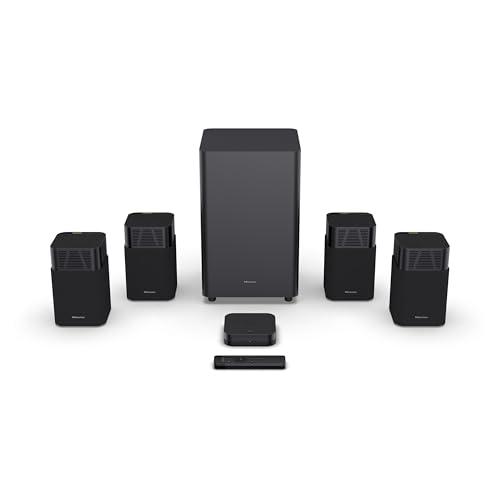
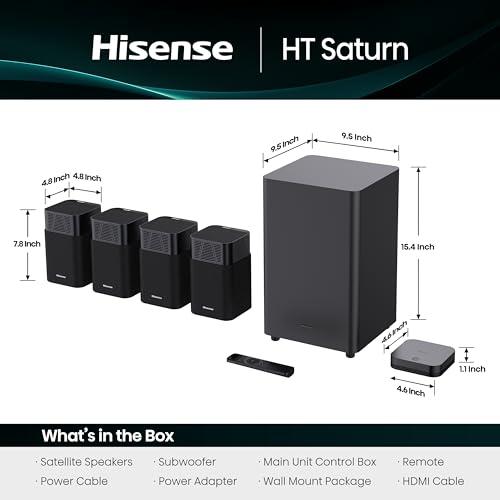
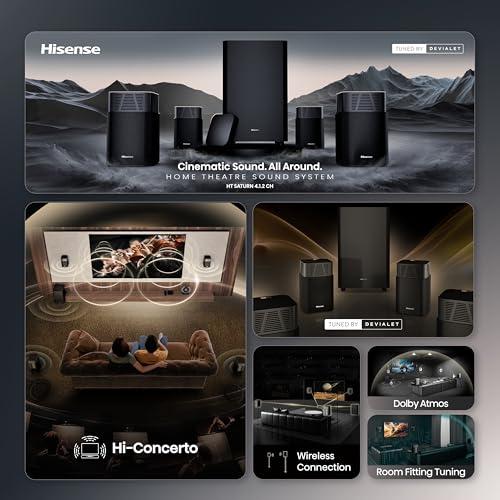
The Hisense system, released in 2025, represents the "complete wireless ecosystem" approach. You get four satellite speakers, a wireless subwoofer, and a central control hub—essentially a full surround system without any wires between components. The Sony, which hit the market in 2024, takes the "sophisticated soundbar" route, using advanced processing and carefully positioned drivers within a single unit to create virtual surround effects.
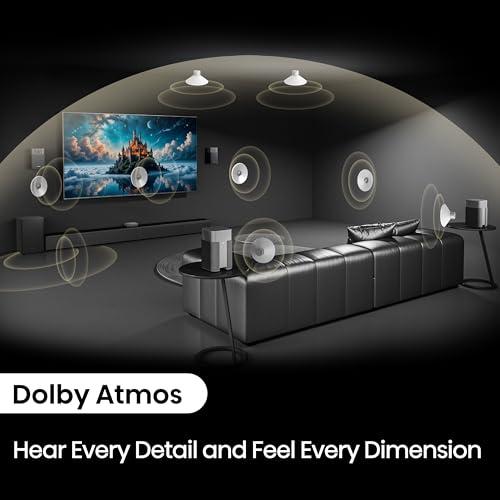
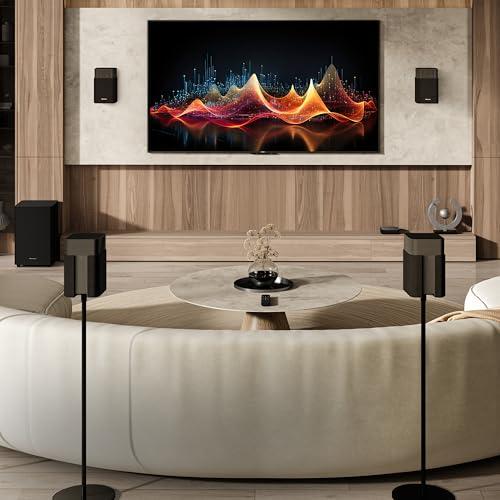
The Hisense HT Saturn is fascinating because it completely reimagines what a "soundbar system" can be. Instead of a single bar sitting under your TV, you get a true 4.1.2-channel system with physical speakers positioned around your room. The ".2" refers to height channels—those overhead effects that make helicopters sound like they're flying above you.
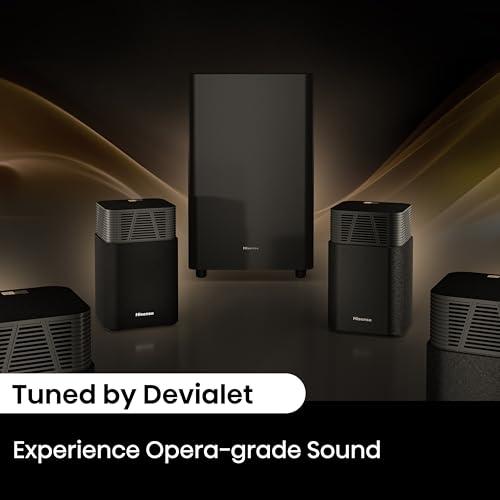
What makes this system special is its collaboration with Devialet, the French audio company known for creating some of the world's most expensive and precise speakers. This "Tuned by Devialet" designation isn't just marketing—it represents genuine acoustic engineering from a company that typically works on speakers costing tens of thousands of dollars. The result is a sound signature that prioritizes clarity and tonal balance in a way that's rare at this price point.
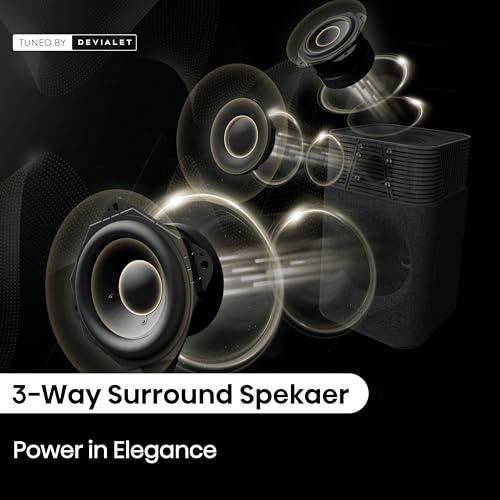
The HT Saturn's 13 total speakers are distributed across those four satellite enclosures and the 6.5-inch wireless subwoofer. Each satellite is a three-way design, meaning it has separate drivers for bass, midrange, and treble—just like high-end bookshelf speakers. This allows each satellite to reproduce a full range of frequencies without the compromises you typically see in compact home theater speakers.
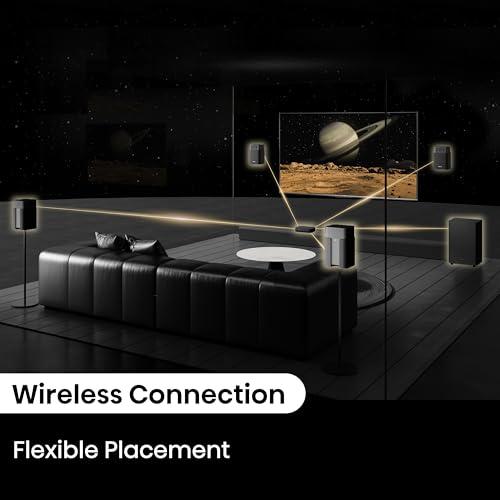
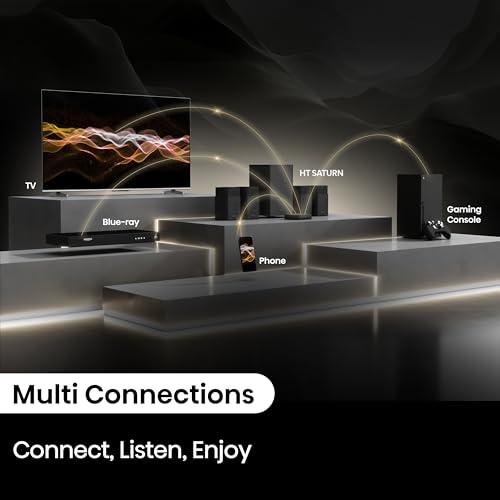
The wireless connectivity is particularly clever. The system uses three different frequency bands (2.4GHz, 5.2GHz, and 5.8GHz) to maintain stable connections between all components. This tri-band approach helps avoid interference from your Wi-Fi network, Bluetooth devices, and other wireless signals that crowd the airwaves in modern homes.
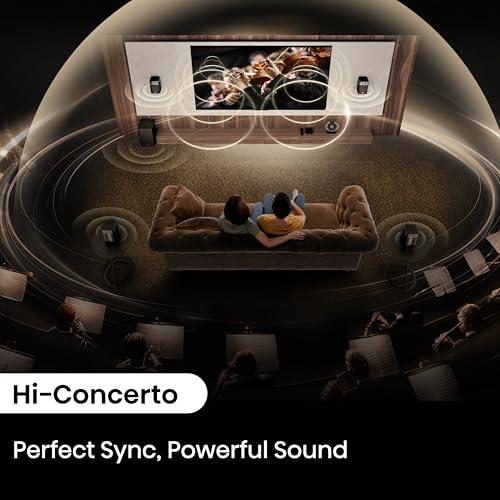
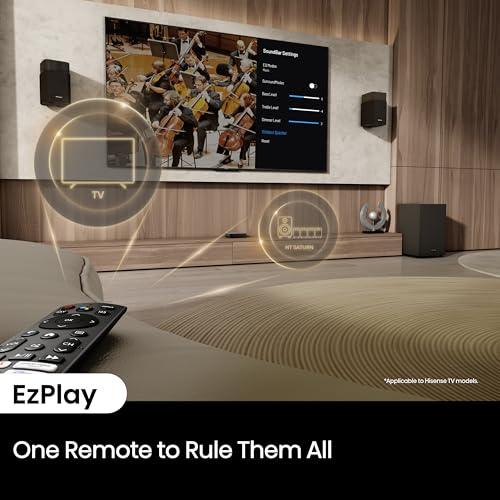
Perhaps most importantly, the Hisense system includes Hi-Concerto technology when paired with compatible Hisense TVs. This feature actually uses your TV's built-in speakers as additional channels, effectively creating a 7.1.2 system by combining the TV speakers with the external components. It's an elegant solution to one of the HT Saturn's few limitations—the lack of a dedicated center channel speaker for dialogue.
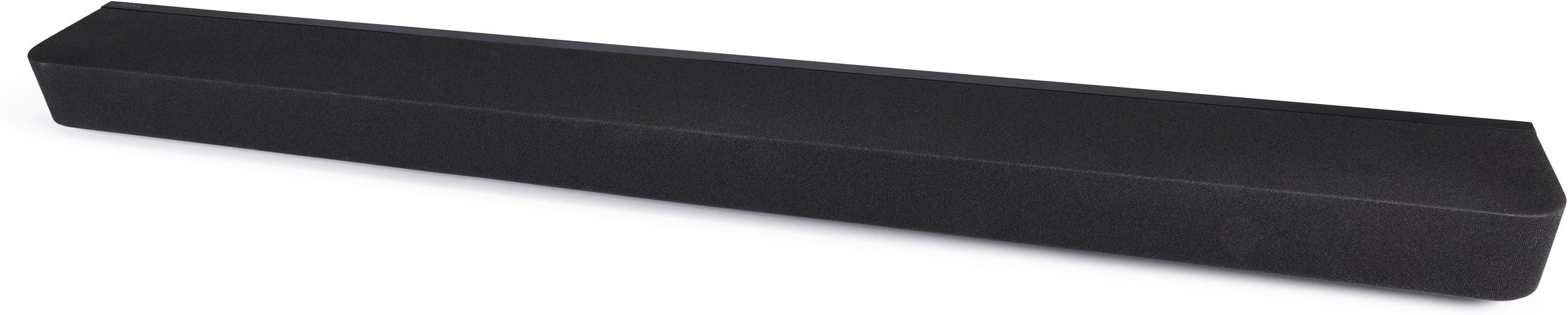
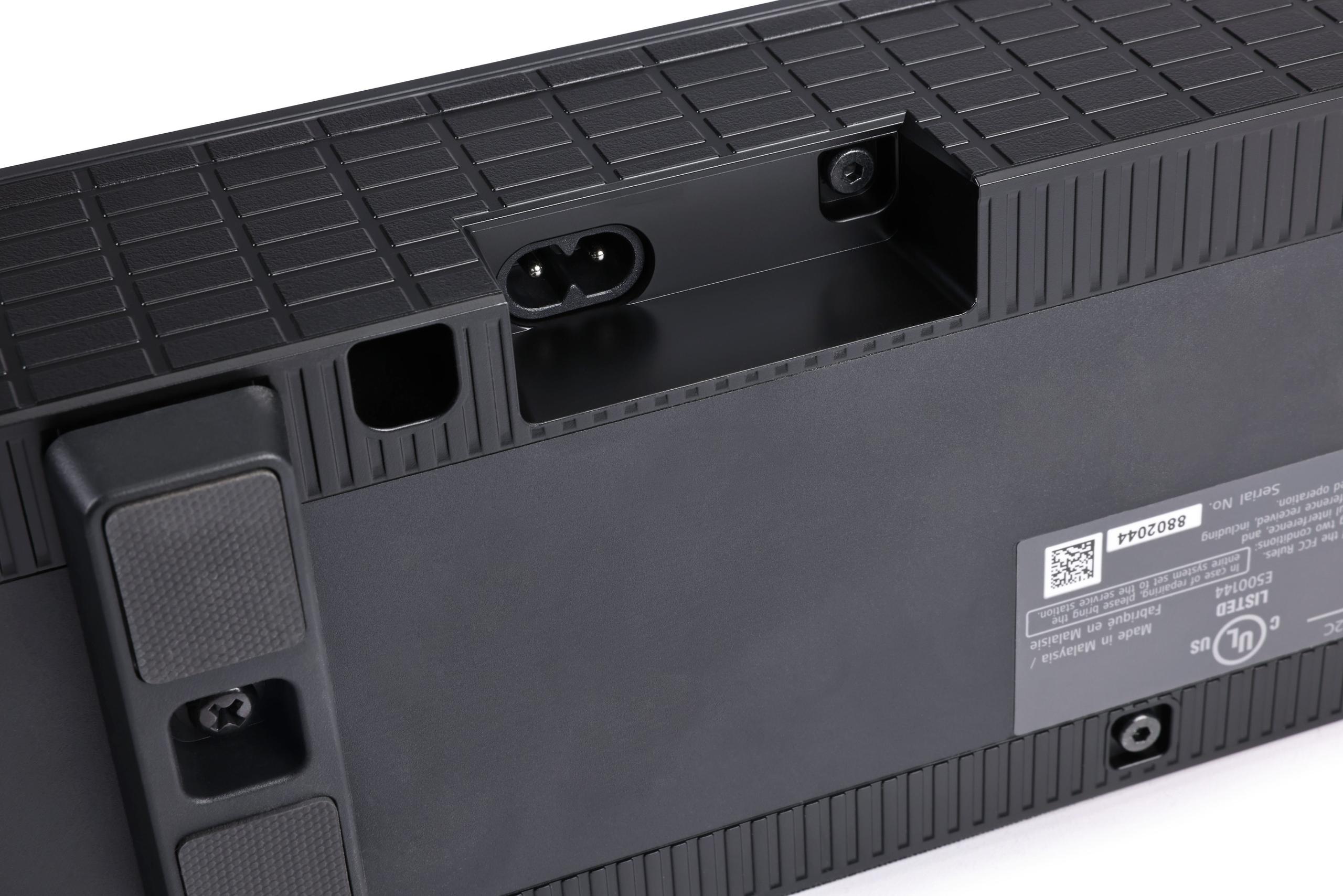
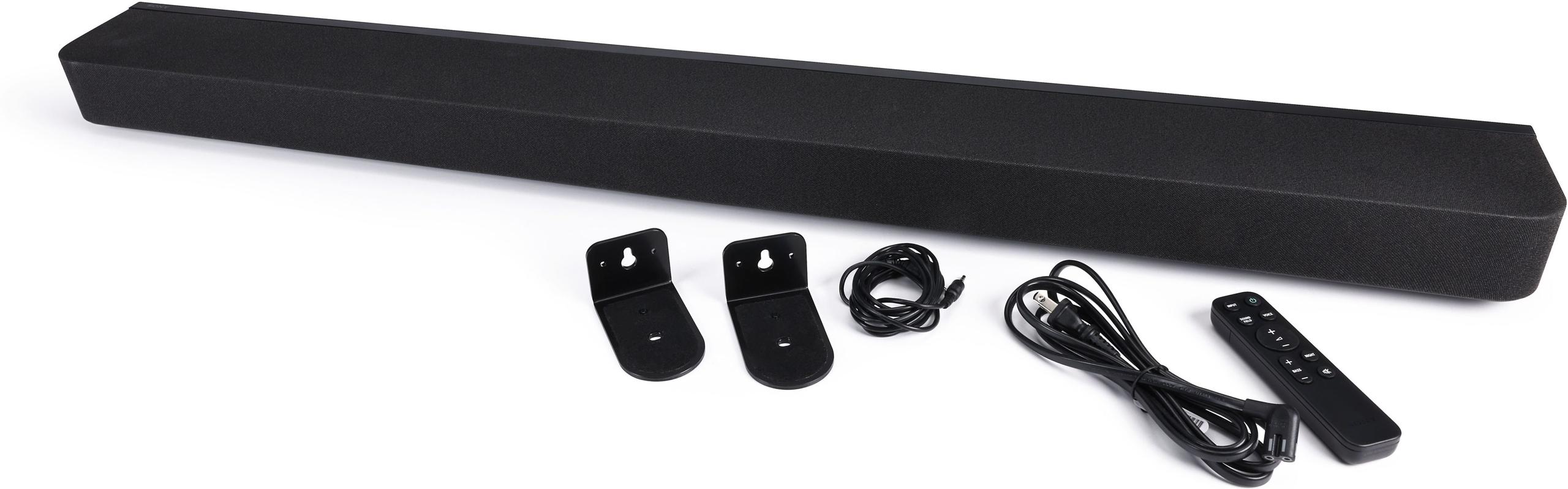
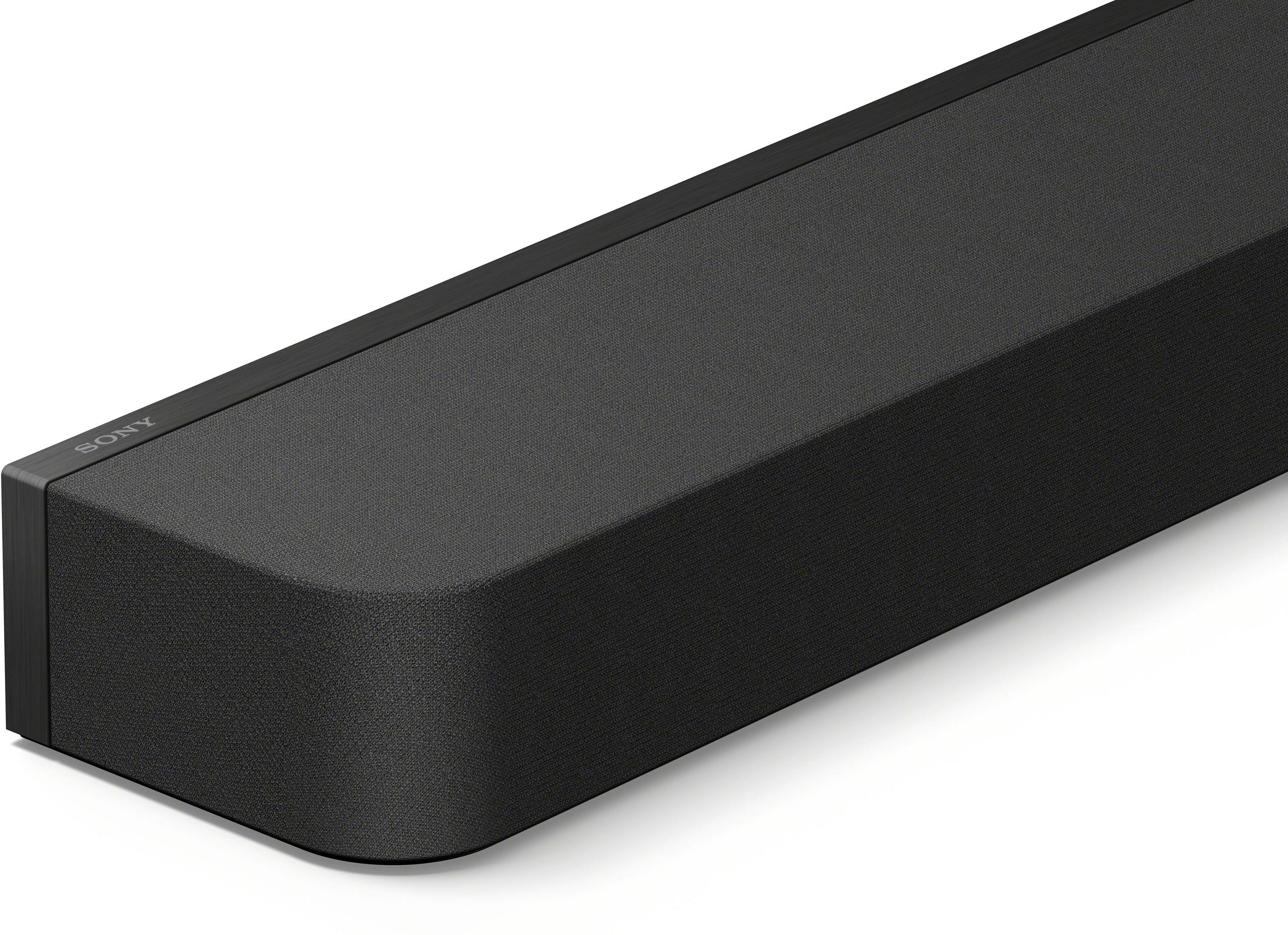
The Sony HT-A8000 represents the evolution of the traditional soundbar into something much more sophisticated. Rather than trying to replace a surround system, it aims to create one virtually through advanced processing and clever speaker placement within a single enclosure.
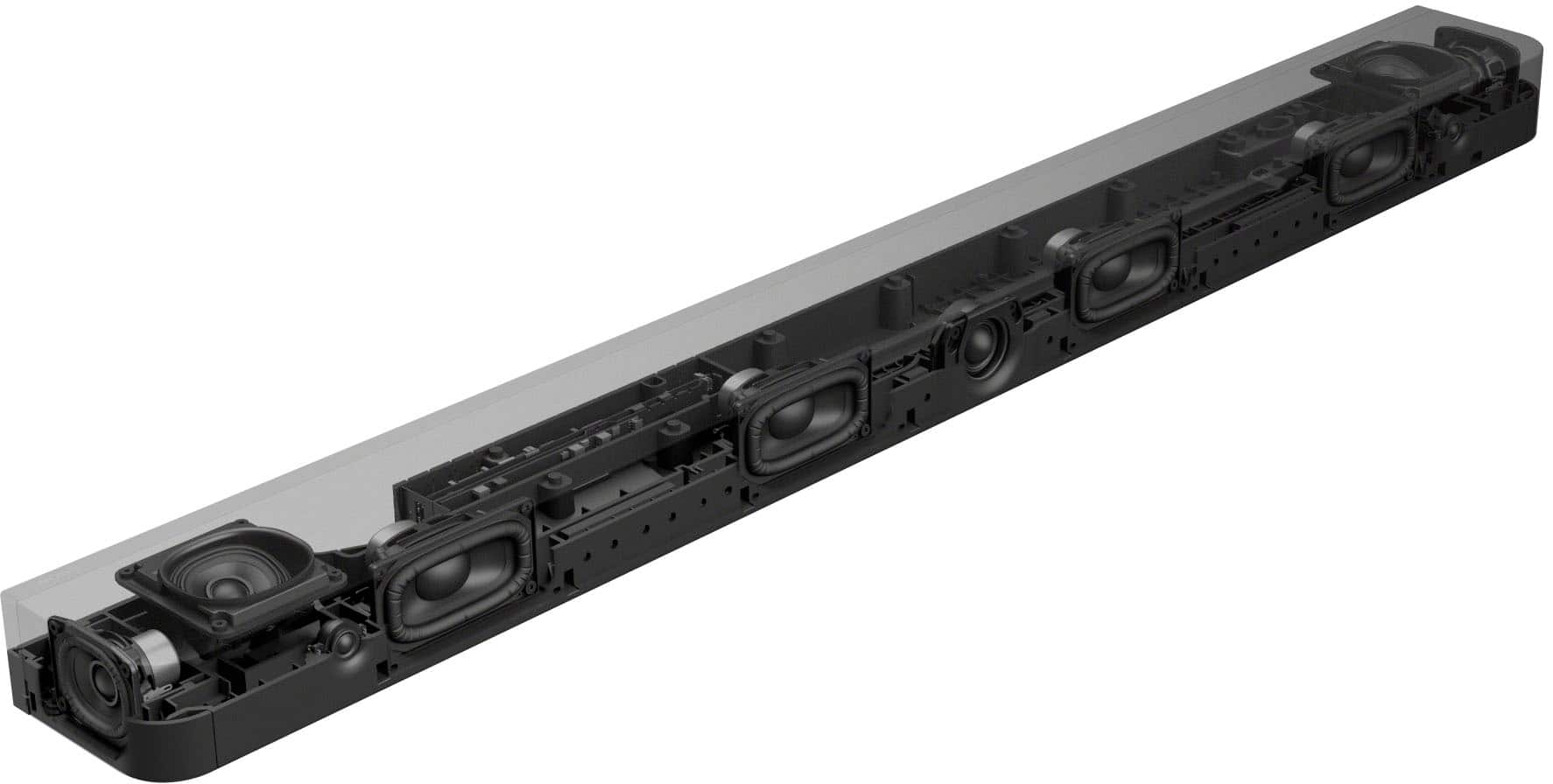
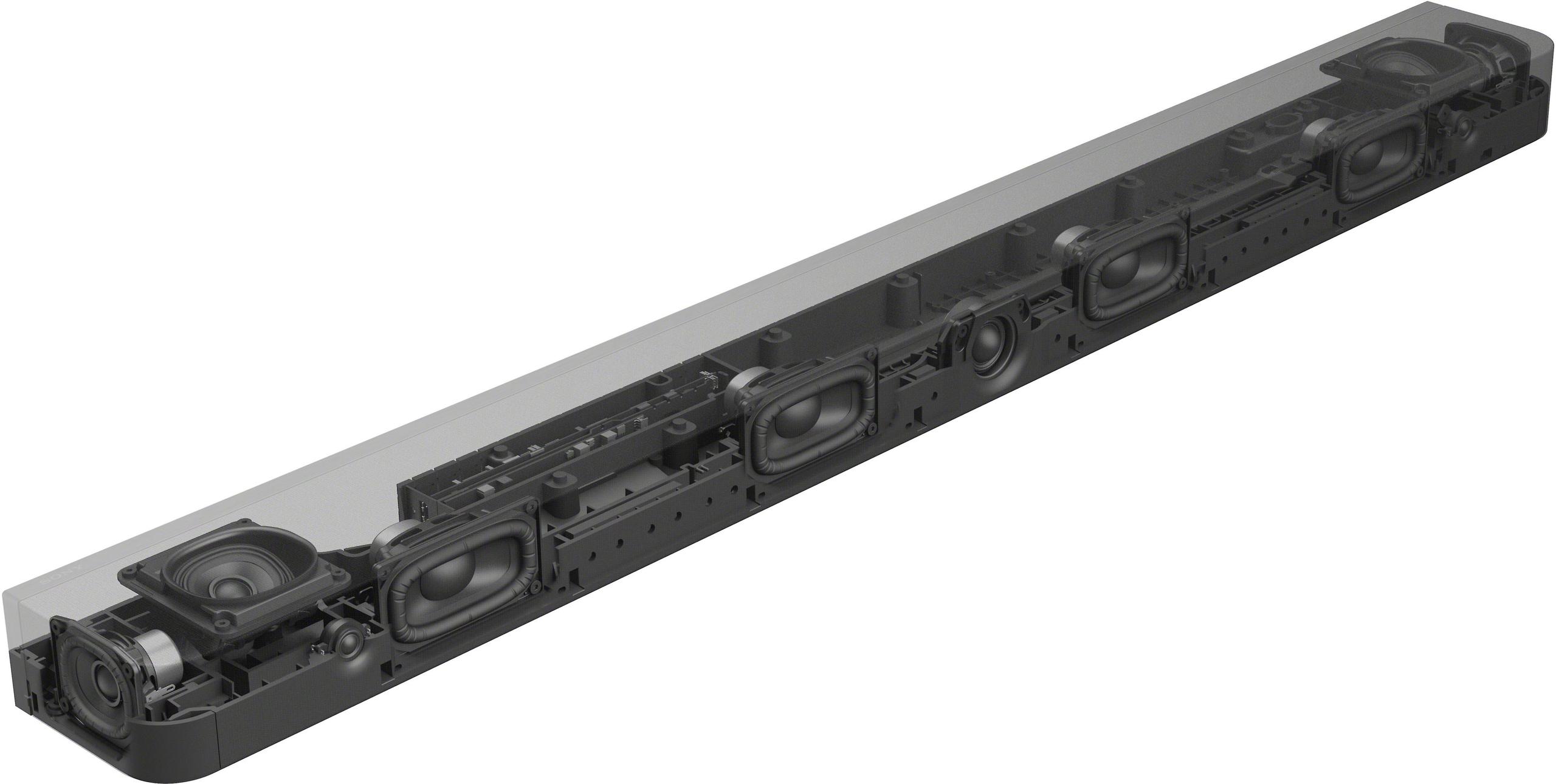
Sony's 360 Spatial Sound Mapping technology is the star here. Using 11 carefully positioned speakers within the soundbar—including side-firing and up-firing drivers—the system bounces sound off your walls and ceiling to create the impression of speakers all around you. This technique, called "phantom imaging," can be surprisingly effective when done well, and Sony has refined it considerably since entering the premium soundbar market.
What's particularly impressive about the HT-A8000 is its dedicated center channel. This might sound mundane, but the center channel handles roughly 70% of a movie's soundtrack, including all dialogue. Having a physical driver dedicated to this crucial task, rather than creating a phantom center image, can make a significant difference in dialogue clarity and positioning.
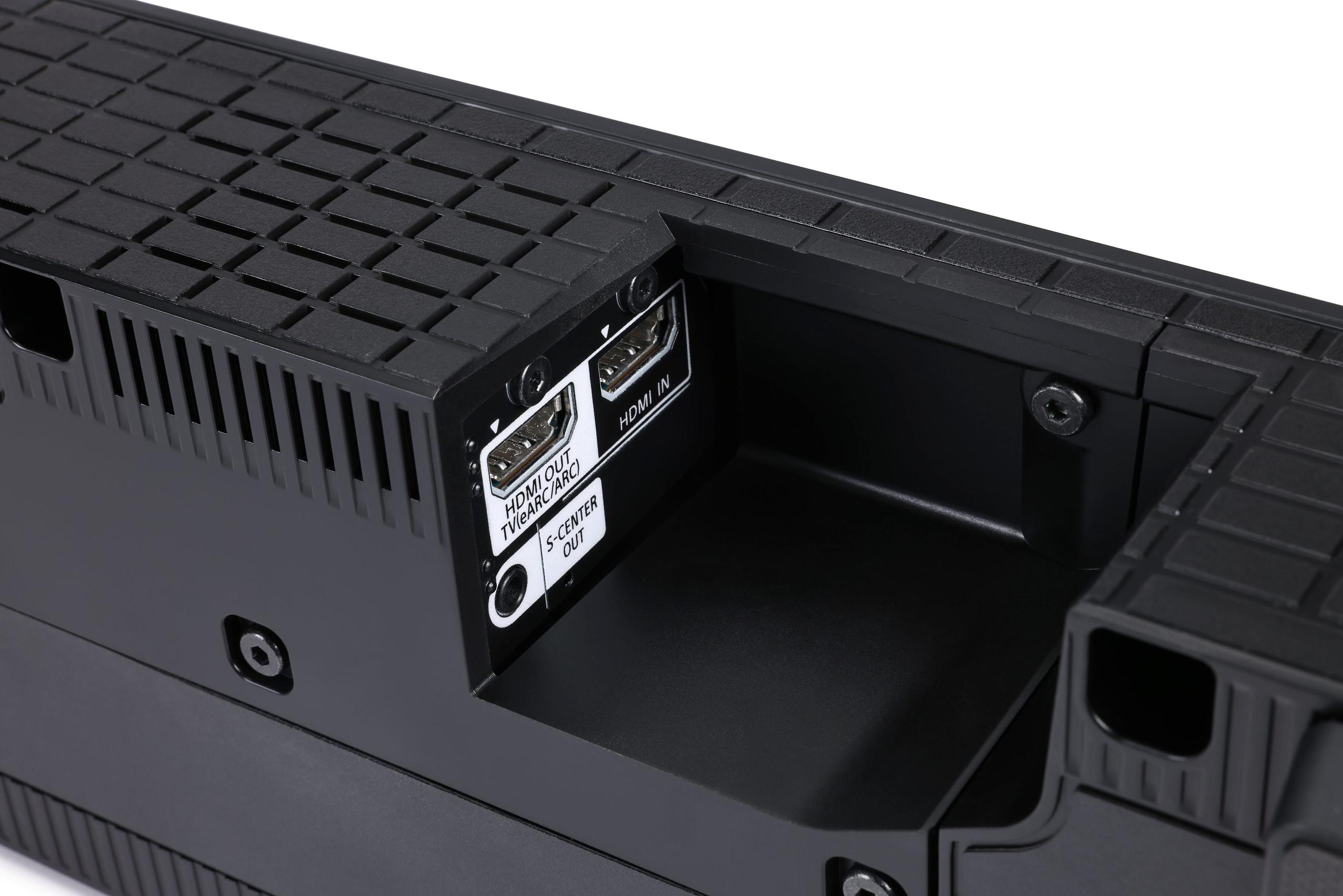
The Sony soundbar also includes some of the most advanced gaming features available. Its HDMI 2.1 support goes beyond basic 4K pass-through to include Variable Refresh Rate (VRR) and Auto Low Latency Mode (ALLM). VRR eliminates screen tearing by synchronizing the display refresh rate with your console's frame rate, while ALLM automatically switches your TV and soundbar to their lowest-latency modes when gaming is detected. These features are essential for competitive gaming and weren't even available in most TVs until recently.
When evaluating home theater performance, several key areas determine whether a system delivers that coveted cinema experience or leaves you wanting more.
This is where the philosophical differences between these systems become most apparent. The Hisense HT Saturn delivers true surround sound through physical speaker placement. When a helicopter flies from front to back in a movie, you hear it actually moving between discrete speakers positioned around your room. This creates what audio engineers call "accurate localization"—your brain can pinpoint exactly where sounds are coming from.
Based on user feedback and professional reviews, the HT Saturn excels at creating that "enveloping bubble" of sound that makes you feel like you're inside the movie. The four-satellite arrangement provides genuine 360-degree audio, and the up-firing drivers reflect convincingly overhead for Atmos effects. However, some reviewers note that it's "more like quadrophonic with a subwoofer" than a traditional 5.1 system, since it lacks dedicated left and right surround channels.
The Sony HT-A8000, by contrast, uses psychoacoustic tricks to fool your brain into thinking sounds are coming from locations where no speakers exist. Sony's 360 Spatial Sound Mapping has been refined over several years, and current reviews suggest it's quite effective at creating width and depth. The phantom surround effects can be impressive, particularly for viewers seated in the optimal listening position directly in front of the soundbar.
However, virtual surround processing inherently has limitations. The effectiveness varies significantly based on your room's acoustics, seating position, and the reflective properties of your walls and ceiling. The Hisense system's physical rear speakers will always provide more consistent surround effects regardless of these variables.
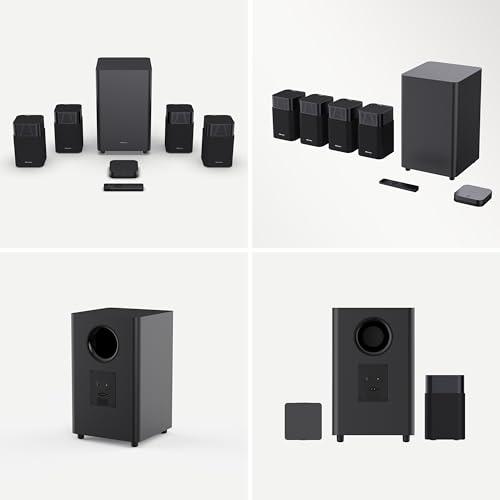
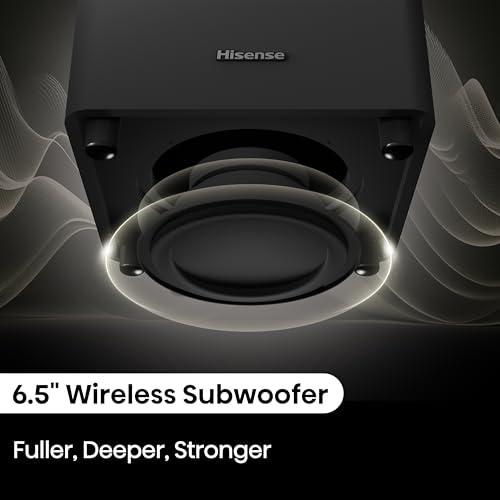
This comparison reveals one of the most significant practical differences between these approaches. The Hisense HT Saturn includes a dedicated 6.5-inch wireless subwoofer that extends response down to 40Hz. In practical terms, this means you'll feel the rumble of explosions, the thump of music bass lines, and the deep ambient sounds that give movies their emotional impact.
The wireless subwoofer design is particularly thoughtful—you can position it anywhere in your room for optimal bass response, which often means placing it in a corner or along a wall where room boundaries naturally reinforce low frequencies. This flexibility can make a dramatic difference in bass performance compared to fixed-position solutions.
The Sony HT-A8000, while including four built-in woofers, simply cannot match the physical bass output of a dedicated subwoofer. The laws of physics are unforgiving here—small drivers in a compact enclosure will always be limited in their ability to move the large volumes of air needed for deep, powerful bass. Sony does offer optional wireless subwoofers (the SA-SW3 and SA-SW5), but these represent additional purchases that significantly increase the total system cost.
Here's where the Sony HT-A8000 shows its strength. Having a dedicated center channel speaker means dialogue is anchored to a specific physical location, typically appearing to come directly from the screen. This creates what audio engineers call "stable imaging"—voices stay put even when you move your head or sit off to the side.
The Sony's Voice Zoom 3 technology adds another layer of sophistication, using AI to analyze the audio stream in real-time and intelligently boost or reduce dialogue levels as needed. This can be particularly helpful with modern movie soundtracks, which often have extreme dynamic range that can make whispered dialogue hard to hear while explosions blow you out of your chair.
The Hisense HT Saturn takes a different approach, creating a phantom center channel between its left and right satellites. This can work quite well, but it's more dependent on precise speaker positioning and seating location. The Hi-Concerto feature partially addresses this limitation by incorporating your Hisense TV's speakers as a center channel, which can provide more stable dialogue positioning when properly calibrated.
For gaming enthusiasts, the Sony HT-A8000 is the clear winner. Its HDMI 2.1 implementation supports 4K at 120Hz, which is crucial for getting the most out of PlayStation 5 and Xbox Series X consoles. The VRR support eliminates screen tearing—those horizontal lines that appear when your console and display get out of sync—while ALLM automatically reduces input lag for more responsive gaming.
The Hisense HT Saturn supports 4K at 60Hz, which covers most current gaming scenarios but lacks the advanced features that serious gamers increasingly expect. However, its distributed speaker layout can create impressive spatial audio for gaming, helping you locate enemies by sound in competitive shooters or creating more immersive environmental audio in adventure games.
At the time of writing, these systems represent very different value propositions. The Hisense HT Saturn typically retails for significantly less than Sony's competing configuration, yet provides a complete surround system out of the box. This includes everything you need: four satellite speakers, wireless subwoofer, all necessary cables, and mounting hardware.
To match the HT Saturn's configuration with the Sony HT-A8000, you'd need to purchase the soundbar plus Sony's optional subwoofer and rear speaker packages. This complete Sony system typically costs several hundred dollars more than the complete Hisense package—a significant premium that reflects Sony's positioning in the premium audio market.
However, the Sony approach offers flexibility that some users will value. You can start with just the soundbar and add components over time as your budget allows. This staged approach lets you immediately improve over TV speakers, then gradually build toward a complete surround system. The Hisense system, by contrast, is an all-or-nothing proposition—you get everything at once, but you can't expand beyond the included components.
One often-overlooked factor in choosing between these systems is the practical reality of setup and living with them daily. The Sony HT-A8000 requires minimal decision-making—position the soundbar under your TV, connect one HDMI cable, and you're mostly done. The room calibration runs automatically, and you can start enjoying improved audio within minutes.
The Hisense HT Saturn requires more thoughtful planning. You need to position four satellite speakers around your room, each requiring access to power outlets. While the wireless connections eliminate speaker cables, you still need to think about sight lines, furniture placement, and aesthetics. Some users love having discrete speakers integrated into their living space, while others prefer the clean simplicity of a single soundbar.
The wireless pairing process for the HT Saturn is reportedly straightforward—components automatically connect when powered on—but you're dealing with more individual pieces that could potentially develop connectivity issues over time.
The Hisense HT Saturn is at its best in medium to large rooms where the satellite speakers can be properly positioned for optimal surround effects. It's ideal for dedicated movie watching, where the authentic surround soundstage and powerful bass create an engaging cinematic experience. The Devialet tuning shines with both movies and music, providing a level of acoustic refinement that's rare in this price category.
This system makes particular sense if you already own a Hisense TV that can take advantage of Hi-Concerto integration, or if you value getting a complete surround system without the uncertainty of future component purchases. It's also the better choice for those who prioritize bass performance but don't want to deal with the complexity of choosing and integrating separate subwoofer components.
The Sony HT-A8000 excels in situations where setup simplicity is paramount, or where room limitations make placing multiple speakers impractical. Its sophisticated processing makes it surprisingly effective even in challenging acoustic environments, and the premium build quality suggests long-term reliability. The gaming features make it essential for serious console gamers, while the streaming capabilities and expandability appeal to those building a long-term audio solution.
The Sony approach also makes sense for renters or those who move frequently, as a single soundbar is much easier to relocate than a distributed speaker system.
After researching both systems extensively and analyzing user feedback across multiple sources, I lean toward recommending the Hisense HT Saturn for most users seeking dramatic improvement over TV speakers. The combination of authentic surround sound, included subwoofer, and Devialet acoustic tuning provides exceptional value for movie and music enthusiasts.
However, the Sony HT-A8000 makes more sense for specific use cases. Choose Sony if gaming features are important, if you want the flexibility of gradual system building, or if your living situation doesn't accommodate multiple speakers. The Sony also makes sense if you're willing to pay a premium for brand reliability and the option to expand into Sony's complete ecosystem over time.
The reality is that both systems will provide a dramatically better experience than TV speakers, and both represent thoughtful approaches to home theater audio. The Hisense HT Saturn delivers more immediate impact for less money, while the Sony HT-A8000 offers more sophisticated technology and future flexibility at a higher total cost. Your choice should depend on your priorities, room constraints, and whether you value the all-in-one completeness of the Hisense approach or the premium expandability of the Sony system.
| Hisense HT Saturn HTSATURN | Sony HT-A8000 BRAVIA Theater Bar 8 |
|---|---|
| System Configuration - Determines setup complexity and authentic surround vs virtual processing | |
| Complete 4.1.2 wireless system with 4 satellite speakers + wireless subwoofer + control hub | Single 5.0.2 soundbar with 11 built-in speakers (subwoofer and rear speakers sold separately) |
| Total Speaker Count - More discrete drivers generally mean better sound distribution | |
| 13 speakers total (8 full-range, 4 tweeters, 1 subwoofer driver) | 11 speakers built into soundbar only |
| Power Output - Higher wattage typically means louder, more dynamic sound | |
| 500W maximum output across all components | 495W from soundbar alone |
| Bass Performance - Critical for movie impact and music enjoyment | |
| Dedicated wireless 6.5" subwoofer included (extends to 40Hz) | Built-in quad woofers only (optional subwoofer costs extra) |
| Surround Sound Approach - Physical speakers vs virtual processing affects immersion quality | |
| True physical surround with rear satellite speakers | Virtual surround using 360 Spatial Sound Mapping technology |
| Center Channel - Essential for clear dialogue in movies and TV | |
| Phantom center (uses Hi-Concerto with compatible Hisense TVs) | Dedicated physical center channel built-in |
| Gaming Features - Important for console gamers wanting latest capabilities | |
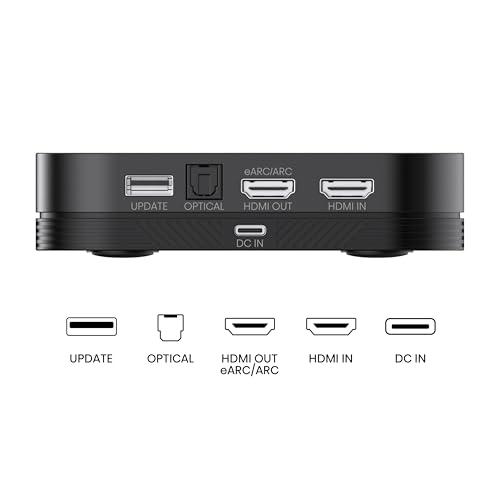
| HDMI eARC with 4K/60Hz pass-through | HDMI 2.1 with 4K/120Hz, VRR, ALLM support |
| Wireless Connectivity - Affects streaming flexibility and multi-room potential | |
| Bluetooth 5.3 only (no Wi-Fi) | Bluetooth 5.2 + Wi-Fi with AirPlay 2 and Spotify Connect |
| Audio Tuning Partnership - Premium acoustic engineering can significantly impact sound quality | |
| Tuned by Devialet (French high-end audio specialist) | Sony's proprietary 360 Spatial Sound Mapping |
| TV Integration Features - Enhanced performance when paired with same-brand TVs | |
| Hi-Concerto technology with Hisense HT Saturn TVs (creates virtual 7.1.2) | Acoustic Center Sync with Sony BRAVIA TVs |
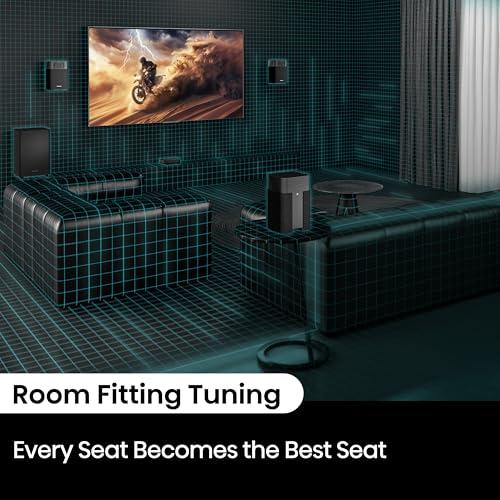
| Room Calibration - Automatic tuning optimizes performance for your specific space | |
| Room Fitting Tuning via compatible Hisense TV interface | Sound Field Optimization with automatic room analysis |
| Expandability - Future upgrade options without replacing entire system | |
| Fixed configuration (cannot add additional components) | Modular expansion with optional SA-SW3/SW5 subs and SA-RS3R/RS5 rears |
| Setup Complexity - Time and effort required for optimal performance | |
| Requires positioning 4 satellites + subwoofer around room (power outlets needed) | Single soundbar placement with optional component additions over time |
| Value Proposition - Complete system cost vs performance delivered | |
| Complete 4.1.2 system included at lower total price point | Premium expandable platform requiring additional purchases for equivalent setup |
The Hisense HT Saturn HTSATURN delivers superior home theater immersion with true physical surround sound from four wireless satellite speakers plus a dedicated subwoofer. The Sony HT-A8000 offers more sophisticated virtual surround processing in a single soundbar. For authentic cinema-style surround effects, the Hisense HT Saturn provides better value as a complete system, while the Sony HT-A8000 excels for those preferring minimal setup complexity.
The fundamental difference is system architecture: the Hisense HT Saturn HTSATURN is a complete 4.1.2 wireless surround system with separate satellite speakers and subwoofer, while the Sony HT-A8000 is a premium single soundbar that creates virtual surround effects. The Hisense system provides true physical surround sound, whereas the Sony soundbar uses advanced processing to simulate surround effects from one unit.
The Hisense HT Saturn HTSATURN has significantly better bass performance due to its included wireless 6.5-inch subwoofer that extends down to 40Hz. The Sony HT-A8000 relies on built-in quad woofers, which cannot match the deep, powerful bass of a dedicated subwoofer. To achieve comparable bass with the Sony system, you'd need to purchase an optional subwoofer separately.
The Hisense HT Saturn HTSATURN is a complete system that includes everything needed: four satellite speakers, wireless subwoofer, and control hub. The Sony HT-A8000 is just the soundbar itself - to match the Hisense system's surround capabilities, you'd need to separately purchase Sony's optional subwoofer and rear speakers, significantly increasing the total cost.
The Sony HT-A8000 is superior for gaming due to its HDMI 2.1 support with 4K/120Hz pass-through, Variable Refresh Rate (VRR), and Auto Low Latency Mode (ALLM) - essential features for PlayStation 5 and Xbox Series X. The Hisense HT Saturn HTSATURN supports 4K/60Hz but lacks these advanced gaming features, making the Sony soundbar the clear choice for serious gamers.
The Sony HT-A8000 has simpler setup - just position the soundbar and connect one HDMI cable. The Hisense HT Saturn HTSATURN requires more planning as you need to position four satellite speakers around your room, each needing power outlet access. However, the Hisense system uses wireless connections between components, eliminating speaker wire runs while the Sony system offers the cleanest single-unit installation.
The Sony HT-A8000 typically provides superior dialogue clarity due to its dedicated physical center channel speaker, which handles about 70% of movie soundtracks including all dialogue. The Hisense HT Saturn HTSATURN creates a phantom center channel, though this can be enhanced with Hi-Concerto technology when paired with compatible Hisense TVs, making both systems competitive for speech intelligibility.
Both systems work with any TV via HDMI or optical connections. However, the Hisense HT Saturn HTSATURN offers enhanced Hi-Concerto integration with Hisense TVs that uses the TV speakers as additional channels. Similarly, the Sony HT-A8000 provides Acoustic Center Sync features when paired with Sony BRAVIA TVs. While both work universally, you get optimal performance when matching brands.
The Hisense HT Saturn HTSATURN typically offers better overall value as it includes a complete 4.1.2 surround system with subwoofer at a lower total cost than purchasing the Sony HT-A8000 with equivalent optional components. The Sony system provides premium build quality and advanced features but requires additional purchases to match the Hisense system's complete configuration.
Yes, both the Hisense HT Saturn HTSATURN and Sony HT-A8000 support Dolby Atmos and DTS:X for three-dimensional audio. The Hisense system uses up-firing drivers in its satellite speakers to create height effects, while the Sony soundbar uses built-in up-firing speakers and advanced processing. Both deliver convincing overhead audio effects for immersive movie experiences.
Both systems excel at music playback but in different ways. The Hisense HT Saturn HTSATURN benefits from Devialet acoustic tuning and distributed speakers that create a wide soundstage. The Sony HT-A8000 offers more streaming flexibility with Wi-Fi, AirPlay 2, and Spotify Connect support. The Hisense system provides more powerful bass for music, while the Sony soundbar offers superior wireless streaming convenience.
The Sony HT-A8000 is designed for expansion - you can add Sony's optional subwoofer and rear speakers when budget allows, building a complete system over time. The Hisense HT Saturn HTSATURN is a fixed configuration that cannot be expanded beyond the included components. This makes the Sony system more flexible for gradual upgrades, while the Hisense system provides everything needed upfront.
We've done our best to create useful and informative comparisons to help you decide what product to buy. Our research uses advanced automated methods to create this comparison and perfection is not possible - please contact us for corrections or questions. These are the sites we've researched in the creation of this article: bestbuy.com - youtube.com - blog.son-video.com - youtube.com - youtube.com - techradar.com - ecoustics.com - jbhifi.com.au - shop.hisense-usa.com - bhphotovideo.com - bestbuy.com - digitalreviews.net - hisense-usa.com - projectorscreenstore.com - valueelectronics.com - dolby.com - giftpack.ai - consumerreports.org - skybygramophone.com - target.com - rtings.com - bestbuy.com - rubbermonkey.co.nz - shopatsc.com - audioadvice.com - sony.com - sony.com - sony.com - shop.cosmopolitan.com - store.sony.com.my - videoandaudiocenter.com

Privacy Policy
Terms and Conditions - Affiliate Policy
Home Security
© Copyright 2008-2026.
11816 Inwood Rd #1211, Dallas, TX 75244