





When your TV's built-in speakers just aren't cutting it anymore, you're faced with a choice that can make or break your entertainment experience. Do you go with a premium single-unit soundbar that promises to create surround sound through clever audio engineering, or do you opt for a complete system with physical speakers positioned around your room?
This decision becomes even more interesting when comparing the Sony HT-A8000 BRAVIA Theater Bar 8 against the ULTIMEA Skywave X40 5.1.2 system. These two approaches to home theater audio couldn't be more different in philosophy, yet they're both trying to solve the same problem: giving you cinema-quality sound at home without the complexity of traditional surround sound systems.
Before diving into these specific products, it's worth understanding what we're dealing with in today's soundbar market. The technology has evolved dramatically over the past decade, moving far beyond simple stereo sound bars that just made dialogue louder.
Modern soundbars fall into several categories. Basic models focus on improving TV dialogue and adding some bass. Mid-range options introduce virtual surround sound processing that attempts to create the illusion of speakers around you using psychoacoustic tricks—essentially fooling your brain into thinking sound is coming from directions where there are no actual speakers. Premium systems either perfect this virtual approach or take the traditional route of adding physical speakers around your room.
The key technologies to understand include Dolby Atmos (which adds height channels for overhead effects like helicopters or rain), HDMI eARC (a connection that carries high-quality audio from your TV back to the soundbar), and room correction software (which analyzes your space and adjusts the sound accordingly). These features have become standard in quality systems, but how they're implemented makes all the difference.
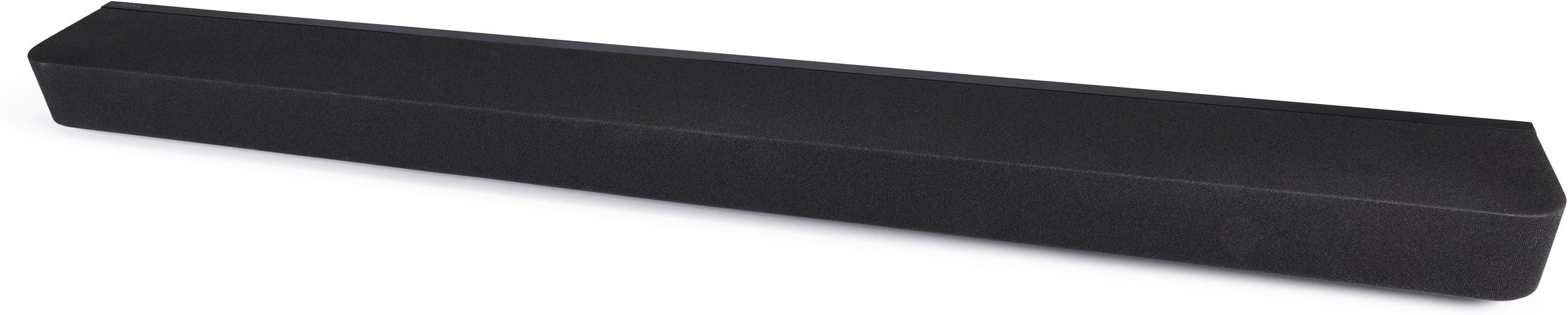
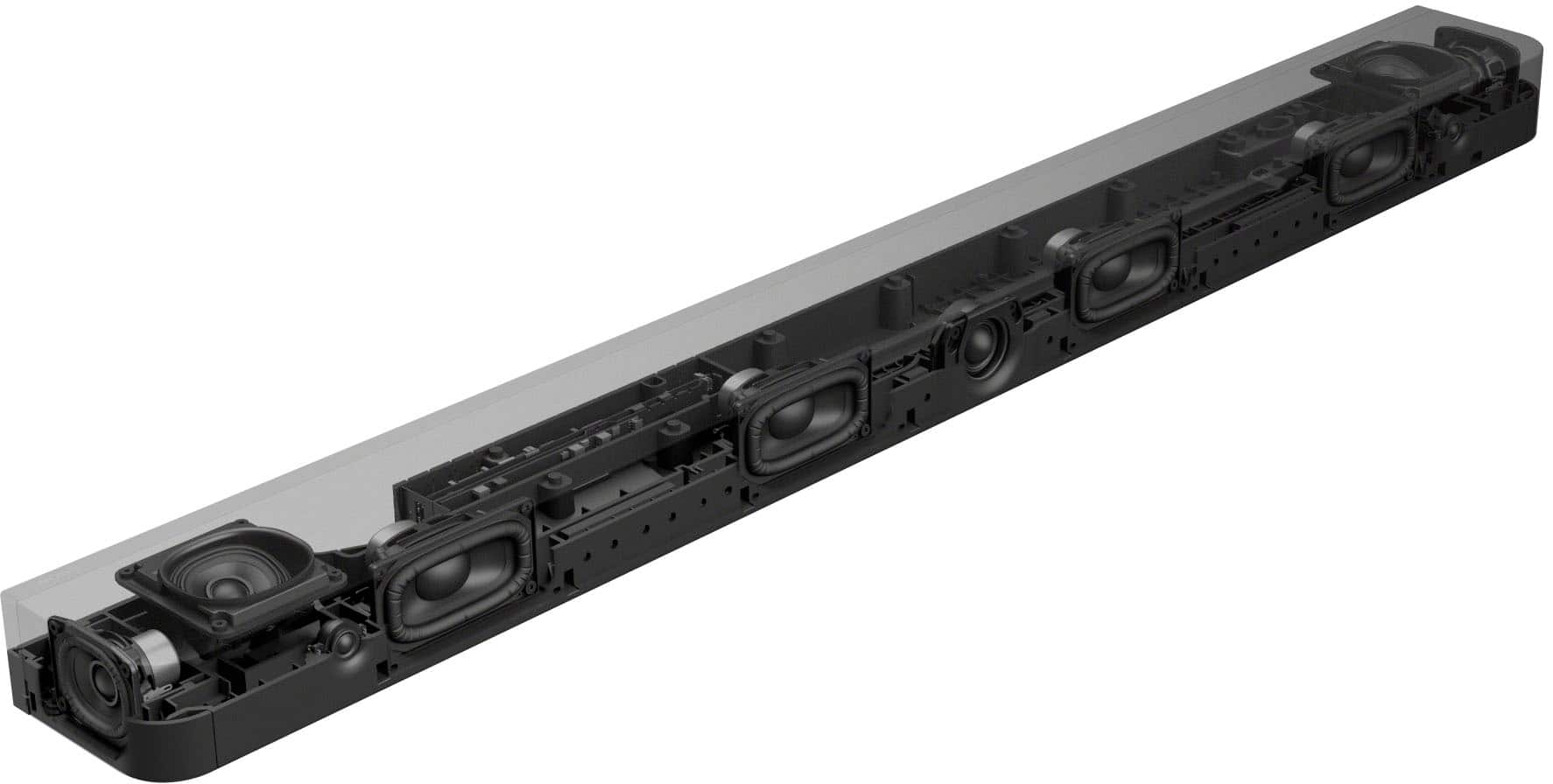
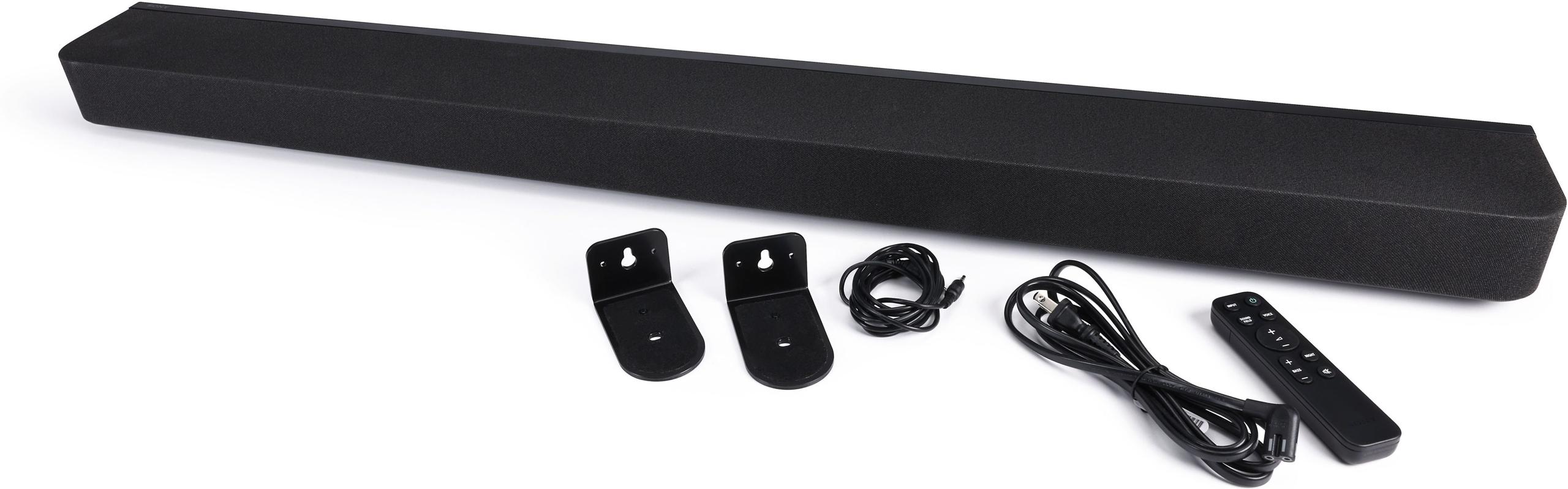
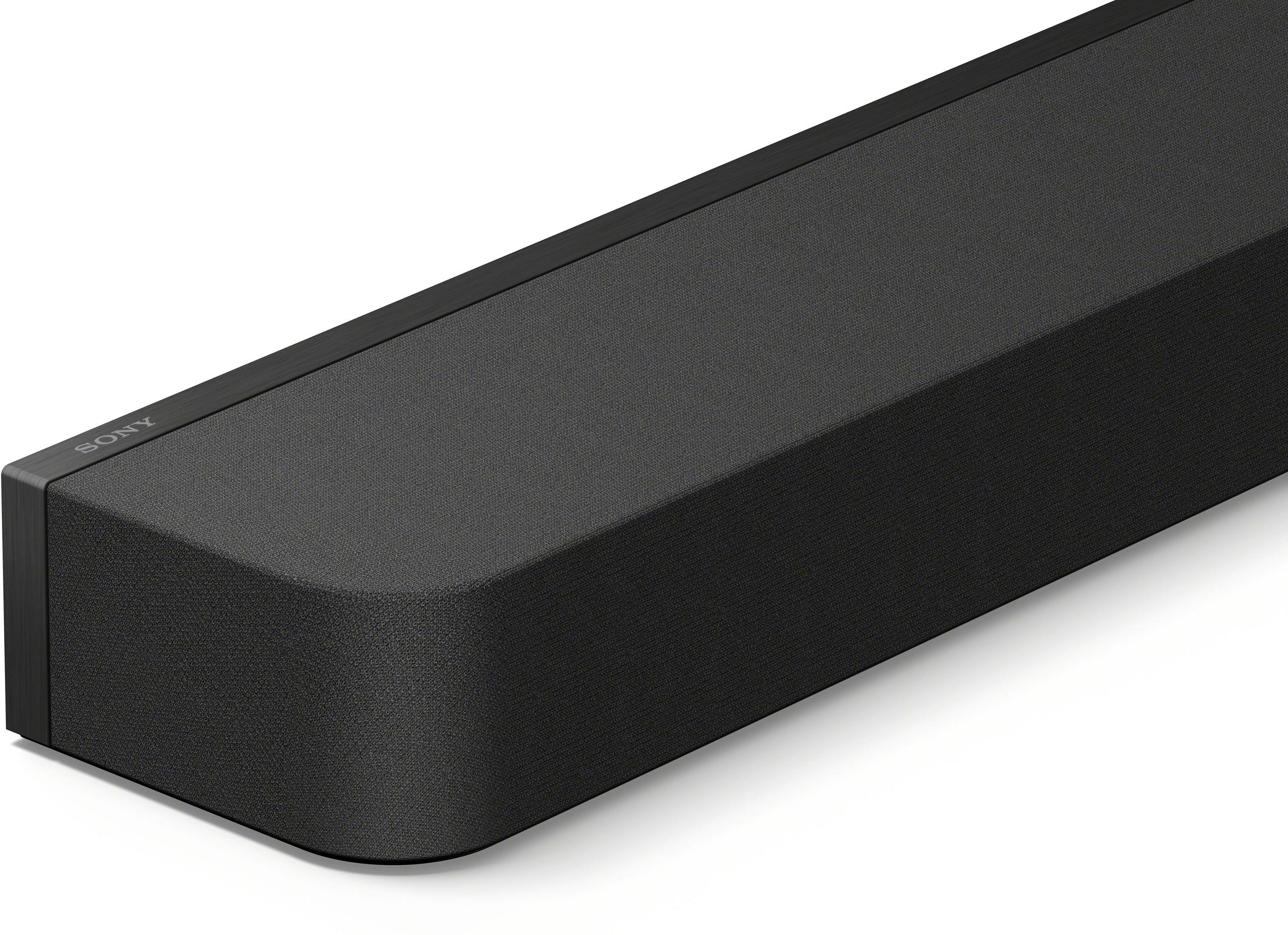
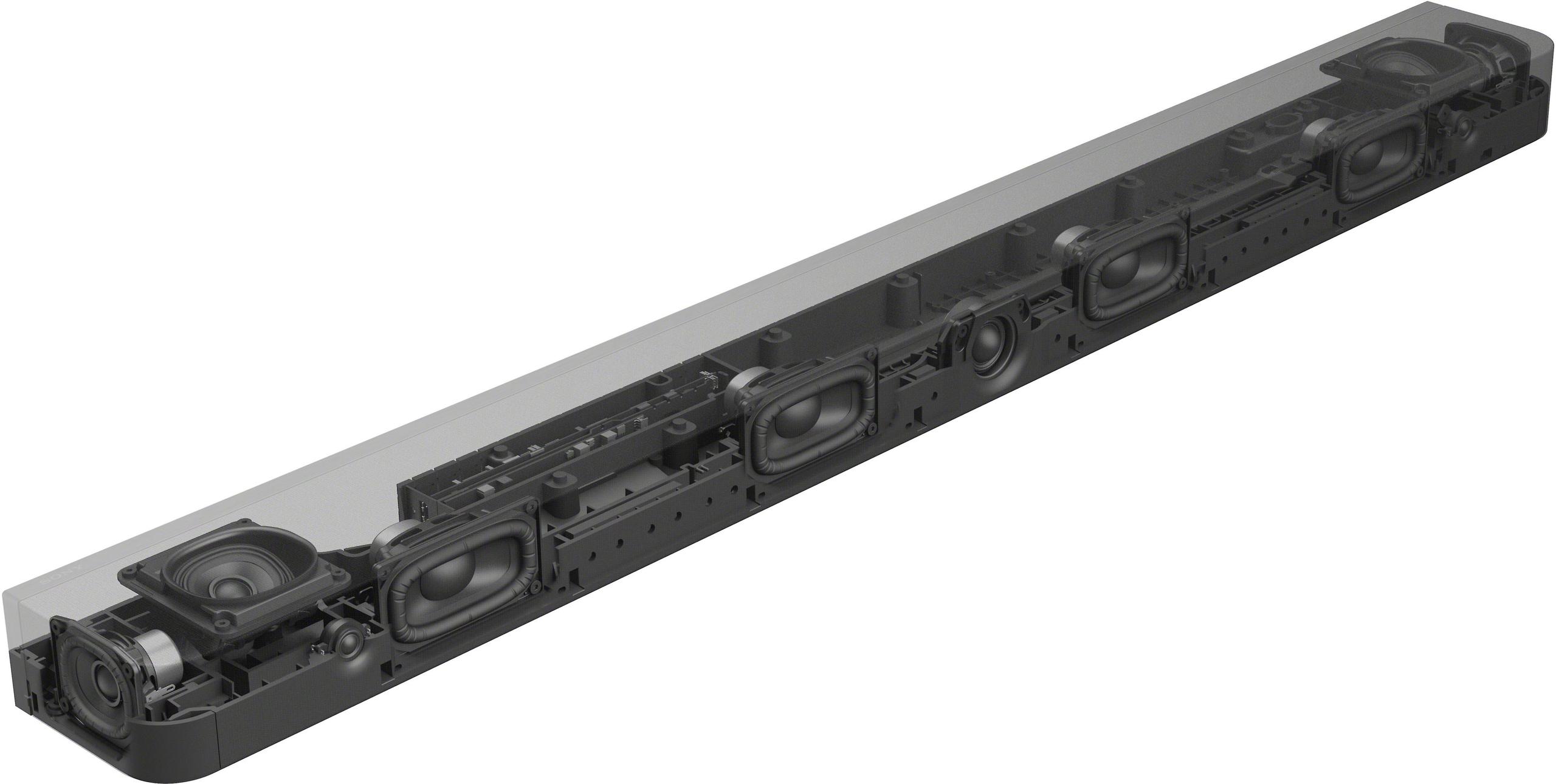
Released in 2024, the Sony HT-A8000 represents Sony's attempt to pack a complete surround sound experience into a single, elegant soundbar. At its heart are 11 carefully positioned speaker drivers that work together with Sony's 360 Spatial Sound Mapping technology. This system creates what Sony calls "phantom speakers"—virtual speakers that seem to exist in positions where there are no actual drivers.
The magic happens through a combination of precise driver placement and sophisticated processing. The soundbar includes up-firing speakers that bounce sound off your ceiling to create height effects, side-firing speakers that reflect off your walls for width, and traditional forward-firing drivers for direct sound. Sony's S-Master HX digital amplification system powers these drivers with exceptional efficiency and low distortion.
What sets this system apart is its Sound Field Optimization feature, which uses microphones to analyze your room's acoustic properties and automatically adjusts the sound output. Think of it as having an audio engineer tune your system for your specific space. The system also includes Voice Zoom 3, an AI-powered feature that can recognize and enhance dialogue, making sure you never miss important conversations even during explosive action scenes.
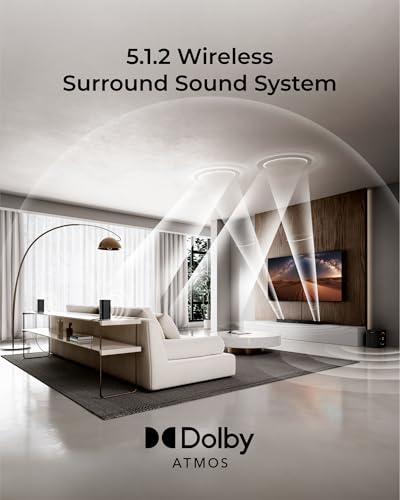
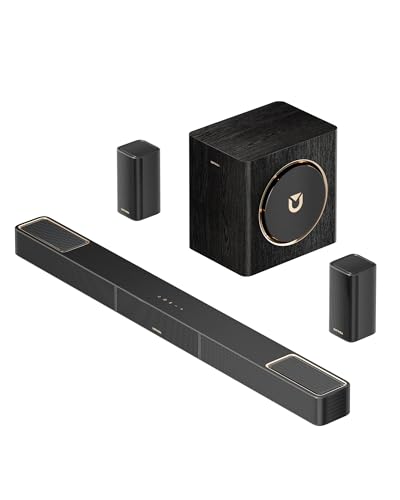
Taking a completely different approach, the ULTIMEA Skywave X40, released in 2025, gives you a true 5.1.2-channel system with physical speakers in all the right places. Instead of relying on acoustic tricks, it simply puts speakers where surround sound is supposed to come from: behind you, to your sides, and above you.
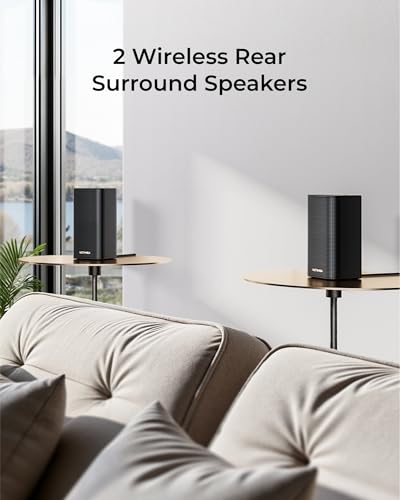
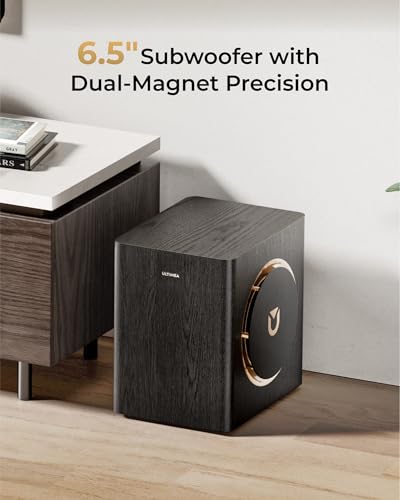
The system includes a main soundbar, a 6.5-inch wireless subwoofer, and two wireless rear speakers, all connected through what ULTIMEA calls CineMesh True Wireless technology. This dual 5GHz transmission system ensures that all speakers stay perfectly synchronized with less than 20 milliseconds of delay—fast enough that your brain can't detect any lag between the video and audio.
Under the hood, the Skywave X40 uses a GaN (Gallium Nitride) amplifier, a relatively new technology that's significantly more efficient than traditional silicon-based amplifiers. This translates to less heat, faster response times, and cleaner sound at high volumes. The system's NEURACORE processing engine, powered by triple-core DSP (Digital Signal Processor) and dual-core MCU (Microcontroller Unit), handles up to 2,000 MIPS (Million Instructions Per Second) of processing power to manage all those channels precisely.
Both systems approach audio quality from different angles, and the results are telling. The Sony HT-A8000 shines when it comes to dialogue clarity and overall refinement. Sony's decades of audio engineering experience show in the precision of their driver tuning and the sophistication of their processing algorithms. The Voice Zoom 3 feature is particularly impressive, using AI to identify human voices in the audio mix and boost them selectively without making the overall sound harsh or artificial.
The system's DSEE Ultimate technology also upscales lower-quality audio sources, making compressed streaming content sound better than it has any right to. This is especially valuable given how much of our entertainment comes from streaming services that prioritize file size over audio quality.
The ULTIMEA Skywave X40, while perhaps not as refined in its processing, delivers something the Sony can't: truly authentic surround sound positioning. When a helicopter flies from left to right in a movie, you hear it actually move from the left rear speaker to the right rear speaker, not just a processed approximation of that movement. This physical accuracy creates a more convincing and immersive experience, especially for action movies and gaming.
The GaN amplifier in the Skywave X40 also deserves special mention. Traditional amplifiers waste energy as heat and can introduce distortion at high volumes. GaN technology operates at up to 98% efficiency and responds eight times faster than silicon amplifiers, resulting in cleaner sound reproduction even when you're pushing the system hard during intense movie scenes.
This is where the two systems show their most dramatic difference. The Sony HT-A8000 includes quad woofers with a unique rectangular design that maximizes the cone area within the soundbar's slim profile. For a single-unit system, the bass response is quite good, providing enough low-end support for dialogue, music, and moderate movie watching.
However, physics is physics. A soundbar, no matter how well-designed, simply can't move the amount of air needed for truly impactful bass. Sony addresses this limitation by offering optional subwoofers (the SA-SW3 or SA-SW5), but these are separate purchases that significantly increase the total system cost.
The ULTIMEA Skywave X40 comes with a dedicated 6.5-inch subwoofer right out of the box. This subwoofer uses what ULTIMEA calls Gravus Ultra-Linear Bass Technology with a dual-magnet design that extends frequency response down to 35Hz—well into the range where you feel bass as much as hear it. During our research of user experiences, this bass performance consistently impressed reviewers, with many noting that action movies and gaming became significantly more immersive compared to soundbar-only systems.
The wireless connection between the subwoofer and main unit eliminates the need for cables across your room while maintaining perfect synchronization. This is particularly important for bass, where timing issues can create a "disconnected" feeling between what you see and what you hear.
Here's where the fundamental philosophical difference between these systems becomes most apparent. The Sony HT-A8000 uses sophisticated processing and precise driver placement to create the illusion of surround sound. Sony's 360 Spatial Sound Mapping technology analyzes your room and creates up to five phantom speakers in front of you, while using ceiling and wall reflections to create the impression of sound coming from behind and above.
This approach works remarkably well in the right conditions. If your room has good acoustic properties—not too much soft furniture that absorbs sound, reasonable ceiling height, and walls that can reflect sound effectively—the Sony can create a convincingly immersive experience. The Sound Field Optimization system helps by automatically adjusting the output based on your room's characteristics.
However, this technology is inherently limited by your room's acoustics. In a heavily furnished living room with thick carpets and soft furniture, or in a space with very high ceilings or unusual layouts, the phantom surround effect can be diminished or inconsistent.
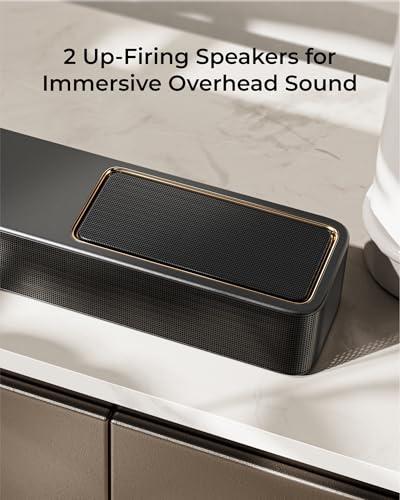
The ULTIMEA Skywave X40 sidesteps these limitations entirely by placing actual speakers behind you. When the rear speakers are properly positioned, you get genuine surround sound that works regardless of your room's acoustic properties. The up-firing drivers in both the main bar and rear speakers create height effects that, combined with the physical positioning, deliver what many users describe as a more convincing Dolby Atmos experience.
The CineMesh wireless technology deserves particular credit here. Previous wireless surround systems often suffered from audio dropouts, interference, or synchronization issues. The dual 5GHz transmission used in the Skywave X40 operates in a less congested frequency band than traditional Wi-Fi or Bluetooth, reducing these problems significantly.
When evaluating these systems, it's important to consider not just the initial purchase price, but the total cost of achieving your desired performance level. At the time of writing, the Sony HT-A8000 positions itself in the premium soundbar category, typically priced at three to four times the cost of the ULTIMEA Skywave X40 system.
For that premium price, you get Sony's brand reputation, exceptional build quality, and sophisticated processing technology. The integration with Sony's BRAVIA TV ecosystem is particularly valuable if you own a compatible Sony television, as features like Acoustic Center Sync can use your TV's speakers as an additional center channel, creating an even more seamless audio experience.
However, to match the Skywave X40's complete surround sound configuration, you'd need to add Sony's optional subwoofer and rear speakers to the HT-A8000, pushing the total investment significantly higher. Even then, you'd have a modular system where components are purchased separately rather than designed as an integrated whole.
The ULTIMEA Skywave X40 takes a different approach to value, providing a complete 5.1.2 system at a price point that's accessible to many more buyers. While it may not have Sony's brand cachet or the most sophisticated processing algorithms, it delivers genuine surround sound performance that many users find more satisfying than virtual alternatives, regardless of price.
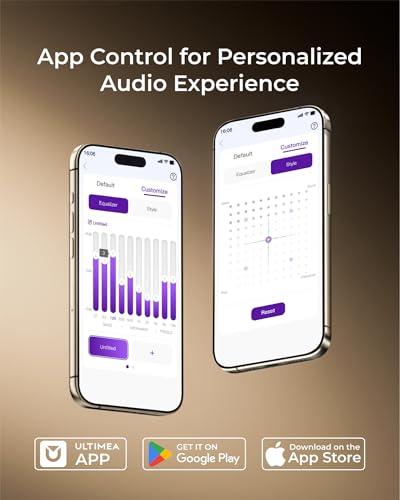
The included Ultimea app also adds considerable value, providing access to a 10-band equalizer and 121 preset sound profiles. This level of customization was typically found only in much more expensive systems, allowing users to fine-tune their audio experience for different types of content or personal preferences.
Both of these systems represent significant advances in soundbar technology compared to what was available just a few years ago. The Sony HT-A8000, released in 2024, builds on Sony's accumulated expertise in audio processing and represents their current flagship single-unit approach. The integration of AI-powered dialogue enhancement and room correction technology shows how machine learning is beginning to impact audio equipment.
The ULTIMEA Skywave X40, launching in 2025, represents the maturation of wireless surround technology. Earlier wireless systems often suffered from reliability issues, but advances in wireless communication and digital signal processing have largely solved these problems. The use of GaN amplification also reflects the adoption of newer, more efficient technologies that were primarily found in high-end audio equipment just a few years ago.
You should consider the Sony HT-A8000 if you value brand prestige, exceptional build quality, and sophisticated audio processing above all else. This system is ideal for users who own Sony BRAVIA televisions and want seamless ecosystem integration. It's also the better choice if you live in an apartment or space where positioning rear speakers isn't practical, or if you strongly prefer the clean aesthetic of a single-unit solution.
The Sony particularly excels for users who prioritize dialogue clarity—if you find yourself constantly adjusting volume during movies or TV shows, the AI-powered Voice Zoom 3 feature can be genuinely transformative. It's also the better choice if you plan to build your system gradually, adding components over time as your budget allows.
From a room acoustics perspective, the Sony works best in spaces with good reflective surfaces and reasonable proportions. If you have a dedicated media room with hard surfaces and optimal dimensions, the phantom surround effect can be quite convincing.
The ULTIMEA Skywave X40 is the clear choice for users who prioritize authentic surround sound immersion and value for money. If you're setting up a dedicated home theater space where you can properly position rear speakers, this system will deliver a more convincing surround sound experience than any single-unit solution, regardless of price.
This system is particularly well-suited for movie enthusiasts and gamers who want to experience the full impact of action sequences, explosions, and positional audio effects. The included subwoofer makes it the better choice for users who enjoy bass-heavy content or who want room-filling sound without additional purchases.
The Skywave X40 also makes sense for buyers who prefer to get everything they need upfront rather than building a system piece by piece. The wireless rear speakers eliminate the need for running cables across your room, making it practical even in living spaces where a traditional wired surround system wouldn't work.
Both the Sony HT-A8000 and ULTIMEA Skywave X40 represent excellent approaches to home theater audio, but they serve different needs and preferences. The Sony offers premium engineering, sophisticated processing, and ecosystem integration at a premium price. It's a refined solution that works particularly well for users who want the best possible dialogue clarity and don't mind paying extra for brand prestige and build quality.
The ULTIMEA Skywave X40 delivers what many users actually want from a surround sound system: authentic positional audio with genuine bass impact at a price that doesn't require a second mortgage. While it may not have Sony's brand recognition or the most sophisticated processing, it provides a more fundamentally satisfying surround sound experience for most types of content.
For the majority of users setting up a home theater system, the Skywave X40 offers better overall value and performance. The authentic surround sound experience, included subwoofer, and comprehensive feature set provide more entertainment value per dollar spent. However, if you're building a premium system where brand reputation and processing sophistication matter more than cost-effectiveness, the Sony HT-A8000 represents one of the best single-unit solutions available.
The choice ultimately comes down to your priorities: Do you want the most authentic surround sound experience for your money, or are you willing to pay significantly more for brand prestige and sophisticated processing in a more compact form factor? Both systems will dramatically improve your TV's audio, but they'll do it in fundamentally different ways.
| Sony HT-A8000 BRAVIA Theater Bar 8 Soundbar | ULTIMEA Skywave X40 5.1.2 Soundbar System |
|---|---|
| System Configuration - Determines authentic vs virtual surround sound experience | |
| Single soundbar with 11 internal speakers (5.0.2) | Complete system: soundbar + wireless subwoofer + 2 rear speakers (5.1.2) |
| Physical Speakers - More speakers typically mean better positional audio | |
| 11 speakers in soundbar only | 8 total speakers across 4 separate units |
| Subwoofer Inclusion - Essential for impactful bass in movies and gaming | |
| None included (optional SA-SW3/SW5 sold separately) | 6.5" wireless subwoofer included |
| Surround Technology - Virtual processing vs physical speaker placement | |
| 360 Spatial Sound Mapping with phantom speakers | CineMesh True Wireless with actual rear speakers |
| Amplification - Affects power efficiency and sound quality at high volumes | |
| S-Master HX Digital Amplifier | GaN (Gallium Nitride) amplifier - 98% efficiency |
| Wireless Connectivity - Determines setup flexibility and cable management | |
| Optional wireless components sold separately | All components wireless (dual 5GHz transmission) |
| Room Calibration - Automatically optimizes sound for your space | |
| Sound Field Optimization with microphone analysis | Manual EQ adjustment via app |
| Dialogue Enhancement - Critical for clear speech during movies | |
| Voice Zoom 3 with AI-powered voice recognition | Standard voice mode |
| Audio Processing - Affects sound quality and format support | |
| DSEE Ultimate upscaling, Dolby Atmos, DTS:X | NEURACORE with triple-core DSP, Dolby Atmos |
| TV Integration - Seamless connection and control features | |
| Deep BRAVIA TV integration, Acoustic Center Sync | Standard HDMI eARC, universal compatibility |
| App Control - Customization and fine-tuning capabilities | |
| Basic Sony app | Ultimea app with 10-band EQ, 121 sound presets |
| Build Quality - Reflects durability and premium materials | |
| Premium Sony construction with 1-year warranty | Consumer-grade build with standard warranty |
| Setup Complexity - Time and effort required for installation | |
| Single unit installation, optional expansion later | Multi-component setup, factory-paired wireless |
The ULTIMEA Skywave X40 provides significantly better value, offering a complete 5.1.2 surround sound system with wireless subwoofer and rear speakers at a fraction of the cost of the Sony HT-A8000. While the Sony offers premium build quality and brand prestige, the Skywave X40 delivers authentic surround sound performance that typically costs much more from established brands.
The Sony HT-A8000 does not include a subwoofer, relying on internal quad woofers that provide decent bass but may require purchasing Sony's optional SA-SW3 or SA-SW5 subwoofer for impactful movie audio. The ULTIMEA Skywave X40 includes a 6.5-inch wireless subwoofer out of the box, delivering deep bass down to 35Hz without additional purchases.
The Sony HT-A8000 is simpler to install initially as it's a single soundbar unit, but adding optional components later requires additional setup. The ULTIMEA Skywave X40 requires positioning three components (soundbar, subwoofer, rear speakers) but comes factory-paired for plug-and-play wireless connectivity, making the complete system operational immediately.
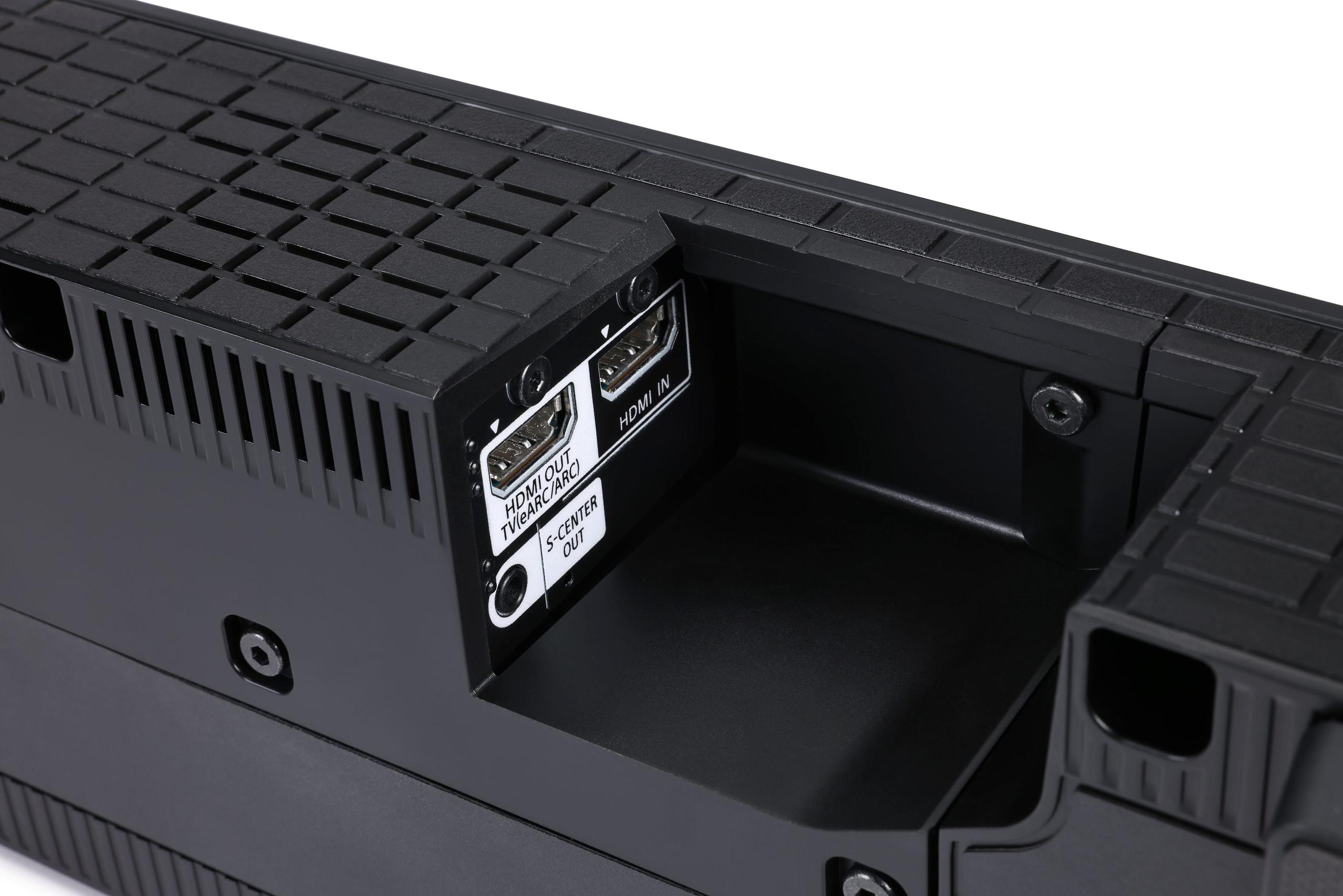
Both the Sony HT-A8000 and ULTIMEA Skywave X40 work with any TV that has HDMI ARC/eARC or optical output. However, the Sony HT-A8000 offers enhanced integration features like Acoustic Center Sync when paired with compatible Sony BRAVIA TVs, while the Skywave X40 provides universal compatibility without brand-specific advantages.
The Sony HT-A8000 excels in dialogue clarity with its Voice Zoom 3 AI technology that automatically recognizes and enhances human voices. The ULTIMEA Skywave X40 offers standard voice enhancement modes but lacks the sophisticated AI-powered dialogue processing found in the Sony system.
The Sony HT-A8000 creates virtual surround sound using 360 Spatial Sound Mapping technology with phantom speakers and room reflections. The ULTIMEA Skywave X40 provides authentic surround sound with physical rear speakers positioned behind the listener, delivering more reliable positional audio regardless of room acoustics.
The ULTIMEA Skywave X40 is generally better for gaming due to its true surround sound speakers that provide accurate positional audio for competitive gaming and immersive single-player experiences. Both systems support low-latency HDMI connections, but the Skywave X40's physical rear speakers offer more precise directional audio cues.
Both the Sony HT-A8000 and ULTIMEA Skywave X40 support Dolby Atmos with up-firing speakers for height effects. The Sony HT-A8000 also supports DTS:X and IMAX Enhanced formats, while the Skywave X40 focuses primarily on Dolby Atmos with comprehensive format support through its NEURACORE processing.
Yes, both systems offer smartphone app control. The Sony HT-A8000 uses Sony's basic soundbar app for settings and control. The ULTIMEA Skywave X40 includes the more comprehensive Ultimea app with 10-band EQ customization and 121 preset sound profiles for detailed audio tuning.
The Sony HT-A8000 is ideal for small apartments since it's a single unit that doesn't require rear speaker placement. The ULTIMEA Skywave X40 needs space for positioning rear speakers but offers wireless connectivity to minimize cable clutter, making it viable in smaller spaces if rear speaker placement is possible.
Brand reputation matters if you prioritize customer support, build quality, and resale value - areas where the Sony HT-A8000 has advantages due to Sony's established audio reputation. However, the ULTIMEA Skywave X40 proves that newer brands can deliver excellent performance and features at competitive prices, making brand less important than actual performance and value.
Choose the Sony HT-A8000 if you want premium build quality, sophisticated processing, and plan to expand gradually with optional components. Select the ULTIMEA Skywave X40 if you want complete surround sound immersion immediately, prioritize value for money, and can accommodate rear speaker placement in your home theater setup.
We've done our best to create useful and informative comparisons to help you decide what product to buy. Our research uses advanced automated methods to create this comparison and perfection is not possible - please contact us for corrections or questions. These are the sites we've researched in the creation of this article: consumerreports.org - skybygramophone.com - target.com - rtings.com - bestbuy.com - rubbermonkey.co.nz - shopatsc.com - audioadvice.com - sony.com - sony.com - sony.com - shop.cosmopolitan.com - store.sony.com.my - videoandaudiocenter.com - bestbuy.com - shopabunda.com - youtube.com - youtube.com - youtube.com - youtube.com - ultimea.com - walmart.com - youtube.com - hometechnologyreview.com - community.ultimea.com - avsforum.com - youtube.com - youtube.com - youtube.com - bestbuy.com - hometechnologyreview.com

Privacy Policy
Terms and Conditions - Affiliate Policy
Home Security
© Copyright 2008-2026.
11816 Inwood Rd #1211, Dallas, TX 75244