

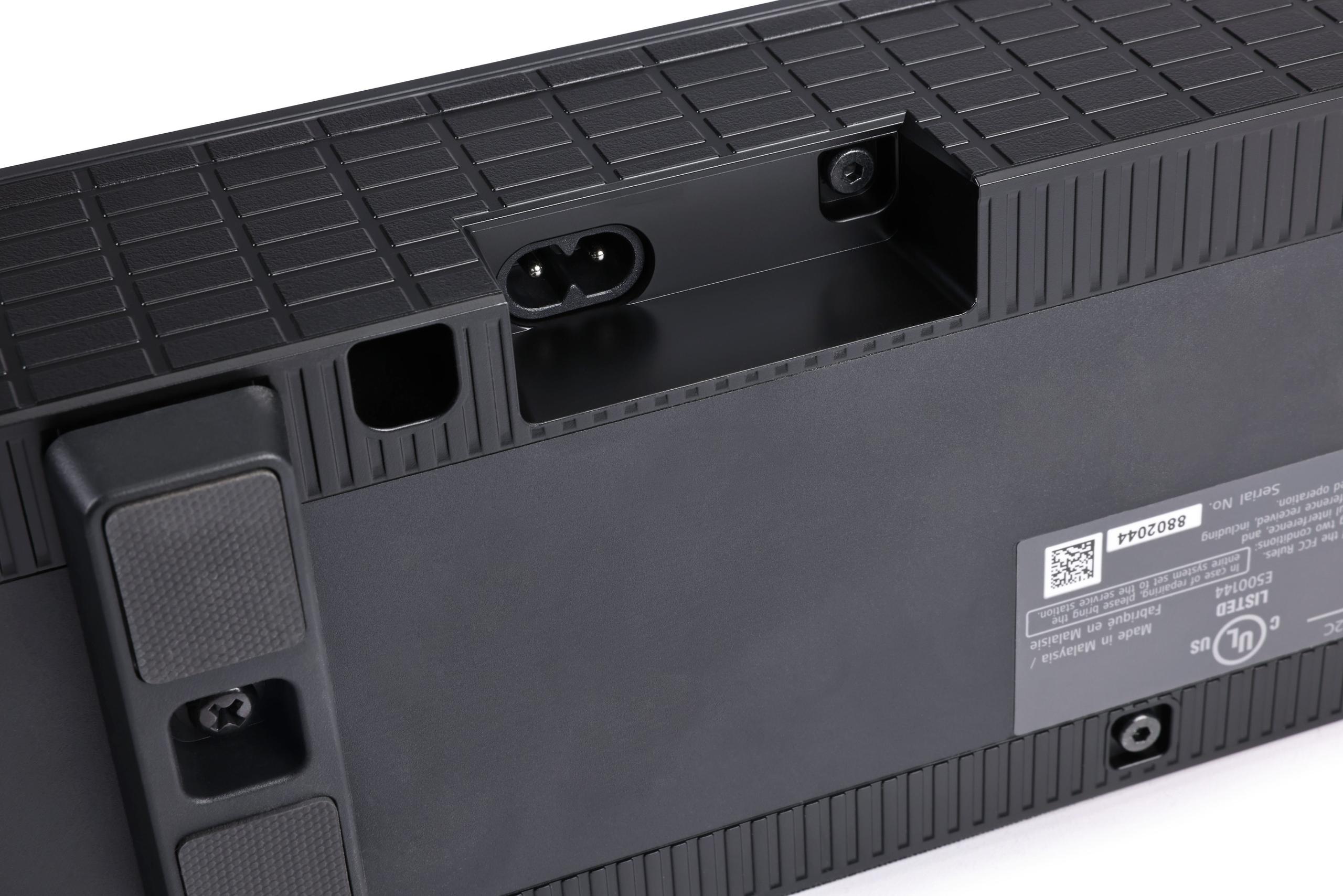
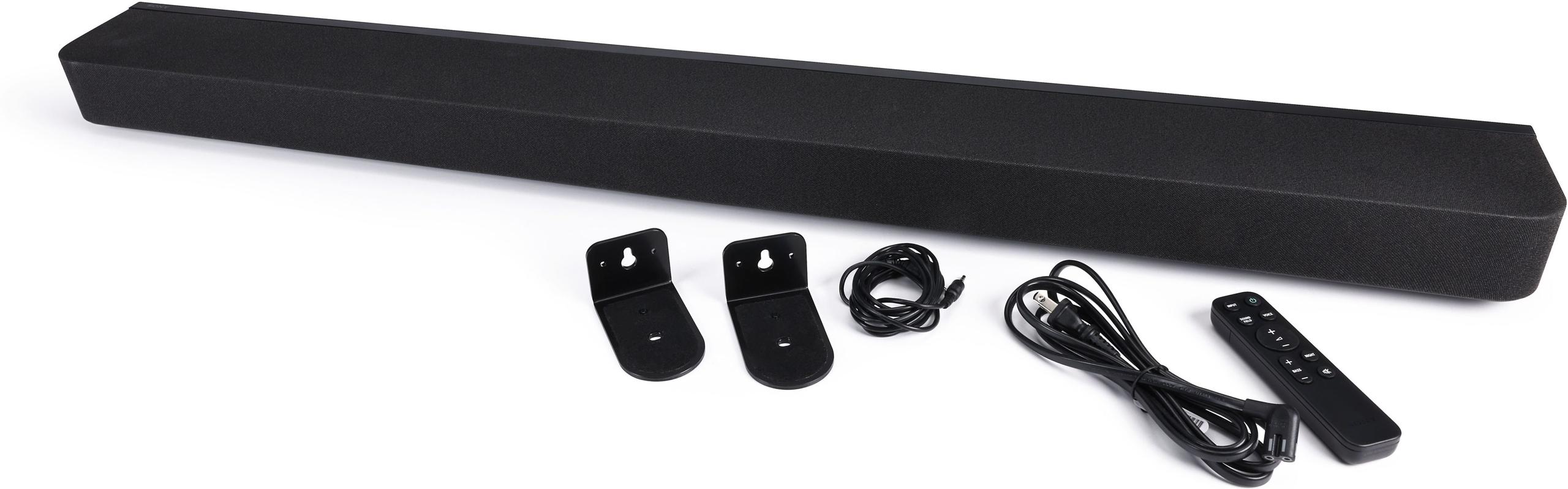
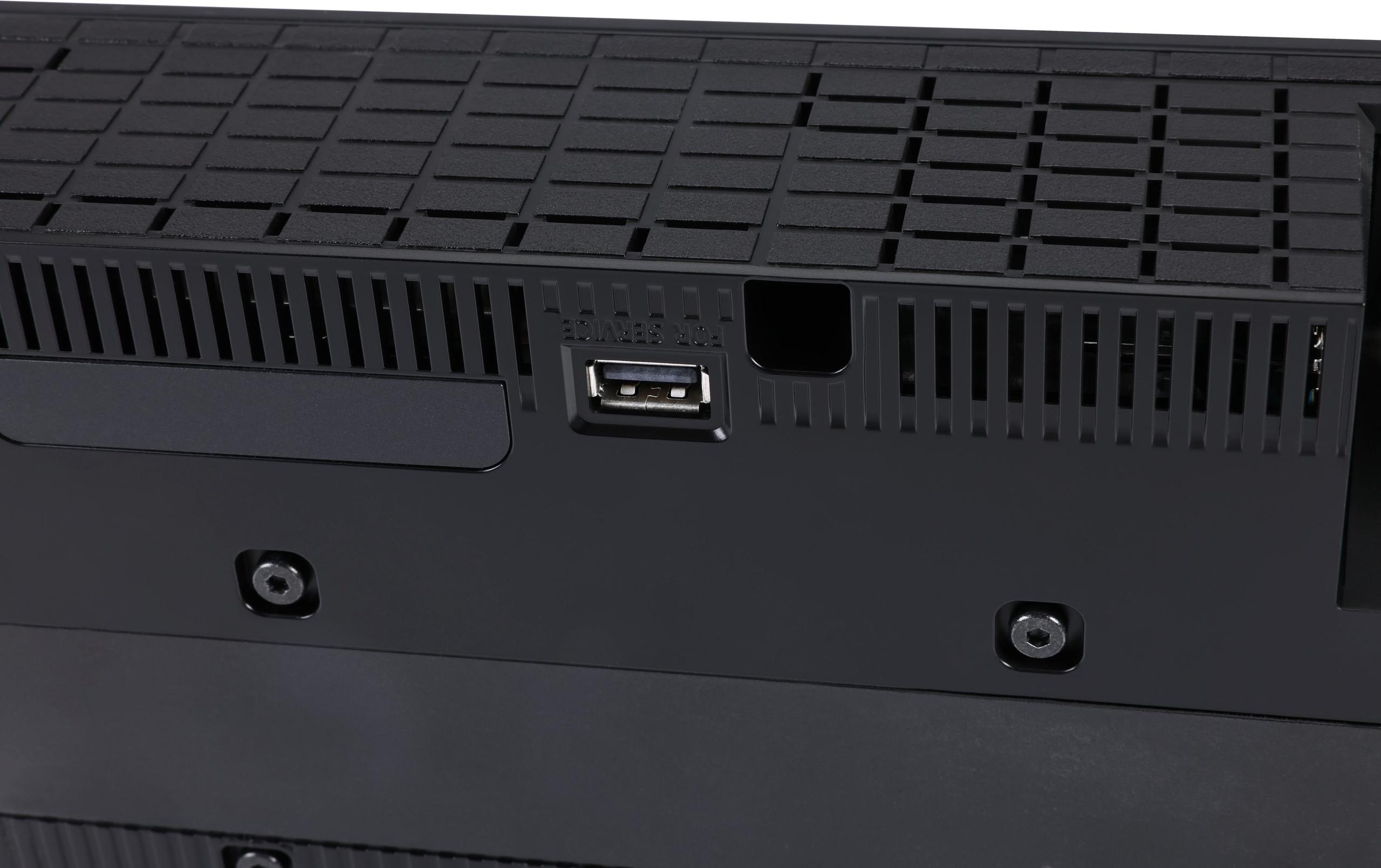


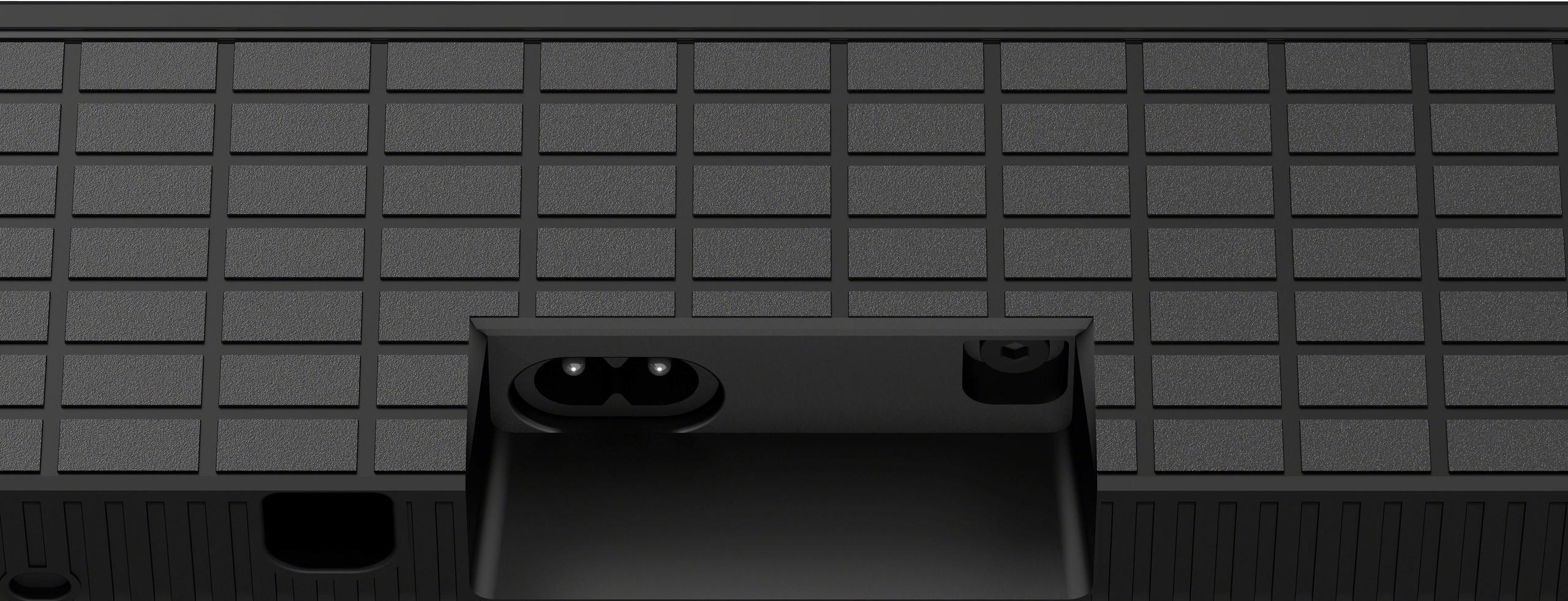
Shopping for a premium soundbar in 2025 feels like navigating a maze of marketing buzzwords and inflated promises. After diving deep into user reviews, expert analyses, and technical specifications, two standouts emerge from the crowded field: the Sony HT-A8000 BRAVIA Theater Bar 8 and the JBL Bar 1000 MK2. Both arrived in 2025 representing dramatically different philosophies for achieving great home theater sound.
The soundbar market has evolved tremendously since the early days of simple TV speaker replacements. Today's premium models attempt to recreate the immersive experience of a full surround sound system without the complexity, wiring nightmares, or living room domination that traditional setups demand. But here's the thing—they take completely different approaches to get there.
Before we dive into these specific models, it's worth understanding what separates a premium soundbar from the budget options cluttering every electronics store. The fundamental challenge is physics: how do you create convincing surround sound and deep bass from a device that sits under your TV?
Premium soundbars tackle this through advanced audio processing, multiple speaker drivers positioned strategically, and increasingly sophisticated room calibration systems that adapt to your specific space. The key performance metrics that actually matter include soundstage width (how broadly sound appears to come from beyond the physical bar), dialogue clarity (especially important given how muddy modern movie mixes can be), bass extension (how deep the low frequencies go), and height effects (creating that overhead Dolby Atmos experience).
What's particularly interesting about 2025's releases is how they've diverged into two distinct camps: the "everything in one bar" approach versus the "complete system in a box" philosophy.
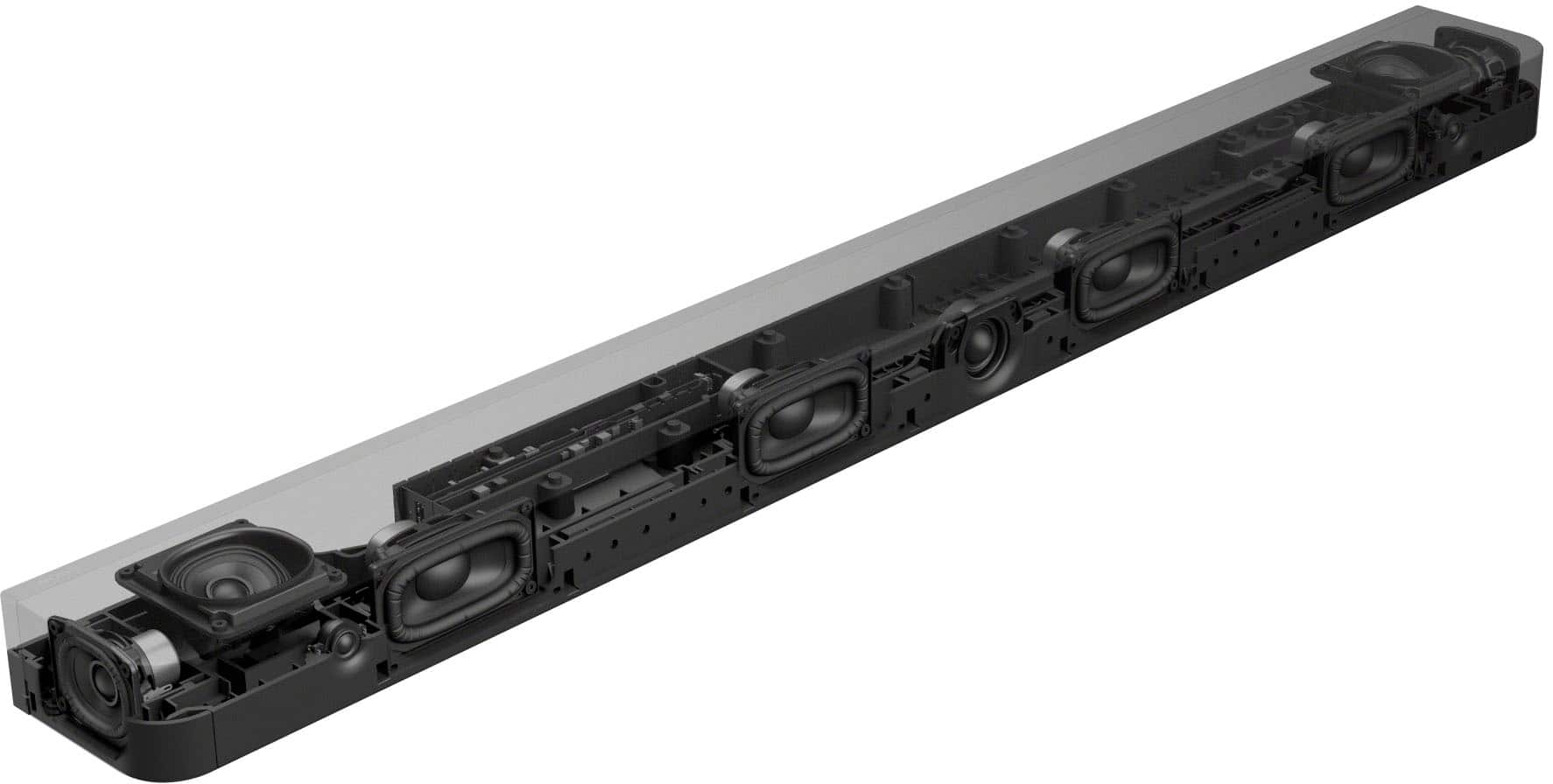
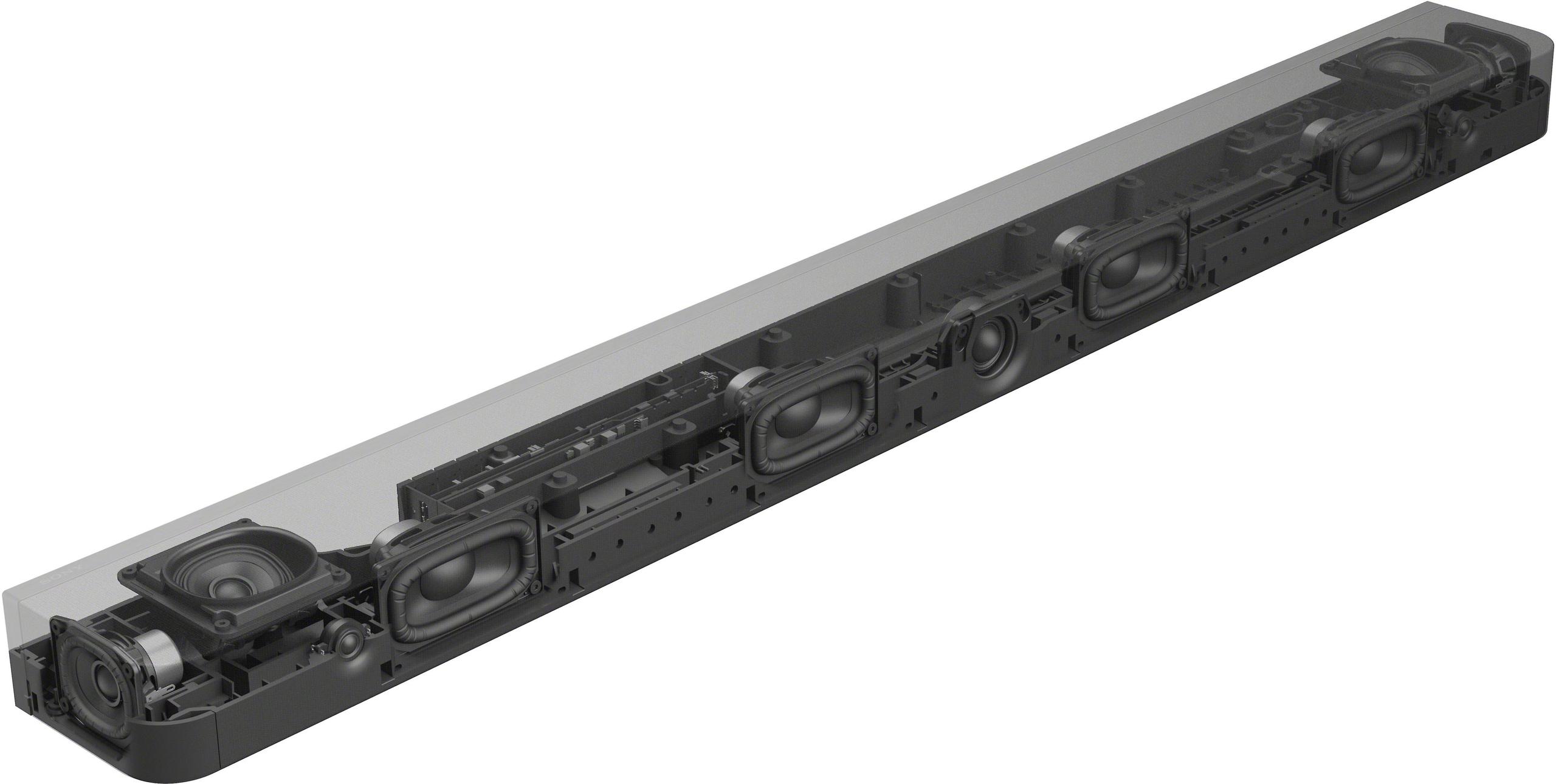
The Sony HT-A8000 represents the pinnacle of single-bar audio engineering. Sony's 360 Spatial Sound Mapping technology is genuinely impressive—it uses 11 carefully positioned speakers within the soundbar to create what Sony calls "phantom speakers" throughout your room. Think of it as audio sleight of hand: the bar analyzes your room's acoustics and bounces sound off walls and ceilings to create the illusion that you have speakers placed around your space.
This isn't just marketing fluff. The technology builds on decades of Sony's audio research, and the results are surprisingly convincing. During our research into user experiences, dialogue clarity consistently emerged as the Sony HT-A8000's standout strength. The Voice Zoom 3 feature uses AI to identify human speech and automatically adjust volume levels, meaning you won't constantly reach for the remote during movies with whispered dialogue followed by explosive action scenes.
The Sound Field Optimization is where Sony's engineering really shines. When you first set up the soundbar, it sends out test tones and analyzes how sound reflects in your specific room. It then adjusts the audio processing to compensate for your room's unique characteristics—whether you have hardwood floors that reflect sound or thick carpets that absorb it.
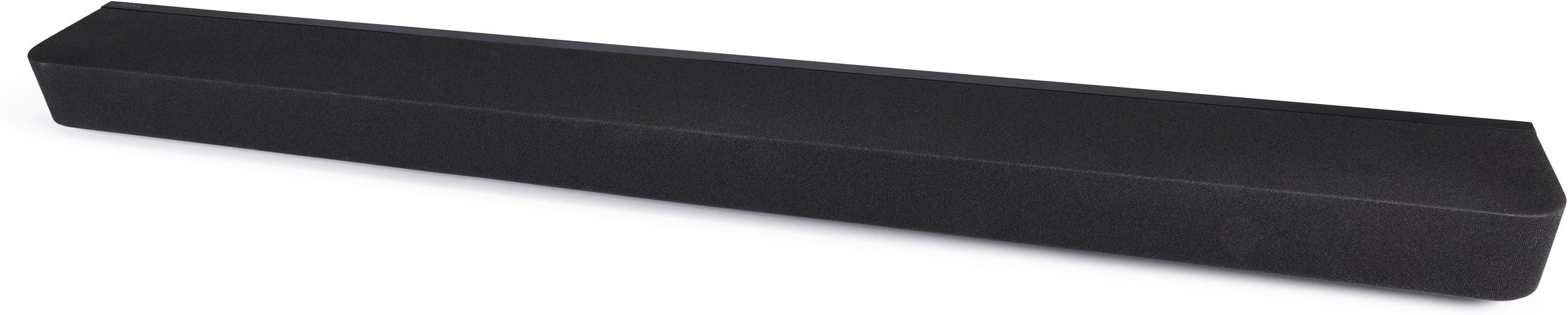
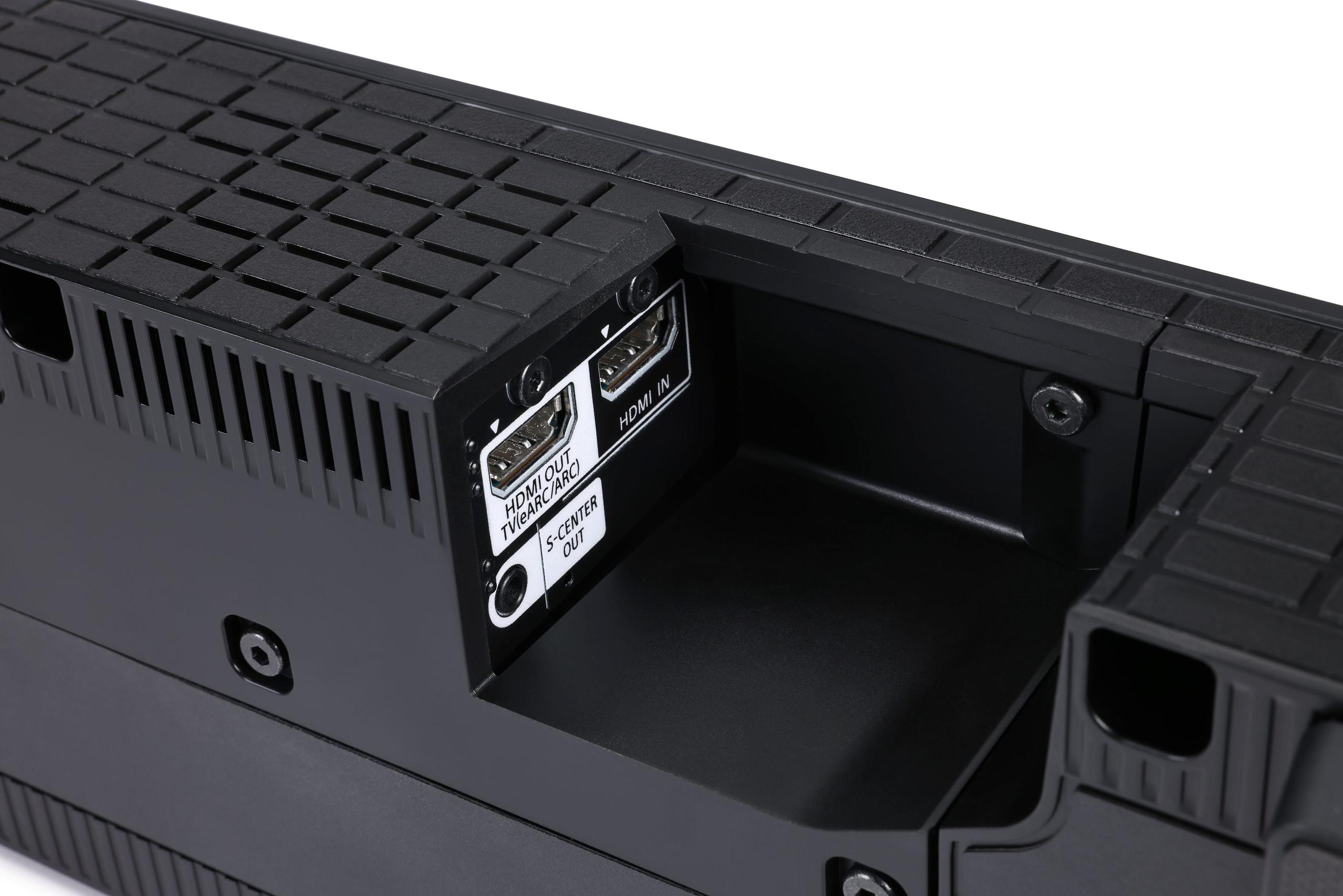
From a technical standpoint, the Sony HT-A8000 packs impressive audio processing power into its sleek 43-inch frame. The S-Master HX digital amplification ensures clean power delivery to all 11 speaker drivers, while DSEE Ultimate upscaling technology actually improves the sound quality of compressed music and movie soundtracks you stream from various services.
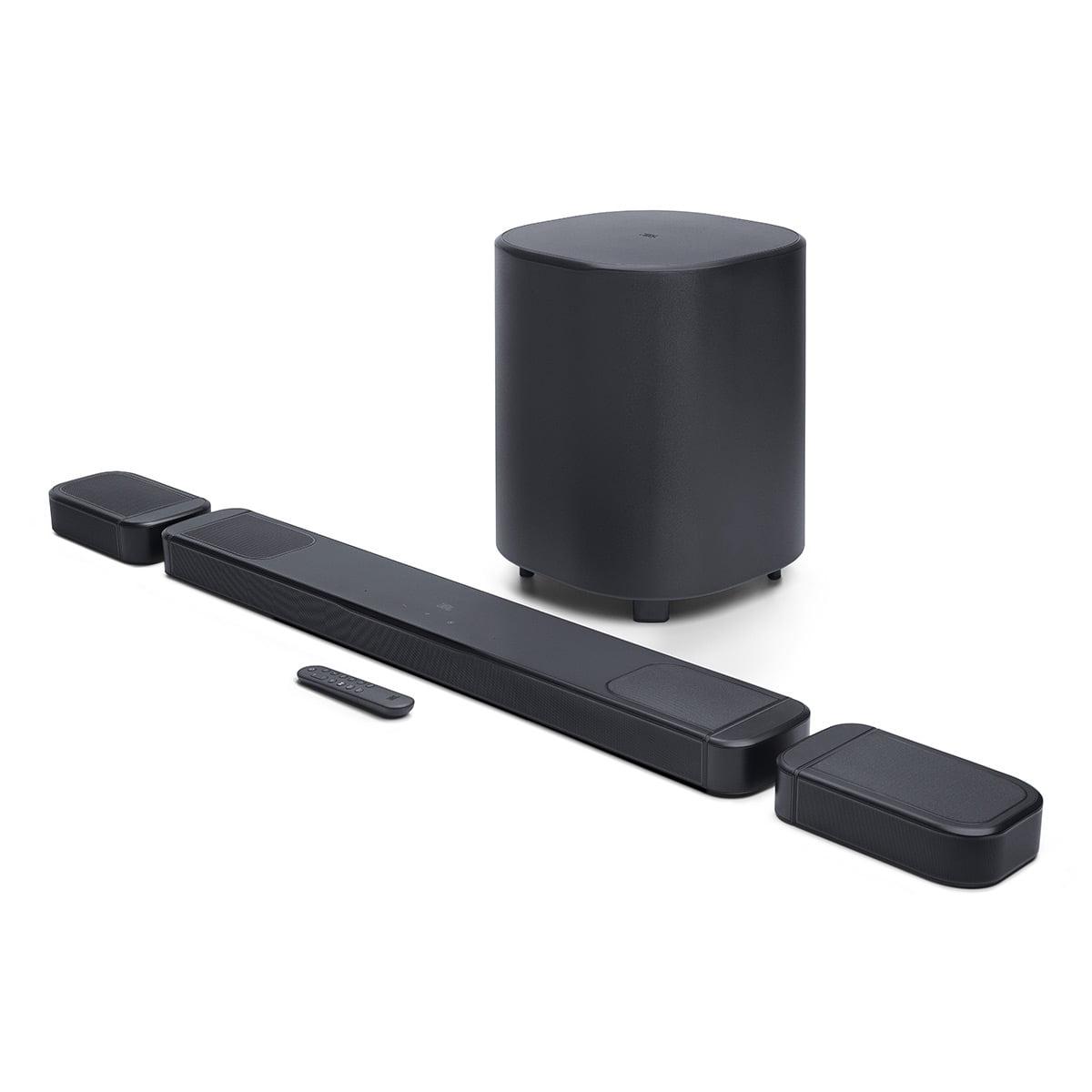
The JBL Bar 1000 MK2 takes a fundamentally different approach. Instead of trying to trick your ears into hearing surround sound from a single bar, JBL gives you actual surround speakers—with a clever twist that makes them uniquely practical for modern living.
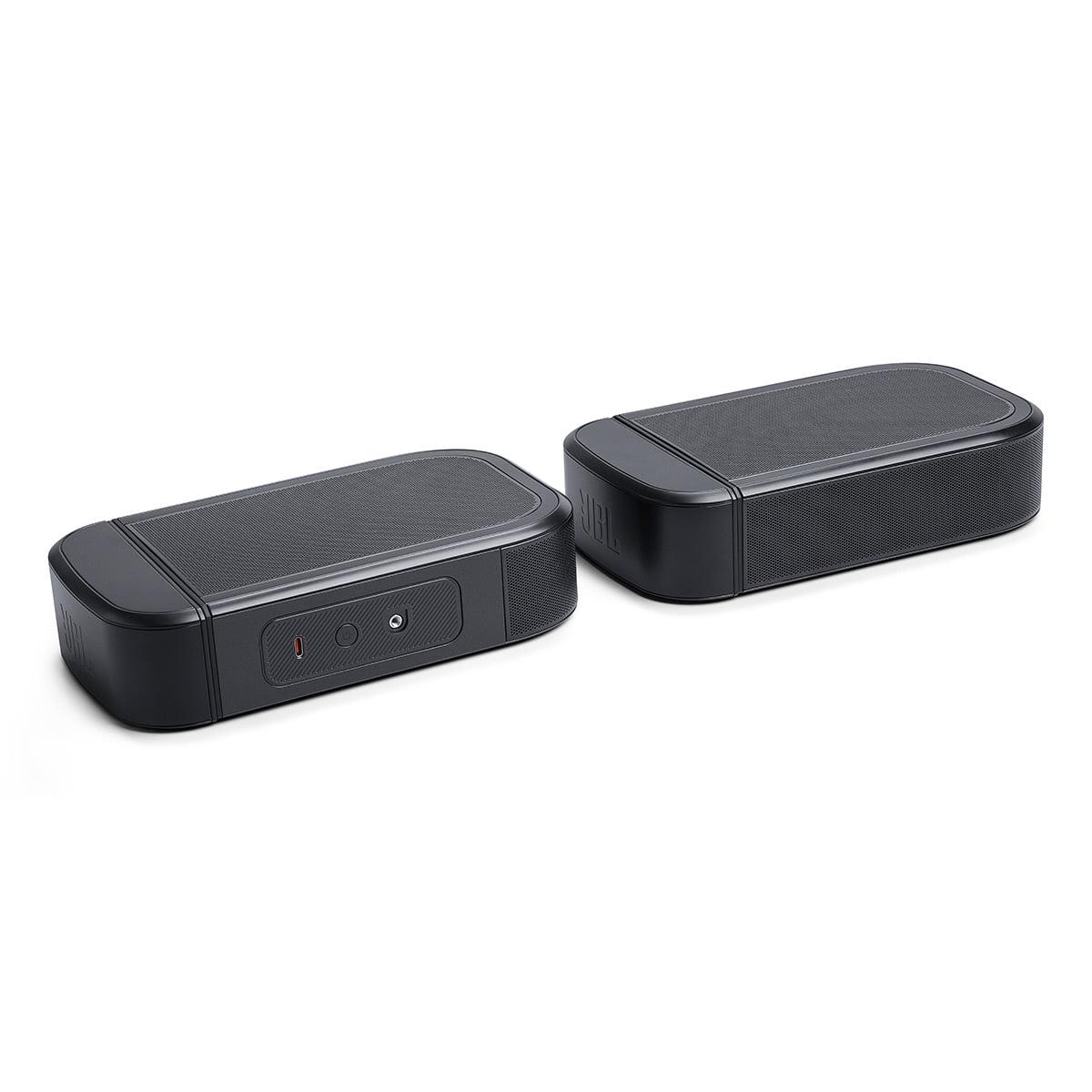
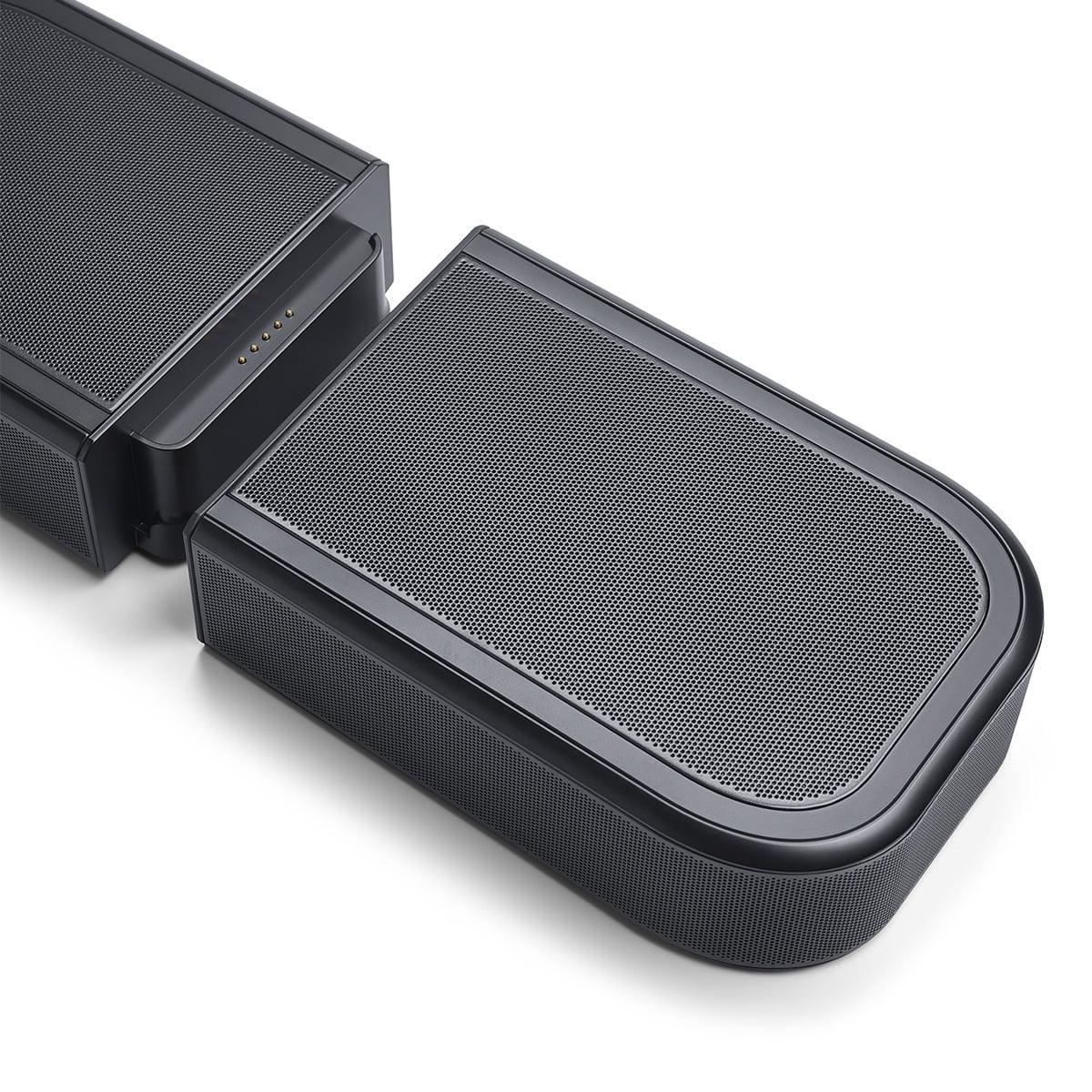
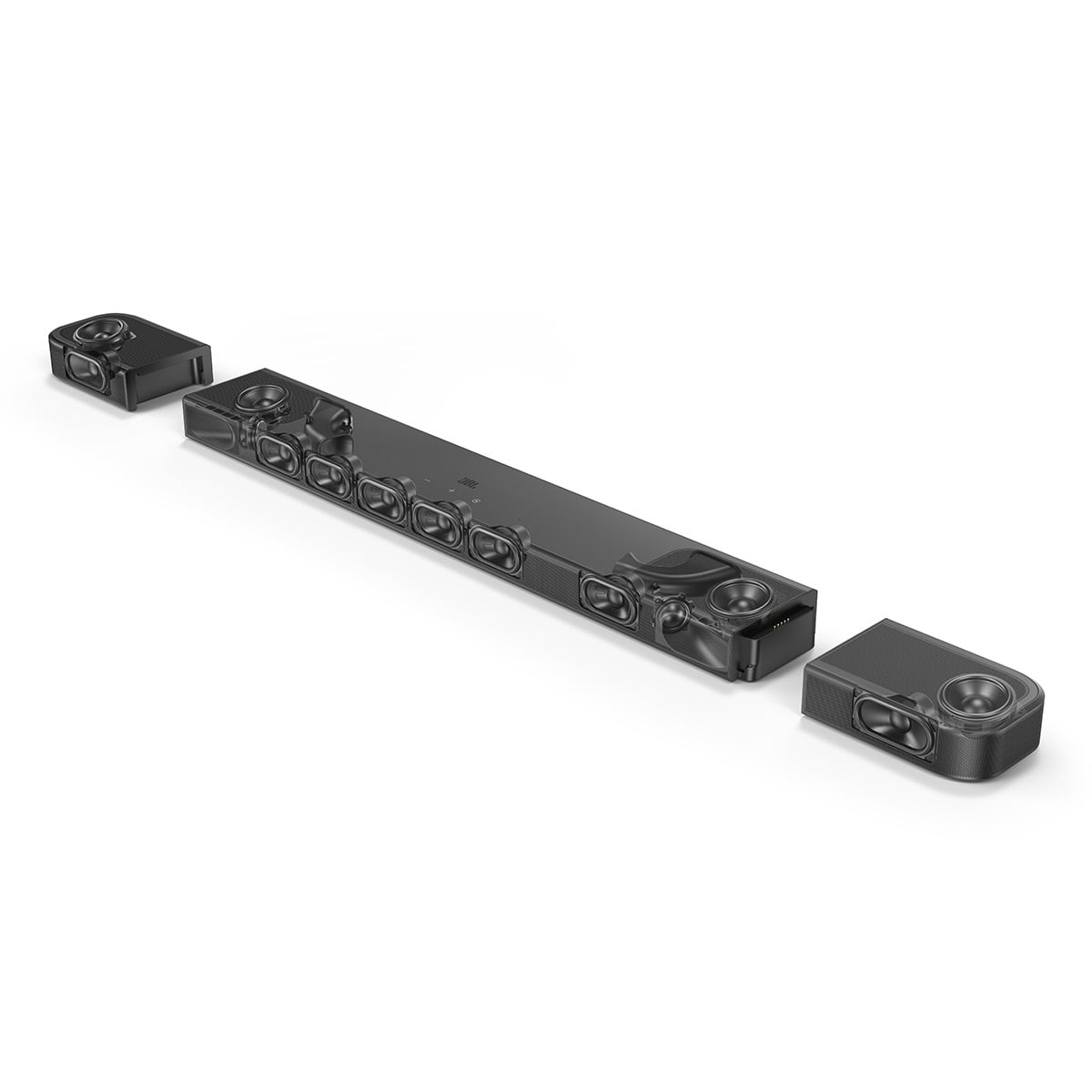
The genius lies in the detachable rear speakers. These aren't just wireless speakers you place behind your couch; they're battery-powered units that snap onto the ends of the main soundbar for charging and storage. When movie time arrives, you simply detach them and place them anywhere behind your seating area. Each speaker provides up to 10 hours of battery life, eliminating the usual wireless surround headaches of power cables and permanent placement.
This creates a true 7.1.4-channel system—meaning seven main channels (front left, center, right, side surrounds, and rear surrounds), one subwoofer channel, and four height channels for Dolby Atmos overhead effects. The JBL Bar 1000 MK2 includes actual up-firing drivers in both the main bar and the detachable rear speakers, creating genuine height effects rather than simulated ones.
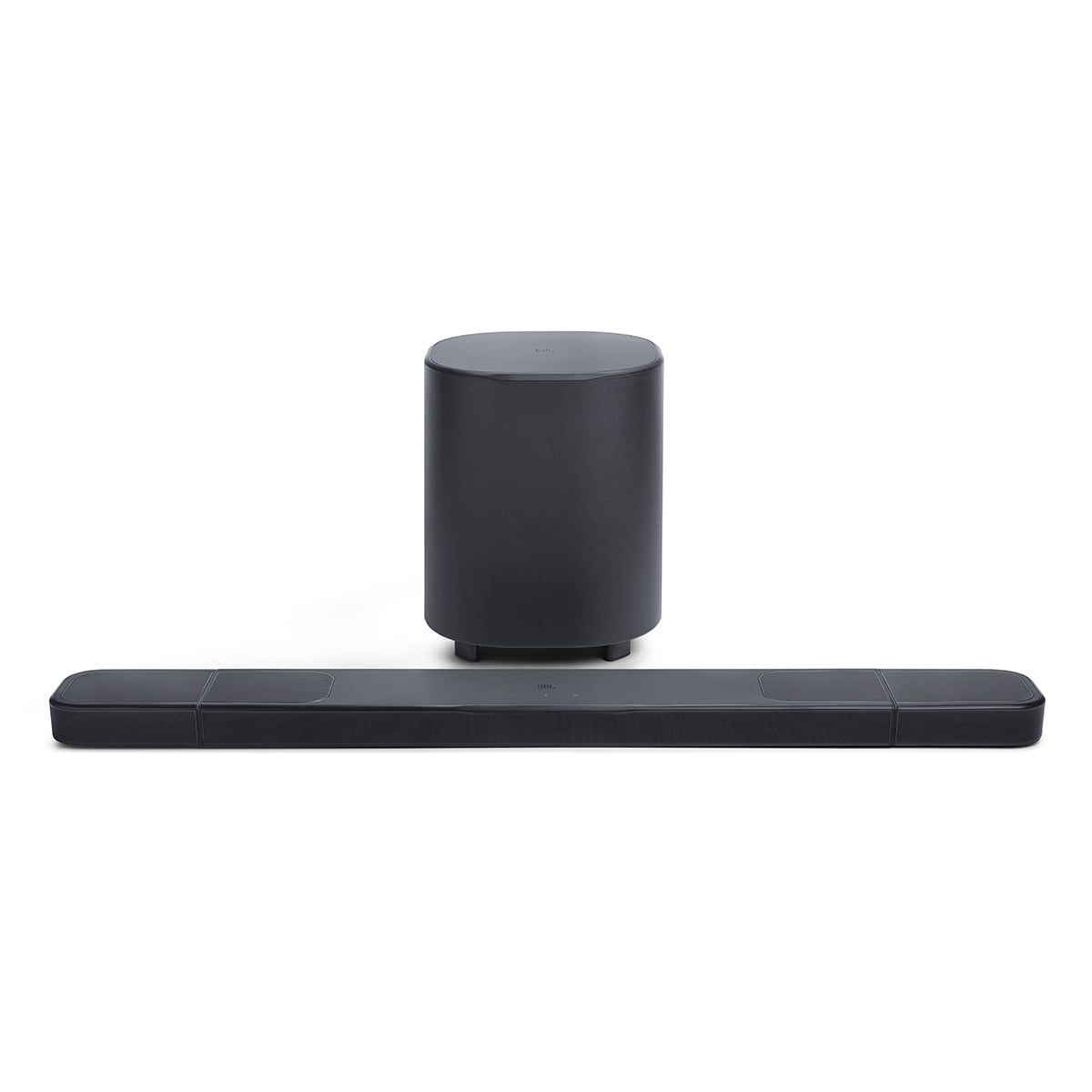
The included 10-inch wireless subwoofer addresses one of the biggest limitations of most soundbars: truly deep bass. While the Sony HT-A8000 relies on its built-in drivers for bass (which works fine for dialogue and music but lacks the room-shaking impact action movies deserve), the JBL Bar 1000 MK2 delivers 300 watts of dedicated subwoofer power that can genuinely rattle your walls when Godzilla stomps through Tokyo.
The performance differences between these systems become apparent the moment you start listening. The Sony HT-A8000 creates an impressively wide soundstage that extends well beyond the physical boundaries of the soundbar. When watching movies, effects seem to come from various points across your room's front wall, not just from the bar itself. This virtual surround processing works particularly well for atmospheric content—rain falling in a forest scene genuinely sounds like it's surrounding you.
However, physics ultimately wins. The JBL Bar 1000 MK2 with its physical rear speakers provides actual channel separation that no amount of digital processing can fully replicate. When a helicopter flies from front to back in an action movie, you hear it actually travel through space rather than just a convincing simulation of that movement.
From our research into user experiences, the Sony HT-A8000 consistently impressed listeners with its precision and detail. Users frequently mentioned how dialogue remained clear even during complex audio scenes, and how the soundbar seemed to "disappear" as a source, creating an enveloping audio environment. The JBL Bar 1000 MK2, meanwhile, earned praise for its sheer impact and immersive quality, with users noting how action sequences felt more visceral and engaging.
This is where the philosophical differences between these systems become most apparent. The Sony HT-A8000 includes capable bass drivers within the main unit, but they're limited by size and the need to share cabinet space with all the other speakers. For casual listening and even most movie content, this works fine. The bass is present, controlled, and well-integrated with the rest of the frequency spectrum.
But if you're someone who appreciates the chest-thumping impact of a proper subwoofer—whether for action movies, music, or gaming—the JBL Bar 1000 MK2's included 10-inch subwoofer makes a dramatic difference. Users consistently reported that the bass extension and impact far exceeded what any soundbar-only solution could provide. The subwoofer can reproduce frequencies down to 33Hz, which covers the deep rumble in most movie soundtracks.
Sony does offer optional wireless subwoofers (the SA-SW3 and SA-SW5), but these are sold separately and add considerably to the total system cost. At the time of writing, adding Sony's premium subwoofer and rear speakers to match the JBL Bar 1000 MK2's configuration would cost significantly more than JBL's complete system.
Both systems support Dolby Atmos and DTS:X, but they achieve height effects differently. The Sony HT-A8000 uses sophisticated processing to bounce sound off your ceiling, creating the illusion of overhead speakers. When it works well—and it often does—you get convincing height effects that add dimension to movie soundtracks.
The JBL Bar 1000 MK2 takes the more direct approach with four actual up-firing speakers: two in the main bar and one in each detachable rear speaker. This creates more discrete height channels and, in rooms with appropriate ceilings, more convincing overhead effects. Users with higher ceilings (9 feet or more) particularly benefited from JBL's approach, while those with lower ceilings found Sony's processing worked nearly as well.
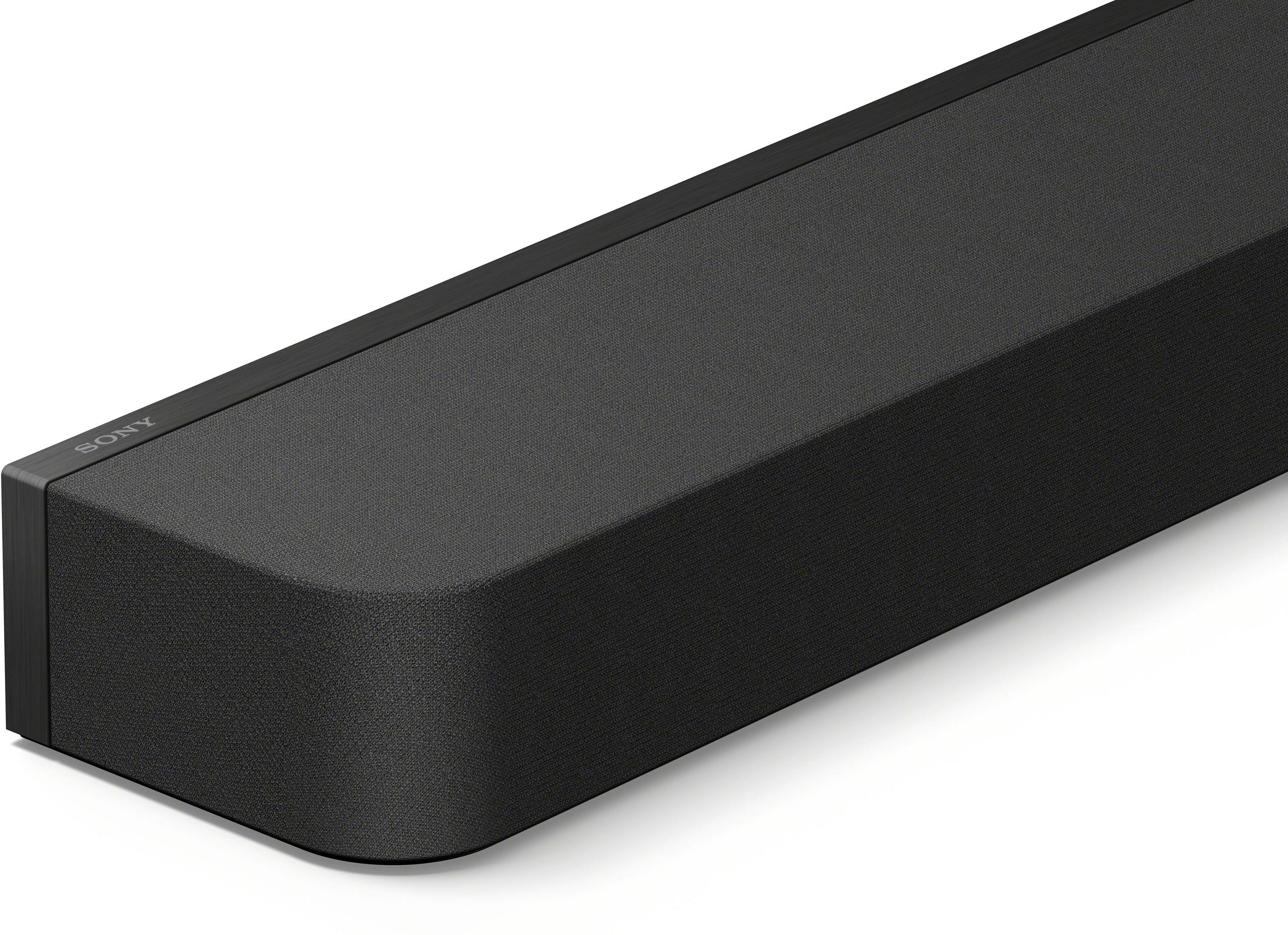
The Sony HT-A8000 excels in scenarios where simplicity and aesthetics matter. Its low-profile design (just 2.6 inches tall) won't block TV screens or clash with modern decor. The single-cable connection and wireless setup make installation straightforward, and the lack of separate components means fewer things to manage, charge, or lose track of.
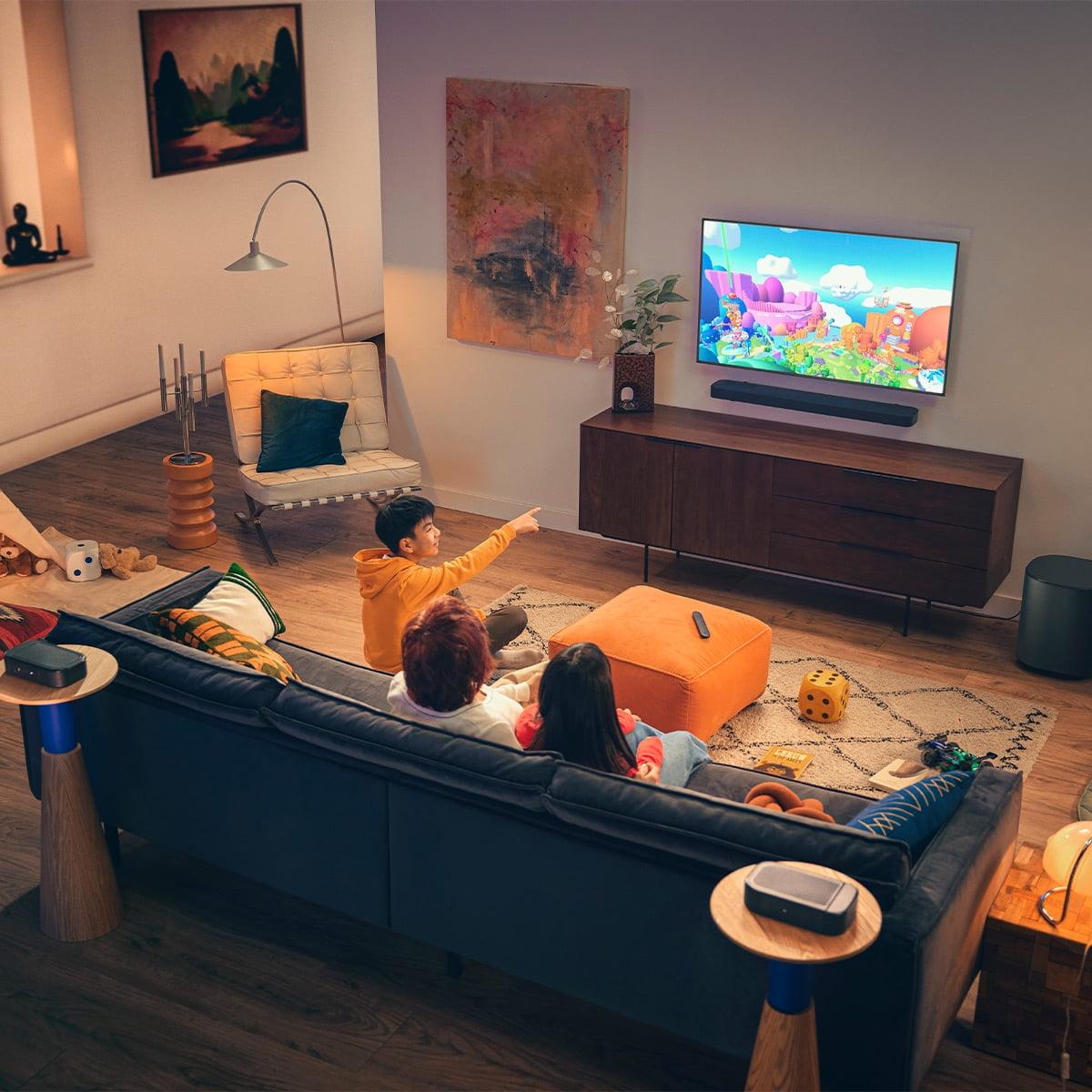
This approach particularly benefits apartment dwellers or anyone with space constraints. You get sophisticated surround sound processing without needing to place speakers around your room or accommodate a large subwoofer. The soundbar's room optimization also means it adapts well to different listening positions, making it ideal for open floor plans where people might watch from various angles.
Sony's integration with their BRAVIA TVs deserves special mention. The Acoustic Center Sync feature allows the soundbar to use your Sony TV's speakers as an additional center channel, creating an even more seamless audio-visual experience. This kind of ecosystem integration adds real value for Sony TV owners.
The JBL Bar 1000 MK2 shines in its versatility. Those detachable rear speakers aren't just for surround sound—they function as fully capable Bluetooth speakers for other rooms, outdoor use, or even travel. The 10-hour battery life means you can detach them for a weekend camping trip or pool party, then return them to surround duty for movie night.
The Night Mode feature showcases this flexibility cleverly: you can mute the main soundbar and subwoofer while keeping audio flowing to just the detachable speakers. This allows for private late-night viewing without disturbing others in your home—essentially turning the rear speakers into wireless headphones for your entire seating area.
For home theater enthusiasts, the JBL Bar 1000 MK2 provides immediate satisfaction without requiring additional purchases. You get true 7.1.4 surround sound, powerful bass, and genuine height effects right out of the box. This complete-system approach particularly appeals to users who want to set up once and enjoy rather than gradually building a system over time.
At the time of writing, the Sony HT-A8000 offers a lower entry price point, making it accessible to users who want premium sound quality without a premium budget. However, this calculation changes significantly when you consider the total cost for equivalent functionality.
To match the JBL Bar 1000 MK2's complete surround experience, you'd need to add Sony's wireless subwoofer and rear speakers, which would push the total investment considerably higher than JBL's all-inclusive price. This makes JBL's offering particularly attractive from a value perspective—you're getting a complete premium system for less than Sony's fully expanded configuration would cost.
The Sony HT-A8000 does offer advantages in terms of flexibility over time. You can start with just the soundbar and add components as your budget allows or your needs change. This modular approach works well for users who aren't sure how much they'll ultimately want to invest in audio or whose living situations might change.
Your room characteristics significantly impact which system will work better. The Sony HT-A8000 relies on wall and ceiling reflections for its spatial effects, so it works best in rooms with relatively parallel walls and reasonable ceiling heights (8-10 feet). Very large rooms or those with irregular shapes may not provide the acoustic reflections Sony's processing needs to create convincing surround effects.
The JBL Bar 1000 MK2 adapts better to challenging room layouts because its physical speakers can be positioned optimally regardless of wall placement. The wireless subwoofer can also be positioned for best bass response rather than being limited to the TV wall location.
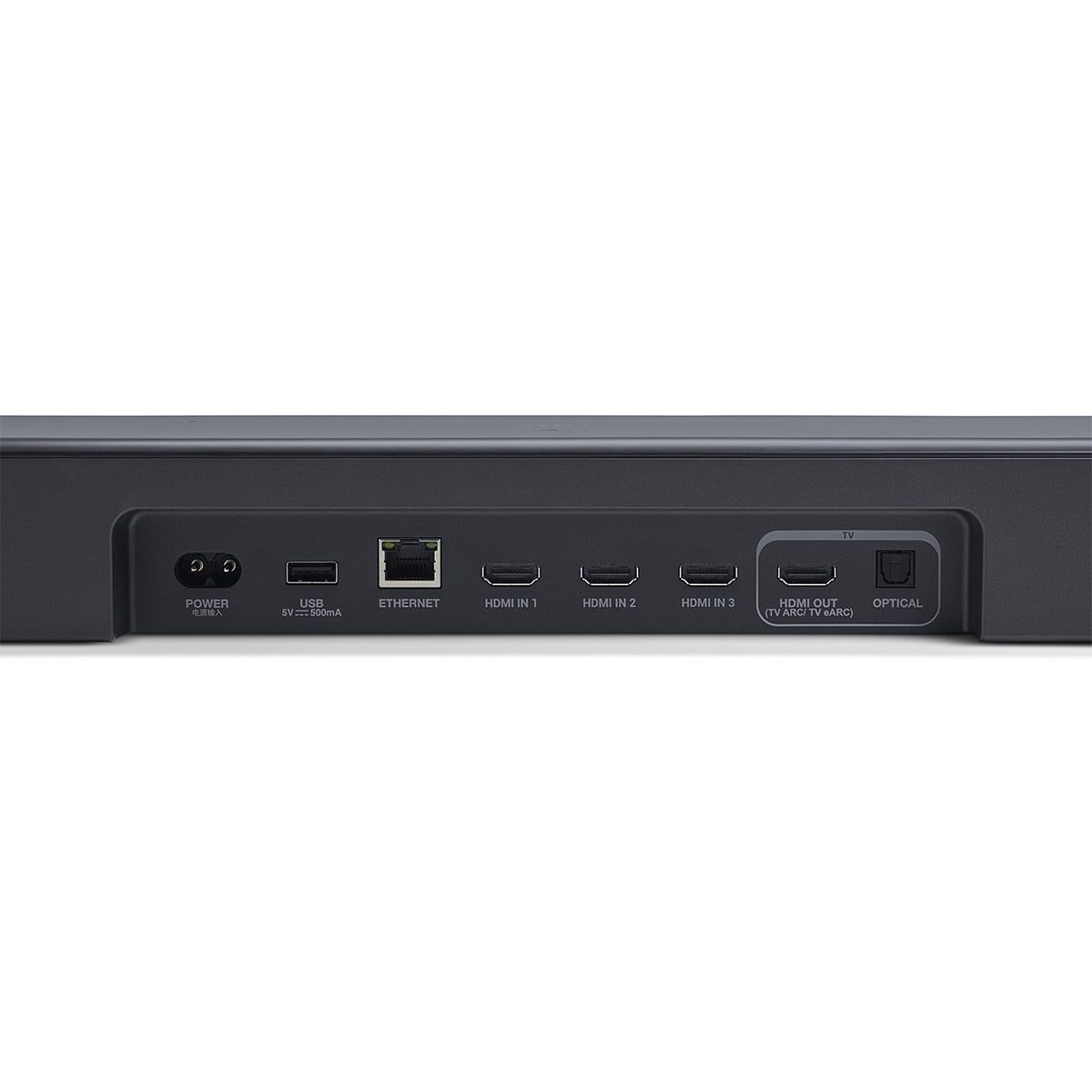
Both systems offer comprehensive modern connectivity, including HDMI eARC, Wi-Fi streaming, and Bluetooth. The Sony HT-A8000 includes more advanced upscaling technology and deeper integration with streaming services, while the JBL Bar 1000 MK2 offers Roon Ready support for audiophile music streaming.
Gaming performance deserves mention for both systems. They support the latest HDMI 2.1 features including Variable Refresh Rate (VRR) and Auto Low Latency Mode (ALLM), making them suitable for serious gamers with PlayStation 5 or Xbox Series X consoles.
The Sony HT-A8000 represents the thinking person's soundbar—it's incredibly smart about how it processes audio and creates surprisingly convincing surround effects from a single elegant bar.
The JBL Bar 1000 MK2 delivers immediate gratification with no compromises—you get everything you need for reference-quality home theater sound in one purchase.
Both soundbars represent excellent engineering and thoughtful design, but they serve different priorities. The Sony HT-A8000 impresses with its sophisticated approach to single-bar surround sound and exceptional dialogue clarity. It's the choice for users who appreciate elegance and precision over raw power.
The JBL Bar 1000 MK2 wins on immediate impact and long-term value. You get a complete, powerful system with unique flexibility features that extend its usefulness beyond just TV audio. For most users prioritizing home theater performance, JBL's comprehensive approach delivers more satisfying results.
At the time of writing, if budget allows for only one purchase and you want the most complete home theater experience possible, the JBL Bar 1000 MK2 provides better overall value and performance. However, if space constraints, aesthetic preferences, or budget considerations make the single-bar approach more practical, the Sony HT-A8000 delivers remarkably sophisticated sound that punches well above its size and price class.
The soundbar landscape continues evolving rapidly, but these 2025 models represent mature approaches to their respective philosophies. Your choice ultimately depends on whether you prioritize Sony's intelligent elegance or JBL's comprehensive power.
| Sony HT-A8000 BRAVIA Theater Bar 8 | JBL Bar 1000 MK2 Soundbar System |
|---|---|
| Audio Configuration - Determines surround sound authenticity and upgrade requirements | |
| Single soundbar with 11 speakers (5.0.2 virtual surround) | Complete 7.1.4 system with detachable rears and 10" subwoofer |
| Bass Performance - Critical for action movies and music impact | |
| Built-in drivers only (requires separate subwoofer purchase for deep bass) | Included 10" wireless subwoofer with 300W dedicated power |
| Surround Sound Implementation - Affects immersion quality | |
| 360 Spatial Sound Mapping creates virtual rear channels | Physical detachable rear speakers provide true surround separation |
| Flexibility and Portability - Determines multi-room usage options | |
| Fixed single-bar design, expandable with optional components | Detachable speakers work as portable Bluetooth units (10-hour battery) |
| Room Integration - How well it adapts to different spaces | |
| Sound Field Optimization auto-calibrates for room acoustics | MultiBeam 3.0 + physical speaker placement adapts to any room layout |
| Dialogue Clarity Technology - Essential for clear speech in movies | |
| Voice Zoom 3 AI automatically adjusts dialogue volume | PureVoice 2.0 optimizes speech based on ambient sound levels |
| Height Effects (Dolby Atmos) - Creates overhead sound immersion | |
| 2 up-firing drivers with ceiling reflection processing | 4 up-firing drivers (2 in bar, 1 in each rear speaker) for discrete height channels |
| Total System Power - Indicates maximum volume and dynamic range | |
| 60W (soundbar only, subwoofer power sold separately) | 960W total system (480W RMS across all components) |
| Complete System Value - What you get for the entry price | |
| Soundbar only - requires additional purchases for full surround | Complete 7.1.4 system with all components included |
| Smart TV Integration - Seamless control and audio sync features | |
| Acoustic Center Sync with Sony BRAVIA TVs, HDMI eARC | Universal compatibility, HDMI eARC, works with all TV brands |
| Setup Complexity - Installation and configuration requirements | |
| Single cable connection, wireless calibration, minimal components | Multiple wireless components, battery management, flexible placement |
The JBL Bar 1000 MK2 is generally better for movies due to its complete 7.1.4 surround system with physical rear speakers and a powerful 10-inch subwoofer. This creates more immersive action sequences and deeper bass for cinematic impact. The Sony HT-A8000 excels at dialogue clarity with its Voice Zoom 3 technology, making it ideal for dialogue-heavy films, but lacks the room-shaking bass that many movie enthusiasts prefer.
The Sony HT-A8000 works as a complete unit but requires separate purchases of a subwoofer and rear speakers for full surround sound. The JBL Bar 1000 MK2 includes everything you need out of the box - detachable rear speakers, a wireless subwoofer, and the main soundbar - making it a complete home theater solution without additional purchases.
The JBL Bar 1000 MK2 has significantly better bass performance since it includes a dedicated 10-inch wireless subwoofer with 300W of power. The Sony HT-A8000 relies only on its built-in drivers for bass, which is adequate for dialogue and music but cannot match the deep, powerful bass that the JBL system provides for action movies and music.
Yes, both the Sony HT-A8000 and JBL Bar 1000 MK2 work with all TV brands through HDMI eARC connections. However, the Sony HT-A8000 offers special integration features like Acoustic Center Sync when paired with Sony BRAVIA TVs, while the JBL Bar 1000 MK2 provides universal compatibility without brand-specific advantages.
The Sony HT-A8000 is easier to set up since it's a single soundbar that connects with one HDMI cable and automatically calibrates to your room. The JBL Bar 1000 MK2 requires placing multiple wireless components including the subwoofer and positioning the detachable rear speakers, though the wireless design eliminates complex wiring.
Both soundbars support Dolby Atmos, but differently. The Sony HT-A8000 uses 2 up-firing speakers and processing to bounce sound off your ceiling. The JBL Bar 1000 MK2 has 4 up-firing speakers (2 in the main bar, 1 in each rear speaker) for more discrete overhead sound channels and typically more convincing height effects.
The JBL Bar 1000 MK2 typically offers better overall value since it includes a complete 7.1.4 surround system with subwoofer and rear speakers. To achieve similar functionality with the Sony HT-A8000, you'd need to purchase additional components separately, which would cost significantly more than the complete JBL system.
Both the Sony HT-A8000 and JBL Bar 1000 MK2 support music streaming via Bluetooth, Wi-Fi, Spotify Connect, and AirPlay 2. They also support gaming features like HDMI 2.1, Variable Refresh Rate, and Auto Low Latency Mode. The JBL Bar 1000 MK2 provides more impactful bass for gaming, while the Sony HT-A8000 offers more precise audio detail.
The Sony HT-A8000 is better suited for small spaces since it's a single sleek bar that doesn't require rear speaker placement or space for a subwoofer. Its virtual surround processing works well in smaller rooms. The JBL Bar 1000 MK2 needs space for optimal component placement but offers the flexibility of battery-powered rear speakers that don't require permanent installation.
The Sony HT-A8000 has superior dialogue clarity with its Voice Zoom 3 AI technology that automatically adjusts speech levels during movies and shows. The JBL Bar 1000 MK2 includes PureVoice 2.0 for dialogue enhancement, but Sony's implementation is generally considered more advanced and effective for ensuring clear speech in complex audio scenes.
The Sony HT-A8000 offers modular expansion - you can add Sony's wireless subwoofers and rear speakers when budget allows. The JBL Bar 1000 MK2 comes as a complete system and doesn't require expansion, though the detachable speakers can be used as portable Bluetooth speakers in other rooms for added versatility.
The JBL Bar 1000 MK2 performs better in large rooms due to its physical rear speakers that provide true surround separation and powerful subwoofer that can fill bigger spaces with bass. The Sony HT-A8000 can work in larger rooms but may struggle to create convincing surround effects without the acoustic reflections that smaller, more enclosed spaces provide.
We've done our best to create useful and informative comparisons to help you decide what product to buy. Our research uses advanced automated methods to create this comparison and perfection is not possible - please contact us for corrections or questions. These are the sites we've researched in the creation of this article: consumerreports.org - skybygramophone.com - target.com - rtings.com - bestbuy.com - rubbermonkey.co.nz - shopatsc.com - audioadvice.com - sony.com - sony.com - sony.com - shop.cosmopolitan.com - store.sony.com.my - videoandaudiocenter.com - ecoustics.com - engadget.com - bestbuy.com - techradar.com - rtings.com - hometechnologyreview.com - youtube.com - t3.com - whathifi.com - youtube.com - bhphotovideo.com - gzhls.at - device.report - support.jbl.com - support.jbl.com - jbl.com - av.com - audioadvice.com - jbl.com - target.com - worldwidestereo.com

Privacy Policy
Terms and Conditions - Affiliate Policy
Home Security
© Copyright 2008-2026.
11816 Inwood Rd #1211, Dallas, TX 75244