

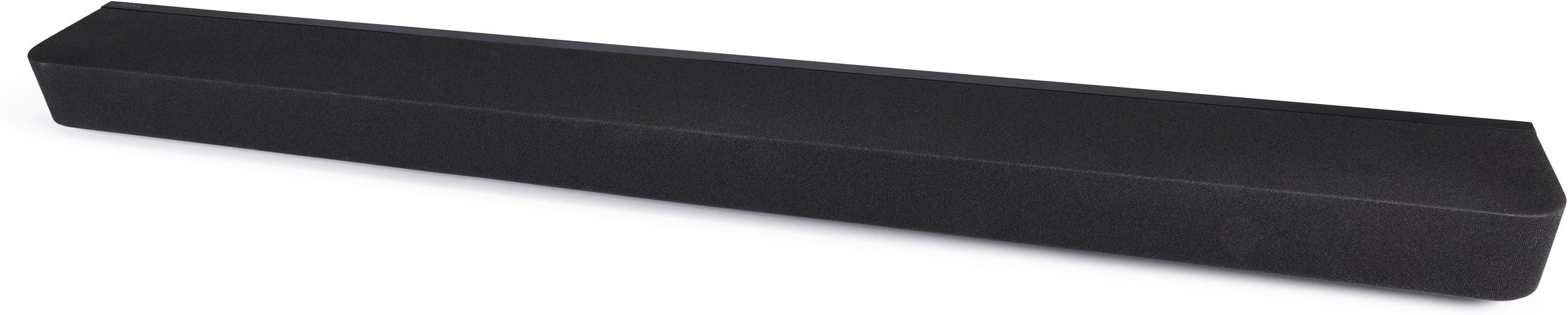
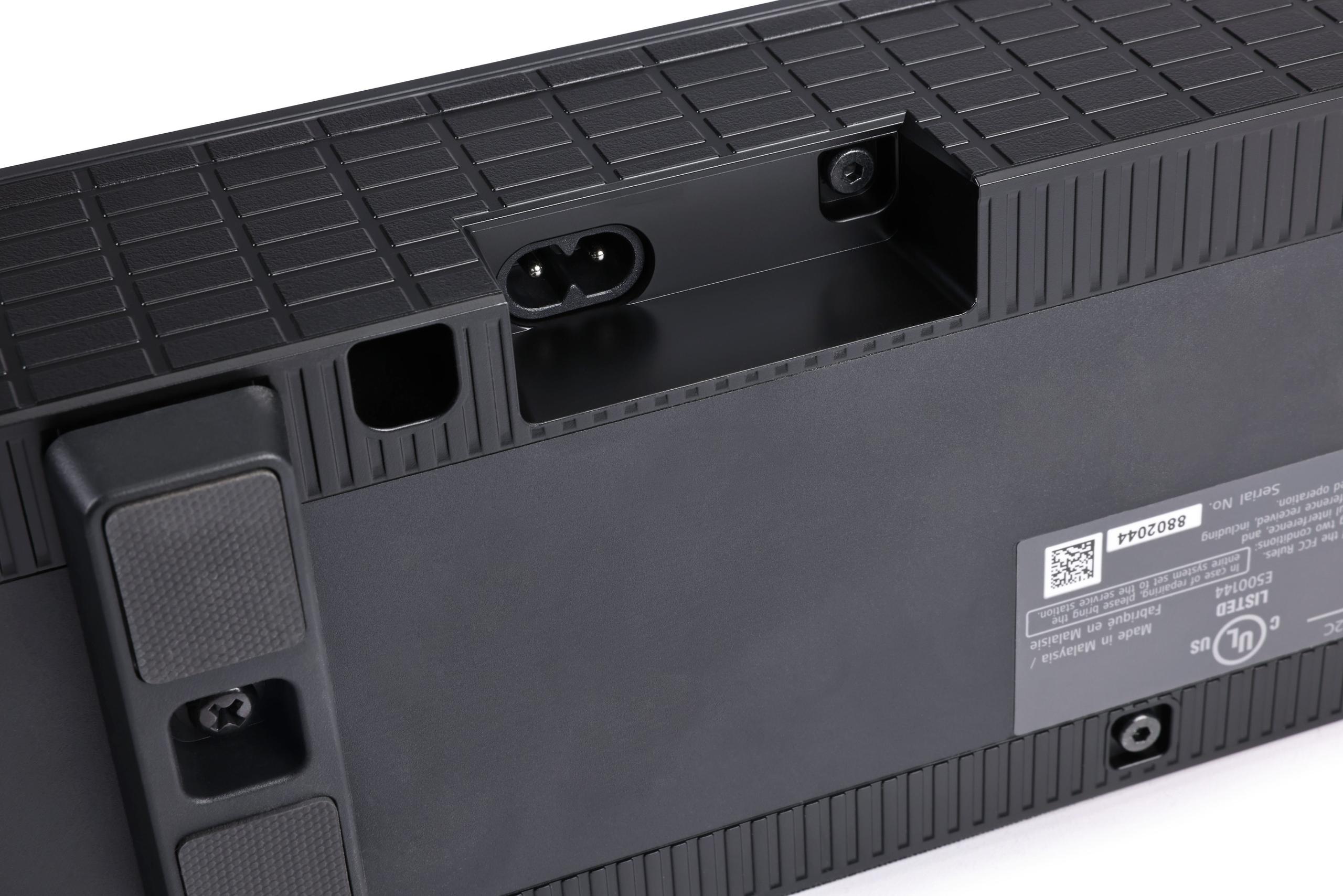
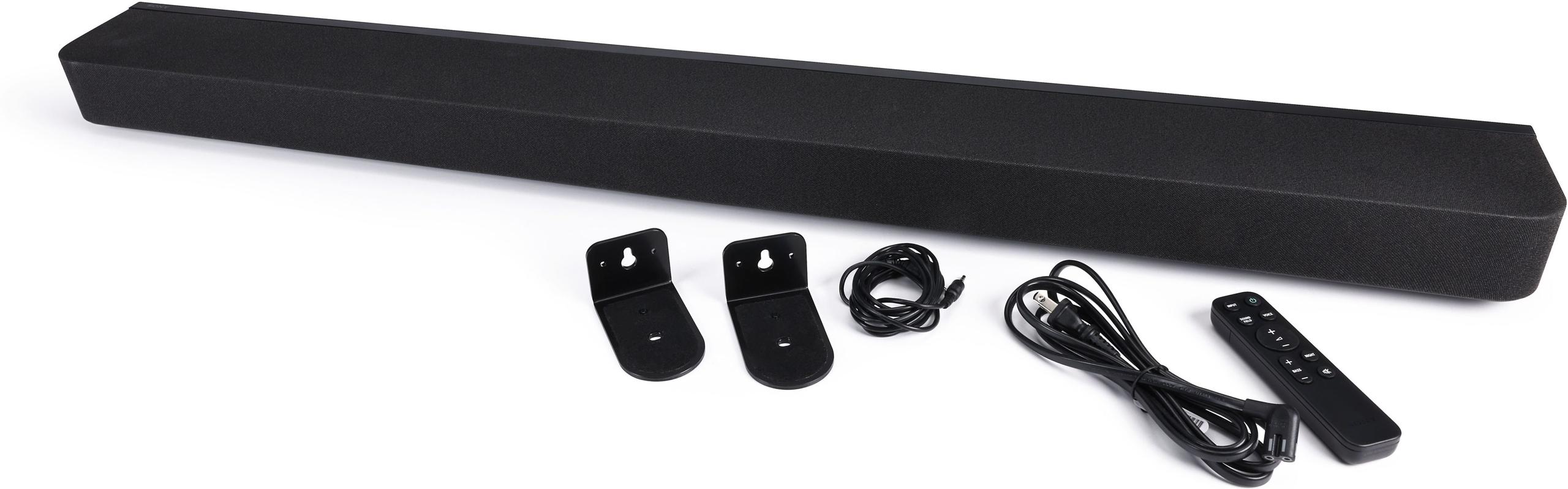
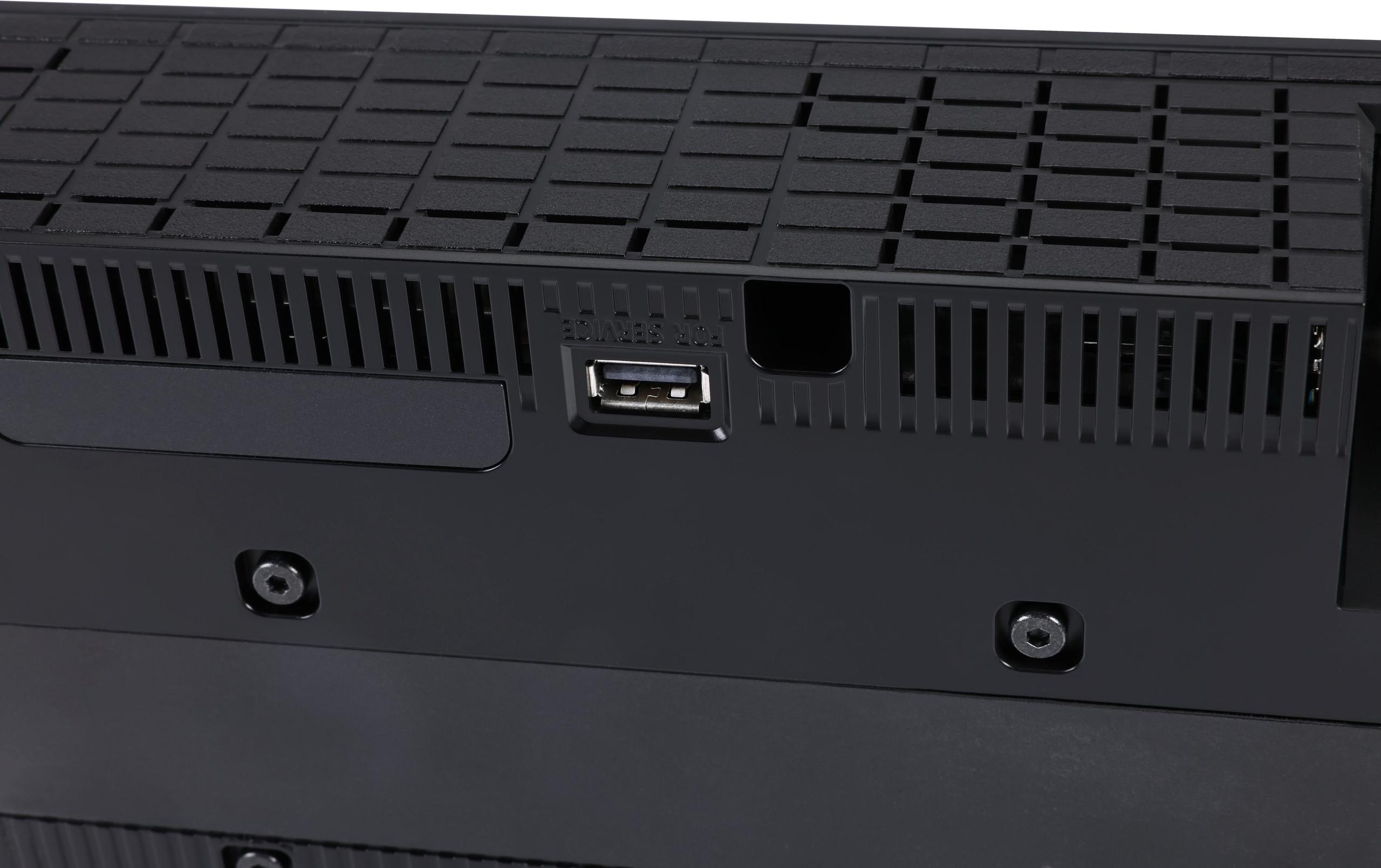

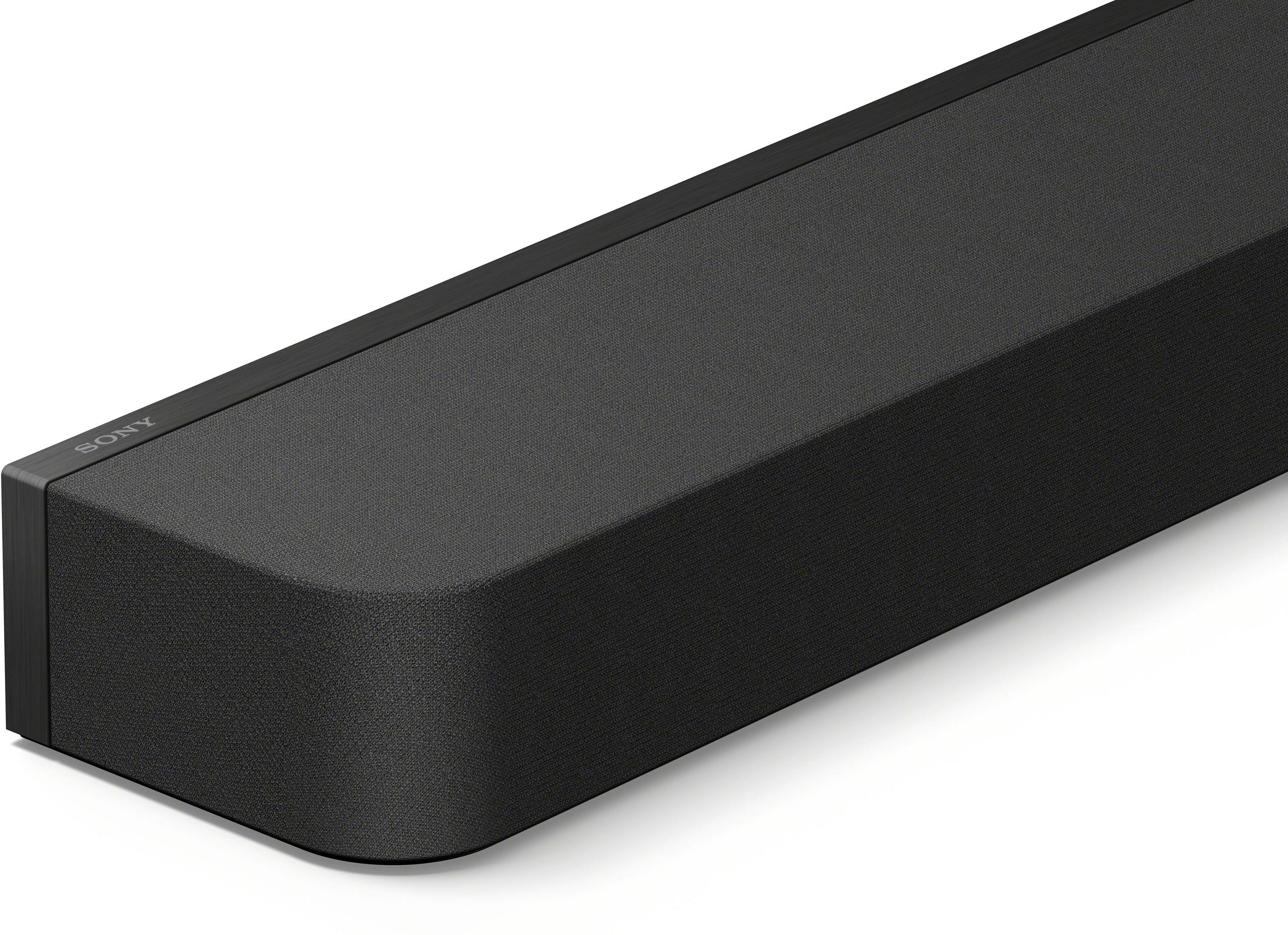





Shopping for a premium soundbar can feel overwhelming, especially when two highly-rated models sit at similar price points. The Sony HT-A8000 BRAVIA Theater Bar 8 and Samsung HW-Q800D represent fundamentally different approaches to home theater audio, and understanding these differences will help you make the right choice for your setup.
Both soundbars were released in 2024, reflecting the latest advances in spatial audio processing and wireless connectivity. At the time of writing, they're priced competitively in the premium segment, typically retailing between $700-1000, though both have seen significant discounts from their original launch prices. The question isn't necessarily which costs less, but which delivers better value for your specific needs.
Modern premium soundbars compete on several key fronts. Spatial audio performance determines how well they create that immersive, cinema-like experience where sounds seem to come from all around you. Dialogue clarity matters enormously since nothing ruins a movie like mumbled conversations you can't understand. Bass response provides the low-frequency impact that makes explosions feel real and music sound full. Finally, ecosystem integration affects how seamlessly the soundbar works with your TV and other devices.
The technology has evolved significantly in recent years. Dolby Atmos, which creates three-dimensional soundscapes by bouncing audio off your ceiling, has become standard. Advanced room correction uses built-in microphones to analyze your space and optimize sound accordingly. Wireless connectivity has improved, reducing dropouts and latency issues that plagued earlier models.
What separates premium soundbars from budget options isn't just more speakers – it's sophisticated processing that can create phantom speakers (sound sources that seem to exist where no physical speaker sits) and intelligent algorithms that adapt to your room's unique acoustics.
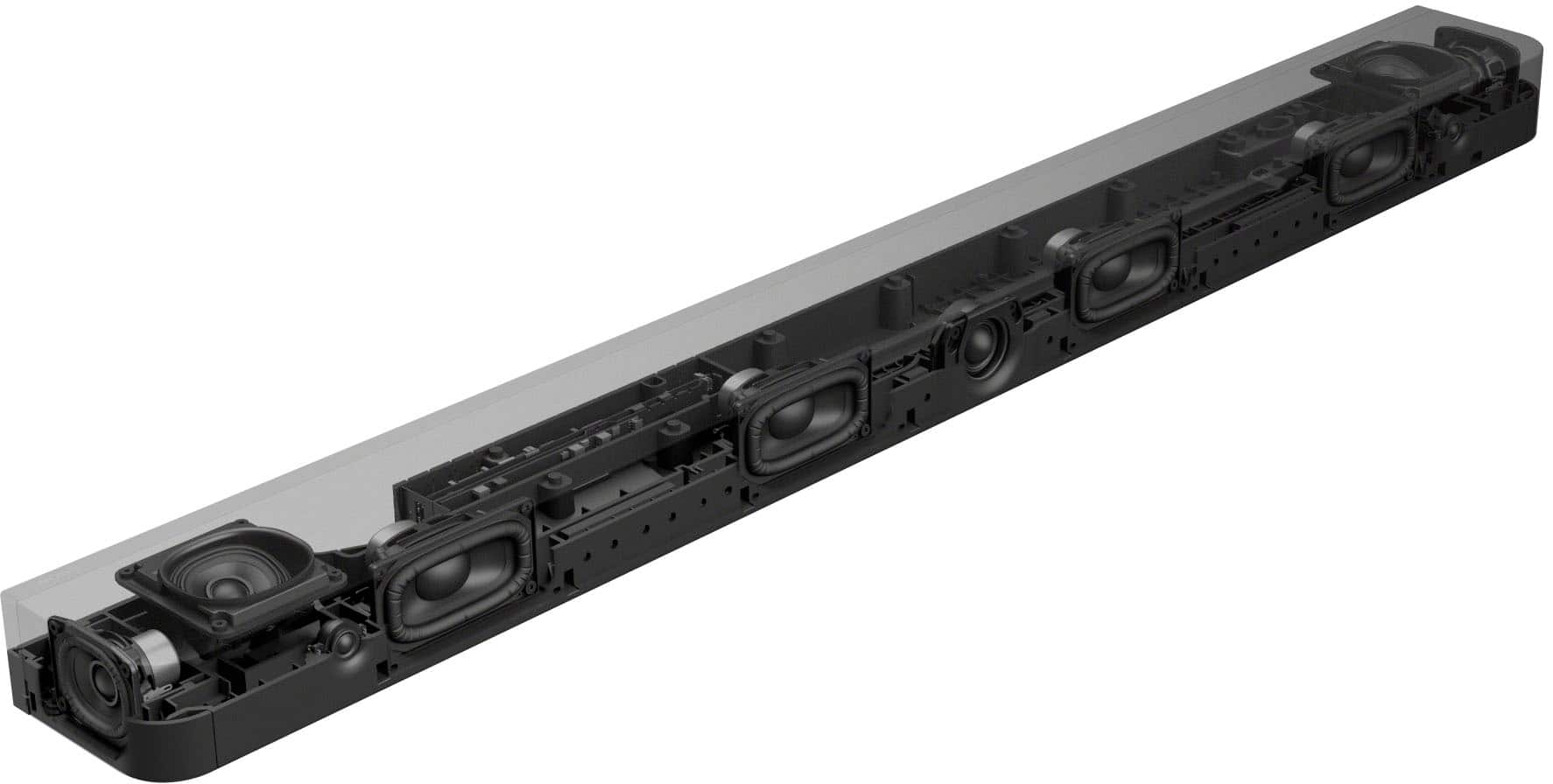
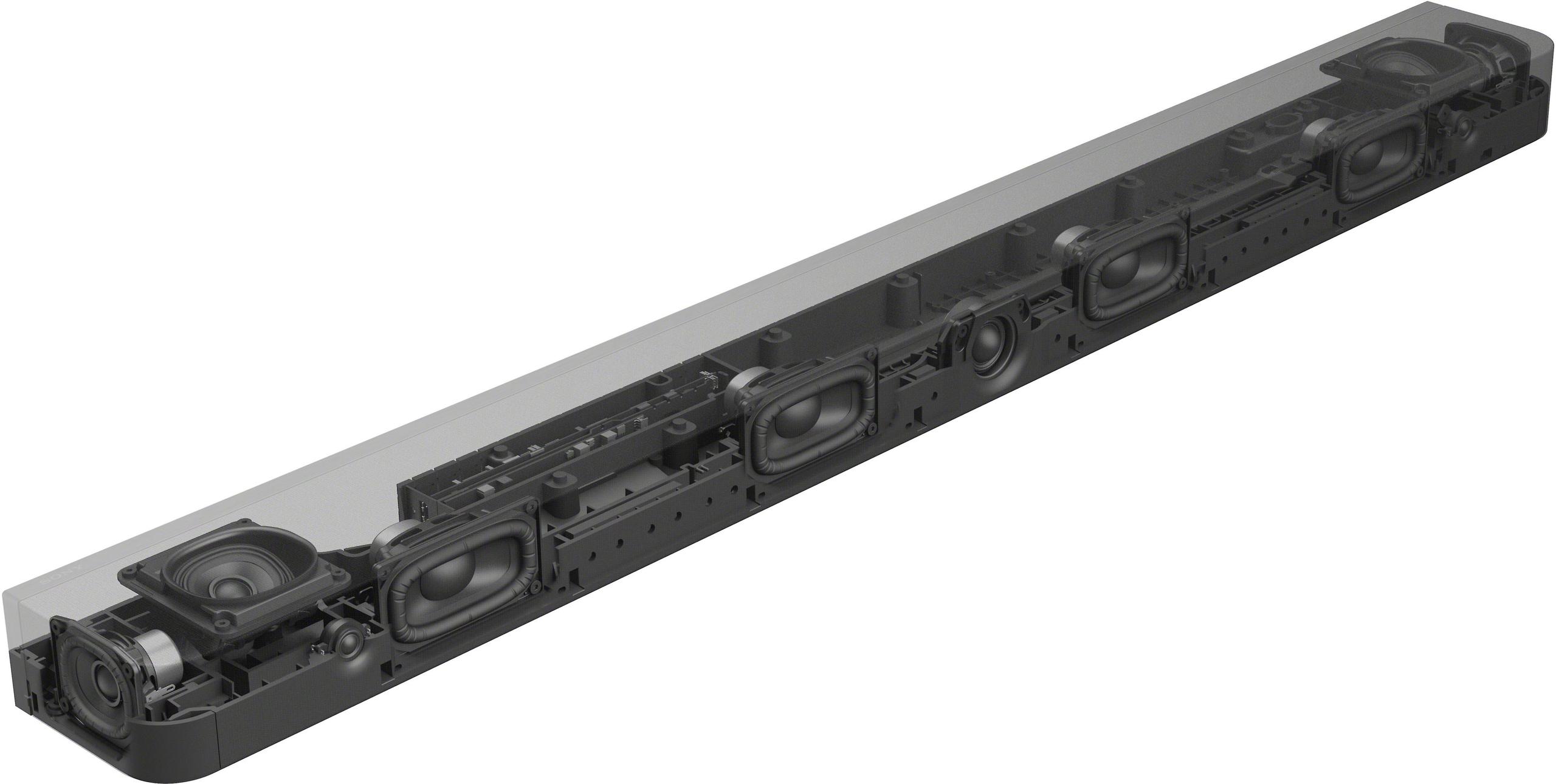
The Sony HT-A8000 represents the all-in-one philosophy. This single soundbar houses 11 speakers arranged strategically to create surround sound through acoustic wizardry rather than multiple physical components. Sony's 360 Spatial Sound Mapping technology uses these speakers to bounce sound off your walls and ceiling, creating virtual speakers throughout your room.
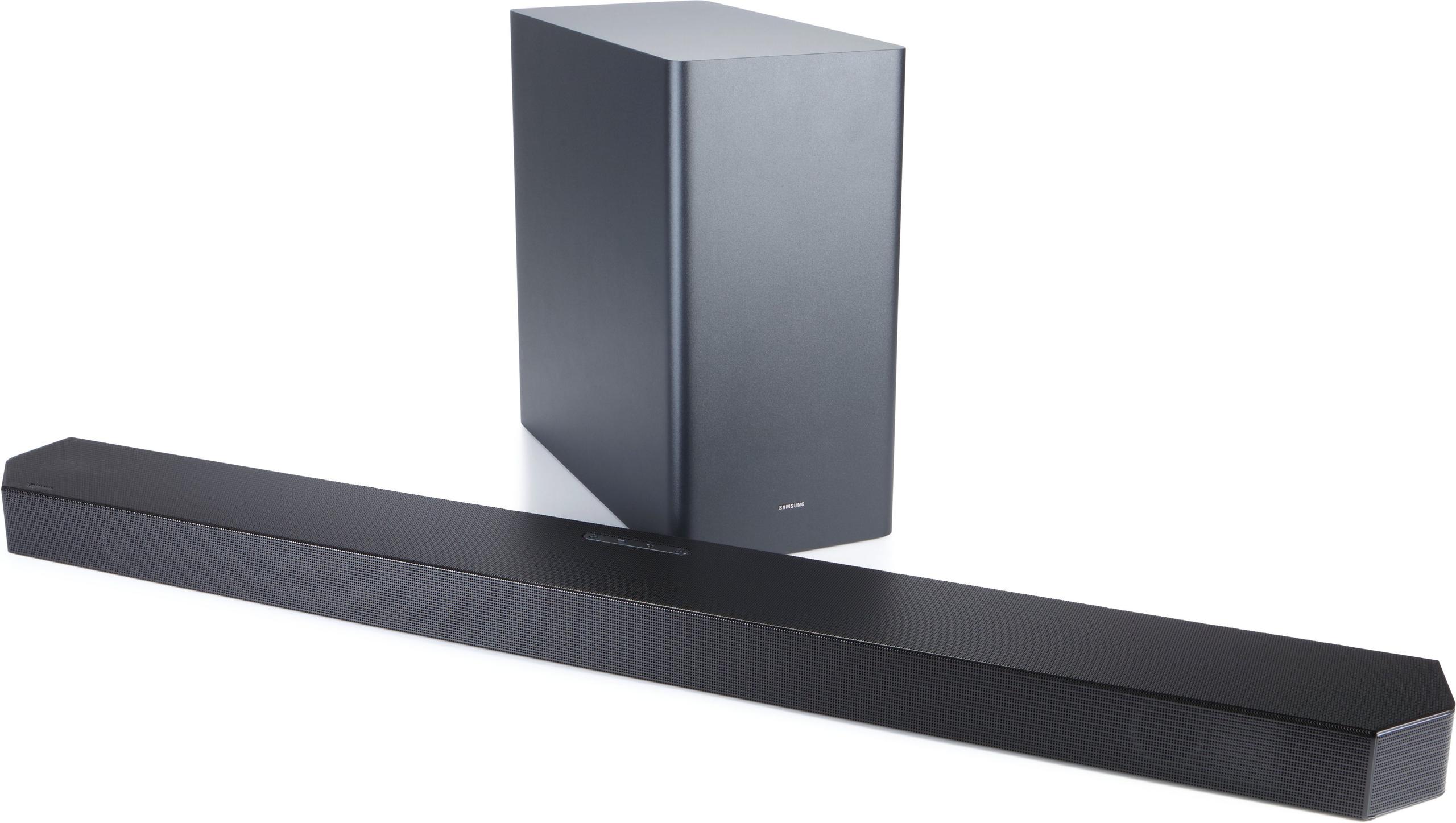
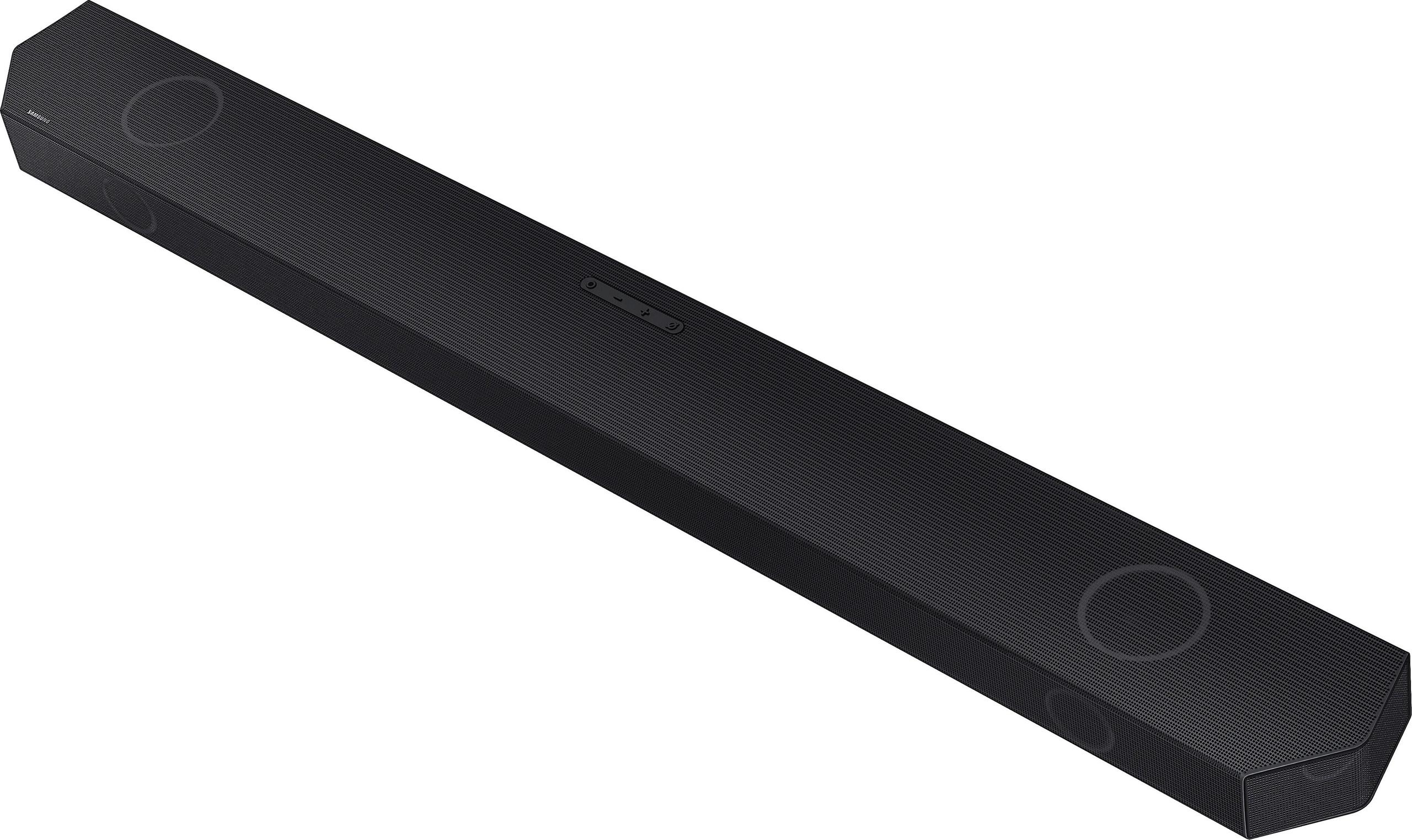
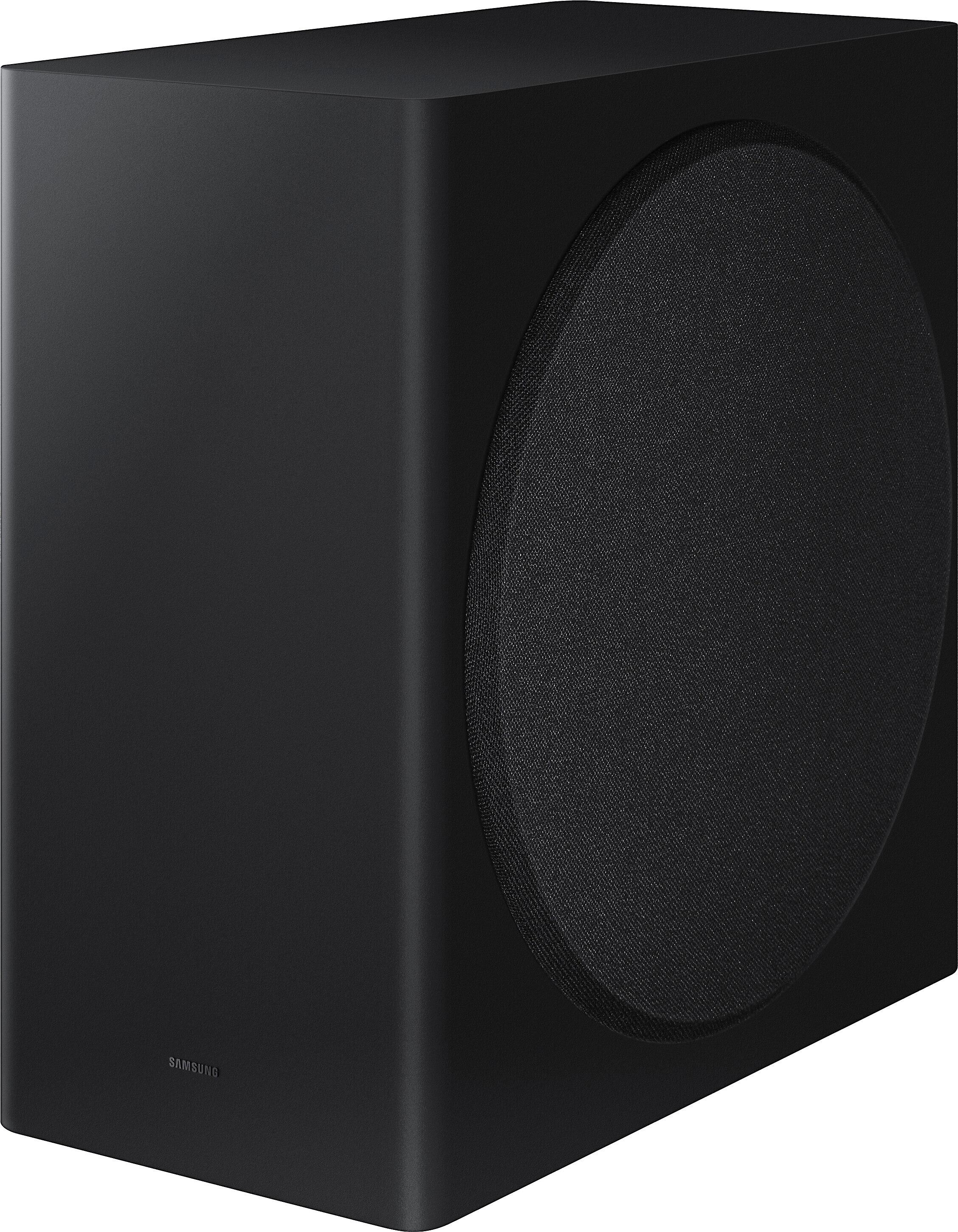
The Samsung HW-Q800D, conversely, takes the traditional multi-component approach. It's a 5.1.2 system, meaning five main channels (left, center, right, left surround, right surround), one dedicated subwoofer channel, and two height channels for Dolby Atmos effects. The system includes a separate wireless subwoofer that handles all low-frequency duties.
Both approaches have merit. Single-unit solutions offer simplicity and work better in smaller spaces, while multi-component systems typically provide more precise channel separation and powerful bass response.
This is where the fundamental difference between these soundbars becomes most apparent. The Sony HT-A8000 excels at creating an immersive bubble of sound from a single unit. Its 360 Spatial Sound Mapping analyzes your room and uses side-firing and up-firing speakers to reflect audio off surfaces, creating phantom speakers that seem to exist behind and beside you.
In practice, this means the Sony can deliver convincing surround effects even in challenging room layouts. Whether your couch sits against a wall or in the center of the room, the spatial mapping adjusts to create the best possible surround experience. The technology particularly shines with Dolby Atmos content, where helicopters seem to fly overhead and rain appears to fall around you.
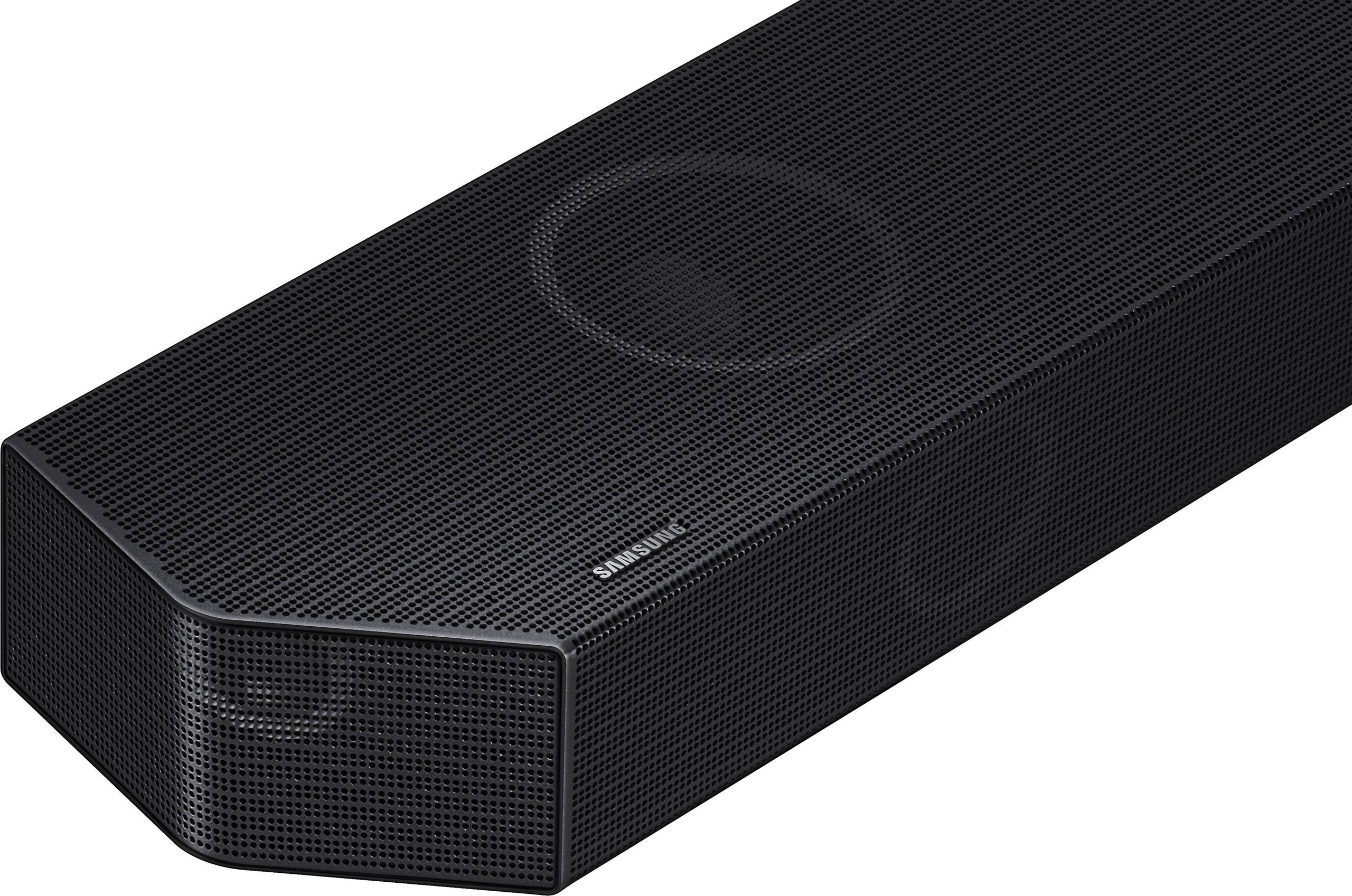
The Samsung HW-Q800D takes a more traditional but potentially more accurate approach. Its discrete 5.1.2 configuration provides clear channel separation – you know exactly where each sound is coming from because there's a dedicated speaker handling that channel. The two up-firing speakers create height effects for Dolby Atmos, while the separate subwoofer handles bass duties with authority.
Samsung's SpaceFit Sound Pro technology uses the soundbar's built-in microphone to analyze your room's acoustics, then adjusts the audio output accordingly. This room correction helps optimize performance regardless of your room's size or furniture placement.
From our research into user experiences and expert reviews, both systems create convincing surround sound, but through different methods. The Sony impresses with its ability to create immersive audio from a single unit, particularly effective in smaller to medium-sized rooms. The Samsung provides more traditional but precise surround separation that works especially well in larger spaces where its discrete subwoofer can really flex its muscles.
Clear dialogue reproduction separates premium soundbars from mediocre ones. Both systems tackle this challenge with sophisticated voice enhancement technologies, but their approaches differ.
The Sony HT-A8000 features Voice Zoom 3, an AI-powered system that recognizes human voices in the audio mix and can amplify or reduce their volume automatically. This intelligence means dialogue stays clear even when background music or sound effects get loud. The dedicated center channel ensures voices come from the screen rather than seeming to float around the room.
The Samsung HW-Q800D uses Active Voice Amplifier (AVA), which analyzes each scene and emphasizes voices contextually. If there's a quiet conversation during an action sequence, AVA boosts the dialogue without affecting other audio elements. The discrete center channel includes both a tweeter for crisp consonants and a woofer for full vocal range reproduction.
Both systems excel at dialogue clarity, and the choice between them likely comes down to integration preferences rather than pure performance. If you frequently watch content with heavy accents or technical dialogue, either system's voice enhancement will prove valuable.
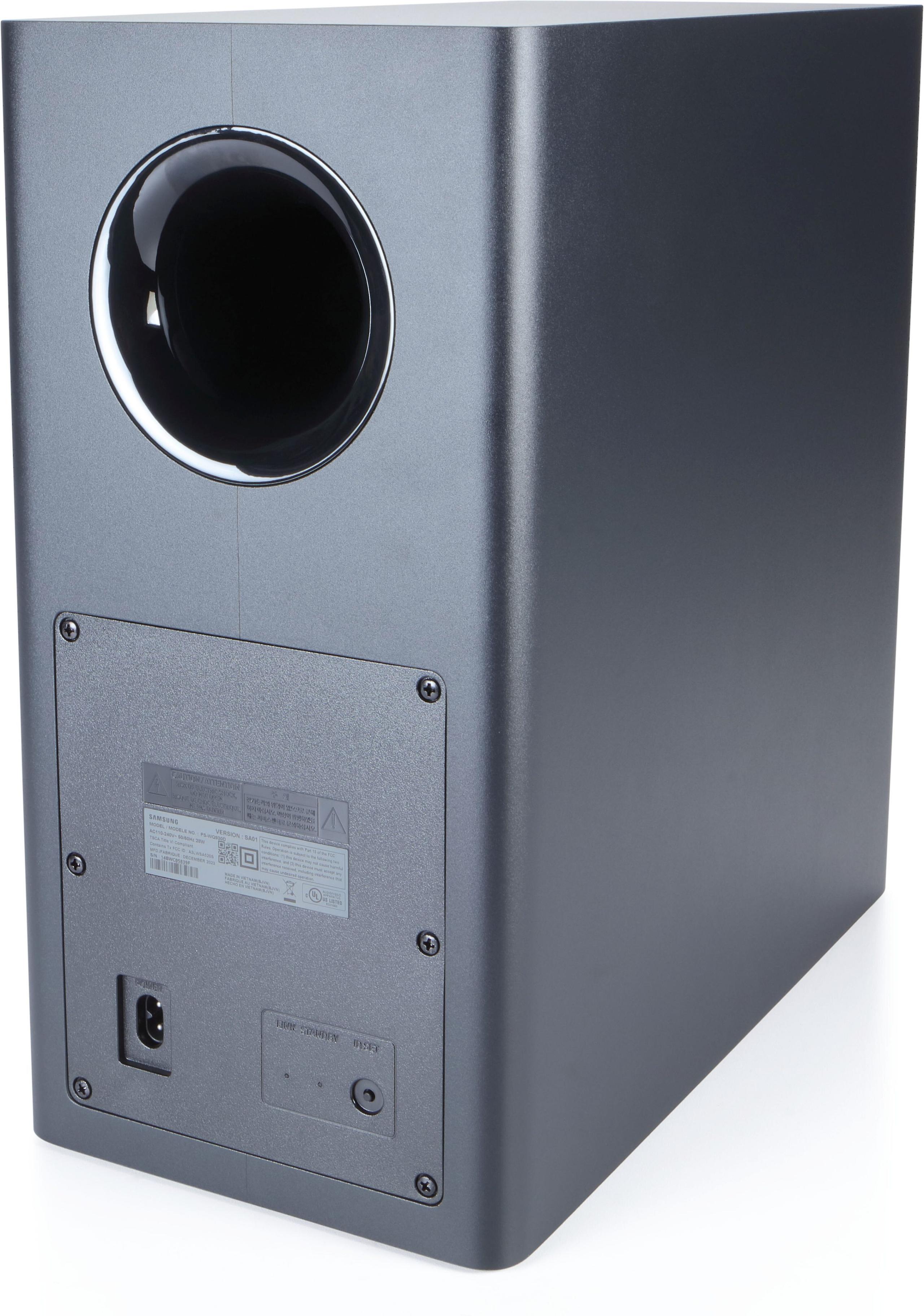
This represents the most significant performance difference between these soundbars. The Samsung HW-Q800D includes an 8-inch side-firing wireless subwoofer with a bass-reflex (ported) design. This dedicated subwoofer provides deep bass extension and room-filling impact that's simply impossible from a soundbar alone.
The Sony HT-A8000 relies on four internal woofers with a unique rectangular design that maximizes the diaphragm area within the soundbar's constraints. While this provides respectable bass for a single unit, it cannot match the low-frequency extension and impact of a dedicated subwoofer.
In practical terms, this means the Samsung delivers more satisfying movie explosions, deeper bass in music, and overall more visceral audio experience. The difference becomes particularly noticeable in larger rooms where the Sony's internal woofers struggle to fill the space with adequate bass energy.
Sony does offer optional wireless subwoofers (SA-SW3 or SA-SW5) that can be added later, but this increases the total system cost significantly and moves away from the all-in-one philosophy.
While both soundbars target home theater use, their music performance differs considerably. The Samsung HW-Q800D provides a more balanced frequency response for music, with detailed midrange reproduction and smooth high frequencies. The included subwoofer enhances music enjoyment significantly, providing the low-end punch that makes genres like electronic, rock, and hip-hop shine.
The Samsung also includes a 7-band equalizer that allows fine-tuning for different music types or personal preferences. This customization capability, combined with the fuller frequency range from the dedicated subwoofer, makes it more appealing for users who split time between movies and music listening.
The Sony HT-A8000 supports high-resolution audio formats and includes DSEE Ultimate technology, which upscales compressed audio files to near-high-resolution quality. However, without a dedicated subwoofer, it lacks the dynamic range and bass impact that make music truly engaging.
For music enthusiasts, the Samsung's complete frequency range and customization options provide clear advantages, while the Sony works better for casual music listening focused on vocal clarity and spatial effects.
Both soundbars integrate deeply with their respective TV ecosystems, but in different ways. The Sony HT-A8000 pairs exceptionally well with BRAVIA TVs through Acoustic Center Sync, which uses the TV's speakers as an additional center channel. This integration creates a more cohesive soundstage where dialogue appears to come directly from the characters on screen.
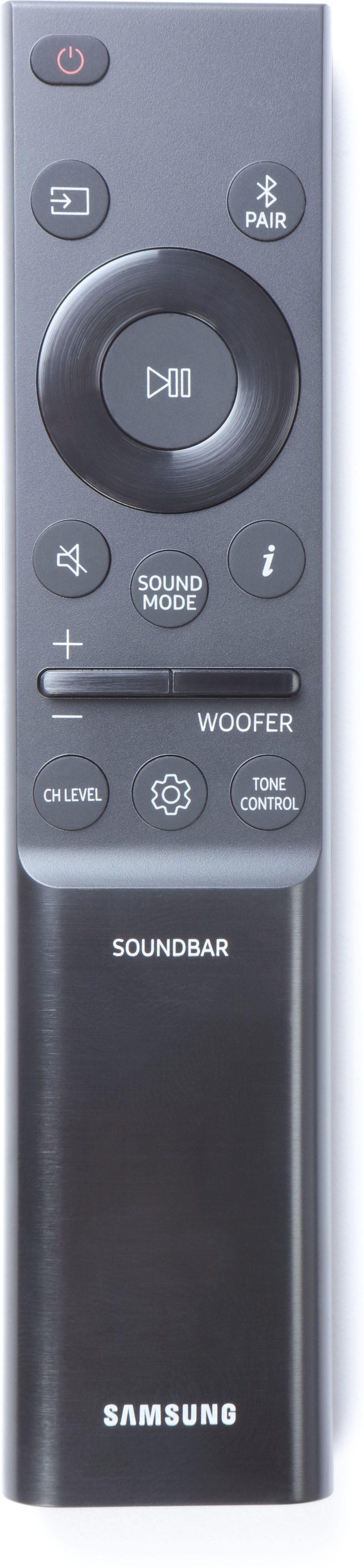
Sony's integration extends to HDMI CEC control, allowing you to adjust soundbar volume using your TV remote. The soundbar also supports AirPlay 2 and Spotify Connect for wireless music streaming.
The Samsung HW-Q800D features Q-Symphony technology that synchronizes the soundbar with compatible Samsung QLED TVs. Rather than replacing the TV's speakers entirely, Q-Symphony uses them as additional channels in the surround mix, creating a more enveloping audio experience.
Samsung's SmartThings app provides comprehensive control and setup options, including the room optimization features. The soundbar also supports Bluetooth 5.2 for stable wireless connections and various audio streaming options.
Both systems support 4K HDR passthrough, ensuring video quality remains uncompromised when connecting sources through the soundbar.
The Sony HT-A8000 offers the simplest installation – mount the single soundbar to the wall or place it on your TV stand, connect one HDMI cable, and you're operational. The wireless setup for optional components (when added later) pairs automatically when powered on, maintaining the system's simplicity.
The Samsung HW-Q800D requires positioning the wireless subwoofer in addition to the main soundbar. While the subwoofer connects wirelessly, it still needs AC power and optimal placement for best performance. This adds complexity but provides immediate acoustic benefits.
For future expansion, both systems support optional rear speakers. Sony offers SA-RS3R or SA-RS5 wireless rear speakers, while Samsung provides compatible rear speaker options for creating full 7.1.2 surround systems.
When evaluating these soundbars, several performance characteristics prove most critical. Frequency response range determines how much of the audible spectrum the system can reproduce – wider range generally means more realistic sound. Dynamic range measures the difference between the quietest and loudest sounds the system can handle without distortion.
Spatial accuracy describes how precisely the soundbar can place sounds in three-dimensional space around you. Room-filling capability determines how well the system performs in your specific space size and layout.
Based on our research into professional measurements and user feedback, both soundbars perform well in most categories, with key differences in bass extension (Samsung's advantage) and spatial processing sophistication (Sony's strength).
For apartment dwellers or those with space constraints, the Sony HT-A8000 makes compelling sense. Its single-unit design works well mounted under wall-mounted TVs and creates impressive surround effects despite the compact footprint. The spatial mapping technology helps overcome challenging room acoustics common in smaller spaces.
In larger living rooms or dedicated home theaters, the Samsung HW-Q800D typically performs better. The separate subwoofer can pressurize larger spaces with adequate bass, while the discrete channel separation works more effectively across wider seating areas.
For mixed-use systems that serve both casual TV watching and serious music listening, Samsung's fuller frequency range and customization options provide more versatility.
The choice between these soundbars ultimately depends on your priorities and constraints. Choose the Sony HT-A8000 if you value minimalist aesthetics, have space limitations, own a Sony BRAVIA TV, or prefer gradual system expansion. Its innovative spatial processing creates remarkably immersive surround sound from a single unit, and the modular upgrade path allows building a complete system over time.
Select the Samsung HW-Q800D if you want immediate full-range audio performance, prioritize bass impact, listen to substantial amounts of music, or own a Samsung QLED TV. The included subwoofer provides superior low-frequency performance that's immediately noticeable, while the traditional multi-component approach offers tried-and-true surround sound accuracy.
Both represent excellent values in the premium soundbar category at the time of writing. Samsung provides more complete performance out of the box, while Sony offers greater long-term flexibility and innovative spatial audio processing. Your TV brand, room constraints, and preference for immediate satisfaction versus modular expansion should guide your final decision.
The good news? Either choice will dramatically improve your home theater experience over basic TV speakers, delivering the kind of immersive audio that makes movies more engaging and music more enjoyable.
| Sony HT-A8000 BRAVIA Theater Bar 8 | Samsung HW-Q800D |
|---|---|
| Channel Configuration - Determines surround sound capability and expansion needs | |
| 5.0.2 channels (11 speakers in single unit) | 5.1.2 channels (soundbar + wireless subwoofer) |
| Subwoofer Inclusion - Critical for bass performance and immediate value | |
| No subwoofer included (optional SA-SW3/SW5 available) | 8-inch wireless subwoofer included |
| Total Power Output - Affects volume levels and room-filling capability | |
| 350W total system power | 360W total system power |
| Spatial Audio Technology - Key differentiator for immersive sound experience | |
| 360 Spatial Sound Mapping with phantom speakers | SpaceFit Sound Pro with room optimization |
| TV Integration Features - Enhanced performance with matching TV brands | |
| Acoustic Center Sync with Sony BRAVIA TVs | Q-Symphony with Samsung QLED TVs |
| Voice Enhancement Technology - Important for dialogue clarity | |
| Voice Zoom 3 with AI voice recognition | Active Voice Amplifier (AVA) contextual enhancement |
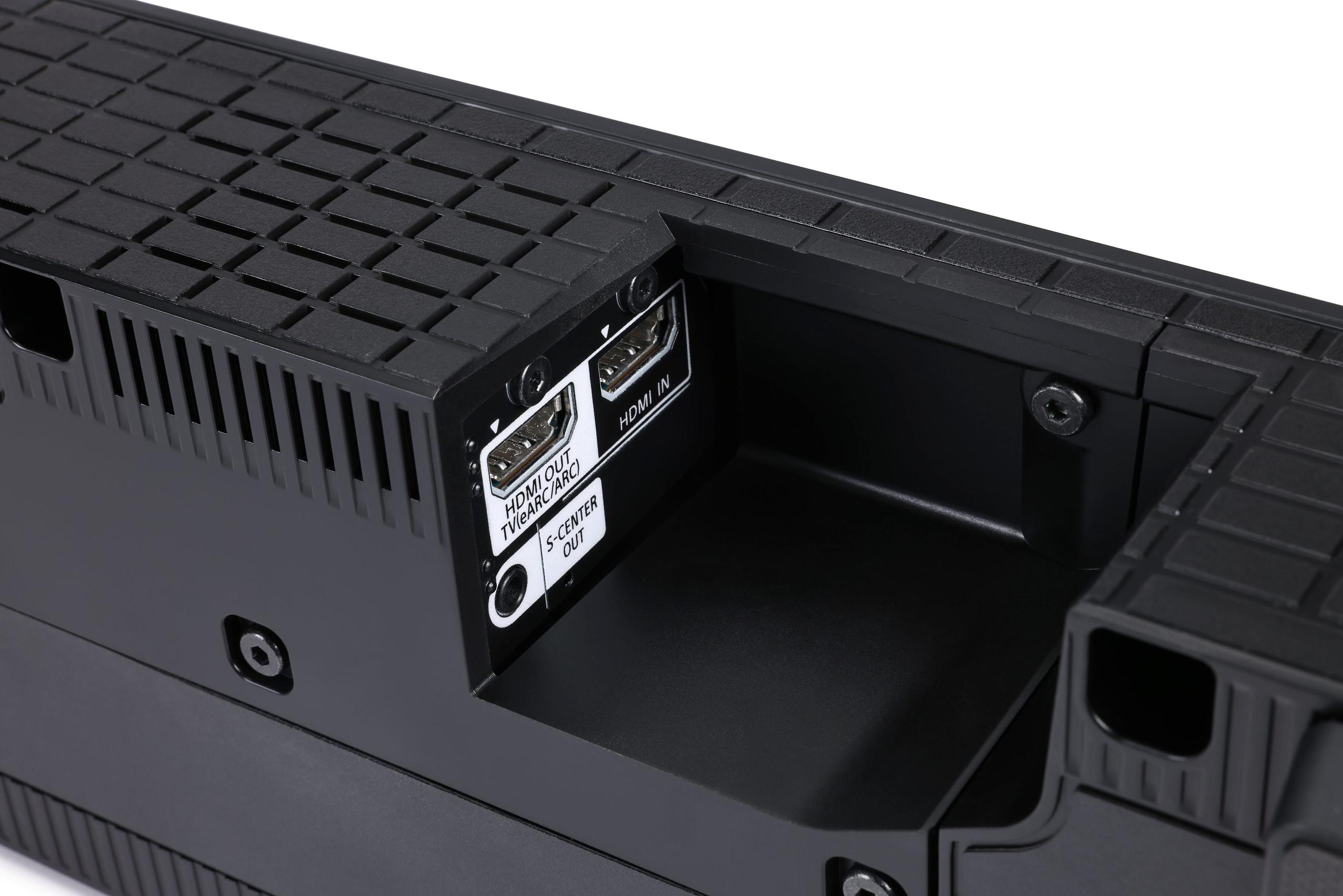
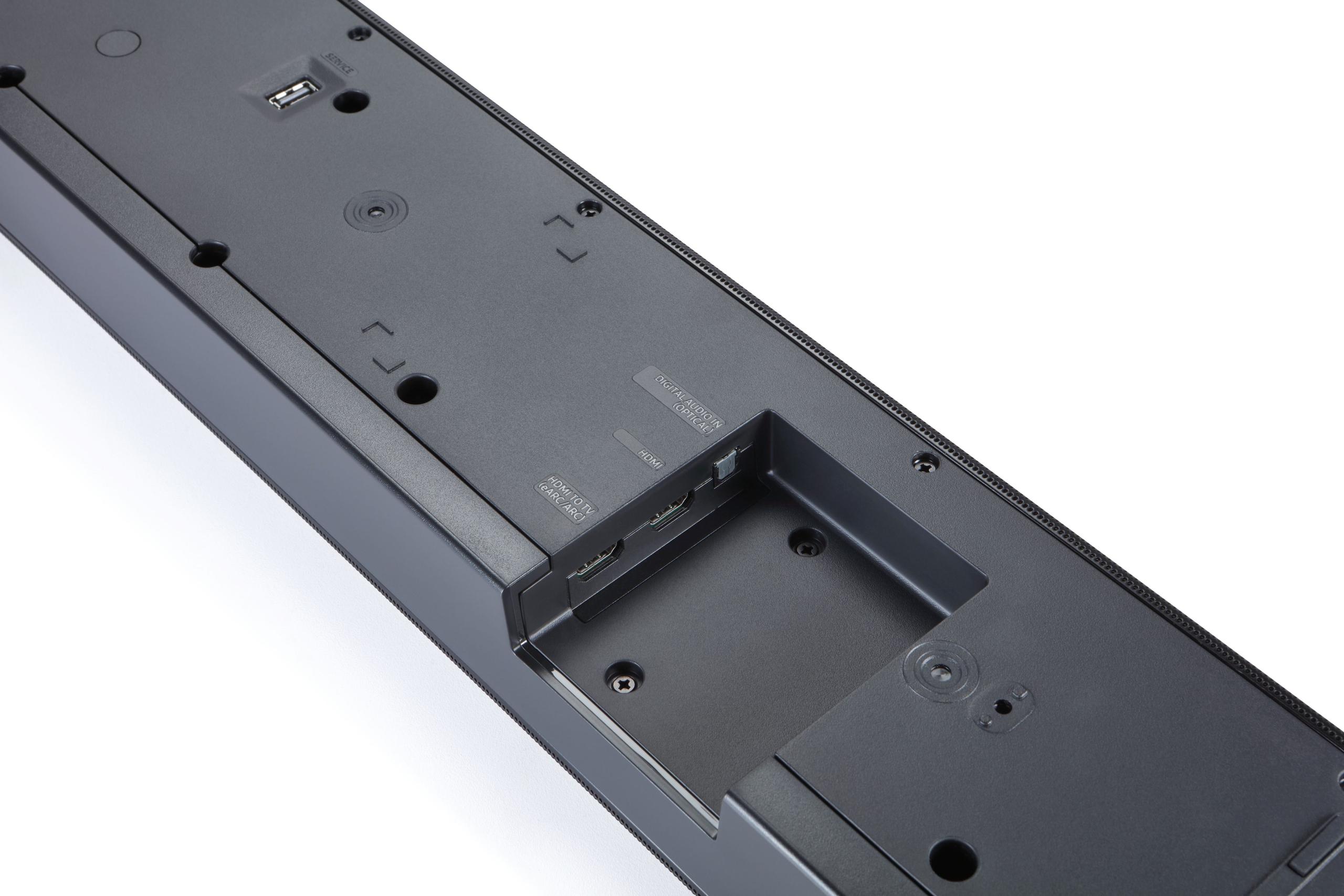
| HDMI Connectivity - Essential for 4K and gaming compatibility | |
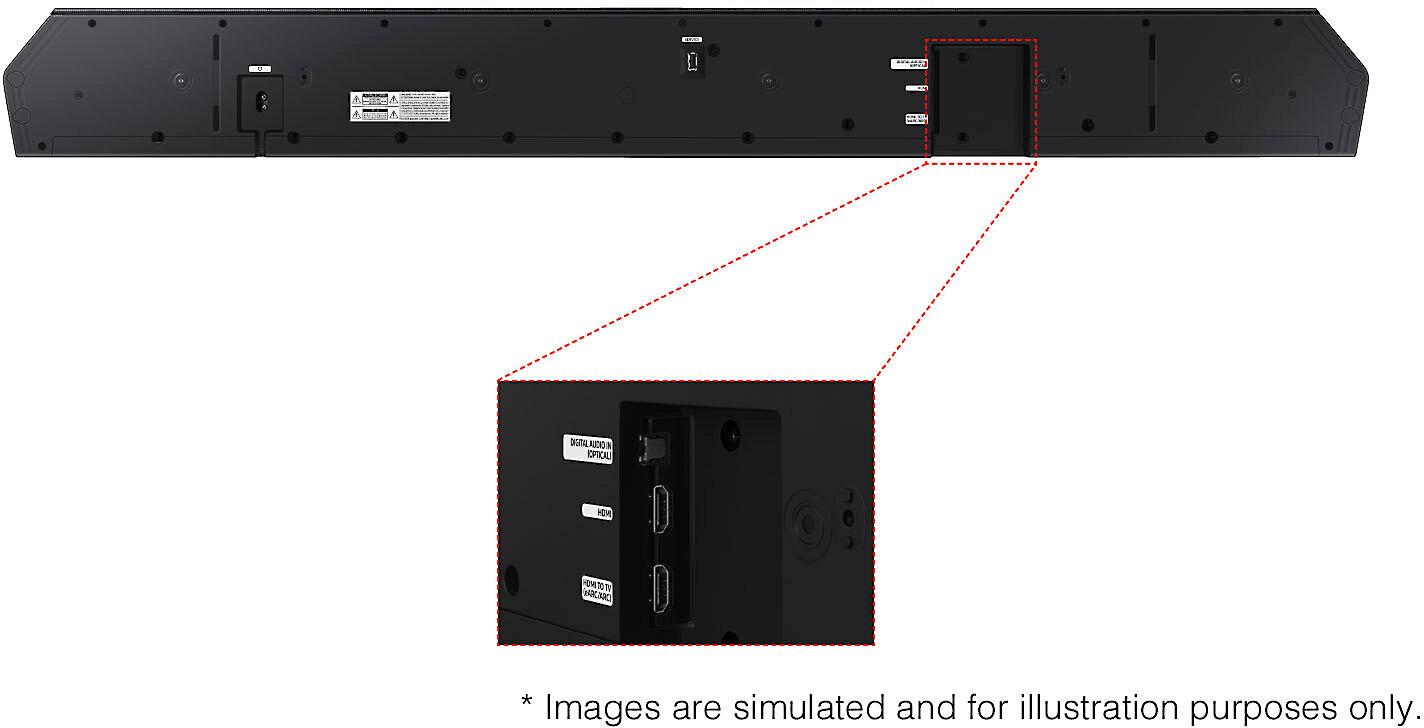
| 1x HDMI 2.1 with eARC, 4K/8K HDR passthrough | 1x HDMI input/output with eARC, 4K/60Hz HDR support |
| Wireless Audio Streaming - Convenience for music playback | |
| AirPlay 2, Spotify Connect, Bluetooth 5.2 | Bluetooth 5.2, Samsung SmartThings app control |
| Physical Dimensions - Space requirements and aesthetic impact | |
| Single unit: 43.3" W x 2.6" H x 4.5" D, 10.4 lbs | Soundbar + separate 8.25" x 15.9" x 16.4" subwoofer |
| Expandability Options - Future upgrade flexibility | |
| Optional wireless subwoofer and rear speakers | Optional wireless rear speakers for 7.1.2 setup |
| Sound Customization - User control over audio preferences | |
| Sound Field modes, Night/Voice modes | 7-band EQ, multiple sound modes, Game Pro mode |
| Release Year - Technology generation and feature currency | |
| 2024 (latest spatial audio processing) | 2024 (current Dolby Atmos implementation) |
The Sony HT-A8000 is generally better for small rooms due to its single-unit design and 360 Spatial Sound Mapping technology. This system creates immersive surround sound by reflecting audio off walls and ceilings, which works particularly well in compact spaces. The Samsung HW-Q800D requires placement of a separate subwoofer, which may be challenging in smaller rooms.
With the Samsung HW-Q800D, you get an 8-inch wireless subwoofer included in the package, providing immediate deep bass performance. The Sony HT-A8000 doesn't include a subwoofer, relying instead on internal woofers for bass. You can add Sony's optional SA-SW3 or SA-SW5 subwoofers later, but this increases the total cost.
The Sony HT-A8000 integrates best with Sony BRAVIA TVs through Acoustic Center Sync, which uses your TV speakers as an additional center channel. The Samsung HW-Q800D offers superior integration with Samsung QLED TVs via Q-Symphony technology, which synchronizes the soundbar with your TV's speakers for enhanced surround sound.
Both soundbars excel at movies with Dolby Atmos support, but they take different approaches. The Sony HT-A8000 creates phantom speakers throughout your room using advanced spatial processing. The Samsung HW-Q800D provides more traditional surround separation with discrete channels and delivers significantly better bass impact thanks to its included subwoofer.
The Samsung HW-Q800D is better for music due to its included subwoofer providing fuller frequency range and its 7-band equalizer for customization. The Sony HT-A8000 supports high-resolution audio and includes DSEE Ultimate upscaling, but lacks the bass extension needed for music genres like rock or electronic without an optional subwoofer.
The Sony HT-A8000 offers simpler installation as a single unit that can be wall-mounted or placed on a TV stand with just one HDMI connection. The Samsung HW-Q800D requires positioning both the soundbar and wireless subwoofer, though the subwoofer connects wirelessly and pairs automatically.
Both the Sony HT-A8000 and Samsung HW-Q800D offer similar maximum volume levels with 350W and 360W respectively. However, the Samsung typically sounds more powerful in larger rooms due to its dedicated subwoofer providing better low-frequency energy that fills bigger spaces more effectively.
Yes, both soundbars support optional rear speaker expansion. The Sony HT-A8000 can be paired with SA-RS3R or SA-RS5 wireless rear speakers, while the Samsung HW-Q800D supports Samsung's compatible rear speakers to create a full 7.1.2 surround system.
Both soundbars excel at dialogue with advanced voice enhancement technologies. The Sony HT-A8000 uses Voice Zoom 3 with AI voice recognition to automatically adjust dialogue levels. The Samsung HW-Q800D features Active Voice Amplifier that contextually emphasizes voices in each scene. Performance is comparable between both systems.
The Samsung HW-Q800D includes a dedicated Game Pro mode optimized for gaming audio with clear directional sound. Both soundbars support HDMI 2.1 features, but the Samsung's discrete subwoofer provides better low-frequency impact for gaming sound effects. The Sony HT-A8000 works well for gaming but lacks specific gaming-optimized modes.
At similar price points, the Samsung HW-Q800D typically offers better immediate value by including a wireless subwoofer that would cost several hundred dollars as an optional add-on for the Sony HT-A8000. However, the Sony provides more flexibility for gradual system expansion and innovative spatial audio processing.
Choose the Sony HT-A8000 if you want a minimalist single-unit solution, have space constraints, own a Sony TV, or prefer gradual expansion. Select the Samsung HW-Q800D if you want immediate full-range performance with included bass, listen to lots of music, have a larger room, or own a Samsung TV for Q-Symphony integration.
We've done our best to create useful and informative comparisons to help you decide what product to buy. Our research uses advanced automated methods to create this comparison and perfection is not possible - please contact us for corrections or questions. These are the sites we've researched in the creation of this article: consumerreports.org - skybygramophone.com - target.com - rtings.com - bestbuy.com - rubbermonkey.co.nz - shopatsc.com - audioadvice.com - sony.com - sony.com - sony.com - shop.cosmopolitan.com - store.sony.com.my - videoandaudiocenter.com - techradar.com - valueelectronics.com - samsung.com - rtings.com - samsung.com - crutchfield.com - samsung.com - samsung.com - samsung.com - shidirect.com

Privacy Policy
Terms and Conditions - Affiliate Policy
Home Security
© Copyright 2008-2026.
11816 Inwood Rd #1211, Dallas, TX 75244