








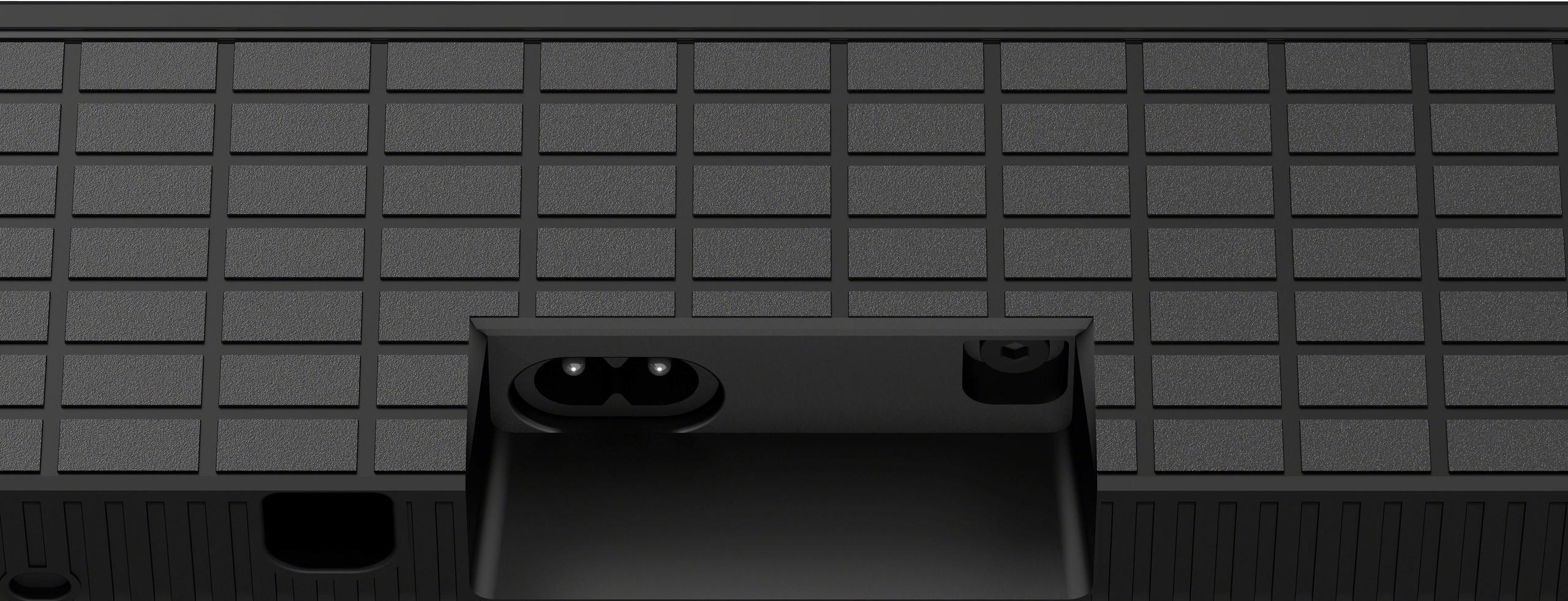
If you've ever tried watching an action movie on your TV's built-in speakers, you know the struggle. Explosions sound like popcorn popping, and dialogue gets lost in a muddy mess. That's where soundbars come to the rescue – they're the audio upgrade that transforms your living room into something closer to a movie theater without the complexity of running wires everywhere.
But here's the thing: not all soundbars are created equal. Today we're diving deep into two very different approaches to solving your TV's audio problems: the Sony HT-A8000 BRAVIA Theater Bar 8 and the Samsung B-Series 5.1 Channel Soundbar with Subwoofer. One costs significantly more but promises premium features, while the other delivers a complete surround sound system at a fraction of the price.
Before we jump into the comparison, let's talk about what actually matters when you're shopping for a soundbar. The most important considerations boil down to a few key areas: how many audio channels you get (which affects surround sound), how well it handles different types of content, whether it can fill your room with sound, and of course, whether it's worth the money.
Channel configuration is probably the most confusing part for most people. When you see numbers like "5.1" or "5.0.2," here's what they mean: the first number tells you how many main speakers there are (left, center, right, and surround speakers), the second number indicates subwoofers for bass, and if there's a third number, that's for height speakers that bounce sound off your ceiling to create overhead effects. More channels generally mean more immersive sound, but the quality of those channels matters just as much as the quantity.
Audio format support is another crucial factor. Technologies like Dolby Atmos and DTS:X create three-dimensional soundscapes that make you feel like you're inside the movie. Think of it like the difference between looking at a flat photo versus experiencing virtual reality – both show you the same scene, but one surrounds you with the experience.
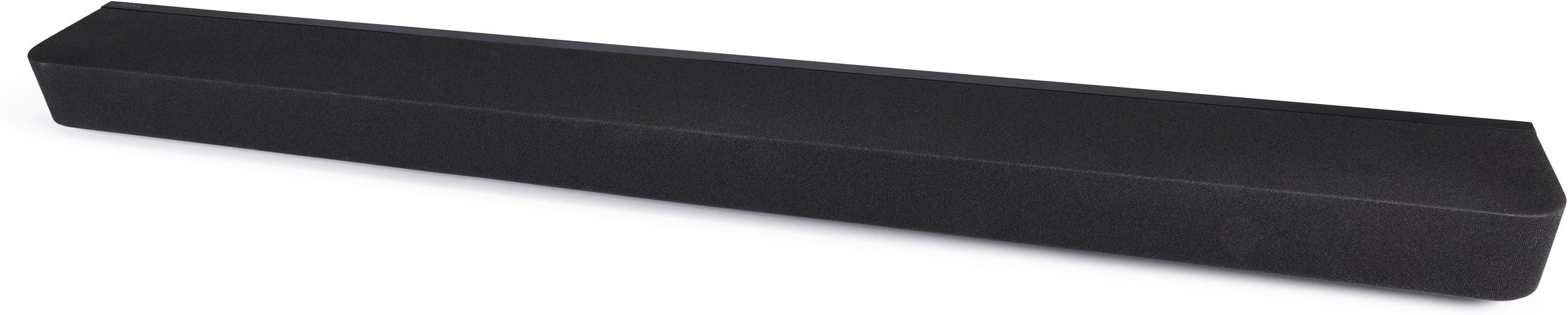
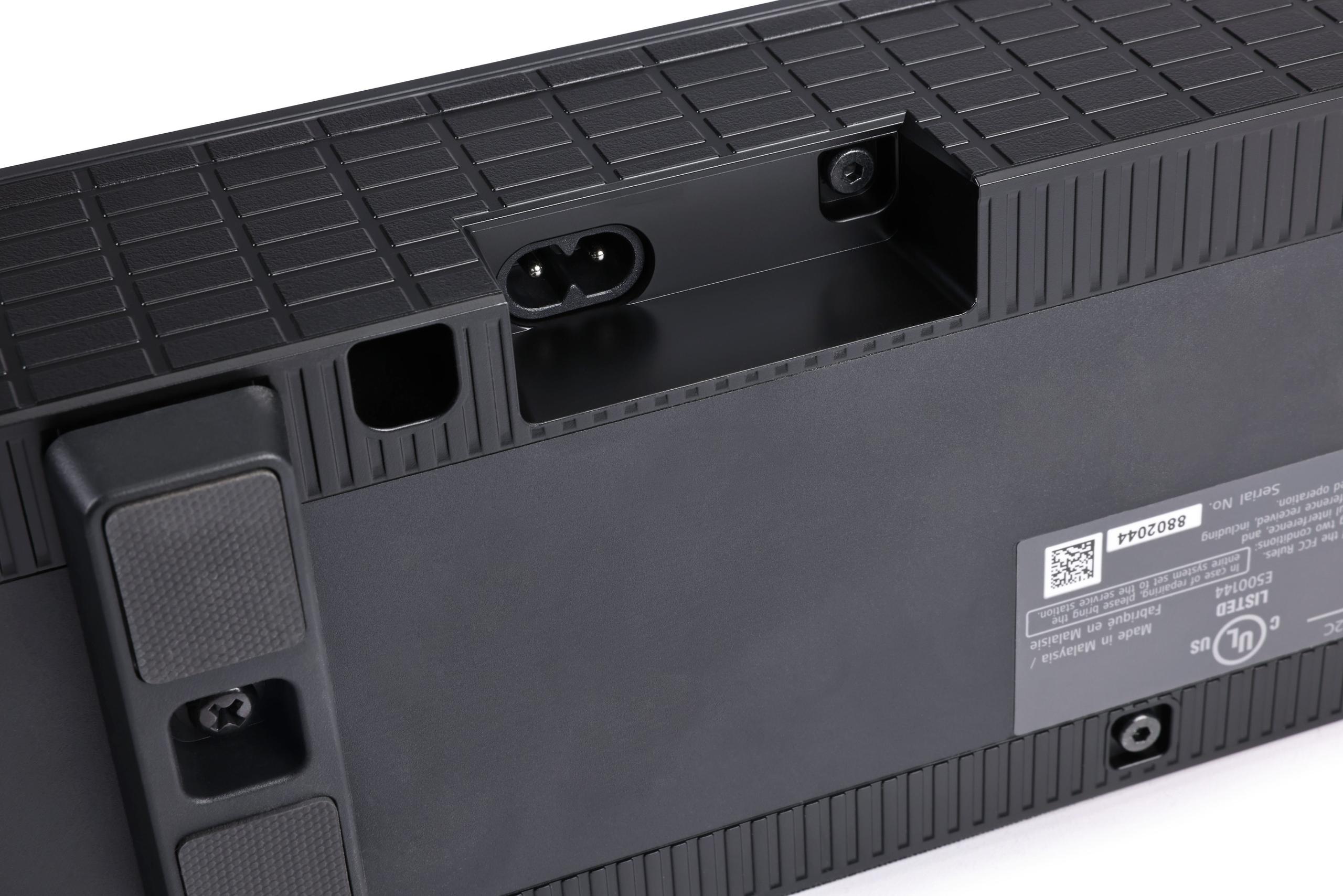
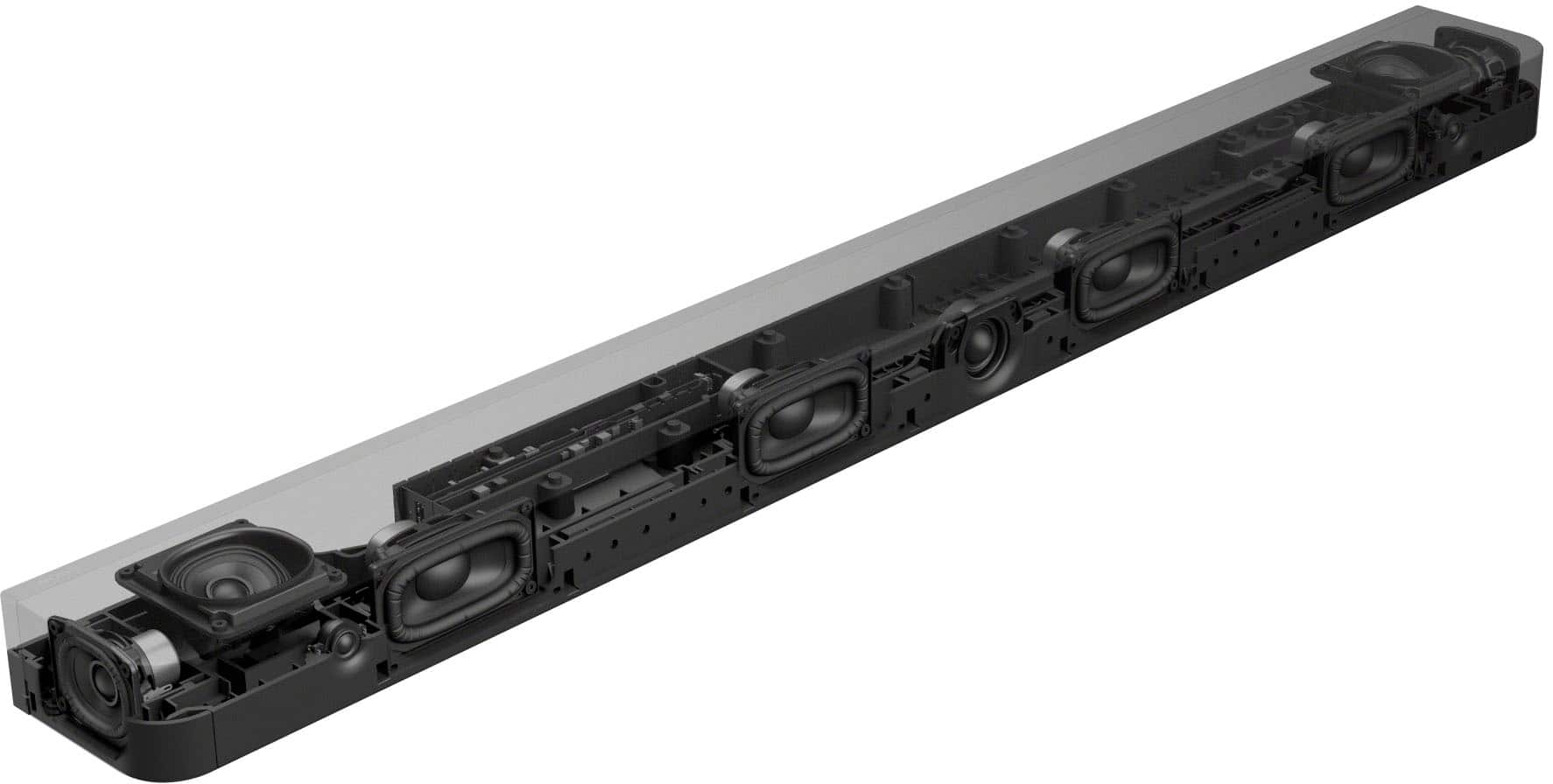
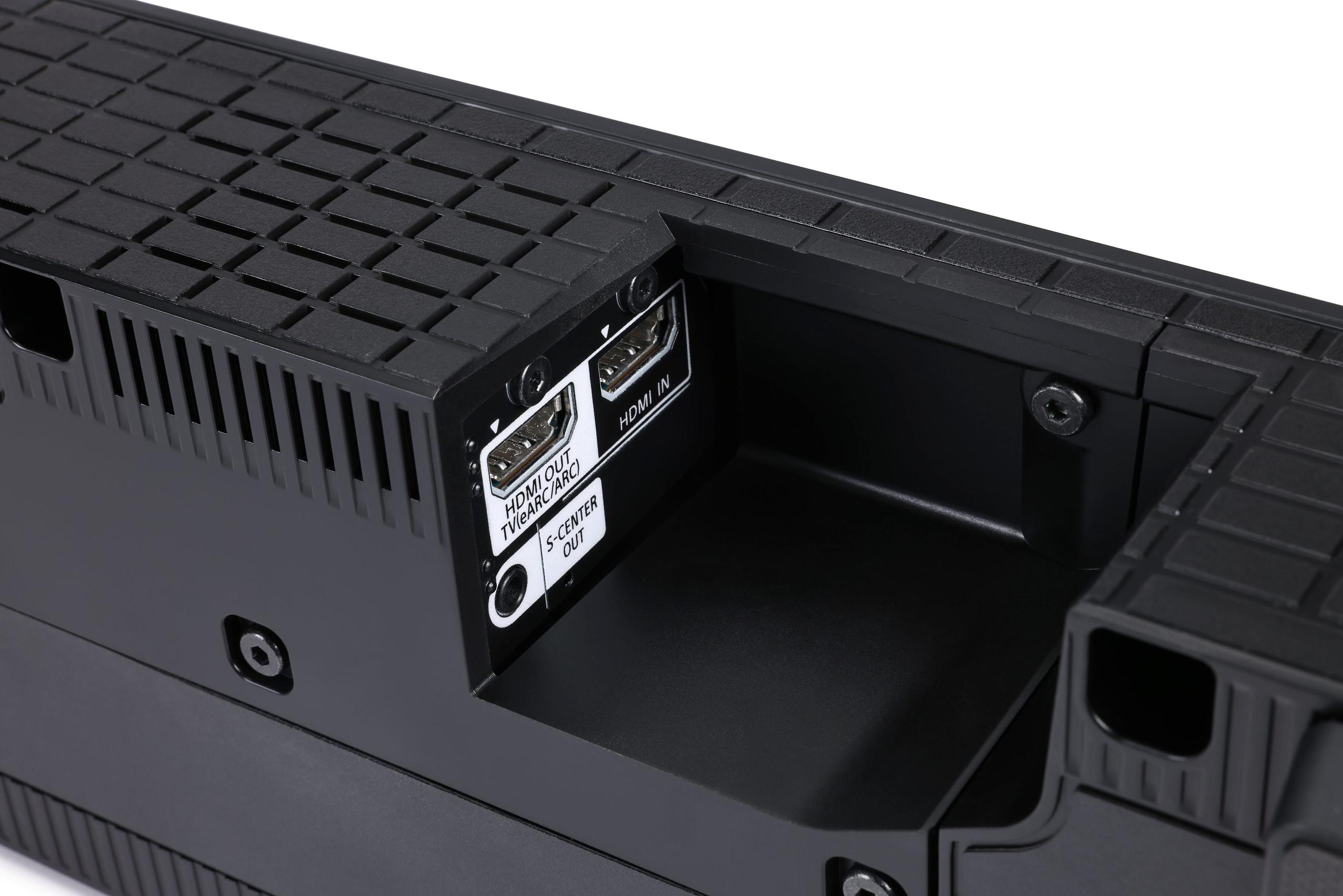
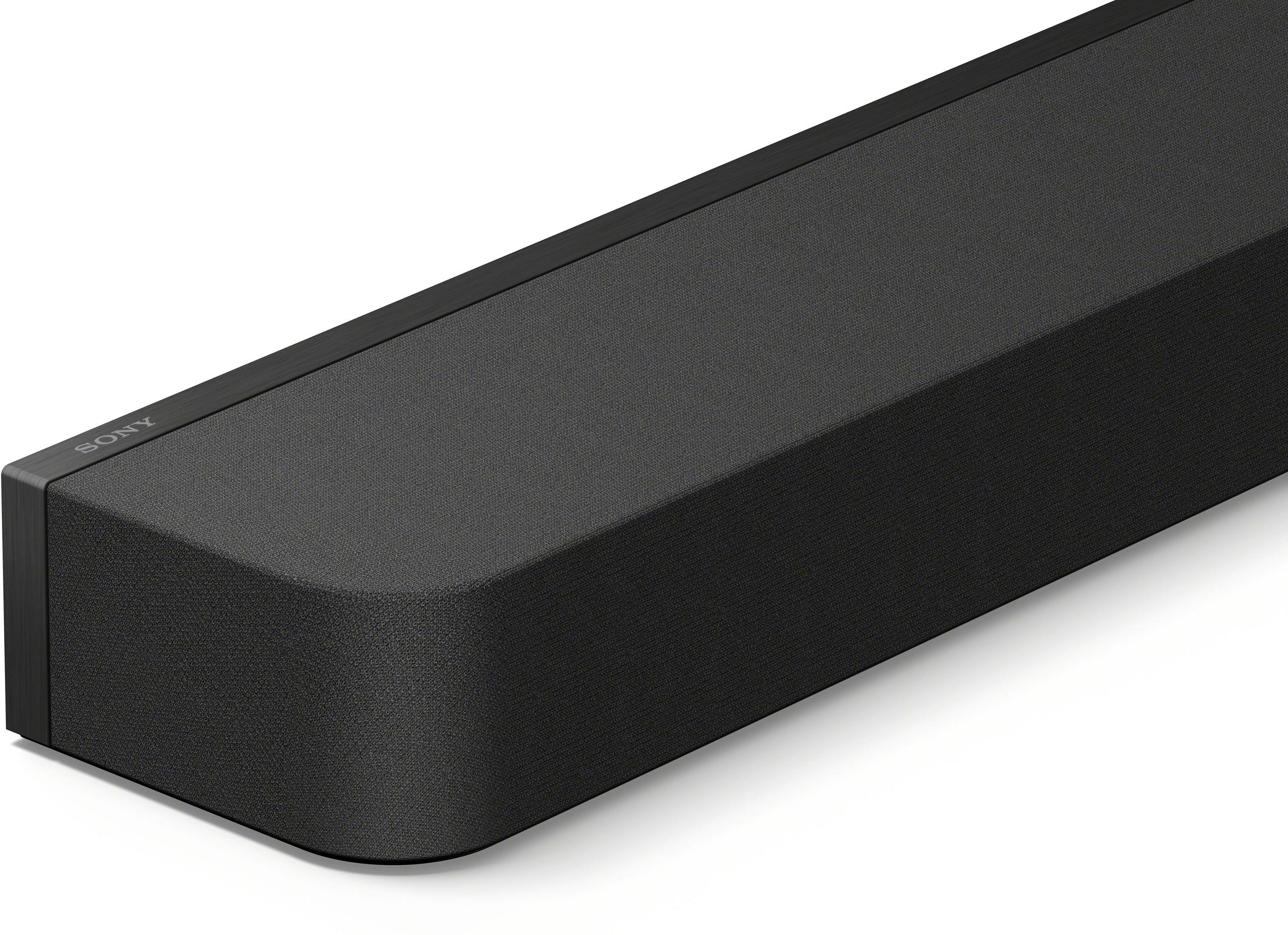
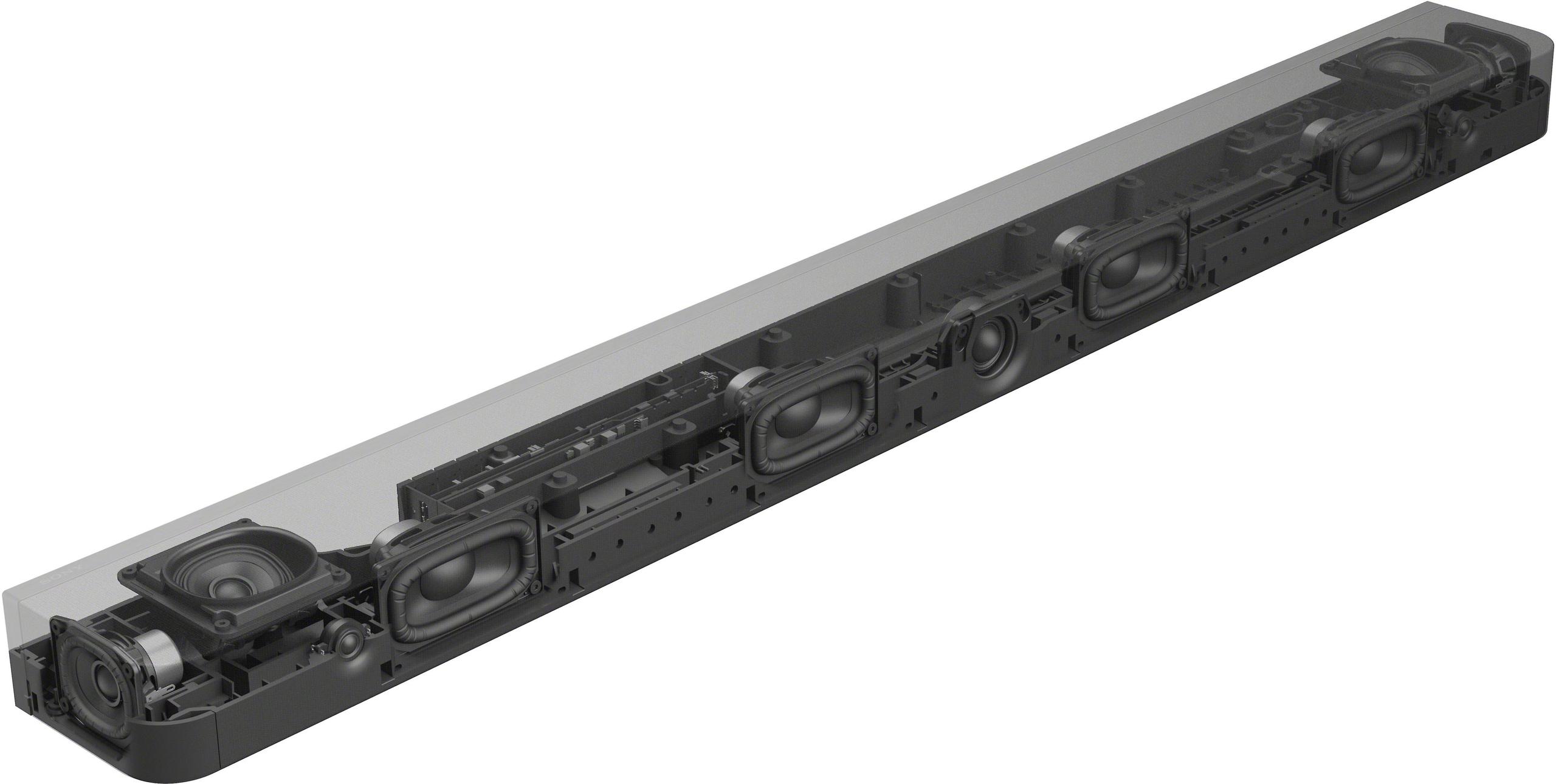
The Sony HT-A8000, released in 2024, represents what happens when a company decides to pack premium technology into a single, sleek bar. At the time of writing, it typically sells for around three times the price of entry-level soundbars, positioning it firmly in premium territory. Sony's approach here is interesting – they've created what they call a "5.0.2" system using 11 individual speakers crammed into one unit, with the option to add a separate subwoofer and rear speakers later.
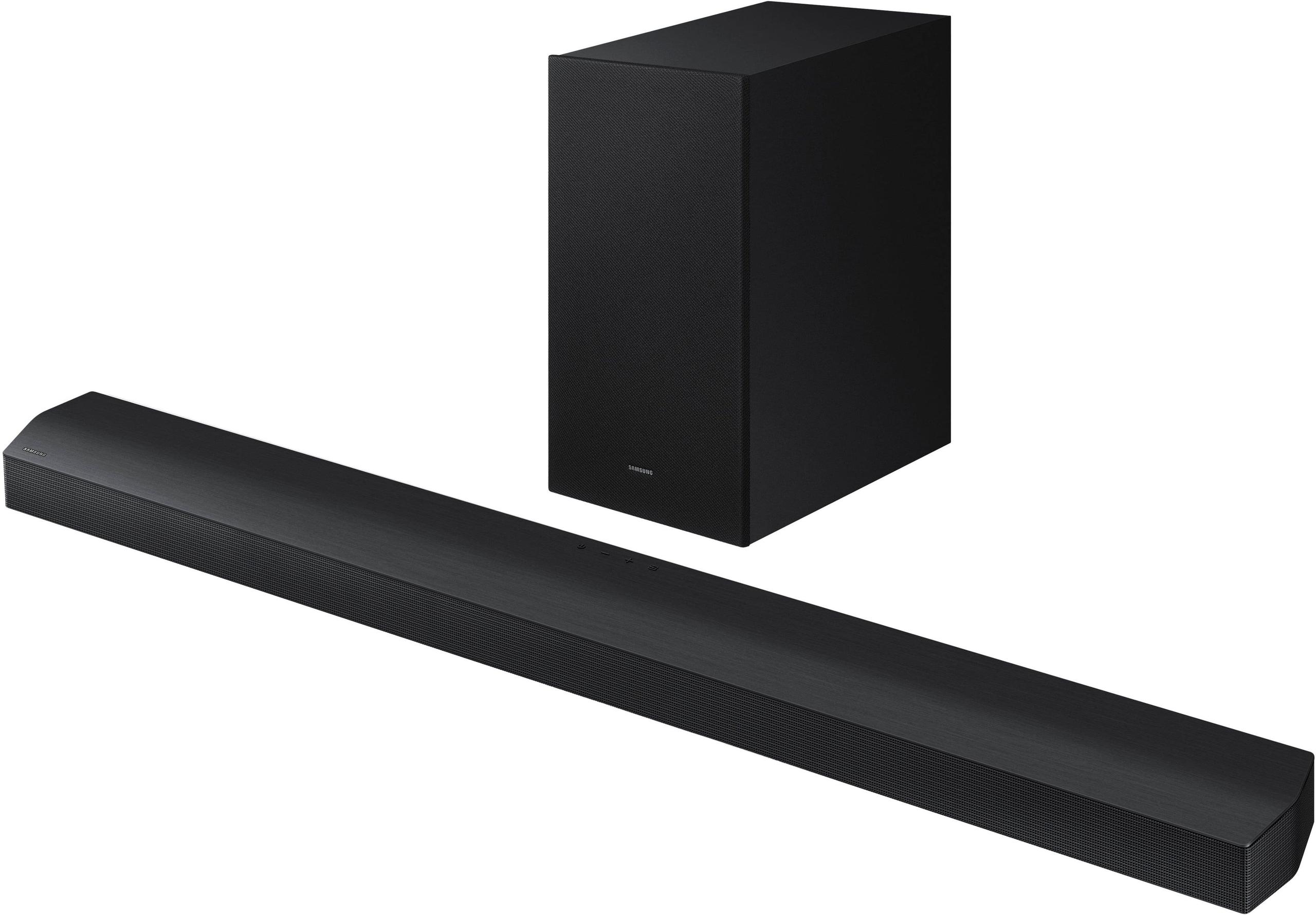
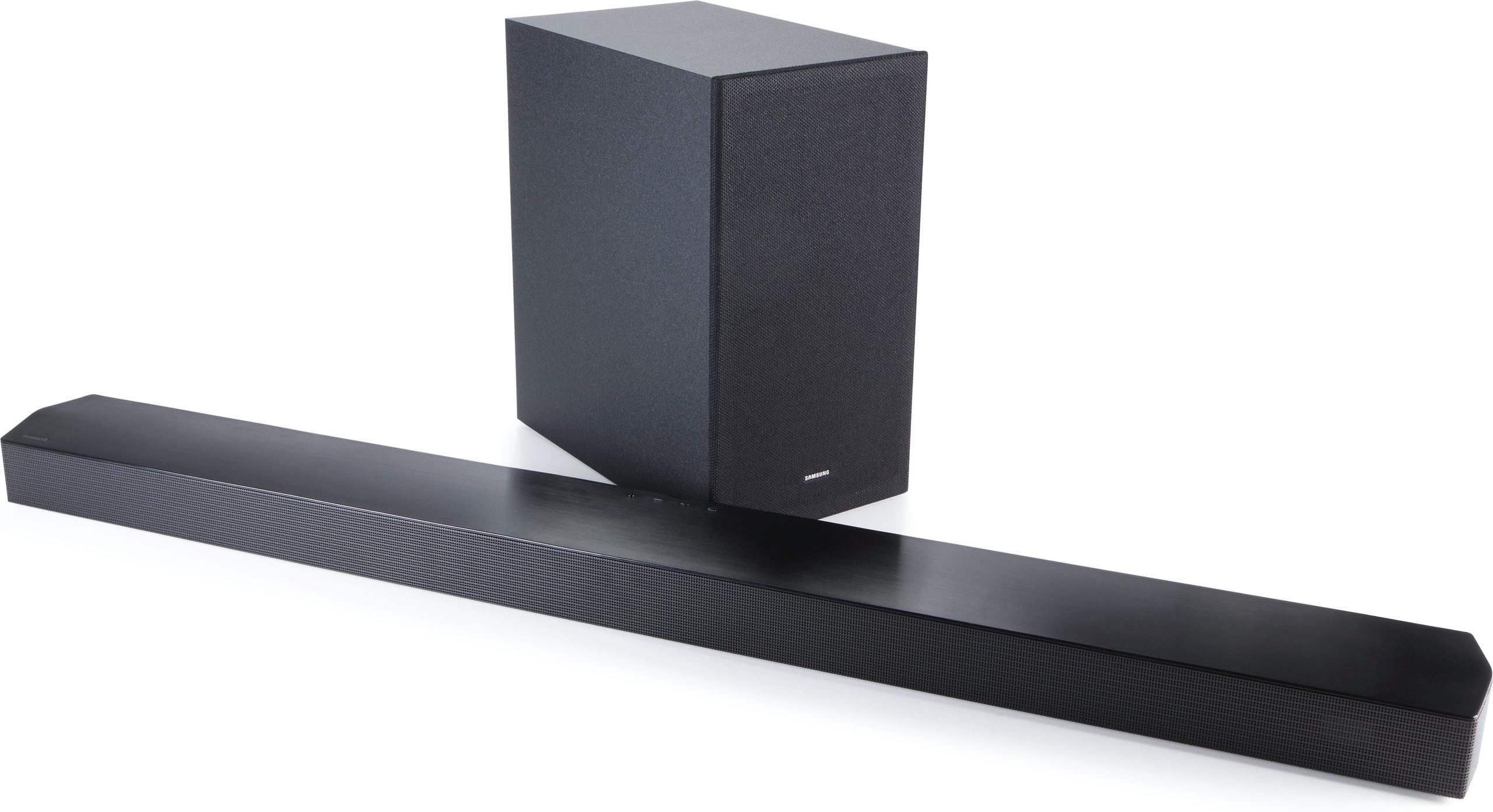
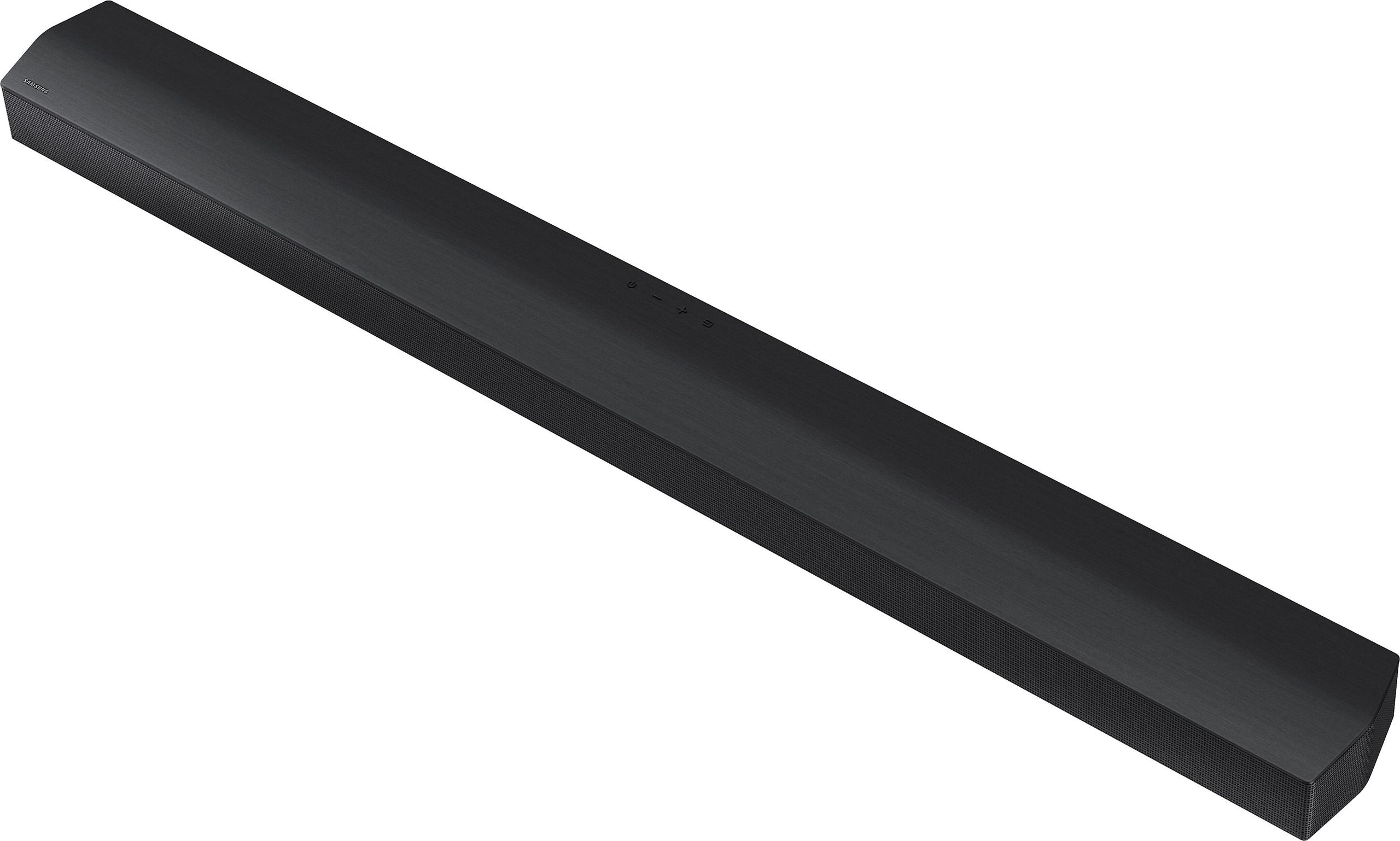
The Samsung B-Series 5.1, also from 2024, takes the traditional approach: give you a complete surround sound system right out of the box at a much more accessible price point. For roughly one-third the cost of the Sony, you get a main soundbar plus a wireless subwoofer that handles all the deep bass your action movies crave.
These represent two fundamentally different philosophies. Sony is betting that sophisticated audio processing and premium build quality can create an immersive experience from a single unit, with room to grow. Samsung is sticking with the tried-and-true approach of physical speakers in multiple locations, delivering immediate gratification at a lower price.
When it comes to actual audio performance, both soundbars excel in different ways, and understanding these differences is crucial to making the right choice for your setup.
The Sony HT-A8000 leverages what Sony calls "360 Spatial Sound Mapping" – essentially, it uses advanced digital processing to create virtual speakers that don't physically exist. The soundbar analyzes your room and bounces sound off walls and ceilings to create the illusion of speakers positioned around you. It's genuinely impressive technology, but it works better in some rooms than others. If you have a lot of soft furnishings or odd room shapes, the effect might not be as pronounced.
Where Sony really shines is in dialogue clarity. The Voice Zoom 3 feature uses artificial intelligence to identify and enhance human voices, making it easier to follow conversations even during explosive action sequences. This isn't just marketing fluff – the difference is noticeable, especially if you often find yourself reaching for the remote to adjust volume during movies.
The Samsung B-Series 5.1, on the other hand, takes a more straightforward approach that delivers immediate results. That wireless subwoofer makes a real difference – when there's an explosion on screen, you feel it in your chest. The physical separation between the main bar and subwoofer means Samsung can dedicate specific drivers to specific frequency ranges, resulting in cleaner bass reproduction and less distortion at higher volumes.
Samsung's Adaptive Sound technology analyzes what you're watching and adjusts the audio profile accordingly. Watching the news? It emphasizes voices. Action movie? It boosts dynamic range and bass response. This kind of smart processing has become increasingly common, but Samsung's implementation is particularly well-tuned.
How well a soundbar fills your space depends on both the number of speakers and their placement, but also on the sophistication of the audio processing.
The Sony HT-A8000 uses its 11-speaker array strategically. You've got traditional left, center, and right channels, plus dedicated up-firing speakers that bounce sound off your ceiling, and side-firing drivers that reflect audio off your walls. Sony's Sound Field Optimization feature automatically calibrates the system based on your room's acoustics, which means it should sound good whether you're in a small apartment or a large living room.
However, there's a catch with the Sony approach – it relies heavily on room reflections. If your room has high ceilings, lots of soft furnishings, or an open floor plan, some of that spatial magic gets lost. The phantom speakers that Sony creates digitally work best in more traditional rectangular rooms with standard ceiling heights.
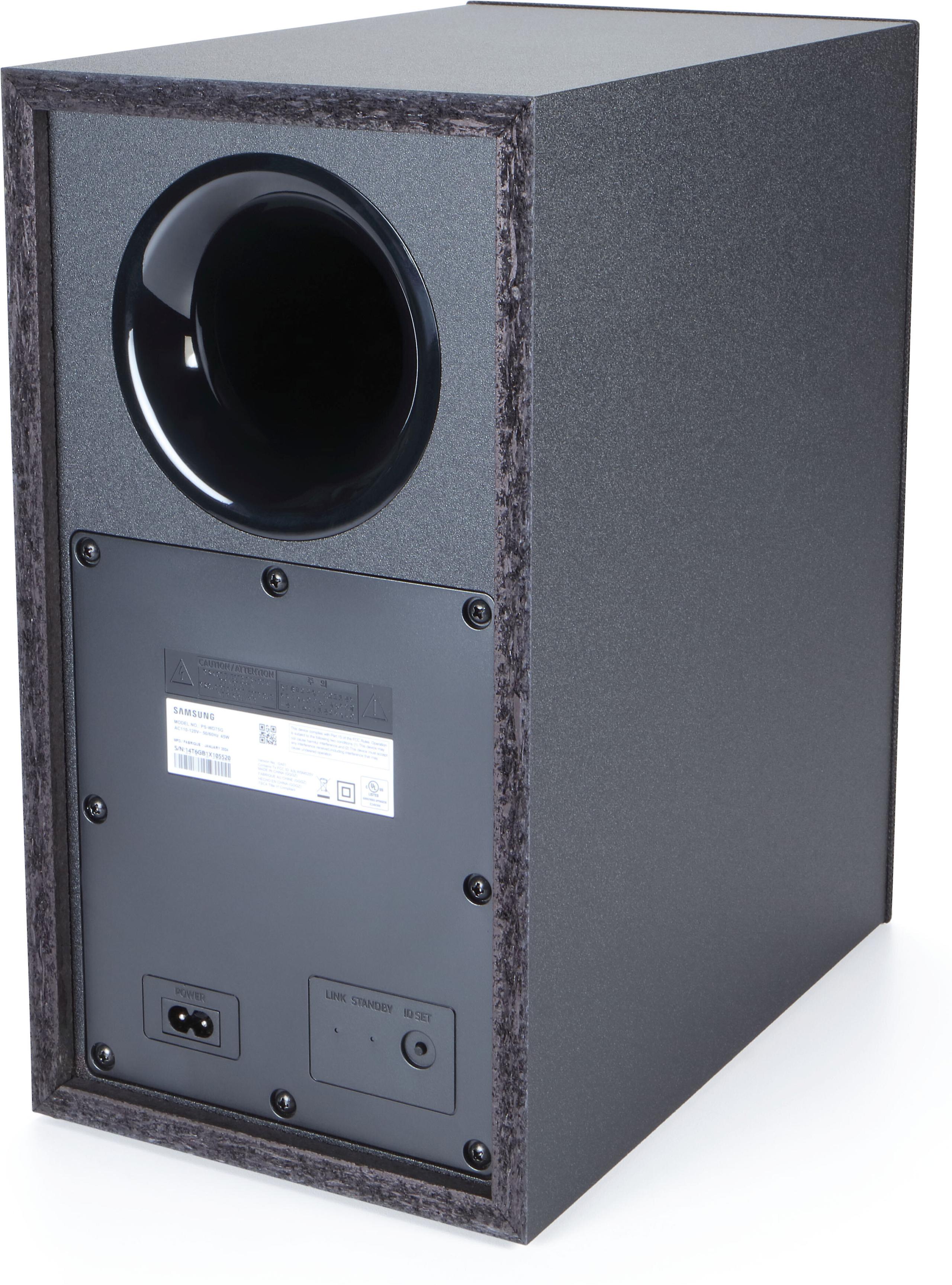
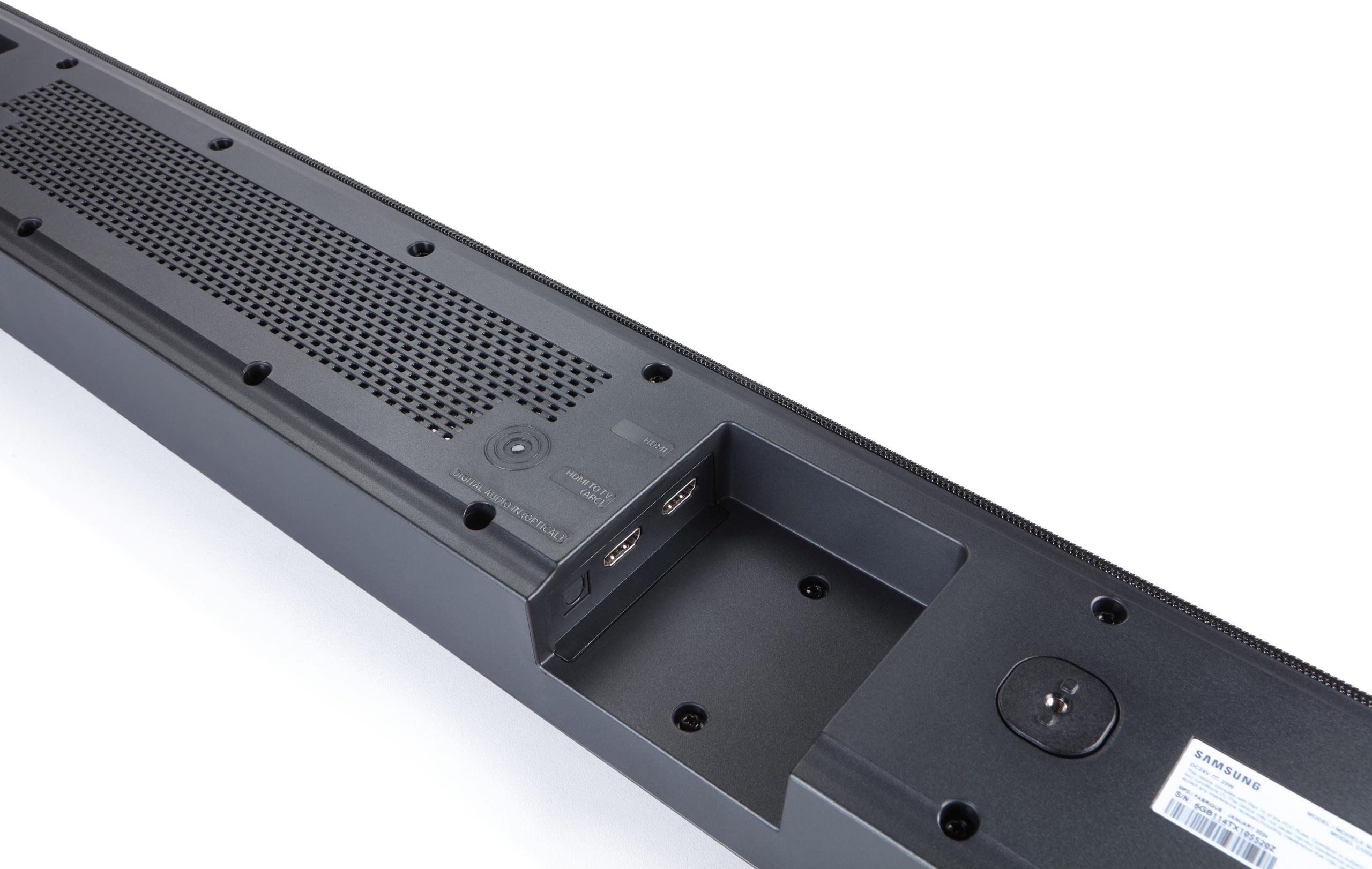
The Samsung system doesn't need to rely as much on room acoustics because it has a physical subwoofer that you can position anywhere in the room. This flexibility is huge – you can put the subwoofer behind your couch, in a corner, or even in an adjacent room if needed. The main soundbar includes dedicated side-firing speakers that help create width, but you're not dependent on perfect room conditions for good bass response.
For smaller to medium-sized rooms, both systems work well, but the Samsung gives you more flexibility in subwoofer placement. For larger spaces, the Sony's more sophisticated processing gives it an edge, assuming your room acoustics cooperate.
Gaming has become a crucial consideration for soundbars, especially as more people use their TVs for both movies and gaming. This is where the technology generation gap between these products becomes apparent.
The Sony HT-A8000 includes full HDMI 2.1 support, which means it can handle 4K gaming at 120fps, Variable Refresh Rate (VRR), and Auto Low Latency Mode (ALLM). For serious gamers, these features are essential – they reduce input lag and ensure smooth gameplay with next-gen consoles. The directional audio processing also helps with competitive gaming, making it easier to pinpoint where enemies are coming from.
The Samsung B-Series 5.1 includes a dedicated Game Mode that optimizes audio for gaming scenarios, but it's built on older HDMI standards. It's perfectly adequate for casual gaming, and the subwoofer adds nice rumble to explosions and crashes, but it lacks the advanced features that serious gamers have come to expect.
If gaming is a priority, especially with newer consoles, the Sony's future-proof connectivity is worth considering despite the higher price.
This is where things get really interesting, because the value equation depends heavily on how you define "complete system."
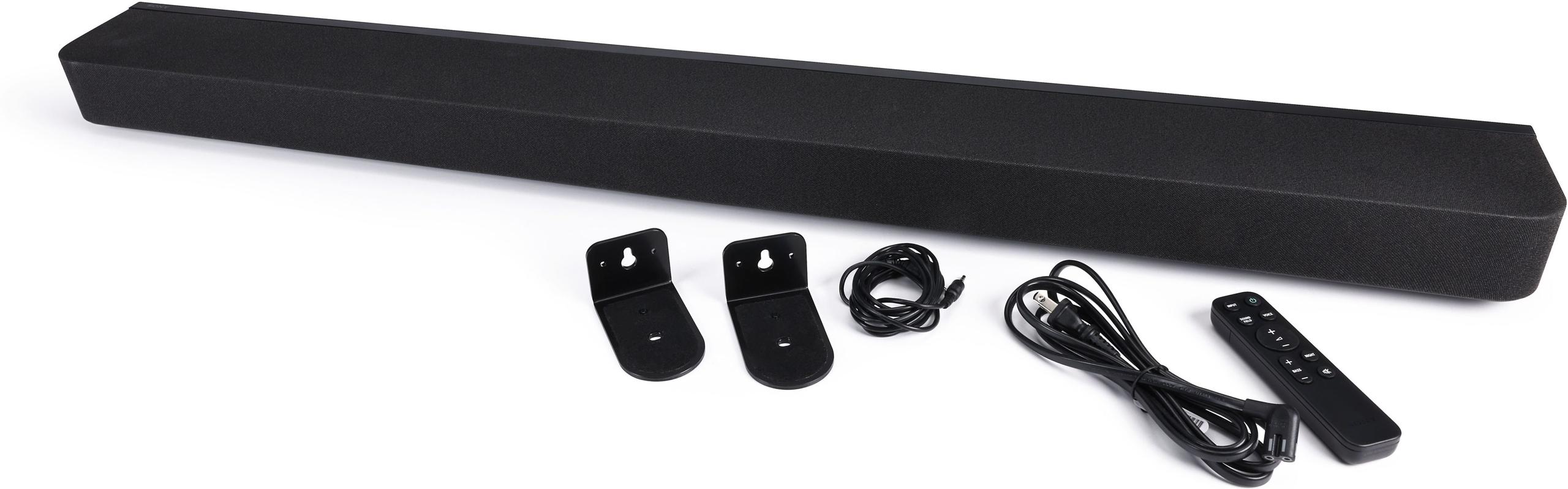
The Samsung B-Series 5.1 delivers what most people actually want from a soundbar upgrade: significantly better dialogue clarity than TV speakers, satisfying bass response, and genuine surround sound effects, all at a price that won't break the bank. At the time of writing, you can often find it for well under $400, and you get everything you need in the box.
The Sony HT-A8000 starts at roughly three times the Samsung's price, but that's just the beginning. While it's technically a complete system, most users will eventually want to add Sony's wireless subwoofer and rear speakers to unlock its full potential. When you add up those components, you're looking at a total system cost that's four to five times the Samsung's price.
But here's the thing about that Sony system cost – it's modular. You can start with just the soundbar and add components over time as your budget and needs evolve. The Samsung system is what it is – you can't add rear speakers later, and what you buy initially is your final configuration.
The engineering approaches in these two soundbars reveal a lot about their intended markets and design philosophies.
Sony's 11-speaker configuration in the HT-A8000 is genuinely impressive from an engineering standpoint. They've managed to pack dedicated woofers, tweeters, and mid-range drivers into a single enclosure while maintaining reasonable size constraints. The S-Master HX digital amplification provides clean power delivery with minimal distortion, and the DSEE Ultimate technology upscales compressed audio formats – particularly useful for streaming content.
The real magic happens in Sony's digital signal processing. The 360 Spatial Sound Mapping doesn't just create phantom speakers randomly; it uses psychoacoustic principles to fool your brain into perceiving sounds coming from locations where there are no physical speakers. This works because of how our ears process reflected sound versus direct sound, and the timing differences between them.
Samsung's approach in the B-Series 5.1 is more traditional but arguably more reliable. The wireless subwoofer uses a dedicated amplifier optimized for low-frequency reproduction, which means cleaner bass with less distortion than you'd get from trying to produce those same frequencies through smaller drivers in the main unit. The SpaceFit Sound feature uses the soundbar's built-in microphone to analyze your room's acoustic signature and adjust output accordingly.
Both systems support the major audio formats you'll encounter – Dolby Digital, DTS, and their respective object-based formats like Dolby Atmos. However, the Sony's additional processing power allows for more sophisticated handling of these formats, particularly when it comes to creating height effects from ceiling reflections.
Based on user feedback and expert reviews, both systems are relatively straightforward to set up, but they have different strengths and potential frustrations.
The Sony HT-A8000 really shines when paired with Sony BRAVIA TVs through a feature called Acoustic Center Sync. This allows the soundbar to use your TV's speakers as an additional center channel, creating even more precise dialogue placement. For non-Sony TV owners, setup is still straightforward, but you miss out on this integration benefit.
One area where Sony has improved significantly since earlier soundbar releases is in the setup process. The company learned from user feedback about complex menu systems and has streamlined the initial configuration. The Sound Field Optimization runs automatically and doesn't require manual room measurements.
The Samsung system typically gets praise for its plug-and-play nature. The wireless subwoofer pairs automatically when you power everything on, and most users report having the system working optimally within 15-20 minutes of unboxing. Samsung's SpaceFit Sound calibration is less sophisticated than Sony's room correction, but it's also less dependent on specific room characteristics to work well.
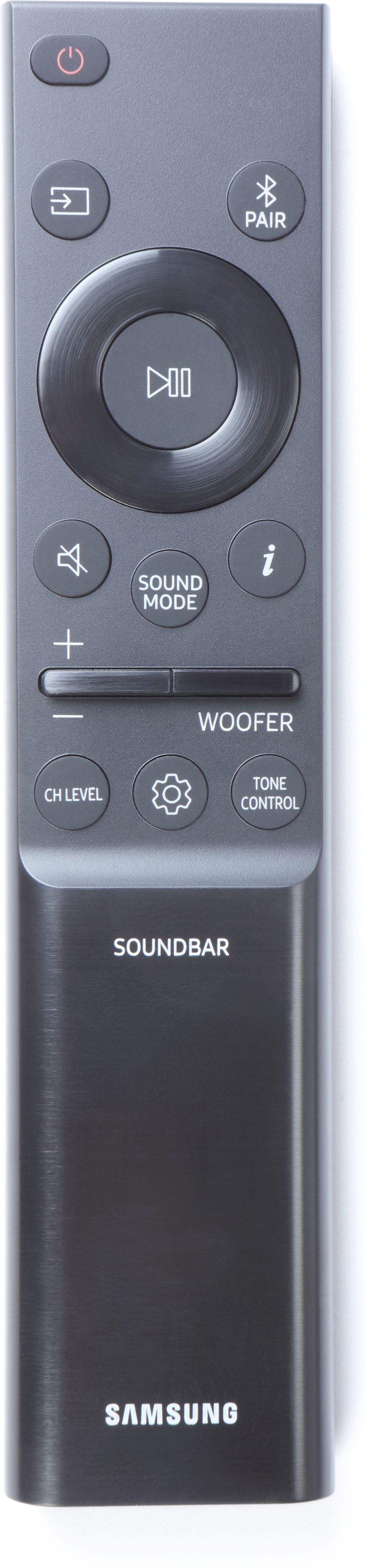
Both systems integrate well with TV remotes for basic volume control, but the Sony offers more granular control through its dedicated remote and smartphone app. Samsung's approach is simpler but might feel limiting for users who like to tweak audio settings.
For dedicated home theater use, the choice between these systems becomes clearer when you consider long-term goals and room characteristics.
The Sony HT-A8000 is designed with expandability in mind. If you're building a home theater gradually, starting with the soundbar and adding the subwoofer and rear speakers over time makes financial sense. The final system, when complete, offers performance that competes with much more expensive traditional surround sound setups.
However, the Sony system's reliance on room acoustics for optimal performance means it works best in purpose-built home theater spaces or rooms where you have some control over acoustic treatment. In a multipurpose living room with lots of hard surfaces and irregular shapes, some of the spatial processing benefits are diminished.
The Samsung B-Series 5.1 is better suited for living room home theater setups where you want good performance without worrying too much about room acoustics. The physical subwoofer delivers consistent bass regardless of room characteristics, and the system sounds good right out of the box in most environments.
For movie watching specifically, both systems handle dialogue well, but they excel with different content types. The Sony's sophisticated processing shines with complex soundtracks that feature lots of ambient effects and layered audio. The Samsung's more straightforward approach works exceptionally well with action movies where impactful bass and clear dialogue are the priorities.
After researching user experiences and expert opinions extensively, the choice between these soundbars comes down to your priorities, budget, and room setup.
Choose the Samsung B-Series 5.1 if you want the most bang for your buck and immediate satisfaction. It's perfect for users who want significantly better TV audio without spending premium prices or dealing with complex setup procedures. The included subwoofer means you get satisfying bass right away, and the system works well in most room configurations. It's also the better choice if you're not planning to expand your system later – what you get is a complete, competent surround sound setup.
The Samsung makes particular sense for apartment dwellers, casual movie watchers, and anyone who prioritizes value over cutting-edge features. The Night Mode feature is especially useful if you live in close quarters with neighbors.
Choose the Sony HT-A8000 if you're building a premium home theater system and don't mind investing more upfront for superior technology and future expandability. It's the better choice for serious movie enthusiasts, gamers who want the latest connectivity features, and users who already own Sony BRAVIA TVs.
The Sony also makes sense if you prefer a minimalist aesthetic and don't want visible subwoofers in your living space, at least initially. However, be prepared to eventually add the subwoofer and rear speakers to unlock the system's full potential – and budget accordingly.
Both soundbars represent solid engineering and thoughtful design, but they serve different needs. The Samsung B-Series 5.1 proves that you don't need to spend premium prices to get a significant audio upgrade that will transform your TV watching experience. It's honest, capable, and delivers exactly what it promises.
The Sony HT-A8000 is for users who want to invest in premium audio technology and build their system over time. It offers features and performance that justify the higher price, but only if you can take advantage of its advanced capabilities.
In the end, both soundbars will dramatically improve your TV audio compared to built-in speakers. The question isn't whether either will satisfy you – it's whether you want immediate, affordable satisfaction or you're willing to invest more for premium features and expansion possibilities. Either way, your movie nights are about to get a lot more enjoyable.
| Sony HT-A8000 BRAVIA Theater Bar 8 Soundbar | Samsung B-Series 5.1 Channel Soundbar with Subwoofer |
|---|---|
| Channel Configuration - Determines surround sound capability and immersion | |
| 5.0.2 channel (11 speakers in main unit only) | True 5.1 channel with wireless subwoofer included |
| Subwoofer Inclusion - Critical for bass response in movies and music | |
| Not included (optional wireless subwoofer available separately) | Wireless subwoofer included in the box |
| Audio Processing Technology - Affects spatial sound and room-filling capability | |
| 360 Spatial Sound Mapping with phantom speakers | Dolby Digital 5.1 with DTS Virtual:X and Adaptive Sound |
| HDMI Connectivity - Important for gaming and future-proofing | |
| HDMI 2.1 with eARC (supports 4K120, VRR, ALLM for gaming) | HDMI ARC (standard features, adequate for most users) |
| Dialogue Enhancement - Crucial for clear speech in movies and shows | |
| Voice Zoom 3 with AI-powered voice recognition | Voice Enhance mode with EQ optimization |
| Room Calibration - Ensures optimal sound for your specific space | |
| Sound Field Optimization with automatic room analysis | SpaceFit Sound with microphone-based room correction |
| Expandability - Ability to add components later | |
| Can add wireless subwoofer and rear speakers (sold separately) | Complete system out of the box, no expansion options |
| Wireless Connectivity - Streaming and device compatibility | |
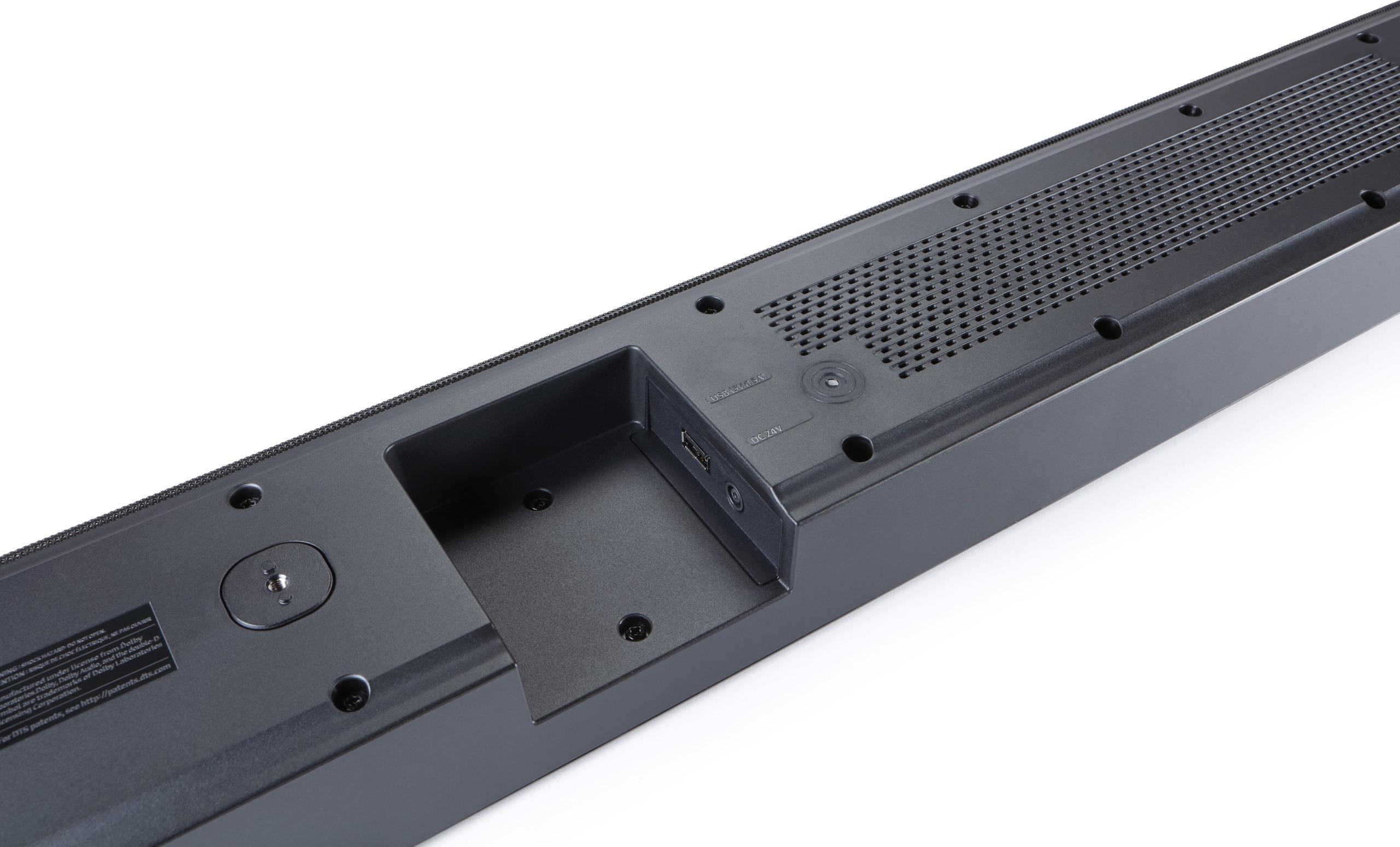
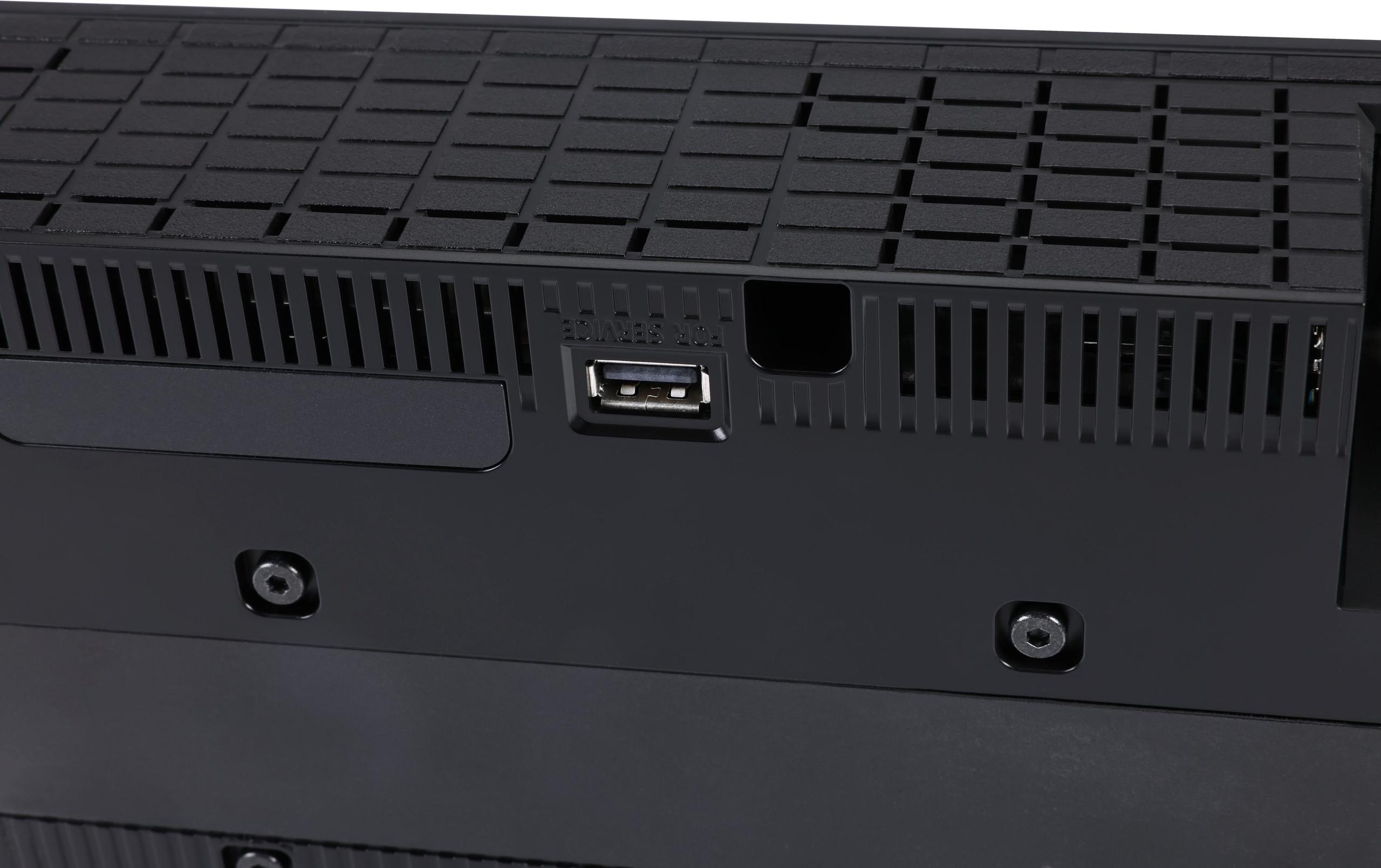
| Wi-Fi, Bluetooth 5.2, Spotify Connect, Apple AirPlay 2 | Bluetooth 4.2 with multi-device connection, USB playback |
| Physical Dimensions - Space requirements in your entertainment setup | |
| 43.3" x 2.6" x 4.5" (single unit, sleek profile) | Main bar: 40.5" x 2.3" x 4.1" + separate subwoofer placement |
| Gaming Features - Essential for console gaming performance | |
| Full HDMI 2.1 gaming support with low latency | Basic Game Mode, adequate for casual gaming |
| TV Integration - Seamless operation with your television | |
| Advanced integration with Sony BRAVIA TVs, standard with others | Universal TV remote compatibility, works with all brands |
| Value Proposition - What you get for your investment | |
| Premium single-bar system with expansion potential | Complete 5.1 surround system at entry-level pricing |
The Samsung B-Series 5.1 Channel Soundbar with Subwoofer offers significantly better value, providing a complete 5.1 surround sound system with wireless subwoofer at roughly one-third the cost of the Sony HT-A8000 BRAVIA Theater Bar 8 Soundbar. While the Sony offers premium features and build quality, the Samsung delivers excellent performance for the price and includes everything you need out of the box.
No, the Sony HT-A8000 BRAVIA Theater Bar 8 Soundbar does not include a subwoofer. It's designed as a standalone unit that can be expanded later with optional wireless subwoofer and rear speakers. In contrast, the Samsung B-Series 5.1 includes a wireless subwoofer in the package, providing immediate bass enhancement.
The Sony HT-A8000 is better for gaming, featuring full HDMI 2.1 support with 4K120, Variable Refresh Rate (VRR), and Auto Low Latency Mode (ALLM). These features are essential for next-gen console gaming. The Samsung B-Series 5.1 offers basic gaming features that work well for casual gaming but lacks advanced connectivity.
Only the Sony HT-A8000 supports adding wireless rear speakers as optional components, allowing you to expand to a full surround system over time. The Samsung B-Series 5.1 is a complete system as-is and cannot be expanded with additional rear speakers.
The Samsung B-Series 5.1 typically works better in smaller rooms because its wireless subwoofer can be positioned anywhere for optimal bass response, and it doesn't rely heavily on room reflections. The Sony HT-A8000 uses advanced room mapping technology that works well in various room sizes but may be overkill for very small spaces.
Both soundbars excel at dialogue clarity, but through different approaches. The Sony HT-A8000 uses Voice Zoom 3 with AI technology to automatically enhance speech, while the Samsung B-Series 5.1 features Voice Enhance mode with EQ optimization. Both significantly improve dialogue over TV speakers.
The Samsung B-Series 5.1 is generally easier to set up, with the wireless subwoofer automatically pairing when powered on. Most users report having it working optimally within 15-20 minutes. The Sony HT-A8000 requires more initial configuration for its room optimization features, though setup has been streamlined in recent years.
Yes, both the Sony HT-A8000 and Samsung B-Series 5.1 support Dolby Atmos, but they implement it differently. The Sony uses up-firing speakers and advanced processing to create height effects, while the Samsung uses DTS Virtual:X technology to simulate overhead sound through its speaker configuration.
For dedicated home theater use, the Sony HT-A8000 offers superior technology with its 360 Spatial Sound Mapping and expandability options, making it ideal for building a premium system over time. The Samsung B-Series 5.1 provides excellent home theater performance at a lower cost and works well in most living room setups without requiring acoustic optimization.
Yes, both support wireless music streaming, but with different capabilities. The Sony HT-A8000 offers Wi-Fi, Bluetooth 5.2, Spotify Connect, and Apple AirPlay 2 for high-quality streaming. The Samsung B-Series 5.1 features Bluetooth 4.2 with multi-device connection capability and USB playback options.
The Sony HT-A8000 features premium build quality with superior materials and finish, reflecting its higher price point. It's designed as a living room centerpiece with a sleek, minimalist aesthetic. The Samsung B-Series 5.1 offers solid build quality for its price range with a more traditional, practical design approach.
The main difference is philosophy and completeness: the Samsung B-Series 5.1 provides a complete 5.1 surround sound system with subwoofer at an accessible price, while the Sony HT-A8000 offers premium single-bar technology with advanced processing and the option to expand into a full system over time at a significantly higher total cost.
We've done our best to create useful and informative comparisons to help you decide what product to buy. Our research uses advanced automated methods to create this comparison and perfection is not possible - please contact us for corrections or questions. These are the sites we've researched in the creation of this article: consumerreports.org - skybygramophone.com - target.com - rtings.com - bestbuy.com - rubbermonkey.co.nz - shopatsc.com - audioadvice.com - sony.com - sony.com - sony.com - shop.cosmopolitan.com - store.sony.com.my - videoandaudiocenter.com - bestbuy.com - abt.com - avsforum.com - crutchfield.com - camelcamelcamel.com - samsung.com - samsung.com - samsung.com - images.samsung.com - samsung.com - avblinq.avbportal.com - samsung.com - samsung.com

Privacy Policy
Terms and Conditions - Affiliate Policy
Home Security
© Copyright 2008-2026.
11816 Inwood Rd #1211, Dallas, TX 75244