



When your TV's built-in speakers sound like they're coming from inside a tin can, it's time to upgrade. But the world of soundbars has evolved dramatically since the simple "sound plank" days of the early 2010s. Today's systems can transform your living room into something approaching a movie theater experience, but they take very different approaches to get there.
We've spent considerable time researching two soundbars that represent opposite ends of the design philosophy spectrum: the premium Sony HT-A8000 BRAVIA Theater Bar 8 and the budget-focused Ultimea Aura A40 U2601. One relies on sophisticated acoustic engineering in a single bar, while the other surrounds you with multiple speakers. Understanding these different approaches will help you make the right choice for your space and budget.
Before diving into specifics, it's worth understanding what separates today's soundbars from the basic models of a decade ago. Modern systems face a fundamental challenge: how do you create immersive, multi-directional sound from speakers that sit in front of you?
There are two main approaches. Virtual surround sound uses digital processing and carefully angled drivers to bounce sound off your walls and ceiling, creating the illusion that audio is coming from beside and behind you. This is what the Sony HT-A8000 does with its 360 Spatial Sound Mapping technology—it actually maps your room and adjusts how it fires sound to create phantom speakers around you.
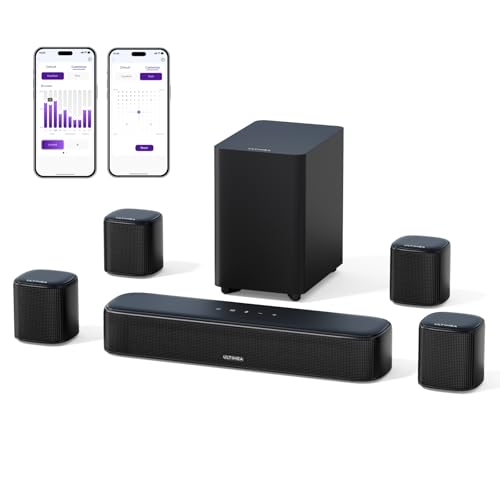
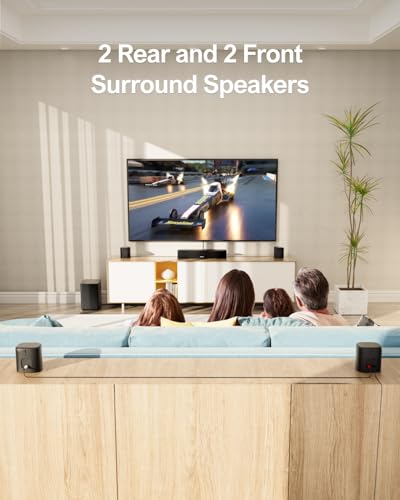
The alternative approach is true surround sound, which places actual speakers around your room. The Ultimea Aura A40 takes this route, giving you four separate surround speakers to position wherever works best. It's more work to set up, but physics is on its side—sound actually is coming from multiple directions.
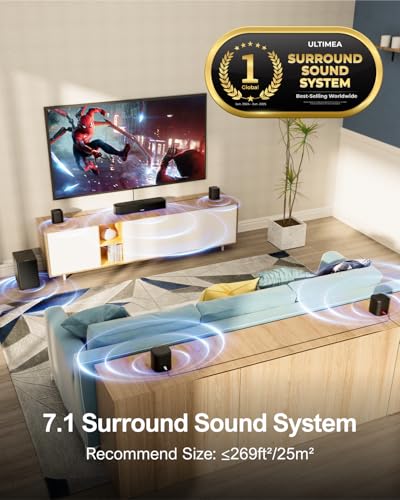
Both systems also handle channel configurations differently. When you see "5.0.2" or "7.1," these numbers tell you how many speakers are working. The Sony's 5.0.2 configuration means five main speakers (left, center, right, and two surrounds), zero subwoofers in the base unit, and two height channels that fire upward. The Ultimea's 7.1 setup includes seven main speakers plus a dedicated subwoofer—that ".1" refers to the low-frequency effects channel that handles deep bass.
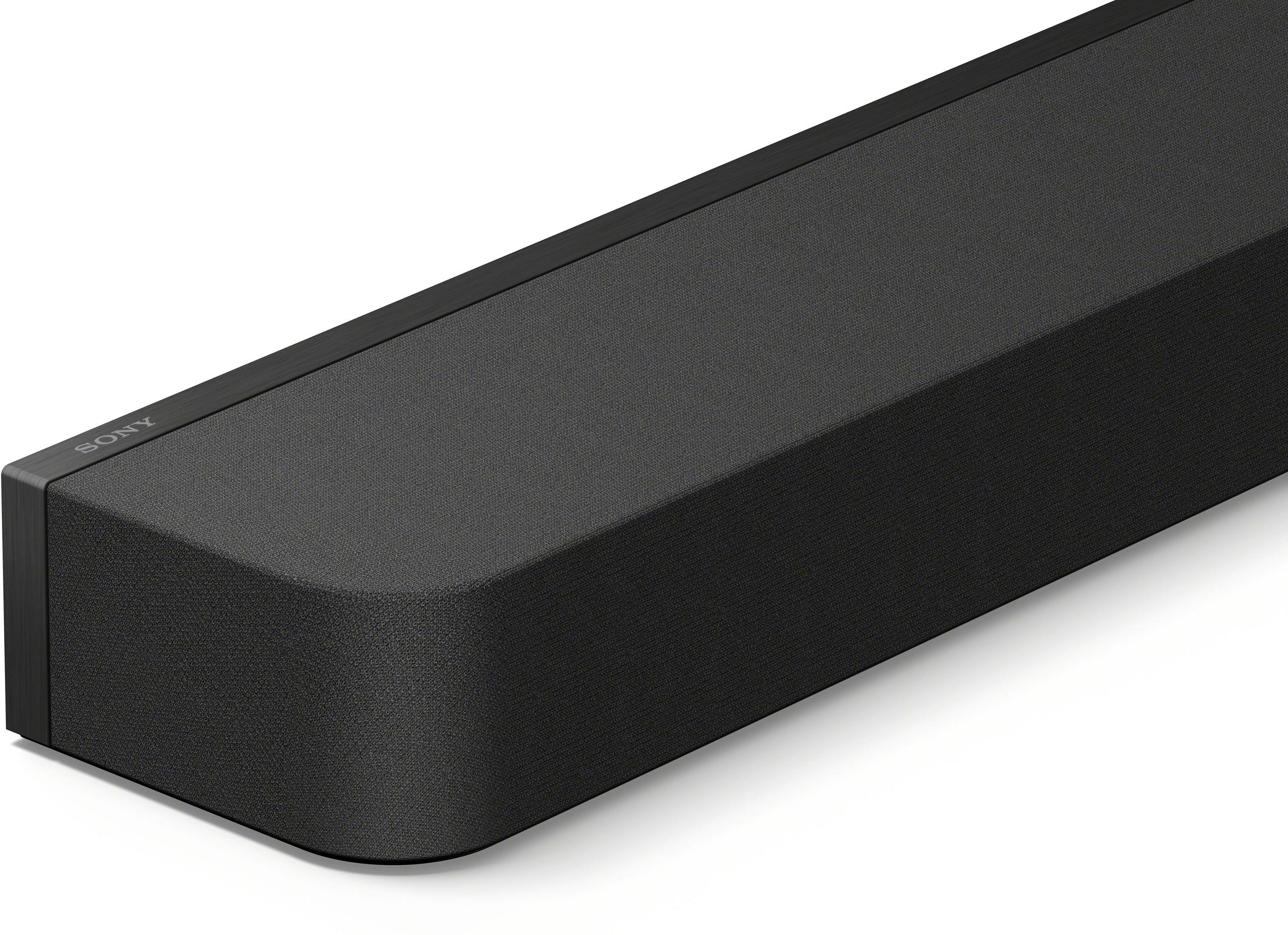
Released in 2024, the Sony HT-A8000 represents the company's flagship single-bar philosophy. At the time of writing, it commands a premium price that reflects Sony's positioning as a high-end audio brand, typically costing several hundred dollars more than budget alternatives.
The heart of the Sony system is its 360 Spatial Sound Mapping technology, which is genuinely impressive in practice. When you first set it up, the soundbar emits test tones and uses its built-in microphones to analyze how sound bounces around your room. It's measuring wall distances, ceiling height, and even furniture placement to create an acoustic map.
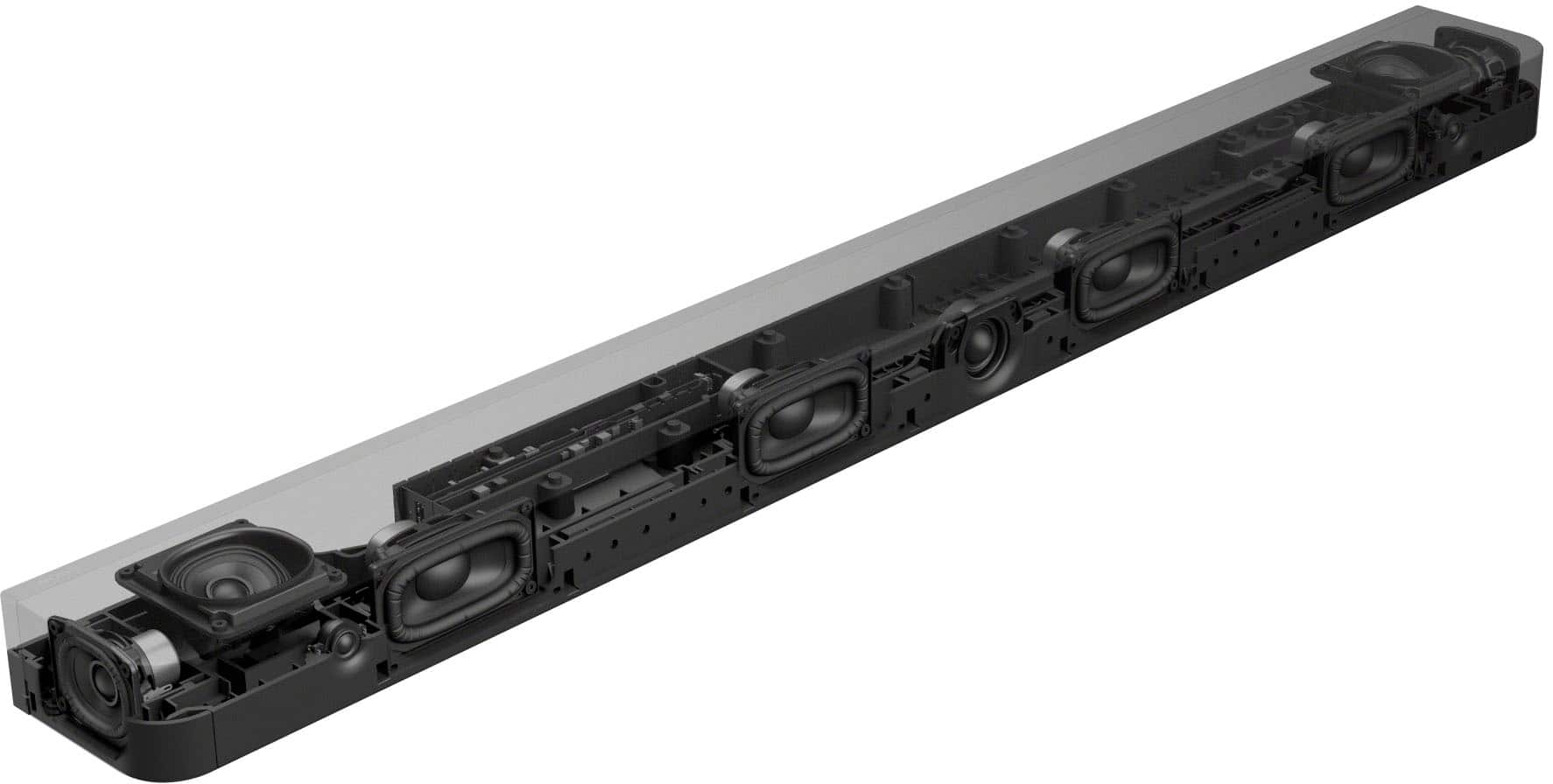
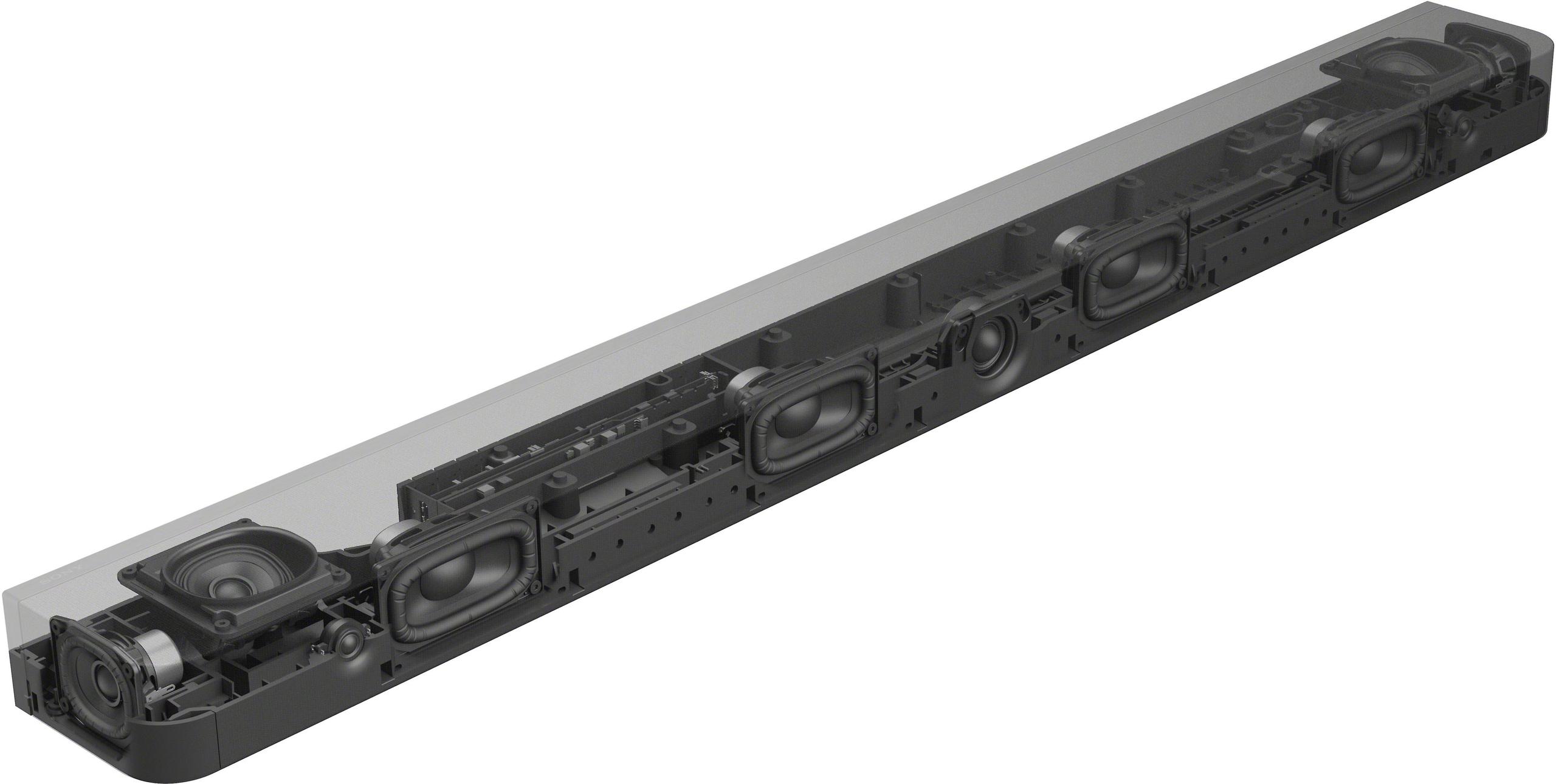
This data feeds into the system's Sound Field Optimization, which automatically adjusts how the 11 individual drivers fire sound. The rectangular X-Balanced drivers (a Sony innovation where woofers are shaped like rectangles instead of circles) can move more air with less distortion because they have more surface area. Meanwhile, the S-Master HX digital amplifier processes audio entirely in the digital domain, eliminating the heat and distortion that plague traditional analog amplifiers.
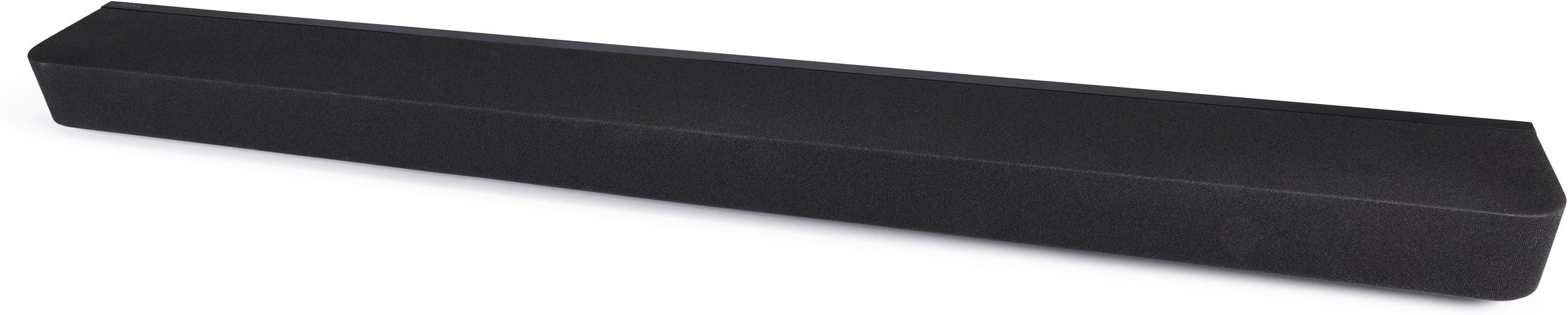
The result is surprisingly convincing surround effects from a single 43-inch bar. During action movies, explosions seem to wrap around you, and dialogue stays anchored to the screen even when effects are flying everywhere. The Voice Zoom 3 feature uses AI to identify and enhance human speech, which proves invaluable during Marvel movies where witty dialogue often gets buried under spectacular sound effects.
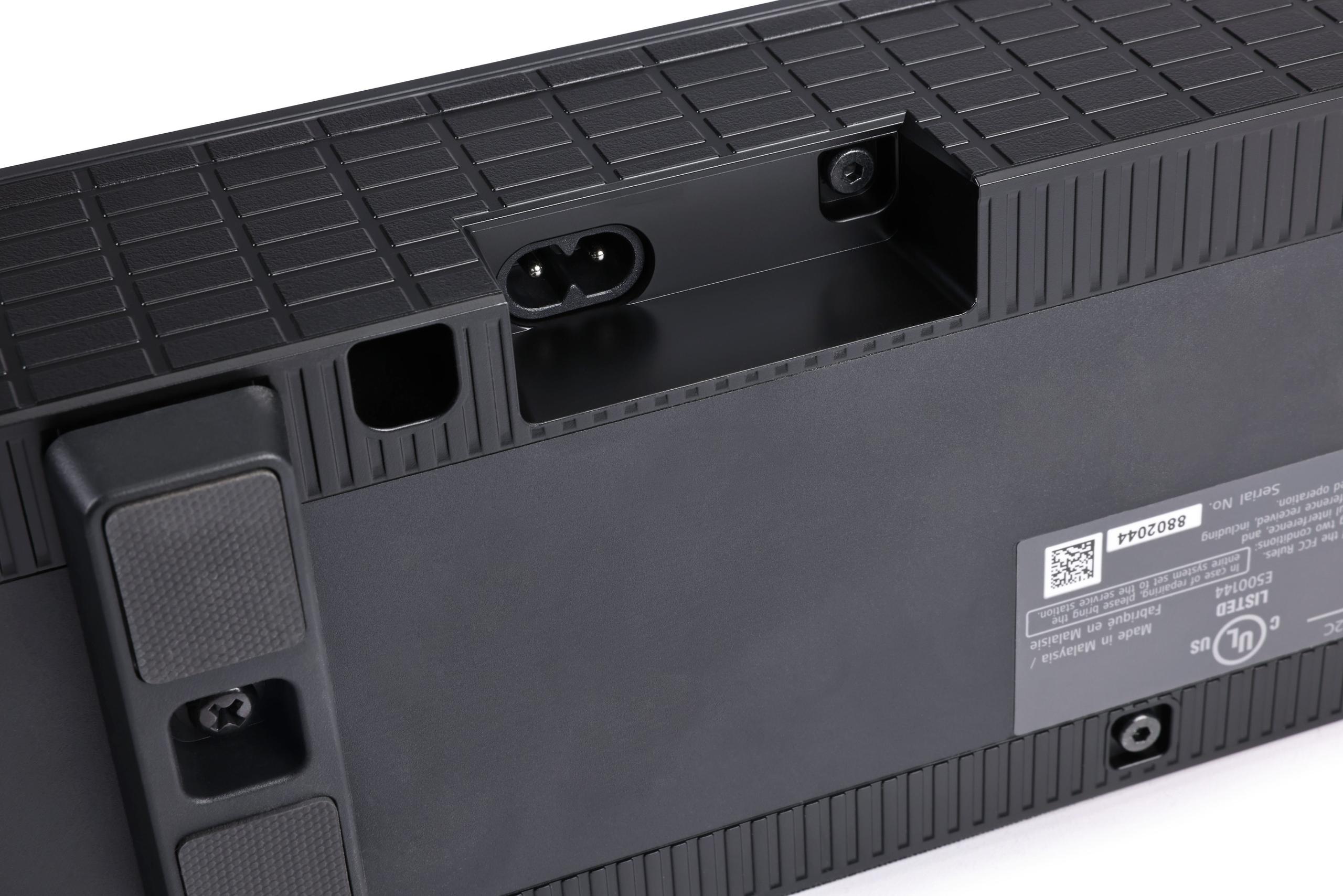
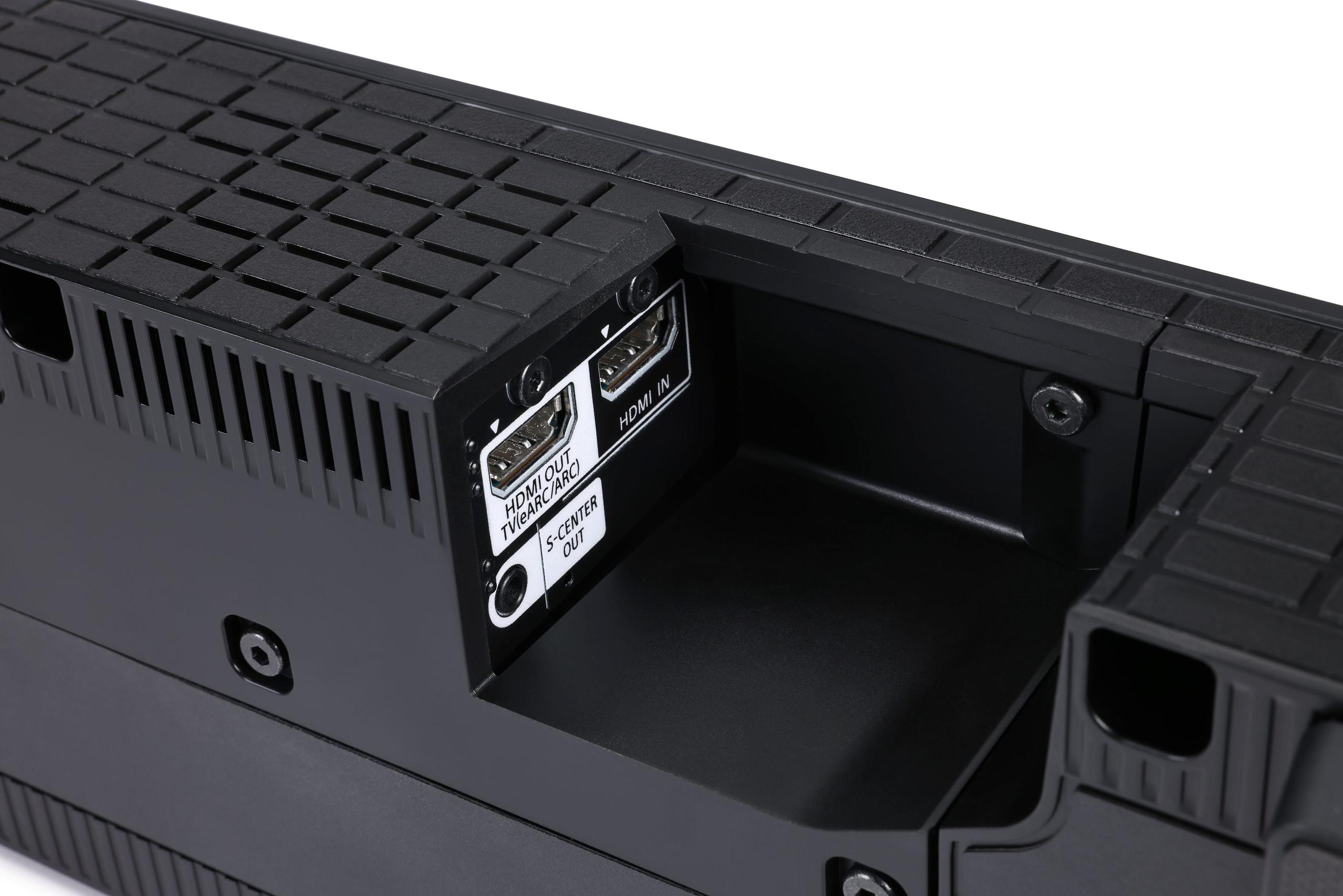
Where the Sony really shines is integration with modern entertainment systems. Its HDMI 2.1 support means it can handle 8K video pass-through and gaming features like 4K at 120Hz refresh rates—crucial for PlayStation 5 or Xbox Series X owners. The eARC connection (enhanced Audio Return Channel) allows your TV to send high-quality audio back to the soundbar, including advanced formats like Dolby Atmos.
If you own a Sony BRAVIA TV, the integration gets even better. Acoustic Center Sync actually uses your TV's speakers as an additional center channel, making dialogue appear to come directly from actors' mouths on screen. It's a clever trick that works surprisingly well.
Our research into professional and user reviews reveals the Sony's strengths in clarity and refinement. The 495-watt output provides plenty of clean power, and the 11-driver array delivers detailed midrange and crisp highs. Bass performance from the integrated drivers is respectable, though Sony offers optional wireless subwoofers (the SA-SW3 or SA-SW5) for those wanting more low-end impact.
The automatic room correction generally works well, though it's not perfect. Large, irregularly shaped rooms or those with lots of soft furnishings can confuse the system. Unlike the Ultimea, you can't manually fine-tune the surround effect—you're trusting Sony's algorithms to get it right.
The Ultimea Aura A40, released in 2024, takes the opposite approach. Rather than trying to simulate surround sound, it gives you actual surround speakers to place around your room. At the time of writing, it costs significantly less than the Sony, making it an attractive option for budget-conscious buyers who don't want to compromise on immersion.
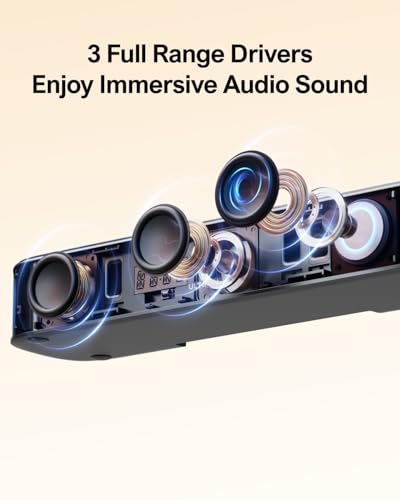
The Ultimea system includes four separate surround speakers—two for the front corners and two for behind your seating position. These aren't tiny satellite speakers either; each contains a 2-inch driver that can produce meaningful output. Combined with the three-driver soundbar and 4-inch subwoofer, you get eight total speakers creating a genuine 360-degree sound field.
The SurroundX Technology optimizes how audio is distributed among these speakers, while BassMX Technology manages the subwoofer's output to avoid the boomy, one-note bass that plagues many budget systems. The frequency response extends down to 65Hz—not as deep as high-end subwoofers, but adequate for most content.
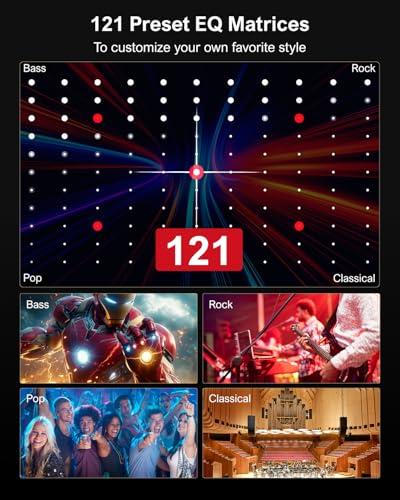
Where the Ultimea truly differentiates itself is in user control. The ULTIMEA Smart App provides access to six preset EQ modes (Movie, Music, Voice, Sport, Game, Night), a 10-band equalizer, and 121 different preset matrices for specific genres like classical, rock, or electronic music. You can adjust surround speaker levels across 13 different settings, fine-tuning how aggressive or subtle you want the surround effect.
This level of customization appeals to audio enthusiasts who want to tweak their system for different content types. Watching a dialogue-heavy drama? Bump up the center channel and reduce surround aggressiveness. Playing a first-person shooter? Crank up the rear speakers so you can precisely locate enemy footsteps.
Based on extensive user feedback, the Ultimea system delivers genuine surround immersion that single-bar systems struggle to match. When a helicopter flies overhead in a war movie, it actually sounds like it's moving from front to back because audio is physically traveling between different speakers.
However, there are trade-offs. The 330-watt total power output is adequate but not overwhelming, and individual components don't match the build quality of premium brands. Several reviews noted that while dialogue clarity is good, the overall sound signature can be somewhat thin and lacks the warmth of higher-end systems. The bass, while controlled, requires the subwoofer to work hard to reach satisfying levels.
This is where the philosophical difference becomes most apparent. The Sony system creates impressive phantom surround effects through acoustic manipulation, but it's still working within the laws of physics—bouncing sound off surfaces to create the illusion of rear speakers.
The Ultimea approach sidesteps this limitation entirely. Sound actually originates from multiple points around your room, creating more convincing directional effects. During gaming sessions, this translates to better spatial awareness—you can more accurately determine where sounds are coming from, which can be a competitive advantage in shooters.
However, the Sony's room mapping technology adapts to your specific space in ways that fixed speaker placement cannot. If your room has challenging acoustics—high ceilings, open floor plans, or unusual shapes—the Sony's adaptive processing might actually deliver better results than poorly positioned surround speakers.
The Sony system demonstrates superior audio engineering across most metrics. Its S-Master HX amplification delivers cleaner power with less distortion, and the 11-driver array provides better frequency separation. Vocals sound more natural, instrumental details are clearer, and the overall tonal balance is more refined.
The Ultimea system, while adequate, shows its budget constraints in critical listening. The sound signature tends toward brightness, with midrange frequencies sometimes sounding hollow or metallic. It's perfectly fine for movies and TV, but music lovers might find it fatiguing during longer listening sessions.
Both systems handle bass differently, and neither approach is definitively superior. The Sony's integrated bass drivers provide tight, controlled low-end that integrates seamlessly with the midrange. However, they can't move as much air as a dedicated subwoofer, limiting their ability to deliver the chest-thumping impact that makes action movies visceral.
The Ultimea's dedicated 4-inch subwoofer can produce more bass quantity, but its 65Hz lower limit means it doesn't reach the deepest frequencies. You'll feel explosions and music bass lines, but the subtle low-frequency effects that add atmosphere to horror movies or the deep organ notes in classical music might get lost.
Both systems excel at dialogue reproduction, but through different methods. The Sony's Voice Zoom 3 uses artificial intelligence to identify speech patterns and enhance them dynamically. It's particularly effective during complex action sequences where multiple audio elements compete for attention.
The Ultimea system relies on traditional center channel processing and user-adjustable voice modes. While less sophisticated, the manual control allows you to tailor dialogue emphasis to your preferences and hearing characteristics. Some users prefer this approach because they can set it once and forget it, rather than trusting AI to make the right choice in every situation.
The connectivity story heavily favors the Sony system. Its HDMI 2.1 support future-proofs your setup for next-generation gaming and video content, while features like Dolby Vision pass-through ensure compatibility with premium streaming services and 4K Blu-rays.
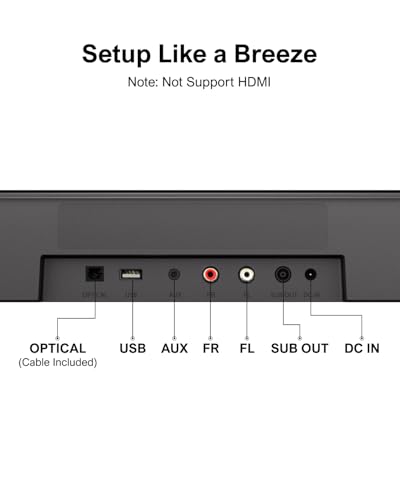
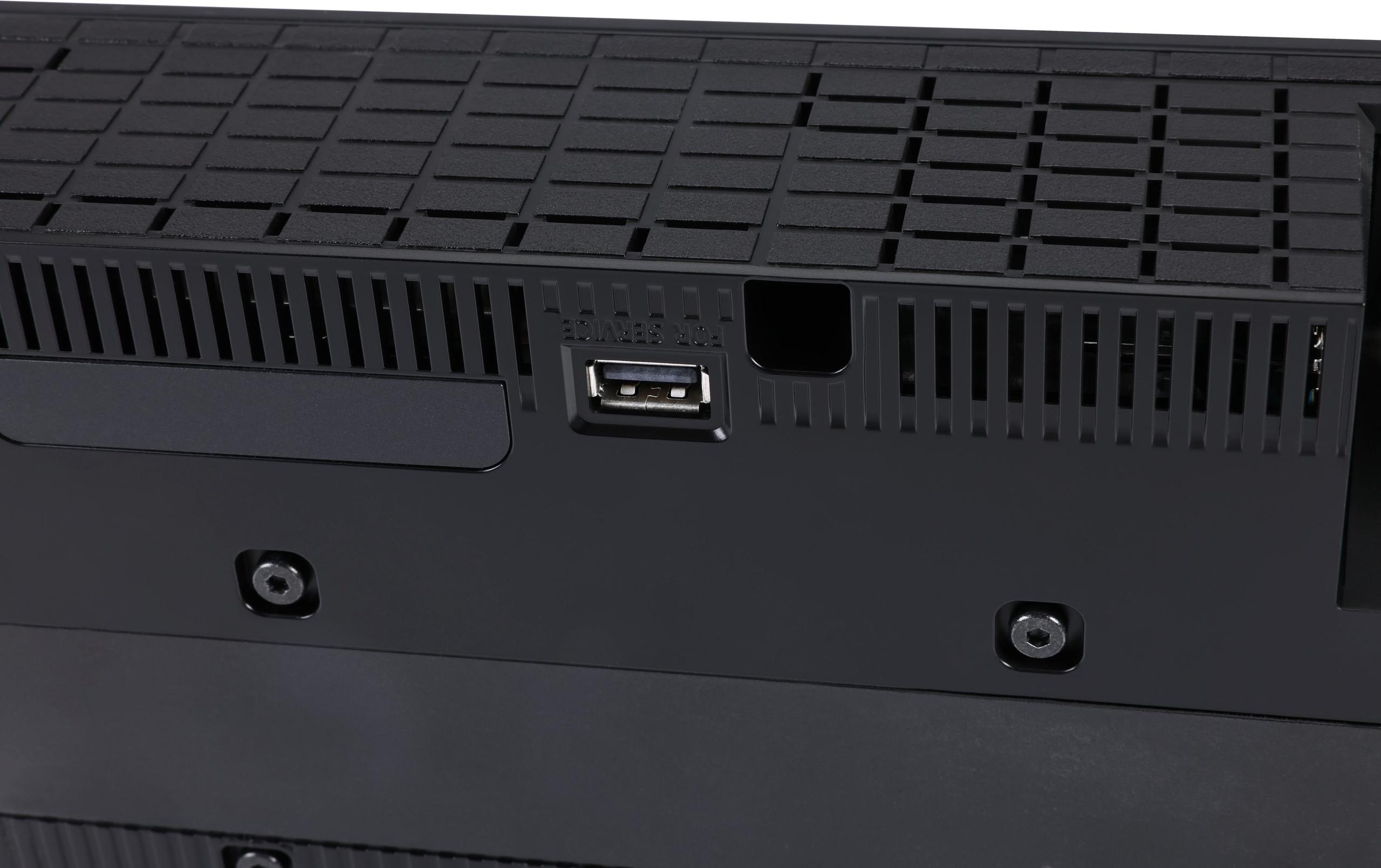
The Ultimea system suffers from a significant limitation here—no HDMI input at all. You're limited to optical, USB, and Bluetooth connections, which means you can't take advantage of advanced audio formats that require HDMI bandwidth. For many users, this won't matter if they're connecting primarily through their TV's optical output, but it does limit upgrade flexibility.
Both systems support wireless streaming, though the Sony's broader compatibility (AirPlay 2, Spotify Connect, BRAVIA Sync) gives it an edge for seamless integration with various devices and ecosystems.
For dedicated home theater use, both systems bring advantages. The Ultimea's true surround speaker placement creates more convincing immersion during movie nights, especially in scenes with lots of directional effects. The ability to fine-tune surround levels means you can optimize for your seating arrangement—something particularly valuable if you have multiple rows or an L-shaped sectional.
The Sony system's automatic calibration better accommodates changing room conditions. If you rearrange furniture or switch between different seating positions, the system adapts without requiring manual adjustments. Its integration with Sony TVs also provides benefits like synchronized power control and optimized audio-video timing.
The Sony HT-A8000 makes sense for users who prioritize convenience, build quality, and integration over maximum customization. It's ideal if you want premium performance without the complexity of positioning multiple speakers, or if you're building around a Sony BRAVIA TV ecosystem. The automatic room correction works well in most typical living rooms, and the single-bar design maintains clean aesthetics.
The Ultimea Aura A40 appeals to value-conscious buyers who want genuine surround immersion and don't mind the additional setup complexity. It's particularly compelling for dedicated home theater rooms where you can properly position the surround speakers, or for users who enjoy tweaking and customizing their audio experience. The extensive EQ options and longer warranty (typically 2 years versus Sony's 1 year) add value proposition.
At the time of writing, these systems represent fundamentally different value propositions. The Sony commands a premium price that reflects its sophisticated engineering and brand positioning, while the Ultimea offers impressive features and genuine surround sound at a more accessible price point.
If your budget allows and you value convenience and refinement, the Sony system delivers a more polished experience with better long-term compatibility. Its automatic features work well for most users, and the build quality suggests it will remain satisfying for years.
If you're working with a tighter budget but want maximum immersion, the Ultimea system provides genuine surround sound that single-bar systems can't fully match. You'll need to invest time in proper setup and tuning, but the payoff is convincing spatial audio that enhances both movies and gaming.
The choice ultimately comes down to your priorities: premium convenience and refinement versus customizable immersion and value. Both will dramatically improve your TV's audio experience—they just take different paths to get there.
| Sony HT-A8000 BRAVIA Theater Bar 8 | Ultimea Aura A40 U2601 |
|---|---|
| Channel Configuration - Determines surround sound approach and immersion quality | |
| 5.0.2 channels (11 drivers in single bar) | 7.1 channels (8 drivers across multiple speakers) |
| Surround Sound Method - Critical for spatial audio experience | |
| Virtual surround via 360 Spatial Sound Mapping | Physical surround speakers (4 dedicated units) |
| Total Power Output - Affects maximum volume and dynamic range | |
| 495W RMS (S-Master HX digital amplification) | 330W peak (standard amplification) |
| Subwoofer Inclusion - Essential for deep bass and movie impact | |
| Optional wireless subwoofer (sold separately) | Dedicated 4-inch wired subwoofer included |
| HDMI Connectivity - Future-proofs for gaming and 8K content | |
| HDMI 2.1 with eARC/ARC, 8K pass-through | No HDMI (optical, USB, AUX, Bluetooth only) |
| Audio Customization - How much control you have over sound | |
| Limited manual adjustments, automatic optimization | 6 EQ modes, 10-band equalizer, 121 presets, 13 surround levels |
| Setup Complexity - Time and effort required for installation | |
| Single bar placement, automatic room calibration | Multi-speaker positioning, manual tuning required |
| Dolby Atmos Support - Premium audio format for height effects | |
| Full Dolby Atmos and DTS:X support | Not supported |
| Smart Features - Modern connectivity and control options | |
| Wi-Fi, AirPlay 2, Spotify Connect, BRAVIA TV integration | Bluetooth 5.3, ULTIMEA Smart App, OTA updates |
| Warranty Coverage - Protection for your investment | |
| 1 year parts and labor | 2 years parts and labor |
| Build Quality and Materials - Long-term durability and sound refinement | |
| Premium construction, X-Balanced drivers, refined acoustics | Budget-friendly materials, adequate but less refined sound |
| Room Size Optimization - Best performance area | |
| Medium to large rooms with good wall/ceiling reflection | Small to medium rooms (108-270 sq ft) with proper speaker placement |
The Ultimea Aura A40 provides superior home theater immersion with its four physical surround speakers that create genuine 360-degree sound positioning. However, the Sony HT-A8000 offers more convenience with automatic room calibration and Dolby Atmos support. For dedicated home theater rooms where you can properly position speakers, the Ultimea system delivers more authentic surround effects.
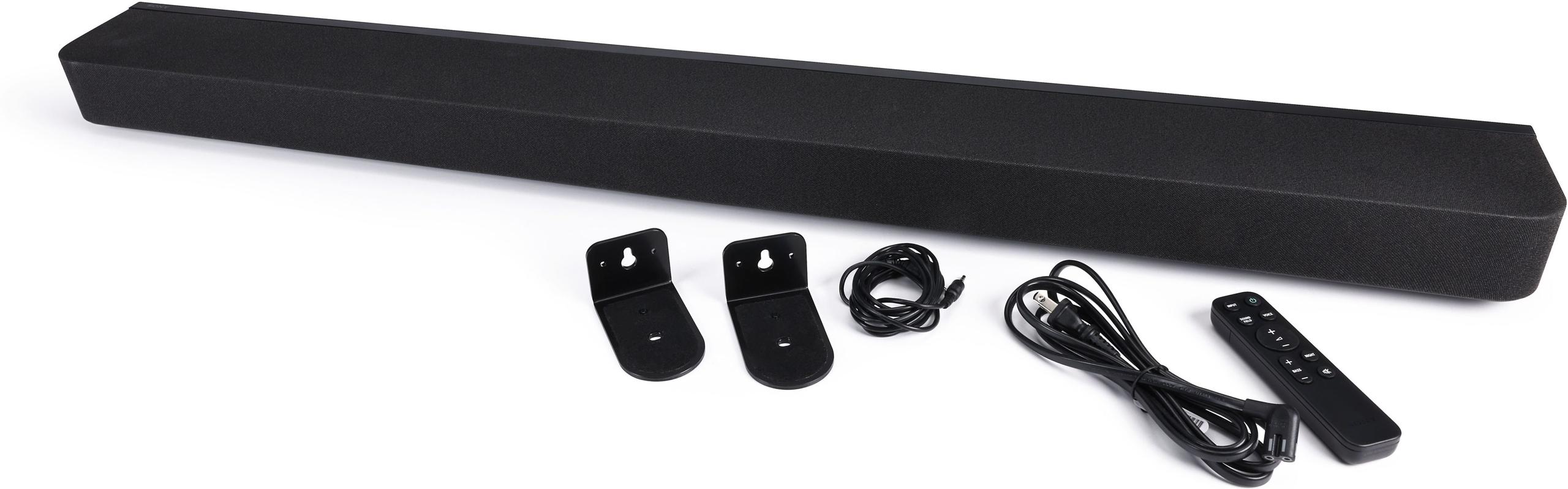
The Sony HT-A8000 is a complete single-bar solution that doesn't require additional speakers, though you can add optional wireless subwoofers and rear speakers later. The Ultimea Aura A40 comes with four separate surround speakers and a subwoofer that must be positioned around your room for optimal performance.
The Ultimea Aura A40 includes a dedicated 4-inch subwoofer with BassMX technology, providing more impactful bass out of the box. The Sony HT-A8000 has integrated bass drivers that are more refined but less powerful - you'll need to purchase an optional subwoofer for deep, room-filling bass.
The Sony HT-A8000 offers much simpler setup with just one bar to position and automatic room calibration. The Ultimea Aura A40 requires positioning four surround speakers around your room and running cables, making setup more complex but potentially more rewarding for the immersive experience.
The Sony HT-A8000 is superior for gaming with HDMI 2.1 support, 4K120Hz pass-through, and low-latency features. The Ultimea system lacks HDMI connectivity entirely, limiting its gaming capabilities, though its physical surround speakers can provide excellent directional audio for competitive gaming.
The Ultimea Aura A40 offers extensive customization with 6 EQ modes, a 10-band equalizer, 121 preset matrices, and 13 adjustable surround levels through its smart app. The Sony HT-A8000 has limited manual adjustments, relying primarily on automatic optimization and preset sound modes.
The Ultimea Aura A40 provides exceptional value with true 7.1 surround sound, included subwoofer, extensive customization options, and a 2-year warranty at a budget-friendly price point. The Sony HT-A8000 costs significantly more but offers premium build quality, advanced features, and convenient single-bar design.
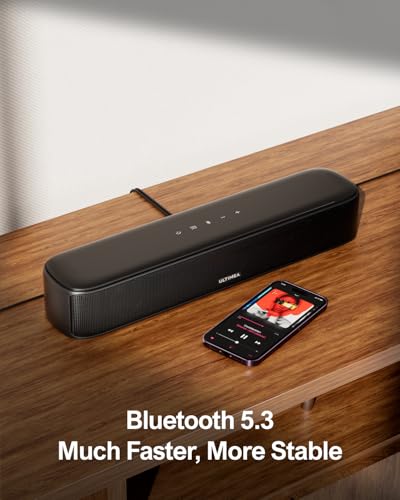
Both soundbars support wireless streaming, but differently. The Sony HT-A8000 offers Wi-Fi, Bluetooth 5.2, AirPlay 2, and Spotify Connect with broader device compatibility. The Ultimea Aura A40 provides Bluetooth 5.3 connectivity and app-based control with OTA update capabilities.
Both excel at dialogue, but through different approaches. The Sony HT-A8000 uses AI-powered Voice Zoom 3 technology to automatically enhance speech, while the Ultimea system offers manual voice mode adjustments and dedicated center channel processing that you can fine-tune to your preferences.
The Sony HT-A8000 requires minimal space with just a single 43-inch soundbar that can be wall-mounted or placed on a TV stand. The Ultimea Aura A40 needs significantly more space for positioning four surround speakers, a subwoofer, and running cables throughout your room.
The Sony HT-A8000 is more future-proof with HDMI 2.1 support, 8K pass-through, Dolby Atmos compatibility, and integration with modern gaming consoles. The Ultimea Aura A40 lacks HDMI connectivity and advanced audio format support, limiting its compatibility with future devices and content.
The Ultimea Aura A40 provides superior warranty protection with 2 years of parts and labor coverage, demonstrating confidence in their product reliability. The Sony HT-A8000 includes a standard 1-year warranty, which is typical for premium audio equipment but offers less long-term protection than the Ultimea system.
We've done our best to create useful and informative comparisons to help you decide what product to buy. Our research uses advanced automated methods to create this comparison and perfection is not possible - please contact us for corrections or questions. These are the sites we've researched in the creation of this article: consumerreports.org - skybygramophone.com - target.com - rtings.com - bestbuy.com - rubbermonkey.co.nz - shopatsc.com - audioadvice.com - sony.com - sony.com - sony.com - shop.cosmopolitan.com - store.sony.com.my - videoandaudiocenter.com - walmart.com - newegg.com - youtube.com - ultimea.com - youtube.com - device.report - ultimea.co - manuals.plus - homestudiobasics.com - youtube.com - bestbuy.com - community.ultimea.com - manuals.plus - eu.ultimea.com - navesapeugeot.com.br - bestbuy.com - images.thdstatic.com - provantage.com - ultimea.com - bestbuy.com

Privacy Policy
Terms and Conditions - Affiliate Policy
Home Security
© Copyright 2008-2026.
11816 Inwood Rd #1211, Dallas, TX 75244