


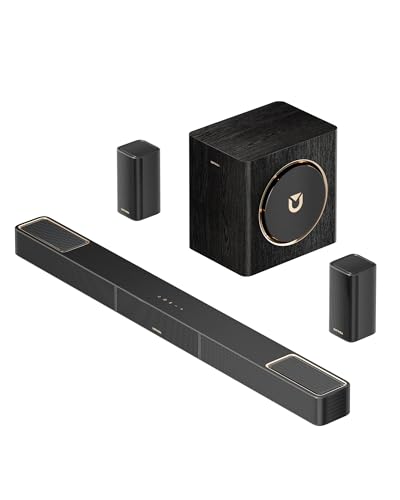








Shopping for a soundbar can feel overwhelming—there are dozens of options at every price point, each promising to transform your TV viewing experience. Today we're comparing two fundamentally different approaches: the ULTIMEA Skywave X40, a complete 5.1.2 wireless surround system, and the Klipsch Flexus Core 100, a premium single-unit soundbar designed for gradual expansion.
These products represent opposing philosophies in soundbar design. The Skywave X40 gives you everything upfront—true surround sound with wireless rear speakers and a dedicated subwoofer. The Flexus Core 100 takes a minimalist approach, delivering high-quality audio from one sleek unit while leaving room to grow your system later.
Before diving into specifics, it's worth understanding what makes modern soundbars tick. The biggest advancement in recent years has been wireless technology—both for connecting to your TV (via Bluetooth or Wi-Fi) and for connecting multiple speakers together without running cables across your room.
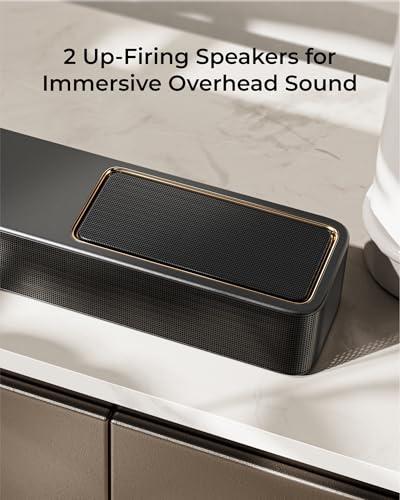
The numbers you see like "5.1.2" describe the speaker configuration: 5 main channels (left, center, right, left surround, right surround), 1 subwoofer for bass, and 2 height channels that bounce sound off your ceiling to create overhead effects. This is called Dolby Atmos, and it's become the gold standard for immersive audio since its introduction in home systems around 2014.
Power ratings can be confusing because manufacturers measure them differently. Peak power (the maximum burst) sounds impressive but RMS power (continuous output) better represents daily performance. More importantly, how that power is distributed across multiple speakers often matters more than the total number.
Released in 2025, the ULTIMEA Skywave X40 represents the latest evolution in wireless surround sound systems. At its heart is a 43-inch soundbar paired with two wireless rear speakers and a 6.5-inch wireless subwoofer—everything you need for genuine 5.1.2 surround sound.
What makes this system interesting is its CineMesh wireless technology. Unlike older wireless systems that often suffered from audio dropouts or sync issues, the Skywave X40 uses dual 5GHz transmission to maintain stable connections with less than 20ms latency. That's imperceptible to human ears, which is crucial for maintaining lip-sync in movies and responsiveness in gaming.
The system's NEURACORE processing engine handles up to 2,000 MIPS (million instructions per second) of audio calculations. Think of this as the brain that takes incoming Dolby Atmos signals and figures out exactly which speaker should play what sound, and when. This level of processing power allows for precise sound positioning—helicopters actually sound like they're flying overhead, not just coming from speakers mounted on your wall.
Power-wise, the Skywave X40 delivers 530W peak across its 8 total drivers. More importantly, it uses GaN (Gallium Nitride) amplification, which is significantly more efficient than traditional silicon amplifiers. This means less heat generation and more stable performance during loud action sequences.
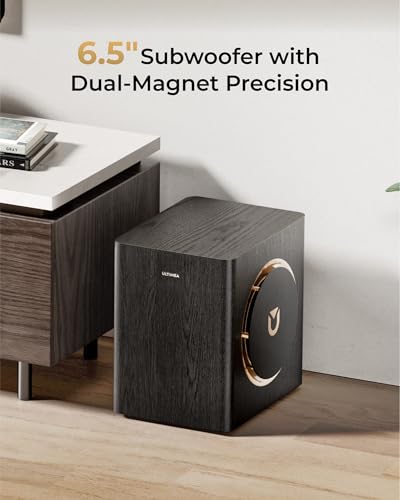
The bass performance deserves special mention. The wireless subwoofer extends down to 35Hz using what ULTIMEA calls Gravus Ultra-Linear Bass Technology. To put that in perspective, most movie theater subwoofers reach about 30Hz, so you're getting genuine theater-level low-end extension. The 6.5-inch driver might seem modest, but the dual-magnet design and precision engineering deliver clean, powerful bass without the boomy, one-note sound that plagues many budget subwoofers.
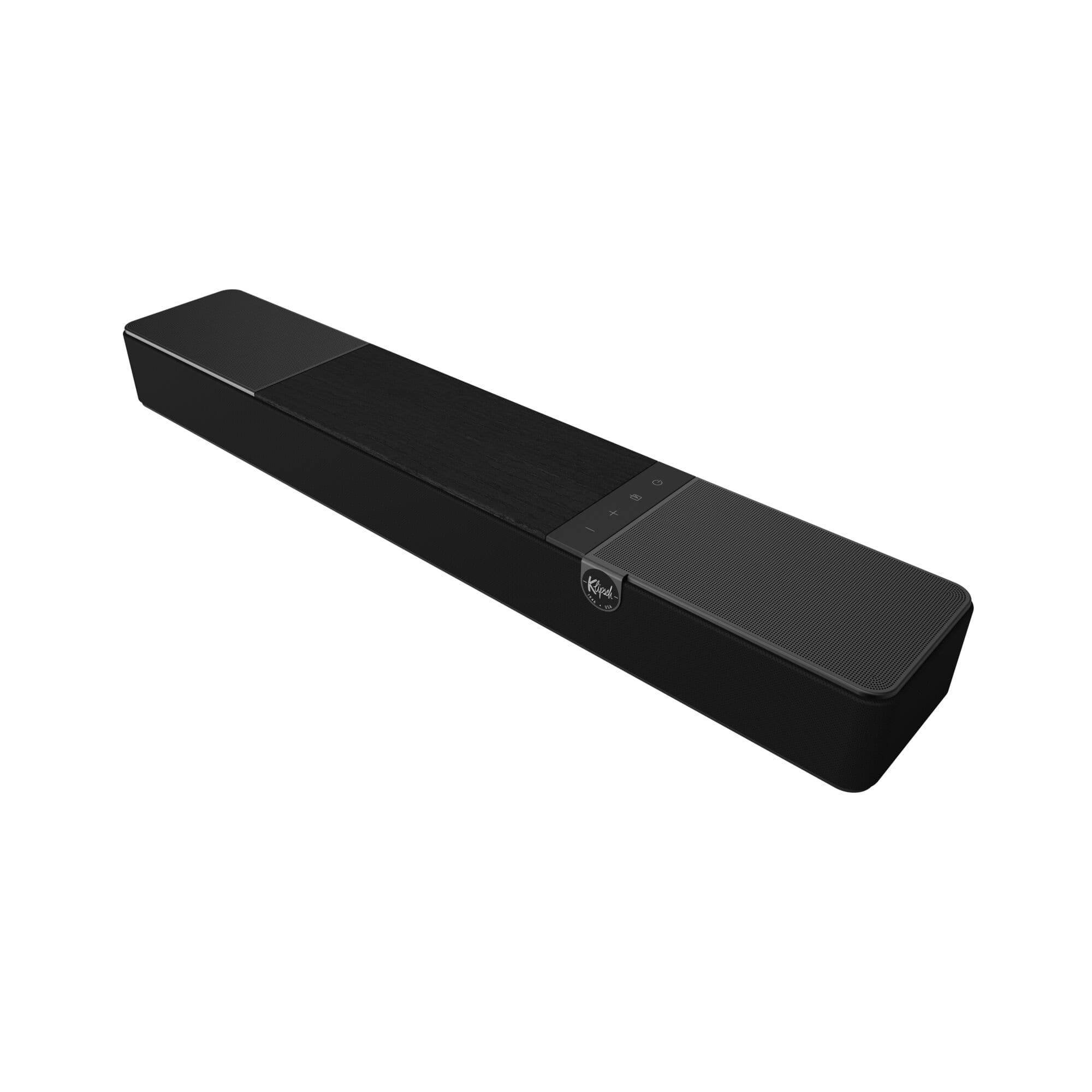
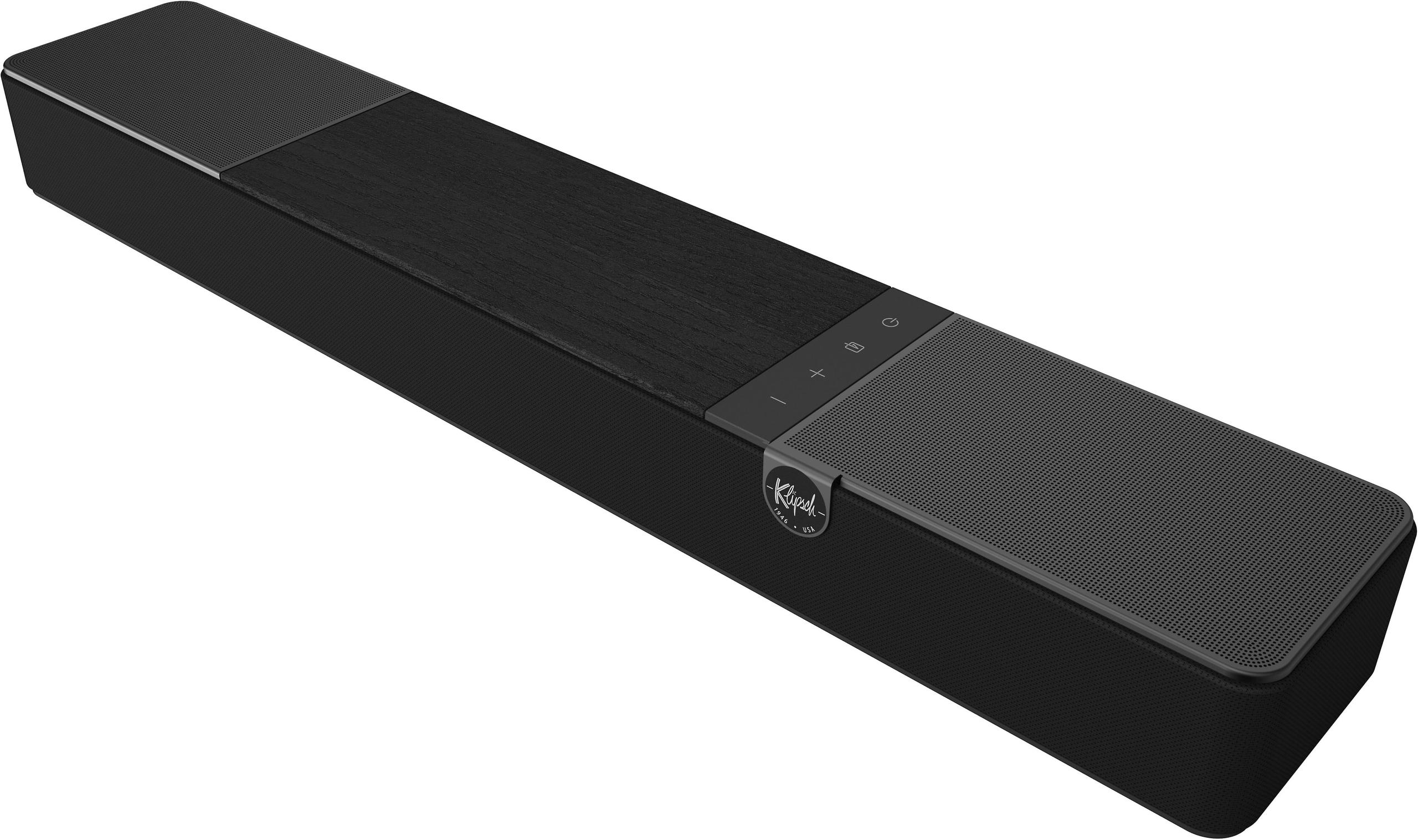
Klipsch took a completely different approach with the Flexus Core 100, released in 2024. This soundbar embodies the "less is more" philosophy, packing dual 4-inch subwoofers and carefully tuned 2.25-inch aluminum cone drivers into a single 28-inch enclosure.
The Klipsch name carries weight in the audio world—they've been making speakers since 1946 and pioneered the horn-loaded tweeter design that many audiophiles swear by. That expertise shows in the Flexus Core 100's acoustic engineering. Rather than chasing raw power numbers, Klipsch focused on efficiency and precision.
The soundbar's 100W RMS might seem modest compared to the Skywave X40's peak ratings, but RMS represents continuous, sustainable output. Klipsch's acoustic engineers have optimized every component to extract maximum performance from available power. The aluminum cone drivers provide excellent detail reproduction, while the dual built-in subwoofers deliver what Klipsch boldly claims is "best-in-class bass without an external subwoofer."
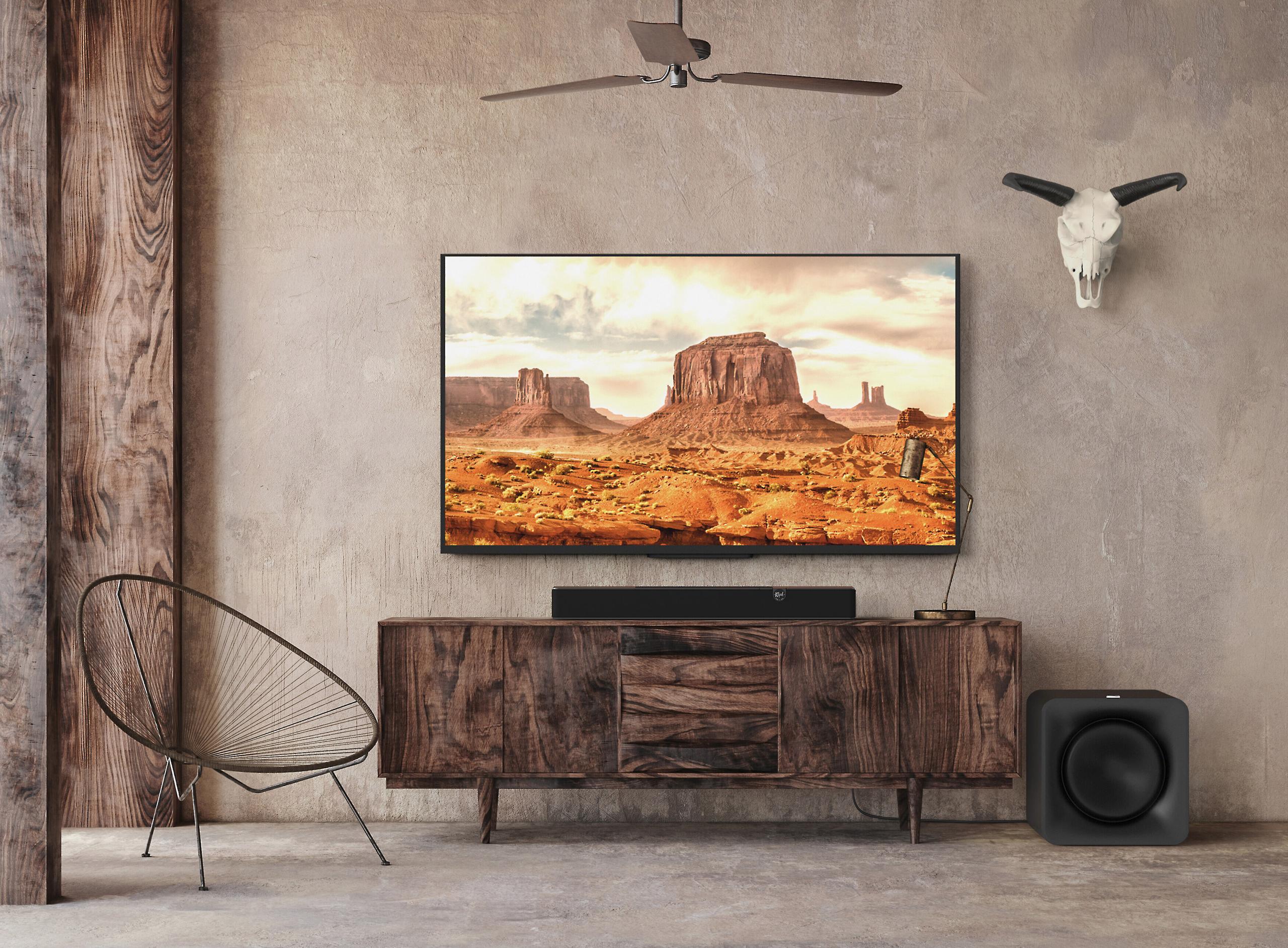
What's particularly clever about the Flexus Core 100 is its expandability through Klipsch Transport technology. This 2.4GHz wireless system allows you to add Flexus Surrounds and a dedicated Flexus Subwoofer later, transforming your simple soundbar into a full surround system over time. It's like buying a foundation that you can build upon as your needs and budget evolve.
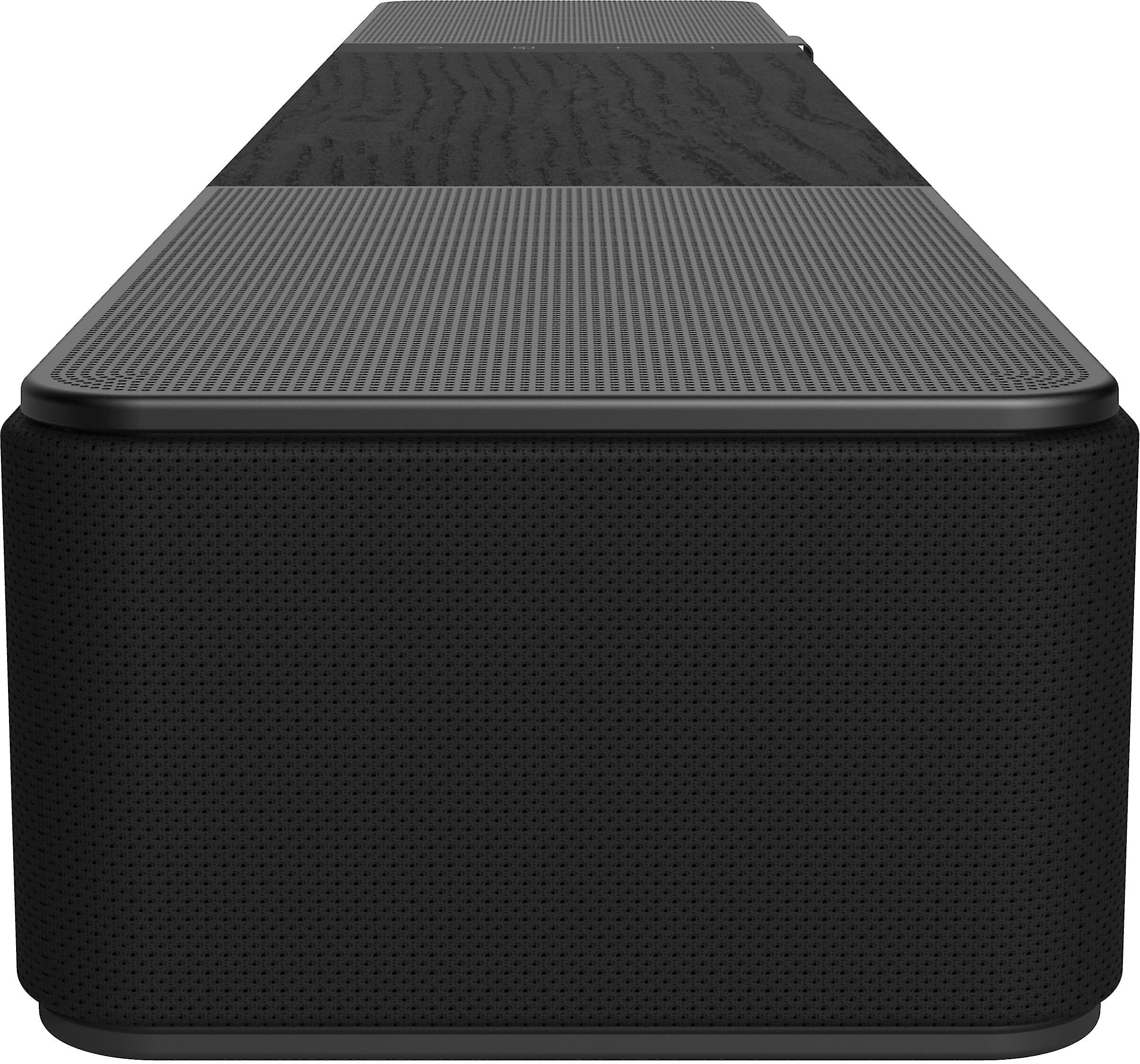
The build quality reflects Klipsch's premium positioning. The ebony vinyl finish, metal grille, and solid construction feel substantial in ways that many budget soundbars don't. This isn't just about aesthetics—better materials and construction typically translate to reduced vibrations and cleaner sound reproduction.
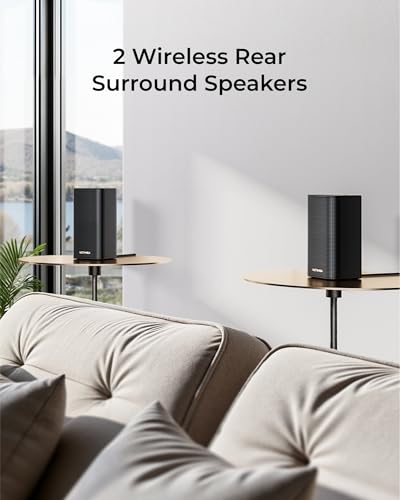
This is where the fundamental difference becomes clear. The ULTIMEA Skywave X40 delivers genuine surround sound because it has actual speakers behind you. When a car chase scene has vehicles roaring past, you hear them move from front to back through dedicated rear speakers. The up-firing drivers create height effects by bouncing sound off your ceiling, so rain in a movie scene seems to fall from above.
The Klipsch Flexus Core 100 takes a different approach called virtualization. It processes surround sound signals and uses psychoacoustic tricks to fool your brain into perceiving sounds coming from directions where there aren't actually speakers. Modern virtualization has improved dramatically, but it can't match the precision and impact of dedicated surround speakers.
For movie nights and gaming, this difference is significant. The Skywave X40 creates a bubble of sound around you, while the Flexus Core 100 projects a wide soundstage from the front. Both enhance the TV experience, but only one truly envelops you.
Bass is where both systems show their engineering priorities. The Skywave X40's dedicated 6.5-inch subwoofer can move more air and reach deeper frequencies than any integrated solution. That 35Hz extension means you feel the rumble of explosions and the thump of bass lines in music. The wireless design lets you position the subwoofer optimally for your room's acoustics.
The Flexus Core 100's dual 4-inch drivers are impressive for their size and integration. They provide punchy, controlled bass that won't overwhelm your neighbors but might leave bass-heads wanting more depth. The advantage is aesthetic—no separate box to hide or position.
For larger rooms, the Skywave X40's distributed power across multiple speakers provides better coverage. The Flexus Core 100 works best in smaller to medium spaces where its focused output can adequately fill the room.
Here's where preferences diverge sharply. The Skywave X40 requires positioning four separate components around your room. While they're wireless (except for power), you need outlets for the rear speakers and subwoofer. The CineMesh technology means they're pre-paired at the factory, so setup is mostly about placement and powering on.
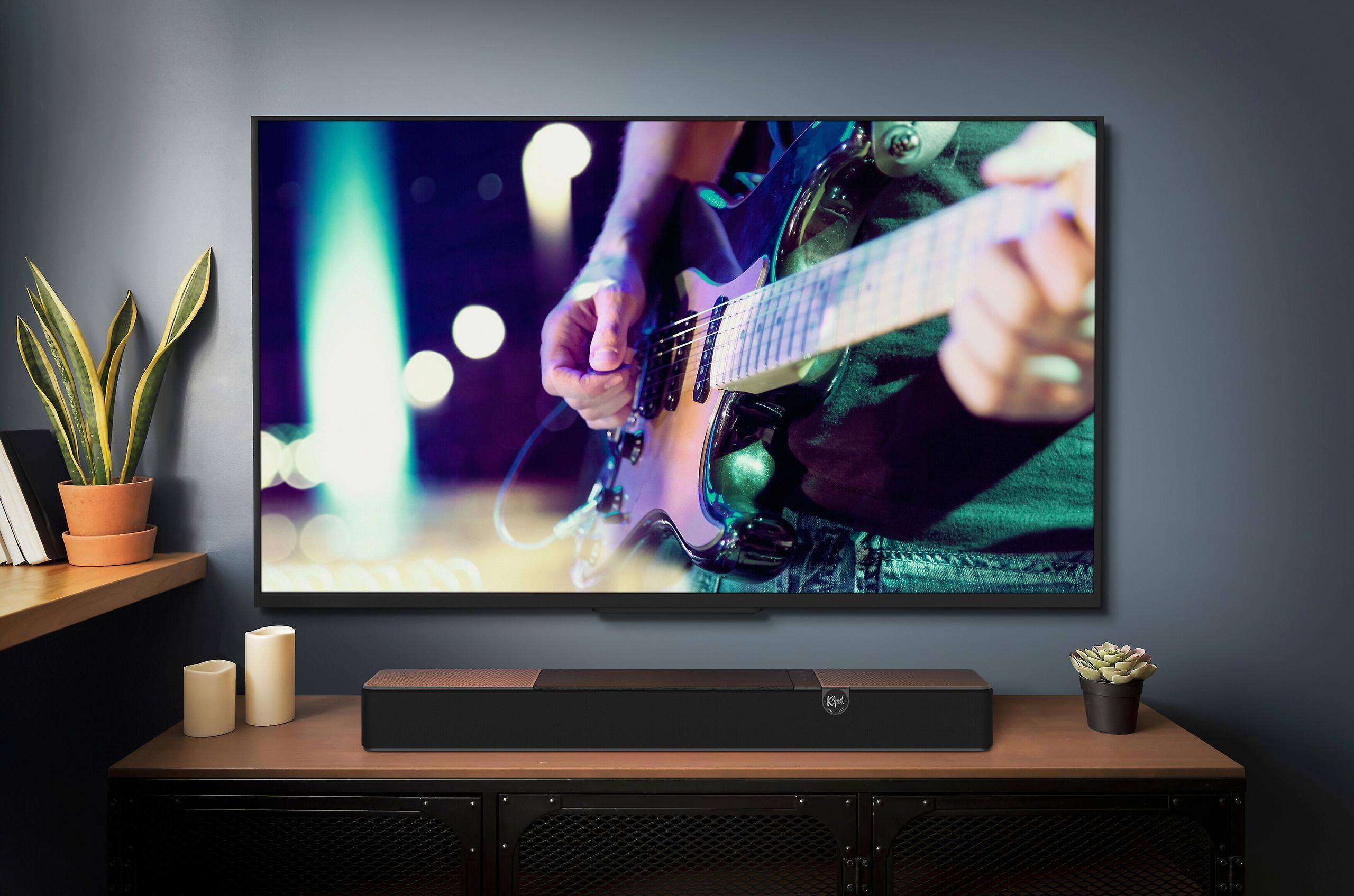
The Flexus Core 100 connects with just power and HDMI. For apartment dwellers or anyone prioritizing clean aesthetics, this simplicity is valuable. The included wall-mounting hardware and slim profile make it nearly invisible when properly installed.
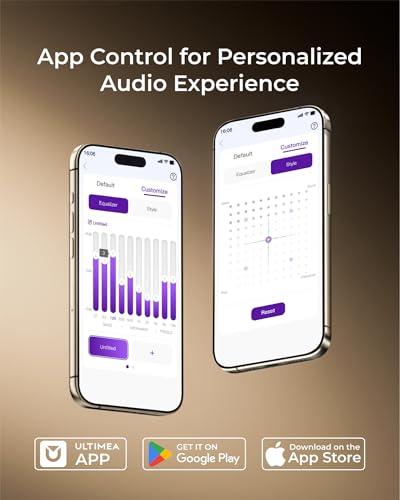
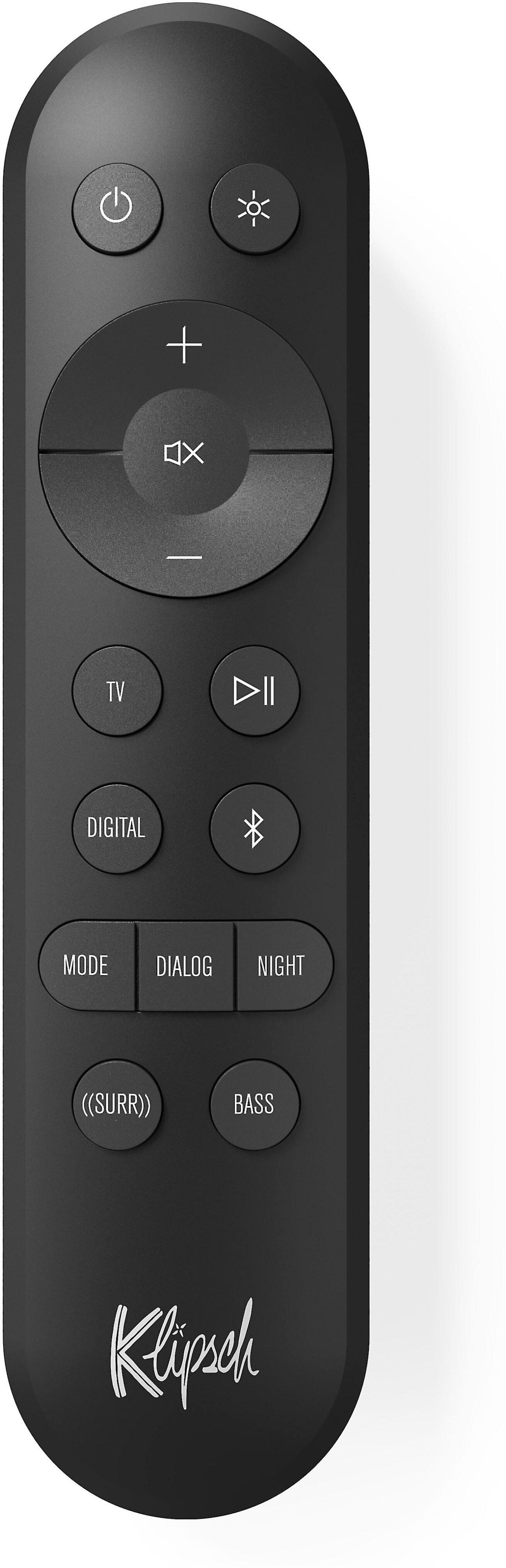
Both systems offer smartphone apps for control and customization. The Skywave X40 provides 121 preset sound profiles and a 10-band equalizer—almost overwhelming in its options. The Flexus Core 100 takes a more curated approach through the Klipsch Connect Plus app, offering fewer but more carefully tuned presets.
At the time of writing, these products target different price segments, which affects their value propositions significantly. The ULTIMEA Skywave X40 delivers complete 5.1.2 surround sound at a price point where most competitors offer only single soundbars or basic 3.1 systems.
The Flexus Core 100 commands a premium for the Klipsch brand and build quality. You're paying more per component, but you're getting refined acoustic engineering and the flexibility to expand gradually rather than committing to a full system upfront.
From a pure performance-per-dollar perspective, the ULTIMEA Skywave X40 is difficult to beat. You're getting true surround sound capabilities that would typically cost significantly more from established brands. However, the Flexus Core 100 offers long-term value through its expansion ecosystem and premium construction.
For dedicated home theater use, the ULTIMEA Skywave X40 is the clear winner. Movie soundtracks are mixed for surround sound systems, and having actual rear speakers makes action sequences and atmospheric effects dramatically more engaging. The system's 4K HDR passthrough ensures your video quality isn't compromised when connecting sources directly to the soundbar.
The height channels are particularly effective with Dolby Atmos content. Modern movies and many streaming services now offer Atmos soundtracks, and the overhead effects add genuine immersion. Netflix, Disney+, and Amazon Prime Video all stream Atmos content, making this feature immediately useful rather than future-proofing.
Gaming performance favors the Skywave X40 as well. The low-latency wireless ensures no delay between on-screen action and audio, while the surround speakers provide competitive advantages in games where audio cues matter. First-person shooters and racing games benefit enormously from accurate positional audio.
The ULTIMEA Skywave X40 makes sense for buyers who want immediate, comprehensive surround sound and have space for multiple components. It's ideal for dedicated home theaters, larger living rooms, and anyone who prioritizes immersive audio over aesthetic minimalism. The system particularly appeals to gamers and movie enthusiasts who want the full surround sound experience without spending flagship prices.
The Klipsch Flexus Core 100 suits buyers who value premium build quality, clean aesthetics, and upgrade flexibility. It's perfect for smaller spaces, minimalist setups, or anyone who wants to build their system gradually. The Klipsch name also provides confidence in long-term support and acoustic expertise.
Budget-conscious buyers seeking maximum immediate impact should lean toward the Skywave X40. Those willing to pay more for refined engineering and future flexibility will appreciate the Flexus Core 100's approach.
Both systems represent current-generation wireless technology, but they handle expansion differently. The Skywave X40 is essentially complete as delivered—there's limited room for upgrades beyond firmware updates through its mobile app.
The Flexus Core 100's modular design offers better long-term flexibility. As your space or needs change, you can add components to match. This approach also spreads the financial investment over time, which appeals to buyers who want premium quality but need to budget carefully.
Both systems support current audio formats and connectivity standards. HDMI eARC ensures compatibility with modern TVs, while Bluetooth connectivity handles music streaming from phones and tablets.
These soundbars represent genuinely different philosophies rather than direct competitors. The ULTIMEA Skywave X40 delivers maximum performance and immersion for buyers ready to commit to a complete system. The Klipsch Flexus Core 100 offers premium quality and flexibility for buyers who prefer gradual expansion.
For pure home theater performance, the Skywave X40 wins decisively. True surround sound simply can't be matched by virtualization, no matter how sophisticated. For aesthetic integration and long-term flexibility, the Flexus Core 100 provides a more refined foundation to build upon.
The market has room for both approaches. Some buyers want everything now at maximum value, while others prefer to start with quality basics and expand thoughtfully. Understanding which buyer you are—and what your space can accommodate—will make this decision much clearer.
Both systems will dramatically improve your TV's audio compared to built-in speakers. The question is whether you want immediate surround sound immersion or prefer to start with premium basics and build your ideal system over time.
| ULTIMEA Skywave X40 5.1.2 Soundbar System | Klipsch Flexus Core 100 Soundbar |
|---|---|
| Audio Configuration - Determines immersion level and surround sound quality | |
| True 5.1.2 with wireless rear speakers and height channels | 2.1 virtualized surround with built-in dual subwoofers |
| Total System Power - Affects maximum volume and dynamic range | |
| 530W peak across 8 drivers in multiple components | 100W RMS from carefully tuned single-unit design |
| Subwoofer Design - Critical for bass depth and impact | |
| Dedicated 6.5" wireless subwoofer (35Hz extension) | Dual built-in 4" subwoofers (45Hz response) |
| Wireless Technology - Affects reliability and setup flexibility | |
| CineMesh dual 5GHz with <20ms latency | Klipsch Transport 2.4GHz system |
| Included Components - What you get in the box | |
| Main bar + wireless subwoofer + 2 wireless rear speakers | Single soundbar only (expansion speakers sold separately) |
| Setup Complexity - Time and effort required for installation | |
| 4 components to position, all pre-paired wirelessly | Single unit installation with power and HDMI only |
| Expandability - Future upgrade potential | |
| Complete system as delivered, limited expansion | Modular design allows gradual addition of surrounds and sub |
| Audio Processing - Sophistication of sound optimization | |
| NEURACORE engine with 2,000 MIPS processing power | Dolby Atmos processing with Klipsch acoustic tuning |
| Build Materials - Affects durability and premium feel | |
| Mixed materials with rose gold accents | Premium ebony vinyl finish with metal grille |
| Mobile App Control - Customization and convenience features | |
| 121 presets with 10-band EQ via Ultimea app | Klipsch Connect Plus with curated EQ presets |
| Ideal Room Size - Performance optimization for space | |
| Large rooms benefit from distributed 530W power | Small to medium rooms with focused 100W output |
| Best Use Case - Primary intended application | |
| Dedicated home theater with maximum immersion | Clean aesthetic setup with gradual expansion path |
The ULTIMEA Skywave X40 provides genuine 5.1.2 surround sound with actual wireless rear speakers and height channels, creating true immersive audio. The Klipsch Flexus Core 100 uses virtualized surround sound from a single unit, which enhances the soundstage but can't match the positioning accuracy of dedicated rear speakers.
The ULTIMEA Skywave X40 includes a dedicated 6.5-inch wireless subwoofer that extends down to 35Hz for deep, room-shaking bass. The Klipsch Flexus Core 100 features dual built-in 4-inch subwoofers that provide solid bass for their size but can't match the depth and impact of a dedicated subwoofer.
The Klipsch Flexus Core 100 is much simpler to install, requiring only power and HDMI connections to your TV. The ULTIMEA Skywave X40 involves positioning four wireless components around your room, though all speakers come pre-paired from the factory.
The Klipsch Flexus Core 100 is designed for expansion using Klipsch Transport technology, allowing you to add wireless surrounds and a subwoofer over time. The ULTIMEA Skywave X40 comes complete with all components included and has limited expansion options.
The Klipsch Flexus Core 100 works better in smaller spaces due to its compact single-unit design and focused 100W output. The ULTIMEA Skywave X40 is better suited for larger rooms where its 530W distributed power and multiple speakers can properly fill the space.
The ULTIMEA Skywave X40 delivers 530W peak power across 8 drivers in multiple components, while the Klipsch Flexus Core 100 provides 100W RMS from a single carefully engineered unit. Peak vs. RMS ratings aren't directly comparable, but the Skywave X40 offers higher maximum output.
The Klipsch Flexus Core 100 features premium materials including ebony vinyl finish and metal grille construction, reflecting Klipsch's audiophile heritage. The ULTIMEA Skywave X40 uses mixed materials with attractive rose gold accents but focuses more on performance per dollar than premium construction.
The ULTIMEA Skywave X40 excels for gaming with its low-latency wireless technology and true surround sound that provides competitive advantages in games requiring positional audio. The Klipsch Flexus Core 100 also works well for gaming but lacks the precise directional audio benefits of dedicated rear speakers.
The ULTIMEA Skywave X40 typically offers better value by including a complete 5.1.2 system with wireless subwoofer and rear speakers. The Klipsch Flexus Core 100 costs more per component but provides premium brand quality and the flexibility to build your system gradually.
Both the ULTIMEA Skywave X40 and Klipsch Flexus Core 100 include HDMI eARC, optical, and Bluetooth connectivity. The Skywave X40 also adds USB input, while the Flexus Core 100 includes USB-C. Both support 4K passthrough and modern streaming device compatibility.
The ULTIMEA Skywave X40 is superior for dedicated home theater setups due to its true 5.1.2 Dolby Atmos configuration with overhead effects and rear surround speakers. The Klipsch Flexus Core 100 enhances TV audio significantly but can't replicate the immersive experience of actual surround speakers for movie watching.
The ULTIMEA Skywave X40 offers extensive customization through its app with 121 sound presets and 10-band EQ controls. The Klipsch Flexus Core 100 uses the Klipsch Connect Plus app with fewer but more carefully curated preset options, reflecting a more streamlined approach to sound customization.
We've done our best to create useful and informative comparisons to help you decide what product to buy. Our research uses advanced automated methods to create this comparison and perfection is not possible - please contact us for corrections or questions. These are the sites we've researched in the creation of this article: bestbuy.com - shopabunda.com - youtube.com - youtube.com - youtube.com - youtube.com - ultimea.com - walmart.com - youtube.com - hometechnologyreview.com - community.ultimea.com - avsforum.com - youtube.com - youtube.com - youtube.com - bestbuy.com - hometechnologyreview.com - cnet.com - klipsch.com - klipsch.com - bestbuy.com - sweetwater.com - assets.onkyo-av.com - youtube.com - worldwidestereo.com - avnirvana.com - target.com

Privacy Policy
Terms and Conditions - Affiliate Policy
Home Security
© Copyright 2008-2026.
11816 Inwood Rd #1211, Dallas, TX 75244