









When shopping for home theater audio, you'll quickly discover that there's no single "right" approach. Some systems prioritize convenience and seamless integration, while others focus on raw performance per dollar. The Sony HT-A9M2 BRAVIA Theater Quad and ULTIMEA Skywave X40 represent two fundamentally different philosophies for bringing movie theater sound to your living room.
At the time of writing, these systems sit at opposite ends of the price spectrum—the Sony costs roughly five times more than the ULTIMEA. But here's where it gets interesting: that price difference doesn't necessarily translate to five times better performance. Instead, you're paying for completely different approaches to solving the same problem.
Before diving into specifics, let's establish what we're actually trying to achieve. Modern movies are mixed with surround sound in mind, meaning sounds are intentionally placed around you—dialogue from the center, ambient effects from the sides, and action sequences that sweep across multiple speakers. The goal is immersion: making you feel like you're inside the movie rather than watching it.
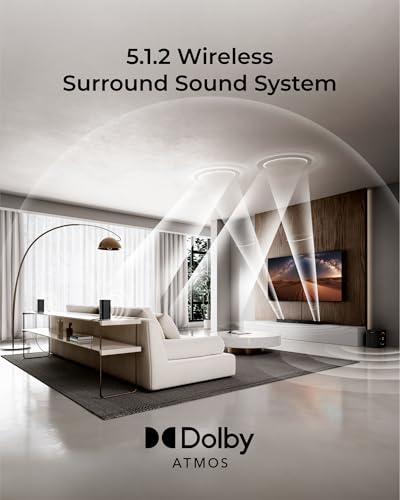
The key specifications you'll encounter include channel configurations like 5.1 or 7.1.4. The first number represents main speakers (front left, center, front right, plus surrounds), the second is subwoofers for bass, and the third (when present) indicates height speakers for overhead effects. Dolby Atmos, which both systems support, adds this overhead dimension by bouncing sound off your ceiling or using upward-firing drivers.
What matters most for actual performance? In our research across expert and user reviews, the consensus points to several critical factors: bass impact and extension (how deep and powerful low frequencies sound), dialogue clarity (can you understand conversations during action scenes?), surround envelopment (do effects convincingly come from around you?), and dynamic range (the difference between whisper-quiet moments and explosive action).
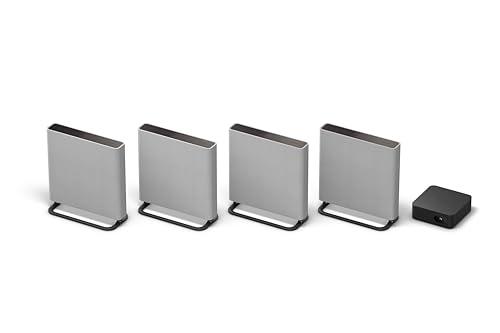
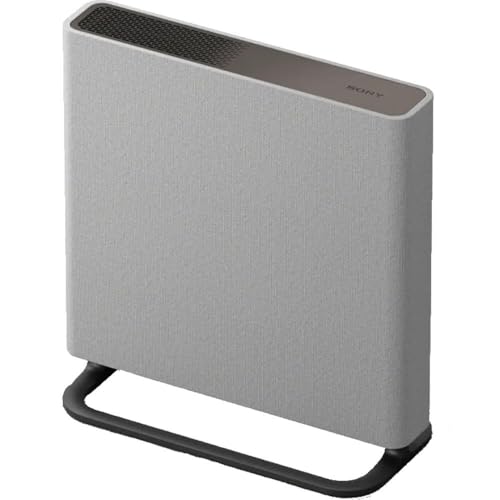
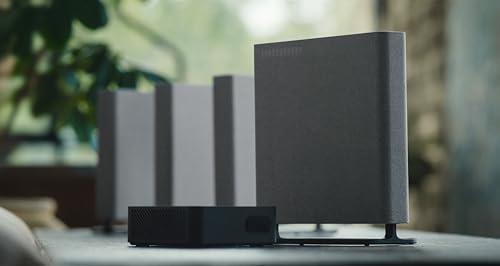
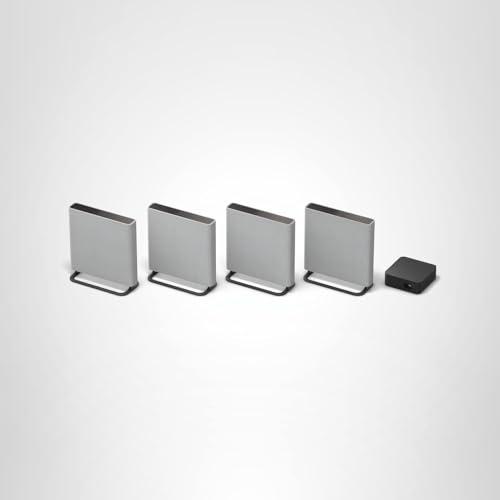
Released in 2023 as an evolution of Sony's original HT-A9, the Sony HT-A9M2 throws conventional wisdom out the window. Instead of a soundbar with separate components, you get four identical wireless speakers that you position around your room like a traditional speaker system—but without any of the complicated wiring.
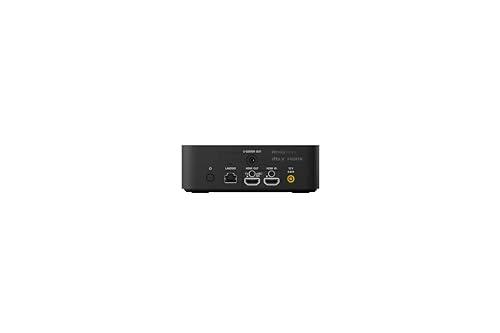
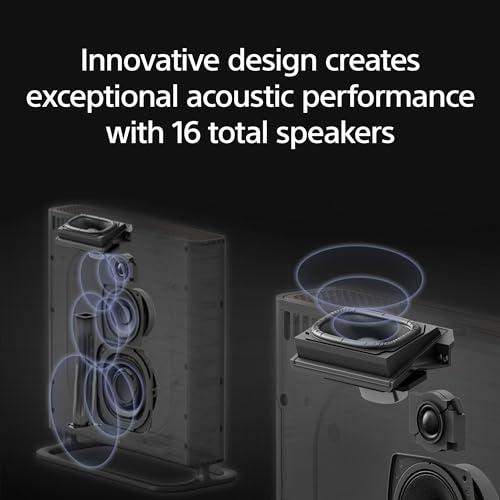
Each of these speakers is essentially a complete audio system in miniature. They pack a three-way driver arrangement (separate woofer, midrange, and tweeter for different frequency ranges) plus an upward-firing Atmos driver on top. That's four drivers per speaker, totaling 16 across the entire system. The speakers connect wirelessly to a small control box that handles all your HDMI and streaming connections.
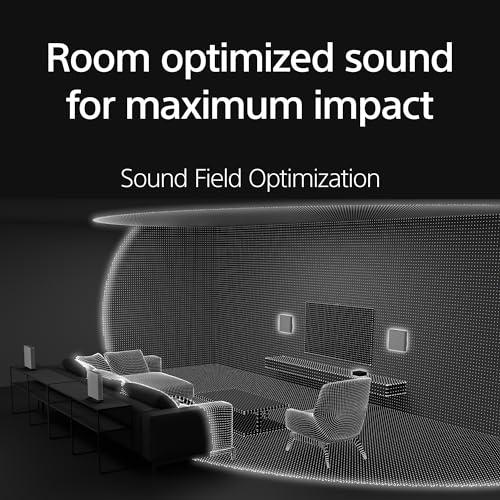
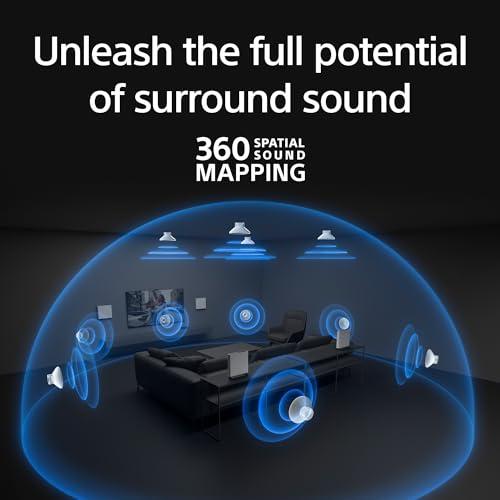
The magic happens through Sony's 360 Spatial Sound Mapping technology. Using built-in microphones and sophisticated processing, the system measures your room's acoustics, then creates "phantom speakers"—audio that appears to come from locations where no physical speakers exist. It's like having 12 speakers when you only have four, achieved through precise timing and phase manipulation of the audio signals.
During setup, each speaker emits test tones while listening to reflections from your walls and ceiling. The system calculates distances, identifies hard surfaces, and maps the acoustic signature of your space. This Sound Field Optimization then adjusts timing, volume, and frequency response for each of the 16 drivers to create a cohesive soundstage that adapts to your specific room.
The Sony system creates something unique: remarkably consistent sound throughout your listening area. Traditional surround systems have a "sweet spot" where everything sounds perfect, with quality degrading as you move away. Sony's approach maintains immersion across a much wider area, making it excellent for families or entertaining.
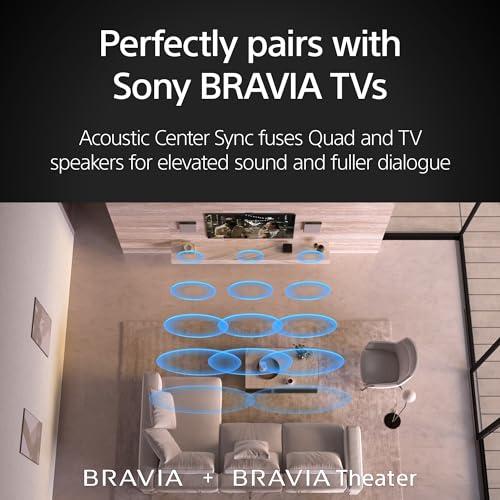
The integration with Sony BRAVIA TVs goes beyond simple connectivity. Acoustic Center Sync allows compatible Sony TVs to act as an actual center speaker, anchoring dialogue directly to the screen while the four satellites handle everything else. This solves one of the phantom center channel's inherent limitations—sometimes dialogue can seem to float between speakers rather than coming from actors' mouths.
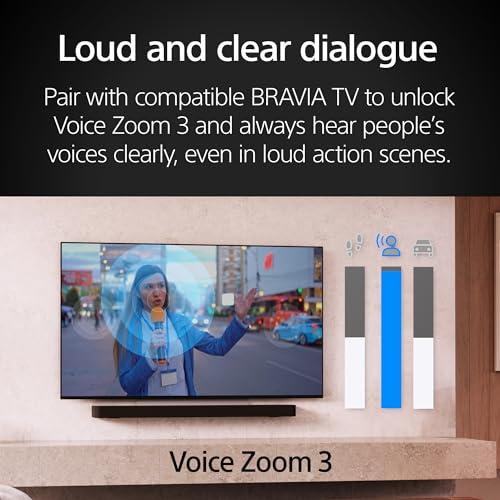
Voice Zoom 3 represents Sony's latest AI-driven dialogue enhancement. The system uses machine learning to identify human speech within complex audio mixes, then separates and amplifies it independently. During chaotic action sequences where explosions might overpower conversation, this processing maintains intelligibility without making dialogue sound artificially boosted.
For gaming, particularly with PlayStation 5, the Sony system offers optimizations that automatically adjust picture and sound settings based on content type. Auto HDR Tone Mapping ensures both audio and video are jointly optimized, while support for 4K120Hz and Variable Refresh Rate maintains the premium gaming experience when connecting through the control box.
Here's where Sony's approach reveals its compromises. The system is technically 4.0.4—four main speakers and four height channels—but no dedicated subwoofer. Bass comes from the woofers in each satellite speaker, which simply cannot match a dedicated subwoofer's low-frequency impact.
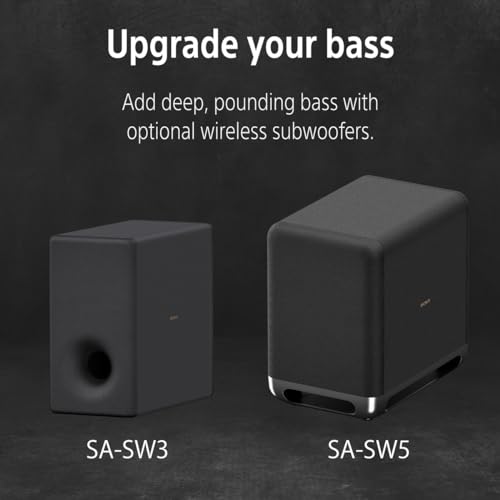
Our analysis of user reviews consistently identifies bass as the Sony system's primary weakness. While it sounds detailed and spacious, it lacks the visceral impact that makes explosions feel real and music sound full-bodied. Sony offers optional wireless subwoofers, but adding one significantly increases the total system cost.
The wireless connectivity, while generally reliable in the current generation, requires careful consideration of your room's RF environment. Four speakers transmitting simultaneously can occasionally experience dropouts in congested wireless areas, though Sony has improved this significantly since the original 2021 model through enhanced antenna design and frequency hopping.
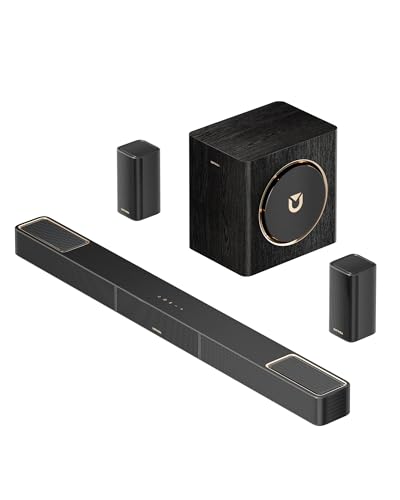
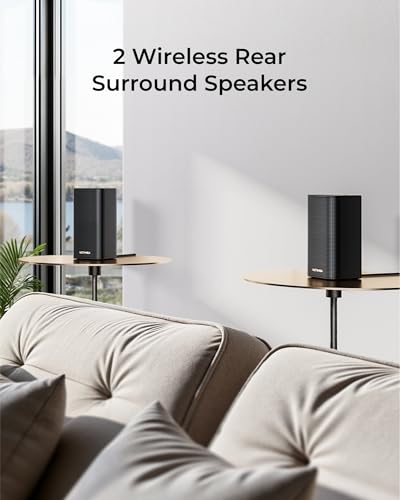
Released in 2024, the ULTIMEA Skywave X40 takes the conventional soundbar approach but implements it with some genuinely advanced technology. You get a main soundbar, wireless subwoofer, and two wireless rear speakers—a complete 5.1.2 system out of the box.
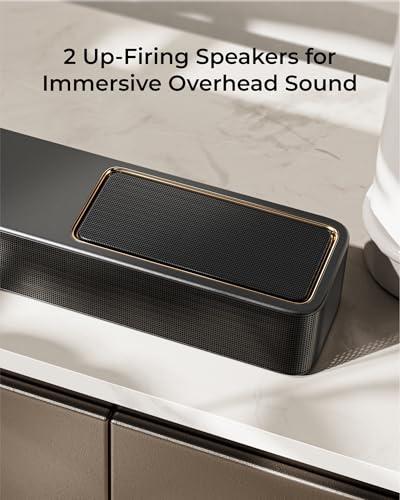
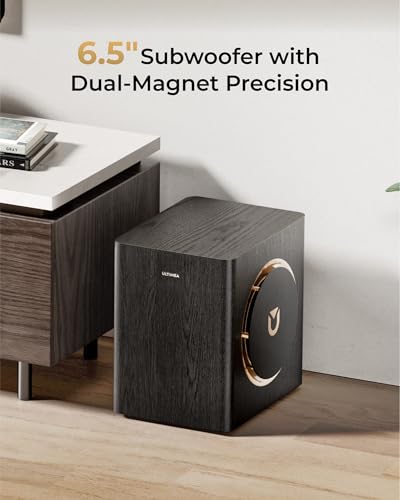
The soundbar houses six drivers: four full-range speakers for left, center, and right channels, plus two upward-firing drivers for Atmos height effects. The 6.5-inch wireless subwoofer uses what ULTIMEA calls Gravus Ultra-Linear Bass Technology, which employs a dual-magnet design to maintain accuracy even at high output levels. The rear speakers provide true surround channels rather than relying on processing tricks.
What's particularly interesting is ULTIMEA's use of GaN (Gallium Nitride) amplification. Traditional amplifiers use silicon semiconductors that waste significant energy as heat—typically operating at around 70% efficiency. GaN amplifiers achieve 98% efficiency while responding eight times faster than silicon. This translates to cleaner sound at high volumes and significantly less heat generation.
The NEURACORE processing engine provides 2,000 MIPS (Million Instructions Per Second) of computational power for real-time audio optimization. While this might sound like marketing speak, it enables features like dynamic EQ adjustment based on content type and precise channel steering for surround effects.
The most immediately obvious advantage is bass performance. Having a dedicated 6.5-inch subwoofer that can extend down to 35Hz makes action movies and music dramatically more impactful than any satellite speaker arrangement. The difference is particularly notable in movie explosions, thunder, and music with significant low-end content.
The physical rear speakers create genuinely convincing surround effects that processing cannot replicate. When a helicopter flies overhead in a movie, you hear it move from front to back through actual speakers positioned behind you. The ULTIMEA system maintains less than 20ms latency across its wireless connections, ensuring tight synchronization between all components.
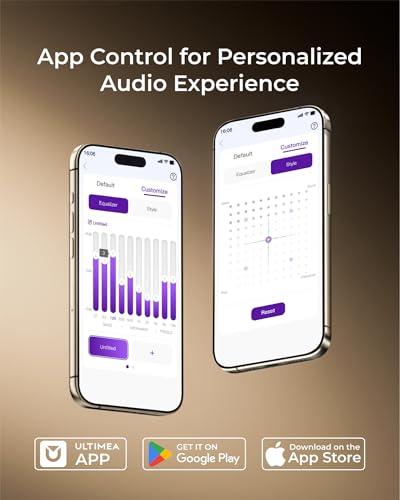
The app-based control system offers surprising depth. A 10-band equalizer allows precise frequency tuning, while 121 preset sound profiles provide starting points for different content types. This level of customization typically appears only in much more expensive systems.
For gaming, the low wireless latency and 4K HDR passthrough maintain compatibility with modern consoles while the physical surround speakers provide competitive advantages in games where directional audio matters.
The ULTIMEA system follows traditional soundbar limitations. The main speakers must be positioned near your TV, which may not be acoustically optimal for your room. While the rear speakers are wireless, they still need power outlets behind your seating area.
Build quality, while solid for the price point, doesn't match premium brands. The materials and finish are functional rather than luxurious. The app interface, while feature-rich, can feel overwhelming for users who prefer simple remote control operation.
Room correction is limited compared to Sony's sophisticated acoustic mapping. The ULTIMEA relies more on manual adjustment through the app rather than automatic calibration.
This represents the most significant performance difference between these systems. Deep bass isn't just about volume—it's about creating the physical sensation that makes movie experiences convincing. When a T-Rex stomps in Jurassic Park or a spaceship rumbles past in Star Wars, you should feel it as much as hear it.
The Sony system distributes bass across four satellite speakers, each with a relatively small woofer constrained by the compact enclosure. Physics limits how much low-frequency energy these can produce. User reviews consistently mention that while the Sony sounds detailed and spacious, it feels "thin" or "lacking weight" compared to systems with dedicated subwoofers.
The ULTIMEA dedicates an entire 6.5-inch driver solely to bass reproduction. This specialization allows much deeper extension and higher output levels. The difference is immediately apparent in action movies, where explosions have genuine impact rather than just mid-frequency "pop."
The Sony system's 360 Spatial Sound Mapping creates a different type of surround experience than traditional speaker placement. Rather than discrete point sources, you get a continuous bubble of sound that wraps around the listening area. This works exceptionally well for atmospheric effects like rainfall or crowd noise, where the goal is envelopment rather than precise positioning.
The ULTIMEA system provides more traditional surround imaging with clearly defined speaker positions. A gunshot from the rear left is precisely localized to that position rather than diffused throughout the space. This approach better matches how movie sound engineers intended the mix to be heard.
Neither approach is inherently superior—it depends on your priorities. Sony's method creates more consistent performance across multiple seating positions, while ULTIMEA's provides more accurate directional cues for the primary listening position.
Clear dialogue reproduction often determines whether a home theater system succeeds or fails in daily use. Both systems handle this differently, with interesting implications.
The Sony system creates a phantom center channel by processing center-channel information across its front speakers. When paired with compatible Sony TVs, Acoustic Center Sync adds the TV's speakers to create a physical center. Sony's Voice Zoom 3 AI processing can identify and enhance speech even in complex mixes, making quiet dialogue audible without making everything else too loud.
The ULTIMEA uses dedicated center channel drivers in the main soundbar, providing a more traditional anchor point for dialogue. While it lacks Sony's sophisticated AI enhancement, the physical center channel typically provides better localization to the screen.
At the time of writing, the price difference between these systems is substantial—you could buy multiple ULTIMEA systems for the cost of one Sony. But value isn't simply about price; it's about whether the performance justifies the cost for your specific needs.
The Sony system commands its premium through sophisticated processing, premium build quality, ecosystem integration, and a unique approach to surround sound. If you own Sony TVs and PlayStation consoles, appreciate cutting-edge audio technology, and have a room that accommodates flexible speaker placement, the Sony provides capabilities no other system matches.
The ULTIMEA system delivers authentic surround sound with proper bass impact at a fraction of the cost. For most users in most rooms, it provides 80% of the cinematic experience at 20% of the price. The inclusion of all components means you get a complete system without additional purchases.
Choose the Sony HT-A9M2 if you value innovation over tradition, own Sony ecosystem products, have a medium-sized room with flexible furniture placement, and prioritize room-filling consistency over traditional surround accuracy. The system makes the most sense for users who appreciate its unique technological approach and can justify the premium for its sophisticated processing capabilities.
Choose the ULTIMEA Skywave X40 if you want a complete home theater experience with proper bass impact, prefer traditional surround sound accuracy, work within budget constraints, or have a room layout that favors soundbar placement. It's particularly compelling for users who want genuine surround sound without the complexity and cost of separate components.
The reality is that both systems can create engaging home theater experiences, but they do so through completely different means. Your choice should align with your room, budget, and preferences for how surround sound should work. The ULTIMEA gives you more conventional performance per dollar, while the Sony offers a premium experience with unique capabilities that some users will find transformative.
| Sony HT-A9M2 BRAVIA Theater Quad | ULTIMEA Skywave X40 |
|---|---|
| System Configuration - Determines setup complexity and performance type | |
| 4.0.4 channels with four identical wireless speakers placed around room | Traditional 5.1.2 soundbar with wireless subwoofer and rear speakers |
| Total Power Output - Affects maximum volume and dynamic range | |
| 504W total (126W per speaker) with S-Master HX digital amplification | 530W peak with GaN amplifier technology (98% efficiency) |
| Bass Performance - Critical for movie impact and music enjoyment | |
| No dedicated subwoofer; bass from satellite woofers only | 6.5" wireless subwoofer with dual-magnet design, extends to 35Hz |
| Speaker Drivers - More drivers can mean better frequency separation | |
| 16 total drivers (4 per speaker: woofer, mid, tweeter, up-firing) | 8 total drivers (6 in soundbar, 1 subwoofer, 2 rear speakers) |
| Room Calibration - Automatically optimizes sound for your space | |
| 360 Spatial Sound Mapping with microphone-based room analysis | Manual EQ adjustment through app with 10-band equalizer |
| Surround Technology - How convincing the surround effects feel | |
| Phantom speaker generation through advanced processing | Physical rear speakers for authentic directional accuracy |
| Setup Requirements - Consider your room layout and preferences | |
| Four speakers positioned around room (more placement flexibility) | Soundbar under TV, wireless sub anywhere, rears behind seating |
| Dialogue Enhancement - Important for understanding speech in movies | |
| Voice Zoom 3 with AI speech separation and Acoustic Center Sync | Dedicated center channel drivers with Voice mode enhancement |
| Gaming Features - Matters for console and PC gaming | |
| Full HDMI 2.1 with PlayStation 5 optimizations and 4K120 support | HDMI eARC with 4K HDR passthrough and <20ms wireless latency |
| Smart Features - Streaming and app control capabilities | |
| Spotify Connect, AirPlay 2, Sony ecosystem integration | ULTIMEA app with 121 sound presets and extensive customization |
| Build Quality - Affects longevity and premium feel | |
| Premium materials with sophisticated wireless technology | Solid construction focused on performance over luxury finishes |
The ULTIMEA Skywave X40 delivers better overall home theater performance due to its dedicated 6.5" subwoofer and physical rear speakers. The subwoofer provides the deep bass impact crucial for action movies, while the rear speakers create authentic surround effects. The Sony HT-A9M2 excels at creating room-filling sound but lacks bass impact without an additional subwoofer purchase.
The ULTIMEA Skywave X40 includes a wireless subwoofer, making it a complete system out of the box. The Sony HT-A9M2 doesn't include a subwoofer and relies on small woofers in each satellite speaker, which limits bass performance. Most users find the Sony system needs an optional subwoofer for satisfying movie and music performance.
Both systems offer wireless convenience, but the ULTIMEA Skywave X40 is generally easier to set up. You simply place the soundbar under your TV, position the wireless subwoofer anywhere in the room, and place the rear speakers behind your seating area. The Sony HT-A9M2 requires more careful placement of four speakers around your room and benefits from running the automatic calibration process.
The Sony HT-A9M2 creates a wide, immersive sound bubble that fills the entire room evenly using advanced processing. The ULTIMEA Skywave X40 provides more traditional surround sound with precise directional effects and significantly more powerful bass. The Sony sounds more spacious, while the ULTIMEA sounds more impactful and dynamic.
For music, the ULTIMEA Skywave X40 generally performs better due to its dedicated subwoofer providing full bass response. The system's 10-band EQ also allows fine-tuning for different music genres. The Sony HT-A9M2 creates an interesting spatial music experience but can sound thin without proper bass extension, making it less ideal for bass-heavy music genres.
The Sony HT-A9M2 works best with Sony BRAVIA TVs, offering features like Acoustic Center Sync that uses your TV as a center speaker. With other TV brands, you lose these integration benefits. The ULTIMEA Skywave X40 works universally with any TV that has HDMI eARC or optical outputs, making it more flexible across different TV brands.
Both systems support gaming well, but in different ways. The Sony HT-A9M2 offers full HDMI 2.1 support with PlayStation 5 optimizations and advanced video passthrough features. The ULTIMEA Skywave X40 provides ultra-low latency wireless (<20ms) and physical surround speakers that give competitive advantages in games where directional audio matters.
The ULTIMEA Skywave X40 requires less overall space since the main soundbar sits under your TV, though you need power outlets behind your seating for the rear speakers. The Sony HT-A9M2 needs four speaker positions around your room, requiring more flexible furniture placement but offering more positioning options since the speakers are completely wireless.
The ULTIMEA Skywave X40 provides significantly better value, delivering authentic surround sound with powerful bass at a fraction of the cost. You get a complete system with all necessary components included. The Sony HT-A9M2 costs much more and requires additional subwoofer purchase for comparable bass performance, though it offers premium build quality and unique audio processing.
The Sony HT-A9M2 can be expanded with Sony's wireless subwoofers and is designed to work within Sony's BRAVIA Theater ecosystem. The ULTIMEA Skywave X40 is a complete system as designed, though ULTIMEA offers higher-tier models with more channels if you want to upgrade to a different system entirely.
The Sony HT-A9M2 has superior dialogue processing with Voice Zoom 3 AI technology that can isolate and enhance speech even during loud action scenes. When paired with compatible Sony TVs, Acoustic Center Sync further improves dialogue anchoring. The ULTIMEA Skywave X40 uses dedicated center channel drivers which provide good dialogue clarity, though without the advanced AI enhancement.
The Sony HT-A9M2 uses proprietary wireless technology connecting four speakers to a central control box, with improved reliability over previous generations. The ULTIMEA Skywave X40 uses CineMesh dual 5GHz wireless technology for the subwoofer and rear speakers, maintaining very low latency. Both systems offer Bluetooth connectivity, with the ULTIMEA featuring newer Bluetooth 5.4 versus Sony's 5.2.
We've done our best to create useful and informative comparisons to help you decide what product to buy. Our research uses advanced automated methods to create this comparison and perfection is not possible - please contact us for corrections or questions. These are the sites we've researched in the creation of this article: bestbuy.com - whathifi.com - whathifi.com - youtube.com - rtings.com - audiosciencereview.com - bhphotovideo.com - skybygramophone.com - sony.com - manuals.plus - audioadvice.com - dell.com - valueelectronics.com - youtube.com - merlinstv.com - videoandaudiocenter.com - electronics.sony.com - sony.com - bestbuy.com - beachcamera.com - sony.com - win.consulting - sony.com - bestbuy.com - shopabunda.com - youtube.com - youtube.com - youtube.com - youtube.com - ultimea.com - walmart.com - youtube.com - hometechnologyreview.com - community.ultimea.com - avsforum.com - youtube.com - youtube.com - youtube.com - bestbuy.com - hometechnologyreview.com

Privacy Policy
Terms and Conditions - Affiliate Policy
Home Security
© Copyright 2008-2026.
11816 Inwood Rd #1211, Dallas, TX 75244