



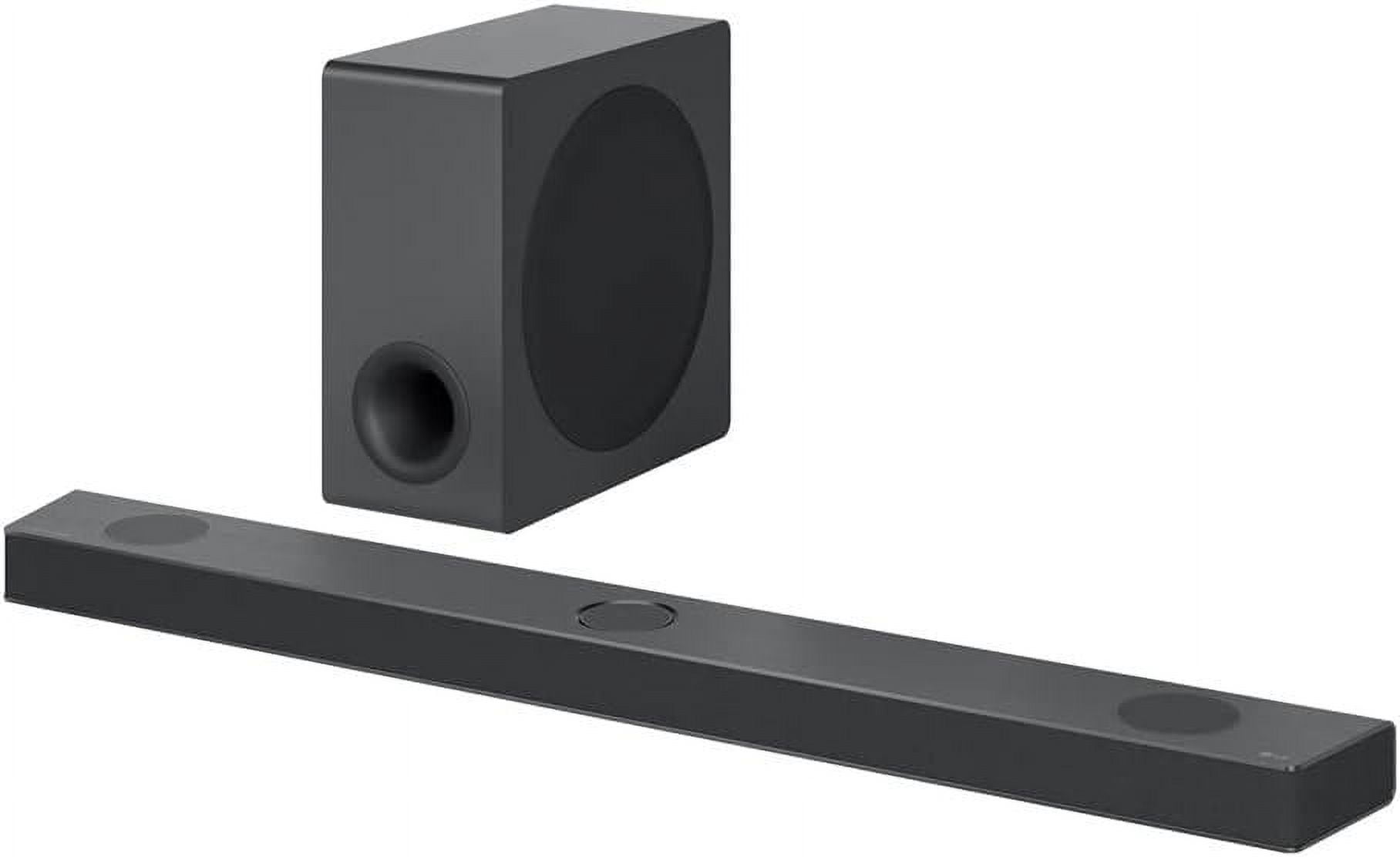







The soundbar market has exploded with innovation over the past few years, transforming what used to be simple TV audio boosters into sophisticated home theater systems. If you're looking to upgrade your entertainment setup, you've probably encountered two fundamentally different approaches to premium soundbar design: the wireless-first philosophy of systems like the ULTIMEA Skywave X40 and the maximum-power approach of traditional manufacturers like LG with their S90TR.
Both systems promise immersive Dolby Atmos experiences—that's the technology that creates three-dimensional sound by bouncing audio off your ceiling to simulate overhead effects. But they take dramatically different paths to get there. Understanding these differences is crucial because your choice will impact not just how your movies sound, but how easy the system is to install and live with daily.
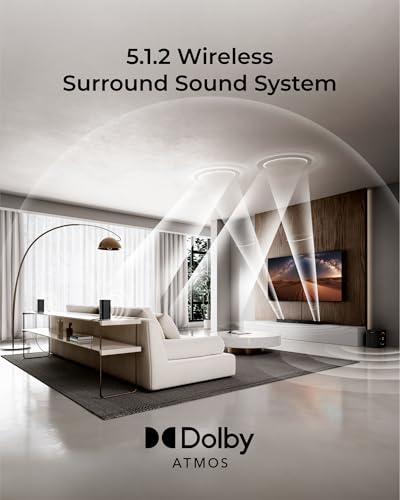
Before diving into the comparison, it's worth understanding what makes today's premium soundbars so much better than their predecessors. The biggest game-changer has been Dolby Atmos support, which adds height channels to traditional surround sound. Instead of just hearing sounds from left, right, and behind you, Atmos creates a bubble of sound around your listening position, including overhead.
The channel numbers you see—like 5.1.2 or 7.1.3—tell you exactly what you're getting. The first number represents main channels (front left, center, front right, plus rear speakers), the second is your subwoofer count, and the third indicates height channels that create overhead effects. More channels generally mean more precise sound positioning, but the implementation quality matters just as much as the raw numbers.
Power output, measured in watts, determines how loud the system can play and how much bass impact you'll feel. However, newer amplifier technologies can deliver more performance per watt than older designs, making direct power comparisons tricky.
The wireless revolution has been equally important. Earlier soundbars required you to run speaker cables across your room to connect rear speakers—a dealbreaker for many users. Modern wireless transmission has largely solved this problem, though the quality of that wireless connection varies significantly between manufacturers.
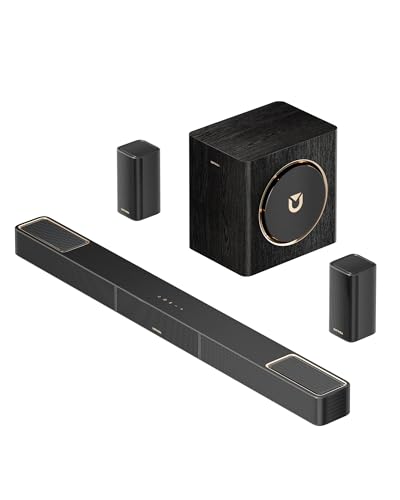
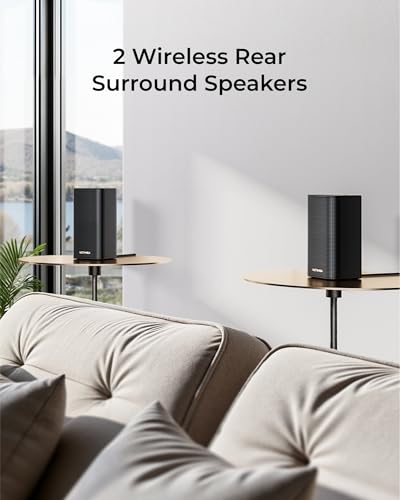
Released in 2025, the ULTIMEA Skywave X40 represents the newest thinking in soundbar design. The standout feature isn't just that it supports wireless rear speakers—many systems do that now—but that it's completely wireless. Every component except the main soundbar only needs power, eliminating the cable management headaches that have traditionally accompanied surround sound setups.
This wireless freedom comes courtesy of ULTIMEA's CineMesh technology, which uses dual 5GHz wireless transmission. Think of it like having two separate Wi-Fi networks dedicated entirely to audio, providing redundancy and reducing the interference that can cause dropouts or delay between what you see and hear. The system maintains less than 20 milliseconds of latency—that's the delay between when audio is processed and when you hear it—which is crucial for gaming where even small delays can throw off your timing.
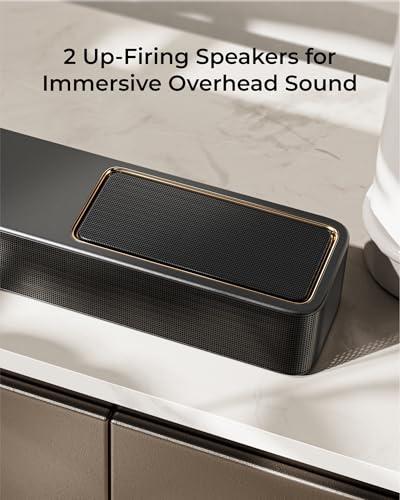
The X40's 5.1.2 configuration includes five main channels, one subwoofer, and two up-firing speakers mounted on top of the main bar. These up-firing drivers bounce sound off your ceiling to create the overhead effects that make Dolby Atmos so convincing. While two height channels might seem modest compared to some competitors, the positioning and quality of these drivers matters more than raw quantity for most room sizes.
Under the hood, ULTIMEA has made some bold technological choices. The most significant is their use of GaN (Gallium Nitride) amplifiers instead of traditional silicon-based designs. GaN amplifiers can switch on and off much faster—about eight times quicker than silicon—which translates to cleaner sound with less distortion. They also generate roughly 50% less heat, allowing the amplifiers to maintain consistent performance even at high volumes where traditional designs might start to struggle.
The NEURACORE processing system handles the complex task of steering audio to the right speakers at the right time. With 2,000 MIPS (Million Instructions Per Second) of processing power, it can handle high-resolution 24-bit/192kHz audio with less than 0.5% distortion. For context, that's better than most dedicated hi-fi amplifiers costing significantly more.
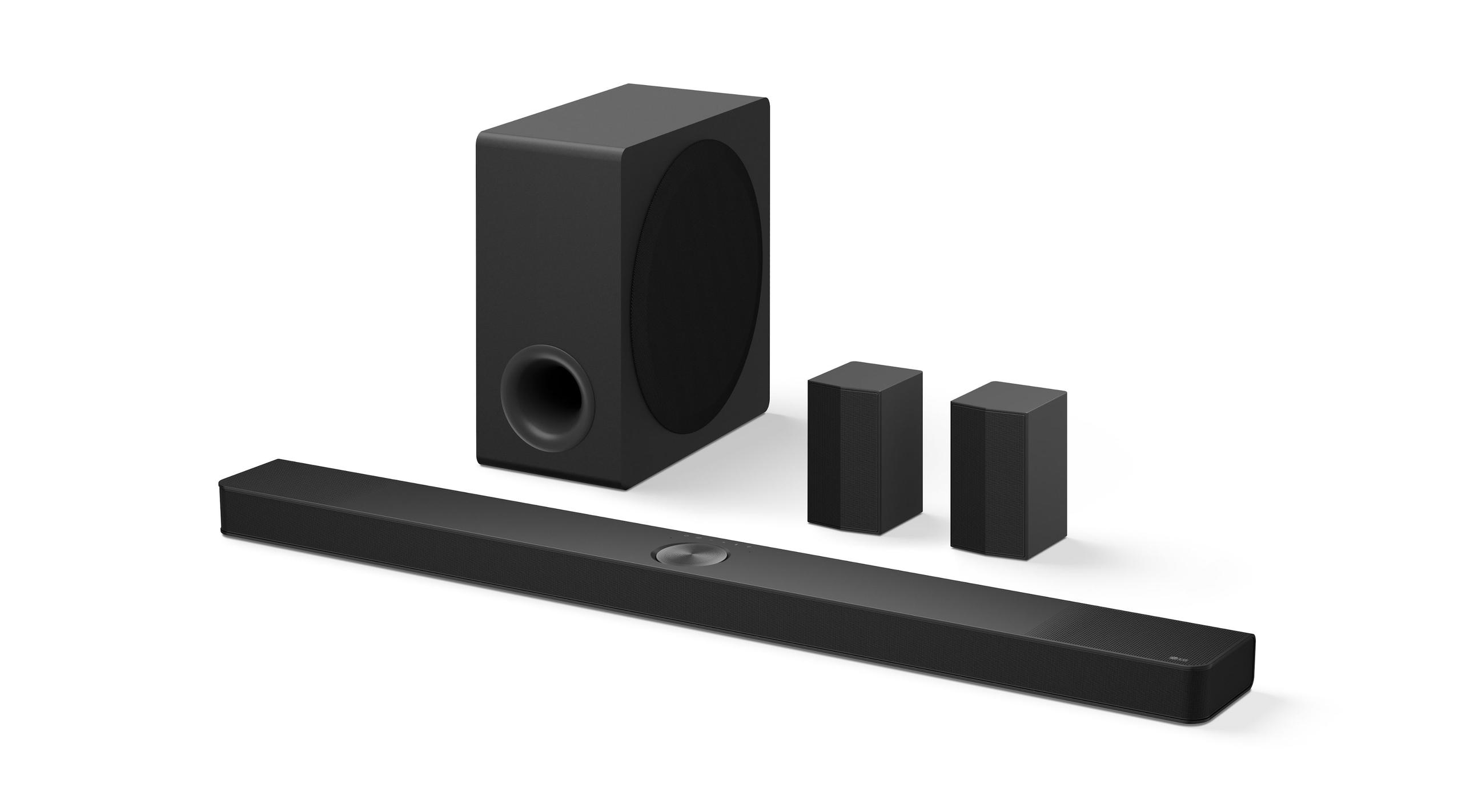
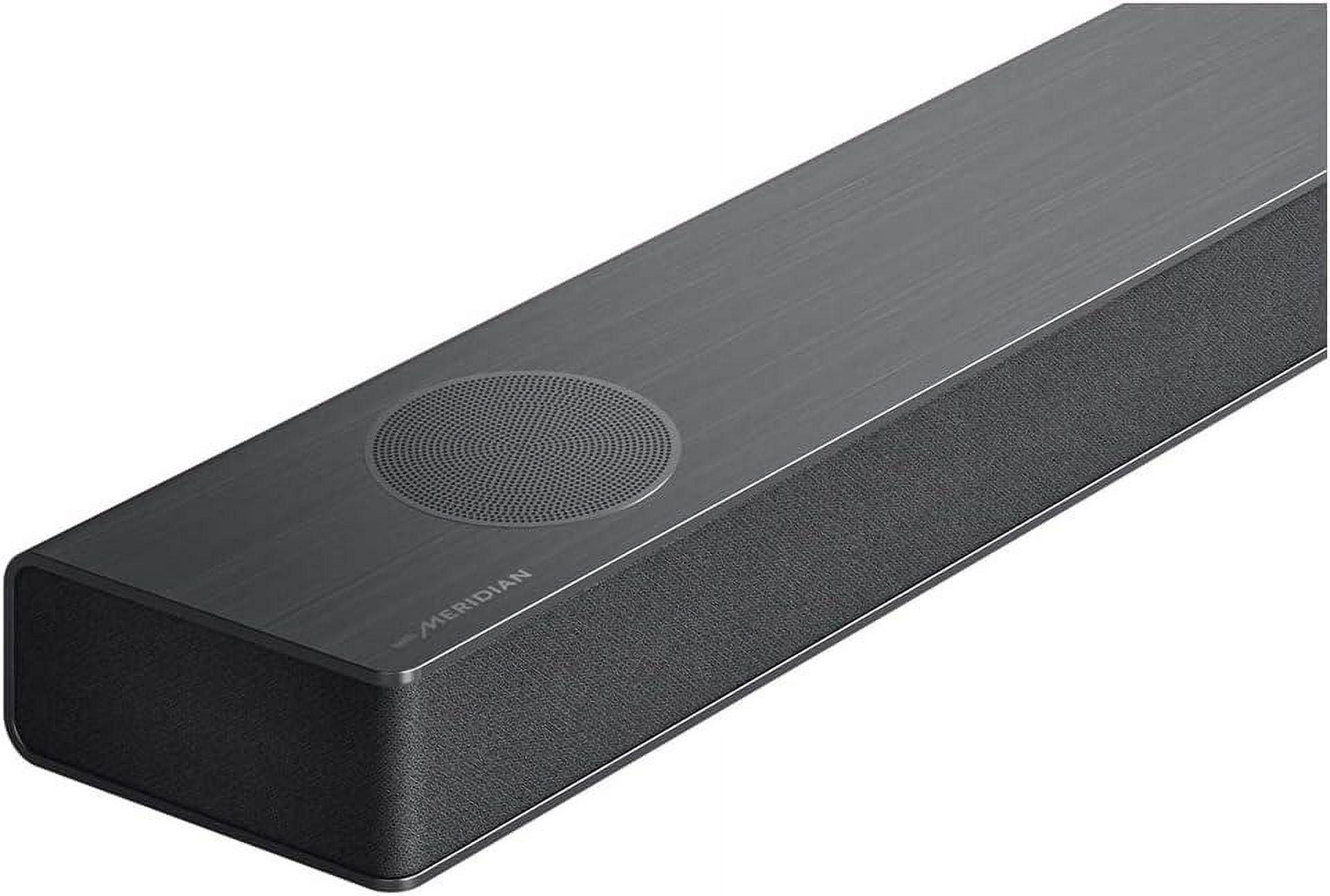
The LG S90TR, released in 2024, takes a more conventional but arguably more comprehensive approach to premium soundbar design. Where ULTIMEA prioritizes wireless convenience, LG focuses on maximizing channel count and raw performance. The 7.1.3 configuration provides seven main channels—adding dedicated left and right rear speakers beyond the typical surround speakers—plus three height channels instead of two.
This additional channel complexity translates to more precise sound placement. In a good 7.1 system, you can clearly distinguish between sounds coming from directly behind you versus behind and to the left or right. The third height channel, positioned in the center of the soundbar, helps create more convincing overhead effects, particularly for content mastered specifically for theaters.
LG's AI Room Calibration Pro represents their answer to the challenge of making any soundbar sound good in any room. The system uses microphones to analyze your room's acoustic characteristics—how sound reflects off walls, furniture, and other surfaces—then adjusts the frequency response accordingly. This is particularly valuable because room acoustics can dramatically affect how a soundbar sounds, sometimes more than the quality of the speakers themselves.
The S90TR also supports both Dolby Atmos and DTS:X, the latter being a competing surround sound format that's less common but still used by some content creators. Having both formats ensures maximum compatibility with whatever you're watching, whether it's Netflix movies, 4K Blu-rays, or video games.
At 760 watts RMS (Root Mean Square—a more accurate power measurement than peak watts), the LG system delivers significantly more raw power than the ULTIMEA's 530-watt peak output. This power advantage becomes most noticeable at high volumes and in larger rooms where you need more energy to fill the space with sound.
Based on our research across expert reviews and user feedback, the channel count difference between these systems creates noticeable performance gaps in specific scenarios. The LG S90TR's 7.1.3 configuration shines brightest with content that takes full advantage of those extra channels—think big-budget action movies with complex soundscapes or video games with positional audio cues.
The additional rear left and rear right channels in the LG system create more convincing surround effects when sounds pan around the listening space. If you've ever watched a car chase scene where vehicles move from one side of the screen to the other, you'll hear a smoother, more natural transition with seven main channels versus five.
However, the ULTIMEA X40 compensates for its fewer channels through superior processing and speaker quality. The NEURACORE system uses advanced algorithms to create phantom channels—convincing the brain that sounds are coming from positions where there aren't actually speakers. While this can't fully replace dedicated speakers, it's remarkably effective for most content and room sizes.
The height channel difference—three versus two—is less dramatic than the main channel gap. Both systems create convincing overhead effects for typical living room setups, though the LG's center height channel can provide slightly more precise localization for sounds directly overhead.
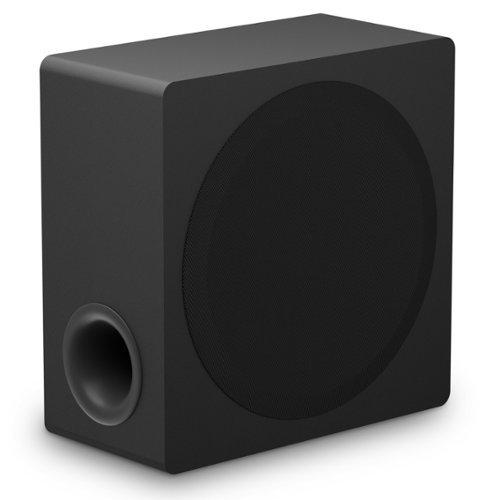
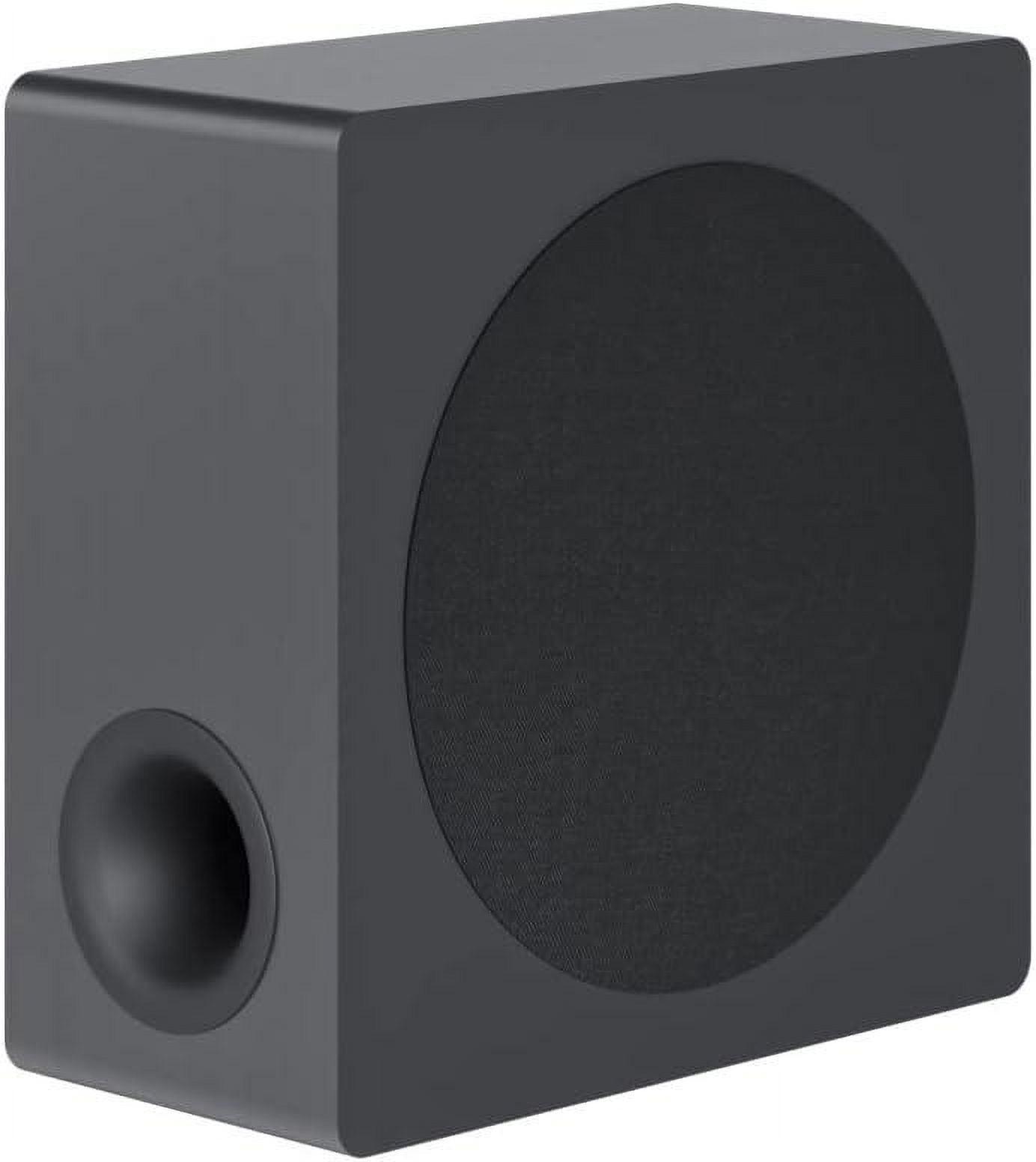
The power difference between these systems tells only part of the story. The LG S90TR's 760-watt RMS output, combined with its larger 8-inch subwoofer, delivers deeper bass extension and higher maximum volume levels. In larger rooms or when you want truly impactful low-frequency effects—the kind that you feel in your chest during action sequences—the LG has a clear advantage.
But the ULTIMEA X40's GaN amplifier technology changes the power equation significantly. Traditional amplifiers become less efficient and more distorted as they approach their maximum output. The GaN design maintains clean performance much closer to its limits, meaning the X40's 530 watts deliver more usable power than the specifications suggest.
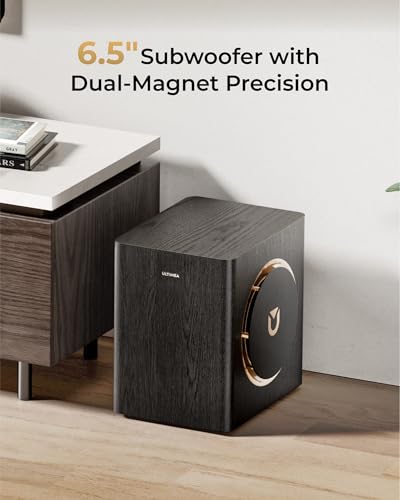
The X40's 6.5-inch subwoofer, while smaller, uses dual-magnet technology and extends down to 35Hz—the frequency range where you start feeling bass rather than just hearing it. For most users in typical rooms, this provides sufficient impact without overwhelming the mid-range frequencies where dialogue lives.
The philosophical differences between these systems become most apparent in their approach to audio processing. The LG S90TR emphasizes automatic optimization through AI. It listens to your room, analyzes the content you're playing, and adjusts settings accordingly. This works well for users who want great sound without diving into technical details.
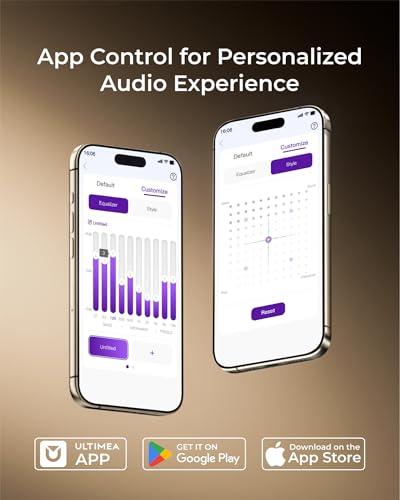
The ULTIMEA X40, conversely, provides extensive manual control through its smartphone app. The 10-band equalizer and 121 preset sound profiles offer granular customization that audio enthusiasts will appreciate. You can fine-tune the system for different types of content, room acoustics, or personal preferences.
This difference reflects their target audiences: LG focuses on simplicity and automatic optimization, while ULTIMEA provides tools for users who want to actively shape their audio experience.
The setup experience differs dramatically between these systems. The ULTIMEA X40 delivers on its promise of hassle-free installation. After unpacking, you simply place the speakers where you want them, plug in power cables, and turn everything on. The components are factory-paired, so they connect automatically without any manual configuration.
This wireless freedom extends beyond initial setup. If you rearrange your furniture or move to a new home, repositioning the speakers takes minutes rather than requiring new cable runs. For renters or anyone who values clean aesthetics, this advantage is substantial.
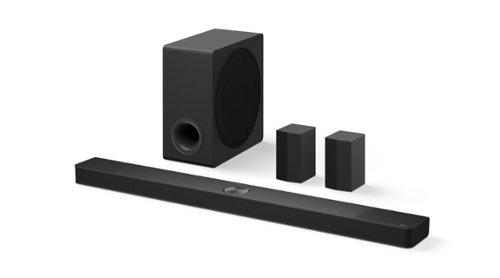
The LG S90TR requires more traditional setup considerations. While the subwoofer connects wirelessly, the rear speakers need wired connections to the main soundbar. This limits placement flexibility and requires planning for cable management. However, this wired connection does guarantee perfect synchronization between all speakers with zero risk of wireless interference.
At the time of writing, these systems occupy different value segments despite their similar premium positioning. The ULTIMEA X40 generally offers stronger value in terms of advanced technology per dollar, particularly considering its GaN amplifier and complete wireless design. These features typically appear in much more expensive systems from established brands.
The LG S90TR commands a premium for its maximum channel count and brand reputation. LG's established service network and longer track record in the audio market provide additional value for buyers prioritizing long-term support and reliability.
Both systems represent good value within their respective approaches, but they target different priorities. The X40 maximizes convenience and technological innovation, while the S90TR focuses on maximum audio performance and feature completeness.
For dedicated home theater use, the choice becomes more nuanced. The LG S90TR better handles the wide dynamic range and complex soundscapes of movie soundtracks, particularly in larger rooms where its additional power and channels provide clear benefits. The AI Room Calibration Pro helps optimize performance for your specific theater space.
However, the ULTIMEA X40's wireless design offers significant advantages for home theater installation. Running speaker cables in finished rooms often requires professional installation or accepting visible cables. The X40 eliminates this compromise entirely.
For gaming—an increasingly important home theater use case—the X40's ultra-low latency provides a competitive advantage. The 20-millisecond delay is imperceptible and won't affect your gaming performance, while some wireless systems introduce noticeable lag.
The ULTIMEA Skywave X40 makes sense for users who prioritize convenience, value cutting-edge technology, or have installation constraints. If you're in an apartment, prefer clean aesthetics, game frequently, or want the latest amplifier technology, the X40 delivers compelling advantages. It's also ideal for users upgrading from basic TV audio who want a dramatic improvement without complexity.
The LG S90TR suits users building dedicated home theaters, those with larger rooms requiring maximum power, or anyone who wants the ultimate in channel count and audio precision. If you own an LG TV and can take advantage of the WOW Orchestra integration, or if you prioritize automatic room optimization, the S90TR provides clear benefits.
Both systems represent excellent approaches to premium soundbar design, but they solve different problems. The ULTIMEA X40 revolutionizes the installation experience while delivering impressive audio performance through advanced technology. The LG S90TR maximizes traditional audio metrics—power, channels, and format support—for users who prioritize ultimate performance.
Your choice ultimately depends on what matters most: the convenience revolution of complete wireless design, or the audio performance advantages of maximum channel count and power. Both will dramatically improve your entertainment experience compared to TV speakers, but through meaningfully different approaches that suit different lifestyles and priorities.
| ULTIMEA Skywave X40 5.1.2 Soundbar System | LG S90TR 7.1.3 Channel Soundbar |
|---|---|
| Channel Configuration - Determines surround sound precision and immersion | |
| 5.1.2 channels (5 main + 2 height) | 7.1.3 channels (7 main + 3 height) |
| Power Output - Affects maximum volume and bass impact | |
| 530W peak power | 760W RMS power |
| Wireless Setup - Critical for installation convenience | |
| Completely wireless (all components) | Wireless subwoofer, wired rear speakers |
| Subwoofer Size - Larger drivers produce deeper bass | |
| 6.5-inch wireless subwoofer | 8-inch wireless subwoofer |
| Audio Formats - More formats mean better content compatibility | |
| Dolby Atmos only | Dolby Atmos + DTS:X |
| Amplifier Technology - Affects sound quality and efficiency | |
| GaN (Gallium Nitride) amplifier - 98% efficiency | Traditional silicon amplifier |
| Processing Power - Determines audio quality and features | |
| NEURACORE with 2,000 MIPS processing | AI Room Calibration Pro |
| Customization Options - Important for fine-tuning sound | |
| 10-band EQ + 121 preset profiles via app | AI automatic optimization with basic EQ |
| Latency Performance - Critical for gaming without audio delay | |
| <20ms ultra-low latency | Standard gaming mode latency |
| Height Channels - More channels create better overhead effects | |
| 2 up-firing speakers in main bar | 3 dedicated height channels |
| Connectivity Options - Determines device compatibility | |
| HDMI eARC, Optical, USB, Bluetooth 5.4 | HDMI eARC, Optical, USB, Bluetooth 5.1, Wi-Fi |
| Release Year - Newer often means better technology | |
| 2025 (latest wireless innovations) | 2024 (established platform) |
| Best For - Primary use case advantages | |
| Modern homes prioritizing convenience and wireless freedom | Traditional home theaters wanting maximum audio performance |
The LG S90TR offers superior surround sound with its 7.1.3 channel configuration, providing more precise directional audio than the ULTIMEA Skywave X40's 5.1.2 setup. The LG system includes seven main channels plus three height channels, creating more convincing spatial effects for movies and gaming. However, the X40 compensates with advanced NEURACORE processing that creates impressive surround imaging from fewer speakers.
Yes, both the ULTIMEA Skywave X40 and LG S90TR support Dolby Atmos for three-dimensional audio. The X40 uses two up-firing speakers to bounce sound off your ceiling, while the S90TR features three dedicated height channels for more precise overhead positioning. Both create convincing height effects, though the LG system provides slightly better localization with its additional height channel.
The ULTIMEA Skywave X40 is significantly easier to install thanks to its completely wireless design. All components only need power cables, with no speaker wires required between the soundbar, subwoofer, and rear speakers. The LG S90TR requires traditional wired connections for the rear speakers, making installation more complex and limiting placement flexibility.
The LG S90TR delivers 760W RMS power compared to the ULTIMEA X40's 530W peak output. However, the X40 uses advanced GaN amplifier technology that provides cleaner, more efficient power delivery. While the LG system can play louder and has more bass impact, the power difference is less significant in real-world use than the specifications suggest.
The ULTIMEA Skywave X40 excels for gaming with its ultra-low latency under 20 milliseconds, ensuring perfect sync between on-screen action and audio. The LG S90TR offers a gaming mode but doesn't specify latency figures. For competitive gaming or fast-paced action games, the X40's guaranteed low-latency performance provides a clear advantage.
Both soundbars work with any TV brand through HDMI, optical, or Bluetooth connections. However, the LG S90TR offers additional features like WOW Orchestra when paired with compatible LG TVs, creating enhanced audio integration. The ULTIMEA X40 provides universal compatibility without brand-specific enhancements, making it equally effective with any television.
The LG S90TR delivers deeper, more impactful bass with its larger 8-inch wireless subwoofer and higher power output. For large rooms or bass-heavy content, the LG system provides superior low-frequency performance. The ULTIMEA X40's 6.5-inch subwoofer with dual-magnet technology still produces clean, powerful bass down to 35Hz, which satisfies most users in typical living spaces.
The ULTIMEA X40 offers more comprehensive app control with a 10-band equalizer and 121 preset sound profiles for extensive customization. The LG S90TR app focuses on simplicity with AI-powered automatic optimization and basic settings adjustment. Audio enthusiasts will prefer the X40's detailed controls, while casual users may appreciate the LG's streamlined approach.
The LG S90TR performs better in large home theater rooms due to its higher 760W power output, larger subwoofer, and seven main channels that fill bigger spaces more effectively. The AI Room Calibration Pro also optimizes performance for your specific room size. The ULTIMEA X40 works well in medium-sized rooms but may lack the power and channel separation needed for very large theater spaces.
Yes, both the ULTIMEA X40 and LG S90TR support 4K HDR passthrough via HDMI eARC, allowing you to connect gaming consoles or streaming devices directly to the soundbar without losing video quality. Both systems maintain full 4K resolution and HDR support while processing the audio through their respective surround sound systems.
The ULTIMEA X40 typically offers stronger value with its complete wireless design, advanced GaN amplifier technology, and extensive customization options at a competitive price point. The LG S90TR costs more but provides maximum channel count, higher power output, and established brand reliability. Your choice depends on whether you prioritize cutting-edge convenience (X40) or traditional high-end performance (S90TR).
Neither the ULTIMEA Skywave X40 nor LG S90TR requires subscriptions or ongoing costs beyond electricity usage. Both systems receive firmware updates through their respective smartphone apps at no charge. The X40's GaN amplifier technology actually reduces power consumption compared to traditional designs, potentially lowering long-term electricity costs while the S90TR uses standard power consumption levels for its performance class.
We've done our best to create useful and informative comparisons to help you decide what product to buy. Our research uses advanced automated methods to create this comparison and perfection is not possible - please contact us for corrections or questions. These are the sites we've researched in the creation of this article: bestbuy.com - shopabunda.com - youtube.com - youtube.com - youtube.com - youtube.com - ultimea.com - walmart.com - youtube.com - hometechnologyreview.com - community.ultimea.com - avsforum.com - youtube.com - youtube.com - youtube.com - bestbuy.com - hometechnologyreview.com - rtings.com - abt.com - youtube.com - bestbuy.com - microcenter.com - buydig.com - bestbuy.com - videoandaudiocenter.com - oceanstateappliance.com - youtube.com - avsforum.com - lg.com

Privacy Policy
Terms and Conditions - Affiliate Policy
Home Security
© Copyright 2008-2026.
11816 Inwood Rd #1211, Dallas, TX 75244