

The world of home audio has transformed dramatically in recent years. Gone are the days when you needed a massive AV receiver with tangled speaker wires snaking around your living room to get genuine surround sound. Today's wireless home theater systems promise to deliver that immersive, cinema-like experience without the complexity—but they achieve this goal through very different approaches.
Two systems that caught our attention represent fascinating contrasts in how to solve the wireless surround sound puzzle: the Hisense HT Saturn and the ULTIMEA Skywave X40. Released in 2024, both products aim to replace traditional soundbars with true multi-speaker setups that create authentic 360-degree audio experiences. However, their approaches couldn't be more different.
Before diving into the specifics, it's worth understanding what makes these systems fundamentally different from the soundbars you might already know. Traditional soundbars use digital signal processing (DSP)—essentially computer algorithms—to simulate surround sound from a single speaker enclosure. While this virtual surround can sound impressive, it's still just one speaker trying to fool your ears into hearing sounds from different directions.
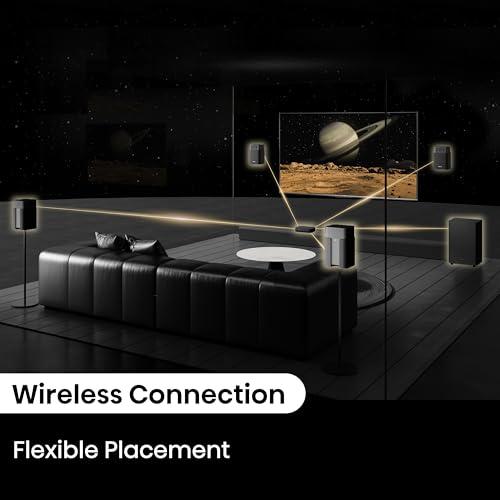
These newer wireless systems take a completely different approach. They place actual speakers around your room to create genuine surround sound, where effects literally come from behind you, beside you, and even above you. The "wireless" part means these speakers communicate with each other through radio signals rather than physical cables, eliminating the need to run wires across your room.
When evaluating any system in this category, the key considerations include how effectively they create that immersive 3D soundscape, how reliable their wireless connections are, how easy they are to set up, and how well they adapt to different room sizes and layouts. Modern formats like Dolby Atmos—which adds height channels to traditional surround sound—have become essential features, as streaming services and Blu-ray discs increasingly use these formats to create more realistic audio experiences.
The fundamental difference between the Hisense HT Saturn and ULTIMEA Skywave X40 lies in their architectural approaches to solving the wireless surround sound challenge.
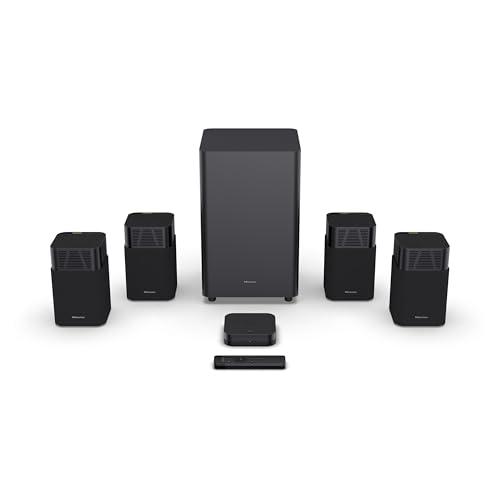
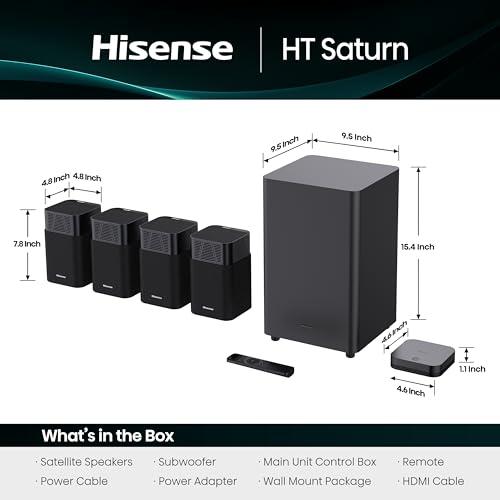
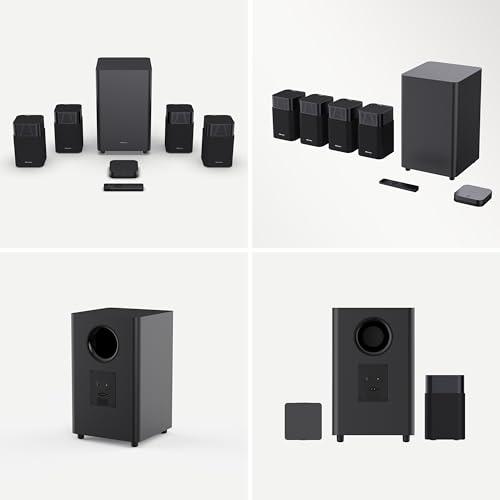
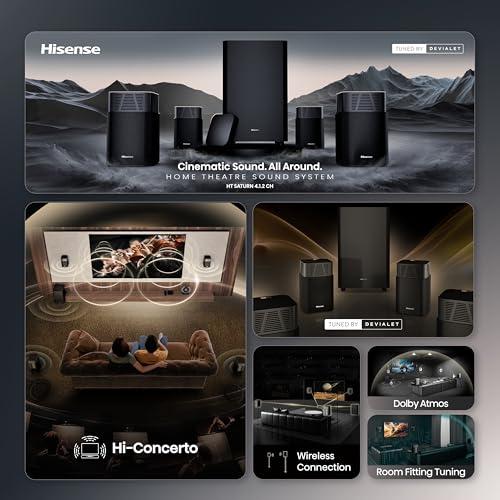
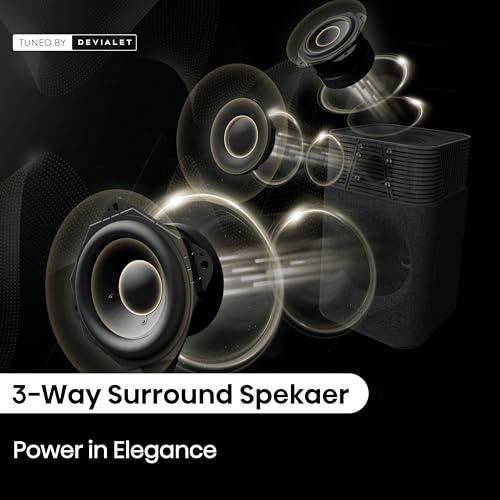
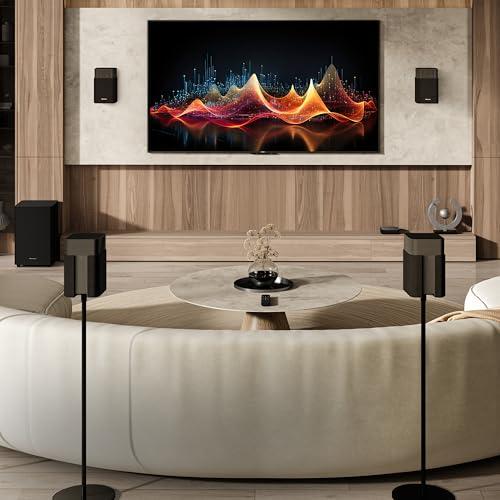
The HT Saturn abandons the traditional soundbar concept entirely. Instead of a long speaker bar sitting under your TV, it uses a small control hub—about the size of a paperback book—connected to four identical satellite speakers that you position around your room. Each satellite contains three different types of drivers (a 3-way design): dedicated woofers for bass, midrange drivers for vocals and most music, and tweeters for high frequencies. This creates what's essentially a 4.1.2 system with 13 total speakers across all components.
What makes this approach unique is that there's no dominant front speaker bar. Instead, the system creates a phantom center channel—using precise timing and volume adjustments between the front left and right satellites to make dialogue appear to come from directly in front of you, even though there's no speaker there. It's audio engineering wizardry that works surprisingly well in practice.
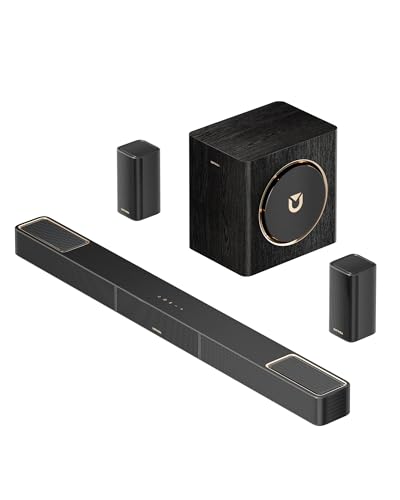
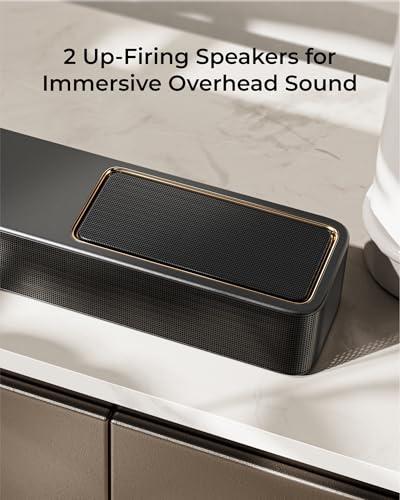
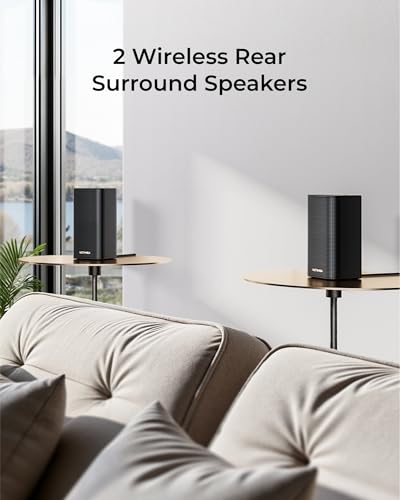
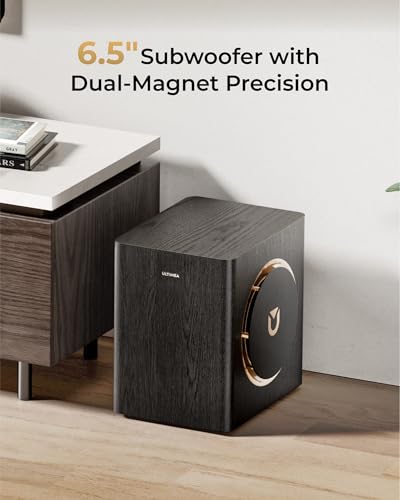
The ULTIMEA Skywave X40, meanwhile, represents the evolution of traditional soundbar design. It features a substantial main soundbar that houses the front three channels (left, center, right) plus two up-firing drivers for Dolby Atmos height effects. This connects wirelessly to two rear speakers and a subwoofer, creating a true 5.1.2 system with 8 total speakers.
This approach feels more familiar and conventional—you still have a prominent soundbar under your TV, but now it's enhanced with genuine wireless rear speakers rather than relying purely on digital trickery to simulate surround effects.
Based on our research into expert and user reviews, the HT Saturn creates a notably more enveloping surround experience. Professional reviewers consistently describe it as producing a genuine "360-degree audio bubble" that makes you feel surrounded by sound from all directions. This makes sense given its distributed architecture—with speakers positioned around the entire room rather than concentrated at the front.
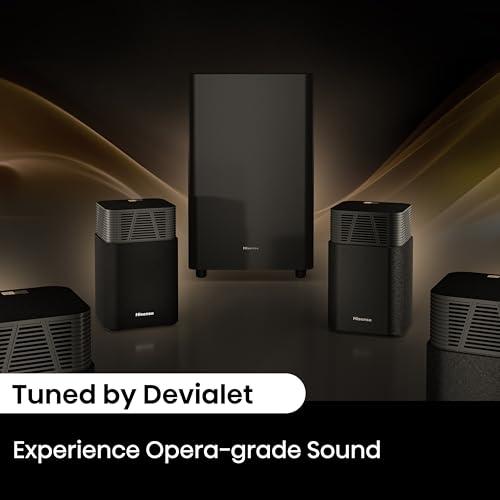
The phantom center channel implementation deserves special mention. Despite having no dedicated center speaker, reviewers report that dialogue appears solidly anchored to the screen with remarkable stability. This is thanks to Devialet's acoustic tuning—the French audio company known for high-end speakers provided the digital signal processing algorithms that blend the front satellites seamlessly.
The Skywave X40, while impressive in its own right, creates what reviewers describe as a more traditional surround experience. The dedicated center channel in the main soundbar provides rock-solid dialogue anchoring, which some users prefer over phantom imaging. However, the overall soundstage, while wide and immersive, doesn't achieve the same room-filling effect as the Saturn's distributed approach.
For home theater use specifically, both systems excel but in different ways. The Saturn makes you feel like you're sitting in the middle of an action scene, with effects moving fluidly around the entire room. The X40 provides a more focused cinematic experience with powerful front-stage dynamics and precise rear effects.
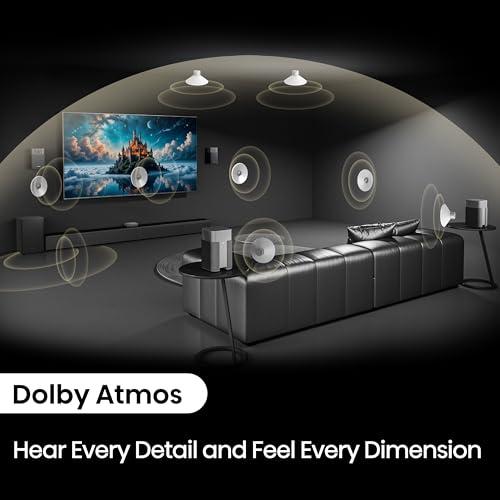
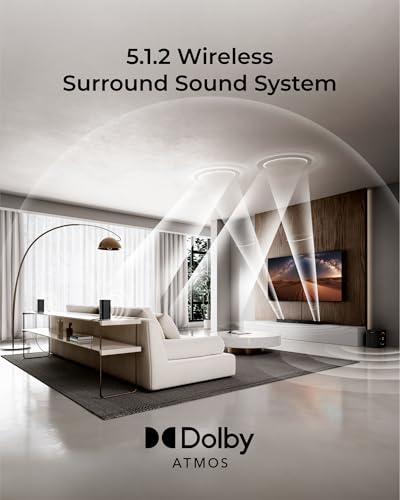
Dolby Atmos—the technology that adds overhead sound effects to traditional surround sound—represents a crucial performance battleground. Both systems handle Atmos content, but through different methods.
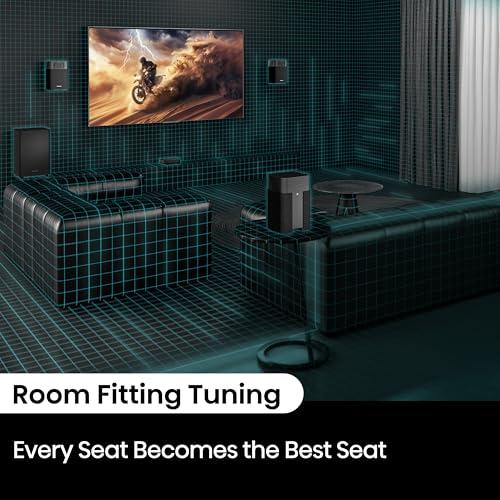
The HT Saturn incorporates up-firing drivers in its satellite speakers that bounce sound off your ceiling to create height effects. The system's Room Fitting Tuning feature automatically calibrates these height channels based on your room's acoustic properties, optimizing the overhead effects for your specific space. In practice, reviewers report convincing height effects for things like rain, aircraft flyovers, and ambient atmospheric sounds.
The ULTIMEA Skywave X40 takes a more concentrated approach, with dedicated up-firing drivers in the main soundbar powered by their NEURACORE processing engine—essentially a powerful computer chip dedicated to audio processing. This creates more focused overhead effects that emanate from the front of the room. The system's higher power output (530W versus 500W) means these height effects can be more dramatic and attention-grabbing.
Neither system requires ceiling-mounted speakers, making them practical alternatives to full Atmos installations. However, the effectiveness of up-firing drivers depends heavily on your room having a flat ceiling at the right height—vaulted or textured ceilings can scatter the reflected sound unpredictably.
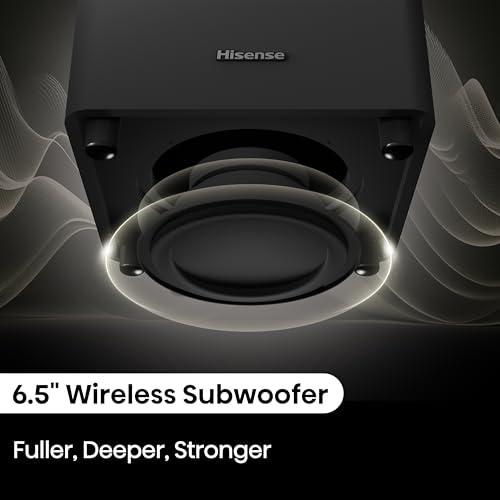
Bass performance reveals another significant difference between these systems. The Skywave X40 edges ahead with deeper frequency response, reaching down to 35Hz compared to the Saturn's 40Hz. While 5Hz might seem minimal, it represents meaningful additional impact for movie explosions and music with deep electronic basslines.
More importantly, the X40 uses a GaN (Gallium Nitride) amplifier—a newer, more efficient amplifier technology that stays cooler and responds faster than traditional silicon amplifiers. This translates to cleaner, more controlled bass even at high volume levels. The system's Gravus Ultra-Linear Bass Technology helps maintain bass clarity and prevents the muddy, boomy sound that plagues many home theater systems.
The Saturn's bass performance, while not as deep, benefits from Devialet's tuning expertise. The integration between the subwoofer and satellite speakers is notably seamless, with smooth transitions between frequency ranges that maintain vocal clarity even during heavy bass passages.
For action movies and gaming, the X40 provides more visceral impact. For music and mixed content where bass needs to stay well-integrated with voices and instruments, the Saturn offers more refined performance.
Dialogue intelligibility—arguably the most important factor for home theater—showcases interesting trade-offs between these systems. The Saturn's phantom center approach initially seems like a disadvantage, but reviewers consistently praise its vocal clarity. Devialet's processing creates remarkably stable dialogue positioning, and the distributed speaker arrangement means voices never get lost during complex sound mixes.
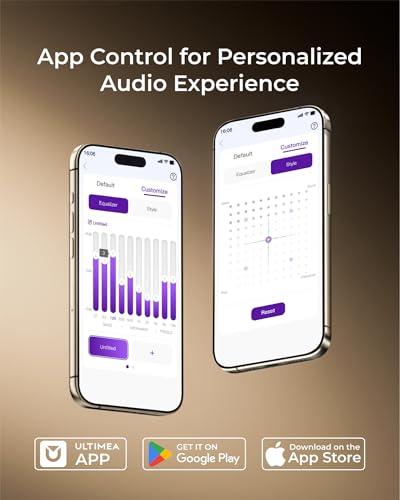
The X40's dedicated center channel provides the theoretical advantage, with voices anchored to a specific physical speaker. The system's Voice enhancement mode and 10-band equalizer through the smartphone app allow fine-tuning of vocal frequencies to match your room and preferences.
In practice, both systems excel at dialogue clarity, but they achieve it differently. The Saturn provides more natural, room-filling vocal reproduction, while the X40 offers more direct, focused dialogue with greater user control over the sound character.
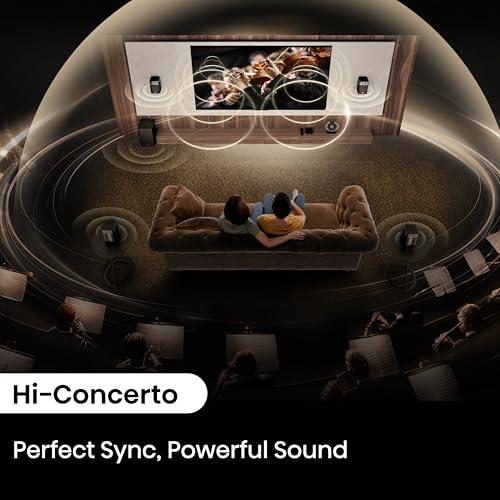
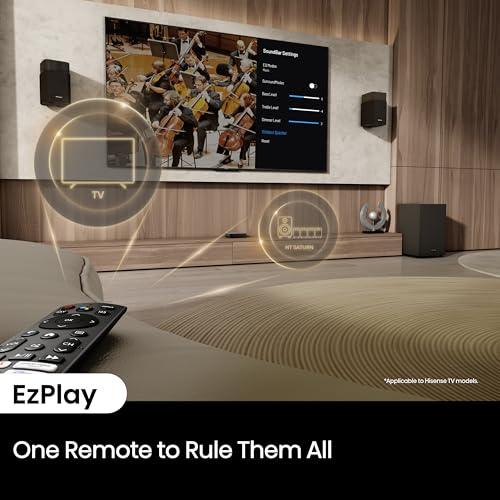
The HT Saturn reveals its strategic advantage when paired with Hisense televisions. The Hi-Concerto technology allows the TV's built-in speakers to work alongside the Saturn system, effectively adding more speakers to the array and creating an even wider soundstage. The EzPlay feature enables TV remote control of the soundbar functions, streamlining the user experience significantly.
However, this tight integration becomes a limitation with non-Hisense TVs. While the system works with any TV through HDMI eARC or optical connections, you lose the advanced room tuning and seamless control features that make the Saturn special.
The ULTIMEA Skywave X40 takes a more universal approach, working equally well with any TV brand through HDMI eARC with 4K HDR passthrough. The comprehensive smartphone app provides extensive control over equalizer settings, sound modes, and system configuration—actually offering more granular control than most TV-integrated systems provide.
Both systems employ sophisticated wireless technologies, but with different approaches. The Saturn uses tri-band wireless communication—simultaneously operating on 2.4GHz, 5.2GHz, and 5.8GHz frequencies. This redundancy helps maintain stable connections even in environments crowded with Wi-Fi networks, smartphones, and other wireless devices.
The X40 focuses on a dual 5GHz approach with their CineMesh technology, promising ultra-low latency under 20 milliseconds. This is particularly important for gaming, where audio-video synchronization becomes critical for competitive play.
Setup complexity differs significantly between the systems. The Saturn requires positioning four satellite speakers around your room, which offers more placement flexibility but demands more thought during installation. The X40 follows a more conventional approach—soundbar plus rear speakers—that most users find intuitive.
At the time of writing, both systems occupy similar price territories in the premium wireless home theater market, though specific pricing fluctuates with promotions and availability. The value equation depends heavily on your priorities and existing equipment.
The HT Saturn represents exceptional value if you own or plan to purchase a Hisense TV, as the integrated features justify the investment. The Devialet tuning provides acoustic engineering typically found in much more expensive systems. However, the proprietary satellite design means limited upgrade paths—you're committed to this specific configuration.
The ULTIMEA Skywave X40 offers compelling value through its feature density and universal compatibility. The comprehensive app control, higher power output, and deeper bass extension provide measurable performance advantages. The more conventional design also means easier serviceability and broader compatibility with future devices.
For home theater enthusiasts, both systems punch above their weight compared to traditional soundbars, but they serve different user profiles and room configurations.
Installation experiences vary significantly between these systems. The Saturn requires more initial planning—you need to identify suitable locations for four satellites around your room and ensure power outlets are available. However, once positioned, the system automatically handles wireless pairing and room calibration, particularly when connected to compatible Hisense TVs.
The X40 follows a more familiar installation pattern that most users can complete quickly. The pre-paired components connect automatically when powered on, and the smartphone app guides you through initial setup and calibration.
Daily operation strongly favors whichever system matches your control preferences. The Saturn excels with its TV integration, allowing access to sound settings through familiar TV menus. The X40 shines through its dedicated app, offering 121 preset sound profiles and detailed equalizer controls that audio enthusiasts appreciate.
You own or plan to buy a Hisense TV and want maximum integration benefits. The Hi-Concerto and EzPlay features transform the user experience, making the sound system feel like a natural extension of your TV rather than a separate component.
You prioritize the most immersive, room-filling surround experience possible. The distributed satellite architecture creates a uniquely enveloping soundstage that conventional soundbar-based systems struggle to match.
You prefer audiophile-quality tuning and set-and-forget simplicity. Devialet's acoustic engineering provides sophisticated sound processing without requiring constant manual adjustment.
You have adequate space around your room for four satellite speakers and value innovative technology over conventional approaches.
You want maximum bass depth and overall power output for action movies and gaming. The deeper frequency response and GaN amplification provide more visceral impact during dynamic content.
You prefer granular control over sound tuning and equalization. The 10-band EQ and comprehensive app controls allow fine-tuning that matches your specific preferences and room acoustics.
You need universal TV compatibility regardless of brand, or you frequently change your TV setup. The system works equally well with any modern television.
You want established, proven wireless surround technology with the best price-to-performance ratio in terms of raw features and power output.
Both the Hisense HT Saturn and ULTIMEA Skywave X40 represent significant advances over traditional soundbars, but they serve different audiences and priorities.
The Saturn offers a more revolutionary approach that prioritizes spatial immersion and audiophile sound quality. Its unique architecture creates a more convincing surround experience, but this comes with the trade-off of being more specialized and dependent on Hisense TV integration for optimal performance.
The X40 provides more conventional but comprehensive approach that maximizes features, power, and user control. It delivers impressive performance across all metrics while maintaining broad compatibility and flexibility.
Your choice ultimately depends on whether you value innovative spatial audio and seamless TV integration (Saturn) or maximum customization and universal compatibility (X40). Both systems will dramatically improve your home entertainment experience compared to basic soundbars or TV speakers—they just take different paths to reach that destination.
For most users, the decision comes down to your TV brand and control preferences. Hisense TV owners should strongly consider the Saturn, while everyone else will likely find better value and flexibility with the X40. Either choice represents a significant upgrade that will transform how you experience movies, music, and games in your living room.
| Hisense HT Saturn | ULTIMEA Skywave X40 |
|---|---|
| System Architecture - Fundamentally different approaches to surround sound | |
| 4.1.2 channels with 4 wireless satellites + subwoofer (13 total speakers) | 5.1.2 channels with soundbar + wireless rear speakers + subwoofer (8 total speakers) |
| Peak Power Output - Determines maximum volume and dynamic impact | |
| 500W total power | 530W total power (6% higher for more headroom) |
| Subwoofer Frequency Response - How deep the bass extends | |
| 40Hz (solid bass for most content) | 35Hz (deeper bass for more visceral movie effects) |
| Amplifier Technology - Affects sound quality and efficiency | |
| Traditional amplification with Devialet tuning | GaN (Gallium Nitride) amplifier - 98% efficiency, cooler operation |
| Audio Processing - The brain behind the sound optimization | |
| Devialet-tuned Hi-Concerto processing | NEURACORE triple-core DSP with 2,000 MIPS processing power |
| Center Channel Approach - Critical for dialogue clarity | |
| Phantom center (no physical center speaker) | Dedicated center channel in main soundbar |
| Wireless Technology - Reliability and range of speaker connections | |
| Tri-band (2.4GHz, 5.2GHz, 5.8GHz) for interference resistance | Dual 5GHz CineMesh with |
| TV Integration - How well it works with your television | |
| Deep integration with Hisense TVs (Hi-Concerto, EzPlay, room tuning) | Universal HDMI eARC compatibility with all TV brands |
| User Control Options - How you adjust and customize the sound | |
| TV remote control (with Hisense TVs) + basic remote | Dedicated smartphone app with 10-band EQ and 121 presets |
| Physical Design - Impact on room aesthetics and placement | |
| 4 compact satellites (4.8" x 7.8" x 4.8") + small control hub | Traditional soundbar (43.3" wide) + compact rear speakers |
| Setup Complexity - Installation difficulty and time required | |
| Requires positioning 4 satellites around room + power outlets | Conventional soundbar placement + 2 rear speaker positions |
| Dolby Atmos Implementation - How overhead effects are created | |
| Up-firing drivers in distributed satellites with room calibration | Up-firing drivers in main soundbar with centralized height effects |
| Connectivity Options - Available inputs for different devices | |
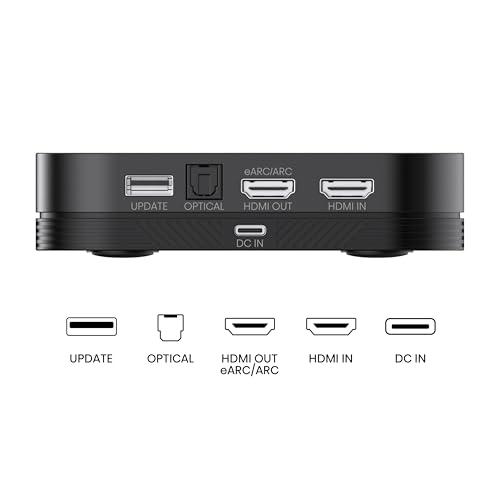
| HDMI eARC, Optical, Bluetooth 5.3, USB (service only) | HDMI eARC, Optical, Bluetooth 5.4, USB, 4K HDR passthrough |
The Hisense HT Saturn creates a more immersive 360-degree surround experience thanks to its four wireless satellite speakers positioned around your room. This distributed approach delivers more convincing spatial audio compared to the ULTIMEA Skywave X40, which uses a traditional soundbar with wireless rear speakers. However, the Skywave X40 provides more powerful bass and higher total wattage for dynamic movie scenes.
The Hisense HT Saturn uses a 4.1.2 setup with four satellites, one subwoofer, and two height channels, creating a phantom center channel for dialogue. The ULTIMEA Skywave X40 features 5.1.2 with a dedicated center speaker in the soundbar, plus left/right front channels, two rear speakers, one subwoofer, and two overhead channels. The 5.1.2 configuration typically provides more precise dialogue placement.
The ULTIMEA Skywave X40 is significantly easier to install, requiring only traditional soundbar placement plus positioning two rear speakers. The Hisense HT Saturn requires more planning since you need to position four satellite speakers around your room and ensure power outlets are available at each location. Both systems feature wireless connectivity to minimize cable runs.
The ULTIMEA Skywave X40 excels for gaming with its ultra-low latency under 20ms and dual 5GHz wireless technology. The Hisense HT Saturn also supports gaming but uses tri-band wireless that prioritizes connection stability over minimal latency. Both systems support Game mode sound profiles optimized for gaming audio.
The ULTIMEA Skywave X40 delivers deeper bass extension down to 35Hz compared to the Hisense HT Saturn's 40Hz response. The Skywave X40 also features a more powerful GaN amplifier and Gravus Ultra-Linear Bass Technology for cleaner, more impactful low-frequency performance during action movies and music.
The ULTIMEA Skywave X40 works universally with any TV brand through HDMI eARC, optical, or Bluetooth connections. The Hisense HT Saturn also works with all TVs but provides enhanced features like Hi-Concerto technology and seamless remote control integration only when paired with Hisense televisions.
The ULTIMEA Skywave X40 provides extensive customization through its dedicated smartphone app, featuring a 10-band equalizer and 121 preset sound profiles. The Hisense HT Saturn offers simpler control through TV integration (with Hisense TVs) and basic sound modes, prioritizing ease of use over detailed audio adjustment capabilities.
Both the Hisense HT Saturn and ULTIMEA Skywave X40 support Dolby Atmos through up-firing speakers that bounce sound off your ceiling. The Saturn distributes height effects through its satellite speakers with room calibration, while the Skywave X40 creates more focused overhead effects from its main soundbar using NEURACORE processing.
The Hisense HT Saturn performs better in large rooms due to its distributed speaker architecture that fills space more evenly. The four satellites create a wider soundstage compared to the ULTIMEA Skywave X40's front-focused approach. However, the Skywave X40 offers higher power output that can drive larger spaces with more authority.
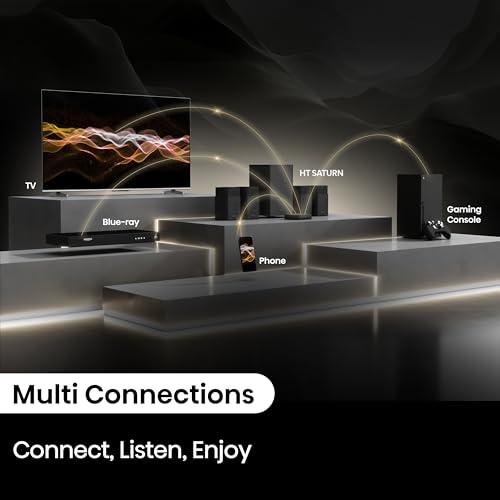
Both the Hisense HT Saturn and ULTIMEA Skywave X40 offer HDMI eARC, optical input, and Bluetooth connectivity. The Skywave X40 adds 4K HDR passthrough and USB input, while the Saturn includes USB for service updates only. Both support wireless streaming from smartphones and tablets.
The ULTIMEA Skywave X40 typically provides better value with higher power output, deeper bass, comprehensive app control, and universal TV compatibility. The Hisense HT Saturn offers excellent value specifically for Hisense TV owners who can utilize its advanced integration features and unique distributed audio experience.
Both systems excel at music playback but with different strengths. The Hisense HT Saturn provides more natural, room-filling music reproduction thanks to Devialet tuning and distributed speakers. The ULTIMEA Skywave X40 offers more powerful dynamics and user-adjustable EQ settings for personalized music preferences, making it better for listeners who want to fine-tune their audio experience.
We've done our best to create useful and informative comparisons to help you decide what product to buy. Our research uses advanced automated methods to create this comparison and perfection is not possible - please contact us for corrections or questions. These are the sites we've researched in the creation of this article: bestbuy.com - youtube.com - blog.son-video.com - youtube.com - youtube.com - techradar.com - ecoustics.com - jbhifi.com.au - shop.hisense-usa.com - bhphotovideo.com - bestbuy.com - digitalreviews.net - hisense-usa.com - projectorscreenstore.com - valueelectronics.com - dolby.com - giftpack.ai - bestbuy.com - shopabunda.com - youtube.com - youtube.com - youtube.com - youtube.com - ultimea.com - walmart.com - youtube.com - hometechnologyreview.com - community.ultimea.com - avsforum.com - youtube.com - youtube.com - youtube.com - bestbuy.com - hometechnologyreview.com

Privacy Policy
Terms and Conditions - Affiliate Policy
Home Security
© Copyright 2008-2026.
11816 Inwood Rd #1211, Dallas, TX 75244