







Soundbars have come a long way from the simple TV speakers they once were. Today's systems can transform your living room into a genuine home theater experience, complete with overhead effects, wireless surround speakers, and bass that you'll feel in your chest. But with so many options available, choosing between premium systems like the ULTIMEA Skywave X40 and VIZIO 5.1 SE can feel overwhelming.
Both of these systems represent significant investments in your home entertainment setup, and each takes a distinctly different approach to delivering surround sound. Understanding these differences—and which one aligns with your specific needs—will save you from buyer's remorse and ensure you get the most immersive audio experience possible.
Before diving into the specifics, it's worth understanding what separates today's soundbars from their earlier predecessors. Modern systems like the ULTIMEA Skywave X40 and VIZIO 5.1 SE are complete home theater solutions, not just TV audio upgrades. They include wireless subwoofers for deep bass, dedicated rear speakers for true surround effects, and sophisticated digital signal processing (DSP)—essentially computer chips that analyze and optimize audio in real-time.
The key considerations when evaluating these systems include channel configuration (how many speakers and where they're positioned), wireless technology quality, audio processing power, room size compatibility, and ease of setup. These factors directly impact how immersive your movies and games will sound, how well the system integrates into your daily routine, and whether you'll still be happy with your purchase years down the road.
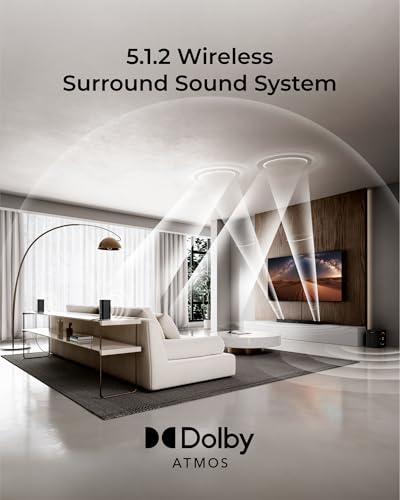
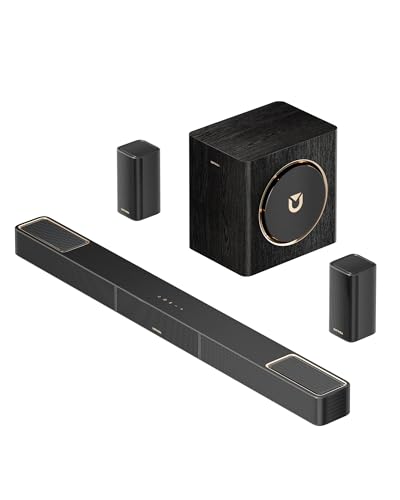
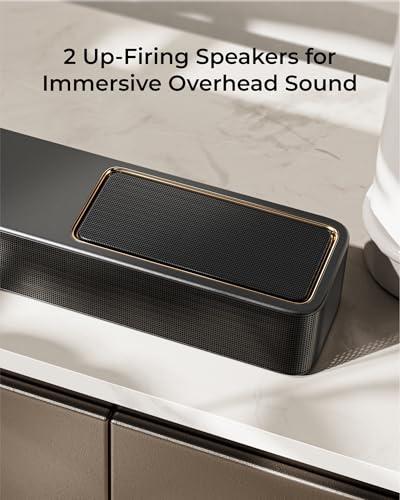
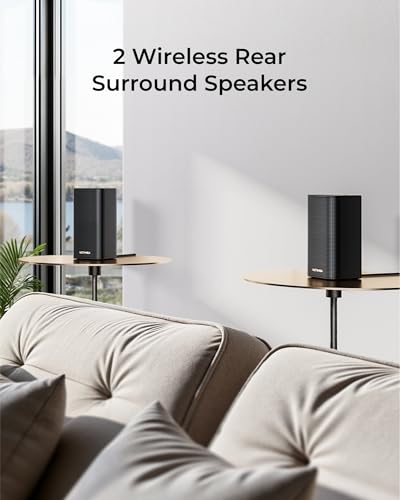
Released in 2024, the ULTIMEA Skywave X40 represents the latest generation of soundbar technology. This 5.1.2-channel system includes dedicated up-firing speakers—drivers that bounce sound off your ceiling to create overhead effects. This "5.1.2" configuration means five main speakers (left, center, right, and two surrounds), one subwoofer, and two height channels for true three-dimensional audio.
What sets this system apart is its NEURACORE processing engine, which combines a triple-core DSP with a dual-core microcontroller unit (MCU). Think of this as having a powerful computer dedicated solely to making your audio sound perfect. This processing power—rated at 2,000 MIPS (millions of instructions per second)—allows the system to handle complex audio calculations in real-time, ensuring every sound effect lands exactly where it should in your room.
The ULTIMEA Skywave X40 also features GaN (Gallium Nitride) amplification, a relatively new technology that's more efficient and faster-responding than traditional silicon amplifiers. This translates to cleaner sound at high volumes and less heat generation, which means better reliability over time.
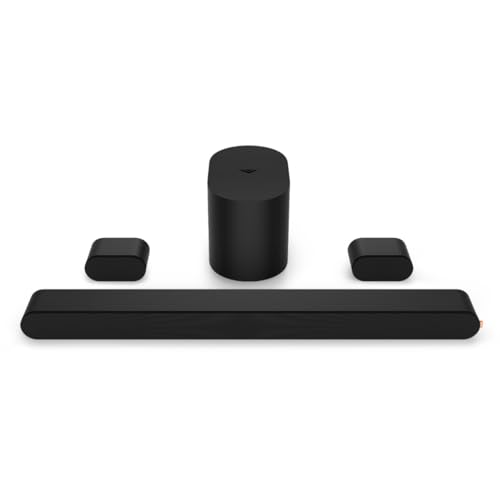
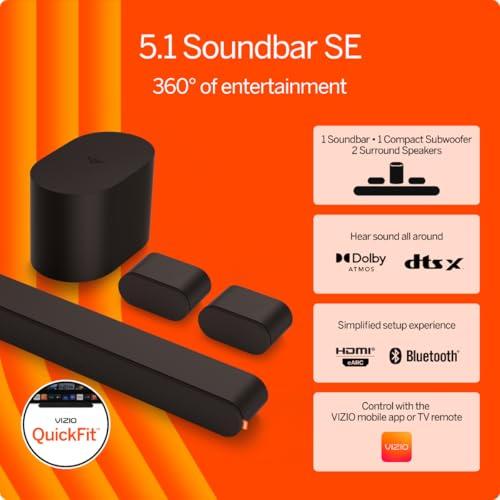
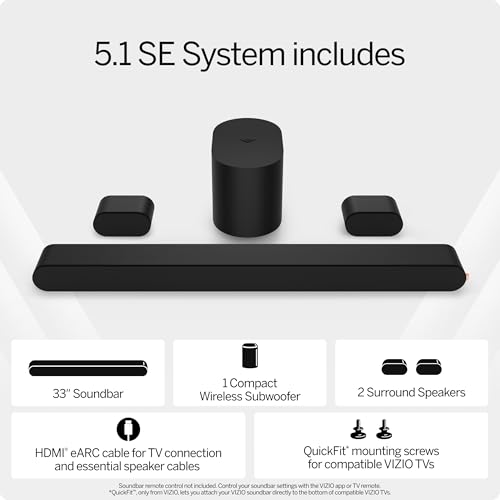
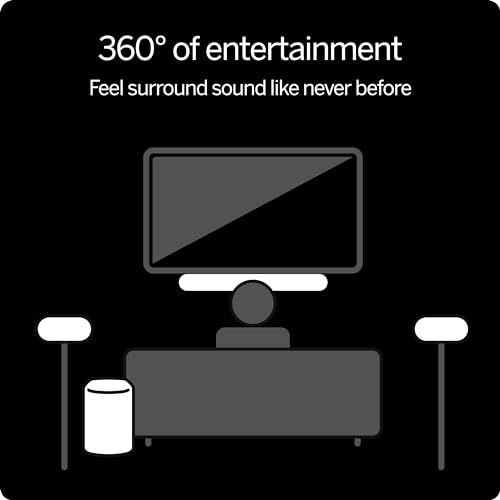
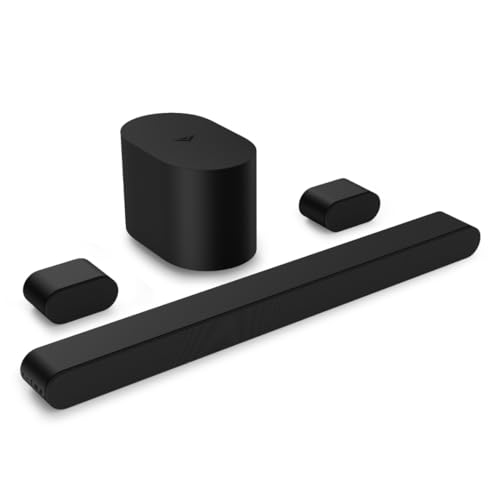
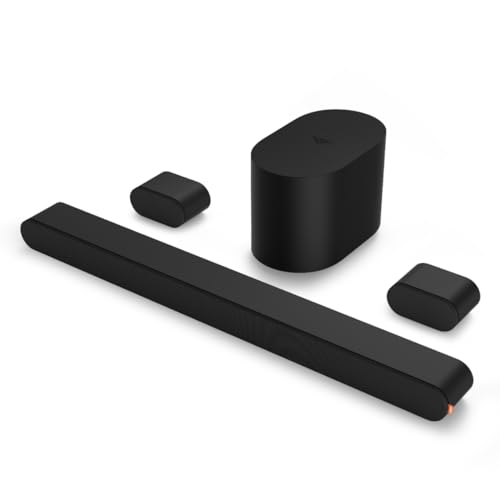
The VIZIO 5.1 SE, also released in recent years, takes a different approach by focusing on simplicity and ecosystem integration. This 5.1-channel system (notice the lack of dedicated height channels) uses Dolby Atmos virtualization—software processing that simulates overhead effects using the main soundbar speakers rather than dedicated up-firing drivers.
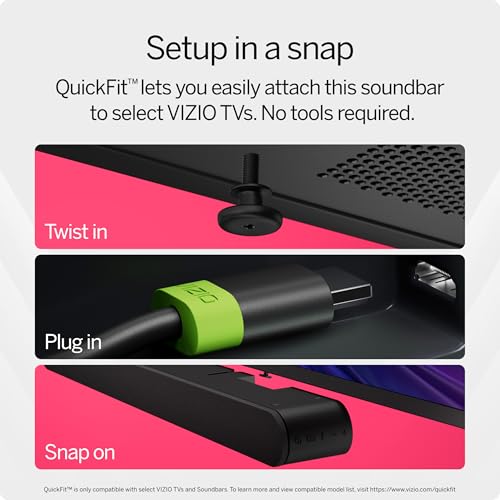
VIZIO's strength lies in its seamless integration with VIZIO TVs through the QuickFit mounting system and simplified control via your existing TV remote. The company has refined this approach over several product generations, prioritizing user experience and setup simplicity over raw technical specifications.
When it comes to creating that "you're in the movie" feeling, the differences between these systems become immediately apparent. The ULTIMEA Skywave X40's true 5.1.2 configuration with dedicated height speakers delivers genuinely overhead audio effects. When helicopters fly by or rain falls in a movie, you'll hear these sounds coming from above, not just from the soundbar in front of you.
Based on our research into user experiences and expert reviews, the ULTIMEA system consistently delivers more convincing spatial audio. The NEURACORE processing engine analyzes incoming audio streams and precisely directs sounds to the appropriate channels, creating what reviewers describe as "pinpoint accuracy" in sound placement. This is particularly noticeable in action movies where bullets whiz past from specific directions or in nature documentaries where bird calls seem to come from all around you.
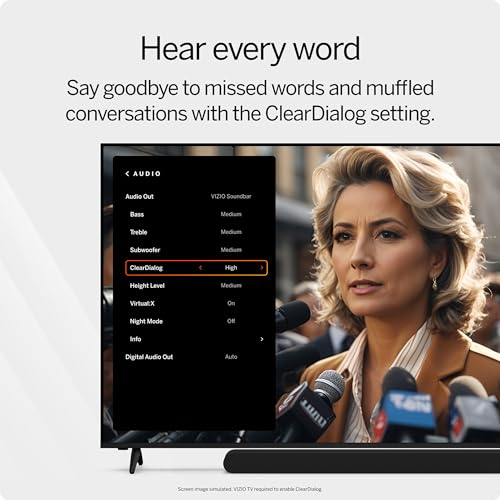
The VIZIO 5.1 SE, while lacking dedicated height speakers, compensates with excellent dialogue clarity and well-balanced sound. Its Dolby Atmos and DTS:X processing creates the illusion of height effects through psychoacoustic processing—essentially tricking your brain into perceiving overhead sounds. While not as convincing as true height speakers, this virtualization works surprisingly well for many listeners, especially those new to surround sound.
In terms of overall sound quality, the ULTIMEA system operates with less than 0.5% distortion even at high volumes, thanks to its advanced DSP and GaN amplification. This means explosive action sequences maintain their clarity and impact without the harsh, compressed sound that plagues lesser systems when pushed hard.
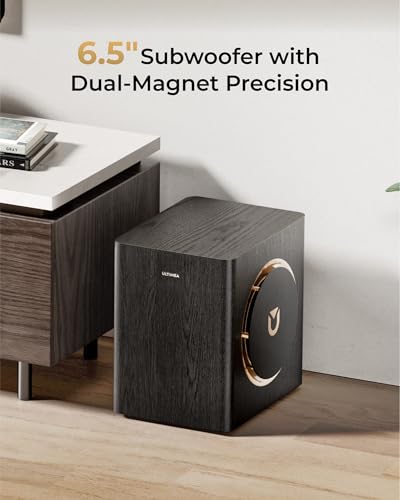
Deep, controlled bass is crucial for home theater immersion, and here the differences are substantial. The ULTIMEA Skywave X40 features a 6.5-inch subwoofer with Gravus Ultra-Linear Bass technology that reaches down to 35Hz—well into the range where you feel bass as much as hear it. This dual-magnet design provides what users consistently describe as "room-shaking" performance without the bloated, muddy bass that smaller subwoofers often produce.
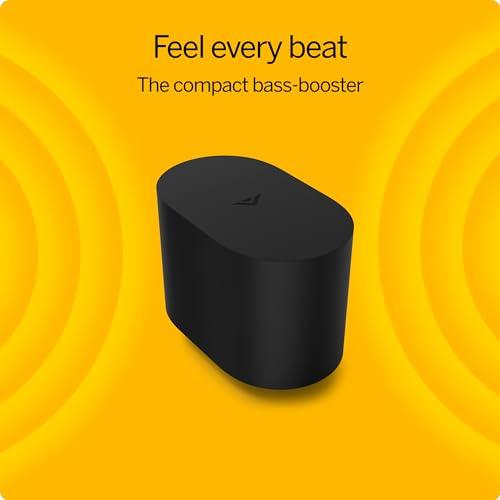
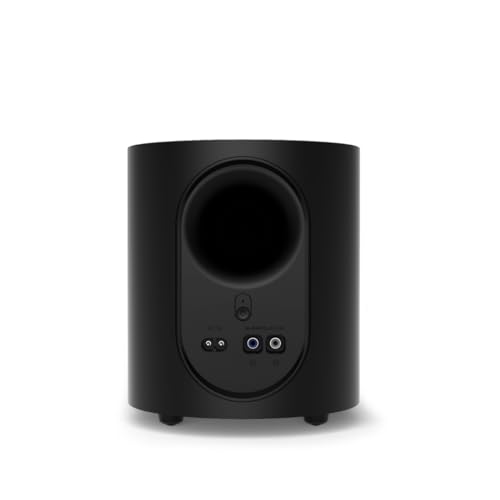
The VIZIO 5.1 SE's more compact subwoofer reaches 50Hz, which covers most movie and music content adequately but lacks the visceral impact of the deeper-reaching ULTIMEA system. However, VIZIO's bass integration is notably well-tuned, blending seamlessly with the main speakers without overwhelming dialogue or mid-range details.
For larger rooms (over 200 square feet), the ULTIMEA system's more powerful bass output becomes crucial. The 530W peak power rating isn't just about volume—it's about maintaining clean, undistorted sound even when filling larger spaces. Smaller rooms might find the VIZIO system's more modest output perfectly adequate while avoiding potential neighbor complaints.
Both systems eliminate the need to run speaker wires across your room, but their approaches differ significantly. The ULTIMEA Skywave X40 uses dual 5GHz wireless transmission with its CineMesh technology, achieving less than 20ms latency—virtually imperceptible to human ears. This low latency is crucial for maintaining lip-sync accuracy and ensuring that on-screen action perfectly matches the audio.
The system's factory pre-pairing means setup is genuinely plug-and-play: power on all components, and they connect automatically. User reports consistently praise this seamless setup process, with many noting that the wireless connection remains stable even in environments with heavy WiFi traffic.
The VIZIO 5.1 SE uses more traditional wireless technology that, while reliable, doesn't match the ULTIMEA system's technical specifications. However, for most users in typical home environments, this difference may not be noticeable in day-to-day use.
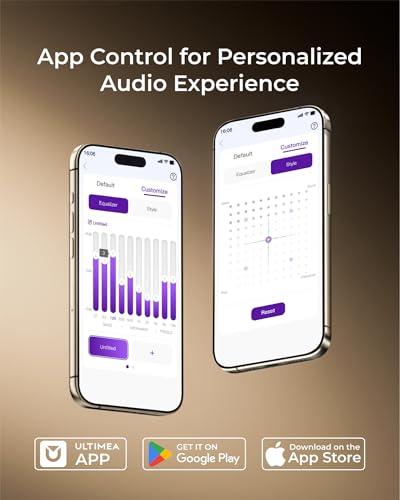
Here's where personal preferences and technical comfort levels become important. The ULTIMEA system includes a comprehensive mobile app with a 10-band equalizer and 121 preset sound profiles. This level of customization appeals to audio enthusiasts who want to fine-tune their experience, but it can feel overwhelming to users who simply want to improve their TV audio.
The system includes all necessary cables, mounting hardware, and a traditional IR remote control. The setup process, while straightforward, involves more decision-making about speaker placement and initial calibration.
The VIZIO 5.1 SE prioritizes simplicity, particularly for VIZIO TV owners. The QuickFit mounting system allows tool-free attachment to compatible TVs, creating a clean, integrated appearance. Control via your existing TV remote through HDMI eARC eliminates the need to learn new button layouts or keep track of additional remotes.
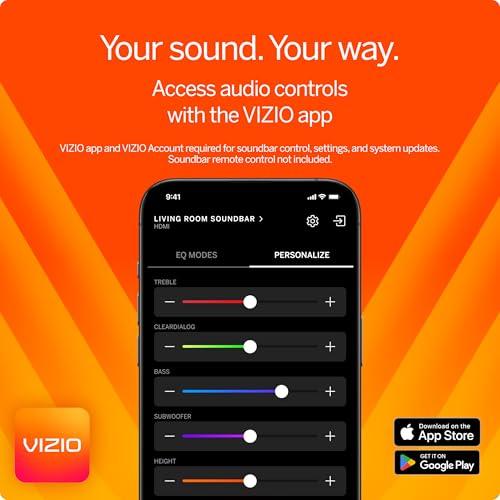
However, VIZIO's decision to sell the physical remote separately (requiring app control as the primary interface) may frustrate users who prefer traditional remote controls. This design choice reflects VIZIO's bet on smartphone-centric control, which works well for tech-comfortable users but may alienate others.
At the time of writing, both systems occupy different price tiers, with the ULTIMEA Skywave X40 typically positioned as the premium option and the VIZIO 5.1 SE offering competitive value in the mid-range segment.
The ULTIMEA system justifies its higher price point through genuine technical advantages: true height channels, advanced processing, superior wireless technology, and more powerful amplification. These aren't just specification sheet differences—they translate to noticeably better performance in real-world use, particularly for larger rooms and more demanding content.
The VIZIO system offers excellent value for users who prioritize simplicity and integration over maximum performance. Its balanced sound, reliable operation, and seamless TV integration provide a significant upgrade from built-in TV speakers without the complexity of more advanced systems.
Room acoustics play a crucial role in soundbar performance, and these systems have different sweet spots. The ULTIMEA Skywave X40's higher power output and deeper bass response make it better suited for medium to large rooms where you need to fill more space with sound. The wireless rear speakers can be positioned optimally for your seating arrangement without cable routing concerns.
The system's up-firing speakers require ceiling heights of at least 8 feet to work effectively—they bounce sound off the ceiling to create overhead effects. Rooms with very high or slanted ceilings may not benefit fully from this technology.
The VIZIO 5.1 SE works well in smaller to medium-sized rooms where its more modest output is sufficient. The compact design suits apartments or bedrooms where space is limited, and the balanced sound signature prevents overwhelming smaller spaces.
Looking ahead, the ULTIMEA system's more advanced processing power and wireless technology suggest better longevity as audio formats and streaming quality continue evolving. The NEURACORE engine's 2,000 MIPS processing capacity provides headroom for future firmware updates and enhanced audio processing algorithms.
The GaN amplification technology, while relatively new to consumer audio, represents the direction the industry is moving due to its efficiency and performance advantages. This positions the ULTIMEA system well for years of reliable operation.
The VIZIO system's more conservative approach means fewer potential failure points but also less capability to adapt to future technological changes through software updates.
After extensive research into user experiences and expert opinions, the choice between these systems comes down to your priorities and usage patterns.
Choose the ULTIMEA Skywave X40 if you want maximum audio performance and have a medium to large room to fill. This system excels for serious movie watching, gaming, and music listening where audio quality takes priority. The true height channels make a meaningful difference for Dolby Atmos content, and the powerful bass response enhances every type of content. Accept the more complex setup and higher price as investments in superior long-term performance.
Choose the VIZIO 5.1 SE if you prioritize simplicity and own (or plan to buy) a VIZIO TV. This system provides excellent value for users who want a significant audio upgrade without complexity. The balanced sound signature works well for mixed content, and the streamlined operation suits users who prefer set-it-and-forget-it simplicity.
For home theater enthusiasts who regularly watch action movies, play games, or listen to music at higher volumes, the ULTIMEA system delivers noticeably superior performance that justifies its premium positioning. For casual viewers who primarily watch TV shows and occasional movies, the VIZIO system provides substantial improvement over TV speakers without overwhelming complexity.
Both systems represent significant upgrades from built-in TV audio, but they serve different user needs and room requirements. Understanding these differences—and honestly assessing your own priorities—will lead you to the right choice for your home theater setup.
| ULTIMEA Skywave X40 5.1.2 Soundbar System | VIZIO 5.1 Soundbar SE Dolby Atmos Surround System |
|---|---|
| Channel Configuration - Determines surround sound immersion quality | |
| 5.1.2 channels with dedicated up-firing drivers for true overhead effects | 5.1 channels with Atmos virtualization (simulated height effects) |
| Peak Power Output - Critical for room-filling sound and bass impact | |
| 530W with GaN amplifier technology | 96dB max output (compact system design) |
| Subwoofer Bass Response - Lower frequencies create more impactful movie experiences | |
| Down to 35Hz with 6.5" dual-magnet wireless sub | Down to 50Hz with compact wireless subwoofer |
| Audio Processing - Advanced DSP creates better sound separation and clarity | |
| NEURACORE triple-core DSP with 2,000 MIPS processing power | Standard Dolby Atmos and DTS:X processing |
| Wireless Technology - Affects connection stability and audio lag | |
| Dual 5GHz CineMesh with <20ms ultra-low latency | Standard wireless connection for rear speakers |
| Soundbar Size - Must fit your TV setup and room aesthetics | |
| 43.3" width (suits larger TVs and rooms) | 33" width (compact design for smaller setups) |
| Control Options - Impacts daily usability and customization | |
| Ultimea app with 10-band EQ, 121 presets, plus IR remote included | VIZIO app control (physical remote sold separately) |
| TV Integration - Simplifies setup and daily operation | |
| Universal HDMI eARC compatibility with any TV brand | QuickFit mounting system for seamless VIZIO TV integration |
| Included Accessories - Affects total setup cost and convenience | |
| Complete package: all cables, mounting hardware, remote control | Basic package: HDMI cable, mounting for compatible TVs |
| Target Room Size - Performance optimization for different spaces | |
| Medium to large rooms (200+ sq ft) with 8+ ft ceilings | Small to medium rooms (up to 200 sq ft) |
| Best For - Primary use case recommendation | |
| Home theater enthusiasts wanting maximum audio performance | VIZIO TV owners seeking simple, balanced audio upgrade |
The ULTIMEA Skywave X40 delivers superior surround sound with its true 5.1.2 channel configuration and dedicated up-firing speakers that create genuine overhead audio effects. The VIZIO 5.1 SE uses virtualized Dolby Atmos processing to simulate height effects, which works well but isn't as immersive as the ULTIMEA system's physical height speakers.
The ULTIMEA Skywave X40 features 5.1.2 channels, meaning it has five main speakers, one subwoofer, and two dedicated height channels for true three-dimensional audio. The VIZIO 5.1 SE has 5.1 channels (five main speakers plus subwoofer) but relies on software processing to create the illusion of overhead sound rather than physical height speakers.
The VIZIO 5.1 SE offers simpler setup, especially for VIZIO TV owners who can use the QuickFit mounting system and control everything with their existing TV remote. The ULTIMEA Skywave X40 requires more initial configuration but includes all necessary cables and mounting hardware for a complete setup.
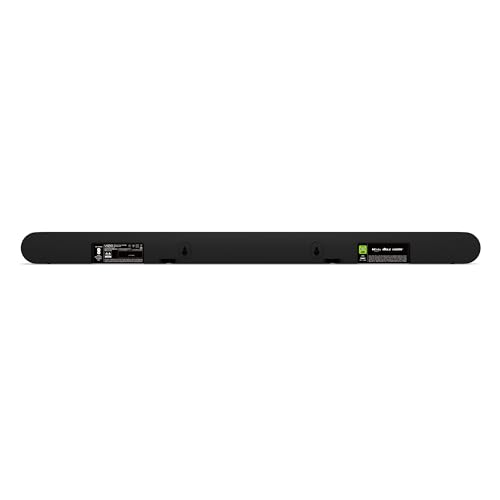
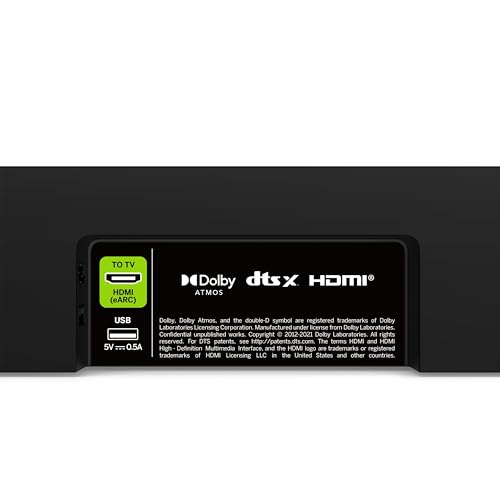
Both systems work with any TV that has HDMI eARC or optical audio outputs. However, the VIZIO 5.1 SE provides the most seamless integration with VIZIO TVs through its QuickFit mounting and unified remote control. The ULTIMEA Skywave X40 offers universal compatibility with comprehensive connection options.
The ULTIMEA Skywave X40 produces significantly deeper and more powerful bass, reaching down to 35Hz with its 6.5-inch dual-magnet subwoofer. The VIZIO 5.1 SE has a more compact subwoofer that reaches 50Hz, which is adequate for most content but lacks the room-shaking impact of the ULTIMEA system.
The ULTIMEA Skywave X40 is designed for medium to large rooms (200+ square feet) and needs at least 8-foot ceilings for its up-firing speakers to work effectively. The VIZIO 5.1 SE works well in smaller to medium rooms and apartments where its balanced sound won't overwhelm the space.
The ULTIMEA Skywave X40 uses advanced dual 5GHz CineMesh wireless technology with ultra-low latency under 20ms, ensuring perfect lip-sync and stable connections. The VIZIO 5.1 SE uses standard wireless connectivity that's reliable for most home environments but doesn't match the technical specifications of the ULTIMEA system.
Both systems offer smartphone app control. The ULTIMEA Skywave X40 includes a comprehensive app with 10-band EQ and 121 preset sound profiles, plus a physical IR remote. The VIZIO 5.1 SE primarily relies on app control since the physical remote is sold separately, though VIZIO TV owners can use their existing TV remote.
The ULTIMEA Skywave X40 excels for gaming with its ultra-low wireless latency, powerful bass response, and true surround sound that helps with directional audio cues. The VIZIO 5.1 SE also works well for gaming but lacks the spatial precision and low-frequency impact that make the ULTIMEA system ideal for immersive gaming experiences.
Yes, both systems support Dolby Atmos, but they implement it differently. The ULTIMEA Skywave X40 provides true Dolby Atmos with physical up-firing speakers that bounce sound off your ceiling. The VIZIO 5.1 SE uses Dolby Atmos virtualization technology to simulate overhead effects through software processing.
The value proposition depends on your needs. The VIZIO 5.1 SE typically offers better value for users wanting a significant TV audio upgrade with simple operation. The ULTIMEA Skywave X40 provides premium performance and features that justify its higher cost for serious home theater enthusiasts who want maximum audio quality.
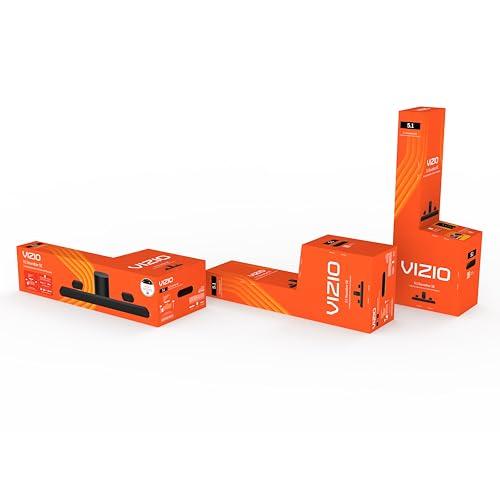
The ULTIMEA Skywave X40 includes a complete package: soundbar, wireless subwoofer, two wireless surround speakers, all cables, mounting hardware, and remote control. The VIZIO 5.1 SE includes the soundbar, wireless subwoofer, surround speakers, and basic cables, but the physical remote control is sold separately since it's designed for app and TV remote control.
We've done our best to create useful and informative comparisons to help you decide what product to buy. Our research uses advanced automated methods to create this comparison and perfection is not possible - please contact us for corrections or questions. These are the sites we've researched in the creation of this article: bestbuy.com - shopabunda.com - youtube.com - youtube.com - youtube.com - youtube.com - ultimea.com - walmart.com - youtube.com - hometechnologyreview.com - community.ultimea.com - avsforum.com - youtube.com - youtube.com - youtube.com - bestbuy.com - hometechnologyreview.com - bestbuy.com - vizio.com - rtings.com - vizio.com - vizio.com - vizio.com - youtube.com - vizio.com - vizio.com - cnet.com - samsclub.com - walmart.com - nfm.com - finelinesdesignstudio.com - dugoutnorthbrook.com - bestbuy.com

Privacy Policy
Terms and Conditions - Affiliate Policy
Home Security
© Copyright 2008-2026.
11816 Inwood Rd #1211, Dallas, TX 75244