










When your TV's built-in speakers just aren't cutting it anymore, the world of soundbars can feel overwhelming. Should you go all-out with a complete surround system, or start simple with a basic upgrade? The ULTIMEA Skywave X40 and Sonos Ray represent two completely different philosophies in solving your audio problems, and understanding which approach fits your needs can save you both money and frustration down the road.
Before diving into these specific products, it's worth understanding what soundbars actually do and why the differences matter. At their core, soundbars exist because TV speakers are terrible—they're thin, underpowered, and usually fire sound toward your wall rather than your ears. But not all soundbars solve this problem the same way.
The most important consideration is channel configuration—essentially how many separate audio streams the system can handle. A 2.0 system has left and right channels (like basic stereo). A 5.1 system adds a center channel for dialogue, two rear speakers for surround effects, and a ".1" subwoofer for bass. The newer 5.1.2 format adds two height channels that fire sound upward, bouncing off your ceiling to create overhead effects—this is what enables Dolby Atmos, the spatial audio format that makes helicopters sound like they're flying above you rather than just somewhere to your left or right.
Power output matters too, but it's not just about being loud. Higher wattage typically means cleaner sound at moderate volumes and the ability to fill larger rooms without distortion. Bass response is measured in hertz (Hz)—lower numbers mean deeper bass. Most people can't hear much below 35Hz, but you'll feel it as that rumble in action movies.
Connectivity has become crucial as TVs have gotten smarter. HDMI eARC (enhanced Audio Return Channel) is the gold standard because it can pass high-quality, uncompressed audio from your TV back to the soundbar, including advanced formats like Dolby Atmos. Optical connections are more basic but widely compatible.
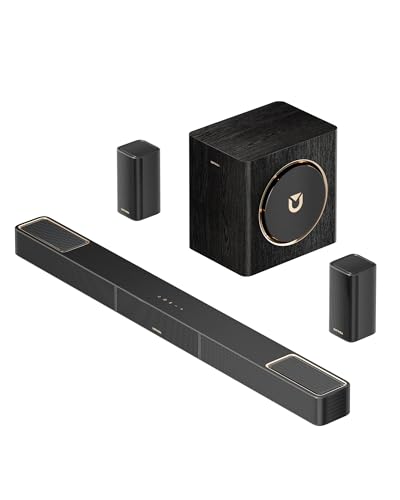
The ULTIMEA Skywave X40, released in 2024, represents the "everything included" approach. It's a complete 5.1.2 surround system with wireless rear speakers, a subwoofer, and Dolby Atmos support—basically a full home theater setup that happens to come in a soundbar package.
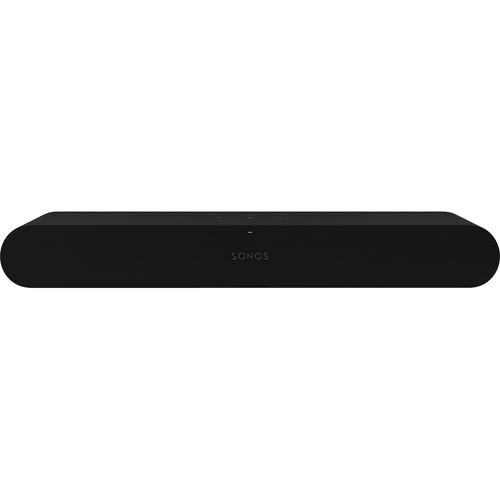
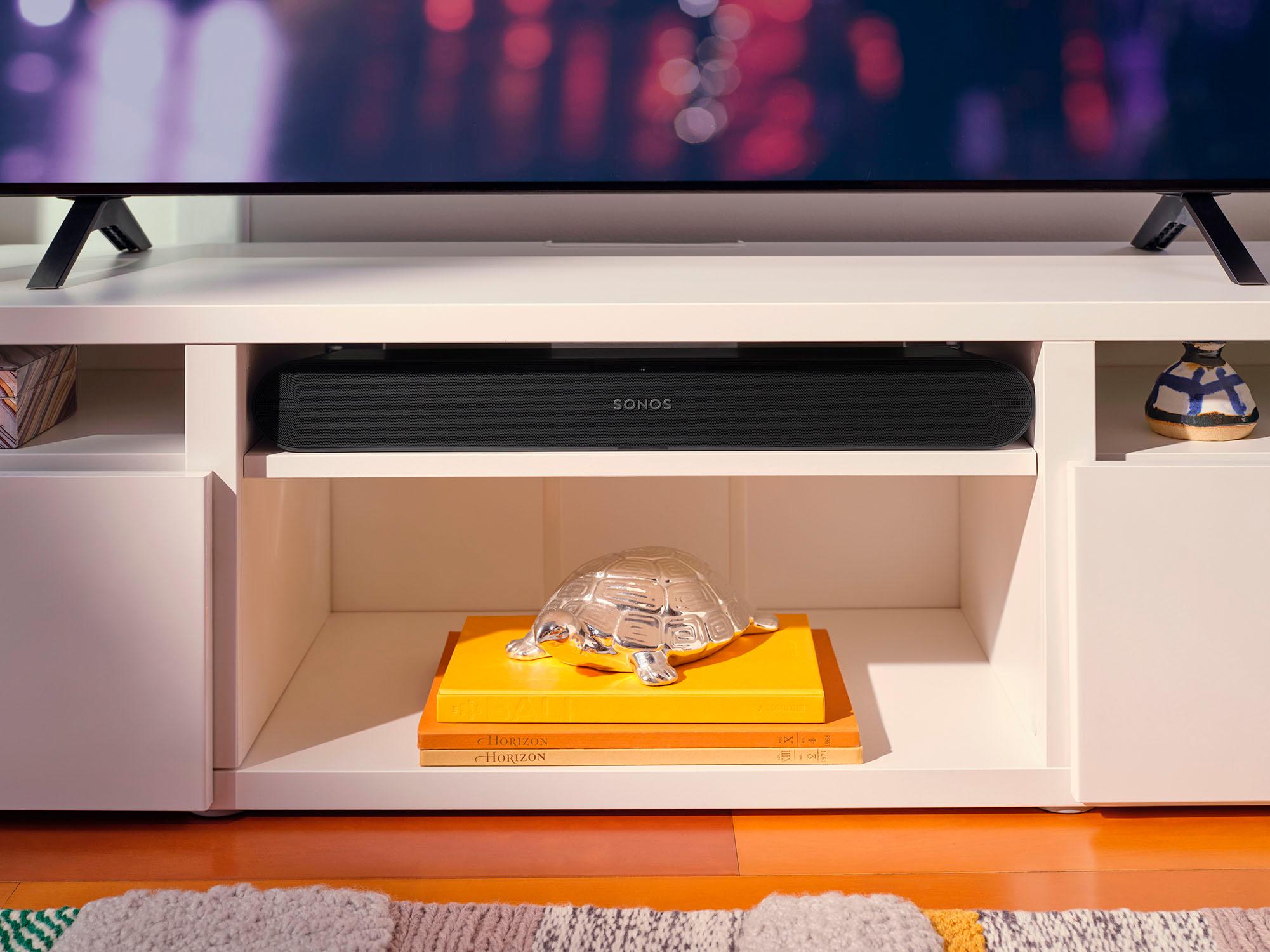
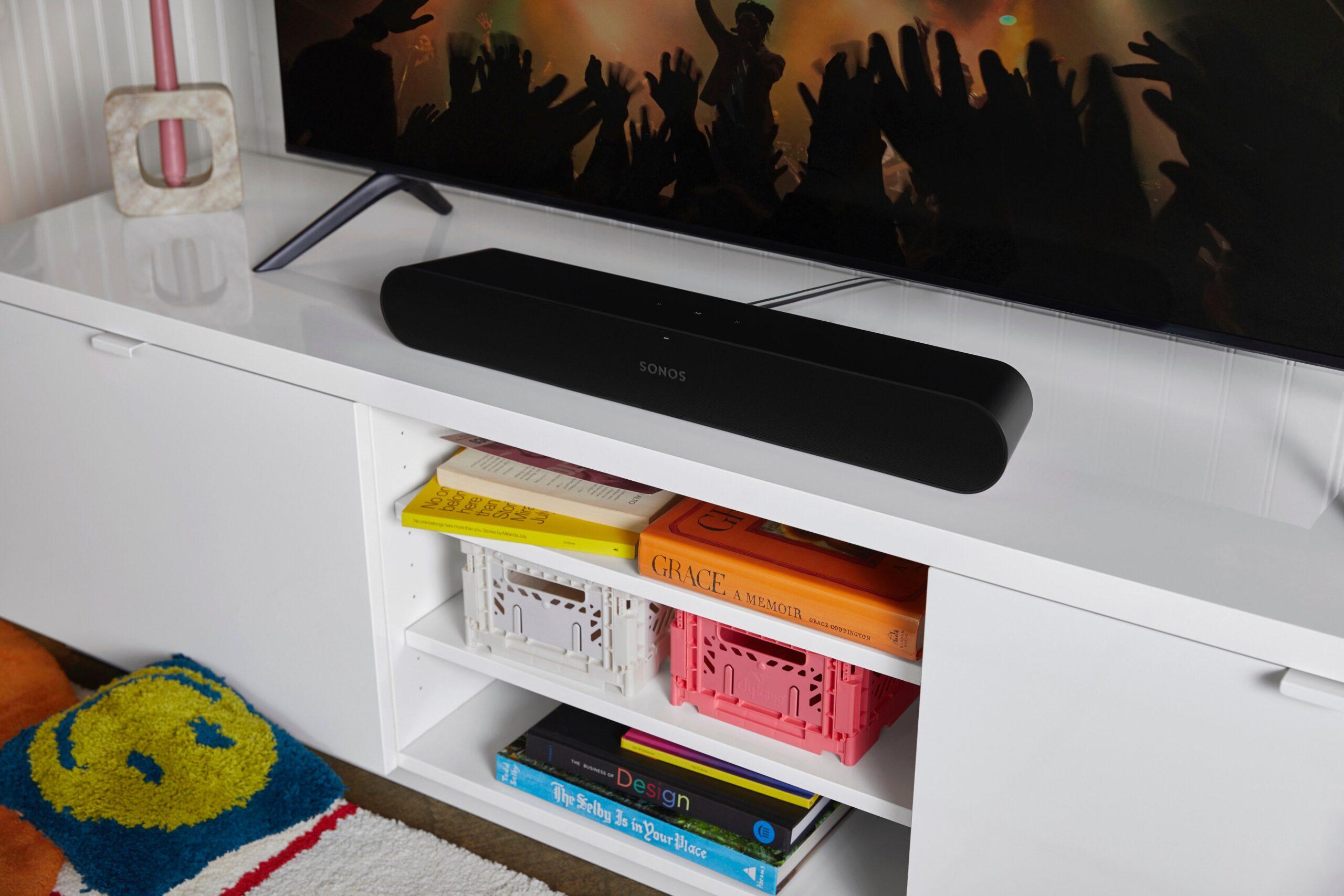
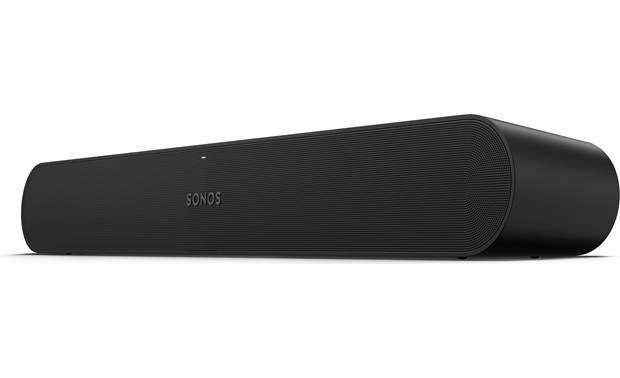
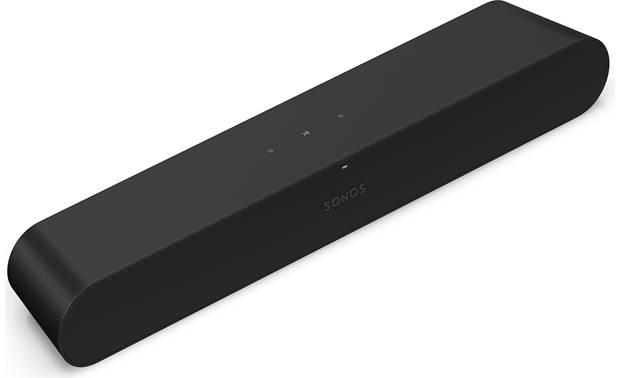
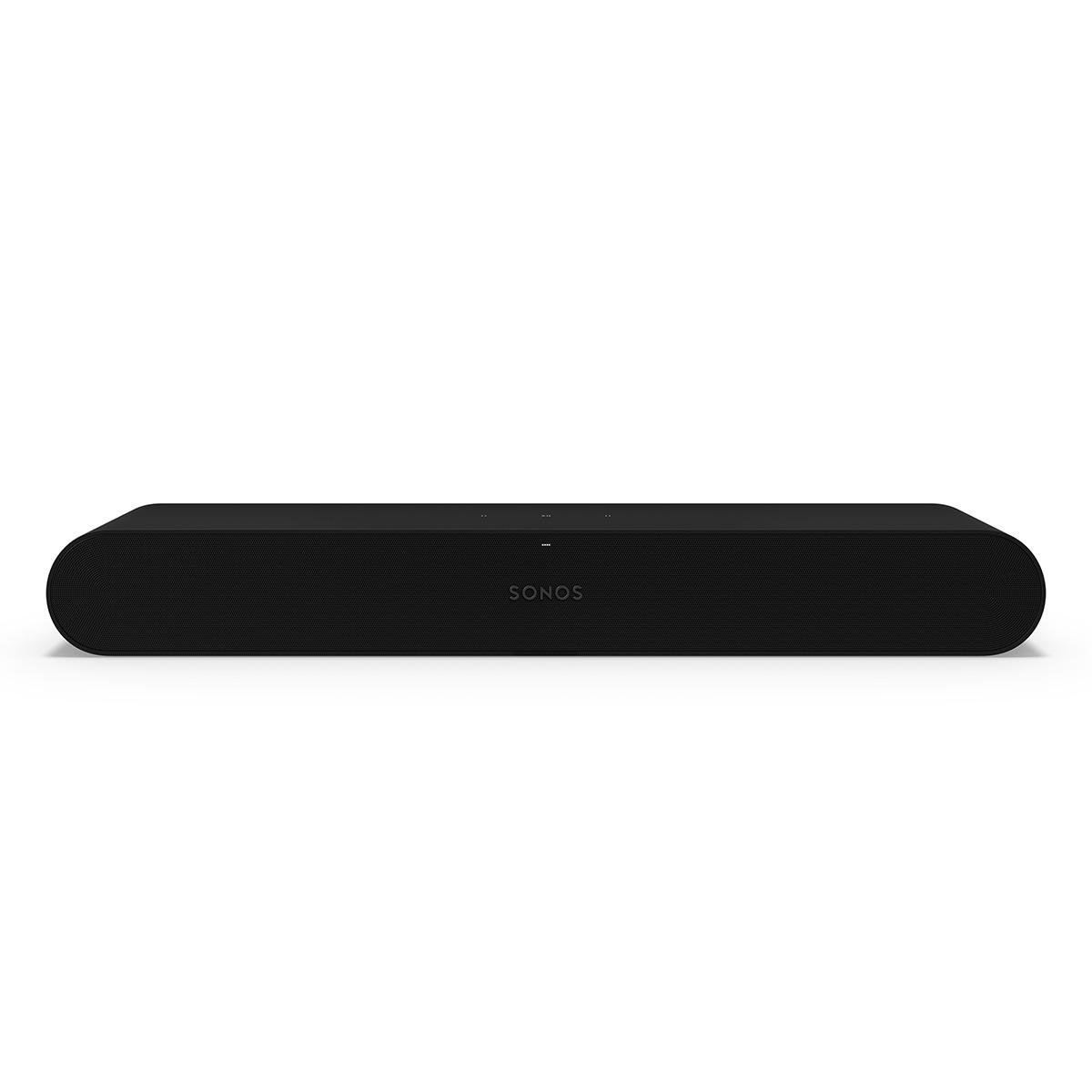
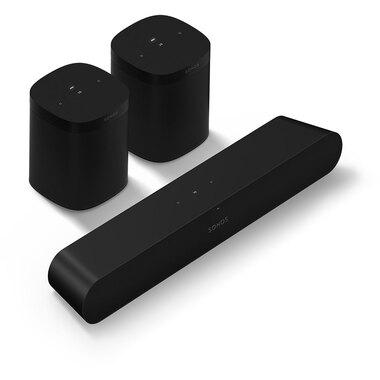
The Sonos Ray, launched in 2022, takes the opposite approach. It's a compact stereo soundbar designed primarily to make dialogue clearer and provide a foundation for potentially building a larger Sonos system over time. Think of it as the starter home of soundbars rather than the mansion.
At the time of writing, the Skywave X40 sits in the mid-range pricing category for complete surround systems, while the Ray occupies the budget-friendly segment for quality stereo soundbars. This price difference reflects their fundamentally different ambitions.
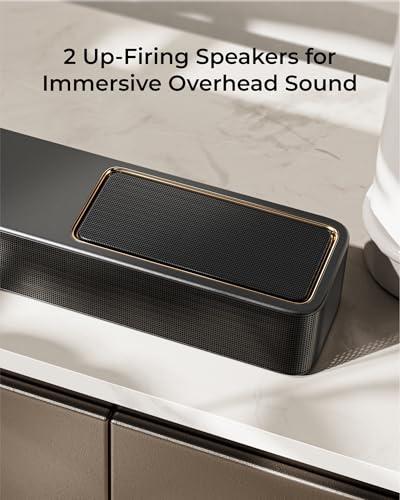
Here's where these products diverge most dramatically. The ULTIMEA Skywave X40 creates genuine 5.1.2 surround sound using physically separate speakers placed around your room. When you watch a movie, sounds actually come from behind you, beside you, and above you because there are real speakers in those positions. The system includes two up-firing drivers in the main bar that bounce sound off your ceiling to create height effects—when it rains in a movie, you'll hear those droplets coming from overhead.
This isn't just a gimmick. Modern movie soundtracks are mixed with these spatial elements in mind. The helicopter chase scene in your favorite action movie was designed assuming you have speakers above and behind you. The Skywave X40 can reproduce these effects as the filmmakers intended.
The Sonos Ray, by contrast, uses sophisticated digital processing to simulate surround effects from a single bar. It's genuinely impressive technology—the Ray can make sounds seem to come from a wider area than its physical size suggests. However, it's still fundamentally stereo audio being cleverly manipulated. You won't get true rear surround effects or overhead sounds because there's nowhere for them to come from.
Based on our research into user experiences, the difference is immediately apparent in content like Marvel movies or video games. The Skywave X40 creates that "you're in the middle of the action" feeling that makes explosions exciting rather than just loud. The Ray makes everything clearer and more detailed than TV speakers, but it can't put you inside the soundstage the same way.
The ULTIMEA Skywave X40 delivers 530 watts of peak power across its eight total drivers. More importantly, it includes a dedicated 6.5-inch wireless subwoofer that extends bass response down to 35Hz—deep enough to reproduce the lowest notes in most music and the rumbling sound effects in movies without losing impact.
The subwoofer uses something called Gravus Ultra-Linear Bass Technology, which is essentially ULTIMEA's approach to preventing distortion at high volumes. The technical implementation involves dual magnets and precise waveguide design to keep bass notes clean and punchy rather than muddy. In practical terms, this means you can turn up action movies without the low-end becoming an indistinct rumble.
The Sonos Ray takes a completely different approach. It's designed for moderate listening levels in smaller spaces, using internal bass ports rather than a dedicated subwoofer. While it can produce surprisingly full sound for its size, it simply can't match the physical capability of the Skywave X40's dedicated bass driver. User reviews consistently note that the Ray performs excellently at moderate volumes but can sound strained when pushed hard, particularly with bass-heavy content.
Interestingly, this is where the Sonos Ray holds its own despite being the simpler product. Sonos has specifically tuned the Ray for vocal clarity, and it shows. The processing emphasizes voice frequencies and uses advanced algorithms to separate dialogue from background music and effects. Multiple reviews praise its ability to make whispered conversations audible without requiring subtitles.
The ULTIMEA Skywave X40 includes dedicated center channel processing for dialogue, which theoretically should provide superior vocal clarity. In practice, based on user feedback, both products excel here, though through different methods. The Skywave X40 uses a discrete center channel approach, while the Ray relies on sophisticated stereo processing.
For daily TV watching—news, sitcoms, dramas—both products solve the dialogue problem effectively. The difference emerges more in movies and gaming where the Skywave X40's surround capabilities become relevant.
The ULTIMEA Skywave X40 incorporates GaN (Gallium Nitride) amplification, which sounds complicated but delivers practical benefits. Traditional soundbar amplifiers use silicon technology, but GaN amplifiers operate at up to 98% efficiency compared to silicon's typical 70-80%. This means less heat generation, faster response times, and more consistent power delivery.
In practical terms, this translates to cleaner sound at high volumes and better dynamic range—the difference between the quietest and loudest sounds the system can reproduce. The Skywave X40 can deliver explosive action sequences while maintaining clear dialogue, something cheaper amplifiers struggle with.
The system also includes NEURACORE processing, which uses a triple-core DSP (Digital Signal Processor) with 2,000 MIPS of computing power. This handles real-time audio optimization, channel steering, and format decoding. While these specs might seem like marketing speak, they enable features like automatic EQ adjustment and precise surround sound imaging.
Both products embrace wireless connectivity but in different ways. The ULTIMEA Skywave X40 uses proprietary CineMesh technology operating on dual 5GHz frequencies to connect its rear speakers and subwoofer. The key specification here is latency—the delay between when sound should play and when you actually hear it. At less than 20 milliseconds, this wireless connection is fast enough that you won't notice any lip-sync issues or delays during gaming.
The Sonos Ray focuses on Wi-Fi streaming and integration with the broader Sonos ecosystem. It includes Trueplay tuning, which uses your smartphone's microphone to measure your room's acoustics and automatically adjust the sound profile. This is genuinely useful technology that optimizes performance based on your specific space, though it's limited to iOS devices.
The ULTIMEA Skywave X40 includes HDMI eARC support, which enables it to receive high-quality audio directly from your TV and pass through 4K HDR video without degradation. This matters more than you might think—many soundbars force you to choose between best audio quality and best video quality. The Skywave X40 delivers both simultaneously.
The Ray relies primarily on optical audio input, which is more universally compatible but limited in bandwidth. It can't handle the highest-quality audio formats that the Skywave X40 supports. However, the Ray's Wi-Fi connectivity enables seamless integration with music streaming services and voice assistants through the Sonos app.
For cinematic content, the differences between these products become stark. The ULTIMEA Skywave X40 transforms movie watching into something approaching a theater experience. Based on user reports, the wireless rear speakers create genuine surround immersion—you'll hear characters approaching from behind, ambient forest sounds surrounding you, and overhead effects during storm scenes.
Gaming particularly benefits from true surround sound. In competitive games, being able to accurately locate footsteps or gunfire can provide a tactical advantage. The Skywave X40's low-latency wireless ensures that audio cues align perfectly with on-screen action.
The Sonos Ray, while excellent for dialogue-heavy content like dramas and documentaries, simply can't create this level of spatial immersion. It excels at making everything clearer and more detailed, but you're still fundamentally listening to stereo audio, albeit very good stereo audio.
This is where the comparison becomes more nuanced. The Sonos Ray was designed with music streaming in mind and integrates seamlessly with services like Spotify and Apple Music. Its stereo presentation works perfectly for music, and the Trueplay room correction helps optimize performance for your specific listening position.
The ULTIMEA Skywave X40 can certainly play music, and its additional drivers and processing power mean it can reproduce complex musical passages with impressive detail. However, for pure music listening, the surround processing can sometimes feel unnecessary or even distracting, depending on your preferences.
For routine television consumption—news, sitcoms, talk shows—both products provide substantial improvements over TV speakers. The Ray might actually have a slight edge here due to its vocal-focused tuning and simpler setup. The Skywave X40's full surround capability is somewhat wasted on basic broadcast content.
At the time of writing, these products occupy different value propositions entirely. The ULTIMEA Skywave X40 delivers a complete home theater experience at roughly half the price of comparable systems from established brands like Samsung or Bose. When you consider that you're getting wireless rear speakers, a subwoofer, and Dolby Atmos support in one package, the value proposition becomes compelling.
The Sonos Ray represents value in a different way. It provides exceptional dialogue clarity and build quality at an accessible price point, with the option to expand into a full Sonos ecosystem over time. However, reaching the same capability level as the Skywave X40 would require adding a Sonos Sub and rear speakers, potentially tripling the total investment.
The expandability question is crucial. If you're certain you want a complete surround system now, the Skywave X40 provides everything immediately. If you prefer gradual upgrades or aren't sure about your long-term needs, the Ray's modular approach offers more flexibility.
You're committed to a cinematic home experience and want everything included from day one. This makes sense if you have a dedicated TV room, regularly watch movies or play games, and don't mind a more complex setup with multiple powered components around your room. The wireless design eliminates the cable-running nightmare of traditional surround systems while delivering authentic spatial audio.
The Skywave X40 also makes sense if you're budget-conscious but refuse to compromise on surround sound. Building an equivalent system piece by piece would cost significantly more, making this an excellent value for home theater enthusiasts.
You prioritize simplicity, live in a smaller space, or aren't sure about your long-term audio needs. The Ray excels if dialogue clarity is your primary concern—perfect for apartment dwellers who watch lots of TV but don't want to invest in a full surround system.
The Ray also makes sense if you're already invested in or interested in the Sonos ecosystem. The ability to create whole-home audio and the regular software updates provide long-term value beyond just TV enhancement.
These products solve different problems despite both being soundbars. The ULTIMEA Skywave X40 replaces your entire audio system with a wireless home theater setup, while the Sonos Ray enhances your TV audio with room for future growth.
Your choice should depend more on your viewing habits and space than on the products' specifications alone. If you're serious about movies and gaming, the Skywave X40's true surround sound is transformative. If you primarily watch TV shows and value simplicity, the Ray's focused approach might serve you better.
Both products represent solid engineering and good value in their respective categories. The key is honestly assessing your needs and room situation before getting swayed by impressive specification sheets or ecosystem promises you might not actually use.
| ULTIMEA Skywave X40 5.1.2 Soundbar System | Sonos Ray Soundbar |
|---|---|
| Audio Channels - Determines surround sound capability and immersion | |
| 5.1.2 channels with true Dolby Atmos height effects | Stereo with simulated surround processing |
| Included Components - What you get in the box affects total value | |
| Complete system: main bar, wireless subwoofer, 2 wireless rear speakers | Single soundbar only (subwoofer and surrounds sold separately) |
| Power Output - Higher wattage means better room-filling capability | |
| 530W peak power across 8 drivers | Modest power optimized for smaller spaces |
| Bass Response - Lower Hz numbers mean deeper, more impactful bass | |
| 35Hz with dedicated 6.5" wireless subwoofer | Internal bass ports only, limited low-end extension |
| HDMI Connectivity - Essential for modern TV integration and high-quality audio | |
| HDMI eARC with 4K HDR passthrough | No HDMI (optical input only) |
| Wireless Technology - Affects setup flexibility and audio quality | |
| CineMesh dual 5GHz for rear speakers (<20ms latency) | Wi-Fi streaming with AirPlay 2 support |
| Smart Features - App control and customization options | |
| ULTIMEA app with 10-band EQ, 121 presets | Sonos app with Trueplay room correction, multiroom audio |
| Expandability - Future upgrade potential | |
| Complete system with limited expansion options | Entry point to extensive Sonos ecosystem |
| Room Size Suitability - Performance scales with space requirements | |
| Medium to large rooms (up to 400+ sq ft) | Small to medium rooms (up to 200 sq ft) |
| Release Year - Indicates technology generation and feature currency | |
| 2024 (latest wireless and processing technology) | 2022 (mature Sonos platform with regular updates) |
The ULTIMEA Skywave X40 is significantly better for home theater use. It provides true 5.1.2 surround sound with wireless rear speakers and Dolby Atmos height effects, creating an immersive cinematic experience. The Sonos Ray only offers stereo audio with simulated surround effects, making it better suited for basic TV watching rather than movies.
The fundamental difference is system complexity. The ULTIMEA Skywave X40 is a complete surround sound system with multiple wireless speakers, while the Sonos Ray is a single stereo soundbar. The Skywave X40 delivers true surround sound, whereas the Ray focuses on dialogue clarity and music streaming.
Yes, the ULTIMEA Skywave X40 includes a wireless 6.5-inch subwoofer that delivers bass down to 35Hz. The Sonos Ray does not include a subwoofer, though you can purchase the Sonos Sub separately to add deeper bass.
The ULTIMEA Skywave X40 has significantly better bass due to its included wireless subwoofer with dual-magnet design. The Sonos Ray relies on internal bass ports and cannot match the deep, powerful bass of a dedicated subwoofer system.
Yes, the Sonos Ray can be expanded by adding Sonos rear speakers and a Sonos Sub to create a full surround system. However, the ULTIMEA Skywave X40 already includes all surround components out of the box, making it more cost-effective for immediate surround sound.
The Sonos Ray is better for small spaces due to its compact design and moderate power output that won't overwhelm smaller rooms. The ULTIMEA Skywave X40 is designed for medium to large rooms and may be excessive for apartment living.
Yes, the ULTIMEA Skywave X40 supports full Dolby Atmos with dedicated height channels and up-firing speakers. The Sonos Ray does not support Dolby Atmos, limiting it to stereo and basic surround sound formats.
Both soundbars excel at dialogue clarity, but through different approaches. The Sonos Ray is specifically tuned for vocal enhancement and receives praise for crystal-clear speech. The ULTIMEA Skywave X40 uses dedicated center channel processing, which also delivers excellent dialogue reproduction.
The ULTIMEA Skywave X40 offers HDMI eARC, optical, Bluetooth 5.4, and USB connections with 4K HDR passthrough. The Sonos Ray only has optical input but includes Wi-Fi connectivity and Apple AirPlay 2 for wireless streaming.
The Sonos Ray is generally better for music due to its Wi-Fi streaming capabilities, integration with music services, and stereo-optimized tuning. The ULTIMEA Skywave X40 can play music well, but its surround processing is primarily designed for movies and TV content.
The ULTIMEA Skywave X40 includes 8 total speakers across the main bar, subwoofer, and wireless rear speakers. The Sonos Ray contains multiple drivers within the single soundbar unit but doesn't include separate wireless speakers.
The ULTIMEA Skywave X40 offers better value if you want a complete surround system, as it includes everything needed for home theater audio. The Sonos Ray provides better value if you prefer a simple upgrade with future expansion options, though building a full system will cost more long-term than the complete Skywave X40 package.
We've done our best to create useful and informative comparisons to help you decide what product to buy. Our research uses advanced automated methods to create this comparison and perfection is not possible - please contact us for corrections or questions. These are the sites we've researched in the creation of this article: bestbuy.com - shopabunda.com - youtube.com - youtube.com - youtube.com - youtube.com - ultimea.com - walmart.com - youtube.com - hometechnologyreview.com - community.ultimea.com - avsforum.com - youtube.com - youtube.com - youtube.com - bestbuy.com - hometechnologyreview.com - techradar.com - soundandvision.com - youtube.com - appleinsider.com - youtube.com - sonos.com - cnet.com - howtogeek.com - pcrichard.com - en.community.sonos.com - epicsystems.tech - en.community.sonos.com - cepro.com - videoandaudiocenter.com

Privacy Policy
Terms and Conditions - Affiliate Policy
Home Security
© Copyright 2008-2026.
11816 Inwood Rd #1211, Dallas, TX 75244