




Your TV's built-in speakers are probably terrible. That's not a harsh judgment—it's just physics. Modern TVs are impossibly thin, leaving no room for decent audio drivers, which means dialogue sounds muffled, explosions lack punch, and your favorite movies lose their emotional impact. This is where soundbars come in, but choosing the right one requires understanding what you actually need versus what sounds impressive in marketing materials.
Today we're comparing two fundamentally different approaches to this problem: the ULTIMEA Skywave X40, a premium 5.1.2 Dolby Atmos system that treats your living room like a serious home theater, and the Amazon Fire TV Soundbar, a budget-focused solution that prioritizes simplicity and dialogue clarity above all else.
Before diving into specific products, let's establish what separates good soundbars from marketing noise. The soundbar category has exploded over the past decade, evolving from simple stereo speakers to sophisticated audio systems that can genuinely compete with traditional surround sound setups.
The most important performance factors are dialogue clarity (can you actually hear what people are saying?), soundstage width (does audio feel spacious or cramped?), bass response (can you feel action sequences?), and surround sound effectiveness (do effects seem to come from around you?). Everything else is secondary.
Modern soundbars use several technologies to overcome the limitations of a single horizontal speaker. Digital Signal Processing (DSP) manipulates audio frequencies to create the illusion of wider sound, while Dolby Atmos and DTS:X process "object-based" audio that can be precisely placed in three-dimensional space around your room. The key distinction is between systems that simulate these effects versus those that create them with dedicated speakers.
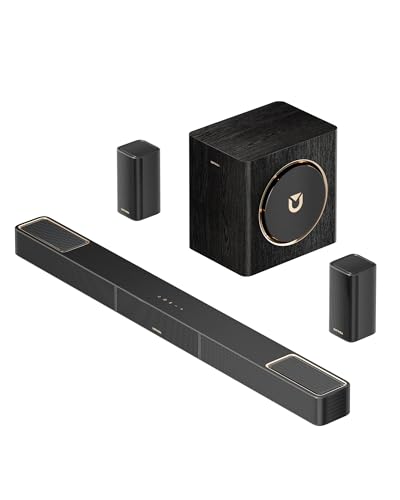
The ULTIMEA Skywave X40, released in 2024, represents the modern evolution of home theater audio—a complete wireless surround system disguised as a soundbar. This isn't just a single speaker trying to do everything; it's actually eight separate drivers working together across multiple components.
The core difference with the Skywave X40 is its genuine 5.1.2 channel configuration. Those numbers matter: 5.1 means five main speakers (left, center, right, left surround, right surround) plus one subwoofer, while the .2 indicates two height channels for overhead effects. This isn't virtual surround sound created by fancy processing—these are actual separate speakers positioned around your room.
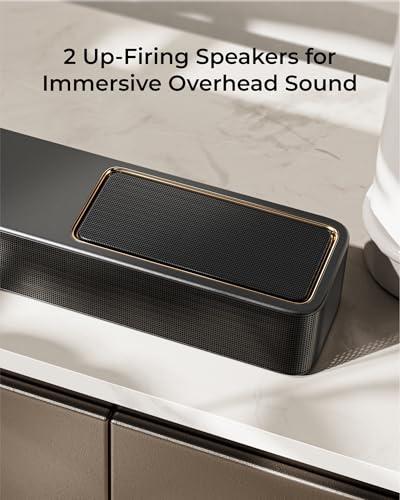
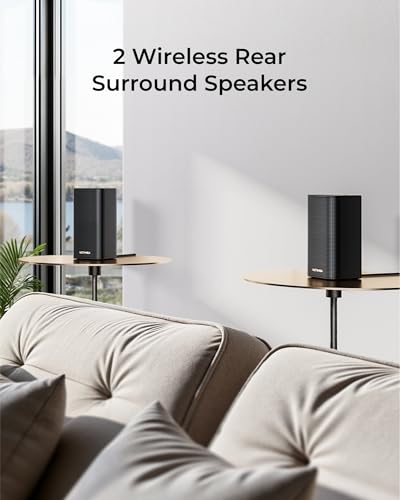
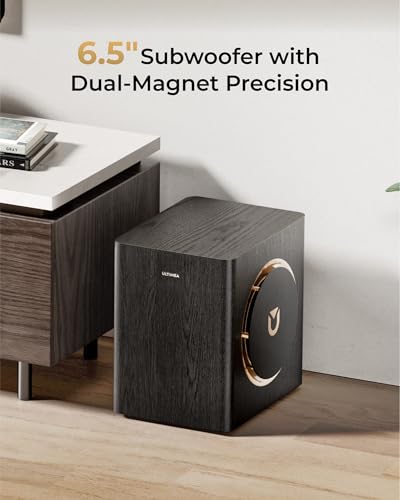
The main soundbar houses the front three channels plus two up-firing drivers that bounce sound off your ceiling to create height effects. Two wireless rear speakers handle surround channels, while a dedicated 6.5-inch subwoofer manages everything below 80Hz. This physical separation allows each component to be optimized for its specific frequency range and spatial role.
What makes this particularly impressive is the CineMesh True Wireless technology that connects all components without running cables across your room. Using dual 5GHz transmission (the same frequency as high-end Wi-Fi), the system maintains audio sync with less than 20 milliseconds of delay—fast enough that your brain can't detect any lag between on-screen action and sound effects.
The Skywave X40 employs what ULTIMEA calls NEURACORE processing, which sounds like marketing speak until you understand what it actually does. This triple-core DSP (Digital Signal Processor) and dual-core MCU (Microcontroller Unit) combination handles up to 2,000 MIPS (Million Instructions Per Second) of real-time audio calculations.
In practical terms, this means the system can process 24-bit/192kHz audio—significantly higher resolution than CD quality—while maintaining less than 1% distortion even at high volumes. The processing power also enables sophisticated room correction, dynamic range optimization, and precise channel steering that ensures dialogue stays centered while effects move naturally around your space.
The GaN (Gallium Nitride) amplification is another technical advancement worth understanding. Unlike traditional silicon amplifiers that waste energy as heat, GaN amplifiers operate at up to 98% efficiency while responding eight times faster to audio transients. This translates to cleaner sound with better dynamics and less heat generation, allowing the system to maintain performance even during extended listening sessions.
Bass is where most soundbars struggle, but the Skywave X40's dedicated subwoofer changes the game entirely. The 6.5-inch driver uses dual-magnet construction and what ULTIMEA terms Gravus Ultra-Linear Bass Technology to reach down to 35Hz—deep enough to feel the rumble of explosions or the pluck of a bass guitar string.
Having a separate subwoofer matters because bass frequencies require significant air movement, which demands larger drivers and more power than a compact soundbar can provide. The wireless design also allows optimal placement for your room's acoustics, whether that's in a corner for maximum output or against a side wall for smoother response.
The 530W peak power rating provides enough headroom for dynamic content without compression. When a helicopter swoops overhead in an action movie, you'll feel the air displacement alongside the directional audio cues from the height speakers.
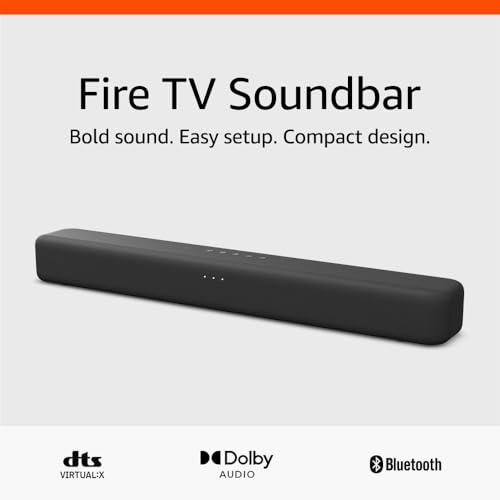
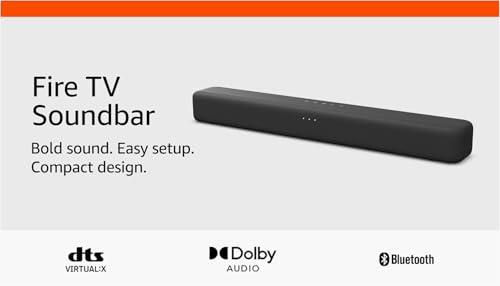
The Amazon Fire TV Soundbar, also released in 2024, takes the opposite approach. Instead of overwhelming users with components and complexity, it focuses on solving the specific problem of unclear TV dialogue in the most straightforward way possible.
This soundbar uses a 2.0 stereo configuration with two full-range "Racetrack" drivers—oval-shaped speakers that provide more membrane area than traditional round drivers while maintaining a compact profile. These are powered by 40W of total amplification, which sounds modest compared to the Skywave X40's 530W but is actually well-matched to the driver capabilities and intended use case.
The Fire TV Soundbar's strength lies in its acoustic tuning specifically for television content. Most TV audio sits in the midrange frequencies where dialogue lives, and this soundbar optimizes its frequency response for speech clarity rather than trying to reproduce the full spectrum with equal emphasis.
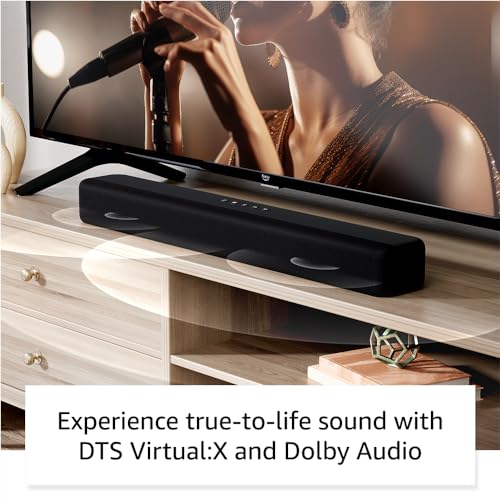
DTS Virtual:X processing creates a simulated surround effect by manipulating phase relationships and frequency response to trick your brain into perceiving a wider soundstage. While not as convincing as physical rear speakers, it does expand the audio beyond what you'd expect from two front-facing drivers.
Without a separate subwoofer, the Fire TV Soundbar relies on bass reflex design—a front-facing port that extends low-frequency response by using the internal air volume as a resonant chamber. This approach works better than sealed designs in compact speakers, though it can't match the output or extension of a dedicated subwoofer.
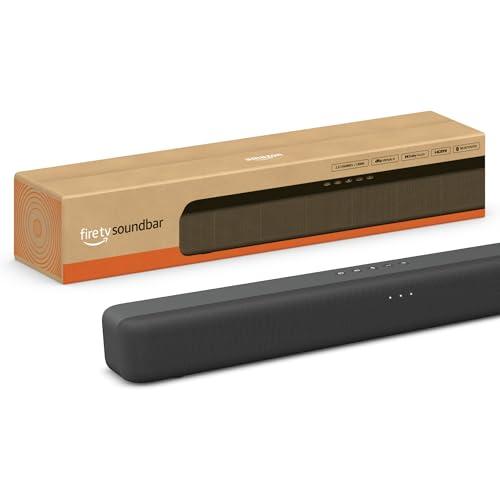
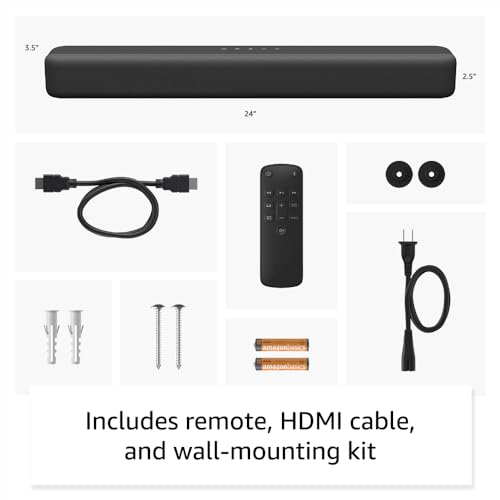
The entire system measures just 61cm wide and weighs only 1.8kg, making it suitable for smaller TVs or spaces where a multi-component system would be overwhelming. The fabric grille and understated design blend into most living rooms without drawing attention.
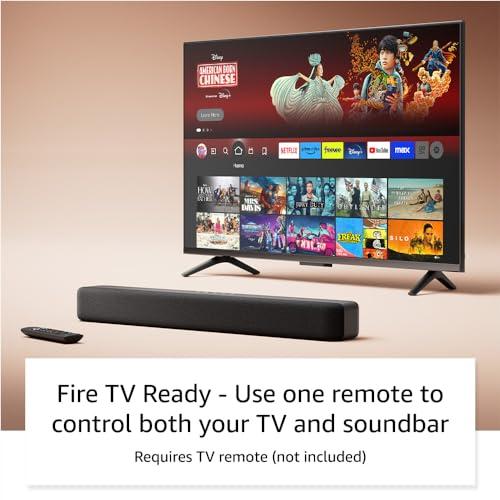
Where the Fire TV Soundbar really shines is user experience. Setup involves connecting a single HDMI cable, and the soundbar immediately improves dialogue clarity without any configuration. The touch controls are intuitive, and despite the "Fire TV" branding, it works with any TV that has HDMI ARC capability.
The lack of app control might seem like a limitation, but it's actually liberating for users who just want better TV audio without managing another smartphone app or learning complex EQ settings. Three sound modes (Movie, Music, Dialog) cover most use cases, and switching between them is immediate.
Both soundbars significantly improve dialogue clarity compared to TV speakers, but through different approaches. The Skywave X40 uses dedicated center channel processing and sophisticated DSP to ensure voices stay anchored to the screen while maintaining natural tonality. The wide soundstage can sometimes make voices feel slightly disconnected from other audio elements, but the overall clarity is excellent.
The Fire TV Soundbar prioritizes dialogue above everything else, with frequency tuning specifically optimized for speech intelligibility. Voices sound more intimate and direct, though the overall presentation feels narrower. For users who primarily watch news, talk shows, or dialogue-heavy dramas, this focused approach often works better than more complex systems.
This is where the fundamental design differences become most apparent. The Skywave X40's dedicated subwoofer delivers bass that you feel as much as hear, extending down to 35Hz with authority. Action movies gain visceral impact, music reveals low-frequency details, and the overall dynamic range approaches what you'd experience in a commercial theater.
The Fire TV Soundbar's integrated bass provides adequate support for most TV content but lacks the extension and impact for truly immersive experiences. Bass lines in music sound present but not particularly detailed, and action sequences miss the rumble that sells the illusion of large-scale events.
The difference here is night and day. The Skywave X40 creates genuine surround sound with discrete rear channels and overhead effects. When watching Dolby Atmos content, helicopters genuinely seem to move overhead, rain falls from above, and ambient effects place you inside the scene rather than observing it.
The Fire TV Soundbar's DTS Virtual:X processing does widen the soundstage beyond what two speakers should theoretically achieve, but it's clearly a simulation. The effect works well for stereo music and can add some spaciousness to movie soundtracks, but it can't match the precision and immersion of physical surround speakers.
The Skywave X40's 530W peak power and advanced amplification allow it to fill large rooms without strain or distortion. The system maintains clarity even at levels that would send neighbors knocking, and the wireless design ensures all channels receive adequate power.
The Fire TV Soundbar performs well within its intended volume range but shows limitations when pushed hard. The compact drivers can sound compressed during demanding passages, and the bass port can become noticeable when driven beyond moderate levels.
At the time of writing, these soundbars exist in completely different price tiers, which reflects their different capabilities and target audiences. The Fire TV Soundbar represents exceptional value for users seeking basic TV audio improvement, delivering significant dialogue clarity improvements at a budget-friendly price point.
The Skywave X40 costs significantly more but includes components that would need to be purchased separately with other systems—wireless rear speakers, a subwoofer, advanced processing, and premium amplification. When compared to comparable 5.1.2 systems from established audio brands, it often represents better value despite the higher absolute cost.
The Fire TV Soundbar is essentially a complete solution within its limitations. There's no expansion path, no subwoofer connection, and no way to add rear speakers later. This simplicity is actually a strength for users who know they want something better than TV speakers but don't plan to build a home theater.
The Skywave X40 supports current and emerging audio formats, includes comprehensive connectivity options, and offers enough performance headroom to remain satisfying as content quality improves. The wireless technology and modular design also provide flexibility for room changes or system adjustments.
You're building a dedicated home theater or media room where audio quality significantly impacts your enjoyment. Movie enthusiasts who appreciate the difference between good and great sound will find the investment worthwhile. The system particularly excels with action films, atmospheric horror movies, and any content mixed in Dolby Atmos.
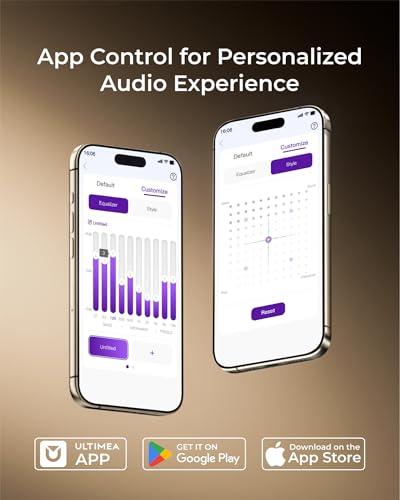
Gaming represents another compelling use case. The low-latency wireless ensures perfect sync with fast-paced games, while the surround speakers and subwoofer add immersion to everything from racing simulations to first-person shooters. The customizable EQ through the smartphone app allows fine-tuning for different game genres.
Music listening benefits from the advanced processing and dedicated subwoofer, though the system is clearly optimized for home theater rather than pure audio reproduction. The wide soundstage and precise imaging work well for most genres, particularly anything with dynamic range and spatial elements.
Your primary concern is clearer dialogue during regular TV watching, and you value simplicity over advanced features. This soundbar excels in bedrooms, kitchens, small apartments, or any space where a multi-component system would be impractical or overwhelming.
Budget-conscious users who want immediate improvement without a significant financial commitment will find the Fire TV Soundbar transforms their TV audio experience. It's also ideal for older adults or anyone who finds modern electronics unnecessarily complicated—setup is truly plug-and-play.
The compact size and lightweight design make it perfect for renters or anyone who moves frequently. Unlike systems with multiple components and wireless setup requirements, this soundbar can be packed and reinstalled in minutes.
These soundbars succeed by serving different audiences rather than competing directly. The ULTIMEA Skywave X40 is for enthusiasts who want genuine home theater performance and are willing to invest in the complete experience. The Amazon Fire TV Soundbar serves users who need better TV audio without the complexity or cost of a premium system.
Based on our research and evaluation of user feedback, the key is honest self-assessment of your priorities. If you regularly watch movies, play immersive games, or listen to music through your TV, the Skywave X40's performance advantages justify its premium positioning. If you primarily watch news, sports, and streaming shows while prioritizing simplicity and budget considerations, the Fire TV Soundbar delivers exactly what you need without unnecessary features.
The worst choice is buying either product for the wrong reasons—a premium system wasted on casual viewing, or a budget soundbar disappointing someone seeking theater-quality audio. Both products excel within their intended scope, making the decision more about understanding your own needs than comparing specifications.
| ULTIMEA Skywave X40 5.1.2 Soundbar System | Amazon Fire TV Soundbar |
|---|---|
| Channel Configuration - Determines surround sound capability | |
| True 5.1.2 Dolby Atmos with physical rear speakers | 2.0 stereo with DTS Virtual:X simulation |
| Total Speakers - More drivers enable better sound separation | |
| 8 speakers across 4 components | 2 full-range drivers in soundbar only |
| Peak Power Output - Higher wattage means louder, cleaner sound | |
| 530W with GaN amplification | 40W total (2 x 20W) |
| Subwoofer - Essential for impactful bass in movies and music | |
| Dedicated 6.5" wireless subwoofer (35Hz extension) | Integrated bass reflex system only |
| Wireless Rear Speakers - Creates true surround sound immersion | |
| Included wireless surrounds with | Not available |
| Audio Processing - Advanced chips improve sound quality and effects | |
| NEURACORE triple-core DSP with 2,000 MIPS | Basic stereo processing |
| Smart Controls - App control offers more customization options | |
| Full smartphone app with 10-band EQ, 121 presets | Physical touch controls and remote only |
| Connectivity Options - More inputs accommodate various devices | |
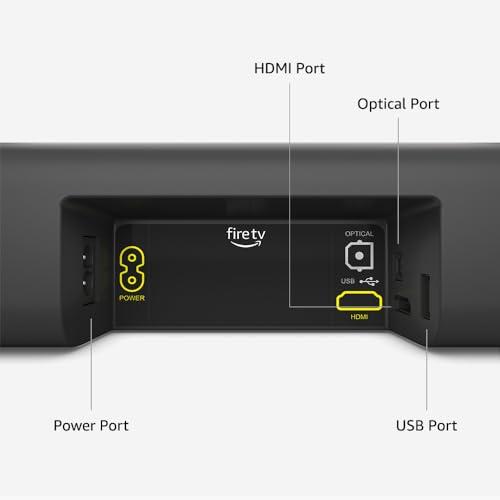
| HDMI eARC, optical, Bluetooth 5.4, 4K HDR passthrough | HDMI ARC, optical, Bluetooth |
| System Weight - Indicates build quality but affects portability | |
| 32 lbs total (premium components) | 4 lbs (easily portable) |
| Setup Complexity - Simpler systems work better for non-tech users | |
| Multiple components require optimal placement | Single unit, plug-and-play setup |
| Listening Modes - Different presets optimize sound for content types | |
| 6 modes plus extensive EQ customization | 3 basic modes (Movie, Music, Dialog) |
| Frequency Response - Wider range reproduces more musical detail | |
| 35Hz - 20kHz (full spectrum coverage) | Limited by compact driver size |
The ULTIMEA Skywave X40 is significantly better for movies due to its true 5.1.2 Dolby Atmos surround sound with physical rear speakers and overhead effects. Action sequences feel immersive with deep bass from the dedicated subwoofer. The Amazon Fire TV Soundbar excels at dialogue clarity for TV shows and news but lacks the surround sound and bass impact needed for cinematic experiences.
The core difference is system complexity: the ULTIMEA Skywave X40 is a complete 5.1.2 home theater system with wireless rear speakers, a subwoofer, and 8 total drivers, while the Amazon Fire TV Soundbar is a simple 2.0 stereo soundbar with just two speakers in one unit. This translates to genuine surround sound versus enhanced stereo audio.
The Amazon Fire TV Soundbar is much easier to set up—just connect one HDMI cable and you're done. The ULTIMEA Skywave X40 requires positioning multiple wireless components (soundbar, subwoofer, and two rear speakers) around your room for optimal performance, though all components are pre-paired at the factory.
The ULTIMEA Skywave X40 includes a wireless 6.5-inch subwoofer that delivers deep bass down to 35Hz. The Amazon Fire TV Soundbar has built-in bass enhancement but no subwoofer connection option, so what you get is what you get—adequate for dialogue but limited for music and action movies.
The Amazon Fire TV Soundbar is ideal for small rooms, bedrooms, or apartments due to its compact size and focused audio output. The ULTIMEA Skywave X40 can work in smaller spaces but really shines in medium to large rooms where you have space to properly position the rear speakers and subwoofer.
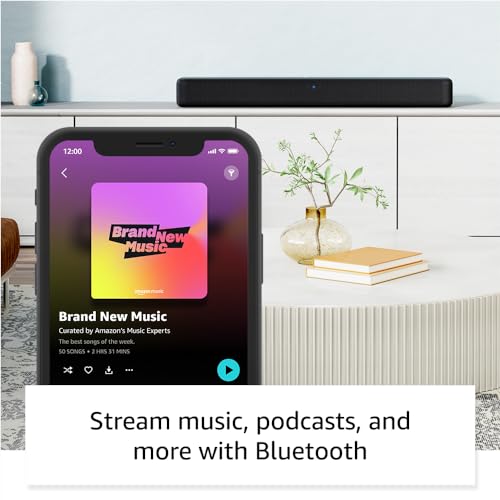
Both soundbars work with most modern TVs through HDMI ARC connections. The ULTIMEA Skywave X40 supports advanced HDMI eARC for higher quality audio and 4K HDR passthrough. The Amazon Fire TV Soundbar works with basic HDMI ARC and also includes optical input for older TVs without HDMI ARC.
The ULTIMEA Skywave X40 excels for gaming with its low-latency wireless transmission (<20ms), immersive surround sound, and powerful bass that enhances explosions and environmental effects. The Amazon Fire TV Soundbar provides clearer game dialogue but lacks the surround sound immersion that makes gaming more engaging.
For music, the ULTIMEA Skywave X40 offers superior performance with its dedicated subwoofer, wider soundstage, and app-based 10-band EQ for customization. The Amazon Fire TV Soundbar handles music adequately with decent stereo separation but lacks the bass extension and dynamic range for serious music enjoyment.
The Amazon Fire TV Soundbar requires virtually no maintenance—it's a simple plug-and-play device with physical controls only. The ULTIMEA Skywave X40 offers smartphone app control with regular firmware updates and extensive customization options, which some users appreciate while others prefer simplicity.
The ULTIMEA Skywave X40 delivers significantly higher sound quality with true surround sound, powerful bass, and advanced audio processing that maintains clarity at high volumes. The Amazon Fire TV Soundbar focuses on dialogue clarity and basic stereo enhancement—a major improvement over TV speakers but not in the same league as the premium system.
Value depends on your needs: the Amazon Fire TV Soundbar offers excellent value for basic TV audio improvement at a budget-friendly price. The ULTIMEA Skywave X40 provides exceptional value for users wanting true home theater performance, including components that would cost much more when purchased separately from other brands.
The Amazon Fire TV Soundbar cannot be expanded—it's a complete stereo system with no subwoofer or surround speaker connections. The ULTIMEA Skywave X40 is already a complete system including wireless rear speakers and subwoofer, with advanced connectivity options for future audio format support and room configuration changes.
We've done our best to create useful and informative comparisons to help you decide what product to buy. Our research uses advanced automated methods to create this comparison and perfection is not possible - please contact us for corrections or questions. These are the sites we've researched in the creation of this article: bestbuy.com - shopabunda.com - youtube.com - youtube.com - youtube.com - youtube.com - ultimea.com - walmart.com - youtube.com - hometechnologyreview.com - community.ultimea.com - avsforum.com - youtube.com - youtube.com - youtube.com - bestbuy.com - hometechnologyreview.com - rtings.com - developer.amazon.com - stereoguide.com - developer.amazon.com - techradar.com - hometechnologyreview.com - whathifi.com - youtube.com - whathifi.com - wirelessplace.com - hometechnologyreview.com - dolby.com - aboutamazon.com - developer.amazon.com - community.anker.com - youtube.com - cordbusters.co.uk

Privacy Policy
Terms and Conditions - Affiliate Policy
Home Security
© Copyright 2008-2026.
11816 Inwood Rd #1211, Dallas, TX 75244