
























When you're shopping for a premium soundbar to transform your TV's audio, you'll encounter two fundamentally different approaches to achieving that cinematic sound experience. The ULTIMEA Skywave X40 5.1.2 Soundbar System represents the complete wireless surround approach, while the Sonos Arc Wireless Sound Bar exemplifies the sophisticated single-unit design philosophy. Both launched in the current generation of premium soundbars, but they solve the same problem—terrible TV speakers—in completely different ways.
Understanding these different approaches is crucial because your choice will affect everything from how your living room looks to how movies sound for years to come. Let's dive deep into what makes each system tick and help you figure out which approach fits your home and preferences.
Before diving into the specifics, it's important to understand what we're dealing with in today's premium soundbar market. The landscape has evolved dramatically since basic soundbars first appeared in the early 2010s. Modern premium options like these two systems incorporate technologies that were exclusive to expensive home theater receivers just a few years ago.
Dolby Atmos has become the standard bearer for immersive audio—it's a surround sound technology that adds height channels to create a three-dimensional sound bubble around you. Instead of just hearing sounds from left, right, front, and back, Atmos lets you hear helicopters flying overhead or rain falling from above. Both systems support Atmos, but they achieve it through completely different methods.
The key considerations when choosing between these approaches include audio performance (how good it actually sounds), installation complexity (how much work to set up), smart features (voice control and app integration), expandability (can you add more speakers later), and overall value proposition. These factors interact in complex ways—sometimes a more expensive system actually provides better value if it saves you from needing upgrades later.
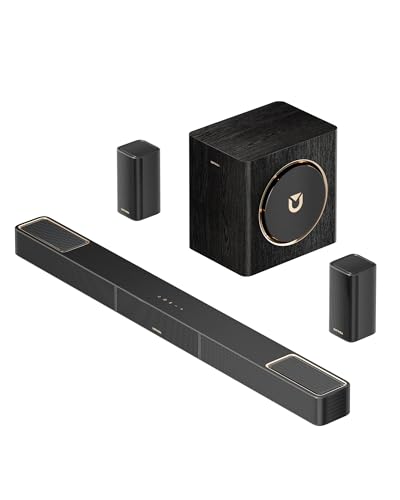
The ULTIMEA Skywave X40, released in 2025, represents what we call a "complete wireless surround system." It includes a main soundbar, a wireless subwoofer (a dedicated speaker for deep bass), and two wireless rear speakers that you place behind your seating area. This creates true 5.1.2 channel audio—five main channels (front left, center, right, and two rear), one subwoofer channel, and two height channels for Dolby Atmos effects.
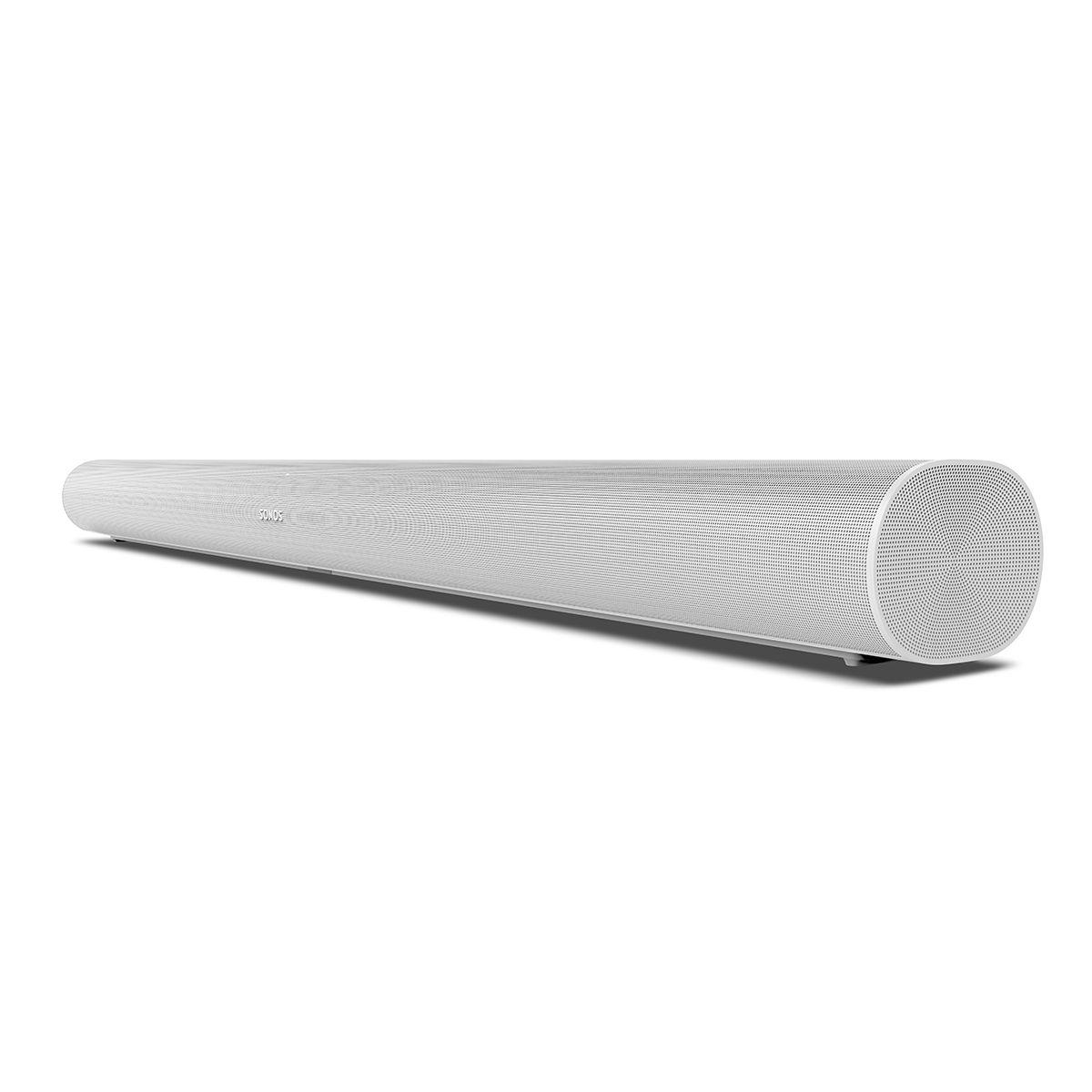
The Sonos Arc, which launched in 2020 and has received multiple software updates since, takes the "premium single-unit" approach. It's one sleek soundbar packed with 11 individual drivers (individual speakers) that uses advanced digital processing to simulate surround sound and height effects without requiring additional speakers around your room.
These different philosophies create distinct advantages and trade-offs that we'll explore throughout this comparison.
Here's where the fundamental difference becomes clear. The ULTIMEA Skywave X40 gives you discrete channels—meaning separate, dedicated speakers for each audio channel. When a movie's sound engineer places a helicopter sound in the rear right channel, it actually comes from a physical speaker positioned behind and to your right. This creates what audiophiles call "pinpoint imaging"—you can precisely locate where sounds are coming from in space.
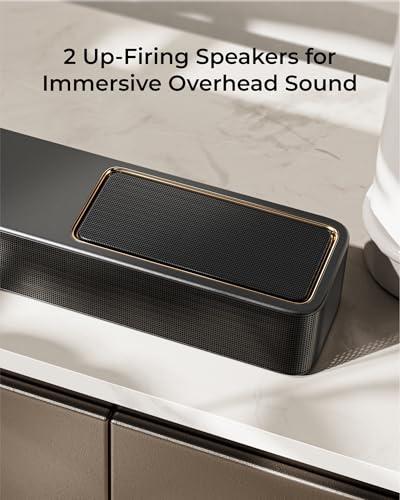
The system's 530W peak power output is distributed across eight total drivers: the main soundbar contains speakers for front channels and two up-firing drivers for height effects, while the wireless rear speakers handle surround duties, and the 6.5-inch subwoofer manages everything below about 80Hz (the deep rumbling bass frequencies).
What makes this particularly interesting is ULTIMEA's NEURACORE processing engine—a triple-core digital signal processor (DSP) that can handle 2,000 million instructions per second. This computational power ensures that even with all these speakers working together, the sound remains perfectly synchronized. The system also uses GaN (Gallium Nitride) amplification, a newer technology that runs about 50% cooler than traditional amplifiers while reducing distortion.
The Sonos Arc, meanwhile, relies on psychoacoustic processing—using our brain's natural ability to perceive direction and space to create convincing surround effects from strategically placed drivers in a single cabinet. Its 11 drivers include three silk-dome tweeters for high frequencies and eight elliptical woofers for mid-range and bass. The Arc uses sophisticated beamforming technology to bounce certain sounds off your walls and ceiling, creating the illusion of surround speakers.
Sonos has refined this approach since the Arc's 2020 launch, with software updates improving the Atmos processing and adding features like Speech Enhancement mode, which clarifies dialogue when action gets intense.
Bass response represents one of the clearest performance differences between these systems. The ULTIMEA Skywave X40 includes a dedicated 6.5-inch wireless subwoofer that extends down to 35Hz—deep enough to reproduce the lowest notes of a pipe organ or the rumbling of an earthquake in a disaster movie. The subwoofer uses what ULTIMEA calls Gravus Ultra-Linear Bass Technology, which essentially means the driver (the moving part of the speaker) can move further without distorting, even at high volume levels.
This dedicated approach offers significant advantages. You can position the subwoofer anywhere in your room for optimal bass response—bass frequencies are omnidirectional, so placement flexibility lets you find the sweet spot where room acoustics work in your favor. The dual-magnet design provides more control over the driver movement, resulting in tighter, more precise bass that doesn't muddy up dialogue or mid-range instruments.
The Sonos Arc takes a different approach with its eight integrated woofers. While impressive for a single-unit design, physics ultimately limits what's possible when bass drivers are confined to a soundbar cabinet. However, Sonos engineers have done excellent work extracting maximum performance from this constraint. The Arc's bass is well-controlled and rarely overwhelming—it provides solid foundation without the room-shaking impact of a dedicated subwoofer.
For movie watching, this difference is significant. Action sequences with explosions, spaceship engines, or dinosaur footsteps simply have more physical impact with the Skywave X40's dedicated subwoofer. Music listening also benefits—you'll feel the thump of a kick drum or the resonance of a bass guitar more convincingly.
That said, the Arc offers an upgrade path. Sonos sells an optional Sub that can be added wirelessly to dramatically improve low-end performance, though this represents a significant additional investment.
Dolby Atmos represents the cutting edge of home audio, and both systems implement it differently. The ULTIMEA Skywave X40 uses physical up-firing drivers in the main soundbar. These speakers point toward your ceiling, bouncing sound downward to create the illusion of sounds coming from above. Combined with the discrete rear channels, this creates a convincing three-dimensional soundscape where you can track helicopters flying overhead or hear rain falling from the sky.
The system's CineMesh True Wireless technology uses dual 5GHz wireless transmission to connect all components with less than 20ms latency (delay). This ultra-low latency ensures that when you see an explosion on screen, the sound from all speakers reaches your ears simultaneously—crucial for maintaining the Atmos illusion.
The Sonos Arc achieves Atmos effects through advanced digital processing and precise driver positioning. While it doesn't have discrete rear channels, it uses psychoacoustic tricks to convince your brain that sounds are coming from behind you. The height effects come from carefully angled drivers that reflect sound off your ceiling, similar to the Skywave X40's approach but with more sophisticated processing.
Sonos's Trueplay technology (available on iOS devices) measures your room's acoustic characteristics and adjusts the Arc's output accordingly. This room correction can significantly improve Atmos performance by compensating for factors like ceiling height, wall materials, and furniture placement.
This represents perhaps the starkest difference between these systems. The Sonos Arc is fundamentally a smart speaker that happens to excel at TV audio. It includes far-field microphone arrays with advanced beamforming that can hear your voice commands even when music is playing loudly. Built-in Google Assistant and Amazon Alexa let you control your smart home, check weather, set timers, or ask questions without reaching for a remote.
The Arc also serves as a multi-room audio hub. You can group it with other Sonos speakers throughout your home for synchronized music playback, or use it independently for streaming when the TV is off. Apple AirPlay 2 support means seamless integration with iOS devices—you can start playing music on your iPhone and hand it off to the Arc with a tap.
Software updates have continuously expanded the Arc's capabilities since its 2020 launch. Recent updates have added new streaming service integrations, improved voice recognition, and enhanced audio processing algorithms.
The ULTIMEA Skywave X40 takes a more focused approach. Its Ultimea app provides comprehensive control over audio settings, including a 10-band equalizer and 121 preset sound profiles for different content types and listening preferences. You can fine-tune bass levels, adjust surround speaker volume independently, and modify the Atmos height effects to match your room and taste.
However, it doesn't include voice assistants or smart home integration. This isn't necessarily a weakness—it reflects ULTIMEA's focus on audio performance over connected features. If you already have smart speakers or prefer using your TV's interface for streaming, this focused approach might actually be preferable.
The installation experience highlights each system's philosophy. The Sonos Arc offers the epitome of simplicity—one HDMI cable to your TV, one power cord, and you're essentially done. The setup process takes about 10 minutes from unboxing to listening. Wall mounting requires just a few screws, and the sleek design integrates beautifully with modern TVs.
The ULTIMEA Skywave X40 requires more consideration but isn't overly complex. The main soundbar and subwoofer connect wirelessly to each other and to the rear speakers, so you don't need to run audio cables across your room. However, each component needs power, so you'll need accessible outlets behind your seating area for the rear speakers.
Placement optimization matters more with the Skywave X40. The rear speakers should be positioned at ear level and slightly behind your main seating area. The subwoofer placement affects bass response—corner placement typically provides more output, while positioning along a wall offers more controlled bass. These considerations require some experimentation but result in more authentic surround sound.
Based on extensive research into expert reviews and user feedback, several performance metrics consistently emerge as most important for premium soundbars.
Dynamic range measures the difference between the quietest and loudest sounds a system can reproduce cleanly. Both systems excel here, but the Skywave X40's 530W peak power and dedicated amplification provide more headroom for explosive movie soundtracks. The system can maintain clarity even during demanding passages where dialogue, music, and sound effects compete for your attention.
Frequency response describes how evenly a system reproduces different pitches. The Skywave X40 extends lower (35Hz vs approximately 50Hz for the Arc alone) and distributes frequencies across specialized drivers. The Sonos Arc uses digital processing to optimize its response, with Trueplay making significant improvements in real-world rooms.
Spatial accuracy measures how convincingly a system creates surround effects. Here, the Skywave X40's discrete rear speakers provide an inherent advantage—sounds actually come from behind you rather than being processed to seem like they do. However, the Arc's sophisticated processing can create surprisingly convincing effects, especially in smaller rooms.
For dedicated home theater use, several factors become particularly important. Center channel performance affects dialogue clarity—both systems excel here, though their approaches differ. The Skywave X40 uses a dedicated center speaker in the main bar, while the Arc creates a phantom center image through careful driver positioning and processing.
Surround steering describes how convincingly systems move sounds around you. The Skywave X40's discrete channels provide more precise localization—you can clearly distinguish between sounds coming from directly beside you versus behind you. The Arc relies on reflection and processing tricks that work well but can't match the precision of physical speakers.
Amplifier headroom becomes crucial during demanding movie soundtracks. The Skywave X40's GaN amplification technology provides more clean power per watt, maintaining composure during complex passages. The Arc includes intelligent limiting that prevents distortion but may reduce peak impact during the most demanding scenes.
Evaluating value requires considering both immediate costs and long-term ownership experience. At the time of writing, the ULTIMEA Skywave X40 typically costs significantly less than the Sonos Arc while including components (subwoofer and rear speakers) that would require additional investment with the Sonos system.
However, value calculations aren't purely financial. The Arc includes premium build quality, established ecosystem integration, and regular software updates that add functionality over time. Sonos has a strong track record of supporting products for many years—the original Play:1 from 2013 still receives updates.
The Skywave X40 provides more immediate audio performance per dollar, particularly for movie watching. Its complete system approach means no additional purchases are needed to achieve full surround sound. However, ULTIMEA is a newer brand with less established long-term support history.
Choose the ULTIMEA Skywave X40 if authentic surround sound takes priority over smart features. The discrete rear speakers create more convincing spatial effects than any single-unit design can achieve through processing alone. This system excels for movie enthusiasts, gamers, and anyone who wants maximum immersion from their audio investment.
The dedicated subwoofer provides bass impact that's particularly noticeable in action movies, while the wireless design eliminates the cable-running complications of traditional surround systems. If you have appropriate placement options for rear speakers and value audio performance over smart home integration, the Skywave X40 delivers exceptional theater-like experience.
Choose the Sonos Arc if convenience, smart features, and ecosystem integration matter as much as audio quality. The single-unit design works beautifully in minimalist living spaces, while voice assistant integration and multi-room capabilities extend functionality beyond TV audio.
The Arc makes particular sense if you're building or expanding a Sonos ecosystem, or if you frequently stream music when the TV is off. Its sophisticated processing creates impressive surround effects from a single unit, though they can't match the precision of discrete speakers.
For most home theater enthusiasts focused purely on audio performance, the ULTIMEA Skywave X40 provides superior immersion and value. For users prioritizing smart features, aesthetic simplicity, and ecosystem integration, the Sonos Arc offers a more complete lifestyle product despite requiring additional investment for comparable surround performance.
The decision ultimately depends on whether you're building a dedicated audio system or want a smart speaker that excels at TV duty. Both excel within their respective philosophies—choose based on which approach better matches your priorities and living situation.
| ULTIMEA Skywave X40 5.1.2 Soundbar System | Sonos Arc Wireless Sound Bar |
|---|---|
| Audio Configuration - Determines surround sound authenticity | |
| True 5.1.2 channels with physical rear speakers and subwoofer | Simulated 5.0.2 channels from single soundbar unit |
| Total Power Output - Affects maximum volume and dynamic range | |
| 530W peak power across dedicated amplifiers | Class-D amplification (power not specified, estimated ~400W) |
| Subwoofer - Critical for deep bass in movies and music | |
| Dedicated 6.5-inch wireless subwoofer (35Hz extension) | Integrated woofers only (optional Sub available separately) |
| Surround Speakers - Creates authentic behind-you sound effects | |
| Two wireless rear speakers included | No rear speakers (phantom surround via processing) |
| Smart Features - Voice control and streaming capabilities | |
| App control with 10-band EQ, no voice assistants | Built-in Google Assistant, Alexa, AirPlay 2, multi-room audio |
| Setup Complexity - Installation time and cable requirements | |
| Multiple components need power outlets, wireless audio | Single unit setup with one HDMI cable |
| Dolby Atmos Implementation - Creates overhead sound effects | |
| Physical up-firing drivers plus discrete rear channels | Advanced virtualization with 11-driver array and Trueplay tuning |
| Connectivity Options - Determines compatibility with devices | |
| HDMI eARC, optical, Bluetooth 5.4, USB, 4K HDR passthrough | HDMI eARC/ARC, optical adapter, AirPlay 2, Ethernet |
| Room Correction - Optimizes sound for your specific space | |
| Manual EQ adjustment via app | Automatic Trueplay tuning (iOS devices required) |
| Expandability - Future upgrade options | |
| Complete system, upgrade to higher ULTIMEA models | Add Sonos Sub and rear speakers, full ecosystem integration |
| Brand Ecosystem - Long-term support and compatibility | |
| Newer brand, focused audio performance | Established ecosystem with regular updates since 2020 |
| Physical Footprint - Space requirements in your room | |
| Main bar + subwoofer + 2 rear speakers requiring placement | Single 45-inch soundbar only |
The ULTIMEA Skywave X40 is better for movies due to its true 5.1.2 channel setup with physical rear speakers and a dedicated subwoofer. This creates more authentic surround sound effects and deeper bass for action sequences. The Sonos Arc offers impressive virtualized surround sound from a single unit, but can't match the spatial accuracy of discrete rear speakers for cinematic immersion.
While not absolutely necessary, physical rear speakers like those included with the ULTIMEA Skywave X40 provide significantly more convincing surround effects than virtualized systems. The Sonos Arc uses advanced processing to simulate rear speakers, which works well in smaller rooms but lacks the precision of actual speakers positioned behind your seating area.
The ULTIMEA Skywave X40 delivers superior bass with its dedicated 6.5-inch wireless subwoofer that extends down to 35Hz. The Sonos Arc relies on integrated woofers that provide decent bass for a single-unit design, but cannot match the impact and depth of a dedicated subwoofer for movie soundtracks and music.
The value depends on your priorities. The Sonos Arc costs more but includes premium smart features like built-in voice assistants, multi-room audio, and seamless ecosystem integration. The ULTIMEA Skywave X40 offers better pure audio performance per dollar with its complete surround system, making it better value for movie enthusiasts focused on sound quality.
The Sonos Arc is much easier to install, requiring only one HDMI cable and one power cord for a complete setup. The ULTIMEA Skywave X40 needs power outlets for the subwoofer and rear speakers, plus consideration for optimal speaker placement, though all audio connections are wireless.
Only the Sonos Arc includes built-in voice assistants (Google Assistant and Amazon Alexa) with far-field microphones. The ULTIMEA Skywave X40 relies on app and remote control without native voice assistant integration, focusing instead on audio performance and manual customization options.
Both excel at music but in different ways. The ULTIMEA Skywave X40 provides more impactful bass and spatial separation for immersive music experiences. The Sonos Arc offers superior streaming integration with direct access to music services, multi-room capabilities, and AirPlay 2 support for seamless iOS device integration.
Not necessarily, but you need space for rear speaker placement and multiple power outlets. The ULTIMEA Skywave X40 works in medium to large rooms where you can position speakers behind your seating area. The Sonos Arc is more suitable for smaller spaces or minimalist setups where multiple components aren't practical.
The Sonos Arc has a proven track record of regular software updates since its 2020 launch, with Sonos supporting products for many years. The ULTIMEA Skywave X40 is from a newer brand with less established long-term support history, though it offers comprehensive app-based control and customization features.
Yes, but differently. The Sonos Arc can be expanded with a Sonos Sub and rear speakers as separate purchases, plus integration with the broader Sonos ecosystem. The ULTIMEA Skywave X40 is a complete system that could be upgraded to higher-tier ULTIMEA models like the X50 or X70 for more power and channels.
The ULTIMEA Skywave X40 provides more convincing Dolby Atmos effects through its combination of up-firing drivers and discrete rear speakers, creating better spatial accuracy. The Sonos Arc uses sophisticated virtualization and Trueplay room correction to optimize Atmos performance from a single unit, which is impressive but less precise than physical surround speakers.
Yes, this is important. If you have other Sonos speakers or prioritize smart home integration, the Sonos Arc seamlessly connects to existing ecosystems with voice control and multi-room audio. If you prefer dedicated audio equipment or already have smart speakers, the ULTIMEA Skywave X40 focuses purely on delivering exceptional sound quality for your TV and movies.
We've done our best to create useful and informative comparisons to help you decide what product to buy. Our research uses advanced automated methods to create this comparison and perfection is not possible - please contact us for corrections or questions. These are the sites we've researched in the creation of this article: bestbuy.com - shopabunda.com - youtube.com - youtube.com - youtube.com - youtube.com - ultimea.com - walmart.com - youtube.com - hometechnologyreview.com - community.ultimea.com - avsforum.com - youtube.com - youtube.com - youtube.com - bestbuy.com - hometechnologyreview.com - whathifi.com - soundandvision.com - en.community.sonos.com - cnet.com - worldwidestereo.com - abt.com - creativeaudio.net - target.com - sonos.com - worldwidestereo.com - businessinsider.com - en.community.sonos.com - youtube.com

Privacy Policy
Terms and Conditions - Affiliate Policy
Home Security
© Copyright 2008-2026.
11816 Inwood Rd #1211, Dallas, TX 75244