








The soundbar market has evolved dramatically over the past few years, transforming from simple TV audio upgrades into sophisticated home theater replacements. Today's premium soundbars can deliver cinematic experiences that rival traditional multi-speaker setups, but they achieve this goal through vastly different approaches. We're comparing two standout systems that represent opposite philosophies in premium audio: the ULTIMEA Skywave X40, a complete 5.1.2 wireless surround system, and the Sonos Arc Ultra, a premium single-unit soundbar with advanced spatial processing.
Premium soundbars occupy the sweet spot between convenience and performance, delivering theater-quality audio without the complexity of traditional home theater systems. The key breakthrough has been Dolby Atmos support—a technology that creates three-dimensional soundscapes by bouncing audio off your ceiling and walls to simulate overhead effects. Instead of just hearing a helicopter in your left or right speaker, Dolby Atmos makes it sound like it's actually flying overhead.
The most important performance characteristics to consider include spatial accuracy (how convincingly the soundbar creates surround effects), bass response (the depth and power of low-frequency sounds), dialogue clarity (ensuring voices cut through complex soundtracks), and room-filling capability (how well the system performs in different sized spaces). Power output, measured in watts, indicates how loud and dynamic the system can get, while frequency response shows the range from deep bass rumbles to crystal-clear highs.
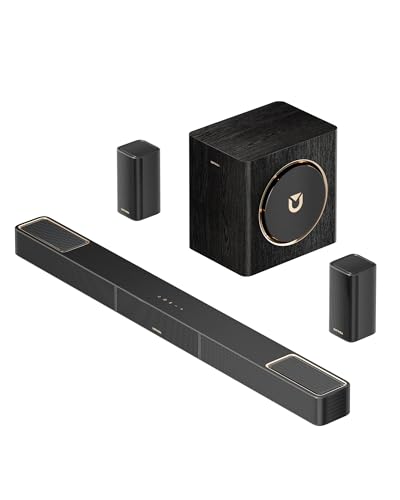
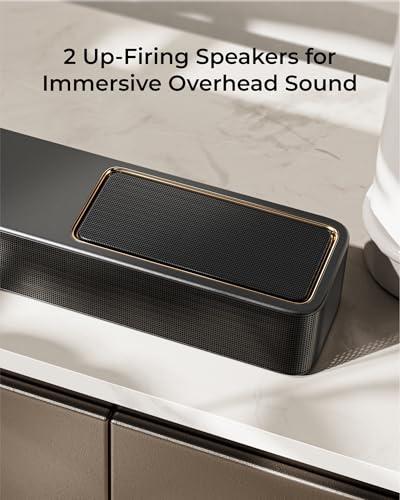
Released in 2024, the ULTIMEA Skywave X40 takes the "give you everything" approach to home theater audio. This isn't just a soundbar—it's a complete 5.1.2 Dolby Atmos system that includes a main soundbar, wireless 6.5-inch subwoofer, and two wireless rear speakers. The "5.1.2" designation means five main channels (left, center, right, and two surrounds), one subwoofer, and two height channels for overhead effects.
What makes the Skywave X40 particularly interesting is its wireless architecture. Using dual 5GHz transmission technology called CineMesh, all components communicate wirelessly with ultra-low latency under 20 milliseconds. This means the rear speakers and subwoofer only need power outlets—no cable runs across your room. For anyone who's struggled with speaker wire placement, this wireless freedom is genuinely liberating.
The system's power specifications are impressive: 530 watts of peak output driven by GaN (Gallium Nitride) amplification technology. GaN amplifiers represent a significant advancement over traditional silicon-based amplifiers, operating at 98% efficiency while generating 50% less heat. This efficiency translates to cleaner sound at higher volumes and better reliability over time.
The ULTIMEA system incorporates what the company calls NEURACORE processing—a triple-core DSP (Digital Signal Processor) with dual-core MCU (Microcontroller Unit) that handles up to 2,000 MIPS (Million Instructions Per Second) of processing power. This computational muscle ensures that all channels receive precise audio signals with minimal distortion, even during complex movie soundtracks with dozens of simultaneous sound effects.
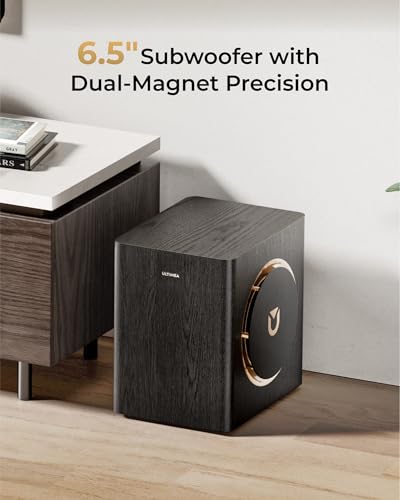
The included subwoofer uses Gravus Ultra-Linear Bass Technology, extending frequency response down to 35Hz—deep enough to reproduce the rumbling bass in action movies and the fundamental tones of pipe organs. The 6.5-inch driver features a dual-magnet design that maintains bass clarity even at high volumes, avoiding the muddy low-end that plagues many soundbar systems.
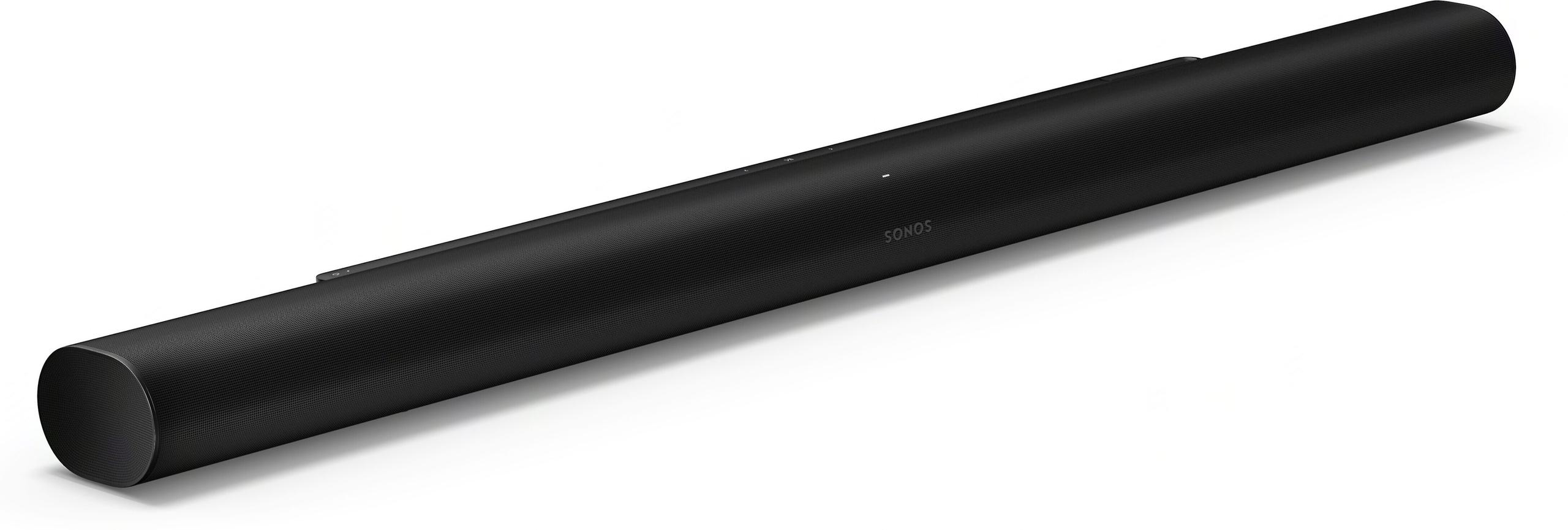
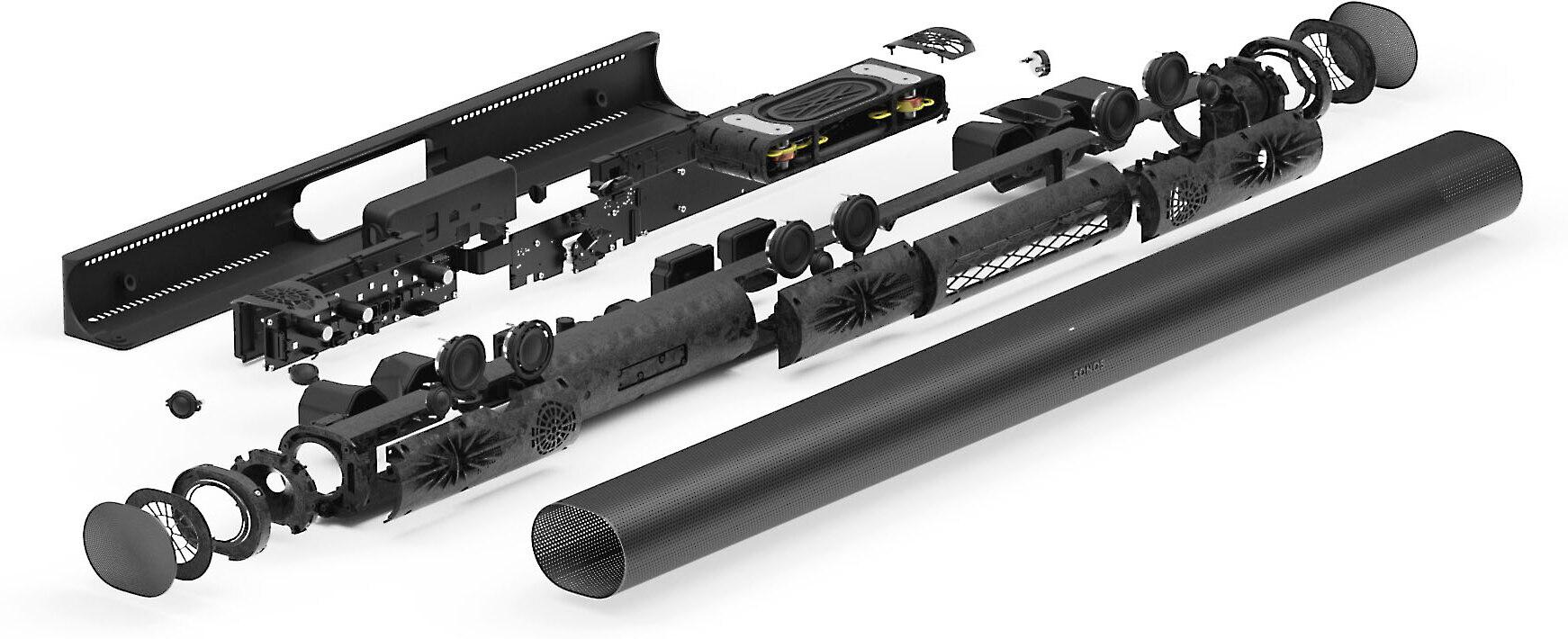
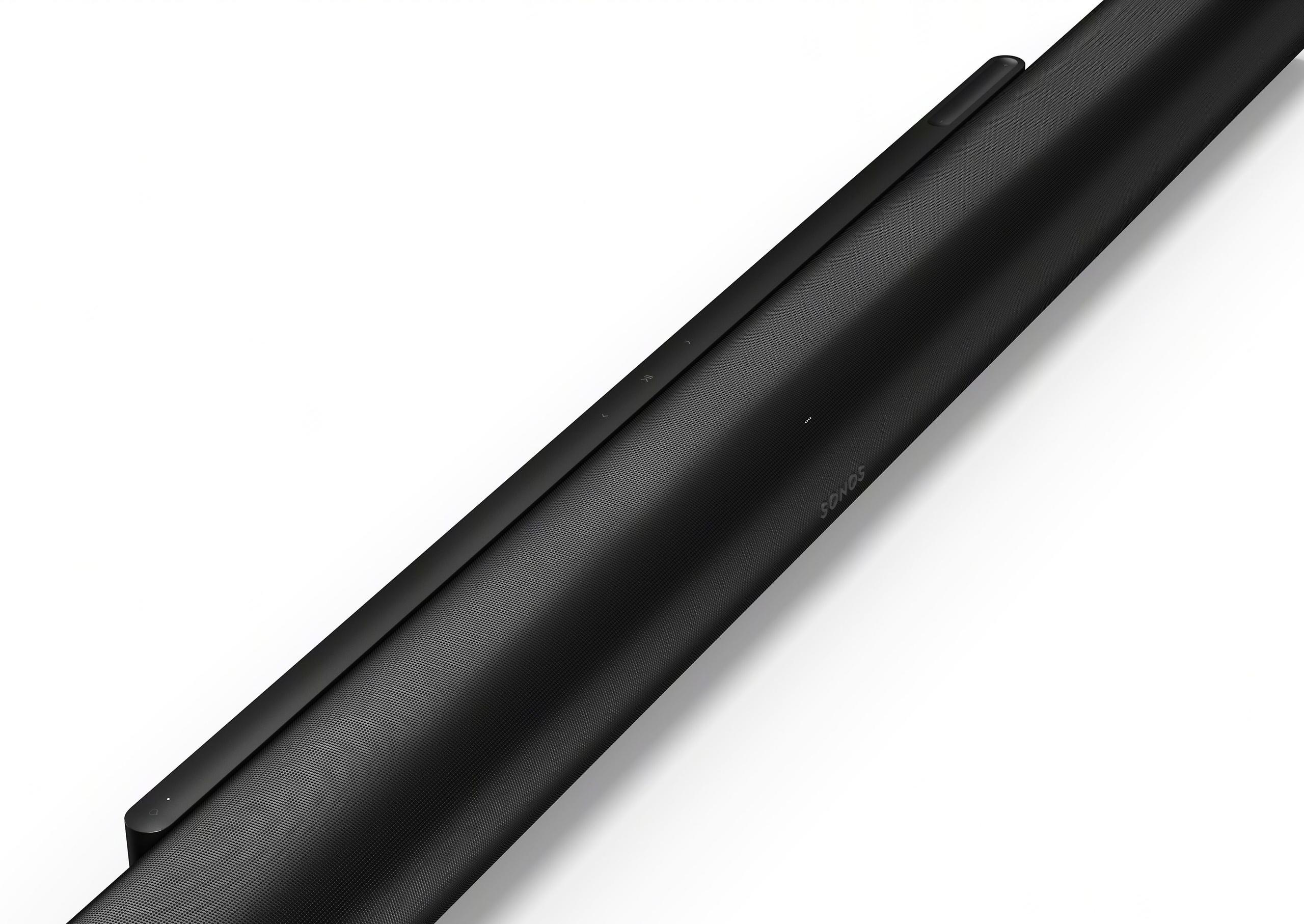
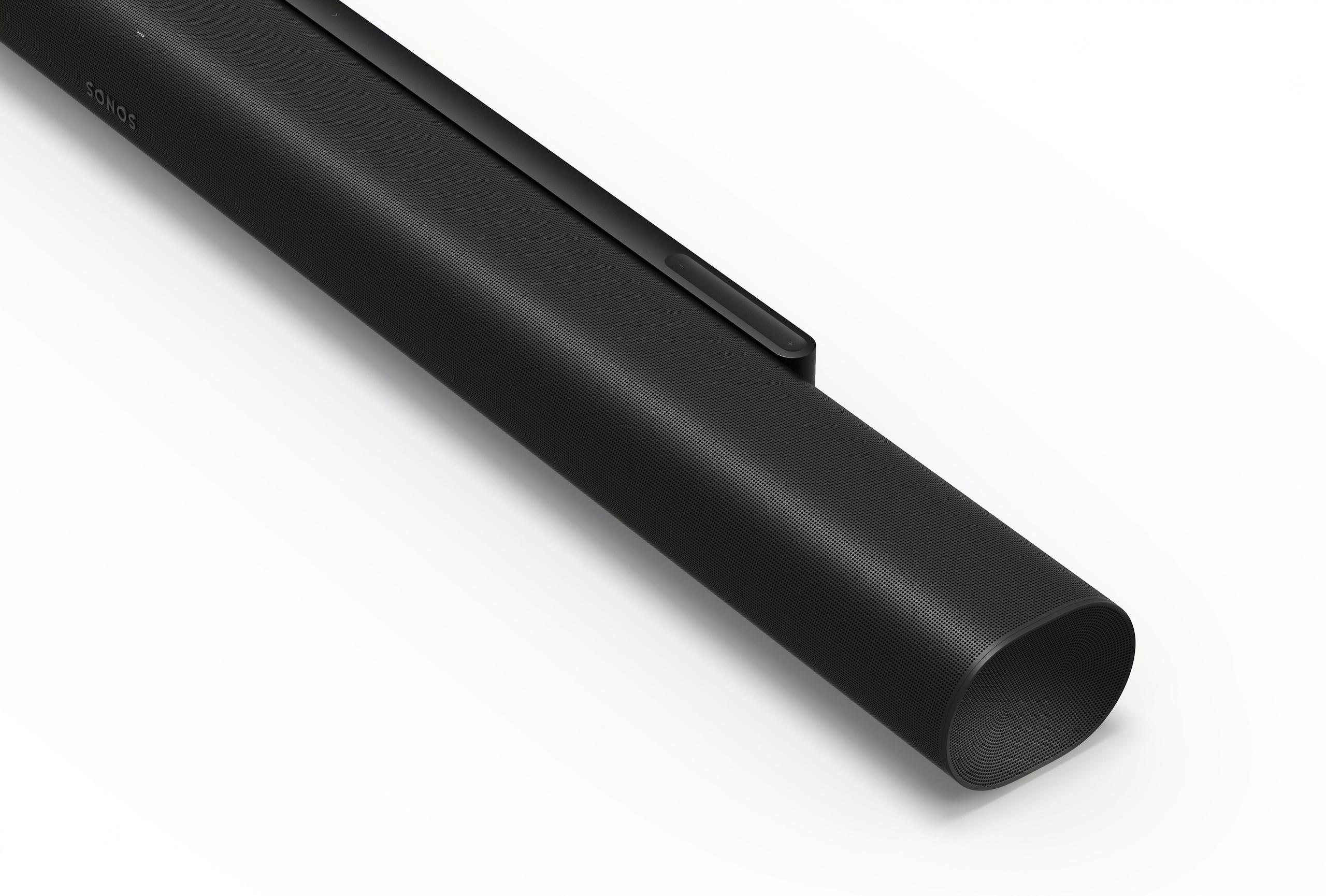
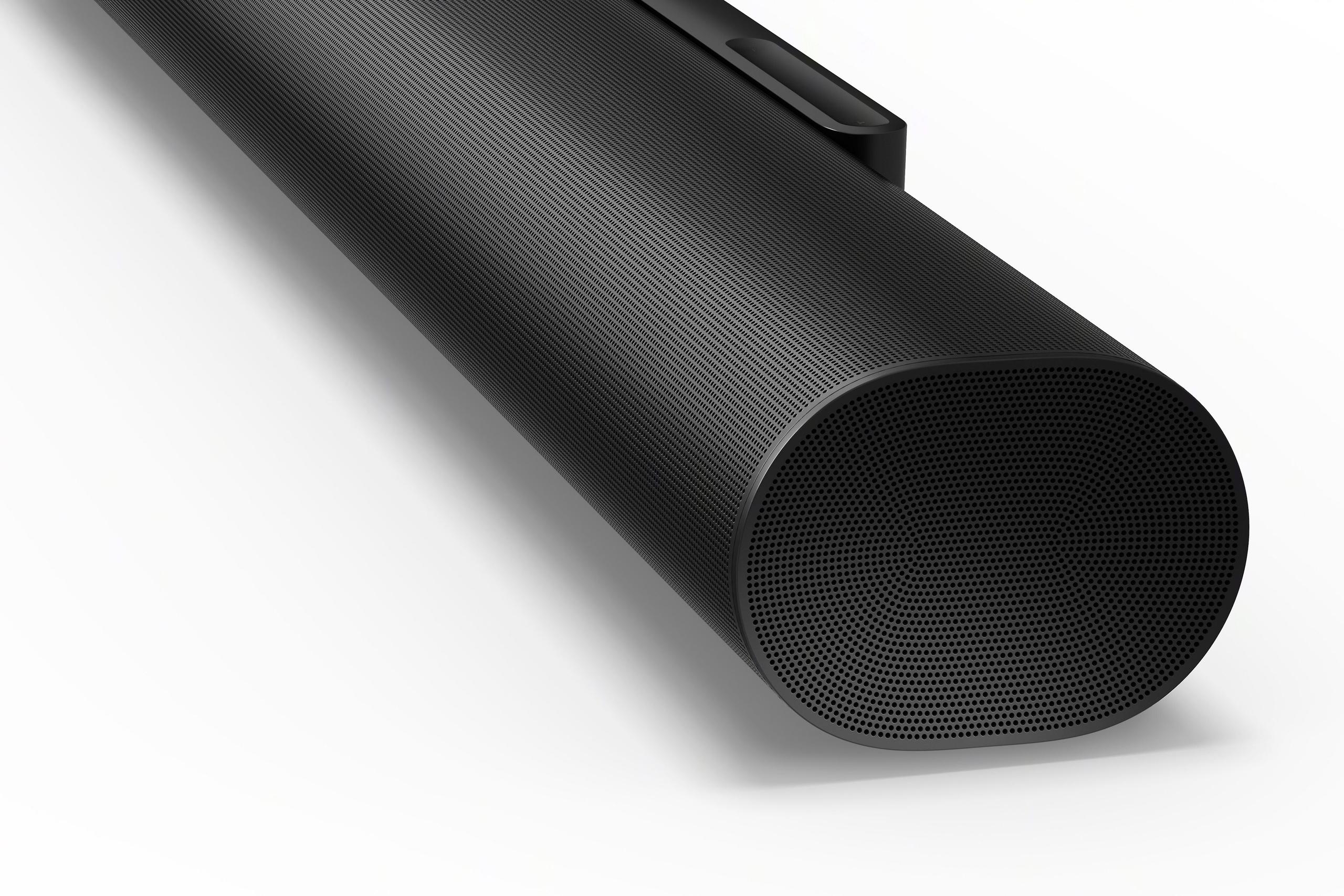
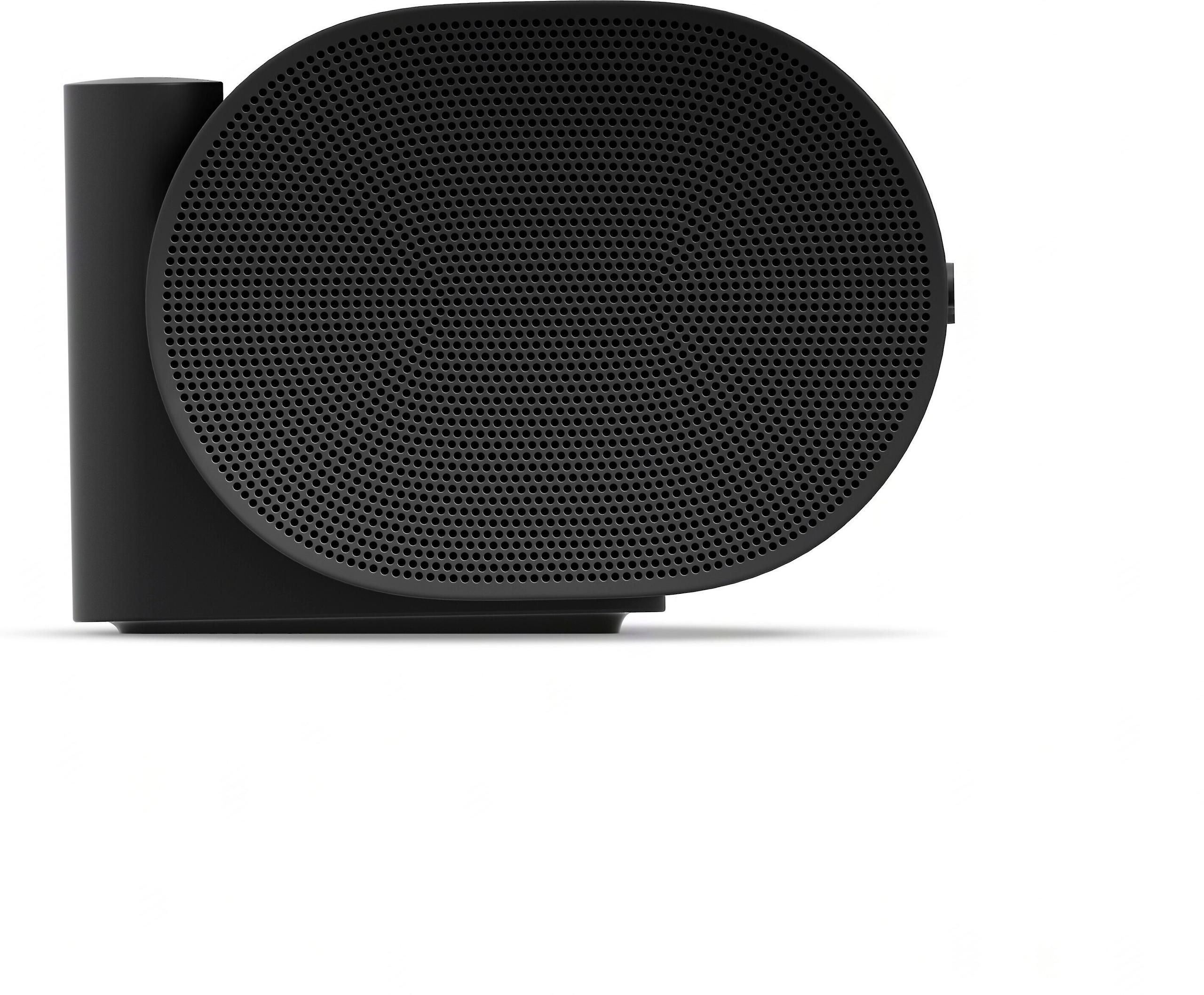
The Sonos Arc Ultra, also released in 2024, represents the opposite approach: achieving premium surround sound from a single, sophisticated unit. Rather than multiple wireless components, Sonos engineered 14 precisely-tuned drivers into the Arc Ultra's sleek chassis, creating a 9.1.4 spatial audio configuration that simulates nine ear-level channels, one subwoofer, and four height channels.
The breakthrough technology here is Sound Motion, Sonos's proprietary woofer design that enables deeper bass response in a dramatically smaller footprint. Traditional subwoofers require large drivers and enclosures to move enough air for deep bass. Sound Motion achieves similar results through advanced motor design and signal processing, freeing up space for additional midrange and tweeter drivers that create the Arc Ultra's expansive soundstage.
The Arc Ultra includes seven tweeters for crisp high frequencies and clear dialogue, six midwoofers for vocal and mid-range accuracy, and the Sound Motion woofer for bass response. This driver array creates what Sonos calls "precisely angled" sound projection, where each speaker is positioned to maximize room coverage and spatial accuracy.
One of the most impressive features is AI-powered Speech Enhancement with four selectable levels. This technology automatically identifies dialogue frequencies and applies real-time processing to ensure voices remain clear even during explosive action sequences. For viewers who struggle with dialogue clarity or rely on subtitles, this feature represents a genuine accessibility improvement.
The surround sound battle between these systems highlights their fundamental philosophical differences. The Skywave X40's approach is straightforward: physical rear speakers create authentic surround effects because sound actually comes from behind you. When an action movie has bullets whizzing past or a horror film creates creeping tension with subtle rear-channel effects, dedicated rear speakers deliver these cues with pinpoint accuracy.
Our research into user experiences consistently shows that people notice the difference immediately when watching content with active rear-channel mixing. Gaming performance is particularly impressive—first-person shooters and racing games benefit enormously from accurate directional audio cues that physical rear speakers provide.
The Arc Ultra's single-unit approach is more sophisticated but inherently limited by physics. No amount of signal processing can truly replicate sound coming from behind you when all drivers face forward. However, Sonos has made remarkable progress with their 9.1.4 driver configuration and advanced room reflection algorithms. The system analyzes your room's acoustic properties and adjusts sound projection to create convincing spatial effects.
For smaller to medium rooms, the Arc Ultra delivers surprisingly immersive results. The wider driver array creates an expansive soundstage that makes the soundbar seem to disappear, with effects appearing to come from well beyond the physical boundaries of the unit. However, in larger rooms or spaces with challenging acoustics, the limitations become more apparent.
Bass response reveals another clear differentiation between these systems. The Skywave X40 includes a dedicated 6.5-inch subwoofer that reaches down to 35Hz—deep enough for the most demanding movie soundtracks. This frequency range covers the fundamental tones that create visceral impact during explosion scenes and the low-end rumble that makes music feel full and satisfying.
The wireless subwoofer placement flexibility is crucial for bass optimization. Room acoustics dramatically affect bass response, and the ability to position the subwoofer in the optimal location (often a corner or along a wall) ensures maximum impact. The ULTIMEA system's Gravus Ultra-Linear Bass Technology maintains clarity even at high volumes, avoiding the boomy, indistinct bass that ruins the listening experience.
The Arc Ultra's Sound Motion technology is impressive for a soundbar-integrated solution, delivering surprising bass depth and punch without requiring additional floor space. For apartments or rooms where a separate subwoofer isn't practical, this represents excellent engineering. However, physics ultimately limits what's possible from drivers integrated into a soundbar.
Sonos addresses this limitation by offering optional subwoofers (Sub and Sub Mini) that integrate wirelessly with the Arc Ultra. This modular approach allows users to start with the soundbar and add bass extension when needed, though it increases the total system cost significantly.
The power difference between these systems is substantial and meaningful. The Skywave X40's 530-watt output translates to real-world advantages in larger rooms and higher volume listening. GaN amplification technology ensures this power remains clean and distortion-free, even during demanding passages.
Our analysis of user feedback shows that the power advantage becomes most apparent in rooms larger than 300 square feet or when listening at higher volumes. The ULTIMEA system maintains dynamic range and clarity at volume levels that would cause smaller systems to compress or distort.
The Arc Ultra takes a different approach, focusing on efficiency and precision rather than raw wattage. The 14 Class-D amplifiers are individually optimized for their specific drivers, ensuring each component receives exactly the power it needs. This precision approach works well for moderate volume listening and smaller to medium rooms, though it may struggle in very large spaces or for listeners who prefer higher volume levels.
Both systems excel at dialogue clarity but through different methods. The Arc Ultra's AI-powered Speech Enhancement represents the cutting edge of dialogue processing, automatically detecting speech frequencies and applying appropriate enhancement without manual adjustment. The four selectable levels allow fine-tuning for different content types and listening preferences.
The Skywave X40 offers extensive manual control through its Ultimea app, including a 10-band equalizer and 121 preset sound profiles. This approach appeals to enthusiasts who enjoy tweaking audio settings, but it requires more user involvement to achieve optimal results. The NEURACORE processing engine ensures that manual adjustments maintain audio quality across all channels.
For most users, the Arc Ultra's automatic approach proves more convenient, while the Skywave X40 offers greater customization potential for those willing to invest time in optimization.
The value proposition between these systems is stark and depends heavily on your priorities and budget flexibility. At the time of writing, the Skywave X40 offers exceptional value as a complete system, including all components needed for full 5.1.2 surround sound at a price point significantly below premium competitors.
The Arc Ultra commands premium pricing for the soundbar alone, with additional costs for achieving equivalent surround capabilities. A complete Sonos system with rear speakers and subwoofer can cost two to three times more than the complete ULTIMEA package.
However, the modular approach offers advantages for certain users. The ability to start with just the soundbar and add components over time spreads the cost and allows gradual system building. The Sonos ecosystem integration provides whole-home audio capabilities and smart home features that extend well beyond single-room entertainment.
Installation simplicity strongly favors the Skywave X40. The wireless components are factory-paired, requiring only power connections to establish the complete surround system. This plug-and-play approach eliminates complex setup procedures and makes the system accessible to users uncomfortable with audio configuration.
The Arc Ultra requires HDMI eARC connection and uses the Sonos app for setup and room tuning. The Trueplay room correction feature (currently limited to iOS devices) automatically optimizes sound for your specific room acoustics. While more complex initially, this setup process typically delivers superior acoustic optimization.
From a long-term perspective, the Sonos system benefits from regular software updates, expanding streaming service support, and ecosystem integration. The ULTIMEA system focuses on core audio performance with less emphasis on smart features and ecosystem connectivity.
The decision between these systems depends on your priorities, room characteristics, and long-term audio goals.
Choose the ULTIMEA Skywave X40 if you want maximum immediate value from a complete surround system, have a medium to large room that benefits from dedicated rear speakers and subwoofer, prefer wireless convenience without ecosystem complexity, or want powerful, impactful audio performance without additional purchases.
The Skywave X40 particularly excels for dedicated home theater use, gaming setups, and users who prioritize authentic surround sound positioning over single-unit convenience. The included subwoofer and wireless rear speakers provide capabilities that many competing systems can't match at any price.
Choose the Sonos Arc Ultra if you value premium engineering and aesthetic integration, plan to build a connected audio ecosystem, want cutting-edge features like AI dialogue enhancement, prefer gradual system expansion over immediate complete purchase, or need excellent performance from a single, space-efficient unit.
The Arc Ultra works best for users who prioritize design integration, smart home connectivity, and long-term ecosystem benefits over immediate surround sound authenticity. It's particularly suitable for smaller rooms, apartments, or installations where multiple wireless components aren't practical.
Both systems represent excellent engineering within their respective approaches. Your choice should align with whether you prioritize complete immediate value and authentic surround positioning, or premium single-unit performance with expansion flexibility and smart ecosystem integration. Either way, you'll enjoy a significant upgrade over basic TV audio and most entry-level soundbar systems.
| ULTIMEA Skywave X40 5.1.2 Soundbar System | Sonos Arc Ultra Dolby Atmos Soundbar |
|---|---|
| System Configuration - Determines authentic surround sound capability | |
| Complete 5.1.2 system with wireless subwoofer and rear speakers included | Single soundbar with 9.1.4 virtualized surround (expandable with separate purchases) |
| Total Drivers - More drivers generally mean better soundstage and detail | |
| 8 drivers total across all components | 14 drivers in soundbar only (7 tweeters, 6 midwoofers, 1 Sound Motion woofer) |
| Peak Power Output - Higher wattage enables louder, more dynamic sound for large rooms | |
| 530W with GaN amplification technology | Unspecified wattage; focuses on efficiency over raw power |
| Bass Response - Lower frequency means deeper, more impactful bass for movies | |
| 35Hz with included 6.5" wireless subwoofer | Deeper bass via Sound Motion technology (separate Sub required for maximum impact) |
| Wireless Connectivity - Determines setup flexibility and cable management | |
| Fully wireless rear speakers and subwoofer with dual 5GHz transmission | Soundbar connects via HDMI eARC; optional wireless expansion components |
| Height Channels - More channels create better overhead Dolby Atmos effects | |
| 2 up-firing drivers in main soundbar | 4 dedicated height channels built into soundbar |
| Smart Features - Voice control and app integration convenience | |
| Ultimea app with 10-band EQ and 121 sound presets | Built-in Alexa, Sonos app, AI Speech Enhancement, Trueplay room correction |
| Setup Complexity - Affects how quickly you can enjoy your new system | |
| Plug-and-play wireless system (factory pre-paired components) | HDMI connection + app setup + optional component pairing for full surround |
| Ecosystem Integration - Long-term expandability and whole-home audio | |
| Standalone system with standard connectivity | Full Sonos ecosystem compatibility for multi-room audio and streaming |
| Release Year - Newer products typically have latest audio processing technology | |
| 2024 (incorporates latest GaN amplifier and wireless transmission tech) | 2024 (features breakthrough Sound Motion woofer technology) |
| Value Proposition - Complete system cost vs performance delivered | |
| Complete surround system included at competitive price point | Premium single-unit pricing; additional costs for equivalent surround setup |
For dedicated home theater use, the ULTIMEA Skywave X40 has a significant advantage because it includes physical wireless rear speakers that create authentic surround sound effects. The Sonos Arc Ultra relies on virtualized surround from a single unit, which can't match the directional accuracy of actual rear speakers for movie watching and gaming.
The ULTIMEA Skywave X40 comes complete with everything needed for 5.1.2 surround sound - the main bar, wireless subwoofer, and wireless rear speakers are all included. The Sonos Arc Ultra is just the soundbar, so you'd need to purchase separate Sonos Sub and rear speakers to match the Skywave X40's full surround capabilities.
The ULTIMEA Skywave X40 offers simpler setup since all components are factory-paired and only need power connections - no cables between speakers. The Sonos Arc Ultra requires HDMI connection, app setup, and additional pairing if you add rear speakers or subwoofer later.
The ULTIMEA Skywave X40 includes a dedicated 6.5-inch wireless subwoofer that reaches down to 35Hz, providing immediate deep bass impact. The Sonos Arc Ultra has impressive built-in bass through Sound Motion technology, but requires purchasing a separate Sonos Sub for bass that matches the Skywave X40's low-frequency performance.
The ULTIMEA Skywave X40 performs better in large rooms thanks to its 530W power output and physical speaker placement around the room. The Sonos Arc Ultra can fill larger spaces with its 14-driver array, but the Skywave X40 maintains better dynamics and impact at higher volumes needed for big rooms.
Both systems offer smartphone control. The ULTIMEA Skywave X40 uses the Ultimea app with 10-band EQ and 121 sound presets for detailed customization. The Sonos Arc Ultra uses the established Sonos app with features like Trueplay room correction, streaming service integration, and smart home connectivity.
The ULTIMEA Skywave X40 provides exceptional value as a complete surround system with all components included at a competitive price. The Sonos Arc Ultra costs significantly more for just the soundbar, with additional expenses needed to achieve the same surround capabilities as the complete Skywave X40 package.
Yes, both the ULTIMEA Skywave X40 and Sonos Arc Ultra support Dolby Atmos for three-dimensional audio. The Skywave X40 delivers 5.1.2 Atmos through 2 up-firing drivers, while the Arc Ultra provides 9.1.4 spatial audio through 4 dedicated height channels built into the soundbar.
Both excel at music but differently. The ULTIMEA Skywave X40 offers extensive EQ customization and dedicated subwoofer for powerful bass-heavy genres. The Sonos Arc Ultra provides excellent stereo imaging from its 14-driver array and integrates seamlessly with music streaming services through the Sonos ecosystem.
The ULTIMEA Skywave X40 features completely wireless rear speakers and subwoofer using dual 5GHz transmission with ultra-low latency. The Sonos Arc Ultra connects to your TV via HDMI eARC and can wirelessly connect to optional Sonos components, but the base unit requires a wired connection.
The ULTIMEA Skywave X40 excels for gaming because physical rear speakers provide accurate directional audio cues crucial for competitive gaming and immersive single-player experiences. The Sonos Arc Ultra offers good gaming audio but can't match the positional accuracy of actual surround speakers that the Skywave X40 provides.
The core difference is philosophy: the ULTIMEA Skywave X40 is a complete wireless surround system that prioritizes authentic surround sound and immediate value, while the Sonos Arc Ultra focuses on premium single-unit performance with modular expansion options and smart ecosystem integration.
We've done our best to create useful and informative comparisons to help you decide what product to buy. Our research uses advanced automated methods to create this comparison and perfection is not possible - please contact us for corrections or questions. These are the sites we've researched in the creation of this article: bestbuy.com - shopabunda.com - youtube.com - youtube.com - youtube.com - youtube.com - ultimea.com - walmart.com - youtube.com - hometechnologyreview.com - community.ultimea.com - avsforum.com - youtube.com - youtube.com - youtube.com - bestbuy.com - hometechnologyreview.com - bestbuy.com - shopjetson.com - youtube.com - ign.com - crutchfield.com - dowtechnologies.com - sonos.com - appleinsider.com - pcrichard.com - clefdesol.com - sonos.com - businessinsider.com - audioadvice.com - en.community.sonos.com

Privacy Policy
Terms and Conditions - Affiliate Policy
Home Security
© Copyright 2008-2026.
11816 Inwood Rd #1211, Dallas, TX 75244