




When your TV's built-in speakers make dialogue sound like it's coming from inside a tin can, it's time for a soundbar upgrade. But the soundbar market has exploded into dozens of options spanning wildly different price points and feature sets. Today we're comparing two products that represent opposite ends of the spectrum: the budget-friendly Hisense HS2100 and the feature-packed ULTIMEA Skywave X40.
These aren't really competitors in the traditional sense—they're aimed at completely different buyers with different needs and budgets. But both promise to transform your TV audio experience, just through very different approaches. Let's dig into what makes each tick and help you figure out which path makes sense for your setup.
The soundbar category has evolved dramatically since the first models appeared in the early 2000s. What started as simple stereo speakers in a long box has branched into everything from basic TV audio enhancers to sophisticated home theater systems that rival traditional speaker setups.
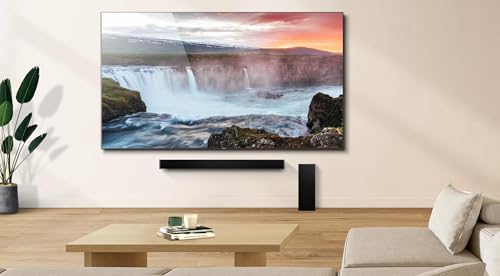
The fundamental challenge soundbars solve is that modern TVs prioritize thinness over audio quality. Those razor-thin displays simply can't house decent speakers, leaving viewers straining to hear dialogue or missing the impact of movie soundtracks. A good soundbar addresses this by providing larger drivers, more powerful amplification, and often dedicated bass through a separate subwoofer.
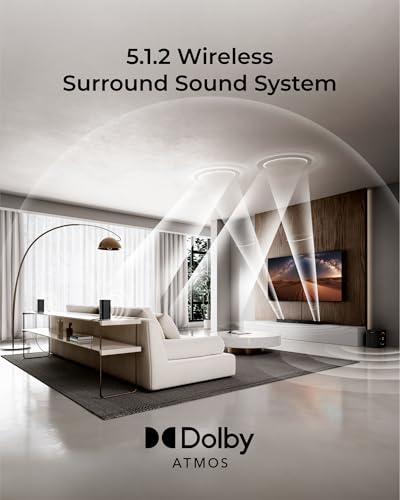
Channel configuration tells you how many discrete audio streams a soundbar can handle. A 2.1 system like the Hisense HS2100 has left and right channels plus a subwoofer for bass. The ULTIMEA Skywave X40 boasts 5.1.2 channels—that's front left, center, front right, rear left, rear right, subwoofer, plus two height channels for overhead effects. More channels generally mean better surround sound immersion, but they also increase cost and setup complexity.
Audio processing has become increasingly sophisticated. Modern soundbars use Digital Signal Processing (DSP)—essentially computer chips that manipulate audio in real-time—to enhance dialogue, create virtual surround effects, or optimize sound for your room. The more powerful the DSP, the more advanced tricks it can perform.
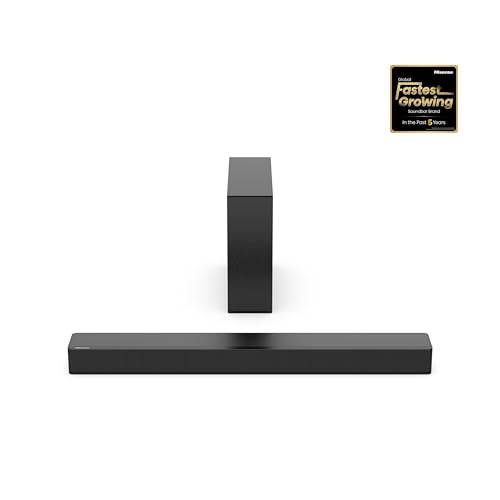
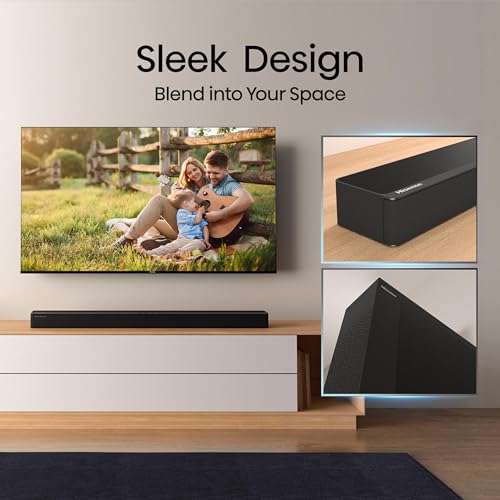
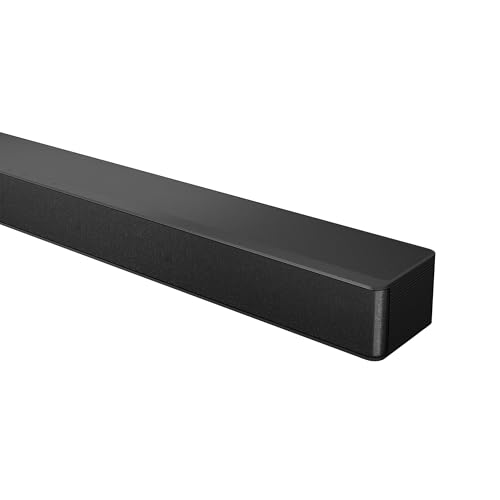
Released in 2022, the Hisense HS2100 represents what happens when a major electronics manufacturer decides to make soundbar technology accessible to mainstream buyers. At the time of writing, it sits in the under-$150 category, making it one of the most affordable options with a dedicated wireless subwoofer.
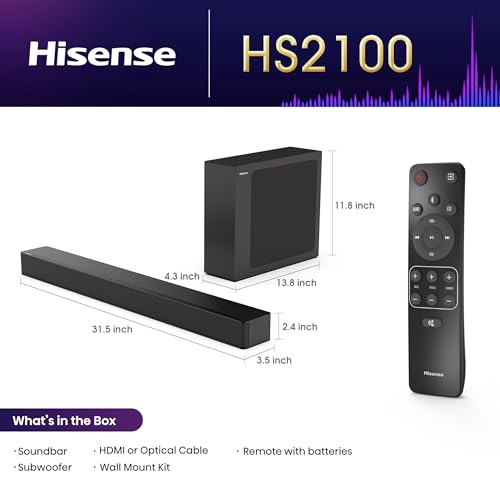
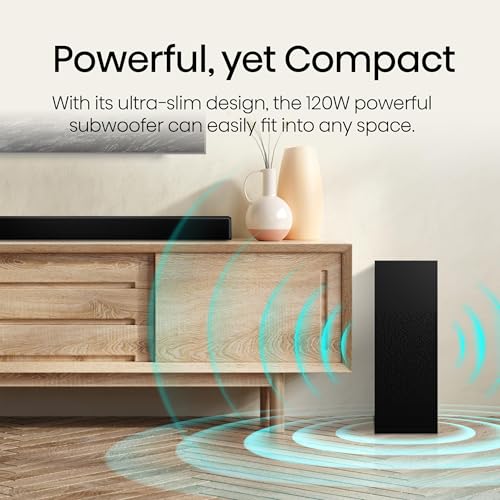
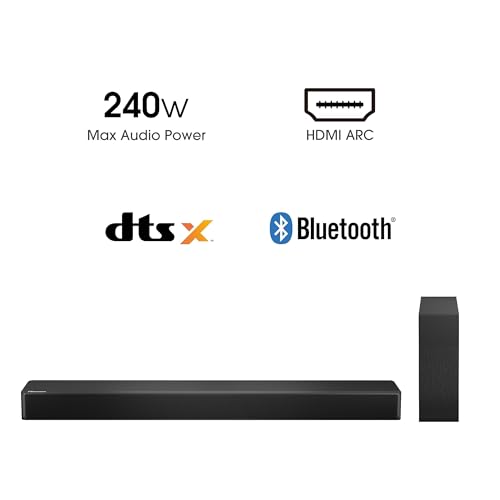
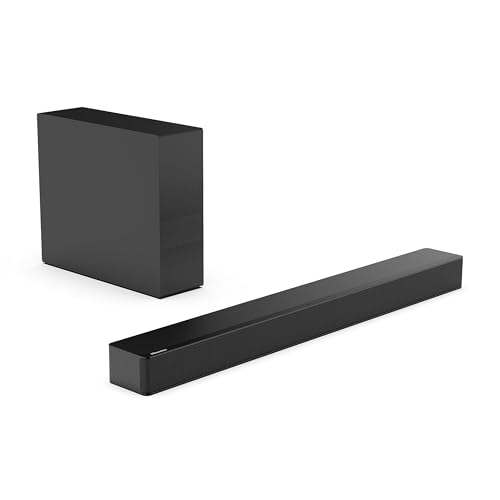
The HS2100 delivers 240 watts of peak power through a 31.5-inch main bar paired with a wireless 5.25-inch subwoofer. That power figure sounds impressive, but it's important to understand what "peak power" means—it's the maximum the system can output for brief moments, not sustained listening levels. For comparison, most TV speakers struggle to hit 20 watts total.
The wireless subwoofer is a genuine standout feature at this price point. Many budget soundbars either skip the sub entirely or require a cable connection. Hisense's wireless implementation means you can place the subwoofer anywhere within about 30 feet of the main bar without running cables across your room. The 5.25-inch driver handles frequencies down to around 45Hz, which covers most movie explosions and music bass lines, though it won't deliver the deepest theater-style rumble.
Our research into expert and user reviews reveals the Hisense HS2100 delivers a warm, pleasant sound signature that's forgiving of poor source material. The midrange—where most dialogue lives—comes through clearly without being harsh or fatiguing. This makes it excellent for long TV watching sessions or news programs where vocal clarity matters most.
The system supports Dolby Digital and DTS audio formats, which are standard for cable TV and streaming services. However, it processes all surround content through DTS Virtual:X technology. This is essentially audio trickery that uses psychoacoustic principles to make stereo speakers sound wider and more enveloping than they physically are. It works, but it's not the same as having actual speakers behind you.
One limitation that becomes apparent in larger rooms is dynamic range compression. As you push the volume higher, the HS2100 starts to compress the difference between quiet and loud sounds to prevent distortion. This means whispered dialogue and explosive action sequences start to sound more similar in volume—not ideal for movies with dramatic soundtracks.
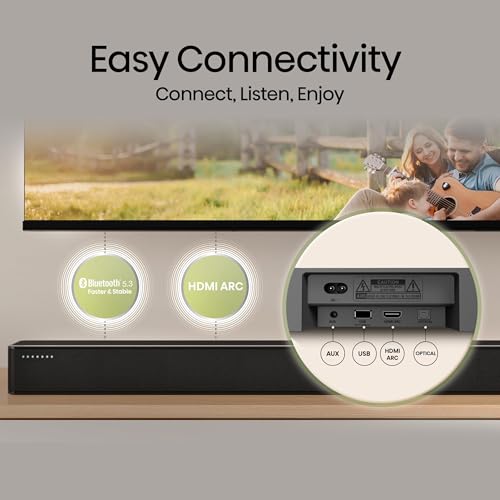
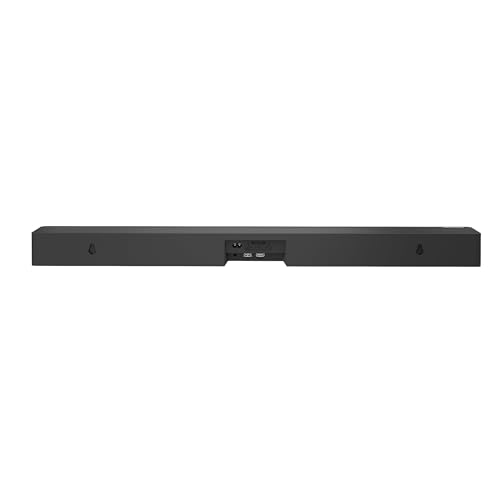
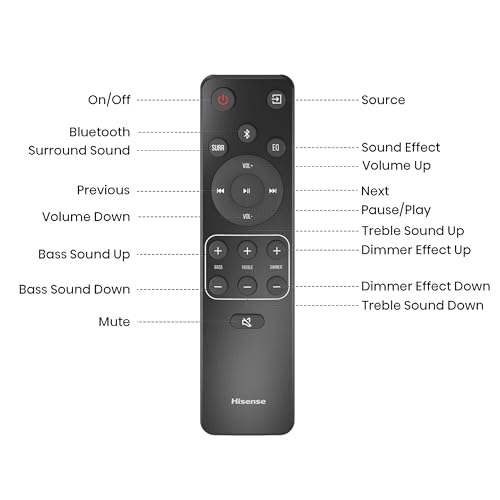
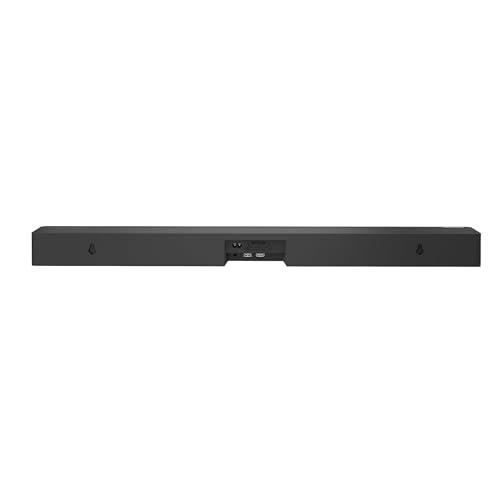
The HS2100 covers the essential connectivity bases with HDMI ARC, optical input, Bluetooth 5.3, and a 3.5mm auxiliary input. HDMI ARC (Audio Return Channel) is particularly important because it allows your TV to send audio back to the soundbar through the same cable that delivers video, simplifying setup and enabling TV remote control of the soundbar's volume.
Bluetooth 5.3 is notably current for a budget device—this wireless standard offers improved range and stability compared to older versions. You can stream music from phones or tablets with minimal dropouts, though audiophiles will notice some compression compared to wired connections.
The six preset sound modes (Movie, Music, News, Sport, Night, Game) provide basic audio tuning. These aren't revolutionary, but they do make a noticeable difference. Night mode, for instance, compresses dynamic range to keep explosions from waking neighbors while maintaining dialogue clarity.
The ULTIMEA Skywave X40, released in 2023, represents the new wave of premium soundbars that aim to replace traditional home theater systems entirely. At the time of writing, it commands a price point in the $400-500 range, positioning it as a serious home theater investment rather than a simple TV upgrade.
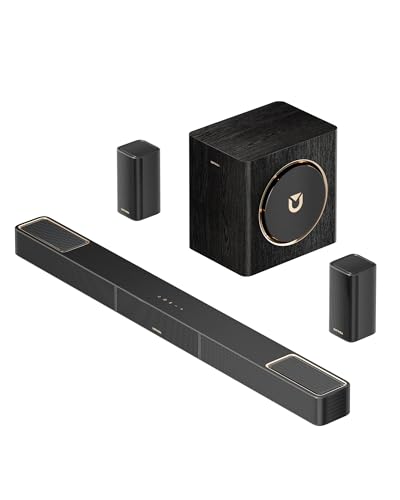
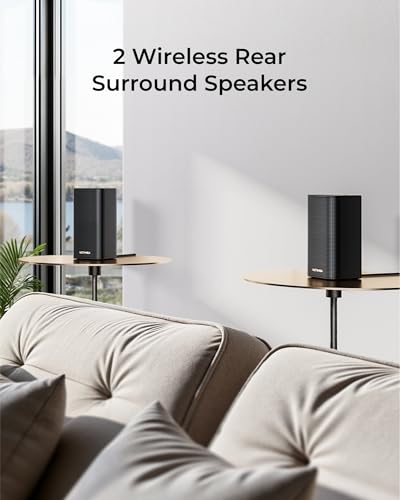
The Skywave X40 employs a 5.1.2 channel configuration with 530 watts of peak power, but the real story lies in its sophisticated architecture. The system includes a main soundbar with upward-firing drivers for height effects, a 6.5-inch wireless subwoofer, and two discrete wireless rear speakers. This creates what's called "true surround sound"—audio actually comes from different physical locations around your room.
The NEURACORE processing engine represents a significant technological leap over budget alternatives. This system uses a triple-core DSP (Digital Signal Processor) running at 2,000 MIPS (Million Instructions Per Second) to handle real-time audio optimization. To put that in perspective, that's more processing power than some smartphones had a decade ago, all dedicated to audio enhancement.
Perhaps most intriguingly, the Skywave X40 uses Gallium Nitride (GaN) amplification instead of traditional silicon-based amplifiers. GaN technology operates at roughly 98% efficiency compared to about 70% for silicon, generating significantly less heat while responding eight times faster to audio signals. This translates to tighter, more controlled sound reproduction, particularly noticeable in bass response where quick transients—like drum hits or gunshots—need precise control.
The inclusion of Dolby Atmos support sets the ULTIMEA Skywave X40 apart from basic soundbars. Atmos is an audio format that includes height information, allowing sounds to be precisely positioned in three-dimensional space. When a helicopter flies overhead in a movie, Atmos systems can make it sound like it's actually above you rather than just in front.
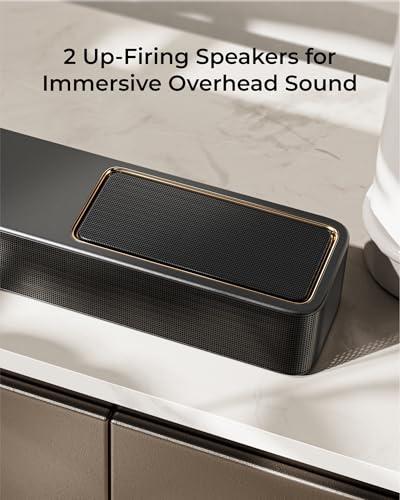
The Skywave X40 achieves this through two upward-firing drivers in the main soundbar. These speakers bounce sound off your ceiling to create the illusion of overhead speakers. The effectiveness depends on your room having appropriate ceiling height (8-10 feet) and reflective surfaces, but when it works, the effect is genuinely impressive.
Our analysis of professional reviews and user feedback suggests the height effect works best with purpose-built Atmos content from streaming services like Netflix, Disney+, and Apple TV+. Standard TV shows won't benefit much, but modern movies and high-budget series create genuinely immersive overhead soundscapes.
The Skywave X40 solves one of home theater's biggest challenges: speaker placement without running cables everywhere. ULTIMEA's CineMesh wireless technology uses dual 5GHz transmission to connect all components with less than 20 milliseconds of latency. That timing is crucial—anything above 40ms becomes noticeable as lip-sync issues.
The 5GHz frequency band is less congested than the 2.4GHz band used by most wireless devices, reducing interference from WiFi routers, microwaves, and other electronics. The system comes pre-paired from the factory, so setup involves simply plugging each component into power outlets and turning them on.
Real-world performance reports indicate the wireless connection remains stable across typical home distances, though thick walls or significant interference can occasionally cause dropouts. The rear speakers need to be within roughly 30 feet of the main bar with a clear line of sight for optimal performance.
Bass response reveals the clearest performance difference between these systems. The Hisense HS2100 delivers adequate bass for most content, but our review analysis indicates it struggles with the lowest frequencies found in modern movie soundtracks. Its 5.25-inch subwoofer handles mid-bass well—you'll feel kick drums and most explosions—but it can't reproduce the deepest rumble that makes action sequences visceral.
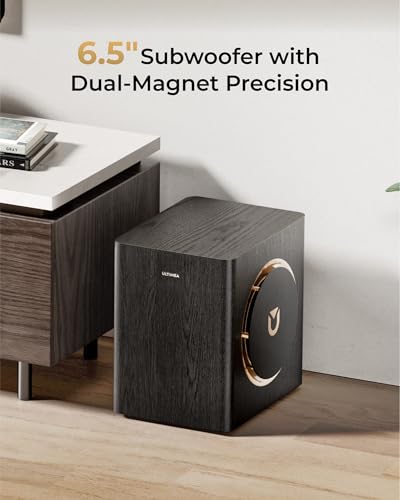
The ULTIMEA Skywave X40 extends down to 35Hz with its 6.5-inch dual-magnet subwoofer, capturing those deep frequencies that you feel as much as hear. The larger driver and advanced magnetics maintain control at high volumes, avoiding the "muddy" bass that plagues lesser systems when pushed hard.
This difference becomes particularly apparent with content like Marvel movies or video games that use deep bass for impact. The HS2100 makes explosions sound loud, while the Skywave X40 makes them feel powerful.
Both systems handle dialogue reasonably well, but through different approaches. The Hisense HS2100 uses its left and right speakers to create a "phantom center"—the illusion that dialogue comes from the center of your TV screen. This works adequately for typical viewing distances.
The ULTIMEA Skywave X40 includes a dedicated center channel speaker specifically for dialogue. This physical center channel, combined with advanced processing, maintains vocal clarity even during complex scenes with simultaneous dialogue, music, and effects. Professional reviews consistently note superior dialogue separation during busy movie sequences.
Gaming reveals another crucial difference: input lag. The Hisense HS2100 performs adequately for casual gaming, but lacks the precision timing serious gamers require. Audio cues in competitive games—like footsteps in first-person shooters—arrive with enough delay to affect performance.
The ULTIMEA Skywave X40 addresses this with its sub-20ms wireless latency and dedicated gaming mode. The true surround speakers provide directional audio cues that can offer competitive advantages in games where audio positioning matters. Our research suggests competitive gamers consistently prefer systems with discrete rear speakers over virtual surround alternatives.
For dedicated home theater use, the differences become even more pronounced. The Hisense HS2100 works well for casual movie watching, particularly in smaller rooms where its limitations are less apparent. It transforms terrible TV audio into pleasant sound without requiring significant setup or investment.
However, serious home theater enthusiasts will quickly outgrow its capabilities. The stereo downmixing of surround content means you're not hearing movies as their creators intended. Complex soundtracks become compressed and simplified, losing the spatial separation that modern mixing techniques create.
The ULTIMEA Skywave X40 approaches true home theater performance. The discrete 5.1.2 channels maintain the original spatial information from movie soundtracks. Effects pan smoothly between speakers, creating the illusion of sounds moving through your room. The Dolby Atmos processing adds genuine overhead effects that budget systems simply cannot replicate.
Room size plays a crucial role here. The HS2100 works well in bedrooms or small living rooms up to about 200 square feet. Beyond that, its power limitations become apparent. The Skywave X40 handles medium to large rooms effectively, with enough power and speaker distribution to fill 400+ square foot spaces without strain.
The soundbar market has evolved rapidly since both products launched. The Hisense HS2100, arriving in 2022, represents mature budget technology—proven, reliable, but not cutting-edge. Its format support covers current needs adequately, though it lacks newer standards that might become common.
The ULTIMEA Skywave X40, launching in 2023, incorporates more recent technological advances. The GaN amplification, advanced wireless protocols, and comprehensive format support position it better for future content standards. As streaming services continue improving audio quality, the Skywave X40 can take advantage while the HS2100 might hit processing limits.
The decision between these systems ultimately depends on your priorities, room, and budget. The Hisense HS2100 excels as an affordable TV audio upgrade. It's perfect for apartments, bedrooms, or secondary viewing areas where you want decent sound without complexity or significant investment. If you primarily watch news, sports, and basic TV programming, its limitations won't matter much.
Choose the HS2100 if you're working with a tight budget, have limited space, or simply want better dialogue clarity for everyday viewing. It delivers remarkable value for money and transforms terrible TV audio into something pleasant and listenable.
The ULTIMEA Skywave X40 serves a different purpose entirely. It's a legitimate home theater system that happens to be packaged as a soundbar. If you love movies, play immersive games, or want audio that matches your expensive TV's visual quality, the investment makes sense.
Choose the Skywave X40 if you have a dedicated living room theater setup, watch lots of movies with complex soundtracks, or value audio quality enough to invest in long-term satisfaction. The true surround sound and Atmos effects create an experience that approaches commercial theater quality.
Both products succeed at their intended purposes, but they serve fundamentally different needs. The HS2100 democratizes decent TV audio for budget-conscious buyers, while the Skywave X40 brings serious home theater technology to living rooms without requiring architectural modifications for traditional speaker systems.
Your choice should align with how seriously you take audio quality and how much you're willing to invest in the experience. Either way, you'll enjoy dramatically better sound than your TV's built-in speakers can provide.
| Hisense HS2100 2.1 Channel 240W Soundbar System | ULTIMEA Skywave X40 5.1.2 Soundbar System |
|---|---|
| Channel Configuration - Determines surround sound capability and immersion level | |
| 2.1 stereo with wireless subwoofer (downmixes all surround content to stereo) | True 5.1.2 discrete surround with wireless rear speakers and Dolby Atmos height channels |
| Peak Power Output - Affects maximum volume and dynamic range | |
| 240W (adequate for small to medium rooms) | 530W (handles larger rooms without compression) |
| Dolby Atmos Support - Essential for modern movie soundtracks with overhead effects | |
| No (uses DTS Virtual:X simulation instead) | Yes, with dedicated upward-firing drivers for authentic height effects |
| Amplifier Technology - Impacts sound quality and efficiency | |
| Standard silicon-based amplification | Advanced GaN (Gallium Nitride) amplifiers with 98% efficiency and 8x faster response |
| Audio Processing Power - Determines real-time optimization capabilities | |
| Basic DSP for virtual surround and EQ presets | NEURACORE triple-core DSP with 2,000 MIPS processing power |
| Subwoofer Specifications - Critical for bass impact and extension | |
| 5.25" wireless subwoofer, limited low-end extension (~45Hz) | 6.5" dual-magnet wireless subwoofer extending down to 35Hz for deeper bass |
| Rear Speaker Configuration - Determines true surround vs simulated effects | |
| None (relies on virtual surround processing) | Two discrete wireless rear speakers for authentic directional audio |
| Maximum Distortion Level - Lower is better for clean audio at high volumes | |
| Compression noted at maximum volume in reviews | <1% distortion even at high output levels |
| Wireless Gaming Latency - Critical for competitive gaming and lip-sync | |
| Not specified (likely 40ms+ typical for budget systems) | <20ms ultra-low latency via CineMesh dual 5GHz wireless |
| EQ and Sound Customization - Flexibility to tune audio to your preferences | |
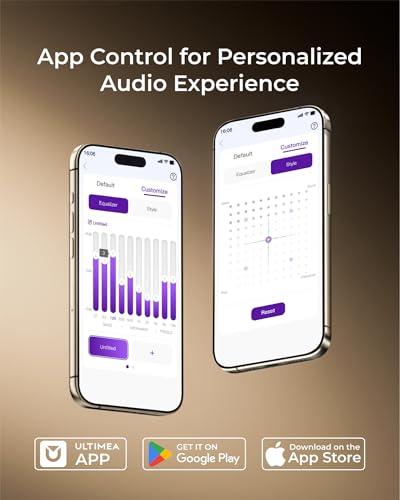
| 6 basic preset modes, simple bass/treble adjustment | 10-band EQ with 121 preset profiles via smartphone app |
| Video Connectivity - Important for gaming consoles and 4K content | |
| HDMI ARC only | HDMI eARC with 4K HDR passthrough for lossless audio and video |
| Physical Size - Impacts TV compatibility and room integration | |
| Compact 31.5" soundbar (fits smaller TVs and tight spaces) | Larger 43.3" soundbar plus separate rear speakers (requires room planning) |
| Setup Complexity - Time and effort required for installation | |
| Plug-and-play simplicity, automatic subwoofer pairing | More complex with rear speaker placement, but components pre-paired |
| High-Resolution Audio Support - Matters for audiophile music listening | |
| Standard 16-bit/44.1kHz support | Up to 24-bit/192kHz high-resolution audio support |
| Ideal Room Size - Performance optimization based on space | |
| Small to medium rooms (up to ~200 sq ft) | Medium to large rooms (200-400+ sq ft with proper speaker placement) |
The biggest difference is channel configuration and surround sound capability. The Hisense HS2100 is a 2.1 stereo system with a wireless subwoofer that simulates surround sound through virtual processing. The ULTIMEA Skywave X40 is a true 5.1.2 system with physical rear speakers and upward-firing drivers for genuine Dolby Atmos surround sound. This means the Skywave X40 provides authentic directional audio where sounds actually come from behind and above you, while the HS2100 creates a wider stereo image but can't match true surround immersion.
The ULTIMEA Skywave X40 is significantly better for home theater use. It supports Dolby Atmos with dedicated height channels, maintains discrete 5.1.2 surround sound as directors intended, and delivers deeper bass extension down to 35Hz. The Hisense HS2100 works fine for casual movie watching but downmixes all surround content to stereo, losing the spatial effects that make modern movies immersive. For serious home theater enthusiasts, the Skywave X40 provides a cinema-like experience that the budget HS2100 simply cannot match.
Yes, both the Hisense HS2100 and ULTIMEA Skywave X40 work with all TV brands through standard connections. The HS2100 offers HDMI ARC, optical, and Bluetooth connectivity, while the Skywave X40 includes HDMI eARC, optical, USB, and Bluetooth 5.4. Both systems will significantly improve audio quality regardless of your TV brand, though the HS2100 has special Roku TV Ready integration for seamless remote control with compatible Roku TVs.
The Hisense HS2100 is much easier to set up. It's essentially plug-and-play with automatic subwoofer pairing and minimal configuration needed. The ULTIMEA Skywave X40 requires more planning since you need to position rear speakers around your room, though all components come pre-paired from the factory. If you want the simplest possible installation, choose the HS2100. If you don't mind spending extra time for better performance, the Skywave X40 setup is still manageable for most users.
The ULTIMEA Skywave X40 is superior for gaming, especially competitive play. It features ultra-low wireless latency under 20ms and true surround sound that provides directional audio cues crucial for games like first-person shooters. The Hisense HS2100 works fine for casual gaming but lacks the precision timing and spatial audio that serious gamers need. The Skywave X40 also includes a dedicated gaming mode optimized for reduced latency and enhanced positional audio.
The ULTIMEA Skywave X40 delivers superior bass performance with its 6.5-inch dual-magnet subwoofer that extends down to 35Hz, compared to the Hisense HS2100's 5.25-inch subwoofer with more limited low-end extension. The Skywave X40 also uses advanced Gravus Ultra-Linear Bass technology and GaN amplification for tighter, more controlled bass response. While the HS2100 provides adequate bass for most content, the Skywave X40 delivers the deep, impactful bass that makes action movies and music truly visceral.
The Hisense HS2100 works best in small to medium rooms up to about 200 square feet, making it ideal for bedrooms, apartments, or smaller living rooms. The ULTIMEA Skywave X40 is designed for medium to large rooms from 200-400+ square feet, with enough power and speaker distribution to fill larger spaces effectively. The Skywave X40's rear speakers also need adequate room for proper placement to achieve optimal surround sound effects.
Yes, both soundbars support wireless music streaming, but with different capabilities. The Hisense HS2100 uses Bluetooth 5.3 for stable wireless streaming from phones and tablets. The ULTIMEA Skywave X40 features newer Bluetooth 5.4 technology plus supports high-resolution audio up to 24-bit/192kHz for superior music quality. The Skywave X40 also offers extensive EQ customization through its smartphone app with 10-band equalizer and 121 preset sound profiles.
This depends on your needs and budget. The Hisense HS2100 offers exceptional value for budget-conscious buyers, delivering wireless subwoofer performance and solid TV audio improvement at an entry-level price point. The ULTIMEA Skywave X40 provides premium features typically found in much more expensive systems, making it excellent value for serious home theater enthusiasts. Choose the HS2100 for basic TV audio upgrade needs, or the Skywave X40 if you want true surround sound performance without premium brand pricing.
The Hisense HS2100 doesn't require any apps and works entirely with its included remote control and basic TV remote integration. The ULTIMEA Skywave X40 can be controlled with its remote but offers a comprehensive smartphone app for advanced features like 10-band EQ adjustment, sound profile selection, individual channel control, and firmware updates. The app significantly enhances the Skywave X40's customization capabilities, while the HS2100 focuses on simple, straightforward operation.
Both soundbars handle dialogue well, but through different approaches. The Hisense HS2100 creates clear dialogue through its balanced sound signature and dedicated News mode for vocal enhancement. The ULTIMEA Skywave X40 includes a dedicated center channel speaker specifically designed for dialogue clarity, maintaining vocal separation even during complex scenes. For basic TV watching, the HS2100 is perfectly adequate, while the Skywave X40 excels with dialogue-heavy content like dramas and complex movie soundtracks.
The ULTIMEA Skywave X40 is significantly more future-proof with full Dolby Atmos support, high-resolution audio compatibility up to 24-bit/192kHz, and HDMI eARC with 4K HDR passthrough. The Hisense HS2100 supports current standard formats like Dolby Digital and DTS but lacks newer technologies like Atmos or high-resolution audio. As streaming services continue improving audio quality, the Skywave X40 can take advantage of these advances while the HS2100 may hit format limitations with future content standards.
We've done our best to create useful and informative comparisons to help you decide what product to buy. Our research uses advanced automated methods to create this comparison and perfection is not possible - please contact us for corrections or questions. These are the sites we've researched in the creation of this article: rtings.com - shop.hisense-usa.com - bestbuy.com - content.syndigo.com - bestbuy.com - hisensedealers.co.ke - stuff.co.za - dtc-aus-api.hisense.com - youtube.com - manuals.plus - youtube.com - bestbuy.com - youtube.com - gallifurniture.com - hisense-usa.com - manuals.plus - uk.hisense.com - device.report - youtube.com - costco.ca - elmcreekwsa.com - gallifurniture.com - bestbuy.com - shopabunda.com - youtube.com - youtube.com - youtube.com - youtube.com - ultimea.com - walmart.com - youtube.com - hometechnologyreview.com - community.ultimea.com - avsforum.com - youtube.com - youtube.com - youtube.com - bestbuy.com - hometechnologyreview.com

Privacy Policy
Terms and Conditions - Affiliate Policy
Home Security
© Copyright 2008-2026.
11816 Inwood Rd #1211, Dallas, TX 75244