






Soundbars have revolutionized home audio by solving one of the most frustrating aspects of modern entertainment: terrible TV speakers. While today's TVs deliver stunning 4K visuals, their ultra-thin designs leave no room for decent audio components. This is where soundbars step in, promising theater-quality sound without the complexity of traditional surround systems.
But here's where it gets interesting—not all soundbars take the same approach. Some companies build complete systems with multiple physical speakers, while others focus on smart processing and gradual expansion. This fundamental difference in philosophy creates two distinct paths to better audio, each with compelling advantages depending on your priorities.
Today we're comparing two soundbars that perfectly illustrate these different approaches: the ULTIMEA Skywave X40, a 2025-generation complete surround system, and the Denon Home Sound Bar 550, a 2021 premium compact bar emphasizing smart features and expandability.
Before diving into specifics, it's worth understanding how soundbars create surround sound. Traditional home theaters use separate speakers positioned around your room—left, right, center, rear left, rear right, and sometimes overhead speakers for height effects. Soundbars have to recreate this experience using different techniques.
Virtual surround processing uses psychoacoustic tricks to fool your brain into hearing sounds from directions where no speakers exist. Advanced algorithms analyze audio signals and apply delay, phase shifts, and frequency filtering to create the illusion of sound coming from behind or above you. It's clever technology, but it depends heavily on your room acoustics and seating position.
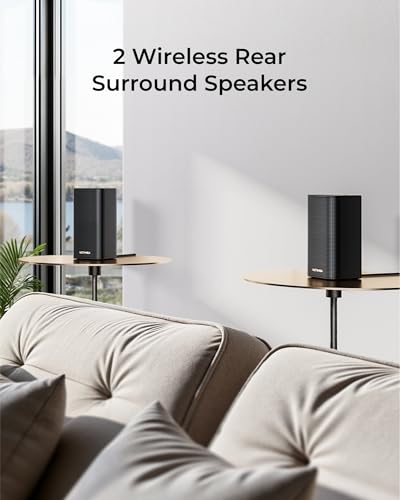
Physical surround systems take a different approach by actually placing speakers where surround channels should be. This includes wireless rear speakers behind your listening position and upfiring drivers that bounce sound off your ceiling to create overhead effects. The physics are more straightforward—sound actually comes from those directions rather than being simulated.
The ULTIMEA Skywave X40 represents the physical approach with a complete 5.1.2 system, while the Denon Home Sound Bar 550 starts with virtual processing but can expand to physical surround through optional components.
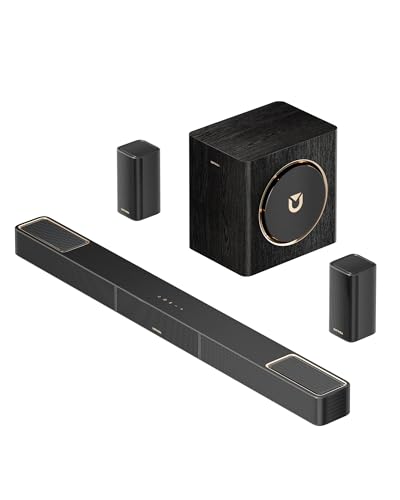
The ULTIMEA Skywave X40 arrived in 2025 as what I'd call a "theater in a box" solution. Everything you need for true surround sound comes included: the main soundbar, wireless subwoofer, and two wireless rear speakers. This represents a significant shift from earlier ULTIMEA products, which often required separate purchases for full functionality.
The X40's standout feature is its NEURACORE audio engine—essentially a specialized computer dedicated to audio processing. This system includes a triple-core DSP (Digital Signal Processor) and dual-core MCU (Microcontroller Unit) capable of 2,000 MIPS of processing power. To put that in perspective, that's enough computational power to analyze and optimize 17 individual audio channels in real-time with 24-bit precision at 192kHz sampling rates.
What does this mean for your listening experience? The system can make thousands of micro-adjustments per second to optimize sound based on what type of content you're watching. Action scenes get enhanced dynamic range and precise directional effects, while dialogue scenes receive clarity enhancements and background noise reduction.
The ULTIMEA X40 also incorporates GaN (Gallium Nitride) amplification technology, which might sound like marketing speak but represents a genuine technological leap. Traditional silicon amplifiers waste significant energy as heat and respond relatively slowly to audio signals. GaN amplifiers operate at 98% efficiency compared to around 80% for silicon, generate 50% less heat, and respond 8 times faster to dynamic audio changes. In practical terms, this means cleaner sound at high volumes, better bass control, and more reliable performance during extended listening sessions.
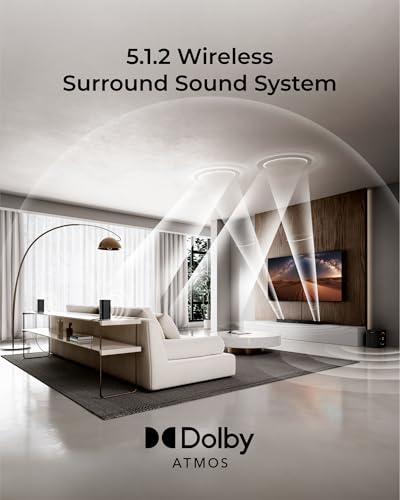
Here's where the ULTIMEA X40 distinguishes itself most clearly from virtual surround systems. Dolby Atmos works by encoding audio "objects" that can be placed anywhere in three-dimensional space. Rain falling, helicopters flying overhead, or bullets whizzing past your head are encoded as discrete audio elements rather than traditional channel-based surround.
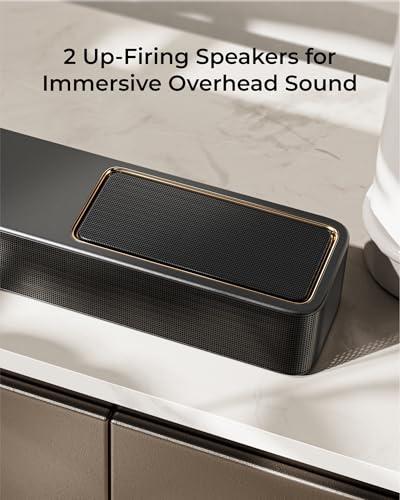
The X40 includes two upfiring drivers in the main soundbar that bounce sound off your ceiling to create genuine overhead effects. Combined with the wireless rear speakers positioned behind your listening area, you get actual directional audio rather than processed approximations. When a helicopter flies from front to back in a movie, the sound literally moves from the front soundbar to the rear speakers. When rain starts falling in a scene, those upfiring drivers create authentic overhead ambiance.
Our research into user experiences consistently shows that people notice this difference immediately. Virtual height processing can be impressive, but physical height speakers create those "wow, did that sound come from above me?" moments that make movies feel genuinely immersive.
The ULTIMEA X40 delivers 530W of peak power, which sounds impressive but requires context. Peak power ratings can be misleading since they represent maximum instantaneous output rather than sustained performance. More important is the system's ability to maintain clean sound at realistic listening volumes.
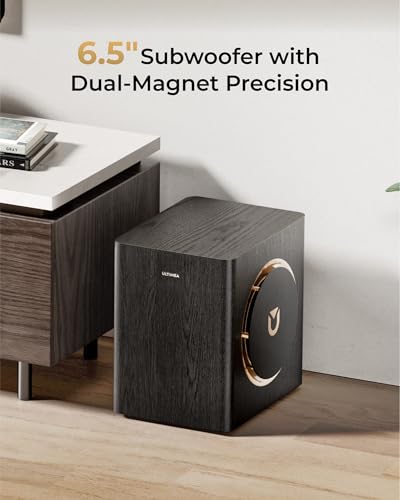
The included 6.5-inch wireless subwoofer extends down to 35Hz, which covers the fundamental frequencies of most movie sound effects and music. For reference, the lowest note on a standard bass guitar is about 41Hz, so this subwoofer handles the deep rumble of explosions, thunder, and dramatic music without strain. The Gravus Ultra-Linear Bass Technology (ULTIMEA's proprietary processing) prevents the distortion that typically occurs when smaller drivers try to reproduce very low frequencies at high volumes.
This matters more than you might expect. Many soundbar systems sound great at moderate volumes but become muddy or harsh when you turn them up for movie night. The X40's advanced amplification and processing maintain clarity even during intense action sequences with lots of overlapping sound effects.
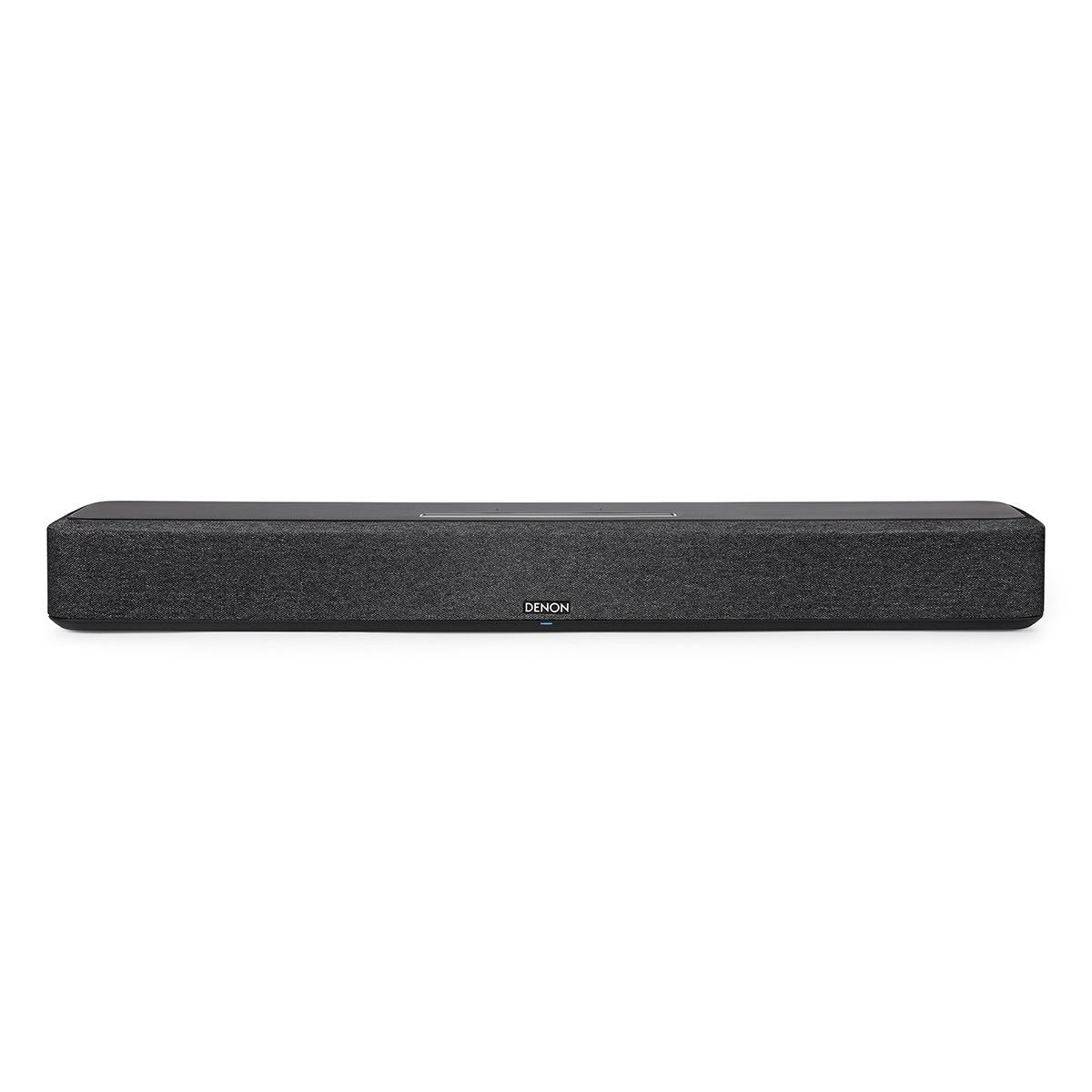
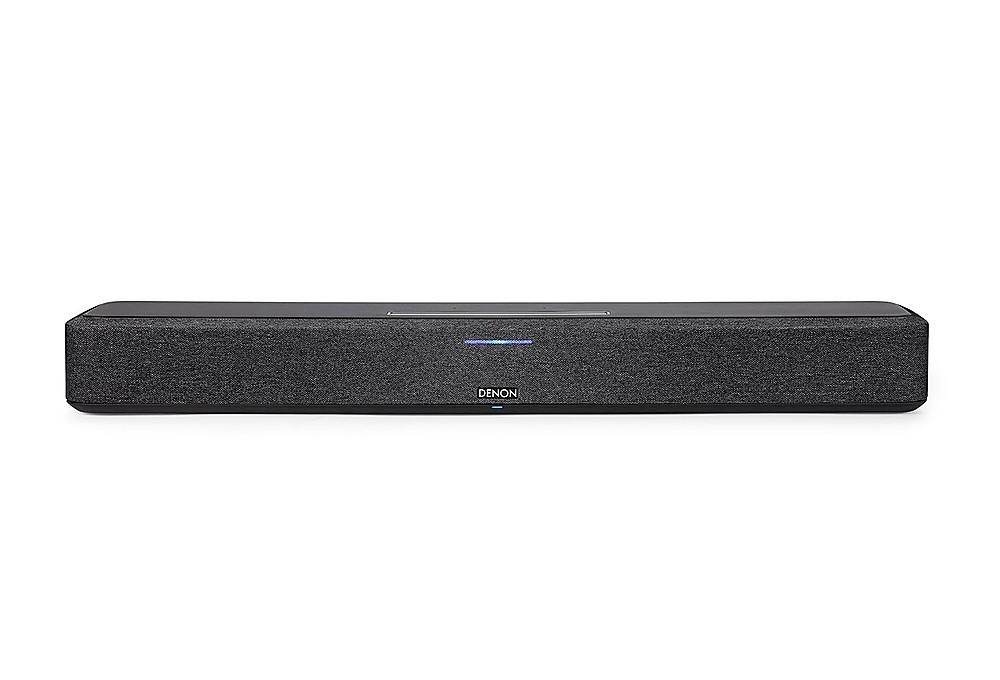
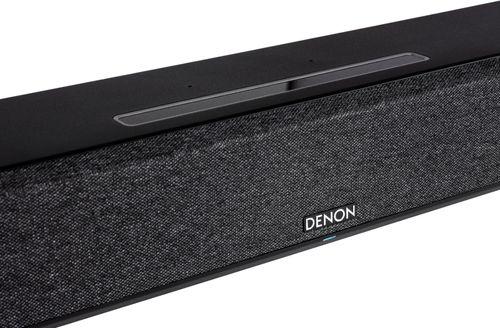
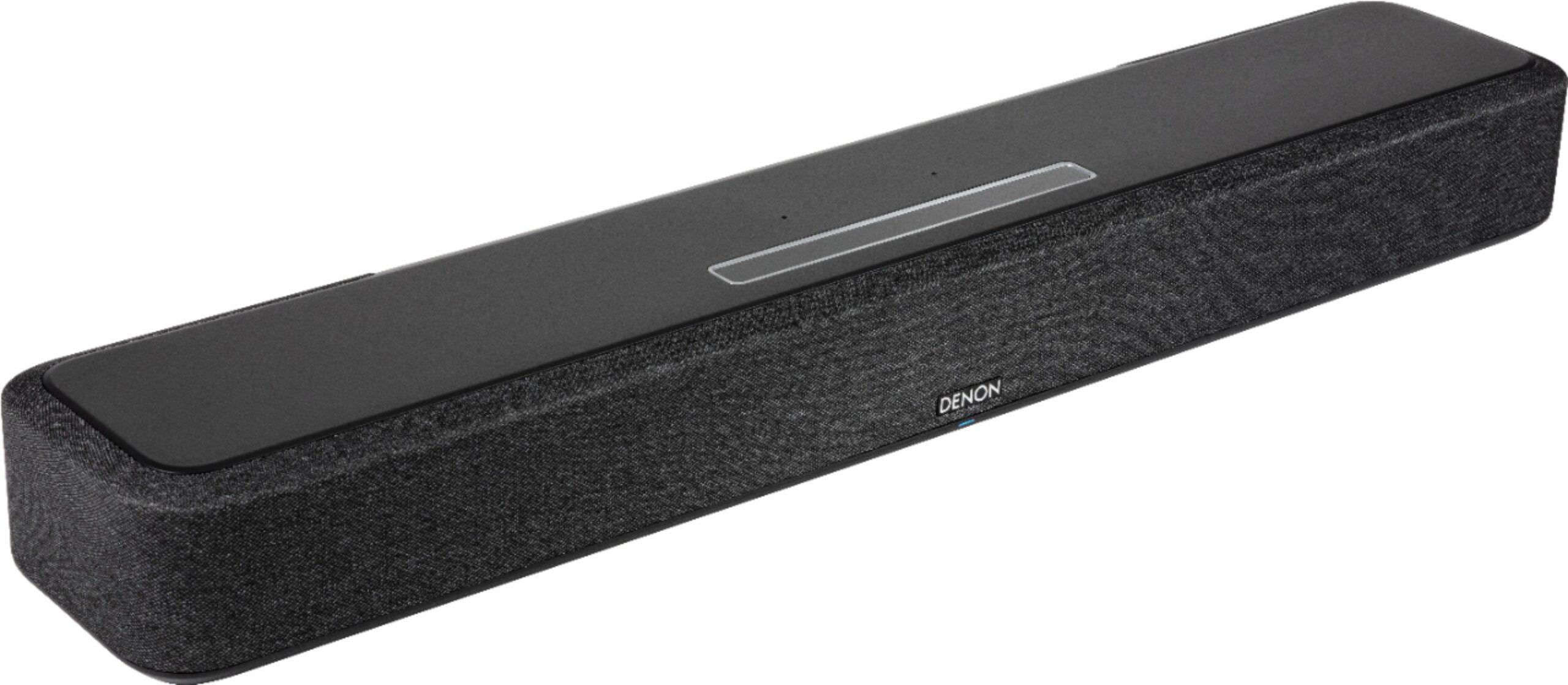
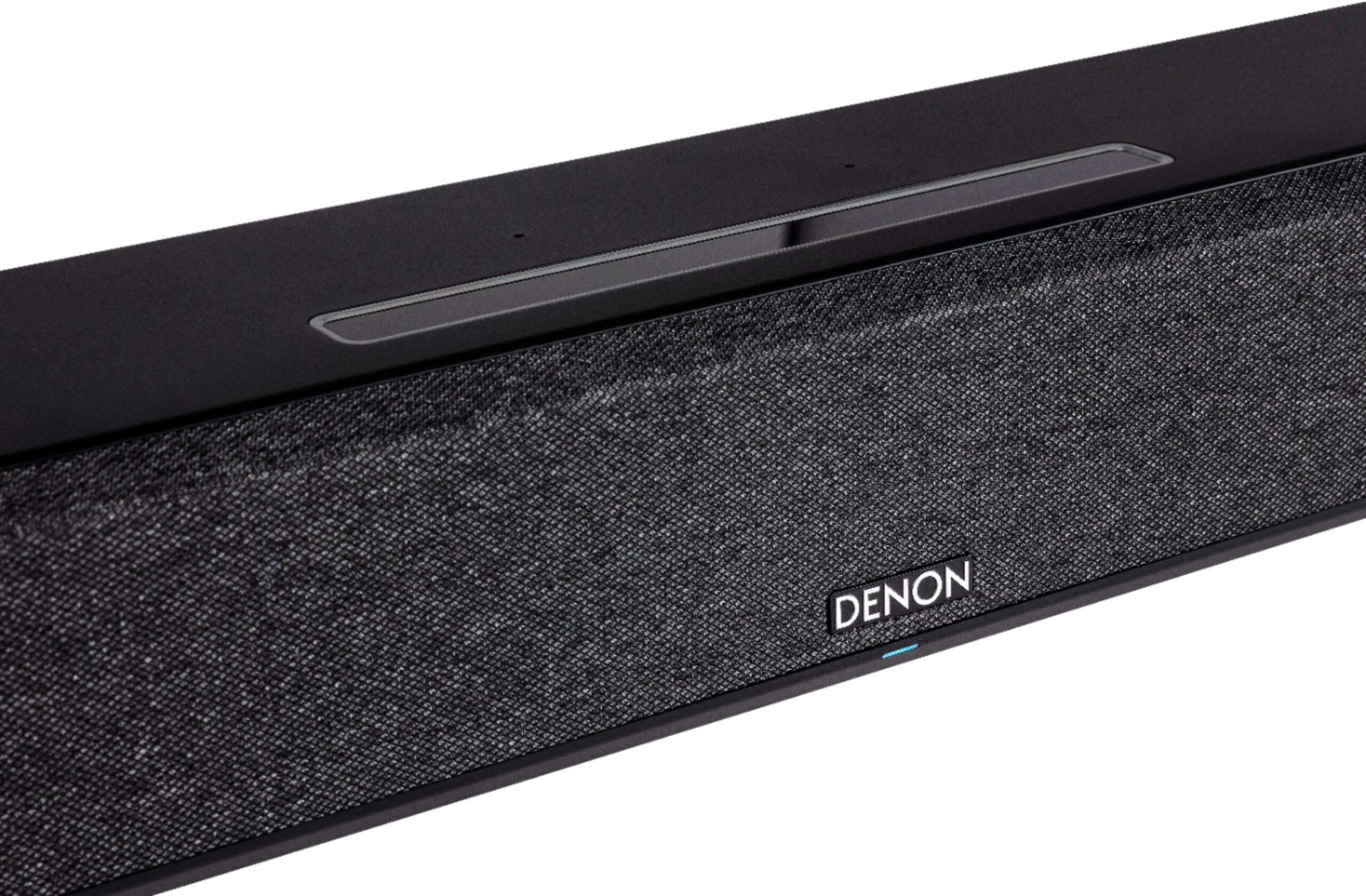
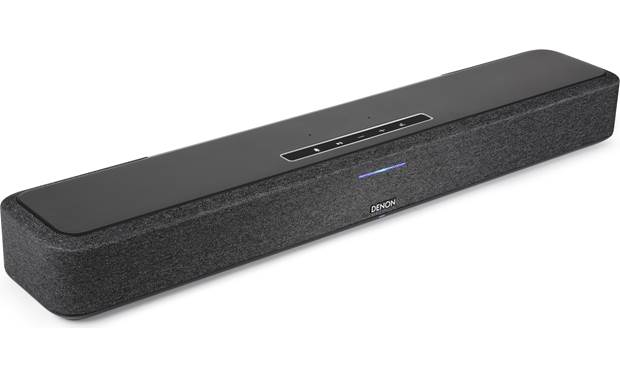
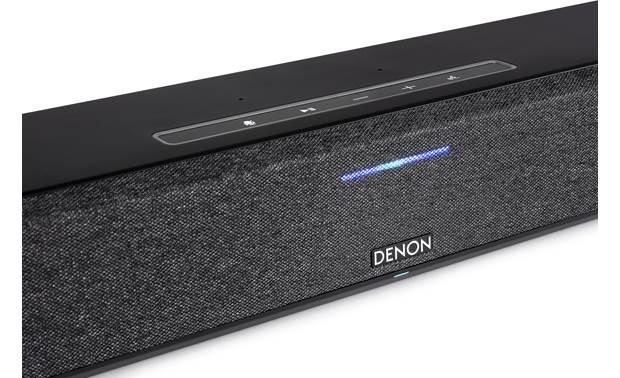
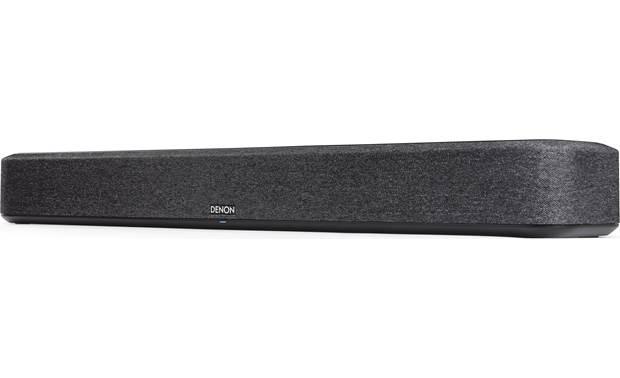
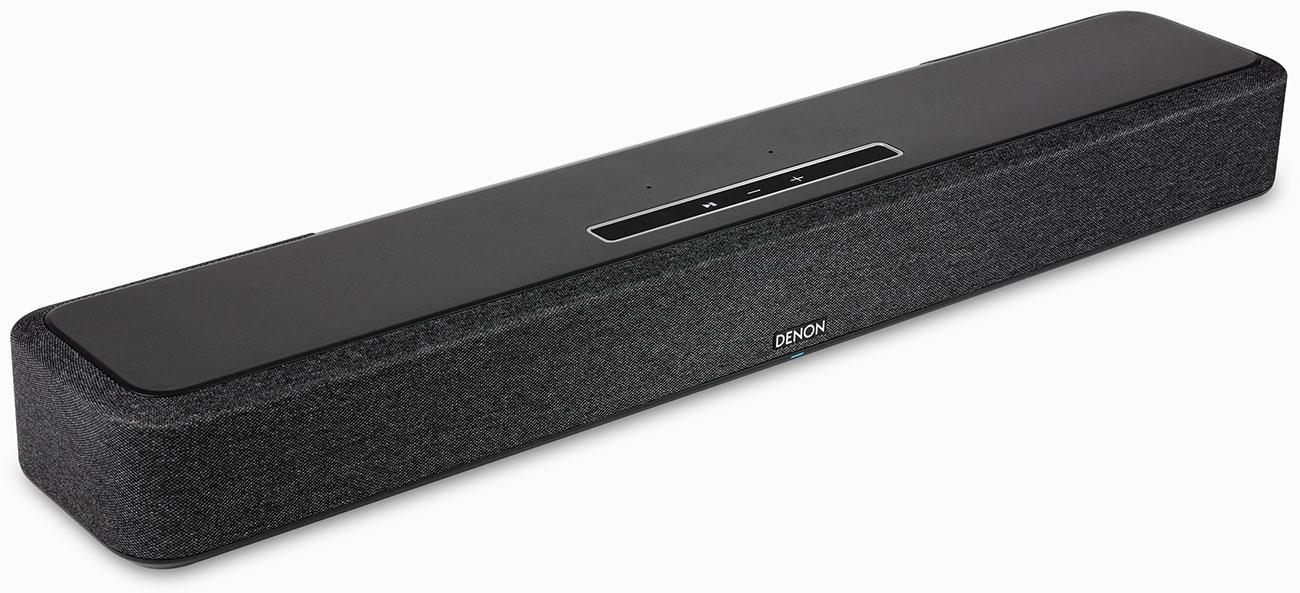
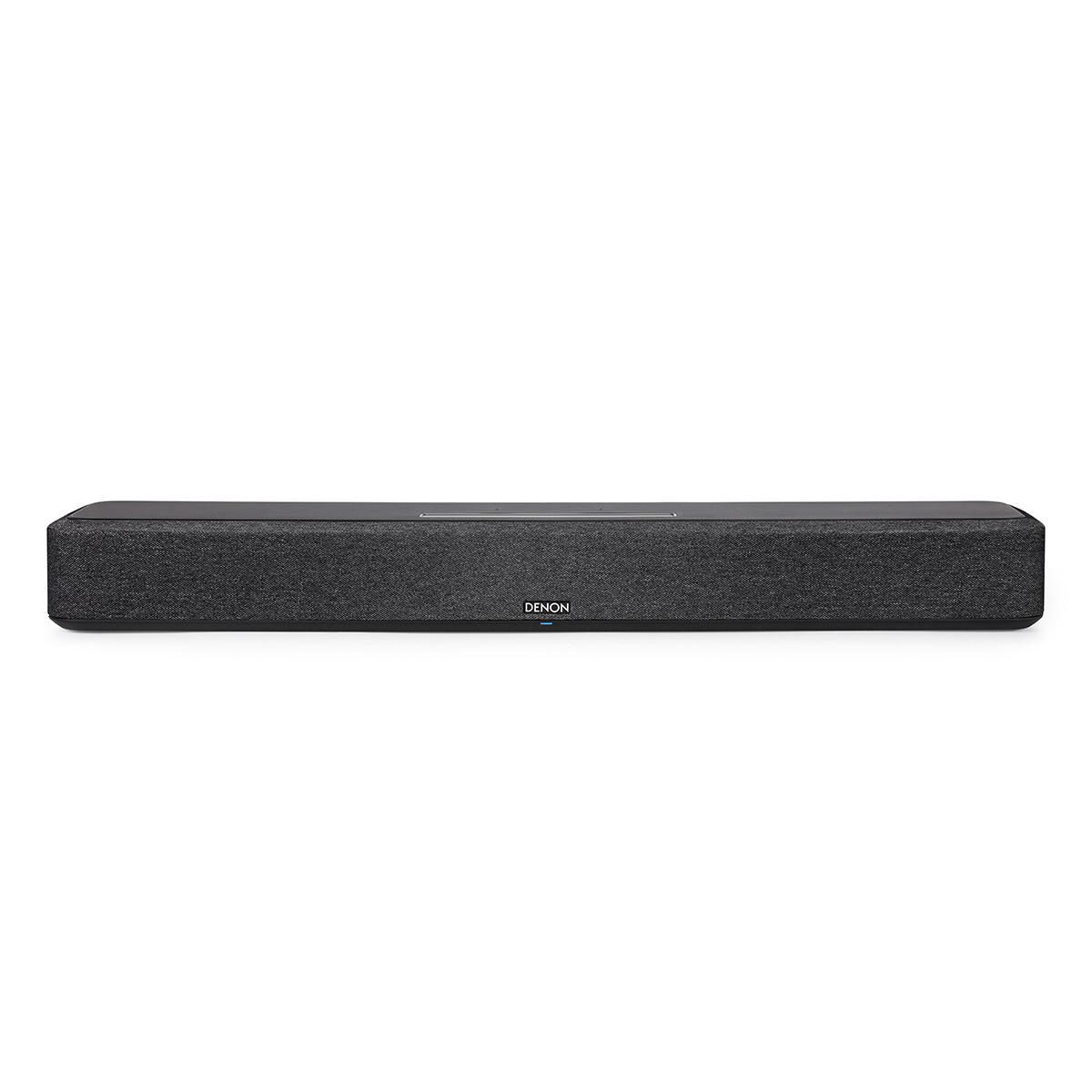
The Denon Home Sound Bar 550 takes a fundamentally different approach, prioritizing smart features, build quality, and gradual expansion over immediate surround impact. Released in 2021, it represents Denon's philosophy of creating a premium audio hub that grows with your needs and integrates seamlessly with modern smart homes.
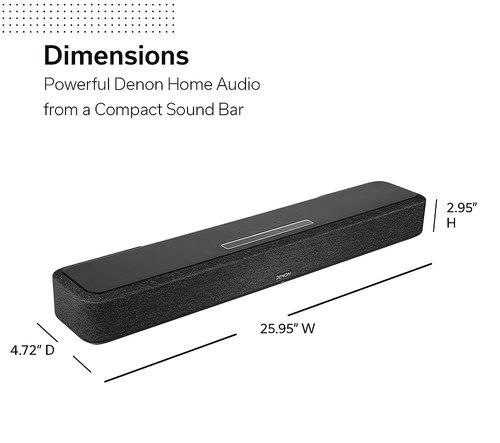
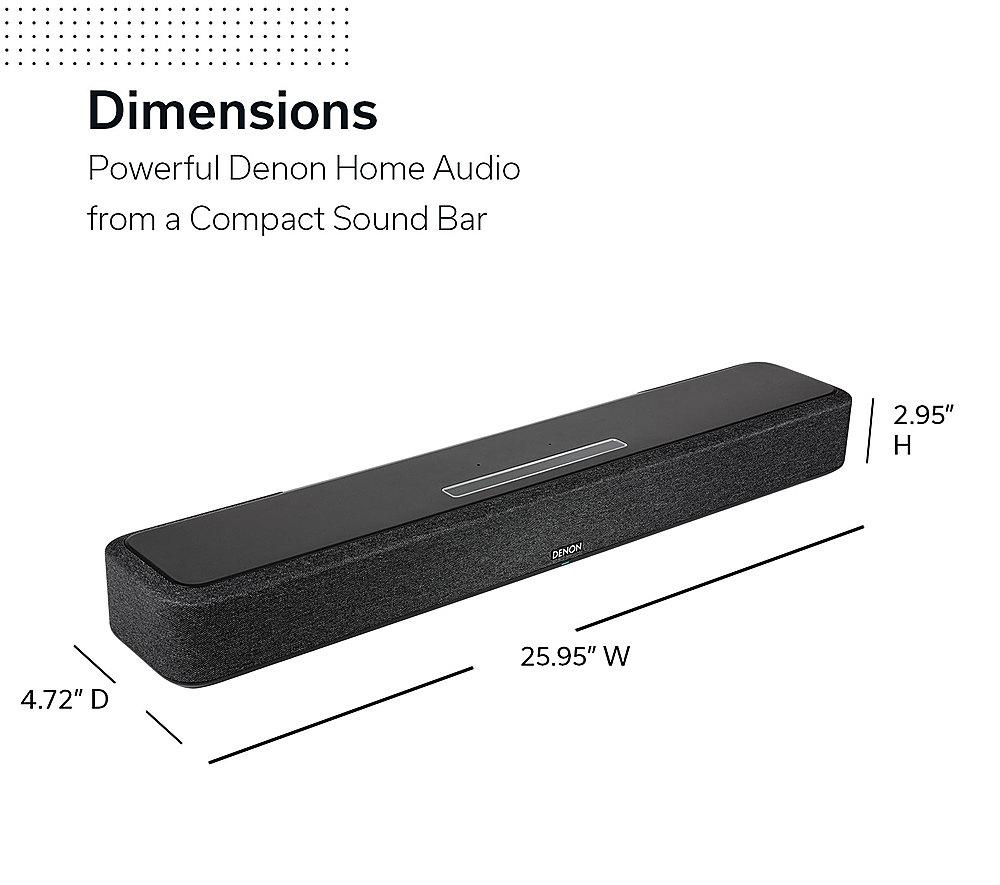
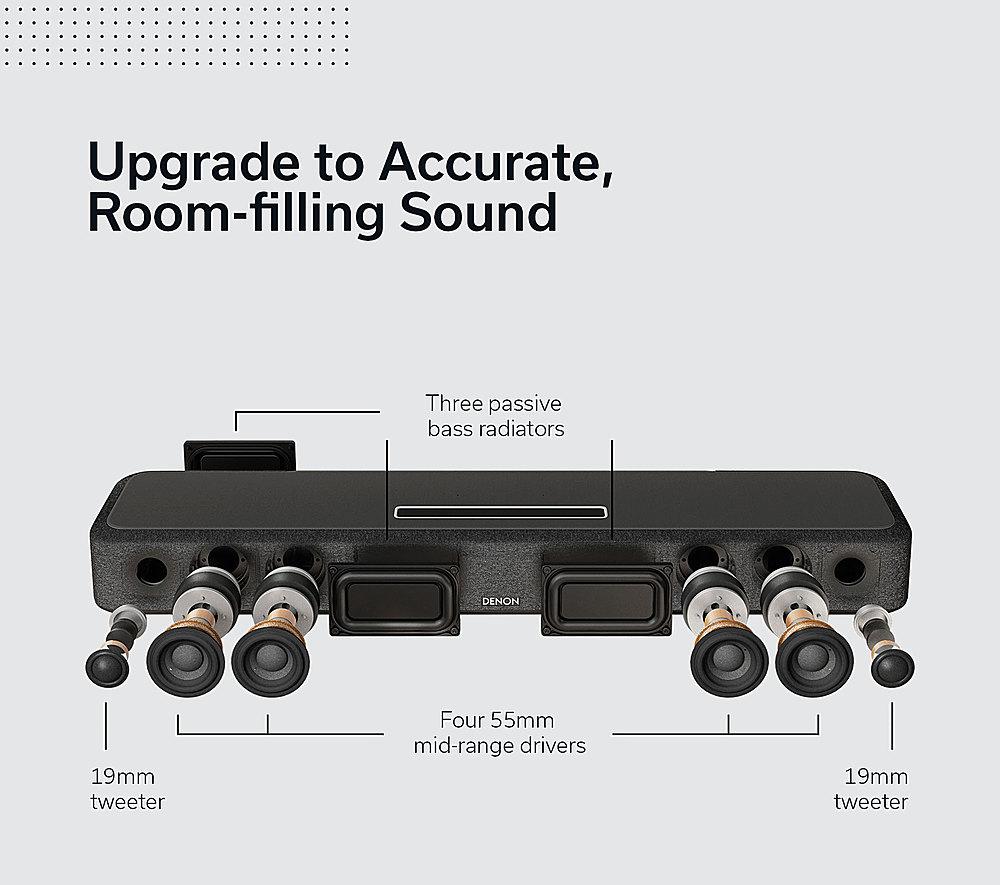
At just 26 inches wide compared to the ULTIMEA X40's 43-inch footprint, the Denon 550 fits comfortably under most TVs without overwhelming smaller entertainment centers. Despite its compact size, it houses six carefully engineered drivers: two premium 0.75-inch soft-dome tweeters, four 2.1875-inch full-range drivers, and two 2×3.5-inch passive radiators.
This driver arrangement creates what Denon calls "immersive 3D surround sound" through Dolby Height Virtualization and Dolby Speaker Virtualizer technology. Rather than bouncing sound off your ceiling like the ULTIMEA X40, the system uses advanced signal processing to create virtual height and surround channels. The effectiveness depends significantly on your room acoustics and seating position, but when conditions align, the illusion can be quite convincing.
Where the Denon 550 truly excels is music reproduction and high-resolution audio support. The system handles up to 192kHz/24-bit FLAC, WAV, and ALAC files, plus 5.6MHz DSD audio—formats that reveal subtle details in well-recorded music that standard MP3 or streaming quality can't capture.
This focus on audiophile-grade music reproduction reflects Denon's heritage as a high-end audio manufacturer. While the ULTIMEA X40 optimizes for cinematic impact, the Denon 550 delivers the kind of nuanced, accurate sound reproduction that makes acoustic guitars sound lifelike and reveals the spatial details in jazz recordings.
The Dialog Enhancement feature deserves special mention for its effectiveness in improving movie dialogue clarity. Rather than simply boosting mid-range frequencies where most speech occurs, it uses sophisticated processing to separate dialogue from background music and effects, making conversations easier to follow without sacrificing the overall soundtrack balance.
The Denon 550 includes built-in Amazon Alexa, transforming it into a smart speaker that responds to voice commands for volume control, input switching, and music playback. More importantly, it integrates with professional home automation systems like Control4, Crestron, and URC—capabilities that matter if you're building a comprehensive smart home system.
The HEOS multi-room platform represents another significant advantage for users invested in whole-home audio. You can stream the same music to HEOS speakers throughout your house, create different zones playing different content, or use the Denon 550 as part of a larger distributed audio system. This ecosystem approach becomes increasingly valuable as you add more connected audio devices throughout your home.
For pure cinematic immersion, the ULTIMEA X40 has clear advantages. Physical speakers create authentic directional effects that virtual processing simply cannot match. When watching action movies or playing video games, the difference between simulated surround and actual surround becomes immediately apparent.
However, the Denon 550's virtual surround processing shouldn't be dismissed entirely. For dialogue-heavy content, news, or casual TV watching, the difference becomes less critical. The compact design also means fewer components to position and fewer power outlets required—advantages that matter in real-world installations.
Here the Denon 550 takes the lead with its emphasis on high-resolution audio and careful acoustic tuning. The smaller driver array actually works to its advantage for music, creating a more cohesive soundstage without the complexity of multiple physically separated speakers.
The ULTIMEA X40 can certainly play music well, especially with its extensive EQ customization options (10-band equalizer with 121 preset profiles), but its optimization clearly favors the dynamic range and spatial effects that make movies exciting rather than the tonal accuracy that makes music sound natural.
The ULTIMEA X40's included subwoofer provides an immediate advantage for both movies and bass-heavy music. Deep bass isn't just about volume—it's about feeling the impact of sound effects and music in your body rather than just hearing them. The 35Hz extension means you'll feel the rumble of earthquakes in disaster movies or the deep synthesizer tones in electronic music.
The Denon 550 relies on its passive radiators for bass reinforcement, which works adequately for most content but lacks the physical impact of a dedicated subwoofer. Users seeking full-range performance need to purchase Denon's optional DSW-1H subwoofer, adding to the total system cost.
Room-filling volume capability clearly favors the ULTIMEA X40, with its 530W peak power output and larger driver complement. The GaN amplification maintains clean performance even at high volumes, making it suitable for larger rooms or users who prefer more dynamic listening levels.
The Denon 550's modest 7.3-pound weight suggests more conservative power output, appropriate for small to medium rooms but potentially limited for larger spaces or users seeking maximum impact.
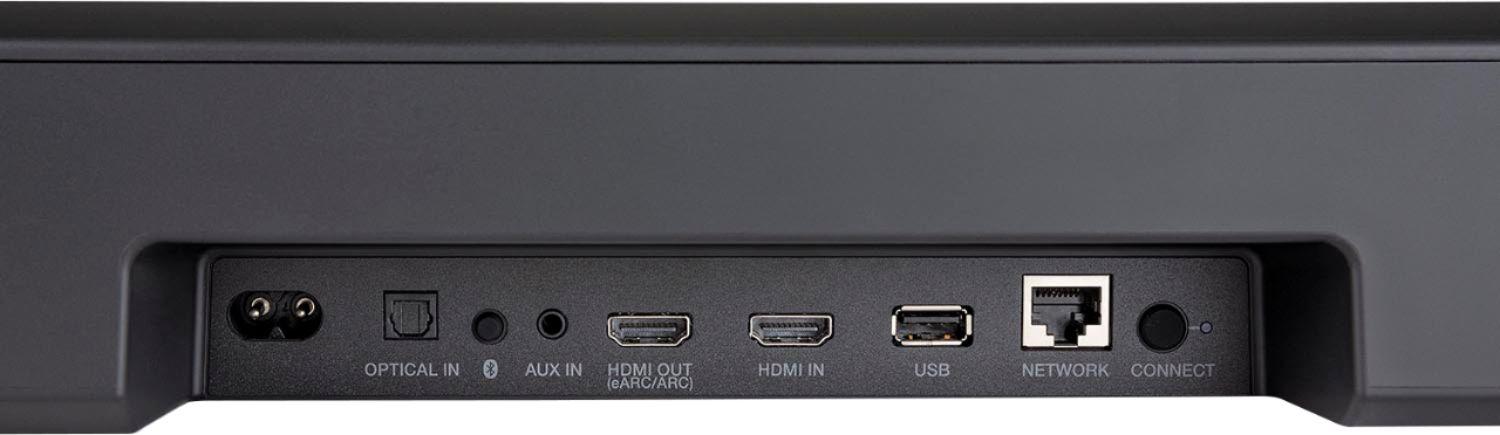
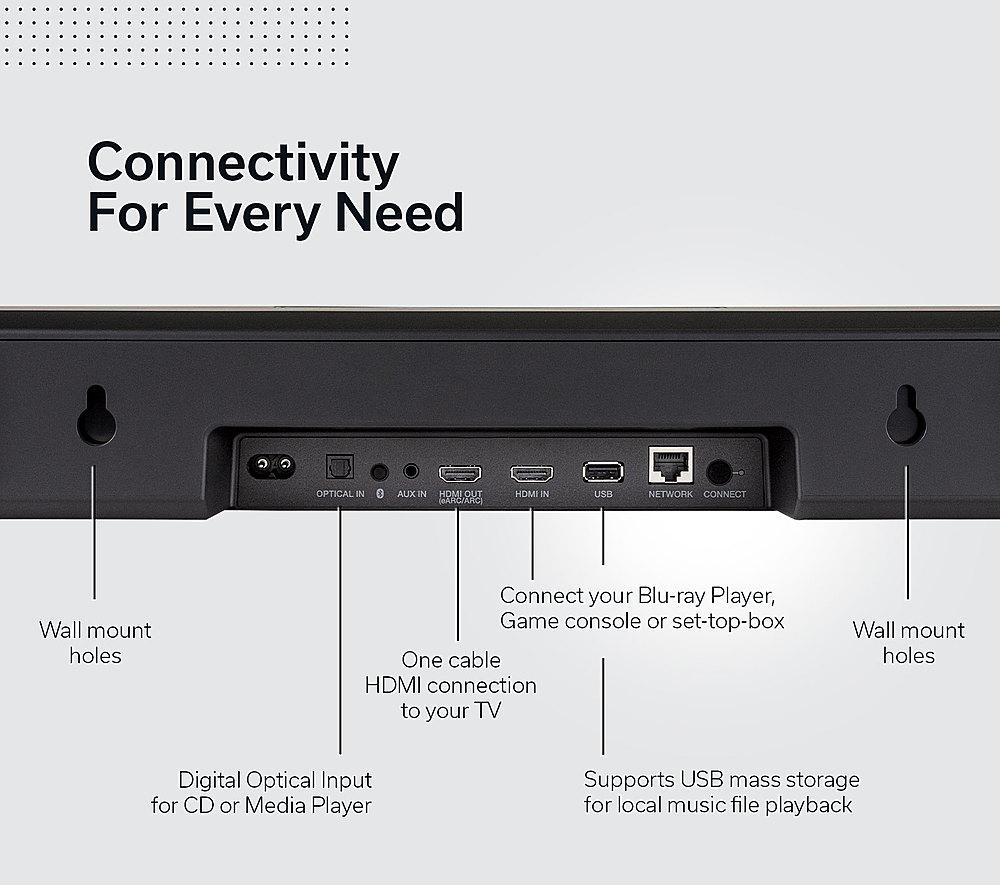
The Denon 550 offers more flexible connectivity with both HDMI input and eARC output, allowing direct connection of gaming consoles, streaming devices, or Blu-ray players. This dual-HDMI design reduces cable management complexity and provides better integration with source devices.
The ULTIMEA X40 focuses primarily on TV connection through its single HDMI eARC port, which works well if your TV handles all source switching but limits direct device connections.
Both systems support 4K HDR pass-through, ensuring video quality isn't compromised when connecting external devices.
The ULTIMEA X40's CineMesh technology uses dual 5GHz wireless transmission for connecting its rear speakers and subwoofer, claiming ultra-low latency under 20ms. This represents newer wireless technology compared to the Denon 550's 2021-generation HEOS wireless implementation.
However, the Denon 550 compensates with broader smart home integration, professional control system compatibility, and the convenience of built-in voice control. These features become increasingly valuable as smart homes become more sophisticated.
At the time of writing, the ULTIMEA X40 represents compelling value as a complete surround system, including all necessary components for full 5.1.2 Dolby Atmos performance. You're getting everything needed for the intended experience in a single purchase.
The Denon 550 starts at a lower price point but achieving comparable surround performance requires additional purchases. The optional subwoofer and rear speakers can effectively double or triple the total investment, making the complete system significantly more expensive than the ULTIMEA X40.
However, this modular approach offers flexibility. Users satisfied with the base soundbar's performance for their content and room size don't need to pay for components they won't use. Those wanting to upgrade gradually can spread the cost over time.
You prioritize immediate, maximum cinematic impact. The ULTIMEA X40 delivers true surround sound immersion that transforms movie watching and gaming experiences. It's ideal for dedicated home theater setups where multiple components and power outlets aren't problematic.
The system works best for users who watch lots of action movies, play immersive video games, or simply want the most impressive audio experience possible within this price range. The 2025-generation technology ensures compatibility with current and future audio formats.
You value flexibility, smart home integration, and premium build quality over maximum surround impact. The Denon 550 excels for users who prioritize music reproduction, want gradual system expansion, or need compact installation in smaller rooms.
The smart features, voice control, and multi-room capabilities make it particularly appealing for tech-savvy users building comprehensive smart home systems. The modular expansion approach works well for users who prefer to upgrade components as their needs and budgets allow.
These soundbars represent two successful but fundamentally different approaches to better home audio. The ULTIMEA Skywave X40 prioritizes immediate, complete surround immersion with cutting-edge 2025 technology at competitive pricing. The Denon Home Sound Bar 550 emphasizes smart features, premium build quality, and flexible expansion within an established ecosystem.
Your choice should align with your priorities: maximum cinematic impact and immediate complete functionality (ULTIMEA X40) versus smart integration, gradual expansion, and premium brand heritage (Denon 550). Both approaches have merit, but they serve different user needs and preferences.
Consider your room size, content preferences, smart home plans, and whether you prefer one-time purchases or gradual system building. Either choice will dramatically improve your TV's audio performance—the question is which approach better matches your specific situation and listening priorities.
| ULTIMEA Skywave X40 5.1.2 Soundbar System | Denon Home Sound Bar 550 Soundbar |
|---|---|
| Channel Configuration - Determines surround sound authenticity | |
| True 5.1.2 with physical rear speakers and upfiring drivers | 4.0 channels with virtual surround processing |
| What's Included - Affects total cost and immediate functionality | |
| Complete system: soundbar, wireless subwoofer, 2 rear speakers | Soundbar only (subwoofer and rears sold separately) |
| Soundbar Size - Critical for TV stand compatibility | |
| 43.31" wide (fits larger TVs 55"+ best) | 26" wide (fits most TV sizes and smaller spaces) |
| Dolby Atmos Implementation - Impact on overhead sound effects | |
| Physical upfiring drivers for authentic height effects | Virtual height processing through DSP algorithms |
| Bass Extension - Affects movie impact and music fullness | |
| 6.5" wireless subwoofer down to 35Hz (included) | Passive radiators only (subwoofer optional purchase) |
| Power Output - Determines maximum volume and room size capability | |
| 530W peak with GaN amplification technology | Not specified (compact design suggests moderate power) |
| Smart Features - Convenience and home automation integration | |
| App control with 10-band EQ and 121 presets | Built-in Amazon Alexa with voice control |
| HDMI Connectivity - Affects source device connections | |
| Single HDMI eARC port | HDMI eARC + 1 HDMI input for direct device connection |
| Wireless Technology - Rear speaker connection quality | |
| CineMesh dual 5GHz with <20ms latency | HEOS wireless system (AC-powered rear speakers) |
| Multi-Room Audio - Whole-home audio expansion | |
| Basic app control only | Full HEOS ecosystem with multi-room capabilities |
| High-Resolution Audio - Music playback quality | |
| Standard audio processing | Up to 192kHz/24-bit + 5.6MHz DSD support |
| Setup Complexity - Installation and positioning requirements | |
| 5 components requiring separate power outlets | Single soundbar with optional wireless expansion |
| Release Year - Technology generation and feature currency | |
| 2025 (latest wireless and amplification tech) | 2021 (mature smart features and ecosystem) |
| Best For - Primary use case recommendation | |
| Maximum movie/gaming immersion in larger rooms | Compact spaces, music lovers, smart home integration |
The ULTIMEA Skywave X40 is significantly better for movies due to its complete 5.1.2 surround sound system with physical rear speakers and upfiring drivers. This creates authentic directional effects and overhead sounds that make action scenes truly immersive. The Denon Home Sound Bar 550 uses virtual surround processing, which can't match the realism of actual speakers positioned around your room.
The primary difference is system completeness. The ULTIMEA Skywave X40 includes everything needed for full surround sound: the main bar, wireless subwoofer, and two rear speakers. The Denon Home Sound Bar 550 is just the soundbar itself, requiring separate purchases of a subwoofer and rear speakers to achieve comparable surround performance.
The Denon Home Sound Bar 550 is ideal for small rooms with its compact 26-inch design that fits under most TVs without overwhelming the space. The ULTIMEA Skywave X40 at 43 inches wide is better suited for larger entertainment centers and requires space for positioning multiple wireless components.
Yes, both support Dolby Atmos but implement it differently. The ULTIMEA Skywave X40 uses physical upfiring speakers that bounce sound off your ceiling for genuine overhead effects. The Denon Home Sound Bar 550 creates virtual height effects through advanced audio processing, which is less immersive but still effective.
The ULTIMEA Skywave X40 has superior bass performance with its included 6.5-inch wireless subwoofer that extends down to 35Hz. The Denon Home Sound Bar 550 relies on passive radiators for bass reinforcement, which is adequate but lacks the deep impact of a dedicated subwoofer unless you purchase one separately.
Only the Denon Home Sound Bar 550 has built-in Amazon Alexa for hands-free voice control of volume, inputs, and music playback. The ULTIMEA Skywave X40 requires using its mobile app or included remote control for all functions.
The Denon Home Sound Bar 550 excels at music reproduction with support for high-resolution audio formats up to 192kHz/24-bit and careful acoustic tuning. While the ULTIMEA Skywave X40 can play music well with extensive EQ options, it's optimized primarily for cinematic experiences rather than musical accuracy.
The Denon Home Sound Bar 550 offers more connectivity flexibility with both an HDMI input and HDMI eARC output, allowing direct connection of gaming consoles or streaming devices. The ULTIMEA Skywave X40 has only HDMI eARC, designed primarily for TV connection.
The ULTIMEA Skywave X40 provides better immediate value as a complete surround system with all necessary components included. The Denon Home Sound Bar 550 has a lower entry cost but requires additional purchases to match the surround performance of the ULTIMEA system, potentially making the total cost significantly higher.
Both soundbars support wall mounting. The ULTIMEA Skywave X40 includes mounting hardware, while wall brackets for the Denon Home Sound Bar 550 are typically sold separately. Consider the larger size of the ULTIMEA soundbar when planning wall installation.
The Denon Home Sound Bar 550 offers superior smart home integration with built-in Alexa, HEOS multi-room audio platform, and compatibility with professional automation systems like Control4 and Crestron. The ULTIMEA Skywave X40 provides basic app control but lacks comprehensive smart home features.
Choose the ULTIMEA Skywave X40 if you want maximum cinematic immersion with true surround sound and don't mind multiple components. Select the Denon Home Sound Bar 550 if you prefer a compact solution with smart features and plan to expand gradually, or if music quality is equally important as movie performance.
We've done our best to create useful and informative comparisons to help you decide what product to buy. Our research uses advanced automated methods to create this comparison and perfection is not possible - please contact us for corrections or questions. These are the sites we've researched in the creation of this article: bestbuy.com - shopabunda.com - youtube.com - youtube.com - youtube.com - youtube.com - ultimea.com - walmart.com - youtube.com - hometechnologyreview.com - community.ultimea.com - avsforum.com - youtube.com - youtube.com - youtube.com - bestbuy.com - hometechnologyreview.com - consumerreports.org - soundandvision.com - crutchfield.com - rtings.com - crutchfield.com - gzhls.at - denon.com - walmart.com - youtube.com - whathifi.com - bestbuy.com

Privacy Policy
Terms and Conditions - Affiliate Policy
Home Security
© Copyright 2008-2026.
11816 Inwood Rd #1211, Dallas, TX 75244