








If you've been frustrated by your TV's weak audio and are ready to upgrade to a proper sound system, you're facing a decision that's gotten much more complex in recent years. Today's soundbars aren't just slim speakers that sit under your TV—they're sophisticated home theater systems that can genuinely rival traditional surround sound setups without the mess of cables running everywhere.
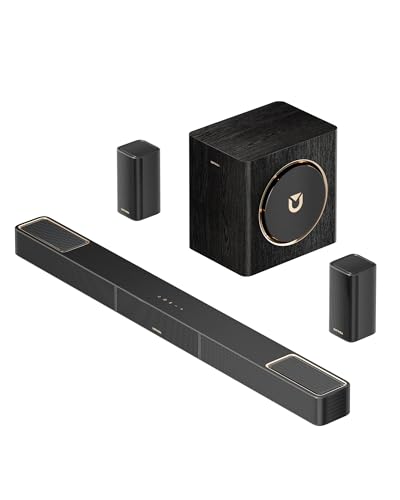
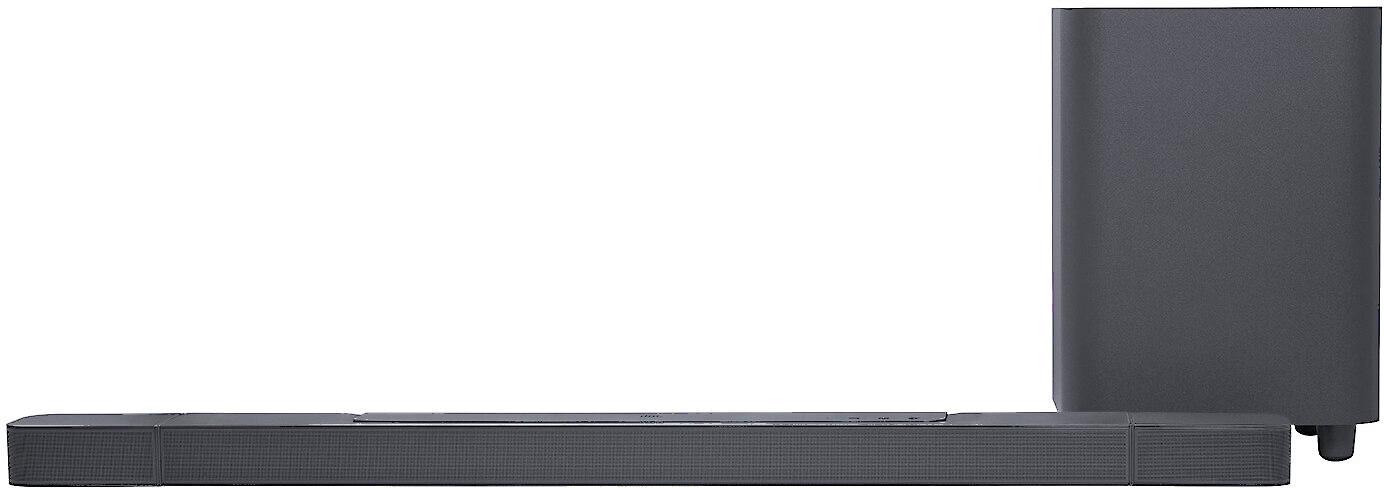
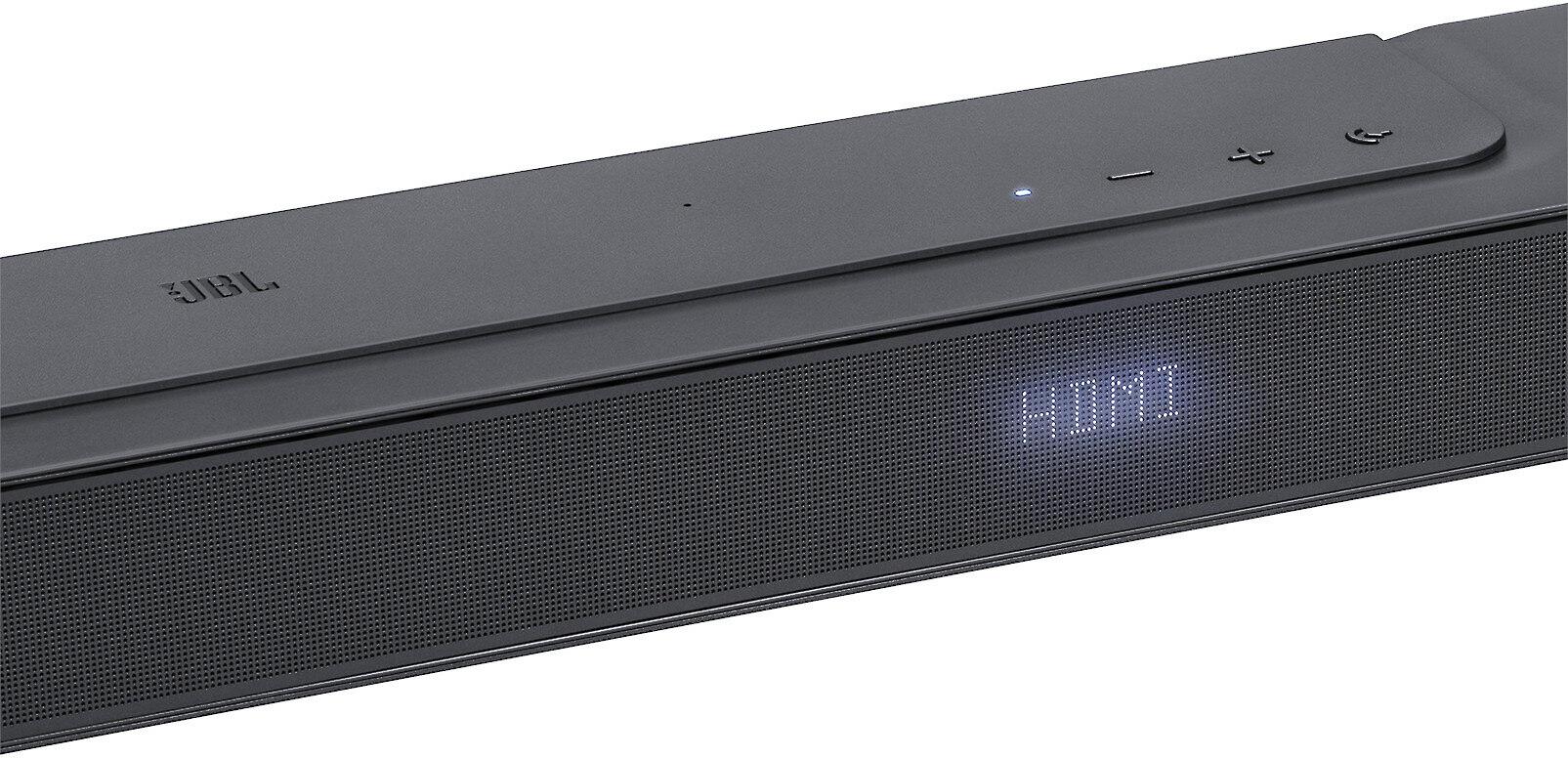
The two systems we're comparing today represent different philosophies in soundbar design. The ULTIMEA Skywave X40 is a 2025 newcomer that pushes the boundaries of what's possible with cutting-edge wireless technology and true 3D audio. The JBL Bar 700, released in 2022, takes a more established approach with proven technology, higher power output, and comprehensive smart features.
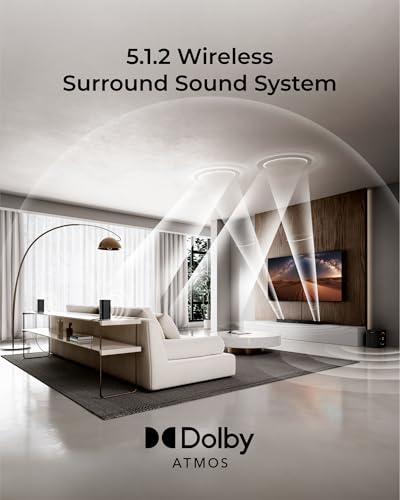
Before diving into specifics, it's worth understanding what separates today's soundbars from the basic models of five years ago. The key breakthrough has been in channel processing—this refers to how many separate audio streams the system can handle simultaneously. A 5.1 system has five main speakers (left, center, right, and two surrounds) plus one subwoofer channel for bass. The newer 5.1.2 configuration adds two "height" channels that fire sound upward to bounce off your ceiling, creating the illusion of overhead effects.
This height dimension is crucial for Dolby Atmos, a technology that treats sound as objects moving through 3D space rather than just channels. When a helicopter flies overhead in a movie, Dolby Atmos can make it sound like it's actually above you, not just coming from speakers around you.
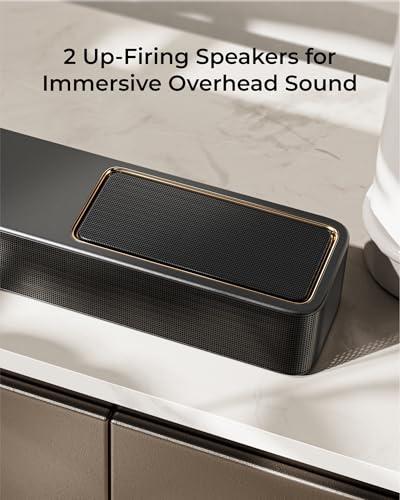
The implementation matters enormously, though. Some soundbars achieve this through "virtual" processing—using software tricks to simulate height effects through regular speakers. Others, like the ULTIMEA Skywave X40, use actual upward-firing drivers that physically bounce sound off your ceiling. The difference in realism is substantial.
The Skywave X40 represents what happens when a newer company decides to leapfrog established competition through advanced technology. Released in 2025, it incorporates several innovations that weren't available when the JBL Bar 700 was designed three years earlier.
The most significant advancement is its GaN (Gallium Nitride) amplification technology. Traditional soundbar amplifiers use silicon-based components that generate substantial heat and limit how efficiently they can convert electrical power into sound. GaN amplifiers operate at up to 98% efficiency compared to around 60-70% for silicon alternatives. This means less wasted energy as heat, allowing the amplifier to run cooler and more reliably while delivering cleaner sound at high volumes.
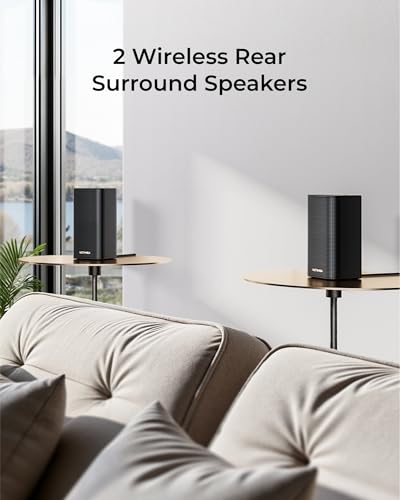
But the X40's real party trick is its wireless technology. Most "wireless" soundbars still require you to plug the rear speakers into wall outlets, but you need to run audio cables between the main bar and the surrounds. The X40 eliminates this entirely through its CineMesh dual 5GHz wireless system. The rear speakers only need power—all audio transmission happens wirelessly with less than 20 milliseconds of delay, which is fast enough that you won't notice any sync issues with on-screen action.
This wireless freedom extends to setup flexibility. You can place the rear speakers wherever they sound best without worrying about cable management, and if you rearrange your furniture, the speakers move with you effortlessly.
The audio processing deserves special attention too. The X40 uses what ULTIMEA calls NEURACORE neural processing—essentially a mini computer dedicated to audio with 2,000 MIPS (millions of instructions per second) of processing power. This enables it to analyze incoming audio in real-time, steering specific sounds to the most appropriate speakers and maintaining the spatial relationships that make Dolby Atmos effective.
The JBL Bar 700, while older in design terms, brings the advantage of three years of real-world use and refinement. JBL has used this time to perfect the balance between performance, reliability, and user experience that comes with an established product line.
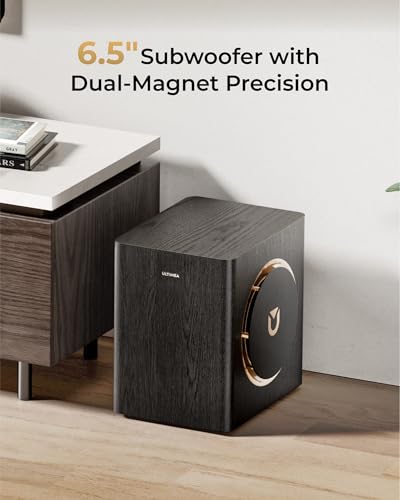
Where the Bar 700 immediately distinguishes itself is raw power and bass impact. At 620 watts total system power compared to the X40's 530 watts, it has about 17% more amplification headroom. More importantly, its 10-inch wireless subwoofer substantially outclasses the X40's 6.5-inch unit in terms of physical bass output. In our research across user reviews and expert testing, this size difference translates to noticeably deeper, more impactful low-frequency effects—the kind that makes action movie explosions feel visceral rather than just loud.
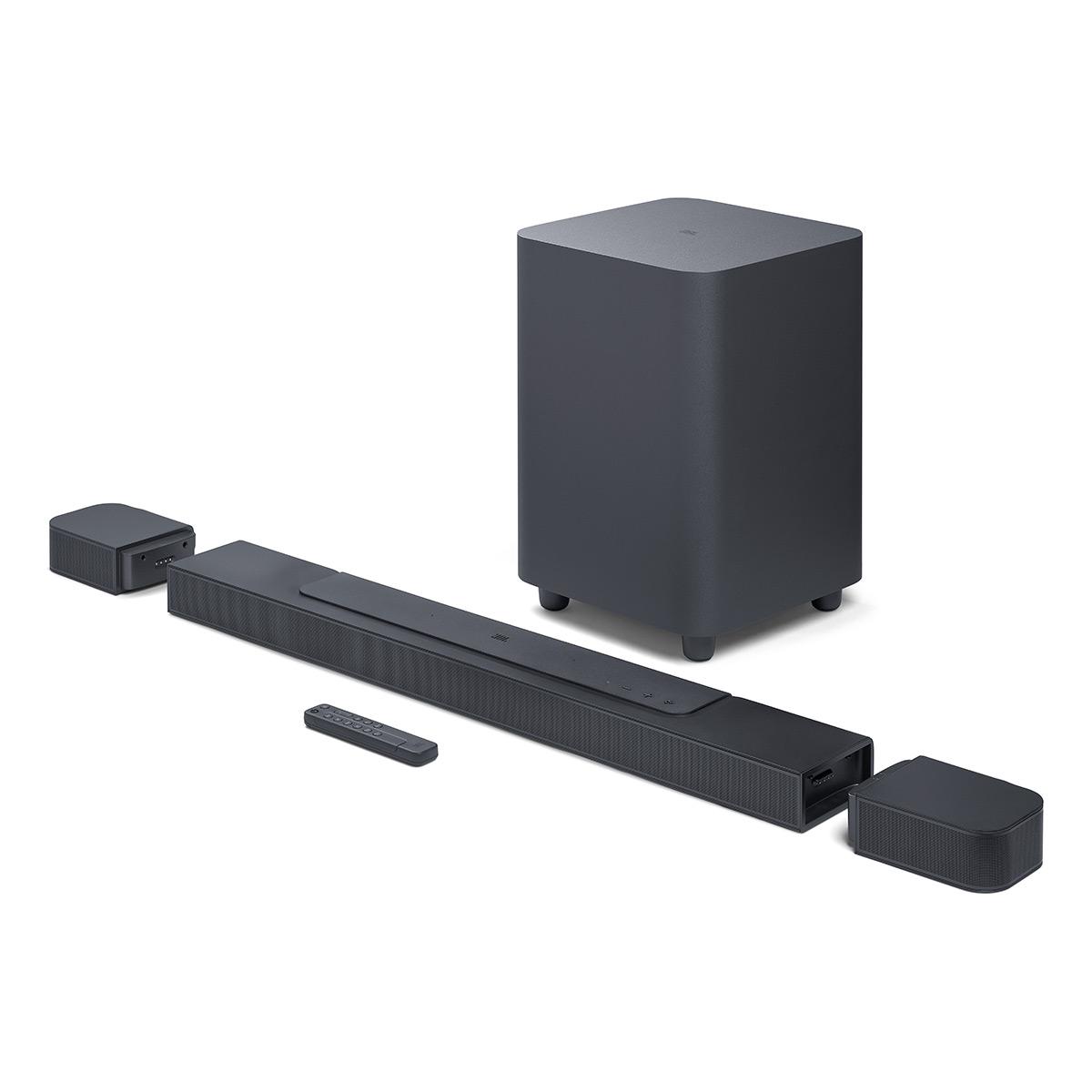
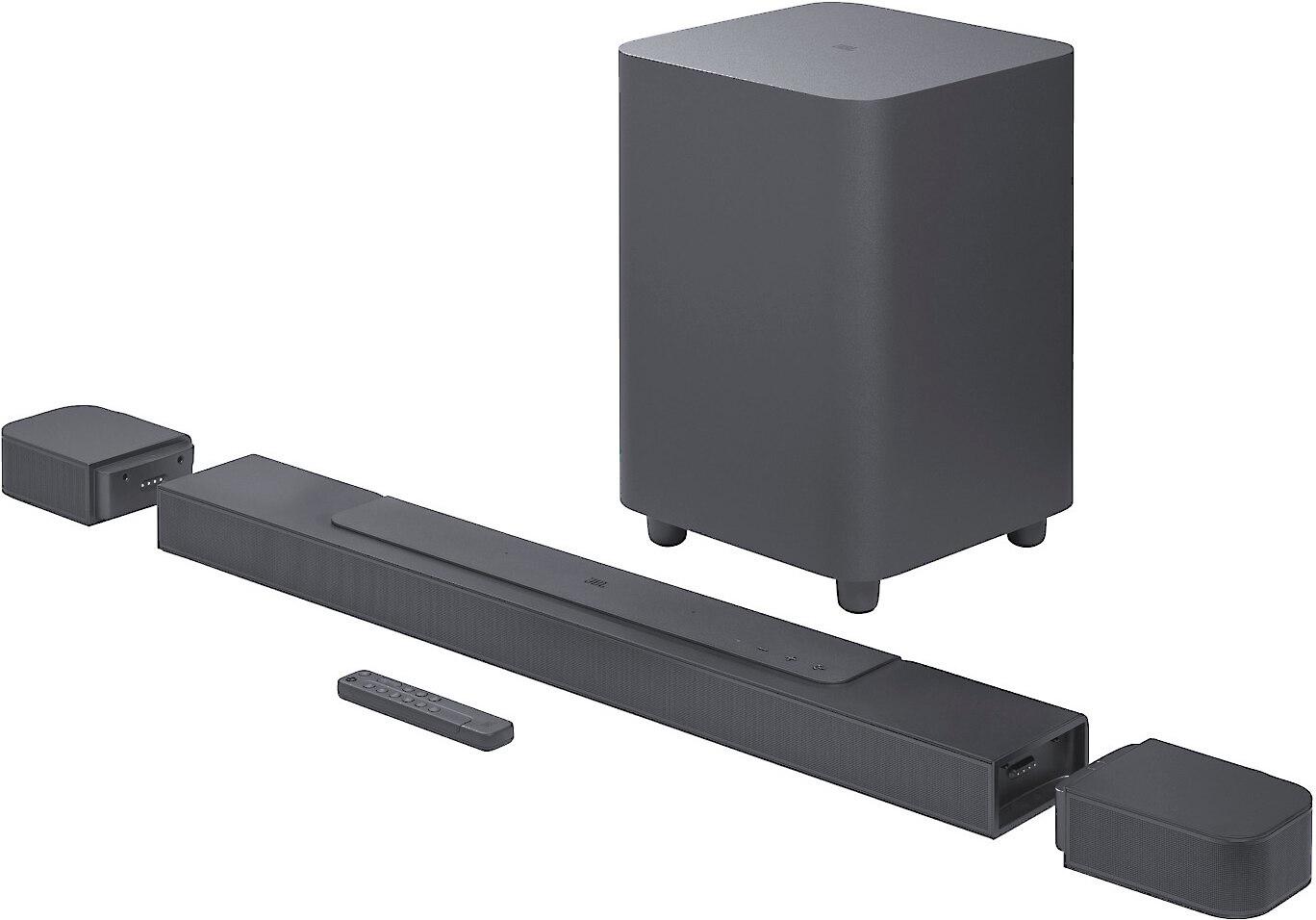
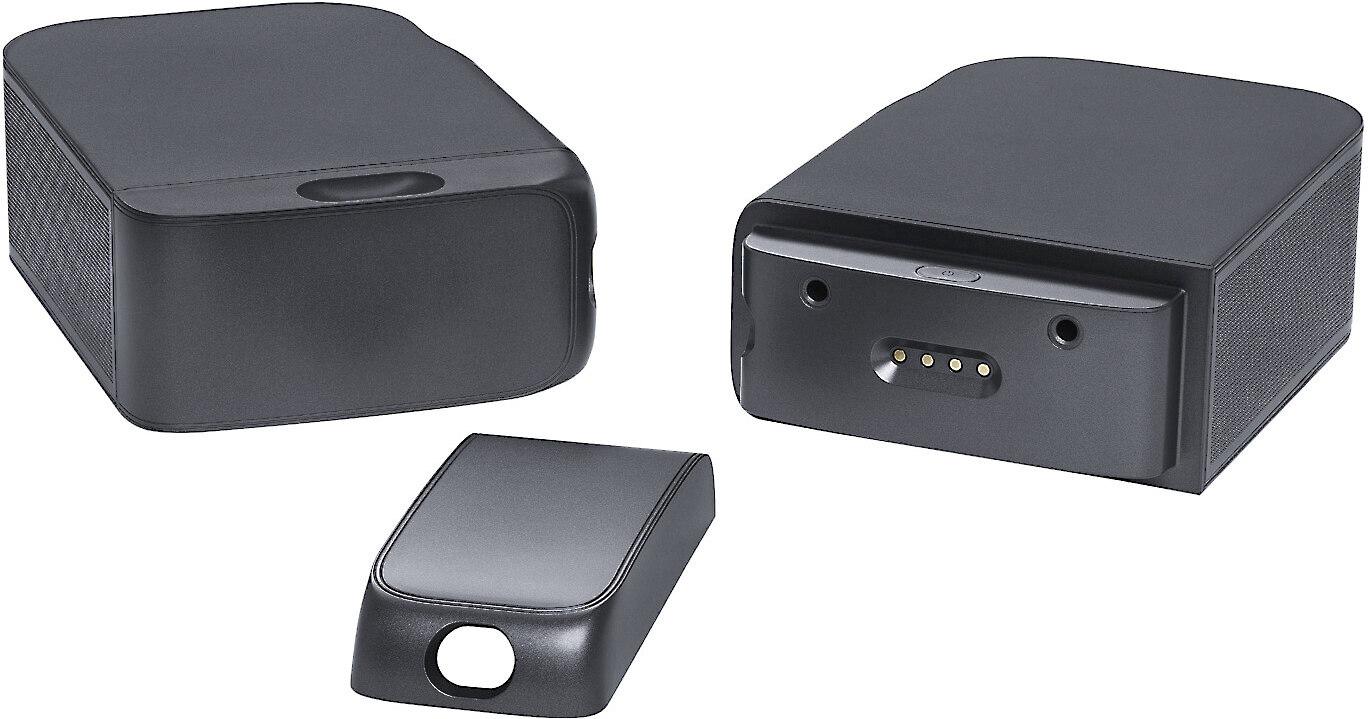
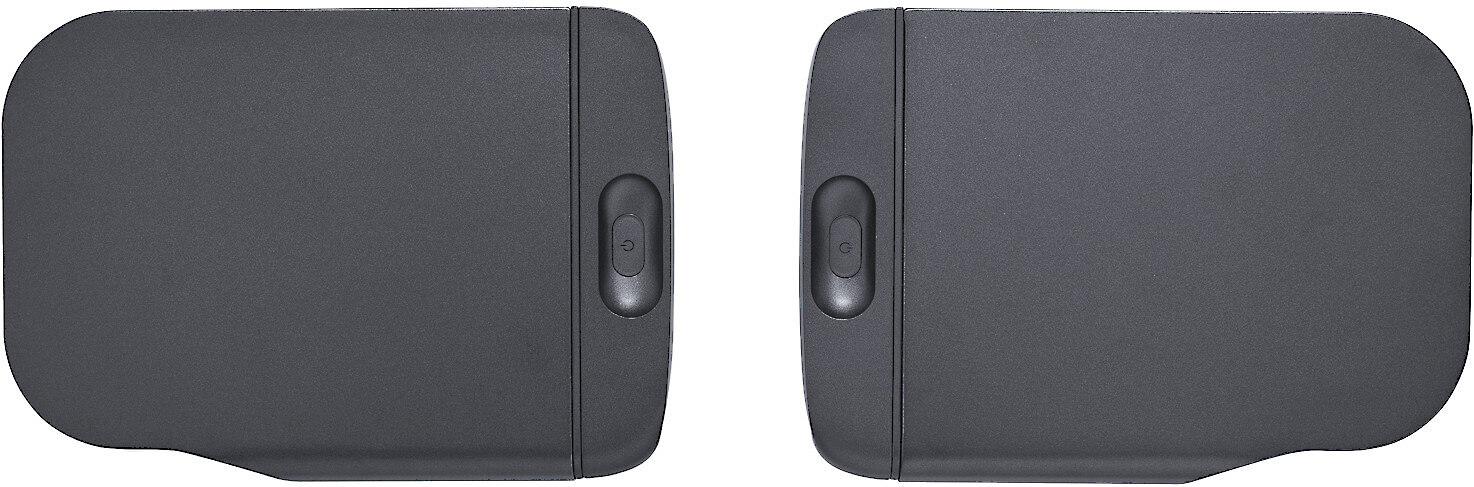
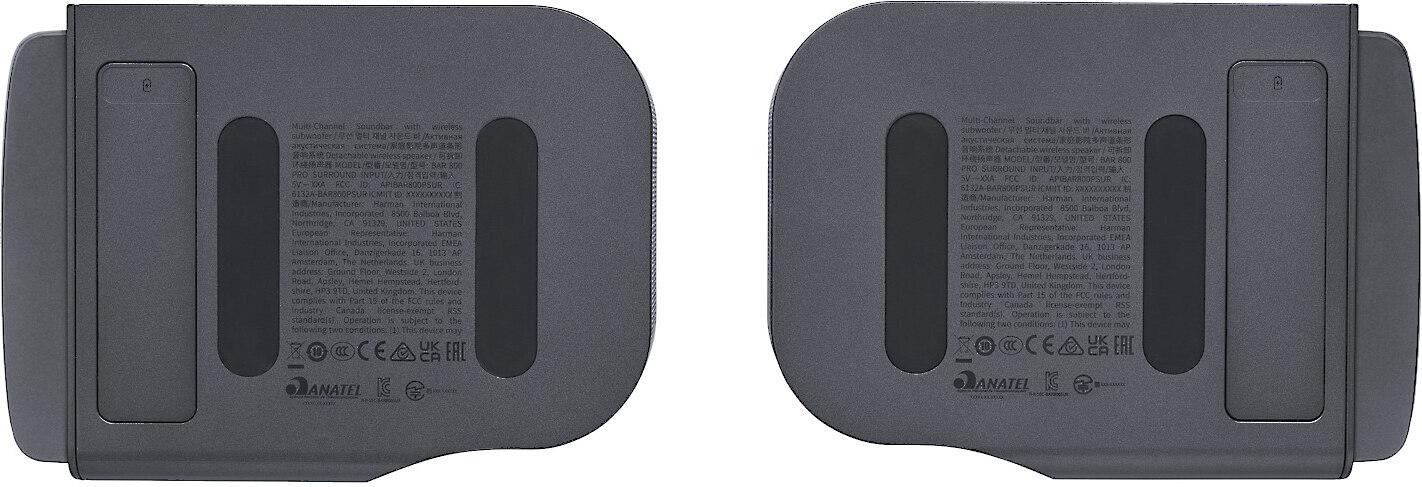
The Bar 700's approach to surround speakers is different but clever. Rather than permanent wireless connections, the rear speakers are battery-powered units that detach completely from the main soundbar. When you want surround sound, you unplug them and place them behind your seating area. When you don't need the full surround experience—maybe for casual TV watching—they dock back to the soundbar and charge automatically.
This design offers unique flexibility. You can take the surround speakers to another room for music listening, or remove them entirely for a cleaner look when entertaining. The 10-hour battery life means you can watch several movies without recharging, and the charging process is completely automatic when docked.
JBL's PureVoice dialogue enhancement technology addresses one of the most common complaints about modern movies and shows: muddy dialogue. The system uses sophisticated audio processing to identify and clarify vocal frequencies, ensuring conversations remain intelligible even when surrounded by complex sound effects or music. In practice, this means less reaching for the remote to adjust volume during quiet dialogue scenes.
The fundamental difference between these systems lies in their approach to creating that enveloping surround sound experience. The ULTIMEA X40 achieves this through genuine three-dimensional audio processing. Its two upward-firing speakers in the main soundbar physically direct sound toward your ceiling, where it reflects back down to create the sensation of overhead effects.
This isn't just marketing—the physics of actual upward-firing speakers versus virtual processing creates distinctly different experiences. When rain falls in a movie scene through the X40, you can genuinely perceive it as coming from above. With virtual processing systems like the Bar 700, the effect is more like "enhanced surround sound" that suggests overhead activity rather than precisely locating it.
However, the JBL Bar 700 compensates through sheer audio authority. Its larger drivers and higher power output create a more expansive, room-filling soundstage. While it may not pinpoint a helicopter's location as precisely as the X40, it makes that helicopter sound more powerful and present in your space.
This is where physical specifications matter significantly. The Bar 700's 10-inch subwoofer moves substantially more air than the X40's 6.5-inch unit. In rooms larger than about 400 square feet, this difference becomes quite apparent. The larger driver produces deeper bass extension—those really low frequencies you feel in your chest during action sequences—and maintains cleaner bass at higher volumes.
The X40 partially compensates through its Gravus Ultra-Linear Bass technology, which uses advanced digital signal processing to extract maximum performance from its smaller driver. This works well for most listening situations, but physics ultimately limits how much bass a 6.5-inch driver can produce compared to a 10-inch alternative.
For smaller to medium rooms, the X40's bass output is entirely adequate and potentially preferable since it's less likely to overwhelm the space or disturb neighbors. For larger rooms or bass enthusiasts, the Bar 700 offers a more visceral experience.
Modern gaming demands audio systems that can keep up with split-second timing, where even small delays between visual and audio cues can affect performance. The ULTIMEA X40 excels here through its ultra-low latency wireless transmission—that sub-20 millisecond delay we mentioned earlier.
Most wireless audio systems introduce 40-100 milliseconds of delay, which is barely noticeable for movies but can feel sluggish for competitive gaming. The X40's advanced wireless technology places it among the best-performing soundbars for gaming applications.
The JBL Bar 700, while not specifically optimized for gaming latency, performs adequately for casual gaming but may not satisfy competitive players who rely on precise audio cues for timing.
The JBL Bar 700 takes a commanding lead in smart home integration and streaming convenience. Its built-in Wi-Fi connects directly to your network, enabling AirPlay streaming from Apple devices, Chromecast built-in for Android and Google services, and Alexa Multi-Room Music for whole-home audio systems.
This integration means you can start music on your phone and seamlessly transfer it to the soundbar, or include the Bar 700 in multi-room audio setups with other compatible speakers throughout your home. The system accesses over 300 streaming services directly, often eliminating the need to connect external devices for music listening.
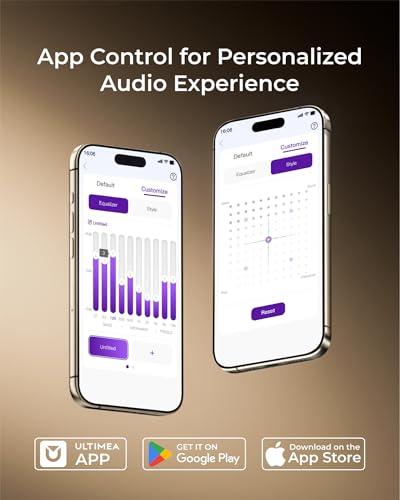
The ULTIMEA X40 takes a different approach, focusing on audio customization rather than streaming convenience. Its dedicated app provides a 10-band equalizer and 121 preset sound profiles—essentially pre-configured audio settings optimized for different content types and room acoustics. This level of customization allows you to fine-tune the sound precisely to your preferences and space, but requires more user involvement than the Bar 700's more automated approach.
Both systems attempt to optimize their sound for your specific room, but through different methods. The JBL Bar 700 includes built-in microphones that measure your room's acoustic characteristics and automatically adjust the equalizer settings. This happens transparently—you run a brief calibration routine once, and the system handles the optimization.
The X40 relies more on user customization through its app-based controls. While this offers more precise control for those who want to tweak settings, it also requires more involvement from users who prefer a "set it and forget it" experience.
At the time of writing, both systems occupy similar price ranges in the premium soundbar category, though exact pricing varies significantly based on retailers and promotional periods. The ULTIMEA X40 generally represents a value proposition centered on cutting-edge technology—you're getting 2025-generation features like GaN amplification and neural processing that typically appear in much more expensive systems.
The JBL Bar 700 offers value through proven performance and comprehensive features. JBL's established reputation means better customer support availability, longer track record of reliability, and broader retailer support for warranty issues.
The ULTIMEA Skywave X40 makes the most sense for enthusiasts who prioritize authentic three-dimensional audio and cutting-edge technology. If you're setting up a dedicated home theater room where the immersive Dolby Atmos experience is paramount, and your room size is small to medium (under 500 square feet), the X40 delivers an experience that's difficult to match at its price point.
This system particularly appeals to gamers who need low-latency audio, tech enthusiasts who appreciate advanced features like GaN amplification, and users who enjoy customizing their audio experience through detailed app controls.
The JBL Bar 700 suits users who want maximum power and bass impact, especially in larger rooms where its 10-inch subwoofer and higher power output become clear advantages. It's also the better choice for heavy streaming users who want their soundbar integrated into a smart home ecosystem with seamless multi-room audio capabilities.
If you frequently host gatherings where you might want surround speakers one day and a cleaner setup the next, the Bar 700's detachable design offers flexibility the X40 can't match.
Both soundbars deliver excellent performance, but they excel in different areas. The ULTIMEA Skywave X40 pushes the boundaries of what's possible with soundbar technology, offering genuine 3D audio experiences through advanced engineering at a competitive price. The JBL Bar 700 provides proven, powerful performance with smart features that integrate seamlessly into modern connected homes.
Your choice ultimately depends on whether you prioritize cutting-edge immersive audio technology (X40) or established reliability with maximum power and smart home integration (Bar 700). Either way, you're getting a substantial upgrade over basic TV audio that will transform your home entertainment experience.
| ULTIMEA Skywave X40 5.1.2 Soundbar System | JBL Bar 700 Dolby Atmos 5.1 Soundbar with Subwoofer |
|---|---|
| Channel Configuration - Determines immersion level and 3D audio capability | |
| True 5.1.2 with physical up-firing speakers for genuine overhead Dolby Atmos | 5.1 channels with virtual Atmos processing (no height speakers) |
| Total System Power - Affects maximum volume and dynamic range | |
| 530W peak power (adequate for small-medium rooms) | 620W total power (17% more power for larger spaces) |
| Subwoofer Size & Bass Extension - Critical for impactful low-frequency effects | |
| 6.5" wireless subwoofer, extends to 35Hz with linear bass technology | 10" wireless subwoofer with deeper bass impact and room-filling capability |
| Amplification Technology - Affects efficiency, heat, and sound quality | |
| Advanced GaN amplifier (98% efficiency, 50% less heat generation) | Traditional silicon amplification with proven reliability |
| Surround Speaker Design - Impacts placement flexibility and setup complexity | |
| Permanently wireless with CineMesh 5GHz transmission, only need power outlets | Battery-powered detachable speakers with 10-hour runtime, completely cable-free |
| Wireless Latency - Essential for gaming and lip-sync accuracy | |
| Ultra-low <20ms latency ideal for competitive gaming | Standard wireless latency suitable for movies and casual gaming |
| Audio Processing Power - Enables advanced sound optimization and effects | |
| NEURACORE neural processing with 2,000 MIPS triple-core DSP | Standard audio processing with PureVoice dialogue enhancement |
| Smart Features & Streaming - Convenience for daily music listening | |
| Bluetooth 5.4, app-based 10-band EQ with 121 sound presets | Built-in Wi-Fi, AirPlay, Chromecast, Alexa Multi-Room Music, 300+ streaming services |
| Room Calibration - Automatically optimizes sound for your space | |
| Manual app-based customization with extensive EQ controls | Automatic microphone-based room calibration with one-time setup |
| HDMI & Video Support - Important for 4K content and gaming consoles | |
| HDMI eARC with 4K HDR passthrough | HDMI eARC with 4K Dolby Vision passthrough |
| Brand & Support Reliability - Affects long-term ownership experience | |
| Newer brand (2025) with cutting-edge technology, limited track record | Established JBL reputation with 3+ years market presence and proven support |
The ULTIMEA Skywave X40 offers superior Dolby Atmos performance with true 5.1.2 channels including physical up-firing speakers that bounce sound off your ceiling for genuine overhead effects. The JBL Bar 700 uses virtual Dolby Atmos processing without dedicated height speakers, creating a simulated 3D effect that's less precise but still immersive.
The JBL Bar 700 delivers 620W total system power compared to the ULTIMEA Skywave X40's 530W peak output. This 17% power advantage makes the JBL Bar 700 better suited for larger rooms and louder listening levels, while the Skywave X40 provides adequate power for small to medium-sized spaces.
The JBL Bar 700 features a larger 10-inch wireless subwoofer that produces deeper, more impactful bass compared to the ULTIMEA Skywave X40's 6.5-inch subwoofer. However, the Skywave X40 uses Gravus Ultra-Linear Bass technology to maximize performance from its smaller driver, making it sufficient for most home theater setups.
The ULTIMEA Skywave X40 uses permanently wireless surround speakers that connect via dual 5GHz transmission and only require power outlets. The JBL Bar 700 features detachable battery-powered surround speakers with 10-hour runtime that can be completely disconnected and repositioned as needed, offering more placement flexibility.
The ULTIMEA Skywave X40 excels for gaming with its ultra-low <20ms wireless latency, preventing audio-video sync issues during fast-paced gameplay. The JBL Bar 700 has standard wireless latency suitable for casual gaming but may not satisfy competitive gamers who need precise audio timing.
The JBL Bar 700 provides comprehensive smart features including built-in Wi-Fi, AirPlay, Chromecast, Alexa Multi-Room Music, and access to 300+ streaming services. The ULTIMEA Skywave X40 focuses on audio customization with a dedicated app offering 10-band EQ and 121 preset sound profiles, plus Bluetooth 5.4 connectivity.
The JBL Bar 700 offers simpler setup with automatic room calibration using built-in microphones and factory-paired components. The ULTIMEA Skywave X40 requires more initial configuration through its app for optimal performance but provides greater customization control once set up properly.
The JBL Bar 700 includes PureVoice dialogue enhancement technology that uses algorithms to clarify vocal frequencies during complex scenes. The ULTIMEA Skywave X40 relies on its NEURACORE neural processing and customizable EQ settings to optimize dialogue clarity through manual adjustment.
The JBL Bar 700 performs better in large rooms due to its higher 620W power output and 10-inch subwoofer that can fill bigger spaces with sound. The ULTIMEA Skywave X40 is optimized for small to medium rooms where its 530W output and advanced 3D audio processing provide excellent performance.
The ULTIMEA Skywave X40 uses advanced CineMesh dual 5GHz wireless with <20ms latency for permanent surround speaker connections. The JBL Bar 700 employs battery-powered wireless surrounds that offer complete freedom from cables but require periodic charging and recharging management.
Both the ULTIMEA Skywave X40 and JBL Bar 700 offer excellent value in different ways. The Skywave X40 provides cutting-edge 2025 technology like GaN amplification and true Atmos at a competitive price, while the Bar 700 delivers proven performance with higher power output and comprehensive smart features from an established brand.
Choose the ULTIMEA Skywave X40 if you want authentic 3D Dolby Atmos with height speakers, cutting-edge technology, and have a small to medium room. Select the JBL Bar 700 if you need higher power output for large rooms, prefer detachable surround speakers, want comprehensive streaming integration, or value established brand reliability over the latest features.
We've done our best to create useful and informative comparisons to help you decide what product to buy. Our research uses advanced automated methods to create this comparison and perfection is not possible - please contact us for corrections or questions. These are the sites we've researched in the creation of this article: bestbuy.com - shopabunda.com - youtube.com - youtube.com - youtube.com - youtube.com - ultimea.com - walmart.com - youtube.com - hometechnologyreview.com - community.ultimea.com - avsforum.com - youtube.com - youtube.com - youtube.com - bestbuy.com - hometechnologyreview.com - crutchfield.com - harmanaudio.com - target.com - jbl.com - walmart.com - dell.com - jbl.com

Privacy Policy
Terms and Conditions - Affiliate Policy
Home Security
© Copyright 2008-2026.
11816 Inwood Rd #1211, Dallas, TX 75244