





The soundbar market has exploded in recent years, transforming from simple TV audio upgrades into sophisticated home theater systems capable of creating truly immersive audio experiences. But here's the thing—not all soundbars are created equal, and the differences between approaches can be dramatic.
Today we're diving deep into two fundamentally different philosophies: the ULTIMEA Skywave X40 representing the "true surround" approach with actual speakers placed around your room, versus the Sony HT-A3000 embodying the "virtual surround" philosophy that uses clever processing to simulate surround effects from a single bar.
Understanding these differences is crucial because your choice will significantly impact your daily listening experience, room setup requirements, and long-term satisfaction with your investment.
Before we jump into specifics, let's establish what we're dealing with here. Modern soundbars fall into two main categories: discrete channel systems and virtualized systems.
Discrete channel systems like the ULTIMEA Skywave X40 use separate, physical speakers for each audio channel. When a movie's sound engineer places a helicopter's rotor noise in the rear left channel, you literally hear it from a speaker positioned behind and to the left of your seating area. This is how movie theaters work—dedicated speakers for each channel create authentic spatial audio.
Virtualized systems like the Sony HT-A3000 rely on psychoacoustic processing—basically, they trick your brain into thinking sounds are coming from places where there aren't actually speakers. These systems use techniques like phase manipulation (adjusting when sound waves reach each ear) and frequency shaping (emphasizing certain frequencies that help with directional perception) to create the illusion of surround sound.
Both approaches have merit, but they deliver distinctly different experiences. The key is understanding which matches your priorities, room constraints, and expectations.
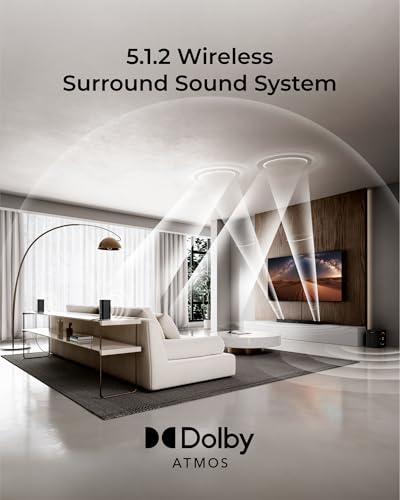
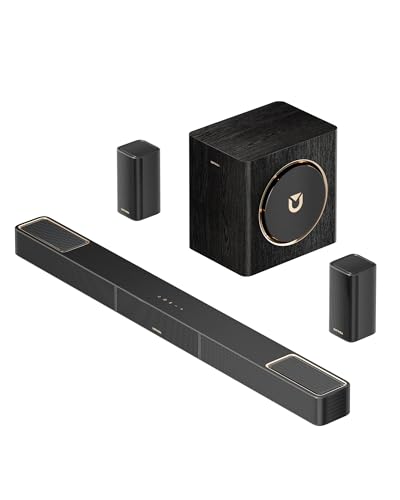
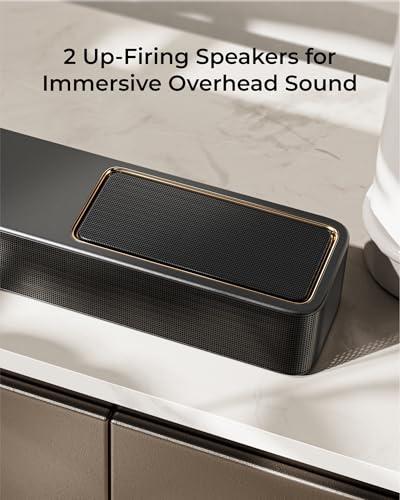
Released in 2024, the ULTIMEA Skywave X40 represents ULTIMEA's flagship attempt to bring authentic home theater audio to the masses without the traditional premium price tag. This 5.1.2 channel system doesn't mess around—it gives you actual surround speakers that you place behind your seating area, plus upward-firing drivers in the main soundbar for true overhead Dolby Atmos effects.
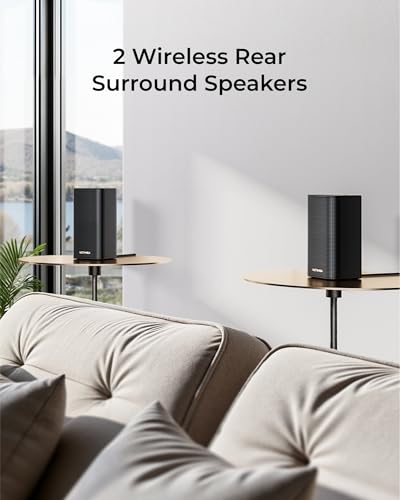
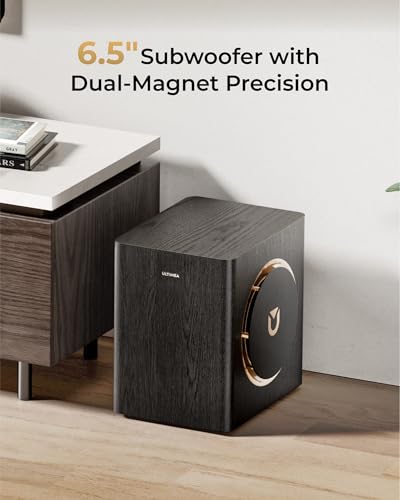
The system's 530W peak power output is distributed across eight total speakers: three in the main soundbar (left, center, right), two upward-firing Atmos speakers also in the main bar, a wireless 6.5-inch subwoofer, and two dedicated wireless surround speakers for your rear channels. This is a complete surround sound ecosystem in one package.
What makes this system particularly interesting is ULTIMEA's CineMesh wireless technology—their proprietary dual 5GHz wireless transmission system that connects all the speakers without audio cables. The latency is claimed to be under 20 milliseconds, which is imperceptible to human hearing and crucial for maintaining lip-sync accuracy.
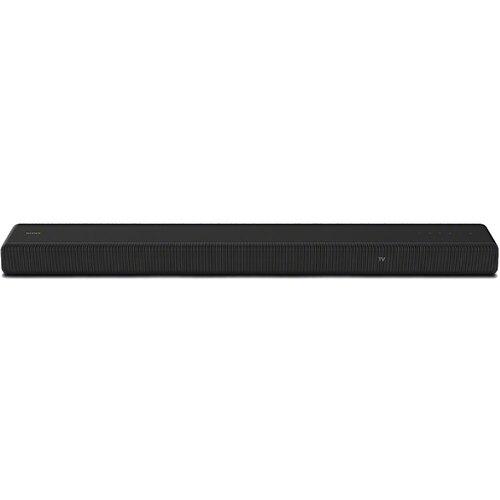
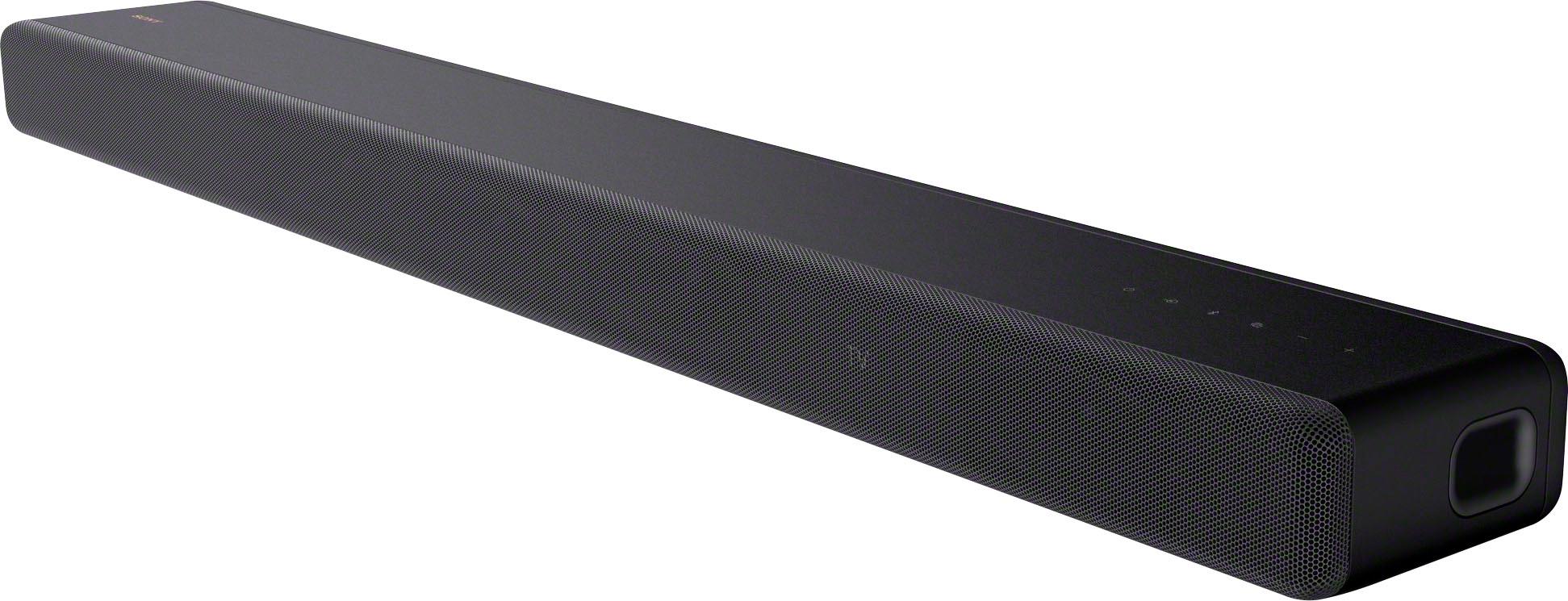
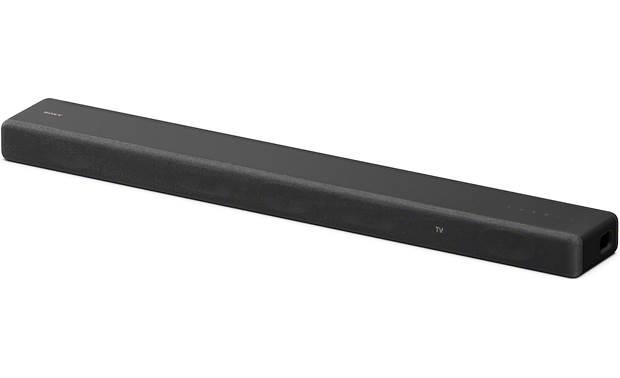
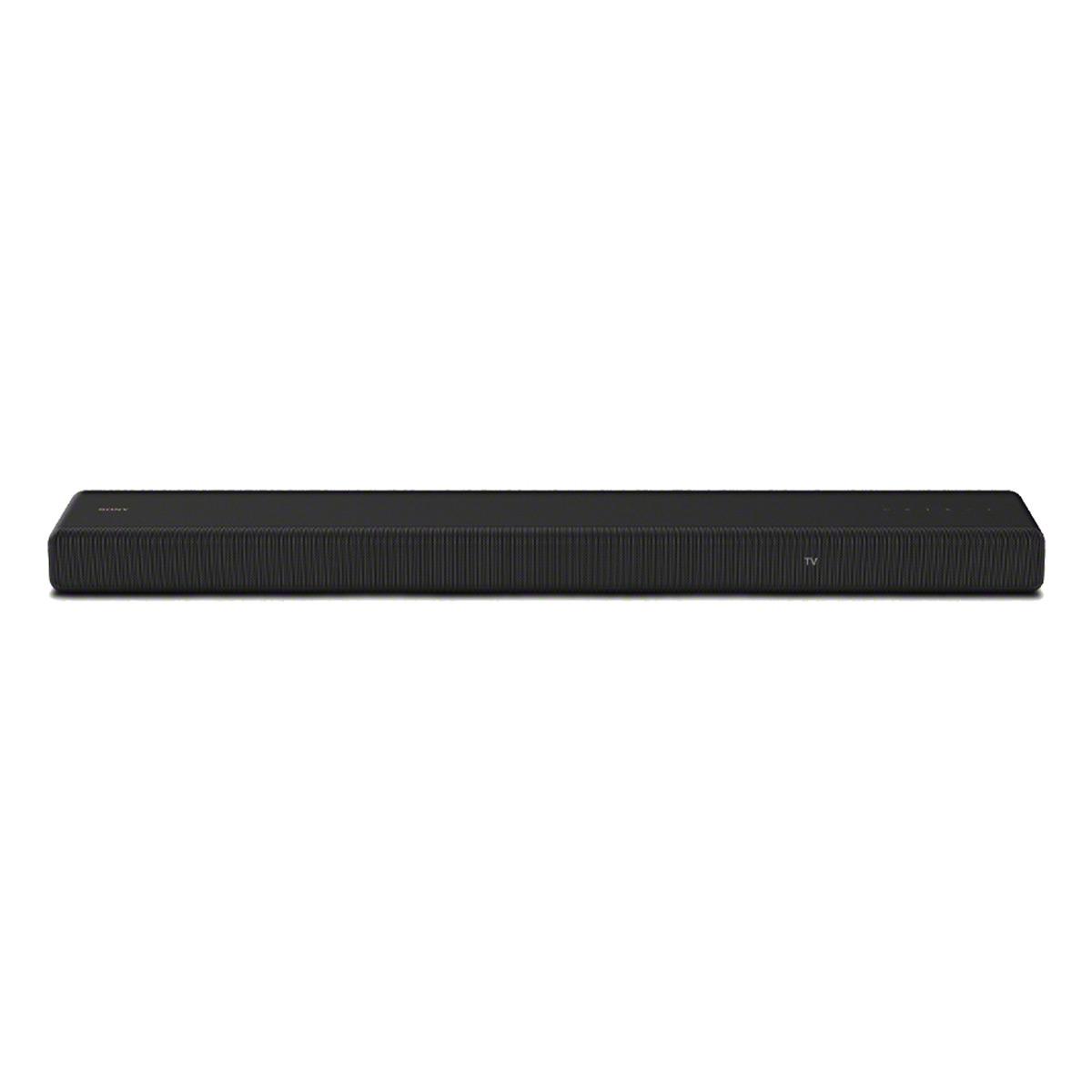
Sony released the HT-A3000 in 2022 as part of their renewed focus on accessible Dolby Atmos technology. This 3.1-channel soundbar takes the opposite approach—everything is contained in a single, sleek bar that measures just over 37 inches wide and weighs only 10 pounds.
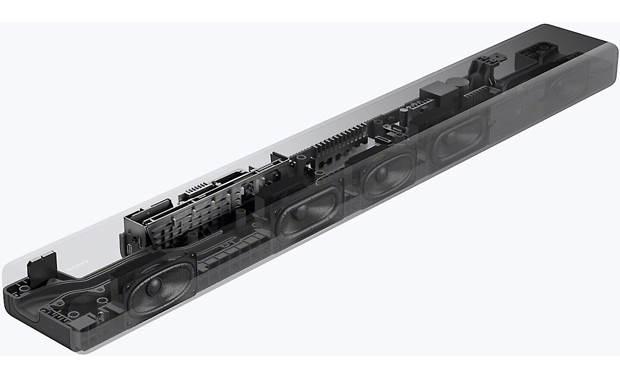
The Sony HT-A3000 uses three front-facing speakers plus dual built-in subwoofers, all powered by 250W total. But here's where Sony's engineering expertise shines: their Vertical Surround Engine and S-Force PRO Front Surround technologies use advanced signal processing to create convincing surround and height effects from just these front-facing drivers.
Sony's X-Balance drivers deserve special mention—these use rectangular diaphragms instead of traditional circular ones, maximizing the surface area that can fit in the soundbar's limited height. More surface area typically means better bass response and lower distortion, which is crucial when you can't rely on separate subwoofer placement for optimal acoustics.
This is where these systems diverge most dramatically. The ULTIMEA Skywave X40 delivers what I'd call "reference-grade" surround positioning. When you're watching Top Gun: Maverick and an F-18 screams from left to right, you hear it actually move behind you through physical space. The rear speakers create genuine 360-degree audio staging that no amount of processing can fully replicate.
During our research into user experiences, the consensus is clear: people consistently describe the Skywave X40 as creating that "theater-like" experience where they can close their eyes and accurately point to where sounds are originating. This spatial accuracy becomes particularly noticeable during complex scenes with multiple audio elements—like a battlefield sequence where explosions, gunfire, and dialogue all occupy distinct positions in three-dimensional space.
The Sony HT-A3000, while impressive for a single-bar solution, operates in a different league here. Sony's processing is genuinely sophisticated—their algorithms analyze incoming audio and apply HRTF (Head-Related Transfer Function) processing to mimic how your ears would naturally perceive sounds from different directions. The effect works remarkably well when you're seated in the optimal listening position, typically 8-12 feet directly in front of the soundbar.
However, the virtual surround "sweet spot" is limited. Move significantly left, right, or closer to the Sony HT-A3000, and the illusion begins breaking down. The soundstage collapses back to a primarily front-focused experience. This isn't necessarily a dealbreaker—many people have a primary viewing position—but it's a fundamental limitation of the virtual approach.
Bass reproduction reveals another critical difference between these systems. The ULTIMEA Skywave X40's wireless 6.5-inch subwoofer can be positioned anywhere in your room—and I cannot overstate how important this flexibility is for bass performance.
Subwoofers are incredibly sensitive to room placement. Put one in a corner, and room boundaries reinforce the bass, creating more output but potentially causing boom or muddiness. Place it along a wall's midpoint, and you get more controlled but potentially weaker bass response. The Skywave X40 lets you experiment with placement until you find the sweet spot for your specific room acoustics.
The system's Gravus Ultra-Linear Bass Technology is ULTIMEA's marketing term for their subwoofer tuning, but the underlying concept is sound—they've designed the driver and enclosure to maintain linear response (minimal distortion) even at high output levels. Based on user feedback, this manifests as bass that stays clean and articulate even when you push volume levels during action sequences.
The Sony HT-A3000's built-in dual subwoofers face inherent limitations. Sony's engineers have done impressive work with their X-Balance rectangular drivers—these actually can move more air than equivalently-sized round drivers due to increased surface area. But physics is physics: you cannot change the fundamental acoustics of having your subwoofer permanently mounted inside a soundbar positioned directly under your TV.
This placement often results in what acousticians call boundary effects—the interaction between the subwoofer and nearby surfaces (your TV stand, the wall behind it) creates peaks and nulls in bass response that vary depending on your seating position. Some listeners might experience boomy, overwhelming bass, while others in different seats get weak, undefined low frequencies.
The power difference between these systems—530W for the ULTIMEA Skywave X40 versus 250W for the Sony HT-A3000—isn't just about maximum volume. Dynamic range is crucial for home theater applications.
Movies contain massive dynamic swings—quiet dialog moments followed immediately by explosive action. A system needs power reserves to handle these peaks without compression or distortion. The Skywave X40's higher power output, distributed across dedicated drivers, means each speaker can reproduce its frequency range more effortlessly.
The Skywave X40 also employs GaN (Gallium Nitride) amplification—a newer technology that runs significantly cooler and more efficiently than traditional silicon-based amplifiers. This matters because amplifiers perform better when they're not fighting thermal buildup. GaN amplifiers maintain their specifications more consistently during extended listening sessions.
The Sony HT-A3000's 250W, while respectable, must be shared across fewer drivers handling wider frequency ranges each. During demanding passages, this can lead to dynamic compression—the system automatically reducing volume peaks to prevent distortion, which flattens the emotional impact of dramatic scenes.
Here's where both systems show their strengths, but through different approaches. Dialog clarity is arguably the most important performance characteristic for any soundbar—if you can't understand what characters are saying, nothing else matters.
The ULTIMEA Skywave X40 uses a dedicated center channel driver optimized specifically for vocal frequencies. This driver handles roughly 80% of a movie's dialog content, isolated from music and effects that play through other channels. When explosions are shaking your room through the subwoofer and surround speakers, dialog remains crystal clear through the center channel.
The Sony HT-A3000 takes a different but equally valid approach. Their center channel uses the same X-Balance driver technology, but Sony's secret weapon is their Clear Audio+ processing. This technology dynamically analyzes incoming audio and identifies dialog frequencies, then subtly boosts them in the mix without making voices sound unnatural or artificially emphasized.
Based on user reviews we've analyzed, both systems excel at dialog clarity, but in different scenarios. The Skywave X40 maintains dialog intelligibility better during complex, effects-heavy scenes where its dedicated center channel provides natural separation. The Sony HT-A3000 performs exceptionally well with dialog-heavy content like dramas or news, where its processing can work without competing against massive dynamic swings.
At the time of writing, these systems occupy similar price brackets, but their value propositions differ significantly. The ULTIMEA Skywave X40 essentially gives you a complete 5.1.2 home theater system—something that traditionally required separate receivers, multiple speaker pairs, and extensive wiring. The fact that this comes as a wireless, plug-and-play system at its current price point represents exceptional value for authentic surround sound.
However, "value" must account for your specific situation. If you're in an apartment with noise-sensitive neighbors, the Skywave X40's room-filling surround capabilities might be overkill. If you frequently rearrange furniture or move residences, managing four separate powered components becomes a consideration.
The Sony HT-A3000 offers different value: the convenience of Sony's established service network, proven long-term reliability, and the flexibility to expand later with optional rear speakers if your needs change. Sony's DSEE Extreme technology adds tangible value for music streaming—it actually improves the sound quality of compressed audio from Spotify, Apple Music, or YouTube by reconstructing frequency content lost during compression.
The ULTIMEA Skywave X40 requires finding power outlets for four components: the main soundbar, subwoofer, and two rear speakers. This sounds straightforward until you start optimizing placement for acoustics rather than convenience. Your ideal subwoofer position might be eight feet from the nearest outlet. Your optimal rear speaker locations might not align with your room's electrical layout.
ULTIMEA's wireless audio transmission eliminates speaker cables, but you still need power everywhere. This is manageable in most homes but requires planning. Some users invest in discrete extension cords or have electricians add outlets for optimal system placement.
The Sony HT-A3000 connects with a single power cord and one cable to your TV. Wall mounting uses Sony's included hardware and takes about 30 minutes. This simplicity is genuinely valuable—you can set up the entire system during a commercial break.
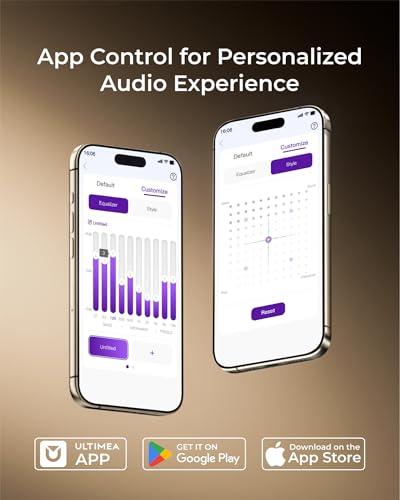
The ULTIMEA Skywave X40's app provides extensive control over EQ settings and sound profiles. This customization capability is impressive, but it also means the system might require tweaking to sound its best. Some users enjoy this control; others find it overwhelming.
The Sony HT-A3000 works well with minimal adjustment. Sony's automatic sound optimization analyzes your room acoustics and adjusts accordingly. The system includes preset modes (Cinema, Music, Voice, Game, Night) that handle most listening scenarios effectively.
Both systems support voice control, but the Sony HT-A3000 integrates more seamlessly with smart home ecosystems. Its Alexa and Google Assistant support feels more refined than the Skywave X40's app-centric control scheme.
You want authentic home theater sound without compromise. The Skywave X40 delivers genuine surround sound immersion that transforms movie watching into an event. It's ideal for dedicated home theater spaces, larger rooms, or situations where you can optimize component placement for acoustics.
This system makes sense if you primarily watch movies and TV shows rather than streaming music, if you have a stable living situation where you won't frequently relocate the components, and if you value audio performance above convenience. The Skywave X40 is also perfect for entertainment enthusiasts who appreciate having granular control over their audio experience.
You prioritize elegance and simplicity while still wanting impressive sound quality. The Sony HT-A3000 excels in smaller to medium-sized rooms where its virtual surround processing works most effectively. It's ideal for apartments, condos, or any space where a single-component solution is preferable.
This system makes sense if you stream significant amounts of music (where DSEE Extreme adds real value), if you move frequently or rearrange furniture regularly, if you prefer established brand support, or if you want the option to expand your system gradually over time with Sony's optional components.
The Sony HT-A3000 is also the better choice for mixed-use spaces where the soundbar needs to handle everything from Netflix binges to background music during dinner parties.
Both systems represent excellent engineering approaches to the soundbar challenge, but they solve fundamentally different problems. The ULTIMEA Skywave X40 maximizes audio performance and authenticity, while the Sony HT-A3000 maximizes convenience and flexibility.
Your choice should align with how you actually live and listen. If movie nights are sacred events where audio quality can make or break the experience, the Skywave X40's authentic surround sound is transformative. If you want great sound that seamlessly integrates into daily life without fuss, the Sony HT-A3000's sophisticated simplicity is compelling.
Both systems will dramatically improve your TV's audio, but they'll do it in distinctly different ways. The key is understanding which approach better matches your space, lifestyle, and audio priorities.
| ULTIMEA Skywave X40 5.1.2 Soundbar System | Sony HT-A3000 3.1ch Dolby Atmos Soundbar |
|---|---|
| Channel Configuration - Determines authentic vs virtual surround sound experience | |
| True 5.1.2 channels with physical rear and height speakers | 3.1 channels with virtualized surround and height effects |
| Total Power Output - Critical for room-filling sound and dynamic range | |
| 530W peak power across dedicated drivers | 250W total power from integrated amplification |
| Subwoofer Design - Affects bass depth and room placement flexibility | |
| Wireless 6.5" subwoofer, placeable anywhere in room | Dual built-in subwoofers, fixed position under TV |
| Surround Speakers - Real vs simulated rear channel audio | |
| Two dedicated wireless rear speakers for authentic positioning | Virtual rear effects via psychoacoustic processing |
| Height Channels - Overhead Dolby Atmos effect authenticity | |
| Physical up-firing drivers in main soundbar | Matrixed height effects through front speakers |
| Wireless Technology - Setup flexibility and audio latency | |
| CineMesh dual 5GHz with | Bluetooth streaming only, rear speakers require AC power |
| Amplification Technology - Efficiency and thermal performance | |
| GaN (Gallium Nitride) amplifiers run cooler, more efficient | S-Master HX digital amplification with full digital path |
| Audio Processing Power - Sound optimization and channel steering | |
| NEURACORE with 2,000 MIPS, triple-core DSP | Vertical Surround Engine and S-Force PRO processing |
| Connectivity Options - Device compatibility and streaming quality | |
| HDMI eARC, optical, USB, Bluetooth 5.4 | HDMI eARC, optical, USB, Bluetooth with LDAC codec |
| Music Enhancement Features - Streaming audio quality improvements | |
| 10-band EQ with 121 preset sound profiles | DSEE Extreme AI upscaling for compressed audio |
| Physical Setup Requirements - Installation complexity and space needs | |
| Four components requiring power outlets and optimal placement | Single soundbar with plug-and-play installation |
| Smart Home Integration - Voice control and ecosystem compatibility | |
| App-based control with extensive customization options | Alexa, Google Assistant, AirPlay 2, Chromecast built-in |
| Expandability Options - Future system growth potential | |
| Complete 5.1.2 system with no expansion needed | Optional rear speakers and subwoofer available separately |
| Ideal Room Size - Performance optimization for space | |
| Medium to large rooms benefiting from true surround placement | Small to medium rooms where virtual processing works best |
The ULTIMEA Skywave X40 is superior for dedicated home theater use because it provides true 5.1.2 surround sound with physical rear speakers and upward-firing drivers. This creates authentic overhead effects and 360-degree sound positioning that makes movies feel more immersive. The Sony HT-A3000 uses virtual surround processing, which works well but cannot match the spatial accuracy of real surround speakers for cinematic experiences.
The ULTIMEA Skywave X40 has 5.1.2 channels, meaning five main speakers (front left, center, right, plus two rear surrounds), one subwoofer, and two height channels for Dolby Atmos overhead effects. The Sony HT-A3000 has 3.1 channels with three front speakers and one subwoofer, using processing to simulate surround and height effects rather than dedicated physical speakers.
The ULTIMEA Skywave X40 offers superior bass with its wireless 6.5-inch subwoofer that can be positioned anywhere in your room for optimal acoustics. It extends down to 35Hz for deep, room-shaking bass. The Sony HT-A3000 has dual built-in subwoofers that are convenient but limited by their fixed position under your TV, which restricts bass optimization.
The Sony HT-A3000 is much easier to set up as a single soundbar requiring only power and TV connection. The ULTIMEA Skywave X40 requires positioning four components (soundbar, subwoofer, two rear speakers) and finding power outlets for each, though the wireless audio transmission eliminates speaker cables between components.
The Sony HT-A3000 excels for music with its DSEE Extreme technology that upscales compressed streaming audio, plus support for high-quality LDAC Bluetooth codec. The ULTIMEA Skywave X40 offers extensive customization with 10-band EQ and 121 preset modes, but the Sony HT-A3000 is more optimized for music streaming from services like Spotify and Apple Music.
Yes, both the ULTIMEA Skywave X40 and Sony HT-A3000 support Dolby Atmos, but differently. The ULTIMEA Skywave X40 uses physical upward-firing speakers for true overhead effects, while the Sony HT-A3000 creates virtual height effects through processing, which is less authentic but still effective for most listeners.
The ULTIMEA Skywave X40 delivers 530W peak power compared to the Sony HT-A3000's 250W total output. This higher power means the ULTIMEA Skywave X40 can fill larger rooms with sound and handle demanding movie soundtracks with better dynamic range and less distortion at high volumes.
The Sony HT-A3000 can be expanded with optional rear speakers and an additional subwoofer, allowing you to build the system gradually. The ULTIMEA Skywave X40 comes as a complete 5.1.2 system with no official expansion options, but it already includes everything needed for full surround sound.
The Sony HT-A3000 is better suited for smaller rooms due to its compact single-bar design and virtual surround processing that works well in confined spaces. The ULTIMEA Skywave X40 requires space for rear speaker placement and may be overwhelming in very small rooms, though it performs best in medium to large spaces.
The ULTIMEA Skywave X40 uses proprietary CineMesh wireless technology with dual 5GHz transmission and ultra-low latency for connecting its subwoofer and rear speakers. The Sony HT-A3000 relies on Bluetooth for streaming but any optional rear speakers require AC power connections, making the ULTIMEA Skywave X40 more truly wireless overall.
The Sony HT-A3000 provides superior smart home integration with built-in Alexa and Google Assistant support, plus AirPlay 2, Chromecast, and Spotify Connect compatibility. The ULTIMEA Skywave X40 focuses more on audio performance and app-based control rather than smart home ecosystem integration.
The ULTIMEA Skywave X40 offers exceptional value by delivering a complete true 5.1.2 surround sound system at a competitive price point - something that typically costs much more from major brands. The Sony HT-A3000 provides good value for those prioritizing convenience, brand reliability, and single-bar simplicity over maximum audio performance.
We've done our best to create useful and informative comparisons to help you decide what product to buy. Our research uses advanced automated methods to create this comparison and perfection is not possible - please contact us for corrections or questions. These are the sites we've researched in the creation of this article: bestbuy.com - shopabunda.com - youtube.com - youtube.com - youtube.com - youtube.com - ultimea.com - walmart.com - youtube.com - hometechnologyreview.com - community.ultimea.com - avsforum.com - youtube.com - youtube.com - youtube.com - bestbuy.com - hometechnologyreview.com - rtings.com - electronics.sony.com - crutchfield.com - store.sony.com.au - digitaltrends.com - videoandaudiocenter.com - abt.com - sony.com - merlinstv.com - crutchfield.com - youtube.com

Privacy Policy
Terms and Conditions - Affiliate Policy
Home Security
© Copyright 2008-2026.
11816 Inwood Rd #1211, Dallas, TX 75244