








If you've been living with your TV's built-in speakers, you're missing out on a huge part of your entertainment experience. TV speakers are notoriously terrible—they're tiny, face backward, and sound like someone's talking through a cardboard tube. That's where soundbars come in, but the category has exploded into everything from simple stereo upgrades to full-blown home theater replacements.
The challenge? Understanding which type of soundbar actually fits your needs and budget. Today we're comparing two very different approaches: the ULTIMEA Skywave X40 5.1.2 system and the Yamaha YAS-109 Sound Bar. One's a premium wireless surround system from 2025, while the other is a compact all-in-one solution that hit the market in 2020. They represent completely different philosophies about how to upgrade your TV audio.
Before diving into specifics, let's clarify what separates basic soundbars from serious home theater systems. The most important factor is channel configuration—those numbers like "2.1" or "5.1.2" tell you exactly what you're getting.
A "2.1" system means two main speakers (left and right) plus one subwoofer channel for bass. It's essentially stereo sound with better low-end response. A "5.1.2" system is dramatically different: five main channels (left, right, center, and two surround), one subwoofer, and two height channels that fire sound upward to bounce off your ceiling. That ".2" represents Dolby Atmos technology, which creates the illusion of sounds coming from above—helicopters flying overhead, rain falling, or debris crashing down around you.
The difference isn't subtle. True surround sound with physical rear speakers and height channels creates an immersive bubble of audio that stereo simply cannot match. However, it requires more components, more space, and more money.
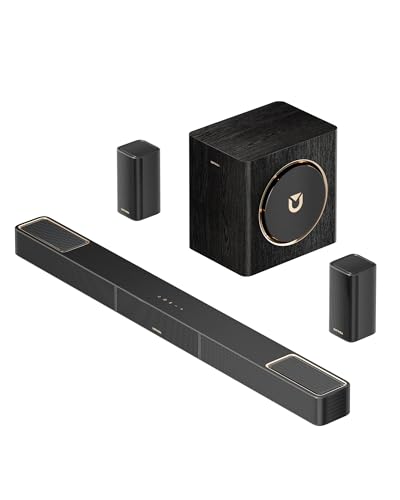
The ULTIMEA Skywave X40 launched in 2025 as a flagship wireless surround system, and it represents how far soundbar technology has advanced in recent years. This isn't just a soundbar—it's a complete 5.1.2 home theater system that happens to be wireless.
With 530 watts of peak power, the Skywave X40 delivers genuinely room-filling sound. To put that in perspective, most TV speakers output maybe 20-30 watts total. This system can maintain crystal-clear dialogue while simultaneously producing thunderous explosions and subtle ambient details—all without the distortion that plagues lesser systems at high volumes.
The key is its GaN (Gallium Nitride) amplifier, a cutting-edge technology that operates at 98% efficiency compared to traditional amplifiers' 70-80%. This means less heat generation, faster response times, and cleaner sound reproduction. When you're watching an action sequence with rapid-fire audio changes, that faster response translates to tighter, more precise sound effects that sync perfectly with the on-screen action.
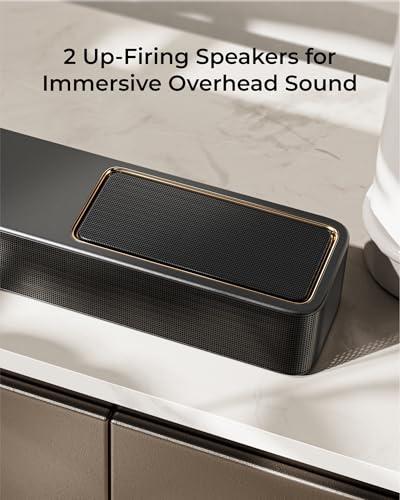
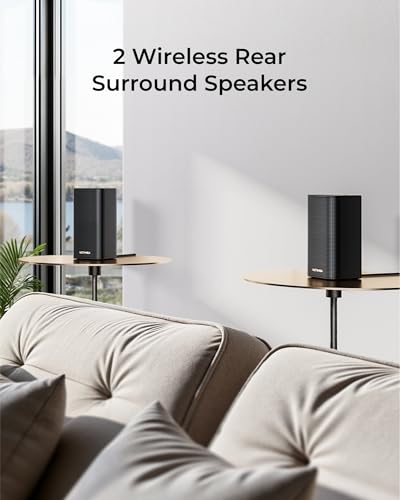
Here's where the ULTIMEA Skywave X40 fundamentally differs from basic soundbars. It includes actual wireless rear speakers that you place behind your seating area, plus upward-firing drivers in the main soundbar. This creates genuine three-dimensional audio positioning.
When a helicopter moves from the front of the screen to behind you and overhead, you hear it travel through physical space. The rear speakers handle directional effects while the up-firing drivers bounce sound off your ceiling to create height perception. This object-based audio approach means sound engineers can place specific effects anywhere in a 3D space around you.
The system's NEURACORE audio engine processes up to 17 channels of 24-bit/192kHz audio with less than 0.5% distortion. In practical terms, this means every subtle detail—from footsteps on gravel to the ambient noise of a busy restaurant—gets reproduced with precision that stereo systems simply can't achieve.
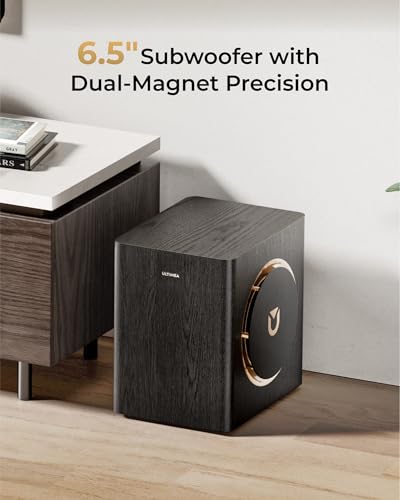
The wireless subwoofer deserves special attention because bass quality dramatically affects your overall listening experience. The Skywave X40's 6.5-inch driver extends down to 35Hz, which captures the fundamental frequencies of movie sound effects and music that smaller drivers miss entirely.
Gravus Ultra-Linear Bass Technology prevents the muddy, boomy bass that plagues many soundbars. Instead of just adding volume, it maintains clarity and tightness even at maximum output. When a T-Rex stomps through your living room or a bass guitar plays a complex line, you hear definition rather than just rumble.
The CineMesh True Wireless system uses dual 5GHz transmission with less than 20 milliseconds of latency. This ultra-low delay ensures perfect synchronization between what you see and hear, crucial for dialogue matching and sound effects. The system also automatically handles interference management, switching frequencies to avoid dropouts from WiFi networks or other wireless devices.
Setup is surprisingly simple—each component is pre-paired at the factory, so you just plug them in and they connect automatically. No complex pairing procedures or audio delays to adjust.
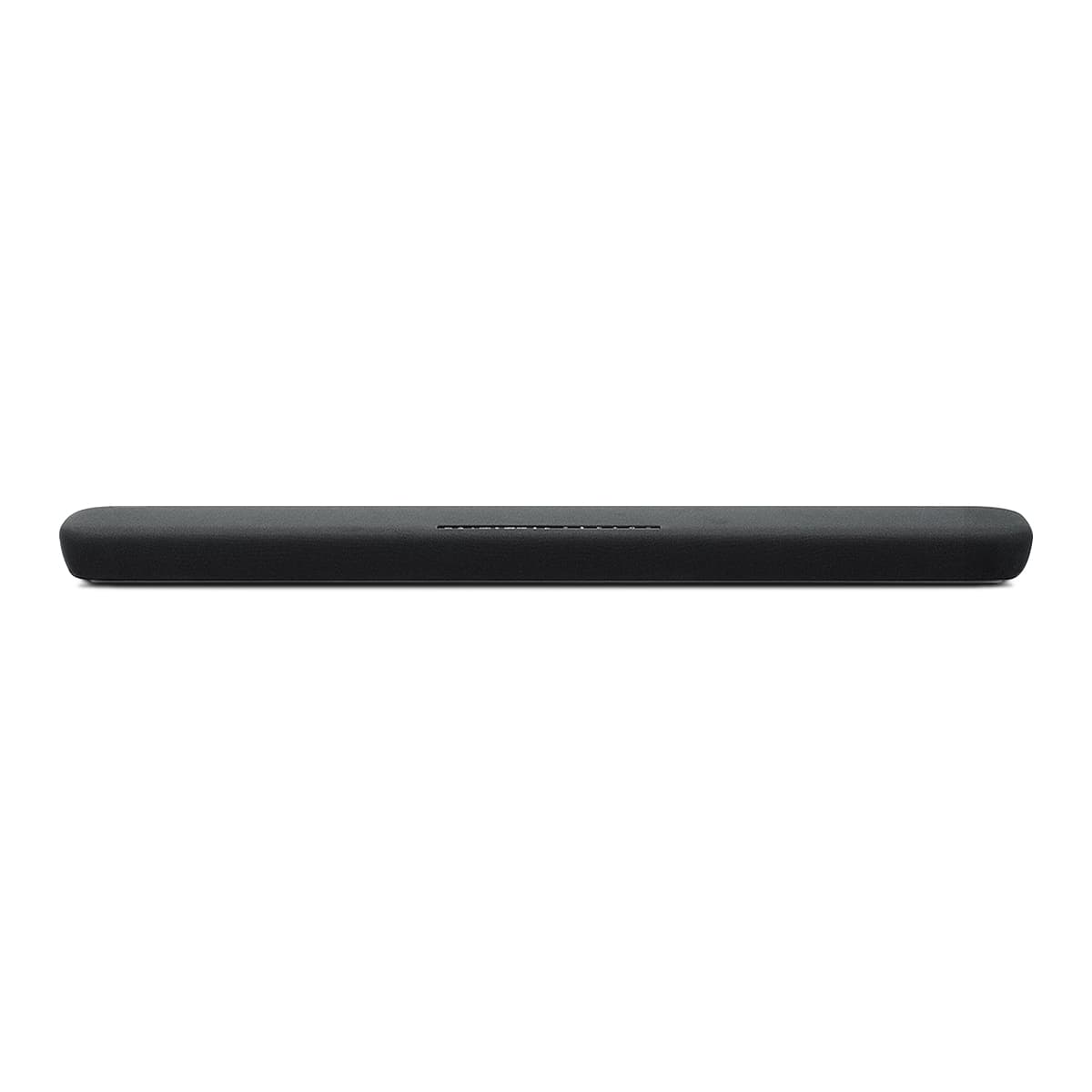
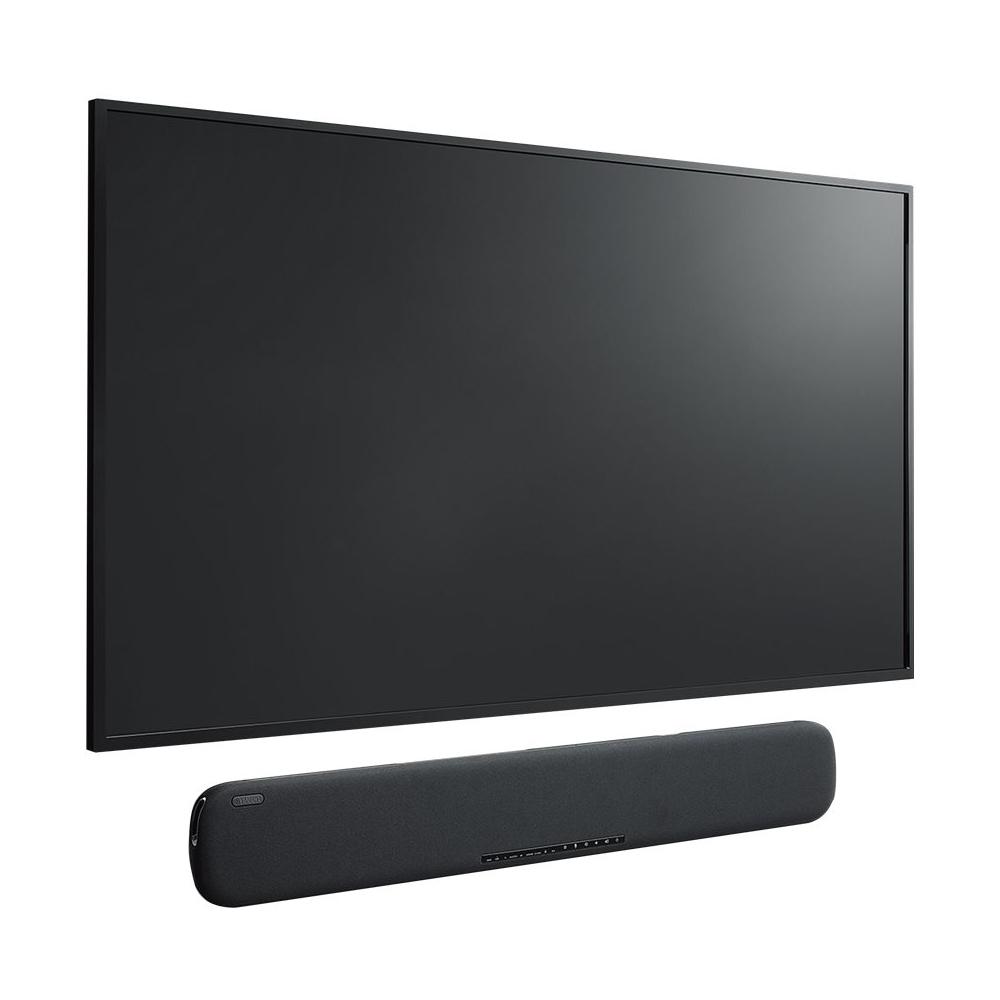
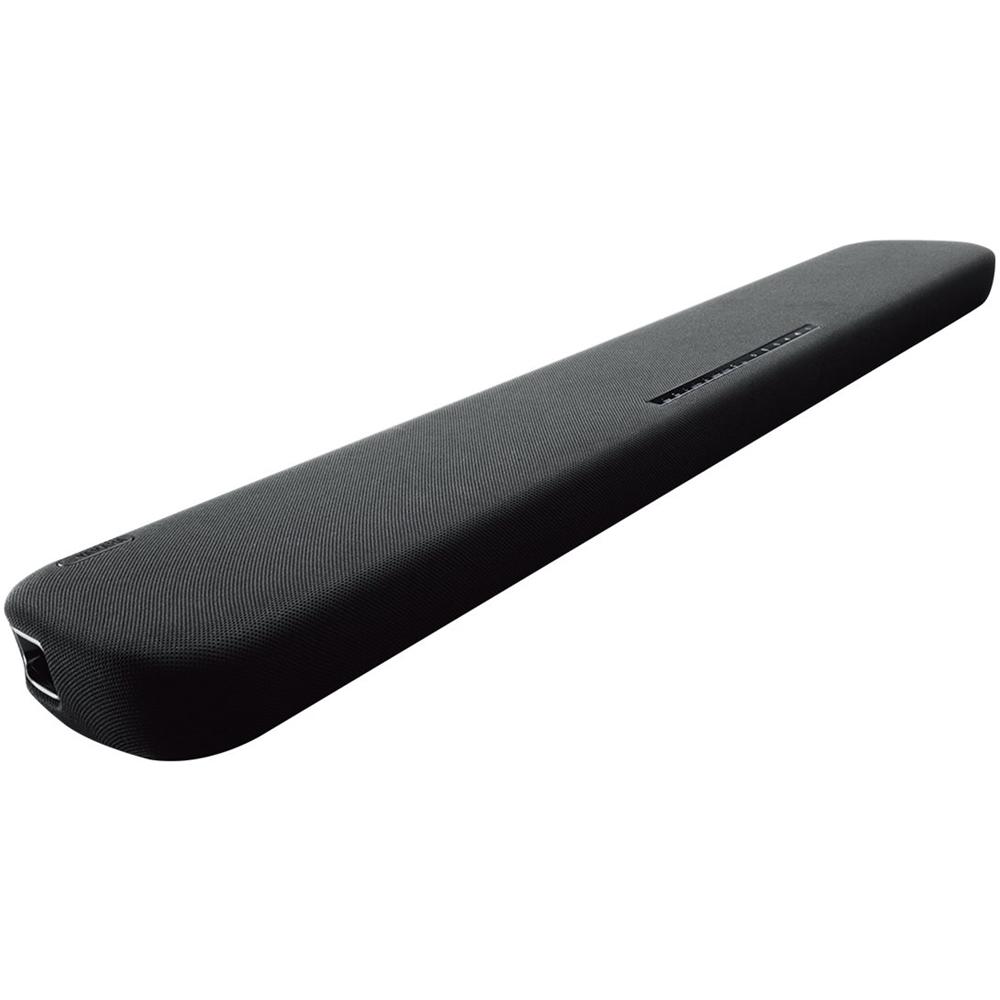
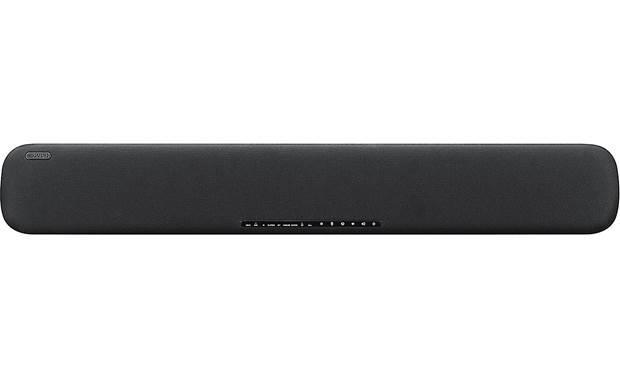
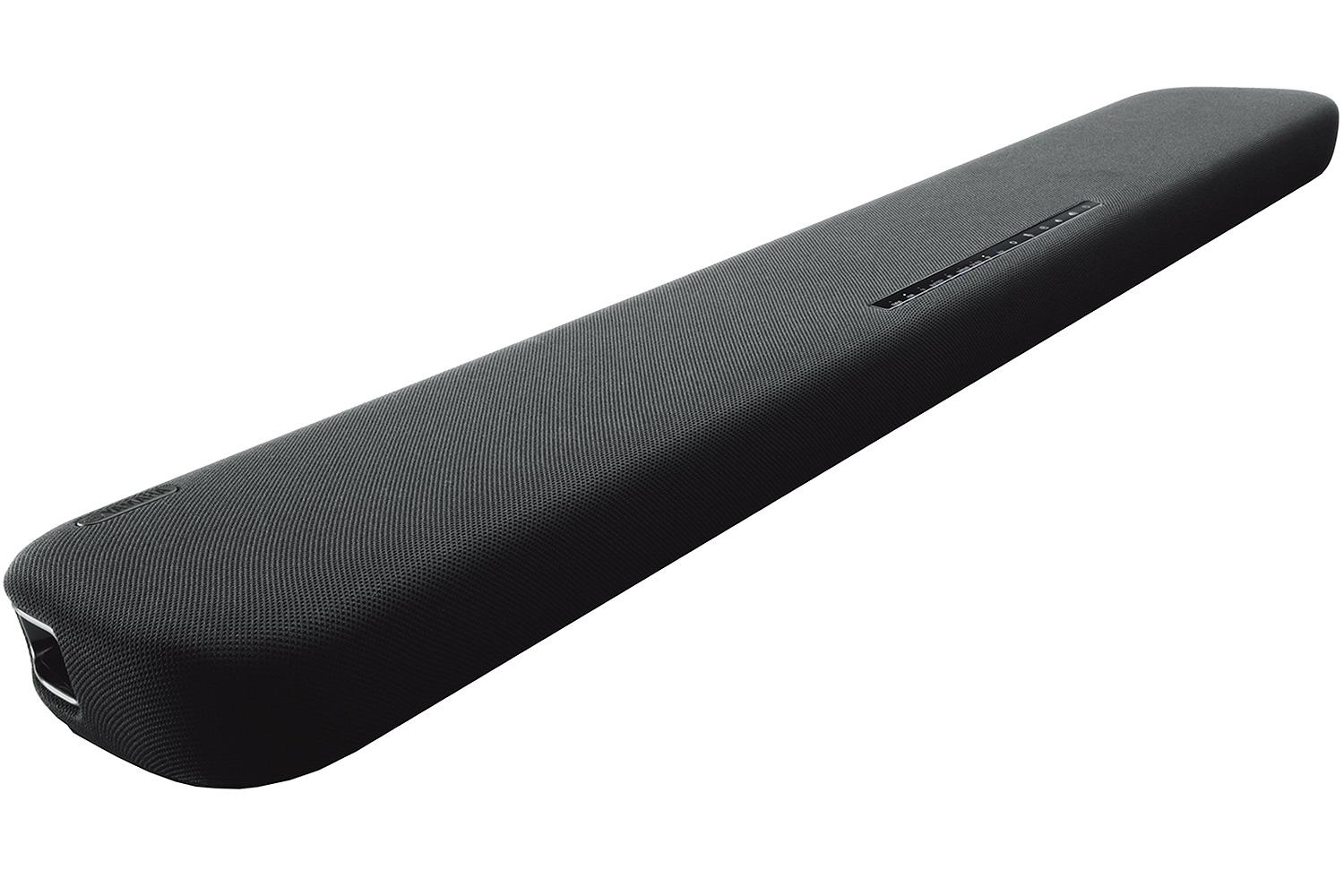
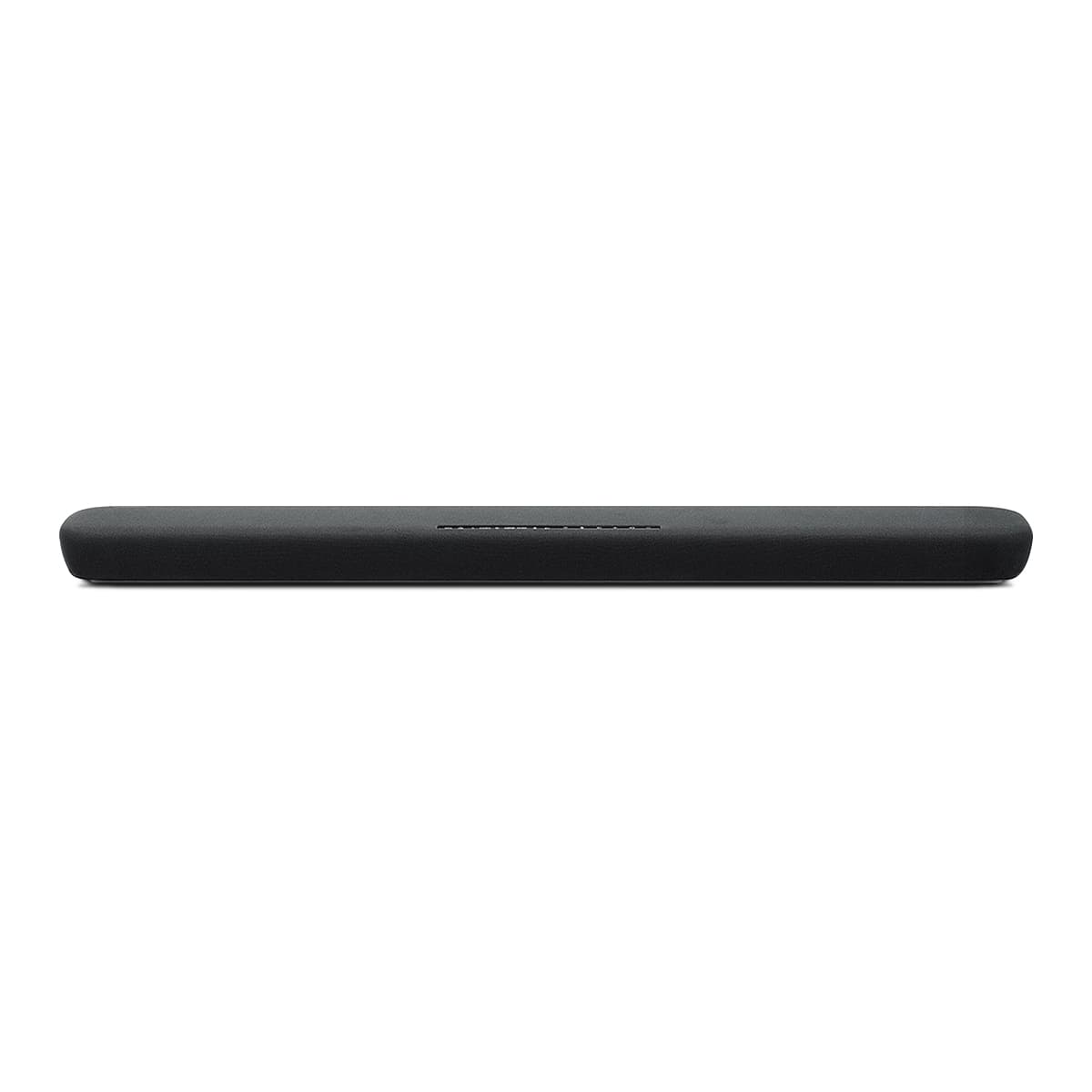
The Yamaha YAS-109 represents a completely different approach. Released in 2020, it's designed as a simple upgrade for people who want better TV sound without the complexity of multiple components.
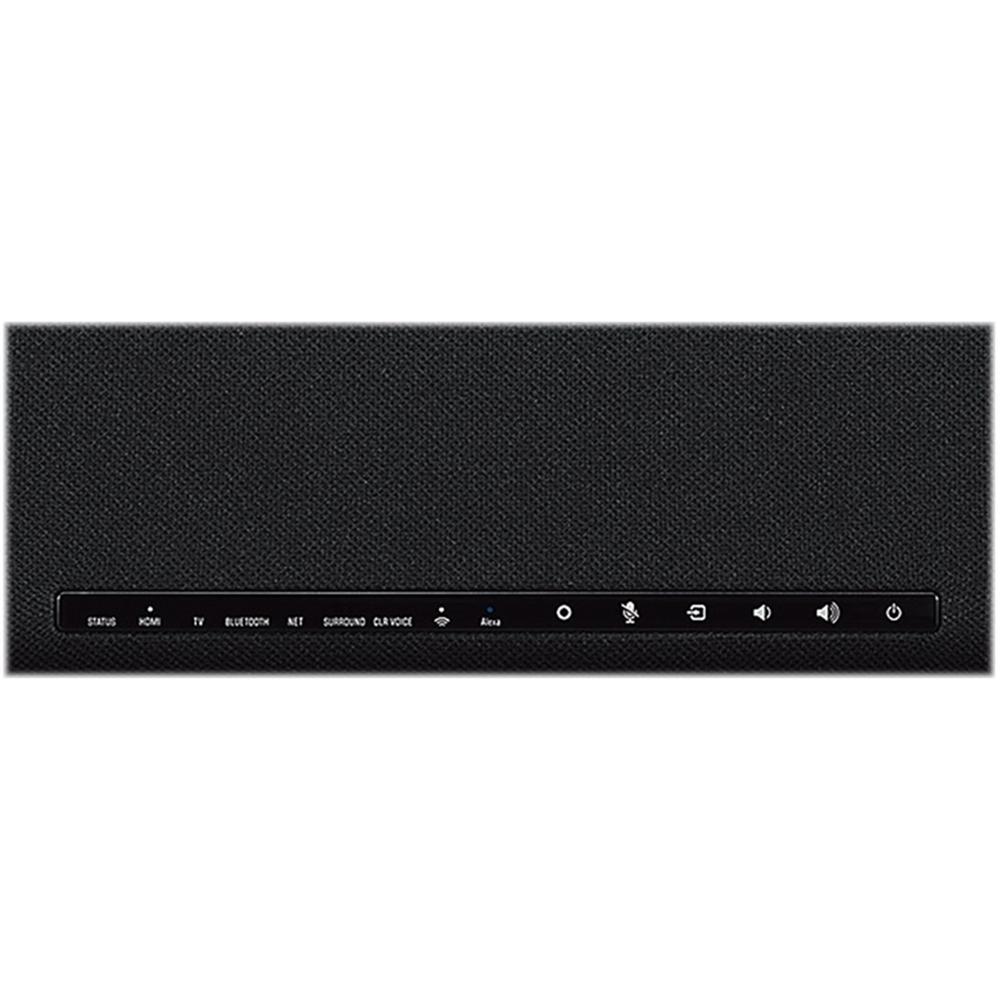
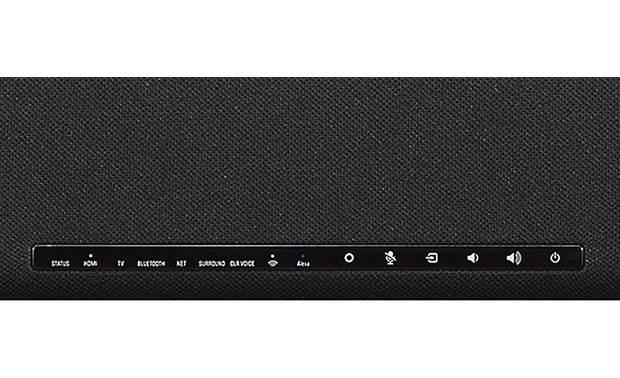
The standout feature is integrated Amazon Alexa, making this one of the few soundbars with built-in voice control. You can adjust volume, skip tracks, control smart home devices, and ask questions without reaching for a remote. This integration feels natural because the soundbar is already the central audio device in your entertainment setup.
The voice processing works well even during loud movie scenes, thanks to far-field voice recognition that can distinguish your commands from background audio. This is particularly useful for quick volume adjustments during late-night viewing.
With 120 watts of total power split between the main drivers and built-in subwoofer, the YAS-109 provides a meaningful upgrade over TV speakers while maintaining a compact footprint. The DTS Virtual:X processing attempts to create surround effects using psychoacoustic tricks—manipulating phase relationships and frequency response to fool your brain into perceiving directional audio from just two speakers.
It works to some degree. Movie dialogue becomes clearer and more centered, and there's a noticeable sense of width to the soundstage. However, virtual surround cannot replicate the discrete positioning and immersion of physical rear speakers. You'll hear improved audio, but you won't experience true surround sound.
One area where the Yamaha YAS-109 excels is dialogue clarity. The Clear Voice processing actively enhances vocal frequencies and reduces competing background noise. If you struggle to understand conversations in movies—a common problem with TV speakers—this feature provides immediate relief.
The soundbar's dual tweeters handle high-frequency details well, ensuring that dialogue cuts through music and sound effects without becoming harsh or fatiguing during long viewing sessions.
The power difference between these systems is substantial and audible. The ULTIMEA Skywave X40's 530 watts can fill large rooms with dynamic sound that maintains clarity at high volumes. The Yamaha YAS-109's 120 watts works well in smaller spaces but begins to compress and distort when pushed hard in larger rooms.
Maximum Sound Pressure Level (SPL) tells the real story. The Skywave X40 can exceed 98 decibels without distortion—loud enough for reference-level home theater listening. The YAS-109 reaches its limits around 85-90 decibels, suitable for normal TV viewing but insufficient for immersive movie experiences.
Low-frequency response dramatically affects perceived audio quality. The Skywave X40's dedicated subwoofer reaches 35Hz, capturing the fundamental frequencies of movie explosions, thunder, and bass-heavy music. The YAS-109's built-in drivers can't physically reproduce frequencies below about 60-70Hz due to their compact enclosure size.
This difference is immediately noticeable with action movies. Explosions gain weight and impact with the Skywave X40, while the YAS-109 provides punch but lacks the deep rumble that makes effects feel visceral.
The channel configuration difference cannot be overstated. The ULTIMEA Skywave X40 creates actual surround sound with discrete positioning—you can close your eyes and point to where specific effects originate. The Yamaha YAS-109's virtual processing creates a wider soundstage but cannot produce true directional effects or overhead positioning.
For movie watching, this translates to completely different experiences. Action sequences become immersive adventures with the Skywave X40, while the YAS-109 provides improved but still fundamentally stereo audio.
At the time of writing, these systems occupy different price tiers, with the ULTIMEA Skywave X40 commanding a premium over the Yamaha YAS-109. However, the performance gap is even larger than the price difference.
The Skywave X40 represents a buy-once solution that can serve as your primary audio system for years. Its advanced processing, wireless flexibility, and true surround capabilities position it as future-proof technology that won't become obsolete as entertainment formats evolve.
The YAS-109 offers excellent value as an entry-level upgrade but may leave you wanting more as your expectations develop. Many users find themselves upgrading again within a year or two, making the initial savings less meaningful over time.
When evaluated on audio quality metrics—power output, frequency response, channel separation, and processing capabilities—the ULTIMEA Skywave X40 delivers significantly more performance per dollar spent. You're not just paying for more features; you're getting fundamentally better audio reproduction.
The Yamaha YAS-109 optimizes for convenience and basic improvement rather than absolute performance. If your primary goal is clearer TV dialogue and modest bass enhancement, it provides good value. If you want genuine home theater experience, the price-to-performance ratio favors the more expensive option.
You're creating a dedicated entertainment space. The Skywave X40 transforms your living room into a proper home theater. Movie nights become events rather than passive viewing, and gaming takes on new dimensions when you can hear enemies approaching from behind or above.
You watch action movies, play games, or listen to music seriously. The system excels with dynamic content that benefits from surround positioning and powerful bass response. Explosions feel impactful, music gains spatial depth, and gaming audio provides competitive advantages through precise directional information.
You have the space for multiple components. While wireless, the system still requires placement of the subwoofer and rear speakers. You need a room layout that accommodates proper speaker positioning for optimal performance.
You value future-proofing and premium features. Advanced connectivity, app-based control, and cutting-edge processing technology ensure the system remains relevant as entertainment formats continue evolving.
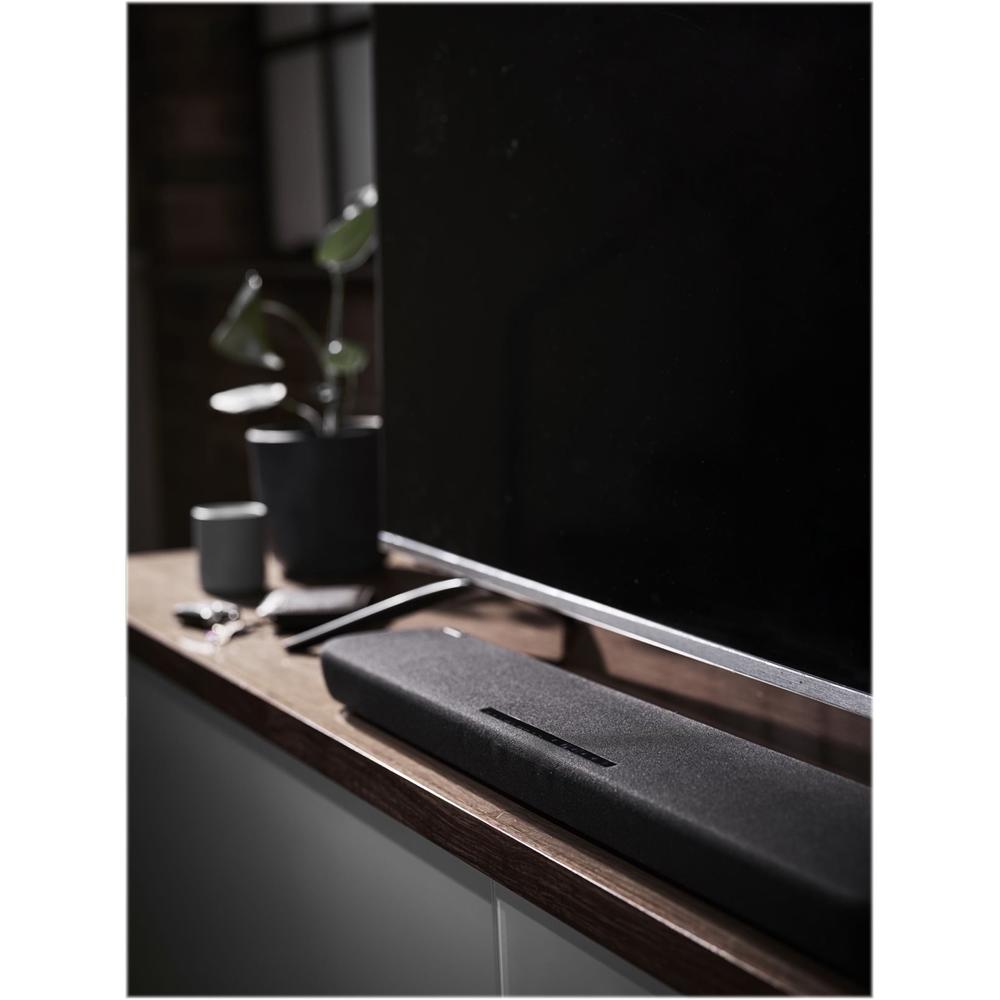
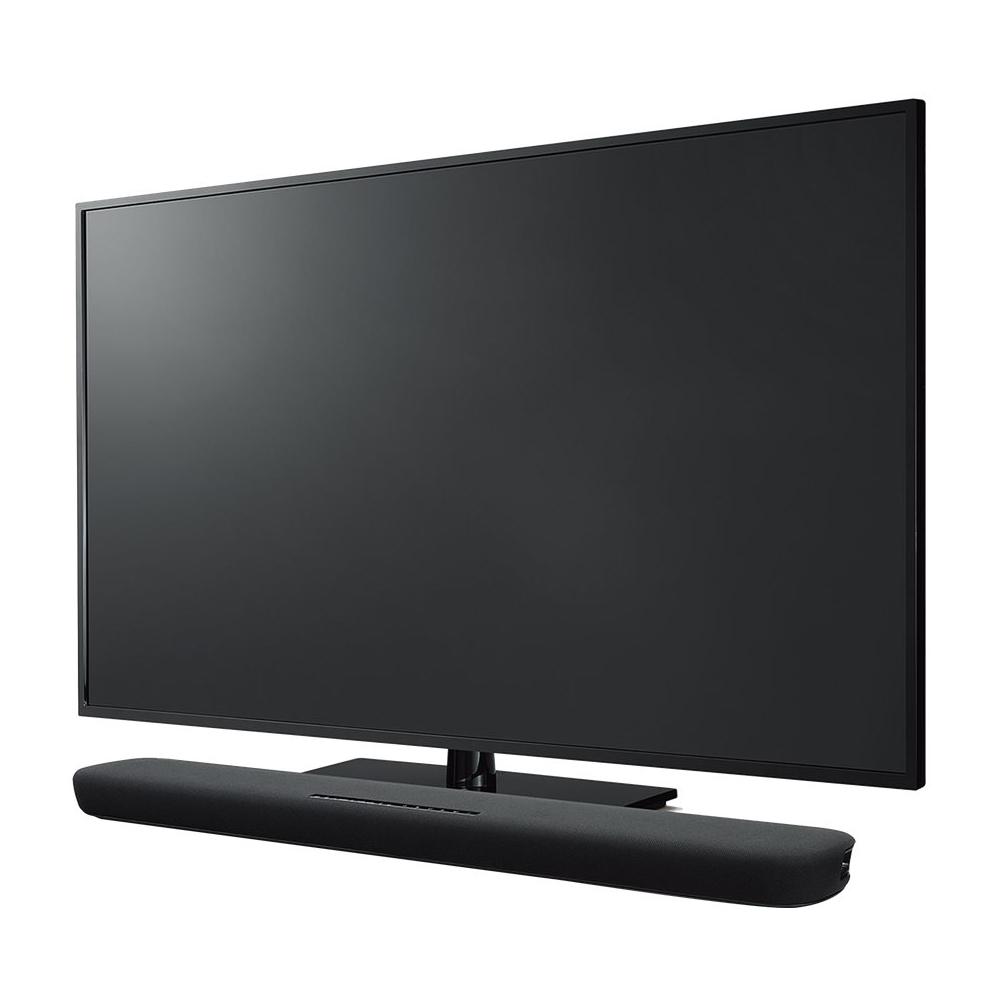
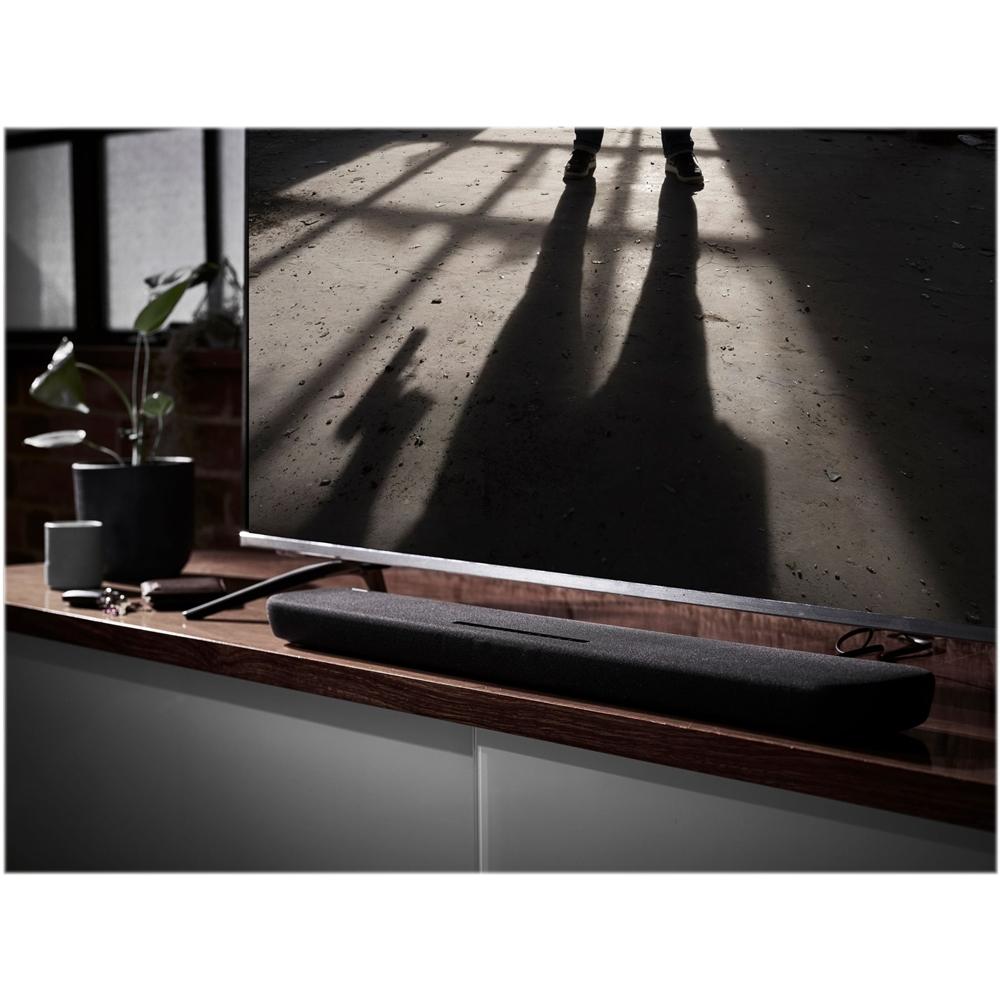
You prioritize simplicity and compact design. The single-unit design fits anywhere a TV can go, requires minimal setup, and doesn't dominate your living space visually or physically.
Voice control integration matters to you. Built-in Alexa functionality adds genuine convenience for smart home users and eliminates the need for additional voice assistants in your entertainment area.
You primarily watch TV shows and news. The YAS-109's dialogue enhancement and clear voice processing excel with vocal content, providing meaningful improvement for everyday TV viewing without the complexity of surround sound.
Budget constraints are a primary consideration. The lower price point makes it accessible for users who want immediate improvement without major investment, though with the understanding that performance is proportionally limited.
Room acoustics significantly impact soundbar performance, and the differences between these systems become more pronounced in larger spaces. The ULTIMEA Skywave X40 maintains its performance advantage in rooms of any size, while the YAS-109 works best in smaller, more intimate settings.
For dedicated home theater rooms, the Skywave X40's ability to create enveloping surround sound becomes essential. The wireless rear speakers can be positioned optimally without cable management concerns, and the powerful subwoofer can energize larger spaces effectively.
In apartment or smaller room scenarios, the YAS-109's compact design and adequate power output may be sufficient, especially if neighbors or noise restrictions limit your ability to utilize a more powerful system's full capabilities.
Based on our research and analysis of user experiences, the decision ultimately comes down to your entertainment priorities and long-term satisfaction goals.
The ULTIMEA Skywave X40 represents a significant investment in audio quality that pays dividends every time you watch movies, play games, or listen to music. Its advanced technology, wireless convenience, and genuine surround sound capabilities position it as a premium solution that enhances your entire entertainment experience.
The Yamaha YAS-109 serves as an excellent entry point into better TV audio, offering meaningful improvements with minimal complexity. Its voice control integration and compact design solve practical problems for many users, though the audio limitations become apparent with demanding content.
For most serious entertainment enthusiasts, the Skywave X40 provides better long-term value despite its higher upfront cost. The performance gap is substantial enough that you're unlikely to outgrow its capabilities, making it a more satisfying single purchase than upgrading incrementally through multiple lower-tier systems.
However, if your needs are modest—primarily TV dialogue improvement and basic audio enhancement—the YAS-109 delivers solid value without unnecessary complexity or expense.
The soundbar market continues evolving rapidly, but these fundamental performance differences between premium surround systems and compact upgrades remain consistent. Choose based on your actual usage patterns and room requirements, and you'll be satisfied with either option within its intended scope.
| ULTIMEA Skywave X40 5.1.2 Soundbar System | Yamaha YAS-109 Sound Bar with Built-in Subwoofers and Alexa |
|---|---|
| Channel Configuration - Determines surround sound capability and immersion level | |
| True 5.1.2 with physical rear speakers and height channels for genuine Dolby Atmos | 2.1 with virtual surround processing (no physical rear or height speakers) |
| Total Power Output - Affects volume levels and bass impact in larger rooms | |
| 530W peak power (room-filling performance) | 120W rated power (suitable for small-medium rooms) |
| Subwoofer Type - Critical for bass quality and room placement flexibility | |
| Dedicated 6.5" wireless subwoofer extending to 35Hz | Built-in 3" drivers integrated into soundbar (limited bass extension) |
| System Design - Impacts setup complexity and room requirements | |
| Multi-component wireless system (soundbar + subwoofer + 2 rear speakers) | Single all-in-one soundbar unit |
| Dolby Atmos Support - Essential for 3D overhead sound effects in movies | |
| Yes, with dedicated up-firing drivers and height processing | No, uses DTS Virtual:X for simulated surround effects |
| Smart Features - Voice control and app functionality | |
| ULTIMEA app with 10-band EQ and 121 presets (no voice control) | Built-in Amazon Alexa voice control (basic app control) |
| Connectivity Options - Modern device compatibility and future-proofing | |
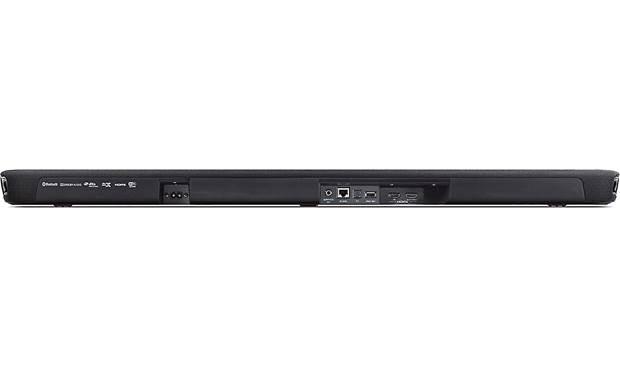
| HDMI eARC, 4K HDR passthrough, Bluetooth 5.4, USB, Optical | HDMI ARC, 4K passthrough, Bluetooth 4.2, Optical, Wi-Fi |
| Advanced Audio Processing - Affects sound clarity and dynamic range | |
| NEURACORE engine with GaN amplifier (24-bit/192kHz, <1% distortion) | Standard processing with Clear Voice technology |
| Wireless Technology - Determines rear speaker performance and reliability | |
| Dual 5GHz CineMesh with <20ms latency (factory pre-paired components) | No wireless speakers (all drivers integrated in main unit) |
| Release Year - Indicates technology generation and feature set | |
| 2025 (latest wireless surround technology) | 2020 (established but older generation) |
| Ideal Room Size - Performance optimization based on space | |
| Medium to large rooms (powerful enough for proper sound coverage) | Small to medium rooms (compact design, adequate power) |
| Target User - Best fit based on entertainment priorities | |
| Home theater enthusiasts wanting cinema-quality surround sound | Casual viewers seeking TV audio improvement with voice control |
The ULTIMEA Skywave X40 is significantly better for movies and home theater use. It offers true 5.1.2 Dolby Atmos surround sound with physical rear speakers and height channels, creating an immersive three-dimensional audio experience. The Yamaha YAS-109 only provides 2.1 channels with virtual surround processing, which cannot match the directional audio and overhead effects that make action movies truly engaging.
The ULTIMEA Skywave X40 delivers superior sound quality with 530W of power, a dedicated 6.5-inch wireless subwoofer, and advanced NEURACORE audio processing. The Yamaha YAS-109 offers 120W of power with built-in 3-inch subwoofer drivers, providing good TV audio improvement but lacking the dynamic range and bass extension of the more powerful system.
The Yamaha YAS-109 is much easier to set up as it's a single unit that sits under your TV with minimal wiring. The ULTIMEA Skywave X40 requires positioning multiple components including wireless rear speakers and a subwoofer, though the wireless design eliminates cable running and all components are pre-paired for automatic connection.
The ULTIMEA Skywave X40 includes a powerful 6.5-inch wireless subwoofer as part of the system, providing deep bass down to 35Hz. The Yamaha YAS-109 has built-in subwoofers integrated into the main soundbar, which saves space but limits bass performance due to the compact enclosure size.
The Yamaha YAS-109 is better suited for small apartments due to its compact all-in-one design and adequate 120W power output. The ULTIMEA Skywave X40 may be overpowered for very small spaces and requires room for multiple components, though its wireless design offers placement flexibility.
The Yamaha YAS-109 has built-in Amazon Alexa for direct voice control and smart home integration. The ULTIMEA Skywave X40 doesn't include voice control but offers comprehensive app-based control with advanced EQ settings and sound customization options.
The ULTIMEA Skywave X40 offers better long-term value despite its higher price, delivering true surround sound capabilities typically found in much more expensive systems. The Yamaha YAS-109 provides excellent entry-level value for basic TV audio improvement but may leave you wanting more advanced features over time.
The main advantage of the ULTIMEA Skywave X40 is its true wireless 5.1.2 surround sound system with Dolby Atmos support, creating an immersive home theater experience with genuine directional audio and overhead effects that the Yamaha YAS-109 cannot replicate with its virtual surround processing.
The main advantage of the Yamaha YAS-109 is its simplicity and built-in Alexa voice control, making it perfect for users who want better TV sound without the complexity of multiple components. It offers reliable performance from a trusted brand in a compact, space-saving design.
The ULTIMEA Skywave X40 is superior for gaming due to its true surround sound capabilities that provide directional audio cues and immersive effects. The low-latency wireless transmission ensures perfect sync between audio and video, while the Yamaha YAS-109 offers improved audio but lacks the spatial positioning advantages for competitive gaming.
Yes, both soundbars support 4K connectivity. The ULTIMEA Skywave X40 offers HDMI eARC with 4K HDR passthrough and Bluetooth 5.4 for modern device compatibility. The Yamaha YAS-109 provides HDMI ARC with 4K passthrough and Bluetooth 4.2, along with Wi-Fi connectivity for streaming services.
Choose the Yamaha YAS-109 if you want a simple, affordable upgrade with voice control and don't need true surround sound. Choose the ULTIMEA Skywave X40 if you're serious about home entertainment and want a system that won't leave you wanting more as your audio expectations develop over time.
We've done our best to create useful and informative comparisons to help you decide what product to buy. Our research uses advanced automated methods to create this comparison and perfection is not possible - please contact us for corrections or questions. These are the sites we've researched in the creation of this article: bestbuy.com - shopabunda.com - youtube.com - youtube.com - youtube.com - youtube.com - ultimea.com - walmart.com - youtube.com - hometechnologyreview.com - community.ultimea.com - avsforum.com - youtube.com - youtube.com - youtube.com - bestbuy.com - hometechnologyreview.com - rtings.com - crutchfield.com - usa.yamaha.com - digitaltrends.com - tomsguide.com - listenup.com - youtube.com - usa.yamaha.com - hub.yamaha.com - youtube.com - hub.yamaha.com

Privacy Policy
Terms and Conditions - Affiliate Policy
Home Security
© Copyright 2008-2026.
11816 Inwood Rd #1211, Dallas, TX 75244