


If you've ever watched a movie and couldn't understand what the characters were saying, or felt like explosions sounded more like gentle puffs of air, you know why soundbars exist. Modern TVs, despite their impressive picture quality, often have terrible built-in speakers—they're just too thin to produce decent sound. That's where soundbars come in, promising to transform your TV audio without the complexity of a full surround sound system.
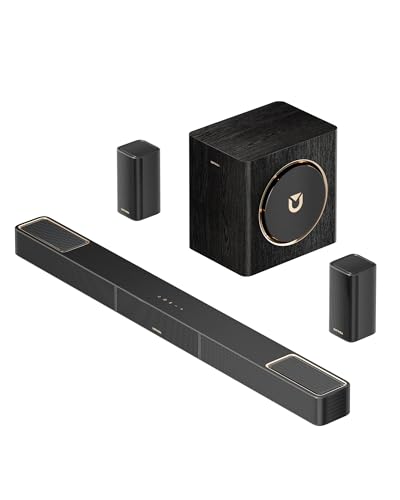
But here's where it gets tricky: not all soundbars are created equal. Some focus on making dialogue clearer for everyday TV watching, while others aim to recreate the full cinema experience in your living room. Today, we're comparing two very different approaches to this problem: the Samsung HW-B630F, a straightforward 3.1-channel system from 2024, and the ULTIMEA Skywave X40, a full 5.1.2 Dolby Atmos system that launched in 2025.
Before diving into these specific models, let's talk about what those channel numbers actually mean. When you see "3.1" or "5.1.2," you're looking at a code that tells you exactly how many speakers are working to create your sound experience.
The first number represents front-facing speakers (left, center, right), the second number indicates subwoofers for bass, and if there's a third number, that's for height or overhead speakers. So the Samsung HW-B630F has three front speakers plus a subwoofer, while the ULTIMEA Skywave X40 has five main speakers, one subwoofer, and two height speakers for a total of eight speakers working together.
This difference is crucial because it fundamentally changes what each system can accomplish. The Samsung uses something called "virtual surround sound"—clever audio processing that tries to trick your ears into thinking sound is coming from behind you when it's actually just coming from the front speakers. The ULTIMEA, on the other hand, has actual speakers positioned around your room, creating genuine surround sound.
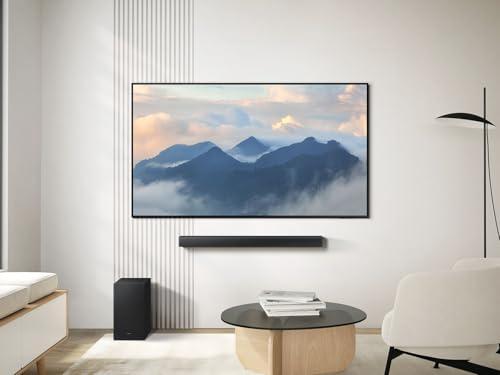
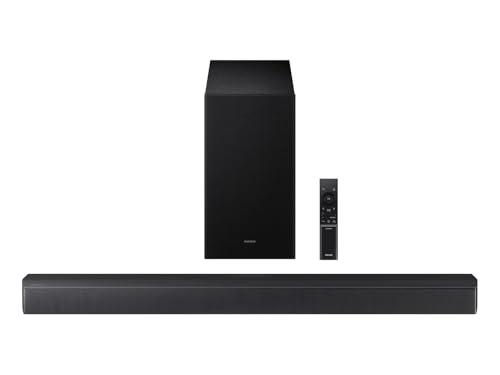
The Samsung HW-B630F represents what I'd call the "refined basics" approach to soundbar design. Samsung built this system around one core principle: make TV dialogue crystal clear while adding some bass impact, all while keeping things simple.
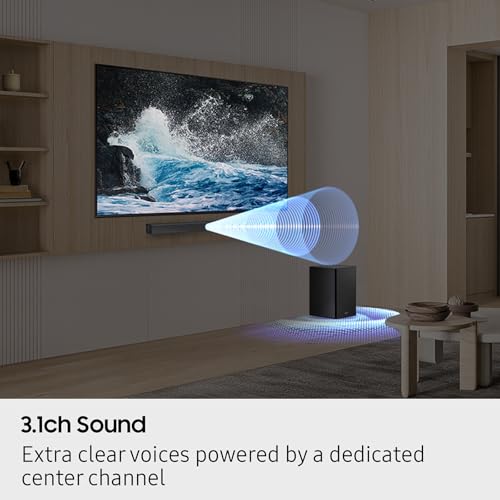
The centerpiece of this approach is the dedicated center channel speaker. In a typical TV show or movie, about 60-70% of the important audio—mainly dialogue—comes through this center channel. By having a physical speaker dedicated solely to voices, the Samsung HW-B630F can tune this channel specifically for speech clarity. Samsung's Voice Enhance mode takes this even further, boosting the frequency ranges where human speech is most concentrated (roughly 300Hz to 3kHz) while reducing competing sounds.
This focus on dialogue really shows in Samsung's Adaptive Sound feature, which uses real-time analysis to automatically adjust the audio based on what you're watching. During a quiet drama scene, it emphasizes subtle details and keeps dialogue prominent. When an action sequence starts, it shifts to emphasize impact and spatial effects while still keeping voices intelligible. It's like having someone constantly adjusting the sound specifically for each scene.
The wireless subwoofer adds the low-frequency punch that makes explosions feel powerful and music sound full. Samsung uses a 6-inch driver in a bass-reflex cabinet—essentially a box with a precisely tuned port that helps extend the low-frequency response. The Bass Boost mode can add extra emphasis when you want more impact, though the overall tuning prioritizes clean, controlled bass over room-shaking power.
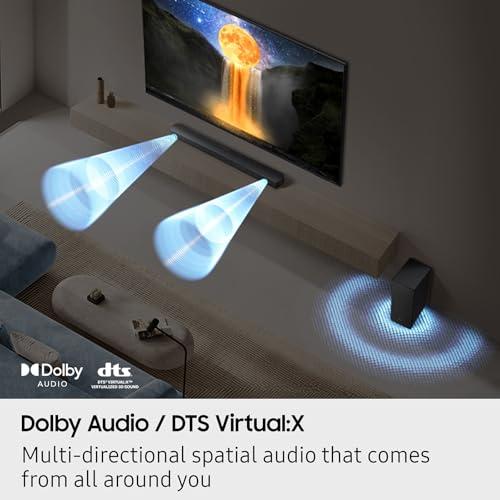
Where Samsung gets clever is in the virtual surround processing. DTS Virtual:X uses psychoacoustic principles—basically, tricks that exploit how our brains process sound—to create the illusion of surround effects. By carefully adjusting timing, phase relationships, and frequency content, it can make sounds seem to come from beside or even behind you, even though they're originating from the front speakers. It's not as convincing as real surround speakers, but it's surprisingly effective for expanding the apparent width and depth of the sound field.
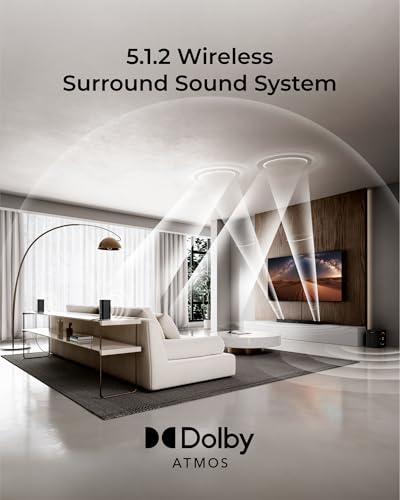
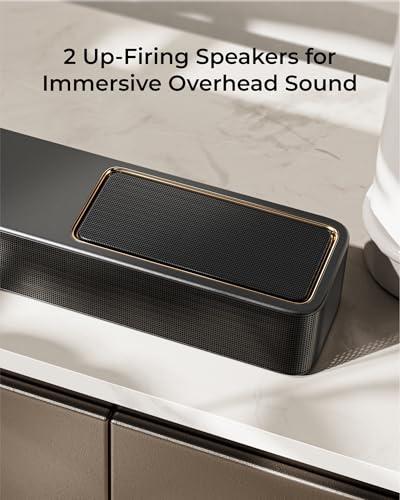
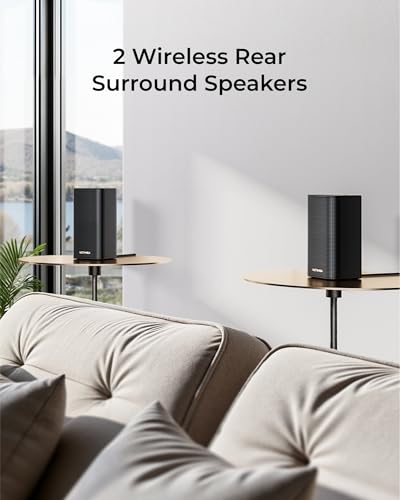
The ULTIMEA Skywave X40 takes a completely different approach, and honestly, it's pretty impressive for a brand that most people haven't heard of. Instead of trying to simulate surround sound, ULTIMEA just gives you the real thing—actual speakers placed around your room, including two that fire sound upward to bounce off your ceiling for overhead effects.
This is proper Dolby Atmos, the same technology used in movie theaters. Dolby Atmos doesn't just think about sound in terms of left-right-center like traditional surround sound. Instead, it treats sounds as objects that can be precisely placed anywhere in a three-dimensional space around you. When a helicopter flies overhead in a movie, you actually hear it moving above you, not just in front of you.
The ULTIMEA Skywave X40 achieves this through what they call their NEURACORE processing engine. This is essentially a very powerful computer dedicated to audio processing, using what they describe as "triple-core DSP and dual-core MCU" architecture. In simpler terms, it has multiple processing cores working simultaneously to handle the complex calculations needed to position sounds accurately in 3D space while managing all eight speakers in real-time.
One of the most impressive technical features is the GaN (Gallium Nitride) amplifier technology. Traditional amplifiers use silicon-based components, but GaN amplifiers can switch on and off much faster and more efficiently. This means less heat generation, more precise control, and cleaner sound even at high volumes. The efficiency improvement is substantial—ULTIMEA claims up to 98% efficiency compared to around 85% for traditional amplifiers. In practical terms, this means the system can play louder with less distortion and doesn't get hot during extended use.
The wireless implementation is particularly sophisticated. Instead of using basic Bluetooth, the ULTIMEA Skywave X40 uses what they call "Dual 5G CineMesh" technology—essentially a dedicated 5GHz wireless network just for audio. This provides much more bandwidth than standard wireless audio connections, allowing for uncompressed, full-quality audio to be transmitted to the rear speakers and subwoofer with less than 20 milliseconds of delay. For reference, anything under 40ms is generally considered imperceptible, so this is impressively tight timing.
This is where the differences become most apparent. The Samsung HW-B630F delivers what I'd call "appropriate" bass—it's clean, controlled, and adds the low-frequency foundation that makes movies and music sound fuller than TV speakers alone. The 6-inch subwoofer is adequately powered and the bass-reflex design helps extend the low-frequency response, but it's not going to rattle your windows.
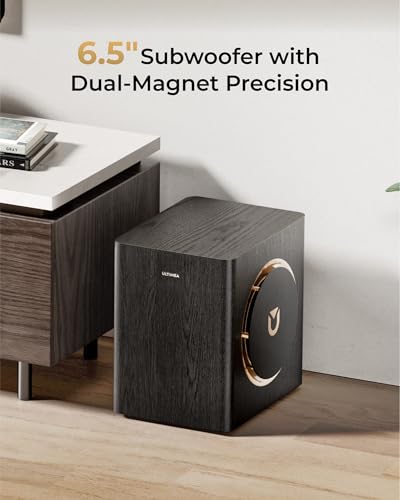
The ULTIMEA Skywave X40, with its 6.5-inch dual-magnet subwoofer and 530W peak power handling, operates in a different league entirely. The dual-magnet design provides more precise control over the driver movement, reducing distortion even at high output levels. More importantly, the Gravus Ultra-Linear Bass technology uses advanced signal processing to maintain clean bass reproduction even when you're pushing the system hard. In practical terms, this means you can turn up action movies to reference levels without the bass becoming muddy or overpowering the dialogue.
The power difference is substantial. While Samsung doesn't publish specific power figures for the Samsung HW-B630F, based on its size and price point, it's likely operating with around 150-200W total system power. The ULTIMEA Skywave X40's 530W peak output means it can fill larger rooms and maintain clean sound at higher volumes.
Here's where things get interesting. You might assume that more speakers automatically means better dialogue, but that's not necessarily true. The Samsung HW-B630F's dedicated center channel is specifically optimized for human speech, and Samsung has years of experience tuning this frequency response. The Voice Enhance mode is particularly effective at cutting through background noise and making dialogue more intelligible, even at lower volumes.
The ULTIMEA Skywave X40 also has excellent dialogue clarity, but it achieves this through different means. Instead of one highly optimized center channel, it uses the processing power of the NEURACORE engine to dynamically manage the entire front soundstage. This can actually result in more natural-sounding dialogue because voices can be positioned more precisely within the sound field, but it requires the processing to work correctly.
From our research into user and professional reviews, both systems excel at dialogue clarity, but in different scenarios. The Samsung HW-B630F seems to perform slightly better for everyday TV watching—news, talk shows, dramas—where dialogue is the primary focus. The ULTIMEA Skywave X40 shines more in complex movie soundtracks where dialogue needs to remain clear while lots of other things are happening around it.
This is where the ULTIMEA Skywave X40 really pulls ahead. Gaming audio has become increasingly sophisticated, with many games now supporting full surround sound and even Dolby Atmos. Being able to hear an enemy's footsteps coming from the correct direction can be the difference between winning and losing in competitive games.
The Samsung HW-B630F includes a Game Mode that optimizes the audio processing for gaming, reducing latency and emphasizing positional cues within its virtual surround field. It's definitely better than TV speakers for gaming, and the processing is fast enough that you won't notice audio lag.
But the ULTIMEA Skywave X40's true surround configuration provides actual directional information that virtual processing simply can't match. The ultra-low latency wireless transmission (under 20ms) means there's no perceptible delay between on-screen action and audio response. Plus, modern games that support Dolby Atmos can use those overhead speakers for effects like helicopters, aircraft, or environmental sounds above the player.
Both systems represent fairly recent thinking about soundbar design, but they've evolved in different directions since their release. The Samsung HW-B630F, launching in 2024, refined Samsung's B-series approach with better processing algorithms and improved voice enhancement compared to earlier versions. However, it maintains the same basic architecture that Samsung has been using for several years—it's evolutionary rather than revolutionary.
The ULTIMEA Skywave X40, arriving in 2025, represents a more dramatic leap forward, particularly in wireless technology and processing power. The GaN amplification and advanced wireless transmission weren't commonly available in soundbars even two years ago, and the level of processing power devoted to audio in this system would have been found only in much more expensive systems just a few years back.
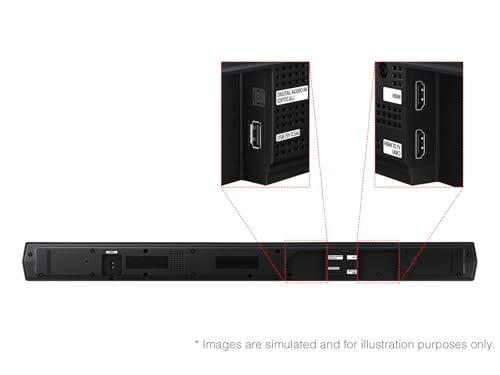
This is another area where the philosophical differences become apparent. The Samsung HW-B630F uses HDMI 1.4 with ARC (Audio Return Channel), which is perfectly adequate for current TV watching but doesn't support the latest audio formats or 4K HDR video passthrough. If you're connecting a gaming console or 4K Blu-ray player, you'd need to connect it directly to your TV and send audio back to the soundbar.
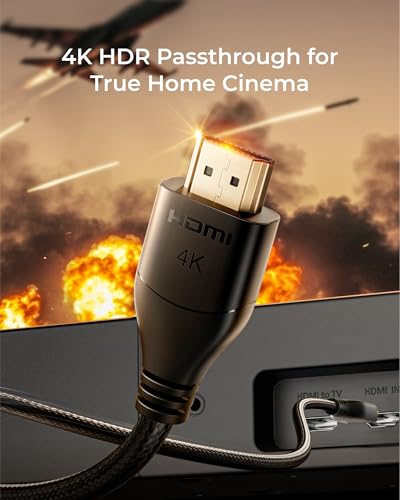
The ULTIMEA Skywave X40 includes HDMI eARC (enhanced Audio Return Channel), which supports higher-quality audio formats and can pass through 4K HDR video without degradation. This means you can connect devices directly to the soundbar if you prefer, and it'll maintain full video quality while providing the best possible audio.
For wireless connectivity, the Samsung HW-B630F uses Bluetooth 4.2, which is adequate but not the latest standard. The ULTIMEA Skywave X40's Bluetooth 5.4 provides better range, more stable connections, and improved audio quality.
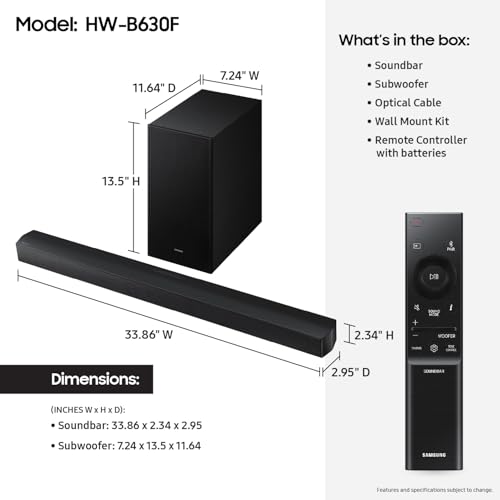
Room size becomes crucial when choosing between these systems. The Samsung HW-B630F works well in small to medium-sized rooms where you're primarily seated in front of the TV. Its 33.9-inch width fits well with TVs 40 inches and larger, and the simpler setup means you don't need to worry about optimal speaker placement around the room.
The ULTIMEA Skywave X40 really needs more space to shine. At 43.3 inches wide, it pairs better with larger TVs (55 inches and up), and you need to be able to position the rear speakers effectively. In a small apartment where you can't place rear speakers properly, you're not getting the full benefit of the system.
At the time of writing, these systems are positioned at different price points that reflect their different approaches. The Samsung HW-B630F typically costs significantly less than the ULTIMEA Skywave X40, making it an excellent value for users who want a solid upgrade over TV speakers without a major investment.
The ULTIMEA Skywave X40 costs more but delivers substantially more performance and features. When you consider that traditional home theater systems with similar capabilities from major brands often cost several times more, it represents impressive value for what you get.
Choose the Samsung HW-B630F if:
Choose the ULTIMEA Skywave X40 if:
These two soundbars represent fundamentally different philosophies about home audio. The Samsung HW-B630F excels at doing the basics really well—it makes TV dialogue clearer, adds some bass impact, and improves the overall sound quality without complicating your life. It's the sensible choice for most people who just want better TV audio.
The ULTIMEA Skywave X40 is for people who want to transform their living room into a genuine home theater. It provides an immersive, enveloping audio experience that can make movies feel truly cinematic. The wireless convenience means you get true surround sound without running cables around your room.
Based on our research and analysis of user feedback, both systems deliver on their promises, but they're solving different problems. The Samsung is about making everyday TV watching more pleasant and engaging. The ULTIMEA is about creating memorable, immersive entertainment experiences.
Your choice should depend on how you actually use your TV. If you spend most of your time watching regular television content and want clearer dialogue and some extra bass impact, the Samsung HW-B630F will serve you extremely well at a reasonable price point. If you're a movie enthusiast or gamer who wants to experience content the way it was meant to be heard, the ULTIMEA Skywave X40 justifies its higher cost with genuinely superior immersive capabilities.
Either way, both represent significant upgrades over typical TV speakers and offer excellent value within their respective categories.
| Samsung HW-B630F B-Series 3.1ch Soundbar System | ULTIMEA Skywave X40 5.1.2 Soundbar System |
|---|---|
| Channel Configuration - Determines surround sound capability and immersion level | |
| 3.1-channel (3 front speakers + subwoofer, virtual surround only) | 5.1.2-channel (5 speakers + subwoofer + 2 height speakers for true Dolby Atmos) |
| Physical Speakers Included - More speakers = better spatial audio positioning | |
| 4 total speakers (soundbar has 3, plus 1 wireless subwoofer) | 8 total speakers (soundbar + wireless subwoofer + 2 wireless rear speakers) |
| Dolby Atmos Support - Essential for modern movie and streaming content | |
| No Dolby Atmos (DTS Virtual:X only simulates overhead effects) | True Dolby Atmos with physical up-firing speakers for genuine overhead sound |
| Surround Sound Method - Virtual vs. physical speakers affects realism | |
| Virtual surround via DTS Virtual:X processing from front speakers only | True wireless surround with physical rear speakers positioned around room |
| Power Output - Higher power means louder, cleaner sound in larger rooms | |
| Unspecified but estimated ~150-200W total system power | 530W peak power with GaN amplifier technology |
| Subwoofer Size - Larger drivers typically produce deeper, more impactful bass | |
| 6-inch wireless subwoofer with bass-reflex design | 6.5-inch dual-magnet wireless subwoofer (extends down to 35Hz) |
| HDMI Connectivity - Affects compatibility with 4K devices and future-proofing | |
| HDMI 1.4 with ARC only (1080p passthrough, no HDR support) | HDMI eARC with 4K HDR passthrough (better for gaming consoles and 4K players) |
| Wireless Technology - Impacts connection stability and audio quality | |
| Bluetooth 4.2 with 2.4GHz subwoofer connection | Bluetooth 5.4 plus Dual 5GHz CineMesh with <20ms latency |
| App Control and Customization - Determines how much you can fine-tune the sound | |
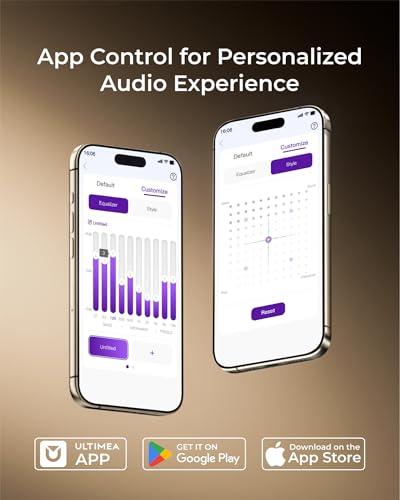
| Basic remote control only, limited EQ adjustment | Dedicated smartphone app with 10-band EQ and 121 sound presets |
| Dialogue Enhancement - Critical for TV shows and movie speech clarity | |
| Dedicated center channel with Voice Enhance mode and Adaptive Sound | Voice mode plus advanced NEURACORE processing for dynamic vocal optimization |
| Gaming Features - Important for console gaming and competitive play | |
| Game Mode with cross-talk cancellation for improved positional cues | Ultra-low latency wireless plus true surround positioning for competitive advantage |
| Setup Complexity - Affects ease of installation and room requirements | |
| Simple 2-component setup (soundbar + wireless sub) | 4-component system requires strategic placement of wireless rear speakers |
| Soundbar Dimensions - Must fit proportionally with your TV size | |
| 33.9" wide (ideal for 40"+ TVs, more compact) | 43.3" wide (better for 55"+ TVs, requires more space) |
| Best Use Case - Helps determine which system fits your viewing habits | |
| TV-focused audio upgrade with excellent dialogue clarity | Complete home theater experience for movies and immersive gaming |
The primary difference is that the Samsung HW-B630F is a 3.1-channel soundbar with virtual surround sound, while the ULTIMEA Skywave X40 is a complete 5.1.2 Dolby Atmos system with physical rear speakers and overhead effects. The Samsung focuses on improving TV dialogue and adding bass, while the ULTIMEA creates a true home theater surround sound experience.
The ULTIMEA Skywave X40 is significantly better for home theater use. It provides true Dolby Atmos with physical rear speakers and up-firing drivers for overhead effects, creating genuine surround sound that places you in the middle of the action. The Samsung HW-B630F only simulates surround effects through virtual processing from front speakers.
Yes, both the Samsung HW-B630F and ULTIMEA Skywave X40 include wireless subwoofers. However, the ULTIMEA has a larger 6.5-inch dual-magnet subwoofer with more power, while the Samsung uses a 6-inch subwoofer. The ULTIMEA also includes wireless rear speakers, which the Samsung does not.
The Samsung HW-B630F is much easier to set up since it only requires positioning the soundbar and plugging in the wireless subwoofer. The ULTIMEA Skywave X40 requires strategic placement of four components (soundbar, subwoofer, and two rear speakers) around your room, though all connections are wireless.
Both soundbars work well for gaming, but the ULTIMEA Skywave X40 offers superior gaming performance with ultra-low latency wireless transmission and true positional audio from physical rear speakers. The Samsung HW-B630F includes a dedicated Game Mode that improves virtual surround effects for gaming.
Both excel at dialogue clarity, but in different ways. The Samsung HW-B630F has a dedicated center channel specifically optimized for speech with Voice Enhance mode, making it excellent for everyday TV viewing. The ULTIMEA Skywave X40 uses advanced processing to maintain clear dialogue even in complex movie soundtracks.
The Samsung HW-B630F works well in small to medium rooms and fits TVs 40 inches and larger. The ULTIMEA Skywave X40 requires more space to properly position the rear speakers and pairs better with TVs 55 inches and up for optimal performance.
The ULTIMEA Skywave X40 supports 4K HDR passthrough via HDMI eARC, making it compatible with modern gaming consoles and 4K Blu-ray players. The Samsung HW-B630F only supports 1080p passthrough with basic HDMI ARC, requiring you to connect 4K devices directly to your TV.
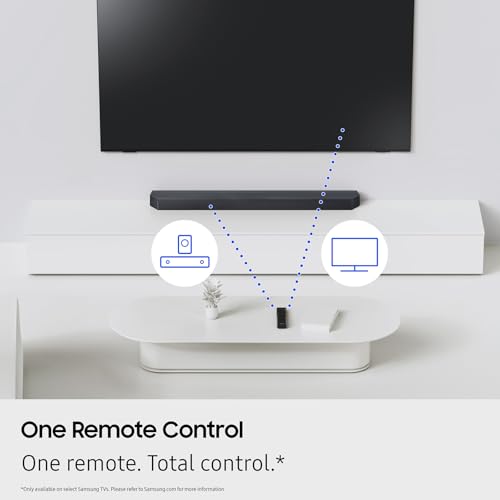
The Samsung HW-B630F integrates seamlessly with Samsung TV remotes through One Remote Control and HDMI-CEC. The ULTIMEA Skywave X40 supports basic HDMI-CEC control but offers more advanced customization through its dedicated smartphone app with 10-band EQ and multiple sound presets.
The ULTIMEA Skywave X40 is significantly more powerful with 530W peak output and advanced GaN amplifier technology. The Samsung HW-B630F has adequate power for most rooms but doesn't specify exact wattage and is estimated to be much lower than the ULTIMEA system.
No, only the ULTIMEA Skywave X40 supports true Dolby Atmos with physical up-firing speakers for overhead effects. The Samsung HW-B630F uses DTS Virtual:X to simulate surround and height effects but cannot decode or play actual Dolby Atmos content.
This depends on your needs. The Samsung HW-B630F offers excellent value for users wanting clear dialogue and better TV audio at a lower cost. The ULTIMEA Skywave X40 provides exceptional value for home theater enthusiasts, delivering true surround sound capabilities that typically cost much more from major brands.
We've done our best to create useful and informative comparisons to help you decide what product to buy. Our research uses advanced automated methods to create this comparison and perfection is not possible - please contact us for corrections or questions. These are the sites we've researched in the creation of this article: samsung.com - bhphotovideo.com - crutchfield.com - youtube.com - bestproducts.com - videoandaudiocenter.com - pcrichard.com - bhphotovideo.com - samsung.com - youtube.com - requiremints.com - karlsonline.com - crutchfield.com - youtube.com - donstv.com - samsung.com - bhphotovideo.com - youtube.com - youtube.com - crutchfield.com - costco.ca - rtings.com - crutchfield.com - accio.com - bhphotovideo.com - manuals.plus - samsung.com - saraappliance.com - bestbuy.com - shopabunda.com - youtube.com - youtube.com - youtube.com - youtube.com - ultimea.com - walmart.com - youtube.com - hometechnologyreview.com - community.ultimea.com - avsforum.com - youtube.com - youtube.com - youtube.com - bestbuy.com - hometechnologyreview.com

Privacy Policy
Terms and Conditions - Affiliate Policy
Home Security
© Copyright 2008-2026.
11816 Inwood Rd #1211, Dallas, TX 75244