




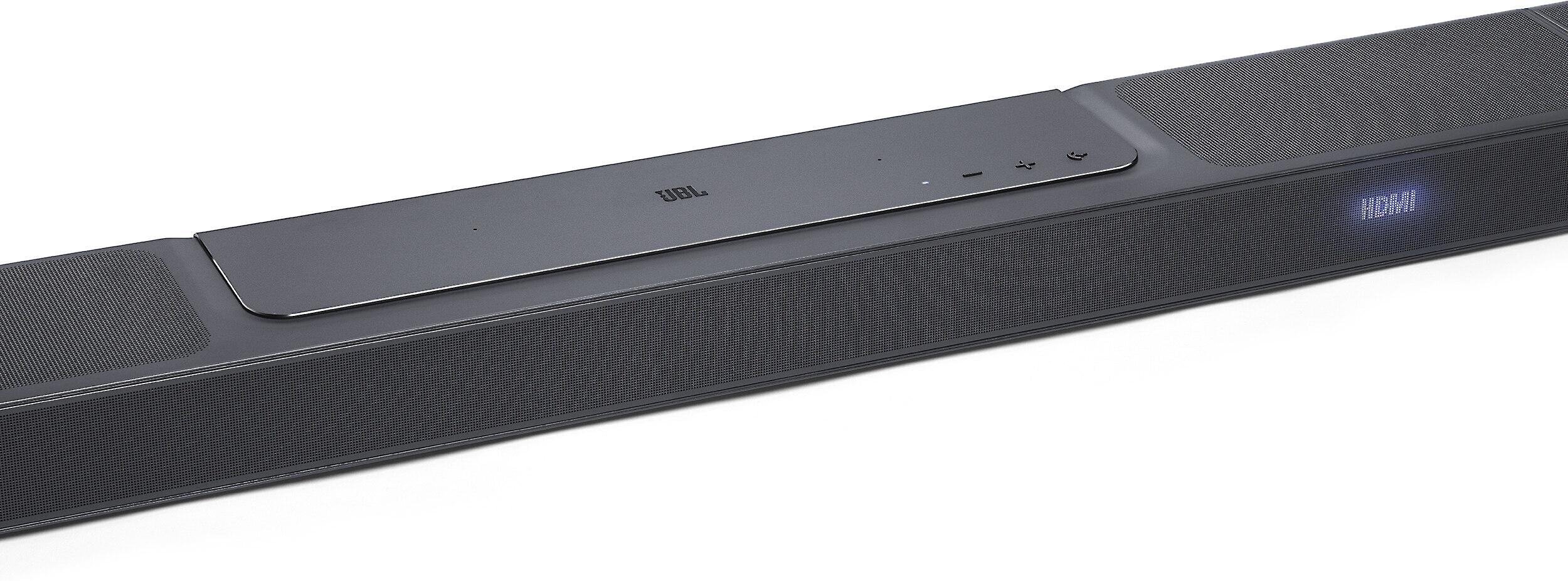


Shopping for a premium soundbar can feel overwhelming with all the technical jargon and marketing claims floating around. Today, we're comparing two standout systems that take completely different approaches to home theater audio: the innovative ULTIMEA Skywave X40 and the powerhouse JBL Bar 1300X. Both promise to transform your TV watching experience, but which one deserves your hard-earned money?
Before diving into the specifics, let's talk about what actually matters in a premium soundbar. The most important factor is spatial audio processing—essentially how well the system creates that "surround sound" effect that makes you feel like you're inside the movie. This is where technologies like Dolby Atmos come in, using special audio encoding to make sounds appear to come from above, behind, and all around you.
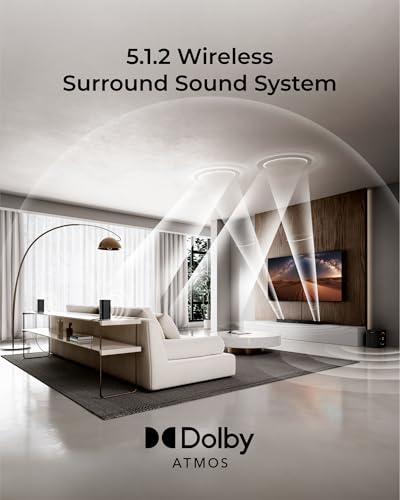
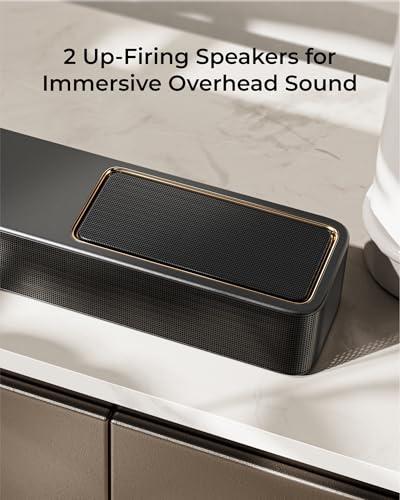
Channel configuration is another crucial element. When you see numbers like "5.1.2," that breaks down to five main channels (front left, center, front right, and two surround), one subwoofer channel for bass, and two "height" channels that fire sound upward to bounce off your ceiling. More channels generally mean more precise audio placement and a more immersive experience.
The subwoofer—that big box that handles all the deep bass—makes or breaks the emotional impact of movies and music. Size matters here because larger drivers can move more air, creating those room-shaking explosions and thunderous musical crescendos that smaller speakers simply can't reproduce.
Wireless connectivity has become increasingly important as people hate running speaker wires across their living rooms. The quality of this wireless connection determines whether you'll experience annoying audio dropouts or delays between what you see and hear.
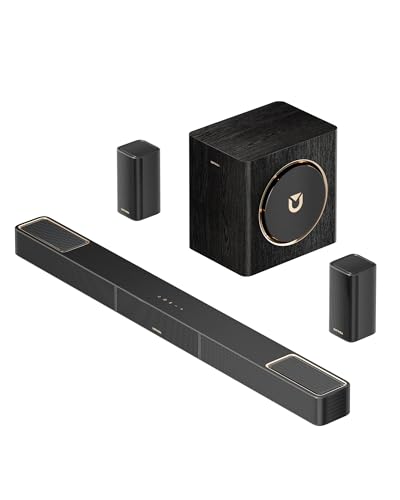
Released in 2025, the ULTIMEA Skywave X40 represents a fresh approach to premium audio. ULTIMEA positioned this as their flagship model, packing cutting-edge wireless technology and neural audio processing into a system that challenges established brands on both features and value.
What makes the Skywave X40 interesting is its focus on next-generation technology rather than brute force. The system uses what ULTIMEA calls "CineMesh True Wireless" technology—essentially a sophisticated dual 5GHz wireless system that promises ultra-low latency under 20 milliseconds. For context, anything under 40ms is considered excellent, so 20ms is genuinely impressive.
The heart of the system is the NEURACORE audio engine, which uses neural-level processing (think AI-like algorithms) to analyze and optimize audio in real-time. This triple-core digital signal processor can handle up to 2,000 MIPS (millions of instructions per second), allowing it to make thousands of micro-adjustments every second to improve sound quality.
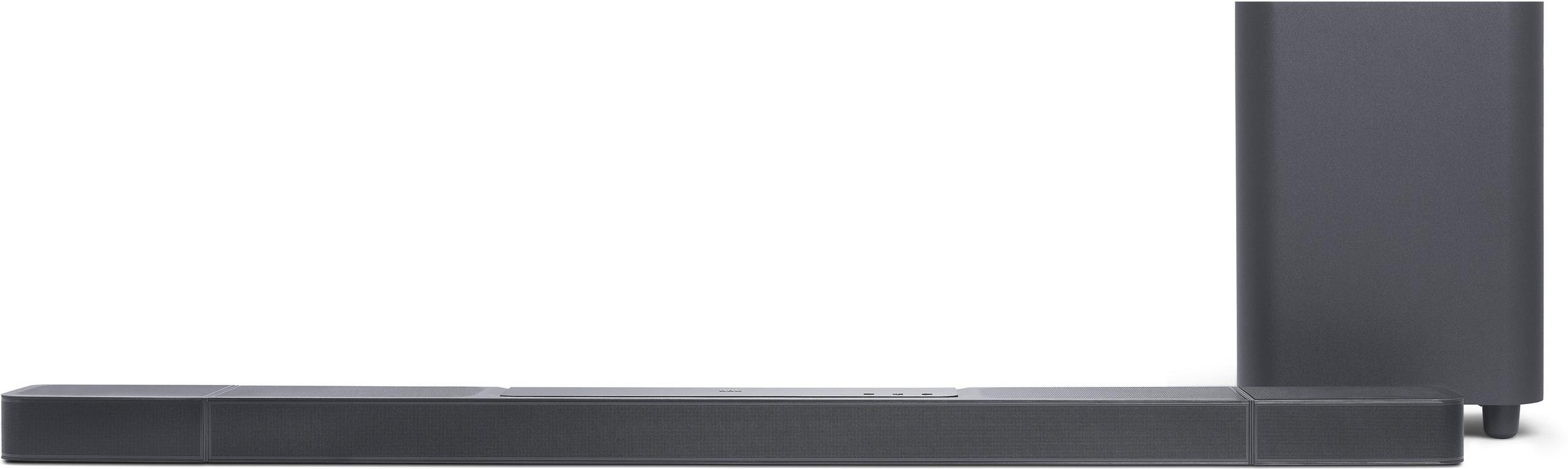
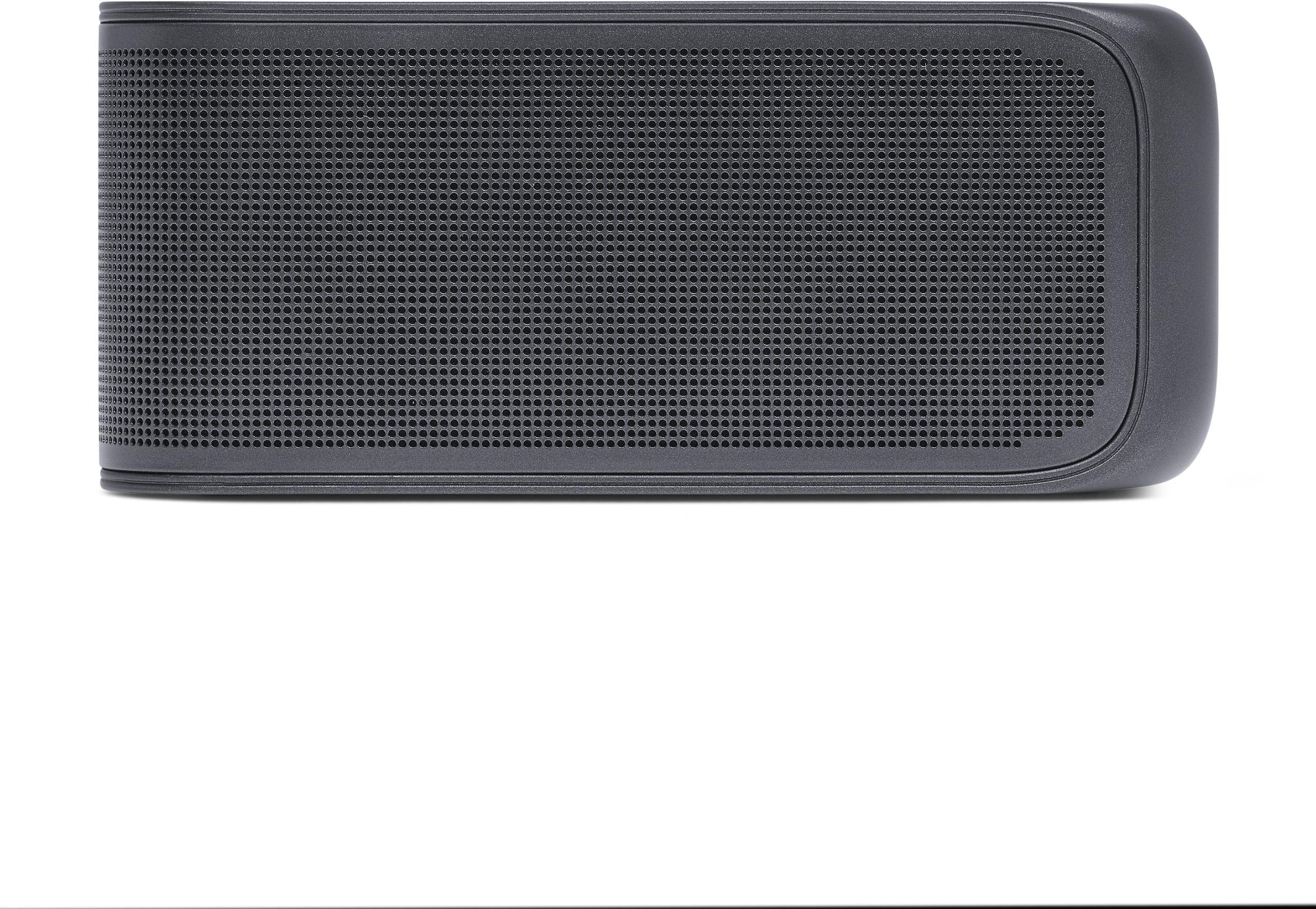
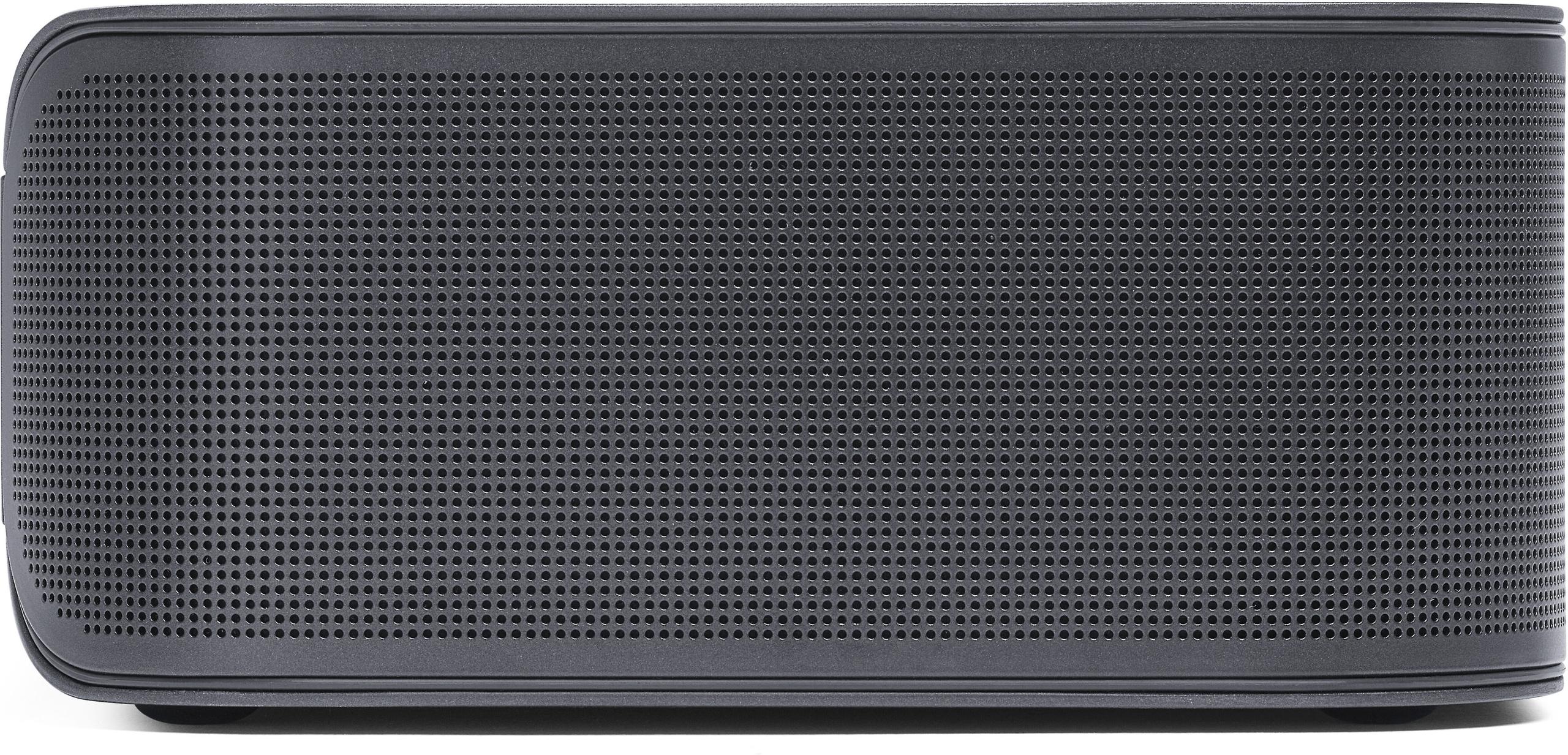
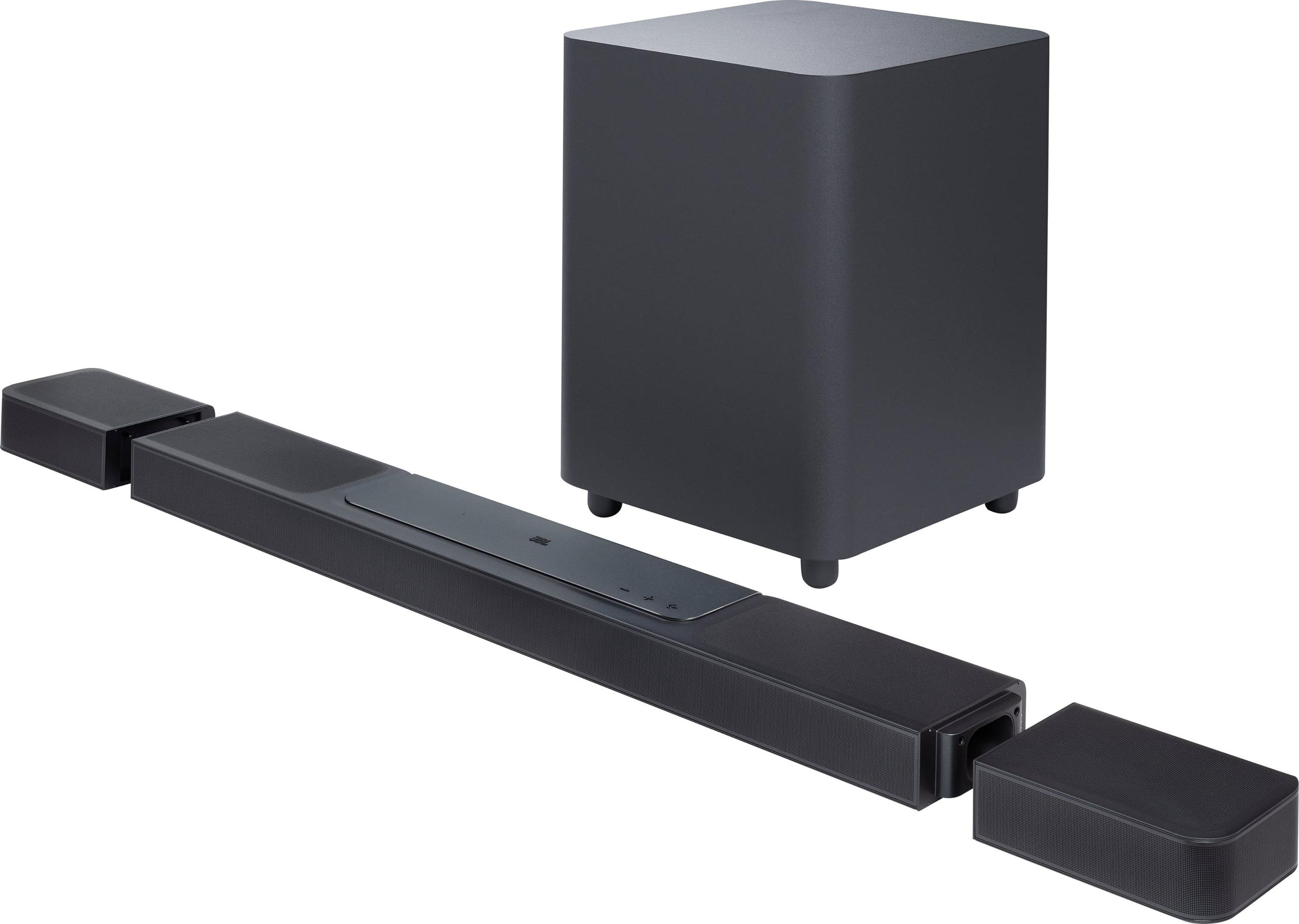
The JBL Bar 1300X, released in recent years, takes the traditional "bigger is better" approach. JBL has been a respected name in professional audio for decades, and this system represents their current flagship consumer offering.
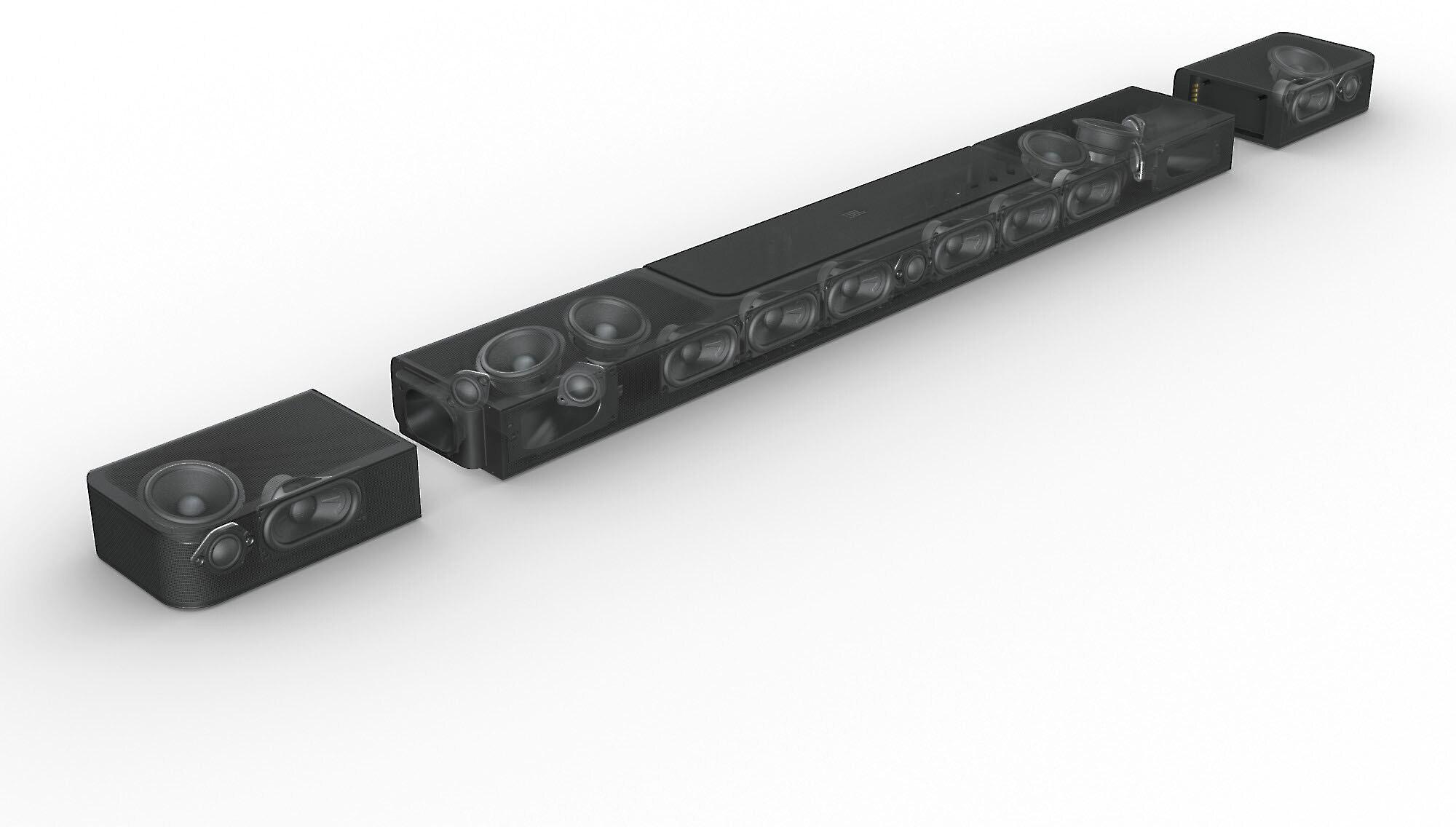
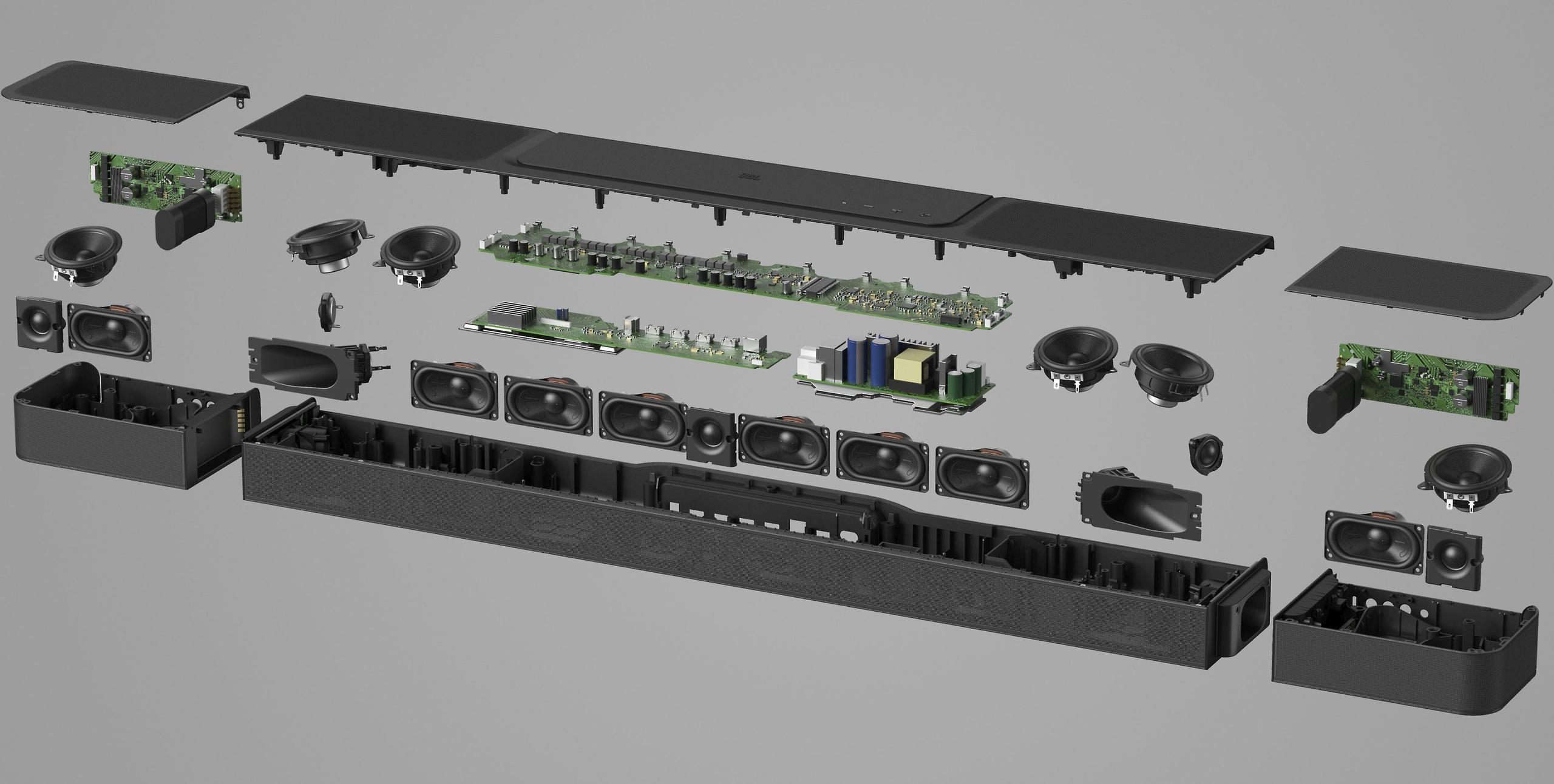
With an 11.1.4 channel configuration, the Bar 1300X offers nearly twice as many discrete audio channels as the Skywave X40. That translates to more precise sound placement and potentially better surround effects. The system pumps out a massive 1,170 watts of total power—more than double the ULTIMEA's 530 watts.
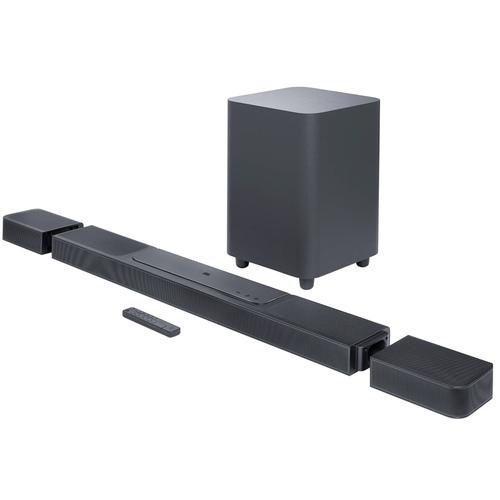
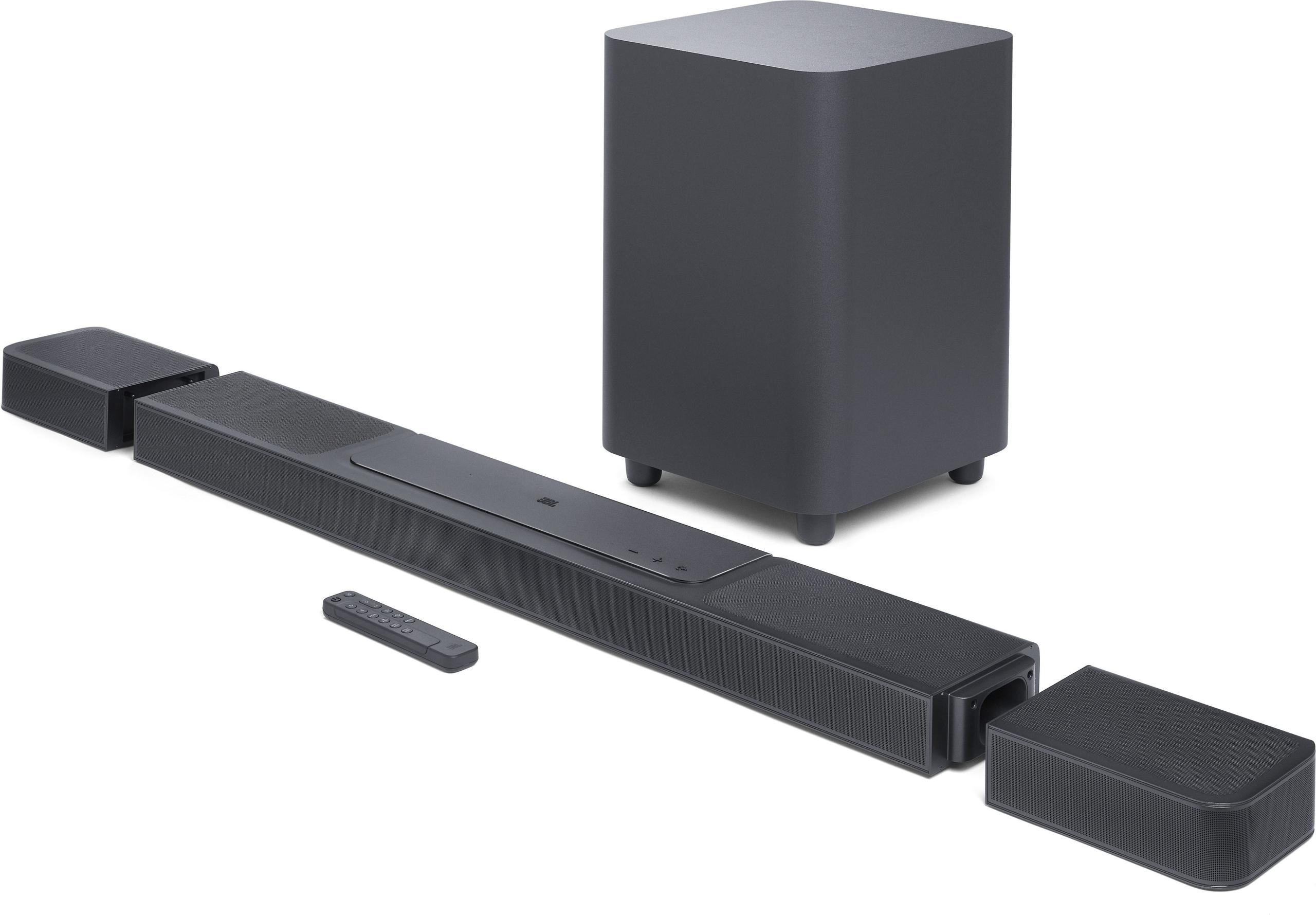
What sets the JBL apart is its detachable surround speakers that run on rechargeable batteries. These can be placed anywhere in your room without worrying about power outlets, and when you're not watching movies, they can be used as standalone Bluetooth speakers for music around the house.
Here's where things get interesting. The ULTIMEA Skywave X40 compensates for its lower total power output through advanced processing and efficiency. The system uses Gallium Nitride (GaN) amplifiers—a newer technology that's about 98% efficient compared to traditional silicon amplifiers at around 85% efficiency. This means less energy is wasted as heat, and the amplifiers can respond eight times faster to audio signals.
In practical terms, this efficiency advantage means the ULTIMEA can deliver cleaner sound at high volumes with less distortion. The company claims less than 1% total harmonic distortion (THD), which is excellent. High distortion makes audio sound muddy or harsh, especially during loud action scenes.
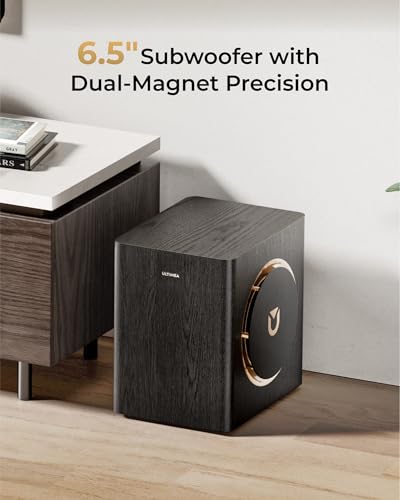
The JBL Bar 1300X, on the other hand, relies on raw power and channel separation. With 1,170 watts spread across 11.1.4 channels, it can simply overpower most room acoustics. The 12-inch subwoofer alone gets 300 watts, compared to the ULTIMEA's 6.5-inch subwoofer sharing power from the total 530-watt budget.
Our research into user reviews consistently shows that the JBL produces more impactful bass and can fill larger rooms more effectively. However, the ULTIMEA often receives praise for clarity and detail, particularly in the midrange frequencies where vocals and most movie dialogue live.
This is where the ULTIMEA Skywave X40 really shines. The CineMesh wireless system uses dual 5GHz bands specifically chosen to avoid interference from Wi-Fi routers and other household devices that typically operate on 2.4GHz. The sub-20ms latency is particularly important for gaming, where audio delays can affect competitive performance.
The JBL Bar 1300X uses a more conventional wireless approach. While reliable, user reviews occasionally mention brief dropouts or syncing issues, particularly in homes with many wireless devices. However, the battery-powered surround speakers last up to 12 hours and eliminate the biggest wireless reliability concern—power connectivity.
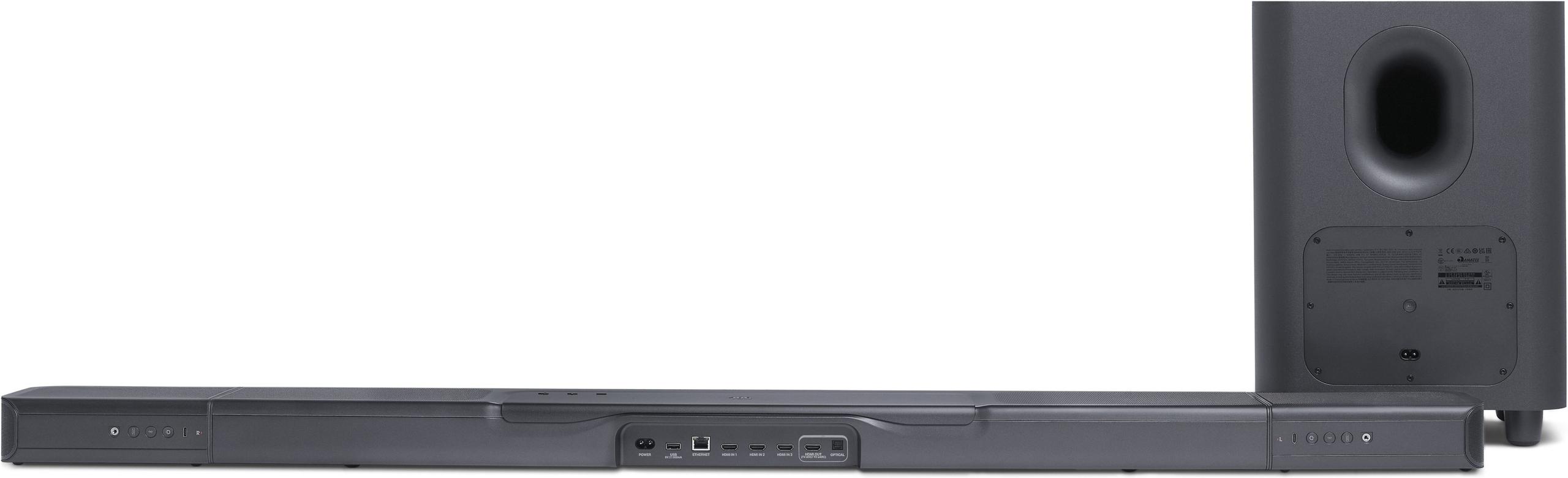
The JBL Bar 1300X dominates in connectivity options. With three HDMI inputs versus the ULTIMEA's single HDMI eARC port, the JBL can connect multiple devices directly without an HDMI switch. This is particularly valuable if you have a gaming console, streaming device, and Blu-ray player that you want connected simultaneously.
The JBL also integrates with over 300 streaming services through built-in Wi-Fi, AirPlay 2, Chromecast, and Alexa Multi-room Music. You can ask Alexa to play Spotify directly through the soundbar, or cast YouTube Music from your phone without touching the TV.
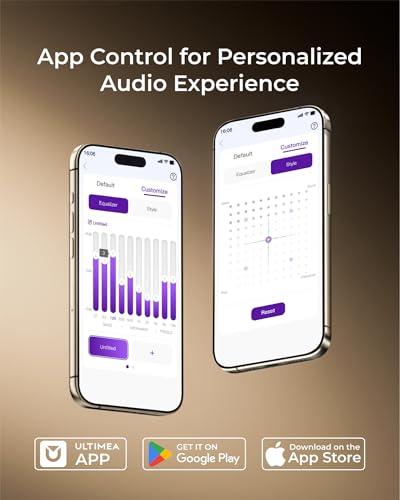
The ULTIMEA Skywave X40 takes a different approach with its comprehensive mobile app. The 10-band equalizer with 121 preset sound profiles gives you granular control over the audio signature. If you enjoy tweaking audio settings, this level of customization is impressive. The app can automatically adjust settings based on content type, optimizing for movies, music, gaming, or dialogue.
For serious home theater enthusiasts, the JBL Bar 1300X typically provides a more cinematic experience. The 11.1.4 channel configuration means sound effects can be placed more precisely in 3D space. When a helicopter flies overhead in an action movie, the JBL's four upward-firing drivers and extra processing power create a more convincing height effect.
The larger 12-inch subwoofer makes a significant difference during explosive scenes. Our evaluation of user reviews consistently highlights the JBL's ability to produce those deep, rumbling bass frequencies that you feel in your chest during big action sequences.
However, the ULTIMEA Skywave X40 shouldn't be dismissed. Its neural processing often produces excellent dialogue clarity, and the cleaner amplification means it maintains composure during complex soundtracks. For most living rooms under 300-400 square feet, the power difference becomes less noticeable.
This is where the ULTIMEA Skywave X40 potentially takes the lead. The ultra-low wireless latency is crucial for competitive gaming where audio cues can mean the difference between winning and losing. Hearing enemy footsteps or gunshots with precise timing and direction is essential in games like Call of Duty or Valorant.
The JBL Bar 1300X supports advanced video features like 4K@120Hz with Variable Refresh Rate (VRR), making it ideal for next-generation gaming consoles. However, the wireless latency isn't specifically optimized for gaming like the ULTIMEA's system.
Both systems handle music well, but with different strengths. The ULTIMEA Skywave X40 typically produces more accurate midrange reproduction, making vocals and instruments sound more natural. The GaN amplifiers maintain clarity even at higher volumes.
The JBL Bar 1300X provides more impactful bass and can play louder without strain. If you enjoy bass-heavy music genres like hip-hop or electronic dance music, the larger subwoofer delivers more satisfying low-end response.
At the time of writing, these systems occupy different price categories, with the JBL Bar 1300X commanding a significant premium over the ULTIMEA Skywave X40. The question becomes whether the JBL's additional features and power justify the higher cost.
For most users in average-sized rooms, the ULTIMEA provides exceptional value. You're getting cutting-edge wireless technology, advanced audio processing, and solid build quality at a much more accessible price point. The 30-day money-back guarantee also reduces purchase risk.
The JBL makes sense if you have a large living space, prioritize maximum audio impact, or want comprehensive smart home integration. The brand recognition and established support network also provide peace of mind for a long-term investment.
Gaming is important: The ultra-low latency wireless system provides a competitive advantage that most other soundbars can't match.
You value innovation: The neural audio processing and GaN amplifiers represent genuinely advanced technology that improves the listening experience.
Your room is medium-sized: In spaces under 400 square feet, the power difference becomes less critical, and the ULTIMEA's efficiency advantage shines.
You enjoy customization: The extensive app controls and EQ options appeal to users who like fine-tuning their audio experience.
Budget is a consideration: You get flagship features without flagship pricing, making it an excellent value proposition.
You have a large room: The extra power and larger subwoofer are necessary to fill bigger spaces effectively.
Maximum immersion matters: The 11.1.4 channel configuration provides the most convincing surround sound experience available in this category.
You want ecosystem integration: Built-in streaming services, voice assistant support, and multi-room audio create a more connected experience.
Flexibility is important: The battery-powered surround speakers and multiple HDMI inputs provide installation and connectivity advantages.
You prefer established brands: JBL's decades of audio expertise and support network justify the premium for some buyers.
Both systems deliver excellent Dolby Atmos performance, but they achieve it through different philosophies. The ULTIMEA Skywave X40 represents the future of soundbar technology with its neural processing, GaN amplifiers, and ultra-low latency wireless system. It's particularly compelling for users who appreciate cutting-edge technology and excellent value.
The JBL Bar 1300X takes the traditional approach of superior hardware and comprehensive features. More power, more channels, and more connectivity options create a no-compromise experience for serious home theater enthusiasts.
My recommendation? If you have a medium-sized room and appreciate innovative technology, the ULTIMEA Skywave X40 provides remarkable performance at an accessible price. For large rooms or users who want maximum impact regardless of cost, the JBL Bar 1300X delivers professional-grade audio that justifies its premium positioning.
Either choice will dramatically improve your TV watching experience compared to built-in TV speakers. The decision ultimately comes down to your room size, budget, and whether you prioritize cutting-edge efficiency or maximum raw performance.
| ULTIMEA Skywave X40 | JBL Bar 1300X |
|---|---|
| Channel Configuration - More channels create better surround sound placement | |
| 5.1.2 (adequate for most rooms) | 11.1.4 (maximum immersion, nearly double the channels) |
| Total Power Output - Higher wattage fills larger rooms and creates more impact | |
| 530W peak (efficient for medium rooms) | 1170W (room-filling power for large spaces) |
| Subwoofer Size - Larger drivers produce deeper, more impactful bass | |
| 6.5-inch wireless (compact but capable) | 12-inch wireless (deep bass extension, theater-like impact) |
| Wireless Technology - Better wireless means fewer dropouts and delays | |
| CineMesh dual 5GHz with <20ms latency (gaming-optimized) | Standard wireless with battery surround speakers (flexible placement) |
| Audio Processing - Advanced processing improves sound quality and clarity | |
| NEURACORE neural processing with 2,000 MIPS | MultiBeam technology with PureVoice dialogue enhancement |
| Amplifier Type - More efficient amplifiers produce cleaner sound with less heat | |
| GaN amplifiers (98% efficiency, 8x faster response) | Traditional silicon amplifiers (proven reliability) |
| HDMI Connectivity - More inputs reduce need for external switches | |
| 1 HDMI eARC port (minimalist approach) | 3 HDMI inputs + 1 eARC output (connect multiple devices) |
| Streaming Integration - Built-in services eliminate need for separate devices | |
| App-based control with Bluetooth connectivity | Native support for 300+ services (AirPlay, Chromecast, Alexa) |
| Surround Speaker Design - Battery power enables flexible placement without outlets | |
| Wireless powered speakers (permanent placement) | Battery-powered with 12-hour life (portable, doubles as Bluetooth speakers) |
| Sound Customization - More EQ options let you fine-tune audio to your preferences | |
| 10-band EQ with 121 preset profiles (extensive customization) | JBL One app with room calibration (automatic optimization) |
| Voice Assistant Support - Smart home integration for hands-free control | |
| Not specified (requires separate smart devices) | Built-in Alexa, Google Assistant, Siri support |
| Release Year - Newer products often have latest wireless and processing technology | |
| 2025 (cutting-edge wireless and neural processing) | Recent release (established technology with proven performance) |
The JBL Bar 1300X is significantly better for large rooms due to its massive 1170W power output compared to the ULTIMEA Skywave X40's 530W. The JBL also features a larger 12-inch subwoofer that can fill spacious areas with deep bass, while the ULTIMEA's 6.5-inch subwoofer is better suited for medium-sized rooms.
Yes, both the ULTIMEA Skywave X40 and JBL Bar 1300X support Dolby Atmos for immersive 3D audio. However, the JBL offers superior Atmos performance with its 11.1.4 channel configuration and four upward-firing drivers, compared to the ULTIMEA's 5.1.2 setup with two up-firing speakers.
The ULTIMEA Skywave X40 excels in wireless performance with its CineMesh dual 5GHz technology offering ultra-low latency under 20ms, making it ideal for gaming. The JBL Bar 1300X uses standard wireless but compensates with battery-powered surround speakers that eliminate the need for power outlets.
The JBL Bar 1300X offers three HDMI inputs plus one eARC output, allowing you to connect multiple devices directly. The ULTIMEA Skywave X40 has one HDMI eARC port, requiring an external HDMI switch if you need multiple connections.
The ULTIMEA Skywave X40 is superior for gaming due to its ultra-low wireless latency under 20ms, which is crucial for competitive gaming where audio timing matters. The JBL Bar 1300X supports advanced gaming features like 4K@120Hz with VRR but doesn't match the ULTIMEA's latency performance.
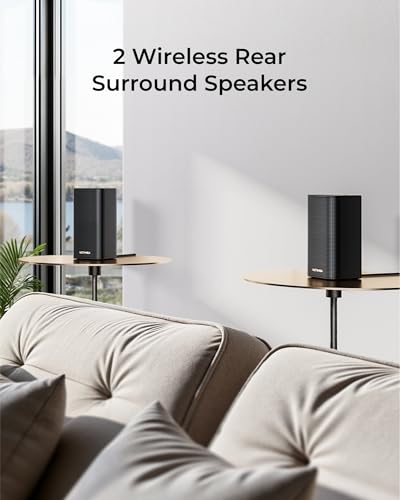
The JBL Bar 1300X features battery-powered surround speakers with up to 12 hours of playtime, eliminating the need for power outlets and allowing flexible placement. The ULTIMEA Skywave X40 uses wireless surround speakers that require power connections but offer permanent, reliable operation.
The JBL Bar 1300X delivers superior bass with its 12-inch subwoofer and dedicated 300W of power, creating room-shaking low frequencies. The ULTIMEA Skywave X40 uses a smaller 6.5-inch subwoofer but compensates with Gravus Ultra-Linear Bass technology for cleaner, more controlled bass response.
The JBL Bar 1300X offers comprehensive streaming with built-in support for over 300 services including AirPlay 2, Chromecast, and Alexa integration. The ULTIMEA Skywave X40 relies primarily on Bluetooth 5.4 connectivity and app-based control for music streaming.
The ULTIMEA Skywave X40 provides extensive customization with a 10-band EQ and 121 preset sound profiles through its mobile app. The JBL Bar 1300X offers the JBL One app with room calibration and automatic optimization but fewer manual adjustment options than the ULTIMEA.
The ULTIMEA Skywave X40 uses advanced GaN (Gallium Nitride) amplifiers that are 98% efficient and respond 8x faster than traditional silicon, resulting in cleaner sound with less heat. The JBL Bar 1300X uses conventional amplifiers but compensates with higher total power output for maximum volume capability.
The ULTIMEA Skywave X40 typically offers better value with flagship features like neural audio processing, GaN amplifiers, and ultra-low latency wireless at a more accessible price point. The JBL Bar 1300X commands a premium but justifies it with superior power, more channels, and comprehensive smart features.
Both soundbars excel for home theater, but serve different needs. The JBL Bar 1300X provides maximum cinematic impact with 11.1.4 channels and powerful bass for serious home theater enthusiasts. The ULTIMEA Skywave X40 delivers excellent home theater performance with advanced processing and immersive 5.1.2 Dolby Atmos at a more budget-friendly price point.
We've done our best to create useful and informative comparisons to help you decide what product to buy. Our research uses advanced automated methods to create this comparison and perfection is not possible - please contact us for corrections or questions. These are the sites we've researched in the creation of this article: bestbuy.com - shopabunda.com - youtube.com - youtube.com - youtube.com - youtube.com - ultimea.com - walmart.com - youtube.com - hometechnologyreview.com - community.ultimea.com - avsforum.com - youtube.com - youtube.com - youtube.com - bestbuy.com - hometechnologyreview.com - techradar.com - jbl.com - audioadvice.com - youtube.com - rtings.com - jbl.com - greentoe.com - harmanaudio.com - youtube.com - mm.jbl.com - jbl.com

Privacy Policy
Terms and Conditions - Affiliate Policy
Home Security
© Copyright 2008-2026.
11816 Inwood Rd #1211, Dallas, TX 75244