



When your TV's built-in speakers just aren't cutting it anymore, a quality soundbar system can transform your living room into a genuine home theater experience. But with dozens of options flooding the market, choosing between a premium wireless system and a proven traditional setup can feel overwhelming. Today, we're diving deep into two compelling options that represent different philosophies in soundbar design: the feature-packed ULTIMEA Skywave X40 5.1.2 and the reliable Denon DHT-S517.
Before we jump into the comparison, it's worth understanding what separates a great soundbar from a mediocre one. Modern soundbars have evolved far beyond simple stereo speakers stretched into a long bar shape. Today's systems incorporate sophisticated audio processing, multiple driver configurations, and wireless subwoofers to create immersive surround sound experiences that rival traditional multi-speaker setups.
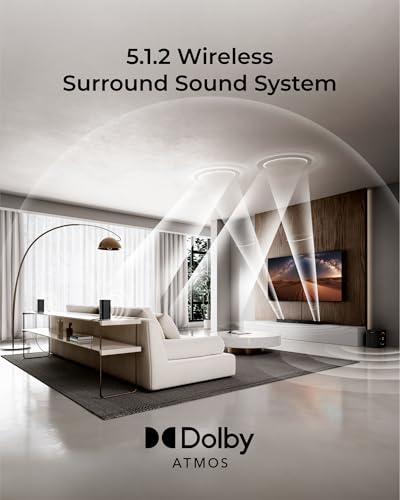
The numbers you see after soundbar names—like 3.1.2 or 5.1.2—tell you exactly what you're getting. The first number indicates front channels (left, center, right), the second shows subwoofer channels, and the third represents height channels for overhead effects. More channels generally mean more precise audio placement and better immersion, though the quality of implementation matters just as much as quantity.
Power output, measured in watts, determines how loud your system can get and how well it handles dynamic scenes with sudden volume changes. But raw power means nothing without proper acoustic engineering—a well-designed 200W system can often outperform a poorly tuned 500W setup in real-world listening.
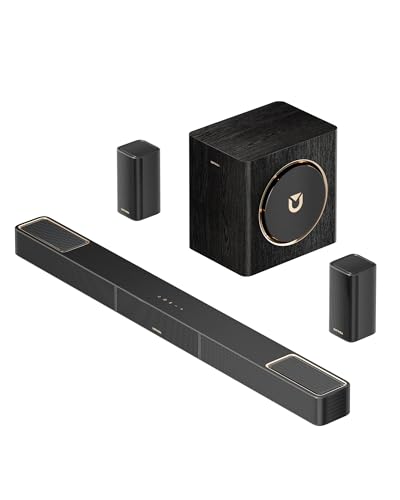
The ULTIMEA Skywave X40, launched in 2025, represents the cutting edge of soundbar technology. This system takes a "no compromises" approach, packing true 5.1.2 surround sound with dedicated wireless rear speakers, advanced neural processing, and a mobile app for deep customization. It's designed for users who want the most immersive experience possible without the complexity of traditional component systems.
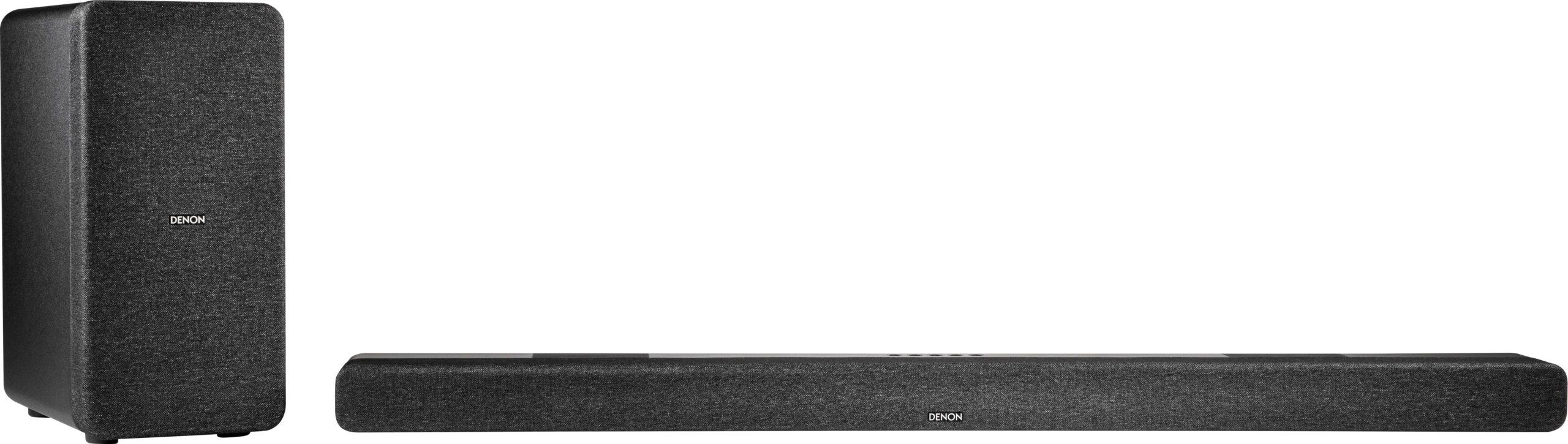
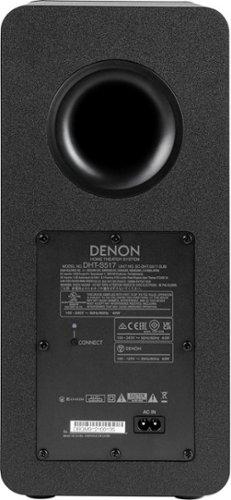
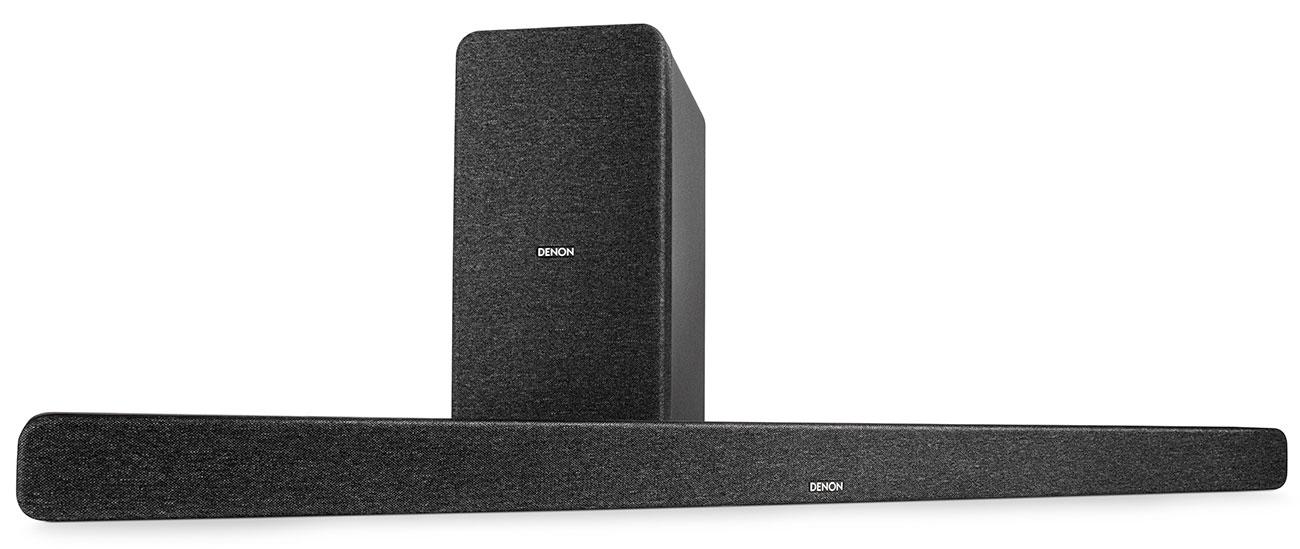
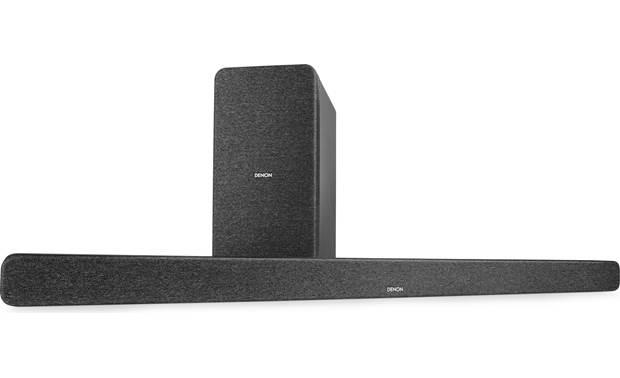
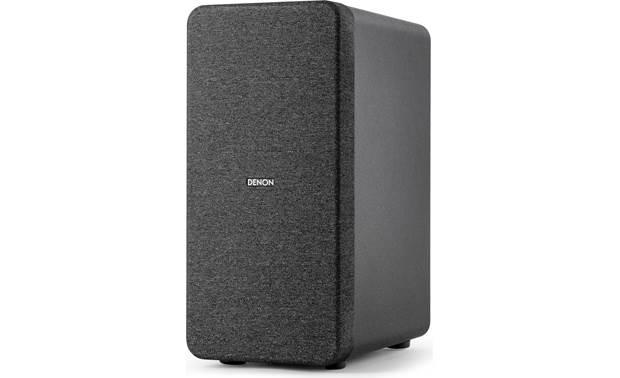
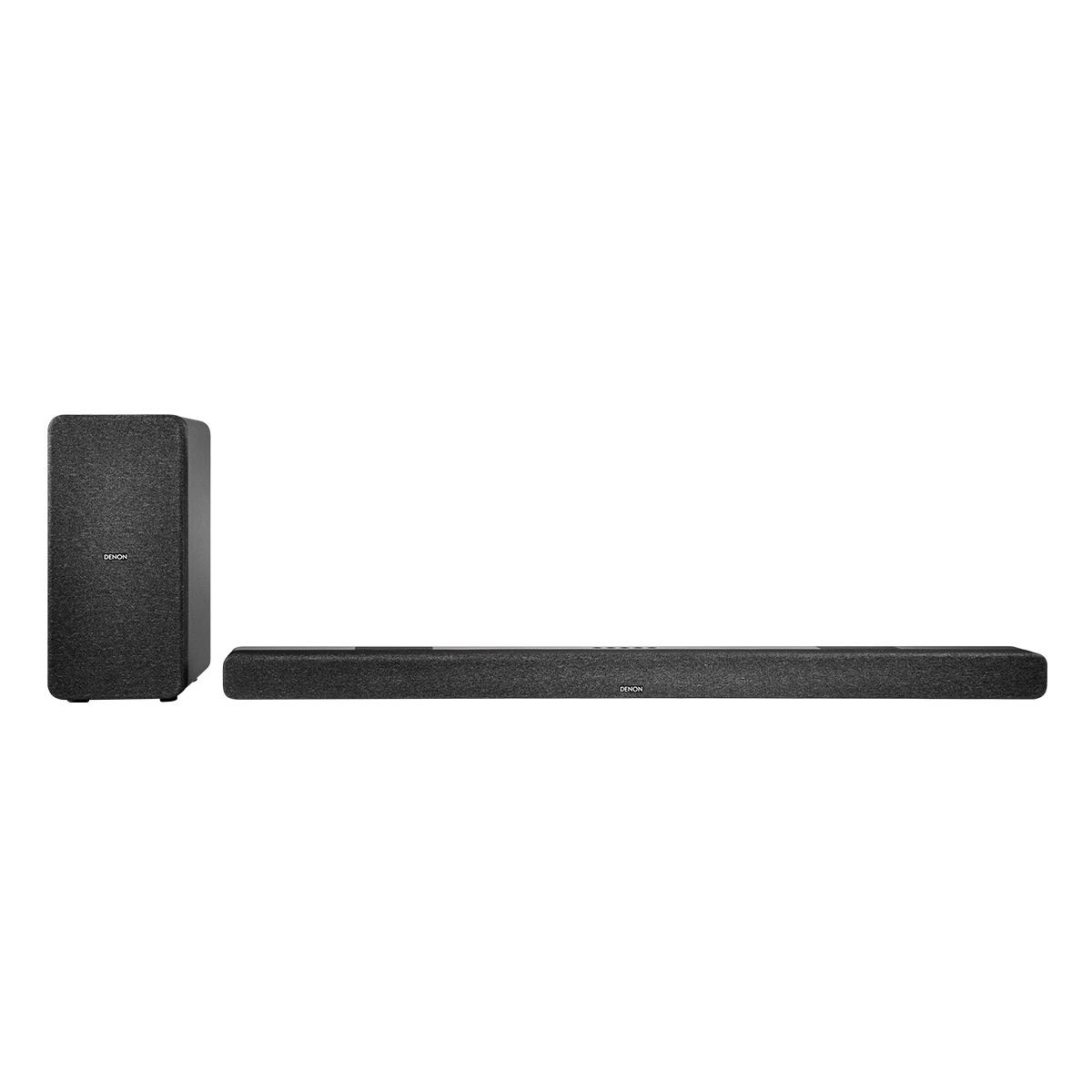
In contrast, the Denon DHT-S517 follows a more traditional path. Released several years earlier, it focuses on delivering solid 3.1.2 Dolby Atmos performance through proven audio engineering. Denon built their reputation over decades in the high-end audio world, and this soundbar reflects that conservative, reliability-focused approach.
These different philosophies create distinct advantages for different users, which becomes clear when you dig into the technical details.
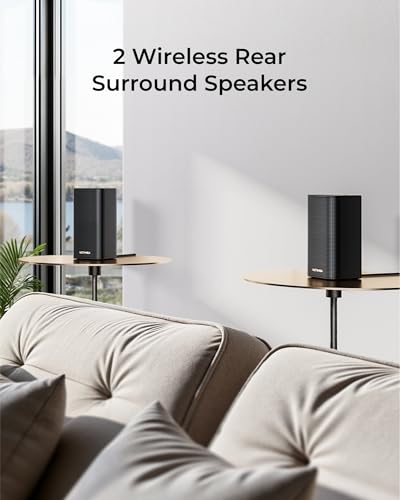
The most significant difference between these systems lies in their approach to surround sound. The ULTIMEA X40 includes dedicated wireless rear speakers that create authentic surround channels—when a helicopter flies overhead in a movie, you'll hear it move from the front soundbar, up through the height channels, and behind you through the rear speakers. This creates what audio engineers call a "true soundfield," where audio effects have specific locations in three-dimensional space around your listening position.
The Denon DHT-S517 uses a different approach called "virtualized surround." Its seven-driver array in the main soundbar processes surround information and mixes it into the front channels, using psychoacoustic techniques to trick your brain into perceiving sounds as coming from beside and behind you. While this can be quite effective, especially for overhead Dolby Atmos effects, it can't match the precision of discrete surround speakers.
Our research into user experiences consistently shows that people notice this difference immediately when comparing systems side-by-side. The ULTIMEA system creates what reviewers describe as "wraparound immersion," where you feel genuinely placed inside the movie scene. The Denon delivers good surround effects, but they're more like enhanced stereo with height information rather than true surround placement.
This distinction matters most for action movies, video games, and any content with complex soundscapes. For dialogue-heavy TV shows or simple movie watching, both approaches work well, though the true surround setup provides more engaging atmospheric effects.
Raw power differences between these systems are substantial. The ULTIMEA X40 delivers 530 watts of peak power across its entire system, while the Denon DHT-S517 provides 150 watts total (50W from the soundbar plus 100W from the subwoofer). This isn't just about getting louder—higher power reserves allow for better dynamic range, meaning the difference between quiet dialogue and explosive action scenes feels more realistic and impactful.
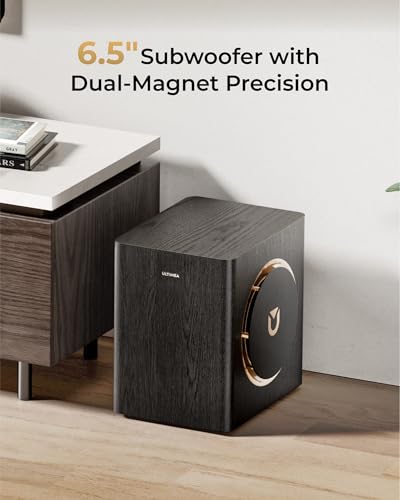
The subwoofer comparison reveals another key difference. The ULTIMEA's 6.5-inch wireless subwoofer uses what the company calls "Gravus Ultra-Linear Bass Technology" to extend down to 35Hz. In practical terms, this means you'll feel deep rumbles in your chest during earthquake scenes or explosions. The Denon's 5.25-inch subwoofer provides solid bass but lacks that visceral low-end impact for the most dramatic movie moments.
However, more power isn't always better. In smaller rooms (under 200 square feet), the Denon's power level often proves more appropriate. The ULTIMEA system can overpower small spaces, making it difficult to find comfortable listening levels without losing audio detail. Room size matching is crucial for optimal performance with either system.
Here's where the generational differences become most apparent. The ULTIMEA X40 incorporates what they call "NEURACORE" processing—a neural network-based audio engine with triple-core DSP (Digital Signal Processor) and dual-core MCU (Microcontroller Unit) providing 2,000 MIPS (Million Instructions Per Second) of processing power. This sounds like marketing speak, but it translates to real benefits: the system analyzes incoming audio in real-time and adjusts channel steering, dynamic range, and frequency response for optimal immersion.
The system also uses GaN (Gallium Nitride) amplification technology, which operates at 98% efficiency compared to traditional silicon amplifiers at around 75-80% efficiency. This means less heat generation, faster response to audio signals, and cleaner sound at high volumes—the kind of improvement you notice during loud action sequences where traditional amplifiers might introduce distortion.
The Denon DHT-S517 relies on traditional audio engineering with carefully tuned driver arrays and proven crossover designs. Denon's decades of experience show in features like their Dialogue Enhancer, which specifically boosts speech frequencies without affecting other audio elements. This is particularly valuable for users who struggle with dialogue clarity during loud scenes—a common complaint with many soundbars.
Both approaches have merit. The ULTIMEA's advanced processing delivers more sophisticated audio manipulation and customization options, while Denon's traditional approach provides predictable, well-balanced performance that many audio purists prefer.
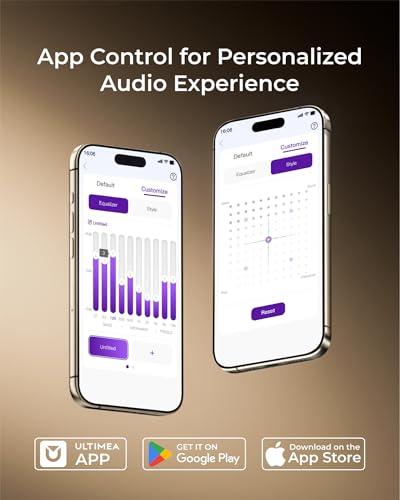
The user experience differs dramatically between these systems. The ULTIMEA X40 includes a comprehensive smartphone app offering 10-band EQ adjustment, 121 preset sound profiles, and system management features. This level of customization appeals to users who enjoy fine-tuning their audio experience—you can boost bass for action movies, enhance vocals for TV shows, or create custom profiles for different family members' preferences.
The Denon DHT-S517 takes a simpler approach with physical remote control and preset sound modes (Movie, Music, Night). While this might seem limiting, it reflects Denon's philosophy that good audio engineering shouldn't require constant adjustment. The system's "Pure" mode eliminates all processing for natural music reproduction—something audio enthusiasts particularly appreciate.
Our evaluation of user feedback reveals a clear preference split: tech-savvy users love the ULTIMEA's customization options, while users who want "set it and forget it" operation prefer Denon's straightforward approach. Neither approach is inherently superior, but they serve different user personalities and preferences.
Brand reputation plays a significant role here. Denon has built their name over decades in high-end audio equipment, and the DHT-S517 reflects that heritage with solid construction and a two-year warranty. The company's customer service network is well-established, and replacement parts remain available for years after purchase.
ULTIMEA represents a newer approach—a technology-focused company leveraging modern manufacturing and direct-to-consumer sales to offer premium features at competitive prices. The Skywave X40 includes a 30-day money-back guarantee, allowing risk-free evaluation, though it comes with a shorter one-year warranty period.
The wireless components in the ULTIMEA system add complexity that could potentially create reliability concerns. However, our research into user experiences shows that the dual 5GHz wireless connection proves quite stable in practice, with minimal dropout issues reported. The Denon's simpler design with fewer wireless components offers inherent reliability advantages.
For movie watching, the differences become immediately apparent. The ULTIMEA X40 excels with action films, horror movies, and any content with complex surround effects. The discrete rear speakers create genuine spatial awareness—you'll instinctively look behind you when hearing footsteps or ambient sounds. The powerful bass extension adds visceral impact to explosions, earthquakes, and dramatic musical scores.
The Denon DHT-S517 handles movies well but with less immersion. Its strength lies in dialogue clarity and overall tonal balance. The Dialogue Enhancer feature proves particularly valuable for viewers who struggle with speech intelligibility, offering three levels of vocal enhancement without affecting other audio elements.
For music listening, both systems offer distinct advantages. The ULTIMEA's extensive EQ options allow fine-tuning for different genres and personal preferences. The high-power output handles dynamic music with excellent clarity, particularly for rock, electronic, and orchestral pieces that benefit from wide dynamic range.
The Denon appeals to purist music listeners through its Pure mode, which bypasses all processing for uncolored audio reproduction. Jazz, classical, and acoustic music often sound more natural through this approach, though the lower power output limits performance with dynamic musical passages.
Gaming represents another clear distinction. The ULTIMEA X40's low-latency wireless connection (<20ms) and true surround placement provide competitive advantages in multiplayer games where audio positioning matters. The Denon handles gaming adequately but lacks the precise directional audio that serious gamers appreciate.
At the time of writing, these systems occupy different price tiers, with the ULTIMEA X40 positioned as a premium offering and the Denon DHT-S517 targeting the mid-range market. The price difference reflects their feature sets and target audiences rather than simple quality differences.
The ULTIMEA system justifies its premium positioning through comprehensive features: true wireless surround speakers, advanced processing, extensive customization, and significantly higher power output. For users building a dedicated home theater space or those who prioritize maximum immersion, the additional investment delivers measurable performance benefits.
The Denon offers excellent value for users seeking proven Dolby Atmos performance without premium pricing. Its lower cost makes quality home theater audio accessible to more buyers, while its established brand reputation provides confidence for first-time soundbar purchasers.
Your room size heavily influences the optimal choice. The ULTIMEA X40's 530W power output and discrete surround speakers work best in larger rooms (250+ square feet) where they have space to create proper surround effects without overwhelming the listening space. The wireless rear speakers require careful placement and available power outlets, which works better in dedicated media rooms than cramped apartments.
The Denon DHT-S517 suits smaller to medium-sized rooms where its 150W output provides adequate volume without overpowering the space. Its single-soundbar-plus-subwoofer configuration works well in living spaces where rear speaker placement would be problematic.
User technical comfort also matters significantly. The ULTIMEA system rewards users who enjoy customization and don't mind spending time optimizing settings through the mobile app. The Denon better serves users who want reliable performance with minimal setup and adjustment.
For dedicated home theater enthusiasts who prioritize maximum immersion and have appropriate room space, the ULTIMEA Skywave X40 delivers superior performance that justifies its premium positioning. The true surround speakers, advanced processing, and high power output create a genuinely cinematic experience that simulated surround systems cannot match.
For general home entertainment and first-time soundbar buyers, the Denon DHT-S517 provides an excellent entry point to quality home theater audio. Its proven performance, accessible pricing, and straightforward operation make it a safe choice for users who want significant improvement over TV speakers without complexity or premium investment.
Both systems represent solid choices within their respective market positions, but understanding your specific needs, room constraints, and technical preferences will guide you toward the option that delivers the best long-term satisfaction for your home entertainment setup.
| ULTIMEA Skywave X40 5.1.2 Soundbar System | Denon DHT-S517 Soundbar with Wireless Subwoofer |
|---|---|
| Channel Configuration - Determines surround sound immersion level | |
| 5.1.2 with dedicated wireless rear speakers for true surround | 3.1.2 with virtualized surround effects from front array |
| Total Power Output - Affects maximum volume and dynamic range | |
| 530W peak power for room-filling performance | 150W total (50W bar + 100W sub) for moderate volumes |
| Subwoofer Specifications - Controls bass depth and impact | |
| 6.5" wireless subwoofer extending down to 35Hz | 5.25" wireless subwoofer with standard bass response |
| Audio Processing Technology - Influences sound quality and customization | |
| NEURACORE neural processing with triple-core DSP and GaN amplification | Traditional Denon audio engineering with proven tuning |
| Smart Features and Control - Affects user experience and customization | |
| Ultimea app with 10-band EQ and 121 preset profiles | Physical remote with Movie/Music/Night modes, no app |
| Wireless Connectivity - Impacts streaming quality and device compatibility | |
| Bluetooth 5.4 with dual 5GHz CineMesh for rear speakers | Bluetooth 5.0 with wireless subwoofer connection only |
| Physical Setup Requirements - Determines placement flexibility | |
| Requires power outlets for soundbar, subwoofer, and 2 rear speakers | Requires power for soundbar and subwoofer only |
| Brand Heritage and Warranty - Influences reliability and support | |
| Newer tech-focused brand with 1-year warranty + 30-day return | Established audio brand with 2-year warranty |
| Target Room Size - Optimal performance scenarios | |
| Best for larger rooms (250+ sq ft) with dedicated theater space | Ideal for small to medium rooms with living space constraints |
| HDMI and Video Features - Modern connectivity requirements | |
| HDMI eARC with 4K HDR passthrough support | HDMI eARC with 4K HDR passthrough support |
| Dialogue Enhancement - Critical for speech clarity | |
| Standard processing with EQ customization options | Dedicated Dialogue Enhancer with 3 adjustable levels |
| Value Proposition - Cost vs feature comparison at time of writing | |
| Premium pricing for maximum features and true surround | Mid-range pricing for proven Dolby Atmos performance |
The ULTIMEA Skywave X40 5.1.2 delivers superior surround sound with true 5.1.2 channels including dedicated wireless rear speakers that create authentic surround effects. The Denon DHT-S517 uses 3.1.2 channels with virtualized surround sound, which simulates surround effects through the front soundbar array but cannot match the immersion of discrete rear speakers.
The ULTIMEA Skywave X40 produces 530W of peak power across its entire system, while the Denon DHT-S517 delivers 150W total power (50W soundbar + 100W subwoofer). This significant power difference means the ULTIMEA system can fill larger rooms and handle more dynamic content with greater impact.
The Denon DHT-S517 works better in small to medium rooms due to its moderate 150W power output and compact design with no rear speakers to place. The ULTIMEA Skywave X40 may overpower smaller spaces and requires placement of wireless rear speakers, making it better suited for larger dedicated home theater rooms.
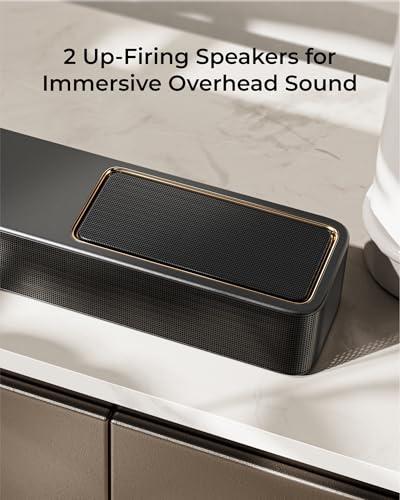
Yes, both the ULTIMEA Skywave X40 5.1.2 and Denon DHT-S517 support Dolby Atmos with dedicated up-firing speakers for overhead sound effects. However, the ULTIMEA system provides more comprehensive Dolby Atmos immersion due to its additional surround channels and higher channel count.
The ULTIMEA Skywave X40 includes a comprehensive smartphone app with 10-band EQ adjustment, 121 preset sound profiles, and extensive customization options. The Denon DHT-S517 relies on physical remote control with preset sound modes (Movie, Music, Night) and does not offer app-based control or EQ adjustment.
The ULTIMEA Skywave X40 features a larger 6.5-inch wireless subwoofer that extends bass response down to 35Hz for deeper, more impactful low-end performance. The Denon DHT-S517 uses a 5.25-inch wireless subwoofer that provides solid bass but lacks the deeper extension and power of the ULTIMEA system.
The Denon DHT-S517 comes with a 2-year warranty backed by Denon's established customer service network and decades of audio industry experience. The ULTIMEA Skywave X40 includes a 1-year warranty plus a 30-day money-back guarantee, representing a newer brand with less established long-term support history.
Both soundbars work well for gaming, but the ULTIMEA Skywave X40 offers advantages for serious gamers with its low-latency wireless connection (<20ms) and true surround sound positioning that helps with directional audio in competitive gaming. The Denon DHT-S517 handles gaming adequately but lacks the precise spatial audio placement.
The Denon DHT-S517 offers simpler setup with just the main soundbar and wireless subwoofer to position and connect. The ULTIMEA Skywave X40 requires placement and power connections for the soundbar, subwoofer, and two wireless rear speakers, making setup more complex but offering greater performance benefits.
The ULTIMEA Skywave X40 excels for music with extensive EQ customization options and higher power output for dynamic musical content. The Denon DHT-S517 appeals to music purists with its "Pure" mode that bypasses processing for natural, uncolored audio reproduction, though with less power for dynamic passages.
Value depends on your needs and budget. The Denon DHT-S517 provides excellent value at a lower price point with proven Dolby Atmos performance from an established brand. The ULTIMEA Skywave X40 justifies its premium positioning with true wireless surround, advanced processing, and significantly more power for those wanting maximum home theater performance.
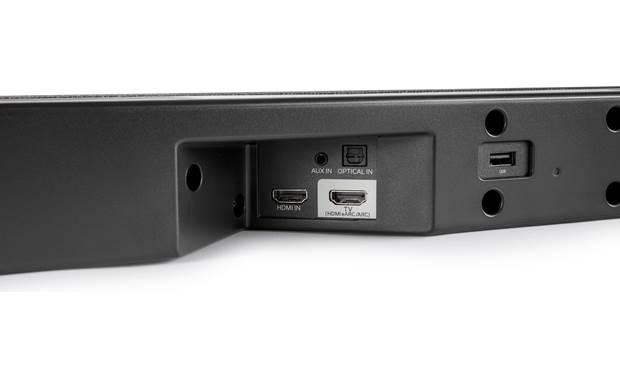
Both soundbars offer HDMI eARC and 4K HDR passthrough, but the ULTIMEA Skywave X40 includes newer Bluetooth 5.4 connectivity and USB input for direct media playback. The Denon DHT-S517 uses Bluetooth 5.0 and focuses on essential TV connectivity with HDMI, optical, and analog inputs, plus convenient TV remote volume control integration.
We've done our best to create useful and informative comparisons to help you decide what product to buy. Our research uses advanced automated methods to create this comparison and perfection is not possible - please contact us for corrections or questions. These are the sites we've researched in the creation of this article: bestbuy.com - shopabunda.com - youtube.com - youtube.com - youtube.com - youtube.com - ultimea.com - walmart.com - youtube.com - hometechnologyreview.com - community.ultimea.com - avsforum.com - youtube.com - youtube.com - youtube.com - bestbuy.com - hometechnologyreview.com - techradar.com - consumerreports.org - crutchfield.com - bestbuy.com - bestbuy.com - pocket-lint.com - abt.com - manuals.denon.com - connectedmag.com.au - bestbuy.com - forum.flirc.tv - bhphotovideo.com

Privacy Policy
Terms and Conditions - Affiliate Policy
Home Security
© Copyright 2008-2026.
11816 Inwood Rd #1211, Dallas, TX 75244