






If you've ever tried watching an action movie with your TV's built-in speakers, you know the frustration. Explosions sound like whispers, dialogue gets lost in the mix, and forget about feeling that rumbling bass that makes scenes truly cinematic. That's where soundbars come in—they're designed to transform your living room audio from "meh" to "wow" without the complexity of a full surround sound system.
But here's the thing: not all soundbars are created equal. Today we're comparing two very different approaches to better TV audio: the ULTIMEA Skywave X40, a premium system that promises true cinema-quality surround sound, and the Amazon Fire TV Soundbar Plus, a budget-friendly option that focuses on simplicity and smart TV integration.
Before diving into specifics, let's talk about what actually matters when choosing a soundbar. The most important factor is channel configuration—this tells you how many separate audio channels the system can produce. A 2.1 system has left, right, and subwoofer channels. A 5.1 system adds center, left surround, and right surround. The newer 5.1.2 format includes two additional "height" channels that bounce sound off your ceiling to create overhead effects.
Audio formats are equally crucial. Dolby Atmos and DTS:X are the latest standards that create three-dimensional soundscapes where you can hear helicopters flying overhead or rain falling around you. However, there's a big difference between systems that truly support these formats with physical speakers and those that use "virtual" processing to simulate the effect.
Connectivity options determine how well your soundbar plays with other devices. HDMI eARC (enhanced Audio Return Channel) is the gold standard—it carries high-quality, uncompressed audio from your TV back to the soundbar. Optical connections work but are limited to compressed audio formats. Bluetooth lets you stream music from your phone, though the quality won't match wired connections.
The physical setup matters too. Some systems require running speaker wires across your room, while others use wireless rear speakers that only need power outlets. This flexibility can make or break your experience depending on your room layout.
Released in 2025, the ULTIMEA Skywave X40 represents the latest generation of home theater soundbars. At the time of writing, it sits in the premium price category—roughly double what you'd pay for budget alternatives—but aims to deliver performance that justifies the investment.
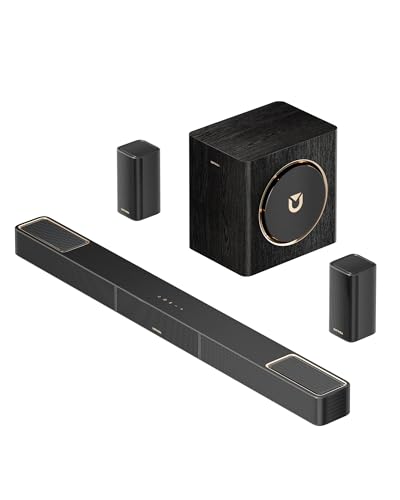
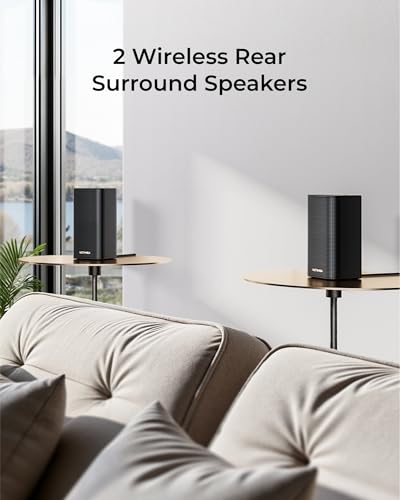
What sets the Skywave X40 apart is its completely wireless architecture. The system includes a main soundbar, wireless subwoofer, and two wireless rear speakers that communicate using something called CineMesh True Wireless technology. This uses dual 5GHz radio frequencies to transmit audio with ultra-low latency of under 20 milliseconds.
Why does latency matter? If audio takes too long to reach your speakers, you'll notice that actors' lips don't match their voices—a phenomenon called lip sync error that's incredibly distracting. Twenty milliseconds is fast enough that your brain can't detect any delay, making it suitable even for gaming where precise timing matters.
The wireless setup means you only need to plug each component into power outlets. No speaker cables snaking across your floor or hidden behind furniture. This flexibility lets you position the rear speakers optimally for your seating arrangement rather than wherever the wires can reach.
Under the hood, the ULTIMEA Skywave X40 packs some impressive technology. The NEURACORE audio engine features a triple-core DSP (Digital Signal Processor) and dual-core MCU (Microcontroller Unit) with 2,000 MIPS of processing power. To put that in perspective, MIPS stands for "Million Instructions Per Second"—it's a measure of computational capability. This processing power enables the system to handle complex audio calculations in real-time, like separating different frequency ranges and directing them to the appropriate speakers with precision.
The system supports ultra-precise 24-bit/192kHz audio processing. The "24-bit" refers to how finely the system can represent audio levels (like having 16.7 million possible volume gradations instead of just 65,000), while "192kHz" means it samples the audio 192,000 times per second for accuracy. Most content doesn't need this level of precision, but having the headroom ensures nothing gets lost in translation.
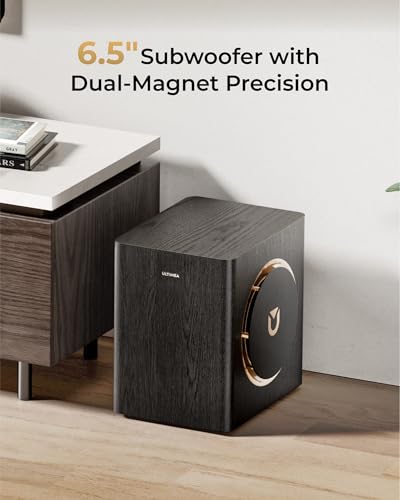
Power output reaches 530 watts at peak, distributed across eight total speakers. The 6.5-inch wireless subwoofer can reproduce bass down to 35Hz—that's low enough to feel the rumble of explosions and thunder in your chest. The Gravus Ultra-Linear Bass Technology ensures this low-end stays clean and controlled even at high volumes, avoiding the muddy, boomy bass that plagues cheaper systems.
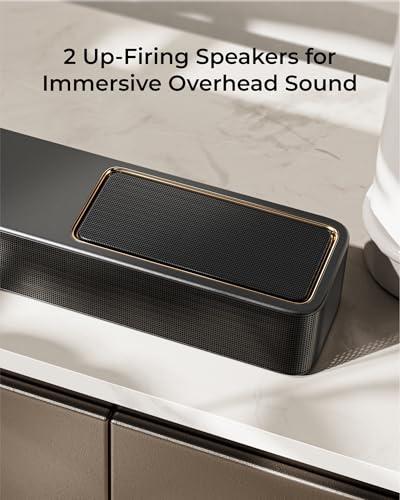
The Skywave X40 includes two physical up-firing speakers built into the main soundbar. These bounce sound off your ceiling to create genuine overhead audio effects. When a helicopter flies across the screen, you'll actually hear it moving above you rather than just from the sides.
Based on expert reviews and user feedback, the sound signature leans toward accuracy rather than excessive bass or treble. This balanced approach works well across different content types, from dialogue-heavy dramas to action-packed blockbusters.
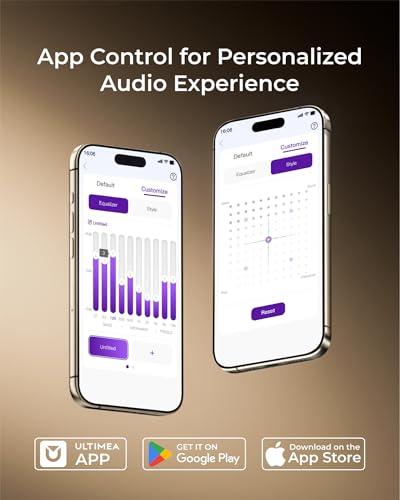
The system includes a comprehensive smartphone app with a 10-band equalizer and 121 preset sound profiles. This level of customization lets you fine-tune the audio to your room's acoustics and personal preferences. The app also handles firmware updates, ensuring your system stays current with new features and improvements.
Connectivity covers all the modern bases: HDMI eARC with 4K HDR passthrough, optical input, USB port, and Bluetooth 5.4 for wireless streaming. The 4K HDR passthrough means you can connect devices like game consoles directly to the soundbar without losing video quality—the signal passes through cleanly to your TV.
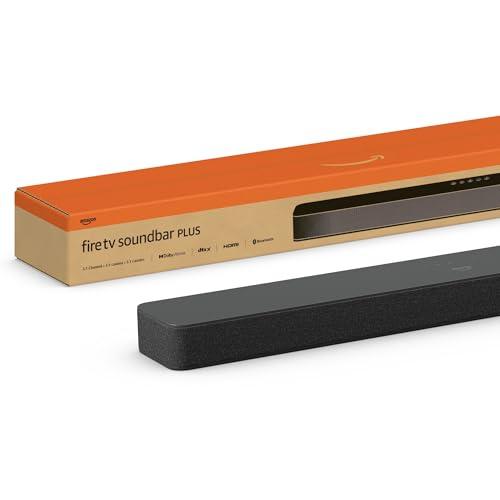
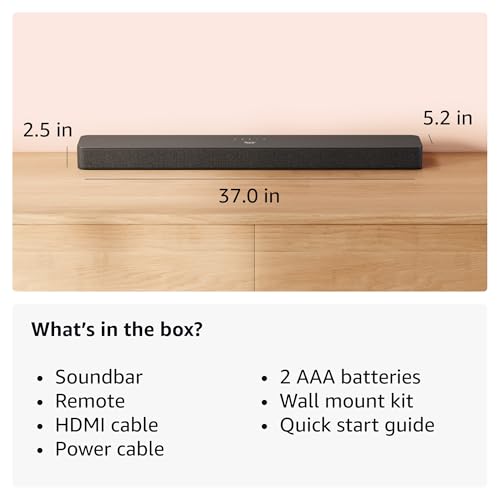
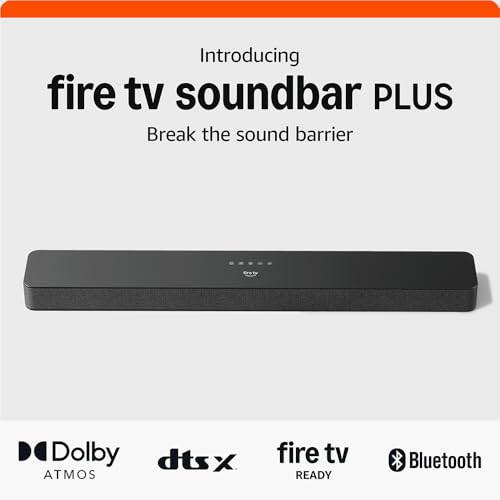
Amazon's entry, released in 2023, takes a completely different approach. The Fire TV Soundbar Plus prioritizes value and simplicity over premium features, targeting users who want better audio without complexity or high costs.
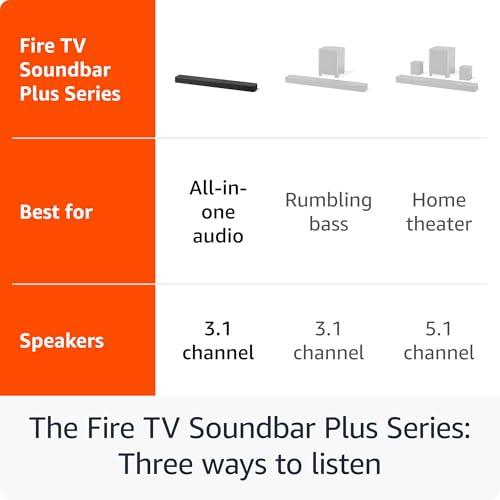
The base Fire TV Soundbar Plus uses a 3.1-channel configuration—left, right, center, plus built-in subwoofer. Amazon offers optional wireless rear speakers to expand it to 5.1, but many users find the 3.1 setup sufficient for their needs.
The system supports Dolby Atmos and DTS:X, but uses virtual processing rather than physical height speakers. Essentially, the soundbar uses psychoacoustic tricks to make your brain think sound is coming from above, even though it's all coming from the front-facing speakers. While not as convincing as true height channels, this virtual approach works better than you might expect, especially for content that wasn't originally mixed for Atmos.
The built-in subwoofer provides adequate bass for most content, though it won't match the depth and power of a dedicated 6.5-inch driver like the Skywave X40 uses. Amazon's sound tuning emphasizes bass slightly over treble, giving movies and music some extra punch that many users appreciate.
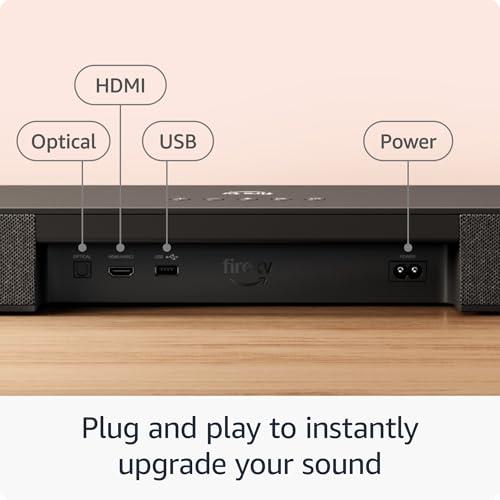
Where the Amazon Fire TV Soundbar Plus excels is integration with Amazon's ecosystem. When paired with Fire TV devices, you can control both your streaming stick and soundbar with a single remote. The setup process is genuinely plug-and-play—connect one HDMI cable and you're ready to go.
The soundbar includes dedicated dialogue enhancement, which proves particularly valuable for TV shows and movies where speech clarity matters more than explosive action. Four preset sound modes (Movie, Music, Sports, Night) let you quickly optimize audio for different content types without diving into complex settings menus.
However, there's no dedicated smartphone app, and customization options are basic compared to premium alternatives. You can adjust bass and treble on a simple scale, but don't expect the fine-grained control that audio enthusiasts prefer.
The Fire TV Soundbar Plus covers essential connectivity: HDMI eARC, optical input, USB-A port, and Bluetooth 5.0. However, reviews consistently mention audio latency issues over the ARC connection that can cause lip-sync problems. Most modern TVs include settings to compensate for this, but it's an extra setup step and potential frustration point.
The soundbar also lacks some features you might expect given Amazon's smart home focus. There's no built-in Alexa voice control, no Wi-Fi streaming capabilities, and no smart features beyond Fire TV device integration. It's purely an audio device rather than a smart home hub.
This is where the biggest differences emerge. The ULTIMEA Skywave X40 delivers genuine surround sound with discrete speakers positioned around your room. When a car races from left to right on screen, you hear it move from your front left speaker to your rear right speaker. The physical height channels create convincing overhead effects that virtual processing simply cannot match.
Expert reviews consistently praise the Skywave X40's spatial accuracy and immersive soundstage. The system excels with movie soundtracks, where the additional channels let you pick out subtle environmental details—birds chirping in specific locations, distant traffic, wind moving through trees.
The Amazon Fire TV Soundbar Plus provides a noticeably wider and fuller soundstage than TV speakers, but the audio remains essentially front-focused. Panning effects work reasonably well, though some reviews note gaps in the stereo imaging where sounds seem to disappear briefly as they move across the soundstage.
For dialogue clarity, both systems perform well but through different approaches. The Skywave X40 relies on precise channel separation and powerful processing, while the Fire TV Soundbar Plus uses dedicated enhancement algorithms specifically tuned for speech intelligibility.
The power difference becomes apparent with demanding content. The ULTIMEA Skywave X40's 530-watt output and 6.5-inch subwoofer deliver room-shaking bass that you feel as much as hear. The Gravus Ultra-Linear Bass Technology keeps this low-end tight and controlled, avoiding the one-note boomy quality that cheaper subwoofers exhibit.
The Fire TV Soundbar Plus's built-in subwoofer provides satisfying bass for its size and price point, but lacks the depth and impact of a dedicated driver. It's adequate for most content and certainly better than TV speakers, but action movies and bass-heavy music reveal the limitations.
Room size plays a crucial role here. The Skywave X40 has enough power to fill large spaces without strain, while the Fire TV Soundbar Plus works best in small to medium rooms where its output doesn't get overwhelmed by the space.
For gamers, latency becomes critical. The ULTIMEA Skywave X40's sub-20-millisecond wireless latency ensures perfect synchronization between on-screen action and audio effects. This makes it excellent for competitive gaming where audio cues matter, or single-player games where immersion is key.
The Amazon Fire TV Soundbar Plus struggles here due to higher ARC latency. While most TVs can compensate through delay settings, this adds complexity and may not work perfectly with all content types. For casual gaming it's manageable, but serious gamers will notice the difference.
At the time of writing, the price gap between these systems is substantial—roughly 2.3x more for the ULTIMEA Skywave X40 compared to the Amazon Fire TV Soundbar Plus. This difference reflects genuinely different target markets and use cases.
You're serious about home theater audio and want an experience that approaches what you'd get in a commercial cinema. The investment makes sense if you frequently watch movies, enjoy immersive gaming, or listen to music where spatial audio matters.
The wireless convenience alone justifies the premium for many users. No speaker cables means cleaner room aesthetics and more flexibility in furniture arrangement. If you've ever tried to hide surround speaker wires, you'll appreciate this freedom.
The system also suits users who enjoy tweaking audio settings. The 10-band EQ and 121 preset profiles let you dial in the sound signature for your room and preferences—something audiophiles and home theater enthusiasts value highly.
Your primary goal is upgrading from TV speakers without breaking the budget or dealing with complex setup. The Fire TV Soundbar Plus excels at making dialogue clearer and adding some bass punch to your viewing experience.
Fire TV device owners get additional value through seamless integration and single-remote control. If you're already invested in Amazon's ecosystem, this convenience factor adds real utility.
The system works particularly well for users whose content consists mainly of TV shows, news, and streaming video rather than blockbuster movies or immersive gaming. For this type of viewing, the dialogue enhancement and basic surround effects provide meaningful improvement without overkill.
Both soundbars successfully solve the fundamental problem of weak TV audio, but they target different levels of improvement and investment.
The ULTIMEA Skywave X40 represents a significant step toward true home theater audio. Its wireless convenience, genuine surround sound, and powerful processing make it an excellent choice for dedicated movie watching and gaming spaces. The premium price reflects premium performance—you're paying for technology that delivers experiences similar to much more expensive traditional surround sound systems.
The Amazon Fire TV Soundbar Plus offers practical improvement at an accessible price point. It won't transform your living room into a cinema, but it will make everything you watch more enjoyable and easier to hear. For casual viewers who want better audio without complexity or high costs, it hits the sweet spot between performance and value.
Your decision ultimately comes down to expectations and budget. If you want to recreate the cinema experience at home and have the budget for it, the Skywave X40 delivers. If you want noticeably better TV audio without the premium price or complex setup, the Fire TV Soundbar Plus provides exactly that. Both systems succeed at their intended goals—they're just aiming at different targets.
| ULTIMEA Skywave X40 5.1.2 Soundbar System | Amazon Fire TV Soundbar Plus |
|---|---|
| Channel Configuration - Determines surround sound capability and immersion level | |
| True 5.1.2 with discrete rear speakers and up-firing drivers | 3.1 base (expandable to 5.1 with optional speakers) |
| Audio Processing Power - Affects sound quality and format support | |
| NEURACORE engine with 2,000 MIPS processing, 24-bit/192kHz | Basic processing, standard format support |
| Peak Power Output - Determines maximum volume and room-filling capability | |
| 530W total system power | Not specified (significantly lower based on size/price) |
| Subwoofer Configuration - Critical for bass depth and impact | |
| 6.5-inch wireless subwoofer, 35Hz frequency response | Built-in subwoofer in main bar |
| Dolby Atmos Implementation - Height effects quality varies dramatically | |
| Physical up-firing drivers for true overhead sound | Virtual processing only (no height speakers) |
| Wireless Technology - Affects setup flexibility and audio quality | |
| Dual 5GHz CineMesh, <20ms latency, factory-paired | Standard Bluetooth, high ARC latency issues |
| Audio Customization - Important for fine-tuning to your room | |
| Smart app with 10-band EQ, 121 presets | Basic remote control, 4 sound modes |
| Connectivity Options - Determines device compatibility | |
| HDMI eARC, 4K HDR passthrough, optical, USB, Bluetooth 5.4 | HDMI eARC, optical, USB-A, Bluetooth 5.0 |
| Setup Complexity - Balances performance against convenience | |
| Wireless positioning required for optimal surround | Simple plug-and-play setup |
| Smart Features - Added functionality beyond basic audio | |
| Universal compatibility, comprehensive app control | Fire TV integration, single-remote control |
| Build Quality and Design - Affects durability and aesthetics | |
| Premium materials (metal grille, wood subwoofer, rose gold accents) | Basic construction with fabric grille |
| Gaming Performance - Critical for responsive audio in games | |
| Excellent (ultra-low latency) | Poor (latency requires manual sync adjustment) |
| Target Use Case - Who each product serves best | |
| Home theater enthusiasts wanting cinema-quality surround | Casual viewers seeking TV speaker upgrade on budget |
The ULTIMEA Skywave X40 is significantly better for home theater use. It delivers true 5.1.2 surround sound with physical rear speakers and up-firing drivers for genuine overhead effects, while the Amazon Fire TV Soundbar Plus only offers virtualized surround sound. The Skywave X40 also provides 530W of power and ultra-low latency, making it ideal for cinematic experiences and gaming.
The primary difference is channel configuration and audio quality. The ULTIMEA Skywave X40 is a premium true wireless 5.1.2 system with discrete surround speakers, while the Amazon Fire TV Soundbar Plus is a budget-friendly 3.1 system that can be expanded to 5.1. The Skywave X40 targets serious home theater users, while the Fire TV model focuses on basic TV audio improvement.
Yes, both support Dolby Atmos, but differently. The ULTIMEA Skywave X40 uses physical up-firing speakers for true height effects, creating genuine overhead sound. The Amazon Fire TV Soundbar Plus uses virtual processing to simulate height effects without dedicated up-firing drivers, which is less immersive but still better than standard TV speakers.
The Amazon Fire TV Soundbar Plus is much easier to set up—it's essentially plug-and-play with a single HDMI cable connection. The ULTIMEA Skywave X40 requires positioning wireless rear speakers and subwoofer around your room for optimal surround sound, though all components are factory-paired and only need power outlets.
The ULTIMEA Skywave X40 is excellent for gaming with ultra-low 20ms latency ensuring perfect audio-video sync. The Amazon Fire TV Soundbar Plus has latency issues that may cause audio delay during gaming, requiring manual sync adjustment on your TV, making it less suitable for competitive or immersive gaming.
The ULTIMEA Skywave X40 has significantly better bass with its 6.5-inch wireless subwoofer that reaches down to 35Hz and Gravus Ultra-Linear Bass Technology for clean, powerful low frequencies. The Amazon Fire TV Soundbar Plus has a built-in subwoofer that provides adequate bass for casual listening but lacks the depth and impact of a dedicated driver.
Yes, both work with any TV that has HDMI ARC/eARC or optical output. The ULTIMEA Skywave X40 offers universal compatibility with comprehensive connectivity options. The Amazon Fire TV Soundbar Plus works best with Fire TV devices for seamless integration but functions with any compatible TV.
The ULTIMEA Skywave X40 provides extensive customization with a smartphone app featuring 10-band EQ and 121 preset sound profiles. The Amazon Fire TV Soundbar Plus offers basic customization through four sound modes and simple bass/treble adjustment via remote control, with no dedicated app available.
Only the ULTIMEA Skywave X40 includes wireless rear speakers as part of the complete 5.1.2 system. The Amazon Fire TV Soundbar Plus is sold as a 3.1 system with optional wireless rear speakers available separately to create a 5.1 configuration.
Both handle dialogue well but differently. The Amazon Fire TV Soundbar Plus includes dedicated dialogue enhancement features specifically tuned for speech clarity, making it excellent for TV shows. The ULTIMEA Skywave X40 uses precise channel separation and processing power for clear dialogue as part of its overall superior audio quality.
The ULTIMEA Skywave X40 delivers 530W peak power across its full speaker system, providing room-filling sound suitable for large spaces. The Amazon Fire TV Soundbar Plus has lower power output (exact specifications not disclosed) that's adequate for small to medium rooms but may struggle in larger spaces.
This depends on your needs and budget. The Amazon Fire TV Soundbar Plus offers excellent value for casual users wanting a significant upgrade from TV speakers at a budget-friendly price. The ULTIMEA Skywave X40 provides better value for home theater enthusiasts who want genuine surround sound and premium features, justifying its higher cost with superior performance.
We've done our best to create useful and informative comparisons to help you decide what product to buy. Our research uses advanced automated methods to create this comparison and perfection is not possible - please contact us for corrections or questions. These are the sites we've researched in the creation of this article: bestbuy.com - shopabunda.com - youtube.com - youtube.com - youtube.com - youtube.com - ultimea.com - walmart.com - youtube.com - hometechnologyreview.com - community.ultimea.com - avsforum.com - youtube.com - youtube.com - youtube.com - bestbuy.com - hometechnologyreview.com - rtings.com - wirelessplace.com - techradar.com - cordbusters.co.uk - whathifi.com - developer.amazon.com - t3.com - dolby.com - youtube.com - youtube.com - youtube.com - dugoutnorthbrook.com - dolby.com - aboutamazon.com - youtube.com - developer.amazon.com

Privacy Policy
Terms and Conditions - Affiliate Policy
Home Security
© Copyright 2008-2026.
11816 Inwood Rd #1211, Dallas, TX 75244