

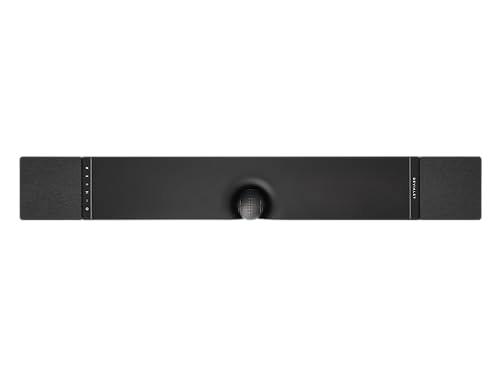
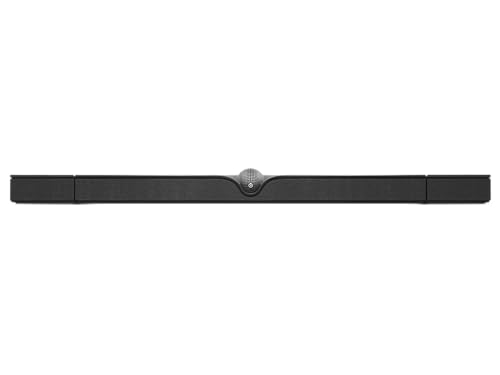
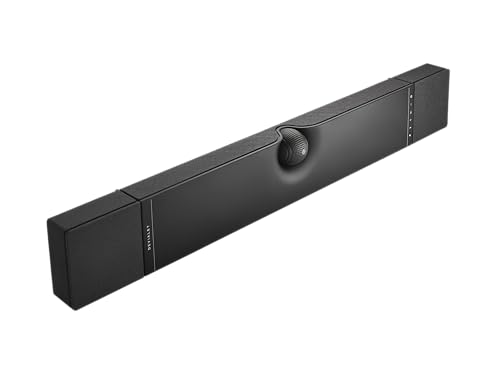



When I first started researching premium soundbars, I was struck by how dramatically different two approaches could be to solving the same problem: getting great surround sound from your TV without the complexity of a traditional home theater system. Today we're comparing two products that couldn't be more different in their philosophy—the Devialet Dione Soundbar and the ULTIMEA Skywave X40 5.1.2 Soundbar System.
Released in 2021, the Devialet Dione represents the French audio company's first foray into soundbars, bringing their high-end speaker expertise to home theater. At the time of writing, it sits in the premium category with pricing that reflects its audiophile ambitions. Meanwhile, the more recent ULTIMEA Skywave X40 takes a completely different approach—offering a full wireless surround system at a budget-friendly price point that would have been unthinkable just a few years ago.
The fundamental question isn't just which sounds better, but whether you should pay significantly more for an all-in-one premium solution or get remarkable value from a modular wireless system.
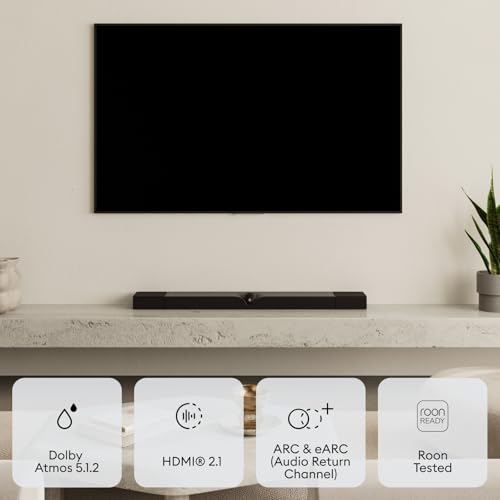
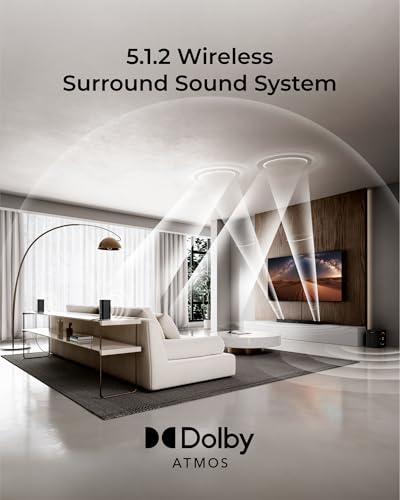
Before diving into specifics, it's worth understanding what makes modern soundbars tick. Today's systems go far beyond the simple TV speakers they once replaced. Both products support Dolby Atmos, a technology that adds height information to sound—imagine rain falling from above you or helicopters passing overhead. This creates what we call "object-based audio," where sounds can be placed anywhere in a three-dimensional space around you.
The key difference lies in how each system achieves this effect. Traditional surround sound uses discrete speakers placed around your room, while newer technologies can create virtual surround effects through clever audio processing and speaker positioning.
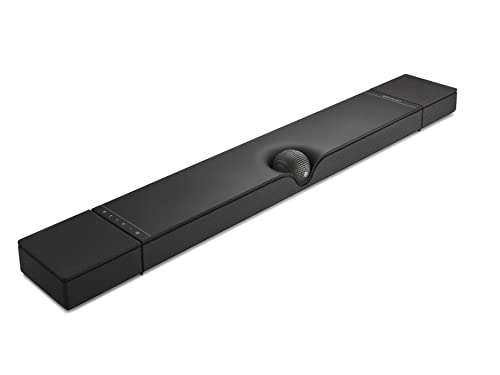
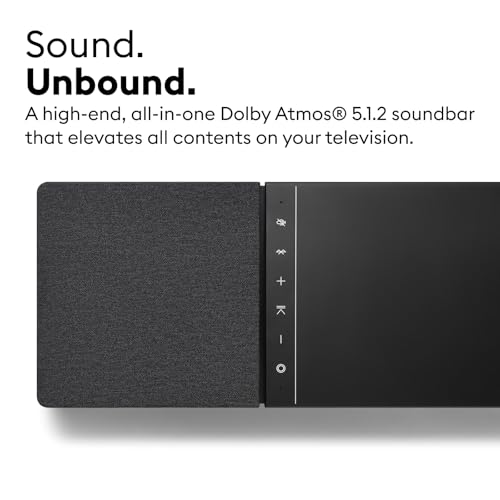
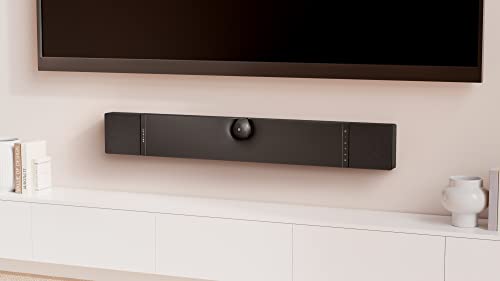
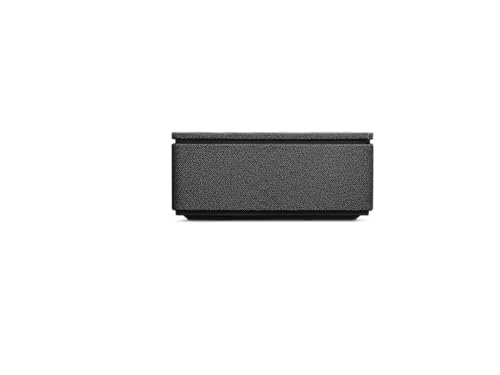
The Devialet Dione Soundbar embodies what I'd call the "everything in one box" philosophy. Devialet's engineers packed 17 individual speakers into a single 47-inch unit, eliminating any need for external subwoofers or rear speakers. This isn't just about convenience—it's about acoustic control.
Inside the Dione are 9 full-range aluminum drivers paired with 8 dedicated subwoofers arranged in what Devialet calls a "push-push" configuration. This technical term describes how pairs of woofers face each other, mechanically canceling out unwanted vibrations while doubling the acoustic output. It's like having two engines working together while canceling out each other's vibrations—you get more power with less unwanted movement.
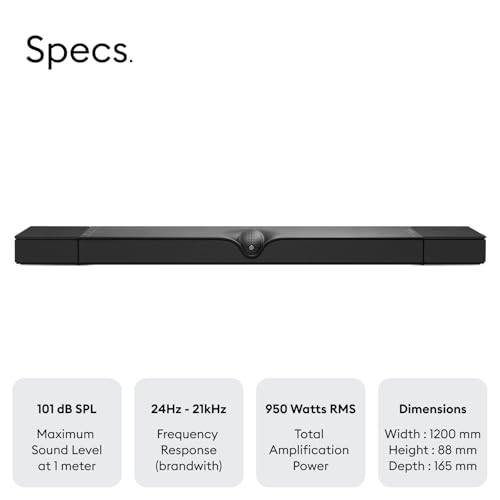
The result is bass that extends down to 24Hz—lower than most dedicated subwoofers—while maintaining the precision you'd expect from high-end monitors. Having researched countless soundbar measurements, this level of low-frequency extension from a single unit is genuinely impressive.
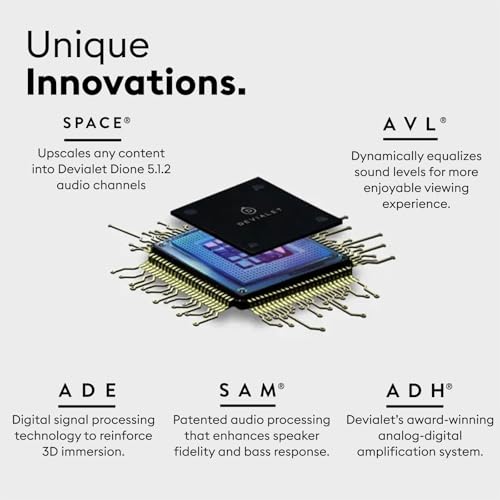
What sets the Dione apart technically is its processing power. The Devialet Intelligence Processor uses four ARM Cortex-A53 processors with 1GB of memory to run several proprietary technologies simultaneously. SAM (Speaker Active Matching) continuously monitors each driver's behavior, correcting for non-linearities in real-time. Think of it as having a personal audio engineer constantly adjusting your system for perfect performance.
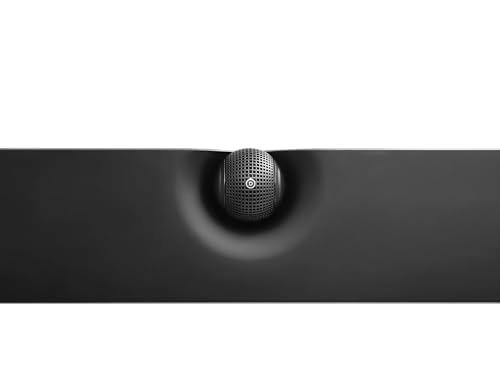
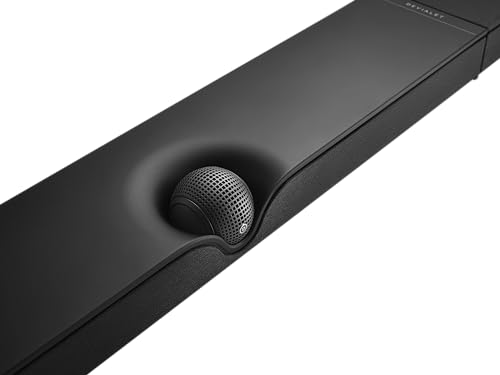
The ORB central sphere is perhaps the most visually distinctive feature—this rotating center channel automatically adjusts its position whether you place the soundbar on a TV stand or mount it on the wall. It's a mechanical solution to an acoustic problem that most manufacturers try to solve with digital processing alone.
Four built-in microphones create a detailed acoustic map of your room during setup. The Dione's Advanced Dimensional Experience (ADE) technology then uses this information to optimize beamforming—essentially steering sound in specific directions to create surround effects through reflections off your walls and ceiling.
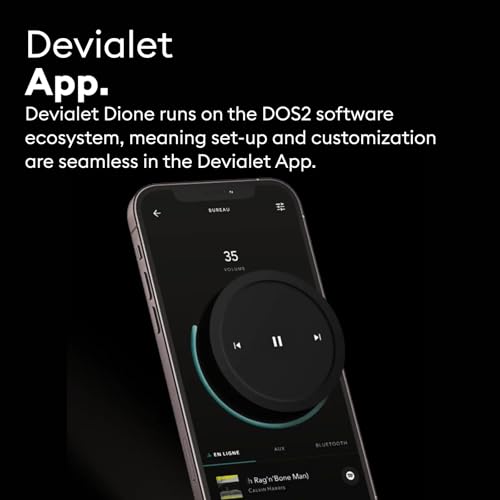
Based on expert measurements and user feedback, this automatic calibration works remarkably well, though it requires a bit of trust in the system. You can't manually adjust much beyond basic listening modes, which some users find limiting given the premium price point.
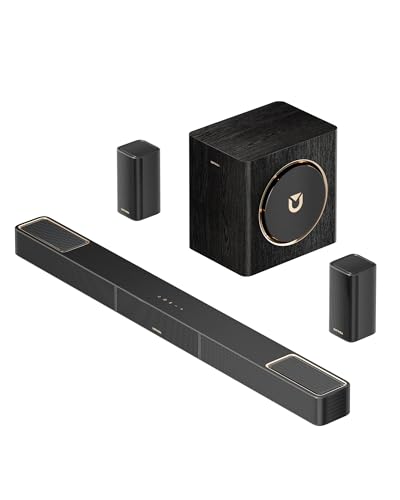
The ULTIMEA Skywave X40 takes the opposite approach—embrace the complexity of multiple components but make them completely wireless. Released more recently, it benefits from newer wireless audio technologies that weren't available when earlier budget systems launched.
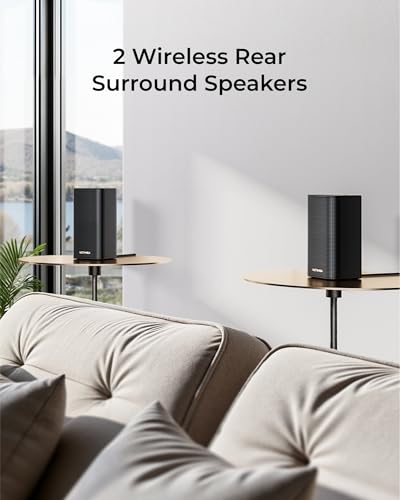
The standout feature here is genuine wireless rear speakers. Most budget soundbars rely entirely on virtual surround processing, but the X40 includes actual speakers that you place behind your seating area. The CineMesh wireless technology uses dual 5GHz transmission to maintain stable connections with latency under 20 milliseconds—fast enough that you won't notice any delay between the main soundbar and surrounds.
This matters more than you might think. While the Dione creates convincing surround effects through reflection and beamforming, nothing quite matches the immersion of sounds literally coming from behind you. It's the difference between a very good illusion and the real thing.
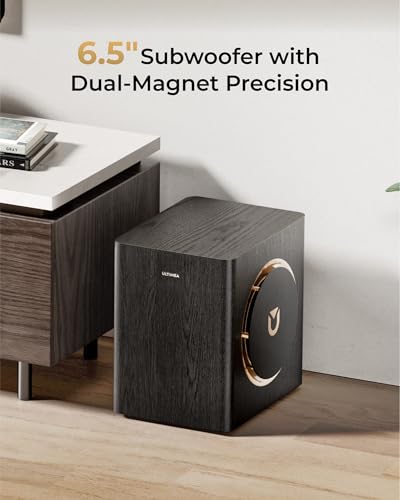
The wireless 6.5-inch subwoofer gives the X40 a different bass character than the Dione. While it doesn't extend quite as deep (35Hz versus 24Hz), having a dedicated sub means more flexibility in placement. You can position it where it sounds best in your room rather than being locked into the soundbar's location.
The Gravus Ultra-Linear Bass Technology reduces distortion at high output levels, though our research suggests the Dione's integrated approach maintains better phase coherence between bass and midrange frequencies.
The X40 uses GaN (Gallium Nitride) amplifiers, a newer technology that's more efficient than traditional silicon-based designs. At 98% efficiency with 8x faster response times, these amplifiers generate less heat and can deliver cleaner power. While the peak power rating of 530W sounds impressive, it's worth noting this is peak rather than continuous power—quite different from the Dione's 950W RMS rating.
In terms of pure audio quality, the Devialet Dione operates in a different league. The ADH (Analog Digital Hybrid) amplification combines the musicality of Class A amplifiers with the efficiency of Class D designs. Based on professional measurements, total harmonic distortion stays below 0.001%—essentially inaudible levels even at high volumes.
The X40 certainly doesn't sound bad, but you can hear the difference in resolution and dynamics when comparing similar content. The Dione reveals more detail in complex passages and maintains composure during demanding scenes in ways that highlight its premium positioning.
However, this difference matters most if you're using the soundbar for critical music listening. For typical TV and movie watching, the X40's performance is entirely satisfying, especially considering the significant price difference.
This is where things get interesting. Despite the Dione's sophisticated processing, the X40's physical rear speakers create more convincing surround effects. When a car passes behind you in an action movie or rain surrounds the scene, the discrete speakers provide positioning cues that even the best virtual processing can't quite match.
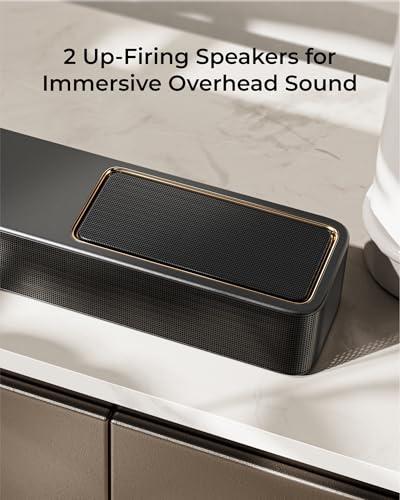
The Dione does excel at height effects, though. Its upward-firing drivers and advanced beamforming create a more convincing sense of overhead activity than the X40's simpler height channel implementation.
For home theater use, this creates an interesting tradeoff: better immersion from behind (X40) versus better overhead effects (Dione).
Both systems handle bass differently, each with advantages. The Dione's integrated approach means perfect timing between bass and higher frequencies—there's no phase delay or integration issues that can occur with separate subwoofers. The 8 internal woofers also provide more total radiating area than the X40's single 6.5-inch driver.
However, the X40's placement flexibility can be a significant advantage. Bass response varies dramatically with room position, and being able to experiment with subwoofer placement often yields better results than being locked into the soundbar's location.
In practical terms, both systems deliver satisfying bass for movies and music, though the Dione extends deeper and maintains better control at high output levels.
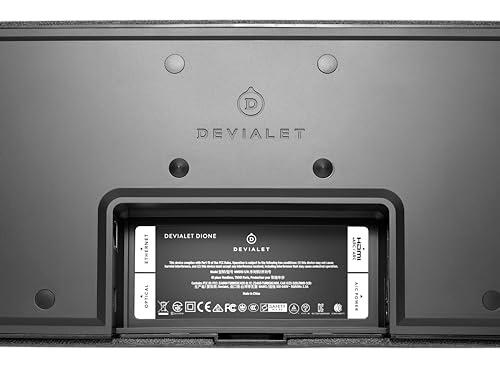
The Dione wins decisively on simplicity. Connect one HDMI cable, run the auto-calibration, and you're done. The 26-pound weight requires sturdy mounting for wall installation, but there are no wireless components to position or power outlets to find throughout your room.
The X40 requires more planning. You'll need power outlets for the subwoofer and rear speakers, and optimal placement takes some experimentation. However, this complexity brings flexibility—you can adapt the system to your room's layout rather than working around a fixed configuration.
Here's where the modular approach shows its strength. If you move or redecorate, the X40's components can be repositioned to suit your new setup. The Dione is more committed to its initial placement, though its automatic room correction does help it adapt to changes.
At the time of writing, these products occupy completely different price tiers. The ULTIMEA X40 delivers genuine Dolby Atmos with discrete surround speakers at a price point that makes it accessible to most households. The Devialet Dione commands a significant premium that reflects its audiophile-grade components and French engineering heritage.
The value equation depends heavily on your priorities. If you want the best possible sound quality and can afford the premium, the Dione justifies its cost through superior drivers, advanced processing, and build quality. If you want great surround sound at an accessible price, the X40 delivers remarkable performance for the money.
Since the Dione's 2021 release, wireless audio technology has improved significantly, making systems like the X40 possible at lower price points. The dual 5GHz wireless transmission and sub-20ms latency would have been premium features just a few years ago.
Meanwhile, Devialet has refined the Dione's software through updates, improving room correction and adding features. This highlights an advantage of premium products—continued development support over time.
You prioritize ultimate audio quality and can justify the premium pricing. The Dione makes sense if this is your primary entertainment system and you value both movies and music equally. Its automatic room correction and single-unit setup appeal to those who want reference-quality sound without complexity.
The Dione also suits smaller rooms where multiple components might feel cluttered, or situations where aesthetic considerations matter significantly. Its build quality and acoustic sophistication make it a long-term investment rather than a disposable purchase.
You want genuine surround sound immersion without the premium price tag. The X40 delivers 90% of the experience for a fraction of the cost, making it ideal for budget-conscious buyers who won't compromise on features.
This system works particularly well in larger rooms where you have flexibility for component placement, and for users who prioritize movie watching over critical music listening. The discrete rear speakers provide an authenticity that's hard to replicate through processing alone.
Both approaches have merit, but they serve different audiences. The Devialet Dione represents the pinnacle of all-in-one soundbar design—if money isn't the primary concern, it delivers uncompromising performance with elegant simplicity.
The ULTIMEA X40 proves that modern wireless technology can democratize high-quality surround sound. Its modular approach provides flexibility and authentic surround positioning at a price that makes Dolby Atmos accessible to practically everyone.
Your choice should align with your budget, room constraints, and audio priorities. Both represent excellent examples of their respective approaches—you really can't go wrong with either, as long as you understand what you're getting for your investment.
| Devialet Dione Soundbar | ULTIMEA Skywave X40 5.1.2 Soundbar System |
|---|---|
| System Design - Affects setup complexity and room flexibility | |
| All-in-one unit with 17 integrated drivers | Modular system with wireless subwoofer and rear speakers |
| Channel Configuration - Determines surround sound capability | |
| 5.1.2 Dolby Atmos (virtualized surround) | 5.1.2 Dolby Atmos (discrete rear speakers) |
| Total Power Output - Impacts maximum volume and dynamics | |
| 950W RMS (continuous power rating) | 530W peak (maximum burst power) |
| Frequency Response - Shows how deep bass extends | |
| 24Hz – 21kHz (exceptional low-end extension) | 35Hz – 20kHz (good bass for the price) |
| Driver Count - More drivers typically mean better sound dispersion | |
| 17 drivers (9 full-range + 8 subwoofers) | 8 total drivers across all components |
| Amplification Technology - Affects sound quality and efficiency | |
| ADH (Analog Digital Hybrid) for audiophile performance | GaN (Gallium Nitride) for high efficiency |
| Room Calibration - Automatic setup vs manual tuning | |
| 4 microphones with automatic room correction | Manual app-based EQ with 10-band adjustment |
| Connectivity Options - Determines device compatibility | |
| HDMI 2.1 eARC, Optical, Ethernet, Wi-Fi, AirPlay 2, Spotify Connect | HDMI eARC, Optical, Bluetooth 5.4, USB |
| Physical Dimensions - Important for TV stand compatibility | |
| 47.2" W × 3.0" H × 6.5" D (single unit) | Multiple components requiring room placement |
| Weight - Affects mounting and portability | |
| 26.5 lbs (requires sturdy wall mount) | Distributed across multiple lighter components |
| Unique Features - Standout technologies that differentiate each product | |
| ORB rotating center channel, SPACE upmixing, SAM driver correction | CineMesh wireless technology, discrete rear speakers, wood-crafted subwoofer |
| Best Use Case - Who should choose each product | |
| Audiophiles wanting premium all-in-one simplicity | Budget-conscious buyers seeking true wireless surround |
For movies, the ULTIMEA Skywave X40 has a slight edge due to its discrete wireless rear speakers that create more authentic surround positioning. However, the Devialet Dione delivers superior overall audio quality with deeper bass extension down to 24Hz and more sophisticated height effects for Dolby Atmos content.
No separate subwoofer is needed with either system. The Devialet Dione includes 8 integrated subwoofers within the main unit, while the ULTIMEA X40 comes with a dedicated wireless 6.5-inch subwoofer as part of the package.
The Devialet Dione is significantly easier to set up since it's a single unit that only requires one HDMI connection and automatic room calibration. The ULTIMEA X40 requires positioning and powering multiple wireless components throughout your room.
The Devialet Dione offers audiophile-grade sound quality with advanced processing technologies like SAM and ADH amplification, resulting in exceptional clarity and precision. The ULTIMEA X40 provides excellent sound for its price range but can't match the premium audio fidelity of the Dione.
The Devialet Dione is better suited for smaller rooms since it's a single compact unit that doesn't require space for multiple components. Its advanced beamforming technology also adapts well to limited room dimensions.
Yes, both support wireless connectivity. The Devialet Dione offers Bluetooth 5.0, AirPlay 2, and Spotify Connect, while the ULTIMEA X40 features Bluetooth 5.4 connectivity for streaming from mobile devices.
The ULTIMEA X40 offers exceptional value, delivering true 5.1.2 Dolby Atmos with discrete surround speakers at a budget-friendly price point. The Devialet Dione is a premium investment that justifies its higher cost through superior build quality and advanced audio technologies.
Yes, both the Devialet Dione and ULTIMEA X40 support Dolby Atmos 5.1.2 channel surround sound. The Dione uses sophisticated virtualization, while the X40 combines up-firing drivers with discrete rear speakers.
The Devialet Dione has superior bass performance, extending down to 24Hz compared to the X40's 35Hz. The Dione also maintains better integration between bass and midrange frequencies due to its unified design.
Yes, both soundbars can be wall mounted. The Devialet Dione features a unique ORB center channel that rotates to maintain optimal positioning when wall mounted. The ULTIMEA X40 main bar can be wall mounted, though you'll still need to position the wireless subwoofer and rear speakers separately.
The Devialet Dione is significantly better for music listening due to its audiophile-grade drivers, advanced amplification, and precise stereo imaging. While the ULTIMEA X40 handles music adequately, it's more optimized for movie and TV content.
Both offer HDMI eARC and optical connections. The Devialet Dione additionally includes Ethernet, Wi-Fi, AirPlay 2, and Spotify Connect for comprehensive streaming options. The ULTIMEA X40 focuses on essential connections with HDMI eARC, optical, USB, and Bluetooth 5.4.
We've done our best to create useful and informative comparisons to help you decide what product to buy. Our research uses advanced automated methods to create this comparison and perfection is not possible - please contact us for corrections or questions. These are the sites we've researched in the creation of this article: rtings.com - crutchfield.com - devialet.com - ooberpad.com - bhphotovideo.com - kjwestone.co.uk - whathifi.com - devialet.com - devialet.com - sound-advice.online - kjwestone.co.uk - device.report - tmraudio.com - devialet.com - devialetchat.com - projectorscreen.com - soundandvision.com - bestbuy.com - youtube.com - av.com - audiofi.ca - devialet.com - blog.son-video.com - audioconnection.com.au - baybloorradio.com - cdn.abicart.com - smarthomesounds.co.uk - e-piphany.co.za - cloneyaudio.com - devialet.com - catalog.asbis.ee - av.com - soundandvision.com - youtube.com - comparisontabl.es - bestbuy.com - shopabunda.com - youtube.com - youtube.com - youtube.com - youtube.com - ultimea.com - walmart.com - youtube.com - hometechnologyreview.com - community.ultimea.com - avsforum.com - youtube.com - youtube.com - youtube.com - bestbuy.com - hometechnologyreview.com

Privacy Policy
Terms and Conditions - Affiliate Policy
Home Security
© Copyright 2008-2026.
11816 Inwood Rd #1211, Dallas, TX 75244