


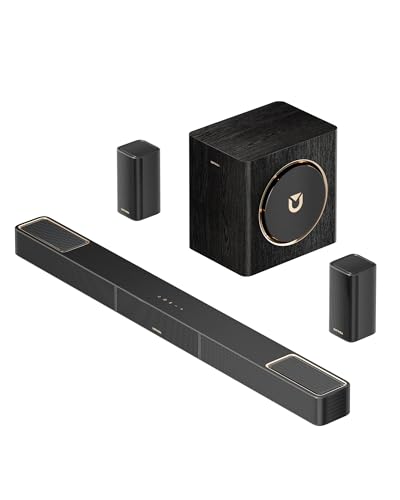






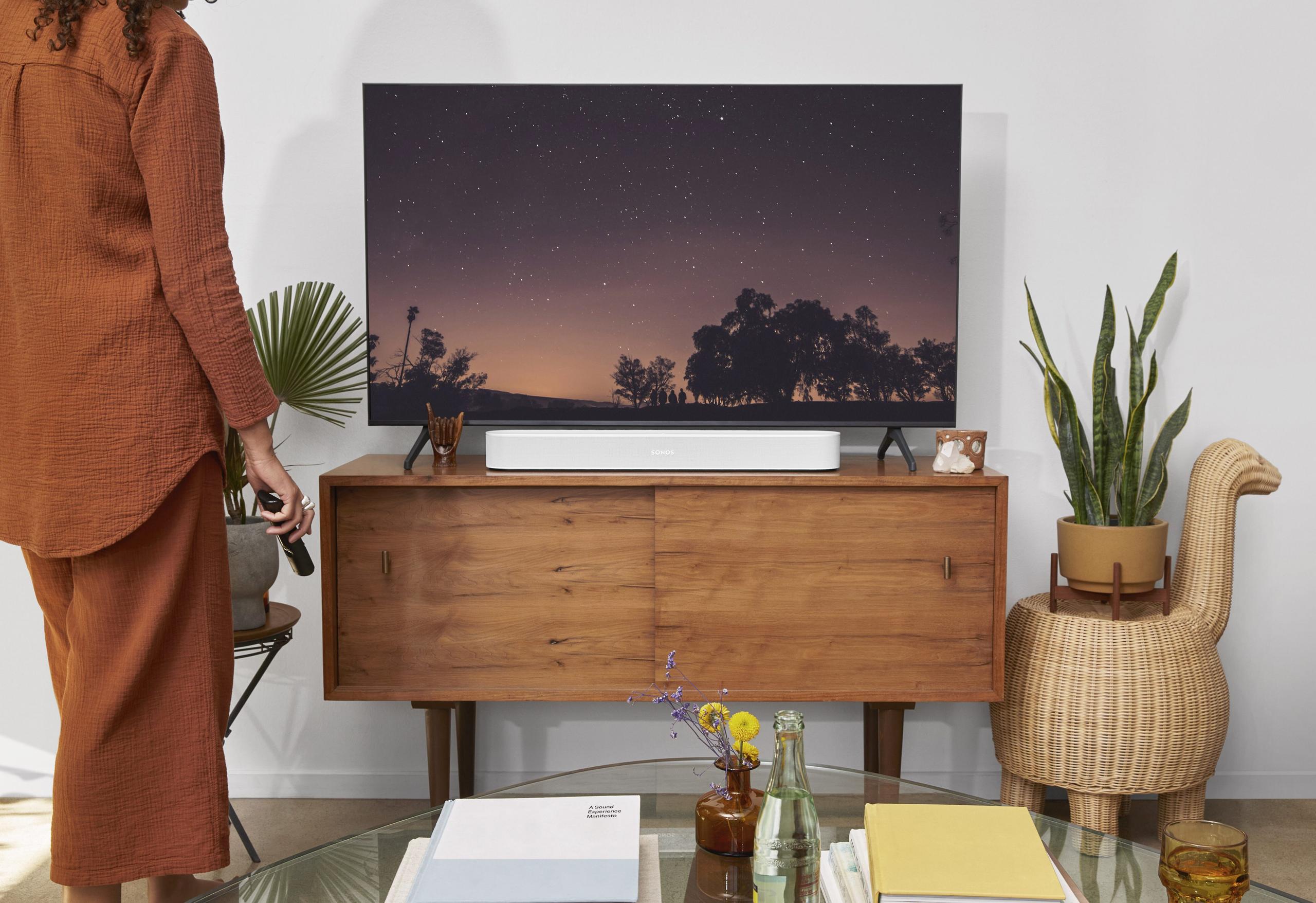
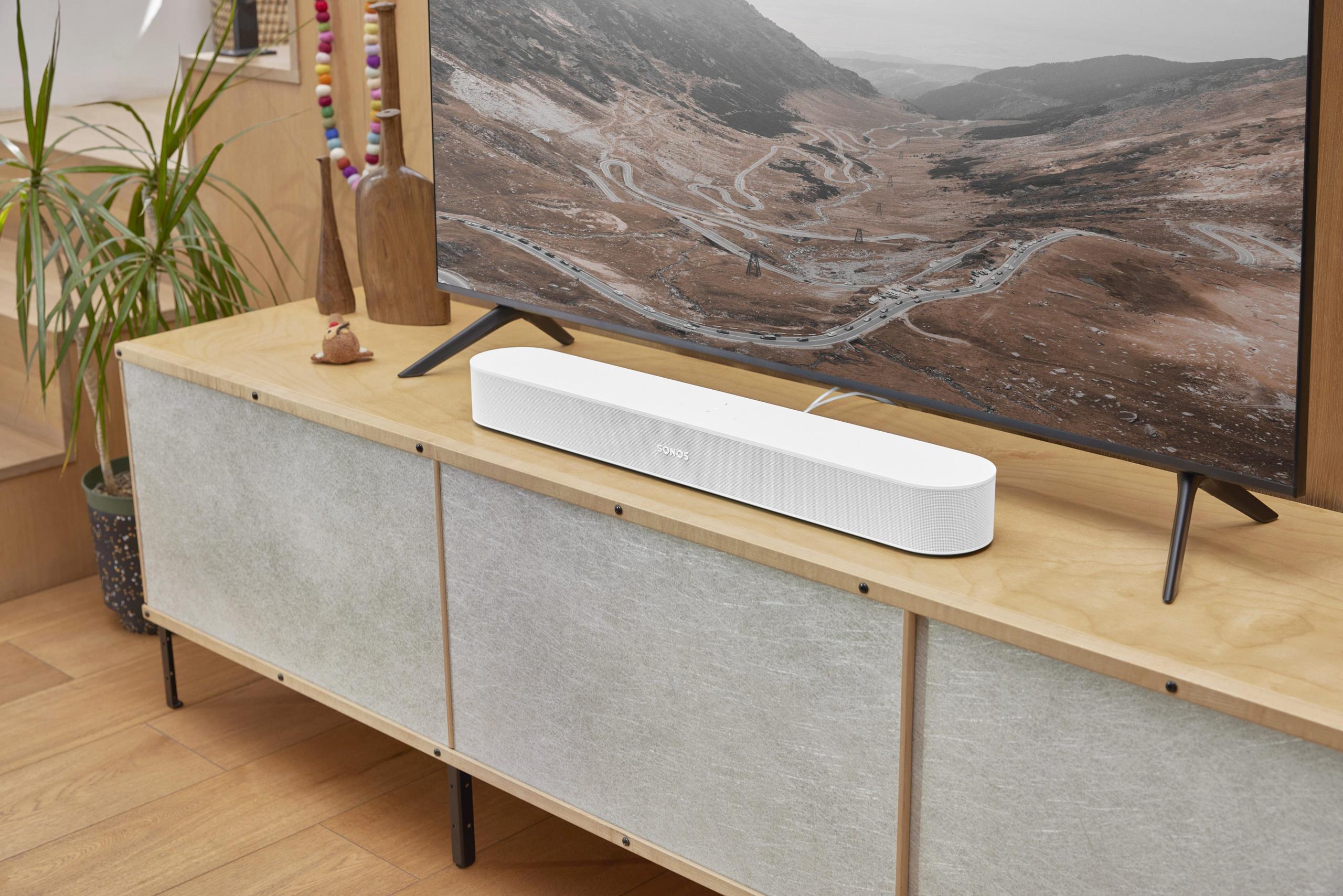
Shopping for a soundbar can feel overwhelming, especially when you're comparing two fundamentally different approaches to home theater audio. The ULTIMEA Skywave X40 represents the "go big or go home" philosophy—a complete wireless surround sound system with real speakers positioned around your room. Meanwhile, the Sonos Beam Gen 2 takes the minimalist approach, using advanced processing to create surround sound from a single sleek unit.
Both released in the early 2020s, these soundbars showcase how the industry has evolved beyond simple TV speaker replacements. The Sonos Beam Gen 2 launched in 2021 as an upgrade to the original Beam, adding Dolby Atmos support and improved processing power. The ULTIMEA Skywave X40 arrived more recently in 2024, incorporating lessons learned from years of wireless audio development.
Let's break down what makes each system unique and help you figure out which one matches your home theater goals and living situation.
Before diving into specifics, it's worth understanding what separates today's soundbars from the basic models of a decade ago. Modern soundbars have become sophisticated audio systems capable of processing multiple audio formats and creating immersive experiences that rival traditional home theater setups.
The biggest advancement has been Dolby Atmos support—a technology that adds height information to surround sound. Traditional surround sound moves audio left, right, front, and back. Dolby Atmos adds up and down, creating a three-dimensional "bubble" of sound around you. When a helicopter flies overhead in a movie, you should hear it move across the ceiling, not just from side to side.
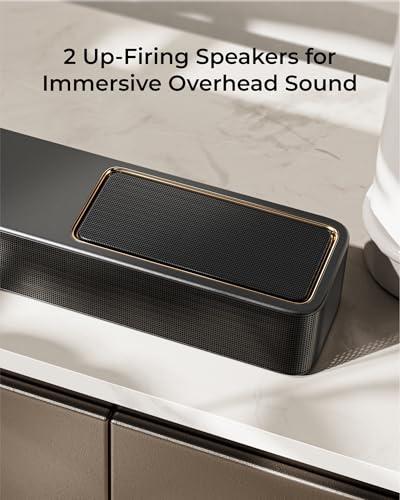
There are two ways to achieve this: with dedicated upward-firing speakers that bounce sound off your ceiling, or through psychoacoustic processing that tricks your brain into perceiving height. The ULTIMEA Skywave X40 uses the first approach with real up-firing drivers, while the Sonos Beam Gen 2 relies on sophisticated digital processing.
Channel configuration tells you how many discrete audio streams a system can handle. The ULTIMEA X40 is a 5.1.2 system, meaning five main channels (front left, center, front right, rear left, rear right), one subwoofer channel (.1), and two height channels (.2). The Sonos Beam Gen 2 is technically a 5.0 system that uses processing to simulate additional channels.
The ULTIMEA Skywave X40 takes a no-compromise approach to home theater audio. When you unbox this system, you're getting five separate components: the main soundbar, a wireless subwoofer, and two wireless surround speakers. This might seem excessive compared to a single soundbar, but there's real science behind why separate speakers matter.
True Surround Sound vs. Virtual Processing
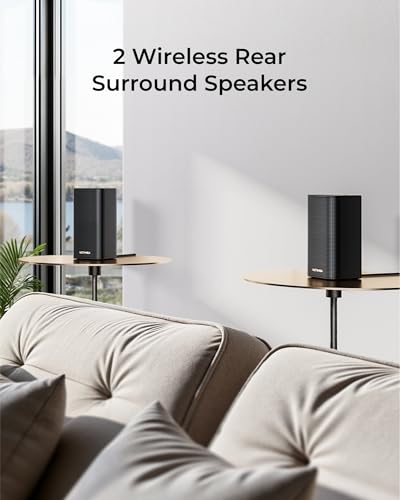
The fundamental advantage of the X40 is that surround effects come from speakers actually positioned behind you. When a car crashes in an action movie, the sound originates from the rear speakers, travels through the air, and reaches your ears from the correct direction. Your brain processes this as genuine surround sound because that's exactly what it is.
Virtual surround systems like the Beam Gen 2 use psychoacoustic tricks—manipulating phase relationships and frequency responses to fool your brain into perceiving directional sound from forward-facing speakers. This can be surprisingly effective, but it's fundamentally limited by your seating position and room acoustics.
The Power of Real Bass
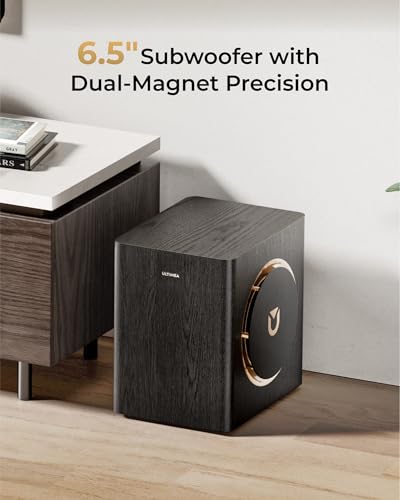
The X40's 6.5-inch wireless subwoofer delivers what ULTIMEA calls "Gravus Ultra-Linear Bass Technology." Strip away the marketing speak, and you're looking at a dedicated driver that can move significantly more air than the passive radiators in compact soundbars. This translates to deeper, more impactful bass that you feel as much as hear.
Bass frequencies below 80Hz are largely non-directional, meaning your brain can't pinpoint where they're coming from. This is why a single subwoofer can fill a room with low-end energy. The X40 extends down to 35Hz—well into the territory where you feel movie explosions and music bass lines in your chest.
Advanced Amplification Technology
One technical detail that sets the X40 apart is its GaN (Gallium Nitride) amplifier. Traditional silicon-based amplifiers generate significant heat and can compress audio signals at high volumes. GaN amplifiers run cooler, respond faster, and maintain clarity even when pushed hard. For a system designed to fill large rooms with sound, this efficiency matters.
The NEURACORE processing engine handles up to 2,000 MIPS (Million Instructions Per Second) of audio processing. This computational power enables real-time audio optimization, ensuring that dialogue stays clear even during explosive action sequences.
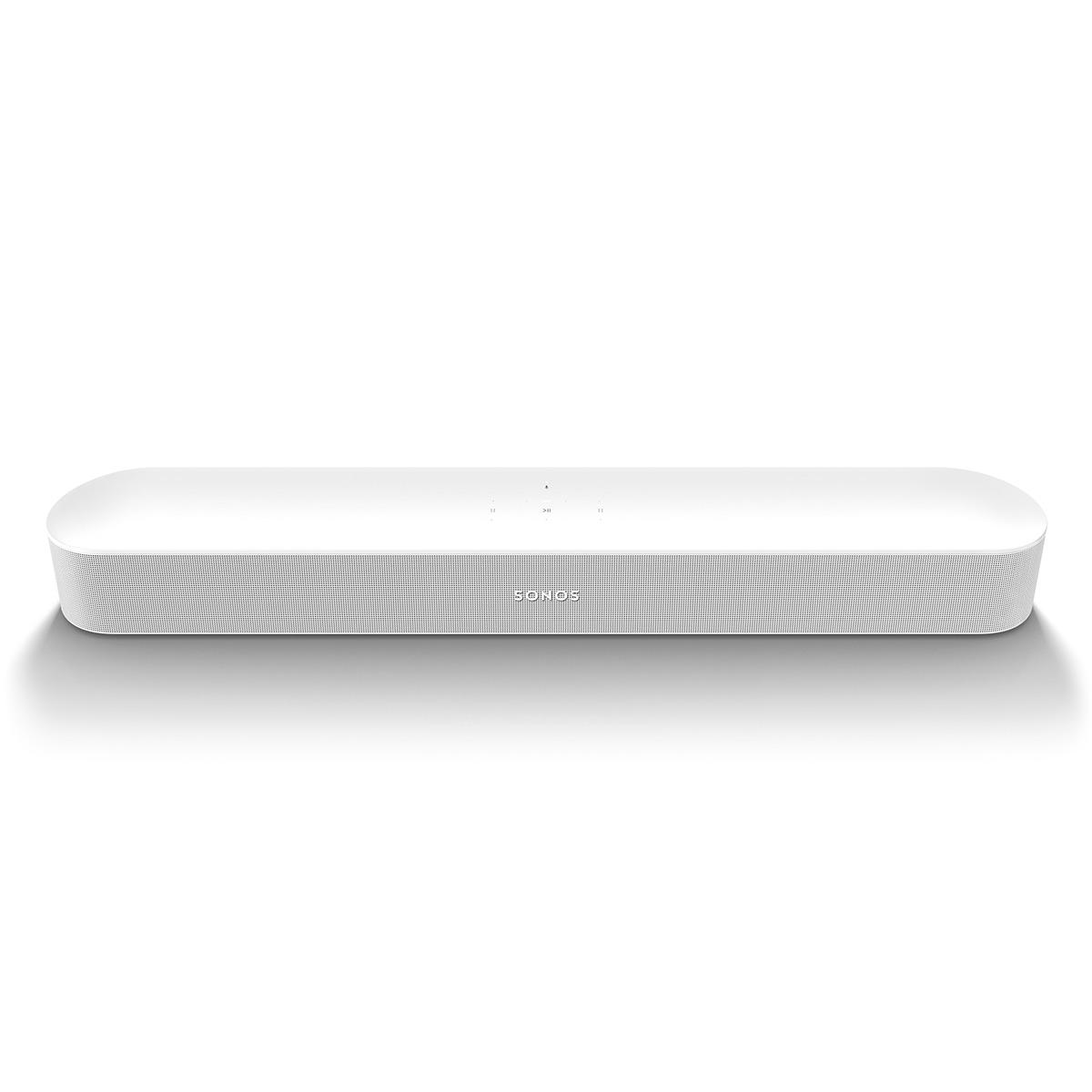
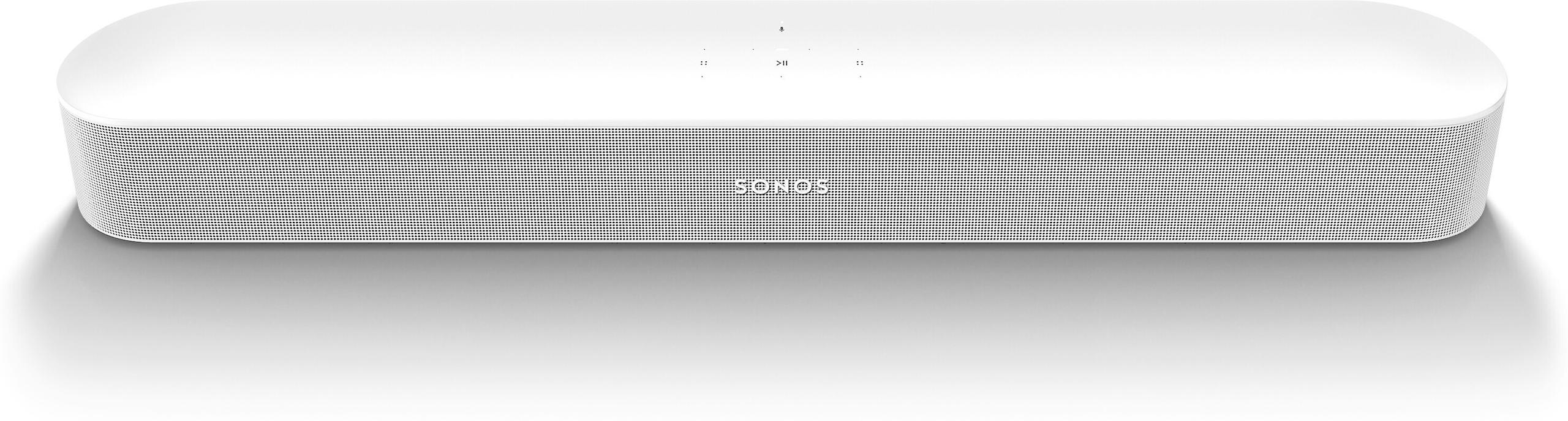
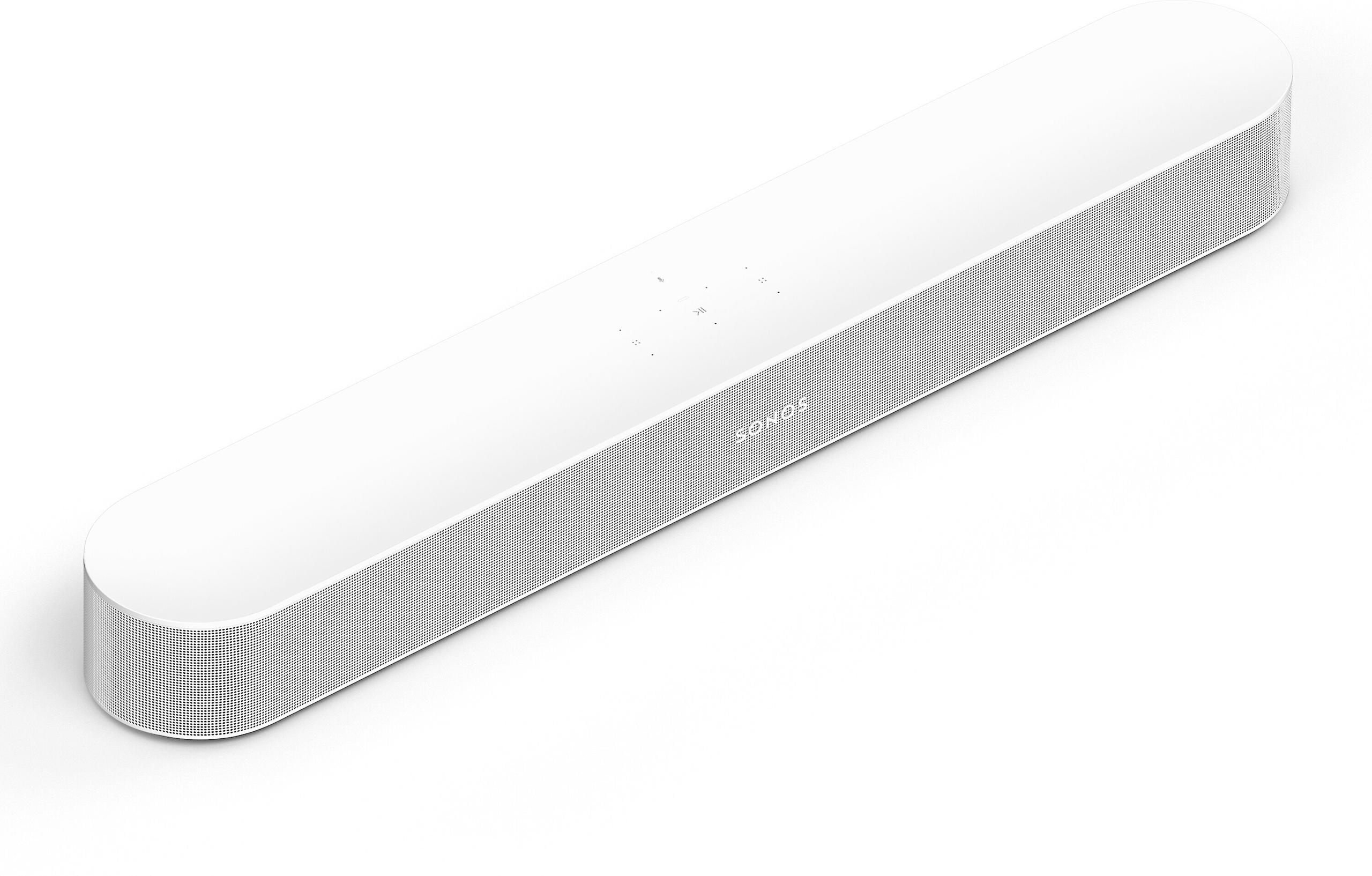
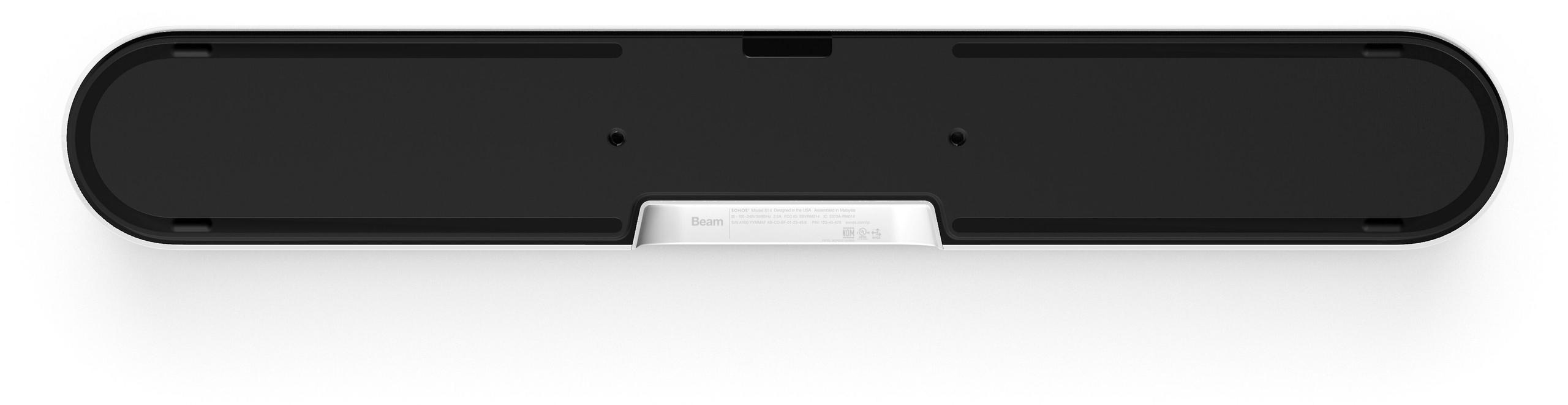
The Sonos Beam Gen 2 represents a completely different philosophy. Instead of filling your room with speakers, Sonos engineers focused on extracting maximum performance from a single 25.6-inch unit that weighs just 6.35 pounds.
Psychoacoustic Wizardry
The Beam Gen 2's virtual Dolby Atmos uses HRTF (Head-Related Transfer Function) processing—a fancy term for algorithms that mimic how your ears naturally perceive directional sound. The soundbar's five drivers (four woofers and one tweeter) are precisely positioned and powered by dedicated amplifiers to create phantom images of sound coming from locations where no speakers exist.
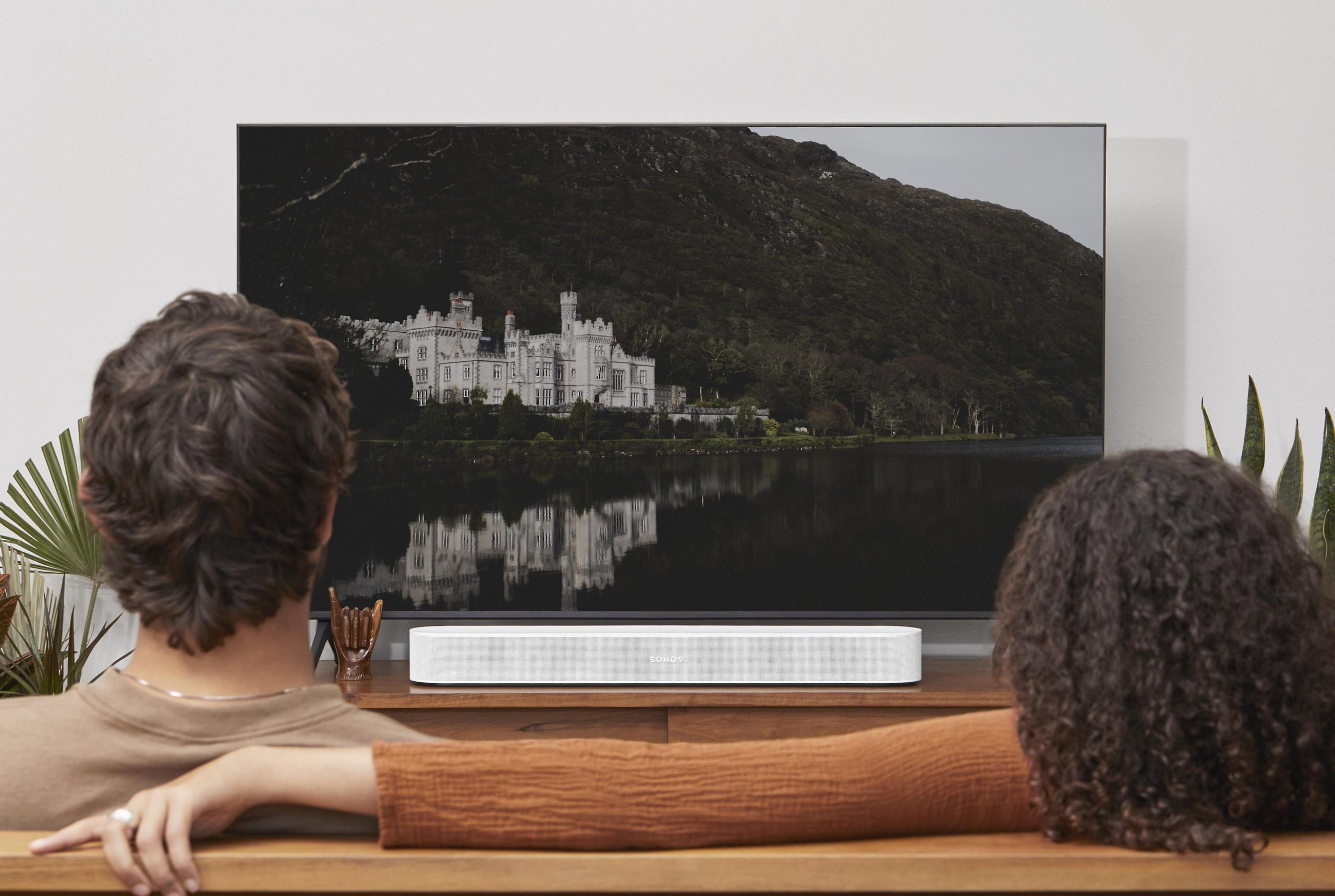
This approach has real advantages. There are no wireless dropouts to worry about, no multiple power outlets to manage, and no speaker placement compromises based on your furniture arrangement. The Beam Gen 2 creates a surprisingly wide soundstage that extends well beyond its physical boundaries.
The Streaming Audio Advantage
Where the Sonos Beam Gen 2 truly shines is music streaming. This soundbar is fundamentally a sophisticated network audio player that happens to excel with TV audio. It supports Apple AirPlay 2, Spotify Connect, and Amazon Music Ultra HD, including lossless 24-bit audio streams that reveal details you've never heard in familiar songs.
The Trueplay room calibration feature uses your smartphone's microphone to analyze your room's acoustic properties and adjust the soundbar's output accordingly. This isn't just basic EQ—it's sophisticated digital signal processing that accounts for wall reflections, furniture absorption, and even ceiling height.
Ecosystem Integration
The Beam Gen 2 serves as an entry point into Sonos's multiroom ecosystem. You can group it with other Sonos speakers throughout your home, creating synchronized audio zones or independent music streams in different rooms. Voice control through built-in Alexa or Google Assistant adds smart home functionality that extends beyond audio control.
Bass Response and Low-End Impact
The difference in bass performance between these systems is substantial. The X40's dedicated subwoofer provides the kind of low-frequency energy that makes action movies visceral. Explosions have weight, music has punch, and you feel the full spectrum of audio content.
The Beam Gen 2 compensates with three passive radiators that reinforce its active drivers. While this creates respectable bass for its size, it simply cannot move the air volume of a dedicated subwoofer. For apartment living or late-night viewing, this might actually be preferable—you get clean bass without disturbing neighbors.
Dialogue Clarity and Vocal Performance
Both systems excel at dialogue reproduction, but through different approaches. The X40 uses a dedicated center channel driver optimized for vocal frequencies, while the Beam Gen 2 relies on its center tweeter and advanced processing.
In our research across professional reviews and user feedback, both systems consistently receive praise for clear dialogue. The Beam Gen 2 includes Speech Enhancement mode that dynamically adjusts vocal frequencies to cut through background noise—particularly useful for dense movie soundtracks or poorly mixed TV shows.
Soundstage Width and Imaging
The X40 creates a genuine 360-degree soundstage with discrete surround channels. Sound effects pan smoothly from front to back, and the up-firing drivers add genuine height information. This creates the most convincing home theater experience, especially for content mixed in Dolby Atmos.
The Beam Gen 2 creates an impressively wide soundstage for a single unit, extending phantom images well beyond its physical boundaries. However, it cannot match the enveloping experience of discrete surround speakers positioned around the room.
Power Output and Room Filling Capability
The X40's 530W peak output is designed for larger rooms and higher listening volumes. This system can pressurize a room with sound, making it ideal for open-concept living spaces or dedicated home theater rooms.
The Beam Gen 2 doesn't publish specific wattage figures, but its Class D amplification is optimized for efficiency rather than maximum output. It's perfectly adequate for most living rooms but may struggle to fill very large spaces with impactful sound.
Installation and Configuration
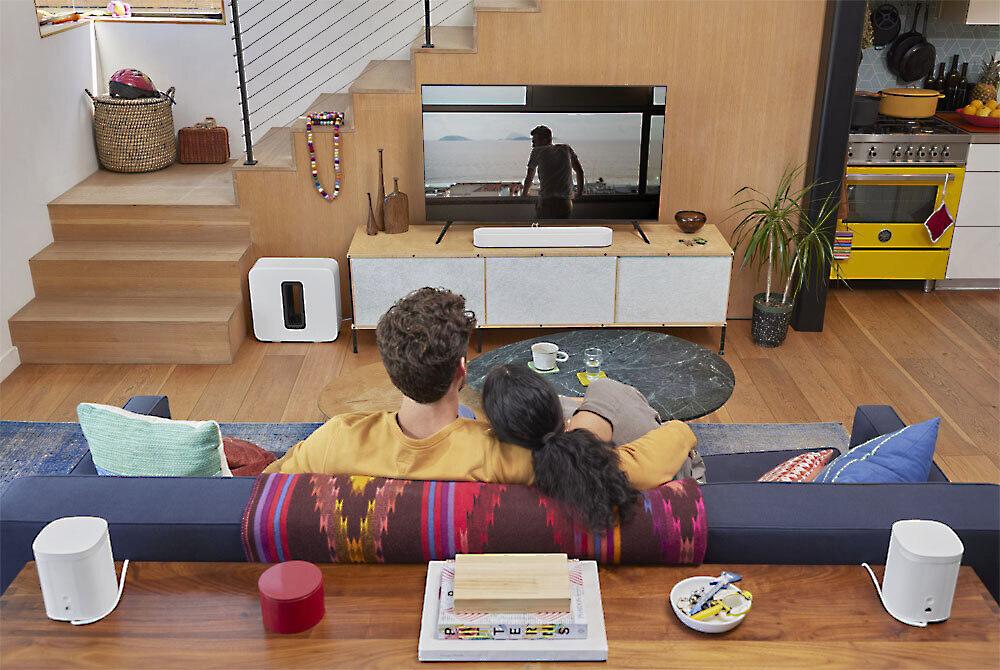
The X40 requires more thoughtful setup. You'll need power outlets for the subwoofer and both surround speakers, plus optimal positioning for each component. The wireless nature eliminates speaker cables, but you're still managing five separate devices. The payoff is placement flexibility—you can position surrounds and the subwoofer exactly where they perform best.
The Beam Gen 2 connects with a single HDMI cable and requires minimal configuration. Trueplay calibration takes about two minutes using the Sonos app, and you're done. This simplicity extends to daily use—everything just works without thinking about wireless connections or component synchronization.
Software Updates and Feature Evolution
Sonos has an exceptional track record for long-term software support. The Beam Gen 2 regularly receives new features, streaming service integrations, and performance improvements. The company's S2 platform ensures compatibility with future audio formats and smart home developments.
ULTIMEA is newer to the premium soundbar market, so their long-term software support remains to be proven. However, the X40's hardware is more future-proof in some ways—discrete speakers and powerful processing provide flexibility for format changes.
At the time of writing, these systems occupy different value territories. The Sonos Beam Gen 2 positions itself as a premium single-unit solution with exceptional streaming capabilities and ecosystem integration. You're paying for Sonos's brand reputation, software expertise, and long-term support.
The ULTIMEA X40 offers more raw performance and complete surround hardware at what appears to be competitive pricing for a full 5.1.2 system. You're getting discrete speakers, substantial power output, and genuine surround sound capabilities that would typically require a much higher investment.
However, value extends beyond initial purchase price. The Beam Gen 2 may appreciate over time through software updates and ecosystem integration, while the X40 delivers maximum performance immediately but with less certain long-term evolution.
Choose the ULTIMEA Skywave X40 if:
You want maximum movie immersion and have space for a full surround system. This is the choice for dedicated home theater enthusiasts who prioritize authentic surround sound over convenience. The X40 excels in larger rooms, open-concept spaces, or dedicated media rooms where you can properly position all components.
The wireless design makes it practical for renters or anyone who doesn't want to run speaker cables, while still delivering the performance benefits of discrete surround channels. If your primary use case is movies, gaming, or TV watching—and you want to feel like you're in a commercial theater—the X40 is the clear choice.
Choose the Sonos Beam Gen 2 if:
You value simplicity, streaming integration, and long-term ecosystem potential over maximum surround immersion. The Beam Gen 2 is perfect for smaller to medium-sized rooms where a single soundbar can provide adequate coverage.
This is also the better choice if music streaming is equally important as TV audio, or if you're interested in building a whole-home audio system over time. The Sonos ecosystem offers unmatched flexibility for multiroom audio, making the Beam Gen 2 an investment in your home's long-term entertainment infrastructure.
Both soundbars represent excellent execution of their respective philosophies. The ULTIMEA X40 delivers authentic surround sound with minimal compromise, while the Sonos Beam Gen 2 maximizes convenience and integration while still providing impressive virtual surround performance.
Your choice ultimately depends on whether you prioritize maximum immersion or maximum convenience. The X40 is for audio enthusiasts who want their home theater to rival commercial cinemas. The Beam Gen 2 is for users who want excellent sound quality with seamless integration into modern smart homes.
Consider your room size, primary use cases, and long-term audio goals. Both systems will dramatically improve your TV's audio performance—they just take very different paths to get there.
| ULTIMEA Skywave X40 5.1.2 Soundbar System | Sonos Beam Gen 2 Soundbar |
|---|---|
| Channel Configuration - Determines surround sound authenticity | |
| 5.1.2 with discrete rear speakers and up-firing drivers | 5.0 with virtual Dolby Atmos processing |
| Subwoofer - Critical for bass impact and movie immersion | |
| 6.5-inch wireless subwoofer (35Hz-20kHz) | No dedicated subwoofer (3 passive radiators) |
| Peak Power Output - Affects room-filling capability and dynamics | |
| 530W (suitable for large rooms) | Not specified (optimized for mid-sized spaces) |
| Setup Complexity - Balance between performance and convenience | |
| 5 components requiring power outlets and positioning | Single unit with one HDMI cable |
| Wireless Technology - Reliability of multi-component systems | |
| Dual 5G CineMesh for component communication | Wi-Fi only, no wireless components to sync |
| Streaming Integration - Music playback beyond TV audio | |
| Basic Bluetooth 5.4 connectivity | Apple AirPlay 2, Spotify Connect, Amazon Music HD |
| EQ Customization - Sound tuning flexibility | |
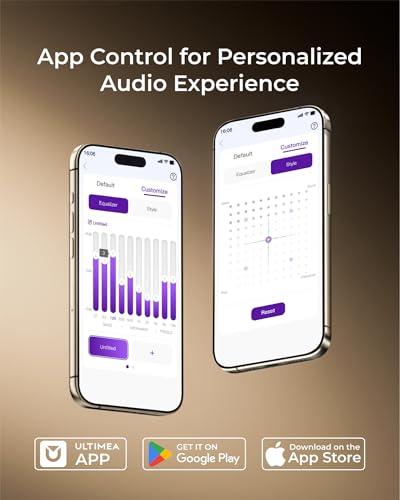
| 10-band EQ with 121 preset profiles | 2-band EQ with Trueplay room calibration |
| Voice Control - Smart home integration | |
| No built-in voice assistants | Built-in Alexa and Google Assistant |
| Connectivity Options - Device compatibility | |
| HDMI eARC, Optical, USB, Bluetooth | HDMI eARC only |
| Expandability - Future upgrade potential | |
| Complete system out of box, limited expansion | Easy addition of Sonos Sub and surround speakers |
| Amplifier Technology - Efficiency and heat management | |
| GaN (Gallium Nitride) for 40-50% less heat | Class D amplifiers |
| Physical Footprint - Space requirements | |
| Multiple components (soundbar, sub, 2 surrounds) | Single compact unit (25.6" x 2.7" x 3.9") |
| Release Year - Technology generation and support | |
| 2024 (latest wireless surround tech) | 2021 (established platform with proven updates) |
The ULTIMEA Skywave X40 is significantly better for movies due to its true 5.1.2 surround sound system with discrete rear speakers and a dedicated subwoofer. This creates authentic surround effects where explosions and dialogue come from the correct directions around your room. The Sonos Beam Gen 2 uses virtual processing to simulate surround sound from a single unit, which is impressive but cannot match the immersion of actual speakers positioned behind you.
The fundamental difference is that the ULTIMEA Skywave X40 is a complete 5-piece wireless surround system (soundbar, subwoofer, and two rear speakers), while the Sonos Beam Gen 2 is a single compact soundbar that creates virtual surround sound through advanced processing. The X40 provides true surround sound but requires more space and setup, while the Beam Gen 2 offers simplicity and excellent streaming features in one sleek unit.
The ULTIMEA Skywave X40 has significantly better bass performance with its dedicated 6.5-inch wireless subwoofer that extends down to 35Hz. This provides room-shaking low-end impact for movies and music. The Sonos Beam Gen 2 uses three passive radiators for bass reinforcement, which sounds good for its compact size but cannot match the power and depth of a dedicated subwoofer.
Yes, the Sonos Beam Gen 2 is much easier to set up. It connects with just one HDMI cable and takes minutes to configure using the Sonos app's Trueplay calibration. The ULTIMEA Skywave X40 requires positioning and powering five separate wireless components around your room, though it eliminates traditional speaker wire runs. Setup complexity is the trade-off for the X40's superior surround sound performance.
The Sonos Beam Gen 2 is far superior for music streaming. It supports Apple AirPlay 2, Spotify Connect, Amazon Music HD with lossless audio, and integrates seamlessly with the Sonos multiroom ecosystem. It also includes built-in voice assistants. The ULTIMEA Skywave X40 only offers basic Bluetooth connectivity for music streaming, focusing primarily on home theater performance rather than streaming features.
The Sonos Beam Gen 2 is better suited for small apartments due to its compact single-unit design and controlled bass output that won't disturb neighbors. The ULTIMEA Skywave X40 may be overkill for small spaces and requires room to properly position multiple wireless components. However, if you have space and want maximum movie immersion even in an apartment, the X40 delivers superior surround sound.
Value depends on your priorities. The ULTIMEA Skywave X40 offers excellent value for home theater enthusiasts, providing a complete 5.1.2 surround system with substantial hardware at a competitive price point. The Sonos Beam Gen 2 provides premium streaming features, ecosystem integration, and long-term software support, making it valuable for users who prioritize music and smart home connectivity alongside TV audio.
The Sonos Beam Gen 2 offers much better expandability within the Sonos ecosystem - you can easily add a Sonos Sub and surround speakers later, plus integrate other Sonos speakers throughout your home for multiroom audio. The ULTIMEA Skywave X40 comes as a complete system with limited expansion options, but includes everything needed for full surround sound out of the box.
The Sonos Beam Gen 2 is inherently more reliable since it's a single unit with no wireless components to synchronize. The ULTIMEA X40 uses dual 5G CineMesh wireless technology to connect its components, which ULTIMEA claims provides stable, low-latency transmission. However, any multi-component wireless system introduces potential points of failure that don't exist with the single-unit Beam Gen 2.
Yes, both support Dolby Atmos but differently. The ULTIMEA Skywave X40 delivers true Dolby Atmos with dedicated up-firing speakers in the main soundbar that bounce sound off your ceiling for overhead effects. The Sonos Beam Gen 2 uses virtual Dolby Atmos processing to create the perception of height effects from forward-facing drivers. The X40 provides more authentic overhead sound placement.
The ULTIMEA Skywave X40 is significantly better for large rooms with its 530W peak power output and room-filling surround sound capabilities. The discrete speakers can be positioned optimally throughout the space for even coverage. The Sonos Beam Gen 2 performs well in small to medium rooms but may struggle to adequately pressurize very large spaces or open-concept areas with impactful sound.
The ULTIMEA Skywave X40 requires managing five separate wireless components, multiple power outlets, and careful positioning for optimal performance. It also has limited streaming features compared to modern smart soundbars. The Sonos Beam Gen 2 cannot match the bass impact and true surround immersion of discrete speakers, has only HDMI connectivity (no Bluetooth), and costs more when you factor in adding a separate subwoofer and surrounds later.
We've done our best to create useful and informative comparisons to help you decide what product to buy. Our research uses advanced automated methods to create this comparison and perfection is not possible - please contact us for corrections or questions. These are the sites we've researched in the creation of this article: bestbuy.com - shopabunda.com - youtube.com - youtube.com - youtube.com - youtube.com - ultimea.com - walmart.com - youtube.com - hometechnologyreview.com - community.ultimea.com - avsforum.com - youtube.com - youtube.com - youtube.com - bestbuy.com - hometechnologyreview.com - whathifi.com - en.community.sonos.com - techradar.com - youtube.com - consumerreports.org - bestbuy.com - youtube.com - sonos.com - wave-electronics.com - en.community.sonos.com - epicsystems.tech - tomsguide.com - bestbuy.com

Privacy Policy
Terms and Conditions - Affiliate Policy
Home Security
© Copyright 2008-2026.
11816 Inwood Rd #1211, Dallas, TX 75244