



When you're ready to upgrade from your TV's built-in speakers, the world of premium soundbars can feel overwhelming. Two standout options represent very different approaches to delivering cinematic audio: the ULTIMEA Skywave X40, released in 2024, and Samsung's flagship HW-Q990F, which hit the market in late 2023. Both promise to transform your living room into a home theater, but they take dramatically different paths to get there.
Understanding what separates these systems—and which approach works better for your specific situation—requires diving into the technical details that actually matter for your movie nights and music listening sessions.
Before we dive into the comparison, let's establish what we're dealing with. Both the ULTIMEA Skywave X40 and Samsung HW-Q990F belong to the premium soundbar category, which means they go far beyond the basic soundbar-plus-subwoofer setups you might find at big box stores.
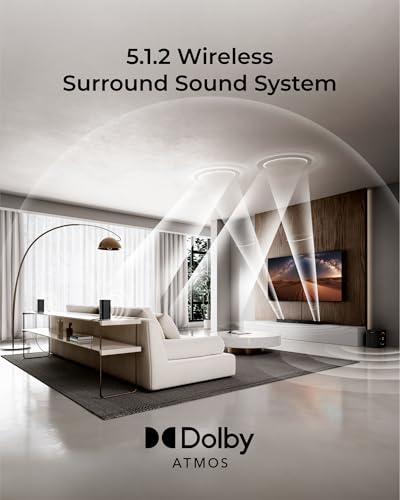
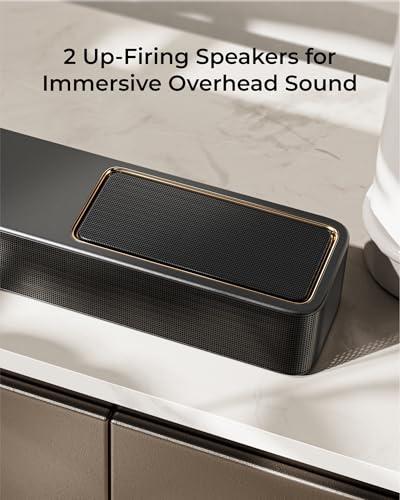
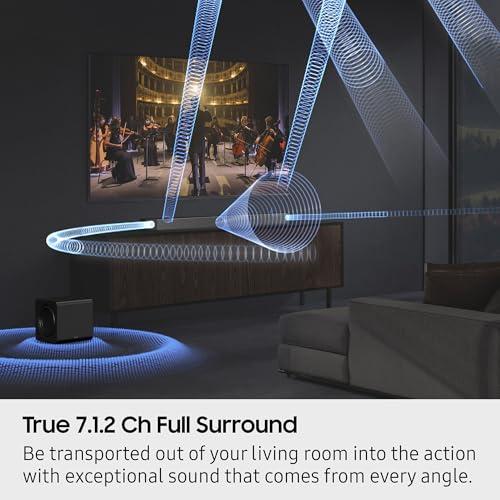
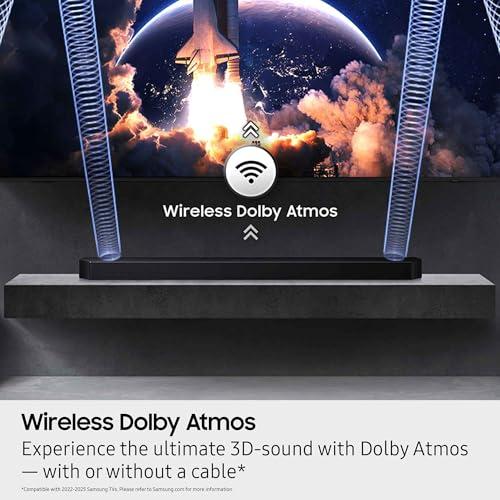
The key innovation here is object-based audio, specifically Dolby Atmos and DTS:X. Unlike traditional surround sound that sends specific audio to designated speakers, object-based audio treats sounds as individual objects that can be placed anywhere in three-dimensional space. When a helicopter flies overhead in a movie, the sound literally moves from speaker to speaker to create that realistic overhead effect. This requires height channels—speakers that fire upward to bounce sound off your ceiling—something that older soundbar technology simply couldn't deliver.
The numbers in these product names (5.1.2 for the ULTIMEA and 11.1.4 for the Samsung) tell you exactly what you're getting. The first number represents main surround channels, the second is subwoofer channels, and the third indicates height channels for those overhead effects. More channels generally mean more precise sound placement, but as we'll explore, there's a point of diminishing returns depending on your room and listening preferences.
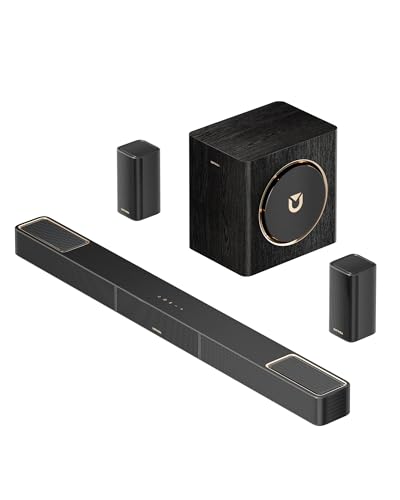
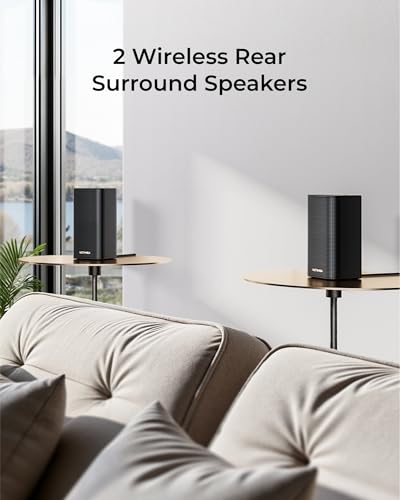
The ULTIMEA Skywave X40 launched in 2024 with a clear mission: deliver authentic 5.1.2 surround sound without the cable management nightmares that typically come with rear speakers. Traditional surround systems require running speaker wires across your living room—often under rugs or along baseboards—which many people find impractical or aesthetically unacceptable.
ULTIMEA's solution centers on their CineMesh True Wireless technology, which uses dual 5GHz transmission to connect the rear speakers and subwoofer to the main soundbar. This isn't the same as Bluetooth audio, which often suffers from compression and latency issues. Instead, it's a dedicated wireless system designed specifically for high-quality, real-time audio transmission with less than 20 milliseconds of delay—essentially imperceptible during normal use.
The technical foundation here is impressive for a value-focused product. The ULTIMEA uses a GaN (Gallium Nitride) amplifier, which represents a significant advancement over traditional silicon-based amplifiers. GaN amplifiers operate at up to 98% efficiency compared to around 85% for silicon, meaning they generate less heat, respond eight times faster, and maintain cleaner sound even when pushed to high volumes. For a soundbar that needs to drive eight separate speakers across multiple wireless components, this efficiency translates directly to better performance and reliability.
The audio processing comes from what ULTIMEA calls their NEURACORE engine—a triple-core DSP (Digital Signal Processor) paired with a dual-core MCU (Microcontroller Unit) that can handle up to 2,000 MIPS (Million Instructions Per Second) of processing power. While these numbers might sound like marketing speak, they represent real capabilities: the system can process 24-bit/192kHz audio with less than 0.5% distortion while simultaneously managing wireless transmission, room correction, and dynamic range optimization.
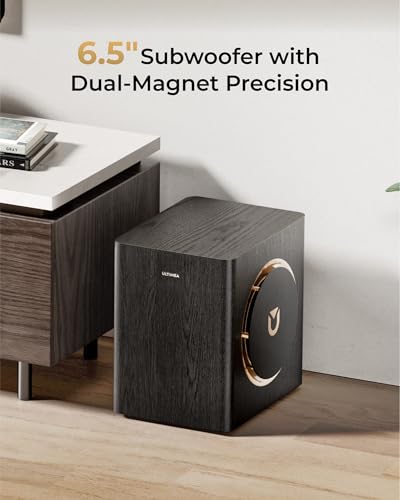
What sets the ULTIMEA apart is its Gravus Ultra-Linear Bass Technology, which works with the 6.5-inch wireless subwoofer to deliver clean bass response down to 35Hz. That frequency range captures the rumble of explosions and the deep notes of orchestral music without the muddiness that often plagues budget subwoofers. The dual-magnet design helps maintain precision even at high volumes, something that becomes crucial when you're trying to feel those action movie moments without disturbing neighbors.
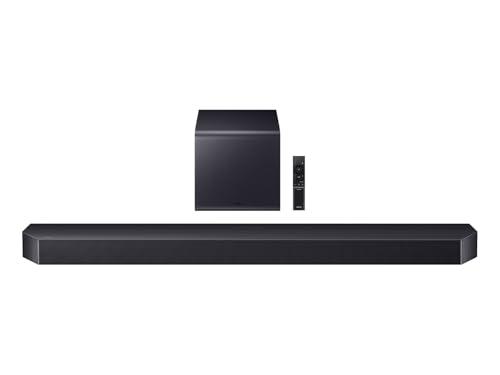
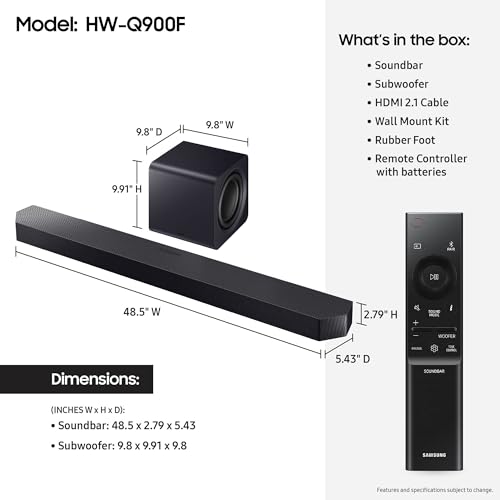
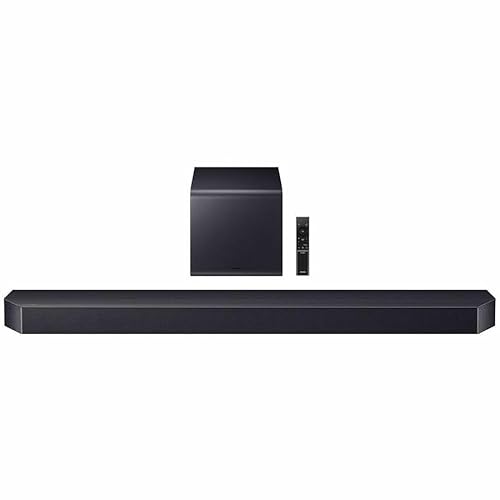
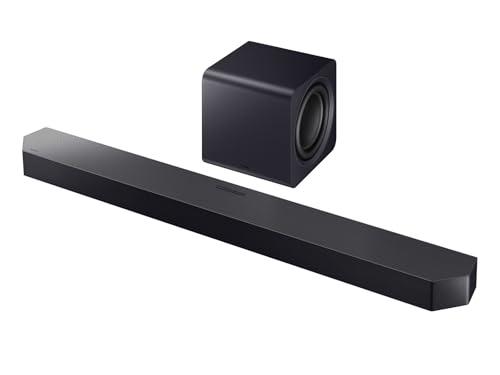
The Samsung HW-Q990F, refined through several generations since Samsung entered the premium soundbar market, represents a fundamentally different approach. Where ULTIMEA focuses on wireless convenience, Samsung prioritizes channel count and processing sophistication. The 11.1.4 configuration means you're getting nearly three times as many discrete audio channels as the ULTIMEA system.
This isn't just about bigger numbers—it's about sound field precision. The Samsung includes 23 individual speakers spread across the main soundbar, subwoofer, and rear speakers. Each rear speaker contains three drivers: one firing forward, one to the side, and one angled upward. This tri-directional approach means that as sounds move through your listening space, they transition smoothly between speakers without the gaps or discontinuities that can break immersion.
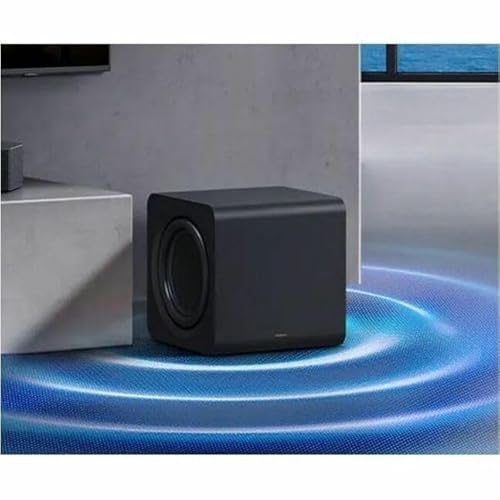
The subwoofer technology particularly showcases Samsung's premium approach. The dual 8-inch force-canceling woofers work in opposition to each other, which eliminates the cabinet vibrations that typically cause rattling or muddy bass. Combined with Samsung's AI Dynamic Bass Control, the system actually learns your room's acoustic properties and adjusts bass response in real-time to minimize distortion. This is the kind of sophisticated processing typically found in high-end AV receivers, not soundbars.
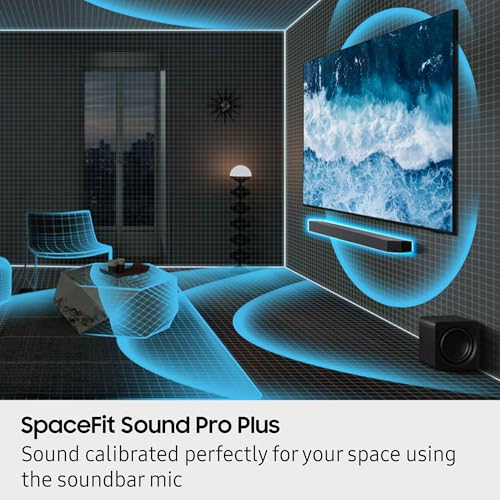
Samsung's SpaceFit Sound Pro Plus represents another level of technological advancement. Built-in microphones analyze your room's acoustics—ceiling height, wall materials, furniture placement—and automatically calibrate the system for optimal performance. This isn't a one-time setup routine; the system continues to adapt as you move furniture or change your listening environment.
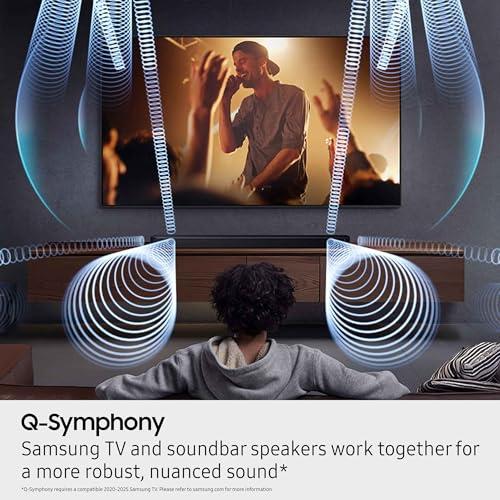
The Q-Symphony feature deserves special mention for Samsung TV owners. Rather than disabling your TV's speakers when you connect the soundbar (as most systems do), Q-Symphony synchronizes the TV and soundbar speakers to work together. The result is a larger, more enveloping soundstage that can make even modest-sized TVs sound like they have much more powerful built-in audio.
Our research into professional reviews and user experiences reveals some clear performance distinctions that matter for real-world use. The most significant difference lies in surround effect continuity. The Samsung's 11.1.4 configuration creates what reviewers consistently describe as a "bubble of sound"—effects move seamlessly around and above the listening position without perceptible gaps.
The ULTIMEA, while delivering genuine surround effects, shows its 5.1.2 limitations in large rooms or with complex audio mixes. The system excels with focused content like dialogue-heavy films or stereo music, but action sequences with multiple simultaneous effects can sometimes feel less cohesive. However, this limitation becomes much less noticeable in typical living rooms under 20 feet in length.
Bass performance shows a clear technical advantage for the Samsung. The dual 8-inch drivers simply move more air than the ULTIMEA's single 6.5-inch unit, and the force-canceling design eliminates the cabinet resonances that can muddy low frequencies. In practice, this means the Samsung delivers more impactful explosions and deeper musical bass, though the ULTIMEA still provides satisfying low-end for most content.
Dialogue clarity represents an area where both systems excel, but through different approaches. The Samsung's dedicated center channel and Active Voice Amplifier Pro technology dynamically adjust dialogue frequencies based on ambient noise, ensuring voices remain clear even during complex sound mixes. The ULTIMEA achieves similar results through its NEURACORE processing, though without the same level of real-time adaptation.
The wireless performance comparison reveals interesting trade-offs. The ULTIMEA's CineMesh system, being purpose-built for audio transmission, typically provides more stable connections with less susceptibility to interference from Wi-Fi networks or other wireless devices. The Samsung uses standard Wi-Fi protocols for its wireless components, which can occasionally experience dropouts in crowded wireless environments, though this is rare in practice.
At the time of writing, these systems occupy very different price tiers, with the ULTIMEA Skywave X40 positioned as a value-focused option and the Samsung HW-Q990F commanding premium pricing. The performance gap between them isn't as dramatic as the price difference might suggest, particularly for typical home theater use.
The ULTIMEA delivers approximately 80% of the Samsung's performance at roughly half the cost. For most users in average-sized living rooms, this represents exceptional value. The wireless rear speakers eliminate the main practical barrier to surround sound setup, and the audio quality satisfies the vast majority of content from streaming services to Blu-ray discs.
However, the Samsung justifies its premium through features that become increasingly valuable over time. The advanced room correction means the system will sound better in challenging acoustic environments. The extensive connectivity options, including HDMI 2.1 with 4K/120Hz passthrough, provide better future-proofing for next-generation gaming consoles and media players. The smart home integration and voice control capabilities add convenience that goes beyond pure audio performance.
Home theater considerations particularly favor the Samsung for dedicated media rooms or large open floor plans. The additional channels create more convincing surround effects during action sequences, and the superior bass extension enhances the impact of explosions and musical scores. The Q-Symphony integration can transform the entire TV viewing experience for Samsung owners.
One aspect that deserves deeper examination is how these wireless systems actually perform in real-world conditions. The ULTIMEA's dual 5GHz approach represents a smart engineering choice. By using dedicated frequency bands separate from typical home Wi-Fi traffic, the system avoids the congestion that can cause audio dropouts or quality degradation.
The latency performance—the delay between when audio is processed and when you hear it—becomes crucial for gaming and video content. Both systems achieve acceptable latency (under 40 milliseconds), but the ULTIMEA's dedicated wireless implementation typically provides more consistent timing. This matters most when watching action movies or playing games where audio-visual synchronization affects immersion.
Range limitations affect both systems differently. The ULTIMEA typically maintains stable connections up to about 30 feet from the main soundbar, while the Samsung's Wi-Fi-based approach can work at greater distances but may experience more variability depending on your home's wireless infrastructure.
The decision between these systems ultimately comes down to matching capabilities to your specific needs and priorities. Choose the ULTIMEA Skywave X40 if you want genuine surround sound without the premium price tag, especially if you're dealing with rental properties or situations where running speaker cables isn't practical. The wireless convenience and solid performance make it ideal for most living rooms and typical viewing distances.
The Samsung HW-Q990F makes sense for serious home theater enthusiasts who want maximum immersion and don't mind paying for it. If you own a Samsung TV, the Q-Symphony integration alone can justify the price premium. The system particularly shines in larger rooms where the additional channels create more convincing surround effects.
Room size plays a crucial role in this decision. In spaces smaller than 15x15 feet, the performance difference between these systems becomes much less significant. The ULTIMEA often provides sufficient immersion without the complexity and cost of additional channels. Larger rooms or open floor plans significantly favor the Samsung, where the additional speakers can better fill the space with convincing surround effects.
Content preferences also influence the choice. If you primarily watch dialogue-heavy content like dramas or documentaries, both systems provide excellent voice clarity, making the ULTIMEA a smart value choice. Action movie enthusiasts and gamers who prioritize explosive sound effects and precise positional audio will appreciate the Samsung's additional channels and processing power.
The soundbar landscape continues evolving rapidly, with both wireless technology and processing capabilities advancing each year. The ULTIMEA Skywave X40 represents how much performance you can now get at accessible price points, while the Samsung HW-Q990F showcases the current peak of soundbar technology. Either choice will dramatically improve your audio experience over TV speakers—the question is simply how much performance and convenience you need for your specific situation.
| ULTIMEA Skywave X40 5.1.2 Soundbar System | Samsung Q-Series HW-Q990F Soundbar |
|---|---|
| Channel Configuration - Determines surround sound precision and immersion | |
| 5.1.2 channels (8 total speakers) - Excellent for most rooms | 11.1.4 channels (23 total speakers) - Maximum precision for large spaces |
| Total Power Output - Affects maximum volume and dynamic range | |
| 530W peak power - Sufficient for most living rooms | 756W RMS - Superior headroom for large rooms and party volumes |
| Wireless Technology - Critical for setup flexibility and connection stability | |
| CineMesh dual 5GHz dedicated audio transmission | Wi-Fi based wireless with potential interference from home networks |
| Subwoofer Design - Determines bass depth and clarity | |
| Single 6.5" wireless subwoofer, 35Hz extension | Dual 8" force-canceling woofers with AI bass control |
| Audio Processing - Affects sound optimization and room adaptation | |
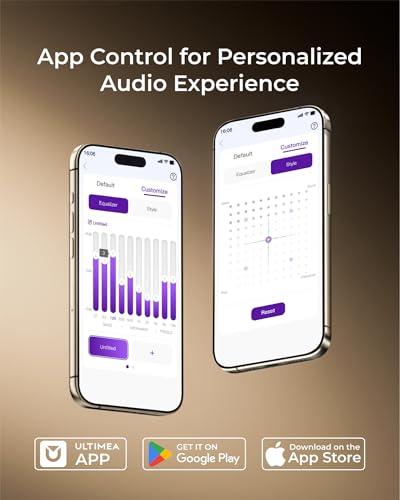
| NEURACORE triple-core DSP, manual app-based EQ | SpaceFit Sound Pro Plus auto room calibration, AI processing |
| Rear Speaker Configuration - Impacts surround effect quality | |
| Wireless rear speakers, basic directional drivers | Tri-directional wireless rears (front/side/up-firing drivers each) |
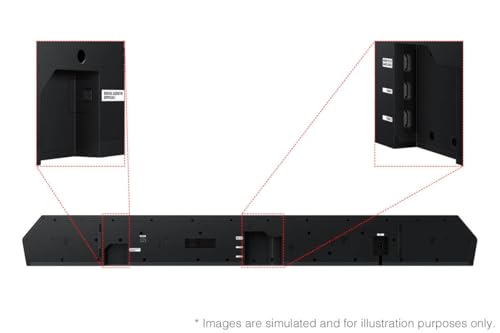
| Connectivity Options - Determines device compatibility and future-proofing | |
| HDMI eARC, optical, Bluetooth 5.4, 4K HDR passthrough | HDMI 2.1 (4K/120Hz), eARC, optical, Wi-Fi streaming, voice assistants |
| Smart Features - Adds convenience and integration capabilities | |
| Ultimea app with 10-band EQ and 121 presets | Q-Symphony TV integration, built-in Alexa/Bixby, streaming services |
| Amplifier Technology - Affects efficiency and sound quality | |
| GaN (Gallium Nitride) amplifier, 98% efficiency | Traditional amplification with advanced DSP processing |
| Setup Complexity - Important for non-technical users | |
| Plug-and-play wireless, factory pre-paired components | Advanced calibration available but more complex initial setup |
| Room Size Optimization - Helps determine best fit for your space | |
| Ideal for small to medium rooms (up to 20ft) | Optimized for large rooms and open floor plans |
| Value Proposition - Performance per dollar spent | |
| Exceptional value - premium wireless features at accessible price | Premium pricing justified by maximum channel count and advanced features |
The Samsung Q-Series HW-Q990F delivers superior surround sound with its 11.1.4 channel configuration and 23 total speakers, creating more precise audio placement and seamless sound movement around your room. The ULTIMEA Skywave X40 offers excellent 5.1.2 surround sound that's perfectly adequate for most home theaters, especially in smaller to medium-sized rooms.
Yes, both the ULTIMEA Skywave X40 and Samsung HW-Q990F include wireless rear speakers in their packages. The ULTIMEA uses dedicated CineMesh wireless technology for stable connections, while the Samsung relies on Wi-Fi-based wireless transmission.
The ULTIMEA Skywave X40 is generally easier to set up with its plug-and-play design and factory pre-paired wireless components. The Samsung HW-Q990F offers more advanced features like automatic room calibration, but this can make initial setup more complex for some users.
The Samsung Q-Series HW-Q990F has superior bass performance with dual 8-inch force-canceling subwoofer drivers and AI-powered bass control. The ULTIMEA Skywave X40 features a single 6.5-inch wireless subwoofer with Gravus Ultra-Linear Bass Technology that still delivers satisfying low-end response for most content.
Both soundbars work well for gaming, but the Samsung HW-Q990F has an edge with HDMI 2.1 support for 4K/120Hz passthrough and dedicated Game Pro mode. The ULTIMEA Skywave X40 offers low-latency wireless performance and a gaming mode that's perfectly suitable for most gaming setups.
Yes, both the ULTIMEA Skywave X40 and Samsung Q-Series HW-Q990F support Dolby Atmos for overhead sound effects. The Samsung provides more height channels (4 vs 2) for potentially more convincing overhead audio effects.
The ULTIMEA Skywave X40 typically offers exceptional value, delivering true wireless 5.1.2 surround sound at a much lower price point than premium competitors. The Samsung HW-Q990F justifies its higher cost with significantly more channels, advanced processing, and smart features.
The Samsung Q-Series HW-Q990F integrates seamlessly with Samsung TV remotes and offers extensive smart home control options. The ULTIMEA Skywave X40 includes its own remote and can be controlled via the Ultimea smartphone app, though TV remote integration may be limited.
The Samsung HW-Q990F is better suited for large rooms and open floor plans due to its 11.1.4 channel configuration that can better fill larger spaces with immersive sound. The ULTIMEA Skywave X40 works best in small to medium-sized rooms up to about 20 feet in length.
The Samsung Q-Series HW-Q990F offers comprehensive streaming with built-in Wi-Fi, Spotify Connect, Apple AirPlay 2, and voice assistant integration. The ULTIMEA Skywave X40 provides Bluetooth 5.4 connectivity and app-based control but fewer built-in streaming options.
Both soundbars excel at dialogue clarity, but through different approaches. The Samsung HW-Q990F uses Active Voice Amplifier Pro technology that dynamically adjusts based on ambient noise. The ULTIMEA Skywave X40 achieves clear dialogue through its NEURACORE processing and dedicated voice enhancement modes.
The main difference is that the Samsung Q-Series HW-Q990F offers maximum channel separation and advanced smart features for serious home theater enthusiasts, while the ULTIMEA Skywave X40 provides excellent true wireless surround sound performance at a more accessible price point for most users.
We've done our best to create useful and informative comparisons to help you decide what product to buy. Our research uses advanced automated methods to create this comparison and perfection is not possible - please contact us for corrections or questions. These are the sites we've researched in the creation of this article: bestbuy.com - shopabunda.com - youtube.com - youtube.com - youtube.com - youtube.com - ultimea.com - walmart.com - youtube.com - hometechnologyreview.com - community.ultimea.com - avsforum.com - youtube.com - youtube.com - youtube.com - bestbuy.com - hometechnologyreview.com - rtings.com - crutchfield.com - sound-advice.online - samsung.com - soundandvision.com - samsung.com - whathifi.com - youtube.com - youtube.com - bestbuy.com - avsforum.com - content.syndigo.com - samsung.com - businessinsider.com - dolby.com - youtube.com - abcwarehouse.com

Privacy Policy
Terms and Conditions - Affiliate Policy
Home Security
© Copyright 2008-2026.
11816 Inwood Rd #1211, Dallas, TX 75244